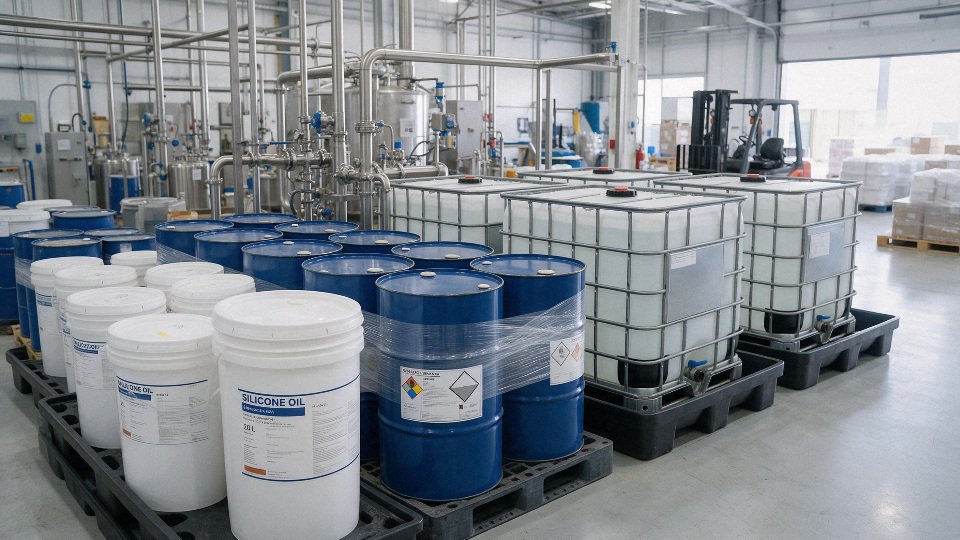
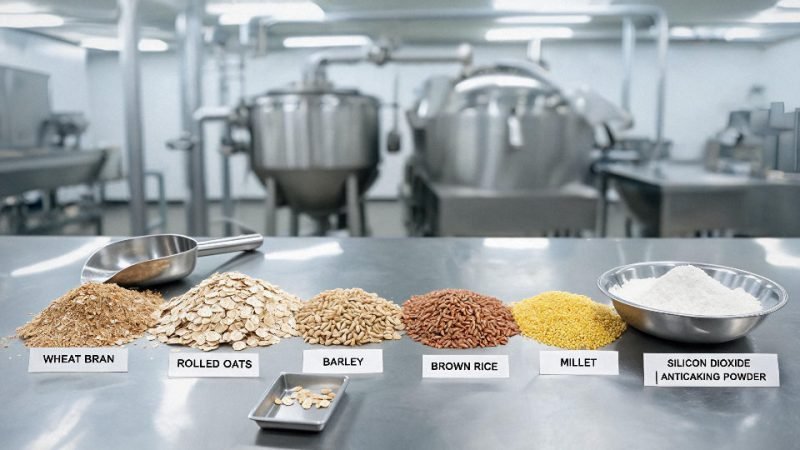
The headache starts when a raw-material spec, a supplement label, or a clean-label brief treats silicon dioxide as one thing. On the floor, it is not: some silica comes in naturally with husks and bran, and some arrives as a deliberately added anticaking agent in a powder that refuses to flow after a humid weekend. Get that distinction wrong and you can end up with a held lot, a label review, a blender that needs hammering, or a reformulation that burns through trial batches. The practical fix is to look at food source, processing level, dry-weight concentration, and whether the silica is native to the ingredient or added for handling.
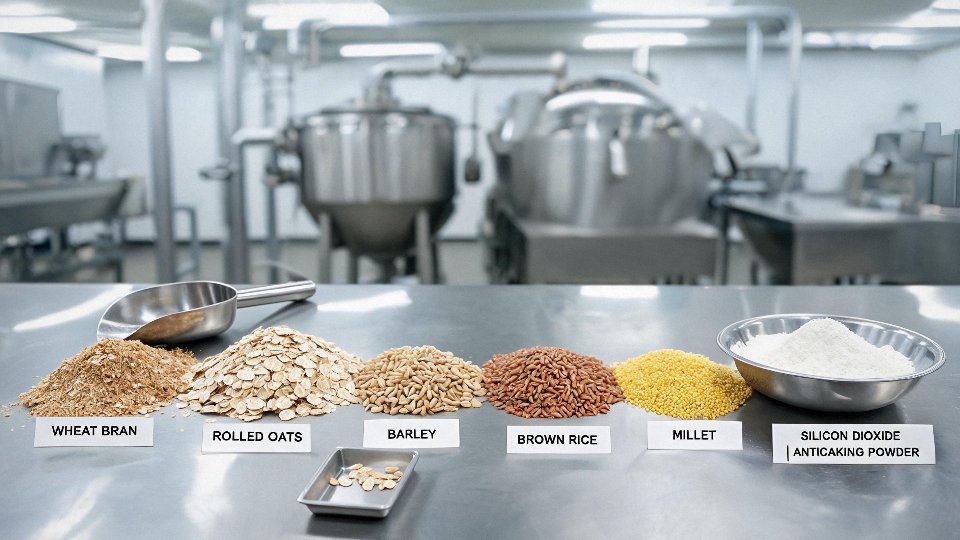
Foods highest in silicon dioxide, usually reported as silicon, are whole grains and brans such as wheat bran, oats, barley, brown rice, and cereal products. Whole grains often run about 100 to 500 mg silicon per kg dry weight, depending on variety, soil, milling, and moisture. Beer and some plant-heavy diets also raise intake.
The interesting part is how uneven the numbers get. A polished rice stream can look almost empty next to the bran it came from; a cereal ingredient can swing with crop source and mill setup; a spice blend may carry only a low percentage of added silicon dioxide, yet still matter to a purchasing spec. That is where the ranking starts to become useful, not academic.
Rank the food groups that usually contribute the most silicon to the diet
Exact silicon numbers in food are a bit like dust loading on a baghouse: useful as a range, misleading as a single clean value. Variety, soil, rainfall, milling, cooking water, and how much outer tissue stays with the food all move the result. Still, the hierarchy is fairly consistent.
Grasses sit near the top. That means cereal grains, especially the parts mills often remove.
| Rank | Food group | Typical examples | Likely silicon contribution per serving | Reliability as a source | Practical read |
|---|---|---|---|---|---|
| 1 | Bran-rich cereal grains and minimally refined grain products | Oat bran, wheat bran, whole oats, barley, rye, whole wheat, millet | Often moderate to high; serving contribution depends heavily on bran content and portion size | High | Best everyday category if the grain is truly whole or bran-rich |
| 2 | Whole-grain staples | Brown rice, whole wheat bread, whole-grain pasta, cornmeal, rye bread, rolled oats | Usually moderate; higher when the outer layers remain intact | Medium to high | Good volume foods, but labels matter |
| 3 | Beer and some cereal-based beverages | Beer made from barley and hops | Can be notable for adults who already drink alcohol; bioavailability is relatively good | Medium | Not a recommendation to drink; just a real contributor in dietary surveys |
| 4 | Vegetables with moderate silicon contribution | Green beans, spinach, some root vegetables | Low to moderate per serving; varies widely by crop and growing conditions | Medium | Useful background intake, not usually the top driver |
| 5 | Fruits and dried fruits | Bananas, raisins, dates, other dried fruits | Low to moderate; dried fruit looks higher by weight because water has been removed | Medium | Can add up, but serving size and sugar load limit intake |
| 6 | Refined grains and highly processed cereal foods | White rice, white flour products, many refined breakfast cereals | Usually low compared with whole-grain versions | Low to medium | Milling strips away much of the silicon-bearing fraction |
| 7 | Powdered foods using silicon dioxide as an anticaking agent | Spice blends, creamers, instant mixes, powdered supplements | Usually small amounts at low percentages | Product-specific | More about processing function than meaningful nutrition |
Whole grains lead because cereal crops are grasses, and grasses tend to accumulate silica-related compounds in husks, bran layers, hulls, awns, and outer plant tissues. If you have ever handled rice hull ash, wheat bran, or spent grain from a brewhouse, this is not an abstract chemistry point. The abrasive, mineral-rich nature of those outer fractions shows up in milling wear, dust behavior, and sometimes even screw conveyor housekeeping.
Oats, barley, brown rice, whole wheat, rye, millet, and corn are the grain names worth remembering. They are not identical. Barley and oats often carry meaningful silicon because their outer structures are significant. Brown rice keeps more of the bran than polished rice. Whole wheat and rye products depend on extraction rate: a dense rye loaf or coarse whole wheat flour usually brings more of the original kernel than a soft white roll with a little color added.
Bran is the hinge point.
Whole grains and brans are often reported around 100 to 500 mg silicon per kg dry weight, but that broad range depends on the crop, growing region, weather, lab method, and how much hull or bran remains. Refined grains are usually much lower because the mill deliberately removes the outer layers to improve color, texture, shelf life, and baking behavior. That is good for some products. It is bad if your goal is retaining silicon-rich fractions. A procurement manager sees the same logic in specs: “whole grain” is not the same as “high bran inclusion,” and a supplier’s certificate may not tell you much unless the flour stream is defined.
Bran-rich cereal foods usually provide more dietary silicon than polished rice, white flour, or refined breakfast cereals.True
Silicon in cereal crops is concentrated more in husks, bran layers, and outer tissues. Milling and polishing remove much of that fraction, so refined grain products generally contribute less, although exact values vary by crop and processing method.
Vegetables sit in the middle of the pack. Green beans, spinach, and some root vegetables can contribute useful amounts, but they are not uniformly high across the category. Field conditions matter. Irrigation, soil silicon availability, plant maturity at harvest, and peeling all change the number. A boiled peeled root vegetable is not the same material as a whole grain kernel with bran intact.
Fruits are similar. Bananas and dried fruits can help fill out intake, especially in plant-heavy diets, but they are rarely the main driver unless the overall diet is already rich in grains and produce. Dried fruit deserves a small caution: values per kg look higher partly because water is gone. Per normal serving, it is still usually a moderate contributor, not a magic source.
Beer deserves a practical mention because dietary surveys often find higher silicon intake among adults who drink beer. Barley malt and hops are part of that story, and the silicon form in beer is considered relatively bioavailable. That does not make beer a mineral supplement. In a plant, I would not solve a compressed-air moisture problem by opening another drain and calling it good housekeeping; same principle here. If someone drinks beer already, it may contribute silicon. Starting alcohol for silicon intake makes little sense. Typical adult dietary silicon intake lands roughly around 20 to 50 mg per day, with higher intakes often tied to cereal grains, beer, and plant-based eating patterns.
Use whole grains and brans as the most dependable silicon-rich foods
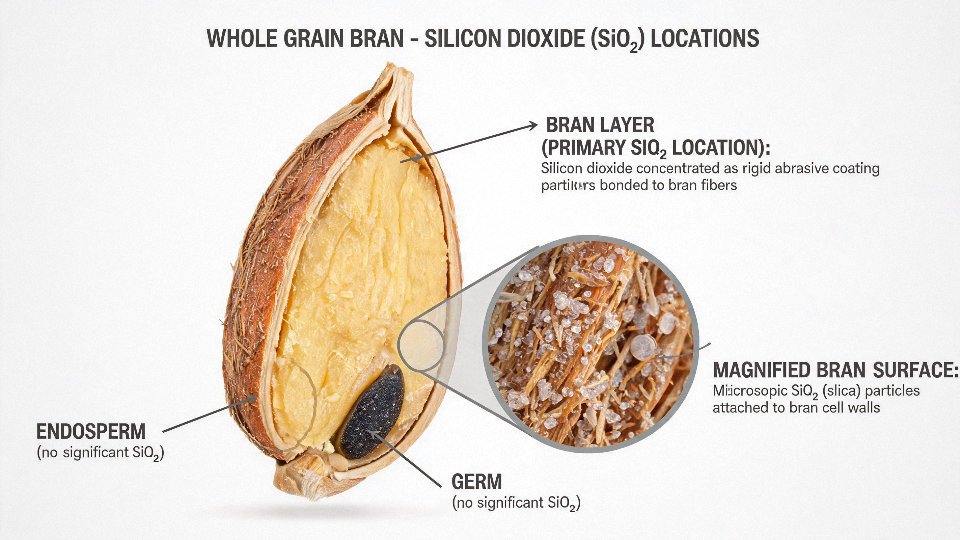
If you want a practical, repeatable food source of natural dietary silicon, start with whole cereal grains and bran fractions. That is where the material balance points. In many grains, silicon is not spread evenly through the kernel like sugar in syrup. It is concentrated in the husk, bran, seed coat, and other outer structures that protect the grain in the field. The cleaner and whiter the finished grain or flour, the more of those fractions have usually been removed.
That is the same logic a miller uses every day: separate the abrasive, fibrous outer layers from the starchy endosperm, then sell different streams for different uses. For silicon, the “high-value stream” is often the one modern refining tries to reduce.
Why bran and outer layers carry more silicon
Cereal plants take up silicon from soil water and deposit much of it as silica-related structures in the stalk, hull, husk, and outer grain layers. The exact level depends on crop variety, soil chemistry, irrigation water, growing region, and how aggressively the grain is processed after harvest. As a working benchmark, whole grains and brans often sit somewhere around 100 to 500 mg silicon per kg dry weight, while refined grain products are usually much lower. That range is wide because a tough-hulled barley grown in one region is not the same raw material as a soft wheat milled for white pastry flour.
The procurement lesson is simple: do not buy by the grain name alone. Buy by the fraction.
Whole wheat flour, wheat bran, and white flour may all begin with wheat, but they are not nutritionally equivalent. The same applies to brown rice versus polished white rice, or oat bran versus a sweetened instant oat product with more sugar than grain solids. The label tells part of the story. The texture tells the rest.
Whole grains and brans usually provide more dietary silicon than refined grain products made from the same crop.True
Silicon is commonly concentrated in husk, bran, and outer grain layers. Refining, polishing, and milling remove much of those fractions, so the remaining starchy endosperm is typically lower in silicon.
Grain choices that usually make sense
Oats are one of the easier options for daily use. Rolled oats, steel-cut oats, and oat bran keep useful outer grain fractions, and they fit breakfast without much behavior change. A bowl of oatmeal is not exotic procurement. It is a stable commodity with predictable handling, long shelf life, and decent consumer acceptance. Oat bran is denser in the bran fraction, so it is a stronger choice if the goal is silicon intake, but it also brings more fiber.
Barley deserves more attention than it gets. Hulled barley tends to retain more of the outer grain than pearled barley. Pearl barley is convenient and cooks nicely, but pearling is a surface-removal process; take off outer layers and you take away part of the mineral-bearing material. In a plant, nobody would expect a polished component to retain its original coating thickness. Food is not different.
Wheat bran is one of the most concentrated everyday options, especially because it is literally the removed outer fraction. It can be stirred into yogurt, porridge, pancake batter, or bread dough. The catch is palatability and tolerance. Too much too fast can turn a sensible nutrition choice into a gut complaint by lunchtime.
Rye is useful because people actually eat it as bread. Dense rye bread, rye flakes, or whole rye crispbreads can contribute meaningfully, though the result depends on whether the product is truly whole grain or mostly refined flour with color and flavor added. I have seen the same issue in industrial buying: “rye-style” is not the same as whole rye.
Brown rice and millet are reasonable supporting grains. Brown rice keeps the bran layer, so it generally carries more silicon than polished white rice. Millet can be a good whole-grain option, especially where it is eaten regularly, though product form matters. Whole millet porridge and intact-grain blends are not the same as highly processed puffed cereals.
Processing can quietly reduce the useful fraction
The big losses come from mechanical removal: polishing rice, pearling barley, refining wheat flour, and separating bran from the endosperm. Repeated washing can also reduce loose surface material and fine particles, although it will not reverse the basic structure of the grain. In real kitchens, people rinse rice until the water runs clear; that improves cooking quality for some dishes, but it can wash away small particles from the outer surface, especially if the grain has already been abraded.
Extrusion is more complicated. Extruded cereals may start with whole-grain flour, but high-shear processing, fraction selection, and formulation can dilute the original mineral profile. A whole-grain extruded cereal may still be useful. A puffed, sweetened, refined cereal with a dusting of bran is a weaker bet. Read the ingredient order, not just the front panel.
Practical servings that do not feel like a lab protocol
A workable pattern might be oatmeal a few mornings a week, barley in a lunch bowl, rye bread instead of soft white sandwich bread, brown rice with dinner, or one to two spoonfuls of wheat bran stirred into yogurt. Whole-grain cereals can help too, if they are genuinely whole grain and not mostly refined flour, sugar, and flavoring.
Do not ramp bran intake like opening a valve from zero to full flow. Bran is nutrient-dense, but it is also fiber-dense. A sudden jump can cause bloating, cramping, or loose stools in some people, especially if water intake is low. Start small, give the gut a week or two, then adjust. Right approach: steady intake, tolerable portions, enough fluid. Wrong approach: dumping half a cup of bran into breakfast on Monday and blaming the grain by Tuesday.
Identify fruits, vegetables, and legumes that provide meaningful silicon
Plants do not treat silicon as decoration. Many species pull dissolved silicic acid from soil water, move it through the xylem, then leave silicon-rich material in cell walls, skins, stems, leaf surfaces, pods, and other protective tissues. That is why the answer is not just “eat one high-silicon food.” The better answer is usually: eat the plant parts that have not been peeled, polished, strained, or milled out of usefulness.
I think of it a bit like buying raw material with a coating or surface treatment. If your process removes the outside layer, do not be surprised when the property you wanted disappears with the scrap bin.
Green beans are one of the more reliable vegetable picks
Green beans come up often in dietary silicon discussions for a reason. They are among the better-studied vegetable sources, and the edible portion includes pod tissue, not just the seed inside. That pod matters. Protective outer tissues tend to hold more silicon than soft interior starch or sugar storage tissue.
In practical diet terms, green beans are not going to compete with a heavy intake of bran or certain whole grains on a dry-weight basis. But as a vegetable serving, they make sense. Fresh, frozen, or lightly cooked green beans can all contribute, with actual silicon depending on soil conditions, irrigation water, variety, maturity at harvest, and how much cooking water is discarded.
A common mistake is comparing foods only by fresh weight. Green beans are mostly water. So are many vegetables. A laboratory dry-weight number may look impressive, but the plate contribution depends on the portion actually eaten.
Green beans are usually a more meaningful vegetable source of dietary silicon than many peeled, soft-fleshed fruits.True
The edible pod tissue can retain silicon-containing plant structures, while peeled or soft interior fruit tissues often provide less per serving. Actual values still vary by crop variety, soil, and preparation.
Bananas are useful, but not extreme
Bananas are probably the most frequently mentioned fruit in casual lists of silicon-containing foods. They can contribute, especially because people eat them regularly and portions are predictable. That regularity counts. A moderate source eaten four or five times a week may beat a “high” source that sits in the pantry untouched.
Still, I would not build a silicon-focused food list around bananas alone. The edible flesh is soft storage tissue, not a husk, bran layer, stem, or pod. The silicon contribution from a typical banana is usually moderate, and it depends on variety, ripeness, growing region, and analytical method. Dried banana products may appear more concentrated because water has been removed, but sugar and calorie density rise at the same time. Procurement people will recognize the trap: concentration on paper does not always mean a better buy for the job.
Leafy greens, roots, skins, and dried fruits fill the gaps
Leafy greens can be useful supplemental sources because leaves and vascular tissues are part of the plant’s working structure. Spinach, kale, chard, collards, and similar greens may contribute small-to-moderate amounts across normal servings. The number shifts with soil silicon availability, age of the leaf, and washing or cooking practice. Boiling greens hard and dumping the water may reduce some soluble mineral contribution, though silicon behavior is not as simple as sodium leaching from a soup pot.
Root vegetables are more mixed. Carrots, beets, turnips, and similar crops can provide some silicon, but peeling changes the equation. Carrots with a light scrub instead of aggressive peeling generally preserve more outer tissue. Potatoes are the same story, only more obvious. A baked potato with skin is a different material from peeled mashed potato. Not better in every nutritional sense, just different for silicon-containing structures.
Some dried fruits may contribute as well, partly because drying removes water and makes minerals look more concentrated per kilogram. Raisins, dates, figs, and prunes can add to total intake, but they should be treated as supplemental foods, not mineral concentrates. Serving size, sugar load, and product handling matter. A dried fruit dusted with starches or anticaking agents also complicates the question because now natural plant silicon and added silicon dioxide may both be present.
Legumes can help, but variability is real
Lentils, peas, chickpeas, and beans can contribute dietary silicon, though they are less predictable than the best whole-grain and bran sources. The silicon level depends on the field, water supply, cultivar, and how the crop is cleaned, split, dehulled, canned, or pressure-cooked.
Here is the practical version:
| Food choice | Better for retaining silicon-containing structures | Usually lower contribution |
|---|---|---|
| Beans and peas | Whole cooked legumes with skins intact | Split, dehulled, heavily processed forms |
| Potatoes | Skin-on baked or boiled potatoes | Peeled instant flakes |
| Carrots | Scrubbed, lightly peeled, or unpeeled when appropriate | Deep-peeled sticks stored in water |
| Fruits | Whole or minimally processed fruit | Clear juices and strained purees |
The working rule is simple: keep the plant structure when it is safe, clean, and acceptable to eat. Skins, pods, outer layers, leaves, and intact seed coats are where meaningful silicon is more likely to ride along. A balanced plate using green beans, leafy greens, skin-on potatoes, carrots, legumes, bananas, and occasional dried fruits will not look like a laboratory optimization exercise. Good. Real diets have to survive shopping, cooking, texture preferences, and a Tuesday night schedule.
Explain why beer can be high in bioavailable silicon without promoting alcohol use
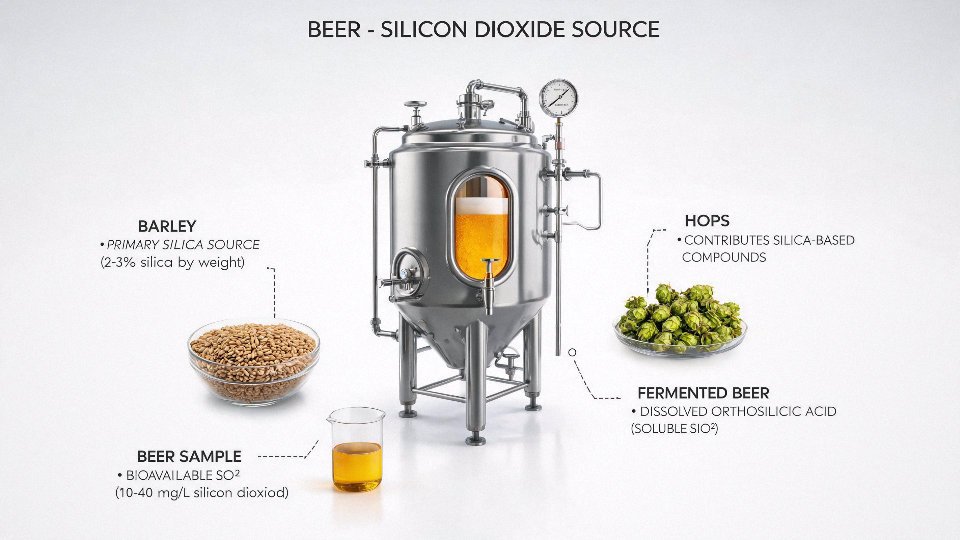
Beer gets mentioned in silicon-diet papers for a real reason, not because someone is trying to make a pub sound like a supplement aisle. Much of its silicon comes from barley malt, especially the husk portion of the grain, with a smaller contribution from hops. During mashing and boiling, part of that plant-bound silicon moves into the liquid phase. A useful share is present as soluble silicic acid-type species, often described in nutrition work as more bioavailable than the less soluble silica locked inside intact plant structures.
That extraction step matters.
With whole grains, the silicon is there, but your body has to deal with the bran matrix, particle size, cooking method, gut conditions, and what else is in the meal. In brewing, the process has already done some of the separation work: hot water, controlled pH, enzymes, agitation, lautering, and boiling pull soluble material out of the malt bed. Anyone who has run a mash filter or watched a lauter tun slow down because the grain bed compacted knows this is not a gentle tea infusion. It is an extraction process with real mass transfer behind it.
Beer can contain relatively bioavailable silicon, but it should not be recommended as a silicon supplement.True
The silicon in beer is often in soluble forms derived mainly from malted barley and hops, yet alcoholic beverages carry well-established health and safety risks that outweigh using beer as a dietary strategy.
Why beer differs from eating the grain
Barley and other cereal grains can be high in silicon on a dry-weight basis, especially where the outer layers remain intact. Whole grains and brans often fall somewhere around 100 to 500 mg silicon per kg dry weight, depending on crop variety, soil, milling fraction, and laboratory method. Refined grain products are usually much lower because the silicon-rich outer layers are stripped away.
Beer is different because the consumer is not eating the spent grain. The brewer has washed the malt bed and carried soluble compounds into the wort. Some silicon stays behind in the spent grain; some goes forward into finished beer. The final amount depends on the malt bill, barley variety, use of adjuncts such as rice or corn, hop rate, dilution, filtration, stabilization, and brand-specific processing. You cannot look at a beer label and calculate silicon intake with any confidence.
A typical practical example: a beer brewed with a high proportion of malted barley may deliver more silicon than one built heavily around refined adjuncts. A heavily processed, filtered product may not behave like a cloudy craft beer or a malt-forward non-alcoholic brew. That does not make one “better” in a health sense. It just means the process route changes the chemistry.
The alcohol problem is not a footnote
This is where nutrition articles often get sloppy. Yes, beer can be a noticeable contributor to measured dietary silicon in some adult populations. People who drink beer may show higher silicon intake than people who do not, partly because beer is a liquid source and partly because some of its silicon is soluble.
But beer is still alcohol unless it is specifically non-alcoholic. Alcohol is linked with injury risk, impaired driving, liver disease, certain cancers, dependency, sleep disruption, medication interactions, and poor decisions around machinery. I have seen enough plant-floor incidents after “just a couple” the night before to be blunt about it. Do not use beer as a health tool.
If someone is trying to raise dietary silicon, the sensible route is boring and works fine: whole grains, bran-containing foods, legumes, vegetables, and a generally mineral-balanced diet. Adult dietary silicon intake often lands around 20 to 50 mg per day, with the higher end usually tied to cereal grains, beer intake, and plant-heavy eating patterns. You can reach meaningful intake without alcohol.
What about non-alcoholic malt drinks?
Non-alcoholic beer and malted grain beverages are worth mentioning, but carefully. If they are made from malted barley and processed in a beer-like extraction system, they may contain soluble silicon. The problem is variability. Some are true dealcoholized beers. Some are sweet malt drinks. Some use diluted extracts, syrups, flavor systems, or mixed grain bases. Without product-specific analysis, any number would be guesswork.
Procurement people will recognize the same issue from raw-material certificates: “contains malt” is not a specification. Malt percentage, extraction solids, filtration method, and formulation tolerance all affect the final mineral profile. For a consumer, that means non-alcoholic malt beverages may contribute silicon, but they should not be treated as a guaranteed high-silicon food unless the manufacturer provides credible data.
Why wine and spirits usually matter less
Wine generally starts from grapes, not husked cereal grain. Grapes can contain some silicon, especially in skins and plant tissues, but winemaking does not usually extract silicon from a large mineral-rich husk fraction the way brewing extracts from barley malt. Wine may contribute small amounts, yet it is not usually cited as a leading silicon source.
Spirits are even less relevant. Distillation separates volatile alcohol and aroma compounds from the fermented mash or wash. Mineral compounds, including silicon species, mostly do not distill across in meaningful amounts. A whiskey may begin life with grain, but the distillate is not a grain mineral extract. Barrel contact changes flavor and some chemistry, not enough to make spirits a sensible silicon source.
So the practical answer is this: beer can be high in relatively bioavailable silicon because brewing extracts soluble silicon from malted barley and hops. That is a chemistry point, not a recommendation. For everyday diet planning, put the weight on whole grains, legumes, vegetables, and other plant foods first. The right choice supports nutrition without importing alcohol-related risk; the wrong interpretation turns a trace-mineral discussion into a preventable health and safety problem.
Spot added silicon dioxide on labels in powdered and granular foods
Food-grade silicon dioxide is a manufactured, amorphous silica material used mostly to keep dry products moving like dry products should. That word, amorphous, matters. This is not the same material profile as crystalline quartz dust in a quarry or a poorly controlled abrasive blasting job. In food plants, it is typically a very fine, high-surface-area powder that helps manage moisture and particle-to-particle sticking.
On a retail label, look for names such as:
- Silicon dioxide
- Silica
- Amorphous silica
- Colloidal silicon dioxide
- Anticaking agent
Sometimes the label will simply list “anticaking agent” with silicon dioxide in parentheses. Other times it appears in a supplement facts panel or in the “other ingredients” line, especially on capsules, tablets, and powdered drink products. Procurement people know the same material may show up on supplier documents under slightly different trade descriptions, but the function is usually the giveaway: flow aid, anticaking agent, carrier, or processing aid for dry blending.
You are most likely to see added silicon dioxide in products where clumping causes trouble before the consumer ever opens the package. Common categories include spice blends, powdered drink mixes, instant coffee creamers, grated cheese powders, soup mixes, ramen-style seasoning packets, powdered sugar substitutes, baking mixes, and dietary supplements. I would also check dry sauce bases, protein powders, electrolyte mixes, and bulk seasoning drums used in commercial kitchens. If it has to pour, scoop, dose through an auger, or fill cleanly into a sachet, someone has probably evaluated a flow aid.
The engineering reason is simple: powders are rarely as dry and obedient as they look. Salt pulls moisture from humid air. Onion powder cakes. Cheese powder carries fat. Fine sugar substitutes bridge in hoppers. A spice blend that runs well in January can turn sluggish in August if the warehouse is warm and the packaging room is sitting at higher relative humidity than planned.
A small amount of silicon dioxide can reduce that behavior. It coats or separates particles just enough to reduce caking, improve flow through fillers, and keep net weights more consistent. In a plant, that can mean fewer stoppages at the auger filler, less giveaway from overfilling, and fewer rejected pouches with poor seals because powder dusted into the seal area. At the consumer end, it means the seasoning packet empties without turning into a brick.
Typical use levels are low, often in the tenths of a percent range and sometimes approaching around 1% to 2% in certain dry foods, depending on the regulation, powder composition, particle size, humidity exposure, and how aggressive the manufacturer needs to be. Do not treat that as a universal formula. A dry garlic powder, a mineral supplement, and a powdered creamer behave differently in a blender and in a filling machine.
Where the label clue matters most
| Product type | Why silicon dioxide may be used | Practical label-reading note |
|---|---|---|
| Spice blends and seasoning packets | Controls clumping from salt, sugar, and hygroscopic spices | Often listed near the end because the amount is small |
| Powdered drink mixes and creamers | Helps powder flow and disperse after storage | Check flavored and instant products especially |
| Grated cheese powders and dry sauce bases | Manages fat-coated particles and moisture sensitivity | May appear along with starches or cellulose-based anticaking agents |
| Supplements | Improves capsule filling, tablet compression, and powder dosing | Usually appears under “other ingredients” |
| Baking mixes and sugar substitutes | Reduces bridging, lumping, and poor scoopability | Not a sign the product is naturally silicon-rich |
A food that lists silicon dioxide as an anticaking agent should not be counted the same way as a naturally silicon-rich whole grain or bran.True
Added food-grade silicon dioxide is used for powder handling and shelf usability at low levels. It does not make the product a meaningful dietary silicon strategy in the same practical sense as regularly eating whole grains, brans, legumes, fruits, or vegetables.
That last point is where consumers often get crossed up. A powdered creamer with silicon dioxide on the label is not “high in silicon” in the nutritional sense people usually mean. It contains a technical additive for flow control. A bran cereal, oats with intact outer layers, or other plant foods contain naturally occurring silicon compounds as part of the raw material structure. Different reason, different context.
From a regulatory and manufacturing standpoint, food-grade silicon dioxide is generally controlled by permitted-use rules and good manufacturing practice. In plain shop-floor language: use only what is needed to make the product run and remain usable, not a scoop more because it is convenient. Exact amounts are rarely printed on retail labels, so the ingredient list can tell you presence, not dose. If someone is trying to estimate silicon intake, that missing quantity makes additive-based calculations shaky.
Operational warning from the factory side: the fine powder is messy. Plants handle it with dust control, closed transfer where practical, and decent housekeeping because nuisance dust can migrate into scales, sensors, and seals. That does not mean the finished food is dusty or unsafe by default. It means the raw ingredient behaves like a very fine industrial powder before it is dispersed through a batch.
For label reading, keep the distinction clean. Silicon dioxide in a powdered food usually means “this product was engineered to stay free-flowing.” It does not mean the food belongs near the top of a silicon-rich diet list.
Interpret safety, absorption, and health claims without overstating the evidence
Silicon sits in an awkward middle ground in nutrition. It is widely present in plant foods, drinking water, and some processed powdered foods, but it is not universally classified as an essential nutrient for humans in the same way as calcium, iron, iodine, or vitamin C. There is no standard dietary requirement used on food labels in most markets, and no clean “deficiency disease” that a plant manager, clinician, or nutrition scientist can point to and say, “That is silicon deficiency.”
That does not mean silicon is irrelevant. It has been studied for possible roles in connective tissue structure, bone formation, collagen-related processes, and mineral metabolism. The evidence is interesting, especially around bone and connective tissue, but it is not a license to turn every high-silicon food into a medical claim.
The chemical form changes the absorption story
In food discussions, “silicon dioxide” often gets used too loosely. The body does not treat every silicon-containing material the same way.
| Form in food or diet | Where it shows up | Absorption expectation | Practical interpretation |
|---|---|---|---|
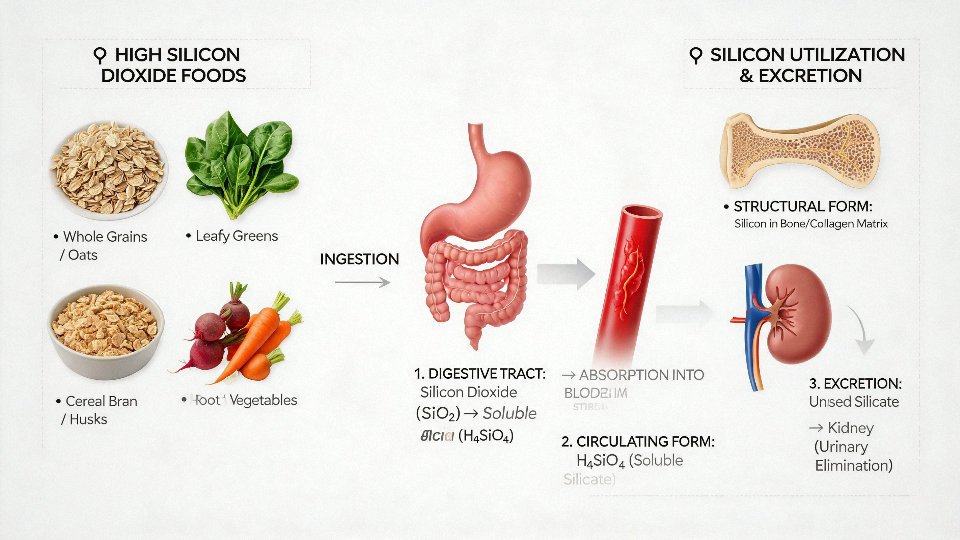
| Soluble orthosilicic acid | Drinking water, beer, some fluids formed during digestion | Usually considered the more absorbable form | More relevant when discussing bioavailability |
| Plant-bound silica and phytoliths | Brans, husks, whole grains, some vegetables | Variable; depends on plant structure, processing, and digestion | Can contribute dietary silicon, but not all of it is absorbed |
| Food-grade amorphous silicon dioxide | Powdered foods, spice blends, creamers, instant mixes, supplements | Generally low solubility; used mainly for flow control | Treat as a functional additive, not a nutrient delivery system |
That distinction matters. A oat bran sample may test high in silicon on a dry-weight basis, but a lab number is not the same as absorbed silicon in blood. Milling, soaking, fermentation, cooking, and the physical location of silica in the plant all influence what becomes available. In practice, the human digestive tract is not a ceramic grinder. It does not extract every mineral atom just because the food analysis sheet says it is present.
Normal food exposure is not the same as an industrial dust hazard
For healthy adults, normal dietary silicon exposure from foods is generally considered safe. Typical intakes often land around 20 to 50 mg of silicon per day, depending heavily on grain intake, beer consumption, local drinking water, and how plant-based the diet is. Someone eating whole-grain cereals, oats, vegetables, and legumes will usually sit higher than someone eating mostly refined starches and low-mineral processed foods.
The safety confusion often comes from the word “silica.” Food-grade silicon dioxide used in anticaking applications is amorphous silica. Respirable crystalline silica is a different occupational hazard, mainly relevant to cutting, grinding, drilling, blasting, foundry work, engineered stone fabrication, and dusty mineral handling.
I have seen the difference firsthand in plants. A few grams of food-grade anticaking agent dispersed in a sealed seasoning blend is not the same exposure as a worker dumping 25 kg bags of fine mineral powder into a mixer with poor local exhaust. Route matters. Particle size matters. Crystal structure matters. Dose matters.
Food-grade amorphous silicon dioxide in powdered foods creates the same risk as respirable crystalline silica dust from industrial grinding or cutting.False
Food-grade amorphous silica used as an anticaking agent is a regulated food additive exposure. Respirable crystalline silica is an inhalation hazard from fine airborne dust in industrial settings. They should not be treated as the same risk.
Be careful with hair, skin, nails, joints, and bone claims
This is where marketing tends to run ahead of the data. Silicon is often promoted for hair thickness, nail strength, skin elasticity, joint comfort, collagen support, and stronger bones. Some of those claims have plausible biological hooks. Connective tissue chemistry is not fantasy. Bone studies have looked at silicon intake alongside mineral density and bone turnover markers.
Still, evidence quality varies. Food pattern studies can be confounded by diet quality: people who eat more whole grains, vegetables, and mineral-rich foods may also have better protein intake, more magnesium, better vitamin K status, different exercise habits, or less smoking. Supplement studies are often small, short, or based on specific stabilized forms rather than ordinary food-grade silicon dioxide.
A fair reading is this: silicon-rich foods can be part of a sensible diet that supports bone and connective tissue health, but they should not be sold as a stand-alone fix for osteoporosis, thinning hair, brittle nails, arthritis, or skin aging. If the claim sounds like it belongs on a late-night supplement label, slow down.
Eating silicon-rich whole foods may support a diet pattern associated with bone and connective tissue health, but it is not proven to cure hair loss, arthritis, osteoporosis, or skin aging.True
Silicon has been studied for connective tissue and bone-related roles, but human evidence is mixed and often indirect. Whole foods are reasonable; disease-treatment claims are not.
Supplements deserve more caution than food
Food intake and supplement dosing are different control systems. With food, silicon comes packaged with fiber, minerals, water, starches, phenolics, and normal meal limits. With supplements, a person can stack capsules, liquid drops, collagen blends, mineral complexes, and “beauty” powders without realizing the combined intake.
People with kidney disease should be especially cautious, because renal handling of minerals and small solutes may not be normal. The same advice applies to anyone with complex medical conditions, pregnancy-related concerns, unusual lab results, or heavy use of multiple supplements. A qualified clinician is the right person to weigh that risk, not a product review page.
For most healthy adults, the practical answer is boring but sound: get silicon mainly from ordinary foods such as whole grains, legumes, vegetables, and safe drinking water. Treat added silicon dioxide on labels as a processing aid for powder flow, not a health feature. If using supplements, keep the dose conservative and make sure there is an actual reason for taking them.
Build a practical high-silicon meal pattern from ordinary foods
A high-silicon eating pattern does not need a scoop of synthetic silicon dioxide stirred into a drink. Treat it like a plant material-balance problem: the biggest gains come from choosing less-refined grain streams, keeping some skins and bran fractions in the diet, and spreading sources across the day so one weak lot of grain or one low-silicon vegetable does not ruin the whole plan.
Silicon values swing a lot. Crop variety, soil, rainfall, milling yield, and cooking water all move the number. That is why I would rather see a repeatable meal pattern than a “top 10” list taped to the refrigerator like a calibration certificate.
A workable one-day pattern
Breakfast can be simple: oatmeal, steel-cut oats, or oat bran cereal, with yogurt or milk, berries or citrus, and a spoonful of nuts or seeds if they fit your diet. Oat bran is usually the stronger silicon move because the outer grain layers carry more of the mineral fraction. The calcium from dairy or fortified alternatives, vitamin C from fruit, and protein from yogurt help make the meal more than a single-nutrient exercise.
Lunch is where many people lose the opportunity. A sandwich on white bread is convenient, but from a silicon standpoint it is like buying raw material after the valuable fraction has been screened off. Use rye, whole wheat, or a barley-based grain bowl instead. Barley with beans, chicken, canned fish, tofu, or eggs gives protein without turning lunch into a starch pile. Add green beans, leafy greens, peppers, or cabbage-type vegetables. Green beans are a practical choice because they are easy to source, tolerate batch cooking, and do not need a nutritionist standing beside the line to make them edible.
Dinner can be built around lentils, beans, brown rice, millet, corn, or potatoes with skin, plus a protein and two vegetables. Brown rice will not always test as high as oat bran or wheat bran, but it is a useful daily base, especially for people avoiding gluten. Lentils with brown rice and vegetables is not glamorous. It works.
Straight swaps that move the needle
| Usual choice | Better high-silicon direction | What the result depends on |
|---|---|---|
| White bread | Rye, whole wheat, or seeded whole-grain bread | Flour extraction rate, true whole-grain content, serving size |
| Polished white rice | Brown rice, millet, or mixed whole grains | Milling level, cooking method, how often it is eaten |
| Low-fiber breakfast cereal | Oat bran cereal, oatmeal, or whole-grain flakes | Bran content, fortification, added sugar limits |
| Peeled potatoes | Potatoes cooked and eaten with skin | Washing quality, skin condition, cooking style |
| Refined crackers or instant noodles | Whole-grain crackers, barley salad, beans, or lentils | Sodium target, portion size, protein balance |
The right swap repeated five days a week beats a perfect “silicon-rich” meal eaten once and forgotten. Procurement people understand this. A slightly better standard item in the normal buying cycle changes the annual tonnage; a specialty item sitting in stores does not.
Keep the rest of the nutrition system balanced
Do not build a silicon pattern by stacking bran on bran on bran while ignoring protein, calcium, iron, zinc, and total energy. Very high-bran diets can crowd out other foods, and in some people they cause bloating or interfere with how meals feel day to day. In practice, the better plate is mixed: whole grains or starchy vegetables, a clear protein source, fruit or vegetables for vitamin C, and a calcium source such as dairy, fortified plant milk, calcium-set tofu, or small fish with bones.
For an adult, typical dietary silicon intake is often around 20 to 50 mg per day, with higher intakes usually seen in diets heavier in cereal grains, beer, and plant foods. Whole grains and brans may run roughly 100 to 500 mg silicon per kg dry weight, but that range depends heavily on the grain type, growing conditions, and milling. A bowl of oat bran will not behave like a lab reagent. Neither will rye bread from two different suppliers.
A varied whole-food pattern is a better way to raise dietary silicon than relying on added silicon dioxide in powdered foods.True
Natural silicon intake is mainly driven by whole grains, brans, vegetables, legumes, and some beverages. Added silicon dioxide in powders is normally used at low percentages for flow control, not as a purposeful nutrition source.
Gluten-free routes are available
Gluten-free readers still have good options. Use certified gluten-free oats if tolerated, brown rice, millet, corn, potatoes with skin, beans, lentils, chickpeas, green beans, and other vegetables. The weak point is often breakfast, because many gluten-free cereals are made from refined starches and sugar. Check the label like you would check a material spec: whole grain first, decent fiber, not just rice flour and syrup.
Preparation matters, but do not get silly about it
Avoid excessive peeling and over-refining when practical. Keep potato skins if they are sound. Choose whole grains over polished grains. Do not wash rice or vegetables so aggressively that the food quality suffers, and do not skip normal washing because someone online said minerals live on the surface. Food safety wins. Soil, pesticide residue, damaged skins, and poor storage can create real problems; a small theoretical silicon gain is not worth gastrointestinal downtime.
Variety is the safety factor here. Oats at breakfast, rye or barley at lunch, green beans and other vegetables, then beans or brown rice at dinner gives several independent silicon inputs. If one food is lower than expected because of season, supplier, milling, or cooking losses, the whole pattern still holds.
Frequently asked questions about foods high in silicon dioxide
What foods are highest in silicon dioxide or dietary silicon?
For natural dietary silicon, the usual heavy hitters are whole cereal grains, bran-rich foods, and some grain-based drinks. Oat bran, wheat bran, barley, brown rice, whole-grain breads, and high-fiber breakfast cereals commonly sit near the top because silicon is concentrated in the outer layers of the grain.
As a working benchmark, whole grains and brans often land around 100 to 500 mg silicon per kg dry weight, depending on crop variety, soil, rainfall, milling rate, and how much bran stays in the finished food. Refined white flour, polished rice, and low-fiber bakery products are usually much lower because the mill has removed the layers where much of the silicon was sitting.
For added silicon dioxide, look in a different aisle: powdered drink mixes, spice blends, grated cheese powders, instant soups, non-dairy creamers, powdered supplements, and seasoning packets. There, silicon dioxide is not present because the food grew that way. It is usually added at low percentages to keep powders flowing instead of clumping in the bag, hopper, auger, or dosing spoon.
Is silicon dioxide in food natural or added?
It can be either, and that is where many label discussions get sloppy.
Plants take up silicon from soil water, then deposit it in forms often described broadly as silica-related compounds or phytoliths. That is natural dietary silicon. You do not usually see it listed on a food label because it is part of the plant material, the same way potassium in a banana is not listed as an ingredient.
Added silicon dioxide is different. Food manufacturers use food-grade silicon dioxide as an anticaking or flow agent. If it is intentionally added, it should appear in the ingredient list, often as “silicon dioxide,” sometimes near spices, powders, flavor systems, or mineral premixes.
In a dry blending room, the reason is practical. A humid August week can turn a fine powder into a brick. A small amount of anticaking agent can mean the difference between a clean 20-minute run and operators hammering the side of a tote while the filler starves.
Is silicon dioxide the same as silica?
In common food discussions, people often use “silica” and “silicon dioxide” almost interchangeably. Chemically, silicon dioxide is SiO2, and silica is a common name for materials made largely of SiO2.
The nuance is form. Quartz sand, plant silica bodies, amorphous food-grade silicon dioxide, and some industrial silicas are not all the same material in a safety or handling sense. Particle size, crystal structure, purity, and whether it is inhaled or eaten all matter.
That distinction is not academic. In a plant, airborne crystalline silica dust is an occupational hazard. Food-grade amorphous silicon dioxide used in controlled amounts in powders is evaluated as a food additive. Same basic elements, very different exposure route and risk profile.
Is food-grade silicon dioxide safe to eat?
For normal food use, food-grade silicon dioxide is generally treated as safe by major food safety authorities when used within approved conditions. It is poorly absorbed and mostly passes through the digestive tract.
That does not mean “more is better.” It means the small amounts used to keep powders free-flowing are not the same issue as breathing industrial silica dust or taking high-dose supplements without a reason.
Silicon dioxide listed on a food label means the food contains sand and is automatically unsafe.False
Food-grade silicon dioxide is a purified additive used in small amounts as an anticaking agent. It should not be confused with construction sand or respirable crystalline silica dust.
If a product is a supplement powder and silicon dioxide appears several times across blends, capsules, and coatings, I would still read the full label. Not out of panic. Just basic procurement logic: total formulation, dose, frequency, and user health status matter.
Which grains are highest in silicon?
Bran-rich grains usually win. Wheat bran, oat bran, barley, oats, brown rice, rye, and whole wheat products tend to provide more silicon than refined equivalents. The key variable is not the marketing word on the front of the packet; it is how much outer grain fraction remains.
A “multigrain” cracker made mostly from refined flour may not bring much silicon. A dense bran cereal or coarse whole-grain bread usually brings more. Milling extraction rate, polishing, pearling, extrusion, fermentation, and water content all shift the final number.
Typical pattern:
| Grain food | Likely silicon contribution | What changes it |
|---|---|---|
| Wheat or oat bran | High | Bran content, serving size, processing |
| Barley and oats | Moderate to high | Pearling, rolling, cooking water |
| Brown rice | Moderate | Polishing level, variety, portion |
| White bread or white rice | Low | Degree of refining |
Do fruits and vegetables contain silicon dioxide?
Yes, but most are not as concentrated as bran and whole grains on a dry-weight basis. Green beans, bananas, leafy vegetables, root vegetables, and some dried fruits can contribute useful amounts, especially in plant-heavy diets.
Fresh produce also carries a lot of water, so the silicon per serving can look modest compared with dry bran. That does not make it irrelevant. A person eating vegetables twice a day, fruit daily, and whole grains regularly may reach a typical adult silicon intake of roughly 20 to 50 mg per day, give or take. The result depends heavily on grain choices, beer intake, local water, and portion size.
Is beer really a good source of silicon?
Beer can be a meaningful source of bioavailable silicon, largely because barley and processing release silicon into a soluble form. Some studies have found beer contributes noticeably to silicon intake in adults who drink it.
That is a chemistry answer, not a health recommendation. Alcohol changes the equation. If someone already drinks beer, it may explain part of their dietary silicon intake. If they do not drink, starting for silicon would be poor tradecraft. Whole grains, vegetables, and ordinary mixed meals are the cleaner route.
Should I take silica or silicon supplements instead of eating high-silicon foods?
Usually, I would start with food unless a clinician has a specific reason for a supplement. Supplements vary widely: orthosilicic acid, horsetail extracts, “silica” capsules, mineral blends, and beauty powders are not interchangeable. Dose, solubility, contaminants, and label accuracy all matter.
Food gives silicon alongside fiber, minerals, and normal meal structure. Supplements give a concentrated input, sometimes with thin evidence behind the marketing. If you are pregnant, have kidney disease, take regular medication, or are buying a high-dose product online, ask a qualified health professional first.
The practical route is boring but robust: choose bran or whole grains more often, keep vegetables in the pattern, read powder labels without overreacting, and do not treat silicon dioxide as either a miracle ingredient or a poison.
Finish with a concise buyer and label checklist
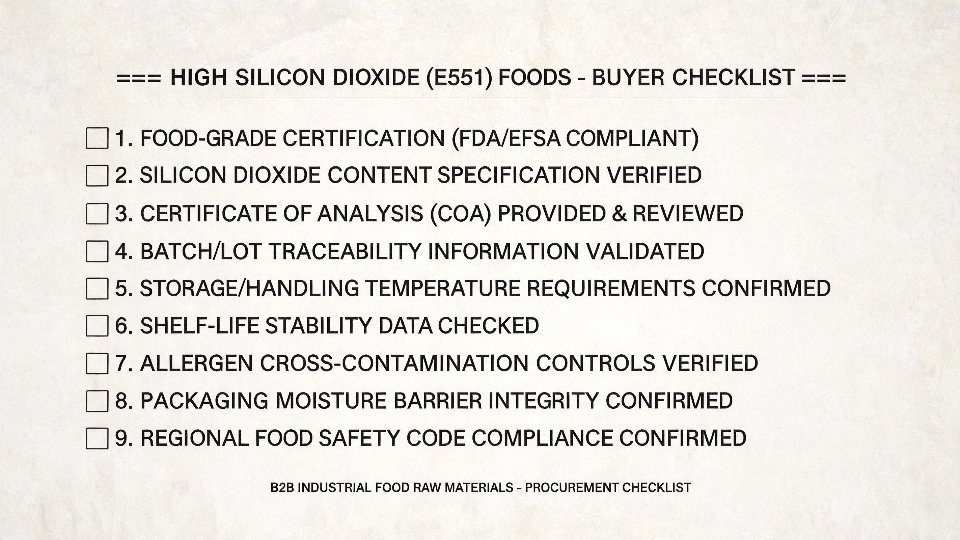
A good silicon-conscious shopping list looks a lot like a good grain-and-plant list, not a chemistry aisle. If the goal is ordinary dietary silicon intake, start with foods that still carry their plant structure: whole oats, oat bran, barley, rye, whole wheat, brown rice, millet, green beans, legumes, potatoes with the skin left on where suitable, and bananas. The numbers move around with variety, soil, milling, and cooking water, but the pattern is reliable enough for buying decisions. Whole grains and brans often sit far above refined grains because the outer layers are still there. Once the mill strips those layers away, much of the silicon goes with them.
That is similar to buying raw material by specification. The cheapest-looking refined flour or polished grain may be fine for texture, shelf life, or baking performance, but it is not the same input nutritionally. Different job, different spec.
Quick buyer table
| If you see this | What it usually means | Better choice if silicon intake is the goal |
|---|---|---|
| Whole oats, oat bran, barley, rye, whole wheat | Naturally higher silicon potential, especially with bran layers intact | Good primary choices |
| Brown rice and millet | Useful contributors, with levels depending on cultivar and processing | Good rotation grains |
| Green beans, legumes, potatoes with skin, bananas | Moderate plant-based contributors; not as concentrated as bran, but practical | Use for variety, not as a single “top source” |
| White bread, polished rice, refined pasta | Lower silicon after milling and refining | Choose whole-grain versions when they fit the meal |
| Silicon dioxide on spice blends, creamers, grated cheese powders, instant mixes | Usually an anticaking or flow agent | Do not count it as a meaningful silicon food source |
| Silicon supplements | Dose and form vary; claims often run ahead of evidence | Use only with a sound reason, and check with a clinician if relevant |
Read labels like a procurement person, not a headline reader
Silicon dioxide on an ingredient list most often shows up in dry products that hate humidity: powdered seasonings, spice blends, instant soup or drink mixes, coffee creamers, grated cheese powders, supplement tablets, capsule blends, and some powdered sweeteners. In a plant, that ingredient earns its keep by keeping powders from bridging in a hopper, clumping in a pouch, or turning into a brick after a humid week in a warehouse. Anyone who has watched onion powder cake inside a half-open bag understands the problem.
Food-grade silicon dioxide is commonly used at low percentages, and the actual amount depends on the product formula, particle size, fat content, moisture pickup, packaging, and storage conditions. A barbecue seasoning sitting in a warm distribution center has different flow problems than a sealed vitamin tablet bottle. That does not make the additive a major nutritional source. Serving sizes are usually small, and the purpose is technical, not dietary.
Silicon dioxide listed on a powdered food label should not be treated as a high-silicon nutrition source.True
It is normally used at low percentages for anticaking and powder flow, and the serving size of these products is often small. Whole and minimally refined plant foods are the more meaningful dietary silicon contributors over a normal day.
The practical checklist
Use this at the store or during product review:
- Choose whole grains first: oats, oat bran, barley, rye, whole wheat, brown rice, and millet are the dependable starting points.
- Keep edible skins when appropriate. A scrubbed potato with skin usually beats a peeled one for mineral and fiber retention. Use common sense on quality, pesticide residue concerns, and digestion tolerance.
- Vary plant foods. Green beans, legumes, bananas, and other fruits and vegetables help fill the pattern without forcing one “magic” food every day.
- Read powder labels carefully. Silicon dioxide in a seasoning or creamer tells you about anticaking, not health value.
- Be cautious with supplements. Check the form, dose, third-party testing, and the reason for taking it. Bigger numbers on a label are not automatically better.
- Consult a clinician when medically relevant, especially with kidney disease, pregnancy, complex medication use, bone disorders, or before using concentrated supplements.
For normal eating, the buying rule is simple: prioritize whole and minimally refined plant foods if you want dietary silicon. Do not chase silicon dioxide additives as a nutrition strategy. High-silicon foods are primarily plant-based whole foods, while silicon dioxide on a label is usually a processing aid for powder flow and anticaking.