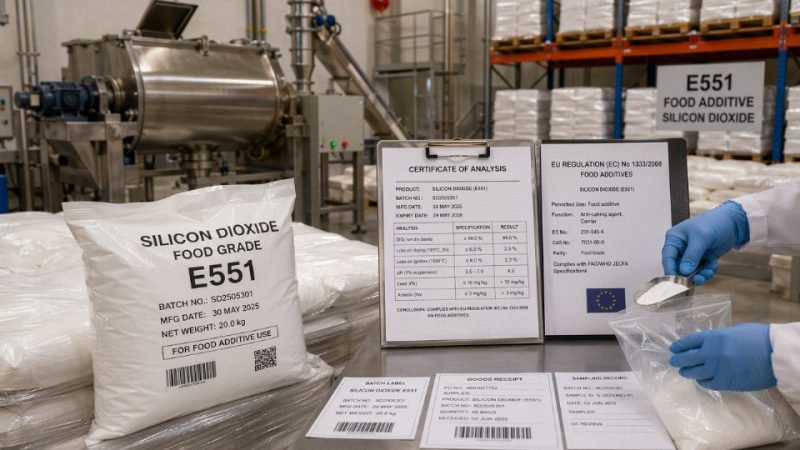
A powder mix that runs cleanly through a ribbon blender in one market can turn into a blocked shipment, rejected specification, or last-minute label change in Europe. On the floor, that means held pallets, rework, angry production planners, and sometimes scrapping otherwise good stock because the additive status was assumed instead of checked. The financial hit usually comes from detention fees, repacking, delayed launches, and supplier claims that are hard to prove later. The practical route is simple but not casual: treat silicon dioxide as E551, then verify the food category, use level, grade, specification, and paperwork before purchase orders are released.
Yes, silicon dioxide is legal in Europe as food additive E551, but only in authorised food categories and under the relevant conditions of use. Buyers should check the exact grade, specification, label wording, traceability, and any particle-size or purity limits before placing product on the EU market.
The tricky part is that “silicon dioxide” on a supplier quote does not automatically mean a compliant European food additive. In practice, the same name may sit on documents for technical, feed, pharmaceutical, or food grades. A typical anti-caking use in powders might sit around 0.5% to 2.0%, depending on the product design and local authorisation, but the number alone will not save a dossier if the specification, certificate of analysis, or label wording is wrong.
Classify the silicon dioxide use before applying European rules
Before anyone argues about whether silicon dioxide is “allowed in Europe,” pin down what job it is doing in the product. I would not approve a supplier, artwork file, or import shipment until that point is written down. Same formula, SiO2. Different regulatory buckets. Different documents. Different exposure assumptions.
That is where many purchasing mistakes start. A buyer sees “silicon dioxide” on a certificate of analysis and assumes it is the same material used in a seasoning blend, a tablet coating line, a toothpaste, or a rubber compound. Chemically related, yes. Legally interchangeable, no.
The same SiO2 can sit in several regulatory identities
In food, silicon dioxide is most commonly handled as food additive E551, usually for anti-caking or flow improvement in powders. Typical plant uses include spice blends, powdered drink mixes, salt-based seasonings, instant mixes, and premixes that bridge in hoppers if the humidity creeps up. Use levels are often somewhere around 0.5% to 2.0%, but that depends on the food category, powder surface area, moisture pickup, local authorization, and whether the additive is doing real work or just covering a poor drying process.
It may also be used as a carrier. That is not just a wording preference. A carrier supports another additive, flavor, enzyme, color, or nutrient so it can be dosed properly. In practice, a flavor house may use silica to keep a powdered aroma free-flowing, then that preparation enters a final food at a much lower carry-through level. The legal review needs to follow the function through the chain, not just inspect the final ingredient declaration.
Processing aid use is another case. If silicon dioxide is used during manufacture and is not intended to have a technological effect in the finished product, the assessment changes. Residues, removal steps, and the actual function matter. I have seen factories call something a processing aid because it sounded easier. That is a bad habit. Inspectors tend to ask what it does, where it goes, and why it is still present.
Outside ordinary food, silicon dioxide may appear as a supplement excipient, for example in capsule and tablet blends to improve flow into dies or prevent sticking. Pharmaceutical excipient use is tighter again, with pharmacopoeial expectations, GMP controls, and supplier qualification that procurement cannot treat like a commodity filler. Cosmetics may use silica for thickening, oil absorption, slip, opacity, or abrasion, depending on the product. Toothpaste silica and face-powder silica are not the same regulatory conversation as E551 in a soup powder.
Feed additive use needs its own review under feed rules. Industrial raw material use is another world: reinforcement in rubber, matting in coatings, viscosity control in sealants, filter media, insulation, catalyst support. None of those make it a food-grade material by default.
Silicon dioxide with the formula SiO2 has one single legal status across all European product categories.False
European compliance depends on intended use, product category, grade, specifications, exposure route, and applicable sector rules. A material that is acceptable as an industrial raw material may be unsuitable or unauthorized for food, feed, cosmetic, supplement, or pharmaceutical use.
Physical form is not a small detail
A purchasing spec that says only “silicon dioxide, white powder” is weak. The form affects handling, dusting, performance, and often the risk assessment.
Common forms include precipitated silica, silica gel, fumed silica, colloidal silica, and naturally derived silica. They can behave very differently on the floor. Fumed silica can be light, dusty, and cling to everything; it gives good thickening in some systems but is not fun around poorly enclosed bag dumps. Silica gel may be selected for moisture control. Precipitated silica is common in anti-caking and carrier-type applications. Colloidal silica may arrive as a dispersion rather than a dry powder. Naturally derived materials bring questions about mineral source, purification, contaminants, and consistency.
Particle size, surface area, porosity, moisture, pH, loss on drying, and heavy metal limits are not paperwork decoration. They affect dosing, segregation, operator exposure, label support, and whether the supplier’s grade matches the intended regulation. If the plant has a habit of tipping bags by hand into an open blender, dust characteristics also become an occupational hygiene issue, not just a quality item.
Function should drive the classification
A practical way to classify silicon dioxide is to ask, “What problem are we paying it to solve?”
| Intended function | Common product area | Likely classification question |
|---|---|---|
| Anti-caking in a finished powder | Food seasoning, dry mix, premix | Is E551 permitted for this food category and use condition? |
| Flow improvement during tableting | Supplements or medicines | Is it an excipient under supplement or pharmaceutical rules? |
| Moisture control | Food systems, packaging-adjacent uses, desiccant applications | Is it an additive, processing aid, packaging component, or non-food item? |
| Carrier for flavors or actives | Food preparations, supplements, feed | How is carry-through handled and documented? |
| Thickening or oil absorption | Cosmetics, gels, pastes | Does the cosmetic ingredient specification and safety file cover this form? |
| Abrasion | Toothpaste, cleaning products | Is the exposure route and particle profile acceptable for that sector? |
| Reinforcement | Rubber, coatings, sealants | Is this purely industrial, with no food or consumer ingestion claim? |
Wrong classification usually shows up later as a blocked shipment, rejected customer audit, relabeling work, or a hurried reformulation. The cost is rarely just the additive. It is the line trial, the obsolete packaging, the distributor questions, and sometimes a full batch stuck in quarantine while people argue over a two-page supplier statement.
Put the classification in the approval file
For a European file, I would expect a short written classification note before supplier approval. One page is often enough if it is precise. State the product category, intended function, material form, grade, applicable specification, maximum use level or expected carry-through, label wording, and the reason the selected regulation applies.
A solid dossier normally includes additive identity, grade, specification, heavy metal limits, particle size information where relevant, supplier statement, certificate of analysis, label wording, and traceability records. For higher-risk or borderline uses, add the technical rationale and legal reference used by the regulatory person.
Do this before launch, not after the first pallet lands.
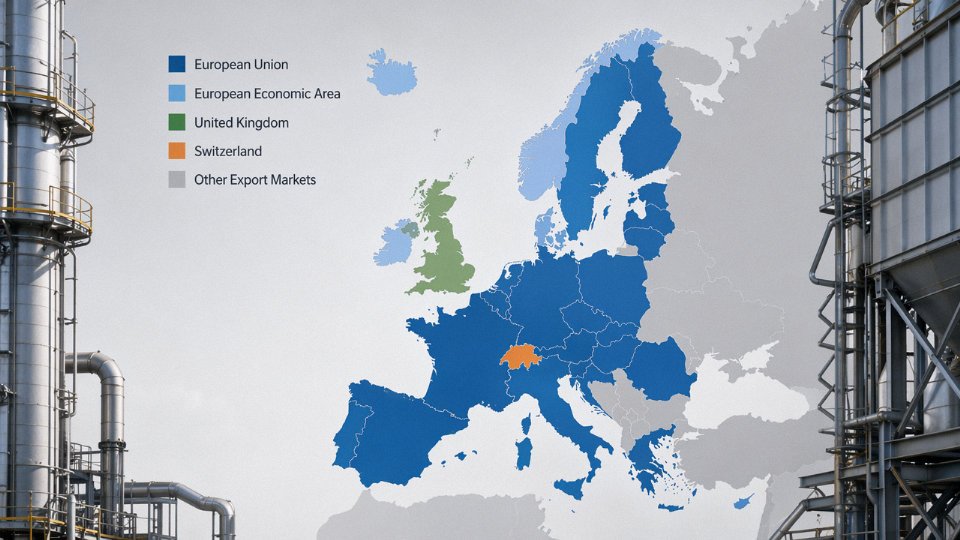
Define Europe correctly: European Union, EEA, United Kingdom, Switzerland, and export markets
“Europe” is a geography word. It is not a single food law system.
That distinction sounds academic until a pallet is already wrapped, the invoice says “EU compliant,” and the buyer in Zurich, Oslo, or Manchester asks for a declaration that does not quite match the shipment. I have seen this turn into relabeling work, warehouse holds, credit notes, and one ugly argument over who should pay for the second laboratory certificate.
For silicon dioxide, the first split is simple: the European Union has harmonized food additive rules, and silicon dioxide is listed there as E551 when used in permitted categories and under the relevant conditions. That does not automatically settle every European sale. The wider European market includes countries that may align with EU rules in many places but still operate their own legal systems, inspectors, language rules, and importer responsibilities.
A silicon dioxide product that is acceptable as E551 in one European Union member state is usually assessed under the same EU food additive framework in other EU member states, but the broader European region still needs country-by-country confirmation.True
EU food additive rules are harmonized, while non-EU European countries such as the United Kingdom and Switzerland have separate legal systems. EEA alignment is close for many internal market rules, but enforcement and documentation can still be local.
European Union: harmonized rules, local consequences
Inside the European Union, the food additive framework is largely harmonized. That is good news for procurement teams because a properly specified E551 grade does not need to be reinvented for France, Germany, Spain, or the Netherlands every time.
Still, do not mistake harmonization for a free pass. The use must fit the food category, the function, and the conditions of use. An anti-caking use in a dry seasoning blend is a very different compliance discussion from a novel delivery system, a supplement, or a product aimed at infants. Typical use levels in industrial powders may sit around 0.5% to 2.0%, depending on the carrier system, moisture behavior, particle size, and the finished food category, but the legal check is not just “below two percent.” It is: permitted category, permitted additive, acceptable grade, correct function, correct labeling, and traceability.
In practice, EU buyers often ask for a supplier statement, certificate of analysis, heavy metal limits, additive identity, grade reference, particle size information where relevant, allergen and GMO statements, and batch traceability. Some ask for the same pack in three languages. Some want their own template signed. Annoying, yes. Normal, also yes.
EEA countries: close alignment, not no-check territory
The European Economic Area brings Norway, Iceland, and Liechtenstein into much of the EU internal market structure. For many product types, the rules track EU requirements closely. If your E551 dossier is clean for EU sale, you may be most of the way there.
Most of the way is not all the way.
Local enforcement still matters. So do the importer’s obligations and the product presentation in that market. A Norwegian customer may have expectations around documentation language, food contact declarations for packaging, or retail label review that differ from a buyer in Belgium. If the shipment is business-to-business bulk, the paperwork burden may be mostly technical. If it becomes a consumer pack, label wording and language obligations become much less forgiving.
A practical check I like is to ask the customer one blunt question before production release: “Are you the importer of record for this destination, and have you approved the label and additive declaration for that country?” If the answer is vague, hold the artwork and do not print 80,000 bags.
United Kingdom: check separately after Brexit
The United Kingdom cannot be treated as “just another EU destination” anymore. After Brexit, much of the food additive framework was retained, so the starting point may look familiar. E551 may still appear acceptable in contexts similar to EU practice, but retained rules, domestic updates, guidance, enforcement approach, and labeling details need a separate check.
This matters most when companies run one specification sheet for “Europe and UK” and nobody owns the UK review. The risk is not always that silicon dioxide itself becomes prohibited. More often, the problem is a stale legal reference, a label statement that points to the wrong regulation, an importer address issue, or a customer standard that has moved faster than the internal compliance file.
Northern Ireland can add another layer, depending on product route and applicable arrangements. Do not let sales settle that over email with “same as UK.” Get the destination and route confirmed.
Switzerland: aligned in many areas, still its own gate
Switzerland is not an EU member. It often recognizes, mirrors, or aligns with many European food safety principles, and Swiss buyers are usually very familiar with EU-style documentation. That helps. It does not remove the need for a Swiss check.
A Swiss importer may ask for confirmation against Swiss food law, not merely an EU E551 statement. Labels may require suitable national language coverage depending on where and how the product is sold. Customs classification, importer details, and commercial documents can also be stricter than a factory shipping clerk expects.
Small mistake, real cost: a mixed pallet destined for Switzerland with EU-only labels can sit while the distributor decides whether to over-label, return, or discount it into another channel. None of those options improves margin.
Export markets: define the destination before quoting compliance
For exporters outside Europe, the commercial request often arrives as “Can you supply Europe?” Push back politely and narrow it down.
A workable pre-shipment check should cover:
| Checkpoint | Why it matters on the plant floor and in procurement |
|---|---|
| Destination country | Determines the legal framework, label language, importer duties, and border expectations. |
| Importer of record | Someone must legally place the product on that market; a freight forwarder is not a compliance department. |
| Product use | E551 in a permitted dry food category is not the same as cosmetic, pharmaceutical, feed, or technical use. |
| Label language and wording | Wrong language or additive declaration can force over-labeling, rework, or blocked retail release. |
| Customer standard | Large food manufacturers may impose tighter heavy metal, particle size, contaminant, halal, kosher, or audit requirements than the law. |
| Batch documents | Certificate of analysis, specification, supplier statement, and traceability records must match the shipped lot, not last year’s sample. |
The best time to settle this is before purchasing raw material and printing labels. Once the container is booked, every correction gets expensive. A 30-minute country confirmation at order entry can prevent two weeks of storage fees, emergency translations, and the kind of procurement escalation nobody enjoys.
Follow the European food additive route for E551 authorization and specifications
For food use in the European Union, silicon dioxide normally sits under the additive number E551. That number matters. It is not just a catalog shortcut or a label decoration; it ties the material to the EU food additive system, where authorization and purity are handled separately.
On the plant floor, E551 is usually bought for a very practical reason: powder flow. It keeps seasoning blends, powdered drinks, instant mixes, vitamin premixes, spice powders, and similar dry products from bridging in hoppers or turning into lumps during storage. Typical use levels I see in industrial powdered foods are often around 0.5% to 2.0%, but that range depends on the powder’s fat content, humidity exposure, particle size distribution, packaging, shelf-life target, and the actual legal permission for the food category. A dry spice blend in a laminate pouch is not the same case as a powdered infant product or a tablet-form food supplement.
Two checks, not one
The basic EU route has two gates:
| Check | What the buyer or technical team must verify | What goes wrong if missed |
|---|---|---|
| Authorization | E551 must be permitted in the relevant food category, at the allowed level and for the intended function | Product may be legally non-compliant even if the material itself is clean |
| Specification | The supplied silicon dioxide must meet the official EU purity specification for E551 | A “food grade” bag can still fail on identity, impurity limits, or documentation |
The authorization side is mainly controlled through Regulation (EC) No 1333/2008, which sets the EU framework for food additives and the Union list of permitted additives. In practical terms, this is where you check whether E551 is allowed in the specific food category you are selling into. Do not treat E551 as universally permitted across all foods. EU additive permissions are commonly structured by food category and technological function, not by a broad statement such as “silicon dioxide is legal in food.”
That distinction catches people. A procurement manager may see E551 used in seasoning powder and assume the same grade can be dropped into every powdered product the site makes. Maybe yes. Maybe not. The answer depends on the category, the intended role as anti-caking agent or carrier, the maximum level if one is set, and whether the product has special rules. If the formulation team changes the product description from a seasoning blend to a food supplement powder, or from a dry mix to a children’s product, the regulatory check should be reopened. Quiet recipe changes are where many compliance problems start.
A supplier saying 'food grade silicon dioxide' is enough to prove E551 compliance in the European Union.False
The buyer still has to confirm that E551 is permitted for the target food category and that the supplied grade matches the official EU purity specification and documentation requirements.
Match the certificate to the EU specification
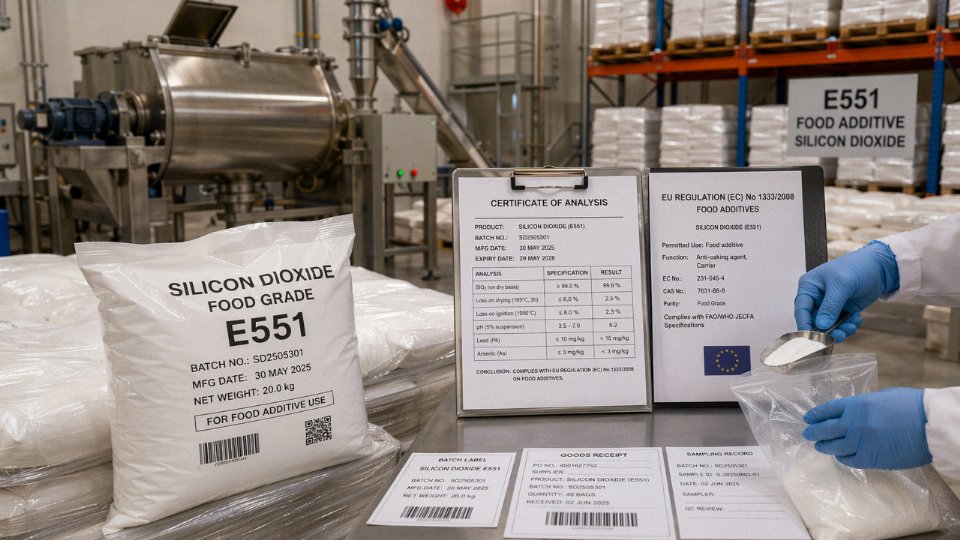
The purity side is handled through Commission Regulation (EU) No 231/2012, which lays down specifications for food additives listed in the EU rules. For E551, the specification is not satisfied by a nice product name on a sack, or by a generic certificate saying “silicon dioxide, food grade.” You need the certificate and technical file to line up with the official specification.
In a decent European-facing dossier, I would expect to see the additive identity, grade, applicable specification reference, heavy metal limits, particle size information where relevant, supplier statement, certificate of analysis, label wording, and traceability records. For importers, distributors, and private-label manufacturers, this is not paperwork theater. If a border check, customer audit, or authority request lands on your desk, the question will not be “did the purchasing team believe the supplier?” It will be “can you show why this material was acceptable for this food?”
Heavy metal limits deserve a hard look. Silicon dioxide is mineral-derived or synthetically manufactured, depending on the grade and supplier route, and certificates should address the listed impurity limits under the EU specification, typically in low mg/kg ranges depending on the element and current legal text. Do not accept a certificate that reports only moisture and bulk density if the legal specification also requires impurity control. That is a procurement shortcut, not compliance.
Particle size is another area where engineering and regulatory teams need to talk to each other. Very fine silicon dioxide may behave beautifully in a ribbon blender and make a sticky powder run through a filler without hammering the hopper every ten minutes. That does not remove the need to understand how the material is characterized, especially where fine particles or nanomaterial questions may be relevant. Ask for the supplier’s technical data, not just the sales sheet.
A typical approval path that works
A workable approval process is usually simple, but it needs discipline:
- Define the finished food category before buying the additive.
- Check E551 permission under Regulation (EC) No 1333/2008 for that category and function.
- Confirm any level restrictions or quantum satis conditions, as applicable.
- Match the supplier’s grade against Commission Regulation (EU) No 231/2012.
- Keep the certificate of analysis, specification sheet, supplier declaration, batch traceability, and label text together.
The wrong path is familiar: maintenance complains that powder is sticking, production asks purchasing for “some silica,” a distributor offers a cheaper food-grade silicon dioxide, and the site trials it before regulatory has classified the product. Sometimes nothing bad happens. Other times the formula works mechanically but fails the legal category check, or the documentation is too thin for a customer audit. Then the cost is not just a rejected batch. It can mean relabeling, blocked stock, urgent supplier requalification, and a week of people arguing over documents that should have been checked before the first pallet arrived.
Check permitted food categories, technical need, and use level before formulation sign-off
E551 should be approved against the actual food, not against a comfortable internal phrase like “dry blend” or “nutritional powder.” That shortcut causes trouble. A seasoning base, a food supplement premix, a powdered drink, and a processing aid blend may all look similar in a ribbon blender, but they may sit in different European food categories and carry different use conditions.
On the plant floor, silicon dioxide is usually there for practical reasons: keeping powders free-flowing, reducing clumping in humid storage, improving screw-feeder dosing, and helping minor ingredients distribute evenly through a batch. If a 25 kg bag bridges in the hopper every half hour, the operator does not care that the additive file looks tidy. But regulatory sign-off still has to answer a narrow question: is E551 permitted for this exact finished food category, at this intended use, in the market where the product will be sold?
Start with the real food category, not the sales description
Marketing descriptions are often too broad for compliance work. “Clean label seasoning,” “protein powder,” “instant mix,” or “functional powder” might be useful on a sales sheet, but they are not enough for a European additive assessment.
Typical product areas needing careful review include:
- Powdered seasonings and spice blends, especially those containing salt, sugar, yeast extract, hydrolyzed protein, or hygroscopic flavors
- Dry mixes such as soup bases, sauce powders, bakery mixes, dessert powders, and coating blends
- Salt substitutes, where flow behavior can be awkward because potassium chloride and mineral salts do not always behave like sodium chloride
- Food supplements in powder, tablet, capsule, or sachet form
- Powdered beverages, including instant cocoa, coffee mixes, electrolyte powders, and flavored drink bases
- Powdered processing ingredients sold business-to-business, such as enzyme carriers, vitamin premixes, flavor powders, or anti-foam powder blends
The category call should be made from the finished product’s composition, presentation, and intended use. A powdered ingredient sold to a bakery manufacturer may not be assessed the same way as a consumer-facing dry drink mix. In practice, I like to see regulatory, R&D, and the commercial owner agree on the category before the first production trial. If that discussion happens after printed film has been ordered, somebody usually pays for it.
A food-grade silicon dioxide supplier statement alone proves that E551 is legal in any European food powder.False
The supplier statement supports identity and grade, but the finished-food category, technical need, use level, and label declaration still have to be checked for the specific market.
Use the least amount that does the job
E551 is commonly used at low percentage levels in powders, often somewhere around 0.5% to 2.0%. That range depends on the carrier system, particle size distribution, fat or flavor loading, humidity exposure, packaging barrier, storage time, and the exact authorization that applies. A free-flowing salt blend may need less. A sticky spray-dried flavor powder with warm warehouse exposure may need more. Sometimes the fix is not more E551 at all; it is better drying, a different carrier, improved packaging, or stopping operators from leaving part-used bags open next to the steam line.
Even where the legal text does not give a simple fixed maximum for every situation, the formulation should still follow the minimum-needed principle. Use enough for the intended technological effect, then stop. Overdosing is not just a regulatory smell. It can dull flavor release, change bulk density, affect tablet compression, create dust during dumping, and make the buyer wonder what else is loose in the specification.
A practical trial plan is usually better than a desk assumption. Run, say, three or four levels around the expected range, then measure flow through the actual hopper or dosing screw if possible. Lab funnels help, but they do not always predict a tired auger feeder on a damp morning shift.
Keep a formulation approval record that an auditor can follow
Before sign-off, the file should show the logic, not just the result. A decent approval record normally includes:
| Checkpoint | What to record | Why it matters |
|---|---|---|
| Food category assessment | Exact category used for the additive check | Prevents broad “powder” assumptions |
| Target use level | Percentage in the finished product or premix, with calculation basis | Shows the intended exposure and formulation control |
| Functional justification | Anti-caking, flow aid, dosing consistency, blend uniformity, or similar | Supports technical need |
| Supplier grade | E551 identity, specification, certificate of analysis, heavy metal limits, particle data where relevant | Confirms the material is the right additive grade |
| Label declaration | Additive name or E-number wording as required for the product | Avoids artwork rework and border holds |
| Traceability link | Batch records, supplier lot, formulation version | Makes recalls and customer complaints manageable |
The wrong approach is to approve E551 once in a master raw-material file and let every plant use it wherever a powder sticks. The right approach is slower at the front end: category check, technical need, use level, label wording, then plant trial. That sequence prevents the common mess: a formula that runs beautifully through the filler, but cannot be released because the legal basis was never pinned down.
Control nanomaterial, particle size, and purity questions before they become market access problems
Silicon dioxide is not one tidy material from a compliance point of view. On a purchasing screen it may look like the same line item: silicon dioxide, silica, E551, anti-caking agent. On a lab bench, the differences can be large enough to matter. Some grades contain very fine particles, some are structured aggregates, some are surface-treated for industrial use, and some are made by a process that gives a completely different morphology from the grade used in the last formulation approval.
That is where European market access can get uncomfortable. The legal question is not only “is E551 authorized?” It is also “is this specific material, from this process, with this particle profile and purity, covered by the specification and safety basis we are relying on?”
Ask for particle data before the first pallet ships
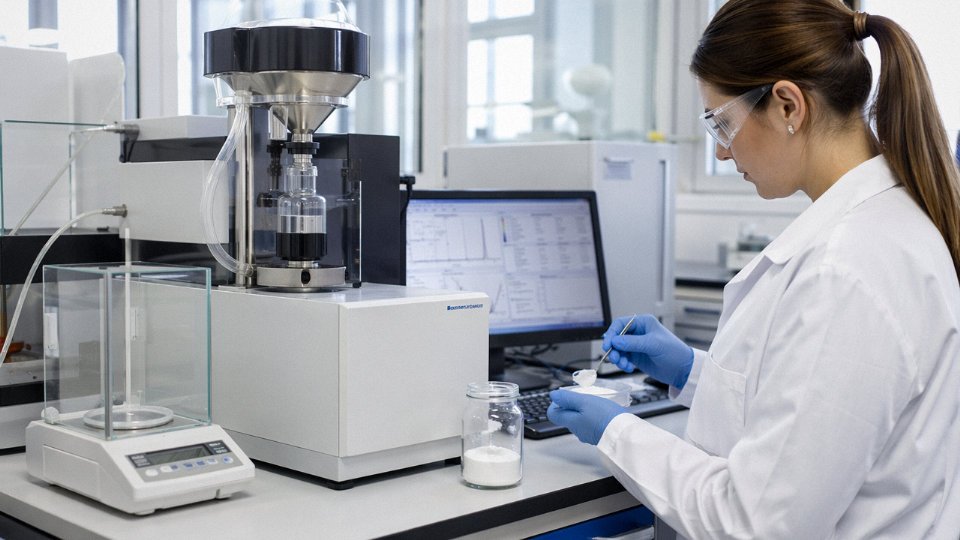
For food-grade silicon dioxide, buyers should ask for particle size information early, not after a customer audit. A useful supplier pack usually includes a particle size distribution, the measurement method, sample preparation conditions, and a plain-language description of the manufacturing route. Laser diffraction, electron microscopy, BET surface area, and other methods can give different views of the same material. None is magic. The method matters.
In practice, I want to know whether the number on the certificate is a primary particle estimate, an aggregate size, or an agglomerate size after dispersion. Those are not interchangeable. A powder that flows like flour in a ribbon blender may still be made from much smaller primary structures. If the regulatory file says one thing and the supplier’s technical data quietly says another, expect questions from a serious European customer.
A typical buyer mistake is accepting a one-page certificate that says “particle size: complies” with no method, no range, and no specification reference. That may pass receiving inspection. It rarely survives a hard technical review from a multinational food customer or an authority query during a border or market check.
A material sold as silicon dioxide or E551 can still require particle-size and material-characterization review before it is accepted for a European food application.True
Authorization of E551 does not remove the need to confirm that the supplied grade matches the applicable additive specification, safety assumptions, and permitted-use conditions.
Do not treat all silica types as drop-in substitutes
Changing from precipitated silica to fumed silica, or from one precipitated grade to another with a different surface area and oil absorption, should trigger a renewed compliance review. I have seen this happen for ordinary reasons: the approved supplier has a long lead time, procurement finds a cheaper grade, or a plant swaps to a powder that feeds better through a K-Tron or Flexicon system. The line runs fine. Then regulatory asks for the support file and the substitution becomes a problem.
The commercial names do not help much. “Silica,” “silicon dioxide,” and “synthetic amorphous silica” may appear across different grades, but the manufacturing process, structure, impurities, surface chemistry, and particle profile can differ. For a food additive dossier, the supplier should confirm that the grade is intended for food use, meets the relevant E551 specification, and is not an industrial silica repackaged under a friendly description.
Wrong substitution has a simple consequence chain: uncertain identity leads to delayed customer approval; delayed approval holds finished goods; held goods create rework, relabeling, or disposal decisions. The material saving can disappear in one blocked truckload.
Purity data should match the specification, not just the sales sheet
A compliant file normally needs more than a general purity claim. For silicon dioxide, the certificate of analysis and supporting specification should address the tests relevant to the applicable standard. Common items include loss on drying, loss on ignition, soluble substances, assay or silicon dioxide content where specified, and heavy metal limits such as lead, arsenic, mercury, or cadmium depending on the controlling specification.
The actual ranges depend on the grade, test method, and regulatory specification being used. Loss on drying may look different for a highly adsorptive powder stored in a humid warehouse than for material kept sealed in a dry room. Loss on ignition can reflect bound water or volatile residues. Soluble substances matter because they tell you something about extractable material, not just the white appearance of the powder. Heavy metals are usually low in reputable food-grade supply, but “low” is not a legal limit. Get the numbers, units, methods, and pass/fail criteria.
I also like to see batch-to-batch trend history when the use is high-volume or customer-critical. Three to ten recent lots can reveal whether the supplier is running a tight process or just scraping under a limit. That is a procurement issue as much as a regulatory one.
Keep the evidence alive
European safety reviews and additive specifications do not stand still. Particle characterization, nanomaterial definitions, analytical methods, and impurity limits can be revisited as science and enforcement priorities change. A dossier that looked acceptable five years ago may be thin today, especially if it lacks particle data or relies on an outdated supplier declaration.
Set a review rhythm. For stable, low-risk suppliers, an annual document refresh is usually enough. For a new silica grade, a new source country, a reformulation, or a change in manufacturing process, review before purchase order release. Not after the container is on the water.
A practical control file should contain:
| Evidence item | What to check before approval |
|---|---|
| Supplier statement | Food-grade status, E551 reference, intended use, manufacturing process |
| Particle information | Distribution, method, dispersion conditions, surface area where relevant |
| Specification match | Confirmation against the applicable European additive specification |
| Certificate of analysis | Batch data for purity, loss tests, soluble substances, and heavy metals |
| Change control | Written notice for process, site, raw material, or specification changes |
| Traceability | Lot numbers linked from incoming material to finished goods |
This is not paperwork for its own sake. It is how you avoid discovering, during a customer launch or an authority question, that your “same” silicon dioxide is not the same material at all.
Label silicon dioxide correctly on European food and supplement products
Legal permission to use silicon dioxide is only half the job. The other half sits on the artwork, the product specification, the bill of materials, and sometimes in a rushed email chain between purchasing and the label agency. I have seen formulas that were technically defensible fail a customer label review because the additive was named one way in the supplier file, another way on the finished goods specification, and a third way on the retail label.
For European food products, silicon dioxide used as E551 normally needs to be declared where additive labeling rules apply. The usual format is the additive function class followed by either the specific name or the E-number. In plain factory language, that often means something like “anti-caking agent: silicon dioxide” or “anti-caking agent: E551”. The right choice depends on the product type, the label convention used by the brand owner, and the country-specific language version being printed.
If silicon dioxide is authorized for a food use in Europe, it can still be non-compliant if the finished product label does not declare it correctly where declaration is required.True
Authorization and labeling are separate compliance steps. E551 may be permitted in a formulation, but the finished food or supplement must still meet applicable ingredient and additive declaration rules.
Use the function class, not just the chemical name
The mistake I dislike most is a label that simply lists “silicon dioxide” without showing its additive function, when the applicable food labeling format expects a category name. Consumers may not care whether it is an anti-caking agent or carrier, but regulators and technical auditors do.
In many dry food applications, the practical label wording starts with the job the additive performs:
| Actual role in the product | Common label style to verify | Why it matters |
|---|---|---|
| Keeps a powder free-flowing | “Anti-caking agent: silicon dioxide” or “Anti-caking agent: E551” | Matches the technical function seen in the formulation |
| Helps carry a flavor, color, or micronutrient | Often declared through the additive or carrier rules that apply to the final food | Carry-over can be messy; do not assume it disappears from label duties |
| Part of a premix added at low level | May still need declaration, depending on function and carry-over status | “It came from the premix” is not a defense during an audit |
Typical use levels in powdered foods are often somewhere around 0.5% to 2.0%, but the label decision does not come from the percentage alone. It depends on the food category, whether the additive has a technological function in the finished product, the local authorization, and the label rules being applied to that sale market. A 0.8% anti-caking use in a seasoning blend is not the same compliance question as a trace amount brought in through a spray-dried flavor.
Supplement labels need extra discipline
Food supplements are where silicon dioxide labeling gets untidy. A purchasing team may buy a vitamin premix that contains silicon dioxide as a flow aid. The tableting team may add another small amount to stop sticking at the feed frame. The capsule supplier may have its own excipient package. By the time the finished product is packed, silicon dioxide can be present from two or three sources.
That does not automatically make it illegal. It does mean someone has to reconcile the documentation.
On supplement labels, silicon dioxide may appear as an anti-caking agent, carrier, glazing-related excipient, or processing aid-like material depending on the form and function. Tablets, hard capsules, sachet powders, and effervescent products do not always land in the same practical labeling treatment. The regulatory team should check the finished product composition, not only the active nutrient panel. Procurement should also ask suppliers whether silicon dioxide is intentionally added, present through a premix, or only mentioned as a processing residue. Those are different conversations.
A common plant-floor scenario: the blender operator reports poor flow in a mineral powder, so R&D approves a small addition of silicon dioxide. The change works. Filling speed improves, giveaway drops, and fewer sachets jam at the auger. Then the first export batch is held because the printed label still follows the old ingredient list. The cost is not the silicon dioxide. The cost is repacking, relabeling, expiry pressure, and an irritated distributor.
Keep terminology aligned from supplier file to retail pack
Use one controlled naming approach across the master specification, artwork brief, certificate of analysis review, ERP item text, and customer technical sheet. Do not let the supplier specification say “silica,” the internal formula say “colloidal silicon dioxide,” the label say “E551,” and the customer questionnaire say “silicic acid derivative” unless each term has been reviewed and intentionally mapped. That kind of inconsistency invites questions, even when the material itself is fine.
At minimum, the compliance file should connect:
- additive identity, such as silicon dioxide / E551;
- function in the finished product, not only in the supplier’s ingredient;
- grade and specification reference;
- certificate of analysis wording;
- artwork ingredient declaration;
- traceability from incoming lot to finished batch.
Operational warning: artwork control is a compliance control. Treat a label text change with the same discipline as a formulation change. In plants that run many private-label SKUs, the wrong legacy ingredient statement can survive for years because nobody wants to reopen approved artwork. That is how a legal formulation becomes a blocked shipment.
Translate locally, review centrally
Each country of sale may need local language labeling. That is normal in Europe, and it is one reason label management becomes slow near launch. The master compliance content should still be held in clear English for internal review, supplier communication, and cross-border technical approval. Then controlled translations can be produced for the actual pack.
Do not let distributors freelance the wording. They may be excellent sales partners, but they are rarely the right people to decide whether “anti-caking agent: E551” should be translated, replaced by the additive name, or presented in a different order. Set the English master first, confirm the legal label style for each target market, then translate under document control. That small discipline prevents many avoidable border checks, retailer non-conformances, and customer audit findings.
Build a defensible compliance file for audits, import checks, and customer qualification
A legal-market claim for silicon dioxide in Europe should not live in somebody’s inbox as a loose supplier email. It needs a file that an auditor, importer, retailer, or border officer can follow from the purchased powder to the finished product on the shelf.
In practice, the best files are boring. Same structure every time. Current documents. Clear lot links. No heroic explanations needed during an audit.
Keep the raw material evidence together
For each silicon dioxide grade, the purchasing or quality team should hold at least:
- Supplier declaration stating the regulatory status, intended use, food additive identity where relevant, and market scope.
- Current certificate of analysis for the actual delivered lot, not a generic sample from last year.
- Specification sheet covering assay or identity, appearance, loss on drying if used, heavy metal limits, and microbiological limits if relevant to the application.
- Safety data sheet where applicable. Even when the material is not classified as hazardous, many European customers still expect one for workplace handling and dust control review.
- Food additive statement or food contact statement, depending on the use route.
- Particle size information where relevant, especially for fine, precipitated, fumed, or highly engineered grades.
- Traceability records linking supplier lot, purchase order, goods receipt, internal lot number, production batch, and dispatch record.
For E551 in food, I like to see the words “food grade” backed by actual specification limits. A sales brochure is not enough. Heavy metals, identity, grade, and manufacturing controls matter. If the supplier cannot say whether the grade is intended for food additive use in the European Union, procurement should not “interpret” that silence as approval.
A food-grade silicon dioxide certificate alone proves E551 may be used in any European food.False
European legality depends on additive identity, permitted food category, technical need, use level, labeling, and the market country where the product is sold.
Add the regulatory decision record, not just supplier papers
The compliance file should show how the business decided the use was legal. That usually means a short internal assessment covering:
| Evidence item | What it should answer | Common weak spot |
|---|---|---|
| Legal classification | Is this E551, a processing aid, a food contact material input, or another use? | Treating all silicon dioxide as the same thing |
| Food category assessment | Is the finished product category permitted for this additive? | Using a rule from a similar product |
| Use-level justification | Why is the level technically needed? | “Standard formula” with no rationale |
| Label review | Is the additive name or E-number declared correctly? | Label version does not match formula |
| Market-country review | Is the target market EU, EEA, UK, Switzerland, or another destination? | Calling the whole region “Europe” |
Use levels in powdered food systems are often around 0.5% to 2.0%, depending on the powder base, humidity pickup, particle size distribution, pack size, filling speed, and what the local authorization allows. I have seen plants add more because a hopper was bridging in August, then forget to bring the formulation back under control. That is not a compliance strategy. Fix the powder flow problem properly: sieve condition, moisture control, bin geometry, vibration setting, liner choice, or ingredient order may be the real cause.
Put supplier controls into the purchasing system
A defensible file starts before the first pallet arrives. Put the silicon dioxide supplier through approved vendor status, with a defined grade code and approved manufacturing site. The purchase specification should require change notification for raw material source, production process, particle size range, surface treatment if any, regulatory status, specification limits, and manufacturing site changes.
Do not rely on “same material as before” from a distributor. Distributors can be perfectly good, but they need lot-level traceability back to the manufacturer. Repacked bags, mixed inventory, and private-label documents are where traceability often gets muddy.
Set renewal intervals. Certificates of analysis are batch documents, but supplier declarations, regulatory statements, allergen or contaminant statements, and specifications should be refreshed periodically, often every 12 to 24 months depending on customer standards, risk level, and how often the supplier changes paperwork. High-volume plants may review critical additive suppliers annually. Smaller operations sometimes stretch longer, but that choice should be deliberate.
Contamination limits need to be written, not assumed. For food additive E551, check the applicable purity criteria and customer requirements for elements such as lead, arsenic, mercury, and cadmium. If the material is handled in bulk, add practical controls for foreign matter, bag integrity, pallet condition, and warehouse segregation. A torn 20 kg bag repaired with packing tape tells you something about the system.
Link lot, batch, and label version
The strongest compliance file connects three things: the raw material lot used, the finished product batch made, and the exact label version placed on the market. Miss one of those links and a small issue becomes expensive.
If a supplier later reports an out-of-spec lot, you need to know which finished batches received it, where they went, and what claims were on the pack. If regulatory wording changes, you need to know which label artwork was live during each production run. This is basic recall discipline, but it also protects routine customer qualification work. Retailers and importers increasingly ask for this chain before accepting a product.
Audit failures I see too often
The predictable problems are not exotic. They are paperwork gaps that nobody owned.
Outdated certificates are common, especially when procurement buys the same grade for years and quality stops asking questions. Missing particle data is another, particularly for fine grades where nanomaterial questions may arise. Unsupported “food grade” claims show up on distributor letters with no matching specification. Sometimes the formula exceeds the approved technical need because operations increased the anti-caking agent to cure poor flow, damp raw materials, or bad storage practice.
Wrong decision, real cost: held shipments, relabeling, customer rejection, reformulation, and in the worst case product withdrawal. Right decision: a file that proves the grade, use, level, label, and market were checked before the product shipped. That is what auditors want to see, and frankly it is what a well-run factory should want anyway.
Avoid common mistakes that make a legal silicon dioxide grade non-compliant
A silicon dioxide grade can be perfectly legal on paper and still fail a European customer audit, import review, or retailer technical check. I have seen this happen most often when purchasing treats E551 as a commodity code rather than a controlled food additive with a specific use case, specification, and market destination.
The material is not the only issue. The way it is used, declared, sourced, and documented matters just as much.
A silicon dioxide grade listed as E551 is automatically legal for every food, supplement, cosmetic, and pharmaceutical product sold in Europe.False
E551 status only supports use where the relevant food additive rules, category permissions, specifications, labeling requirements, and local market conditions are satisfied. Other sectors, such as cosmetics or pharmaceuticals, follow different regulatory routes.
Mistake one: treating one approval as permission for every product
Food additive approval does not travel everywhere. A silicon dioxide grade used as an anti-caking agent in a powdered seasoning may be acceptable under one food category, while the same grade in a beverage, gummy supplement, coating system, or cosmetic powder could need a different assessment.
This catches factories during product extensions. A powder premix line works well with roughly 0.5% to 1.5% silicon dioxide, depending on salt level, humidity, fat carryover, and packaging format. Then someone copies the ingredient into a new supplement blend or instant drink because “we already use E551.” That shortcut can create a non-compliant formula even before the first batch is packed.
The right approach is dull but safe: check the exact product category, intended technical function, maximum level if applicable, and market before formulation sign-off. The wrong approach saves half a day in R&D and may cost weeks in relabeling, blocked stock, or customer rejection.
Mistake two: buying industrial silica for a food or supplement use
Low-cost silica is not automatically unsafe, but industrial grade is not food additive grade by default. The difference may sit in specification control: heavy metals, loss on drying, assay basis, soluble impurities, particle profile, residual processing aids, and whether the supplier actually manufactures under a food-relevant quality system.
Procurement teams sometimes compare only price per kilogram. That is risky. A food or supplement plant needs a supplier declaration that clearly supports E551 or the relevant permitted additive identity, a current certificate of analysis, specification limits, traceability, allergen or cross-contact statements where needed, and contaminant data that match the intended market. Heavy metal limits are not a “nice to have” in Europe; they are part of the buyer’s defense file.
The price gap between industrial and food-grade silicon dioxide varies widely. It depends on purity, country of manufacture, packaging, testing frequency, and whether the supplier carries proper regulatory documentation. A cheap bag can become expensive fast if a customer asks for an additive specification and the only answer is a general technical data sheet written for rubber, paint, or battery materials.
Mistake three: changing supplier, particle type, or origin without reassessment
A second-source approval is not just a purchasing exercise. Precipitated silica, fumed silica, silica gel, and surface-treated forms can behave differently in flow, dusting, dissolution behavior, and regulatory characterization. Even within the same general type, a change in particle size distribution or manufacturing site can alter the documentation needed.
In practice, this is where a lot of plants get sloppy. The warehouse receives a substitute grade because the normal supplier missed a shipment. Production runs it because the powder “looks the same.” Then QA discovers the certificate of analysis does not mention the same additive specification, or the supplier statement excludes food use in the European Union.
A controlled change should trigger, at minimum:
| Change made | What to recheck before release |
|---|---|
| New supplier | Additive identity, specification, contaminant limits, traceability, country of origin |
| New particle type | Technical need, labeling function, particle size or nano-related assessment where relevant |
| New manufacturing site | Supplier declaration, certificate format, audit status, import documentation |
| New application | Permitted category, use level, label wording, customer-country rules |
Do this before the first commercial batch, not after a container is already sitting at a distributor.
Mistake four: leaving silicon dioxide off the label or using a vague function
If silicon dioxide is present in the finished food or supplement and performs a technological function, it generally needs to be declared according to the applicable labeling rules. Hiding it inside “processing aid,” “mineral carrier,” or an unclear blend description is a common source of trouble.
The label should match reality. If the material is used to keep a powder flowing, anti-caking or a similar legally accepted function may be appropriate, depending on the product and market. If it is used as a carrier in a premix, the final-product assessment may be different. A contract manufacturer should not assume the brand owner will fix this later; by then artwork, multilingual packs, and pallet labels may already be printed.
Operational warning: artwork errors are painfully expensive because the product may be physically fine. You are not scrapping bad powder. You are scrapping trust, packaging, and time.
Mistake five: selling across Europe under one regulatory assumption
“Europe” is not one checklist. The European Union has its food additive framework. The United Kingdom has retained and adapted rules after Brexit. Switzerland has its own system, often aligned in parts but not something to ignore. EEA markets can follow EU-style rules, yet customer and border expectations still need checking.
This matters for exporters and private-label suppliers. A distributor may ask for one silicon dioxide dossier, then sell the same lot into several markets. If the technical file only says “approved in Europe” without naming the European Union, United Kingdom, Switzerland, or the intended customer countries, it is weak.
A practical release gate is simple: no shipment until the product category, grade specification, label declaration, supplier documents, and destination market are all aligned. Miss one of those, and a legal E551 grade can still become a commercial problem.
Frequently asked questions about silicon dioxide legality in Europe
Is silicon dioxide banned in Europe?
No, silicon dioxide is not generally banned in Europe. That answer is safe only if nobody stops reading there, because the legal position changes with the product type, the intended function, the regulatory territory, and the exact grade being supplied.
For food use inside the European Union, silicon dioxide is listed as food additive E551, but that does not mean a buyer can put any bag marked “silicon dioxide” into any food. The use still has to fit an authorized food category, serve a real technical function such as anti-caking or flow improvement, meet the relevant specification, and be declared correctly where labeling rules require it.
Silicon dioxide is completely banned in European food products.False
Silicon dioxide is authorized in the European Union as food additive E551 for permitted food additive uses, subject to category restrictions, specifications, technical need, and labeling requirements.
In practice, the trouble usually starts with vague purchasing language. A buyer asks for “food grade silicon dioxide,” the supplier sends a material used successfully in another market, and the plant assumes the European side is covered. Then a customer audit asks for E-number status, heavy metal limits, particle data, and the additive declaration trail. If those documents are missing, the material may be physically fine but commercially blocked.
Is E551 the same as silicon dioxide?
E551 is the European food additive number for silicon dioxide when it is used as an authorized food additive. It is not a separate substance in the way a plant operator might think of a different raw material code. It is a regulatory identity tied to a permitted additive function.
That distinction matters. “Silicon dioxide” can appear in several industrial contexts: food additive, processing aid discussions, supplement excipient, pharmaceutical excipient, cosmetic ingredient, filler, carrier, or technical material. E551 applies to the food additive route. If your supplier’s certificate says silicon dioxide but does not state suitability against the relevant food additive specification, do not assume the E551 position is proven.
A simple procurement check helps:
| Purchase document says | What it tells you | What still needs checking |
|---|---|---|
| Silicon dioxide | Chemical identity, broadly | Whether it is an authorized food additive grade |
| Food grade silicon dioxide | Supplier’s commercial positioning | Specification, limits, E551 suitability, traceability |
| E551 silicon dioxide | Better regulatory signal | Permitted use category, use level, finished label |
| Pharmaceutical or cosmetic grade | Useful quality clue, sometimes | Not a substitute for food additive authorization |
Can silicon dioxide be used in food supplements in Europe?
Yes, silicon dioxide is commonly used in supplement formats, especially tablets, capsules, sachet powders, premixes, and effervescent blends where powder flow can make or break production. Typical use levels are often low, roughly around 0.5% to 2.0%, but the workable and legal level depends on the formula, the function, the local authorization position, and how the finished product is placed on the market.
From a factory point of view, the reason is easy to understand. A hygroscopic vitamin blend or botanical powder may bridge in the hopper, hang up in a dosing screw, or give erratic capsule weights. A suitable E551 grade can improve flow. Too little and the line still surges. Too much and you may create dust, poor compactability, label complications, or a regulatory question you did not need.
Supplements are also a good example of why “Europe” is not one purchasing instruction. The European Union rules are central to many decisions, but individual member state notification systems and national expectations can still affect launch timing. The United Kingdom and Switzerland need their own checks. For a multi-market supplement, regulatory should review the full bill of materials, not just the active nutrients.
Does food grade silicon dioxide automatically meet EU requirements?
No. “Food grade” is a useful starting phrase, not a legal conclusion.
A compliant buying file normally needs evidence, not adjectives. I would expect to see the additive identity, grade description, current specification, certificate of analysis by batch or lot, heavy metal limits, loss on drying or other relevant physical-chemical tests, particle size information where relevant, allergen and GMO-type statements if requested by the customer system, traceability records, and supplier confirmation that the material is suitable for the intended food additive use.
The finished product still has to be assessed. A compliant additive can be used wrongly. Wrong category, wrong function, poor label wording, or an undocumented substitution during a shortage can turn an otherwise acceptable material into a release hold. This is not theory. During tight supply periods, purchasing teams sometimes accept “equivalent” material because the line is waiting. If regulatory approval is done after the truck arrives, the plant has already lost leverage.
Does silicon dioxide need to be shown on the label?
Where silicon dioxide functions as an additive in the finished food or supplement, labeling requirements generally apply. In many cases that means declaring the functional class and either the name or E-number, such as an anti-caking agent declared as silicon dioxide or E551, depending on the applicable labeling format and market.
Do not leave this until artwork approval. Label space is always short on small supplement bottles and stick packs, and artwork changes are slower than people think. If E551 is present in a premix, the team also needs to understand whether it carries through into the finished product with a technological function or whether another regulatory treatment is justified. That decision should be documented, not handled by a casual email.
A practical rule: if silicon dioxide helps the finished product flow, resist caking, dose consistently, or remain usable through shelf life, assume labeling needs review. If someone claims it “doesn’t count because it is only in the premix,” ask for the regulatory basis before production release. That one question can save a relabeling job, a customer rejection, or pallets sitting in quarantine while everyone argues over artwork.
Make the final go or no-go decision with a practical compliance checklist
A silicon dioxide approval should not be a casual “yes, E551 is allowed” note in an email. That is how plants end up with blocked shipments, relabeling work, or a customer audit that turns ugly at 4 p.m. on a Friday. The final decision needs to tie the legal territory, finished product, material grade, use level, label, and records into one defensible package.
Use this as a last gate before purchase order release, first production, import clearance, or customer submission.
Start with the actual sales territory
“Europe” is not a release specification. Write the intended market down.
| Sales destination | Go/no-go question | Plant-floor consequence if missed |
|---|---|---|
| European Union | Is the silicon dioxide use legal under EU food additive rules for this finished product category? | Product may be legal in one format but not another; rework is often impossible once blended. |
| EEA country | Are EU-aligned rules applicable, and are local market notifications or language rules covered? | Shipment can pass formulation review but fail market entry paperwork. |
| United Kingdom | Has the UK position been checked separately, including label and additive naming practice? | Old EU-only compliance statements may not satisfy a UK customer or authority. |
| Switzerland | Are Swiss requirements confirmed, not assumed from EU status? | Importer may hold the goods while regulatory clarification is obtained. |
| Other European market | Has the distributor confirmed local additive permission and documentation expectations? | The risk shifts downstream, but the commercial claim still comes back to the seller. |
A practical habit: put the territory on the formula approval sheet, not only in the sales order. Procurement teams change suppliers. Sales teams open new markets. The formula file needs to travel better than people’s memory.
Silicon dioxide is automatically legal in every European product because it is listed as E551.False
E551 status supports legality only where the finished product category, use conditions, specification, labeling, and market territory line up.
Confirm what silicon dioxide is doing in the product
Before checking permissions, define the role. Is it a food additive acting as an anti-caking agent? A processing aid? A carrier? A component of a food contact material? A cosmetic ingredient? A pharmaceutical excipient? Those paths are not interchangeable.
For a powdered food, seasoning blend, tablet premix, beverage powder, or supplement, the common answer is usually anti-caking or flow aid. In practice, many formulas sit around about 0.5% to 2.0%, depending on powder fat content, humidity exposure, particle shape, packaging, and how long the material waits in a hopper before packing. A dry mineral premix in a lined bag behaves differently from a hygroscopic flavor powder dumped into an open tote near a washdown area.
Wrong classification creates bad decisions. If the team calls it a generic “processing aid” to avoid additive labeling, but the silicon dioxide remains in the finished product with a technological function, that position may not survive a serious review.
Check the material grade before buying volume
The grade has to match the intended regulatory route. Do not approve a supplier only because the sales sheet says “food grade.” That phrase is useful, but it is not a specification.
A go decision normally needs, at minimum:
- additive identity matching silicon dioxide / E551 where used as a food additive;
- current specification and certificate of analysis for the supplied lot or batch;
- heavy metal limits and test method references;
- purity data consistent with the relevant legal specification;
- particle size information where relevant, especially for fine, precipitated, fumed, or engineered grades;
- supplier statement for intended food use and territory;
- allergen, GMO, BSE/TSE, and contaminant statements where your customer qualification system requires them;
- lot traceability from supplier batch to finished goods.
One warning from procurement life: if the supplier cannot explain grade differences between industrial, feed, food, and pharma material without hand-waving, slow down. Cheap silicon dioxide can become expensive fast if a container is quarantined or a customer asks for particle characterization that nobody has.
Confirm the use level and technical need
The level should be permitted, technically justified, and recorded in the formulation system. Not scribbled on a trial sheet.
For anti-caking use, the lowest effective level is usually the safest regulatory and quality position. Too little and the powder bridges in the feeder, gives underweight packs, or cakes during summer storage. Too much and you can change mouthfeel, tablet compression, dust load, bulk density, or customer perception on the label. The “right” amount depends on moisture pickup, oil loading, powder size distribution, packaging barrier, and warehouse conditions.
A sensible sign-off note might read: “E551 used as anti-caking agent at 1.0% in finished powder; level based on flow testing after humidity exposure and confirmed against permitted category for target markets.” That is much stronger than “added for flow.”
Make the final file audit-ready
If the product is going to Europe, the evidence should support that claim without a scavenger hunt through five inboxes.
Final no-go triggers should include any of these:
- territory not defined beyond “Europe”;
- product category unclear or changed after the additive review;
- supplier specification missing, expired, or not tied to the purchased grade;
- no contaminant or heavy metal data;
- particle size data unavailable for a grade where it may be questioned;
- formula level not justified or not checked against the finished product category;
- label text not reviewed against additive function and local language requirements;
- lot traceability broken between raw material receipt and finished batch;
- supplier change notification not agreed in writing.
The cleanest decision rule is simple: if you cannot show why the territory, category, grade, dose, label, and records are acceptable, do not release the product yet. Hold the purchase, finish the review, and document the answer. A delayed launch is irritating. A recall, border hold, or forced relabeling run costs more and burns trust with customers who expected you to have this nailed down.