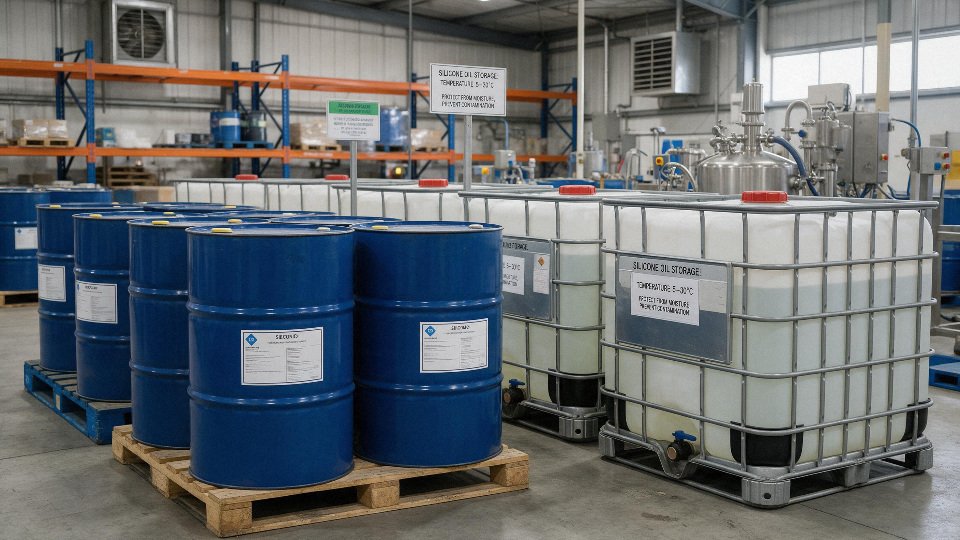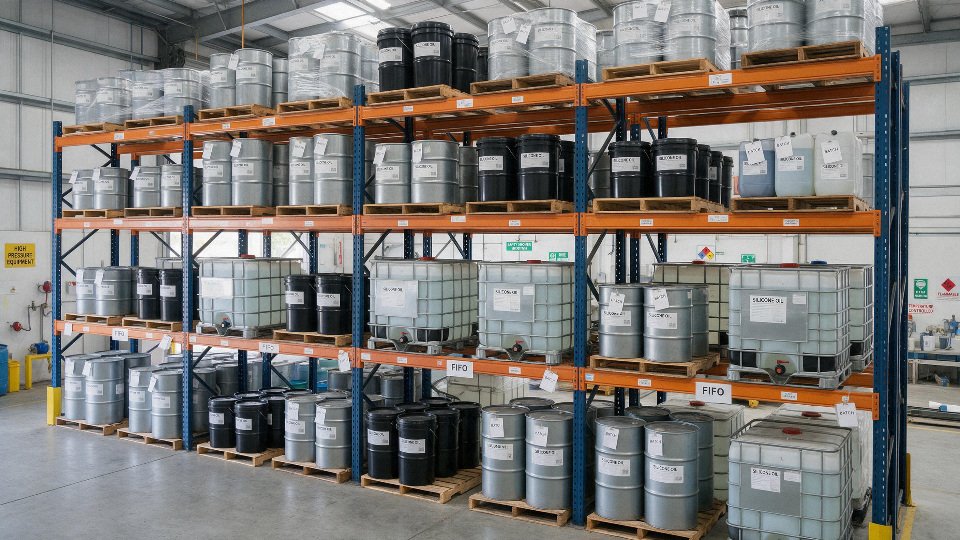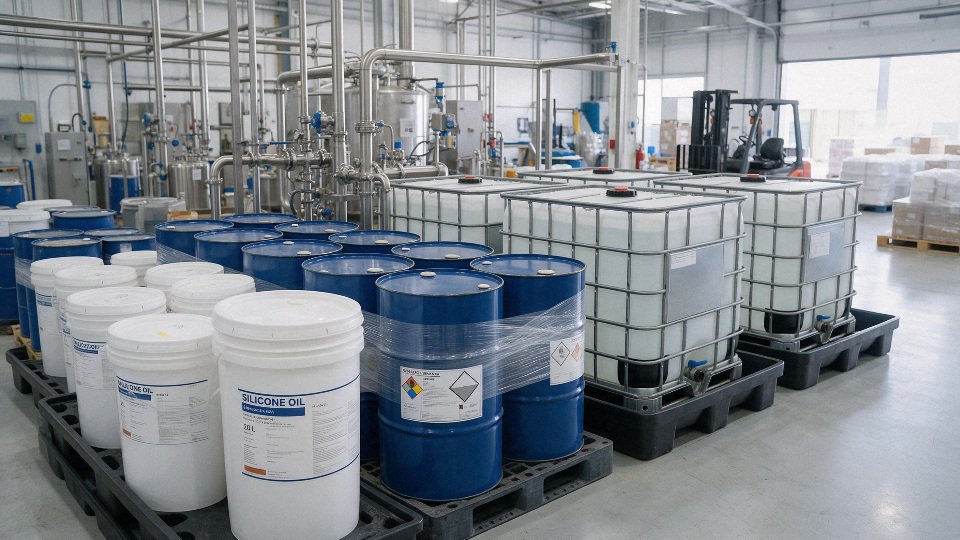
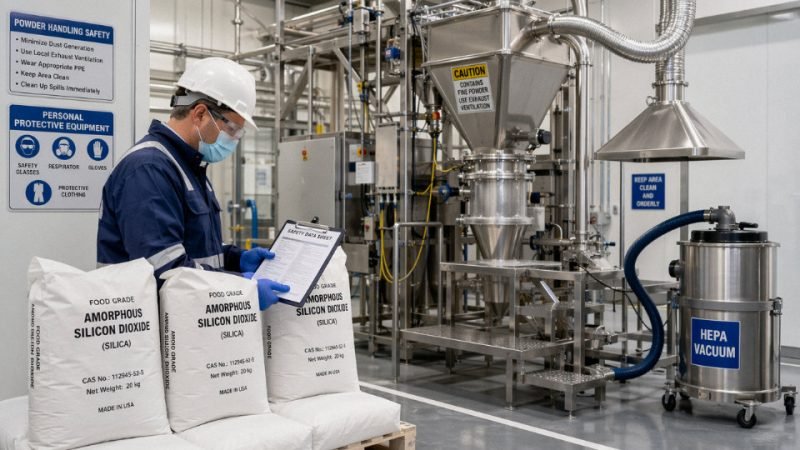
A bad silica decision rarely announces itself as a health problem on day one. It shows up as powder bridging in a hopper, operators dry-sweeping dust because the vacuum is missing a filter, a buyer accepting “silica” without checking whether it is amorphous or crystalline, or QA holding a batch because the additive grade is unclear. The operational hit is downtime, rework, dust complaints, and sometimes a hard stop from EHS. The financial hit can be worse: rejected lots, higher insurance friction, medical surveillance, or a supplier change under pressure. The practical answer starts by separating food ingestion from workplace inhalation, then checking grade, particle size, dose, and the regulation that actually applies.
Silicon dioxide is generally safe to eat in normal food-additive amounts when it is approved amorphous silica, not a fine dust exposure. The main body risk is inhaling respirable crystalline silica at work, which can damage lungs. Safety depends on form, particle size, dose, and exposure route.
That split is where a lot of purchasing and plant-floor mistakes happen. The same plain-language name can refer to an anti-caking agent in powdered food, a tablet excipient, a filler in rubber, or quartz dust from cutting and grinding. One is a formulation control issue; another is an occupational lung hazard. The useful question is not “is silicon dioxide safe?” It is “which silicon dioxide, entering the body how, at what level, and under whose rulebook?”
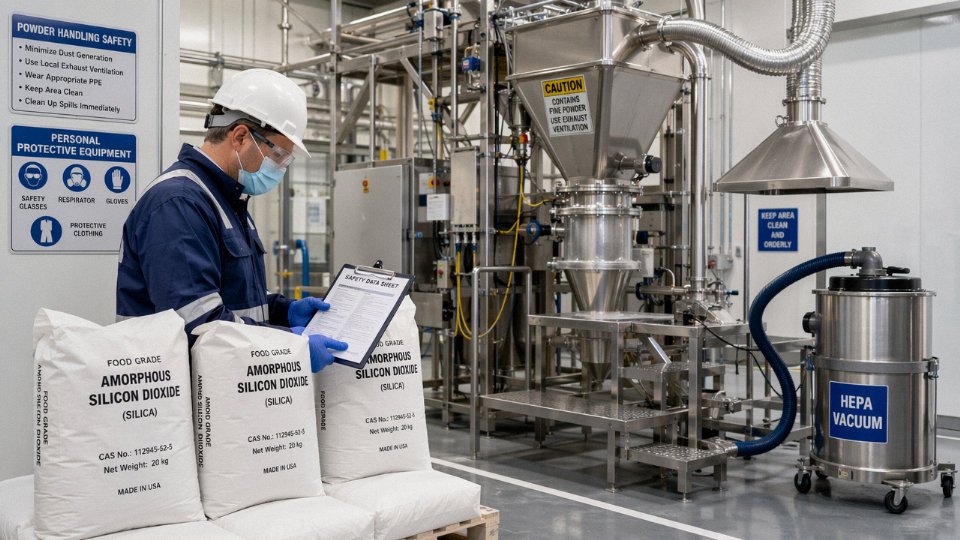
Identify the material first: amorphous [silica](https://siliconchemicals.com/silica/) is not the same hazard as crystalline silica
Silicon dioxide is SiO2. That formula is simple; the material family is not. The same chemistry can show up as hard mineral quartz in a stone slab shop, fluffy fumed silica in a baghouse filter, precipitated silica in a food or rubber plant, silica gel beads in a desiccant pouch, or colloidal silica in a liquid polishing slurry.
Those are not interchangeable from a safety standpoint.
The first split I want engineers and buyers to make is this: crystalline silica versus amorphous silica. If that distinction is missing from a supplier data sheet, purchasing spec, or safety discussion, stop and clarify it before anyone starts comparing food additive limits with dust exposure limits. That is how bad assumptions get made.
Crystalline silica: the lung hazard people mean in dusty industrial work
Crystalline silica has an ordered crystal lattice. Common forms include quartz, cristobalite, and tridymite. Quartz is the one most plants run into, especially anywhere stone, sand, concrete, ceramics, glass batch, foundry materials, or mineral fillers are handled.
The serious risk is not a clean chunk of quartz sitting on a bench. The risk is respirable crystalline silica dust, meaning particles small enough to reach the gas-exchange region of the lungs. In practical shop-floor terms, this dust is produced when mineral materials are crushed, ground, blasted, drilled, milled, cut, polished, or dumped hard enough to throw fines into the air. Dry sweeping around a saw, blowing down a grinder with compressed air, or changing collector bags without containment can do more harm than the main process if the housekeeping is sloppy.
Respirable dust is often discussed around the sub-10 micrometer aerodynamic range, with the most lung-penetrating fraction commonly a few micrometers and below. The exact distribution depends on the tool speed, mineral hardness, moisture, ventilation, and whether the operation is wet or dry. A wet bridge saw and a dry angle grinder are not in the same exposure category, even if both are cutting silica-bearing material.
The health issue is persistence. Crystalline silica surfaces can trigger chronic inflammation and scarring in lung tissue after inhalation. That is why silicosis, lung cancer risk, and chronic respiratory disease show up in occupational rules. In a real plant, the controls are boring but non-negotiable: wet methods where they actually work, local exhaust ventilation close to the cut point, enclosed transfer points, HEPA-rated housekeeping, exposure monitoring, and respirators only as part of a controlled program. A paper dust mask from a maintenance cabinet is not a silica control plan.
Amorphous silica: the common food, pharma, and processing family
Amorphous silica has no long-range crystal structure. This group includes precipitated silica, fumed silica, silica gel, and colloidal silica, though each behaves differently in handling.
Precipitated silica is widely used as an anti-caking agent, flow aid, carrier, thickener, and processing aid. In dry powders it helps keep salt, seasoning blends, premixes, and supplement ingredients from bridging in bins or clumping in bags. Fumed silica is lighter and fluffier; anyone who has charged it from a sack knows it can float everywhere if the bag station is not designed well. Silica gel is porous amorphous silica, usually seen as beads or granules for desiccant service. Colloidal silica is a stable dispersion of very fine amorphous silica particles in liquid, common in polishing, coatings, binders, and some specialty processes.
For food-grade amorphous silica, the main exposure route is ingestion at low use levels. Most of it is poorly absorbed through the gastrointestinal tract and passes through the body. That does not mean “eat unlimited amounts”; it means the hazard profile is not the same as inhaling respirable quartz dust for years in a dry cutting booth.
Dust still matters. A bag of amorphous silica can irritate eyes, throat, and lungs, especially fumed or very fine precipitated grades. I have seen operators treat it like flour and then wonder why the room has a haze and the load cells are drifting from powder buildup. Use a bag dump station with extraction, grounded equipment where dust clouds are possible, sealed transfers if the volume justifies it, and housekeeping methods that do not aerosolize fines.
All silicon dioxide has the same health risk because it has the same chemical formula, SiO2.False
Health risk depends heavily on crystal structure, particle size, dose, and exposure route. Respirable crystalline silica is a serious occupational inhalation hazard, while most food-grade amorphous silica has low gastrointestinal absorption at typical additive levels.
Quick comparison of common SiO2 forms
| Form | Typical use | Likely exposure route | Main health concern | Typical control approach |
|---|---|---|---|---|
| Crystalline silica: quartz | Stone, sand, concrete, ceramics, foundry materials, mineral fillers | Inhalation of respirable dust during cutting, grinding, blasting, drilling, crushing | Silicosis, lung cancer risk, chronic lung inflammation | Wet cutting, local exhaust, enclosed transfers, exposure monitoring, HEPA housekeeping, proper respirator program |
| Crystalline silica: cristobalite or tridymite | High-temperature transformed silica in some ceramics, refractories, calcined materials | Inhalation of fine dust during demolition, milling, repair, bagging | Similar respirable crystalline silica hazard; often overlooked in refractory work | Material identification, dust suppression, containment, controlled removal methods |
| Precipitated amorphous silica | Food anti-caking agent, carrier, rubber reinforcement, toothpaste, powders | Ingestion in food; inhalation during bulk handling | Low GI absorption for food-grade material; nuisance or irritant dust in plants | Food-grade specs, dust extraction at charging, closed conveying for high-volume use |
| Fumed amorphous silica | Thickener, rheology modifier, flow aid, composites, adhesives | Inhalation during bag opening, mixing, charging | Airborne irritation; messy, persistent fine dust | Enclosed bag dump, local exhaust, slow charging, sealed mixers, good filter maintenance |
| Silica gel | Desiccant packets, drying beds, humidity control | Incidental skin contact or accidental ingestion; dust if crushed | Usually low systemic toxicity; choking risk for packets, dust irritation if degraded | Keep packets out of product stream, inspect desiccant beds, avoid crushing and dry sweeping |
| Colloidal silica | Polishing slurries, coatings, binders, investment casting | Skin contact, splashes, mist if sprayed | Eye and skin irritation; inhalation if aerosolized | Splash protection, mist control, compatible gloves, closed circulation where practical |
The procurement takeaway is plain: do not buy “silica” as a vague commodity if the application has safety or regulatory exposure. Specify amorphous or crystalline status, grade, particle size range, intended use, residual crystalline content where relevant, and the handling form. On the plant floor, read the safety data sheet with the process in mind, not just the ingredient name. A sealed food blender, an open powder dump, and a dry masonry saw are three different worlds.
What happens after you swallow silicon dioxide in food or supplements
Where ingested silicon dioxide usually comes from
In food plants, silicon dioxide is usually there for a dull but useful reason: it keeps powders moving. You see it in seasoning blends, spice premixes, powdered coffee creamers, instant drink mixes, soup powders, grated cheese anti-caking systems, nutraceutical blends, and tablet compression formulas. In pharmaceutical work, it may show up as colloidal silicon dioxide, hydrated silica, or another listed silica excipient used to improve flow, carry flavors, reduce sticking, or help a capsule fill consistently.
The practical dose is normally small. In many dry blends, silicon dioxide is used somewhere below about 2% by weight, often much less, depending on moisture pickup, fat content, particle shape, and how badly the powder bridges in the hopper. A turmeric capsule, a powdered electrolyte sachet, and a high-fat cheese seasoning do not behave the same way on a filler. Procurement teams learn that quickly when a “same spec” alternate suddenly rat-holes in a tote.
What your gut does with it
Food-grade silicon dioxide is not treated by the body like sugar, salt, or an amino acid. Most of it is poorly absorbed as intact particles and moves through the gastrointestinal tract with the rest of the insoluble material in the meal. Some fraction can slowly dissolve into soluble silicic acid, usually written as Si(OH)4, but the amount depends on the silica form, surface area, particle size, pH, hydration state, and residence time in the gut.
Fine, high-surface-area amorphous silica has more opportunity to dissolve than larger, denser particles. Acidic stomach conditions, intestinal fluids, and contact time all matter. Still, the oral pathway is fundamentally different from breathing respirable dust into the deep lung. The gut is built to handle mineral particles and insoluble residues moving through a wet, mucus-lined system. The lung’s gas-exchange region is not. That is why oral food additive risk assessments and occupational crystalline silica limits sit in different technical boxes.
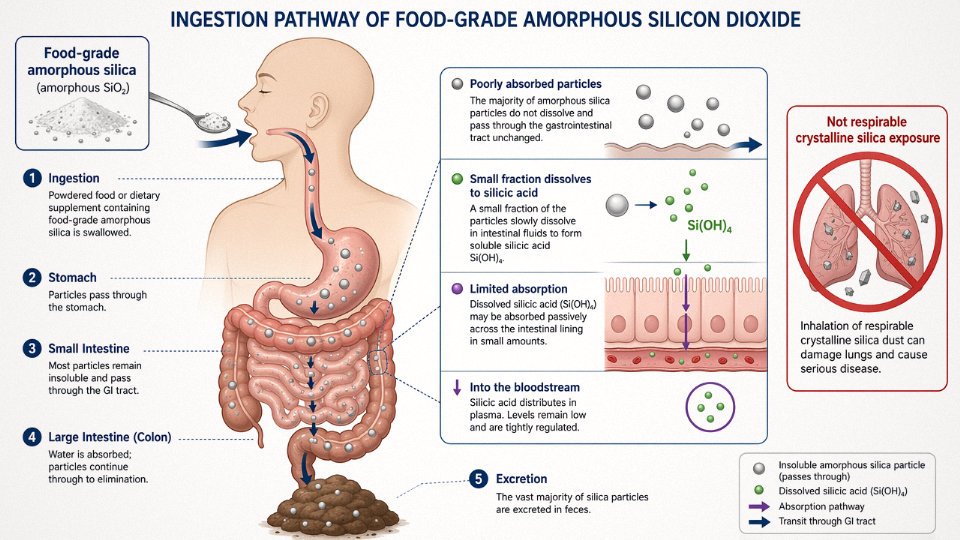
A typical example is a powdered drink plant fighting summer humidity. The blend starts clumping after a supplier changes fruit powder carrier solids. A small amount of food-grade silicon dioxide may restore flow through the auger and reduce overweight sachets. The consumer then swallows a low milligram-range amount per serving, not a cloud of respirable dust. Same chemical family on paper, very different exposure.
Silicon is present in normal diets, but that does not make silicon dioxide a miracle nutrient
Silicon occurs naturally in foods and drinks, especially cereals, grains, some vegetables, beer, and water, mostly in soluble or partly soluble forms. Daily dietary silicon intake is often estimated in the rough range of 20 to 50 mg per day for adults, give or take, depending heavily on grain intake, drinking water composition, and beverage habits.
That background matters because the body is not encountering silicon as a totally foreign element. It does not mean silicon dioxide powder should be marketed as a broad nutritional fix. Evidence around silicon and connective tissue or bone metabolism is still not a license to treat an anti-caking excipient as a health supplement. On a label, its job is usually processing performance, not nutrition.
Food-grade silicon dioxide generally passes through the digestive tract with limited absorption as intact particles.True
Available toxicology and regulatory reviews describe low oral bioavailability for amorphous food-grade silica, with some dissolution to soluble silicic acid depending on form, surface area, pH, and time in the gastrointestinal tract.
What toxicology reviews usually find
At practical food and pharmaceutical exposure levels, amorphous silicon dioxide has low acute oral toxicity and limited systemic exposure. Regulators have accepted specified forms for use as food additives and pharmaceutical excipients because animal studies, human exposure history, and absorption data do not point to the same kind of hazard seen with chronic inhalation of respirable crystalline silica.
That acceptance is not a blank check. Grade, purity, particle characteristics, and use level still matter. Food-grade material should meet the relevant monograph or additive specification, with controls for heavy metals, loss on drying, particle behavior where specified, and microbiological quality when the application demands it. I would not buy “silica powder” from an industrial catalog and let it near a supplement blender. Wrong grade, wrong documentation, wrong risk profile.
Digestive comfort complaints: look at the full formula first
Some people report bloating, stomach irritation, loose stool, constipation, or a vague sensitivity after taking a supplement that contains silicon dioxide. Those reports should not be dismissed, but confirmed reactions to silicon dioxide itself appear uncommon. In practice, the larger suspects are often sugar alcohols, magnesium salts, herbal actives, high-dose vitamin C, gums, flavors, preservatives, capsule shell materials, or simply a large bolus of powder taken without enough water.
For engineers and procurement managers, this is where traceability helps. If complaints cluster around one batch, check the whole bill of materials, not just the excipient with the unfamiliar name. Look at dose per serving, blend uniformity, moisture pickup, overages, and whether a supplier changed from one silica type to another. For consumers, the sensible move is similar: compare products, serving sizes, and timing with meals. If symptoms are repeatable or severe, treat it as a medical question rather than a label-reading puzzle.
Regulatory status: how food, drug, and workplace authorities draw the safety line
Regulators do not treat silicon dioxide as one single risk. They split it by use, grade, particle character, and exposure route. That is the practical answer I use with purchasing teams: the same chemical name on a bag does not mean the same hazard profile on the floor, in a tablet press, or in a seasoning blend.
Food additive approvals are built around controlled oral use
In the United States, silicon dioxide is permitted for food use under specified conditions, commonly as an anti-caking agent in powders, salts, spice blends, drink mixes, and similar dry products. A familiar limit is up to about 2% by weight of the food for certain anti-caking uses, though real plant formulations are often well below that, roughly a few tenths of a percent to around 1%, depending on powder flow, humidity, particle size, and how long the product sits in distribution.
It may also appear as a processing aid, carrier, or flow-control material where the technical function is justified and the grade meets food additive requirements. Procurement should not buy “silica” off a commodity listing and assume it is suitable. You want the actual food-grade specification, certificate of analysis, heavy metal limits, loss on drying, particle description, and allergen or cross-contact statements if your customer audits are serious. The cheap drum that lacks paperwork becomes expensive when QA quarantines three pallets of finished mix.
European and international reviews reach broadly similar practical conclusions for conventional amorphous silicon dioxide used in food, but with more visible attention on particle characterization. In Europe, silicon dioxide is E551. EFSA has reviewed it as a food additive and has paid particular attention to whether specifications properly describe particle size and the possible presence of nano-sized fractions. JECFA has historically assigned an acceptable daily intake “not specified” for certain silicon dioxide and silicate uses, which does not mean “use as much as you like.” It means expected use at good manufacturing practice levels did not require a numerical ADI based on the available toxicology.
Engineered nanoscale silica is handled with more caution. If a supplier is intentionally manufacturing a nanomaterial for a specific function, expect extra documentation, possibly different labeling duties in some markets, and a more detailed safety assessment. Conventional precipitated or fumed silica can contain small particles too, but regulators care about intent, distribution, surface treatment, and exposure behavior, not just one number on a particle-size report.
Drug and cosmetic uses are controlled by grade and route
Pharmaceutical-grade silicon dioxide, often listed as colloidal silicon dioxide or colloidal silica, is a routine excipient. It improves powder flow into tablet dies, helps wet granulations dry more consistently, carries oily actives, and prevents capsules from bridging in hoppers. In practice, it is usually used at low percentages, often below a few percent of the formulation, depending on the active, the granulation process, and whether the line is fighting humidity or electrostatic cling.
The safety control is not just “FDA allows it.” Drug manufacturers work to pharmacopeial standards such as USP-NF or Ph. Eur., validated supplier controls, impurity limits, microbial controls where applicable, and change notification. A small shift in silica grade can change tablet hardness, dissolution, and dusting at the feed frame. I have seen maintenance blame a press when the real issue was a raw material substitution that changed flow behavior.
Cosmetics follow the same general logic: amorphous silica may be used for texture, oil absorption, opacity, or slip, but powders and sprays need route-specific assessment. A face powder is not the same exposure as an aerosolized product. For EU cosmetics, nano forms can trigger specific notification and labeling requirements.
Food-grade approval for silicon dioxide does not make respirable crystalline silica dust safe to breathe.True
Food and pharmaceutical permissions mainly address controlled ingestion or topical use of amorphous grades. Respirable crystalline silica is regulated separately because fine airborne particles can lodge deep in the lung and cause serious occupational disease.
Workplace limits are a different safety line
This is where plant people need to stay sharp. Occupational rules focus on what workers inhale, especially respirable crystalline silica from quartz-containing materials, sand, stone, concrete, ceramics, mining dust, abrasive blasting media, and some foundry operations. The hazard is not the same as swallowing food-grade amorphous silicon dioxide.
In the United States, OSHA’s permissible exposure limit for respirable crystalline silica is 50 micrograms/m3 as an 8-hour time-weighted average, with an action level of 25 micrograms/m3. Other jurisdictions commonly sit around 0.025 to 0.1 mg/m3 for respirable crystalline silica, depending on country and standard. Amorphous silica dust has different nuisance or particulate limits, often in the mg/m3 range, but that only applies if the material is truly amorphous and not contaminated with crystalline silica.
A dusty bag dump station, a torn filter sock, or dry sweeping around a mixer can move exposure from theoretical to measurable. Use local exhaust, sealed transfer, HEPA housekeeping, respirator programs where needed, and real exposure sampling. An SDS is a starting point, not an exposure assessment.
Regulatory snapshot for silicon dioxide
| Setting | Typical regulatory treatment | Intake or exposure line | Purity and form expectation | Labeling and procurement concern | Plant-floor implication |
|---|---|---|---|---|---|
| United States food additive use | Permitted for specified uses such as anti-caking and processing functions | Up to about 2% in certain foods; actual use often about 0.2% to 1%, depending on powder behavior | Food-grade amorphous silicon dioxide with controlled impurities | Confirm CFR basis, food-grade COA, heavy metals, and customer labeling rules | Good for flow control, but overuse can change mouthfeel, dusting, and blend density |
| European food additive use | E551, permitted under food additive rules with EFSA review | No simple universal daily cap; exposure depends on product mix and consumption pattern | Conventional material must meet additive specifications; nano character needs closer review | Check EU additive status, particle description, and nanomaterial obligations | Supplier paperwork matters, especially for exports |
| JECFA international position | ADI often treated as “not specified” for qualifying uses at GMP | Practical intake is usually tens of mg/day for average consumers, possibly higher for heavy users of powdered foods or supplements | Low-toxicity amorphous forms, used at good manufacturing practice levels | “ADI not specified” is not a license for uncontrolled dosing | Formulate to function, not to a maximum |
| Pharmaceutical excipient use | Common glidant, adsorbent, and flow aid in tablets and capsules | Often below a few percent of formulation; daily intake depends on dose count and tablet size | Pharmacopeial grade, supplier-qualified, impurity controlled | Require USP-NF, Ph. Eur., or agreed internal specification | Grade changes can affect flow, compression, dissolution, and dust |
| Cosmetics | Used for texture, absorption, opacity, and feel | Exposure depends heavily on leave-on product, powder, or spray format | Cosmetic-grade material; nano forms may need special review | Check market-specific labeling, especially EU nano requirements | Avoid assuming inhalable sprays are the same as creams |
| Workplace inhalation | Strict limits for respirable crystalline silica | OSHA PEL 50 micrograms/m3 8-hour TWA; many global limits roughly 0.025 to 0.1 mg/m3 | Identify crystalline versus amorphous content; test airborne respirable fraction | SDS plus industrial hygiene sampling, not paperwork alone | Wrong controls mean silicosis risk, citations, shutdowns, and expensive retrofits |
When silicon dioxide may be a concern for consumers
For most people, approved food-grade silicon dioxide is a low-priority risk. The edge cases are different. They show up when a person stacks several dry, highly processed products every day: a powdered greens mix at breakfast, protein powder after training, powdered fiber, two or three capsules with colloidal silicon dioxide as a flow aid, a meal replacement, instant soup, and maybe powdered medication. None of those products may look unusual on its own. The total pattern is what matters.
In ordinary diets, exposure is usually in the milligram-per-day to low-hundreds-of-milligrams-per-day range, depending heavily on how much powdered food, spice mix, supplement, and dry processed product someone uses. A person living mostly on fresh foods will be near the low end. A person using several powders daily can move up the range quickly. That still does not make the ingredient automatically unsafe, but it is the point where I would stop treating it as background noise and start reading labels with a pencil.
High-consumption patterns deserve a closer look
The higher-use cases are easy to miss because silicon dioxide is often listed near the end of the ingredient panel. It may be doing a simple job: keeping powder from caking, improving capsule filling, stopping a seasoning blend from turning into a brick in humid storage. Anyone who has opened a drum of hygroscopic powder in August knows why processors use flow aids. Bad flow causes dose variation, plugged feeders, rejected batches, and operator improvisation. None of that is good manufacturing.
For consumers, the practical question is not “does one capsule contain silicon dioxide?” It is closer to “how many dry formulated products am I taking every day?”
| Product pattern | Why exposure can climb | Practical response |
|---|---|---|
| Multiple powdered supplements | Each formula may use a small amount as an anti-caking or flow agent | Count total scoops per day, not just serving size on one tub |
| Meal replacements used as staple food | Repeated daily intake from the same formulation | Ask whether the product is suitable as a primary diet, especially for long use |
| Powdered medications or many tablets | Excipients add up across prescriptions and over-the-counter products | Pharmacist review is often more useful than guessing |
| Very dry processed diet | Seasonings, instant mixes, powdered sauces, and snack coatings can all contribute | Rotate toward less powdered food if intake is unusually high |
Particle size changes the discussion
Conventional food-grade silicon dioxide is usually treated differently from engineered nanoscale silica. Particle size affects surface area, reactivity, dispersion, and how regulators review the material. In plant terms, the same chemistry can behave differently once the particle is fine enough; anyone who has handled fumed silica versus coarse mineral filler has seen that difference in dusting, flow, and cleanup.
Regulatory agencies have been moving toward separate evaluation of nanoforms rather than assuming they are identical to conventional amorphous silica. That does not mean every nanoscale silica exposure is dangerous. It means the old shortcut, “silica is silica,” is too crude. If a product specifically markets “nano silica,” “nanoparticles,” or unusual high-bioavailability mineral technology, I would treat it as a separate question and ask for actual safety data, not brochure language.
All silicon dioxide in food and supplements carries the same risk regardless of particle size.False
Particle size and form affect exposure behavior. Conventional amorphous food-grade silicon dioxide is not evaluated the same way as respirable crystalline silica or newer engineered nanoforms.
Vulnerable groups should not troubleshoot alone
Infants, pregnant people, patients with inflammatory bowel disease or other significant gastrointestinal disorders, people with kidney disease, and anyone taking a long list of medicines should be more cautious with stacked supplements. Not panicked. Cautious.
The reason is partly silicon dioxide, but mostly the whole product system. A meal powder or supplement is not just one excipient. It may include minerals, botanicals, sweeteners, gums, preservatives, active drug ingredients, capsules, coatings, and colorants. In a patient with gut symptoms, changing five products at once creates a diagnostic mess. I have seen the same problem in factories after a formulation change: everyone blames the newest minor ingredient, then the real cause turns out to be moisture pickup, a supplier change, or an interaction nobody checked.
For kidney disease, pregnancy, infant feeding, and heavy medication use, a clinician or pharmacist can assess the full exposure picture better than an online ingredient list can. Bring the labels. Bring the dosing schedule. Guesswork is a poor tool here.
Allergy claims need careful sorting
True allergy to silicon dioxide is considered rare. Reports of rash, stomach upset, headache, flushing, or “reaction to silica” may be real symptoms, but the cause may be something else in the same product: dyes, gelatin or vegetarian capsule materials, magnesium stearate, preservatives, artificial sweeteners, flavor systems, binders, or the active ingredient itself.
A useful test, under medical guidance when symptoms are significant, is to compare products with fewer variables. Switching from one 30-ingredient powder to another 28-ingredient powder proves almost nothing. A pharmacist may be able to identify a tablet or capsule version with different excipients, or a compounding option where appropriate.
A practical label-reading approach
Look for these terms:
- silicon dioxide
- silica
- colloidal silicon dioxide
- silicon dioxide excipient
- anti-caking agent
Then step back and look at the pattern. One seasoning packet or one tablet is rarely the issue. Five powders, several capsules, and a diet built around dry mixes is a different exposure profile. If you are healthy and using approved products as directed, the concern remains low. If you are medically vulnerable, using many products, or choosing nano-labeled materials, it is worth asking sharper questions before making it a daily habit.
The major danger is inhalation: respirable crystalline silica and lung disease
Food-grade silicon dioxide and airborne respirable crystalline silica get lumped together far too often. They should not be.
Respirable crystalline silica, usually shortened to RCS in industrial hygiene reports, means tiny airborne particles of crystalline silica small enough to pass the upper airway defenses and reach the gas-exchange region of the lungs. In plant terms, this is the dust made when quartz-containing material is cut, ground, drilled, crushed, blasted, milled, polished, or cleaned up badly.
Common sources include concrete, mortar, brick, stone, ceramics, refractory linings, foundry sand, abrasive blasting media, and engineered stone. Engineered stone worktops deserve special respect because silica content can be high, often far above many natural stones, and dry polishing can create a nasty breathing-zone exposure in minutes.
This is not the same risk pathway as swallowing a small amount of amorphous silicon dioxide in a tablet.
Why inhaled crystalline silica is different
The lung is not a chemical mixing tank. It is delicate tissue built for gas exchange, and it does not handle persistent mineral particles well.
Respirable particles are typically in the few-micron range, roughly under 10 micrometers aerodynamic diameter, with the most lung-penetrating fraction often smaller than that. Exact deposition depends on particle shape, density, breathing rate, and whether the worker is nose-breathing lightly or breathing hard during grinding or jackhammering.
Once deposited deep in the lung, crystalline silica can trigger inflammation and scarring. With enough dose over time, that can become silicosis, including chronic silicosis after years of exposure or accelerated disease after heavier exposure. Very high exposures can cause acute forms, which are rare in well-controlled plants but still show up where dry cutting, abrasive blasting, or cleanup is careless.
The disease list is not limited to silicosis. Long-term or intense exposure is associated with lung cancer, chronic obstructive pulmonary disease, kidney disease, and higher susceptibility to certain infections, including tuberculosis. That last point matters in real workplaces with migrant labor, poor medical follow-up, or dusty subcontractor work that nobody owns.
The main serious health hazard linked to silicon dioxide is not approved food additive use, but inhalation of respirable crystalline silica dust in occupational or high-dust settings.True
Food and pharmaceutical uses normally involve ingested amorphous silica at controlled levels. The severe lung disease pathway is tied to airborne crystalline silica particles small enough to reach deep lung tissue.
Exposure is a dose problem, not a dust-name problem
On the floor, risk comes from the whole exposure picture:
| Factor | Why it changes risk |
|---|---|
| Airborne concentration | Higher dust concentration means higher inhaled dose per shift. This depends on tool speed, material silica content, dry versus wet work, ventilation, and housekeeping. |
| Duration | A ten-minute cut is not the same as a full shift at a bridge saw or bag dump station. |
| Frequency | Once-a-month maintenance work carries a different lifetime dose than daily production grinding. |
| Particle size distribution | The finest fraction may be invisible and can stay suspended after the visible cloud settles. |
| Silica content | Sandstone, quartz, foundry sand, and engineered stone can produce much more RCS than lower-silica materials. |
| Controls | Wet methods, local exhaust, enclosed transfer points, HEPA vacuums, and fitted respirators can change actual dose by a large margin. Poorly maintained controls can give false confidence. |
This is where procurement decisions bite. A cheaper dry-cutting tool, a missing vacuum shroud, or a dust collector with the wrong filter class can turn a manageable job into a chronic exposure source. I have seen shops spend money on respirators while letting operators blow dust off benches with compressed air. That is backwards. It puts yesterday’s settled dust back into today’s lungs.
Visible dust is a poor warning system
A clean-looking work area can still have unacceptable respirable silica in the breathing zone. The most hazardous fraction is often too small to see under normal lighting. Big visible dust is unpleasant and may irritate the nose and throat, but it is not a reliable proxy for respirable crystalline silica.
“Nuisance dust” is a loose shop-floor phrase. It may describe low-toxicity dust with no specific regulated hazard, but it should not be used casually around concrete, stone, brick, ceramic, refractory, or foundry operations. If the material contains crystalline silica and the process breaks it mechanically, assume RCS is possible until air monitoring or a competent exposure assessment says otherwise.
A practical pathway looks like this:
Material containing crystalline silica
        |
        | Cutting, grinding, drilling, blasting, crushing, polishing, dry sweeping
        v
Respirable dust generated at the source
        |
        | Tool turbulence, forklift traffic, poor capture velocity, open doors, recirculated air
        v
Airborne transport across the work area
        |
        | Operator position, helper nearby, adjacent bench, cleanup crew after shift
        v
Breathing-zone exposure
        |
        | Particle size small enough to bypass upper airway defenses
        v
Deep lung deposition
        |
        | Inflammation, impaired clearance, tissue scarring, cellular damage
        v
Silicosis, lung cancer, COPD, kidney effects, increased infection susceptibility
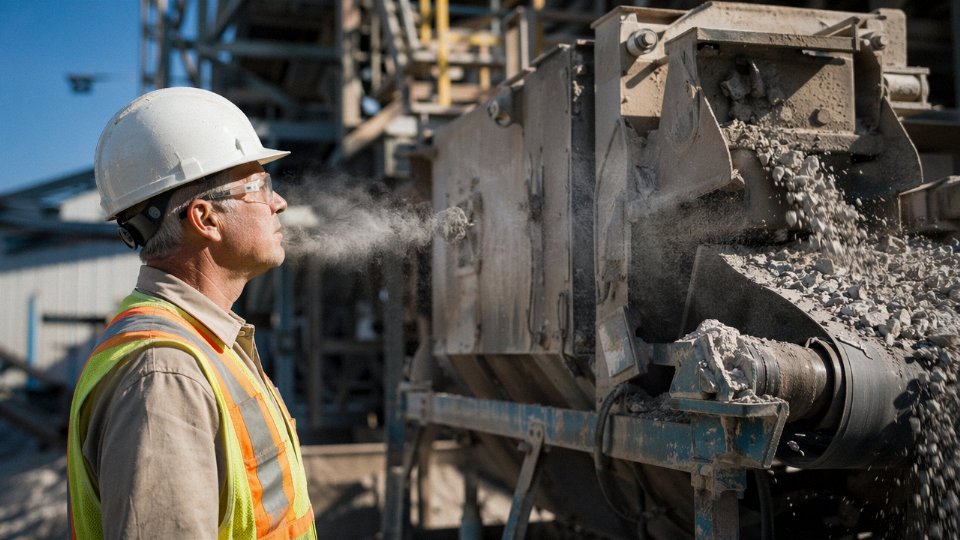
The right control logic is simple, even if execution is not: stop dust at the point of generation, keep it out of the breathing zone, verify with exposure monitoring, and use respiratory protection as a backup or interim control rather than the whole plan. The wrong logic is also simple: wait until dust is visible, hand out masks from a box by the time clock, and call the job controlled. That approach usually leads to rework, citations, compensation claims, and sometimes irreversible disease.
How industry controls silicon dioxide dust exposure in real workplaces
Controlling silicon dioxide dust is not a paperwork exercise. It is a machine, duct, water, housekeeping, and supervision problem first. The worst programs I have seen were heavy on respirator posters and light on fixing the dust source.
The control strategy should follow the hierarchy of controls: remove the dust source where possible, replace the material or process where practical, engineer the dust away from the breathing zone, tighten work practices, and use PPE as the last barrier. That order matters.
Start with elimination and substitution, if the process allows it
In construction, the cleanest fix may be ordering pre-cut masonry units instead of cutting on site. In a fabrication shop, it might mean buying pre-blended material in sealed bulk bags instead of hand-dumping sacks into a hopper. In ceramics or foundry work, a lower-free-silica sand, pre-wetted mix, pelletized additive, or slurry feed can cut airborne dust sharply, though the chemistry and finished-part properties have to be checked.
Substitution is rarely free. A different abrasive may change surface profile. A different filler may change viscosity. A wet process may affect drying load or corrosion control. Still, removing a high-dust task often pays back faster than adding layers of PPE and chasing compliance failures later.
Engineering controls that actually move the needle
High-value controls are usually close to the source.
Wet cutting, wet grinding, and wet drilling can reduce respirable crystalline silica exposure by a large margin, often enough to change the required respiratory protection category, but only if water reaches the cut. A plugged nozzle or a worker trying to “save mess” by turning the valve halfway down defeats the control. In cold climates, freezing lines and slippery runoff become real maintenance and safety issues.
Local exhaust ventilation needs capture velocity at the dust generation point, not just a noisy fan somewhere above the operator. Hood position, duct diameter, transport velocity, and make-up air all matter. I have seen expensive dust collectors fail because a flexible duct sagged, filled with fines, and cut airflow in half.
For powder-handling plants, enclosed transfer points are often the best money spent: sealed screw conveyors, rotary valves with maintained clearances, gasketed inspection doors, and bag dump stations under negative pressure. Bulk bag unloaders should have dust-tight docking collars and a way to collapse the bag without puffing fines into the room. Dust collectors need suitable filtration, commonly high-efficiency cartridge or bag filters, and in many applications HEPA final filtration is used where recirculated air or fine respirable fractions are a concern. Explosion risk, moisture loading, and filter blinding must be reviewed; silica itself may not be the only dust in the blend.
Negative-pressure containment helps during high-dust maintenance jobs such as refractory tear-out, baghouse changeouts, or cleaning settled dust from overhead steel. Temporary poly walls and portable HEPA units can work, but only if pressure is checked and access is controlled.
Work practices decide whether the controls survive Monday morning
Housekeeping is where many plants lose the fight. Dry sweeping pushes the finest fraction back into the air, right where lungs can collect it. Use HEPA-filtered industrial vacuums rated for the duty, not a shop vacuum with a paper filter and a hopeful operator. Wet cleanup can work too, provided slurry disposal is planned and floor slip hazards are managed.
Compressed air deserves special suspicion. Blowing dust off clothing, ledges, machines, or floor cracks can create a short, ugly exposure peak. If compressed air must be used for equipment reasons, restrict pressure, use local exhaust, and write the method into the job plan.
Maintenance details matter: cracked chute liners, missing clamp gaskets, worn rotary valve tips, open access doors, holes in ductwork, and overloaded filters all create fugitive dust. Operators often notice these before management does. Train them to report visible dust, but also teach the uncomfortable truth: the respirable fraction is often hard to see.
If you can see silica dust in the air, exposure may already be excessive; if you cannot see it, exposure may still be excessive.True
Respirable crystalline silica particles are small enough to remain airborne and enter deep lung regions, so visibility is a poor exposure indicator. Air sampling is needed for a defensible assessment.
Measure exposure by task, not by guesswork
Personal air sampling is the standard way to know what workers actually breathe. Area monitors help troubleshoot, but they do not replace a pump and sampler worn in the breathing zone during real work. For crystalline silica, labs commonly analyze the respirable fraction for quartz and cristobalite; particle size selection is part of the method, not a minor detail.
Task-based monitoring is especially useful. A full-shift average can hide a 40-minute jackhammering job, a bag-dumping cycle, or a foundry shakeout that drives most of the dose. Compare results with the occupational exposure limits that apply in your jurisdiction. For respirable crystalline silica, many limits sit in the tens of micrograms per cubic meter as an 8-hour time-weighted average; exact values depend on country, standard, and silica form. Amorphous silica and general particulate limits are usually higher, often in the milligrams per cubic meter range, but nuisance-dust thinking is a bad habit if the material contains crystalline silica or becomes contaminated during processing.
Respirators are backup, not a design philosophy
Respirators are useful during commissioning, shutdowns, filter changes, abrasive blasting, demolition, and other work where engineering controls are not yet proven or cannot fully contain exposure. They are not a substitute for poor ventilation.
A real respirator program includes medical clearance, fit testing, model-specific training, clean storage, inspection, replacement schedules, and supervision. Filter choice depends on the contaminant and the protection factor needed; particulate filters such as N95, P100, or equivalent regional classifications may be used depending on exposure level and local rules. Half-mask respirators, full-face respirators, powered air-purifying respirators, and supplied-air systems are not interchangeable. Facial hair breaks many tight-fitting face seals. So does the wrong size mask pulled from a shared cabinet.
The right approach is boring but effective: reduce dust at the source, verify with sampling, maintain the hardware, and use respirators only where the residual risk still requires them. That is how plants avoid the familiar chain reaction: dust leak ignored, exposure limit exceeded, job stopped, workers rotated badly, production delayed, and everyone pretending the problem started with the safety department.
Medical, dental, cosmetic, and personal care uses: what is safe and what needs caution
Silicon dioxide shows up in medicine cabinets and bathrooms for the same reason it shows up in factories: it handles moisture, improves flow, changes texture, and gives controlled surface behavior. The safety question still comes back to route, dose, particle form, and whether the product is meant to stay on the skin, be swallowed, be rubbed on teeth, placed in a wound, or accidentally breathed into the lungs.
Pharmaceutical uses: small amounts, tightly specified grades
In tablets and capsules, silicon dioxide is usually there as an excipient, not as the active drug. You may see it listed as colloidal silicon dioxide, silica, silicon dioxide, or sometimes hydrated silica depending on the product. Its job is practical: keep powders flowing through tablet presses, stop ingredients from clumping in humid storage, improve dose uniformity, or stabilize a suspension.
The amounts are normally small, often well below a few percent of the finished tablet or capsule, though the exact level depends on powder behavior, tablet size, moisture sensitivity, and the manufacturing process. A direct-compression tablet with a sticky herbal extract may need more flow aid than a clean crystalline active ingredient running through a well-tuned press. Anyone who has watched a feeder bridge during a humid summer shift understands why excipients are not decorative.
Pharmaceutical grades are not the same as floor sweepings from a mineral plant. They are controlled for identity, purity, microbial limits where relevant, heavy metals, particle behavior, and consistency under pharmacopeial or supplier specifications. That does not make every use automatically harmless, but it narrows the risk sharply compared with uncontrolled dust exposure.
Silicon dioxide used as a pharmaceutical excipient has the same risk profile as respirable crystalline silica dust from cutting concrete.False
Pharmaceutical excipient grades are typically amorphous or specially processed forms used in small controlled amounts, while the major lung hazard comes from inhaling respirable crystalline silica particles in workplace dust. Route and form change the risk profile.
Topical medical formulations are similar in principle. Silica may thicken gels, stabilize creams, or help with absorbency. If the product is a prescription medicine, wound dressing, implant-related material, or long-term medical device, do not freelance with it. Follow the instructions. Ask the clinician, especially if the skin barrier is broken or the product is used repeatedly.
Dental materials and oral care: abrasion is formulation-dependent
Toothpaste is one of the most common consumer uses. Hydrated silica and related forms can act as abrasives, thickeners, and polishing agents. The word “abrasive” sounds bad, but toothpaste needs controlled abrasion to remove stains and biofilm without chewing up enamel or exposed dentin.
The practical issue is not simply “contains silica.” It is how hard the particles are, their shape, particle size distribution, loading level, pH, binder system, brushing force, toothbrush stiffness, and how often the product is used. Relative dentin abrasivity values for toothpastes can range from mild to high; many everyday products sit roughly in the low-to-moderate range, while some heavy stain-removal or whitening formulas may run higher. The number depends on the test method and the finished formulation, not the ingredient name alone.
In practice, the person who should be more careful is not usually the adult using a normal fluoride toothpaste twice a day. It is the patient with gum recession, exposed dentin, aggressive brushing habits, an electric brush used like a grinder, or a rotation of multiple whitening products. Wrong combination, real wear.
Dental composites, impression materials, polishing pastes, and some bonding or restorative systems may also contain silica or silicate fillers. Those are engineered materials used under professional control. Chairside grinding and polishing can generate dust or aerosol, so dental clinics handle this with suction, water cooling, masks or respirators where needed, and routine surface cleanup. The patient’s exposure is not the same as a technician dry-trimming material all afternoon.
Cosmetics and personal care: skin contact is usually not the main concern
In cosmetics, silicon dioxide is used in loose face powders, pressed powders, creams, sunscreens, foundations, dry shampoos, deodorants, and makeup. It can absorb oil, reduce tackiness, improve slip, suspend pigments, reduce caking, or give a soft-focus texture. In creams and lotions, the exposure is mostly skin contact. For intact skin, silica is generally treated as low concern at normal cosmetic-use levels, assuming the product meets cosmetic quality and impurity controls.
The formats worth more caution are the ones that make airborne particles.
Loose powders, pump sprays, aerosols, and dry shampoo clouds create a different situation from a cream in a jar. A powder puff snapped near the face, a spray used in a small bathroom, or a dry shampoo blast aimed too close to the scalp can put fine particles into the breathing zone. Most occasional use is still not comparable to occupational silica exposure, but the direction of risk is obvious: skin contact is one pathway; inhalation is another.
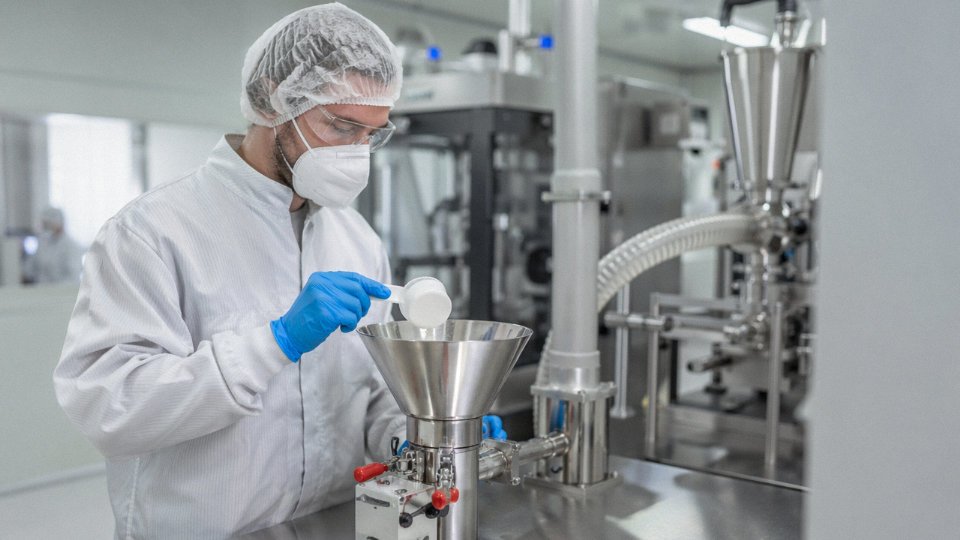
Practical guidance that actually helps
Use loose powders with some ventilation, not in a closed room full of hanging dust. Keep the container low, apply gently, and avoid making a visible cloud. Do not intentionally inhale cosmetic powders or aerosolized products. That sounds too obvious until you see how people use dry shampoo in a rush.
For sprays, hold the product at the recommended distance and avoid spraying directly into the nose or mouth. If a child has asthma, chronic cough, or a history of respiratory sensitivity, I would be more conservative with powdery or aerosol products around them. Same for adults with COPD or occupational dust history.
For medical products, follow the label or prescriber’s instructions. If silicon dioxide is listed in a tablet or capsule, it is usually a functional excipient at a small controlled amount. If the product involves implants, wound care, repeated application to damaged tissue, compounding, nebulization, or long-term clinical use, ask the pharmacist, dentist, or physician. The question is not “is silica safe?” The better question is: what form is it, where does it go, how much is used, and can any of it be inhaled?
A practical decision framework: should you avoid silicon dioxide?
The sensible answer is not “avoid it” or “ignore it.” The first question is simpler: how are you exposed?
Silicon dioxide swallowed in a tablet is a very different risk from respirable crystalline silica coming off a dry saw cut, a bag dump station, or a poorly enclosed mixer. Same broad chemistry on paper. Different body route, different particle form, different hazard profile.
Start with the exposure route
| Situation | Practical decision | What to check |
|---|---|---|
| Swallowed in an approved food, capsule, or tablet | Most people do not need to avoid it | Product quality, dose frequency, personal tolerance, clinician advice |
| Applied to skin in cosmetics or personal care products | Usually low concern for intact skin | Spray products, broken skin, irritation history, product instructions |
| Handled as a dry powder at home, lab, or factory | Treat as a dust-control issue | Dustiness, ventilation, mask selection, cleanup method |
| Inhaled as workplace dust, especially crystalline silica | Control it as an occupational hazard | Exposure monitoring, engineering controls, respiratory protection program |
For normal consumers, approved food-grade silicon dioxide is usually not the ingredient I would spend energy worrying about. It is commonly used as an anti-caking agent or flow aid at low levels, often well under a few percent of the finished product. Actual intake depends on diet pattern, how many powdered foods or supplements someone uses, serving size, and the manufacturer’s formulation. If a clinician has told you to avoid it, follow that advice. If one specific product causes symptoms every time you take it, stop using that product and compare the full ingredient panel, not just silicon dioxide. Sweeteners, binders, colors, magnesium stearate, flavors, capsule material, and the active ingredient itself often deserve equal scrutiny.
Most consumers do not need to avoid approved food-grade silicon dioxide solely because it appears on an ingredient label.True
Regulators treat approved oral uses differently from inhalation hazards because food-grade amorphous silicon dioxide has low absorption and is used within specified purity and use limits. Individual medical advice and product-specific reactions still matter.
For supplement users, look past the scary-sounding name
A capsule with silicon dioxide is not automatically poor quality. In manufacturing, a small amount can stop a hygroscopic powder from clumping, improve fill-weight consistency, and reduce rejects. I have seen lines run cleaner with a tiny flow aid than with operators tapping hoppers every ten minutes and overfilling capsules to compensate. That does not mean every supplement is worth taking.
Check the whole product:
- Daily serving count. One capsule a week is not the same exposure pattern as six tablets a day, year-round.
- Total excipient load. A long list of fillers may be harmless, but it can signal a bulky or poorly designed formula.
- Third-party testing. Look for credible contaminant testing, not just a nice label design.
- Manufacturer discipline. Lot numbers, expiry dates, allergen controls, and transparent contact details tell you more than marketing language.
- Need for the active ingredient. If the active nutrient or botanical is unnecessary, the excipient debate is a side issue.
A practical rule: if you are taking multiple powders, pre-workouts, meal replacements, and capsules every day, review the stack with a pharmacist or clinician. Not because silicon dioxide is usually the weak point, but because cumulative supplement habits get messy fast.
For employers, do not confuse oral safety with dust safety
In a plant, the decision framework changes. Dry silica-containing materials need a dust assessment. If crystalline silica is present and particles can become respirable, treat it as a controlled occupational hazard, not a housekeeping nuisance.
The wrong path is familiar: bags slit open with a knife, powder dumped from shoulder height, compressed air used for cleanup, dust visible in a shaft of morning light, and everyone assumes the nuisance masks in the cabinet are enough. That is how exposure creeps up. The cost shows up later as medical surveillance problems, citations, compensation claims, shutdowns for retrofit work, and people who should never have been exposed in the first place.
Right practice looks less dramatic: enclosed transfer, local exhaust at the point of dust release, wet methods where compatible, HEPA vacuum cleanup, sealed disposal, trained operators, and exposure monitoring based on the task rather than a guess from the office. Respirators may still be needed, but they should sit behind engineering controls, not replace them.
Purchasing checklist for industrial users
Procurement can prevent a lot of trouble before the first pallet arrives. Ask for documents early, then make engineering, EHS, and production review them together. A cheap powder that blinds filters, bridges in hoppers, or triggers monitoring failures is not cheap.
Use this checklist before approving a silica-containing material:
- Current safety data sheet, preferably with composition ranges and hazard classification clearly stated.
- Crystalline silica content, including quartz or cristobalite if present. “Silica” alone is not enough.
- Particle size distribution, with attention to the respirable fraction. Median size helps, but the fine tail often drives exposure.
- Dustiness data or handling history. Some powders pour cleanly; others bloom like smoke.
- Moisture content and seasonal behavior. A material that is tame in summer may dust badly after dry winter storage.
- Recommended transfer method: bulk bag discharger, sealed screw conveyor, pneumatic transfer, drum tipper, or manual scoop.
- Exposure monitoring needs for the intended task, not just the raw material in isolation.
- Storage controls: sealed bags, humidity limits, damaged-bag procedure, spill cleanup method.
- Supplier documentation on purity, contaminants, lot traceability, and change notification.
- Compatibility with existing dust collectors, filters, gaskets, and cleaning tools.
The short version is blunt: do not avoid silicon dioxide blindly. Classify the exposure. For food and medicine, quality and personal medical context usually matter most. For dry industrial dust, especially respirable crystalline silica, assume control is required until monitoring proves otherwise.
Frequently asked questions
Is silicon dioxide toxic if eaten in normal food amounts?
For normal food use, no. Food-grade amorphous silicon dioxide is used as an anti-caking agent, carrier, or flow aid in powders such as spices, drink mixes, grated cheese, and tablet blends. Typical intake from this use is usually in the low milligram-per-day range to a few tens of milligrams per day, depending on diet, processed food intake, and supplement use.
That is a very different exposure from breathing respirable crystalline silica dust at a cutting station or bag dump.
Silicon dioxide in food is the same risk as silica dust from cutting stone.False
Food-grade silicon dioxide is generally amorphous and swallowed in small amounts. Stone-cutting dust may contain respirable crystalline silica, which can lodge deep in the lungs and cause serious disease.
Is silicon dioxide in supplements bad for kidneys?
For most people, silicon dioxide used as an excipient in capsules and tablets is not considered a kidney toxin. The amount per tablet is typically small, often used just to keep powders flowing through hoppers, tablet presses, or capsule fillers.
If someone has advanced kidney disease, a transplant history, or is under strict medical control for mineral intake, the sensible move is to ask a clinician or pharmacist about the whole supplement formula, not only silicon dioxide. In practice, the larger kidney concerns in supplements are often high-dose minerals, stimulants, undeclared ingredients, or poor-quality products, not the tiny amount of flow agent.
Can silicon dioxide cause cancer?
It depends on the form and route.
Respirable crystalline silica is classified as a human carcinogen by major health agencies because inhaled fine particles can reach the deep lung and drive chronic inflammation, silicosis, and lung cancer risk. That is the hazard in dry cutting, grinding, drilling, abrasive blasting, foundry shakeout, and similar dusty work.
Food-grade amorphous silicon dioxide eaten in approved uses is not treated the same way. Swallowed amorphous silica does not behave like respirable crystalline dust in lung tissue.
What is the difference between silica, silicon, silicone, and silicon dioxide?
The names get mixed up constantly, even on purchasing sheets.
| Term | What it means in plain English | Common place you see it |
|---|---|---|
| Silicon | A chemical element, symbol Si | Semiconductors, alloys, solar cells |
| Silicon dioxide | A compound of silicon and oxygen, SiO2 | Sand, quartz, food additive forms, fillers |
| Silica | A broad industry word often used for silicon dioxide | Minerals, powders, dust exposure reports |
| Silicone | A family of synthetic polymers containing silicon, oxygen, carbon, and hydrogen | Sealants, tubing, bakeware, medical elastomers |
A silicone gasket on a filler head is not the same material as silicon dioxide powder in a premix.
Is colloidal silicon dioxide the same as nano silica?
Not automatically. “Colloidal silicon dioxide” in pharmaceuticals and supplements often refers to very fine amorphous silica used to improve powder flow and prevent caking. Some particles or aggregates may fall in the nanoscale range, but suppliers usually characterize these materials by primary particle size, aggregate structure, surface area, moisture, bulk density, and intended grade.
For procurement, do not rely on the marketing name. Ask for the safety data sheet, food or pharma compliance statement, particle-size information, and whether the product is amorphous or crystalline. A good supplier will not dodge those questions.
Can silicon dioxide irritate the stomach?
Usually it does not, at normal food or tablet excipient levels. Some people report stomach upset after taking supplements that contain silicon dioxide, but the cause may be the active ingredient, high tablet load, binders, magnesium stearate, sugar alcohols, caffeine, iron, or simply taking pills on an empty stomach.
A practical check: stop the nonessential supplement for a few days, then compare with a similar product that has a different excipient package. If symptoms persist or include bleeding, severe pain, vomiting, or weight loss, that is medical territory, not a label-reading exercise.
Is silica gel poisonous if accidentally swallowed?
Most plain silica gel packets are low-toxicity desiccants. The bigger issues are choking, stomach upset, and any additives or indicator dyes. The packet says “do not eat” because it is not food, not because a single accidental swallow is usually a poison emergency.
Still, do not shrug off every case. If a child, pet, or vulnerable adult swallows a packet, check whether it was intact, whether any choking occurred, and whether the gel had a color indicator. Call poison control or a local medical service if there are symptoms, uncertainty, or a large amount involved.
Should pregnant people avoid silicon dioxide in food or medications?
There is usually no reason to avoid approved food or medication uses of silicon dioxide during pregnancy. In tablets, it is commonly present as a small inactive ingredient, and the benefit of a prescribed medication often matters far more than avoiding a minor excipient.
Do not stop prescribed medicine because the label lists silicon dioxide. Ask the prescriber or pharmacist if there is a specific allergy history, kidney disease, unusual sensitivity, or a product-quality concern.
Is silicon dioxide safe in toothpaste and cosmetics?
In toothpaste, hydrated silica and related amorphous silica materials are used as mild abrasives or thickeners. Safety depends on grade, particle shape, abrasivity, and formulation. A toothpaste that is too abrasive can wear enamel or exposed dentin over time, but that is a product design issue, not proof that all silica is unsafe.
In cosmetics, amorphous silica may control texture, absorb oil, or improve spread. Skin exposure is generally low concern for intact skin. Loose powders are different: avoid inhaling clouds of any fine cosmetic powder, especially during spray application or heavy brush use.
What should workers do if they cut stone, concrete, brick, or engineered stone?
Treat dust control as a production requirement, not a paperwork exercise. Engineered stone can contain high crystalline silica content, and dry cutting can overwhelm a shop fast.
Use wet methods, local exhaust ventilation, enclosed cutting where possible, and tools with shrouds connected to proper dust extraction. A shop vacuum with the wrong filter is not enough. Respirators may be needed, but they are the backup layer, not the main control. Fit testing, cartridge selection, cleaning habits, exposure monitoring, housekeeping, and medical surveillance all matter.
The bad pattern is familiar: dry cut “just for a quick trim,” blow dust off with compressed air, sweep at shift end, then wonder why samples fail. The right pattern costs less than lost labor, citations, compensation claims, and a skilled fabricator with damaged lungs.
Bottom line: safe in approved oral uses, hazardous when respirable crystalline dust is uncontrolled
If you take only one point from this article, make it this: approved food-grade amorphous silicon dioxide in foods, tablets, capsules, and similar oral products has a strong safety record at typical use levels. Respirable crystalline silica dust in air is a different matter. That dust is a well-established cause of serious lung disease when exposure is not controlled.
Those two statements can both be true because “silicon dioxide” is not one single risk category in practice. The plant-floor version of the question is always more specific: Which form? How much? What particle size? How does it enter the body?
The four-factor safety model
A useful way to judge silicon dioxide exposure is to run it through four checks.
| Factor | Lower-concern example | Higher-concern example | What changes the risk |
|---|---|---|---|
| Form | Food-grade amorphous silicon dioxide | Crystalline silica such as quartz or cristobalite | Crystal structure and biological persistence |
| Dose | Trace anticaking agent in a dry mix or capsule | Heavy or repeated exposure without controls | Total intake or airborne concentration over time |
| Particle size | Larger agglomerated particles swallowed in food | Respirable particles small enough to reach deep lung tissue | Fine airborne fraction, not just bulk powder amount |
| Route | Ingestion through approved oral products | Inhalation of uncontrolled dust | Gut handling versus lung deposition |
That table is simple, but it prevents a lot of bad decisions. A food buyer looking at an anticaking agent on a spice label is not facing the same exposure profile as a maintenance crew dry-sweeping cut concrete dust from a floor. Same chemical formula. Different hazard.
Food-grade amorphous silicon dioxide and respirable crystalline silica should not be treated as equivalent health risks.True
Regulators and industrial hygienists evaluate these materials differently because crystalline structure, particle size, dose, and exposure route change the toxicological outcome, especially for inhalation.
For consumers: do not let trace excipients distract from bigger health choices
For most people, silicon dioxide listed on a food, supplement, or medicine label is not a reason to panic. It is usually present at low levels to keep powders flowing, prevent clumping, or help tablets manufacture consistently. In a blending room, a half-percent flow aid can be the difference between a hopper that feeds smoothly and one that bridges every twenty minutes. Consumers see an “additive”; production people see whether the line can hold weight control.
That does not mean every product containing it is worth buying. A supplement can have an acceptable excipient profile and still be unnecessary, overpriced, or poorly matched to your medical needs. If you are pregnant, managing kidney disease, taking prescription medicines, or giving supplements to a child, the better question is not “Does this contain silicon dioxide?” It is “Do I need this product, and has a competent clinician reviewed it?”
For ordinary packaged foods, diet quality matters far more than trace silicon dioxide. If the ingredient appears in a heavily sweetened powder, instant mix, or snack, the sugar, sodium, calorie load, or lack of fiber is usually the bigger nutritional issue. Read labels intelligently, not fearfully.
For employers: labels and respirators are not a control strategy
Industrial users need to be much stricter. If your operation cuts, grinds, mills, transfers, bags, blasts, polishes, casts, or cleans materials that may contain crystalline silica, assume the paperwork alone is not enough. Verify the silica content. Read the safety data sheet, but do not stop there; SDS documents can be incomplete, dated, or written broadly for a product family.
The next step is exposure assessment. That means task-based air sampling when there is credible potential for respirable dust, not a quick visual check from the aisle. I have seen jobs that looked “not too dusty” exceed limits because the fine fraction stayed suspended near the breathing zone. I have also seen messy-looking nuisance dust measure lower than expected because the heavy particles dropped out fast. Eyes are poor instruments.
Engineering controls come before respirators. Use wet methods where the process allows it. Put local exhaust close to the source, not politely nearby. Maintain baghouses, cartridge collectors, duct velocities, hood capture distances, and filter seals like production assets, because they are. A cracked flex hose or a plugged differential pressure gauge can quietly turn a compliant job into an exposure problem. Housekeeping matters too: dry sweeping fine silica-bearing dust is a bad habit that survives mostly because it is quick.
Respirators still have a place, especially during maintenance, upset conditions, short-duration high-exposure tasks, or while permanent controls are being installed. But they need fit testing, cartridge selection, training, clean storage, and enforcement. A disposable mask hanging from a forklift mirror is not respiratory protection.
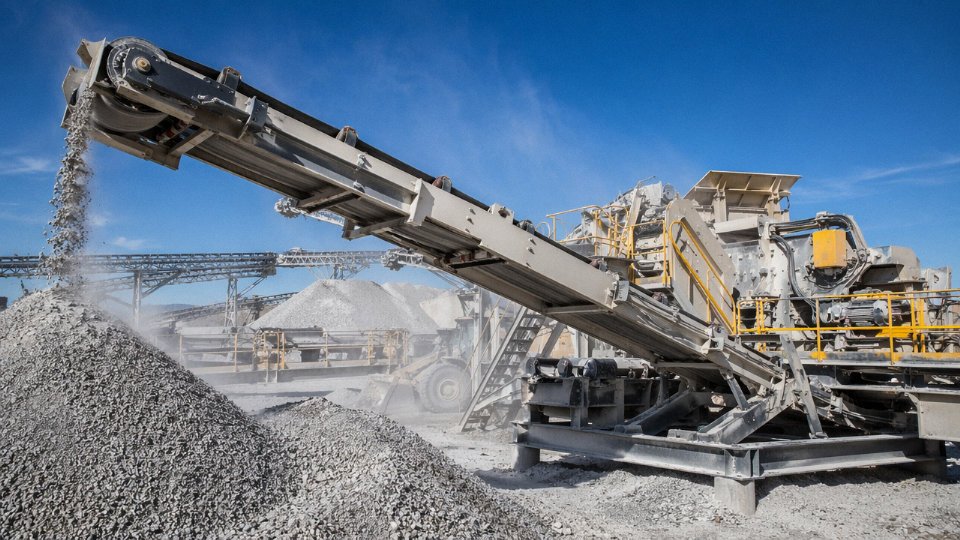
The practical takeaway
For consumers, the sensible path is straightforward: read labels, understand why excipients are there, avoid products you do not need, and ask for medical advice when your health status makes supplements or medications more complicated.
For factory owners, EHS managers, engineers, and procurement teams, the duty is heavier. Buy materials with known composition. Ask vendors for crystalline silica data when minerals, fillers, abrasives, ceramics, glass, stone, cement, foundry sand, or refractory products are involved. Design dust control into the process before startup, not after the first bad air sample. Budget for measurement, maintenance, and training.
Silicon dioxide is not automatically dangerous, and it is not automatically harmless. In approved oral uses, food-grade amorphous forms are generally low concern at typical exposure levels. In airborne respirable crystalline form, uncontrolled exposure deserves the same seriousness you would give any high-consequence industrial hazard: measure it, control it, verify it, and do not normalize dusty work just because the crew has “always done it that way.”