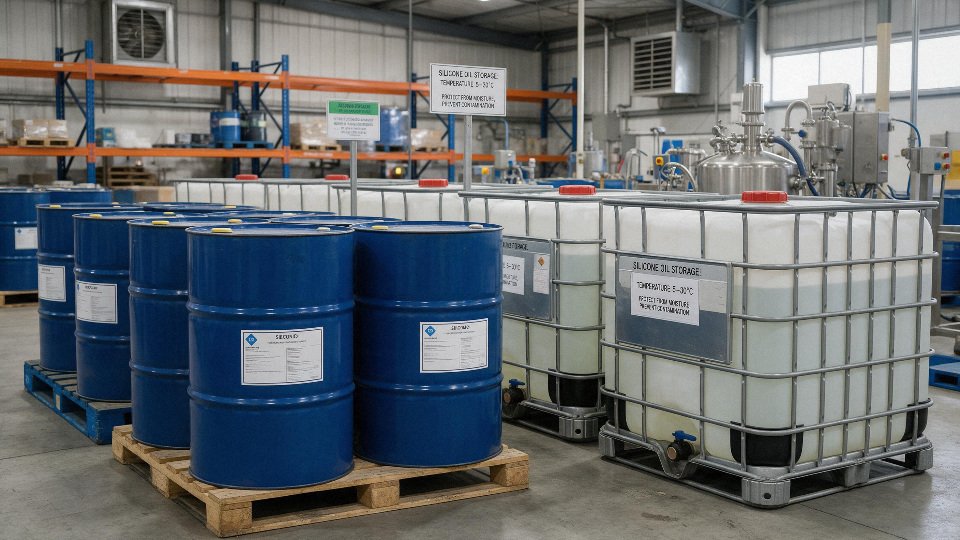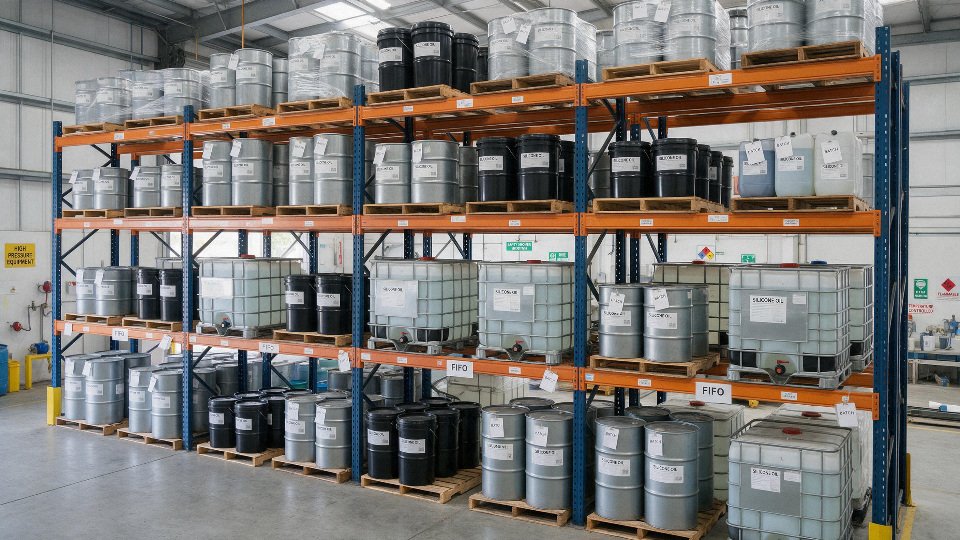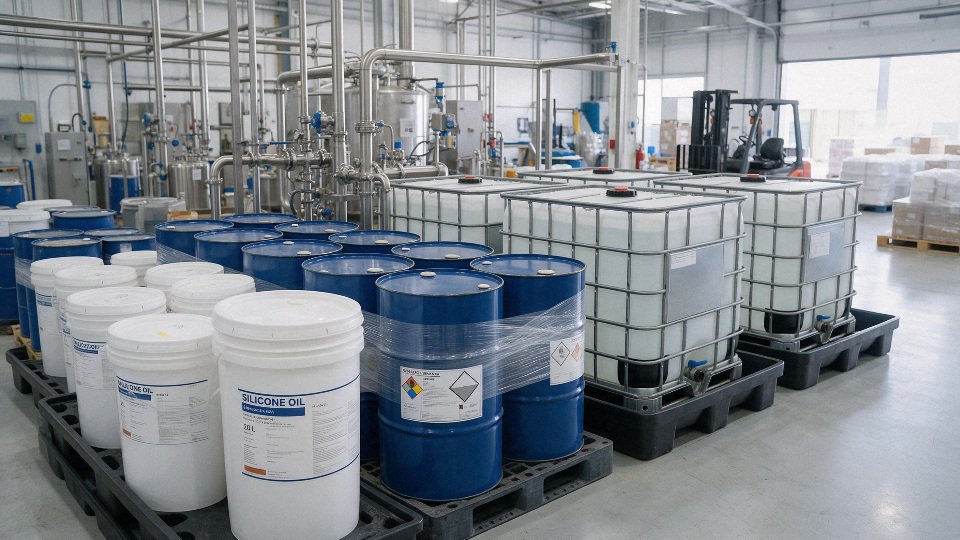
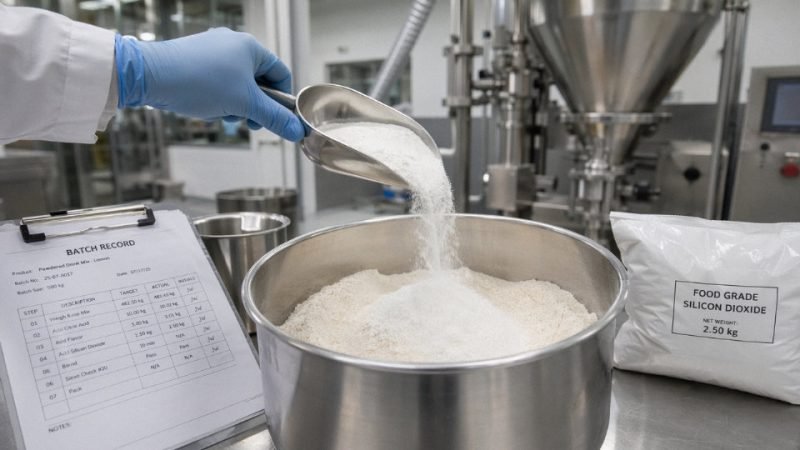
A label review can turn ugly fast when “silicon dioxide” shows up on a powdered drink, capsule blend, seasoning, or instant mix. The worry is usually gut irritation or “eating sand,” but the plant-floor problem is different: remove the anti-caking agent without a replacement plan and powders bridge in hoppers, feeders drift, sachet weights wander, and complaints start. That turns into scrap, slow changeovers, returned lots, and awkward supplier calls. The useful question is not whether silicon dioxide sounds natural. It is whether the grade, dose, particle form, and actual exposure make sense for the product and the person eating it.
For most healthy adults, food-grade silicon dioxide is not a gut-health supplement; it is an inert anti-caking additive generally permitted when it meets purity specs and good manufacturing practice. Typical food use is usually below 2% by weight, and total dietary silicon intake commonly lands around 20 to 50 mg/day.
That answer is simple, but the real decision is less tidy. Gut tolerance depends on the formulation, serving size, background diet, and whether the ingredient is food-grade silicon dioxide rather than an industrial material with the same chemical name. In practice, the gap between “safe as used” and “good for the gut” is where most confusion lives.
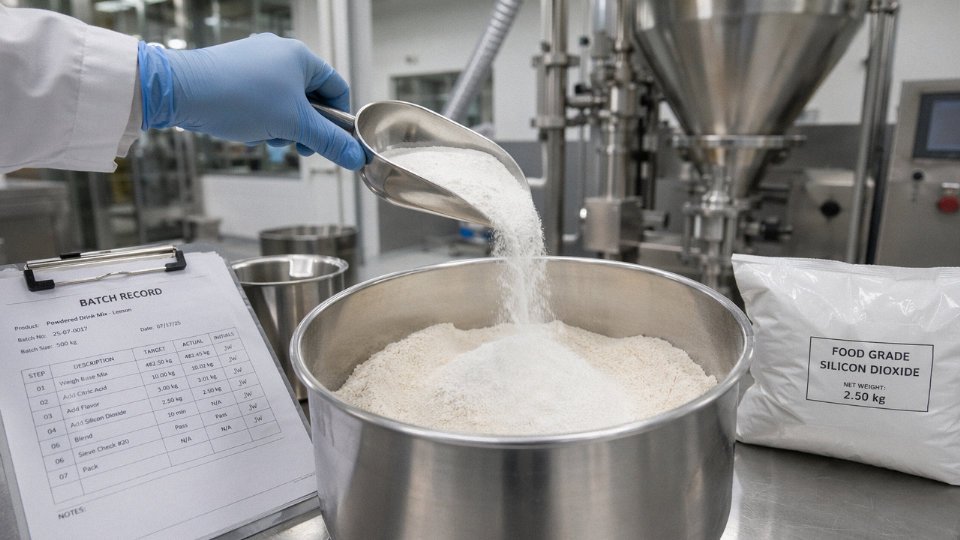
How silicon dioxide behaves in the digestive tract after you swallow it
Food-grade silicon dioxide is a stubborn material in the digestive tract, in the practical sense of the word. It does not melt into the meal like sugar, it does not ferment like inulin, and it does not wake up and colonize the bowel like a probiotic culture. Under normal stomach and intestinal conditions, it is poorly soluble in water and largely chemically inert.
That is the main reason it works so well in powders. The same surface behavior that keeps a seasoning blend or powdered drink mix from turning into a brick in a humid warehouse also means it is not designed to be a gut-active nutrient.
It mostly disperses, passes through, and does little chemistry
In a finished food, silicon dioxide is usually present at low levels. As an anti-caking agent, it is commonly used below 2% by weight, and many foods contain far less than that. The exact amount depends on the powder: fat-coated seasoning, cheese powder, spray-dried flavors, instant beverage mix, and mineral premixes all handle differently. A plant running a hygroscopic vitamin blend may need more flow aid than a dry salt blend stored in a climate-controlled room.
Once swallowed, the particles meet saliva, stomach acid, bile, enzymes, dissolved salts, and partially digested food. Most of the silicon dioxide remains as fine, wetted particles mixed into the food mass. It is not digested by amylase, protease, lipase, or brush-border enzymes. It is not a calorie source. Gut bacteria do not generally treat it like fermentable carbohydrate.
A useful plant-floor comparison: think of it as a processing aid that rides along with the product rather than an ingredient that transforms during the run. It may change how the powder behaved before you ate it. That does not mean it has an active job after swallowing.
Food-grade silicon dioxide behaves like a prebiotic fiber in the gut.False
Prebiotic fibers are fermented by gut microbes and can produce short-chain fatty acids. Silicon dioxide is poorly soluble, largely inert under digestive conditions, and is not a fermentable carbohydrate.
Particle design affects wetting, not necessarily health effect
Not all silicon dioxide grades behave the same in a hopper, and not all will disperse identically in gut fluid. Particle size, pore structure, surface area, hydration state, and amorphous structure all matter.
A high-surface-area amorphous silica can grab moisture at the surface through silanol groups. That is why it can improve flow in a sticky powder at low inclusion rates. Smaller particles and higher surface area generally disperse more readily, though they may also clump if poorly mixed or exposed to humidity before use. Anyone who has opened a bag of fine flow aid in August knows the difference between the datasheet and the mezzanine.
Hydrated or precipitated forms may carry surface water. Fumed forms tend to be very light, dusty, and high surface area. Food-grade materials must meet purity specifications, and in many jurisdictions they are permitted as additives when used under good manufacturing practice. That regulatory permission is about safe use and composition, not a promise of digestive benefit.
The amorphous structure matters too. Food-grade silicon dioxide is not the same handling risk as respirable crystalline silica dust in a dry processing area, but that distinction is about inhalation hazard and material form. In the gut, the relevant point is simpler: amorphous food-grade silicon dioxide is still not behaving like a dissolved mineral salt.
A little can dissolve, but that is not a gut-health claim
Small amounts of ingested silicon dioxide can dissolve into orthosilicic acid, a bioavailable form of silicon. The amount depends on surface area, residence time, pH, particle structure, and what else is in the meal. A watery beverage, a fatty dry snack, and a mineral-fortified powder will not present the particles to the gut in exactly the same way.
Adults commonly take in roughly 20 to 50 mg of dietary silicon per day, mostly from plant foods, beverages, and some additives. That number moves with diet pattern, water source, grain intake, beer consumption, and processed food use. The dissolved fraction from silicon dioxide may contribute to total silicon exposure, but that is a long way from proving a targeted effect on bloating, stool quality, gut lining function, or microbiome balance.
This is where procurement language helps. A material can be acceptable, compliant, and useful without being therapeutic.
What silicon dioxide does not do compared with gut-active ingredients
| Ingredient type | What it does in the gut | Silicon dioxide comparison |
|---|---|---|
| Prebiotic fiber | Ferments and feeds selected microbes, often producing short-chain fatty acids | Not a fermentable carbohydrate |
| Resistant starch | Escapes small-intestinal digestion and is fermented in the colon | Does not act as starch or fuel bacteria in that way |
| Probiotics | Delivers live organisms, if viable through storage and digestion | Contains no live culture |
| Osmotic laxatives | Pull water into the bowel and can loosen stool depending on dose | Not used for that mechanism at food additive levels |
| Digestive enzymes | Break down proteins, fats, or carbohydrates | Has no enzyme activity |
A typical example is a powdered soup base. The silicon dioxide may keep the onion powder, salt, hydrolyzed protein, and flavor particles moving through a screw feeder without rat-holing. Good choice: stable fill weights, fewer operator interventions, less rework from clumped bags. Wrong choice or poor dispersion: dusting, segregation, customer complaints about hard lumps. After consumption, though, its main function is already over.
That is the honest read. Silicon dioxide can be compatible with the digestive tract at normal food-use levels, provided it is food-grade and used properly. Calling it “good for the gut” overstates the case unless there is evidence for a specific gut outcome, and for ordinary anti-caking use, that evidence is not what the ingredient was engineered to deliver.
What the evidence says about gut benefits, microbiome effects, and digestive symptoms
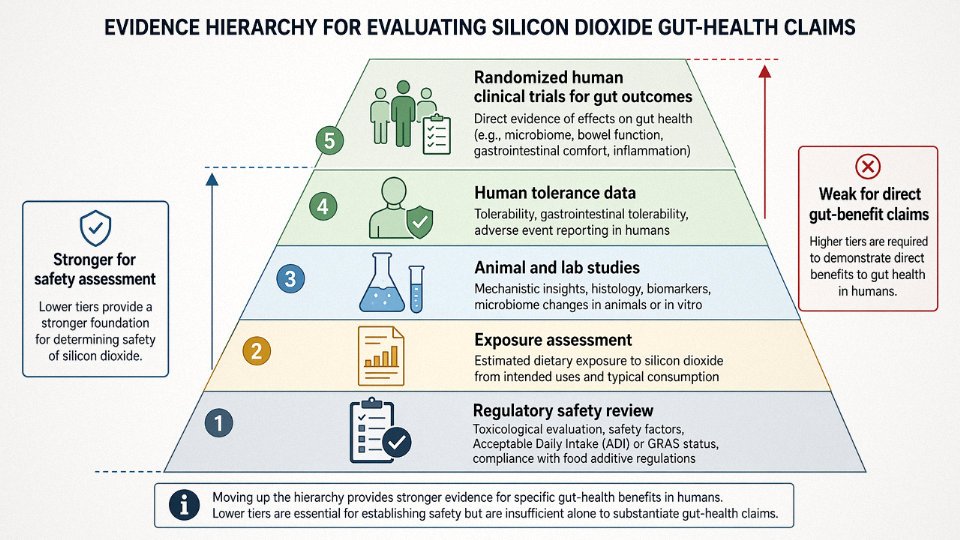
The evidence is lopsided, and that matters.
For food-grade silicon dioxide, the strongest body of work is not “gut optimization” research. It is regulatory safety assessment: toxicology data, exposure estimates, impurity limits, and reviews of how the additive is used in real foods. Food-grade silicon dioxide is permitted in many jurisdictions when it meets purity specifications and is used according to good manufacturing practice. In dry blends, seasonings, powdered drink mixes, tablet excipients, and similar products, it is usually used below 2% by weight, with many finished foods containing much less. Actual intake depends heavily on diet pattern: a person eating mostly whole foods will see a different exposure than someone using powdered meal replacements, instant mixes, and multiple supplements every day.
That is a safety frame, not a benefit claim.
Safety evidence is stronger than gut-benefit evidence
Estimated adult dietary silicon intake is commonly around 20 to 50 mg per day, depending on water, grains, vegetables, beer, and processed food additives. That figure is for total dietary silicon, not just silicon dioxide added as an anti-caking agent. In practice, the additive contribution can be small or noticeable depending on the product basket.
The available evidence does not give a strong clinical basis to market ordinary food-grade silicon dioxide as a treatment for bloating, constipation, diarrhea, “leaky gut,” irritable bowel syndrome, or microbiome imbalance. If a supplier, supplement label, or sales deck implies that standard silicon dioxide improves gut flora or repairs intestinal barrier function, I would ask for human trial data, not a cell-culture graph and a confident paragraph.
Ordinary food-grade silicon dioxide is a proven treatment for bloating, constipation, diarrhea, irritable bowel syndrome, leaky gut, or microbiome imbalance.False
Regulatory reviews support permitted use under purity specifications and good manufacturing practice, but direct human clinical evidence showing these gut-health treatment effects is limited or absent.
That distinction is familiar in manufacturing. A lubricant can be approved for incidental food contact without being a performance additive for the finished food. Same logic here. Permitted use does not equal therapeutic action.
Lab and animal studies need careful reading
Some studies look at silica particles interacting with intestinal cells, mucus layers, immune signaling, or gut bacteria. They can be useful. They can also be easy to over-read.
Dose is the first problem. A lab well exposed to a concentrated particle suspension is not the same as a human eating a seasoning blend where silicon dioxide is dispersed through salt, starch, spices, fats, and water. Particle type is another issue. “Silica” can refer to different forms, surface areas, particle sizes, porosities, coatings, and manufacturing routes. A highly engineered nanoparticle used in a research protocol may not behave like the amorphous food-grade silicon dioxide used to keep garlic powder flowing through a hopper in August humidity.
Experimental conditions matter too. Fasting versus fed state, gut pH, bile salts, transit time, protein binding, and the food matrix all change what particles contact. Anyone who has tried to keep a hygroscopic powder moving through a screw feeder knows this already: the same material behaves differently when moisture, fat, particle size distribution, and residence time change. Biology is messier than a feeder.
Digestive complaints are real, but the cause is often not obvious
Some people report bloating, cramps, loose stool, or constipation after highly processed foods, protein powders, pre-workouts, capsules, or meal replacements that contain silicon dioxide. Those symptoms should not be dismissed. Still, silicon dioxide may not be the true driver.
A typical scenario: someone starts a new powdered supplement and feels bloated within a few days. The label includes silicon dioxide near the end, so it gets blamed. But the same formula may contain sugar alcohols, inulin, gums, magnesium salts, caffeine, lactose traces, high-dose sweeteners, or a protein source that does not agree with that person. In a plant, I would not blame the anti-caking agent before checking moisture pickup, particle segregation, worn seals, and a half-dozen upstream variables. In nutrition, the same discipline helps.
The practical way to test sensitivity is not glamorous. Remove the suspect product, let symptoms settle, then reintroduce under controlled conditions if medically appropriate. Change one variable at a time. If symptoms are severe, persistent, bloody, associated with weight loss, or tied to known bowel disease, that is not a procurement question or a label-reading exercise; it needs medical evaluation.
A fair read of the evidence
Normal dietary exposure to food-grade silicon dioxide is unlikely to be a gut-health problem for most people when the additive meets food specifications and is used at typical levels. That is the reasonable safety position.
The other side of the line is just as clear: ordinary food-grade silicon dioxide should not be presented as a proven gut-health solution. Current evidence does not support using it as a microbiome modulator, bowel regulator, IBS treatment, or intestinal barrier therapy. If it is in a product, it is usually there for powder flow, anti-caking, dosing consistency, and shelf handling, not because the gut needs it.
Right claim: “Used in small amounts to improve powder handling and reduce caking.”
Wrong claim: “Supports digestive health.”
The first one fits the evidence. The second one needs clinical proof that, at this point, is not really there.
Food-grade silicon dioxide versus industrial silica: why form, purity, and exposure route matter
A lot of confusion starts with the word “silica.” On a food label, silicon dioxide usually means a food-grade, amorphous material used in small amounts to keep powders flowing. In a plant safety manual, silica often means respirable crystalline silica dust from cutting stone, handling sand, grinding concrete, or working around certain mineral fillers. Same basic chemistry, very different risk profile.
That distinction is not academic. I have seen buyers reject a normal food additive because they searched “silica hazard” and landed on an occupational exposure sheet for quartz dust. I have also seen the opposite mistake: someone treating any white silica powder as interchangeable because the chemical name looked familiar. Both are bad procurement habits.
The forms are not the same material in practice
Amorphous silicon dioxide is silicon and oxygen arranged in a disordered, glass-like structure. It does not have the repeating crystal lattice found in quartz. Food-grade silicon dioxide used as an anti-caking agent is generally this amorphous type. Typical use in powdered foods is usually below 2% by weight, and many finished foods contain far less; the actual amount depends on the powder, humidity, particle shape, packaging, shelf life target, and how badly the blend wants to bridge in a hopper.
Hydrated silica is also amorphous, but it contains water or surface hydroxyl groups as part of the material structure. People may recognize it from toothpaste abrasives, though grades and specifications vary by application.
Colloidal silicon dioxide usually refers to very fine amorphous silica with high surface area. In food and supplement work, it is often used to improve flow in powders or help prevent clumping in capsules, drink mixes, seasoning blends, and tablet formulations. It can be dusty and annoying to handle even when it is food-grade, so local exhaust and basic dust control still matter on the production floor.
Crystalline silica is different. Quartz, cristobalite, and tridymite have ordered crystal structures. Fine airborne crystalline silica particles, especially respirable particles that can reach deep lung tissue, are a serious occupational hazard. Long-term inhalation is associated with silicosis and other lung disease, and regulators treat it accordingly.
Silicon dioxide on a food label has the same risk profile as respirable crystalline silica dust in industrial work.False
Food-label silicon dioxide is typically food-grade amorphous material used orally at low levels, while respirable crystalline silica is an inhalation hazard involving a different form, exposure route, and dose pattern.
Route of exposure changes the risk
The gut and the lung are not the same machine. A swallowed food additive passes through acid, enzymes, bile, intestinal contents, and then mostly exits with stool. A respirable dust particle small enough to lodge in the deep lung can remain where the body has a much harder time clearing it.
That is why safety data from stone cutting, sandblasting, foundry work, or mineral milling should not be dragged directly onto a food label. The right questions are: What form is it? Is it amorphous or crystalline? Is it food-grade? How much is present? Is it swallowed, inhaled, or injected? What purity standard does it meet?
Adult dietary silicon intake is commonly estimated around 20 to 50 mg per day, mostly from plant foods, beverages, and food additives. That range moves with diet pattern, water source, use of processed powdered foods, and local formulation habits. It is not comparable to a worker breathing uncontrolled dust for years beside a dry saw or bag dump station.
Purity specifications are where procurement earns its keep
Food-grade silicon dioxide is permitted as a food additive in many jurisdictions when it meets purity specifications and is used according to good manufacturing practice. That phrase sounds dry, but it carries real plant-floor consequences.
A proper food or supplement supplier should provide a certificate of analysis for each lot, not just a glossy brochure. The specification should cover identity, assay or silicon dioxide content, loss on drying or moisture-related values, particle characteristics where relevant, and contaminant limits. Heavy metals are a key concern: lead, arsenic, cadmium, mercury, and similar contaminants need controlled limits appropriate to the market and application. Depending on the product category, buyers may also need allergen statements, residual solvent declarations, microbiological data, country-of-origin documentation, and compliance with standards such as FCC, USP/NF, or local food additive rules.
For production, particle behavior matters almost as much as chemistry. A high-surface-area colloidal grade can rescue a sticky powder blend, but it can also bloom into the air during hand charging if the operator dumps it too fast. A coarser grade may handle better but do less for flow. If the specification drifts, tablet weight variation, capsule fill consistency, sachet seal contamination, and blender cleanout time can all move in the wrong direction.
A practical warning: do not source “silica” from an industrial abrasive, desiccant, filtration, or rubber-filler channel and assume it is acceptable for food. The bag may look clean. The paperwork is the test.
A compact procurement check
| Checkpoint | What to verify | Why it matters |
|---|---|---|
| Grade | Food additive, pharmaceutical, or industrial | Wrong grade can mean wrong contaminants, wrong documentation, or unsuitable processing history |
| Form | Amorphous versus crystalline | Occupational dust hazards should not be confused with approved oral additive use |
| Particle specification | Size range, surface area, bulk density, dustiness where available | Affects flow, airborne dust, dosing accuracy, and cleanup |
| Certificate of analysis | Lot-specific results, not a generic sales sheet | Protects incoming QC and traceability |
| Contaminant limits | Heavy metals and other impurities relevant to the market | Prevents regulatory and product safety failures |
The short version: food-grade amorphous silicon dioxide and industrial respirable crystalline silica should not be treated as the same exposure. Form, route, dose, and regulatory grade decide the risk conversation. Ignore those four details and you can either scare people for no good reason, or worse, buy the wrong powder into a food plant.
Where silicon dioxide appears on food and supplement labels
Silicon dioxide shows up most often where plants, kitchens, and supplement packers have the same enemy: damp powder that refuses to flow.
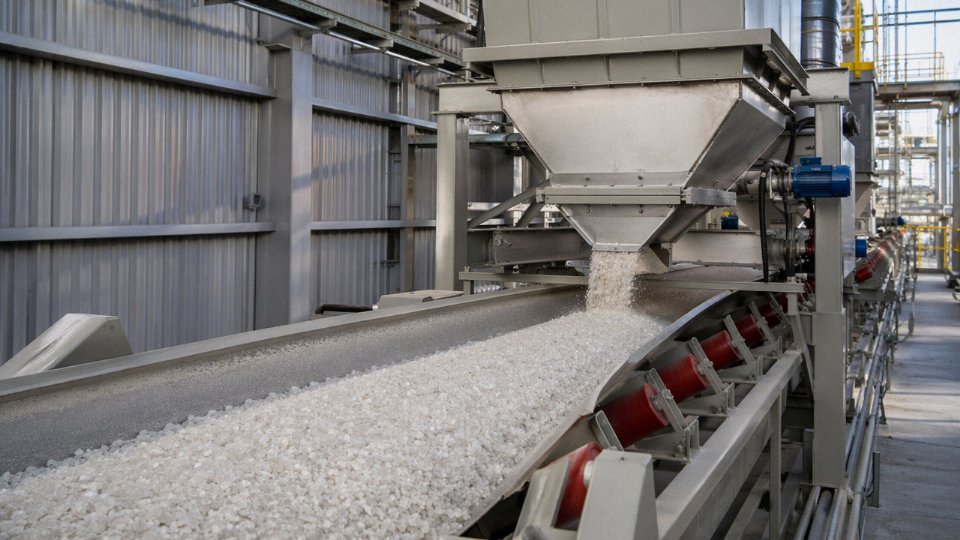
You will see it in powdered seasonings, taco or soup mixes, instant drink powders, coffee creamers, salt substitutes, spice blends, grated cheese powders, capsules, tablets, protein powders, greens powders, electrolyte mixes, and other powdered supplements. In those products, it is usually not there because anyone is trying to “feed the gut.” It is there because the powder has to move through bins, augers, weigh scales, sachet fillers, tablet presses, or capsule machines without turning into wet beach sand.
The label names are not always identical
On an ingredient panel, silicon dioxide may appear under a few related names. The most common are:
| Label term | What it usually means in practice |
|---|---|
| Silicon dioxide | The straightforward food additive name, often used for anti-caking or flow control |
| Silica | A shorter name for silicon dioxide; context matters because “silica” can describe different forms in different industries |
| Colloidal silicon dioxide | Very fine, high-surface-area material often used in tablets, capsules, and powdered supplements as a glidant |
| Hydrated silica | A related form containing bound water; more common in some personal care and specialty applications, but it can appear in food or supplement contexts depending on formulation |
| Anti-caking agent | The function rather than the chemistry; silicon dioxide is one possible anti-caking agent among others |
That last one matters. If a label says “anti-caking agent: silicon dioxide,” it is telling you the job it performs. It is not the same kind of statement as “contains fiber,” “contains magnesium,” or “source of protein.”
In manufacturing language, silicon dioxide is usually a functional ingredient. It helps make a product fill, dose, store, and pour predictably. The consumer sees a spoonable powder. The production supervisor sees fewer plugged chutes, less weight variation, and fewer operators banging on a hopper with a rubber mallet at 2 a.m.
Why dry powders need flow aids
Powders are not as simple as they look. Fine particles pick up moisture from the air, especially in humid seasons or in plants where the blending room is not tightly controlled. Salt, cheese powders, flavor carriers, acids, sweeteners, and protein blends can all cake for different reasons. Some absorb water. Some carry fat. Some build static. Some compact under their own weight during storage.
Silicon dioxide helps by sitting on particle surfaces and reducing the contact points where moisture and pressure make lumps. In a hopper, that can mean less bridging, where powder arches over the outlet and stops flowing even though the bin is half full. In a pouch line, it can mean cleaner filling and fewer underweight or overweight packs. In a tablet operation, colloidal silicon dioxide may improve powder flow into the die so tablet weight does not wander all shift.
This is not cosmetic. Poor flow turns into real cost: rejected packs, rework, missed label weights, downtime, and operators making “field fixes” that quality managers hate. Anyone who has watched a sticky drink mix smear inside a vertical form-fill-seal machine knows the problem is not theoretical.
Typical food use levels for silicon dioxide as an anti-caking agent are usually below 2% by weight, and many finished foods contain far less. The actual amount depends on the powder chemistry, particle size, fat content, moisture target, packaging, climate, and shelf-life requirement. A dry seasoning sold in a shaker in Arizona does not behave the same as a high-fat cheese powder packed during a wet summer in a coastal plant.
How to judge whether it matters in your diet
For most people, the relevant question is not “Did I ever eat silicon dioxide?” The practical question is “How often, and from what sources?”
A pinch of seasoning used a few times a week is a different exposure pattern from taking several powdered supplements every morning, drinking protein powder daily, using electrolyte mix at work, and taking capsules or tablets that all list silicon dioxide. None of that automatically means harm. It does mean the label is worth reading in context.
Estimated total dietary silicon intake in adults is commonly around 20 to 50 mg per day, mostly from plant foods, beverages, and some food additives. That range shifts with diet. People who eat more grains, vegetables, beer, or certain mineral waters may sit higher than someone eating a narrow low-plant diet. Food-grade silicon dioxide used under permitted additive rules contributes to intake, but it is only one source.
Silicon dioxide on a food or supplement label usually signals a manufacturing function, not an intended gut-health benefit.True
In powdered foods and supplements, food-grade silicon dioxide is commonly used as an anti-caking agent or flow aid. If a product is claiming a nutritional or gut-health benefit, that claim should be stated separately and supported by the label or evidence.
A simple way to read the label is to look at position and product type. If silicon dioxide appears near the end of a seasoning, drink mix, or capsule ingredient list, it is probably present at a low functional level. If you are using multiple powder-heavy products every day, the combined exposure becomes more relevant, though still governed by product formulation, serving size, and compliance with food additive rules.
Food-grade silicon dioxide is permitted as a food additive in many jurisdictions when it meets purity specifications and is used according to good manufacturing practice. From a procurement standpoint, that means the grade, specification sheet, contaminant limits, and supplier documentation matter. From a household standpoint, it means the presence of silicon dioxide on a compliant food label should be read first as a processing clue, not as a warning flag or a promised digestive aid.
Regulatory safety position and acceptable-use logic for food manufacturers
Regulators generally do not treat food-grade silicon dioxide as a gut-health ingredient. They treat it as a processing aid or food additive with a technical job: keep powders free-flowing, reduce clumping, improve dosing consistency, and help dry blends run through hoppers, augers, sachet lines, tablet presses, or capsule fillers without turning into a bridge-building contest.
The broad safety position is straightforward: food-grade silicon dioxide is permitted in many jurisdictions when it meets purity specifications and is used under approved conditions, usually according to good manufacturing practice. That last phrase gets overlooked. On the plant floor, it means you do not add it because “the formula has always had 1.5%.” You add enough to solve the flow problem, then you stop.
Food-grade silicon dioxide is widely permitted as a food additive when it meets purity requirements and is used according to good manufacturing practice.True
This reflects the general regulatory approach in many markets. The permission depends on the material meeting food-grade specifications, the intended food category, local additive rules, and use at a level justified by technical need.
What safety reviewers are actually looking at
A proper safety review is not just a glance at the ingredient name. Regulators and responsible manufacturers look at several pieces together:
| Evaluation area | What it means in practice |
|---|---|
| Toxicology | Whether studies show adverse effects at expected intake levels, with margins between tested doses and real dietary exposure |
| Absorption and excretion | How much dissolves or is absorbed, and how much passes through the gastrointestinal tract |
| Particle form and purity | Whether the material matches the approved food-grade form and does not carry unacceptable contaminants |
| Impurity limits | Heavy metals and other residuals controlled to specification, not assumed away |
| Exposure estimate | Intake from all likely food sources, not just one neat serving size on a label |
| Technical function | Whether silicon dioxide is actually needed for anti-caking, flow control, or carrier performance |
Typical use levels in powdered foods are usually below 2% by weight, and many finished foods contain far less. The workable level depends on the powder’s fat content, humidity pickup, particle size distribution, packaging, storage temperature, and how aggressively the product is handled in distribution. A seasoning blend stored in a humid coastal warehouse behaves differently from a dry mineral premix running in an air-conditioned supplement plant.
Estimated adult dietary silicon intake is commonly around 20 to 50 mg per day, mostly from plant foods, beverages, and food additives. That range depends heavily on diet pattern, water and beverage intake, cereal consumption, and how many powdered or fortified products a person uses. It is not a fixed personal number.
Good manufacturing practice is not paperwork theater
In a decent plant trial, you would start low and test the powder under real conditions: after blending, after a day in a tote, after vibration, after a warm weekend in packaging, and through the actual filler. If 0.3% solves the flow issue, using 1.5% is poor formulation discipline unless there is a documented reason.
Wrong approach: add a high level “for insurance,” ignore humidity control, and never challenge the blend in production. The result may be acceptable flow, but it can also mean unnecessary additive load, changed bulk density, dusty handling, label scrutiny, and occasionally a tablet or capsule weight-control problem.
Right approach: fix the powder system first where practical. Check raw material moisture, screen condition, fat smearing during blending, worn screw flights, hopper angle, and whether operators are banging the side of the bin with a rubber mallet every 12 minutes. Silicon dioxide can hide a bad process for a while. It rarely cures one.
Supplements need tighter discipline than ordinary foods
Supplement products can create higher repeated exposure than ordinary foods because users may take multiple scoops, capsules, or sachets every day, sometimes for months. A protein powder, greens powder, electrolyte stick, pre-workout, and capsule stack can all contain anti-caking agents. Each product may be compliant alone. The combined routine is where exposure assumptions get less tidy.
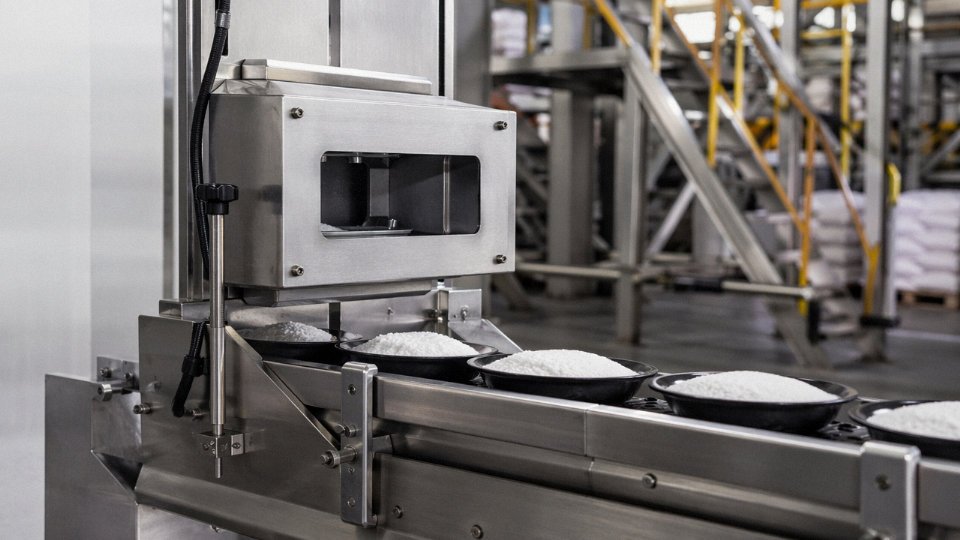
For procurement and formulation teams, that means supplier quality matters. Do not buy silicon dioxide like a commodity filler without checking the grade, intended use, and certificate package. A low price from a distributor is not useful if the lot lacks food-grade documentation, particle specification, allergen statement, heavy-metal data, and traceability back to the manufacturing site.
Incoming quality controls that matter
A practical food or supplement manufacturer should have controls that fit the risk, not just a binder full of supplier PDFs nobody reads.
At minimum, I would expect:
- Food-grade specification tied to the correct regulatory market for the finished product
- Certificate of analysis for each lot, with identity, purity, and relevant impurity limits
- Heavy-metal testing, either per lot or under a justified supplier monitoring plan
- Allergen status and cross-contact statement, even though silicon dioxide itself is not a protein allergen
- Microbiological assessment, especially for materials repacked or handled through less controlled distribution
- Lot traceability from receipt through batch records and finished goods
- Change notification agreement for manufacturing site, process, particle grade, or specification changes
- Storage controls to keep bags dry, sealed, and protected from warehouse abuse
One operational warning: silicon dioxide is often very light and dusty. Even when the oral food-grade material is permitted, poor handling can create housekeeping and occupational exposure problems. Use local exhaust, closed transfer where justified, and basic dust control. Do not let a “safe food additive” mindset turn into a white film over the mezzanine, the checkweigher, and every operator’s sleeves.
For factory owners, the acceptable-use logic is simple but not casual: approved grade, clean supplier chain, documented need, lowest effective level, and traceable lots. That is how silicon dioxide stays a controlled anti-caking tool rather than an avoidable formulation and compliance headache.
When silicon dioxide may deserve extra caution
For most people, the tiny amount of food-grade silicon dioxide used to keep powders flowing is not the gut issue worth losing sleep over. The answer can change, though, when the person is medically vulnerable, the dose stacks up across many products, or the material is not really food-grade. That is where I would slow the line down and check the specification sheet, so to speak.
Medical situations where a clinician should be involved
Anyone with chronic gastrointestinal disease should be careful with self-directed supplement experiments. That includes inflammatory bowel disease, celiac disease, short bowel syndrome, chronic diarrhea, unexplained constipation, recurrent abdominal pain, malabsorption, or a history of bowel surgery. Silicon dioxide itself may not be the active problem, but a new powder or capsule can complicate symptom tracking.
Kidney disease deserves the same caution. Dietary silicon intake in adults is commonly around 20 to 50 mg per day, depending heavily on diet, beverages, and additive exposure. That is not the same thing as saying every high-silica supplement is harmless in a person with impaired renal handling or a complicated mineral balance. A nephrologist or pharmacist will think about the whole load: minerals, binders, antacids, electrolytes, vitamin D, calcium, magnesium, and prescription drugs.
Complex medication regimens are another practical red flag. People taking anticoagulants, thyroid medication, seizure drugs, transplant medicines, diabetes drugs, or multiple timed-release products should not casually add several capsules a day from a supplement stack. The concern is often not silicon dioxide alone. It is the combined formula, timing, fiber content, mineral content, and whether the supplement changes bowel transit or absorption.
Pregnancy is similar. Normal food exposure is one thing. Starting a new silica supplement during pregnancy, especially one marketed for hair, skin, nails, detox, or gut cleansing, is a different decision and should be run through a qualified clinician. The marketing label is not a prenatal safety assessment.
A food additive that is permitted in small amounts in foods is automatically safe at any intake level from supplements.False
Regulatory permission for food-grade silicon dioxide depends on purity, intended use, and good manufacturing practice. Supplement stacking, high-dose use, medical conditions, and product quality can change the risk discussion.
Supplement stacking can make a small additive less invisible
On a plant floor, silicon dioxide is often used because powders bridge, cake, or rat-hole in hoppers. A little flow aid can keep a filling machine from throwing low weights all afternoon. Typical food use as an anti-caking agent is usually below 2% by weight, and many finished foods contain far less. The exact level depends on particle size, humidity, fat content, salt load, packaging, and whether the powder sits in a warehouse through summer.
Now shift that to a consumer taking a morning greens powder, protein powder, electrolyte stick, pre-workout, sleep blend, three herbal capsules, and a mineral tablet. Each product may be using silicon dioxide within normal formulation practice. The cumulative excipient intake still deserves a look, mainly because the gut is receiving the entire pile, not one label at a time.
A practical review is simple: list every powder, capsule, chewable, and sachet used daily; check “silicon dioxide,” “silica,” or “colloidal silicon dioxide” on each label; then ask whether all those products are truly needed. Procurement managers do this with raw materials all the time. One ingredient is acceptable at one station. Five uncontrolled additions across the process can create trouble.
Do not ingest non-food-grade silica
This is the blunt warning: do not eat industrial silica, craft powders, desiccant packet contents, aquarium media, polishing compounds, casting materials, diatomaceous earth not explicitly sold for food use, or any powder that is not intended for ingestion.
The reason is not semantic. Non-food-grade materials may have different particle profiles, contaminants, crystalline silica content, processing residues, or microbial controls. A bag meant for moisture control in a shipping carton is not manufactured, tested, labeled, or handled like a food ingredient. In procurement terms, it is the wrong grade, wrong specification, wrong audit trail.
I have seen plants reject otherwise useful materials because the certificate of analysis did not match the application. Consumers should be at least that strict with anything they swallow.
Children and other vulnerable groups
Children should get exposure from normal foods or clinician-recommended products, not experimental supplement routines. The same goes for older adults with frailty, people with feeding tubes, patients recovering from major illness, and anyone with limited ability to report symptoms clearly. Small bodies and fragile systems leave less room for guesswork.
A child using a prescribed or clinician-selected supplement is one situation. A child being given an adult beauty powder, “detox” blend, or gut powder because it looked harmless online is another. Wrong choice, wrong dose, wrong excipient mix; the result may be diarrhea, constipation, nausea, poor intake, or a missed diagnosis.
If symptoms start, inspect the whole formula
If bloating, cramps, loose stools, reflux, nausea, constipation, or urgency begins after a new supplement, do not pin the blame on silicon dioxide too quickly. Read the full formula like a batch record.
Common culprits include sugar alcohols such as sorbitol, xylitol, maltitol, and erythritol; high-dose magnesium; inulin and other fermentable fibers; gums; resistant starches; botanicals; caffeine; iron; zinc; large vitamin C doses; artificial sweeteners; flavors; emulsifiers; and capsule materials. Some people tolerate one serving but not two. Some tolerate it in winter, then struggle during hot weather because their water intake and electrolyte balance shift.
The cleanest test is usually to stop the new product, let symptoms settle, and reintroduce only with medical guidance if there is any underlying disease, pregnancy, kidney disease, blood in stool, weight loss, fever, persistent vomiting, or symptoms that do not resolve. From an operations viewpoint, change one variable at a time. Otherwise you are troubleshooting a noisy process with no control sample.
How to make a practical decision if you want better gut health
For most healthy adults, avoiding silicon dioxide is not where I would spend the first hour of gut-health effort. It is usually a low-use processing aid or anti-caking additive, often present at much less than 2% of a powder blend, and many finished foods contain far less than that. The exact amount depends on the product format, moisture behavior, particle size, packaging, and how badly the powder wants to bridge in the hopper or clump in the jar.
That does not make it “good for the gut.” It means it is unlikely to be the main lever.
I look at this the same way I look at a plant reliability problem. If a packaging line is losing output because operators keep stopping to clear jams, you do not start by polishing a guard rail. You check film tension, seal temperature, product flow, changeover discipline, and maintenance history. With gut health, the larger variables are usually diet pattern, fiber, fluid intake, sleep, activity, alcohol use, medication effects, stress load, and whether symptoms need a clinician’s attention.
Start with the bigger gut-health levers
The interventions with better support are not glamorous, but they work more often than chasing single additives.
For many adults, practical targets include:
- Enough fiber from foods such as beans, lentils, oats, vegetables, fruit, nuts, seeds, and whole grains. Tolerance varies, so step up gradually, especially if bloating is already an issue.
- A wider spread of plant foods over the week, not just the same salad every day. Diversity gives the gut more substrate variety.
- Adequate fluids, particularly if fiber intake rises. Dry fiber plus poor hydration is a common reason people feel worse after “eating healthier.”
- Regular meal timing where possible. Shift work makes this messy; I have seen night-shift operators live on vending-machine snacks and coffee, then blame one ingredient on a label.
- Sleep and physical activity. Bowel motility is not separate from the rest of the body.
- Medical evaluation for persistent diarrhea, constipation, blood in stool, unexplained weight loss, anemia, severe pain, or symptoms that wake you at night.
None of that sounds like a procurement specification, but it is the base material. If the base material is wrong, trimming a tiny excipient rarely fixes the assembly.
For a healthy person using a food or supplement as directed, silicon dioxide is unlikely to be a major gut-health concern if the product causes no symptoms.True
Food-grade silicon dioxide is permitted in many jurisdictions under purity specifications and good manufacturing practice, and typical use levels in foods are low. Individual tolerance and product quality still matter.
If supplements bother you, simplify the formula
There is a practical exception. Some people do react poorly to certain supplement products. The cause may be the active ingredient, dose, magnesium form, sugar alcohols, gums, caffeine, herbal extracts, capsule material, or a stack of excipients. Silicon dioxide can be on the label, but it is only one suspect in a crowded room.
If you are sensitive, choose simpler formulations. Fewer actives. Lower starting dose. No proprietary blend hiding the amounts. Tablets and capsules with ten or fifteen inactive ingredients are not automatically unsafe, but they make troubleshooting harder.
In practice, I would rather see a clean, boring product from a credible manufacturer than a label that reads like a trade show brochure. Third-party testing can help, especially for minerals, botanicals, protein powders, and products with contamination risk. Look for lot-level traceability, clear serving size, realistic claims, and a company that answers technical questions without marketing fog.
Judge the whole product, not one additive
A food or supplement containing silicon dioxide can still be a poor choice. A product without silicon dioxide can also be poor. The additive is not the whole risk profile.
Use a simple screen:
| Question to ask | Better sign | Caution sign |
|---|---|---|
| What is the dose? | Matches normal serving directions | “Mega” dosing without a clear reason |
| What are the active ingredients? | Amounts are listed plainly | Proprietary blend with vague quantities |
| Is quality controlled? | Third-party testing or strong manufacturer documentation | No lot information, no contactable supplier |
| How do you tolerate it? | No change in symptoms after normal use | Bloating, diarrhea, pain, reflux, or constipation starts after use |
| Is the claim realistic? | Modest support language | Promises to “reset,” “detox,” or “heal” the gut |
A typical scenario: someone starts a greens powder, a magnesium blend, and a prebiotic gummy in the same week. Then they get gas and loose stools. Silicon dioxide appears on one label, so it gets blamed. Maybe. But the more likely drivers are fermentable fibers, sugar alcohols, magnesium dose, or simply changing too many inputs at once. The right move is to stop, reintroduce one product at a time, and track dose and symptoms for several days.
A practical rule you can actually use
If a food or supplement contains food-grade silicon dioxide, causes no digestive symptoms, comes from a credible manufacturer, and is used as directed, I would not treat that ingredient as a major gut concern.
If you still prefer to avoid it, that is reasonable as a personal purchasing choice. Procurement teams do this all the time for customer preference, label simplicity, or export-market positioning. Just be honest about the tradeoff. Removing silicon dioxide from a powder can worsen flow, clumping, dosing consistency, and shelf handling, especially in humid warehouses or resealable tubs opened daily. Sometimes the “cleaner” label creates a messier product.
For gut health, spend most of your effort on the inputs with the biggest signal. Food pattern first. Symptoms second. Product quality third. Tiny anti-caking additives are usually much farther down the maintenance list.
Frequently asked questions
Is silicon dioxide a probiotic or prebiotic?
No. Silicon dioxide is not a probiotic because it is not alive. It is not a prebiotic either, at least not in the usual nutrition sense, because it is not a fermentable fiber that gut bacteria use as fuel.
In a food plant, silicon dioxide is there for a very plain reason: flow. It helps powders move through hoppers, augers, sachet fillers, and tablet presses without clumping into damp little bridges. That matters with seasoning blends, powdered drink mixes, capsules, and fine mineral premixes. A probiotic is selected for biological activity. Silicon dioxide is selected for physical handling.
Silicon dioxide is a probiotic or prebiotic ingredient.False
Food-grade silicon dioxide is an inorganic anti-caking or flow-control ingredient. It is not a live microorganism and is not a fermentable carbohydrate used to feed beneficial gut bacteria.
Can silicon dioxide cause bloating or constipation?
At normal food-additive levels, silicon dioxide is not commonly recognized as a direct cause of bloating or constipation. Typical use as an anti-caking agent is usually below 2% by weight in the ingredient where it is used, and many finished foods contain far less after dilution into the final recipe.
That said, people react to whole products, not just one line on a label. A powdered protein shake may contain silicon dioxide, but it may also contain lactose, sugar alcohols, gums, inulin, high doses of magnesium, artificial sweeteners, or a large protein load. Any one of those is more likely to move the needle for gas, stool change, or cramps.
A practical test is boring but useful: stop the suspect product for a short period, reintroduce it under similar meal conditions, and look for repeatability. One bad afternoon after a new drink mix is not a diagnosis.
Is silicon dioxide natural or synthetic?
Both descriptions can be true, depending on what someone means. Silicon and oxygen are abundant in nature. Silica occurs in rocks, soil, sand, plants, and drinking water sources. Adult dietary silicon intake is often estimated around 20 to 50 mg per day, depending heavily on diet pattern, beverages, cereal intake, plant foods, and processed-food exposure.
Food-grade silicon dioxide, though, may be manufactured, purified, milled, and controlled so it behaves consistently. That is not a bad thing. From a procurement standpoint, consistency is the whole point: particle size range, moisture, purity, heavy metal limits, bulk density, and flow performance need to stay within specification. A “natural” uncontrolled mineral dust would be a terrible food additive.
Is silicon dioxide the same as sand?
Chemically related, yes. The same as eating beach sand, no.
Sand is commonly rich in crystalline silica and contains whatever else the local geology and environment put there. Food-grade amorphous silicon dioxide is a refined ingredient made and specified for food use. The word “amorphous” matters because structure, particle behavior, purity, and exposure route change the risk profile.
This is where people often mix up two different worlds. Inhaled respirable crystalline silica in a cutting, blasting, or mining environment is a serious occupational hazard. A tiny amount of compliant food-grade silicon dioxide swallowed in a dry soup mix is a different exposure. Same broad chemistry family. Different form, different route, different control system.
Should people with irritable bowel syndrome avoid silicon dioxide?
There is no universal requirement for people with irritable bowel syndrome to avoid silicon dioxide. It is not a standard high-FODMAP ingredient, not a laxative fiber, and not a known fermentable substrate in the way inulin or certain oligosaccharides are.
Still, irritable bowel syndrome is a pattern-recognition condition in real life. If a specific supplement powder, meal replacement, seasoning blend, or capsule repeatedly causes symptoms, review the full formula with a clinician or dietitian. Look beyond silicon dioxide first: polyols, chicory root fiber, caffeine, magnesium salts, emulsifiers, gums, and dose size often deserve attention.
One operational warning: supplement labels can hide a lot inside “proprietary blend” positioning. The excipient list may be short, but the active ingredients can be the actual gut irritants.
Is silicon dioxide in supplements safe to take every day?
In compliant products, food-grade silicon dioxide is generally considered safe when it meets purity specifications and is used according to good manufacturing practice. Regulators in many jurisdictions allow it as a food additive under that logic.
Daily supplement use deserves a little more discipline, though. A single capsule with a small amount of silicon dioxide as a flow aid is usually not the concern. The bigger question is cumulative exposure and product quality if someone takes a pile of capsules, powders, greens blends, pre-workouts, mineral formulas, and “detox” products every morning.
For procurement managers, this is where supplier qualification matters. Ask for food-grade documentation, specifications, contaminant limits, country-of-origin paperwork where relevant, and current certificates of analysis. For consumers, the softer version is: buy from brands that disclose excipients clearly, follow dosage instructions, and do not stack supplements casually.
Does silicon dioxide detox the gut?
No reliable clinical evidence supports “detox” claims for ordinary food-grade silicon dioxide. It does not scrub the intestine like a filter cartridge, bind every toxin, reset the microbiome, or repair the gut lining.
That kind of claim usually borrows language from industrial adsorption or filtration and stretches it too far. I have used silica-based materials in manufacturing contexts where surface area and moisture handling matter. The gut is not a baghouse, and human physiology is not a powder blender.
If the goal is better gut function, the higher-probability levers are still the unglamorous ones: tolerable fiber intake, enough fluid, regular meals, appropriate treatment for diagnosed conditions, and fewer products that trigger symptoms. Silicon dioxide on a label is usually a manufacturing aid, not a gut-health strategy.
Final verdict: silicon dioxide is generally gut-neutral, not a proven gut-health enhancer
Silicon dioxide in food is best understood as a processing aid-like additive with a functional job, not as a gut-health ingredient. In normal food and supplement use, food-grade silicon dioxide is generally acceptable when it meets purity specifications, is bought from a credible supplier, and is used at typical levels under good manufacturing practice. That is the practical answer.
It is not a prebiotic. It is not a digestive enzyme. It is not a microbiome optimizer in any proven, clinically useful sense.
In powdered foods, seasonings, drink mixes, tablets, capsules, and mineral blends, silicon dioxide is usually there because powders are difficult to handle. Anyone who has watched a humid summer shift turn a free-flowing powder into a bridge-forming mess above a filler knows the problem. A small amount of silicon dioxide can reduce caking, improve flow through hoppers, help dosing consistency, and reduce rejects from underfilled or overfilled containers. Typical use as an anti-caking agent is usually below 2% by weight, and many finished foods contain far less. The actual level depends on particle size, moisture pickup, fat content, packaging, storage temperature, and how long the product sits before use.
That is manufacturing performance, not digestive therapy.
Food-grade silicon dioxide is generally gut-neutral at typical food and supplement exposure levels, but it is not proven to improve gut health.True
Regulators permit food-grade silicon dioxide in many jurisdictions when purity specifications and good manufacturing practice are met. Available evidence does not support strong claims that it improves the microbiome, digestion, bloating, or bowel regularity.
The right question is not just “Is it on the label?”
A better question is: what is the product, who made it, how much is used, and why is it there?
For a normal adult eating a mixed diet, estimated total dietary silicon intake is commonly around 20 to 50 mg per day, mostly from plant foods, beverages, and some additives. That range moves with diet pattern. Grain-heavy diets, certain beverages, and more processed powdered products can shift intake upward; a simpler diet may sit lower. This is not the same as saying every milligram comes from silicon dioxide, and it does not mean silicon dioxide has a gut-health role.
From a procurement angle, I would be more concerned about vague sourcing, poor certificate control, inconsistent lot documentation, or a supplement brand that makes aggressive health claims than I would be about a standard “silicon dioxide” line on a credible label. Food-grade material should have specifications for identity, purity, heavy metals, loss on drying, particle characteristics where relevant, and compliance with the applicable food additive rules. If a supplier cannot provide that cleanly, the issue is not gut health marketing. It is basic quality control.
Do not mix up oral food exposure with silica dust
The occupational hazard conversation is real, but it is a different route of exposure.
Industrial crystalline silica dust is dangerous when inhaled because fine airborne particles can reach deep lung tissue. Cutting, grinding, blasting, mining, and dry handling of certain mineral materials can create that risk. Plant people take this seriously: dust collection, respirators where required, housekeeping, enclosed transfer, exposure monitoring, the whole package.
Swallowing small amounts of food-grade silicon dioxide in a finished food is not the same exposure scenario. Different form, different purity expectation, different dose pattern, different organ system. Confusing the two leads to bad decisions. I have seen similar mistakes in factories: one word on a safety data sheet gets pulled out of context, then purchasing, QA, and production burn half a day arguing about the wrong hazard.
Still, “food-grade” must mean something. It is not a decorative phrase. It should tie back to specifications, approved use, and a supplier that understands food or supplement manufacturing rather than bulk industrial mineral sales.
What to do if you are choosing foods or supplements
If your gut feels fine and silicon dioxide appears near the end of an ingredient list, it is usually not a reason to reject the product by itself. Look at the bigger picture: fiber intake, alcohol, high-fat meals, sugar alcohols, meal timing, hydration, stress, medications, and whether the product contains other ingredients that commonly trigger symptoms. In practice, gums, magnesium salts, inulin, sugar alcohols, caffeine, and high-dose botanicals are more likely to create noticeable digestive effects than a small amount of silicon dioxide used for flow.
If you are troubleshooting symptoms, change one variable at a time. Do not throw out six foods, three supplements, and coffee in the same week, then try to identify the culprit. Keep a simple log for a couple of weeks: product, dose, meal context, timing, stool pattern, bloating, pain, and any changes in routine. Messy data is better than memory.
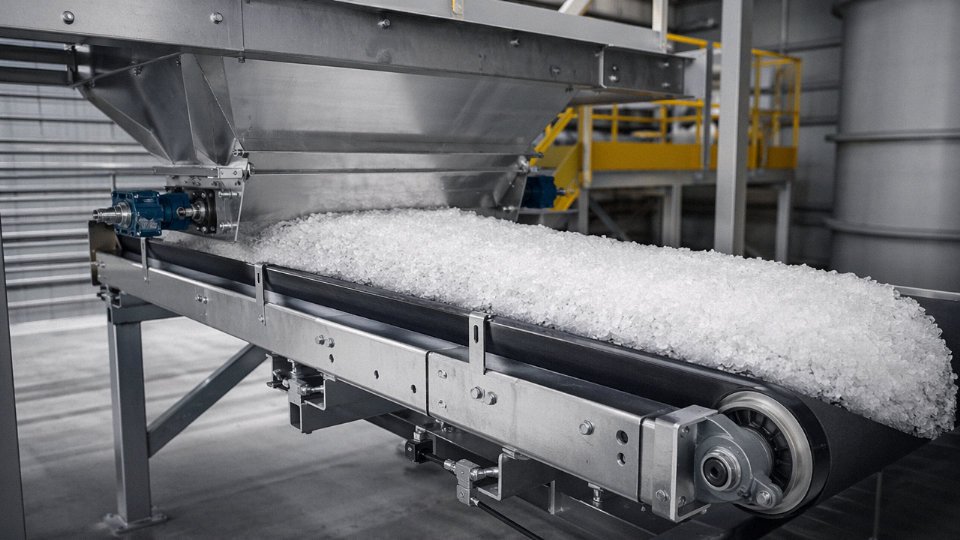
A sensible decision path looks like this:
| Situation | Practical call |
|---|---|
| Standard food or supplement from a credible brand, low label position | Usually acceptable; judge the full product, not this ingredient alone |
| Product uses silicon dioxide while making gut-health claims | Treat the gut claim skeptically unless supported by real clinical evidence |
| Unknown supplier, poor documentation, imported bulk powder with weak specs | Quality risk; request documentation or choose another source |
| Symptoms clearly repeat after one product | Stop that product and review the full formula, dose, and timing |
The final answer is boring, but useful: silicon dioxide is generally gut-neutral at typical food and supplement exposures. It helps powders behave. It does not reliably help your gut behave.
Persistent digestive symptoms deserve a wider lens. Blood in stool, unintended weight loss, severe or worsening abdominal pain, ongoing diarrhea, ongoing constipation, fever, vomiting, anemia, or symptoms that wake you at night should be evaluated by a qualified medical professional. Do not blame or clear one label additive while a real condition is being missed.