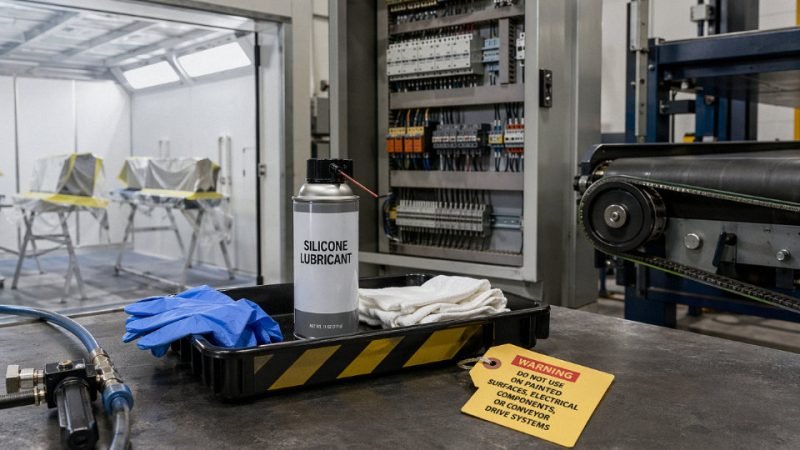
Silicone lubricant causes trouble when it lands in the wrong part of the plant: a misted overspray near a paint booth, a dab on a relay contact, a food-line mechanic using the same tube on every seal because “it never attacks rubber.” The first symptom may look small — fisheyes in coating, a flaky sensor signal, a clutch that will not hold — but the consequence is usually rework, troubleshooting time, rejected parts, or a line stop. The practical answer is not to ban silicone everywhere; it is to define where it belongs, where it must be controlled like contamination, and where another lubricant should be specified from the start.
Do not use silicone lubricant where parts will be painted, coated, bonded, on conductive electrical contacts, on surfaces needing controlled friction, in oxygen service without approval, or beyond the validated temperature range. General-purpose grades often sit around -40°C to 200°C, but contamination risk usually matters sooner than temperature.
That sounds simple until maintenance, purchasing, and production all touch the same decision. A cheap aerosol in a storeroom can migrate farther than people expect, especially through gloves, rags, compressed air, and “temporary” fixes that become standard practice. The cases below are the ones I would check before approving silicone lubricant on a real line.
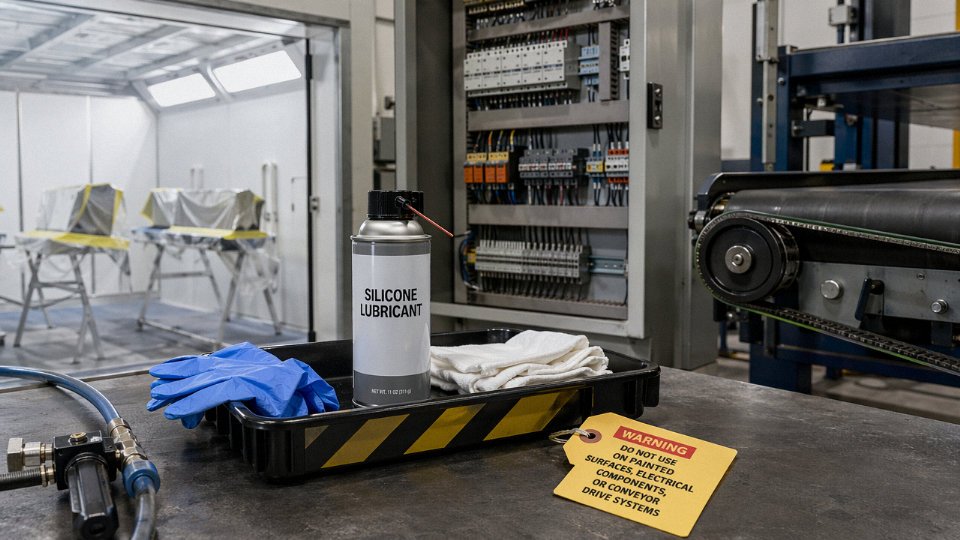
Do not use silicone lubricant before painting, coating, printing, bonding, or sealing
Silicone lubricant is a bad neighbor in any area where a surface must be wetted, printed, bonded, sealed, or coated. I do not treat this as a housekeeping preference. On a finishing line, silicone contamination can turn a stable process into a scrap generator, and the worst part is that the source is often not sitting beside the defect.
The technical reason is simple enough: many silicone oils and greases have very low surface energy. Paints, powder coatings, inks, adhesives, sealants, and potting compounds need to spread across the substrate before they can cure or lock in mechanically. If a thin silicone film is present, even one you cannot see by eye, the coating may pull away from that spot instead of wetting it.
That is where the familiar ugly defects come from: fisheyes, craters, pinholes, crawling, uneven gloss, poor ink definition, weak adhesive bonds, sealant edge lift, and printed markings that fail rub or tape tests. In powder coating, it may show up as small craters after cure. In wet spray, the painter may see the film separate almost immediately. In adhesive assembly, the part may look fine at build, then fail after vibration, humidity, or thermal cycling. The wrong lubricant choice becomes a quality escape.
Trace silicone residue can cause fisheyes, craters, poor wetting, and adhesion loss in many coating and bonding operations.True
Silicone oils spread into very thin low-surface-energy films, which can prevent coatings, inks, adhesives, and sealants from wetting the substrate. The exact sensitivity depends on the chemistry, surface preparation, cure system, and inspection standard.
Where the contamination usually comes from
The obvious source is a maintenance aerosol sprayed too close to the line. A mechanic frees a sticky hinge on a guarding panel, the mist drifts, and the next batch of parts starts showing craters. That happens.
The less obvious routes are the ones that keep engineers chasing their tails:
- Gloves used on a lubricated fixture, then used to handle primed or bare parts.
- Shared rags that wiped a silicone-lubricated slide in the morning and a bonding surface after lunch.
- Air tools with lubricated exhaust blowing across work-in-process.
- Benches used for both mechanical assembly and adhesive prep.
- Totes, carts, or foam separators that have picked up silicone overspray over months.
- Mold release agents carried from a forming area into a paint or print area.
- Maintenance parts stored open in the same cabinet as spray cans.
Compressed air deserves its own warning. If the plant air is oily, poorly filtered, or fed through local lubricators, it can deposit a film on parts during blow-off. The operator thinks he is cleaning the part. In practice, he may be applying the defect.
Cleaning is not always a reset button
Silicone contamination is hard to remove because it spreads. A fingerprint-sized transfer can become a broad thin film after wiping, especially if the rag is dirty or the solvent only moves the oil around. I have seen operators “clean” the same part three times and make the defect larger each time. Not because they were careless; the method was not validated.
Depending on the substrate and the downstream process, recovery may require controlled degreasing, detergent wash, solvent cleaning with clean-room-style wipe discipline, light abrasion, alkaline cleaning, plasma or corona treatment, or a full rework cycle through pretreatment. In critical bonding, medical, aerospace, electronics potting, or safety-related sealing, replacement can be cheaper than proving the surface is clean.
That sounds severe until you price the alternative. A rejected painted housing may cost a few labor hours. A failed seal in the field can cost a warranty visit, lost product, and a very uncomfortable customer call.
Use silicone-free products in sensitive zones
For paint shops, powder coating lines, printing and packaging areas, adhesive assembly cells, composite layup rooms, potting stations, and sealant preparation zones, the default should be silicone-free lubricants and silicone-free release agents. Put it in the purchasing description, not just in a verbal instruction to maintenance.
A practical control plan is usually better than a plant-wide argument about chemistry:
| Area or task | Better default choice | Shop-floor control |
|---|---|---|
| Conveyor bearings near paint or print | Silicone-free oil or grease approved by finishing | Keep aerosol cans out of the booth and flash-off area |
| Fixtures for adhesive assembly | Dry film or approved non-silicone lubricant, if lubrication is needed | Color-code tools and rags for bonding only |
| Packaging print stations | Silicone-free maintenance sprays | Ban shared gloves between maintenance and product handling |
| Composite layup or sealant prep | Approved mold release and surface prep chemistry only | Separate benches, carts, and wipe materials |
| Air blow-off before coating | Clean, dry, filtered air | Audit filters, drains, and local lubricators |
The purchasing side matters here. If a supplier substitutes a “similar” release spray or a maintenance tech buys whatever is on the local shelf, the line may pay for it days later. Specify “silicone-free” where it matters, keep SDS and technical data sheets on file, and test any new product on scrap parts through the real process: clean, coat or bond, cure, then inspect. A quick wipe test alone is not enough.
My rule is blunt: if the next operation depends on wetting or adhesion, silicone lubricant does not belong in the area unless the process owner has specifically approved it. Not “we have always used it.” Approved.
Avoid silicone lubricant on electrical contacts, switches, sensors, and low-voltage signal interfaces unless specified
Silicone grease and most silicone dielectric sprays are not “electrical helpers” in the broad sense. They are electrical insulators. That is exactly why they work well on the outside of certain connectors, boots, seals, and insulating parts. It is also why they can create hard-to-find faults when someone sprays them into a switch, relay, encoder, terminal strip, or signal connector and assumes the problem is solved because the part now looks clean and shiny.
A dielectric product belongs around a conductive path, not casually inside the conductive path, unless the equipment maker says so.
Dielectric silicone products can protect insulating surfaces but may increase contact resistance when applied directly to conductive mating surfaces.True
Most silicone dielectric greases are formulated to exclude moisture and protect insulation, not to improve metal-to-metal conductivity. On contacts with weak wiping force or low current, the film can interfere with reliable conduction.
Where dielectric silicone is legitimate
There are good uses. I have used silicone dielectric grease on spark plug boots, weather-pack connector seals, rubber grommets, trailer plug housings, outdoor sensor connector backshells, and external insulating surfaces on equipment that sees washdown or condensation. In those cases, the grease is doing a sealing job. It keeps water out, slows corrosion around the interface, and helps rubber release later without tearing.
Typical service temperature for many general-purpose silicone lubricants is roughly -40°C to 200°C, depending on the base oil, thickener, filler package, and product grade. Specialty electrical greases may go outside that range, but only if the manufacturer’s data sheet says so and the plant conditions actually match the test assumptions. A connector near a curing oven door, a cold-storage dock, or a rooftop HVAC control box will not age the same way.
The right application is usually a thin smear on the seal, boot, or connector body. Not a flood. Not a fogging spray into the pins because the technician had the can in his hand.
What goes wrong when silicone sits between contacts
Conductive contacts rely on pressure, wiping action, clean metal, plating quality, and enough current to break through minor films. Many low-voltage control circuits do not have much energy to spare. A 24 VDC input, a 4-20 mA sensor loop, an encoder channel, or a millivolt-level signal can misbehave from a small increase in resistance or a film that moves around with vibration.
The failure rarely announces itself politely.
You may see intermittent input faults on a PLC card, a proximity sensor that drifts only after washdown, a key switch that works if the operator wiggles it, or a potentiometer that gets noisy across one part of its travel. Low-current relay contacts can fail to wet through the film. Encoder contacts or small board-to-wire connectors can develop random dropouts. In battery and DC power circuits, silicone trapped under dirt can hold contamination against the joint and create a warm, ugly connection that still passes a quick meter check with no load.
Arcing makes it worse. If a relay or switch contact arcs through a film, the residue can trap carbon, dust, and decomposed grease. Now the fault is not just lubrication; it is a contaminated contact surface. I have seen maintenance teams chase a “bad sensor batch” for hours when the real cause was spray residue inside a connector cabinet after a well-meaning cleanup. The meter read fine at rest. The line still stopped twice per shift.
That is diagnostic poison.
Places I would not spray silicone without OEM approval
Do not spray silicone lubricant into relays, contactors, potentiometers, selector switches, key switches, membrane switch tails, encoder connectors, terminal blocks, battery terminals, servo feedback plugs, Ethernet-style industrial connectors, or precision low-voltage interfaces unless the OEM documentation specifically calls for that product type.
Terminal blocks deserve special mention. A little silicone overspray can migrate onto ferrules, spring clamps, or screw terminals. The next technician tightens the screw, the resistance looks acceptable, and the machine runs. Then heat, vibration, and oxidation take their turn. Right choice: stable connection. Wrong choice: intermittent stop, nuisance alarms, melted insulation, or a late-night callout that costs more than the whole case of spray cans.
Better products for conductive interfaces
Use the product that matches the electrical job. For cleaning, that usually means a residue-free contact cleaner approved for the plastics in the connector housing. For contacts that need lubrication, use a purpose-made contact lubricant designed for the plating, contact force, current level, and environment. For high-current joints, certain conductive greases or oxide-inhibiting compounds may be suitable, but they are not universal either; aluminum lugs, copper bus, plated battery posts, and signal pins are different animals.
A compact rule from the floor: if the surface must conduct a signal or carry current, do not assume dielectric silicone belongs there. If the surface must seal, insulate, or keep moisture away from nearby conductors, silicone may be exactly right.
Check the OEM service manual, connector manufacturer guidance, and the chemical compatibility sheet. If procurement substitutes a cheaper “electrical silicone spray” for a specified contact lubricant, treat that as a technical change, not a harmless brand swap. On controls hardware, the cost of the wrong film is usually paid in downtime, false troubleshooting, and parts replaced for no good reason.
Do not rely on silicone lubricant for high-load metal-to-metal wear, gears, chains, bearings, or cutting operations
Silicone lubricant feels slick, sheds water well, and often survives a wide temperature band. Many general-purpose products are rated somewhere around -40°C to 200°C, with specialty grades going beyond that only when the manufacturer has validated the chemistry. That temperature number fools people. Heat resistance is not the same thing as load-carrying ability.
Under heavy metal-to-metal contact, the lubricant has to do ugly work: keep asperities apart, survive squeeze-out, handle shock load, carry debris, resist oxidation, and sometimes react chemically at the surface to prevent welding. Most silicone sprays and light silicone fluids do not bring the extreme-pressure additives, anti-wear packages, tackifiers, or film strength that industrial gear oils, greases, way oils, chain oils, and machining fluids are built around.
A shiny can on a maintenance cart is not a lubrication program.
Where silicone usually gets people into trouble
I would not use general silicone lubricant as the working lubricant on open gears, roller chains, loaded plain bearings, rolling element bearings, high-pressure bushings, sliding ways, lead screws under real load, or splines that see fretting. It is also the wrong default for threaded fasteners under torque, press-fit assembly, metal stamping, tapping, drilling, reaming, or any cut where heat and chip evacuation matter.
Typical example: a conveyor chain starts squealing near a washdown area, so someone sprays silicone because it is clean and water-resistant. The squeal drops for a shift. Then the chain runs hot, the pins polish, the rollers stop rolling freely, and chain pitch grows enough to climb the sprocket. Now the plant is adjusting take-up every few days and blaming “bad chain.” The lubricant choice started the failure path.
Open gears are similar. Silicone can quiet them briefly because it reduces surface friction for a moment. Without tack and EP chemistry, it gets pushed out or flung off. Tooth flanks start showing scoring or a frosted wear pattern. On a loaded reducer, the same mistake can show up as elevated housing temperature, darker oil, bearing noise, and shortened seal life.
A lubricant that is thermally stable is automatically suitable for high-load gears and bearings.False
Temperature range only describes one part of service suitability. High-load contacts need film strength, anti-wear or extreme-pressure chemistry, viscosity control, and resistance to squeeze-out.
Symptoms that point to the wrong lubricant
The early signs are not subtle if you are near the machine. Squeal on reversal. Bronze bushings getting too warm to touch for more than a second or two. Black dust around a coupling hub. Needle bearings that feel gritty during shutdown checks. A press-fit that should assemble cleanly but starts picking up metal. Tapped holes with torn threads instead of clean flank finish.
Misapplied silicone can lead to:
- Galling on stainless, aluminum, and other smear-prone metals
- Scoring or blueing on shafts, pins, guides, and gear teeth
- Fretting corrosion where parts vibrate under load
- Rapid chain elongation from pin and bushing wear
- Premature bearing failure from boundary contact and heat
- Poor thread condition during tapping or forming
- Inconsistent bolt preload if used casually on torqued fasteners
That last one is worth saying plainly. Do not treat silicone spray as anti-seize. Torque values depend on friction. Change the friction and you change clamp load, sometimes by a lot. In flange work, dies, press tooling, and structural joints, that can become leaks, cracked parts, or loose hardware.
Better choices for heavy mechanical work
The right substitute depends on load, speed, temperature, contamination, and how often the machine can realistically be relubricated. A packaging line with daily wipe-down is not a quarry conveyor. A slow oscillating bushing is not a 3,600 rpm motor bearing.
| Application | Better lubricant family | Why it usually fits |
|---|---|---|
| Loaded rolling bearings | Lithium complex grease, polyurea grease, or specified synthetic grease | Stable consistency, bearing-rated base oil viscosity, oxidation resistance |
| Wet or washdown bushings | Calcium sulfonate grease | Good water resistance, corrosion protection, useful load capacity |
| Open gears and slow sliding contacts | Molybdenum disulfide paste, graphite products, open gear lubricant | Solid lubricants and tack help under boundary conditions |
| Enclosed gears | Synthetic or mineral gear oil with EP package | Viscosity and additives matched to gear geometry and load |
| Machine tool ways | Way oil | Tack, stick-slip control, separation from coolant in many systems |
| Roller chains | Chain oil with penetrant and tackifier | Reaches pins and bushings, then stays put better than a dry-feeling spray |
| Tapping, drilling, stamping | Water-miscible cutting fluid, neat cutting oil, or forming lubricant | Cooling, chip removal, anti-weld behavior, surface finish control |
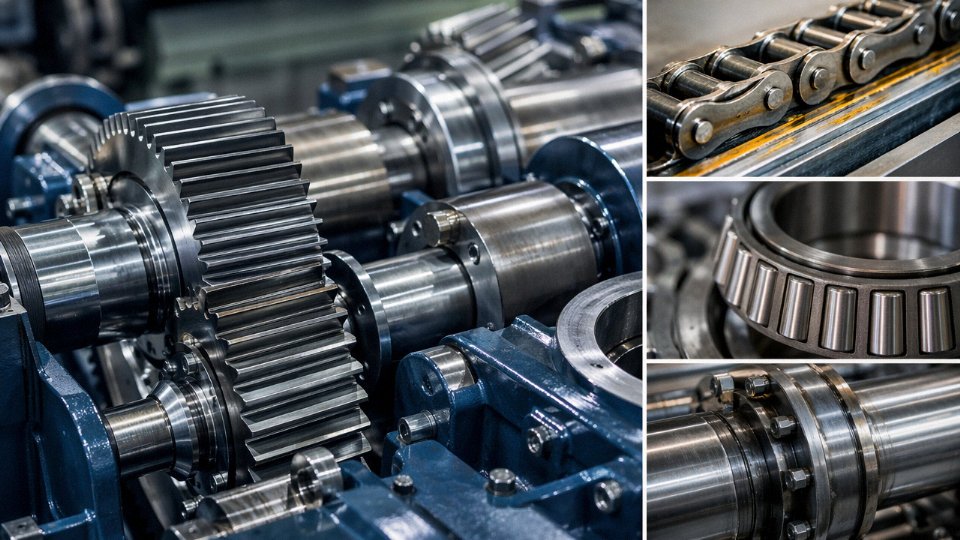
Use the lubrication chart before the spray can
Equipment makers usually specify viscosity grade, grease NLGI grade, relubrication interval, and sometimes approved product families. Use that chart first. If it is missing, work backward from the contact: load, speed, temperature, exposure to dust or washdown, shaft orientation, seal type, metallurgy, and access for relube. In practice, access matters more than people admit. A perfect grease that never reaches the bearing is not perfect.
For procurement, this is where standardization helps. Keep silicone lubricant for light-duty plastic, rubber-compatible, moisture-shedding jobs where it is approved. Do not let it become the universal substitute for EP grease, chain oil, way lube, anti-seize, or cutting fluid. The wrong product may save five minutes during maintenance and cost a weekend in teardown, scrap, and expedited parts.
Keep silicone lubricant away from silicone rubber, certain elastomers, and plastics until compatibility is confirmed
“Rubber-safe” on a silicone lubricant can be true and still not be enough information for a production part. I have seen maintenance teams treat that phrase like a free pass, especially on seals and plastic slides, then wonder why a part that looked fine on Monday is gummy, swollen, or dragging by Friday.
Silicone lubricants are compatible with many rubbers and plastics. That is why they are used around door seals, some O-rings, trim parts, and light-duty plastic mechanisms. The catch is that compatibility depends on the actual formulation, not the word “silicone” on the can.
The risk changes with base oil viscosity, thickener system, additives, aerosol propellants, cleaning solvents, carrier fluids, exposure time, load, wipe-off practices, and temperature. A light silicone spray with a fast solvent carrier is not the same animal as a high-viscosity silicone grease from a tube. A gasket touched once during assembly is not exposed the same way as a pneumatic seal cycling hot and wet for months.
Silicone lubricant is automatically safe for all rubber and plastic parts.False
Many silicone lubricants are compatible with selected elastomers and plastics, but swelling, softening, stress cracking, tackiness, and dimensional change can occur depending on material grade, lubricant formulation, temperature, and exposure time.
Silicone rubber is not always safe with silicone lubricant
This is the one that catches people. Silicone-on-silicone sounds harmless. Sometimes it is. Sometimes it is exactly the wrong pairing.
Silicone rubber can absorb silicone oils, especially lower-viscosity fluids. The result may be swelling, softening, tackiness, reduced tear strength, or a subtle dimensional change that only shows up once the part is installed. A silicone keypad can lose its snap feel. A molded silicone gasket can grow just enough to roll out of its groove. A medical or food-grade silicone tube may look clean but no longer meet its mechanical spec after prolonged contact.
Temperature makes this worse. Many general-purpose silicone lubricants are sold around a rough service window of -40°C to 200°C, give or take the product and duty cycle, but material compatibility at room temperature does not prove compatibility near the top of that range. Heat accelerates absorption, extraction, and creep. Specialty grades may go beyond that, but only if the lubricant maker and the part maker both support the use.
A common shop-floor version: someone sprays silicone lubricant on a silicone vacuum cup because the cup is sticking during pick-and-place. It works for a shift. Then the cups start dropping parts because the lip has softened and lost shape. The quick fix becomes scrap, retries, and a line that needs babysitting.
Elastomers and plastics that deserve verification
I would not apply silicone lubricant blindly to EPDM, natural rubber, neoprene, nitrile rubber, polyurethane, polycarbonate, acrylic, or stress-crack-sensitive plastics. Some grades tolerate it well. Others do not.
EPDM often gets paired with silicone grease in water service, but peroxide-cured versus sulfur-cured compounds, filler content, and temperature can change the answer. Nitrile rubber may be fine in one seal kit and questionable in another, especially if the lubricant contains solvent or aggressive additives. Polyurethane can swell or lose surface properties. Natural rubber and neoprene can soften depending on exposure and formulation.
Plastics need the same caution. Polycarbonate and acrylic are notorious for environmental stress cracking when the wrong chemical meets molded-in stress. The part may not fail immediately. It may craze around a screw boss, clip, sharp corner, or press-fit area after a few days of load. That delayed failure is ugly because procurement will see the same material name on the drawing and assume nothing changed.
Do a real compatibility check, not a finger-rub test
A quick wipe on a hidden area is better than nothing for cosmetic parts, but seals and functional plastics need a more disciplined check. Use the lubricant exactly as it will be used: same amount, same wipe-off method, same cure or dwell time, same temperature range, and contact with the actual molded part if possible.
For rubber parts, an ASTM D471-style approach is a practical model even if you are not running a formal lab program. Measure mass change, volume or dimensional change, hardness change, tensile change if the part is critical, and visual surface condition after exposure. For plastics, use an ASTM D543-style mindset: look for swelling, crazing, cracking, discoloration, loss of transparency, embrittlement, and fit change under stress.
A reasonable screening exposure might be 24 to 72 hours for a maintenance decision, or one to several weeks for production approval, depending on temperature, safety risk, replacement cost, and how long the lubricant remains trapped in service. Heated tests are useful, but do not overdo them and call it science. A part soaked at an unrealistic temperature can fail in a way it never would in the machine.
Use approved lubricants on critical seals and precision parts
Seals, O-rings, medical components, food equipment gaskets, optical housings, pneumatic seals, and precision plastic slides should get manufacturer-approved lubricants only. That sounds conservative because it is. A failed O-ring can shut down a filler. A swollen pneumatic seal can increase air consumption and slow a cylinder. A hazed optical housing can ruin inspection reliability. A sticky plastic slide can turn a clean indexing motion into chatter.
Compact rule of thumb:
| Part or material area | Risk if silicone lubricant is wrong | Safer action |
|---|---|---|
| Silicone rubber gasket or keypad | Swelling, tackiness, loss of shape or feel | Use part-maker-approved grease or test first |
| EPDM, nitrile, neoprene, natural rubber | Softening, hardness shift, seal leakage | Verify compound compatibility, not just polymer family |
| Polycarbonate or acrylic housing | Crazing near stress points, cloudy appearance | Test under assembled stress before release |
| Pneumatic seal or precision slide | Drag, sticking, air loss, dimensional change | Use the OEM-listed lubricant |
| Food or medical gasket | Compliance issue, extraction concern, performance loss | Use certified, documented lubricant only |
The maintenance warning is simple: do not let an aerosol can become the material compatibility program. If the part controls sealing, motion, hygiene, optics, or safety, get the lubricant named on the drawing, the spare parts manual, or the supplier’s compatibility chart. If nobody can provide that, test before the first production batch pays for the guess.
Avoid silicone lubricant in oxygen service, medical gas systems, and chemically reactive environments
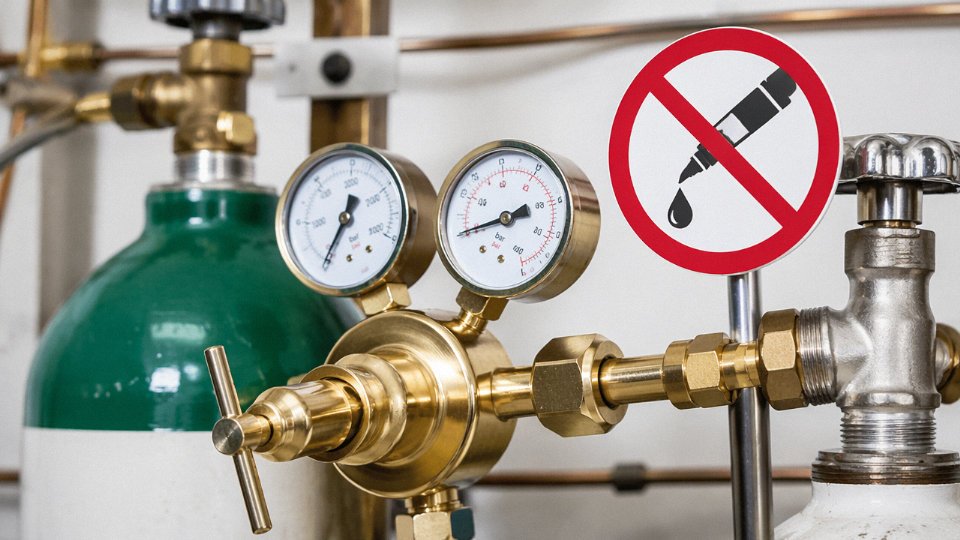
Oxygen service is one of those areas where normal maintenance instincts can get people into trouble. A squeaky regulator knob or a sticky valve stem does not mean “give it a light spray.” In oxygen-enriched systems, no lubricant should be used unless it is explicitly listed as oxygen-compatible for the actual pressure, temperature, gas purity, materials, and cleaning condition involved.
That wording matters. “Non-flammable” on a can is not the same as oxygen-approved. “Silicone-based” is not a safety certificate. Even a product that behaves acceptably around shop air can become a bad choice around oxygen at elevated pressure, especially if the part sees fast valve opening, particle impact, or adiabatic compression. General-purpose silicone lubricants often advertise service ranges around -40°C to 200°C, give or take by formulation, but oxygen compatibility is not decided by that temperature line alone. It depends on ignition energy, pressure, test method, residue, volatility, and what the lubricant touches.
Oxygen does not need much help to make a small error serious
Pure oxygen and oxygen-enriched gases do not burn by themselves, but they make many contaminants easier to ignite and harder to extinguish. A film of the wrong oil, grease, aerosol carrier, or overspray residue can raise the risk of ignition, rapid combustion, or contamination. The ignition source may be less dramatic than people imagine: a particle striking a valve seat, heat from compression, thread friction, or a tiny bit of debris trapped in a regulator inlet.
In practice, the most dangerous jobs are often the casual ones. Someone changes a cylinder fitting, feels the thread drag, and reaches for whatever lubricant sits on the maintenance cart. Maybe it is a silicone spray used on door seals. Maybe it has a petroleum carrier. Maybe the aerosol propellant leaves residue. None of that belongs near oxygen equipment unless the product has been approved for that use.
Typical consequence chain: wrong lubricant on an oxygen regulator inlet → contamination transfers to the seat or filter → high-pressure oxygen hits it during cylinder opening → heat and particle impact increase ignition risk → equipment damage, fire, injury, and a very uncomfortable investigation.
A lubricant that is safe on rubber seals in normal air is automatically safe for oxygen regulators.False
Oxygen service requires specific compatibility approval for the gas concentration, pressure, temperature, materials, and cleanliness level. General rubber-safe or plastic-safe claims do not cover ignition and contamination risks in oxygen-enriched systems.
Places where silicone lubricant is usually controlled or banned
I would treat the following as “no casual lubricant” zones:
| Equipment or area | Practical rule |
|---|---|
| Oxygen regulators and cylinder valves | Use only products named by the equipment maker or approved oxygen-service procedure. Many assemblies should be kept clean and dry. |
| Cylinder fittings and manifold connections | Do not lubricate threads or seats unless the written procedure says to. Cleaning condition matters as much as lubricant choice. |
| Hospital medical gas outlets, hoses, and alarms | Follow facility policy, manufacturer manuals, and medical gas standards. Field improvisation creates liability fast. |
| Diving gas equipment | Oxygen-clean parts can be ruined by one wrong grease or spray. Mixed-gas work is especially unforgiving. |
| Semiconductor process gas lines | Silicone residues can contaminate wafers, valves, mass flow controllers, and filters. Even trace carryover may be unacceptable. |
| Laboratory gas manifolds | Check the gas, analytical method, regulator materials, and purity requirement before touching anything with lubricant. |
Medical gas systems deserve extra discipline because the hazard is not only fire. Breathing gas contamination can affect patients, divers, or lab animals, and it may violate hospital, industrial hygiene, or compressed gas requirements. A maintenance shortcut that looks minor at the bench can become a recordable event once it enters a regulated gas path.
Reactive and high-purity processes are another bad fit
Silicone lubricants can also be the wrong choice around strong oxidizers, high-purity chemicals, vacuum systems, chromatography equipment, optics, and analytical instruments. The concern may be chemical reaction, but often it is contamination or outgassing.
Vacuum equipment is a good example. Some silicone greases are used in certain vacuum applications, but that does not mean a silicone spray belongs near every vacuum flange, optical cell, or mass spectrometer inlet. Low-vapor-pressure specialty greases are selected for a reason. Aerosol silicone on the wrong surface can migrate, outgas, fog optics, poison a detector, or create background peaks in analytical work. Once silicone contamination gets into a clean gas train or instrument, removing it is slow and annoying. Sometimes parts get replaced because cleaning costs more than the component.
Optics are similar. A barely visible silicone film can change wetting, collect dust, smear under cleaning, or interfere with coatings. In chromatography or analytical sampling, silicone residues may show up as ghost peaks or unstable baselines. The mechanic may never see the problem; the lab tech sees it for weeks.
What to check before any lubrication
Before applying any lubricant in these environments, review the safety data sheet, equipment manual, oxygen compatibility data, cleaning specification, and site-approved product list. For oxygen service, look for recognized oxygen compatibility testing or supplier approval tied to the pressure and component type, not vague marketing language. For medical and breathing gas systems, check the governing standard and the equipment manufacturer’s instructions. For semiconductor, lab, and high-purity chemical service, ask what contamination level is allowed and how it is verified.
The safest answer is often boring: clean it correctly, replace the seal, use the specified oxygen-compatible lubricant in the specified amount, or leave the part dry. A shiny film is not proof of good maintenance.
Do not use silicone lubricant where migration, overspray, or dust attraction can damage nearby processes
A silicone lubricant can do its job perfectly at the hinge, slide, roller, or guide rail and still cause a bad day somewhere else on the line. That is the part people miss. The failure is not always at the lubricated point. It shows up as a label that will not stick, a print head that starts smearing, a vision camera that loses contrast, or a refinished trim part with tiny craters in the clear coat.
Silicone oils are good at spreading. That is one reason they feel so slick. They can creep along edges, wick through seams, ride on hands and gloves, aerosolize from a spray can, or transfer from a rag that someone thought was “basically clean.” In a plant, that means the lubricant does not stay where the mechanic aimed it.
A silicone spray can create process defects even when it is used several stations away from the affected part.True
Fine mist, rag transfer, glove contact, and surface migration can move silicone residue onto labeling, printing, coating, bonding, or inspection surfaces. The risk depends on airflow, spray pattern, distance, surface energy, housekeeping, and how parts are handled between stations.
The usual trouble spots are closer than they look
Conveyor belts near labeling stations are a common one. A technician sprays a squeaky side guide or transfer plate, the line runs for half an hour, and labels start lifting at the corners. The belt may look dry. The adhesive does not care. Trace silicone on the package face or label contact zone can be enough to reduce wetting, especially on glossy cartons, shrink film, or molded plastic containers.
Packaging equipment near inkjet, thermal transfer, pad printing, or coding heads is another bad pairing. Overspray does not need to land directly on the print head. It can settle on product surfaces or guide rails, then transfer into the print area. The result is often intermittent: three good packs, one weak code, two smeared marks, then a reject. Those are the worst faults to troubleshoot because maintenance swears they only sprayed “a little.”
Door tracks near flooring that will be coated deserve the same caution. I have seen crews lubricate a rolling door or dock door track before a floor coating job, then wonder why the coating near the threshold develops craters or poor wetting. Foot traffic spreads residue fast. A boot sole is a very effective contamination carrier.
Machine guards near vision systems also get overlooked. Silicone film on polycarbonate guards, camera windows, light covers, or mounting hardware can grab airborne fibers and fine dust. In a plant with corrugate, textiles, powder ingredients, wood dust, or abrasive media, that film becomes a dirty lens in days, sometimes hours depending on airflow and production debris. The camera gets blamed. The lighting gets adjusted. The real issue is a sticky, low-surface-energy smear on everything around it.
Automotive interiors are a classic field-service version of the same problem. Silicone dressing or lubricant used around vents, seat tracks, seals, or trim can migrate onto glass or panels that later need refinishing. On glass, it causes streaking and cleaning headaches. On trim or painted surfaces, it can interfere with refinishing, bonding tapes, wraps, or coatings.
Dust turns a slick film into grinding paste
Silicone lubricant is often sold as “clean” because it is clear and does not look like black grease. On a dusty line, that can be misleading. A thin silicone film can hold talc, flour, plastic dust, paper fibers, metal fines, carbon black, or abrasive grit. Once loaded, it behaves less like a lubricant and more like a soft paste carrying solids.
On sliding plastic guides, that paste can polish grooves into parts. On small rollers, it can build rings that change tracking. Around cosmetic packaging, it can leave dull rub marks or specks under labels and sleeves. Near dry powder filling, it can form gummy deposits at seams and fasteners, which then shed at random. Wrong product, wrong place, and the maintenance task that was meant to reduce friction becomes the source of wear, scrap, and cleaning downtime.
A practical warning: never judge this only by touch. A surface can feel barely oily and still be contaminated enough to create coating, labeling, or inspection problems.
Controls that actually work on a busy floor
If silicone must be used in the facility, treat it like a controlled chemical, not a general toolbox spray. The controls do not have to be fancy, but they need to survive shift change.
| Control | What it prevents | Shop-floor note |
|---|---|---|
| Designated silicone-use areas | Random overspray near sensitive lines | Keep sprays out of finishing, printing, labeling, and inspection zones |
| Spray shields or cardboard backers | Mist drifting onto belts, guards, sensors, and product paths | Replace shields often; old ones become contamination sources |
| Lint-free applicators | Rag lint and uncontrolled wiping | Apply to the cloth or swab away from the machine, not directly into the air |
| Color-coded rags and gloves | Cross-transfer into clean work | Do not let silicone rags enter paint, print, bonding, or quality benches |
| Labeled storage | “Mystery spray” use by operators | Separate silicone products from food-grade oils, dry lubes, and assembly aids |
| Documented maintenance steps | Folk maintenance habits | State where to apply, how much, and where it is forbidden |
That last point matters. “Use sparingly” is not a procedure. A better instruction says, for example, “Apply one wipe to the left-side door track only, using blue silicone-designated cloth; do not spray; keep away from belt surface and labeler infeed.”
Use a different lubricant when migration risk is unacceptable
There are plenty of cases where the right answer is not better silicone control, but no silicone at all. Dry-film lubricants can work well on light-load slides and guides when dust pickup must be minimized. PTFE-based products may be suitable, though some still contain carriers or oils that need compatibility checks. Waxes are often useful on cartons, wood, drawer slides, and certain packaging contact points. Graphite has a place in locks and some dry mechanisms, but it is messy and conductive, so keep it away from electrical and clean cosmetic areas. Specialty synthetic oils can be a better fit for controlled machine lubrication where creep and residue are understood. Silicone-free assembly aids are often the safest choice near labels, printing, paint, adhesive tape, rubber bonding, or optical inspection.
The decision is simple enough: if a migrated film would create scrap, rework, cleaning shutdowns, or customer-visible defects, do not bring silicone spray near that process. The squeak is cheaper than the contamination hunt.
Avoid silicone lubricant on braking, clutch, belt, tire, floor, and grip surfaces where friction is the function
Silicone lubricant is good at making surfaces slippery. That is the problem.
Any component that depends on friction, traction, or hand grip should be treated as a no-spray zone unless the equipment manual says otherwise. In a plant, this is not limited to obvious items like brake pads. The risk area includes brake rotors, brake drums, brake pads, clutch plates, drive belts, pulleys, V-belt sheaves, timing belt backs, tires, pedals, handrails, ladders, walking surfaces, tool grips, sports equipment grips, and anti-slip mats. I would include forklift steps and machine access platforms in the same category, especially in winter when operators already bring in water, salt, or fine grit on their boots.
A light silicone mist can travel farther than the person holding the aerosol can thinks. One quick shot on a squeaky guard hinge can land on a belt, a pedal pad, or a painted floor plate nearby. It may not look wet after ten minutes. It can still be slippery.
Silicone lubricant should not be applied to friction faces such as brake pads, clutch plates, tires, drive belts, or walking surfaces.True
These surfaces are designed to generate controlled friction. Silicone residue can reduce friction, causing slippage, longer stopping distance, loss of torque transfer, or slip-and-fall hazards.
Where the failure shows up
On belt drives, silicone contamination often appears first as a squeal, glazing, or speed instability under load. A belt that held fine during idle may slip when the machine sees product, compression, pump load, or a cold startup. The mechanic may tighten the belt to “fix” it, which can overload bearings and shorten belt life. Wrong correction, worse failure.
On clutch surfaces, the symptoms can be more expensive. Chatter, shudder, delayed engagement, heat spots, and loss of torque transfer are all possible. In a press feed, packaging machine, lift truck, mower, or small industrial vehicle, that can turn into poor positioning, overheated plates, or a unit that moves when the operator does not expect it to.
Brake contamination is the one that should make everyone stop talking and start isolating the area. Silicone on brake rotors, drums, pads, or shoes can increase stopping distance and create uneven grab. It may also cause noise or pulsing, but do not rely on noise as the warning. A contaminated brake can feel “mostly normal” until it is asked to stop a loaded cart, hoist trolley, mobile platform, or service vehicle.
Brake service has its own rules
Brake work is not a place for general-purpose spray habits. Brake-specific lubricants may be used only where the service procedure allows them: usually on caliper slide pins, pad backing plates, abutment clips, shoe contact pads, or other metal contact points specified by the manufacturer. Even then, the product type matters. Some pins need silicone-based brake grease because of rubber compatibility and temperature exposure; others call for a synthetic or ceramic brake lubricant. That choice belongs to the brake design, not to whoever found a can on the bench.
Never put lubricant on friction faces. Not a wipe. Not a film. Not “just enough to stop the squeal.” Brake squeal is handled by correct pad fit, hardware condition, rotor finish, approved backing compound, and proper assembly. Greasing the face is not maintenance. It is a defect.
Typical plant-floor scenario
A conveyor infeed squeals near the end of second shift. Someone sprays silicone at the side frame, hoping to quiet the noise until morning. The squeal drops for a while, but overspray reaches the drive belt and the operator foot platform. Next day the belt slips under load, maintenance tightens it, and a take-up bearing starts running hot. A line lead also flags the platform during a safety walk because boots slide on the tread plate.
One small shortcut has now become a belt job, a bearing risk, cleanup labor, and a safety finding. None of that is unusual. It is exactly how aerosol misuse costs money.
High-risk surfaces and likely consequences
| Surface or component | What silicone can cause | Practical response |
|---|---|---|
| Brake rotors, drums, pads, shoes | Longer stopping distance, uneven braking, noise, failed inspection | Isolate equipment. Clean metal with approved brake cleaner. Replace porous friction material if contamination is suspected |
| Clutch plates and friction discs | Slip, chatter, heat damage, poor torque transfer | Stop operation and inspect. Replacement is often safer than trying to wash out absorbed lubricant |
| Drive belts and pulleys | Squealing, glazing, speed loss, premature bearing load from over-tensioning | Clean pulleys. Replace belts that remain slick or glazed |
| Tires, pedals, steps, ladders | Loss of traction, falls, vehicle control problems | Barricade or tag out the area until cleaned and verified dry |
| Tool grips, handrails, anti-slip mats | Dropped tools, poor grip, safety audit findings | Clean thoroughly. Replace grips or mats that stay slippery |
If overspray happens, treat it as contamination
Do not wait to see whether anyone slips or whether the belt “settles in.” Stop the equipment if the surface affects braking, guarding access, operator footing, lifting, driving, or torque transfer. Mark the area so another shift does not unknowingly use it.
For hard non-porous surfaces, cleaning may be possible with an approved degreaser, brake cleaner, or detergent process matched to the material and site rules. Wipe once is rarely enough; silicone films smear. Use clean towels, change them often, and verify the surface is not still slick. On floors, watch for residue spread by mops. I have seen a small slippery patch become a much larger one because the cleanup water dragged the contaminant across the aisle.
Porous friction materials are different. Brake pads, clutch facings, some belt compounds, rubber grip surfaces, and anti-slip mats can absorb lubricant. If silicone has soaked in, replacement is usually the defensible choice, especially on safety-critical parts. Cleaning may make the surface look better while leaving enough residue to fail under load.
Operational warning: never use silicone spray as a cure for squeaky brakes, noisy belts, sticky pedals, stiff ladder feet, or worn grips. If friction is the job, slipperiness is not a feature. It is the failure mode.
Do not choose silicone lubricant when cleanliness, food safety, or regulatory status is not documented
A silicone base does not make a lubricant clean, food-safe, medical-grade, or acceptable for incidental product contact. That assumption causes real trouble in plants. I have seen maintenance teams treat “silicone spray” as a harmless shop chemical, then discover during an audit that the can in the filler room had no NSF listing, no batch traceability, and no approval in the site chemical register.
That is not a paperwork nuisance. In controlled production, undocumented chemistry is a contamination risk.
“Silicone” is not the same as approved
General-purpose silicone lubricants may contain silicone oil, thickener, solvent, aerosol propellant, corrosion inhibitor, fragrance, dye, anti-static additive, or other components that are not obvious from the front label. The silicone part might be chemically stable, but the carrier solvent or additive package can still be unsuitable for a packaging line, food contact area, cleanroom, or medical device assembly cell.
For food and beverage plants, the first check is usually whether the product is registered for the right category, commonly NSF H1 for incidental food contact or NSF H2 where no food contact is expected. Those categories are not interchangeable in practice. H1 does not mean “spray it anywhere,” either; it means incidental contact is allowed within defined conditions and good manufacturing practice. The amount used still matters.
In pharmaceutical, cosmetics, medical device, electronics, and aerospace work, the bar can be different again. A lubricant may need low outgassing data, non-silicone status in some bonding areas, biocompatibility support, extractables and leachables information, ionic contamination limits, or customer-specific approval. Aerospace shops can be especially strict because a small amount of unapproved lubricant on a seal, connector, or composite bonding tool may create a nonconformance that is expensive to disposition.
A silicone lubricant is automatically food-grade or cleanroom-safe because silicone is chemically inert.False
Regulatory status depends on the full formulation, intended use, registration or compliance documentation, contamination limits, and site approval. Solvents, propellants, dyes, and minor additives can be the deciding issue.
Documentation has to match the use point
Before a silicone lubricant goes into a controlled area, procurement and engineering should be able to pull a clean document pack. At minimum, that usually means the current technical data sheet and safety data sheet. For food plants, ask for NSF H1 or H2 status where applicable, FDA-related compliance statements if the supplier makes them, allergen statements if relevant to the site, and any limits on incidental contact.
Batch traceability is not optional in serious production. If a supplier cannot identify the batch, shelf life, and manufacturing lot, think carefully before approving it near product. During a recall investigation or customer complaint, “we bought it from a distributor last year” is not a defensible answer.
A decent approval file normally includes:
- Product name and exact grade, not just “silicone spray”
- Manufacturer and supplier part number
- Current SDS and TDS revision dates
- NSF registration or other compliance evidence, where required
- Intended points of use, with contact risk noted
- Storage location and issue control
- Batch or lot recording method
- Internal approval by quality, maintenance, and production engineering
Small detail, big difference: the aerosol version of a lubricant may not have the same approval status as the bulk grease or oil version. Propellant and solvent systems can change the compliance picture. So can a scented “food machinery” spray that someone bought because it was available overnight.
Controlled areas punish informal maintenance habits
Food slicers, beverage fillers, pharma cartoners, cosmetics filling heads, medical device assembly fixtures, electronics clean benches, and aerospace packaging zones all have one thing in common: a stray maintenance chemical can travel farther than the mechanic expects. Aerosol mist lands on guards, photo-eyes, conveyors, gloves, cartons, and sometimes the product path. Wipe-downs may move it rather than remove it.
A typical example: a squeaky guide rail near a bottle rinser gets hit with an unapproved silicone aerosol during second shift. The rail runs quietly. The next morning, quality finds an oily film on change parts and rejects the pre-op inspection. Best case, the line is delayed for cleaning and verification. Worst case, filled product is held while the team decides whether contact occurred. That one-minute spray can become half a shift of downtime, plus uncomfortable questions from the auditor.
Cleanrooms add another layer. A lubricant can pass a basic material compatibility check and still fail the environment because of volatiles, particles, residue transfer, or poor wipeability. Low-volatile grades need supplier support, not guesswork. If the plant monitors nonvolatile residue, airborne molecular contamination, or particle generation, the lubricant must fit that control plan.
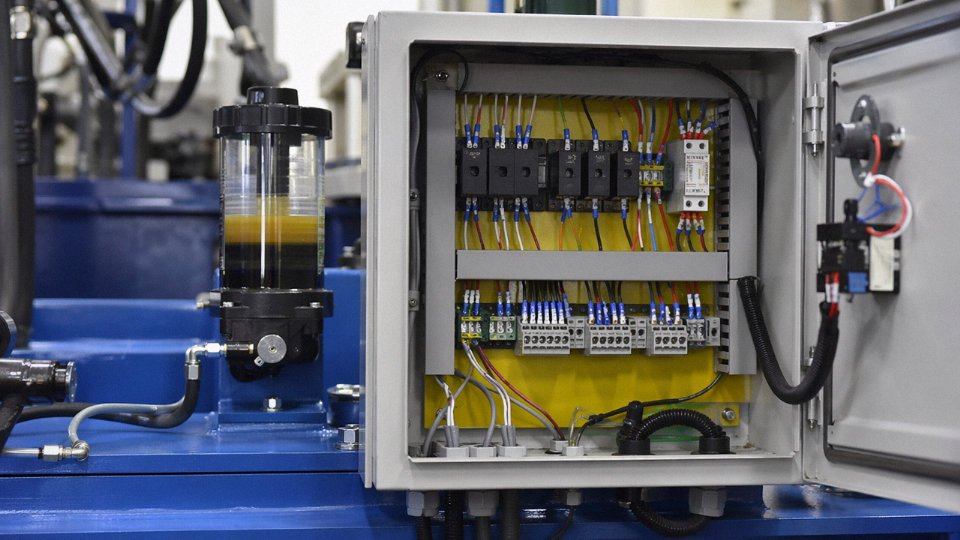
Control the lubricant like any other process material
The practical answer is not to ban every silicone product. It is to control them tightly.
Use an approved product list by area. Label point-of-use containers so a mechanic can tell, under bad lighting and time pressure, whether a lubricant is allowed on that line. Keep non-approved maintenance chemicals out of controlled production rooms; a shadow board or locked cabinet works better than hoping people remember. For high-risk zones, issue small containers instead of leaving full aerosol cans at the machine.
Apply the minimum effective quantity. Record the work in the preventive maintenance system, especially near product contact surfaces, sterile barriers, primary packaging, or clean assemblies. If a lubricant is used only during shutdown and removed before startup, say so in the procedure and define the cleaning verification. Vague instructions like “lubricate as needed” are how uncontrolled chemistry sneaks into the plant.
Procurement has a role here, too. Substitutions should not be allowed just because the old product is out of stock. A similar-looking silicone lubricant from another supplier may have a different registration status, solvent package, or residue behavior. In regulated production, the cheapest can on the shelf can become the most expensive chemical in the building.
Use a structured decision checklist before replacing another lubricant with silicone
A lubricant change should be treated like a process change, not like swapping one aerosol can for another. I have seen good mechanics create bad production problems by “upgrading” a sticky slide, guide, hinge, or gasket with silicone because it looked clean and worked nicely for the first shift. The trouble showed up two days later in rejected coated parts, weak labels, drifting sensor signals, or dust packed into a low-load mechanism.
Use a checklist before the first spray.
Pre-use checklist for silicone lubricant
Work through the application in this order. Do not start with the lubricant brand. Start with the machine function.
| Checkpoint | What to ask on the floor | Why it changes the decision |
|---|---|---|
| Substrate | Is it bare steel, stainless, aluminum, painted metal, silicone rubber, EPDM, nitrile, polycarbonate, acetal, nylon, or another plastic? | Silicone may be harmless on one material and cause swelling, softening, stress cracking, or surface contamination on another. |
| Motion type | Sliding, rolling, oscillating, sealing, wiping, intermittent adjustment, or static assembly aid? | Silicone is often acceptable for light sliding and assembly use, but not for heavily loaded wear points. |
| Load and contact pressure | Finger-tight guide, pneumatic cylinder rod seal, conveyor wear strip, cam follower, gear tooth, bearing race? | High contact stress usually needs oil film strength, grease structure, or extreme-pressure chemistry that general silicone products do not provide. |
| Speed | Slow manual movement, cycling every few seconds, high-speed rotary motion? | Speed affects heat, sling-off, film breakdown, and dirt collection. |
| Temperature | What is the real surface temperature after an hour, not just ambient air? | Many general-purpose silicone lubricants sit around roughly -40°C to 200°C service capability, depending on formulation, film thickness, and exposure. Specialty grades can go wider, but only if the manufacturer validates the use. |
| Water and chemicals | Washdown, coolant mist, cleaning solvent, alkaline cleaner, acid vapor, outdoor rain? | Silicone can resist water well, but chemical exposure can attack additives, thickeners, propellants, or nearby materials. |
| Contamination sensitivity | Is there painting, printing, labeling, adhesive bonding, sealing, potting, inspection, or product contact nearby? | Trace silicone residue can create fisheyes, craters, poor wetting, and adhesion loss in many coating and bonding operations. |
| Electrical function | Is the part insulating, or does it carry signal or power through a mating contact? | Dielectric silicone can protect insulating surfaces, but on conductive mating surfaces it may increase contact resistance. |
| Friction requirement | Is low friction desired, or is friction the safety function? | Never improve slipperiness on brakes, belts, tires, clutches, walk surfaces, hand grips, or clamp faces. |
| Downstream finishing | Will this part be painted, bonded, printed, coated, welded, heat-sealed, or inspected by a customer? | If yes, silicone needs formal approval, not verbal permission. |
Read the product data sheet like a buyer and a maintenance engineer
A data sheet is not perfect, but it is better than the front label. Look for the base fluid first. “Silicone” may mean polydimethylsiloxane oil, silicone grease, silicone emulsion, or an aerosol blend with solvent and propellant. Those are not the same product in service.
For grease, check the thickener. Silica-thickened silicone grease behaves differently from lithium, PTFE-filled, or specialty greases. Check viscosity for oils; a very light silicone oil may creep and migrate, while a heavier one may drag in small mechanisms during cold starts. Temperature range matters, but read it with suspicion. Ask whether the listed range is continuous service, short exposure, or just a laboratory pour point and high-temperature stability number.
Dielectric strength is useful only in the right place. It does not make a product suitable for relay contacts, encoder pins, low-voltage sensor plugs, or slip rings. Compatibility statements should name materials or standards, not just say “safe on most plastics.” Certifications need the same discipline. Food-grade, potable-water, medical, oxygen, cleanroom, and aerospace claims are not interchangeable. Procurement should keep the certificate or approval letter with the item master, not buried in somebody’s email.
Application restrictions are often where the truth hides: “not for oxygen service,” “not for painted surfaces,” “test before use on plastics,” “avoid overspray,” “not intended for load-bearing lubrication.” Those lines are written because failures happened somewhere.
A dielectric silicone lubricant may be suitable on insulating surfaces while still being a poor choice on conductive electrical contact faces.True
Dielectric materials resist current flow. That can protect insulation but can also raise contact resistance or cause intermittent signals if placed between conductive mating surfaces.
Run a small trial that reflects real service
A bench trial should not be a five-minute wipe test. Run the part through realistic cycles, temperature, cleaning, dust, and idle time. If the machine washes down every Friday, include washdown. If summer humidity makes the line sweat, include that. A tidy lab sample often misses the ugly part of production.
Measure at least these items:
- Friction reduction at start-up and after repeated cycles
- Wear marks, galling, polish lines, or transfer film
- Noise change, especially squeak returning after solvent flash-off
- Residue creep beyond the intended contact point
- Swelling, softening, tackiness, discoloration, or cracking of elastomers and plastics
- Adhesion impact on any part that will be painted, labeled, bonded, sealed, or printed
- Electrical continuity and contact resistance where signals or power are involved
- Dust pickup after realistic exposure, not clean-room fantasy exposure
- Cleanability using the plant’s actual cleaner, rag, wipe, or wash process
A typical trial on a packaging guide might run one or two shifts first, then a week if the risk is low. For finishing lines, adhesive operations, electrical assemblies, or safety-related equipment, the trial should be approved by engineering, quality, and the process owner before it touches production hardware.
Use a hard-stop rule before release
Here is the simple rule I use with maintenance teams: if the part will later be painted, bonded, printed, coated, welded, gripped, braked, electrically contacted, oxygen-serviced, or audited for product-contact compliance, do not apply silicone without formal approval.
That rule feels strict until one contaminated batch eats a weekend.
Once approved, document the choice like any other controlled consumable: exact lubricant name, manufacturer, grade, approval basis, application amount, application method, service interval, responsible role, and prohibited nearby surfaces. Include photos if the application point is easy to confuse. A note saying “use silicone spray as needed” is not a work instruction; it is an invitation to overspray the wrong surface on night shift.
Frequently asked questions about when not to use silicone lubricant
Does silicone lubricant damage rubber?
Often, no. Many common elastomers tolerate silicone lubricant well enough for light lubrication, assembly work, or weather seal maintenance. That is why maintenance cabinets are full of silicone sprays for door seals, O-rings, and plastic trim.
The trap is assuming “rubber-safe” means “safe for every rubber.” It does not.
Silicone rubber is the one that gets missed. Silicone-based lubricants can swell or soften some silicone rubber parts because the base chemistry is too similar. Certain thermoplastic elastomers, soft PVC blends, and specialty polymers can also change hardness, grow slightly, lose grip, or become tacky. The result may not show up in five minutes. It may show up after a weekend shutdown, a heat cycle, or a few months in service.
In practice, I want three things before approving it: the elastomer grade, the lubricant data sheet, and either a supplier compatibility statement or a soak test using the real part. Not a scrap of “similar rubber” from a drawer.
Silicone lubricant is automatically safe for all rubber parts.False
Many elastomers tolerate silicone lubricant, but silicone rubber and some polymer blends may swell, soften, or change surface properties. Compatibility depends on the exact material, lubricant formulation, temperature, and exposure time.
Is silicone spray safe on electrical connectors?
Sometimes around them. Not automatically inside them.
Dielectric silicone products are useful on insulating housings, cable boots, weather seals, battery terminal covers, and connector backshells where the goal is moisture exclusion and tracking resistance. That is a legitimate use when the connector maker or equipment manual allows it.
The mistake is spraying directly onto conductive mating surfaces and assuming “dielectric” means “electrical contact enhancer.” It usually means the opposite. A dielectric silicone film can increase contact resistance, especially on low-voltage signal circuits, small sensor pins, keypad contacts, encoder plugs, and lightly loaded connectors that do not wipe hard enough to break through the film.
A 24 VDC power connector may tolerate abuse that a millivolt signal connector will not. That distinction matters. I have seen intermittent faults chased for hours because someone “protected” a sensor plug with the same aerosol used on door gaskets.
If a connector needs treatment, use the contact cleaner, contact lubricant, or corrosion inhibitor specified for that connector family. The words on the can matter less than the approval for the actual contact system.
Can silicone lubricant be painted over?
Treat it as a serious contamination risk.
Many paints, powder coatings, adhesives, sealants, inks, and primers do not wet silicone residue properly. The visible defects are familiar to anyone who has worked near a finishing line: fisheyes, craters, edge pullback, poor wetting, weak adhesion, or strange local gloss changes. The ugly part is that trace residue can be enough. You do not need a dripping film.
This is why silicone spray is usually banned near paint booths, bonding cells, screen printing areas, and sealant operations. Overspray travels. So do contaminated gloves, rags, carts, and maintenance tools.
A typical scenario: a mechanic frees up a sticking guard hinge with silicone spray on second shift. The hinge works. The next morning, parts staged nearby show crater defects after coating. Now the line is sorting, reworking, sanding, wiping, and arguing over who pays for scrap. The lubricant did its local job and still caused the wrong plant result.
Is silicone lubricant good for metal parts?
For light-duty nuisance problems, yes, sometimes. It can quiet a squeaky plastic-metal interface, reduce light sliding friction, help a small latch move, or protect a lightly loaded surface from moisture. General-purpose silicone lubricants often sit around a broad service temperature range, commonly about -40°C to 200°C, depending on the product, exposure, film thickness, and whether the surface is static or moving.
That does not make it a gear oil, chain lube, bearing grease, or cutting fluid.
High-load metal-to-metal contact needs film strength, anti-wear chemistry, extreme-pressure additives, viscosity control, or heat removal. Silicone lubricant is usually weak in those jobs. Use it on a loaded chain and you may get a clean-looking chain that wears quickly. Use it on gears and you may get noise, pitting, or temperature rise. Use it in machining and you can lose tool life, surface finish, and downstream cleanability.
Compact rule: if the metal parts carry load, generate heat, or have a lubrication schedule already tied to oil analysis or OEM grease, do not casually substitute silicone.
How do you remove silicone lubricant?
Slowly, and with proof. That is the honest answer.
Removal depends on the surface, the silicone formulation, how long it has been there, and what process comes next. Smooth stainless steel is one job. Porous cast aluminum, textured plastic, rubber, painted steel, or a conveyor belt is another. Aerosol carriers may evaporate quickly, but the silicone residue can remain as a stubborn low-surface-energy film.
A practical cleanup sequence usually looks like this:
- Isolate the affected area so contaminated rags, gloves, and carts do not spread the problem.
- Remove heavy residue with clean disposable wipes, changing wipes often. Smearing is not cleaning.
- Use an approved degreaser or solvent compatible with the substrate and the next process. Check safety rules and ventilation, not just whether it “cuts grease.”
- Repeat wipe-clean cycles with fresh cloths. One pass is rarely enough for coating or bonding work.
- For critical surfaces, use mechanical abrasion, media cleaning, or part replacement if the residue has worked into texture, pores, or seams.
- Verify with the plant’s accepted method: water-break testing, dyne testing, trial coating panels, adhesion checks, or whatever the process owner actually trusts.
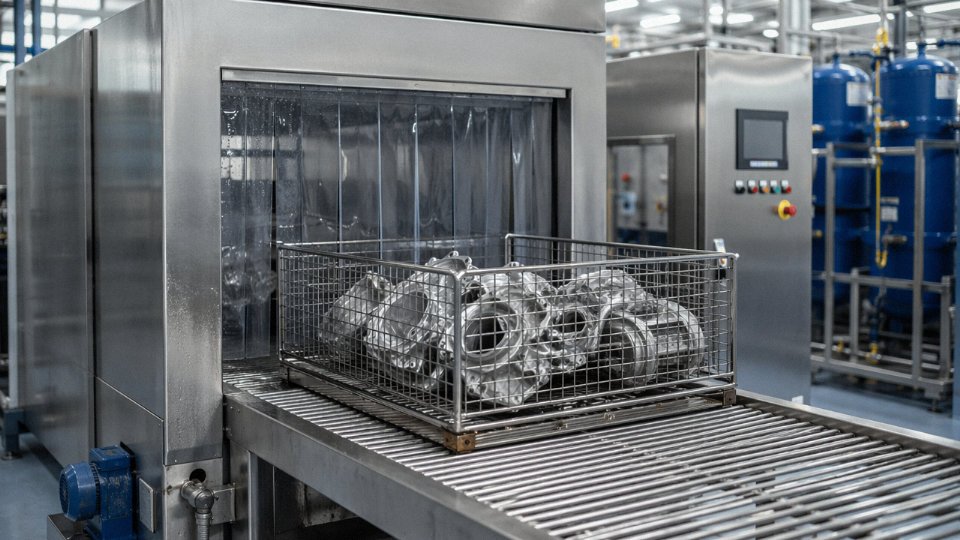
The warning I give procurement is simple: do not buy a cheaper general-purpose silicone spray if the plant has painting, bonding, printing, oxygen service, food-contact, or low-voltage electronics nearby. The purchase price is tiny compared with one shift of scrap, retesting, or fault-finding.