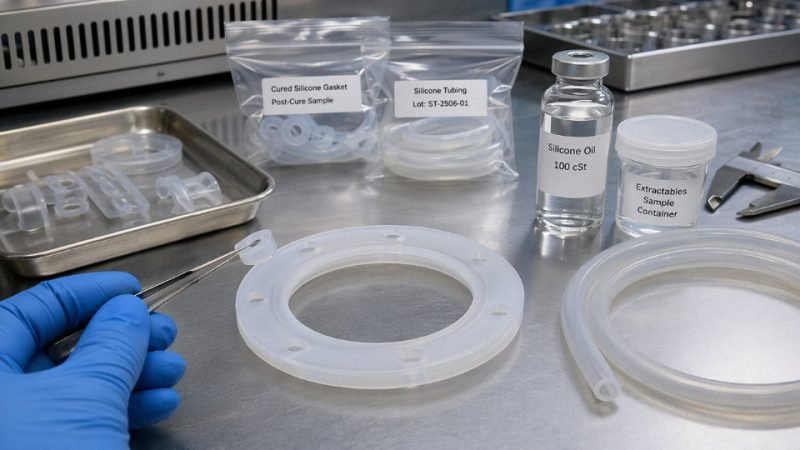
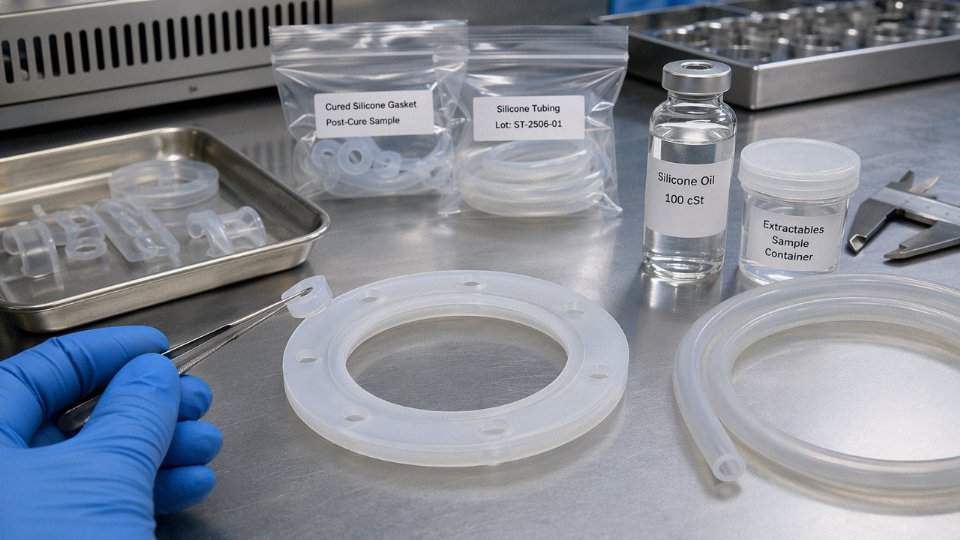
A vague “silicone is safe” answer can get a plant into trouble. Treat a cured silicone gasket, an uncured processing residue, a silicone oil, and an implanted medical component as the same hazard, and you either overreact with unnecessary lot holds or miss the one exposure route that actually matters. That turns into delayed releases, extra extractables testing, scrapped assemblies, supplier arguments, and sometimes a painful corrective action. The practical way through is to separate the material form, cure state, exposure route, and contact duration before making a call.
Silicone usually does not pass through intact skin into the bloodstream in meaningful amounts. Medical-grade, fully cured silicone is generally biologically inert, which is why it is used in implants and catheters. Real concern starts with implants, injections, inhaled aerosols, damaged tissue, or leachable silicone oils and low-molecular-weight siloxanes.
That distinction sounds simple on paper, but it is where many shop-floor and sourcing decisions get messy. A supplier’s “medical-grade silicone” claim may refer to the base polymer, not the finished part after molding, post-cure, washing, packaging, and storage. Solid elastomer behaves one way; mobile siloxanes and oils behave another. The rest of the answer lives in those details.
What silicone is in industrial, consumer, and medical use
Silicone is not elemental silicon, and it is not silica dust. That confusion causes bad risk calls.
Silicon is the element used in semiconductors and alloys. Silica is silicon dioxide, the mineral found in sand, glass, quartz, and many fillers. Silicone, by contrast, is a family of synthetic polymers built around a silicon-oxygen backbone with organic side groups, usually containing carbon and hydrogen. That backbone is why silicone materials stay flexible across a wide temperature range and resist water, ozone, and many cleaning chemicals better than ordinary organic rubbers.
On a plant floor, the word “silicone” may refer to a cured gasket, a pumpable sealant, a mold-release spray, a dielectric grease, a soft gel pad, tubing, adhesive tape, or a coating on release liner. Those are not the same exposure case.
The main forms you actually see in use
Commercial silicone comes in several forms, and the form matters as much as the chemistry.
| Silicone form | Typical use | Practical exposure concern |
|---|---|---|
| Room-temperature-vulcanizing sealant | Construction joints, panel sealing, maintenance repairs, electrical enclosures | Uncured material may contain reactive groups, catalysts, solvents, or small siloxanes; cured bead is a different animal |
| High-consistency rubber | Extruded hose, oven seals, keypads, molded gaskets | Usually a cured elastomer; risk depends on cure quality, post-cure, fillers, and contact conditions |
| Liquid silicone rubber | Injection-molded medical parts, valves, baby products, precision seals | Often very clean when made under controlled systems; still formulation-specific |
| Silicone gel | Scar sheets, electronics potting, soft medical interfaces | Softer network, more mobile fraction possible than a tightly cured rubber |
| Silicone oil | Lubricants, cosmetics, damping fluids, defoamers | Mobile fluid; migration and transfer are much more relevant |
| Silicone grease | O-rings, stopcocks, electrical connectors | Oil plus thickener/filler; can smear, migrate, or contaminate nearby surfaces |
| Silicone coating | Release papers, textiles, airbags, medical liners | Thin layer; cure state and extractables matter, especially in food or medical contact |
| Silicone foam | Thermal insulation, gap fillers, flame-resistant seals | Cell structure can trap residues; compression set and outgassing can matter |
| Pressure-sensitive adhesive | Wound dressings, tapes, masking, electronics | Soft tacky system with intentionally mobile behavior at the surface |
A maintenance tech may say, “It’s just silicone,” while holding a tube of acetoxy-cure bathroom sealant. A medical device engineer using platinum-cured liquid silicone rubber for an implant is also saying “silicone.” Same broad family. Very different quality system, cure chemistry, cleanliness, and intended contact.
Crosslinking is the turning point
Most useful silicone rubber starts as a flowable polymer or gum. During curing, chains are linked together into a three-dimensional network. That crosslinked network is what turns a mobile material into an elastomer that stretches, seals, and returns.
The tighter and cleaner that network is, the less likely large polymer chains are to migrate. This is why a properly cured gasket or catheter tube behaves very differently from silicone oil or uncured sealant. The polymer network is physically constrained.
But “cured” is not magic. In practice, there may still be low-molecular-weight siloxanes, unreacted oligomers, catalyst residues, peroxide decomposition byproducts, pigments, filler treatments, or processing aids left in the part. Post-curing can drive off some volatiles, commonly over a few hours to a day or so depending on thickness, oven airflow, temperature, formulation, and part geometry. Thick molded parts are slower. Deep blind holes are worse. Anyone who has opened an oven full of fresh silicone parts knows the smell is not imaginary.
Wrong assumption: cured always means clean.
Right assumption: cured means networked; extractables still have to be controlled for the application.
Medical-grade is a controlled specification, not a marketing adjective
Medical-grade silicone is used in long-term implants, catheters, pacemaker leads, shunts, and drug delivery devices because properly manufactured and cured grades are generally biologically inert. The phrase should imply more than “white, soft, and expensive.”
For a real medical application, buyers and engineers look for some mix of:
- Biocompatibility testing under standards such as ISO 10993 or USP Class VI, depending on the device and contact duration
- Extractables and leachables data suited to the body contact route
- Controlled raw materials, including catalyst type and filler package
- Lot traceability back through resin, compound, and molding history
- Clean manufacturing, often with controlled particulate and bioburden practices
- Validated sterilization compatibility, such as ethylene oxide, gamma, e-beam, or steam where appropriate
- Documented cure and post-cure conditions, not tribal knowledge from the night shift
General-purpose industrial silicone may be perfectly good for an enclosure gasket, an HVAC seal, or a food-processing splash guard if rated for that duty. That does not make it acceptable for blood contact, implantation, or drug-path applications. Procurement sometimes gets burned here by matching hardness and color while ignoring extractables. A 50 Shore A translucent silicone tube is not automatically interchangeable with another 50 Shore A translucent silicone tube.
Additives and residues can drive the real toxicology question
The base silicone polymer is often less interesting toxicologically than what came along for the ride. Common formulation components include silica fillers for strength, pigments for color, platinum or tin catalysts, peroxide cure systems, adhesion promoters, flame retardants, plasticizers or silicone oils for softness, mold-release residues, and processing aids. Some products may also contain volatile cyclic siloxanes or uncured low-weight oligomers.
Silicone oils and low-molecular-weight siloxanes deserve separate treatment from solid crosslinked silicone elastomers. They can move through interfaces, wet surfaces, transfer to hands or packaging, and show up as contamination in coating, bonding, painting, or electronics assembly. In medical contexts, mobile fractions are the part engineers test hard because they are more available to tissue or fluid contact.
A safety statement for one silicone product does not automatically apply to all silicone products.True
Silicone chemistry varies by form, cure system, additives, extractables, cleanliness, and intended contact route. A cured implant-grade elastomer, an industrial sealant, and a silicone oil can have very different migration and exposure profiles.
For bloodstream safety, the first question is not “Is silicone safe?” It is: which silicone, in what physical form, how cured, what residues, and by what route could it reach the body? That is the difference between a stable medical elastomer and a smear of uncured shop-floor sealant near a sensitive process.
How substances actually enter the bloodstream
A useful way to think about silicone exposure is not “Is silicone toxic?” but “What form is it in, and what barrier does it have to cross?” The body is not an open tank. It has filters, linings, enzymes, immune cells, mucus, skin oils, blood flow patterns, and a lot of inconvenient biology between the outside world and circulating blood.
Intact skin is a strong barrier, not a sponge
Healthy skin is usually the toughest barrier in this discussion. The outer layer, the stratum corneum, is a dry, tightly packed layer of dead cells and lipids. Large crosslinked silicone elastomers — the cured rubber used in many seals, tubing, keypads, gaskets, and medical components — do not have the mobility or small molecular size needed to diffuse through that structure in any meaningful amount.
That is why handling a properly cured silicone gasket or wearing a silicone wristband is very different from having material injected under the skin. The cured bulk polymer mostly stays where it is.
The more realistic skin-contact concern is not the cured silicone network itself. It is what might be on it or in it: residual catalyst, processing oil, uncured oligomers, release agent, solvent from cleaning, pigment carrier, or shop contamination. In a plant, I would worry more about a part pulled too early from cure, wiped with the wrong solvent, then packed warm in a plastic bag than I would about a fully cured medical-grade silicone elastomer sitting clean on a bench.
Damaged skin changes the equation. Cuts, dermatitis, burns, needle punctures, and chemical irritation reduce the barrier. A mechanic with cracked hands handling uncured sealant is not in the same exposure category as an inspector touching finished parts with intact skin.
Mucous membranes, gut lining, and wounds are less forgiving
Mucous membranes in the mouth, nose, eyes, and genital tract are thinner and wetter than outer skin. They are built for exchange and secretion, not heavy-duty exclusion. That does not mean solid silicone suddenly floods into blood, but small mobile substances have a shorter and easier path.
The gastrointestinal tract is selective too. Swallowing a small cured silicone fragment is usually more like swallowing an inert foreign body than absorbing a chemical dose, assuming it passes and is not sharp or contaminated. Liquids, oils, additives, or degraded residues are a different matter because they can disperse, contact more surface area, and interact with bile, enzymes, and gut contents. Absorption depends on molecular size, solubility, dose, residence time, and whether the material carries other soluble compounds with it.
Wound beds are another category. Open tissue has blood, lymph, inflammatory cells, and exposed proteins. If uncured silicone, silicone oil, dirty tubing residue, or abrasive dust gets into a wound, the issue is no longer normal skin penetration. It is direct tissue contamination, with inflammation and infection risk riding along.
Large, fully cured crosslinked silicone elastomers generally do not pass through healthy intact skin into the bloodstream in meaningful amounts.True
Their molecular size, crosslinked structure, and low mobility make skin diffusion unlikely; exposure concerns usually shift toward uncured residues, low-molecular-weight siloxanes, oils, solvents, contaminants, damaged skin, injection, implantation, or inhalation.
Needles and implants bypass the normal gatekeeping
Injection is the route that changes everything. A needle does not ask the skin for permission; it bypasses the main barrier and places material directly into tissue, or in the worst case into or near blood-contacting spaces. If silicone oil or gel is injected improperly, the body has to manage droplets or deposits where they were never intended to be. Migration, granuloma formation, embolic events, chronic inflammation, or surgical removal can become real concerns depending on volume, location, sterility, viscosity, and technique.
This is why medical devices are treated so differently from casual products. A pacemaker lead, shunt, catheter, drainage tube, or drug delivery component may contact tissue or fluid for months or years, but that exposure is engineered and tested. Material selection, cure validation, extractables and leachables testing, biocompatibility evaluation, sterilization compatibility, particulate control, and packaging all matter. A medical-grade silicone part is not just “silicone from a supplier.” It is a controlled system.
In procurement terms, the certificate is not the whole story. You still need the grade, cure chemistry, post-cure conditions, colorant package, sterilization method, change-control rules, and intended body-contact duration. Swapping an industrial silicone tube into a fluid path because “it looks the same” is how plants, labs, and small device builders get into trouble.
Lungs are a separate exposure route
Inhalation should not be lumped together with touching a silicone article. The lung is designed for gas exchange, which means very thin barriers and enormous surface area. Solid molded silicone parts are not readily inhaled, but fine aerosols, mists, fumes, smoke, or dusts can reach airways depending on particle size and work practice.
A few examples from real operations: spray-applied silicone release agents in a poorly exhausted molding area, mist from silicone oil, dust from grinding cured parts, thermal decomposition fumes from overheated silicone near a hot blade, or smoke from burning contaminated scrap. Those exposures are not the same as handling finished tubing. The lung sees droplets, particles, volatile compounds, or combustion byproducts, and each behaves differently.
Particle size drives deposition. Larger droplets tend to stick in the nose or upper airway. Fine particles and aerosols can reach deeper lung regions, especially below roughly the low-micron range, with actual behavior depending on shape, density, breathing rate, ventilation, and humidity. Once deposited, materials may be cleared by mucus, engulfed by immune cells, dissolved, or retained for some time.
A practical route-based view
| Exposure route | Main barrier | Usual concern with silicone-related materials |
|---|---|---|
| Touching cured parts | Intact skin | Low concern for bulk polymer; watch residues, uncured material, contamination |
| Damaged skin or wound contact | Reduced or absent skin barrier | Tissue irritation, contamination, infection, localized inflammation |
| Ingestion | Gastrointestinal lining | Physical passage for cured solids; higher concern for oils, additives, contaminated material |
| Injection | Barrier bypassed | Direct tissue or vascular exposure, migration, embolic or inflammatory risk |
| Implantation | Controlled tissue contact | Long-term leaching, biocompatibility, sterilization and device design |
| Inhalation | Lung surface | Aerosols, dust, fumes, combustion products, deep-lung deposition |
The right control depends on the route. Gloves and clean handling may be enough for cured parts. Local exhaust and mist control matter for sprays or oils. Medical implantation needs validated materials and documented processing. Injection of non-approved silicone products is a completely different risk class, not a “stronger version” of skin contact.
Skin contact, cosmetics, and household silicone: when bloodstream entry is unlikely
For normal day-to-day contact, cured silicone is not expected to move through intact skin and enter the bloodstream in any meaningful way. That includes a silicone baking mat, a phone case, appliance door gasket, baby bottle nipple, pacifier, the outside of silicone tubing, and a menstrual cup made from properly manufactured medical-grade silicone.
The key words are cured, intact skin, and appropriate material.
A finished silicone elastomer is a crosslinked rubber network. It is not the same thing as a syringe full of silicone oil, a wet sealant bead, or a cosmetic fluid. In plant terms, think of the difference between a fully vulcanized gasket and uncured compound on a mixer mill. Same broad chemistry family, very different exposure behavior.
Cured silicone touching intact skin is generally not expected to enter the bloodstream in clinically meaningful amounts.True
Intact skin is an effective barrier to large silicone polymers, and cured silicone elastomers are crosslinked solids rather than mobile liquids. Risk changes if the skin is broken, the product is uncured, contaminated, counterfeit, or designed for internal use but made from the wrong material.
Why skin products usually stay on the surface
Many silicone-based skin and hair products use ingredients such as dimethicone, cyclopentasiloxane, or related siloxanes because they spread well, reduce tack, and leave a smooth film. Anyone who has handled silicone release agent on a molding line knows that feel: slippery, thin, and persistent, but mostly on the surface.
On skin, these materials typically sit in the outer dead-cell layer or form a light film. Some volatile cyclic siloxanes can evaporate over minutes to hours, depending on dose, temperature, airflow, and how occlusive the formulation is. Others wash off during bathing or transfer to clothing and bedding. That is a very different situation from injecting silicone oil into tissue or placing a silicone device inside the body.
Exposure is not zero in the absolute laboratory sense. Few real-world exposures are. But for a labeled cosmetic used as intended on healthy skin, expected systemic uptake is usually low, and the practical concern is more often local tolerance: dryness, blocked follicles, fragrance irritation, or sensitivity to preservatives and other additives.
Household silicone products: the usual low-risk group
These are generally not bloodstream-entry concerns when they are properly made and in good condition:
| Product or contact type | Practical expectation | What can change the risk |
|---|---|---|
| Cured silicone bakeware and spatulas | Skin contact is not a meaningful blood exposure route | Poor-quality fillers, overheating, sticky degradation, oily residues |
| Phone cases, watch bands, appliance gaskets | Mainly surface contact | Sweat, friction rash, dyes, plasticizers, cleaning chemicals |
| Medical-grade menstrual cups | Designed for mucosal contact when made correctly | Counterfeit items, wrong material, surface damage, poor cleaning |
| Baby nipples and pacifiers | Skin and oral contact, not blood contact in normal use | Tears, tackiness, unknown supply source, harsh sterilization damage |
| Exterior of silicone tubing | Low concern from handling | Process contamination, uncured residue, chemical carryover |
In procurement, I would treat “silicone” on a low-cost listing with some suspicion until the supplier can show the grade, intended use, extractables data where relevant, and curing controls. A gasket for an oven door and a device intended for intimate or infant contact should not be bought to the same paperwork standard.
Irritation is not the same as systemic absorption
A red patch after wearing a silicone watch band does not automatically mean silicone entered the blood. Usually, the mechanism is local: trapped sweat, friction, soap residue, nickel from a buckle, dye, antimicrobial additive, or a cleaning chemical left under the band. Contact dermatitis can look dramatic and still be confined to the skin.
True systemic absorption means a substance crosses biological barriers, reaches circulation, and is present at a level that can affect the body beyond the contact site. That is a much higher bar than itching or redness.
A common example: a worker handles cured silicone tubing all day and develops dry, cracked knuckles. The likely cause may be glove powder, solvent cleaning, repeated handwashing, or mechanical abrasion. The crack itself matters, though. Once skin is damaged, the barrier is compromised, and residues that were previously only a surface nuisance can become more relevant.
Where caution is warranted
There are cases where I would not wave the concern away:
- Damaged skin, burns, eczema, fresh shaving cuts, or chronic fissures. Broken skin changes the exposure equation.
- Chronic occlusion, such as a tight band, adhesive patch, brace liner, or skin-contact device worn wet for long shifts. Warmth and sweat increase irritation and can affect migration of small additives.
- Uncured silicone sealant residues. Construction sealants are not skin products. Acetoxy-cure grades smell like vinegar; neutral-cure grades may release other byproducts. Either way, do not smear them on skin or improvise medical use.
- Counterfeit or undocumented medical items. A menstrual cup, infant product, or skin-contact device with no credible material declaration is a procurement problem, not a bargain.
- Sticky, oily, cracked, or powdering silicone goods. Degradation can indicate heat aging, chemical attack, poor cure, or incompatible cleaning. Replace them.
- Allergy or sensitivity to additives. The silicone polymer may be inert, while pigments, catalysts, fragrances, processing aids, or surface treatments cause the reaction.
Practical controls that actually help
Let sealants fully cure before prolonged handling or enclosing them in small spaces. Cure time can range from roughly 24 hours to several days depending on bead thickness, humidity, temperature, and product chemistry; a thick bead in a cold plant corner cures slower than the label example.
Do not use construction silicone as a skin adhesive, wound covering, earplug material, dental improvisation, or “temporary” body repair. I have seen maintenance teams use the right material in the wrong place because it was on the bench. That habit is how small risks become stupid ones.
For consumer goods, follow the label, wash new skin-contact items before first use, and replace silicone that has become sticky, swollen, brittle, strongly odorous, or hard to clean. For factories and clinics, buy by specification rather than by color and softness. Ask for the intended-contact grade, not just the word “silicone.”
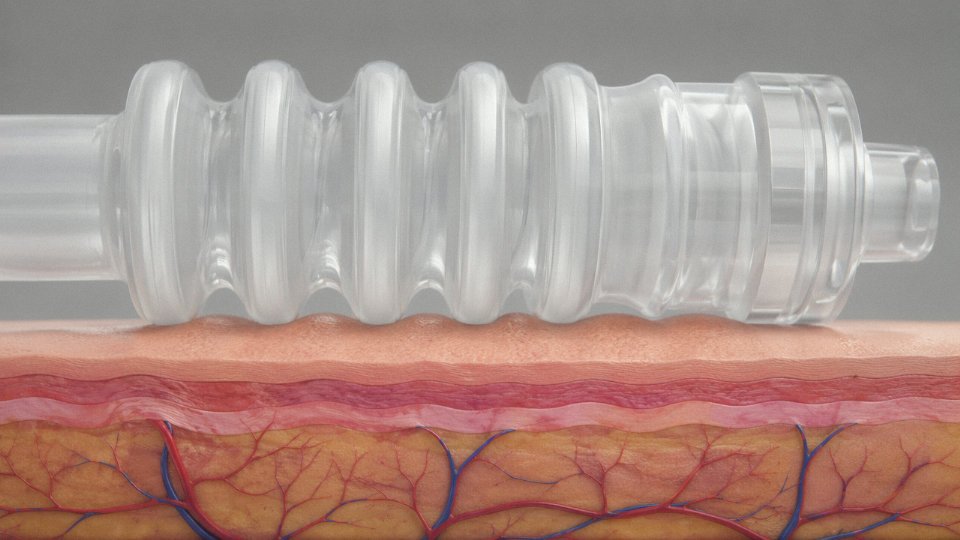
Medical implants and devices: why silicone can be inside the body without freely circulating in blood
Medical silicone is used inside the body all the time, but not as a loose liquid roaming through the vascular system. It shows up in breast implants, catheter parts, pacemaker and defibrillator lead insulation, surgical drains, cerebrospinal fluid shunts, dialysis and infusion tubing, facial implants, testicular implants, wound contact layers, and scar therapy sheets. Some of those applications are long-term implants. Others are temporary fluid-contact devices. The exposure profile is not the same.
A cured silicone elastomer around a pacemaker lead, for example, behaves very differently from silicone oil, uncured residue, or a ruptured gel-filled implant. That distinction matters. In plant terms, do not judge a fully cured, post-baked, lot-released elastomer by the behavior of a low-viscosity process oil sitting in a drum.
A silicone implant being inside the body does not automatically mean bulk silicone is dissolving into the bloodstream.True
Crosslinked medical silicone elastomers are generally designed to remain as solid materials. Small molecules, oils, particles, or wear debris may behave differently, but that is not the same as the whole implant freely circulating in blood.
Why medical-grade silicone is treated differently from ordinary silicone
Medical-grade silicone is not just “clean silicone” in a casual sense. Device manufacturers work under controlled specifications for raw polymer, fillers, catalysts, pigments if used, mixing, molding or extrusion, curing, post-curing, packaging, and sterilization. The details vary by device class and regulatory path, but the engineering intent is the same: reduce extractables, control residues, maintain mechanical properties, and prove biological compatibility for the intended contact duration.
Curing and post-curing are not paperwork exercises. If a silicone part is under-cured, or if volatile low-molecular-weight siloxanes are not driven down to the expected range, extractables can rise. Sterilization also has to be validated. Ethylene oxide, gamma, e-beam, and steam do not affect every silicone formulation the same way. A catheter valve, a soft drain bulb, and implant-grade gel shell may all be “silicone,” yet their risk files and acceptance tests are not interchangeable.
Good manufacturers track lot history tightly: compound batch, cure profile, dimensional checks, durometer, tensile properties, elongation, extractables where relevant, packaging integrity, and biocompatibility testing such as cytotoxicity, sensitization, irritation, systemic toxicity, implantation response, hemocompatibility when blood contact applies, and other tests chosen for the device. Procurement people should care about this. A cheap substitute tube that “looks like silicone” can pass a visual inspection and still fail badly in extractables, compression set, or sterilization compatibility.
What the body does around an implant
The body does not ignore an implanted device. Within minutes to hours, proteins adsorb onto the surface. Cells then read that protein-coated surface, not a perfectly clean polymer. Macrophages arrive. If they cannot clear the material, they may stay active at the interface or fuse into foreign body giant cells. Fibroblasts lay down collagen, and over time a fibrous capsule can form around the implant.
That capsule is not automatically a failure. Around many implants it is expected. The trouble starts when the local response becomes excessive, painful, contracted, infected, or associated with fluid collection, tissue change, or device damage. In breast implants, capsular contracture is the classic example: the implant may still be intact, but the surrounding tissue response can create hardness, distortion, or pain. With shunts, drains, or leads, local inflammation, biofilm, mechanical rubbing, or migration can create a very different clinical problem.
So yes, silicone can be inside the body. No, that does not mean the bloodstream is being dosed with chunks of silicone.
Migration, gel bleed, rupture, and wear are separate problems
A few phenomena get mixed together in casual discussions, and that creates bad decisions.
| Phenomenon | What it usually means | Why it matters clinically |
|---|---|---|
| Gel bleed | Small amounts of silicone gel or oil components moving through an intact implant shell | May raise local tissue or lymph node questions; depends on implant design, age, shell integrity, and gel chemistry |
| Oil migration or leaching | Movement of lower-molecular-weight silicone fluids or siloxanes | More relevant to fluids, gels, lubricants, and residues than to solid cured elastomer |
| Particle shedding | Tiny particles released from a surface through handling, wear, abrasion, or degradation | Can provoke local inflammatory response; risk depends on motion, surface finish, and location |
| Rupture | Loss of shell or device integrity | Can release gel or material locally; imaging and device-specific evaluation are often needed |
| Mechanical wear | Fatigue, cracking, rubbing, kinking, or insulation breakdown | In leads, catheters, and shunts, function may matter as much as material exposure |
In practice, the worst assumption is treating all of these as one event called “silicone poisoning.” That phrase is too blunt for useful troubleshooting. A ruptured breast implant, an abraded catheter, a cracked pacemaker lead insulation, and a well-healed facial implant with no symptoms belong in different clinical buckets.
Symptoms need device-specific evaluation, not guesswork
If a patient develops pain, swelling, redness, hardening, drainage, fever, unexplained fluid around an implant, changes in implant shape, neurological symptoms near a shunt, or suspected lead or catheter malfunction, the right path is medical assessment. That may mean physical exam, ultrasound, MRI, X-ray, CT, blood work, device interrogation for cardiac systems, culture if infection is suspected, or surgical consultation. The correct tool depends on the device and the symptom pattern.
A typical scenario: someone has a breast implant for years, then notices one side becoming firm and uncomfortable after a minor trauma. The practical question is not “can silicone enter blood?” The first questions are whether there is rupture, capsular contracture, fluid collection, infection, or another breast or chest wall issue. Wrong framing delays imaging and treatment. Right framing narrows the problem and reduces unnecessary panic.
Medical silicone has earned its place because properly made and selected materials can be stable in demanding biological settings. But “generally biocompatible” is not a lifetime warranty against rupture, wear, inflammatory reaction, infection, or individual symptoms. Device design, manufacturing control, implantation technique, time in service, mechanical stress, and patient biology all count.
Injected silicone: the highest-risk scenario for blood and tissue exposure
Injected silicone is in a different risk category from touching a cured gasket, wearing a silicone wristband, or having a properly specified medical implant. The moment silicone is pushed through a needle into living tissue, the body is no longer dealing with a surface-contact material. It is dealing with a foreign substance placed past the skin barrier, sometimes under pressure, sometimes in volumes the body cannot safely contain.
Non-medical silicone injection for body contouring is unsafe. It has been associated with severe injury, disfigurement, chronic inflammation, infection, embolic events, and death. That is not an overcautious legal sentence. It is the practical reality of putting the wrong material in the wrong location with no controlled dose, no validated sterility chain, no tissue compatibility data for that use, and often no reliable record of what was injected.
Why injection changes the exposure problem
A needle can place silicone into fat, muscle, connective tissue, lymphatic channels, or a blood vessel. That last one is the acute nightmare.
If silicone oil or a silicone-containing filler is accidentally injected into a vein or artery, droplets can travel. In a vein, material may move toward the lungs and create pulmonary embolic complications: shortness of breath, low oxygen, chest pain, coughing, respiratory failure in severe cases. In an artery, injected material can block downstream blood flow, causing tissue ischemia. That means starved tissue, necrosis, ulceration, and sometimes permanent loss of function or appearance.
Even without direct vessel injection, the body may not leave the material alone. Free silicone can trigger inflammation, foreign-body granulomas, fibrosis, and painful nodules. The injected area may feel firm or lumpy months later. It may migrate with gravity, muscle movement, massage, surgical manipulation, or simply time. I have seen enough plant contamination problems to say this plainly: once an uncontrolled fluid gets into a porous, living system, cleanup is rarely neat. Human tissue is less forgiving than a stainless process line.
Non-medical silicone injection for body contouring is a safe alternative to approved fillers.False
Injecting unapproved silicone or silicone-containing products into tissue can cause embolism, infection, chronic inflammation, migration, granulomas, ulceration, and difficult-to-repair disfigurement. Approved medical uses are narrow, controlled, and not interchangeable with cosmetic body-contouring injections.
Approved ophthalmic silicone oil is not the same thing
There are legitimate medical uses for certain injectable silicone oils, most notably in specialized ophthalmology, where highly controlled silicone oil may be placed inside the eye during retinal surgery. That use is not casual. It depends on medical-grade material, known viscosity ranges, sterile packaging, surgical technique, patient selection, follow-up, and a specific anatomical purpose.
Do not confuse that with illicit cosmetic injection. Same broad chemistry family does not mean same product, same purity, same risk, or same route. A medical-grade silicone oil used by a retinal surgeon is specified and controlled like a critical process material. A bottle of unknown fluid used for body contouring is closer to an undocumented raw material with no certificate you can trust, no validated biocompatibility for that application, and no recall trail if things go wrong.
Industrial products are not tissue products
Industrial silicone oils, mold-release agents, lubricants, greases, sealants, caulks, and defoamers are made for machinery, assemblies, coatings, seals, or process control. They may perform beautifully in those jobs. That says almost nothing about safety inside human tissue.
Depending on the product, industrial silicone materials may contain catalysts, plasticizers, fillers, surfactants, pigments, solvents, low-molecular-weight siloxanes, uncured fractions, antimicrobial additives, or trace contaminants from manufacturing and packaging. Some are harmless in a gearbox or on a die-casting tool and completely inappropriate under skin. Procurement people understand this distinction: “silicone” on a label is not a specification. Grade, cure chemistry, extractables, sterility, endotoxin control, viscosity, and intended use matter.
Sealants are a special warning. Many cure by releasing small molecules or by reacting with moisture. Some are acetoxy-cure, some oxime-cure, some alkoxy-cure, and the byproducts and additives vary. None of that belongs in a syringe.
The delayed damage can be worse than the first reaction
A person may not have an immediate crisis after an illicit injection. That does not make it safe. Delayed complications can show up weeks, months, or years later: hard nodules, chronic swelling, pain, skin discoloration, draining wounds, ulceration, recurrent infection, scarring, and visible distortion. Material may migrate from the original injection site into adjacent tissue or lymph nodes.
Removal is often difficult because free silicone does not sit in one clean capsule like a bolt in a tapped hole. It can disperse through tissue planes in small droplets. Surgeons may have to remove damaged tissue along with the foreign material, and complete removal may not be possible without unacceptable functional or cosmetic loss. Wrong route, wrong material, long tail of consequences.
Emergency symptoms after silicone injection
Anyone who has received or suspects they received a silicone injection should seek emergency care immediately if any of the following occur:
- Shortness of breath, wheezing, coughing, or low oxygen symptoms
- Chest pain, rapid heartbeat, fainting, or severe dizziness
- Neurological symptoms such as confusion, weakness, vision changes, severe headache, or trouble speaking
- Fever, chills, spreading redness, warmth, or drainage from the injection site
- Severe or rapidly worsening pain
- Pale, blue, mottled, or cold skin near the injection area
- Any suspicion that material was injected into a blood vessel
Tell the clinical team exactly what was injected if known, how much, where, and when. If there is a container, label, receipt, message thread, or photo of the product, bring it. That detail can matter.
Inhalation, heating, and workplace exposure: what can reach the lungs and circulation
On a plant floor, silicone exposure is rarely one single thing. Handling a cured gasket at an assembly bench is not the same as atomizing a silicone release agent into a hot mold, trimming cured rubber with a high-speed wheel, or heating contaminated metal before welding. The route, particle size, chemistry, temperature, and duration change the risk.
For bloodstream entry, inhalation matters because the lungs are built for gas exchange. Fine aerosols, vapors, and very small particles can reach deeper respiratory regions than hand contact ever will. That does not mean every silicone-related airborne exposure becomes a blood exposure. It means the lungs deserve respect, especially in repeat operations where an operator spends half a shift near mist, dust, or fumes.
Where airborne silicone-related exposure actually happens
Common jobs that deserve a closer look include mixing liquid silicone rubber, dispensing two-part systems, spraying silicone mold release, cleaning equipment with silicone oils, cutting or grinding cured rubber, trimming silicone foam, heating silicone-coated parts, and welding or brazing near surfaces contaminated with silicone oil or release agent.
Each has a different exposure profile.
Mixing liquid silicone rubber can release volatile siloxanes or formulation components, depending on the grade, catalyst package, filler system, and temperature. Some materials are nearly odorless and still produce measurable vapor. Others smell sharp because of solvents or additives, not because the silicone polymer itself is “getting into the air.” Spraying release agents is usually a mist problem first, and a solvent or propellant problem second, if the product uses them. Overspray can hang around badly in poorly exhausted molding areas; I have seen release agent fog drift into adjacent packing benches because the booth airflow was aimed at the operator’s shoulder instead of the source.
Machining cured silicone rubber is different again. The main issue is particulate exposure: rubber dust, filler particles, and nuisance loading in the respiratory tract. Larger dust tends to deposit in the nose and upper airways. Finer fractions can go deeper. Whether it becomes a significant health concern depends on dust concentration, particle size, fillers such as silica, work duration, and how aggressively the material is cut. A sharp blade and slow feed can be a hygiene control. A glazed grinding wheel screaming at high speed is not.
Cured silicone dust and sprayed silicone mist should be treated as the same inhalation hazard.False
Cured silicone dust is mainly a particulate exposure concern, while sprayed oils or release agents create aerosols and may also involve solvents, propellants, or volatile siloxanes. The controls and sampling strategy can differ.
Vapors, mists, and volatile siloxanes are formulation-dependent
Low-molecular-weight siloxanes and silicone oils can volatilize or mist under certain conditions. That behavior is not the same as a solid crosslinked elastomer sitting on a bench. Temperature matters a lot. A process running near room temperature may have low vapor generation, while heated molds, hot rollers, curing ovens, or ultrasonic trimming can raise emissions.
Ventilation changes the picture just as much. A small amount of release spray used twice per shift in a ventilated press area may be uneventful. The same product used every few minutes inside a warm, stagnant corner can create a breathing-zone exposure worth sampling. Duration also drives dose. Ten seconds of odor during a maintenance wipe-down is not the same as six hours of open-pan cleaning with silicone oil or solvent blend.
Do not use smell as the measuring instrument. Odor thresholds are unreliable, and some decomposition products or aerosols give little warning until irritation starts. Visible smoke is also a late indicator. If smoke is visible, you are already behind the process.
Heating, burning, and welding near silicone contamination
Silicone elastomers tolerate heat better than many organic rubbers, but “heat resistant” does not mean “safe to overheat.” Above the recommended service range, and especially during burning, silicone materials can generate irritating fumes and decomposition products. The exact mix depends on formulation, oxygen availability, temperature, pigments, fillers, and nearby contaminants. A platinum-cured medical elastomer, a peroxide-cured industrial sheet, and a silicone-coated fabric with adhesive backing should not be assumed to behave the same in a hot-work area.
Welding near silicone-contaminated surfaces is a classic maintenance trap. A mechanic wipes a fixture with silicone oil, or a mold release builds up on a bracket, then later someone welds close by. Heat drives off vapors and breakdown products right in the breathing zone. The job may be short, but the exposure can be sharp. Clean the surface, verify the cleaning method, and read the safety data sheet for both the silicone product and any cleaner used. Chlorinated solvents plus hot work are their own serious hazard; do not create one problem while fixing another.
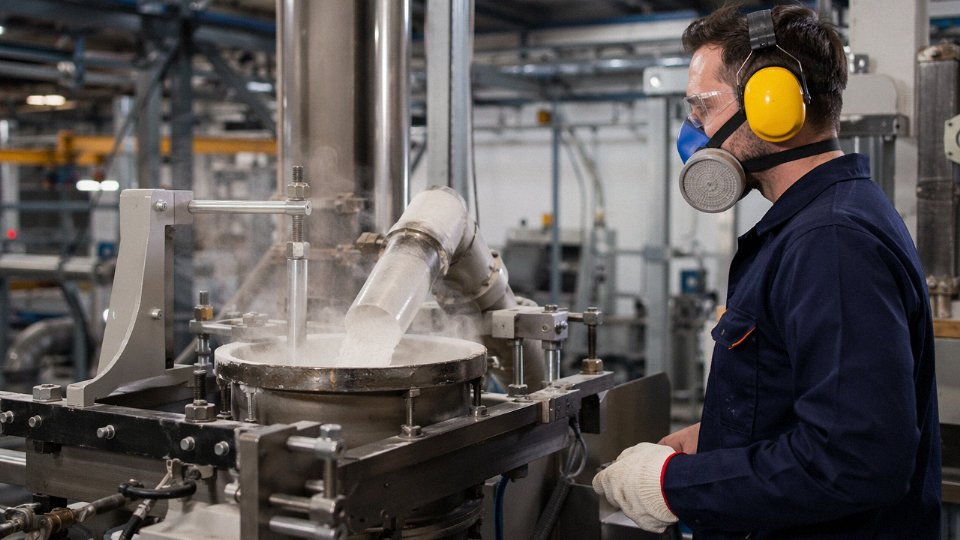
Practical controls that usually work
The best control is to avoid making airborne material in the first place. Substitute a lower-volatility product, use wipe-on release instead of spray where production allows, buy pre-mixed cartridges rather than open pail mixing, or change a trimming method from abrasive grinding to knife cutting or die cutting. These are not glamorous fixes. They often work.
For repeat processes, use closed transfer, sealed dispensing, and local exhaust ventilation at the point of generation. Capture velocity and hood placement matter more than fan noise. A loud fan on the wall behind the operator may only pull mist across the face. Mist collectors, downdraft benches, enclosure around spray zones, and maintained filters can cut exposure substantially, often by a wide range such as 50% to over 90%, depending on capture geometry, airflow balance, and maintenance discipline.
Set temperature limits in work instructions, not just in engineering drawings. Ovens, hot plates, heat guns, and mold surfaces should have real controls, alarms, or at least periodic verification. Housekeeping matters too. Dry sweeping cured rubber dust is a poor habit; use HEPA-filtered vacuuming or wet methods where compatible with the process.
Respirators come last, but sometimes they are justified: trial runs, maintenance, spill cleanup, abnormal heating, or tasks where engineering controls are not yet proven. Selection needs the contaminant profile. Particulate filters, organic vapor cartridges, or supplied air are not interchangeable choices.
For higher-risk operations, use industrial hygiene sampling, product safety data sheets, exposure limits where available, and a qualified safety professional. Medical surveillance may be appropriate for workers with repeated aerosol, dust, or fume exposure, especially where respiratory irritation, asthma-like symptoms, or high dust loading has been reported.
The shop-floor rule is simple: cured silicone parts on a bench are usually not the inhalation issue. Airborne mist, fine dust, volatile process chemicals, and overheated material are. Treat those as process hazards, measure them properly, and control them before they become a health complaint or a production shutdown.
How the body responds to silicone particles, oils, gels, and implant surfaces
Silicone inside or near living tissue is not treated like air or water. Even when the chemistry is quiet, the body still sees a boundary it did not build. That response can be mild and stable for years, or it can become a chronic local problem if the material is mobile, contaminated, mechanically damaged, or placed in the wrong tissue plane.
“Inert” is often misunderstood here. It does not mean biologically invisible. It means the material has limited chemical reactivity under intended conditions: correct formulation, proper cure, suitable sterilization, controlled geometry, and a use environment the manufacturer actually designed for. I have seen the same mistake in factories with seals and hoses: a gasket that behaves perfectly in one fluid and temperature range can swell, shed, or fail in another. The body is less forgiving than a pump skid.
The usual local response: inflammation, macrophages, and scar tissue
After implantation or tissue exposure, the first response is inflammation. Proteins coat the surface within minutes to hours. Immune cells arrive. Macrophages try to digest or isolate what they can. With large solid silicone implant surfaces, they cannot “eat” the device, so the body tends to wall it off with fibrous tissue. That capsule can be thin and quiet, or thicker and tighter depending on surface texture, motion, bacterial contamination, bleeding, implant location, patient healing tendency, and surgical handling.
Small particles and droplets behave differently. Macrophages can engulf tiny fragments or oil droplets, but they may not be able to break them down. If the irritation persists, clusters of immune cells can form granulomas. These are localized inflammatory nodules, not proof that the entire bloodstream is full of silicone. They are the body’s version of isolating nuisance material in a corner because it cannot remove it cleanly.
The practical consequence is simple: solid, well-cured silicone in a stable medical device usually leads to a contained interface reaction. Free oil, gel bleed, wear debris, or injected material is more likely to spread through tissue planes and create patchy inflammation.
Local reaction is not the same as systemic toxicity
A painful capsule, swollen lymph node, rash, fatigue, or joint pain should not be dismissed. Patients know when something has changed. But these findings do not all point to the same mechanism.
Local tissue reaction means the problem is concentrated near the material or along drainage pathways. Examples include capsular contracture, silicone granuloma, lymph node enlargement after implant rupture, or inflammation near a catheter or shunt component. Systemic toxicity means a substance is circulating or distributed widely enough to cause dose-related organ effects. Immune-mediated illness claims sit in another category again: symptoms may be real, but causation is harder to prove because immune systems vary, symptoms overlap with common diseases, and tests often do not map neatly to device condition.
That distinction matters for decisions. The wrong interpretation can lead to two bad outcomes: either a real local problem is waved away, or a stable device is blamed for every symptom without a proper workup.
If silicone is found near tissue or lymph nodes, that does not automatically mean silicone is freely circulating throughout the bloodstream.True
Silicone droplets or particles may move locally or through lymphatic drainage after rupture, wear, or injection. That is different from proving sustained bloodborne distribution or systemic toxicity.
Lymphatic transport can happen, but it is not the same as everything becoming bloodborne
The lymphatic system is the body’s drainage network. Small silicone droplets, gel fragments, or wear particles can be picked up by immune cells and transported to nearby lymph nodes, especially after implant rupture, device wear, or direct injection. Surgeons and radiologists sometimes see enlarged nodes that contain silicone-related material.
This is not unusual from a materials standpoint. Fine debris moves more easily than a bulk part. Anyone who has cut elastomer sheet on a dry bench knows the dust travels farther than the sheet itself. In tissue, scale matters too: droplet size, oil viscosity, surface chemistry, and whether the material is trapped in scar tissue all affect movement.
Still, lymphatic migration should not be exaggerated into “all silicone enters the blood.” Most solid implant silicone remains where it is placed unless there is rupture, wear, poor placement, or a procedure that intentionally or accidentally introduces free material.
Why blood testing is not a clean answer
Detecting silicone or siloxane-related compounds in blood is technically messy. Laboratories have to avoid contamination from tubing, stoppers, collection devices, lubricants, and even some analytical system components. The measured target matters as well: a silicone polymer fragment, a cyclic siloxane, a low-molecular-weight oil, and a degradation byproduct are not the same thing.
Results may also be intermittent. A small release event might not be captured by a single sample. Some compounds partition into fat-rich tissue rather than staying in blood. Others may be below detection limits or indistinguishable from background environmental exposure. A “not detected” result does not always prove zero exposure, and a trace detection does not automatically explain symptoms.
This is why clinicians usually weigh the whole picture: symptoms, timing, implant or injection history, physical exam, imaging, and selected laboratory tests. Imaging may be more useful than blood testing in many suspected rupture or migration cases, but the right study depends on the device type and anatomy.
What a sensible clinical history should include
A useful evaluation starts with plain facts, not panic. Tell the clinician about any implants, revisions, ruptures, injections, cosmetic fillers, shunts, catheters, occupational exposure to silicone oils or aerosols, and any heating or cutting work that produced fumes or dust. Dates matter. So do new symptoms after trauma, surgery, infection, or heavy workplace exposure.
Red flags deserve prompt care: shortness of breath after injection or aerosol exposure, rapidly increasing swelling, fever, severe pain, neurologic changes, or signs of infection near an implant. For slower complaints, a structured workup is better than chasing one lab number. In practice, the strongest cases are built from pattern and mechanism, not from a single dramatic test result.
Testing, standards, and safety data that determine whether silicone is acceptable for body contact
A silicone part is not “medical grade” because it feels clean, looks translucent, or came from a well-known supplier. In a regulated plant, acceptability comes from a chain of evidence: the base polymer, additives, cure chemistry, processing history, biological testing, sterilization method, packaging, and the intended contact with the body.
That last phrase matters. Intended contact drives the test plan.
What biocompatibility testing actually checks
For medical devices, the common framework is ISO 10993, with FDA or other regional expectations layered on top depending on market and device type. The exact test set depends on contact duration, tissue type, and whether the device touches intact skin, breached tissue, circulating blood, bone, mucosa, or implanted tissue for weeks to years.
Typical endpoints include:
| Test area | What it is trying to catch | Why it matters for silicone |
|---|---|---|
| Cytotoxicity | Cell damage from extracts | Poor cure, catalyst residues, plasticizers, or processing contamination can show up here |
| Sensitization | Allergic-type response potential | Relevant where repeated skin or tissue exposure occurs |
| Irritation or intracutaneous reactivity | Local inflammatory response | Useful for devices touching skin, mucosa, or tissue |
| Acute and subacute systemic toxicity | Whole-body reaction after exposure | Looks beyond the contact site |
| Genotoxicity | DNA damage potential | Usually tied to leachables, impurities, or additives rather than the silicone backbone itself |
| Implantation | Local tissue response over time | Critical for long-term elastomer implants, leads, shunts, and seals |
| Hemocompatibility | Blood compatibility | Needed for blood-contacting devices: hemolysis, clotting, platelet activation, complement response, and thrombogenicity |
A catheter seal and a breast implant shell may both be silicone elastomer, but the evidence package is not the same. A pacemaker lead insulation has a different risk profile again: long duration, body fluids, flexing, and sterilization exposure. The test article should represent the real finished device, or at least the finished material processed in a defensible way. Testing a raw supplier slab while production parts are mixed, molded, washed in a different solvent, post-cured differently, and packed in a low-cost pouch is weak evidence. I have seen that gap cause painful rework during design review.

Extractables and leachables: where the hidden chemistry gets found
Solid, fully cured silicone elastomer is a crosslinked network. It is not the same thing as silicone oil, uncured gel, mold-release residue, or low-molecular-weight siloxanes sitting in the material. Extractables and leachables testing is how engineers look for those mobile chemicals.
Extractables studies intentionally use harsh conditions: aggressive solvents, elevated temperatures, long contact times, high surface-area-to-volume ratios, and sometimes exaggerated pH. That is not because the hospital will soak the device in hexane at 50 to 70°C for days. It is done to pull out worst-case chemistry and identify what could migrate if the device is pushed hard by sterilization, storage, lipids, drugs, saline, blood, or body temperature over time.
Leachables are closer to real use. They look at what actually comes out under clinically relevant conditions: saline, blood simulants, drug formulations, tissue-contact fluids, or the product’s real fluid path. The numbers depend heavily on part geometry, cure state, post-cure, fluid chemistry, temperature, and contact duration. Thin tubing with a large wetted area can behave differently from a thick molded bumper, even if both came from the same silicone family.
A practical example: a platinum-cured silicone tube used for a drug path may pass basic cytotoxicity, but if the drug formulation contains oils, alcohols, or surfactants, it may extract low-level siloxanes or processing residues at a different rate than saline would. Wrong assumption, wrong fluid model. The result can be failed stability work, delayed validation, or a late material change after tooling is already paid for.
Manufacturing controls are part of the safety case
Biocompatibility is not only a lab report. It is also process discipline.
For body-contact silicone, manufacturers typically control raw material qualification, supplier lot traceability, mixing ratios, pigment or radiopaque filler loading, cure time, cure temperature, post-cure conditions, and contamination risk. Post-curing can reduce volatile or extractable residues, but the useful window varies by formulation and part thickness. Too little post-cure leaves chemistry behind; too much can shift mechanical properties or dimensions.
Cleanroom handling matters when the device contacts tissue or blood. Particulate control, tool cleaning, glove selection, compressed air quality, and silicone-to-silicone transfer are not paperwork games. A stray fiber or uncured smear can turn into a complaint, a failed inspection, or a real patient risk. Sterilization compatibility also has to be proven: ethylene oxide, gamma, electron beam, steam, and low-temperature oxidative methods can affect silicone differently. Packaging validation then has to protect the sterile barrier and prevent extractable pickup from inks, adhesives, bags, labels, or trays during aging.
Industrial safety data sheets do not cover all of this. An SDS is written for occupational handling and transport, not for proving that a molded part can sit in a bloodstream, spinal fluid path, or implant pocket. Consumer claims such as “food safe,” “BPA-free,” or “hypoallergenic” are also not substitutes for medical device evidence.
A silicone part that passes food-contact rules is automatically acceptable for blood-contact medical use.False
Food-contact testing does not cover all endpoints needed for circulating blood exposure, such as hemolysis, thrombogenicity, complement activation, and device-specific extractables under clinical conditions.
Evidence levels should match the contact type
Food contact generally asks: what may migrate into food under defined use conditions? Skin contact asks about irritation, sensitization, and sometimes repeated exposure. Implant contact asks about long-term local and systemic response, degradation, extractables, sterilization, and tissue compatibility. Blood contact is stricter in a different direction because clotting and blood cell damage can happen fast.
Good procurement teams ask for specifics, not slogans. Look for:
- A named silicone grade from a qualified supplier, not just “medical silicone”
- Certificate of analysis or certificate of conformance by lot
- Traceability from raw material through molded or extruded part lot
- Evidence tied to the intended use: skin, fluid path, implant, or blood contact
- Regulatory clearance or documented use in a comparable cleared device, where applicable
- Extractables and leachables data for the finished material or finished device configuration
- Sterilization and cleaning instructions that match real processing
- Packaging and shelf-life validation, especially after aging and sterilization
If a supplier cannot say whether the silicone is peroxide-cured or platinum-cured, cannot identify the grade, or offers only a generic SDS, treat that as a purchasing risk. Maybe it is fine for a gasket on a dry machine guard. It is not enough for a catheter, implant component, drug-contact seal, or anything with blood exposure.
What to do after a suspected silicone exposure
The first step is to sort the exposure by route, not by panic level. Touching a cured silicone phone case, gasket, baking mat, medical tubing, or seal is usually a low-risk event. Getting uncured sealant on your hands is different. Breathing smoke from overheated silicone in a poorly ventilated area is different again. Injection, implant rupture, eye splash, a child swallowing unknown material, or silicone entering an open wound deserves a much tighter response.
In practice, the question I would ask on a plant floor is simple: what was the material, was it cured, and where did it go?
Cured silicone touching intact skin is unlikely to enter the bloodstream in a meaningful amount.True
Intact skin is an effective barrier to crosslinked silicone elastomers. Bloodstream exposure is far more relevant to injection, implantation, inhalation of aerosols or fumes, mucous membrane exposure, open wounds, or contaminated materials.
Start with basic decontamination, not aggressive chemistry
For skin contact with uncured sealant, silicone oil, mold-release residue, contaminated grease, or an unknown silicone-like material, wash with soap and running water. Use normal hand-cleaning discipline: remove rings or gloves that trapped the material, wash around fingernails, rinse well, then wash again if the surface still feels slick.
Do not scrub the skin raw. Do not use gasoline, brake cleaner, acetone, xylene, MEK, paint thinner, or industrial degreasers on skin unless a medical or poison-control professional specifically directs it. I have seen maintenance crews do this after sealant or adhesive exposure because “it cuts the residue.” It also cuts skin oils, drives irritation, and can create a bigger absorption problem than the original silicone. A disposable towel and mild soap are boring, but boring is usually right here.
If the material got onto clothing, remove contaminated clothing and bag it until you know what it was. If it is a two-part RTV, uncured potting compound, or sealant with catalyst residue, do not put the same gloves back on and keep working. That is how small exposures turn into a shift-long skin problem.
Check the product, not just the word “silicone”
Find the container, cartridge, tube, drum label, or purchase record. Look for:
- Whether it was cured or uncured
- Intended use: medical, food-contact, construction, automotive, electrical potting, mold release, lubricant, cosmetic
- Ingredients or hazard statements, including catalysts, solvents, silanes, fillers, biocides, or adhesion promoters
- The safety data sheet, preferably for the exact product and revision
- Batch or lot number, if this happened at work or involved an implantable or medical product
“Silicone” on a label may mean a cured elastomer, a silicone oil, a spray, a sealant with solvent, a resin, a gel, or a blend with other additives. The non-silicone ingredients often drive the immediate hazard.
Treat these situations as higher-risk
Get medical advice promptly if silicone or a silicone-containing product was injected, forced under pressure into skin, sprayed into the eyes, inhaled as fumes or aerosol, swallowed by a child, or contacted an open wound. High-pressure injection injuries are especially deceptive. The puncture can look tiny while material spreads through tissue planes; waiting until it “looks bad” is the wrong test.
Seek urgent medical care now if any of these occur:
- Breathing difficulty, wheezing, throat tightness, or persistent coughing after fumes or spray exposure
- Chest pain, fainting, confusion, blue lips, or severe dizziness
- Swelling of the face, tongue, or throat; widespread hives; or signs of a severe allergic reaction
- Fever, spreading redness, drainage, red streaking, or worsening warmth around a wound
- Sudden swelling, severe pain, skin color change, numbness, or loss of function after injection or suspected implant complication
- Eye pain, vision change, chemical burn sensation, or inability to rinse the eye comfortably
- A child ingested an unknown silicone product, sealant, lubricant, or small cured part and the amount is uncertain
For eye exposure, rinse with clean running water or sterile eyewash while arranging medical guidance. Contact lenses should usually come out if they do not come out easily during rinsing; do not fight the eye with dirty fingers.
If it happened at work, preserve the facts
A decent incident report is not paperwork theater. It protects the worker and helps the clinician make the right call. Record the product name, manufacturer, lot if available, approximate amount, route of exposure, duration, ventilation conditions, PPE worn, and whether the material was heated, sprayed, mixed, sanded, burned, or pressurized. Keep the container or take clear photos of every label panel. Save the safety data sheet.
Report the event to the supervisor and occupational health team. Where available, contact poison control or a local toxicology service, especially for ingestion, inhalation, eye exposure, or mixed-chemical products. In a factory, I would also tag the workstation until you know whether this was a one-off spill, a failed hose, wrong cartridge, missing local exhaust, or a curing process running too hot. The medical issue comes first; preventing the repeat comes right behind it.
For implants, call the right specialist
If you have a silicone-containing implant, shunt, catheter, pacemaker lead insulation, breast implant, or drug delivery device and you suspect rupture, leakage, migration, infection, or rejection, contact the implanting physician or the relevant specialist. Do not try to judge rupture or migration from symptoms alone. Pain, swelling, fever, shape change, skin redness, or new functional symptoms need proper assessment, which may involve examination, imaging, labs, or device-specific checks.
Do not massage the area, attempt drainage, puncture anything, or delay care because the material is “medical grade.” Medical-grade silicone is used inside the body because it is controlled and tested for that purpose, not because every possible complication can be ignored.
Frequently asked questions
Can silicone from a phone case, kitchen tool, or cured sealant enter my bloodstream through skin?
For intact skin, no meaningful amount is expected to enter the bloodstream. A cured phone case, baking mat, spatula handle, gasket, or cured silicone sealant is mostly crosslinked elastomer. The polymer chains are too large and too locked together to pass through normal skin in any practical sense.
Cured silicone rubber from normal skin contact does not meaningfully enter the bloodstream.True
Intact skin is an effective barrier to silicone polymers. Bloodstream exposure is mainly a concern with injection, implantation, inhaled aerosols or fumes, open wounds, or contaminated material.
The caveat is uncured sealant, solvent residue, pigments, plasticizers, or dirty process contamination. In a plant, I would worry more about acetic-cure vapors, uncured paste on broken skin, or a sealant smeared with cutting oil than about the cured silicone itself.
Can silicone breast implants leak silicone into the blood?
They can release small amounts of low-molecular-weight silicone compounds over time, and a ruptured gel implant can release gel into surrounding tissue. That does not mean the implant contents are freely circulating through the bloodstream like a dissolved drug.
Most silicone gel tends to stay local, become trapped in scar capsule tissue, or move through lymphatic pathways in some cases. Blood testing is not usually the main way clinicians evaluate this. Imaging, symptoms, implant age, rupture suspicion, and physical findings matter more.
Is silicone toxic if it gets inside the body?
It depends on the form, dose, cleanliness, and location. Properly manufactured medical-grade silicone elastomer is generally biologically inert, which is why it is used in pacemaker leads, shunts, drains, and long-term implants. That statement does not cover industrial sealant, contaminated oil, injected cosmetic silicone, overheated fumes, or unknown imported compounds with poor traceability.
A solid, clean implant surface and loose silicone oil droplets behave differently. Tissue sees them differently. Procurement teams sometimes miss that distinction when they treat “silicone” as one material line item.
What happens if someone injects silicone?
Injected silicone is the highest-risk scenario because it bypasses the skin barrier and puts material directly into tissue, lymphatic channels, or blood vessels. Complications can include chronic inflammation, hard nodules, infection, tissue death, migration, embolism, breathing distress, and, in severe cases, death.
This is not a “small amount, small problem” situation. The wrong injection plane or accidental vascular entry can turn into an emergency very quickly.
Can silicone in cosmetics be absorbed into the bloodstream?
Most cosmetic silicones, such as dimethicone-type ingredients, are intended to sit on the skin surface or in the upper skin layer. For normal use on intact skin, systemic bloodstream absorption is expected to be very low.
The practical concerns are different: eye irritation, acne-like reactions for some users, inhalation from sprays, use on damaged skin, or contaminated products. A leave-on cream is not the same exposure as an aerosolized hair product used in a poorly ventilated bathroom.
Is medical-grade silicone completely safe?
No material is completely safe in every body, every design, and every lifetime. Medical-grade silicone means the material, formulation, processing, curing, extraction testing, and biocompatibility package are controlled for a defined use.
That last phrase matters: defined use. A silicone approved for a short-term catheter is not automatically suitable for a ten-year implant. Geometry, additives, sterilization method, surface finish, extractables, and mechanical fatigue all change the risk profile.
Can silicone fumes enter the bloodstream through the lungs?
Potentially, yes, depending on what is actually in the air. Handling cured silicone at room temperature is usually a low inhalation concern. Cutting, grinding, spraying silicone oils, using aerosol release agents, or overheating silicone can create aerosols, fumes, or decomposition products that reach deep lung tissue.
Once material reaches the alveoli, some compounds may pass into circulation, while particles may trigger local lung inflammation. In practice, ventilation, temperature, mist control, and housekeeping decide whether this is a paper risk or a real shop-floor exposure.
How would a doctor test for silicone exposure?
There is no simple routine blood test that reliably answers, “Do I have silicone in my bloodstream?” Evaluation usually starts with exposure history and symptoms. For implants, doctors may use ultrasound, MRI, or other imaging to look for rupture, leakage, or local tissue reaction.
For suspected injected silicone or granulomas, examination and sometimes biopsy may be used. For workplace inhalation, clinicians may check oxygen levels, chest imaging, lung function, and inflammatory signs. Bring the safety data sheet if the exposure happened at work. A vague memory of “clear silicone” is not enough for a useful assessment.
What symptoms suggest a serious silicone-related problem?
Seek urgent medical care for breathing trouble, chest pain, coughing blood, fainting, sudden swelling, fever with worsening redness, severe pain, skin darkening, or signs of infection after injection, surgery, or workplace exposure.
Less urgent but still worth medical review: persistent lumps, hardening around an implant, unexplained swelling, chronic rash near a device, swollen lymph nodes, or a change in implant shape. Waiting until a small problem becomes a removal job is rarely cheaper.
What is the difference between silicone, silicon, and silica?
Silicon is the chemical element used in semiconductors, alloys, and many industrial materials. Silicone is a family of synthetic polymers built around silicon-oxygen chemistry with organic side groups; these are the rubbers, gels, oils, and medical elastomers discussed here.
Silica is silicon dioxide, found in sand, quartz, glass, and many fillers. Respirable crystalline silica dust is a serious lung hazard. Do not confuse that with cured silicone rubber. Same root element, very different industrial hygiene problem.
Bottom line: silicone safety is an exposure-route and product-quality question
Silicone does not have one safety profile. A cured silicone gasket in a food mixer, a breast implant shell, a catheter tube, a silicone oil, a room-temperature-vulcanizing sealant with uncured residue, and an illegally injected filler are not the same exposure. Treating them as one material is how bad decisions get made.
For normal outside-the-body contact, intact and fully cured silicone used as intended is generally not expected to enter the bloodstream in meaningful amounts. Human skin is a good barrier to large silicone polymers, especially crosslinked elastomers. That is why a silicone wristband, phone case, baking mat, keypad, or properly cured industrial molded part is not usually a blood-exposure issue. If there is a problem in those cases, it is more likely skin irritation, contamination on the surface, processing residue, fragrance, pigment, or poor hygiene rather than silicone polymer moving through intact skin into circulation.
The risk changes sharply when the route changes.
Injection, implantation failure, aerosol inhalation, uncured residues, contaminated materials, and using non-medical silicone inside the body all need a different risk assessment. Once material is placed into tissue, blood vessels, lungs, surgical sites, or damaged skin, the body no longer has the same protective boundary. That is where particle size, fluid mobility, sterility, inflammation, and dose start to matter. A material that is harmless as a cured external seal can be completely inappropriate as an injectable or implantable substance.
Fully cured silicone used externally as intended is generally not expected to enter the bloodstream in meaningful amounts through intact skin.True
The main practical exception is not ordinary skin contact, but exposure routes such as injection, implantation, inhalation of aerosols or fumes, contact with damaged tissue, or exposure to uncured or contaminated material.
The engineering variables are not small details
From a plant-floor view, “silicone” should always trigger the next question: what grade, what cure system, what extractables, and what was it exposed to?
The main technical variables are formulation, molecular size, crosslink density, additives, extractables, surface area, temperature, duration, and cleanliness. A high-consistency rubber part that has been fully cured and post-cured behaves very differently from a low-viscosity silicone fluid. Platinum-cured tubing is not the same as an acetoxy cure bathroom sealant. A molded medical component made under controlled handling is not equivalent to an industrial part pulled from a bin with mold release, dust, cutting oil, and someone’s lunch crumbs nearby. I have seen “clean silicone” stored open beside cardboard, zinc-plated hardware, and compressed-air blowoff. That is not a material specification; it is a contamination plan.
Surface area matters too. A large solid slab has much less available interface per gram than fine dust, aerosol droplets, or thin films. Temperature and time matter. Heat can increase migration of low-molecular-weight species, and long contact duration gives extractables more opportunity to move. Solvents, lipids, disinfectants, and sterilization cycles can shift behavior depending on the formulation. In procurement terms, the cheapest “silicone” with no traceable grade, no cure data, and no extractables profile is not a substitute for documented medical or food-contact material just because it feels rubbery and passes a quick visual check.
The human variables matter just as much
The body side of the equation is route, damaged tissue, dose, medical history, symptoms, and clinical context. Healthy skin is one exposure condition. A fresh incision is another. Deep injection is another again. Lungs exposed to aerosolized droplets or thermal breakdown products are not comparable to a hand touching a cured gasket.
Dose is not just “how much was present.” It is how much was bioavailable, how long contact lasted, where it went, and whether the body can wall it off, clear it, or react to it. A person with a recent surgery, immune disorder, implant complication, unexplained swelling, fever, shortness of breath, chest pain, or progressive inflammation needs medical assessment, not internet reassurance. In the workplace, symptoms after heating, spraying, grinding, or atomizing silicone-containing products should be handled through occupational health channels and the site’s incident process. Do not let a supervisor wave it away as “just rubber smell.” That smell may be harmless in one process and a warning sign in another.

Use the paperwork, but read it like an engineer
Good decisions come from intended-use labeling, supplier documentation, safety data sheets, biocompatibility data, lot traceability, sterilization validation, and process controls. For medical use, rely on qualified clinicians and approved devices. For factory use, check the actual safety data sheet for the product as supplied, not a generic silicone summary copied from a distributor page. For procurement, ask for the grade, cure system, regulatory status, extractables or leachables data where relevant, and any limits on temperature, fluids, cleaning agents, or body contact.
A compact way to think about it:
| Situation | Usual concern level | Practical response |
|---|---|---|
| Cured silicone touching intact skin | Low | Use as labeled; watch for irritation or contamination |
| Silicone on cuts, burns, or surgical wounds | Medium to high | Use only products intended for wound or medical contact |
| Aerosol, mist, smoke, or heated decomposition exposure | Variable, sometimes high | Review SDS, ventilation, respiratory controls, and exposure monitoring |
| Implant rupture or device complication | Medical issue | Contact the treating clinician; do not self-diagnose from material claims |
| Injected non-medical silicone | High | Seek qualified medical care; this is not a cosmetic material-selection problem |
The simple rule is this: silicone is not automatically dangerous, and properly made silicone is valuable in medicine and manufacturing. But no industrial or cosmetic silicone product should be placed inside the body unless it is specifically approved, documented, sterile where required, and managed by qualified professionals for that purpose.