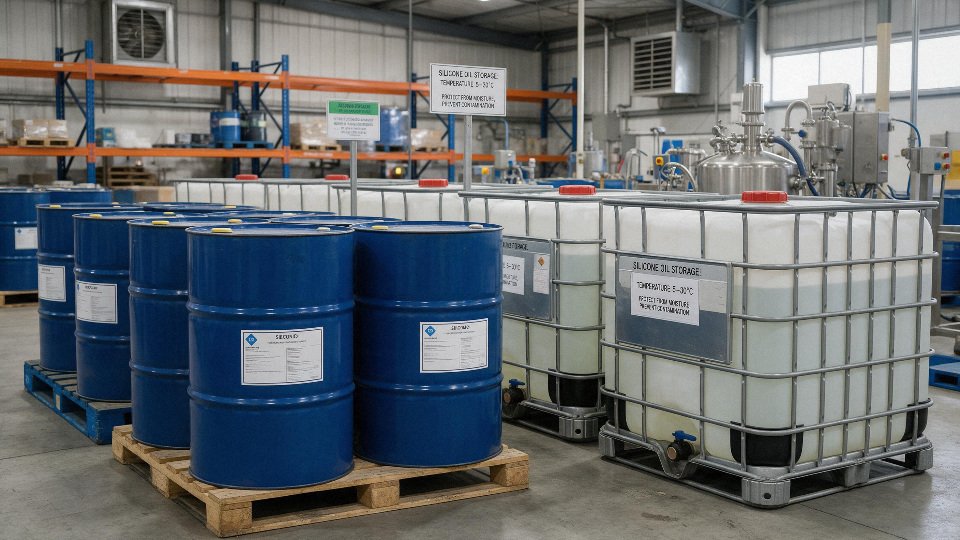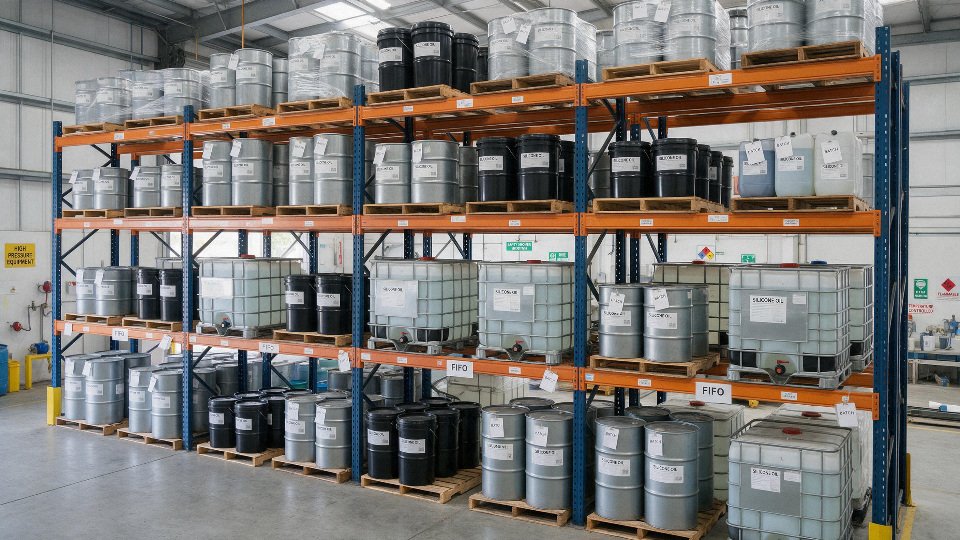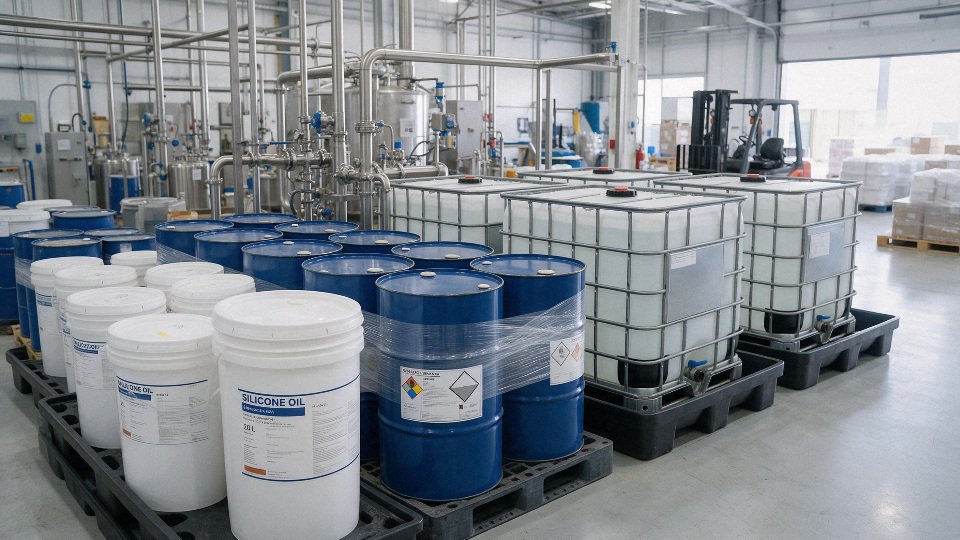
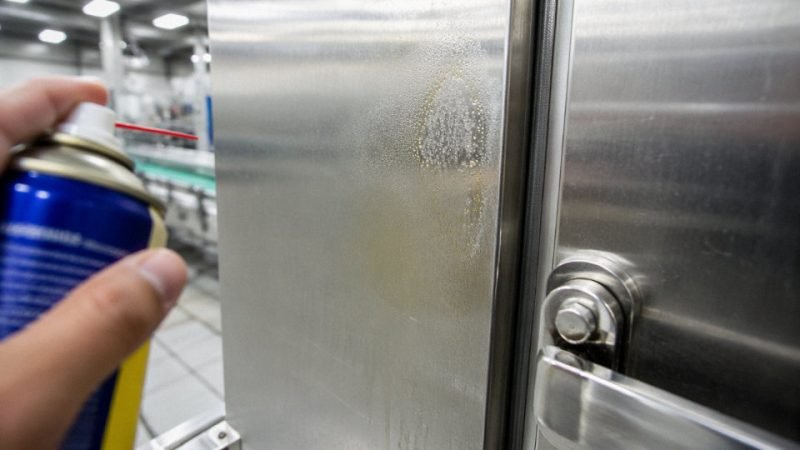
A stray shot of WD-40 on a silicone gasket looks harmless until that seal starts feeling gummy, takes a compression set, or lets product, air, or washdown water pass where it should not. On a line, that turns into nuisance stops, reject parts, oil mist on packaging, or a maintenance crew chasing a leak that was created by the last “quick fix.” The cost is rarely the can of spray; it is the hour of downtime, the spoiled batch, or the mold change that did not need to happen. The practical answer is not panic. It is matching the WD-40 contact time, silicone grade, temperature, and cleaning habit to the real risk.
WD-40 can degrade silicone rubber, especially with repeated wetting or soaking, because the common multi-use product contains petroleum distillates and light oils. Brief overspray wiped off within minutes is usually low risk, but prolonged exposure may cause swelling, softening, tackiness, loss of elasticity, or seal leakage.
The awkward part is that plant-floor exposure is never as clean as a lab chart. A silicone door seal near a conveyor gearbox sees mist, dust, heat, caustic washdown, and someone’s Friday-afternoon rag. That is why the useful question is not simply “compatible or not,” but how long the contact lasts, what the silicone is doing mechanically, and what failure would cost if it quietly changes shape.
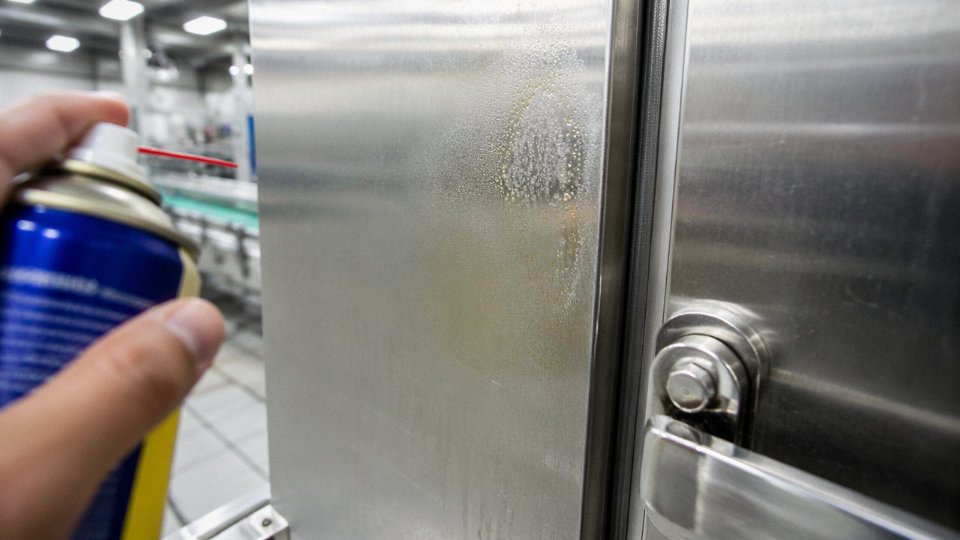
Identify what product you are actually using: WD-40 Multi-Use Product is not the same as silicone lubricant
A lot of bad compatibility decisions start with one loose sentence: “We sprayed it with WD-40.” On a plant floor, that is not specific enough. The original WD-40 Multi-Use Product and a WD-40-branded silicone lubricant are different chemistries, used for different jobs, and they should not be grouped together in a silicone rubber approval.
Classic WD-40 Multi-Use Product is mainly a water-displacing penetrant and light-duty lubricant. Its working chemistry is based around hydrocarbon solvents with mineral oil-type residue left behind after the fast carriers flash off. That is why it creeps into a wet hinge, frees a light rusted fastener, and leaves a slightly oily film. It is not silicone oil. It is not a neutral “rubber conditioner.” On silicone rubber, the concern is not instant melting; the concern is solvent uptake, swelling, temporary softening, and oil residue sitting on the surface longer than the mechanic realizes.
WD-40 Specialist Silicone Lubricant is a separate product category. It is closer to what maintenance people usually mean by “silicone spray,” although the exact carrier package still matters. Treating it as equivalent to the original blue-and-yellow aerosol is a paperwork mistake that can become a seal mistake. I have seen this show up during audits as a single line in a lubrication standard: “WD-40 allowed on rubber seals.” That line is too vague to defend.
WD-40 Multi-Use Product and WD-40 Specialist Silicone Lubricant should not be treated as the same product for silicone rubber compatibility decisions.True
They are different product types with different solvent, oil, and residue profiles. Compatibility must be judged by the exact product name and current technical documents, not by the brand alone.
Aerosols make this more confusing because the visible wet phase is temporary. The carrier solvents may evaporate in roughly a few seconds to several minutes, depending on film thickness, airflow, surface temperature, and whether the spray is trapped under a lip seal or gasket flange. After that, the part can look almost dry while an oily residue remains in contact with the silicone. That residue is often what causes the slower change: a gasket feels slick, then slightly swollen, then takes a poor compression set after a few maintenance cycles.
Typical example: a technician sprays the original Multi-Use Product around a stainless cabinet latch after washdown because the latch is stiff. Overspray hits the silicone door gasket. One incident is usually not a disaster if it is wiped off quickly. If that same habit happens every sanitation shift, the gasket edge can soften and start sticking to the frame. The failure gets blamed on “bad silicone,” but the real cause was repeated solvent-and-oil exposure at the same contact line.
Before approving any of these products in a plant standard, pull the current safety data sheet and technical data sheet for the exact product name, country of sale, and formulation revision. Do not rely on an old PDF saved in a maintenance folder from five years ago. Aerosol propellants, solvent packages, VOC rules, and regional formulations can change. Procurement should lock the approved SKU or at least require technical review before substitutions. “Same brand, same shelf color” is not a specification.
Quick product separation for silicone rubber work
| Product type | What it generally is | Residue after carrier flashes | Risk around silicone rubber | Practical plant note |
|---|---|---|---|---|
| Original WD-40 Multi-Use Product | Water-displacing penetrant and light lubricant based on hydrocarbon solvents with mineral oil-type ingredients | Oily film | Low for brief incidental contact if wiped; higher with repeated wetting or trapped residue | Good for freeing light mechanisms, poor choice as a routine spray near silicone seals |
| WD-40 Specialist Silicone | Silicone lubricant aerosol with its own carrier system | Silicone-based lubricating film | Usually better than original WD-40 for rubber-adjacent lubrication, but still verify the carrier | Do not approve by brand name alone; approve the exact product |
| Generic silicone spray | [Silicone oil](https://siliconchemicals.com/silicone-oil/) in solvent or carrier, varies widely | Thin silicone oil film | Often acceptable for many elastomers, but carriers can still bite | Cheap private-label sprays can differ lot to lot; check the SDS, not the front label |
| Silicone grease | Thickened silicone oil, usually paste form | Persistent grease film | Commonly compatible with silicone, though swelling can occur depending on grade and exposure | Better for controlled assembly lubrication than aerosol fogging; easy to overapply |
| PTFE dry lubricant | PTFE particles in a fast-evaporating carrier | Dry or waxy film | Carrier is the main compatibility question; dry film may be safer after full flash-off | Useful where oily residue attracts dust, but test on gasket material first |
| Isopropyl alcohol cleaner | Volatile alcohol cleaner, often 70–99% depending on grade | Little to no residue if clean grade | Short contact is usually tolerated by many silicone parts; prolonged soaking is a different matter | Good wipe cleaner when approved, but it can carry soils into porous or damaged rubber |
A simple rule works well in maintenance standards: list the product by full name, intended contact surface, maximum allowed exposure, and wipe-off requirement. For example, “Original WD-40 Multi-Use Product may be used on external metal hinges; avoid silicone gaskets; wipe overspray within 5 minutes.” That kind of sentence prevents midnight improvisation better than a broad “approved lubricants” list.
The wrong product may not fail the seal today. It may fail it after six months of small, repeated exposures, which is exactly the kind of failure that looks random until someone watches the job being done.
Explain the material science: why silicone rubber resists water but can absorb oils and hydrocarbons
Silicone is tough in the wrong direction for this problem
Silicone rubber is a cured elastomer network. Think of it as long polymer chains tied together at intervals, with enough freedom between tie points to stretch, seal, and recover. That network is why a silicone gasket can sit near hot equipment, see ozone from motors, take sunlight through a roof panel, and shrug off water washdown better than many general-purpose rubbers.
That does not make it oil-proof.
In plant terms, silicone has excellent resistance to heat, ozone, ultraviolet exposure, and water. Its resistance to many petroleum oils, fuels, and hydrocarbon solvents is usually only moderate. The exact result depends on the silicone formulation, filler package, cure system, hardness, temperature, exposure time, and whether the part is under compression or tension. A 70 Shore A solid silicone door gasket may tolerate a quick wipe very differently from a soft 30 Shore A molded boot around a sensor cable.
The confusion comes from water resistance. Water has a hard time entering silicone rubber in meaningful amounts under normal conditions, so the seal does not swell much from rain, rinse water, or humidity. Hydrocarbon fluids are a different animal. Some of them are closer in “solubility behavior” to the silicone network, so they can migrate into the rubber instead of just sitting on the surface.
Swelling is absorption, not the same as melting
When silicone rubber swells in contact with a petroleum-based product, the usual mechanism is physical absorption. Small fluid molecules move into the spaces within the cured polymer network. The rubber volume increases. Hardness drops. Tensile strength and tear resistance can fall. Most important for a maintenance crew, sealing stress goes down.
That last point is where failures hide.
A gasket does not seal because it exists. It seals because it is squeezed enough to maintain contact pressure against two surfaces, even with vibration, thermal cycling, and minor flange movement. If WD-40 or a similar hydrocarbon-rich fluid is absorbed, the seal may puff up at first, then soften. A swollen seal can feel “fatter” in the hand but apply less useful compression force after the part relaxes or takes a set. On a small enclosure, that may mean dust ingress. On a pneumatic fitting, it may mean a slow leak that nobody finds until the compressor runs all weekend.
Under normal room-temperature contact, classic WD-40 exposure is not typically a rapid chemical attack on silicone rubber. It usually does not slice polymer chains apart in minutes, melt the part, or dissolve it into sludge. That is the difference between swelling and true chemical degradation. Chain scission, severe embrittlement, or dissolution are more aggressive failure modes and usually need harsher solvents, higher temperatures, incompatible formulations, or long exposure.
Still, “not dissolved” is not the same as “acceptable.” I have seen plenty of seals that looked intact but no longer sealed worth a damn.
WD-40 usually affects silicone rubber by physical absorption and swelling rather than rapid melting or dissolution during short room-temperature contact.True
Silicone rubber is a crosslinked elastomer, so petroleum distillates generally migrate into the network and change dimensions and mechanical properties before any severe chemical breakdown would be expected under normal incidental exposure.
Why some silicone parts are hit harder than others
Low-durometer silicone is more vulnerable because the network is softer and usually has more free volume for fluid uptake. A 25 to 40 Shore A seal, depending on formulation, can swell and lose stiffness faster than a 60 to 80 Shore A part. The numbers are not universal; they depend heavily on compound design and cure quality. But as a shop-floor rule, soft silicone deserves more suspicion.
Thin-walled molded parts are another weak spot. A 1 mm membrane, keypad web, cable gland lip, or sensor boot has very little material reserve. Fluid does not need to penetrate far before the whole working section changes behavior. Thick solid silicone, say a chunky bumper or spacer, may show surface swelling while the core remains mostly unchanged for a while. That buys time, not immunity.
Sponge silicone is worse again. Its cell structure gives fluids more entry points and more surface area. Open-cell or damaged sponge can wick oils in ways that surprise people. Even closed-cell sponge can suffer if the skin is cut, abraded, or compressed hard enough to open pathways. In practice, sponge seals around cabinets and light-duty access panels are often over-sprayed during cleanup because they sit right where technicians aim the straw nozzle.
Stressed seals deserve special caution. A silicone O-ring stretched over a groove, a gasket compressed near its deflection limit, or a molded boot flexing with every machine cycle has less tolerance for softening. Add hydrocarbon absorption, and the part may creep, flatten, extrude, or crack at a corner radius. Temperature makes this faster. A warm gearbox cover or heated enclosure can turn a harmless-looking overspray habit into a recurring leak source.
The useful mental picture
Picture a silicone seal cross-section clamped between two metal faces. Before exposure, the seal has its original diameter and a defined squeeze. After repeated wetting with a petroleum distillate, small solvent molecules enter the polymer network. The cross-section grows, but the rubber softens. The clamp height has not changed, so the effective compression force can drop. A leakage path opens where the seal no longer pushes firmly into a machining mark, scratch, or warped cover.
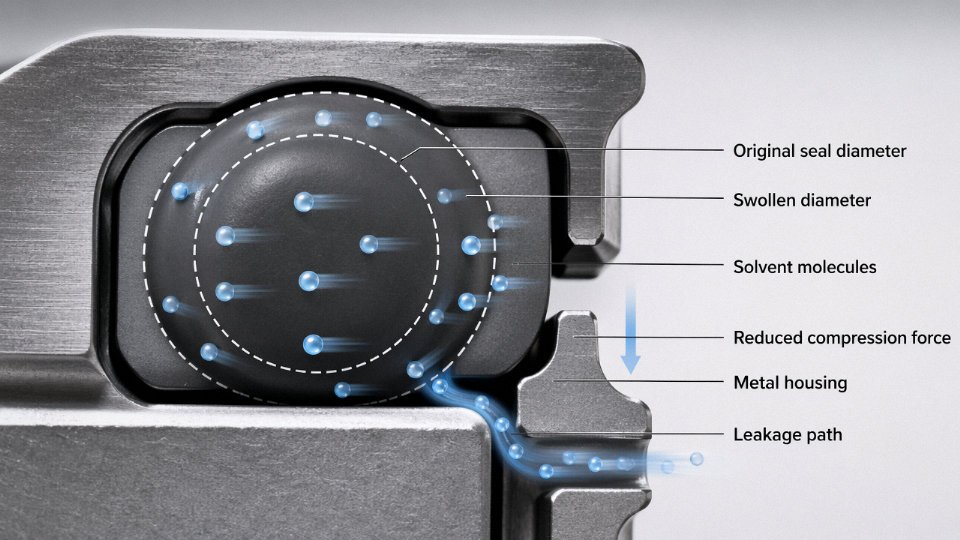
That is the practical science behind the maintenance advice. Silicone is not fragile, but it is selective. Water, weather, heat, and ozone are usually its friends. Petroleum distillates and hydrocarbon oils are where the judgment call starts.
Classify exposure severity: overspray, wipe contact, repeated lubrication, and immersion are not equal risks
A useful compatibility answer starts with exposure severity, not just the material name. I’ve seen silicone grommets survive years in wet washdown areas, then get ruined in a few months because someone started using the wrong spray as a “general lubricant” on the same cabinet doors every Friday. Same rubber. Different exposure.
For plant maintenance, I’d rank WD-40 contact with silicone roughly like this:
| Exposure case | Typical plant-floor example | Relative risk to silicone | Usual action |
|---|---|---|---|
| Incidental mist, under about 5 minutes | Overspray lands on a nearby silicone gasket while freeing a stuck hinge | Low | Wipe off with a clean rag; clean if the part is critical |
| Brief hand contact | Mechanic touches a silicone boot or seal after using the spray | Low | Wipe the surface; avoid making it a habit |
| Wipe-down residue, under about 30 minutes | A rag with WD-40 residue is used near silicone door seals or cable entries | Low to moderate | Clean with approved mild detergent or compatible cleaner |
| Repeated spraying | Weekly lubrication around a silicone grommet, boot, gasket, or valve seat | Moderate to high | Stop routine exposure; inspect for swelling and softness |
| Trapped liquid under a seal lip | Spray creeps under an O-ring groove, wire seal, gasket fold, or boot edge | High | Disassemble and clean if possible; monitor fit and leakage |
| Full immersion or pooled contact | Silicone part sits in WD-40, or liquid pools in a housing | Very high | Treat as non-approved unless supplier data says otherwise |
Brief WD-40 overspray on silicone is usually less risky than repeated or trapped contact.True
Silicone rubber may tolerate short incidental exposure, but repeated wetting and limited evaporation can allow petroleum distillate residues to diffuse into the rubber over time, increasing swelling, softening, odor retention, and seal-fit problems.
The low-risk cases are genuinely low risk in most non-critical settings. A little mist on a silicone cable grommet, wiped off the same shift, is not usually a reason to shut down a line or scrap an assembly. The part may smell like solvent for a while. That is different from mechanical degradation.
Repeated wetting is where the story changes. Silicone can slowly load with oil-like material, especially if the surface stays wet long enough for diffusion to matter. Once the rubber swells, the problem is not always obvious at first glance. A seal may look fine on the bench, then fail because its squeeze changed in the groove. A boot may feel slightly gummy and still pass a casual inspection, then tear during the next maintenance cycle because it lost some elastic recovery.
Trapped contact deserves special caution. Sprays run downhill, wick through seams, and sit where no one looks. Silicone boots over toggle switches, cable-entry grommets, door gaskets on electrical panels, wire seals in connectors, valve seats, and O-rings in shallow grooves can all hold residue in little pockets. Evaporation slows down there. The volatile fraction may leave, but heavier residue can remain against the rubber.
That is the ugly plant-floor version of “compatibility.”
Temperature pushes the risk upward. At room temperature, a brief contact event might be uneventful. Near a warm motor frame, heated enclosure, curing oven door, compressor discharge area, or summer rooftop unit, diffusion rates tend to climb. Depending on the silicone grade, compound fillers, contact time, and actual surface temperature, you may see faster swelling, more odor retention, residue migration onto nearby parts, or extraction of low-molecular-weight ingredients from the rubber. I would treat anything consistently above roughly 40 to 60 °C as a higher-risk exposure condition, with the exact threshold depending on the part formulation and how much liquid remains present.
A practical rule I use is simple: if the silicone part is only a non-critical bumper or dust flap, one accidental exposure is usually a clean-and-observe event. If the part is performing sealing, food contact, medical contact, electrical insulation, or precision motion control, do not make original WD-40 part of the routine unless the silicone part supplier approves it in writing.
That threshold saves arguments. It also saves downtime.
For sealing service, small dimensional changes matter. A swollen O-ring can bind, roll, or extrude. A softened valve seat can leak under pressure. A door gasket may take a compression set and stop sealing after a few heat cycles. In electrical assemblies, residue migration can attract dust or change surface cleanliness around terminals and sensor leads. On motion equipment, softened silicone pads or rollers can create drag, positional error, or contamination on the product path.
A typical maintenance call looks like this: a technician sprays a sticking stainless hinge on a washdown enclosure. The silicone gasket catches some overspray. If the gasket is wiped within a few minutes and the hinge is lubricated properly next time, risk stays low. If the same hinge is sprayed twice a week and liquid keeps collecting at the gasket corner, expect swelling, dirt pickup, and eventually a door that no longer seals evenly. The wrong habit turns a five-second shortcut into a nuisance leak.
For any questionable exposure, inspect the silicone after cleaning and again after it has had time to relax, usually the next shift or next day. Look for swelling, tackiness, softening, surface cracking, loss of snap-back, compression set, and leakage at the actual operating pressure or closure force. Bench feel helps, but the real test is whether the part still performs in its installed condition.
Recognize real degradation signs on silicone seals, tubing, keypads, and molded parts
Silicone rarely fails in a dramatic “melted part on the bench” way after WD-40 contact. The usual failure is quieter: the part grows a little, gets slick or gummy, stops returning to shape, then leaks or slips in service. That is the kind of degradation maintenance crews actually need to catch.
Start with a clean rag and a known-good reference part if you have one. A spare O-ring from stores, an unused keypad boot, or a short length of the same silicone tubing tells you more than guessing from memory. Silicone varies by compound, filler, cure system, and age. A platinum-cured medical-grade tube and a cheap molded gasket can behave differently after the same exposure.
What to look and feel for first
Check the part before cleaning it aggressively. WD-40 residue can mask the real condition.
Common signs worth logging:
- Swelling or dimensional growth: O-rings look fatter, tubing feels looser on a barb, molded lips no longer sit flat in a groove.
- Distortion: corners curl, thin flanges wave, flat gaskets develop a potato-chip shape.
- Surface gloss change: the part may look wetter, shinier, or patchy compared with an unexposed area.
- Oily feel after repeated wiping: if it still feels greasy after two or three clean wipes, the material may have absorbed hydrocarbons and is slowly bleeding them back out.
- Tackiness: keypads, dust boots, and soft seals may grab the glove instead of feeling dry and rubbery.
- Color change: slight darkening or yellowing can happen, especially on translucent or pale silicone.
- Chalking or powdery surface: this points more toward aging, cleaning chemical attack, heat, or UV, but WD-40 exposure can make an already tired part look worse.
- Fine cracks: bend the part gently and inspect the stretched surface with a light. Cracks at corners and molded parting lines matter.
- Softening: the part can feel “buttery” or weak at the edges.
- Loss of snap-back: stretch or compress it gently. If it returns slowly, or not fully, treat it as suspect.
Do not rely on smell. WD-40 odor can remain on the surface long after the mechanical risk has passed, and a part can smell fine while already swollen.
Translate the symptom into the machine failure
This is where the inspection becomes useful to production, not just a materials debate.
A swollen O-ring may still look serviceable on the bench, but in a dynamic groove it can pinch, extrude, or roll. In pneumatic service, that becomes leakage and cylinder drift. In a pump or dispenser, it can show up as inconsistent dosing or air ingress.
Flat silicone gaskets are a different problem. If WD-40 has softened the gasket or reduced its compression recovery, the joint may seal during assembly and leak after a few heat cycles. I have seen crews chase flange torque for half a shift when the real issue was a gasket that had gone spongy and stopped pushing back.
Keypads and molded switch covers usually fail as a human-interface problem first. Buttons stick, operators press harder, then the switch membrane or PCB dome underneath gets abused. Cable boots and strain-relief sleeves can lose grip, which lets vibration work on the conductors instead of the boot. Silicone tubing can swell enough to loosen on nylon, polypropylene, or stainless barbed fittings, especially where there is heat or a pump pulse. A tiny seep at the barb becomes a housekeeping issue, then a contamination issue.
Simple measurements that separate “wipe and watch” from “replace”
For O-rings and tubing, measure outside diameter and cross-section with calipers. Compare to an unexposed part from the same batch if possible. A change of roughly 1–3% may be manageable in noncritical static service, depending on groove fill and pressure. Above that, I get cautious. For small O-rings, even a few tenths of a millimeter can matter.
If you have a Shore A durometer, take a hardness reading on a flat section or a molded pad. Do not over-trust one reading on a round seal; take several and look for direction. A drop of about 5–10 Shore A points is enough to investigate, depending on original hardness and application.
Mass change is useful for lab-style checks. Wipe the part, weigh it, let it dry at room temperature, then weigh it again after 24–72 hours, depending on thickness. Thin tubing stabilizes faster than chunky molded boots. A persistent gain suggests absorbed oil, not just surface residue.
Compression recovery is the plant-floor test I like for gaskets and boots. Compress the part gently to a known gap for a short period, release it, then compare height recovery against an unexposed piece. If it stays flattened, it will probably behave the same way in the machine.
Some silicone swelling after WD-40 exposure can partially reverse after cleaning and drying.True
Light hydrocarbon absorption may diffuse back out over time, especially after brief exposure. Repeated wetting, heat, mechanical compression, or long dwell time can leave permanent dimensional change, softening, or compression set.
Troubleshooting table for exposed silicone parts
| Observed symptom | Likely cause | Severity | Immediate action | Replacement recommendation |
|---|---|---|---|---|
| Slight surface oil, no swelling, normal snap-back | Residual WD-40 film on surface | Low | Wipe with a compatible mild cleaner, dry, reinspect | Usually not needed for noncritical parts |
| Oily feel returns after repeated wiping | Absorbed hydrocarbon bleeding back out | Medium | Clean, isolate from further WD-40, measure dimensions after 24–72 hours | Replace in food, medical, vacuum, oxygen-adjacent, or critical sealing service |
| Swollen O-ring or tubing, roughly 1–3% dimensional change | Solvent/oil uptake into silicone | Medium to high | Remove from service if pressure, motion, or tight groove fill is involved | Replace if leakage risk, extrusion risk, or tubing retention matters |
| Soft, gummy, or tacky surface | Plasticization or compound breakdown, often from repeated exposure | High | Stop using petroleum-based spray in that area; clean surrounding hardware | Replace. Monitoring usually wastes time |
| Gasket stays flattened after compression | Compression set, loss of elastic recovery | High | Check flange load and mating surfaces; do not just add torque | Replace before restart if the joint contains liquid, air, or product |
| Keypad buttons stick or return slowly | Surface tackiness or swelling around molded button webs | Medium | Clean lightly; avoid soaking the keypad | Replace if operator force increases or switches misfire |
| Tubing loose on barb or weeping | Swelling plus reduced grip on fitting | High | Depressurize, trim back if allowed, refit with correct clamp or new tubing | Replace tubing section; inspect nearby lengths |
| Cracks, chalking, or edge splitting | Aging, heat, UV, wrong cleaner, or combined chemical stress | High | Remove and inspect mating parts for sharp edges or heat exposure | Replace and review environment, not just WD-40 use |
Clean silicone safely after WD-40 contact without making the damage worse
The first job is not to “neutralize” WD-40. There is no magic neutralizer for a petroleum distillate film on silicone. The practical move is to remove the liquid before it wicks into a joint, sits in a seal groove, or gets rubbed into a porous molded surface.
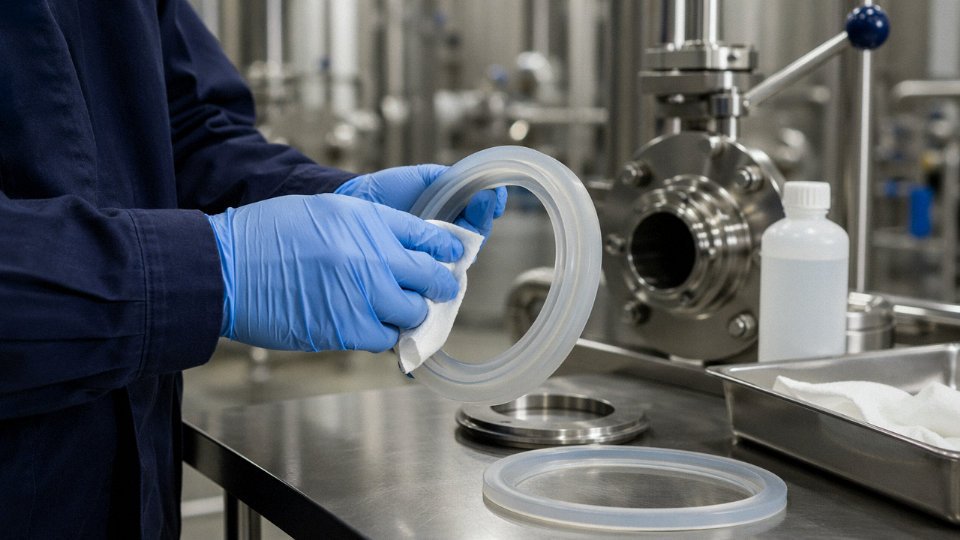
Use a clean lint-free cloth and blot first, then wipe. Do not scrub hard enough to abrade the surface. On soft silicone keypads, vacuum cups, gaskets, and translucent tubing, aggressive rubbing can create a false failure signal: the part looks cloudy or scuffed, then someone blames the chemical exposure. I have seen that happen during line-side cleanup more than once.
If the exposure was light overspray, quick wiping may be enough before washing. If the part was wet for several minutes or the spray pooled around a gland, assume some migration has started.
Use mild washing before reaching for stronger solvents
For most non-critical silicone parts, wash with warm water and a mild detergent. Warm means roughly 30 to 45°C, depending on the part size, wall thickness, and whether adhesive, paint, ink, or labels are nearby. Hotter water is not automatically better. Thin silicone tubing and molded boots can soften temporarily with heat, and bonded assemblies may not like it.
A reasonable cleaning method looks like this:
- Mix warm water with a mild detergent or neutral industrial cleaner.
- Wipe or gently agitate the silicone surface.
- Pay attention to corners, ribs, gland edges, and molded lettering where oil film hides.
- Rinse thoroughly with clean water.
- Let the part air dry completely before judging its condition.
Do not leave detergent residue behind. Residue can make a seal feel slick, attract dust, or create leakage during a low-pressure test. In pneumatic and vacuum service, even a thin film can be enough to cause nuisance faults.
Compressed air is acceptable if it is clean, dry, and oil-free. That last part matters. Many plants have “dry air” that still carries compressor oil because the filter bowl has not been drained since the last shutdown. If in doubt, air dry on a clean rack.
Avoid solvent escalation unless the material supplier approves it
Do not clean silicone after WD-40 exposure with gasoline, paint thinner, brake cleaner, acetone, toluene, xylene, or strong citrus degreasers unless the silicone supplier has approved that exact solvent for that exact compound and service condition.
That sounds conservative. It is also how you avoid turning a small maintenance mistake into a seal replacement job.
Silicone can absorb certain hydrocarbons and solvents. Some cleaners flash off fast, which gives a false sense of safety, but the short contact can still swell the surface or extract low-molecular-weight components. Brake cleaner is a common offender in maintenance shops because it is sitting right there on the bench. The wrong version can attack nearby plastics, remove markings, carry solvent into crevices, and leave the technician with a part that passes a quick look but fails after compression.
Strong citrus degreasers deserve special mention. They smell less harsh than petroleum solvents, so people treat them as gentle. Some are not. Limonene-rich cleaners can be quite aggressive on elastomers, especially with long dwell time.
A stronger solvent is not automatically a safer cleanup method for silicone after WD-40 exposure.True
Many aggressive solvents can increase swelling, soften the surface, or extract compounds from silicone faster than the original brief WD-40 contact. Mild detergent washing is usually the lower-risk first response.
Disassemble industrial assemblies when practical
If the silicone is part of an assembly, clean what you cannot see. That is where failures usually start.
A face gasket may look clean on the exposed lip while WD-40 sits behind it in the gland. A silicone O-ring may have a shiny wet line on the low-pressure side. A molded cable boot may hold residue between the boot and connector shell. If the assembly can be opened without creating a bigger reliability problem, disassemble it and clean the groove, gland face, mating metal, fastener pockets, and hidden back side of the silicone.
Use plastic picks or rounded tools, not a screwdriver blade. Nicking a silicone seal during “cleanup” is an embarrassing way to create a leak.
For critical equipment, treat cleanup as maintenance work, not housekeeping. Lock out the machine if needed. Bag the part if it may need engineering review. Keep the exposed component separate from clean spares; WD-40 film transfers easily from gloves and benches.
Step-by-step recovery workflow
Use this sequence when WD-40 has contacted silicone and the part may still be needed in service:
- Isolate the component. Stop further exposure. Remove it from the oily bench, drip path, spray area, or open gearbox cover.
- Wipe liquid residue. Blot with a clean lint-free cloth. Replace the cloth as soon as it starts smearing oil instead of lifting it.
- Wash with mild detergent. Use warm water and gentle agitation. For grooves and ribs, use a soft nylon brush if the surface can tolerate it.
- Rinse thoroughly. Detergent left in a sealing interface can cause its own leakage or slip problem.
- Dry completely. Air dry at room temperature, or use clean oil-free air. Avoid heat guns unless the part specification allows it.
- Inspect. Look for swelling, tackiness, softening, surface cracking, loss of snap-back, distortion, or a glossy wet line returning from a seam.
- Measure if the part matters. Check O-ring cross-section, gasket thickness, tubing outside diameter, or molded feature width against a known good part or drawing. A few percent swelling can be enough to pinch in a gland or change compression.
- Function-test. Pressure test, vacuum test, fit check, keypad actuation test, or cycle the assembly at low risk before returning it to production.
- Document the exposure. Record product used, estimated contact time, cleaning method, and whether the part was reused or replaced.
- Replace if uncertain. If the silicone provides sealing, electrical isolation, operator safety, food contact separation, or contamination control, do not gamble on a questionable part.
The cheap decision is not always reuse. A silicone gasket may cost little, but the wrong call can mean a leak during startup, a batch hold, wet electrical connectors, or two hours of troubleshooting on night shift. Clean it gently, verify it honestly, and replace it when the service consequence is higher than the part cost.
Choose silicone-compatible lubricants and cleaners by function, not by habit
The bad habit I still see on plant floors is using one aerosol can for every noise, stuck bolt, wet connector, and rubber seal. It feels efficient until a gasket grows 8% in volume, a connector will not seat, or a sliding guide starts collecting abrasive dust. Pick the product for the job, not for the shelf location.
For silicone O-rings and gaskets, start with the seal supplier’s recommendation. In many cases that means a silicone grease, a high-purity valve grease, or a specialty elastomer assembly lubricant rated for the exact service. “Silicone grease on silicone rubber” is common, but it is not a free pass. Silicone rubber can absorb silicone oils too, especially at elevated temperature or under compression. The amount depends on rubber grade, durometer, filler system, oil viscosity, temperature, and exposure time.
A silicone lubricant is automatically safe for every silicone rubber seal.False
Silicone grease is often compatible, but silicone rubber can absorb silicone oils; grade, hardness, filler package, temperature, compression, and exposure time still need validation for critical seals.
For a static gasket on a cover plate, a thin film may only help installation. For a dynamic O-ring in a pneumatic cylinder or sanitary valve, too much grease can change breakaway friction, attract debris, or migrate into the process. In practice, I want a light, even film. If the part looks frosted with grease, someone probably overdid it.
Match the lubricant to the motion, load, and dirt level
Sliding plastic or rubber interfaces are where “just spray it” causes trouble. Silicone spray is easy and clean-looking at first, but it is thin. It flashes off unevenly, migrates, and may need reapplication after a few shifts or weeks depending on washdown, temperature, and stroke frequency. Silicone grease stays longer, but it catches dust. On a packaging line with paper dust or starch in the air, that grease can turn into grinding paste.
PTFE dry film can be better where dust pickup matters. It leaves a low-friction film without much wet residue, though it does not cushion load well and surface preparation matters. Specialty elastomer-compatible greases are worth the money where you have load, temperature, and repeat motion: door seals on ovens, rubber bump stops, indexing mechanisms with polymer slides, or actuators that cycle all day. Check the temperature band. A grease that behaves nicely at 20 °C may stiffen in a cold dock or thin out near a heater bank.
A typical shop-floor example: a rubber squeak on a machine guard gets hit with general-purpose oil every Friday. The squeak stops for a day, then returns with black dirt stuck to the contact line. A dry PTFE film or a tiny amount of approved silicone grease on the actual rub point usually lasts longer and leaves less mess. Better yet, correct the misalignment if the guard is dragging.
Use water-displacing sprays only on the metal you mean to treat
If the task is water displacement on metal near silicone parts, treat it like a controlled application, not a fogging operation. Mask the silicone seal if practical. Use a straw applicator, needle oiler, swab, or small brush. Apply to the fastener, hinge pin, shaft end, or exposed steel only, then wipe off excess before it creeps into nearby rubber.
Broad aerosol spray is the enemy here. Overspray lands on seals, keypads, cable boots, belts, labels, and painted surfaces. Then maintenance finds the failure weeks later and nobody remembers the can. For stuck metal fasteners close to silicone gaskets, I prefer removing the gasket if access allows, or shielding it with foil or a rag while the penetrant works. Give the penetrant time. Drowning the area rarely makes it work faster.
Be careful with electrical connectors and silicone seals
Electrical boots and sealed connectors need a different mindset. Use connector-specific dielectric grease only where the connector or equipment maker allows it. The usual target is a light film on the seal or boot, not a packed cavity.
Overfilling connectors can cause hydraulic locking. The plug feels like it seated, but the terminals may not be fully engaged. I have seen technicians chase intermittent sensor faults that were really grease volume and poor seating. Too much grease can also push onto contacts, trap grit, or interfere with low-force terminals. If the connector uses a silicone perimeter seal, the approved grease should be compatible with that seal material and the connector plastic, not just “good for rubber” on a label.
Practical selection table
| Use case | Better first choice | Watch-outs from the floor |
|---|---|---|
| Freeing metal fasteners near silicone | Penetrating oil applied only to the metal, with silicone masked or removed if practical | Do not soak the gasket area. Let dwell time do the work, then wipe residue before reassembly. |
| Lubricating rubber seals | Seal-maker-approved assembly lubricant, often silicone grease or a specialty elastomer grease | Validate silicone-on-silicone for critical seals. Use a thin film; excess grease can increase dirt pickup and compression-set risk. |
| Cleaning silicone residue | Mild detergent and water for oily dirt; approved plastic-safe cleaner or mechanical removal for cured silicone residue | Strong solvents can swell elastomers or haze plastics. Test a small area, especially on keypads and molded boots. |
| Protecting electrical boots | Approved dielectric grease for that connector family | Do not pack connector cavities. Overfill can cause hydraulic locking, poor terminal seating, and nuisance faults. |
| Reducing squeaks | PTFE dry film for dusty areas; silicone grease for protected low-load rubber contact; specialty grease for repeated sliding | Aerosol silicone spray is quick but often short-lived. Grease attracts dust if the area is dirty. Fix misalignment if parts are rubbing hard. |
| Maintaining food-contact equipment | Food-grade, equipment-approved lubricant such as NSF H1 where incidental contact is possible | Food grade does not mean compatible with every gasket. Check both the lubricant approval and the seal material, then keep application records for audits. |
The rule I use is simple: if the lubricant is solving an installation or friction problem, choose by elastomer compatibility and duty cycle. If it is solving rust or moisture on metal, keep it off the silicone as much as you reasonably can. That small bit of discipline saves seals, avoids mystery leaks, and keeps procurement from stocking five “almost right” cans that maintenance uses interchangeably.
Apply a plant-level compatibility test before approving WD-40 near silicone parts
A forum answer is not a qualification plan. If WD-40 might touch a silicone gasket, keypad, tubing run, molded boot, vacuum cup, or sensor seal in production, test the actual part before you let it into the work instruction.
Generic silicone coupons are useful for early screening, but they can lie. Production silicone may be peroxide-cured or platinum-cured, filled with silica, colored with pigments, post-cured differently, or molded at a hardness that changes how fast it absorbs oils. A 30 Shore A translucent tube does not behave like a 70 Shore A black molded door seal. Even parts sold as “silicone rubber” can have different compression set behavior after oil exposure.
Use actual production parts where possible. If the part is expensive or geometry makes measurement difficult, ask the supplier for certified material coupons from the same compound, cure system, hardness, and post-cure as the production batch. Get that in writing. Procurement people should care about this; “silicone” on a drawing is not enough detail for compatibility approval.
Build the test around the real maintenance habit
Do not run a tidy laboratory soak if the real problem is a mechanic spraying a hinge and wiping it with a rag ten minutes later. Match the plant condition.
Set the test conditions before anyone starts spraying:
| Test variable | What to define | Why it matters |
|---|---|---|
| Contact time | Under 5 minutes, 30 minutes, one shift, repeated daily wetting, or soak | Silicone may tolerate brief contact but drift after repeated exposure |
| Temperature | Ambient, hot washdown area, oven-adjacent, outdoor summer conditions | Absorption and swelling usually increase with temperature |
| Compression | Free-state part, installed squeeze, clamped gasket, pressed keypad | Swelling under compression can create leakage or compression set |
| WD-40 quantity | Mist, rag-applied film, visible wetting, pooled liquid | Dose changes the result; a soaked seal is not overspray |
| Cleaning method | Dry wipe, mild detergent wash, water rinse, no cleaning | Residue left behind may keep interacting with the rubber |
| Drying time before inspection | Immediate, 24 hours, 72 hours, one week | Some swelling relaxes; some damage shows late |
| Pass-fail criteria | Written limits before the test | Prevents “looks okay to me” approvals |
In practice, I like one “normal abuse” condition and one “credible worst case” condition. For example: rag wipe with visible WD-40 for 30 minutes, then detergent clean and dry for 24 hours; and repeated wetting once per shift for five shifts, inspected after a 72-hour recovery. Change that if your plant has high heat, caustic washdown, or weekend shutdowns where parts sit wet.

Use simple measurements, not just opinions
You do not need a full polymer lab for a first screen, but you do need measurements. Record the part before exposure, after exposure, and after recovery.
Useful screening metrics include:
- Mass change: weigh the part or coupon on a scale with suitable resolution. Small seals may need a 0.01 g scale; larger pads can tolerate a less sensitive bench scale. A few percent change can matter, depending on seal geometry.
- Volume or dimension change: measure outside diameter, thickness, groove fit, or tubing ID/OD. For tight glands, even roughly 2–5% swelling can turn into assembly trouble or drag.
- Shore A hardness: compare pre-test and post-test readings on a flat section or coupon. A drop of about 5–10 points is often a warning sign, but the limit depends on function.
- Tensile feel: not elegant, but useful. Stretch a retained sample and exposed sample side by side. If the exposed one feels gummy, weak, or slow to recover, stop pretending the result is fine.
- Compression set: compress a gasket or coupon to the installed squeeze, expose it, then allow recovery. Permanent flattening is often what causes Monday morning leaks.
- Leakage test: for real seals, this beats every coupon number. Run air decay, vacuum hold, water leak, or process-fluid pressure testing at the normal acceptance level.
- Visual rating: note swelling, tackiness, cracking, edge curling, color transfer, gloss change, and surface residue.
- Odor or residue transfer: if a keypad, medical-adjacent handle, food-area guard, or packaged product contact surface smells oily or transfers residue to gloves or packaging, that may fail quality even if dimensions pass.
A short shop test can screen WD-40 and silicone compatibility, but it should not be treated as approval for critical safety, sanitary, pressure, or electrical sealing applications by itself.True
Plant screening can catch obvious swelling, softening, leakage, and residue problems, but critical applications need controlled methods, traceable materials, and supplier or standards-based review.
Escalate critical parts to standards and suppliers
For low-risk overspray near a noncritical bumper, a documented plant screen may be enough. For a pressure seal, electrical enclosure gasket, food-zone component, warranty-sensitive assembly, or anything tied to safety or regulatory compliance, reference recognized elastomer liquid-compatibility practices such as ASTM D471 or ISO 1817, then involve the component manufacturer’s technical support.
Ask specific questions. “Is this compatible with WD-40?” usually gets a cautious answer. Better: “This 60 Shore A molded silicone gasket, part number X, may see rag-applied WD-40 Multi-Use Product for up to 30 minutes at 35–45 °C, then detergent wipe and 24-hour dry. Is swelling, softening, or compression set expected?” That gives the supplier something they can actually evaluate.
Keep an approval record procurement can enforce
A simple form prevents tribal knowledge from becoming a purchasing mistake six months later.
| Field | Entry |
|---|---|
| Part number and revision | Include drawing revision and supplier |
| Material grade | Silicone type, hardness, color, cure system if known |
| Sample source | Production part, retained lot sample, or certified coupon |
| Exposure condition | Contact time, temperature, compression, WD-40 amount |
| Cleaning and drying | Wipe method, detergent if used, recovery time |
| Measurements before/after | Mass, dimensions, hardness, compression set, leak result |
| Visual and odor rating | Pass, monitor, or fail with notes |
| Acceptance criteria | Written limits tied to function |
| Decision | Approved, restricted use, or prohibited |
| Approver | Engineering, quality, maintenance, or supplier contact |
| Review date | Triggered by material change, supplier change, or process change |
One warning from the floor: if the approval says “rag-applied only,” do not store aerosol cans at the machine and hope behavior follows the document. Put the approved method into the PM, label the lubricant point, and remove the wrong cans from the area. That is usually cheaper than sorting swollen seals during a breakdown.
Frequently asked questions about WD-40 and silicone
Does WD-40 dissolve silicone?
Normally, no. WD-40 Multi-Use Product does not usually dissolve cured silicone rubber the way a strong solvent might attack a coating or adhesive. If a mechanic gets a little overspray on a silicone boot, wipes it off, and the part goes back into service, you usually will not see the rubber vanish, crack open, or turn into gel.
The real issue is quieter than that. Silicone can absorb oils and hydrocarbon solvents to varying degrees, depending on the exact compound, filler package, cure system, hardness, temperature, and how long it stays wet. That can show up as swelling, softening, a greasy surface, reduced snap-back, or poor compression recovery. On a static cover gasket, maybe that only creates housekeeping work. On a vacuum seal, dosing valve, sensor diaphragm, or sanitary gasket, it can become a leak path.
WD-40 dissolves silicone rubber on contact.False
Cured silicone rubber normally does not melt or dissolve from brief contact with WD-40 Multi-Use Product, but petroleum distillates can be absorbed by some silicone compounds, causing swelling, softening, tackiness, or loss of sealing force after longer or repeated exposure.
Is WD-40 safe for silicone O-rings?
I would not approve original WD-40 as a routine lubricant for silicone O-rings unless the O-ring manufacturer, equipment builder, or a controlled plant test says it is acceptable. That sounds conservative, but O-rings fail by small margins. A few percent swell can be harmless in a loose groove and a headache in a tight dynamic gland.
For silicone O-rings, use a seal-compatible grease chosen for the service: silicone grease for many general rubber applications, fluorinated grease for some aggressive chemical or oxygen-sensitive environments, or a food-grade approved lubricant where the line requires it. The right product depends on temperature, media, sliding speed, pressure, cleaning chemistry, and whether the seal is static or dynamic.
A typical bad pattern is easy to recognize: a pneumatic door seal squeaks, maintenance sprays WD-40 because it is on the cart, the squeak stops for a shift, then the seal starts collecting dust and takes a set. Two weeks later the door needs more clamp force. Nobody calls that a lubricant selection problem at first. They call it “that old door acting up again.”
Can WD-40 remove silicone sealant?
It may help loosen some residue, especially if the silicone is uncured, poorly bonded, thin, or already peeling. It can also make scraping feel easier because it wets the surface and reduces drag under the blade.
But WD-40 is not a dependable remover for fully cured silicone sealant. Cured silicone is crosslinked; it is not just dried caulk waiting to be re-dissolved. In practice, removal is usually mechanical first: plastic scraper, nylon pad, careful razor work where the substrate allows it, then a cleaner approved for the base material. On stainless panels, glass, or painted machine guards, the safe method changes. A solvent that is fine on bare stainless may stain plastic or lift paint around a control enclosure.
Operational warning: do not flood a joint with WD-40 before resealing unless you have a cleaning step that actually removes oily residue. New silicone sealant does not bond well to an oily surface. That shortcut can turn a one-hour gasket job into a repeat leak after the next washdown.
Is WD-40 Specialist Silicone Lubricant safe on silicone?
WD-40 Specialist Silicone Lubricant is a different product from the original WD-40 Multi-Use Product. It is often more suitable for many rubber, plastic, and weatherstrip-type jobs than the classic water-displacing spray. The name matters here; I have seen purchasing systems list “WD-40” as one item and maintenance techs receive the wrong can.
Still, “silicone lubricant” does not automatically mean “approved for every silicone part.” Some sprays use carriers or propellants that flash off, and compatibility can depend on exposure time, temperature, seal stress, and whether the part touches product, compressed air, potable water, food contact surfaces, or electronics. For a noncritical silicone grommet on a dry panel, the risk is usually low. For a metering pump seal, medical assembly, cleanroom gasket, or high-temperature oven door profile, verify it.
A quick shop-floor screen is better than guessing: treat a spare part, let it sit under realistic conditions for a day or two, compare hardness feel, diameter, weight, tackiness, and fit against an untreated part. For formal approval, stretch that into a documented compatibility test with the same cleaner, heat, and compression the part sees in service.
What should I do if WD-40 accidentally gets on silicone?
Act early. Wipe off visible liquid with a clean lint-free rag or disposable shop towel. Do not grind it in. Then wash the part with mild detergent and warm water, rinse, and dry it fully. If the part can be removed, clean it off the machine so residue does not run into grooves, bearings, belts, sensors, or electrical connectors.
After cleaning, inspect the silicone, not just the surrounding metal. Look for swelling, tacky feel, soft spots, surface haze, cracking, loss of elasticity, compression set, or leakage after restart. Compare it with a known good spare if you have one in the crib. That side-by-side check catches changes your fingers may miss.
For noncritical covers, bumpers, cable boots, and pads, monitoring may be enough after a brief exposure. For critical sealing parts, replace the O-ring, gasket, diaphragm, or tube if performance is uncertain. The cost of a silicone seal is usually small compared with a failed batch, a vacuum fault at 2 a.m., or a cleanup after product gets past a compromised gasket.
Use the final rule of thumb: protect silicone from petroleum residue when sealing performance matters
The practical rule is simple enough for a maintenance board: a brief mistake is usually recoverable; a maintenance habit is not. If original WD-40 Multi-Use Product gets misted onto a silicone gasket during a nearby job and someone wipes it off within a few minutes, I would normally clean it, inspect it, and keep an eye on it. If that same product is being sprayed every week onto a silicone door seal, cable boot, keypad, sanitary gasket, or molded diaphragm, I would stop the practice and change the lubricant.
Silicone is forgiving in some ways. It handles heat, ozone, weather, and water better than many commodity rubbers. Petroleum distillate residue is a different problem. The risk is not always dramatic cracking on day one. More often it is swelling, softening, a greasy feel, loss of rebound, or compression set that shows up after the part has been clamped, cycled, warmed, or cleaned a few times.
Original WD-40 Multi-Use Product should not be approved as a repeated or long-term lubricant for silicone sealing parts without compatibility testing.True
Brief incidental contact can often be cleaned and monitored, but repeated wetting or trapped petroleum residue can soften or swell silicone rubber, which can reduce sealing force, dimensional control, and compliance confidence.
A field go/no-go checklist that actually works
Before allowing WD-40 near silicone parts, run through this in order. Do not start with “we have always used it.” That phrase has bought a lot of unplanned downtime.
| Check | Go | No-go or hold |
|---|---|---|
| Identify the exact product | Label confirms a silicone-safe or approved specialty product | Can only say “WD-40” with no product type, SDS, or label |
| Identify the silicone part function | Cosmetic bumper, non-critical dust cover, temporary handling aid | Seal, insulator, membrane, medical or food-contact part, pressure boundary |
| Estimate exposure | Incidental overspray, cleaned within minutes | Repeated spraying, wet film left behind, oil trapped in a groove |
| Check supplier data | Rubber supplier, lubricant maker, or internal test approves it | No compatibility data, or only a generic internet answer |
| Choose the alternative | Approved silicone grease, compatible assembly lube, water-based cleaner, or dry film where suitable | Original WD-40 used because it is already on the cart |
| Document deviation | Temporary use logged, part inspected, owner assigned | Nobody knows what was sprayed, when, or how often |
The checklist is not paperwork for the sake of paperwork. It gives production, maintenance, purchasing, and quality the same language. A mechanic sees a squeaky guard seal. Purchasing sees one aerosol SKU on a blanket order. Quality sees a recurring leak test failure two weeks later. Without a compatibility rule, everyone is technically doing their job and the plant still loses.
Replace the part when the duty is critical
If a silicone component has been exposed to original WD-40 and shows swelling, softness, tackiness, or poor rebound, replace it in any application where failure has a real consequence. That includes safety-critical equipment, regulated products, food-contact areas, medical devices, pressure-retaining joints, electrical enclosures, sensor seals, and anything tied to validation records.
This is where I get conservative. A ten-dollar silicone gasket can hold up a batch release, contaminate a product-contact surface, or let washdown water into a junction box. If the seal feels softer than a known-good spare, or it has taken a set after being clamped, arguing over whether it is “still probably fine” is false economy. Replace it, record the exposure, and fix the maintenance instruction that allowed it.
For non-critical parts, the decision can be less severe. A silicone foot pad on a bench fixture may only need cleaning and monitoring. A molded silicone vacuum cup used for pick-and-place may be somewhere in the middle; slight swelling can change grip, release timing, or part marking. The cost of scrap and nuisance faults decides the answer, not just the price of the cup.
Standardize the shop practice, not just the opinion
The best plants do not rely on memory. They make the right product easy to grab and the wrong one slightly inconvenient.
Use labeled lubricants at point of use. Separate petroleum-based aerosols from silicone-safe greases and cleaners. Put “not for silicone seals” on shadow boards or cabinet labels if that is what your compatibility chart says. Control aerosol spraying near open assemblies; a fine mist travels farther than people think, especially around fans, compressed-air blowoffs, and warm equipment.
Maintenance work instructions should name the product, not just say “lubricate seal.” That wording invites substitution. Write “apply approved silicone grease, thin film only” or “clean with approved water-based cleaner and lint-free wipe.” Procurement should lock approved alternates as well, because substitutions happen during shortages. A tube of grease from Dow, Shin-Etsu, Molykote, Parker, or another qualified supplier is not automatically interchangeable just because the label says silicone. Grade, thickener, additives, food-contact status, and electrical properties can all matter.
Keep a compact material compatibility chart in the CMMS, spare-parts crib, or quality file. It does not need to be pretty. It needs to be used.

The bottom line: if the silicone part only saw a quick accidental mist, clean it and inspect it. If the silicone part must seal, insulate, flex precisely, hold pressure, survive washdown, or meet compliance requirements, keep original WD-40 off it. Use a validated silicone-compatible lubricant or cleaner, write that choice into the work instruction, and make it easy for the next person on night shift to do the same thing.