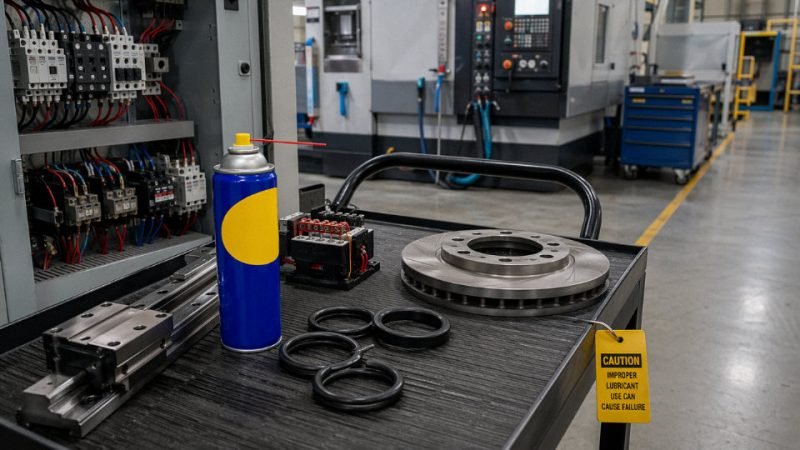
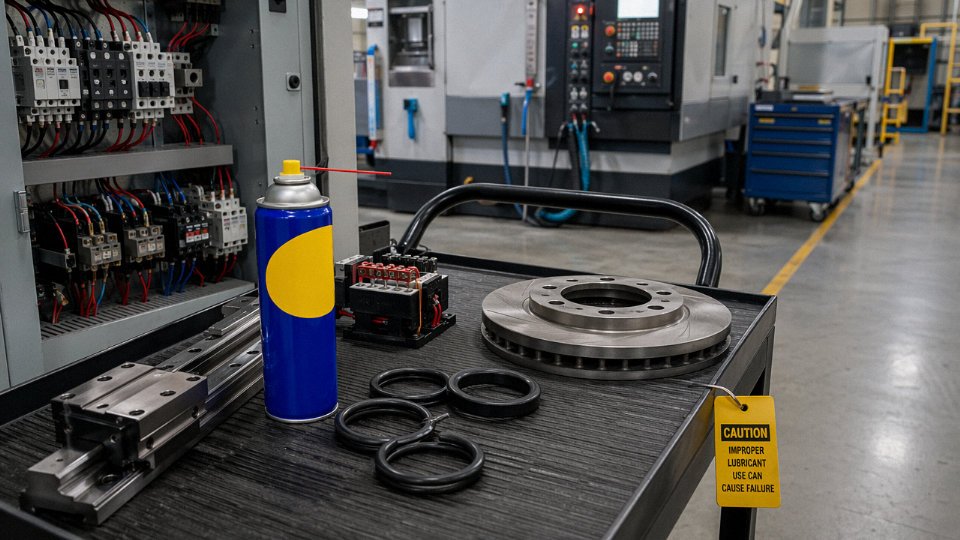
A maintenance cart with one familiar blue-and-yellow can can create trouble fast. Spray it into a sticky relay, a dusty linear guide, or a hinge near open product, and the first shift may look fine; the second shift inherits intermittent faults, abrasive paste, swollen seals, or a QA hold. That turns a cheap shortcut into lost production, scrap review, and awkward procurement questions. Treat WD-40 Multi-Use Product as a water-displacing, light-duty spray, then choose the cleaner or lubricant the machine actually needs.
Do not use WD-40 Multi-Use Product on live electrical gear, precision contacts, food-contact machinery, brake parts, oxygen fittings, polycarbonate plastics, rubber seals that dislike petroleum distillates, bicycle chains needing real lubrication, or exposed slides that collect grit. Use the specified cleaner, dielectric product, NSF H1 lubricant, grease, or dry-film lubricant instead.
The catch is that some of WD-40’s real strengths are what make it wrong in certain spots. Its dielectric strength is often cited around 35 kV, but that does not make it approved insulation or a proper contact cleaner. Its petroleum carrier can flash off and leave a thin oily film, handy on a wet hinge, miserable on a dusty packaging machine guide. Let’s separate useful plant-floor fixes from the jobs where that quick spray comes back as downtime.
Do not use WD-40 where long-term load-bearing lubrication is required
A load-bearing lubricant has a job that WD-40 Multi-Use Product was never built to do for very long: stay in the contact zone while two parts press, slide, roll, or articulate under load.
That sounds obvious until you see what happens on the floor. A noisy roller chain gets sprayed. A squeaking hinge shuts up. A sticky drawer slide moves freely for half a shift. Everyone feels clever for about ten minutes. Then the carrier evaporates, the remaining light film is thin, and the original grease or oil has been diluted, displaced, or washed into the dirt at the edge of the mechanism.
WD-40 can be useful as a water displacer and light cleaner. It is not an engineered replacement for oil or grease with the right viscosity, tackifiers, anti-wear chemistry, extreme-pressure additives, corrosion package, and film strength.
Light film is not the same as load-carrying lubrication
In a bearing, chain pin, gear tooth, or slideway, the lubricant must separate metal surfaces under pressure. Sometimes that separation is a full oil film. Sometimes it is boundary lubrication, where additives take the punishment when the film gets very thin. Either way, the lubricant has to remain where the load is.
Standard WD-40 leaves a light oily residue after the petroleum distillate carrier flashes off. That residue can reduce a squeak briefly, especially on a dry hinge or lightly loaded linkage. It does not have the body of a chain oil, the tack of motorcycle chain lube, the extreme-pressure reserve of EP grease, or the cling and anti-stick behavior of proper way oil on machine slides.
The failure mode is predictable. First, the part sounds better. Then the correct lubricant thins out. Dirt sticks. Wear accelerates quietly until clearance shows up as rattle, backlash, heat, or tracking error.
WD-40 Multi-Use Product can quiet a squeak temporarily, but it should not be treated as a long-term load-bearing lubricant.True
It leaves a light water-displacing film, while loaded mechanisms usually need an oil or grease selected for viscosity, adhesion, load, speed, temperature, and wear protection.
Where this mistake shows up
Bicycle chains are a common example. WD-40 may loosen old black grime and make the chain look cleaner, but a bicycle chain needs a proper chain lubricant that penetrates the rollers and leaves enough film behind. Dry-road, wet-road, and wax-based products behave differently, so the best choice depends on riding conditions, cleaning habits, and how much grit the chain sees.
Motorcycle chains are less forgiving. Many run O-rings or X-rings that retain grease inside the pins. Use the chain product specified by the bike or chain maker. A thin spray that strips exterior lube and invites road grit is not doing the sprockets any favors.
Industrial roller chains are worse again because they often run for long hours with real load, dust, heat, washdown, or misalignment. In a packaging line, lumber conveyor, bakery proofer, or metal-chip area, exposed chain will collect contamination no matter what you do. The lubricant choice is usually a compromise between penetration, tack, cleanability, temperature, and drip control. WD-40 is not that compromise. It is usually just a shortcut.
Garage door rollers and tracks get abused this way too. The track generally should be clean, not wet with light oil that holds grit. Rollers, hinges, and bearings may need a garage-door-rated lubricant or a light grease, depending on the roller type. If the door has nylon rollers with sealed bearings, drowning them in spray is mostly theater.
Linear rails, drawer slides, hinge pins in high-cycle service, gears, bushings, and plain bearings all have the same basic problem. They need the lubricant the contact geometry calls for. A linear guide on a CNC router may need grease through a nipple at a set interval. A machine tool slide may need way oil, often ISO 68 or ISO 220 depending on design and load. A bronze bushing may need a steady oil feed, grease, or a dry-film system. Guessing with a water-displacing spray is how small wear becomes expensive geometry loss.
Use the lubricant the mechanism was designed around
A practical substitution table looks like this:
| Mechanism | Better choice than WD-40 | What the choice depends on |
|---|---|---|
| Bicycle chain | Bicycle chain lube or wax system | Wet vs dry riding, cleaning interval, dust exposure |
| Motorcycle chain | O-ring-safe motorcycle chain lubricant | Chain type, road grit, speed, manufacturer guidance |
| Industrial roller chain | Industrial chain oil or tacky chain lubricant | Load, speed, temperature, washdown, contamination |
| Loaded pivots and pins | EP grease | Shock load, bushing material, grease fitting access |
| Bearings that accept grease | Lithium complex or calcium sulfonate grease, where suitable | Water exposure, temperature, speed, seal type |
| Machine slides and ways | Way oil | Slide material, stick-slip risk, load, OEM specification |
| Gear teeth | Gear oil or gear grease | Open vs enclosed gears, load, speed, temperature |
Calcium sulfonate grease, for example, can be a good fit in wet or corrosive areas, but it is not automatically right for every bearing. Lithium complex grease is common in general plant service, yet compatibility with the grease already in the bearing matters. Mix the wrong thickeners and you can end up with soft, bleeding grease or a hardened mess. I have seen both. Neither one looks good during a breakdown review.
The contamination trap
Exposed mechanisms are where WD-40 often makes the situation worse. The remaining light film can attract dust, grit, lint, wood flour, metal fines, abrasive powder, and general shop dirt. On a drawer slide in an office, that may only feel gummy. On a linear rail near a saw, router, grinder, or deburring cell, it can turn into lapping compound.
That is not a figure of speech. Fine abrasive trapped in a weak oily film can wear rolling elements, rails, pins, and bushings faster than running clean and dry for a short period. Wrong lubricant plus contamination beats machinery in a very boring, very reliable way.
Operational warning: never substitute WD-40 for a lube point listed in an OEM manual, preventive maintenance route, lubrication chart, or computerized maintenance work order. If the chart calls for EP2 grease every 250 operating hours, use the specified grease or an approved equivalent. If it calls for way oil, use way oil. A spray can should not overrule the manual because someone wanted to save three minutes with a red straw.
Keep WD-40 away from brake, clutch, and tire traction surfaces
Standard WD-40 should not be sprayed on brake rotors, brake drums, brake pads, brake shoes, clutch plates, clutch discs, belt friction faces, tires, or any walking or driving surface where traction matters. That includes shop floors, lift platforms, loading dock plates, rubber drive wheels, conveyor belts that rely on friction, and the tread area of forklift tires.
The reason is simple: these parts are paid to grip. WD-40 Multi-Use Product leaves a light oily residue after the carrier flashes off, and that residue can reduce friction. On a hinge, that may be acceptable for a short-term freeing action. On a brake pad or clutch disc, it is a defect.
What actually happens to friction parts
Brake and clutch linings are not smooth pieces of metal. Many are porous or semi-porous friction composites designed to run at a controlled coefficient of friction over a temperature range. Once oil gets into that material, it does not always wipe off. Sometimes it soaks in, then comes back out when the part heats up.
That is where the ugly symptoms start:
- Longer stopping distance, especially on the first hard stop after contamination
- Pulling or uneven braking because one side has a different friction level
- Brake judder or grabbing after the residue burns and deposits unevenly
- Glazed pads or shoes, where the surface hardens and becomes slick
- Clutch slip under load, often showing up first during acceleration, hill starts, or heavy machine cycles
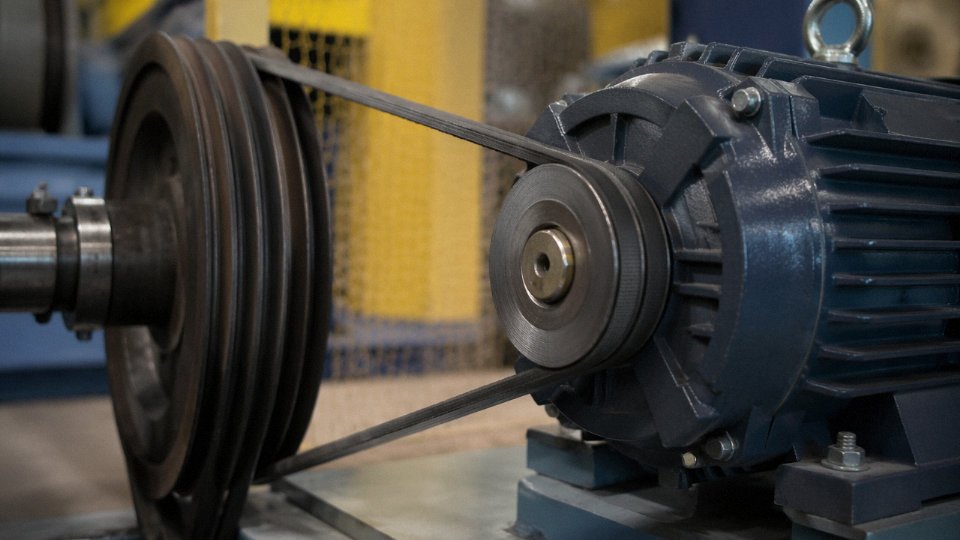
- Belt squeal, belt slip, and overheated pulleys
In a plant, the pattern is familiar. A mechanic sprays a stuck guard bolt or caliper bracket bolt, the machine goes back together, and the next shift reports “weak brake” or “belt slipping.” Nobody admits they sprayed near the friction surface because, in their mind, they did not spray the friction surface. Overspray did the job for them.
WD-40 Multi-Use Product is safe to use on brake pads because it can displace water.False
Water displacement does not make it suitable for friction materials. The light oily film can reduce braking friction and may contaminate porous pad or shoe material.
Spraying near brakes is still a risk
The dangerous move is not always a direct blast onto the rotor. Often it is a “quick shot” at a seized fastener near the brake assembly.
Aerosol spray does not land only where your finger points. It fogs, bounces off brackets, creeps along threads, and can travel by capillary action between washers, hubs, backing plates, and mating faces. On disc brakes, a small amount can migrate to the rotor face and then get wiped into the pad. On drum brakes, contamination is worse because the residue stays inside the enclosed drum area and can spread across shoes and hardware.
I have seen technicians shield a brake assembly with cardboard and still get mist where they did not want it. Cardboard helps, but it is not a process control. If the fastener is close to friction material, use a controlled applicator, not a broad aerosol pattern. A needle oiler, small brush, or straw applied from the backside is safer. Sometimes the right answer is heat, mechanical persuasion, or replacing the fastener rather than bathing the area in penetrant.
Safer choices by location
| Area | Do not use | Better practice |
|---|---|---|
| Brake rotors, drums, pads, shoes | WD-40, oil, grease, general shop sprays | Approved brake cleaner, clean lint-free wipe, replacement if lining is contaminated |
| Caliper bracket bolts or drum hardware | Free-spraying oil near lining | Penetrating oil placed tightly on threads, shielding, disassembly if needed |
| Clutch discs and pressure plate faces | Any oily film | Dry, clean handling; replace contaminated friction disc in most cases |
| Belt friction surfaces and pulleys | WD-40 or oily belt dressing | Correct belt tension, alignment, pulley cleaning, belt replacement |
| Tires and floor traction zones | Oily sprays, silicone, loose lubricant | Degrease, absorb, clean, and verify traction before returning to service |
Brake cleaner is the right product for many brake-component cleaning tasks, but even there, use the correct type for the materials and the plant rules. Some brake cleaners are not friendly to painted surfaces, plastics, rubber, sensors, or certain environmental requirements. Read the label. Ventilate. Do not turn a brake job into a solvent exposure problem.
Anti-seize has its place too, but only where the vehicle or equipment manual allows it: certain hub faces, specified bolt threads, or locating surfaces depending on the design. Never smear it onto studs, friction faces, taper seats, or anything the manufacturer expects to be dry unless the procedure says so. Torque values change when threads are lubricated. That small detail has ruined plenty of wheel-end work.
Industrial equipment has the same failure mode
This is not just an automotive rule. The same physics applies to hoist brakes, conveyor brake pads, elevator machine brakes, press brake clutch and brake units, forklift service brakes, packaging-machine clutches, and friction drives on production equipment.
A contaminated hoist brake is not a nuisance. It is a dropped-load risk. A slipping clutch on a press or indexing machine can create misfeeds, smashed tooling, bad parts, and a troubleshooting chase that wastes half a day. Conveyor brake pads with oil mist on them may pass a light jog test, then fail during an emergency stop with a full load on the belt. That is exactly the kind of failure that looks fine until it matters.
If a friction component has been sprayed with an oily product, do not “burn it off” and hope. Metal rotors and drums may sometimes be cleaned if contamination is light and caught immediately, but pads, shoes, clutch discs, and many brake linings are usually scrap once oil has soaked in. The cost of replacement is annoying. The cost of uncertain stopping force is worse.
The takeaway is blunt: any product that leaves an oily film does not belong on a surface whose job is to grip. Keep it off brakes, clutches, belts, tires, and floors. Use the right cleaner, place penetrating oil with control, and replace contaminated friction material instead of gambling with stopping distance or power transmission.
Avoid WD-40 on electrical contacts, sensors, and energized equipment unless the product is specifically approved
WD-40 Multi-Use Product is often described as having dielectric strength, commonly cited by the manufacturer at about 35 kV. That number can mislead people. Dielectric strength means the material can resist electrical breakdown under a specific test condition. It does not mean the spray is approved for live work, precision signal contacts, printed circuit boards, PLC cards, encoders, relays, potentiometers, or control panels.
That distinction matters on a plant floor.
A water-displacing spray can push moisture away from a surface. A proper electrical contact cleaner is formulated to remove contamination, evaporate cleanly, and avoid leaving a film that changes how contacts behave. Those are different jobs. I have seen maintenance teams treat them as the same because both come in aerosol cans and both seem to “fix” a wet connector for a shift. The trouble usually comes later, after dust, coolant mist, carbon brush dust, or flour powder finds the oily residue.
A high dielectric-strength spray is automatically safe to use on energized electrical equipment.False
Dielectric strength is not the same as live-work approval, contact-cleaning performance, arc-flash protection, or suitability for sensitive electronics. Energized work still requires isolation, verification, and approved procedures.
Residue can create electrical problems that look like bad components
Standard WD-40 uses petroleum distillate carriers that typically evaporate and leave a light oily film. In exposed mechanical parts, that film can attract grit. In electrical devices, the same residue can do quieter damage.
On low-voltage signal contacts, a thin film may increase contact resistance or create intermittent readings. That can show up as a proximity sensor that drops out once a week, a thermocouple terminal that drifts, or a machine input that flickers only when vibration is present. Those faults are miserable to troubleshoot because the meter may read fine while the cabinet door is open.
Inside relays, potentiometers, encoders, selector switches, and small pushbuttons, residue can trap dust and wear particles. In a potentiometer, that may sound like scratchy audio in consumer gear, but in industrial controls it can mean unstable analog input. In an encoder, contamination can interfere with optical or magnetic sensing. In a relay, residue on contact surfaces may change the way low-current signals wet the contact. High-current contacts have their own arc and heat issues; they are not fixed by spraying something into the housing.
Printed circuit boards bring another risk: contamination tracking. Dust plus moisture plus oily residue can create leakage paths across insulation surfaces, especially where flux residue, metal fines, or conductive process dust already exist. The result may be nuisance trips, false signals, corrosion under components, or a board that fails after the next humid weekend shutdown. Plants near washdown areas, plating lines, woodworking dust, or packaging powder are especially unforgiving.
Do not spray it into modern electronics
Keep general-purpose water-displacing sprays out of keyboards, laptops, smartphones, gaming controllers, cameras, CNC controls, PLC input modules, instrumentation panels, medical electronics, and laboratory equipment. These devices use tight-contact connectors, membrane switches, elastomers, plated contacts, optical paths, and plastics that may not tolerate petroleum distillates or oily residue.
A CNC pendant with a sticky feed-rate override knob is not a good candidate for WD-40. Neither is a PLC rack that got damp from a roof leak. Spraying the rack may make the surface look treated, but it can push contamination deeper into card guides and connectors. Then the plant owns a recurring fault that appears every time the enclosure warms up.
Operational warning: never use an aerosol spray as a diagnostic shortcut on energized controls. If the fault changes after spraying, you have not repaired the system. You have changed the contamination pattern.
Where water displacement may be useful, and the follow-up that matters
There are limited cases where water displacement is relevant. A common one is emergency drying of non-energized wet ignition components on older engines or outdoor equipment. Even there, the safe sequence is boring for a reason: shut it down, isolate power where practical, remove standing water, dry the assembly, inspect for cracks or carbon tracking, use the water-displacing product only if compatible, then clean or replace parts as needed.
For industrial electrical gear, the bar is higher. If a control panel, junction box, motor terminal box, or instrument enclosure has taken in water, de-energize it. Apply lockout according to site procedure. Verify zero energy with a properly rated tester. Look for the source of ingress, not just the puddle. Dry with controlled heat or compressed dry air where appropriate, inspect terminals and insulation, and use approved cleaners. A wet panel often has a failed gasket, loose conduit hub, missing drain, bad breather, or condensation problem. Spraying the symptoms does not correct the enclosure failure.
Better choices for electrical cleaning and protection
Use electronics-grade contact cleaner when the goal is to clean contacts. Pick the type based on plastics compatibility, residue requirement, drying speed, and whether the equipment manufacturer allows it. Some contact cleaners are aggressive; they can craze clear plastics or damage labels. Test first if the part is not listed.
High-purity isopropyl alcohol, often in the 90–99% range, can be useful for boards and connectors where compatible, but it is not magic either. It can carry dissolved contamination under components if used carelessly, and lower-grade alcohols may contain too much water for sensitive work. Compressed dry air or nitrogen can help remove moisture and particles, provided the air supply is clean, oil-free, and regulated. Shop air from a rusty receiver with compressor oil carryover is not “electronics grade” just because it comes through a blow gun.
For connectors exposed to moisture, use the manufacturer-approved connector grease or dielectric grease in the specified amount. Too much grease can hydraulic-lock small connectors or interfere with terminal seating. Too little may do nothing. For repaired circuit boards, conformal coating repair should follow the equipment or coating supplier’s procedure, including cleaning, masking, cure time, and inspection.
Food, medical, and lab environments add another layer. A general-purpose water-displacing spray may be unacceptable around sensitive instruments or regulated areas. In food-processing facilities, incidental-contact lubrication normally calls for NSF H1-rated products, not a general maintenance aerosol grabbed from the fitter’s cart.
The rule I teach apprentices is simple: isolate power, verify zero energy, clean with the right chemical, dry fully, inspect the root cause, then re-energize. Never rely on a spray can to correct an electrical fault.
Do not spray WD-40 on plastics, rubber, seals, and painted finishes without compatibility checks
Petroleum distillates are not automatically “bad” for every plastic or rubber part. That is the trap. Some materials shrug them off for years; others haze, swell, soften, or crack after one casual spray. On a plant floor, that difference is not academic. It is the difference between freeing a sticky latch and creating a slow leak on a pneumatic cylinder.
Standard WD-40 Multi-Use Product uses a petroleum-based carrier that can evaporate and leave a light oily film. On bare steel, that can be useful for water displacement. On polymers, elastomers, decals, and coatings, the same chemistry can migrate into the surface or under an adhesive edge. Compatibility depends on the exact material grade, age, stress level, temperature, exposure time, and whether the part is under compression or flexing.
WD-40 Multi-Use Product should be treated as compatible with all plastics, rubber parts, and painted finishes.False
Material compatibility varies widely. Some plastics and elastomers tolerate brief exposure, while others may swell, haze, soften, stain, or stress-crack, especially under load or repeated exposure.
Materials that deserve caution
I would be careful around rubber door seals, O-rings, gaskets, latex, natural rubber, some synthetic elastomers, soft vinyl, and any seal that is already old, flattened, or heat-hardened. In automotive work, that includes weatherstripping, window channels, fuel-area grommets, pedal boots, and under-hood rubber that has lived through years of heat cycles.
Clear and decorative plastics are another problem area. Polycarbonate, polystyrene, acrylic, soft appliance trims, helmet visors, safety glasses, gauge windows, machine guards, light lenses, decals, labels, and printed overlays can react badly. Sometimes the damage shows up as instant dulling. Other times you get fine stress cracks a day or two later, especially around screw bosses, molded corners, or bent clear panels.
Painted and powder-coated surfaces are not immune either. A fully cured industrial coating may tolerate a quick wipe. A thin decorative coating, fresh paint, old enamel, low-cost appliance finish, or powder coat with damaged edges can stain, soften, or lose gloss. If there is adhesive nearby, expect capillary action to pull oil under the edge. That is how labels start curling and safety decals become unreadable.
What damage looks like in the real world
The common failure modes are swelling, loss of elasticity, tackiness, stress cracking, hazing, dulling, staining, adhesive weakening, and paint softening. Rubber may look fine at first, then lose its snap. A gasket that grows even a little can roll out of its groove during assembly. A plastic sight glass may turn cloudy. A decal may lift at the corner and collect dust until nobody can read the warning anymore.
Seals deserve special respect. They are cheap parts doing expensive work.
A swollen O-ring on a hydraulic valve can bind, extrude, or tear. A softened gasket on a compressed-air manifold can leak enough air to keep a compressor cycling all weekend. A door seal on an outdoor enclosure can lose compression and let washdown water or dust into controls. In food, packaging, and pharmaceutical areas, a failed seal can also become a contamination path, not just a maintenance nuisance.
A typical bad scenario: a mechanic sprays a sticky enclosure latch and overspray lands on the foam door gasket. It closes fine that shift. A month later, the gasket has taken a set, the panel no longer seals well, and the cabinet starts pulling in flour dust or coolant mist. The latch was fixed. The enclosure was compromised.
Better choices by surface
| Surface or part | Safer first choice | Shop-floor caution |
|---|---|---|
| Rubber seals and O-rings | Manufacturer-approved seal grease or compatible silicone lubricant | Do not assume silicone is right for every elastomer or every paint system |
| Plastic slides or light mechanisms | PTFE dry film approved for the plastic | Dry films can build up; keep them off sensors and optical surfaces |
| Clear plastics, visors, safety glasses | Plastic-safe cleaner or mild soap and water | Avoid solvent wiping unless the manufacturer allows it |
| Painted trim, decals, overlays | Damp cloth, mild detergent, approved cleaner | Test near an edge or hidden return, not across the visible face |
| Critical hydraulic, pneumatic, fuel, or process seals | OEM-specified lubricant only | Wrong chemistry can turn a low-cost seal into a downtime event |
Silicone lubricant is often useful on compatible rubber weatherstripping and some non-painted rubber parts. PTFE dry film can work well on certain plastics where an oily residue would attract grit. For delicate surfaces, soap and water is not glamorous, but it is often the right answer. I have seen more damage from “helpful” solvent sprays than from patient cleaning.
A practical compatibility check
Start with the SDS and technical data sheet for the spray, then check the OEM manual or material callout for the part. If the part is critical, that is not paperwork theater; it is risk control.
Test a hidden spot. Use the same exposure you plan to use in service, not a polite one-second dab if the real job will soak the part. Wipe off excess, then observe for at least 30 minutes to a few hours. For seals, decals, clear plastics, and painted parts, I prefer checking again the next day when practical. Look for swelling, gloss change, softening, tack, color transfer on the rag, edge lifting, or fine cracks under light.
If the test part is under stress, be more conservative. A solvent that seems harmless on a flat coupon can crack a molded polycarbonate cover that is screwed down tight. That is a common miss.
The simple rule is this: if the surface is plastic, rubber, coated, clear, decorative, or sealing something important, do not treat WD-40 as a default spray. Prove compatibility first, or use a product made for that material.
Never use WD-40 as a cleaner or lubricant in food, medical, or cleanroom environments
A can that lives happily on a maintenance cart in a welding bay does not belong on the same cart as chemicals used around exposed food, sterile tools, drug product, or controlled cleanroom work. Standard WD-40 Multi-Use Product is a general-purpose water-displacing spray with petroleum distillate carriers and a light residual film. That is not the same thing as an NSF H1 food-grade lubricant, a sterile medical lubricant, a pharmaceutical maintenance chemical, or a cleanroom-approved lubricant.
That distinction matters during an audit, but it matters even more during production.
Standard WD-40 Multi-Use Product should not be treated as an NSF H1 lubricant for incidental food contact.True
Food-processing sites generally require lubricants specifically registered or approved for incidental food contact, such as NSF H1 products. A general workshop water-displacing spray does not meet that role unless the exact product label and site approval program say it does.
Where I would not allow it on the floor
Do not use standard WD-40 on food contact surfaces: slicer blades, mixer bowls, filler nozzles, forming plates, dough handling parts, cutting tables, augers, hoppers, or product chutes. The same goes for conveyors running under or beside exposed product. Even if the spray point is “just the bearing bracket,” overspray travels. I have seen aerosol mist land farther than the mechanic expected, especially with fans running or compressed-air blowoff nearby.
Packaging equipment is not automatically safe either. A case taper in a dry warehouse is one thing. A pouch sealer, lidding machine, tray denester, or checkweigher in an open-product zone is another. If product is exposed, or if packaging has a food-contact face exposed before sealing, the chemical standard is tighter.
Medical and laboratory environments are less forgiving. Keep it away from medical devices, dental hand tools, lab instruments, pipettes, incubator hardware, microscope stages, clean benches, biosafety cabinets, and any surface that may contact samples, cultures, sterile packaging, or patients. In pharmaceutical production, do not use it around filling lines, stopper bowls, tablet presses in exposed-product areas, capsule machines, or product-contact change parts unless your quality unit has specifically approved that exact chemical for that exact use. Usually, they will not.
Semiconductor and precision cleanrooms are their own world. A light oily film that seems harmless in a machine shop can become a particle magnet in an ISO-classified room. It can outgas, smear onto gloves, contaminate wafers or optics, and turn a small maintenance shortcut into a long investigation.

The failure mode is contamination, not just lubrication
The usual problem is not that the machine immediately stops. The machine may run fine. That is what makes this mistake easy to miss.
The trouble starts with residue migration, odor transfer, and non-compliant incidental contact. Petroleum-based odor can carry into packaging or product, especially with fats, powders, warm surfaces, and enclosed equipment guards. The residual film can move by glove contact, washdown runoff, belt contact, or capillary creep along stainless seams. In dusty dry-food plants, that film also collects flour, starch, spice powder, sugar dust, or abrasive debris. Now the “lubricated” spot becomes a dirt patch.
In wet food areas, oily residue can interfere with sanitation. It may protect soil from a cleaner, trap fines around fasteners, or create a sticky edge at a gasket line. Is it a guaranteed microbial harborage every time? No. But sanitation teams spend a lot of effort removing exactly these kinds of films. Putting one back on with an unapproved aerosol is bad practice.
Cleanrooms have a similar logic with different consequences. Wrong chemical in the wrong zone means particles, films, ionic contamination, or outgassing concerns. Maybe the lot passes. Maybe it does not. Either way, the deviation report will be painful.
Incidental contact is not the same as “near food”
Food plants usually split areas into contact, incidental-contact, and non-food zones. The terms vary by site, but the thinking is consistent.
| Area | Typical examples | Chemical expectation |
|---|---|---|
| Direct food contact | Blades, bowls, chutes, nozzles, belts carrying exposed product | Only validated sanitation chemicals or approved food-contact materials |
| Incidental food contact | Bearings above product, guide rails near exposed food, hinges over open conveyors | Usually NSF H1 lubricant if lubrication is needed, used sparingly and documented |
| Non-food zone | External guards, palletizer frames, remote utilities, closed-case handling | Site-approved industrial chemicals may be allowed, depending on risk and segregation |
That last column is where people get into arguments. “It never touches product” is not enough. The sanitation manager, quality manager, or chemical control owner should approve the product, the location, and the method of application. A mechanic should not have to guess at 2 a.m. with a down conveyor and a supervisor asking for “just a quick spray.”
Use the correct controlled-environment products
For food plants, use NSF H1 lubricants where incidental food contact is possible. Greases, oils, dry-film products, and chain lubricants are available in H1 versions, with viscosity and temperature ranges that depend on load, washdown frequency, oven proximity, and material compatibility. For cleaning, an NSF K1 cleaner may be suitable in some non-processing or controlled cleaning tasks, but it still needs site approval and proper removal before production.
For medical, pharmaceutical, and lab work, use validated sanitation chemicals, stainless-safe cleaners, and lubricants approved through the facility’s quality system. In cleanrooms, use cleanroom-compatible lubricants and wipes matched to the room class, particle limits, material compatibility, and outgassing requirements. The label matters. So does the SDS. So does how the product is stored after someone opens it.
Keep the paperwork boring and complete: current SDS files, original product labels, an approved chemical list, application records for sensitive zones, and clear segregation between general maintenance aerosols and controlled-area chemicals. Color-coded cabinets or shadow boards help. So do locked chemical cages. During audits, the question is rarely “Do you own the right product?” It is “Can you prove the wrong one was not used?”
Do not use WD-40 for locks, firearms, knives, and precision mechanisms that need controlled lubrication
The small mechanisms people are tempted to “fix with a quick spray” are often the ones least suited to a general-purpose water-displacing aerosol. Locks, camera shutters, sewing machines, fishing reels, watches, calipers, micrometers, knife pivots, multitools, and firearm actions all have one thing in common: small clearances. Some are forgiving. Some are not.
The reliability rule is simple: close-tolerance mechanisms need the smallest amount of the correct lubricant in the right location, not an aerosol flood.
Locks are a temporary rescue case, not a normal lubrication job
A pin-tumbler lock or wafer lock can feel sticky because of moisture, corrosion, old graphite, pocket lint, brass dust from key wear, or simple misalignment. WD-40 can sometimes free a wet or stuck lock, especially after rain, a washdown, or a winter freeze-thaw cycle. I have used it that way on site gates and cabinet locks when the alternative was cutting hardware off.
But that does not make it the best final lubricant.
Standard WD-40 Multi-Use Product leaves a light oily film after the petroleum distillate carrier flashes off. That film can grab dust, graphite, road grit, and the fine brass or zinc particles that naturally come from keys and wafers rubbing over time. In a clean office lock, the effect may take months to show up. On a yard padlock hanging near aggregate, grain, cement dust, or welding dust, it can gum up much faster. The key starts dragging, then needs wiggling, then someone snaps it because they are in a hurry. That is how a five-minute spray becomes a broken-key callout.
For locks, use what the lock manufacturer allows. Dry graphite is acceptable for some cylinders, but not all, and mixing graphite with oily sprays often makes a black paste. Many locksmiths prefer a lock-specific dry or semi-dry lubricant, often PTFE-based, because it does not hold abrasive dirt as aggressively. For outdoor padlocks, weather exposure changes the choice; a sealed padlock in a clean loading dock is not the same as a hasp on a quarry fuel cage.
WD-40 can free a sticky lock and should then be treated as the correct long-term lock lubricant.False
It may temporarily displace moisture or loosen residue, but many lock cylinders are better served by a lock-specific dry or controlled lubricant that will not collect grit inside the keyway.
Precision mechanisms do not like stray fluid
Camera shutters, lens mechanisms, watches, sewing machines, fishing reels, micrometers, dial indicators, and calipers are not just “small machines.” They are controlled-friction assemblies. Some rely on very light oil at defined points. Some use grease of a particular viscosity. Some should be nearly dry in normal service.
A general aerosol spray does not know the difference.
Excess fluid can creep by capillary action into places you never intended: optics, aperture blades, plastic gears, rubber grips, wood stocks, foam seals, encoder strips, display electronics, trigger assemblies, and measuring faces. On a caliper or micrometer, even a thin contaminated film can hold grinding dust or metal fines and turn smooth movement into a gritty slide. Worse, it can throw off feel. If you use micrometers daily, you know that “feel” is not romantic talk; it is how bad readings sneak into inspection.
Sewing machines are a good example. The right oil is usually a clear, light sewing machine oil applied sparingly at specified oiling points. Spray into the hook area and you may flush lint deeper into the mechanism or stain fabric later. Fishing reels need reel oil or reel grease depending on the bearing, drag, and gear location. Watch movements need watch oils in tiny quantities; ordinary workshop sprays have no place there.
Firearms, knife pivots, and multitools need product control
Firearms actions collect powder residue, primer salts in some ammunition contexts, carbon, unburned powder, metal wear particles, dust, and pocket or range-bag lint. A light oily residue can bind that mix into sludge. That matters most in cold weather, high-round-count use, suppressed firearms, and fine trigger assemblies. The wrong product in the wrong place can slow firing pin movement, soften certain grip materials, creep into wood, or carry debris into sear surfaces.
Use a firearm-specific cleaner and lubricant, or a manufacturer-approved CLP, grease, or oil. Even then, more is not better. Excess oil attracts residue and can migrate into ammunition, optics mounts, stock bedding, leather, or case foam. I have seen plenty of over-lubricated actions that looked “maintained” until dust and carbon turned the rails into black paste.
Knife pivots and multitools have a similar problem at pocket scale. They live with lint, skin oil, cardboard dust, metal fines from sharpening, sand, food residue, and moisture. A blast of WD-40 may make a stiff pivot feel better for a day. Then the joint collects lint and grit, the detent track gets dirty, and the action feels worse than before. For folding knives, use a small drop of knife-safe pivot oil, light machine oil, PTFE dry lube, or the maker’s recommended grease depending on the pivot type, washers, bearings, and handle material.
Better choices by mechanism
| Mechanism | Better option | Practical note |
|---|---|---|
| Pin-tumbler or wafer locks | Lock-specific lube, approved dry graphite, PTFE dry lube | Avoid mixing graphite with oily residue unless you are prepared to flush and service the cylinder. |
| Safes and high-security locks | Manufacturer-approved lubricant or locksmith service | Do not flood keyways or dial mechanisms; safe locks are expensive to make sticky. |
| Sewing machines | Sewing machine oil | Apply only at the marked oiling points, usually a drop or two. |
| Firearms | Firearm cleaner, CLP, firearm oil or grease | Keep lubricant off optics, ammunition, wood, and sensitive trigger parts unless specified. |
| Calipers, micrometers, indicators | Precision instrument oil or corrosion inhibitor used sparingly | Wipe measuring faces clean before inspection. |
| Knife pivots and multitools | Pivot oil, PTFE dry lube, light machine oil | Clean out lint and grit first; do not just bury dirt under fresh fluid. |
The wrong spray often gives a good first impression: smoother, quieter, freed-up. The failure comes later, after the film collects abrasive debris or migrates into a surface that should have stayed clean. That is the trap with precision work. A quick fix can become unreliable operation, bad measurements, stained material, misfires, broken keys, or a mechanism that now needs a full strip-down instead of a two-drop service.
Avoid WD-40 near open flames, hot surfaces, welding, and oxygen service
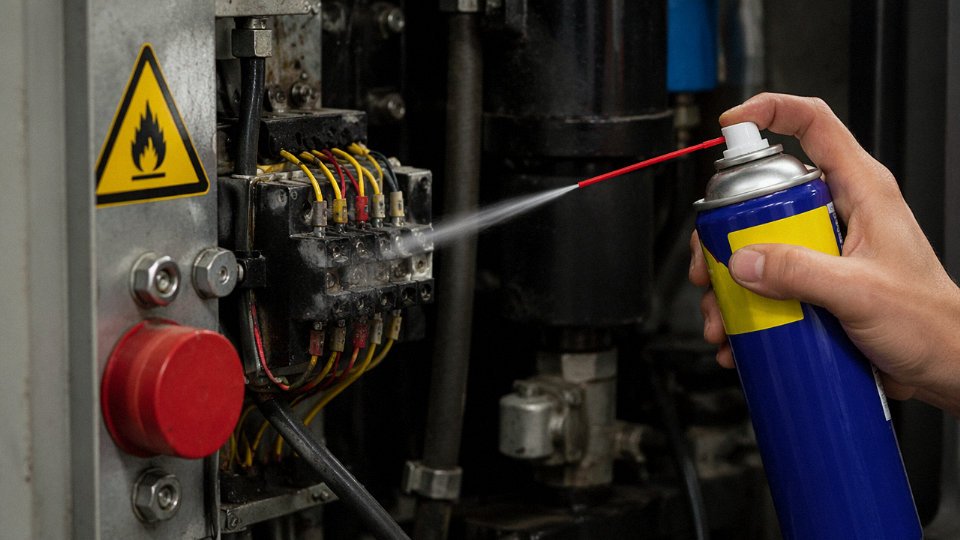
Aerosol WD-40 should be treated as a flammable shop chemical, not as a harmless mist in a blue-and-yellow can. The hazard is not only the liquid you see on the part. It is the vapor cloud, the aerosolized droplets, the propellant behavior, and the light petroleum distillates that can flash if they find the right ignition source.
On a plant floor, “right ignition source” is not rare. It may be a welder striking an arc two benches away, a grinder throwing sparks, a heater element inside an oven, a boiler casing, a hot exhaust manifold on a lift truck, or a motor with worn brushes arcing under load. I have seen mechanics spray first and look around second. That habit is how small maintenance jobs turn into fire-watch reports.
Where the risk is highest
Keep standard WD-40 away from welding benches, cutting torch areas, brazing stations, furnace doors, heat-treat ovens, boilers, drying ovens, paint cure lines, exhaust headers, hot bearings, and recently shut-down rotating equipment. “Recently shut down” matters. A bearing housing, gearbox, or manifold can stay hot enough to vaporize light solvents long after the machine sounds quiet.
Grinding areas deserve special caution. Abrasive sparks are not magic fire starters every time, but they are hot enough to ignite vapors or oily lint under the wrong airflow. Spray booths are another bad place unless the booth, ventilation, electrical classification, and product use are all controlled for that chemical. A casual aerosol can in a booth with poor housekeeping is asking for a combustible film on surfaces where dust and overspray already collect.
Electrical cabinets with faults are also risky. The earlier electrical section covered contact and insulation issues, but there is a separate fire problem: a loose lug, failing contactor, carbon-tracked terminal block, or arcing brush motor can provide ignition. Spraying a petroleum-based aerosol into that environment is not troubleshooting. It is gambling.
Oxygen service is a hard no
Do not use WD-40 on oxygen regulators, compressed oxygen fittings, oxygen cylinder valves, medical oxygen equipment, diving oxygen systems, cutting torch oxygen connections, or any oxygen-enriched area. Hydrocarbon residue in oxygen service can ignite violently, sometimes from adiabatic compression, particle impact, or valve heat that would look insignificant in normal air.
WD-40 is acceptable for cleaning oxygen regulators if it is wiped off afterward.False
Oxygen systems require oxygen-compatible cleaning methods and materials. Hydrocarbon films, even thin residue, can create severe fire or explosion hazards in compressed or enriched oxygen.
Oxygen changes the rules. Materials that merely smolder in air can burn aggressively when oxygen concentration rises. In many safety programs, oxygen-enriched atmospheres start around 23.5% oxygen, but the real risk depends on pressure, contamination level, flow velocity, and the component geometry. A regulator seat or valve thread is a small place for a large amount of trouble.
Confined spaces and poor ventilation make it worse
In a pit, tank, machine enclosure, duct, basement pump room, or containerized generator set, aerosol vapor can accumulate instead of dispersing. The operator may smell solvent at first, then become used to it. That does not mean the air is safe. It may mean the exposure is getting worse.
The fire side is just as ugly. A vapor pocket can flash when a torch is lit, a relay pulls in, a grinder starts, or static discharges. Oily overspray also creates housekeeping problems. It collects dust, fines, lint, and abrasive grit. Around woodworking dust, packaging fibers, textile lint, rubber crumb, or metal fines, that film can turn a cleanable area into a sticky fuel-and-debris layer.
A typical maintenance mistake: a seized adjustment screw on a hot conveyor oven frame gets sprayed during a short production stop. The screw frees up, so the mechanic calls it fixed. Ten minutes later the smell increases, dust sticks to the wet area, and the next hot-work inspection finds residue near the burner access panel. The “quick fix” just moved cost into cleanup, delay, and paperwork.
Safer shop practice
Let hot parts cool before applying any aerosol. If the job cannot wait, choose a method approved for the temperature, atmosphere, and equipment class. In some plants that means a nonflammable cleaner, a water-based degreaser, or a maintenance product specifically listed in the procedure. The SDS should be checked for flammability, ventilation, PPE, storage temperature, and disposal requirements; not glanced at after the can is already empty.
Use controlled application where possible. Spray onto a rag or swab away from ignition sources, then apply the minimum amount needed. That still is not acceptable for oxygen service, food zones, cleanrooms, or energized electrical gear, but it reduces drift in ordinary maintenance work. Store aerosols away from welding gas carts, heaters, direct sun, hot panels, and vehicle dashboards. A closed service truck in summer can get hotter than people expect.
For industrial sites, tie this into the systems already on the wall: hot work permits, lockout/tagout, forced ventilation, gas testing where required, bonding and grounding for flammable liquid handling, and fire watch after hot work. Dispose of oily rags, wipes, and absorbents in approved containers. Do not leave them in a cardboard box under the bench because “someone will take it out later.” That someone is usually second shift, and they have enough problems.
Use a fit-for-purpose alternative instead of WD-40 for these specific maintenance jobs
A good maintenance cabinet is not full of magic sprays. It has a short list of approved products, each with a boundary. Standard WD-40 Multi-Use Product is useful for water displacement, light cleaning, and short-term loosening in some non-critical jobs. It should not be the default answer for every squeak, sticky part, dirty contact, or seized bolt.
Practical substitution guide
| Application | Why not standard WD-40 | Better product type | Field note |
|---|---|---|---|
| Brake cleaning | Oily residue can reduce friction and contaminate pads, shoes, rotors, or drums | Non-residue brake cleaner approved for the brake material | Keep overspray off rubber boots and painted surfaces; some chlorinated cleaners are restricted in welding areas |
| Electrical contacts | Water displacement is not the same as contact cleaning; residue can hold dust | Plastic-safe electrical contact cleaner, or specified dielectric grease after cleaning | WD-40 dielectric strength is often cited around 35 kV, but that does not make it approved insulation |
| Bicycle chains | Thin film washes out and attracts grit | Bicycle chain lube: dry, wet, wax, or ceramic type based on riding conditions | Dry dusty route? Use dry or wax lube. Wet commute? Use wet lube, sparingly |
| Rubber seals | Some elastomers may swell, soften, or lose surface finish | Silicone grease, EPDM-safe rubber lubricant, or OEM seal conditioner | On door seals and O-rings, compatibility beats convenience |
| Food machinery | General-purpose workshop sprays are not acceptable for incidental food contact | NSF H1-rated lubricant or food-grade grease | Keep H1 products segregated; I have seen audits fail over one unmarked aerosol on a filler line |
| Locks | Oily film traps graphite dust, pocket lint, and metal fines | Dry lock lubricant, PTFE dry film, or lock-maker-approved product | A lock that works fine in July can gum up badly in a cold dock door by January |
| Bearings | Lacks persistent film strength for rolling or sliding load | Bearing grease or circulating oil with correct NLGI grade and load rating | Match speed, load, seal type, and washdown exposure |
| Rusted fasteners | It can help lightly, but it is not a strong penetrant | Dedicated penetrating oil, heat where safe, impact technique, anti-seize on reassembly | Give penetrant time. Five seconds before the wrench is usually theater |
| Adhesive removal on delicate surfaces | Solvent/oil mix may stain, haze, or attack coatings | Citrus adhesive remover, isopropyl alcohol, or manufacturer-approved cleaner | Test under a label edge or on scrap first; painted control panels are easy to scar |
| Plastic hinges | Some plastics can craze or soften | Plastic-safe silicone spray, PTFE dry lube, or no lubricant if self-lubricating | Nylon, acetal, and polycarbonate do not behave the same |
| Sliding doors | Light oil attracts floor dust and turns into black paste | Silicone spray for tracks, dry PTFE, or roller replacement | Clean the track first; lubricant over grit just makes grinding compound |
| Garage doors | Not suited for torsion springs, rollers, and hinges under repeated load | Garage-door spray lube, lithium grease, or manufacturer-specified product | Never spray friction surfaces or belt drives unless the manual says so |
| Firearms | Residue can collect powder fouling and migrate into ammunition areas | Firearm CLP, bore solvent, gun oil, or grease by location | Use different products for bore cleaning, slide rails, and storage protection |
| Cutting or drilling operations | Too light for heat removal and tool-edge protection | Cutting oil, tapping fluid, soluble coolant, or mist coolant | Wrong fluid shows up as chatter, blue chips, torn threads, and short tool life |
Choose by function, not by habit
A penetrant is not a lubricant. A penetrant is designed to creep into tight, corroded threads and break oxide bonds; after the part moves, it has mostly done its job. If the assembly goes back into service, use the correct grease, oil, anti-seize, threadlocker, or dry film.
A degreaser is not a contact cleaner either. Many degreasers are aggressive, slow to evaporate, or unsafe for plastics used in switches and sensors. A proper contact cleaner should match the device voltage status, plastic compatibility, residue requirement, and ventilation controls. Same story with corrosion inhibitors: they protect stored metal, but they do not replace assembly grease on splines, pins, bushings, or press-fit interfaces.
For procurement, the selection criteria are not complicated, but they do need discipline:
- Base oil or solvent: mineral oil, synthetic oil, silicone, ester, alcohol, hydrocarbon, or water-based chemistry.
- Viscosity: light oil for small pivots, tacky oil for chains, grease for loaded bearings or exposed pins.
- Evaporation rate: fast for cleaning, slower for penetration, persistent for protection.
- Residue type: dry film, oily film, waxy film, or no residue.
- Material compatibility: plastics, rubber, paint, coatings, cable jackets, food-contact surfaces.
- Temperature range: both operating temperature and storage temperature matter.
- Regulatory approval: NSF H1 for incidental food contact, electrical approvals where required, site EHS restrictions.
- Load rating: especially for bearings, gears, slides, chains, cams, and threaded assembly.
Food-processing machinery generally needs NSF H1-rated lubricants where incidental food contact is possible, rather than ordinary general-purpose water-displacing sprays.True
NSF H1 lubricants are formulated and registered for incidental food-contact risk. Standard workshop aerosols are not automatically acceptable just because the amount used seems small.
One warning from the plant floor: too much of the right product can still cause trouble. Excess contact cleaner can wash debris deeper into a switch. Too much grease blows past bearing seals and cooks onto guards. Extra lube on a clutch, brake, belt, or tire contact surface is a fault, not care. In food equipment, surplus lubricant becomes a contamination risk. In precision instruments, it becomes drag.
Inventory control saves more than it costs
Industrial sites should label approved products by use: electrical, food area, bearings, chains, pneumatic tools, cutting, anti-seize, corrosion storage. Remove duplicates where two sprays do the same job, but do not collapse everything into one “maintenance oil.” That is how mistakes start.
Train technicians on product boundaries during onboarding and shutdown planning. Put the approved lubricant on the PM task, not just “lubricate as needed.” A mechanic under time pressure will use what is on the cart. Make the right product the easiest one to grab.
Build a simple decision checklist before spraying WD-40 on anything
The fastest way to misuse WD-40 is to treat the blue-and-yellow can as the first step instead of the last check. On a plant floor, that habit shows up as sticky limit switches, dust-packed slides, slipping belts, swollen seals, and mystery contamination in places nobody wants to explain during an audit.
Use a short yes-or-no screen before you spray.
The field checklist
Ask these questions in order. If any answer is “yes,” stop and verify the correct product before using standard WD-40 Multi-Use Product.
| Question before spraying | If yes, what to do instead |
|---|---|
| Is this a friction surface that must grip, stop, clamp, or transmit torque? | Do not spray. Use the OEM-approved cleaner or leave the surface dry. |
| Is it an electrical device, connector, sensor, encoder, switch, relay, or energized panel? | Use approved electrical contact cleaner or follow the electrical maintenance procedure. De-energize first where required. |
| Is it in a food zone, medical area, lab, cleanroom, or packaging area with contamination controls? | Check the site chemical list. Food plants usually need NSF H1-rated lubricants for incidental contact areas. |
| Is there rubber, a seal, an O-ring, a gasket, a belt, a hose, or a soft polymer nearby? | Confirm compatibility. Many failures start with overspray, not direct application. |
| Is it plastic, painted, coated, printed, or plated? | Test in a hidden area or choose a material-safe product. Some coatings stain or soften. |
| Is it a precision mechanism such as a lock cylinder, measuring tool, camera part, firearm action, or fine instrument? | Use the specified light oil, dry film, graphite, or no lubricant at all, depending on the mechanism. |
| Is the part hot, near welding, near a heater, or inside an enclosure that can trap vapor? | Wait, ventilate, and use a product rated for the temperature and exposure. |
| Is it part of oxygen service, compressed gas equipment, breathing air, or medical gas? | Do not improvise. Use oxygen-compatible cleaning and lubricant procedures only. |
| Is this a load-bearing lubrication point such as a bearing, chain, gear, rail, bushing, slide, or screw jack? | Use grease, oil, chain lubricant, way oil, or anti-seize specified for the load, speed, and environment. |
That table looks basic. Good. Basic is what prevents 2 a.m. breakdown calls.
WD-40 Multi-Use Product can displace moisture and has a commonly cited dielectric strength of about 35 kV, but that does not make it an approved electrical insulator or a proper contact cleaner.True
Dielectric strength is not the same as certified insulation performance, contact compatibility, arc-flash safety, or residue control. Electrical use still depends on de-energizing, product approval, and the equipment manufacturer's instructions.
For workplaces, make the paper trail match the job
In a home garage, the decision may be a quick judgment call. In a factory, it should be traceable. Before a maintenance technician sprays anything near production equipment, the minimum checks are the SDS, the technical data sheet, the OEM manual, and the site chemical approval list. If your plant has a lubrication standard or a master lubrication schedule, use that too.
I have seen maintenance teams do the right repair with the wrong aerosol and still lose the argument later. Why? No documented approval, no compatibility check, and no record of where it was applied. In regulated plants, that can turn a five-minute cleanup into a quality hold.
The SDS tells you hazards, storage, PPE, fire behavior, and disposal. The technical data sheet tells you what the product is intended to do, and just as useful, what it is not designed to do. The OEM manual usually wins over shop habit. If the manual says use ISO VG 68 way oil, a general water-displacing spray is not a clever substitute.
Control the application like a maintenance task, not a fogging operation
If WD-40 is acceptable for the job, apply it with some discipline.
Clean first. Loose grit mixed with a light oily film becomes lapping compound in exposed mechanisms. Use a rag, brush, vacuum, or compatible cleaner before adding anything wet. Mask surrounding parts if overspray can reach belts, brake surfaces, labels, sensors, seals, electrical connectors, or product-contact areas. A scrap of cardboard and painter’s tape is not glamorous, but it saves rework.
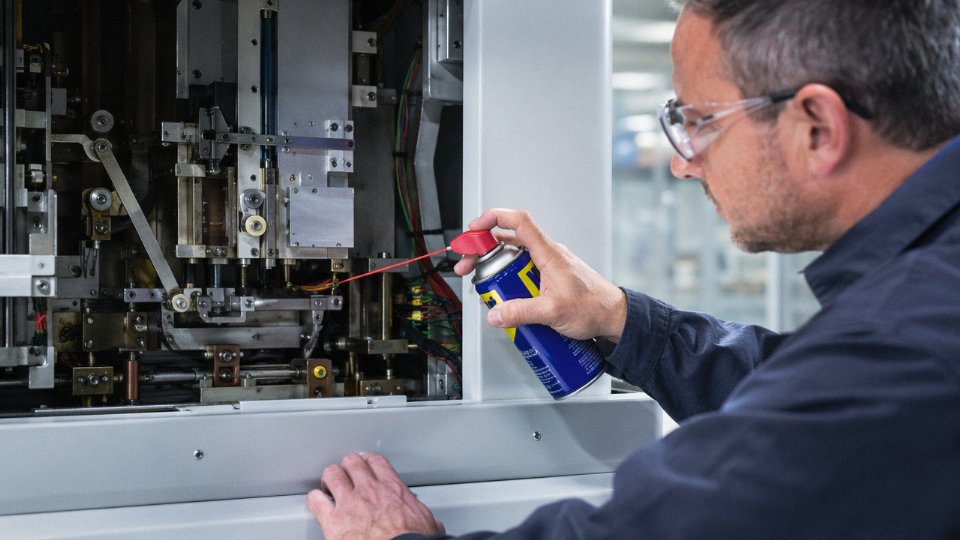
Use the straw or spray onto a cloth. Broad overspray is the mark of a rushed job. Apply the smallest amount that does the work, usually a light wetting rather than a dripping surface. Give the carrier time to creep into the joint if you are freeing light corrosion. Then wipe the excess. That last wipe is not cosmetic. It reduces dust pickup, hand transfer, and the oily track that later collects metal fines.
After operation, inspect. Cycle the part a few times. Check for slippage, sticking, swelling, discoloration, odor, residue, or dirt pickup. In a production setting, look again after the first shift or the next sanitation cycle. A product can look harmless at 9 a.m. and turn into black paste by lunch if it sits beside a grinder or carton dust source.
Where standard WD-40 is usually a reasonable choice
There are plenty of good uses when the risk screen is clear. It is commonly suitable for displacing moisture from non-critical metal surfaces after a wet washdown, rain exposure, or storage in a damp shed. It can help loosen light corrosion on stuck non-safety-critical hardware, especially small fasteners, hinges, brackets, and hand tools. It can clean oily grime from compatible bare metal parts, provided you wipe the residue and do not send the part back into a dust-heavy mechanism.
For tool storage, a thin wipe on steel hand tools, vises, clamps, fixtures, and lightly used shop hardware can slow rust. How long that protection lasts depends on humidity, salt exposure, handling, and whether the surface is sheltered. In a dry indoor cabinet, it may be weeks or longer. In a coastal shop or unheated maintenance cage, expect a shorter interval and check the tools instead of trusting the calendar.
A typical good use: a maintenance tech pulls a lightly rusted guard bolt on an outdoor conveyor frame, sprays a small amount at the threads, waits a few minutes, works the bolt back and forth, then wipes the area clean. Low consequence, compatible metal, no friction surface, no food contact, no electrical device. Fine.
A typical bad use: the same tech sprays a squealing conveyor bearing because the line needs to run. It quiets down for a short while, then the bearing overheats later because the real lubricant problem was not fixed. Wrong spray, wrong failure mode.
Define the failure mode before choosing the spray. If the problem is moisture, light corrosion, or dirty compatible metal, WD-40 may earn its place. If the problem is load, friction control, electrical reliability, contamination risk, heat, oxygen compatibility, or material swelling, reach for the right product and leave the general-purpose can on the shelf.
Frequently asked questions
Is WD-40 actually a lubricant?
Yes, but only in the limited sense that it leaves a light oily film after the carrier evaporates. That film can quiet a squeak or free up a sticky hinge for a while. It is not the same as a grease, chain oil, gear oil, way lube, or bearing lubricant designed to stay in place under load.
In a plant, this distinction matters. A conveyor roller bearing, linear rail, gearbox chain, or cam follower needs film strength and persistence. Standard WD-40 Multi-Use Product may make the part feel better during a quick hand check, then wash out or thin the lubricant that was supposed to be there. Right chemical, short downtime. Wrong chemical, hot bearing, dust paste, and a maintenance ticket that comes back next shift.
Does WD-40 damage rubber, plastic, or paint?
It can, depending on the exact material, surface condition, temperature, and exposure time. Some plastics tolerate a quick wipe. Others craze, soften, stain, or lose gloss. Rubber compounds are just as variable: nitrile, EPDM, natural rubber, neoprene, and silicone do not all react the same way to petroleum distillates.
Paint is another mixed bag. A cured industrial enamel may shrug off a short contact. A fresh coating, old lacquer, decal, powder-coated surface with micro-cracks, or a stressed plastic painted part may not. If the part matters, test a hidden area first and give it time. Ten minutes tells you less than overnight.
Can I use WD-40 on a bike chain?
You can use it as a light cleaner or water displacer in a pinch, but I would not leave it as the working lubricant on a bike chain. Bike chains run exposed, pick up road grit, and see repeated articulation under load. A thin oily residue tends to attract dust, then the chain becomes a grinding compound.
A better sequence is simple: clean the chain, dry it, apply a dedicated wet or dry chain lube suited to the riding conditions, then wipe the outside plates so the lubricant stays mainly where the pins and rollers need it. Wet lubes usually suit rain and winter grime. Dry wax-type lubes are often cleaner in dusty conditions, though they need reapplication sooner.
Is WD-40 safe on electrical connections?
For most contact-cleaning work, use an electronics-grade contact cleaner specified for the voltage, residue requirement, and plastics involved. WD-40 Multi-Use Product is commonly cited by the manufacturer at about 35 kV dielectric strength, but that number does not make it approved insulation, arc protection, or a proper contact cleaner.
WD-40's dielectric strength rating means it can replace approved electrical insulation or electronics contact cleaner.False
A dielectric strength value describes electrical breakdown resistance under test conditions. It does not mean the product is suitable for energized troubleshooting, sensor cleaning, relay contacts, connectors, or code-compliant insulation.
On control panels, encoder plugs, safety circuits, VFD terminals, and instrument connectors, residue is the enemy. It can hold dust, interfere with low-voltage signals, or create a maintenance mystery that wastes hours.
Can WD-40 be used on brakes?
No. Keep it off brake rotors, drums, pads, shoes, clutch faces, belts, tires, and any friction surface. Braking systems depend on predictable friction. Oil film changes that immediately.
If it gets on brake friction material, wiping may not be enough because porous pads and shoes can absorb contamination. For safety-critical brakes, the usual answer is proper brake cleaner for metal surfaces and replacement of contaminated pads or shoes if there is any doubt. That sounds conservative until a forklift fails to stop on a ramp.
Is WD-40 food safe?
Standard WD-40 Multi-Use Product is not the lubricant I would put into a food-processing lubrication point. Food plants generally require NSF H1-rated lubricants where incidental food contact is possible, and many sites have their own approved chemical list. Use that list.
The practical issue is not just toxicity. It is auditability, allergen and contamination control, odor transfer, label compliance, and preventing one aerosol can from drifting onto belts, open product, cutting tables, or packaging film. In food rooms, casual spraying is a bad habit.
Does WD-40 prevent rust?
It can help with light water displacement and short-term rust prevention, especially after washing tools, wet hardware, or outdoor equipment. That is one of the jobs it is reasonably good at. The protection period varies widely: indoor tools may stay clean for weeks or months, while outdoor parts in salt air or washdown areas may show corrosion much sooner.
For stored machinery, bare machined surfaces, molds, dies, spare shafts, or ocean freight, use a dedicated corrosion inhibitor, VCI packaging, rust-preventive oil, or proper coating. WD-40 is useful for chasing moisture. It is not a serious long-term preservation plan for expensive metal.
What should I do if I sprayed WD-40 on the wrong surface?
Stop using the equipment first, especially if the surface affects braking, gripping, electrical control, or product contact. Wipe off the excess with clean absorbent cloths. Then clean with the correct cleaner for that surface: brake cleaner for compatible metal brake parts, electronics cleaner for connectors, mild detergent or approved solvent for plastics and painted surfaces, and site-approved cleaners in food or medical areas.
Inspect after cleaning. Look for swelling, softening, staining, slippery residue, dust pickup, or abnormal noise during a cautious test run.
For safety-critical friction materials, do not gamble. Replace contaminated brake pads, clutch facings, certain belts, or rubber drive wheels if the material has absorbed oil or still feels slick after cleaning. A cheap replacement part beats a near miss, a scrap batch, or a damaged machine.