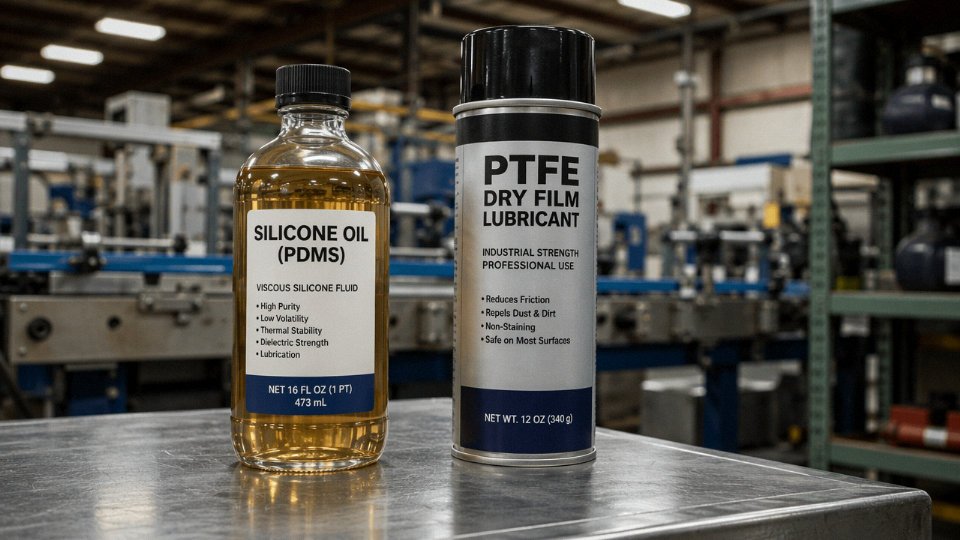
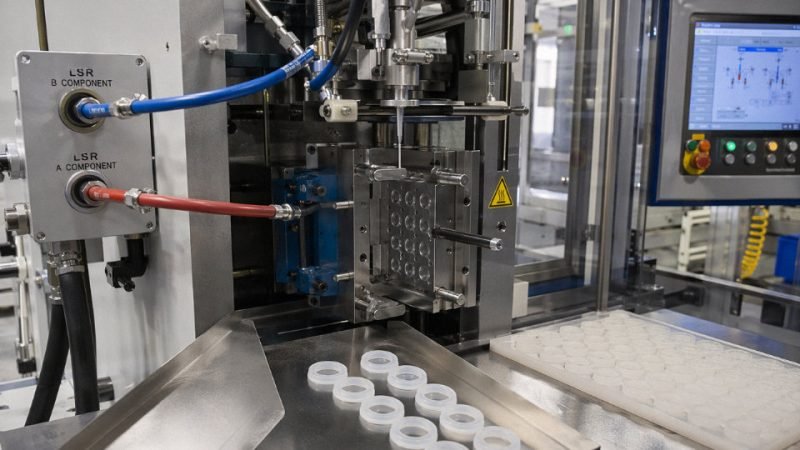
Pick the wrong silicone format and the trouble usually shows up on the floor, not in the datasheet. Parts stick in the tool, flash creeps into seal lips, operators start hand-trimming with razor blades, and a “cheap” material choice becomes downtime, scrap, delayed shipments, or a mold revision nobody budgeted for. The practical answer is not that liquid silicone is better. It is that liquid silicone rubber, solid silicone rubber, and RTV-type silicones solve different production problems.
Liquid silicone is not automatically better than regular silicone. It is better for tight-tolerance, high-volume molded parts, clean processing, soft grades, and short injection cycles. Regular solid silicone often wins on simpler tooling, lower-volume compression molding, extrusion, large profiles, and some cost-sensitive jobs where flash trimming is acceptable.
That sounds simple until you stand between purchasing, tooling, quality, and maintenance. LSR can run injection cycles around 20 to 120 seconds depending on part mass, wall thickness, mold temperature, and cure chemistry; regular silicone may give you cheaper tooling or easier profile production. The better choice depends on what actually costs you money: machine time, labor, rejects, validation effort, or field failure.
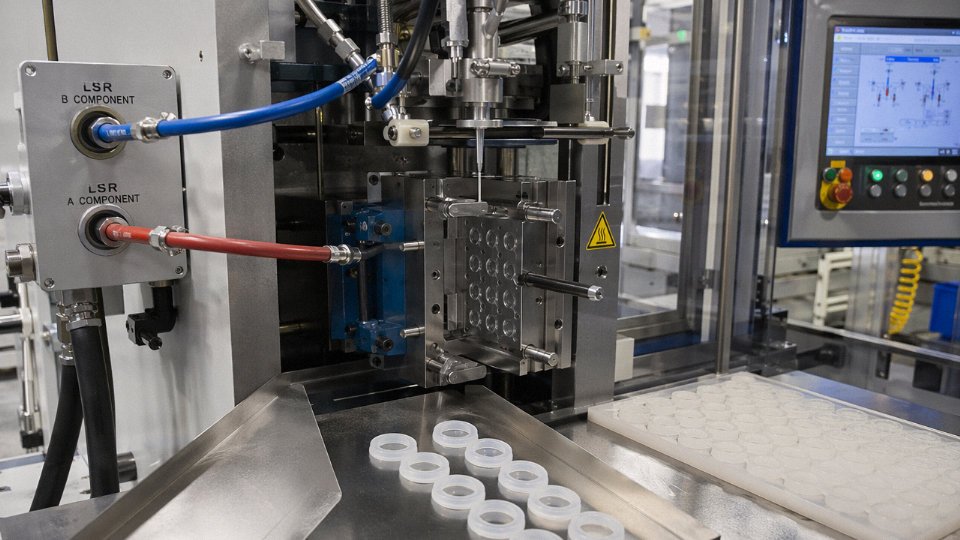
Define liquid silicone rubber and what people usually mean by regular silicone
Before anyone can answer “better,” the material names have to be cleaned up. In plant discussions, “silicone” gets used too loosely. I have seen the same word used for a medical molded valve, a gray HVAC sealant, a keypad sheet, a sponge gasket, and a soft gel potting compound. Those are not the same thing from a processing or purchasing standpoint.
Liquid silicone rubber means a specific molding material
Liquid silicone rubber, usually shortened to LSR, is a two-part elastomer supplied as pumpable A and B components. Most production LSR systems are platinum-cured. The A side and B side are metered, commonly at a controlled 1:1 ratio, mixed through a static or dynamic mixer, then injected into a heated mold where crosslinking happens quickly.
Typical LSR hardness runs from about 5 to 80 Shore A, with many medical, baby-care, seal, and consumer parts sitting around 20 to 60 Shore A. That range depends on polymer structure, silica filler level, plasticizing additives, and the final performance target. A soft 20 Shore A seal and a 60 Shore A button pad may both be LSR, but they will not fill, vent, demold, or flash the same way.
Cycle time in LSR injection molding is often somewhere around 20 to 120 seconds. Thin, low-mass parts in a hot, well-balanced tool can be fast. Thick sections, cold runner issues, cautious cure settings, or a material with slower cure chemistry can stretch the cycle. The mold temperature, part mass, wall thickness, venting, and shot control matter. So does whether the operator keeps purging material after a weekend shutdown, because mixed LSR left where it should not be can ruin Monday morning.
Regular silicone is not one material
“Regular silicone” is a commercial bucket, not a technical grade. It may mean high-consistency rubber, also called HCR or gum-stock silicone, supplied as millable slabs or strips. It may mean room-temperature vulcanizing silicone, one-part moisture-cure sealant from a cartridge, two-part casting silicone, silicone sponge, foam, gel, sheet stock, extrusion, or a die-cut gasket.
That is why procurement specifications that say only “silicone rubber, red” cause trouble. Red could be a peroxide-cured HCR sheet, a platinum-cured extrusion, or a low-cost filled compound with poor compression set. The buyer may save a few cents per gasket and create a slow leak problem that shows up after heat aging. Nobody thanks purchasing for that.
Liquid silicone rubber is always better than regular silicone.False
LSR is excellent for automated molding of precise, clean, repeatable parts, but HCR, RTV, cast silicone, foam, and extruded silicone can be better choices depending on geometry, volume, tooling budget, installation method, and service conditions.
The formulation differences change the factory behavior
LSR is low-viscosity compared with HCR. It flows under injection pressure into fine detail, small ribs, overmolded features, and tight shutoffs. That same flow can also chase every weakness in the tool. Bad parting lines, scratched shutoffs, worn ejector fits, or marginal vent design become flash generators.
HCR is much higher viscosity and more like a dense rubber dough. It is mixed, sheeted, preformed, then compression molded, transfer molded, extruded, or calendered. Filler loading is often handled differently. HCR can tolerate some rugged processing, but it asks for labor, compound preparation, and good control of preform weight.
Crosslinking systems vary. LSR is usually platinum addition-cure, which gives clean curing and low byproducts, but it is sensitive to catalyst poisons such as sulfur, amines, some tin compounds, and certain mold-release residues. HCR may be platinum-cured or peroxide-cured. Peroxide systems can need post-cure to drive off volatiles and stabilize odor, compression set, or food-contact behavior. RTV sealants may cure by moisture using acetoxy, oxime, alkoxy, or other chemistries. Two-part casting silicones may be tin-cure or platinum-cure.
Cure temperature is another practical split. LSR cures in a heated mold, often in a tightly controlled injection cell. HCR usually cures in heated compression, transfer, or extrusion equipment. One-part sealants cure at room temperature from the outside inward as moisture diffuses through the bead. A thick bead of moisture-cure silicone can skin over and stay uncured inside longer than a maintenance technician expects. That is a common field failure, not a textbook problem.
Post-cure requirements should be checked before purchase, not after the first rejected lot. Medical, food-contact, optical, or low-volatile applications may need post-curing even when the molded part looks finished. Continuous service temperature for silicone rubber is often roughly minus 50 degrees Celsius to 200 degrees Celsius, with specialty grades surviving higher temperatures for limited periods. The real limit depends on grade, oxygen exposure, load, compression, fluid contact, and how long the part stays hot.
Manufacturing method is part of the definition
| Material family | Common process | Where it usually fits | Main shop-floor risk |
|---|---|---|---|
| Liquid silicone rubber | Liquid injection molding, overmolding, automated dispensing | High-volume precision parts, seals, medical components, small detailed parts | Flash, contamination, poor mix ratio, cold runner imbalance |
| High-consistency rubber | Compression molding, transfer molding, extrusion, calendering | Sheets, gaskets, tubing, profiles, larger molded rubber parts | Labor variation, preform weight errors, trapped air, post-cure misses |
| RTV and sealants | Manual sealing, dispensing, casting, potting | Field joints, repairs, low-volume assemblies, encapsulation | Cure depth, surface contamination, inconsistent bead size |
| Foams, gels, sponge silicone | Casting, extrusion, sheet conversion, die cutting | Cushioning, thermal gaps, soft seals, vibration isolation | Thickness control, compression set, tear damage during assembly |
So asking whether liquid silicone is better than regular silicone is like asking whether injection molding is better than fabrication. The wrong question leads to the wrong quote package. A molded LSR duckbill valve may be the right answer for millions of parts with tight flash limits. A simple oven-door gasket may be better as an extruded HCR profile cut and joined. A maintenance seal around a panel penetration may only need a one-part RTV, applied by someone who knows not to smear it onto oily stainless and call it done.
Compare material performance: heat, flexibility, compression set, aging, and chemical exposure
Heat resistance and low-temperature flexibility
Silicone rubber, whether liquid silicone rubber or a solid silicone compound, is chosen because it survives where many organic elastomers start to harden, crack, or take a permanent shape. A normal working assumption is roughly minus 50 degrees Celsius to 200 degrees Celsius for continuous service, with specialty grades pushed higher for short periods. That range depends on filler package, peroxide or platinum cure chemistry, post-cure condition, part thickness, airflow, compression load, and what the part is touching.
A static oven gasket sitting at 180 degrees Celsius in dry air is one problem. A thin valve membrane cycling at 160 degrees Celsius in steam and detergent is another. Same base polymer family, very different life.
Liquid silicone often performs well in hot applications because platinum-cured LSR grades can be very clean and uniform, with fewer processing variables than hand-mixed or poorly controlled room-temperature silicones. But that does not mean every LSR beats every high-consistency rubber grade. Some solid silicone compounds are built specifically for high heat, high tear, flame resistance, or electrical service and will outperform a general-purpose LSR.
At low temperature, both families usually keep flexibility better than nitrile, EPDM, or many thermoplastic elastomers. For connector seals, outdoor buttons, freezer equipment, and wearable parts exposed to winter shipping, that matters. The failure mode is rarely dramatic; the seal just stops recovering fast enough, or an actuator feels dead when cold.
Strength, elongation, hardness, and feel
Do not buy silicone by the word “liquid” alone. Buy it by the data sheet, trial parts, and failure mode.
Typical LSR hardness spans about 5 to 80 Shore A, with many medical, baby-care, electronics, and consumer grades landing around 20 to 60 Shore A. Solid silicone families can also be compounded across a wide range. Tensile strength, elongation, tear resistance, resilience, and modulus all move with hardness, filler type, crosslink density, cure system, and post-cure.
A soft 20 Shore A LSR may feel excellent on skin and seal well against uneven plastic. It may also tear during assembly if the gland has a sharp edge or an operator pulls it over a barb with pliers. A tougher solid silicone may survive the assembly abuse but feel too stiff or leak at low clamp force. That is the trade.
For small molded features, LSR has a practical advantage: the injection process can fill fine ribs, thin lips, undercuts, and micro-sealing details very consistently when the mold and cold-runner system are right. Typical LSR injection cycles run about 20 to 120 seconds, depending on part mass, wall thickness, tool temperature, and cure chemistry. That process control does not make the polymer magically stronger, but it can make part-to-part performance tighter. In production, that is often what the customer actually feels.
Liquid silicone rubber is automatically stronger than regular silicone rubber.False
Strength depends on the exact grade, hardness, filler system, cure chemistry, post-cure, and part geometry. LSR often gives excellent molded consistency, while some solid silicone compounds can beat general-purpose LSR in tear strength, heat aging, or specialty mechanical performance.
Compression set: the quiet seal killer
Compression set is where a lot of silicone selection mistakes show up months later. A gasket looks fine at incoming inspection. The assembly passes the first leak test. Then it sits clamped in a warm enclosure, or it cycles under pressure, and the rubber slowly loses recovery.
That matters for seals, gaskets, diaphragms, valves, connector seals, medical device components, and wearable products. A high compression set part does not spring back enough after being squeezed. The result can be water ingress, air leakage, pressure drift, buzzing valves, poor tactile response, or intermittent electrical failure. Intermittent is the nasty one; maintenance blames the connector, production blames assembly, procurement blames the supplier, and everyone loses a week.
LSR grades can be formulated for low compression set, especially platinum-cured grades used in seals and medical components. Solid silicone can also be excellent. The real test should match the application: temperature, squeeze percentage, duration, fluid exposure, and whether the part sees static compression or dynamic cycling. A 70-hour lab test is useful for screening, not a lifetime guarantee.
Aging, ultraviolet, ozone, and relaxation
Silicone generally has strong resistance to ultraviolet light, ozone, oxidation, and weathering compared with many elastomers. Outdoor keypad covers, lighting seals, roof-mounted sensor gaskets, and appliance parts benefit from that. In my experience, the bigger surprises are not usually ozone cracking; they are dirt pickup, pigment shift, surface tack, loss of snap, or stress relaxation under constant load.
Hydrolytic stability is usually good, but steam, hot water, surfactants, and sterilization chemistry can still separate good grades from bad ones. Repeated autoclave exposure, gamma sterilization, ethylene oxide processing, peroxide disinfectants, and aggressive plant washdown chemicals should never be treated as generic “chemical resistance.” Get grade-specific data and, if the risk is high, run aged parts through the real cleaning cycle. Lab coupons do not always capture molded-in stress or thin-edge damage.
Chemical exposure: compatible is not the same as unaffected
Silicone is comfortable with water, body fluids, many mild acids and bases, and plenty of cleaning environments. It is often a poor choice for long exposure to fuels, many hydrocarbon oils, aromatic solvents, and swelling solvents. Some silicone oils and greases can also swell silicone parts, which catches people off guard because the materials sound related.
The right question is not “Does silicone resist chemicals?” The right question is “Which grade, at what temperature, under what strain, for how long, and what amount of swelling or property loss can the design tolerate?”
For food, medical, and personal-care products, extractables, leachables, odor, taste, biocompatibility, and post-cure condition may be just as important as tensile strength. For industrial equipment, the deciding issue may be whether a gasket survives coolant mist, compressor oil, caustic wash, or a maintenance tech wiping everything with whatever solvent is closest to the line.
Liquid silicone is not physically better in every property. The honest answer is narrower: LSR often delivers excellent consistency in molded features because mixing, dosing, injection, and curing are tightly controlled. If the selected grade matches the environment, that consistency reduces scrap, leak variation, assembly rework, and field returns. If the grade is wrong, the best molding cell in the building will only make bad parts very repeatably.
Assess manufacturability: injection molding advantages versus fabrication flexibility
A lot of “liquid versus regular silicone” debates get settled at the press, not in the datasheet. Liquid silicone rubber looks attractive because the material properties are good, but the bigger win is often process control. If the part is suited to automated molding, LSR can take labor, variation, and handling damage out of the operation.
Where liquid silicone rubber earns its keep
LSR is built for closed, metered, repeatable injection molding. Two components are pumped from drums or pails, commonly through a 1:1 metering system, blended in a static mixer, and injected into a heated mold. The feed system stays relatively cool; the mold is hot. That cold-runner, hot-mold arrangement is the opposite of how many thermoplastic people first imagine it, and it matters because it reduces cured waste in the runner system when the tool is designed properly.
Typical LSR injection molding cycles run about 20 to 120 seconds, depending on part mass, wall thickness, tool temperature, cure chemistry, and how aggressively the molder can demold without tearing parts. Small seals and thin medical components may run fast. Thick keypad webs, large overmolded parts, or parts with awkward extraction can sit at the slow end. The press does not care about optimism from the sales meeting.
Low viscosity is the main reason LSR can make shapes that are irritating, or sometimes impossible, with high-consistency rubber. It flows into thin walls, small ribs, microfeatures, soft lip seals, deep undercuts, and complex parting lines with less injection pressure than gum-stock silicone. It also works well around inserts if the insert loading process is controlled. I have seen overmolded metal and plastic inserts fail not because the silicone was wrong, but because operators handled inserts with oily gloves or loaded them slightly proud of the nest. The mold then tells the truth: flash, short shots, or bond failures.
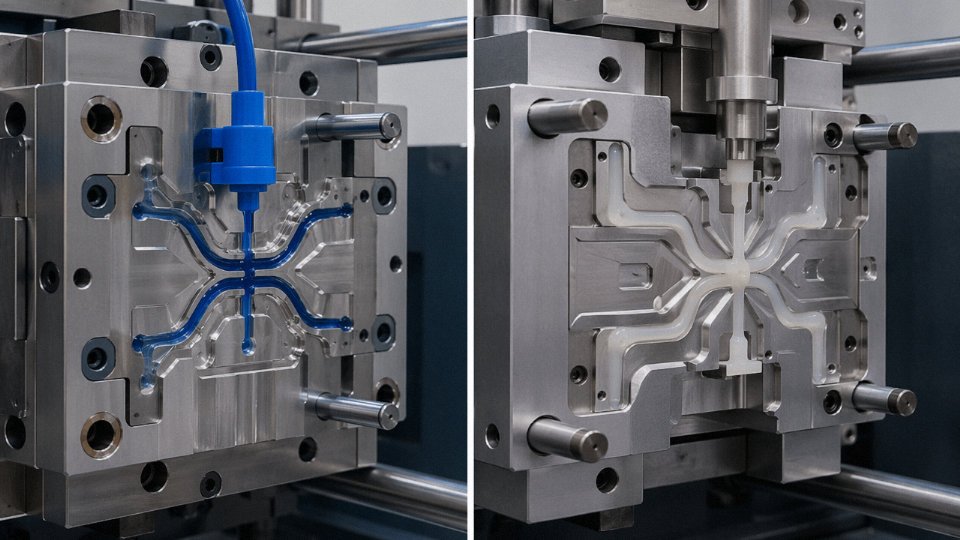
For high-volume parts, the limited manual handling is a real advantage. Less touching means fewer fibers, fewer fingerprints, fewer preform weight errors, and fewer judgment calls at 2 a.m. Automation can include drum pumps, color dosing, vision inspection, robotic demolding, post-cure trays, and bagging. Not every plant needs all of that. But once volumes climb, the cleaner process usually pays back in scrap reduction and steadier output.
Liquid silicone rubber is automatically cheaper because it molds faster than regular silicone.False
LSR can reduce labor and cycle variation, but tooling, metering equipment, cold-runner design, validation, and maintenance can outweigh those savings at low volume or for simple shapes.
Where regular silicone processes still make more sense
What many buyers call “regular silicone” is often high-consistency rubber, or HCR. It behaves more like a soft gum than a liquid. The material may be milled, pigmented, sheeted, cut into blanks, preformed, transfer molded, compression molded, extruded, calendered into sheet, or cured as tubing or profiles. It is messier. It is also extremely practical.
Simple profiles are the obvious case. If you need silicone tubing, sponge cord, a U-channel, sheet stock, a large flat gasket, or a low-volume custom seal, HCR or fabricated silicone is often the sane route. Tooling may be a die, a compression mold, a knife-cut program, or even hand fabrication with adhesive or room-temperature-vulcanizing silicone in repair work. Lead time and minimum order quantity can beat an LSR mold by a wide margin.
Large gaskets are a good example. A door seal for an enclosure, a one-off oven gasket, or a maintenance replacement for an old machine may not justify a multi-cavity injection tool. A fabricator can extrude a profile, cut it, bond the corners, and ship usable parts. Will the corner joint be as elegant as a molded endless gasket? Usually not. But the equipment is back online, and that matters.
Design-for-manufacturing checks that decide the route
LSR tooling is unforgiving in a different way than HCR tooling. Gate location affects knit lines, jetting, cosmetic witness marks, and air traps. Venting has to be deliberate because LSR will find gaps that look harmless on a drawing. Flash control depends on clamp force, tool flatness, shutoff design, material viscosity, injection speed, and maintenance discipline. A few microns of wear at a shutoff can become a trimming problem that never quite goes away.
Parting line strategy deserves early attention. Put it through a sealing lip and you may buy yourself leakage complaints. Put it across a cosmetic surface and the customer will see it forever. Demolding is another quiet trap: soft LSR grades, especially in the lower Shore A range, can stretch, roll, or tear if the ejection concept is borrowed from a rigid plastic part. Air poppets, stripper plates, vacuum assist, and robot fingers all need to be considered before steel is cut.
Shrinkage is manageable, but not imaginary. It varies with grade, cure, filler package, tool temperature, post-cure, and part geometry. Trapped air creates voids or burn-like defects. Poor tool cleaning leaves residue in vents and around gates. In practice, the best LSR molders treat vent maintenance like preventive maintenance, not like a cleanup job after scrap appears.
Practical selection rule
Use liquid silicone when molded complexity, tight repeatability, low handling, and annual demand justify proper tooling and process control. Use regular silicone when the geometry is simple, the volume is modest, the part is large, the design may change, or the work has to happen in the field.
| Manufacturing need | Usually better fit | Reason |
|---|---|---|
| Thin walls, microfeatures, complex molded seals | Liquid silicone rubber | Low viscosity and controlled injection help fill delicate geometry |
| Tubing, sheet, simple cord, large flat gaskets | Regular silicone | Extrusion, calendering, cutting, and bonding are faster to launch |
| High-volume insert overmolding | Liquid silicone rubber | Automation and metering reduce handling variation |
| Prototype or maintenance repair | Regular silicone | Lower tooling burden and easier field fabrication |
| Tight flash and cosmetic control at scale | Liquid silicone rubber, if tool quality is high | Repeatability is strong, but only with disciplined venting and shutoffs |
Model the cost decision using volume, tooling, scrap, labor, and qualification burden
Material price is the easiest number to quote and often the least useful one. I have seen teams argue over a few dollars per kilogram while ignoring two operators trimming flash for half a shift, or a post-cure oven holding work-in-process for a full day. For purchasing and factory planning, compare cost per approved part, not cost per kilogram.
The cheaper silicone compound is always the cheaper finished part.False
Finished cost depends on yield, labor, cycle time, trimming, post-curing, inspection, documentation, validation work, and scrap. Raw material price can be a secondary driver once production is stable.
Tooling cost changes the break-even point
Liquid silicone rubber usually needs a purpose-built injection mold, metering equipment, and a press set up for two-part material dosing. A simple single-cavity LSR prototype mold may sit in the low tens of thousands of dollars, depending on geometry, parting line, surface finish, and local toolmaking rates. A multi-cavity cold-runner or valve-gated production tool can move into the high tens of thousands to several hundred thousand dollars, especially if the part needs tight flash control, automatic demolding, insert loading, or medical validation support.
Regular silicone routes often start cheaper. Compression molds, transfer molds, simple casting tools, extrusion dies, and steel-rule dies for sheet gaskets can be much lower in upfront cost. A flat gasket cut from silicone sheet may need little more than approved sheet stock and a die, laser program, or waterjet path. Custom extruded profiles need die work and line setup, but the entry cost is usually easier to swallow than a dedicated LSR injection system.
That does not make regular silicone cheaper forever. It just moves the cash burden later into labor, scrap, handling, and inconsistent cycle time.
Where liquid silicone pays back
LSR starts to look good when volume, repeatability, and labor content matter. Injection molding can run roughly 20 to 120 second cycles, depending on part mass, wall thickness, tool temperature, cure chemistry, and how quickly the part can be demolded without tearing. A small seal in a balanced multi-cavity tool is a different animal from a thick overmolded component with awkward undercuts.
The cost advantages come from boring things that plant people care about:
- Metered mixing instead of hand-weighed batches
- Less trimming if the tool is built and maintained properly
- Stable shot size and repeatable cure
- Fewer operators per thousand parts
- Easier automation for demolding, inspection, and packing
- Better lot-to-lot records when the process is validated
A good LSR cell can make the same part all week with modest intervention. A poor one can still make scrap quickly, so do not confuse automation with immunity from bad process control. Worn shutoffs, contaminated mixers, or a lazy mold cleaning schedule will show up as flash, short shots, knit defects around inserts, or cure problems.
Where regular silicone stays economical
For prototypes, design verification builds, maintenance spares, replacement gaskets, custom industrial seals, and low-volume machinery parts, regular silicone often wins. The buyer can source sheet, tube, cord, extruded profile, or molded blanks without committing to a large tool. Engineering can change thickness, durometer, hole pattern, or profile shape without scrapping a high-value mold.
A typical example: a plant needs 80 replacement gaskets for a heated enclosure, and the drawing is not perfect because the original equipment is fifteen years old. Cutting parts from silicone sheet may cost more per piece than a molded LSR part in theory, but it avoids a long tooling lead time and lets maintenance fit-check the first few pieces. If the gasket design is wrong, the penalty is a sheet of material and some cutting time. If an injection mold is wrong, the penalty is weeks.
Hidden cost drivers that belong in the model
Build the estimate around approved output. I would include these buckets before signing off a sourcing decision:
| Cost driver | Why it matters | Usually worse in |
|---|---|---|
| Post-curing | Ovens consume time, space, racks, labor, and energy; requirements depend on compound and application | Both, often medical or food-contact parts |
| Flash removal | Hand trimming is slow and inconsistent; it can damage sealing edges | Compression and poorly designed molds |
| Cleaning and line clearance | Silicone attracts dust and can contaminate nearby processes | Both |
| Inspection time | Transparent defects, flash, tear marks, and dimensional drift take real labor to screen | Both, depending on tolerance |
| Material waste | Purge, runner waste, expired mixed material, offcuts, and sheet skeletons add up | Process-dependent |
| Mixing errors | Ratio mistakes, air entrapment, or incomplete dispersion can ruin a batch | Manual mixing and casting |
| Shelf life | Some materials age out before use; inventory discipline matters | Low-volume programs |
| Cure inhibition | Sulfur, amines, some tapes, oils, gloves, and residues can block cure | Platinum-cured systems |
That last one is not theoretical. Cure inhibition is the kind of problem that burns a week because the first suspect is always the material, then the oven, then the operator, and only later someone notices the new release agent or a different nitrile glove.
Qualification can outweigh piece-price savings
Procurement should price the supplier system, not just the part. Medical, food-contact, and regulated industrial applications may require supplier audits, certificates of analysis, extractables or compliance documents, process validation, installation and operational qualification, mold validation, first-article inspection, and formal change control. Even non-regulated plants often need material traceability, cure records, and documented inspection plans.
If LSR automation reduces scrap but forces a full validation package, the payback depends on annual volume and product life. If regular silicone avoids tooling but needs manual trimming and 100 percent inspection, that labor must be in the quote.
Use a simple rule: calculate total annual cost divided by accepted, documented, shippable parts. Include amortized tooling, material yield, labor, machine time, energy, scrap, inspection, packaging, supplier quality work, and expected engineering changes. The “better” silicone is the one that gives the lowest risk-adjusted cost for the part you actually need to ship.
Evaluate safety, biocompatibility, food contact, and regulatory requirements
For regulated products, liquid silicone rubber often gets favored not because it is magically “safer,” but because the whole manufacturing route is easier to control. Platinum-cured liquid silicone rubber is common in medical devices, baby bottle nipples, pacifier parts, food-contact valves, drug-delivery seals, and skin-contact wearables for that reason. The material can be metered from closed drums or pails, mixed at a controlled ratio, injected into a heated tool, cured quickly, and packed with relatively little hand contact.
That matters on a real floor. Every open bucket, hand-trim station, dusty rack, reused spatula, or mystery cleaning solvent becomes another contamination argument during qualification.
Compliance is tied to the grade, not the word “silicone”
A buyer should never approve a silicone only because a supplier calls it “medical grade,” “food grade,” or “baby safe.” Those phrases are not enough for engineering release. The approval belongs to a specific compound, cure package, pigment, processing route, and sometimes even the manufacturing site.
Common documentation may include United States Pharmacopeia Class VI data, ISO 10993 biocompatibility testing, food-contact statements such as FDA 21 CFR or relevant European food-contact declarations, extractables and leachables data, heavy metal or restricted-substance declarations, and lot-level traceability. For drug-delivery parts, the extractables profile can become the long pole in the tent. A soft seal touching a formulation for months is a different risk than a kitchen spatula touching hot food for a few minutes.
Medical-grade silicone means any silicone is safe for implants, baby products, or food contact.False
Approvals are grade-specific and use-specific. The safety case depends on formulation, cure chemistry, processing, exposure time, temperature, body contact type, and the regulatory test package.
In procurement terms, ask for the actual grade name and document revision, not a sales sheet with broad claims. If the supplier will not provide regulatory statements, safety data sheets, technical data sheets, certificates of analysis or conformance, and a change notification agreement, that grade is not ready for a controlled application.
Cure chemistry changes the risk profile
Platinum-cured LSR is attractive in regulated work because it is an addition-cure system with low byproduct formation when processed correctly. It tends to have low odor and a cleaner extractables profile than many older peroxide-cured compounds, although the exact result still depends on fillers, pigments, additives, cure completeness, and post-processing.
Peroxide-cured silicone can be perfectly acceptable in industrial gaskets, hoses, profiles, and some food-contact applications, but it may need post-cure to drive off residual byproducts and volatiles. Skip or shorten that oven step and the part can carry odor, fogging risk, or extractables that show up later in validation. I have seen teams save a few hours in post-cure and then lose weeks explaining a failed odor or residue test. Bad trade.
Moisture-cure silicone sealants are a different animal again. They are useful for bonding, sealing, maintenance, and field assembly, but many release cure byproducts such as acetic acid, alcohols, oximes, or amines depending on chemistry. That can matter around electronics, metal surfaces, optical parts, or enclosed consumer products where odor and trapped volatiles become complaints. A tube of room-temperature-vulcanizing sealant from a maintenance crib should not be treated as equivalent to a qualified molded LSR component.
Clean manufacturing is part of the specification
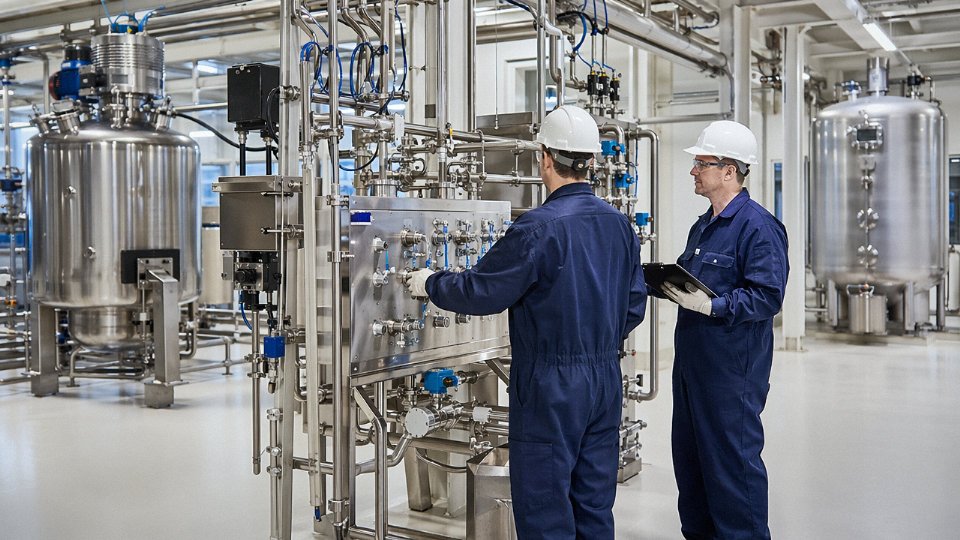
For regulated silicone, the process often matters as much as the polymer. Closed material delivery reduces operator contact. Static mixers and metering pumps control ratio better than hand mixing. Dedicated hoses, barrels, color systems, and molds reduce cross-contamination. Cleanroom molding may be required for medical or drug-contact parts, usually with defined gowning, air handling, bioburden controls, and packaging controls.
Lot traceability is not paperwork decoration. If a wearable adhesive-backed silicone pad causes skin complaints, or a food valve fails migration testing, the factory needs to know which resin lot, pigment lot, mold, press, shift, and packaging batch were involved. Without that, the recall boundary gets wider. Wider means more scrap, more customer calls, and a procurement team that suddenly cannot sleep.
A practical approval screen
| Question to ask before release | Why it matters on the floor |
|---|---|
| Is the exact silicone grade listed in the regulatory file? | Substituting a similar hardness grade can invalidate testing. |
| Is the cure system platinum, peroxide, or moisture-cure? | Byproducts, odor, post-cure needs, and extractables can change. |
| Are colorants and additives included in the approval? | Pigments often create the compliance issue, not the base silicone. |
| Is lot traceability available back to raw material batches? | Needed for complaints, audits, containment, and recalls. |
| Is supplier change notification written into the purchase terms? | A small formulation or site change can trigger revalidation. |
Silicone is generally valued for inertness, heat stability, and broad skin tolerance. That is a useful starting point, not a finished safety argument. The real question is narrower: this formulation, cured this way, made in this plant, exposed to this user or fluid, for this long, at this temperature. If the supplier can support that chain with data, liquid silicone rubber is often the cleanest path. If they cannot, “regular silicone” with the right documented grade may be safer commercially than a poorly documented LSR choice.
Match the silicone type to common applications across medical, automotive, electronics, kitchenware, and industrial sealing
A good silicone choice usually starts with the drawing and the plant route, not the material brochure. Same polymer family, very different outcomes once you add tool tolerances, operator handling, cleanliness, cure control, and purchasing volume.
Medical components
Liquid silicone rubber is often the practical favorite for medical valves, seals, mask cushions, tubing connectors, syringe parts, respiratory components, and overmolded assemblies. The reason is not magic material performance. It is process control.
LSR injection molding runs in a closed, metered system, so the material sees less manual handling than gum-stock silicone mixed on rolls or cut into charges for compression molding. That matters in clean production. It also gives repeatable flash control, stable shot weight, and consistent fill in small features such as valve lips, duckbill openings, thin sealing ribs, and soft-touch mask edges. Common medical and consumer LSR grades sit around 20 to 60 Shore A, though the broader LSR range runs roughly 5 to 80 Shore A depending on filler package and cure system.
For respiratory masks, a small mismatch in softness or parting-line flash can become a leak complaint. For syringe seals, friction variation shows up as inconsistent break-loose force. A buyer may see two silicones listed as “medical grade,” but the molder knows the real question: can the supplier hold dimensions, cleanliness, cure state, and lot traceability without heroic inspection?
Automotive and mobility parts
In automotive work, liquid silicone is strong where the geometry is small, precise, and tied to electronics. Connector seals, wire grommets, sensor seals, battery vent components, and overmolded electronic modules are common fits. LSR handles fine ribs and repeatable compression features well, and automated molding helps when volumes are high enough to justify the tool.
Regular silicone still earns its keep. Hoses, extruded profiles, turbo duct couplers, large gaskets, and long sealing strips often make more sense as high-consistency rubber, extrusion, calendared sheet, or fabricated parts. The tooling is less painful for big parts and long profiles. Repair stock is easier too; maintenance teams can actually recognize and replace a strip gasket without waiting for an injection mold schedule.
Watch installation abuse. A precision LSR connector seal can be perfect leaving the press, then get nicked by a dry assembly fixture or twisted by a rushed operator. The wrong assembly lubricant, even something that “worked last year,” can swell or contaminate the seal depending on the silicone grade and contact media.
Electronics and electrical assemblies
Electronics are a mixed field. LSR works well for molded keypads, environmental seals, strain reliefs, connector boots, and overmolded assemblies where part geometry and repeatability justify injection tooling. It can also help protect delicate parts from vibration because soft grades absorb movement without the brittle behavior seen in some hard plastics.
But liquid silicone rubber is not the answer for every electronics problem. Thermal interface pads, potting compounds, conformal protection, room-temperature vulcanizing sealants, gels, and silicone adhesives may be a better fit depending on heat path, rework needs, board layout, and cure constraints. A potted power module, for example, may need a flowable silicone gel rather than molded LSR because the material must wet around components after assembly. A field-repairable enclosure may need an RTV bead, not a molded gasket that forces a redesign.
Liquid silicone rubber is always the best silicone for electronics sealing.False
LSR is excellent for repeatable molded seals and overmolded parts, but gels, adhesives, RTV silicones, potting compounds, and thermal interface materials may be better when the silicone must be dispensed after assembly, transfer heat, allow rework, or fill irregular board geometry.
Kitchenware and consumer goods
For kitchenware, baby products, wearable parts, grips, buttons, and soft-touch consumer items, LSR molding is attractive when the program needs consistent color, texture, thin sections, clean edges, and high-volume repeatability. Once the tool is right, cycle times for LSR injection molding are often somewhere around 20 to 120 seconds, depending on part mass, wall thickness, mold temperature, and cure chemistry.
Compression molding and casting still fit lower-volume products, larger simple shapes, prototypes, and designs with frequent changes. A small brand making a limited run of spatulas or specialty baking molds may not want to pay for a multi-cavity LSR tool before the market is proven. The tradeoff is usually more manual trimming, more variation, and slower throughput.
Industrial sealing
Industrial sealing is where people get into trouble by asking for “silicone” too generally. O-rings, diaphragms, membranes, sheet gaskets, extruded profiles, inflatable seals, and custom die-cut parts may use either LSR or regular silicone. The better route depends on tolerance, annual quantity, compression set targets, mating surface quality, media exposure, and how the seal is installed.
Silicone rubber commonly handles continuous service around minus 50 degrees Celsius to 200 degrees Celsius, with specialty grades going higher for short durations depending on compound and duty cycle. That does not mean every silicone seal survives steam cleaning, fuel splash, sharp flange edges, or permanent over-compression. Right material, wrong gland design still fails.
| Application area | Often preferred silicone type | Practical reason | Cautions |
|---|---|---|---|
| Medical valves, masks, syringe seals, tubing connectors | Liquid silicone rubber | Clean closed processing, fine features, repeatable softness and sealing lips | Grade qualification, extractables, traceability, flash control |
| Automotive connector seals, sensor seals, overmolded electronics | Liquid silicone rubber | Tight tolerances, automation, stable compression geometry | Assembly damage, lubricant compatibility, tooling cost |
| Automotive hoses, long profiles, large gaskets | Regular silicone rubber | Extrusion or fabrication suits length, size, and service replacement | Dimensional variation, splice quality, cure consistency |
| Electronics keypads, boots, molded seals | Liquid silicone rubber | Repeatable tactile feel, molded detail, clean sealing surfaces | Carbon pills, coatings, and overmold adhesion need validation |
| Potting, conformal protection, thermal interfaces | RTV, gel, adhesive, or specialty silicone | Dispensing after assembly, gap filling, heat transfer, rework needs | Cure inhibition, trapped air, service temperature |
| Kitchenware and consumer goods | LSR for high volume; compression or casting for low volume | LSR gives consistency; other processes reduce upfront tooling risk | Color matching, odor, flash, food-contact documentation |
| Industrial O-rings, diaphragms, sheet gaskets, custom seals | Either, based on geometry and volume | LSR for precision molded parts; regular silicone for sheets, profiles, and specials | Compression set, gland design, media exposure, installer handling |
Identify failure modes that make one silicone choice look better on paper but worse in service
A datasheet can make liquid silicone rubber look clean, repeatable, and almost automatic. A cured sheet of “regular” silicone can look simpler and cheaper. Both impressions can be wrong once the part sees a mold, an operator, a solvent wipe, a clamp load, or a sterilization cycle.
The real question is not “which silicone is better?” It is “which silicone survives the process and the duty cycle with the least uncontrolled variation?”
Liquid silicone risks are usually process-window risks
LSR injection molding is capable of excellent repeatability, but only if the whole system is under control: material storage, A/B ratio, static mixer condition, mold venting, cold runner balance, tool temperature, demolding method, and downstream handling.
Cure inhibition is one of the nastier surprises. Certain sulfur compounds, amines, tin-cured residues, plasticizers, release agents, and even contamination from gloves or cleaning chemicals can interfere with platinum-cured LSR. The symptom may be subtle: a glossy tacky patch, weak tear strength near an insert, or a part that passes visual inspection but fails compression set after a few days under load.
Air entrapment and incomplete fill tend to show up around thin lips, long flow paths, shutoff features, and sharp transitions. Typical LSR injection cycles may run roughly 20 to 120 seconds, depending on part mass, wall thickness, mold temperature, and cure chemistry, but pushing the cycle too hard can leave knit-line weakness, short shots, or trapped gas burns. Flash is the opposite headache. LSR flows like a low-viscosity liquid before cure, so poor shutoffs, worn tools, low clamp force, or overpacking can create hairline flash that ruins sealing lips or creates loose debris.
Demolding damage deserves more respect than it gets. Soft grades, especially in the lower Shore A range, can tear on undercuts, vacuum pickup cups, or aggressive robot fingers. A 20 Shore A medical valve may look fine in a prototype mold, then start splitting when the production tool gets hot and the automation runs faster.
Overmolding brings its own set of traps. Poor adhesion to plastic or metal inserts can come from the wrong primer, surface oxidation, mold release carryover, moisture, low insert temperature, or simply choosing an incompatible substrate. Pigment dispersion is another practical issue. Inconsistent color masterbatch mixing can signal broader mixing instability, and in optical, medical, or consumer parts it may trigger scrap even when the mechanical properties are acceptable.
Regular silicone has more operator and geometry variation
By “regular silicone,” many plants mean high-consistency rubber, room-temperature-vulcanizing silicone, cast silicone, extruded profiles, compression-molded parts, or fabricated sheet goods. These routes are useful. They are also easier to fool yourself with during trials.
Hand mixing is a common weak point for two-part silicones. Ratio errors, poor scraping of bucket walls, short mix time, or whipping in air can create soft spots and bubbles. Thick castings may cure well on the outside while staying undercured inside, especially if the chemistry, ambient temperature, or section thickness was not considered. Vacuum degassing helps, but I have seen shops skip it when schedules get tight. That decision usually returns later as leak failures.
Compression molding can generate high flash if charge weight, preform placement, tool condition, and press closing speed are not controlled. Extruded and fabricated parts drift in their own way. Cut gaskets, spliced O-rings, punched seals, and adhesive-backed strips can vary with sheet thickness, die wear, operator technique, storage compression, and post-cure history. Post-cure variation can be larger than buyers expect; oven load density, airflow, time at temperature, and part spacing all affect volatiles, odor, hardness shift, and dimensions.
Service failures often come from the system, not the silicone name
Compression set leakage is the classic one. A silicone gasket may seal during assembly, then relax after weeks under bolt load and temperature. Typical silicone service temperature is roughly minus 50 degrees Celsius to 200 degrees Celsius, with specialty grades extending higher for limited durations, but “can survive heat” is not the same as “keeps sealing force after heat, oil, and compression.”
Fluid compatibility needs actual testing. Some silicones swell badly in fuels, aromatic solvents, certain oils, and cleaning agents. Swelling changes dimensions; it can also reduce tear strength and make assembly damage worse. Thin membranes and soft seals may tear during installation if edges are sharp, lubrication is missing, or the operator stretches the part like an elastic band. Heat aging can embrittle some formulations. Adhesion can fail after thermal cycling. Outgassing can contaminate optics, electronics, or vacuum chambers. Surface tack can attract lint and powders, then those particles become leak paths.
A silicone grade that passes a room-temperature bench test can still fail after compression, heat aging, chemical exposure, or sterilization.True
Silicone performance depends on the combined mechanical, thermal, chemical, and processing history, not only the base polymer family or a single datasheet property.
Validate with the material and tooling you will actually buy
Final validation should use production-intent material, production-intent tooling, and the intended manufacturing route. Prototype-grade silicone poured in a lab mold may not match injection-molded LSR from a heated multi-cavity tool. A hand-cut gasket from premium sheet may not represent a die-cut production lot after storage and post-cure.
For critical parts, I would expect a validation plan to include accelerated aging, thermal cycling, compression set testing, chemical soak tests, extractables screening where cleanliness or patient contact matters, and pull testing for bonded or overmolded assemblies. Pressure parts need burst testing. Seals need leak testing under realistic squeeze, surface finish, and temperature. If sterilization is part of the product life, validate the actual method and dose or cycle count, not a generic statement from a brochure.
The best silicone is the one whose full system performance has been proven under the mechanical load, temperature range, fluid exposure, cleaning method, assembly abuse, storage condition, and regulatory path the part will actually see. Anything less is just a promising sample on someone’s desk.
Use a practical selection framework before specifying liquid silicone or regular silicone
A good silicone decision starts with the part, not the brochure. I usually begin with a blunt question: what has to stay true after heat, load, cleaning, assembly abuse, and two years of operators handling it with gloves, oil, or coffee on their hands?
Start with functional requirements
Write down the working requirements before naming the material format. For a seal, that means sealing load, squeeze percentage, groove condition, movement, pressure, and whether the joint is static or sliding. A soft 30 Shore A silicone that feels perfect on the bench may roll out of a groove if the gland is sloppy. A harder grade may seal fine on a machined housing but leak on a warped plastic cover.
For moving parts, specify elongation and tear strength, not just hardness. Liquid silicone rubber often comes in a broad range, roughly 5 to 80 Shore A, with many medical and consumer parts sitting around 20 to 60 Shore A, but hardness alone does not tell you whether a thin lip will survive demolding, assembly, or repeated flexing. Tear strength depends heavily on grade, filler system, cure chemistry, and part geometry.
Temperature needs the same discipline. General silicone rubber is commonly used around minus 50 degrees Celsius to 200 degrees Celsius in continuous service, with specialty grades higher for limited exposure. That number depends on grade, air versus fluid exposure, load, compression, and whether the part must still seal after aging. A gasket that only has to survive a short oven cycle is a different animal from a connector seal living next to an engine.
Do not skip the less glamorous requirements: media exposure, electrical insulation, transparency, color match, tactile feel, surface finish, lint attraction, and whether the part can tolerate mold release residue. I have seen good materials rejected because the surface felt “too grabby” for a consumer part, and I have seen bad materials approved because nobody tested them against the actual washdown chemical.
Define production requirements before asking for quotes
The production plan can flip the answer. Annual volume, tolerance class, cavity count, target cycle time, automation level, inspection method, and acceptable scrap rate all matter.
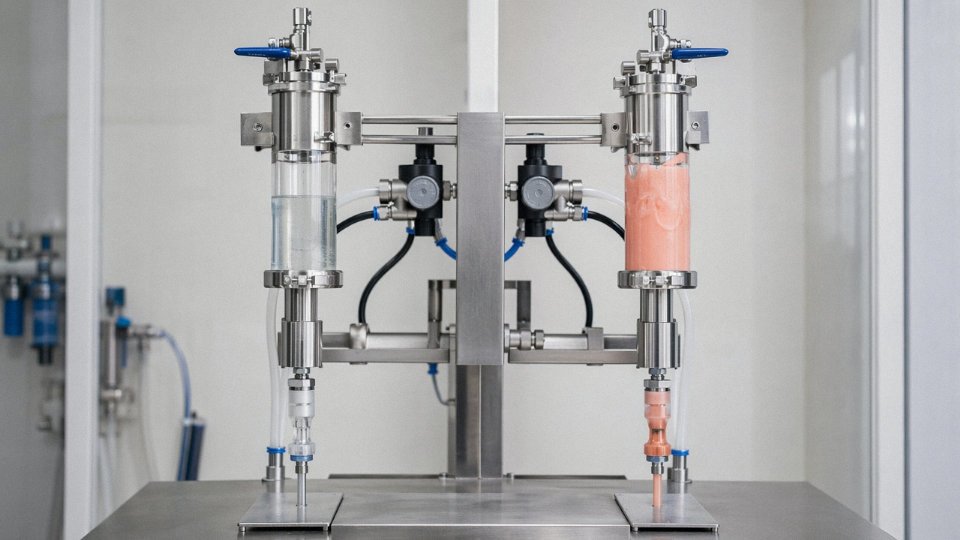
Liquid injection molding can make sense when you need repeatability, fine detail, low flash, and automation. Typical LSR injection cycles run about 20 to 120 seconds, depending on part mass, wall thickness, mold temperature, runner design, and cure chemistry. A tiny connector seal in a well-balanced multi-cavity tool is one case. A thick hand-cast pad is another.
Regular silicone formats may win when the shape is simple, volumes are low, or the part is cut from sheet, extruded as cord, bonded into an assembly, or dispensed in place. Compression molding can be slower and more labor-heavy, but tooling cost and process flexibility are often easier to live with during early demand swings. Extrusion is hard to beat for tubing, profiles, and long seals. Die cutting from calendared sheet is not elegant, but it is fast to source and easy to revise.
Set inspection rules early. Are you measuring every critical dimension with vision, sampling by cavity, checking flash manually, using leak decay, or only doing visual inspection? A buyer may see two similar quotes. One includes automated deflashing and cavity traceability. The other assumes hand trimming and loose cosmetic acceptance. Those are not the same offer.
Define compliance and traceability needs
Compliance is not a label you sprinkle on late. Medical, food contact, flame resistance, automotive, electrical, biocompatibility, cleanroom production, and documentation traceability can all constrain the choice.
For medical or food-contact parts, ask for the actual grade data, not a general statement that “silicone is safe.” For electrical work, look at dielectric properties, tracking resistance, flame rating, and aging under heat. Automotive programs may require PPAP-style documentation, change control, lot traceability, and long-term supply commitments. Cleanroom molding may be necessary for some medical parts, but paying for it on an industrial dust cap is wasteful.
Liquid silicone is automatically better for every regulated application.False
Regulated applications depend on the specific compound, cure system, processing controls, documentation, and test evidence. LSR is often attractive, but grade and supplier controls decide acceptability.
Screen the manufacturing route with the supplier, not after design freeze
Bring the molder, extruder, converter, or compounder in while the geometry is still movable. Ask for material recommendations, moldability review, expected shrinkage, parting line concerns, gate location, venting risk, post-cure need, color stability, bonding method, and available test data.
A useful supplier will tell you where the design is asking for trouble. Thin walls may short-fill. Deep undercuts may tear. A glossy surface may show flow marks or dust. Pigments can shift after post-cure. Some self-bonding grades behave beautifully on one thermoplastic and poorly on another because the substrate, drying practice, and molding temperature are off by a little.
Decision checklist
| Question | Liquid silicone is usually stronger when… | Regular silicone format may be better when… |
|---|---|---|
| Is annual volume high enough? | Multi-cavity automation spreads tooling cost over steady demand | Demand is low, uncertain, or revision-heavy |
| Are tolerances tight? | Small molded features, seals, and repeatable flash control matter | Sheet, cord, tubing, or simple pads meet the print |
| Is the part highly regulated? | You need controlled molding, clean handling, and strong traceability | A qualified extruded, molded, or die-cut grade already has acceptable documentation |
| Is geometry complex? | Undercuts, thin lips, overmolding, or integrated features justify the tool | Flat, long, or simple shapes can be cut, extruded, cast, or compression molded |
| Is speed to launch critical? | Existing tool platforms or experienced LSR suppliers are available | Prototype tooling, die cutting, dispensing, or extrusion can start sooner |
| Is scrap expensive? | Automation and stable process windows reduce handling damage | Manual trimming and inspection are acceptable for the risk level |
The practical rule is simple: choose liquid silicone when its process control, geometry capability, and automation reduce total risk. Choose regular silicone when a simpler format meets the function with less tooling, faster changes, and easier sourcing. The wrong choice rarely fails on the purchase order. It fails later, as flash in an assembly nest, scrap at final inspection, a seal that takes a compression set, or a supplier change nobody can validate without stopping the line.
Frequently asked questions about liquid silicone versus regular silicone
Is liquid silicone safer than regular silicone?
Not automatically. Safety is a grade-and-process question, not a liquid-versus-regular question.
A well-specified liquid silicone rubber can be very clean, especially platinum-cured grades used in medical, infant-care, and food-contact parts. But a poorly selected LSR, or one molded in a shop with weak contamination control, is not “safe” just because it starts as a liquid. The same goes for high-consistency rubber, RTV silicone, and extruded silicone tubing.
Look at the actual exposure: skin contact, repeated boiling, baby saliva, blood path, oil mist, ozone, UV, or cleaning chemicals. Then ask for the right paperwork: FDA food-contact suitability, LFGB where needed, USP Class VI, ISO 10993, extractables and leachables data, lot traceability, cure system details, and change-control commitments. Procurement should not accept a casual “medical grade” statement on a quote sheet. I have seen that phrase used far too loosely.
Liquid silicone is always safer than regular silicone.False
Safety depends on formulation, cure chemistry, post-curing, intended exposure, manufacturing controls, and documented compliance testing, not only on whether the silicone is supplied as a liquid.
Is liquid silicone stronger?
Sometimes, but “stronger” needs unpacking. Tensile strength, tear resistance, elongation, compression set, and dimensional repeatability do not move together like a single dial.
LSR commonly gives excellent molding consistency because metering, mixing, and injection can be tightly controlled. That helps small seals, connector grommets, diaphragms, and parts with thin ribs. Typical LSR hardness runs about 5 to 80 Shore A, with many medical and consumer grades sitting around 20 to 60 Shore A. That does not mean every LSR part resists tearing better than every compression-molded silicone part. A high-tear HCR compound may beat a general-purpose LSR in a rough gasket application where mechanics stretch the part over a flange with a screwdriver nearby. Yes, that happens.
For sealing parts, I usually care less about headline tensile strength and more about compression set after heat aging, tolerance repeatability, gate vestige location, flash control, and how the part behaves after six months in the actual assembly.
Is liquid silicone more expensive?
At the material-purchase level, often yes. At the approved-part level, not always.
LSR needs proper injection tooling, cold runner or valve-gate decisions, a metering system, and a molder who knows silicone rather than just thermoplastics. Tooling cost can be a real hurdle for low-volume work. For prototypes, repair kits, custom pads, or oversized seals, fabricated sheet, extruded profile, compression molding, or RTV casting may be cheaper and faster.
At volume, the calculation changes. LSR injection cycles are often roughly 20 to 120 seconds, depending on part mass, wall thickness, tool temperature, cavitation, and cure chemistry. Labor per part can drop sharply. Flash and trimming may also drop if the tool is built right. Get the tool wrong and you will pay for it every shift: torn flash, stuck parts, short shots, extra inspection, and operators losing patience with tweezers and air nozzles.
Can liquid silicone be used for food, baby products, and medical devices?
Yes, if the exact grade, colorant, cure package, and production controls match the requirement. “Silicone” on its own is not a certification.
For food and baby products, check the applicable food-contact regulation, migration limits, pigment approvals, post-cure requirements, and cleaning compatibility. For medical devices, the bar is higher: biocompatibility testing must match body contact type and duration. A material suitable for a skin-contact wearable may not be suitable for an implantable or fluid-path component.
A typical scenario: a buyer approves a soft-touch LSR part for a baby product based on a supplier brochure, then later changes from translucent to bright color. That pigment change may trigger new compliance review. Treat color as part of the formulation, not decoration.
Is liquid silicone the same as silicone sealant?
No. Silicone sealant is usually an RTV material applied from a cartridge, tube, or dispensing system. It cures in place through moisture or a two-part reaction. It is useful for sealing joints, bonding panels, potting light-duty assemblies, and maintenance work.
LSR is a two-part, low-viscosity rubber designed for controlled molding, usually platinum-cured and heat-cured in a tool. Its viscosity, cure speed, mechanical consistency, and dimensional control are built for production molding, not caulking a joint around a cabinet or sealing a pump cover on a Friday afternoon.
Do not substitute hardware-store sealant for an engineered molded gasket unless the application is truly noncritical. The cure depth, adhesion, extractables, and compression behavior will not be the same.
Can liquid silicone be 3D printed, cast, glued, overmolded, recycled, sterilized, colored, transparent, or used outdoors?
Yes to several, with caveats.
Some silicones can be 3D printed, but production options are narrower than thermoplastics. Printed silicone is useful for prototypes, soft robotics, custom medical models, and low-volume flexible parts, but surface finish, tolerance, speed, and certified material choices may limit it.
LSR can be cast in some forms, though casting is not the same as high-volume injection molding. It can be overmolded onto plastics or metals if adhesion, surface preparation, insert temperature, and thermal expansion are handled properly. Bonding cured silicone is harder than bonding many plastics; primers, plasma treatment, or specialty adhesives are often needed.
Recycling is limited. Cured silicone is a thermoset, so it cannot be remelted like polypropylene. Some scrap can be ground for filler or handled through specialty routes, but do not build a cost model assuming simple in-house regrind.
Sterilization depends on the grade and method. Many silicone rubbers tolerate steam, ethylene oxide, and gamma exposure, but properties can shift with dose, cycle count, and additives. Continuous service temperature for silicone rubber is commonly around minus 50 degrees Celsius to 200 degrees Celsius, with specialty grades going higher for limited periods. Outdoor use is generally good because silicone resists UV and ozone well, though dirt pickup, pigmentation, fluid exposure, and mechanical design still matter.
Coloring and transparency are both possible. Clear or translucent LSR is common, but “water clear” expectations need supplier samples, actual wall thickness, and gate-location review before anyone signs off.
Final verdict: Liquid silicone is better for precision production, but not for every silicone job
Liquid silicone is the better choice when the job rewards precision, repeatability, and clean automated processing. That usually means high-volume injection molded parts, tight flash control, small complex features, overmolded seals, medical components, infant-care products, food-contact parts, and assemblies where every cavity needs to behave the same on Monday morning and Friday night.
In a good liquid silicone rubber setup, the process is closed, metered, mixed, injected, cured, and demolded with limited operator handling. That matters. Less handling means fewer fingerprints, less dust, fewer mixing mistakes, and better lot traceability. For medical and food-contact work, those are not small advantages; they can decide whether a line passes validation without constant firefighting. Typical LSR molding cycles run roughly 20 to 120 seconds, depending on part mass, wall thickness, tool temperature, and cure chemistry. If the tool is right and the material is stable, that gives procurement and production planning something they both like: predictable output.
The catch is that LSR does not forgive a weak business case. Tooling, cold-runner design, automation, validation, and start-up tuning all cost money. A poorly designed LSR tool can make an expensive material look bad very quickly through flash, short shots, trapped air, torn parts, or miserable demolding. I have seen teams blame the silicone when the real issue was gate location, venting, or a mold temperature spread nobody bothered to map.
Regular silicone still earns its place.
For extrusion, sheet goods, simple die-cut gaskets, hose, sponge profiles, adhesives, sealants, field-applied caulks, large pads, prototype seals, repair work, and low-volume industrial fabrication, conventional silicone forms are often the practical answer. You can cut it, bond it, extrude it, calendar it, compression mold it, or apply it from a cartridge. That flexibility matters in maintenance shops and custom machine builds, where the need is rarely “one million identical parts.” Sometimes the need is “make this oven door seal survive until the next planned shutdown.”
That is not a lesser requirement. It is just a different one.
Where each option usually wins
| Requirement or situation | Better starting point | Plant-floor reasoning |
|---|---|---|
| High-volume small molded parts with tight geometry | Liquid silicone | Automation, metered mixing, stable cure, and repeatable cavity-to-cavity output usually justify the tooling |
| Prototype gasket, low annual volume, or changing design | Regular silicone | Sheet, extrusion, or compression options avoid locking money into a production mold too early |
| Medical or food-contact molded component | Liquid silicone, if the grade and supplier data support it | Cleaner processing and traceability help, but certification and extractables data still decide the approval path |
| Large flat pad, strip, or simple seal | Regular silicone | Fabrication from sheet or extrusion is often cheaper and faster than molding a large tool |
| Overmolded seal on plastic or metal insert | Liquid silicone | Precise dosing and automated handling reduce variation, assuming adhesion and insert cleanliness are controlled |
| Field repair, adhesive bond, or sealant bead | Regular silicone | Room-temperature or one-part systems are built for installation flexibility, not high-speed molding |
Liquid silicone is always better than regular silicone.False
Liquid silicone is usually better for automated precision molding, but regular silicone can be the better engineering and commercial choice for extrusion, sheet goods, sealants, prototypes, large parts, and low-volume fabrication.
Material labels can mislead buyers. “Liquid silicone” and “regular silicone” are not quality grades by themselves. The real specification lives in the details: polymer chemistry, cure system, filler package, pigment, post-cure requirement, hardness, compression set, extractables, flame rating, food-contact status, and the supplier’s ability to prove lot-to-lot control. Typical LSR hardness runs about 5 to 80 Shore A, with many medical and consumer grades sitting around 20 to 60 Shore A, but hardness alone will not tell you whether the part will seal after heat aging, resist swelling in a cleaning chemical, or survive repeated assembly compression.
Temperature capability needs the same discipline. Many silicone rubbers operate roughly from minus 50 degrees Celsius to 200 degrees Celsius in continuous service, with specialty grades stretching higher for limited exposure. The useful number depends on load, time, air flow, fluid contact, compression, and whether the part is expected to remain elastic afterward. A gasket that survives heat but takes a permanent set has not really survived the job.
A typical scenario: a purchasing team wants to replace a hand-cut silicone washer with an LSR molded part because the molded version looks cleaner and has better dimensional control. That may be right if annual volume is high, leakage is costly, and assembly automation needs consistent thickness. If the washer is used on three old machines, dimensions keep changing, and maintenance trims it during installation anyway, the LSR conversion may just create tooling cost and revision headaches.
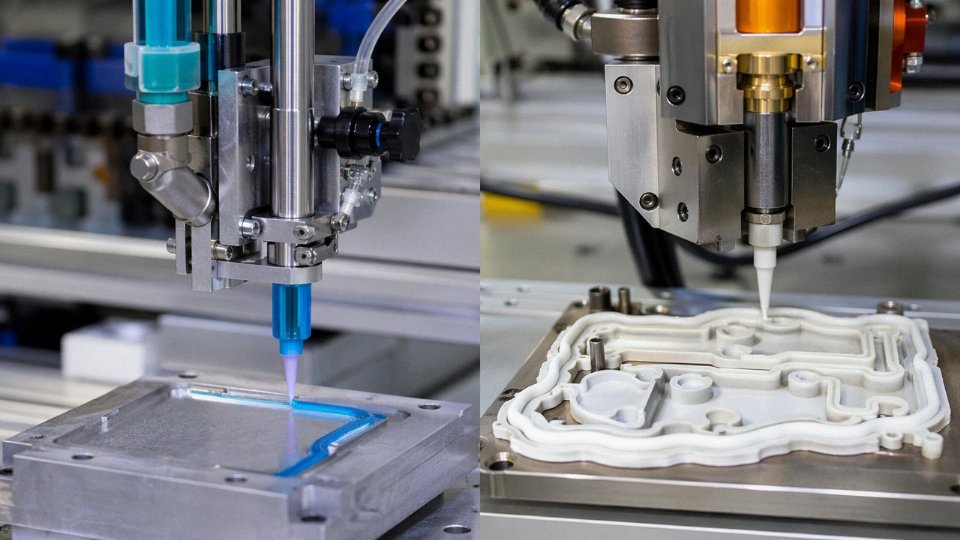
The right sequence is simple, although teams often skip it under schedule pressure. Define the service environment first. Temperature, media exposure, compression, movement, cleaning method, regulatory status, expected life, inspection method, and failure consequence. Then choose the silicone grade and process that can meet those requirements with evidence, not hope.
My practical recommendation: do not lock the specification from a catalog line or a sample that “feels about right.” Put the material supplier, molder or fabricator, quality engineer, procurement lead, and end-use engineer in the same review before release. Ask for processing limits, validation data, change-control rules, realistic lead times, and what happens when the approved grade goes on allocation. The best silicone choice is the one that passes the use case, fits the process, and can be supplied repeatedly without turning production into a weekly rescue job.