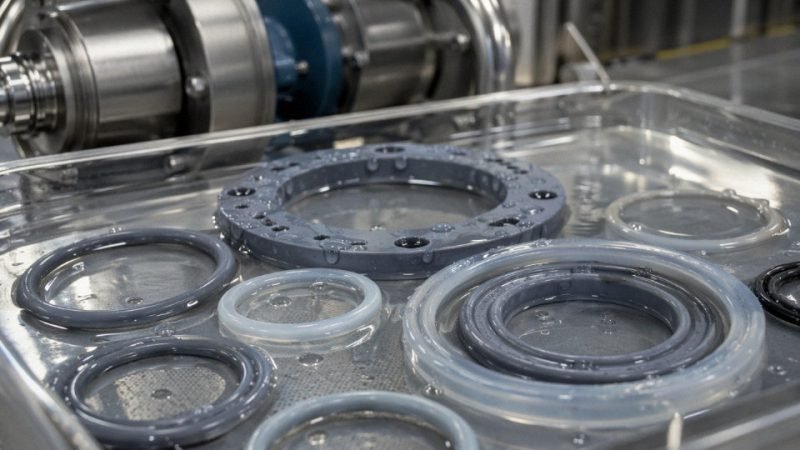
A wet seal in the wrong place costs more than the gasket itself. Plant engineers running outdoor enclosures, food-processing lines, or submerged pump assemblies already know the pattern: a material that quietly absorbs moisture swells, loses grip, and eventually lets contamination through — right before an audit or a production run you can’t afford to stop. The wrong elastomer choice turns a fifty-cent seal into a four-hour unplanned shutdown with spoiled batch product or a corroded electrical cabinet to explain.
Silicone rubber is highly resistant to water. Cured silicone typically absorbs less than 0.1% of its weight after 24 hours of immersion (ASTM D570), retains 85–95% of its elongation after roughly 1,000 hours submerged, and stays functional anywhere from -60°C to +230°C — meaning moisture alone, under most service conditions, does not meaningfully degrade it.
What makes silicone interesting isn’t just that it shrugs off water — it’s why it does, and where that resistance quietly runs out. The chemistry behind the Si–O backbone explains a lot, but so does the formulation grade, the curing system, and whether there’s mechanical stress layered on top of the wet exposure. Get those variables wrong and you’re not protected by the material’s reputation; you’re relying on test data that doesn’t match your actual application.
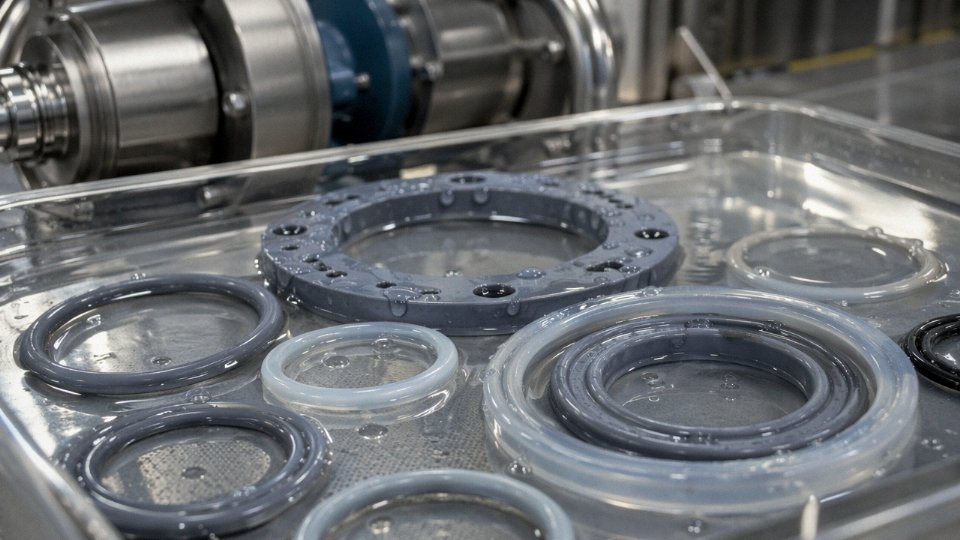
The molecular chemistry of silicone when exposed to water
Cured silicone absorbs remarkably little water — typically under 0.1% by weight after a full 24-hour immersion, measured per ASTM D570. That figure holds across a wide range of industrial grades, though it shifts slightly depending on filler loading, crosslink density, and whether the compound has been post-cured. To understand why, you have to look at what’s actually sitting along the polymer backbone.
Why the Si–O chain resists water uptake
The siloxane backbone (–Si–O–Si–O–) is inherently polar, which you might expect to attract water. What offsets this is the methyl groups hanging off each silicon atom. Those –CH₃ substituents are nonpolar and hydrophobic, and they physically screen the backbone from hydrogen-bonding interactions with water molecules. The net effect is a polymer surface — and bulk — that water has little chemical incentive to penetrate. Organic rubbers like EPDM or neoprene don’t have this geometry. Their carbon backbones carry different side-group arrangements, and in many cases water finds easier diffusion paths or polar sites to interact with. Silicone’s architecture essentially turns the backbone into something water slides past rather than soaks into.
Hydrolysis: when it actually matters
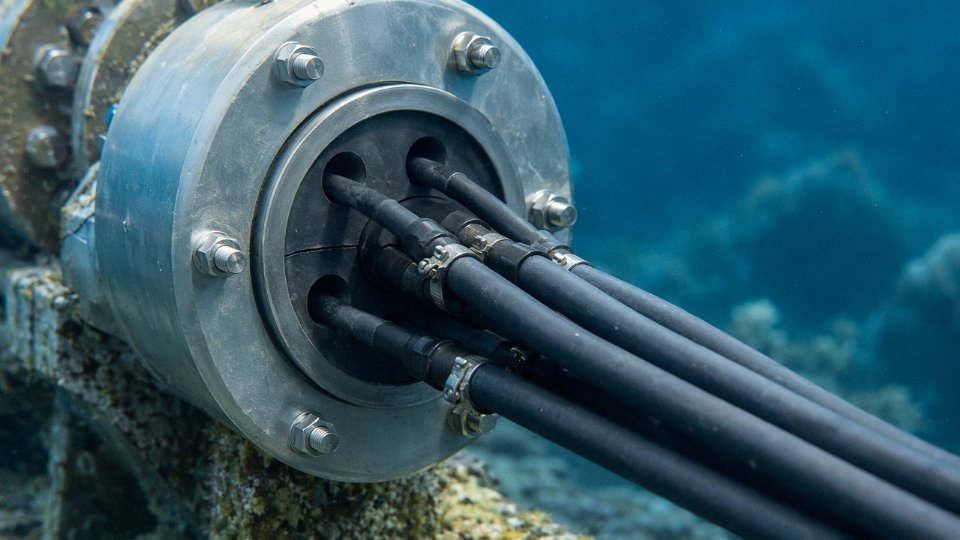
Hydrolytic scission of Si–O bonds is real, but context is everything. At ambient temperature and near-neutral pH, the rate of hydrolysis in a properly cured, crosslinked silicone is negligibly slow — slow enough that parts sitting in freshwater or seawater at room temperature remain structurally stable for years, sometimes decades. This is why marine hardware seals, subsea cable jackets, and swimming pool fittings routinely run on silicone without incident.
The risk changes when you combine elevated temperature with aggressive pH. In strongly acidic or strongly alkaline environments — concentrated cleaning agents, autoclave condensate with high mineral content, or industrial process streams outside roughly pH 4–10 — water molecules can attack Si–O bonds directly, producing silanol groups (Si–OH) and shortening polymer chains. The practical consequence is surface tackiness, gradual loss of tensile strength, and eventual crumbling of the elastomer. How fast this progresses depends on temperature, pH severity, and whether the formulation includes any hydrolysis-stabilizing additives. At 80°C in a strong NaOH solution, you might see measurable degradation in weeks. At 23°C in a neutral aqueous environment, you probably won’t see it in the service life of the part.
Silicone rubber is immune to hydrolysis under all wet conditionsFalse
Hydrolysis of Si–O bonds does occur under prolonged exposure to water at elevated temperatures or extreme pH (strongly acidic or alkaline). At ambient temperature and neutral pH, the rate is negligibly slow for crosslinked silicone, but the risk is real in aggressive process environments.
The filler factor
Unfilled silicone gum would be mechanically useless, so virtually every industrial compound contains fumed silica or precipitated silica as a reinforcing filler — typically somewhere between 20 and 45 parts per hundred rubber, depending on the target durometer and tear strength. Silica surface chemistry complicates the water story. Untreated silica carries abundant silanol groups (Si–OH) on its surface, and those are genuinely hydrophilic. They can hold moisture and slightly elevate overall water uptake compared to an unfilled silicone matrix.
Good compounders address this with surface treatment — trimethylsilyl capping, sometimes called hexamethyldisilazane (HMDS) treatment — which replaces the surface silanols with nonpolar trimethylsilyl groups. This brings water uptake back down toward the base-polymer behavior. If you’re sourcing silicone compounds for a humid or immersion application, it’s worth asking your supplier specifically whether their silica is surface-treated. Untreated filler in a high-humidity environment can also contribute to fogging in optical applications or adhesion loss at bonded interfaces — both annoying failure modes that don’t always get traced back to the filler.
Physical diffusion and reversibility
Water that does enter the silicone network doesn’t chemically bond to the polymer chains. It occupies free-volume pockets — small gaps in the crosslinked matrix that exist simply because no polymer network packs with perfect efficiency. This physical residence, rather than chemical interaction, has a practical consequence that matters in real service: it’s reversible. Dry the silicone out at moderate temperature — 70–100°C for a few hours is usually enough, depending on part thickness — and it returns to near-original dimensions and mechanical properties. Industrial-grade formulations typically retain 85–95% of their original elongation after 1,000 hours of water immersion, with the retained fraction depending on crosslink density, filler treatment quality, and water temperature during exposure. That’s not a trivial performance window for a component that might be running in a pump housing or a food-processing line.
Physical and Mechanical Property Changes After Water Exposure
Water doesn’t destroy silicone, but it does shift certain properties — some temporarily, some more persistently — and the magnitude of that shift depends heavily on temperature, immersion duration, and what the silicone is bonded to. Knowing the actual numbers, and what drives them, is what separates a robust design from one that fails after the first wet season.
Tensile Strength and Elongation at Break
Industrial-grade cured silicone rubber typically retains 85–95% of its original elongation-at-break value after 1,000 hours of water immersion at 23°C per standard test protocols. Tensile strength retention tracks similarly. That’s a fairly comfortable margin for most sealing and gasketing applications — but raise the water temperature to 70°C or 100°C and the picture changes. Hot water accelerates polymer chain mobility and can leach out low-molecular-weight siloxane oligomers (sometimes called “extractables”) that were never fully crosslinked during cure. At 100°C continuous immersion, some general-purpose grades start showing meaningful softening within a few hundred hours, not a thousand. Specialty high-consistency rubber (HCR) formulations with optimized post-cure schedules will outperform standard liquid silicone rubber (LSR) parts that skipped post-cure entirely. The difference between a properly post-cured part and one pulled straight off the press can be 10–15% in retained properties after hot-water soak — that gap matters in, say, an automotive coolant seal running at 90°C.
Hardness: The Transient Shore A Drop
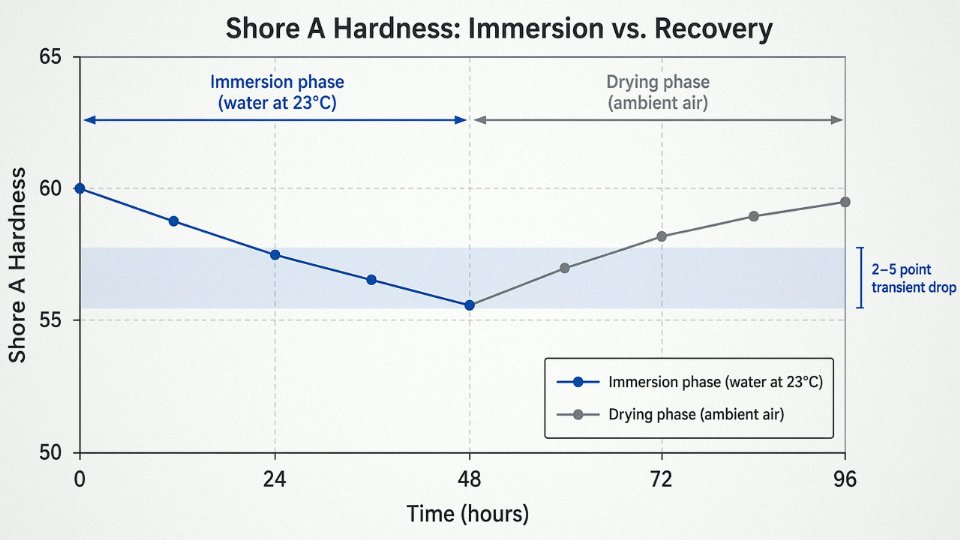
Water plasticizes silicone to a minor but measurable degree. During active immersion, Shore A hardness typically drops 2–5 points. Pull the part out, let it dry at room temperature for 24–48 hours, and most of that hardness returns. This reversibility is a key practical distinction from polyurethane foam, which can show permanent softening after water exposure because water hydrolyzes the urethane linkages themselves. Silicone’s Si–O backbone doesn’t hydrolyze under normal water exposure conditions, so the softening is essentially physical — absorbed water acting as a plasticizer — rather than chemical degradation. In practice this means a silicone gasket running in intermittent wet/dry cycling won’t progressively soften over time the way a PU component might.
Adhesion and Bonding at Substrate Interfaces
This is where wet exposure causes the most real-world grief, and it’s often misdiagnosed. When a silicone sealant joint fails in a wet environment, the failure is almost never cohesive — it doesn’t tear through the silicone bulk. It’s adhesive failure at the interface with concrete, glass, aluminum, or steel. Water migrates along that interface, particularly if surface prep was marginal or primer was skipped. The silicone grade matters far less than primer selection in these situations. A neutral-cure silicone with the correct organofunctional silane primer on a glass substrate will dramatically outlast a premium silicone applied without primer to the same substrate in a continuously wet joint. Anyone specifying curtain wall or pool perimeter sealants without getting the primer compatibility confirmed by the silicone manufacturer is taking an unnecessary risk.
Primer selection has more influence on wet adhesion durability than the silicone grade itself in bonded joint applications.True
Adhesive failure at the substrate interface — not cohesive failure within the silicone — is the dominant wet-exposure failure mode; surface preparation and primer chemistry control that interface, not the bulk silicone formulation.
Dimensional Stability and Swell
Linear swell for general-purpose silicone rubber after 168 hours in water is typically in the 0.1–0.5% range, depending on compound filler loading and crosslink density. That’s tight enough that most seal groove designs don’t need adjustment. Compare that to nitrile rubber (NBR), which can swell 3–8% under similar conditions, and you start to appreciate why silicone gets specified in precision housings where dimensional creep is a real concern. A groove sized for NBR will not behave the same way if someone substitutes silicone — the compression set and swell characteristics are different enough that the sealing force changes.
Dielectric Properties and Electrical Risk
Pure cured silicone has a dielectric constant in the 2.7–3.5 range. Water sits at roughly 80 at 25°C. Even a small amount of moisture uptake in a silicone potting compound or encapsulant — well under 1% by weight — can raise the effective dielectric constant of the compound meaningfully, and more importantly, it creates conductive pathways that increase leakage current. In low-voltage consumer electronics this is often tolerable. In high-voltage potting applications (switchgear, power conversion modules, traction inverters), moisture ingress is a genuine failure mechanism. The fix isn’t always a drier silicone — sometimes it’s a conformal silicone with a more hydrophobic filler system, or simply ensuring the assembly is fully dry before potting. Potting a component that has been sitting on a humid factory floor for a week without a pre-bake is a common, avoidable mistake.
| Property | Silicone after 168–1000 hr water immersion | Comparable material (same conditions) |
|---|---|---|
| Elongation retention | 85–95% (23°C), lower at ≥70°C | EPDM: ~80–90%; NBR: can degrade faster |
| Shore A change | −2 to −5 pts (largely reversible) | Polyurethane foam: often permanent softening |
| Linear swell | 0.1–0.5% | Nitrile rubber: 3–8% |
| Adhesion failure mode | Interface (substrate-dependent) | Same pattern in most elastomers |
| Dielectric constant shift | Rises with moisture uptake from ~3 toward higher effective values | More pronounced in porous or open-cell potting materials |
The ranges above assume properly cured, industrial-grade silicone. Off-spec parts, under-cured stock, or compounds with high inorganic filler loading can fall outside these bands. When in doubt, run your own soak test at the actual service temperature — the data in this section gives you a baseline, but it doesn’t replace application-specific validation.
How cure system and silicone grade determine wet performance
Silicone is not a single material. That distinction sounds obvious, but in practice procurement managers and even experienced plant engineers routinely spec “silicone sealant” or “silicone rubber” without specifying cure chemistry — and then wonder why a gasket fails in six months or an encapsulant turns cloudy after one wet season. The cure system determines what byproducts form, how tightly the polymer network crosslinks, and ultimately how the material behaves when water shows up.
RTV-1: acetoxy vs. neutral cure matters more than most people think
Single-part RTV sealants are the most common silicone product on a factory floor, and the shelf is usually full of both acetoxy and neutral-cure variants sitting right next to each other. Acetoxy-cure systems release acetic acid as the cure byproduct — that vinegar smell is the tell. In a dry interior joint, residual acid dissipates quickly and causes no lasting damage. In a wet environment, especially where water is wicking along the bond line, that acid concentration can remain elevated long enough to attack moisture-sensitive substrates. Zinc-coated steel, marble, copper, and certain concrete mixes are all vulnerable; the acid etches the substrate and weakens adhesion at exactly the interface you need to stay intact. Oxime- and alkoxy-cure neutrals avoid this entirely. For any application where the joint will see persistent moisture — think cooling tower flanges, exterior cladding, or wet-area tile — specify neutral cure from the start. The cost difference is small; the failure mode difference is not.
RTV-2: addition cure wins for wet encapsulation
Two-part RTV systems split into condensation cure and addition (platinum) cure, and the difference in wet performance is significant. Condensation-cure RTV-2 releases alcohol or other small-molecule byproducts, and residual byproduct can create microporosity that gives water a path into an encapsulated assembly over time. Platinum-catalyzed addition-cure RTV-2 produces essentially no volatile byproduct — the crosslinking reaction is a clean hydrosilylation. Hydrolytic stability is correspondingly better. For electronics encapsulation in environments with regular condensation cycling, addition-cure RTV-2 is the standard choice among serious packaging engineers, and it shows in field performance.
LSR: the right answer for dynamic wet seals
Liquid silicone rubber processed by injection molding offers dimensional precision and a compression set that typically stays below roughly 12–18% after 22 hours at 175°C, depending on durometer and formulation. That matters enormously for seals that cycle between submerged and dry states. An O-ring or diaphragm that takes a permanent set eventually leaks; LSR’s low compression set is a direct mechanical reason it dominates in pump seals, medical device components, and automotive cooling system gaskets. Tight flash control from injection tooling also eliminates the rough edges that can trap water and promote surface degradation over years of service.
HCR: watch the peroxide residuals in critical applications
Peroxide-cured high-consistency rubber is a workhouse material — extruded profiles, molded parts, roll coverings — but peroxide cure leaves decomposition fragments that are extractable in water or other fluids. For general industrial sealing in a wet outdoor environment that’s usually irrelevant. For food-contact conveyors or medical device tubing it is a compliance issue. Platinum-cure HCR sidesteps the extractables problem and is the expected specification for those regulated applications.
Platinum-cured HCR and addition-cure LSR produce no acidic or peroxide-based byproducts during cureTrue
Platinum-catalyzed hydrosilylation is an addition reaction with no condensation byproduct; this is well-established silicone chemistry, not marketing language.
Gels and foams: the underappreciated maintenance problem
Silicone gels have a loosely crosslinked network — that’s the property that makes them useful for vibration damping and gentle encapsulation of fragile components. The tradeoff is that they absorb more moisture by volume than a fully crosslinked elastomer. In outdoor electrical enclosures, gel-filled cable entries that are theoretically sealed can become effective moisture reservoirs after a few years if the gel grade wasn’t selected for immersion resistance. Open-cell silicone foam is worse: water physically fills the cells. A compressed foam gasket on an outdoor enclosure door can hold water against a metal substrate for weeks between dry cycles, which is a corrosion problem, not a silicone problem — but the foam enabled it. Closed-cell silicone foam avoids the water-retention issue and is worth the modest cost premium in any installation that cannot be routinely inspected and dried.
Long-term immersion and outdoor weathering: what field data shows
Lab immersion tests give you a 24- or 1000-hour snapshot. What engineers actually need to know is whether a seal installed in 2001 is still doing its job in 2025 — and for silicone, the field record is unusually consistent.
Marine and offshore environments
Seawater is aggressive to almost everything. Carbon steel corrodes, epoxy coatings blister from osmotic pressure, neoprene swells, and polyurethane foams delaminate as chloride ions work through the polymer matrix. Silicone behaves differently because chloride ions have no meaningful attack pathway into the Si–O backbone. There’s no ester linkage to hydrolyze, no carbon chain to oxidize. Cable jacket compounds and penetration seals on offshore platforms routinely accumulate 10–15 years of continuous subsea exposure with tensile and hardness readings that drift maybe 5–8% from baseline — a range that depends heavily on the specific compounding and whether the silicone is in static contact with seawater or subject to dynamic flexing.
On boat hulls and through-hull fittings, neutral-cure RTV silicone sealants have a documented field history going back decades. The main failure mode in that environment isn’t material degradation — it’s adhesion loss to poorly prepared substrate or inadequate primer choice, not the silicone itself going soft or brittle.
Glazing and facade seals
Structural silicone glazing is one of the more demanding real-world tests imaginable: rain-driven against glass and aluminum year after year, UV exposure on the front face, moisture wicking along the back face, thermal cycling every single day. ETAG 002 (the European Technical Approval Guideline for structural sealants) and ISO 11600 both include extended water-immersion and weathering sequences as qualification requirements precisely because the industry learned, the hard way in the 1980s and 1990s, that not all sealants survive 25-year facade service. Structural silicone sealants that carry these classifications have demonstrated less than 25% change in tensile modulus and elongation after the prescribed test regimes.
Structural silicone sealants are routinely specified for 25–50 year service lives on rain-exposed curtain-wall facades, backed by ETAG 002 and ISO 11600 qualification testing.True
Both ETAG 002 and ISO 11600 include validated wet durability test sequences, and major sealant manufacturers publish long-term field data from glazing installations that support multi-decade service life claims for compliant formulations.
In practice, most building envelope consultants won’t touch a sealant for structural glazing unless it has ISO 11600 Class F (façade) or equivalent certification. That’s not regulatory box-ticking; it reflects real failure histories with polysulfide and early polyurethane products.
Underground and buried applications
Telecom duct plugs and conduit seals see something arguably worse than seawater: slow, continuous groundwater infiltration combined with soil pressure and, in some climates, partial drying and rewetting through the seasons. Butyl rubber was used for decades in this role and still appears in older specifications, but it cold-flows under sustained compression — the seal force relaxes over time, groundwater finds a path, and by year 10 you’re looking at moisture in cable chambers and significant remediation cost. Silicone doesn’t cold-flow in the same way. Its compression set, while not zero, is far more stable over multi-year timeframes, particularly in the 40–70 Shore A hardness range typical for sealing applications.
Freeze-thaw cycling plus moisture
Wet exposure alone is manageable. The combination of wet and freeze-thaw cycling is where a lot of sealants fail, often visibly — cracking at the adhesion line or developing surface crazing after a few harsh winters. Silicone’s glass-transition temperature typically sits below -50°C, sometimes as low as -60°C depending on the methyl-to-phenyl substituent ratio. That means it stays genuinely rubbery at temperatures where polysulfide or low-grade polyurethane sealants are already stiffening toward glass-like behavior and accumulating fatigue damage through each thermal cycle. A silicone joint in a parking structure expansion joint in northern Canada or Scandinavia faces hundreds of freeze-thaw cycles over a 20-year life. The elongation retention data from field pull tests on aged silicone joints — typically 85–92% of original elongation remaining after 15+ years — reflects that low-Tg advantage directly.
UV plus moisture weathering
Outdoor weathering always involves both UV and moisture, which is why the QUV weatherometer test (alternating UV exposure and water spray) is more relevant than straight UV testing for predicting field performance. Silicone’s inorganic Si–O backbone simply doesn’t undergo the photo-oxidation chain reactions that degrade organic polymers. After roughly 3,000 hours of QUV testing, silicone sealants typically show tensile strength losses under 20% — the exact figure depends on pigmentation, cure system, and filler loading. Polysulfide and polyurethane sealants in the same test routinely show 40–60% tensile loss, sometimes accompanied by surface chalking and cracking that’s immediately visible. That’s not a marginal difference; at the 40–60% loss level, a sealant is approaching the end of its practical service life. Silicone at under 20% still has most of its working range intact.
The honest caveat here is that UV-plus-moisture data is only as good as the specific formulation tested. A cheap, poorly compounded silicone with inadequate stabilizer loading can underperform relative to a high-quality polyurethane. Grade and source matter. Field performance records are most reliable for products from manufacturers who actually publish long-term weathering data rather than just quoting lab sheets.
Special failure modes: steam, high-pH water, and chlorinated water
Silicone’s reputation for water resistance is well-earned — but it has limits, and some of them will surprise engineers who’ve come to treat silicone as chemically bulletproof. The failure modes below are real, documented, and in most cases preventable if you spec the right grade from the start.
Steam above 150°C
This is the one that catches people most often. Standard PDMS-based silicone handles hot water and even short steam exposure reasonably well, but sustained pressurized steam above roughly 150°C is a different situation entirely. The activation energy for Si–O bond hydrolysis drops significantly once you cross the 120°C threshold — the reaction that barely proceeds at room temperature becomes meaningfully fast at autoclave or process-steam conditions.
In practice, what you see is progressive softening and tensile strength loss, not sudden failure. A silicone gasket running on a steam line at 160–170°C might hold for six to eighteen months before it starts weeping — the timeline depending on pressure cycling frequency, whether condensate pools on the surface, and how the part was cured. Phenyl-modified silicone (PMQ or PVMQ grades) improves hydrolytic stability at elevated temperatures through steric shielding of the backbone, and fluorosilicone (FVMQ) is worth considering where steam coexists with hydrocarbon contamination. Neither is a permanent solution if you’re running continuous saturated steam at 200°C-plus; at that point you’re into PTFE or metal gasket territory.
Pressurized steam above 150°C causes progressive siloxane backbone hydrolysis in standard PDMS gradesTrue
The hydrolysis of Si–O bonds is thermally activated; kinetic data consistently shows the reaction rate increases substantially above 120°C, with accelerated degradation under pressurized steam conditions that maintain high water activity at elevated temperatures.
High-pH and alkaline environments
Hydroxyl ions catalyze Si–O bond cleavage. Sodium hydroxide solutions above roughly pH 10 will attack standard silicone, and the rate scales with both pH and temperature. The practical trap here is construction applications: fresh cement pore water routinely hits pH 12–13, and silicone sealant used around concrete joints, masonry, or tile grouting sits in exactly that environment during cure and for weeks afterward.
This doesn’t mean silicone can’t be used on concrete — it means you need a primer system specifically formulated for alkaline substrates, and you should be skeptical of one-part RTV products that don’t explicitly address alkaline compatibility in their TDS. Some manufacturers offer silicone sealants with modified filler packages that buffer against pH attack at the bond line. Confirm with immersion test data, not just a product name.
Chlorinated water and pool environments
Free chlorine at typical pool maintenance concentrations — 1 to 3 ppm — has minimal effect on the silicone polymer itself. Bulk mechanical properties hold up well. The real issue is aesthetic and long-term: colored silicone sealants used around pool surrounds and spa fittings will fade, sometimes substantially, over one to three seasons. The pigments and some filler packages absorb chlorine compounds, and UV exposure compounds the degradation. Clear or white sealants perform better in this regard; if color-matching is a requirement, get accelerated weathering data specific to the product.
Acid mine drainage and industrial effluent
Strongly acidic water below pH 3 also accelerates Si–O hydrolysis, through a different mechanism than alkaline attack but with similar consequences for bond integrity over time. In acid mine drainage or chemical plant effluent channels, FVMQ (fluorosilicone) is the rational choice — it offers meaningfully better hydrolytic stability than standard PDMS under combined acid and organic-solvent exposure, which is usually the real service condition in those environments. Expect to pay roughly two to four times the material cost of standard silicone, depending on form factor and supplier.
Microbial contamination
Silicone doesn’t biodegrade. Under ASTM G21 testing, pure PDMS without additives is generally rated resistant to fungal growth — the polymer simply offers nothing metabolically useful. That said, biofilm formation on wet silicone surfaces is well-documented in medical device, food-processing, and HVAC applications. The biofilm isn’t degrading the silicone; it’s colonizing the surface. In food-contact and pharmaceutical settings, antimicrobial additive packages are used precisely to address this. If you’re specifying silicone for a wet, warm, nutrient-adjacent environment — a dairy processing line, a hospital water system — confirm that the grade carries appropriate antimicrobial certification, and don’t assume that biofilm resistance is implied by the base polymer’s stability.
Practical drying, reconditioning, and inspection procedures after water exposure
Most material datasheets stop at immersion resistance data. They tell you silicone survives; they don’t tell you what to do Monday morning when a cable termination has been sitting in a flooded junction box for three days. This section fills that gap.
Drying protocol and diffusion timing
Water absorbed into a silicone bulk diffuses back out passively at ambient temperature, but “how long” is entirely a function of section thickness. Using a Fick’s second law analogy, the characteristic diffusion time scales roughly with the square of the half-thickness. In practice, a 2 mm silicone sheet or gasket will largely re-equilibrate within 4–8 hours at room temperature; a 10 mm potted enclosure or thick-section pad can take several days — sometimes 3–5 days at 20–25°C before moisture levels stabilize enough for reliable electrical testing.
You can accelerate that significantly without risk. Warm air circulation at 60–80°C is safe for virtually all cured silicone grades and cuts diffusion time by roughly 3–5× compared to ambient. A simple convection oven or heat gun on low, kept at 70°C, works fine. Don’t go higher than 80°C for this purpose — not because the silicone can’t handle it (it can handle far more), but because any trapped moisture in a sealed enclosure can generate enough localized pressure to stress bond lines before it has a path to escape. Leave joints open or vented during the drying cycle.
Visual and tactile inspection criteria
After drying, healthy silicone should return to its original shore hardness within normal measurement tolerance, recover its original color without residual clouding, and exhibit the same surface tack profile it had when new. A platinum-cured LSR component should feel the same as it did out of the mold.
What you’re watching for instead: surface chalking or a dull, powdery appearance, which usually indicates leaching of low-molecular-weight species or early-stage surface degradation rather than simple wetting. Persistent tackiness after full drying is a red flag — it suggests chain scission has occurred and oligomeric fragments have migrated to the surface, which tends to happen after aggressive chemical exposure rather than plain water. Cracking at bond lines is serious regardless of cause. Visible swelling that doesn’t recover within 24 hours of ambient drying suggests the component absorbed something other than water — a solvent contaminant in the fluid, most likely.
Electrical insulation testing after moisture ingress
For silicone-potted electronics or cable terminations, don’t rush the hipot test. Surface moisture drops surface resistivity dramatically even when bulk moisture is still equilibrating. As a minimum, hold the component at 70°C for at least 4 hours, then allow it to cool to room temperature before applying dielectric withstand voltage. A quick field check before the formal test: surface resistivity above roughly 10¹² Ω/sq at ambient temperature is a reasonable go/no-go indicator that surface moisture has dissipated enough to test.
Applying dielectric withstand (hipot) voltage to a silicone-potted assembly before it is adequately dried after water ingress can produce a false failure reading or cause actual dielectric damage at a voltage level the dry assembly would easily pass.True
Surface moisture creates a conductive film that produces leakage currents and localized heating at far lower voltages than the dry material's actual breakdown threshold, potentially tracking and permanently damaging insulation.
When to replace versus recondition
This is where the judgment call lives, and where people sometimes get it wrong in both directions — scrapping recoverable components or, more dangerously, returning degraded ones to service.
| Condition after drying | Action |
|---|---|
| Elongation retention estimated ≥85%, Shore A within 5 points of spec | Return to service, log exposure event |
| Shore A drop 5–10 points, no bond-line issues, elongation 70–85% | Conditional return, reduce re-inspection interval |
| Shore A drop >10 points permanently, or elongation estimated below 70% | Replace |
| Bond-line delamination covering >20% of joint length | Replace regardless of bulk hardness |
| Surface chalking or persistent tack after full drying | Replace, investigate root cause of fluid chemistry |
The 70% tensile retention threshold is a practical rule-of-thumb, not a universal standard — a static gasket in a low-pressure application might tolerate more degradation than a dynamic seal on a reciprocating shaft. Context matters.
Re-bonding wet or damp surfaces
Standard one-part and two-part silicone sealants rely on moisture to cure, but they still require a dry substrate for adhesion. That’s not a contradiction — the moisture needs to come from atmospheric humidity during cure, not from standing water on the bonding surface, which prevents the primer or silicone from wetting the substrate properly and will cause adhesion failure almost immediately.
For genuine emergency repairs where you cannot dry the substrate — say, an outdoor expansion joint with active water ingress and no shutdown window — there are formulations specifically developed for this: moisture-cure underwater-grade silicones and, in some industrial settings, modified hybrid sealants rated for wet-surface application. These are real products used in civil infrastructure and marine maintenance, and they are not the same as standard construction silicone. Using a standard RTV on a wet substrate because it’s technically a “moisture-cure” product is one of the more common and frustrating field errors I’ve seen.
Prime the surface if the product manufacturer requires it, even for the wet-rated versions — skipping the primer step on a wet joint is usually how these repairs fail within a season.
Selecting the Right Silicone Product for Wet-Environment Applications
By the time you’ve worked through the chemistry, the failure modes, and the field durability data, the practical question is always the same: which product do I actually buy, and how do I write the spec so I don’t get burned later? The answer depends heavily on exposure severity, and treating all wet environments as equivalent is one of the more expensive mistakes a procurement manager can make.
A Tiered Selection Framework by Exposure Severity
Tier 1 — occasional splash, ambient temperature, neutral pH. Think a kitchen backsplash joint, an outdoor electrical enclosure that sees rain but drains freely, or a gasket that contacts condensation a few times a week. Standard one-part acetoxy or neutral-cure PDMS RTV, or a general-purpose HCR molded part, handles this without any drama. The water absorption stays well below 0.1% by weight (ASTM D570, 24-hour), mechanical properties barely shift, and you are not paying for performance you don’t need. A $4–7 cartridge from any reputable silicone manufacturer does the job.
Tier 2 — continuous immersion, freshwater or seawater, service temperatures up to roughly 70°C. This is where the grade selection actually matters. Addition-cure LSR and neutral-cure RTV-2 two-part systems outperform acetoxy-cure products here because they don’t leave acetic acid byproducts that can interfere with adhesion on certain substrates, and their crosslink density is more uniform. Elongation retention after 1,000 hours immersion typically lands in the 85–95% range for industrial-grade formulations — but that figure depends on durometer, filler loading, and whether the compound uses a silica or calcium carbonate filler system. Always ask the supplier for immersion data at your actual service temperature, not just room-temperature figures.
Tier 3 — steam, strong acid or alkali, dynamic sealing under pressure. Standard PDMS is the wrong answer here, full stop. Phenyl-modified silicone improves resistance to hydrolytic attack at elevated temperatures. For aggressive chemical contact — chlorinated process water above 60°C, strong caustic cleaning cycles, or fuel-contaminated water — fluorosilicone (FVMQ) is the realistic choice. Expect to pay $80–150 per kilogram for compounded FVMQ, depending on durometer and certifications required. That’s a real premium, but a failed dynamic seal in a pressurized steam line costs far more than the material differential.
Datasheet Parameters That Actually Predict Wet Performance
Don’t spec silicone for wet service based on a Shore A hardness and a tensile strength number. The parameters that tell you something useful are: water absorption per ASTM D570 (ask for both 24-hour and 7-day values); compression set per ASTM D395 Method B at your service temperature (a high compression set in a gasket application means it stops sealing after the first thermal cycle); volume swell in water per ASTM D471; and long-term hydrolytic stability data at temperature — ideally 1,000 hours minimum. If a supplier can’t provide the last item, that tells you something.
Substrate Compatibility and Primer Requirements
Silicone sealants bond reliably to glass, stainless steel, and glazed ceramic without primer in most cases, assuming the surface is clean and dry at the time of application. Anodized aluminum, porous concrete, and granite are a different story — moisture migration through these substrates undermines adhesion over time, and a moisture-stable silane primer is not optional. Skipping the primer step on a concrete water feature or an aluminum curtain wall joint is a classic shortcut that shows up as delamination within two or three seasons.
Certifications for Food, Potable Water, and UK Water Fittings
NSF/ANSI 61 certification requires wet immersion testing as part of the approval protocolTrue
NSF/ANSI 61 evaluates contaminant extraction from materials in contact with drinking water under controlled immersion conditions, so the certification is directly relevant to wet-service silicone applications.
For potable water contact, request NSF/ANSI 61. For food-contact elastomers in processing equipment, FDA 21 CFR 177.2600 compliance is the baseline requirement in the US. UK water fittings need WRAS approval. These aren’t interchangeable, and a silicone that carries FDA food-contact compliance doesn’t automatically qualify for a drinking water fitting. Medical-grade LSR pellets — the starting point for many food and pharmaceutical applications — run roughly $20–60 per kilogram, depending on viscosity grade and lot certification requirements.
Matching Cost to Actual Exposure Risk
Over-specifying is a real cost. A fluorosilicone compound at $120/kg in a static gasket that sees tap water at 25°C is money thrown away. The tiered framework above exists precisely to avoid that. Where the premium is justified — a dynamic shaft seal in a marine pump, a gasket in a steam autoclave, a drinking water valve component that needs a 20-year service life — the cost difference between standard and high-performance grades is trivial against the cost of early replacement or a contamination event. Know your tier before you write the purchase order.
Frequently asked questions about silicone and water exposure
Does silicone grow mold or mildew when wet?
Pure, fully cured silicone does not support mold growth — it provides no carbon-based nutrient source, so fungal spores have nothing to feed on. That’s the technically accurate answer. In practice, though, bathroom sealant joints almost always accumulate soap scum, skin oils, and airborne dust, and those organic deposits sit on the silicone surface and feed mold perfectly well. The black discoloration you see on an old shower bead is almost never degradation of the silicone polymer itself; it’s surface contamination. You can usually confirm this by wiping a small area with isopropyl alcohol — if the discoloration lifts cleanly and the sealant underneath is still elastic and bonded, the silicone is fine. If the bead has gone hard, chalky, or is pulling away from the substrate, that’s a different problem.
Many consumer-grade bathroom sealants include fungicide additives (typically zinc- or triclosan-based, depending on regulatory region) that slow surface mold. Industrial and food-grade silicones generally omit these additives because of extractable concerns, so specifying a fungicide-dosed product in a clean-room or food-contact wet environment is the wrong call.
Can silicone be used permanently underwater?
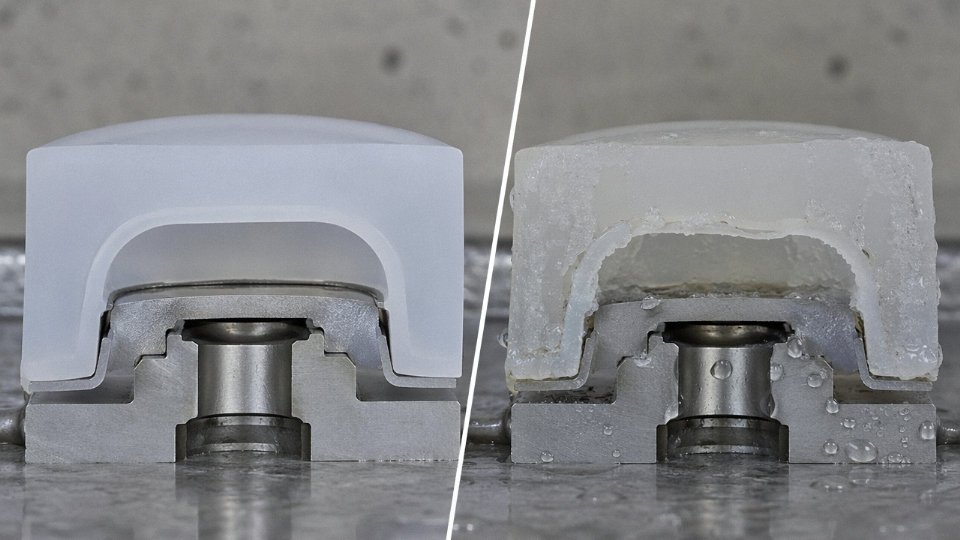
Yes, for the vast majority of freshwater and seawater applications at ambient temperature. Aquarium sealants are the obvious example — a properly formulated, fully cured RTV-2 or acetoxy RTV-1 joint in a glass aquarium is expected to hold indefinitely under continuous submersion. Underwater cable seal assemblies in marine and offshore infrastructure routinely use silicone elastomers, and silicone fairing compounds have been used on boat hulls for decades.
The practical limit isn’t water absorption. It’s compression set under sustained hydrostatic pressure, which becomes a real concern roughly above 10–30 meters of water depth depending on the cross-section geometry and the specific durometer. At those depths, a gasket that has taken a permanent set no longer provides reliable sealing force. That’s a mechanical fatigue issue, not a chemistry issue.
Silicone does not absorb significant water and can be used in continuous freshwater or seawater immersion for most ambient-temperature applicationsTrue
Silicone's Si–O backbone is hydrophobic and water absorption is typically below 0.1% by weight per ASTM D570, making it suitable for long-term immersion; the limiting factor in high-pressure applications is compression set, not chemical degradation.
Does water exposure affect food-safety or medical-grade compliance?
Water alone doesn’t degrade FDA or NSF compliance, provided exposure conditions stay within the material’s validated range. The concern in food and medical applications is extractables — low-molecular-weight silicone oligomers or filler particles that can migrate into a fluid stream. Repeated aggressive conditions, particularly high-pH cleaning solutions or steam sterilization, can incrementally increase extractable levels in lower-grade formulations.
For any application involving repeated autoclave cycles, specify autoclave-grade LSR explicitly and request the supplier’s extractables data at your actual cycle temperature and duration. Don’t assume that a general “food-grade silicone” designation covers 134°C steam sterilization — it often doesn’t, and the datasheets frequently bury that caveat.
Will rain ruin a silicone sealant bead that hasn’t fully cured?
For acetoxy-cure and neutral-cure RTV-1 products, moisture is actually the crosslinking agent, so damp conditions aren’t the enemy. Light rain on a partially cured bead accelerates surface skin formation. The real risk is heavy rain within the first few hours washing uncured material away from exposed edges, undermining joint geometry. A practical rule: allow at least 24 hours of tack-free cure before rain contact, and hold off on full water immersion for 72 hours minimum, longer in cold temperatures since cure rate drops noticeably below about 10°C.
Is silicone waterproof or just water-resistant?
The distinction matters depending on what you’re actually designing. Silicone doesn’t absorb meaningful amounts of liquid water — less than 0.1% by weight under 24-hour immersion, which is effectively waterproof for most structural and sealing purposes. But silicone is a permeable material. Water vapor transmission rates for a 1 mm sheet typically run somewhere in the range of 100–400 g/m²/day, varying significantly with formulation, filler loading, and temperature. If your design goal is preventing condensation inside an enclosure or acting as a vapor barrier in packaging, silicone is the wrong material — or at minimum needs to be evaluated on WVTR data, not just liquid-immersion performance.
How long does silicone last in a wet bathroom or kitchen?
Properly applied, on a primed, clean, dimensionally stable substrate, a good-quality sealant should realistically last somewhere between 10 and 20 years in a domestic wet area. The silicone polymer itself is rarely what fails. Adhesion loss from substrate movement is the most common culprit — tile installations that develop minor grout cracks allow flex that progressively peels the sealant bond line. Inadequate surface prep at installation is close behind. And honestly, consumer-grade scrubbing with abrasive cleaners to fight that surface mold progressively damages the interface zone in a way that accelerates failure. If you’re specifying silicone for a commercial kitchen or wet-process area with heavy cleaning regimes, that’s worth factoring into your joint design and reapplication schedule.