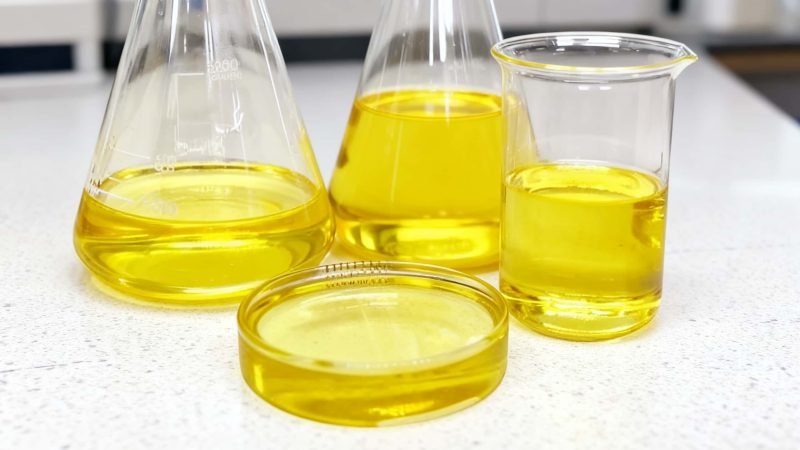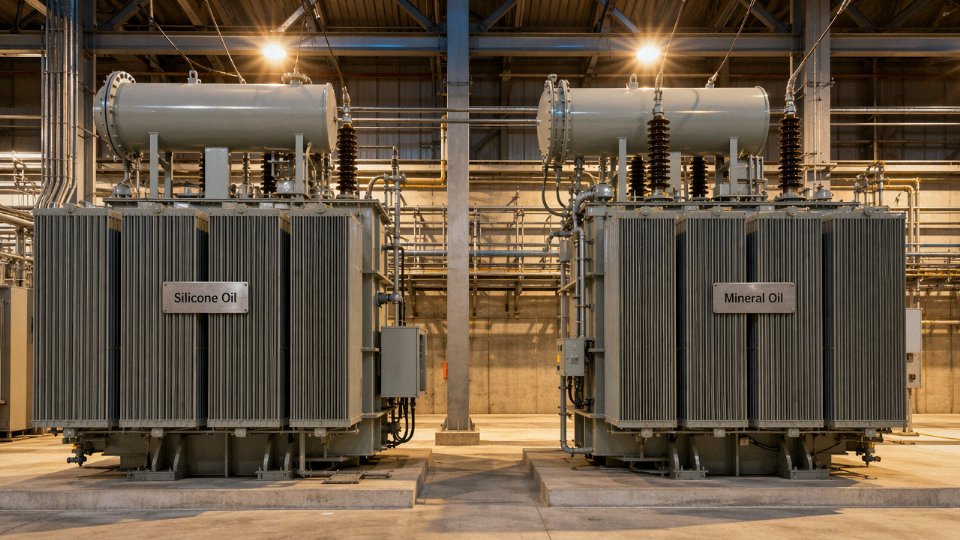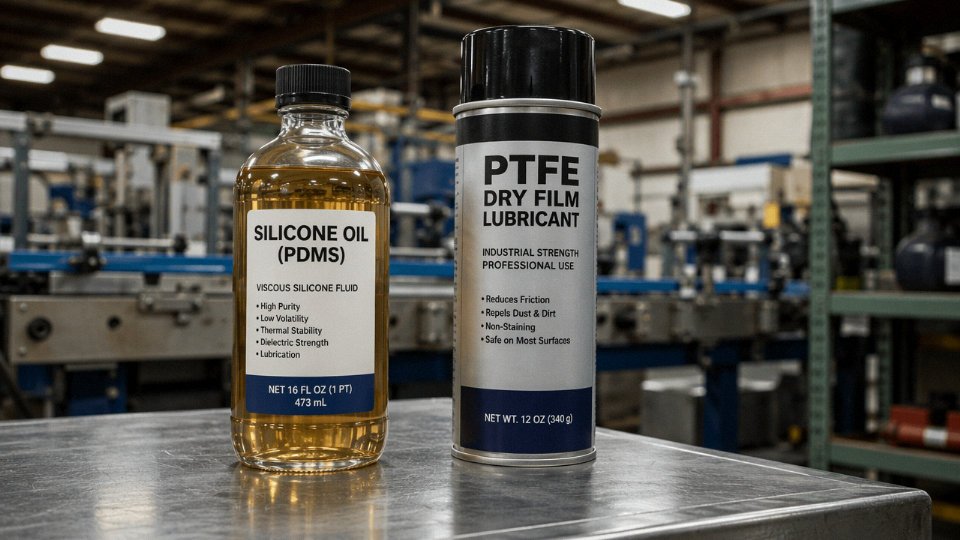
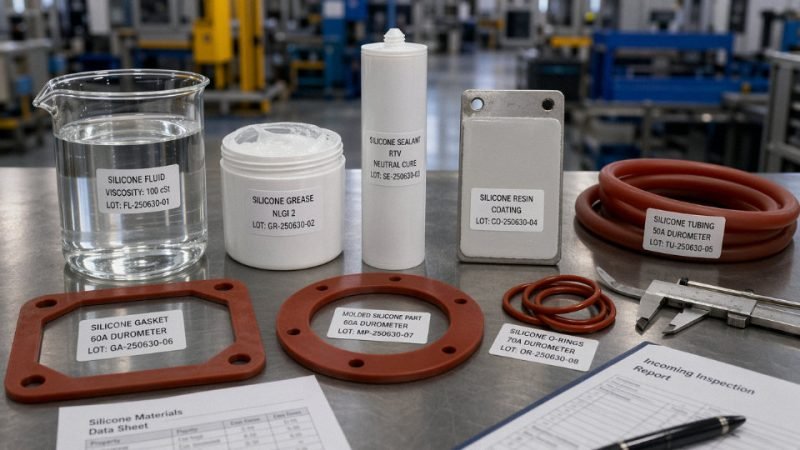
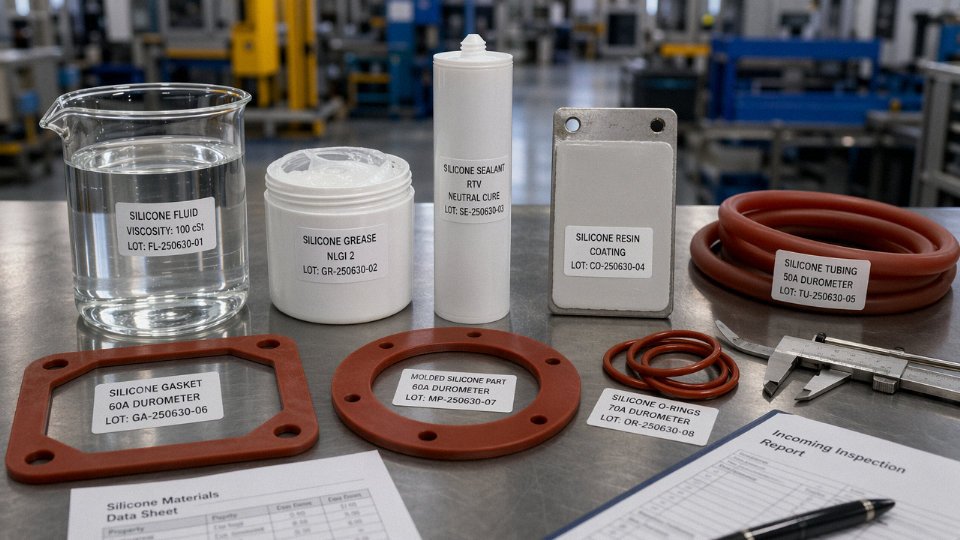
Specifying “silicone” on a purchase order sounds harmless until the wrong material turns up at receiving: a fluid where a gasket was expected, a resin-coated part instead of an elastomer, or a soft seal that takes a compression set beside a hot manifold. Then the line crew fights leaks, electrical tracking, rework, and the usual Friday-expedite nonsense. The fix is to separate the chemistry family from the rubber form before drawings, RFQs, and maintenance spares start using the same word for different things.
Silicone is a broad class of silicon-based polymers used as oils, greases, resins, gels, adhesives, and elastomers. Silicone rubber is one elastomeric form of silicone, molded or extruded into flexible parts such as seals, gaskets, tubing, keypads, and cable insulation, typically chosen for heat resistance, weathering, and electrical performance.
That distinction looks academic, but it changes how you buy, test, and troubleshoot the material. Hardness, cure system, fillers, temperature rating, and dielectric strength all sit behind the label, and a supplier’s “silicone” can mean very different things depending on whether they serve a mold shop, a cable plant, or a maintenance storeroom.
How silicone is built: base polymer chemistry, forms, and material families
Silicone starts with a silicon-oxygen backbone, usually written in simple terms as Si-O-Si repeating units. That backbone is the reason silicone materials handle heat, ozone, UV, and weathering better than many carbon-chain polymers. But the backbone is only the frame. The side groups attached to the silicon atoms decide a lot of the shop-floor behavior.
Methyl groups are the common workhorse side groups. They keep the polymer flexible and give general-purpose silicone its familiar low-temperature bendability and heat resistance. Phenyl groups are often used where low-temperature flexibility or radiation resistance needs improvement, though they can change cost and processing behavior. Vinyl groups are reactive sites, especially in peroxide-cured and platinum-cured elastomers. Hydride groups are used in addition-cure systems, where they react with vinyl groups to form a crosslinked network. Fluorinated side groups improve resistance to fuels, oils, and aggressive fluids, but they are not magic; compatibility still depends on the exact oil, temperature, exposure time, and whether the part is squeezed, wiped, or soaked.
That is why two materials both sold as “silicone” can behave nothing alike.
A low-viscosity silicone fluid may pour like light oil. A high-consistency silicone rubber compound may look like stiff chewing gum before molding. A silicone resin may cure into a hard, heat-resistant film. Same broad chemistry family, very different plant reality.
All silicone materials are rubber-like because they share a silicon-oxygen backbone.False
The silicon-oxygen backbone is common across many silicone materials, but rubber-like behavior comes from molecular weight, crosslinking, filler reinforcement, and formulation. Silicone fluids, gels, resins, coatings, and elastomers can all be silicone without behaving like rubber.
Silicone material forms and what they are used for
| Form | Physical state | Typical use | Rubber-like? |
|---|---|---|---|
| Silicone fluids and oils | Pourable liquid, from very thin to syrup-like depending on viscosity | Lubrication, damping, release agents, heat-transfer fluids, cosmetic or process additives | No |
| Silicone greases | Thickened semi-solid | O-ring lubrication, electrical connectors, valve stems, water-resistant lubrication | No, though soft and deformable |
| Silicone pastes | Heavy paste, often filled | Thermal interface material, assembly aid, anti-seize or dielectric applications | Usually no |
| Silicone gels | Soft, weakly crosslinked gel | Electronics potting, sensor protection, vibration cushioning, moisture barriers | Soft, but not true rubber in the usual mechanical sense |
| [Silicone resins](https://siliconchemicals.com/silicone-resin/) | Hard or brittle cured solid, often coating-like | High-temperature coatings, electrical varnishes, binders, release coatings | No |
| Silicone adhesives | Paste or liquid before cure; bonded solid after cure | Bonding glass, metal, plastic, electronics housings, appliance assemblies | Sometimes flexible, not always rubber-like |
| Silicone sealants | Paste before cure; elastic solid after cure | Construction joints, appliance sealing, HVAC, glazing, gasketing in place | Often rubber-like after cure |
| Silicone coatings | Thin cured film | Release liners, fabric coating, electrical insulation, weatherproofing | Sometimes flexible, usually not molded-rubber behavior |
| Silicone foams | Cellular solid | Fire stops, cushioning, thermal barriers, enclosure gaskets | Yes, but compressible foam rather than dense rubber |
| Silicone elastomers | Crosslinked flexible solid | Molded gaskets, keypads, tubing, diaphragms, cable insulation, medical and food-contact parts | Yes |
Why formulation matters more than the label
In purchasing, the word “silicone” is too broad to buy against. I have seen this cause grief on maintenance jobs: someone asks for silicone, receives a sealant cartridge, while the failed part was actually a compression-molded silicone rubber gasket. The cartridge cures in air and may seal a gap, but it will not replace a die-cut gasket that needs controlled thickness, compression set resistance, and predictable bolt-load behavior.
Several variables drive the final material:
Molecular weight affects viscosity, strength, flow, and whether the material behaves like an oil, gum, gel, or elastomer. Low-molecular-weight silicone fluids are useful for lubrication or damping. Very high-molecular-weight silicone gums are compounded and cured into rubber parts.
Branching changes flow and cured structure. A more linear polymer may process cleanly in extrusion or molding, while branched structures can help build resins, gels, or special cure behavior. In practice, the processor cares because branching can change pumpability, mix uniformity, and how forgiving the material is after a weekend shutdown.
Filler loading is a big one. Unfilled silicone rubber is often weak. Reinforcing silica, mineral fillers, ceramic fillers, carbon black, pigments, flame-retardant packages, and thermally conductive fillers can swing tear strength, hardness, elongation, heat transfer, tracking resistance, and cost. The trade-off is real. Push filler too high and the compound may become abrasive, hard to mold, prone to knit lines, or poor at recovering after compression.
Crosslink density sets how tight the cured network becomes. Higher crosslink density usually means harder, less stretchy material with better solvent resistance but poorer elongation. Lower crosslink density gives softness and tack, useful in gels, but the part may creep or tear under load. For silicone rubber elastomers, common commercial hardness spans roughly 10 to 80 Shore A, depending on polymer, filler, cure system, and post-cure. Silicone fluids and resins are not specified that way; they are usually bought by viscosity, solids content, chemistry, cure mechanism, or coating performance.
Additives finish the job. Heat stabilizers, platinum catalysts, peroxide systems, adhesion promoters, inhibitors, pigments, blowing agents, and release modifiers all matter. A platinum-cured medical tube, an acetoxy room-temperature-vulcanizing sealant, and a high-temperature phenyl silicone coating may all be called silicone, but they are engineered for different factories, different failure modes, and different inspection plans.
The practical takeaway is simple: do not approve a silicone material by family name alone. Ask for the form, cure system, hardness or viscosity, filler package where relevant, service temperature range, fluid exposure, compression or tensile requirements, and applicable regulatory needs. Right material, boring production. Wrong material, swollen seals, uncured adhesive, failed dielectric test, or a line stopped because a “silicone” part was never the silicone rubber part the machine needed.
What makes silicone rubber a rubber: crosslinking, reinforcement, and elastic recovery
Silicone rubber becomes “rubber” only after the polymer chains are tied together into a network. Before that, the material may be a gum, paste, liquid, or sealant base that can still flow, slump, or be pumped. Crosslinking is the step that changes the behavior: individual silicone chains are joined at intervals, forming a three-dimensional structure that stretches under load and then pulls itself back.
That network is the difference between a material that deforms and stays there, and one that recovers.
In production terms, this is not just chemistry on a datasheet. It decides mold temperature, pot life, demold time, post-cure schedule, scrap rate, and whether a gasket takes a set after three months compressed behind a hot access panel.
Crosslinking systems used in silicone rubber
Most silicone rubber plants run one of four cure routes, each with its own headaches.
Peroxide-cured silicone rubber is common in high consistency rubber, often called HCR. The material looks like stiff gum stock and is processed on mills, extruders, compression presses, or transfer presses. Peroxide cure is rugged and forgiving, which is why older plants still like it. It can handle many pigments and fillers, but it often needs post-curing to drive off peroxide by-products. Skip that on a part used near electronics, food contact, or an enclosed hot assembly, and the odor or volatiles can become a real complaint.
Platinum-catalyzed addition cure is widely used for liquid silicone rubber, or LSR, and for many high-cleanliness molded parts. It cures fast, cleanly, and with little shrinkage or by-product formation. Two-part metering is the normal setup. The catch is catalyst poisoning. Sulfur, tin compounds, amines, some latex residues, certain release agents, and even dirty handling gloves can slow or stop cure. I have seen good cavities filled with beautiful uncured jelly because someone changed a mold cleaner without telling process engineering.
Condensation-cured silicone reacts by releasing small molecules such as alcohol, acetic acid, oxime-type materials, or similar by-products depending on the system. This route is common in sealants, potting compounds, and some RTV products. It is useful because it can cure at room temperature with moisture exposure, but section thickness matters. A thick bead may skin over while the center remains soft for much longer than purchasing expected.
Room-temperature vulcanizing systems, usually called RTV silicones, overlap with condensation and some addition-cure systems. RTV is a processing category more than a single chemistry. One-part RTV tubes are familiar on maintenance benches. Two-part RTV compounds are used for encapsulation, mold making, and field repairs. Useful materials, no argument. But they are not automatically equivalent to molded silicone rubber parts made under controlled pressure, temperature, and cure conditions.
A cured silicone sealant bead can feel like rubber, but that does not mean it has the same dimensional control, tear strength, compression set, or qualification history as a molded silicone rubber gasket.True
Sealants are usually formulated for adhesion, gap filling, and room-temperature cure. Precision molded silicone rubber parts are compounded and processed for repeatable geometry, mechanical properties, and service behavior under defined cure conditions.
Fillers and additives do more than bulk out the compound
Raw silicone polymer has poor strength by itself. Reinforcing silica is what gives most silicone rubber useful tensile strength and tear resistance. Fumed silica and treated precipitated silica are common choices. The grade, surface treatment, and loading level affect mixing behavior, mold flow, transparency, tear strength, and compression set. Too little reinforcement and the part tears during assembly. Too much, or the wrong surface chemistry, and the compound becomes miserable to process.
Non-reinforcing fillers are used for cost control, density, thermal behavior, color, or electrical properties. Quartz, calcium carbonate, alumina, and other mineral fillers show up depending on the job. Pigments must tolerate cure chemistry and heat. Plasticizers and process aids can improve flow and extrusion smoothness, but they can also worsen bleed, volatile content, or compression set if the compounder gets lazy.
Stabilizers and specialty additives are where specifications can get serious. Heat stabilizers help when service temperatures approach the upper end of general-purpose silicone rubber, often around -55°C to 200°C depending on grade and exposure. Specialty grades can reach roughly 230°C to 300°C for limited duty, but that depends heavily on formulation, air flow, compression, and acceptance criteria. Conductive fillers, flame-retardant packages, medical-grade ingredients, low-temperature modifiers, and low-compression-set packages all change processing. Procurement should not treat them as checkbox upgrades; they can alter lead time, tooling behavior, and test requirements.
HCR, LSR, RTV, and fluorosilicone are not interchangeable
High consistency rubber is the traditional gum-stock material. It is good for extrusion, calendering, compression molding, and many robust molded parts. It suits profiles, hoses, sheets, keypads, and gaskets where material handling and secondary operations are acceptable.
Liquid silicone rubber is pumpable and normally injection molded through a two-part metering system. It is strong in high-volume precision parts, small medical components, electrical seals, and geometries where flash control matters. The equipment is not cheap, and cold-runner balance can make or break the economics.
RTV silicone rubber is selected when room-temperature cure is useful: sealing, bonding, encapsulation, prototype molds, field repair. A maintenance crew may call it “silicone rubber” because the cured bead is flexible. Fair enough in daily language. For an engineered seal, though, that bead lacks molded density control, defined flash limits, controlled cure pressure, and often the mechanical repeatability of a specified elastomer component.
Fluorosilicone is a modified silicone rubber used where fuel, oil, and solvent resistance must improve beyond standard silicone. It costs more and usually gives up some mechanical or low-cost advantages. I would consider it for fuel-system seals or aerospace-type exposure, not for a simple oven door gasket unless the chemical exposure justifies it.
Elastic recovery is designed, not assumed
A proper silicone rubber part is a balance of polymer, crosslink density, filler system, cure method, and process control. Hardness alone does not prove much, although silicone rubber elastomers are commonly supplied from about 10 to 80 Shore A depending on compound and application. A soft 30 Shore A seal with poor compression set may fail faster than a slightly harder, better-cured compound.
For electrical insulation, silicone rubber may show dielectric strength around 20 to 30 kV/mm, but that number depends on grade, thickness, filler package, cure system, voids, and test method. A clean LSR insulator and a hand-applied RTV patch are not the same risk profile.
The practical rule is simple: if the part must seal, insulate, flex, recover, and repeat that behavior for years, specify silicone rubber as an engineered elastomer, not just “silicone.” That one word difference can separate a stable assembly from a slow leak, a nuisance warranty claim, or an ugly line stop.
Performance comparison: temperature, weathering, chemicals, and electrical insulation
Material data sheets can make “silicone” look like one neat category. On the plant floor it is not. A silicone oil, a room-temperature sealant, a rigid silicone resin, and a molded silicone rubber gasket may share silicon-oxygen chemistry, but they will not carry the same compression load, solvent exposure, voltage stress, or heat-aging life.
Temperature behavior: useful range versus survival claims
General-purpose silicone rubber is commonly used around -55°C to 200°C, depending on compound, cure system, part geometry, air circulation, and whether the part is under compression or moving. Specialty high-temperature grades may reach roughly 230°C to 300°C for limited duty, but that does not mean a gasket will seal for years at those temperatures while squeezed between warped flanges and exposed to hot oil mist.
Cold performance is one of silicone rubber’s genuine strengths. It stays flexible at temperatures where many organic rubbers feel like plastic. That matters on outdoor enclosure seals, aircraft and rail connectors, freezer equipment, and instrumentation cabinets in winter shutdowns. A hard nitrile seal may take a compression set after cold soak; a suitable silicone rubber often comes back enough to keep dust and water out.
Heat is different. Silicone rubber usually handles heat better than EPDM, natural rubber, and many nitrile compounds, but heat aging still changes it. Expect gradual hardening, loss of elongation, and compression set, especially in thin lips, sharp corners, or parts cured poorly. Short peaks are not the same as continuous service. A hose sleeve that survives a few minutes near an exhaust manifold is a different duty from a door gasket baked every shift for 18 months.
All silicone materials can be rated by the same temperature range as silicone rubber.False
Silicone rubber temperature ratings depend on elastomer formulation, fillers, crosslinking, part design, stress, and exposure time. Silicone fluids, gels, sealants, and resins are specified differently and may fail by flow, cracking, cure breakdown, or loss of adhesion rather than rubber hardening.
Weathering: where silicone rubber earns its keep
Silicone rubber is often chosen because it shrugs off ozone, oxygen, ultraviolet exposure, and general outdoor weathering better than many carbon-chain rubbers. In practical terms, that means fewer cracked cable boots, fewer chalked outdoor gaskets, and less surprise leakage after three summers on a rooftop unit.
EPDM is also strong outdoors and may beat silicone on tear and abrasion in some applications. Still, silicone rubber is a safe candidate when heat and weather arrive together: solar cabinets, LED lighting seals, outdoor electrical connectors, food equipment near washdown steam, and HVAC dampers.
A common mistake is using a beautiful soft silicone profile where the real failure mode is mechanical abuse. Silicone rubber can tear if the groove has burrs, if a technician drags the cover sideways, or if the seal is stretched around a tight corner. Weather resistance does not save a part from bad installation.
Chemicals: do not treat silicone as universal
Silicone rubber is not a blanket chemical-resistant material. It can swell or soften in some oils, fuels, aromatic solvents, chlorinated solvents, strong acids, and strong bases. The result may not be immediate failure. Often the seal grows slightly, loses tensile strength, then gets pinched or extrudes during the next maintenance cycle. That is the annoying kind of failure because it looks like an assembly problem until someone checks the exposure history.
For fuel vapor, aviation fluids, and certain hydrocarbon environments, fluorosilicone may be the better silicone-family elastomer. For aggressive oils or higher mechanical demand, FKM, HNBR, EPDM, PTFE, or a thermoplastic seal may be more sensible. Compatibility depends on concentration, temperature, dwell time, movement, and whether the chemical is liquid splash, vapor, or continuous immersion. A 30-minute wipe-down is not the same as submerged service.
Electrical insulation: high strength, but design still matters
Silicone rubber is widely used for cable accessories, insulators, boots, keypads, connector seals, and high-voltage outdoor parts because it combines flexibility with good dielectric behavior. Typical dielectric strength for silicone rubber insulation is roughly 20 to 30 kV/mm, depending on grade, thickness, fillers, cure system, and test method. Thin lab plaques test differently from molded parts with knit lines, inserts, flash, and contamination.
Tracking resistance and arc resistance are just as relevant as dielectric strength in outdoor power work. Silicone rubber’s hydrophobic surface helps shed water films, and good grades can show hydrophobic recovery after pollution or wetting. That is one reason it is used on composite insulators and cable terminations. Still, creepage distance, shed design, pollution level, surface cleanliness, and installation workmanship decide the field result. I have seen perfectly decent insulating materials ruined by fingerprints, metal dust, and a knife nick from cable prep.
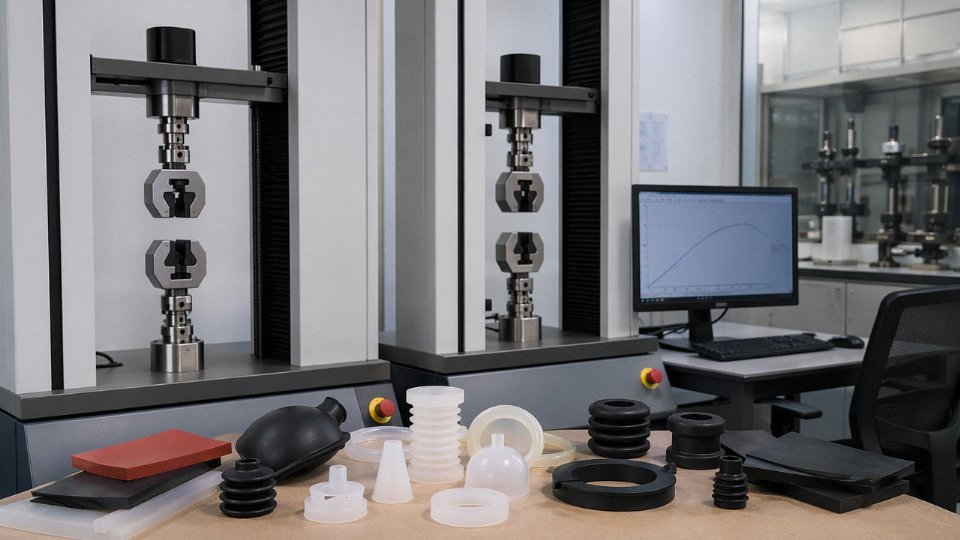
Silicone versus silicone rubber performance checkpoints
| Checkpoint | Broad silicone materials | Silicone rubber elastomers | Procurement and engineering caution |
|---|---|---|---|
| Heat | Depends heavily on form: oil, resin, gel, adhesive, coating, or elastomer | General-purpose grades often around -55°C to 200°C; specialty heat grades may reach about 230°C to 300°C for limited duty | Ask for continuous rating under load, not just a peak survival number |
| Cold | Fluids may remain useful at low temperature; resins and sealants vary | Usually excellent flexibility down to around -55°C, grade dependent | Check compression set after cold cycling if sealing is the job |
| Weathering | Many silicone chemistries resist UV and oxidation well | Very strong ozone, UV, oxygen, and outdoor aging resistance | Do not ignore tear risk from poor groove design or rough handling |
| Sealing load | Not all silicone materials can carry compression | Supplied commonly around 10 to 80 Shore A, depending on compound | Match hardness to flange flatness, bolt load, and gap tolerance |
| Abrasion | Coatings and resins may protect surfaces, but behavior varies | Generally not the first choice for heavy abrasion or sliding wear | Use guards, fabric reinforcement, or another elastomer if rubbing is constant |
| Chemicals | Chemistry-specific; fluids, sealants, and resins differ widely | Limited with many fuels, oils, solvents, strong acids, and strong bases | Run immersion or swell testing at operating temperature before release |
| Electrical insulation | Some silicone gels, resins, and coatings are excellent dielectrics | Often about 20 to 30 kV/mm dielectric strength, grade and test dependent | Design for tracking, creepage, contamination, and field installation quality |
Manufacturing routes: from silicone feedstock to molded rubber, extrusions, coatings, and sealants
Silicone on a purchase order can mean anything from a pumpable oil to a molded gasket. The production route tells you what you are really buying. In plant terms, a silicone rubber keypad, a silicone conformal coating, a silicone grease, and a room-temperature sealant may start from related chemistry, but they move through very different equipment, controls, and quality documents.
Common routes for silicone rubber parts
High consistency rubber, often called HCR, arrives as a stiff gum-like compound, usually supplied in slabs, strips, or preforms. It is processed much like a high-grade rubber compound, though it behaves differently under heat and pressure.
Compression molding is still common for gaskets, diaphragms, vibration pads, and medium-volume industrial parts. The operator loads pre-weighed blanks into a heated tool, closes the press, cures the part, then trims flash. It is forgiving on tooling cost, but labor, flash, and cavity-to-cavity variation can bite you if the part has thin lips or tight shutoffs.
Transfer molding uses a pot and runner system to push material into the cavities. It handles inserts and more detailed geometries better than basic compression molding, but runners create waste. For platinum-cured or medical-type compounds, that scrap is not cheap.
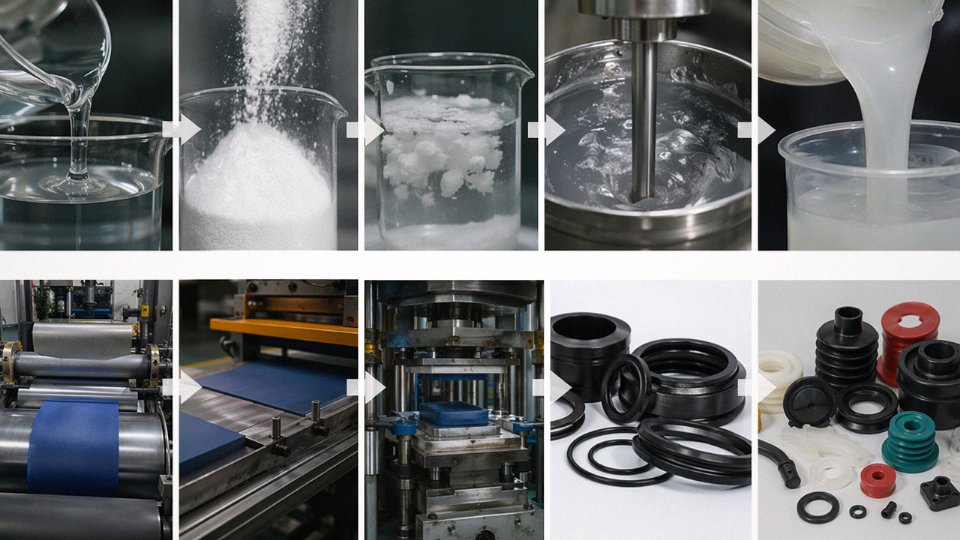
Liquid injection molding, usually using liquid silicone rubber, is a different animal. LSR is supplied as two pumpable components, metered through a static mixer and injected into a heated mold. The process suits high-volume seals, connectors, baby-care parts, medical components, and small technical parts with thin sections. Automation is cleaner and faster, give or take the mold design, cure chemistry, shot size, and demolding method. A simple LSR part may cycle in roughly 20 to 90 seconds; thick HCR molded parts can take several minutes. Do not quote those numbers blindly. A 6 mm wall, a deep undercut, or a high filler loading changes the picture quickly.
Extrusion is used for tubing, profiles, cords, oven door seals, cable insulation, and sponge silicone sections. The extrudate passes through hot air, salt bath, infrared, or other curing systems, then may be post-cured, cut, spliced, or adhesive-backed. Calendaring makes sheets, reinforced fabrics, membranes, and coated carriers. Die cutting turns sheet stock into flat gaskets and pads; it is economical, but tolerances depend on sheet thickness control, tool sharpness, liner stability, and whether the gasket relaxes after cutting.
Overmolding puts silicone rubber onto metal, plastic, glass, or electronics. That is where procurement needs to slow down. Adhesion may require primer, plasma activation, corona treatment, abrasive preparation, or a self-bonding LSR grade. A beautiful molded seal that peels off a nylon carrier after humidity cycling is still scrap.
Non-rubber silicone processing is not just “soft molding”
Silicone fluids are blended by viscosity, functional chemistry, volatility limits, and additive package. Greases are compounded with fillers such as silica or metal oxides until they hit the required consistency and bleed behavior. Gels are mixed, degassed, dispensed, and cured for potting electronics, optical assemblies, or sensors. Resins are applied as coatings, varnishes, binders, or release layers, then cured by heat, moisture, UV, or catalyst systems depending on the formulation.
Sealants and adhesives run through cartridge filling, drum packaging, static mixing, bead dispensing, and cure-in-place operations. Their success depends on surface cleanliness, bead geometry, humidity, joint movement, skin-over time, and whether the maintenance crew actually follows the cure schedule. I have seen good material blamed for leaks because someone pressure-tested a joint before the center of the bead had cured. That is not a material failure; it is a process failure.
HCR versus LSR: same family, different factory behavior
| Selection factor | HCR processing | LSR processing |
|---|---|---|
| Material handling | Stiff gum, milled or preformed | Pumpable two-part liquid |
| Tooling style | Compression, transfer, extrusion, calendaring | Cold runner or valve-gated injection molds |
| Automation | Possible, but often more manual | Strong fit for automated cells |
| Flash control | Depends heavily on tool wear, preform control, clamp force | Better potential, but vents and shutoffs still matter |
| Geometry fit | Larger parts, profiles, sheets, simple molded items | Small detailed parts, thin walls, high-cavity tools |
| Cost pattern | Lower tooling entry, more labor | Higher tooling and setup, lower unit labor at volume |
A typical choice: if a plant needs 500 large silicone pads for a fixture, HCR compression molding or die cutting from sheet usually wins. If it needs 2 million small connector seals with stable dimensions and minimal handling, LSR injection molding is normally the better conversation.
Secondary operations can make or break the specification
Post-curing drives off volatiles and completes certain cure systems. It may run for a few hours to a day or so, often around elevated temperatures chosen by the compound supplier and end-use requirement. The need depends on peroxide versus platinum cure, part thickness, extractables limits, odor requirements, and regulatory expectations.
Deflashing can be manual trimming, cryogenic tumbling, precision punching, or laser work. Manual trimming is flexible, but operator variation is real. Cryogenic deflashing is efficient for suitable geometries, yet it can damage delicate lips or leave particles if not controlled.
Secondary bonding, printing, marking, and surface treatment all deserve process controls. Silicone has low surface energy, so inks and adhesives may fail unless the surface is treated and used within the activation window. Plasma activation is not magic; parts left sitting too long, handled with oily gloves, or packed in the wrong liner can lose the benefit.
Inspection often includes dimensional checks, durometer, visual flash limits, compression set tests, tensile samples, dielectric tests for insulation grades, and extractables testing for medical or food-contact parts. The correct list depends on the application. A cable boot, a drug-contact septum, and a bakery oven gasket should not be validated the same way.
Two suppliers offering 'silicone rubber' may deliver parts with different tolerances, cleanliness, extractables, and validation burden because the processing route and cure system are not the same.True
Silicone rubber properties are shaped by compound selection, molding or extrusion method, post-cure, handling environment, and inspection plan, not just by the word silicone on the drawing.
Manufacturing route affects lead time as much as price. A prototype cut from calendared sheet can ship quickly. A multi-cavity LSR tool with cold runners, insert loading, vision inspection, and validation batches may take weeks or months, depending on toolmaker capacity and documentation load. For regulated or high-risk parts, ask early for process flow, cure system, post-cure conditions, lot traceability, cleanroom class if used, and change-control policy. That paperwork feels dull until a line is down and nobody can prove what changed.
Application fit: when to specify silicone, silicone rubber, or a different elastomer
A good material call starts with the job, not the brochure. I have seen silicone rubber work beautifully in a 180°C oven door seal and fail early on a fuel-wetted pump gasket that should never have been quoted in silicone in the first place. Same word on the purchase order. Very different duty.
Where silicone rubber is usually the right form
Specify silicone rubber when the part must stay flexible across a wide temperature swing, tolerate ozone and weathering, or provide clean, stable sealing without turning hard too quickly. General-purpose silicone rubber is commonly used from roughly -55°C to 200°C, depending on compound, cure system, compression set requirement, and how much mechanical load the part carries. Specialty grades can reach about 230°C to 300°C for limited duty, but that phrase “limited duty” matters. At those temperatures, life is often measured against hours, cycling, air flow, and acceptable property loss.
Good fits include:
- Gaskets and static seals in hot air, lighting, appliances, enclosures, and dry process equipment
- O-rings where temperature and weathering matter more than fuel or abrasion
- Medical tubing, pump segments, and soft-touch components when the correct biocompatible grade is specified
- Keypad membranes and switch mats where tactile recovery and aging resistance are needed
- Connector seals, insulation boots, and cable accessories where dielectric performance is part of the design
- Food-contact parts, baking mats, dispensing seals, and sanitary sleeves, subject to the right regulatory grade
- Small vibration isolators where heat aging is more important than high tear strength
For electrical insulation, silicone rubber is often attractive because many grades sit around 20 to 30 kV/mm dielectric strength, depending on thickness, fillers, cure chemistry, test method, and surface condition. Do not use that as a universal catalog number. A dusty molding floor, excess mold release, or a carbon-black-filled compound changes the conversation.
Hardness is another practical buying point. Silicone rubber elastomers are commonly supplied from about 10 to 80 Shore A. Very soft grades can be tacky or harder to demold. High-hardness grades may lose some conformability. Procurement should not treat “60 Shore A silicone” from two suppliers as identical unless compression set, tear strength, post-cure, and tolerance class are also controlled.
Where other silicone forms fit better
Not every silicone requirement should become a molded rubber part. If the function is spreading, filling, coating, releasing, bonding, or conducting heat, another silicone form may be the correct buy.
Silicone fluids are used as lubricants, damping fluids, and release agents. Silicone gels suit potting where delicate electronics need moisture protection and stress relief, not hard encapsulation. Conformal coatings protect circuit boards while adding little mass. Thermal interface materials move heat from power devices into heat sinks; their value depends on contact pressure, surface flatness, filler loading, and rework needs. Sealants and adhesives are selected for cure speed, joint design, adhesion, and movement capability, not Shore A alone.
A typical example: an electronics builder asks for a “silicone rubber pad” under a hot power module. The real issue may be thermal resistance through an uneven interface. A filled silicone gap pad or dispensable thermal gel could outperform a generic rubber sheet, especially if the assembly has variable clamp load. Wrong form, wrong failure mode: higher junction temperature, nuisance trips, shortened component life.
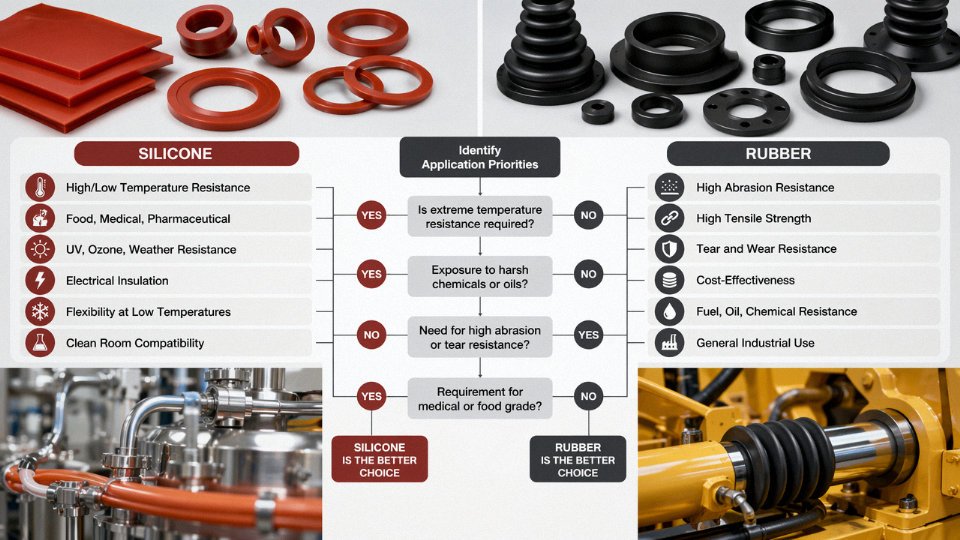
Where silicone rubber is not the best first choice
Silicone rubber has weaknesses. Ignore them and maintenance will find out on night shift.
High abrasion is one. Conveyor contact, gritty sliding, and repeated scuffing usually punish silicone. Sharp-edge tear loading is another; a thin silicone lip dragged across a burr can split fast. Dynamic fuel exposure, aromatic hydrocarbons, and many aggressive solvents are poor matches unless testing proves otherwise. High-pressure steam can also be risky, especially with repeated sterilization cycles, certain cure systems, and loaded seal geometries.
For high-pressure sealing, watch extrusion gaps. Silicone’s softness and lower tear resistance compared with some elastomers can lead to nibbling or extrusion if gland design is loose. A backup ring may fix it. Or the right answer may be another polymer.
Alternative elastomers worth considering
| Material family | Typical strength area | Watch-outs |
|---|---|---|
| EPDM | Hot water, steam in some services, weathering, glycol coolants, outdoor seals | Poor with petroleum oils and fuels |
| Nitrile rubber | Mineral oils, greases, hydraulic fluids, fuel resistance in many standard applications | Heat and ozone resistance are limited versus silicone or fluorocarbon |
| Fluorocarbon rubber | Fuels, oils, many chemicals, higher-temperature engine and process seals | Cost, low-temperature flexibility, steam and amines can be problems by grade |
| Natural rubber | High resilience, tear strength, fatigue resistance, vibration duties | Ozone, oil, heat aging, and weather exposure need caution |
| Polyurethane | Abrasion, load-bearing wheels, scrapers, high tear strength | Hydrolysis, heat, and some chemicals can shorten life |
| Thermoplastic elastomers | Fast processing, overmolding, recyclable trim, consumer parts | Compression set, heat aging, and chemical resistance vary widely |
Silicone rubber is often chosen for temperature stability and weathering, but it is not a universal upgrade over EPDM, nitrile, fluorocarbon, natural rubber, polyurethane, or TPE.True
Each elastomer family has a different balance of oil resistance, abrasion resistance, steam behavior, tear strength, cost, processability, and regulatory availability. Field exposure and part geometry usually decide the winner.
Material selection questions before calling a silicone rubber supplier
- What is the real continuous temperature, and what are the short spikes? Include cleaning cycles, summer cabinet temperatures, and nearby heaters.
- What media touch the part: air, water, steam, oil, fuel, coolant, detergent, solvent, food product, body fluid?
- Is the load static compression, dynamic sealing, tension, flexing, sliding, or vibration?
- How much movement occurs, and how often? A monthly access-door gasket is not a pump diaphragm.
- What certification is required: food-contact, medical, potable water, flame rating, automotive, rail, aerospace, or electrical?
- What color is needed, and can the pigment affect approval, conductivity, or contamination risk?
- What hardness range is acceptable after tolerances, aging, and compression set are considered?
- Does the geometry include thin lips, undercuts, sharp corners, bonded inserts, or long extrusion lengths?
- What production volume is expected: prototype, service spares, thousands per year, or continuous molded supply?
Send a supplier a drawing, exposure list, target life, and failure concern before asking for price. A low quote on the wrong elastomer is not savings. It is delayed scrap, leaking equipment, and a maintenance work order with your part number on it.
Compliance and safety: food, medical, electrical, automotive, and industrial standards
Compliance is where the word “silicone” gets dangerous in purchasing. Not because the material is unsafe by default, but because the generic name tells you almost nothing about approval status. A silicone oil, a room-temperature sealant, a peroxide-cured sheet, and a platinum-cured medical tube may all sit under the silicone family. They will not carry the same regulatory evidence.
In a plant or validation file, compliance belongs to a specific compound, formulation, process route, supplier site, and finished article. Change the pigment, filler, peroxide package, post-cure cycle, molding release, extrusion lubricant, or even the manufacturing location, and the paperwork may no longer apply. I have seen buyers treat “food grade silicone” as if it were a material species. It is not. It is a claim that must be backed by the right regulation, test conditions, and traceability for the actual part being purchased.
The main compliance buckets buyers run into
Food-contact work usually points toward rules such as FDA 21 CFR 177.2600 in the United States, EU food-contact requirements, German BfR recommendations, or similar national frameworks. The relevant question is not just “is it food grade?” Ask whether the finished rubber article is suitable for repeated or single-use contact, what food types were considered, what temperature and duration apply, and whether extraction limits were tested after the correct cure and post-cure.
Medical silicone rubber is a different conversation. For skin contact, fluid pathways, respiratory devices, and surgical accessories, suppliers may reference ISO 10993 biocompatibility testing, USP Class VI, cytotoxicity, sensitization, irritation, systemic toxicity, or hemocompatibility, depending on the application. A short-duration external seal does not need the same evidence as long-duration implant contact. “Medical grade” without the body-contact category and duration is loose language.
Pharmaceutical service adds another layer: extractables and leachables. Tubing, stoppers, gaskets, and single-use assemblies may need data on volatile, semi-volatile, and non-volatile extractables under aggressive solvents, elevated temperature, or extended soak. In practice, this is where cheap silicone hose often gets rejected late. The hose looks fine, clamps fine, and passes pressure testing, then the quality group asks for extractables data and the supplier has nothing beyond a generic data sheet.
Electrical applications look for different proof. Silicone rubber insulation may show dielectric strength around 20 to 30 kV/mm, depending on grade, thickness, fillers, cure system, aging condition, and test method, but a catalog value does not replace a standard-driven qualification. Buyers may need IEC, UL, CSA, or ASTM test reports, tracking resistance, dielectric breakdown, volume resistivity, thermal aging, and flame behavior such as UL 94 V-0, V-1, or HB. A red silicone sleeve and a listed insulating sleeve are not the same thing.
Automotive specifications can be stricter than many general industrial users expect. They may include heat aging, compression set, fluid exposure, fogging, odor, volatile content, flame resistance, and OEM-specific restricted substance declarations. For electric vehicles, silicone rubber may be selected for heat and insulation, but procurement still has to manage flame ratings, low-voltage or high-voltage insulation rules, and change notification. A compound substitution that saves a few cents per gasket can become a warranty issue if it changes compression set after coolant exposure.
Drinking-water approvals are another trap. NSF/ANSI/CAN 61, WRAS, KTW, ACS, or local potable-water approvals apply to specified products and conditions. A silicone rubber that is acceptable for baking trays is not automatically acceptable inside a drinking-water valve.
Documents that should be requested before the first production order
A serious supplier should be able to provide, as applicable, a technical data sheet, safety data sheet, certificate of analysis, declaration of compliance, third-party test reports, lot traceability, shelf-life statement, cure and post-cure information, restricted substance declarations, and a change-control agreement.
For molded or extruded silicone rubber parts, I like to see traceability from finished lot back to compound batch. Not every industrial gasket needs aerospace-level paperwork, but if the line makes food, medicine, high-voltage assemblies, or safety-critical vehicles, “we have used this material for years” is not documentation. It is a maintenance memory.
A practical purchase specification should state the exact compound or approved equivalent, color, hardness range, cure type if relevant, post-cure requirement, regulatory standards, operating temperature, media contact, cleaning chemicals, sterilization method, electrical requirements, and whether substitutions require written approval. Put it on the drawing or in the supplier quality agreement. If it lives only in an email thread, it will be missed during a reorder.
Misleading labels: food grade, medical grade, implant grade, platinum cured, FDA compliant
“Platinum cured” only describes the cure chemistry. It often gives cleaner extractables and better suitability for sensitive applications than peroxide curing, but it does not automatically make a part food-approved, medical-approved, or implantable.
“FDA compliant” may mean the base ingredients meet a regulation, or it may mean the finished article was evaluated properly. Those are not equal. Ask for the clause, the test basis, and whether the statement covers the final molded or extruded part in the supplied color.
“Implant grade” should be treated with even more caution. True implant applications require tightly controlled materials, manufacturing controls, risk management, biological evaluation, and usually customer-specific regulatory review. A vendor calling a catalog sheet “implant grade” is not enough.
A silicone rubber part is compliant because it is made from silicone.False
Compliance depends on the exact formulation, cure system, processing aids, manufacturing controls, finished-article testing, and the end-use regulation. The generic material family name does not grant approval.
The safest purchasing habit is simple: specify the end use, then specify the standard. Right material, wrong paperwork can stop a shipment. Wrong material, good-looking paperwork can stop a line later, usually with scrap on the floor and a production manager asking why a ten-dollar seal became the bottleneck.
Specification mistakes that cause failures, delays, and wrong-material purchases
A bad silicone specification usually starts with a harmless-looking line on a drawing: “Material: silicone.”
That is not enough for a gasket, keypad, cable boot, molded grommet, oven door seal, medical valve, or high-voltage insulator. To a buyer, “silicone” may mean a tube of sealant, a fluid, a resin coating, or an elastomer. To a molder, it still leaves open the compound, cure package, hardness, reinforcement, color masterbatch, post-cure, and certification route. That gap is where scrap and late shipments are born.
Do not specify the family when you need the rubber compound
For an engineered part, the minimum useful callout is usually silicone rubber, not just silicone. Then it needs boundaries: hardness, color, cure system, tensile strength or tear strength where relevant, compression set requirement, service exposure, and required approvals.
A practical line might read something like: “Platinum-cured silicone rubber, 50 to 60 Shore A, natural translucent, compression set tested per ASTM D395, suitable for intermittent contact with hot water and cleaning solution, supplied with lot traceability and certificate of conformance.” That still may need tightening, but at least it tells a supplier what game they are playing.
If the drawing only says “blue silicone, 60 Shore A,” procurement can receive three parts that feel similar by hand and behave very differently after a weekend at temperature. One may seal. One may take a permanent set. One may bleed pigment or smell strongly after heating.
A Shore A hardness value by itself is not a complete silicone rubber specification.True
Hardness only describes indentation resistance under a defined test condition. Seal force, assembly behavior, leakage, and life depend heavily on part geometry, compression, surface finish, cure system, fillers, temperature, and media exposure.
Shore hardness is not seal performance
Silicone rubber elastomers are commonly supplied from roughly 10 to 80 Shore A, depending on grade and application. That range is useful for screening, but it can fool people. A 40 Shore A O-ring in a fat gland may seal better than a 60 Shore A part in a shallow, scratched groove. A thin lip seal can tear during installation even if the plaque test data looks fine. A flat gasket compressed 8 percent may leak; the same compound at 20 to 30 percent compression may run for years, assuming the flange is flat and the bolts are not relaxed.
Geometry matters. So does the mating surface. A machined stainless face with a decent finish is different from powder-coated sheet metal with weld distortion near the corners. Temperature matters too. At elevated temperatures, compression set becomes the silent killer: the gasket looks present, but it no longer pushes back. Operators tighten the clamp, maintenance blames the gasket, and production loses another shift cleaning leaked product from the machine base.
Media exposure changes the answer again. Silicone rubber is excellent in many hot-air and weathering applications, but some oils, fuels, solvents, steam conditions, and aggressive cleaners can swell it, soften it, or leave it tacky. The wrong compound may pass incoming inspection and fail only after sanitation, autoclave cycling, or a summer in a control cabinet near a drive.
The ugly failure sources are often buried in purchasing substitutions
I have seen more trouble from “equivalent” material swaps than from honest design errors. A supplier changes a pigment package. A broker offers cheaper sheet stock with unknown history. A molder skips post-cure because the print did not say it. Someone uses peroxide-cured rubber where platinum cure was assumed. An adhesive that worked on a lab coupon peels from a production part because the surface has low energy, mold release residue, or blooming from additives.
Unverified colorants can create electrical, food-contact, or medical compliance problems. Recycled or reprocessed material may introduce contamination, odor, poor tear strength, or variable cure. Incompatible adhesives can leave a seal half-bonded and half-floating. Wrong cure systems may cause odor, extractables, inhibition, poor aging, or regulatory failure. Post-cure omission can leave volatile residues that show up as outgassing, fogging, taste transfer, or failed extractables testing.
The failure modes are not academic: compression set leakage, tear during assembly, swelling, tackiness, blooming, outgassing, high extractables, embrittlement, and electrical tracking. For silicone rubber insulation, dielectric strength may be in the rough neighborhood of 20 to 30 kV/mm, but that depends on grade, thickness, fillers, cure system, and test method. A contaminated pigment or uncontrolled filler change can move electrical performance in the wrong direction fast.
A workable specification structure
Keep the specification boring and complete. Boring is good in procurement.
| Specification item | What to define | Why it prevents trouble |
|---|---|---|
| Material family | Silicone rubber, liquid silicone rubber, high-consistency rubber, sponge silicone, or another defined form | Stops suppliers from quoting the wrong silicone form |
| Grade or compound | Approved compound number, supplier grade, or locked formulation | Prevents quiet substitutions |
| Hardness | Target and tolerance, such as 50 to 60 Shore A, plus test method | Controls feel and compression behavior, but not by itself |
| Cure type | Platinum or peroxide cure, including post-cure requirement if needed | Reduces odor, extractables, cure mismatch, and approval risk |
| Color | Natural, black, red oxide, or specified masterbatch with approval status | Avoids unverified pigments and compliance surprises |
| Mechanical properties | Tensile, elongation, tear, compression set, aging test where useful | Connects material data to field life |
| Dimensions | Critical dimensions, tolerances, flash limits, surface finish, inspection plan | Prevents assembly cuts, leaks, and rework |
| Standards and tests | ASTM, ISO, UL, FDA, USP, automotive, or customer-specific methods as applicable | Makes certificates meaningful |
| Packaging | Clean bagging, dust control, shelf-life labeling, coil limits for extrusions | Prevents contamination and deformation in storage |
| Traceability | Batch number, cure date, certificate of conformance, change notification | Gives quality a path when something fails |
One warning from the plant floor: if a part is safety-related, food-contact, medical, electrical, or hard to replace after installation, do not let purchasing buy by description alone. Lock the compound, require change notification, and keep first-article samples. The cheapest “same silicone” usually becomes expensive only after the line is down.
Cost and sourcing: why silicone rubber parts cost more than the word silicone suggests
A buyer sees “silicone” on a datasheet and expects a simple commodity. On the shop floor, silicone rubber is rarely bought that way. The part price is tied to compound choice, cure system, tool design, scrap risk, inspection burden, and how much evidence the customer needs with every shipment.
Two visually identical gaskets can have very different costs. One may be a general-purpose peroxide-cured molded seal for a dry enclosure. The other may be platinum-cured, pigment-controlled, post-cured, inspected under magnification, packed in double bags, and shipped with food-contact or medical traceability. Same color. Same shape. Not the same job.
What actually drives the part cost
Raw silicone polymer is only the starting point. High-consistency rubber, liquid silicone rubber, fluorosilicone, electrically conductive silicone, low-volatile grades, and medical or food grades sit in different price bands. The spread depends on polymer type, filler package, supplier approval status, order volume, and whether the compound is standard or custom mixed.
Fillers matter more than some buyers expect. Reinforcing silica improves tear strength and compression set behavior, but it changes mixing, flow, and mold release. Conductive carbon, ceramic fillers, flame-retardant packages, color concentrates, and low-friction additives can all affect cycle time and scrap. Pigment is not just cosmetic either. Tight color matching, especially translucent or light colors, exposes contamination and batch variation quickly.
Cure chemistry changes both cost and risk. Platinum-cured silicone often gives cleaner processing and lower extractables, but it is sensitive to contamination from sulfur, amines, some adhesives, and even sloppy handling. Peroxide-cured compounds may be cheaper and forgiving for some industrial parts, but they may need post-curing to drive off byproducts. Post-curing adds oven time, labor, energy, racks, floor space, and another chance for mix-ups.
Typical general-purpose silicone rubber service temperature is often around -55°C to 200°C. Specialty grades can reach roughly 230°C to 300°C for limited duty, depending on exposure time, airflow, mechanical load, and compound chemistry. That upper number is not free. High-temperature performance usually costs more in polymer selection, validation, and sometimes shorter mold life due to harsher processing conditions.
A silicone rubber part price is usually driven more by total processing and validation requirements than by the raw polymer price alone.True
Tooling complexity, cycle time, post-curing, scrap, inspection, documentation, packaging, and order volume often outweigh the material cost difference, especially for precision molded or regulated parts.
Cost drivers for silicone rubber components
| Driver | Why it matters | How to control it |
|---|---|---|
| Raw polymer type | General-purpose silicone, LSR, fluorosilicone, conductive grades, and medical grades carry different base costs and lead times | Specify only the performance actually needed; avoid upgrading to specialty grades by habit |
| Filler system | Reinforcement, conductivity, flame behavior, and tear strength affect mixing, flow, cure, and scrap | Review application loads, compression, electrical needs, and molding method with the compounder |
| Certification level | Food, medical, electrical, automotive, or aerospace documentation adds testing, traceability, and audits | State required standards and documents at RFQ stage, not after first articles |
| Pigment and appearance | Tight color, translucency, and cosmetic surfaces increase rejection risk | Use functional color tolerances where possible; define acceptable visual defects with photos |
| Cure chemistry | Platinum and peroxide systems have different contamination risks, byproducts, and post-cure needs | Match cure system to use environment, regulatory requirement, and supplier capability |
| Tooling and cavity count | More cavities reduce unit cost at volume but raise tool cost and balancing difficulty | Use single-cavity or soft tooling for learning; move to multi-cavity only after geometry is stable |
| Cycle time and demolding | Thick sections, undercuts, inserts, and delicate lips slow the press or molding cell | Simplify parting lines, add radii, and design for reliable ejection |
| Scrap rate | Flash, short shots, trapped air, contamination, and torn parts can quietly kill margin | Ask suppliers about expected scrap bands and process controls before awarding production |
| Post-curing | Adds oven capacity, handling, energy use, and lead time | Confirm whether it is technically required; define time and temperature if it is |
| Inspection and packaging | Critical dimensions, clean packaging, and lot traceability add labor | Separate critical-to-function dimensions from nice-to-have checks |
| Minimum order quantity | Silicone mixing, press setup, color changes, and paperwork do not scale down well | Combine releases, use blanket orders, or buy stock forms for early builds |
LSR can be cheaper at scale, but not at the beginning
Liquid silicone rubber is attractive in production because it can run with automated metering, closed-loop mixing, cold-runner tooling, and minimal manual handling. Good LSR cells can produce consistent parts with low labor content, especially for small seals, medical components, connector seals, keypad parts, and overmolded assemblies.
The catch is the front-end spend. LSR tooling is usually more expensive than a simple compression mold. Valve gates, cold runners, vacuum, automated part removal, insert loading, and vision checks all add cost. A poorly designed LSR tool is not a bargain; it becomes a very polished scrap generator.
For low-volume work, high-consistency rubber compression or transfer molding may still make sense. It can tolerate simpler tools and lower initial investment, though labor and variation are typically higher. The right answer depends on annual volume, tolerance, flash limits, cleanliness, labor rate, and how painful a bad part is in the customer’s assembly.
Prototype sourcing is not production sourcing
Early prototypes should not be sourced like a five-year production program. If the team needs flat gaskets, stock silicone sheet and die cutting can be fast and sensible. Tubing can often be bought from catalog stock in common sizes and hardness ranges, typically around 10 to 80 Shore A for silicone rubber elastomers, depending on grade and supplier. That is not the same as saying silicone fluids or resins have Shore A hardness; those are specified by viscosity, chemistry, and cure behavior.
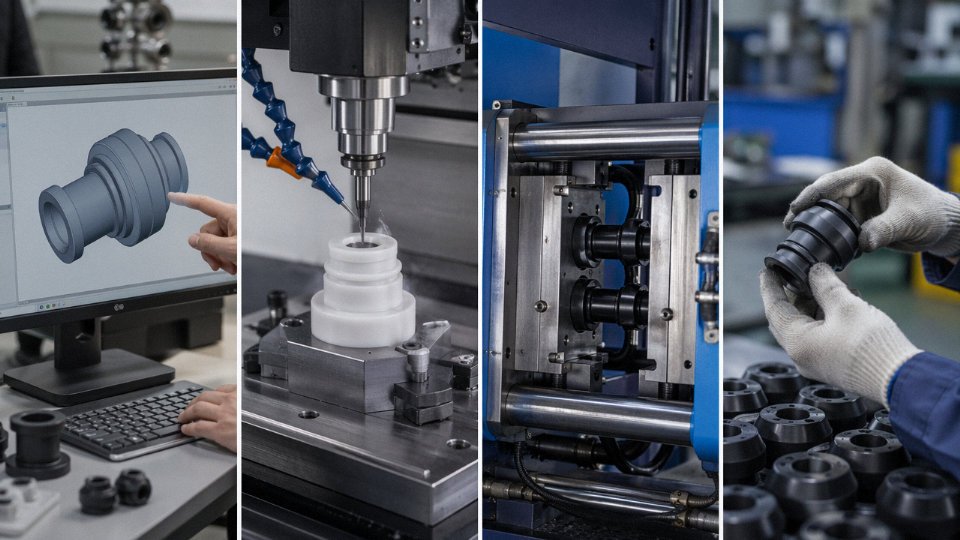
For molded shapes, 3D printed tooling, soft aluminum tools, and single-cavity molds are useful for geometry checks and limited functional trials. Expect looser flash control, less stable dimensions, and slower cycle times. Once the design is frozen, a production tool with proper venting, parting line strategy, cavity balance, and ejection details will usually pay for itself.
A typical path is simple: die-cut or machined prototype, then soft tool, then single-cavity production-intent tool, then multi-cavity tool once demand and scrap behavior are known. Skipping straight to a large tool can work, but only when the geometry, material, and inspection plan are already proven. Otherwise the first tool becomes an expensive lesson.
How to qualify the supplier, not just the quote
A low unit price means little if the supplier cannot control the compound. Ask whether they mix in-house, buy pre-compounded material, or rely on a distributor. None of those is automatically wrong, but traceability and change control must be clear. Lot-to-lot variation shows up as flash, cure shift, compression set trouble, or a dimension that drifts every time the weather changes.
Mold design experience is just as important. Silicone flows, traps air, flashes, and tears differently from thermoplastics. A supplier that understands venting, shrinkage, cold-runner balance, insert adhesion, and demolding will save time. Cleanroom capability matters for medical, optical, and some electronics work, but do not pay for it unless the product genuinely needs it.
For regulated parts, documentation should be discussed before the purchase order: material certificates, formulation control, biocompatibility or food-contact declarations, electrical test data, process validation, first article reports, and retention samples. If silicone rubber is being used as insulation, dielectric strength may be roughly 20 to 30 kV/mm, depending on grade, thickness, fillers, cure system, and test method. The supplier should know which test applies, not just quote a brochure value.
The best suppliers push back a little. They ask about compression, mating surfaces, torque pattern, cleaning chemicals, assembly lubricant, storage conditions, and failure consequence. That can feel slower during sourcing. It is much faster than sorting cracked seals, sticky parts, or rejected lots after the line is waiting.
Frequently asked questions about silicone and silicone rubber
Are silicone and silicone rubber the same thing?
No. Silicone is the wider material family. Silicone rubber is one rubber-like member of that family.
A buyer may ask for “silicone” and mean a gasket, a tube, a potting gel, a grease, a release coating, or a high-temperature sealant. Those are not interchangeable. Silicone rubber means an elastomer: a compounded, cured material that can stretch, recover, and seal under compression. In purchasing terms, that distinction matters because the supplier needs a compound, hardness, color, cure system, compliance target, drawing tolerance, and process route — not just the word “silicone.”
All silicone is rubber.False
Silicone is a broad silicon-oxygen based material family. Silicone rubber is the crosslinked elastomeric subset used for flexible parts such as seals, keypads, tubing, and insulation.
Is all silicone rubber?
No. Plenty of silicone materials have no useful rubber behavior at all.
Common non-rubber silicone forms include:
- Silicone fluids used as lubricants, damping fluids, release agents, and additives
- Silicone greases used on O-rings, valves, electrical connectors, and instrument fittings
- Silicone gels used for potting, cushioning, and optical or electronic encapsulation
- Silicone resins used in coatings, binders, varnishes, and heat-resistant finishes
- Silicone coatings used on fabric, paper release liners, fiberglass sleeving, and industrial belts
A silicone fluid can be excellent inside a damper and completely useless as a gasket. A silicone resin may tolerate heat well but crack if asked to flex like a seal. That is where material-family language causes trouble on real purchase orders.
Is silicone rubber a plastic or a rubber?
Silicone rubber is a rubber in engineering behavior, not a thermoplastic.
The main difference shows up in the shop. A thermoplastic softens and flows when reheated, then hardens again when cooled. Silicone rubber is crosslinked during curing. Once properly cured, it does not remelt into a moldable liquid. It can be cut, torn, swollen, burned, or thermally degraded, but you do not reprocess a cured silicone rubber gasket the way you regrind polypropylene runners.
Its hardness is normally specified in Shore A, often somewhere around 10 to 80 Shore A depending on the part. Soft tubing, keypad webs, and delicate seals sit toward the lower end. Dense molded gaskets, electrical boots, and industrial pads are often mid-range to higher hardness. Silicone fluids and resins are not specified that way; they are usually bought by viscosity, chemistry, solids content, cure system, or end-use rating.
Is silicone rubber safe for food or medical use?
It can be, but only if the compound and process are qualified for that use.
Food-grade or medical-grade silicone rubber is not just clean-looking white rubber. The base polymer, fillers, pigments, peroxide or platinum cure system, post-cure practice, molding environment, packaging, and traceability all matter. For food-contact parts, buyers normally look for the applicable food-contact declaration, extractables limits, and lot documentation. For medical use, the bar is higher: biocompatibility testing, clean manufacturing controls, change control, and sometimes sterilization validation.
I have seen good projects delayed because someone bought “food-grade silicone” from a catalog and later found the pigment package was not covered by the declaration. The part looked fine. The paperwork did not.
Does silicone rubber melt, burn, degrade, absorb water, conduct electricity, or resist oil?
Silicone rubber does not melt like a thermoplastic. At high enough temperature it degrades, loses mechanical strength, and may embrittle. General-purpose silicone rubber is often used around roughly -55°C to 200°C, while specialty grades may reach about 230°C to 300°C for limited duty. The real limit depends on grade, exposure time, load, air flow, compression, and whether hot oil, steam, or chemicals are present.
It can burn under the right conditions, although many grades leave a silica-like ash rather than dripping like some plastics. Flame-rated grades need actual test data, not assumptions.
Water absorption is usually low, but silicone rubber is relatively permeable to water vapor and gases compared with some other elastomers. That matters in sealed electronics, vacuum equipment, and long-life outdoor enclosures.
Standard silicone rubber is an electrical insulator. Typical dielectric strength for silicone rubber insulation may fall around 20 to 30 kV/mm, depending on grade, thickness, fillers, cure system, and test method. Conductive silicone exists too; it is intentionally filled with carbon, silver-plated particles, or other conductive fillers.
Oil resistance is mixed. Silicone handles many dry heat and weathering jobs well, but it is not my first pick for hot petroleum oil, fuel, or aggressive hydrocarbons. Fluorosilicone or fluorocarbon rubber may be better, depending on temperature and fluid.
How should I choose between silicone rubber, EPDM, nitrile, fluorocarbon rubber, and TPE?
Start with the service environment, not the material name. Temperature, fluid exposure, compression set, outdoor life, electrical need, cleaning chemicals, and assembly method usually decide the answer.
| Material | Often a good fit | Watch-outs |
|---|---|---|
| Silicone rubber | High and low temperature seals, electrical insulation, food or medical parts when qualified, outdoor UV exposure | Poor tear strength in some grades, mixed oil and fuel resistance, higher cost |
| EPDM | Water, steam, weather seals, HVAC, outdoor gaskets | Poor resistance to petroleum oils and fuels |
| Nitrile rubber | Petroleum oils, hydraulic fluids, general industrial O-rings | Limited high-temperature and ozone resistance compared with silicone or EPDM |
| Fluorocarbon rubber | Hot oil, fuels, many chemicals, compact high-value seals | Higher cost, low-temperature flexibility varies by grade |
| TPE | Consumer grips, overmolded parts, lower-cost flexible components, recyclable designs | Heat set, compression set, and chemical resistance may not match cured rubber |
For a hot electrical cabinet gasket outdoors, silicone rubber is often a sensible candidate. For a pump seal in mineral oil, nitrile or fluorocarbon usually deserves the first look. For a roof-mounted weather gasket with no oil exposure, EPDM may outperform silicone on cost and service life. The wrong choice rarely fails politely; it swells, cracks, takes compression set, leaks, then somebody is changing parts on a shutdown weekend.
Final engineering takeaway: specify the form, not just the silicone name
The cleanest way to close this subject is also the way a good buyer, toolmaker, or quality engineer should treat it on a drawing: silicone is the chemistry platform; silicone rubber is one cured, elastic material form made from selected silicone polymers, fillers, crosslinkers, pigments, process aids, and sometimes specialty additives.
That distinction is not academic. It decides whether you receive a flexible gasket, a pourable potting compound, a grease, a conformal coating, a gel pad, or a resin system. I have seen purchase orders say “silicone seal” and watched three suppliers quote three different material assumptions. Nobody was being dishonest. The specification was just too loose.
A drawing that calls out only 'silicone' is usually not a complete elastomer specification.True
Silicone may mean a fluid, resin, gel, sealant, coating, or cured elastomer. Rubber parts need grade, hardness, cure system, dimensions, performance tests, and compliance requirements to be purchased repeatably.
Start with the duty, not the material name
A workable material choice starts with the service environment. Temperature is the obvious one, but it is not the only one. General-purpose silicone rubber is often used around roughly -55°C to 200°C, while specialty grades may survive about 230°C to 300°C for limited duty, depending on exposure time, oxygen, load, geometry, and the compound. A thin oven door seal and a thick vibration isolator do not age the same way, even if the data sheet headline looks similar.
Mechanical duty matters just as much. Is the part sealing static flanges, flexing every cycle, carrying compression for months, sliding against metal, or being stretched over a barb fitting during assembly? A soft 30 Shore A gasket may seal a warped stainless cover nicely, but it may tear during installation if the groove has a sharp edge. A 70 Shore A part may assemble cleanly and then leak because it cannot conform to the mating surface. That is the kind of trade-off that does not show up in a generic “silicone” request.
Chemical exposure is another trap. Silicone rubber handles weathering, ozone, and many temperature extremes well, but fuels, some oils, steam conditions, cleaning chemicals, and process solvents can change the answer quickly. In food and medical plants, the cleaning schedule is often more damaging than the product. A gasket that survives the syrup may not enjoy hot caustic washdown every night.
Put these items on the drawing or RFQ
At minimum, move the specification from a material nickname to a controlled requirement set:
- Material family and form: silicone rubber, silicone gel, RTV sealant, LSR molded part, HCR extrusion, coating, or another form.
- Grade or standard: supplier grade, internal material code, or recognized specification where applicable.
- Hardness for elastomers: commonly about 10 to 80 Shore A for silicone rubber, chosen around sealing load, assembly abuse, and tolerance stack-up.
- Cure system: peroxide-cured, platinum-cured, moisture-cure, heat-cure, or another defined system if extractables, odor, bonding, or compliance matter.
- Temperature range: continuous and short-term exposure, with real cycle conditions.
- Chemical exposure: process media, cleaning agents, lubricants, fuels, UV, ozone, humidity, steam, or vacuum.
- Compression set or elastic recovery requirement: especially for seals clamped for long periods.
- Electrical properties if relevant: silicone rubber insulation may show dielectric strength around 20 to 30 kV/mm, but thickness, fillers, cure system, grade, and test method can move the result.
- Certifications: food contact, medical, electrical, flame, automotive, or customer-specific approvals.
- Dimensions and tolerances: molded flash limits, extrusion tolerances, cut length, groove fit, shrinkage assumptions, and critical-to-function dimensions.
- Supplier controls: compound traceability, lot records, test certificates, change notification, shelf life, and approved production site.
That list looks long on paper. In practice, it saves weeks.
A typical plant-floor mistake
A maintenance team replaces a failed high-temperature gasket during a shutdown. The old part is described as “red silicone.” Purchasing finds a cheaper red silicone strip with the same width and thickness. It installs fine. Two weeks later, the joint starts weeping because the replacement has poor compression set under that clamp load and heat cycle. The material color matched. The function did not.
The wrong call creates downtime, cleanup, emergency freight, and finger-pointing between maintenance, purchasing, and the supplier. The right call would have defined silicone rubber grade, hardness, cure type, maximum service temperature, media exposure, compression set target, and tolerance. Less drama. Better parts.
Quote from requirements, approve with evidence
Before requesting quotes or approving drawings, translate the application into requirements the supplier can actually build and verify. Ask what compound they intend to use. Ask whether the quoted material is molded, extruded, calendered, cast, coated, or dispensed. Ask which tests are routine and which cost extra. If the part is safety-related, regulated, or hard to replace after installation, do not rely on a catalog description.
A decent supplier will not mind those questions. A weak one will answer with adjectives.
Silicone describes the chemistry; silicone rubber describes a rubber-like engineered material form.