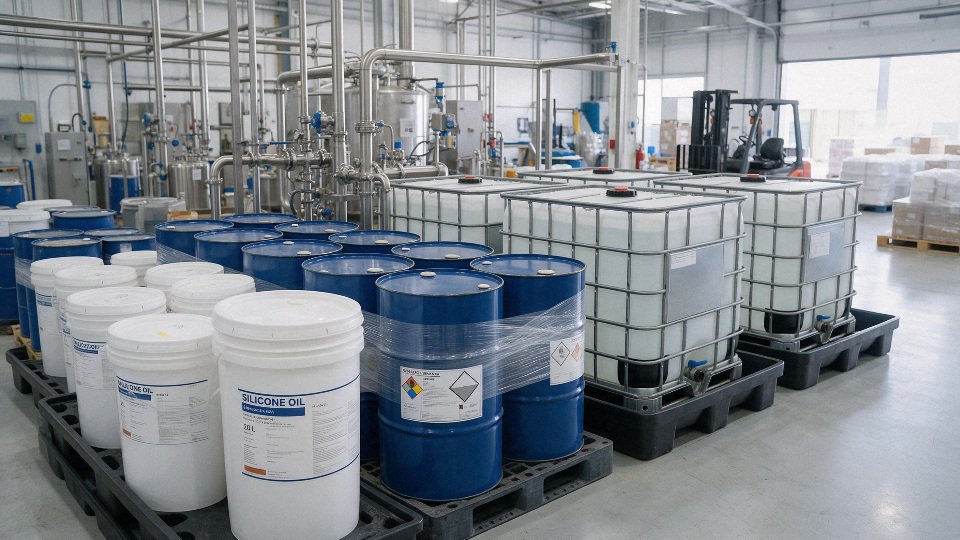
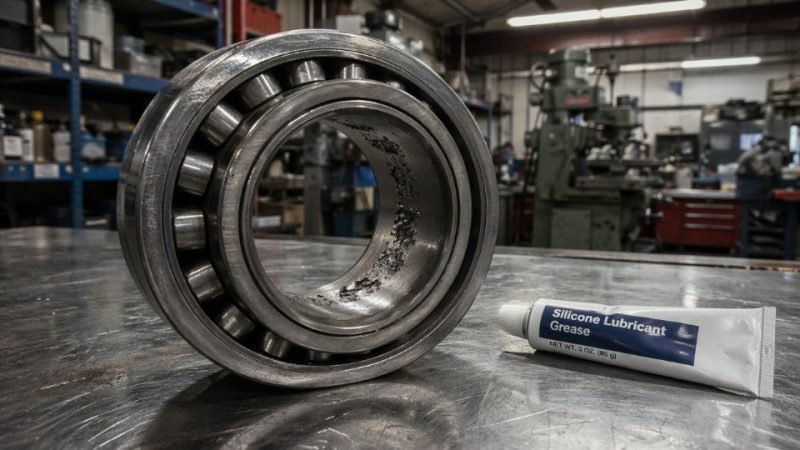
Silicone lubricant gets specified for a job, works fine for a few months, then quietly causes a problem nobody traces back to it until the damage is already done — a paint line rejecting batches over fish-eye defects, a gearbox running hot because the film sheared off under load, a supplier audit flagging contamination in a cleanroom. The operational consequences range from annoying to expensive, and the financial bleed is easy to miss because silicone failures tend to look like something else first.
Silicone lubricants disadvantages include poor load-carrying capacity compared to lithium-complex or EP greases, a tendency to migrate and contaminate paint, adhesive, and electronic surfaces at concentrations as low as 1–5 ppm, limited compatibility with certain plastics and rubbers, difficulty cleaning off equipment, and a price premium of roughly 3–5× over conventional alternatives — making them the wrong choice for many general industrial applications despite their temperature stability.
What makes silicone lubricant genuinely tricky to evaluate is that most of its failure modes are deferred — you don’t see the problem at the point of application, you see it three weeks later on a coating line, or six months later when a lightly loaded bearing fails earlier than it should. Understanding exactly where and why these disadvantages bite is what separates a well-specified lubrication program from one that’s quietly costing you money.
Poor Load-Carrying Capacity: Why Silicone Fails Under Heavy or Shock Loads
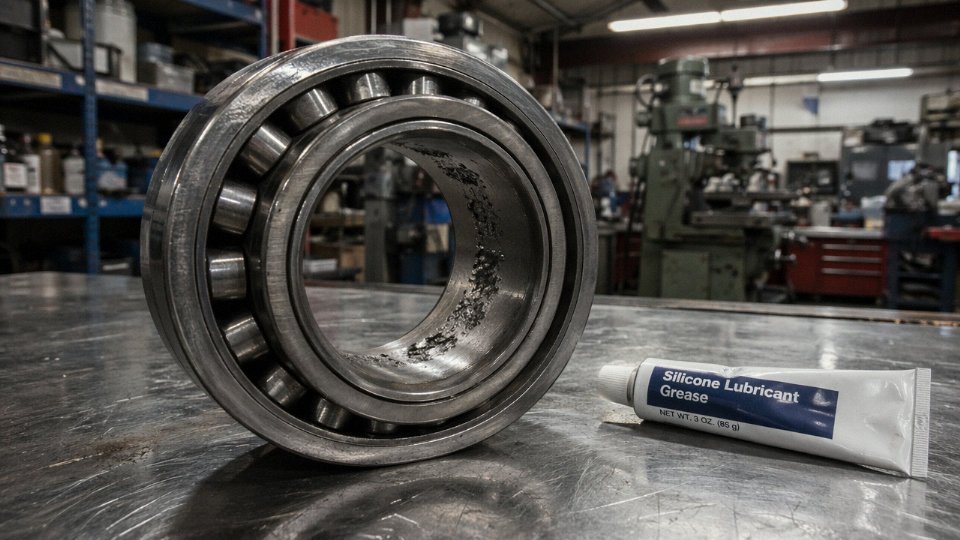
Silicone lubricants have a real Achilles heel, and it is not chemical instability or cost — it is the film’s fundamental inability to protect metal surfaces when contact stress gets serious. Understanding why requires a brief detour into tribology, because the failure mode is not obvious from the product data sheet.
Why PDMS Cannot Form a Sacrificial Tribofilm
Polydimethylsiloxane, the polymer backbone in virtually all silicone lubricants, is non-polar. That matters enormously at the asperity level. Conventional extreme-pressure (EP) additives — sulfurized fatty acids, phosphate esters, zinc dialkyldithiophosphate (ZDDP) — work because they react chemically with the metal surface under the heat and pressure of asperity contact, depositing a sacrificial iron sulfide or phosphate glaze that wears away instead of the base metal. PDMS does none of that. It has no reactive chemistry to offer. When the elastohydrodynamic film thins under high Hertzian contact stress and the lubricant gets squeezed out of the contact zone, there is nothing left to protect the surface. Metal touches metal, temperatures spike locally, and you get adhesive wear or, in a fast-moving application, outright seizure.
This is not a formulation shortcoming that blending in more base oil fixes. It is structural. You can thicken silicone grease with fumed silica or a PTFE carrier, adjust viscosity anywhere across the staggering PDMS range (roughly 0.65 cSt up to 1,000,000 cSt depending on chain length), and the contact chemistry problem persists. The PDMS backbone’s low intermolecular cohesion — the same property that makes silicone grease so slippery and gentle on elastomers — is exactly what makes the film shear away under dynamic loading instead of staying in place.
What the Four-Ball Test Numbers Actually Mean in Practice
Standard four-ball weld load testing is blunt but useful for comparison. Silicone greases typically weld somewhere in the 80–120 kgf range; the precise figure depends on thickener type and viscosity grade. A lithium-complex grease with an EP additive package weld-loads at 200–350 kgf — two to three times higher, depending on sulfur-phosphorus concentration and base oil viscosity. That gap is not academic.
Standard silicone greases weld at roughly 80–120 kgf in four-ball testing, compared to 200–350 kgf for lithium-complex EP greases.True
Four-ball weld load data for PDMS-based greases and lithium-complex EP greases is well-established in tribology literature and supplier technical data sheets; the ranges reflect variation in thickener content, base viscosity, and EP additive loading.
In a conveyor drive using 6205-series roller bearings running at moderate speed with any meaningful radial load — say, a belt tension load putting 15–20% of the dynamic load rating on the bearing — swapping in silicone grease instead of the specified lithium-complex grease can cut bearing life by half or worse. The failure mode is usually subsurface fatigue spalling starting at stressed asperities, not an obvious catastrophic seizure, so it often gets misdiagnosed as a bearing quality problem or misalignment.
Gear sets are worse. Spur gears and helical gears have sliding contact at pitch-line entry and exit — not pure rolling — and that sliding component demands genuine EP film strength. Silicone grease in a gearbox is a maintenance mistake I have seen blamed on “cheap bearings” for months before anyone looked at the lubricant specification.
Where Silicone Belongs and Where It Does Not
The table below is blunt on purpose.
| Application | Silicone Grease | Reason |
|---|---|---|
| O-ring and rubber seal assembly | Correct | Low load, elastomer compatibility critical |
| Lightly loaded plastic sliding guides | Correct | Low stress, avoids plastic swelling |
| Threaded plastic fittings (HVAC, plumbing) | Correct | Minimal shear load, elastomer present |
| Ball bearings under radial load >5% dynamic rating | Wrong | Film collapses, spalling within weeks to months |
| Cam followers, spur gear teeth | Wrong | Sliding contact demands EP tribofilm |
| Automotive wheel bearings | Wrong | Shock loads during cornering exceed film capacity |
| High-torque pivot joints (robotic arms, press tooling) | Wrong | Cyclic peak loads strip the film repeatedly |
A practical threshold I use: if the application ever sees shock loading — even intermittently — or if the Hertzian contact pressure in the design exceeds roughly 500 MPa, silicone is the wrong lubricant family regardless of how convenient its other properties are. Reach for a lithium-complex or calcium-sulfonate EP grease with a documented weld load and a film strength additive package. The cost difference is marginal. The downtime difference is not.
Silicone Migration and Cross-Contamination: The Hidden Production-Line Disaster
Silicone’s chemical stability is genuinely impressive, and that stability is exactly what makes contamination so hard to undo. Unlike petroleum-based lubricants that oxidize, polymerize, or get washed away, silicone residues persist. They spread. They show up where you never applied them.
The Physics of How Silicone Travels
The culprits are low-molecular-weight cyclic siloxanes — D4 (octamethylcyclotetrasiloxane), D5, and D6 specifically. These volatile fractions exist in virtually every commercial silicone lubricant formulation to some degree, even in products marketed as “high-purity.” At room temperature they volatilize slowly from the bulk lubricant, enter the air as vapor, and adsorb onto any cool or electrostatically active surface they encounter. In a factory with recirculated HVAC — which is most climate-controlled production facilities — those vapors circulate continuously. A lubrication point on a conveyor bearing 200 meters from your paint line is not safe. In practice, I’ve seen contamination patterns that pointed back to sources on the opposite side of a building, confirmed only after someone ran XPS surface analysis on affected panels.
Contact transfer is equally insidious. A technician handles a silicone-lubricated door latch mechanism, doesn’t change gloves, then touches a freshly prepped substrate. That’s enough.
Automotive Paint Booths: Where a Single Aerosol Can Becomes a $50,000 Problem
The threshold for fish-eye defects in solventborne and waterborne basecoats is brutally low — 1 to 5 ppm silicone contamination on the panel surface. At that concentration, surface energy drops enough that the wet paint film cannot wet out uniformly; it pulls back from microscopic silicone deposits and craters. You see it immediately after the clear coat flashes, and there is no fixing it in the booth. Every affected panel gets stripped and repaints at roughly $500 to $2,000 per vehicle body depending on panel count, labor rates, and whether the substrate also needs re-priming.
A single aerosol can of silicone spray discharged near an open paint booth intake — even by someone who thought they were far enough away — can contaminate an entire production run. One shift’s output. Quality engineers sometimes chase fish-eye problems for weeks before someone traces it to a maintenance tech who sprayed a squeaky conveyor chain with whatever was on the shelf.
Silicone contamination at 1–5 ppm can cause fish-eye paint defects in automotive coating operationsTrue
This threshold is well-established in automotive OEM paint process specifications and is consistent with published surface energy research on PDMS contamination of steel and aluminum substrates.
Adhesive Bonding: Surface Energy Below the Wetting Threshold
Structural adhesives — epoxies, methacrylates, polyurethanes — need a substrate surface energy of roughly 36 to 45 mN/m or better for adequate wetting and bond-line formation. A silicone-contaminated metal or composite surface can drop below 30 mN/m easily. The adhesive beads up rather than spreading. You may not detect this as an obvious bond failure during initial assembly; the joint passes cursory inspection, then fails under fatigue loading or thermal cycling. In aerospace composite bonding, that scenario has serious structural implications. Most aerospace bonding process specifications prohibit any silicone-containing product — lubricants, mold release, hand creams — within the entire bonding preparation area, not just within arm’s reach of the joint.
Electronics Assembly: The Intermittent Fault Nobody Can Find
Silicone migration onto PCB pads or connector contact surfaces creates a non-conductive film that increases contact resistance erratically. The circuit may test fine at assembly, then fail in service when thermal cycling causes slight oxidation through the silicone layer, or when contact pressure drops even marginally. These intermittent failures are genuinely difficult to diagnose without surface analysis — FTIR or XPS can identify silicone contamination unambiguously, but most electronics repair workflows don’t go there. Field returns that show “no fault found” on the bench are sometimes silicone contamination problems nobody recognized.
Welding and Brazing Exclusion Zones
Silicone deposits on weld prep surfaces decompose in the arc and leave silicon-rich inclusions and gas porosity in the fusion zone. AWS D1.1 and various ISO welding procedure specifications address silicone-containing contaminants explicitly, often defining physical exclusion zones — typically 150 to 300 mm from the weld prep area — where silicone-based products are prohibited. Inspectors using magnetic particle or radiographic testing will find the porosity; the harder problem is tracing it back to a lubrication product used days earlier during fitup.
Operational Controls When Silicone Cannot Be Eliminated
If silicone lubricants are genuinely the best technical choice for some application in a mixed manufacturing environment — a food-contact conveyor running through the same facility as a paint line, say — the segregation protocols need to be documented and enforced, not just understood.
Dedicated tooling is non-negotiable: any wrench, brush, or dispensing gun that contacts silicone lubricant never enters a coating or bonding zone. Enclosed application stations with negative-pressure ventilation and an airlock-style entry prevent vapor migration into adjacent areas. Cleaning verification after any silicone application should use contact angle measurement (a clean, properly pretreated metal surface typically shows a water contact angle below 10°; silicone contamination pushes that above 40° noticeably) or UV fluorescence if a tracer dye has been added to the lubricant formulation.
The uncomfortable operational reality is that in many plants, the easiest solution is a blanket prohibition on silicone lubricants in any area that shares airflow with coating, bonding, or precision electronics assembly — and substituting PTFE-based or dry-film alternatives wherever possible. Less elegant chemically, but far easier to control.
Incompatibility With Rubber, Plastics, and Sealing Materials
The reputation silicone lubricants have for being “safe on everything” is one of the more persistent myths on the plant floor. Walk into most MRO stockrooms and you’ll find a can of aerosol silicone spray treated as a universal fix — squirt it on a squeaky hinge, a stiff rubber gasket, a plastic slide. The problem is that “safe on everything” is only true for a narrow subset of materials, and for the wrong substrate it can trigger a seal failure or stress fracture that takes weeks to appear and minutes to cause a shutdown.
How PDMS Penetrates Certain Elastomer Networks
Silicone oil — polydimethylsiloxane at any viscosity grade — is genuinely a good solvent for non-polar elastomers. This isn’t a formulation flaw; it’s basic polymer chemistry. Natural rubber (NR) and polyisoprene have solubility parameters in roughly the 7.3–8.0 (cal/cm³)^0.5 range. Standard PDMS grades land in a similar window. When solubility parameters are close, the polymer network doesn’t repel the fluid — it absorbs it.
ASTM D471 immersion testing makes this concrete: NR specimens immersed in 1,000 cSt silicone oil at 70°C for 70 hours routinely show volume swell in the 10–25% range, depending on the rubber compound’s cross-link density and filler loading. That might sound academic until you translate it to an O-ring face seal running a 3 mm cross-section. A 15% volume gain means the ring is no longer sitting in its groove — it’s extruding past it, losing the contact stress that creates the seal. Leakage follows, often intermittently at first, which makes diagnosis genuinely difficult. Maintenance teams typically chase the fitting or the mating surface before someone thinks to test the lubricant compatibility.
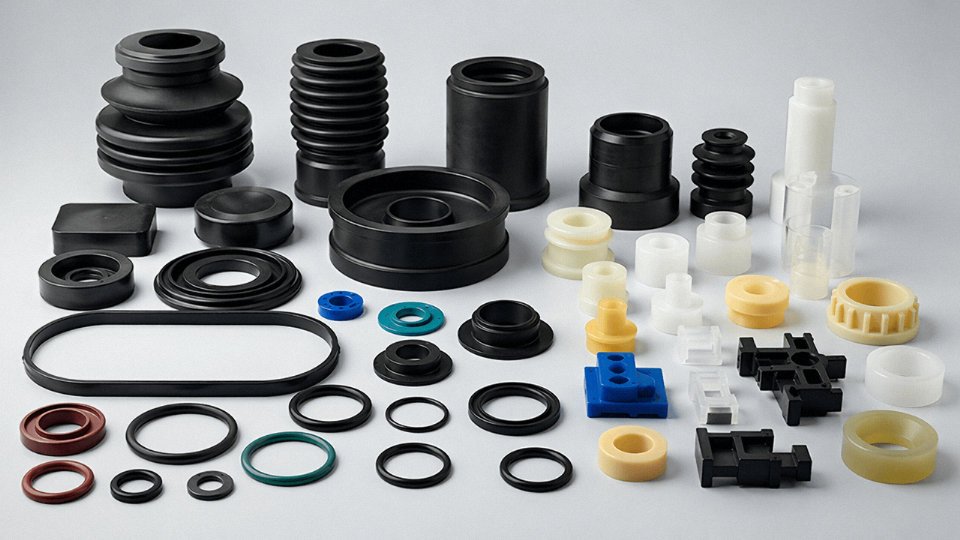
Polysulfide seals and polychloroprene (neoprene) are similarly at risk, particularly in static face seals where the lubricant sits in prolonged contact rather than being swept away. The contrast matters here: EPDM, PTFE, and silicone rubber itself are genuinely compatible with PDMS-based lubricants. Those pairings work. The error is assuming compatibility extends to everything that looks and feels like rubber.
Natural rubber O-rings can swell 10–25% by volume after extended exposure to silicone oil, compromising seal integrity.True
ASTM D471 immersion testing of NR elastomers in PDMS media at 70°C/70 hours consistently produces volume swell in this range, dependent on cross-link density and rubber formulation. The dimensional change exceeds typical O-ring groove tolerances, leading to extrusion and loss of sealing contact stress.
Stress Cracking in Engineering Thermoplastics
Polycarbonate is the case that surprises engineers most often. PC is tough, dimensionally stable, and used everywhere in automotive interior trim, electronic housings, and optical components. It is also notoriously susceptible to environmental stress cracking from low-surface-tension fluids — and silicone aerosol spray qualifies. Molded-in residual stresses, especially near gates, weld lines, or thin-wall transitions, act as initiation sites. The silicone doesn’t dissolve the PC; it lowers the energy barrier for crack propagation at those stress concentrations. ABS and HIPS are vulnerable by similar mechanisms.
The insidious part is timing. Cracking typically shows up days or weeks after the spray was applied, long after the maintenance event is forgotten. By then nobody connects the hairline fracture in a housing to the silicone that was used to free a stuck latch three weeks prior.
Material Compatibility — Quick Reference
| Material | Silicone Lubricant Compatibility | Notes |
|---|---|---|
| Natural rubber (NR) | Incompatible | 10–25% volume swell; seal failure risk |
| Neoprene (CR) | Incompatible | Swelling and softening under prolonged contact |
| Polysulfide | Incompatible | Avoid static-contact applications especially |
| EPDM | Compatible | Standard pairing; widely used in hydraulic seals |
| Silicone rubber (VMQ) | Compatible | Like-on-like; no absorption driving force |
| PTFE | Compatible | Chemically inert to PDMS |
| Nitrile (NBR) | Conditional | Moderate swell; test at application temperature |
| Polycarbonate (PC) | Incompatible (aerosol) | Stress cracking risk at molded stress concentrations |
| ABS / HIPS | Conditional | Avoid aerosol spray near weld lines or thin sections |
| Acetal (POM) | Compatible | Generally stable; verify filler grades |
| Nylon (PA6/PA66) | Conditional | Moisture content affects response; test before use |
The Mold Release Mistake
Aerosol silicone spray is a reasonable release agent on bare metal tooling. Fast, cheap, effective. The problem comes from overspray. In a typical injection molding or stamping cell, adjacent conveyor belts, seals on hydraulic clamping cylinders, and rubber bumpers on part handlers are all in the line of fire. A technician spraying a mold half at the end of a shift doesn’t see the mist settling on the NR lip seal on the clamp cylinder 600 mm away. That seal may last another two or three months before the swelling causes bypass leakage — at which point the maintenance record shows “hydraulic seal failure,” not “silicone contamination.”
In practice, the fix is either to use a dedicated non-silicone release agent in any cell that has rubber seals or sensitive plastic parts in proximity, or to physically mask adjacent components before applying silicone to tooling. Neither is complicated. Both are almost never standard procedure until after the first unexplained seal failure.
Inability to Be Removed: Silicone Persistence and Surface Remediation Challenges
Once silicone lubricant is on a surface, you are not getting it fully off. That’s not pessimism — it’s surface chemistry. PDMS has an exceptionally low surface energy, typically in the 20–24 mN/m range, which means it spreads into every micro-pore and surface irregularity and bonds weakly but extensively across the substrate. Standard alkaline degreasers, even at pH 12–13, don’t saponify it the way they break down mineral oils. Acetone and mineral spirits shift the bulk of it, but sub-micron films survive. You wipe three times with isopropyl alcohol and a cleanroom-grade lint-free wipe, and XPS surface analysis still detects PDMS at roughly 0.1–0.5 mg/m² — enough residue to cause adhesion failures in structural bonding or prevent a primer coat from curing correctly.
That number deserves emphasis. In automotive painting, the contamination threshold for fish-eye defects is 1–5 ppm. Sub-milligram-per-square-meter silicone concentrations are well within the range that kills coating adhesion. IPA wiping is not remediation. It is redistribution.
What Actually Works — and What It Costs You
The solvents that genuinely dissolve PDMS films are chlorinated: trichloroethylene and methylene chloride both work reasonably well, particularly with heat or ultrasonic agitation. The problem is that trichloroethylene is a listed HAP under EPA rules and a SVHC under REACH, and methylene chloride vapor pressure makes open-surface use essentially non-compliant in most EU and North American facilities. Getting authorization to use either in a production cleaning step involves industrial hygiene surveys, engineering controls, and paperwork cycles that most plants simply don’t want to open.
The practical alternatives are aromatic solvents — xylene or toluene — combined with mechanical abrasion, not just wiping. Some specialty chemical suppliers offer formulations built around cyclopentasiloxane-reactive reagents that intercalate into the PDMS chain and assist lift-off, but these are expensive, have their own VOC and disposal profiles, and typically require contact times of 10–30 minutes, not a quick wipe-down between shifts. In practice, multi-step protocols involving aromatic solvent soak, abrasive pad, re-solvent, then surface verification are what actually work. That is not a five-minute job.
The Institutional Memory Problem
Here is where silicone persistence moves from a chemistry problem to a management problem. A single maintenance technician using a spray silicone lubricant on a conveyor bearing six months ago can cause recurring coating adhesion failures today — on the same line, from the same workbench, because the silicone migrated to tools, fixtures, and handling gloves that were never identified as contaminated. The contamination source is almost impossible to trace without a formal audit.
Standard IPA wiping removes silicone lubricant contamination to levels safe for subsequent bonding or coating operationsFalse
XPS surface analysis consistently detects PDMS residues at 0.1–0.5 mg/m² even after multiple IPA wipe passes — well above the threshold that compromises adhesion in many coating and bonding applications. Chlorinated solvents or specialized stripping formulations with mechanical abrasion are required for effective remediation.
Recirculated HVAC and air-knife drying systems in production areas can carry silicone aerosols and re-deposit them downstream. This is seasonal in facilities with poor sealing — in winter when doors stay shut and air turnover drops, recontamination events tend to cluster.
Silicone-Free Zone Certification Is a Real Commitment
Facilities that have decided to remove silicone lubricants from a production area after contamination events find out quickly that “stop using it” is not enough. A proper silicone-free zone qualification involves surface audits using XPS or contact-angle measurements on witness panels, replacement of all contaminated tooling and fixtures, requalification of adhesion and bonding test data, and workforce retraining — because the failure mode most people overlook is the new technician who grabs a familiar blue spray can from their toolbox. The certification process typically runs weeks, not days, and the ongoing verification burden is real. For high-stakes applications like aerospace bonding, structural adhesives, or precision optical coatings, that certification needs to be defended on every audit cycle.
The decision to introduce silicone lubricants anywhere near a bonding or painting operation is, in practice, a long-term commitment you may not have intended to make.
Performance Degradation in Oxidizing, Radiation, and High-Vacuum Environments
Silicone lubricants earn reasonable marks in benign industrial environments. Put them in space, near a reactor, or even on an outdoor switchgear rack that faces a decade of direct sun, and the picture changes substantially. These failure modes don’t show up in general-purpose lubrication guides, which is exactly why they catch engineers off guard.
Vacuum Outgassing and Optical Contamination
PDMS is not a single compound — commercial greases contain a distribution of molecular weights, and the low-molecular-weight fractions carry meaningfully higher vapor pressures than the bulk fluid. In high-vacuum conditions below roughly 10⁻⁵ Pa, those fractions volatilize and migrate as a vapor through the surrounding enclosure. On their own that would be nuisance enough. The worse problem is what happens next: when that vapor deposits on a cold optical surface — a sensor window, a solar-cell coverglass, a precision mirror — and is then struck by UV photons or electrons, it polymerizes into a hard, SiO₂-like film. You can’t solvent-wipe it off. In spacecraft tribology literature this is described as “silicone brownout” on optical assemblies, and it’s one of the more expensive lessons the industry has absorbed over the past forty years.
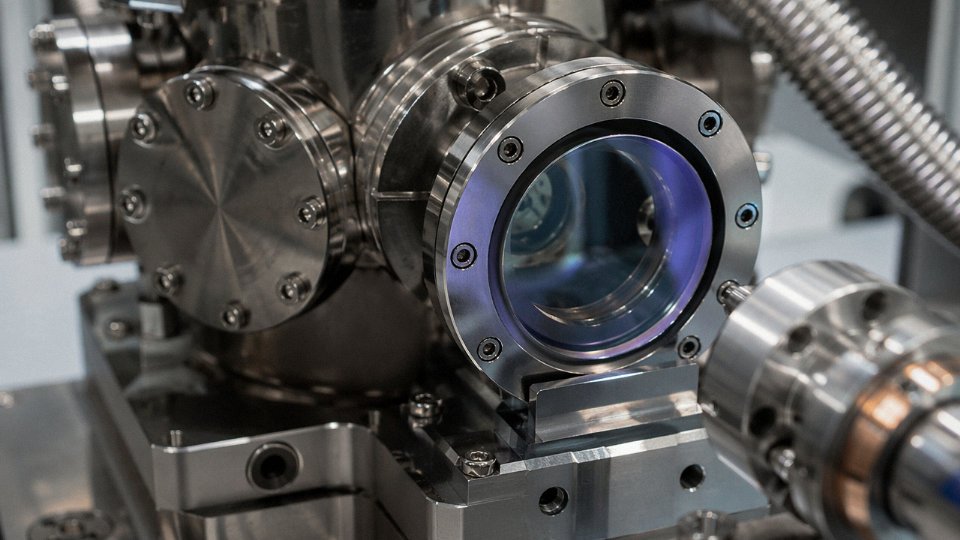
NASA’s ASTM E595 specification puts hard numbers on the problem: total mass loss (TML) must stay below 1.0%, and collected volatile condensable material (CVCM) must be below 0.10%. Most commercial silicone greases — including products marketed as “instrument grade” — fail the CVCM threshold. Space-qualified lubrication almost always moves to perfluoropolyether (PFPE) oils precisely because PFPE outgassing rates are orders of magnitude lower and the condensate, where it forms at all, doesn’t polymerize on contact with radiation.
Most commercial silicone greases fail NASA ASTM E595 CVCM requirements of 0.10% maximum.True
PDMS-based greases contain low-molecular-weight fractions with relatively high vapor pressures; independent ASTM E595 test data from spacecraft material databases consistently show CVCM values above 0.10% for standard silicone greases, which is why PFPE lubricants dominate space-qualified applications.
Atomic Oxygen Erosion in Low Earth Orbit
Low Earth orbit isn’t just a vacuum — it’s a bombardment environment. At altitudes between roughly 200 and 700 km, atomic oxygen flux is intense enough to attack organic bonds directly. The Si–CH₃ linkages in PDMS are preferentially targeted: atomic oxygen strips the methyl groups and oxidizes the backbone, converting the lubricant surface to a friable SiO₂ layer within hundreds of hours of exposure at typical LEO flux densities. The lubricious PDMS underneath that crust is effectively sealed off from the bearing interface while the crust itself is brittle and contributes particulate contamination. For any mechanism on an unshielded external spacecraft surface, this matters enormously.
Radiation Effects: Gamma, Neutron, and the Viscosity Unpredictability Problem
Nuclear applications present a different mechanism but an equally disqualifying outcome. Ionizing radiation induces both chain scission — which lowers molecular weight and thins the fluid — and cross-linking, which does the opposite. The net effect depends on dose rate, temperature, and the specific PDMS formulation, which makes it hard to predict in advance. What studies in the nuclear industry have measured is a viscosity increase in the range of 200–400% after absorbed doses around 10⁶ Gy. At that point the grease is no longer flowing into the contact zone effectively; in some cases it becomes brittle enough to fracture under cyclic load. Neither outcome is acceptable in a valve actuator or a control rod mechanism where lubricant behavior has to stay within a defined band over a planned service interval of years.
UV Degradation at Ground Level
This failure mode is less dramatic but operationally relevant for anyone maintaining outdoor electrical connectors, junction boxes, or antenna mounts. Prolonged UV exposure — think a southern-facing installation over five to ten years — oxidizes the silicone grease surface and progressively converts it from a smooth dielectric film into a gummy, tacky residue. Ironically, this residue can trap particulates and moisture and actually increases contact resistance rather than maintaining the original dielectric protection. Utilities and telecom maintenance crews encounter this regularly when pulling connectors that were lubricated at installation and never re-inspected. A UV-stabilized dielectric compound or a sealed connector design avoids the problem, but that decision has to be made before installation, not after the deposit has formed.
Cost, Relubrication Interval, and Total Cost of Ownership Misconceptions
Silicone lubricant has a reputation in some procurement circles as a “premium but worth it” option. The reality is more complicated, and for most industrial applications, the economics work against it in ways that don’t show up on the initial purchase order.
The Raw Unit Cost Problem
Food-grade silicone grease typically runs $15–$40 per 100 g, depending on viscosity grade, certification level (NSF H1 vs. H2), and packaging. Compare that to food-grade PTFE-thickened grease at roughly $6–$12 per 100 g, or a standard lithium-complex grease at $2–$5 per 100 g. You’re looking at a 3× to 8× cost premium per gram of applied lubricant, and that multiplier gets worse when you account for the fact that silicone greases are often specified in slightly heavier application quantities to compensate for their lower film tenacity on steel surfaces.
For a facility running 200–400 lubrication points — not unusual in a mid-size food processing or packaging plant — that per-gram difference compounds quickly across an annual budget.
Relubrication Intervals Are Shorter Than You’d Expect
Silicone greases last as long as synthetic PAO or ester-based greases in rolling element bearings under moderate dynamic loadFalse
Silicone greases have relatively poor adhesion to metal bearing surfaces and lower oxidative stability than PAO or ester-based synthetics. Under moderate-load dynamic conditions, they tend to be displaced from bearing races faster, typically shortening relubrication intervals by 20–40% compared to a well-matched PAO grease. The exact penalty depends on bearing type, speed, and temperature, but in my experience, maintenance teams that switch to silicone without recalculating intervals often end up with premature bearing wear before anyone notices the schedule is wrong.
That 20–40% interval reduction matters operationally. If your standard relubrication cycle for a conveyor bearing is every 1,000 hours, you may need to service it every 600–800 hours with a silicone grease under the same conditions. More labor, more grease consumed, more planned stops — or, if the schedule doesn’t get updated, unplanned bearing failures.
The reason is straightforward: silicone’s low surface energy, which makes it useful in some applications, also means it doesn’t wet or cling to ferrous metal surfaces the way a lithium-complex or PAO grease does. Under centrifugal forces in a rotating bearing, it migrates out of the contact zone faster.
The Contamination Cost That Erases Years of Savings
This is the number that should be on every procurement manager’s desk. A single silicone contamination event in an automotive body shop — fish-eye defects tracing back to silicone vapors migrating from an adjacent assembly area — can generate $50,000 to $500,000 in rework costs, quality hold charges, and line downtime, depending on how many panels are affected before the root cause is identified. Composite bonding operations face similar exposure; even trace PDMS residue at 1–5 ppm on a bondline surface can cause adhesion failures that only show up during destructive testing or, worse, in service.
The brutal part of the TCO math is that you have to amortize that contamination risk against every lubrication dollar you’re saving. If your plant handles any painting, coating, or structural bonding in the same building or through shared HVAC, the expected value of a contamination incident may exceed your entire annual lubrication budget for that product.
Disposal Adds a Regulatory Tail Cost
PDMS doesn’t biodegrade readily. Conventional biological wastewater treatment doesn’t remove it efficiently, and industrial users in regulated watersheds — particularly in regions with active pharmaceutical ingredient or microplastics-adjacent regulatory scrutiny — are increasingly facing additional disposal and reporting obligations. The cost is facility-specific and easy to overlook in a simple product comparison, but it’s real.
Where Silicone Actually Wins on TCO
To be fair: there are applications where the premium is genuinely justified. Medical device assembly requires NSF or USP-compliant lubricants, and silicone is often the only practical option. Food-contact applications under NSF H1 approval, extreme-cold environments below roughly -50°C where most greases turn to paste, and EPDM O-ring lubrication in water treatment systems — these are cases where silicone’s material compatibility or regulatory standing make it the correct choice, cost aside. The mistake is assuming those cases are the rule rather than the exception.
Electrical and Dielectric Property Limitations in High-Voltage and High-Frequency Applications
Silicone grease gets marketed heavily as a dielectric protectant, and in the right context — sealing low-voltage automotive connectors, weatherproofing trailer harness plugs, keeping moisture out of a 12 V battery terminal — that reputation is largely deserved. The problem is when that same product ends up in medium-voltage outdoor infrastructure or precision RF assemblies, where its electrical properties stop being an asset and start creating failures that are genuinely hard to diagnose.
Pollution Accumulation on Medium-Voltage Insulators
On distribution-class equipment running anywhere from 1 kV up to 35 kV, utilities have applied silicone grease to ceramic and glass insulators for decades as a pollution-migration strategy. The logic is sound in principle: the grease encapsulates airborne contaminants before they dissolve in moisture and form a conductive layer. IEC 60815 and IEEE 1523 both acknowledge this approach, but neither document gives a blanket endorsement. Both specify application thickness in the range of roughly 0.3–0.5 mm — thinner than most maintenance crews actually apply — and both are explicit that contaminated grease must be stripped off completely and reapplied on a defined interval, not topped up.
That “strip and replace” requirement is where utilities get into trouble. Silicone’s tackiness, which makes it useful for catching particles initially, eventually turns it into a particle magnet. Dust, carbon fines from nearby industrial processes, salt aerosol in coastal installations — all of it embeds in the grease surface. Once that layer becomes conductive enough, you get leakage current paths and, in the worst cases, dry-band arcing and flashover. The insulator doesn’t fail because the silicone degraded chemically; it fails because nobody removed the old grease on schedule. In practice, reapplication intervals depend heavily on local pollution severity class — a coastal substation in an industrial corridor might need service every 12–18 months, while a clean inland location could extend that to 3–5 years. Skipping the strip step and simply adding fresh grease on top of contaminated material is one of the more common field errors I’ve seen, and it does nothing useful.
RF and High-Frequency Signal Integrity
Switch contexts entirely to precision RF work and the problem is different but equally concrete. Polydimethylsiloxane has a dielectric constant of roughly εᵣ = 2.7–2.9. Air is εᵣ = 1.0. RF connector interfaces — SMA, N-type, 2.92 mm — are designed around a specific geometry and a specific dielectric filling that interface cavity. Introduce silicone grease and you’ve changed the effective dielectric constant at the junction. The connector’s characteristic impedance shifts, and above roughly 6 GHz the insertion loss and return loss degradation become measurable. At millimeter-wave frequencies it’s worse. This isn’t a theoretical concern; it shows up in vector network analyzer sweeps almost immediately. Silicone has no business inside precision RF connectors, full stop.
Applying silicone grease inside SMA or N-type RF connectors improves signal integrity by protecting contact surfaces.False
PDMS dielectric constant of approximately 2.7–2.9 shifts the connector impedance away from 50 Ω design value, introducing insertion loss and return loss degradation measurable above 6 GHz. RF connectors should use dry contact or specifically validated contact lubricants tested at operating frequencies.
Thermal Interface Material Performance and the Pump-Out Problem
Silicone-based thermal greases occupy a wide range of thermal conductivity depending on filler type and loading — roughly 0.7 W/m·K for unfilled or lightly filled compounds up to about 4.0 W/m·K for heavily loaded zinc oxide or aluminum oxide formulations. That’s adequate for many consumer electronics applications, but indium-based phase-change materials and graphene-enhanced compounds reach 6–80 W/m·K, a gap that matters when you’re managing junction temperatures on a 300 W power module with a 15°C margin to thermal shutdown.
Even within its rated range, silicone TIM has a structural reliability problem under thermal cycling. Low-viscosity silicone migrates outward under the mechanical pumping action of repeated expansion and contraction — the pump-out effect. The grease thins at the center of the interface and accumulates at the edges, leaving dry spots where thermal resistance can be 4–5 times higher than the initial application measured. Server CPU cooling failures and IGBT module deratings have both been attributed to this mechanism. It’s not a fast failure. It develops over hundreds or thousands of thermal cycles, which means it often gets misattributed to aging of the semiconductor itself rather than TIM degradation. Phase-change indium foils and polymer-matrix composites with mechanical compliance don’t exhibit the same pump-out behavior, which is why power electronics designers working on cycling-heavy applications increasingly specify them over silicone grease regardless of the upfront cost difference.
Environmental, Regulatory, and Workplace Safety Concerns
Silicone lubricants have long carried a reputation for being inert and benign — chemically stable, non-reactive, safe to handle. That reputation is increasingly difficult to defend in full, especially for procurement managers and EHS teams operating under EU REACH, California Proposition 65, or any environmental management system that requires documented chemical risk assessment. The regulatory picture has shifted noticeably over the last decade, and several assumptions baked into older SDS documents no longer hold.
Cyclic Siloxanes and the REACH SVHC Problem
The core regulatory issue is not with polydimethylsiloxane in its linear, high-molecular-weight form. The problem is with D4 (octamethylcyclotetrasiloxane) and D5 (decamethylcyclopentasiloxane) — cyclic siloxanes that appear as residual processing impurities or intentional components in a significant proportion of commercial silicone lubricant formulations, particularly lower-cost aerosol sprays and thin-film silicone oils.
D4 is classified under EU CLP as a reproductive toxicant Category 2 and listed on the REACH Substances of Very High Concern (SVHC) candidate list on the basis of persistence, bioaccumulation, and potential endocrine disruption. D5 carries the same PBT/vPvB designation. Bioconcentration factors for D5 in aquatic organisms have been measured above 5,000 — well past the threshold that triggers regulatory concern under REACH Annex XIII.
D5 (decamethylcyclopentasiloxane) has a bioconcentration factor above 5,000 in aquatic organismsTrue
Multiple regulatory assessments including the EU REACH Committee for Risk Assessment (RAC) and Environment Canada have confirmed BCF values exceeding 5,000 for D5, which meets the criteria for bioaccumulative substances under REACH Annex XIII.
The practical problem for EHS managers is that many aerosol silicone products list nothing more specific than “silicone oil” or “polydimethylsiloxane” on their SDS. That generic labeling makes it nearly impossible to determine cyclic siloxane content without requesting a full compositional breakdown from the supplier — something most distributors are reluctant to provide without a formal REACH Article 33 inquiry. If your facility exports products into the EU or sells into California markets, this information gap is not a minor administrative irritation; it is a compliance liability.
Aerosol Application and Inhalation Risk
Spray application — which is how a large share of silicone lubricants are used on plant floors — generates a respirable PDMS mist with droplet sizes that can fall well below 10 µm. At that particle size, the mist bypasses upper respiratory filtration and reaches the lower airways. OSHA and NIOSH have not established a specific PEL or REL for PDMS, which sometimes gets interpreted as “no hazard,” but that reading is wrong. The absence of a regulatory limit reflects the lag in occupational exposure standards, not a clean toxicological bill of health. Animal studies have associated prolonged high-concentration PDMS inhalation with pulmonary granulomas, and polymer fume fever has been documented in poorly ventilated spray operations.
In practice, this matters most in confined maintenance environments — applying silicone spray inside control cabinets, inside vehicle bodies, or in any area with limited air exchange. General ventilation is usually insufficient; local exhaust ventilation or supplied-air respirators should be the standard for routine spray operations, not a precaution reserved for annual deep-maintenance events.

Environmental Persistence and Disposal Costs
Linear PDMS degrades slowly in aerobic soil but becomes genuinely persistent in anaerobic sediment, with half-life estimates ranging from roughly 100 days under favorable aerobic conditions to over 1,000 days in the kind of anaerobic sediment found at the bottom of drainage channels and wastewater treatment settling tanks. That range depends heavily on temperature, organic carbon content, and microbial activity — conditions that vary plant to plant and season to season.
PDMS-contaminated waste — spent grease cartridges, wipe rags, used filtration media — cannot legally enter municipal sewage or standard solid waste streams in many jurisdictions. Depending on local hazardous waste classification, incineration at a licensed thermal treatment facility may be required. Disposal costs for this material typically run somewhere between $0.50 and $3.00 per kg, depending on your region, contract terms, and waste volume. That cost rarely appears in the initial lubricant procurement budget but it accumulates steadily, particularly in high-volume maintenance environments where silicone spray is used casually and the contaminated wipes pile up.
The combination of regulatory transparency gaps, inhalation risk from aerosol application, aquatic persistence, and disposal obligations makes silicone lubricants a product category that genuinely warrants a closer look from any facility running a chemical management program. Calling it “safe and inert” was always a simplification; under current regulatory frameworks, it is an increasingly untenable one.
Frequently Asked Questions About Silicone Lubricant Disadvantages
Can I use silicone spray lubricant on a car door latch or lock mechanism?
Generally, no — and this is one of the more common misapplications I see. Steel pawls, detents, and tumblers in lock cylinders operate under shock and point-contact loading that silicone simply cannot handle. The 4-ball weld load for most silicone greases sits somewhere in the 80–120 kgf range; a lithium-complex grease can run 200–350 kgf under the same test, depending on the additive package. That gap matters when a latch slams shut in cold weather.
The second problem is migration. Spray silicone near a door jamb and low-molecular-weight siloxane fractions will find their way to the surrounding painted metal. If that panel ever needs a spot repair, you will be dealing with fish-eye craters at concentrations as low as 1–5 ppm — well below what any aerosol application can avoid. Use a dry PTFE lubricant or a lithium-based grease for metal-on-metal locking components. Reserve silicone for the rubber weatherstripping around the door, where it genuinely belongs.
Is silicone lubricant safe for all rubber O-rings?
No, and “silicone is safe on rubber” is one of the most persistent half-truths in maintenance practice. PDMS-based lubricants are compatible with EPDM, PTFE-encapsulated seals, and silicone rubber itself. Apply the same product to natural rubber, neoprene, or polysulfide elastomers and you will see measurable swell — sometimes 10–30% volume change depending on formulation and exposure time, which translates directly to seal extrusion, leakage, or loss of seating force.
Before you apply anything, pull the ASTM D471 swell data for your specific elastomer grade. Seal manufacturers usually publish this; if the data sheet is missing, that is a red flag on the supplier. Guessing costs more than asking.
Why does my painted surface show fish-eye craters after using silicone spray nearby?
The siloxane vapors adsorbed onto the substrate and dropped the surface energy below the critical wetting threshold of the coating. Paint then beads rather than spreads, and you get the classic crater pattern. Distance does not protect you — siloxane molecules are light and mobile enough to travel several meters in a ventilated spray booth environment.
Remediation is not a quick wipe-down. You need a silicone-reactive solvent cleaner, mechanical abrasion back to bare or primed substrate, and full re-application of primer and topcoat. In a production environment that means rework labor, booth time, and material cost that typically runs well beyond the few dollars saved by grabbing a silicone spray.
Silicone contamination at concentrations as low as 1–5 ppm can cause fish-eye defects in automotive coatings.True
This threshold is consistent with automotive OEM paint process specifications and published surface-energy contamination research on PDMS migration in coating environments.
Does silicone lubricant conduct electricity?
Pure PDMS has a volume resistivity in the range of 10¹⁴–10¹⁵ Ω·cm, making it an excellent insulator. That is useful for moisture-sealing connector boots or insulating busbar hardware — but it is a liability on any surface requiring reliable electrical continuity. Grounding lugs, signal connector pins, and bonding straps need metal-to-metal contact. Apply silicone there and you have introduced a dielectric film at the interface. On high-voltage insulators, silicone residue that accumulates surface contamination over time can create conductive tracking paths, which is a separate failure mode from simple resistance increase.
Is silicone lubricant biodegradable or environmentally safe?
Linear PDMS degrades very slowly under most environmental conditions, and the cyclic siloxane impurities — particularly D4, D5, and D6 — are persistent, bioaccumulative, and currently restricted or under restriction review under REACH. Standard OECD 301 biodegradation tests consistently show poor results. If your application is near waterways, food processing drain systems, or falls under environmental compliance audits, ester-based or vegetable-oil-derived lubricants are a more defensible choice and increasingly cost-competitive.
What lubricant should I use instead of silicone for bicycle chains and cables?
Silicone spray is a poor fit for drivetrains. The film is too thin and adhesion to steel link surfaces is weak under even moderate chain tension, so it washes off quickly and offers little protection in the sliding and rolling contact zones between chain plates and sprocket teeth. Dry PTFE wax lubricants work well in dry climates and keep the drivetrain cleaner. Wet chain oils with a mineral or synthetic ester base hold up better in rain. Either outperforms silicone spray for this application by a meaningful margin in both wear protection and relubrication interval.
Can silicone grease be mixed with other lubricant types?
Do not mix them. PDMS is chemically incompatible with petroleum-based greases and most PAO synthetics. The blended product typically separates on standing or under shear, and the thickener matrix — soap structure in a lithium grease, for instance — can be disrupted entirely, leaving a fluid with neither the film strength of the original grease nor the stability of the silicone. In practice this shows up as accelerated bleed, reduced consistency, and shortened relubrication intervals. If you are switching from a petroleum grease to silicone or vice versa, purge the bearing housing completely, flush with a compatible solvent if the geometry allows it, and start fresh. Partial purge and overpack is a common shortcut that tends to generate exactly the kind of low-key bearing failure that is hard to trace back to root cause.
Selecting the Right Lubricant: Decision Framework to Replace or Retain Silicone
The previous sections have catalogued what silicone lubricant does badly. This one is about making the actual call — keep it or swap it out — before you have a coating defect, a blown seal, or a bearing that spalled six months ahead of schedule.
The Five-Question Screening Checklist
Run through these in order. A single “yes” doesn’t automatically disqualify silicone, but it does mean you need a defensible reason to proceed.
1. Is the substrate or any adjacent material sensitive to silicone migration?
This is almost always the first question you should ask on an assembly or finishing line. If there is any paint booth, adhesive bond line, ultrasonic weld station, or conformal coating process within roughly 10–15 meters of the lubrication point — and especially if your facility runs shared HVAC — the answer is probably yes. At 1–5 ppm, silicone vapors cause fish-eye cracking in topcoats. That figure doesn’t give you much margin.
2. Does the contact load exceed roughly 100 kgf equivalent Hertzian stress?
Standard PDMS greases typically achieve 4-ball weld loads in the 80–120 kgf range, depending on base oil viscosity and thickener concentration. Lithium-complex EP greases sit at 200–350 kgf. If you’re lubricating a loaded cam follower, a heavily preloaded angular contact bearing, or any application where the film needs to resist boundary-layer collapse under shock, silicone is likely to fail progressively — you’ll see elevated wear debris before you see a hard failure, which makes it easy to miss during routine inspection.
3. Is the application in or near a painting, coating, bonding, or welding operation?
Already addressed under migration, but worth asking separately because “near” is broader than most engineers initially assume. A single aerosol application three bays away has contaminated a bonding fixture. It happens.
4. Is the elastomer in contact natural rubber, neoprene, or polysulfide?
EPDM is generally fine with silicone grease — in fact it’s one of the better pairings. Natural rubber and polysulfide are not. Neoprene is inconsistent and grade-dependent. If your seals haven’t been positively identified by compound, assume the worst and test a sample before committing to a lubrication specification.
5. Is the environment a vacuum, radiation zone, or an outdoor high-voltage insulator in a contaminated atmosphere?
Standard PDMS outgasses measurably below roughly 10⁻³ Pa and degrades under UV and gamma exposure in ways that phenyl-modified grades only partially address. PFPE oils are the correct answer for vacuum and radiation. For high-voltage insulators in coastal or industrial-pollution environments, silicone grease can track under sustained leakage current — a failure mode that’s slow, invisible, and expensive.
Alternative Lubricant Mapping by Application Class
| Application | Reason to Avoid Silicone | Preferred Alternative |
|---|---|---|
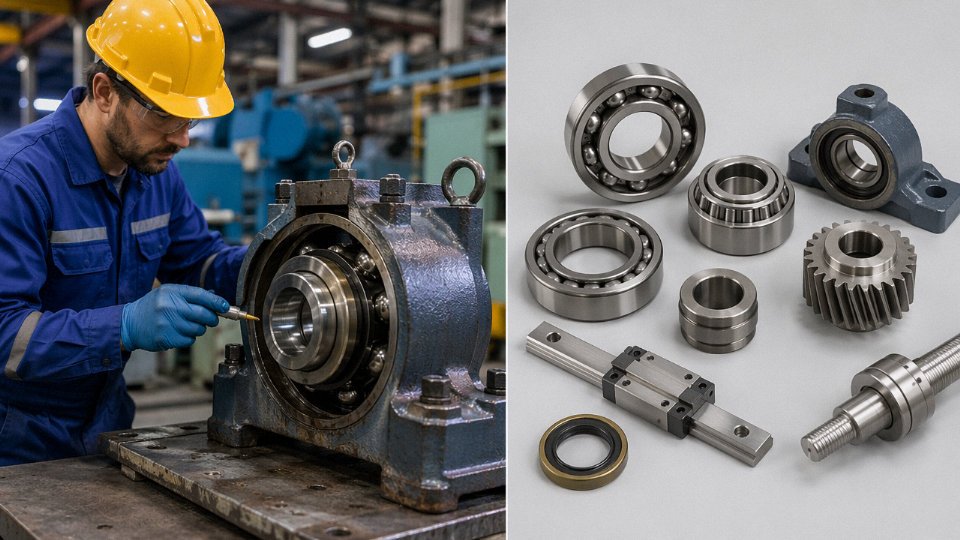
| Heavy-load rolling bearings | Insufficient EP capacity | Lithium-complex EP grease, or PAO synthetic with EP additive package |
| Food-contact sliding guides | Cost, relubrication interval | NSF H1 PTFE grease |
| Plastic-on-plastic sliding (no load) | Migration risk, film creep | Dry PTFE film or UHMW-PE liner |
| Extreme cold below -65°C | Standard PDMS pour point limits | PFPE oil (e.g., Krytox or Fomblin grades) |
| Metal forming and cutting | Zero film strength under forming loads | Sulfurized fatty oil EP fluid |
| EPDM O-ring assembly | No reason to avoid | Silicone grease — best practice here |
| Low-voltage electrical connector sealing | No reason to avoid | Silicone grease — best practice here |
| Food-grade plastic conveyor guides, lab instrument couplings | No reason to avoid | Silicone grease — appropriate choice |
Transition Protocol When Switching Away from Silicone
This is where plants often cut corners and pay for it later. Silicone residue is not removed by standard petroleum-based degreasers. Your cleaning verification needs to be instrument-based, not visual.
Start with a thorough IPA wipe-down — multiple passes with fresh cloths, not recycling the same swab. Then measure contact angle on the cleaned surface; you’re targeting below 40° for most industrial adhesives and coatings. A water droplet beading above that threshold means silicone is still there. If bonding operations are downstream, add an adhesion pull-off test using the actual adhesive system at the actual cure conditions. Skipping this step and relying on the IPA wipe alone is how contamination failures get through to final assembly.
A standard IPA wipe test is sufficient to verify complete silicone removal before bonding operationsFalse
Contact angle measurement and adhesion pull-off testing are needed because IPA wiping reduces but rarely eliminates silicone residue to levels below adhesion-critical thresholds. Visual inspection alone provides no useful information about silicone surface concentration.
The Underlying Engineering Principle
Silicone lubricant’s disadvantages are not product defects. They are the boundaries of a defined performance envelope. The material does specific things well — EPDM seal lubrication, moisture exclusion in low-voltage connectors, food-grade plastic sliding, lab instrument couplings — and it fails predictably outside those bounds. The engineering discipline is precision of application, not blanket avoidance or blanket adoption.
In practice, the cost of using the wrong lubricant almost always exceeds the cost of the correct one. A $3/100g lithium-complex grease that keeps a bearing running correctly is cheaper than a $25/100g food-grade silicone grease that causes a coating rejection on the next station down the line. No single lubricant is universal. Silicone included.