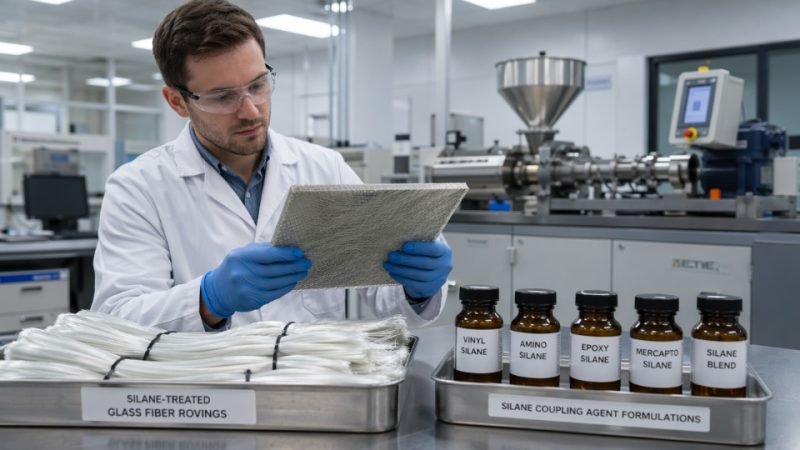
Silane coupling agents have been a reliable workhorse at the interface between organic polymers and inorganic substrates for decades — but “reliable” is starting to mean “limiting.” Formulators pushing glass-fiber composites toward higher fatigue resistance, rubber compounders chasing lower rolling resistance, and adhesive engineers targeting VOC-compliance targets are all running into the same ceiling: conventional monosilanes simply cannot deliver the adhesion durability, processing latitude, and environmental profile that next-generation end-use requirements demand. When a coupling agent underperforms, the failure rarely announces itself cleanly. It shows up as premature delamination in a structural panel, inconsistent tensile scatter across a rubber batch, or a coating line that fails humidity-cycling tests six months into a customer qualification. The downstream cost — rework, scrap, requalification cycles, and sometimes lost contracts — dwarfs any savings made at the raw-material sourcing stage.
The most consequential emerging innovations in silane coupling agent technology include bifunctional and polyfunctional silane architectures, bio-derived silane synthesis routes, blocked and latent silane chemistries, nano-silane surface-grafting methods, and digitally assisted formulation screening. Each addresses a distinct gap: bifunctional systems improve interfacial density and hydrolytic durability; bio-based routes cut carbon footprint by an estimated 30–40% versus conventional petrochemical synthesis; blocked silanes extend pot life without sacrificing cure performance; and nano-grafting enables sub-monolayer precision on fillers and fibers.
What makes this moment genuinely different from previous incremental updates to silane chemistry is the convergence of pressure from multiple directions at once. Regulatory tightening on VOCs and biocidal actives, automotive lightweighting targets that are pushing composite structures into load-bearing applications, and a global silane market on track to grow from roughly USD 2.1 billion in 2023 toward USD 3.4 billion by 2030 are collectively forcing chemistry that was good enough for yesterday’s specifications to evolve fast. The sections below unpack each innovation thread with enough process-level detail to help you decide which ones are worth a qualification run on your line.
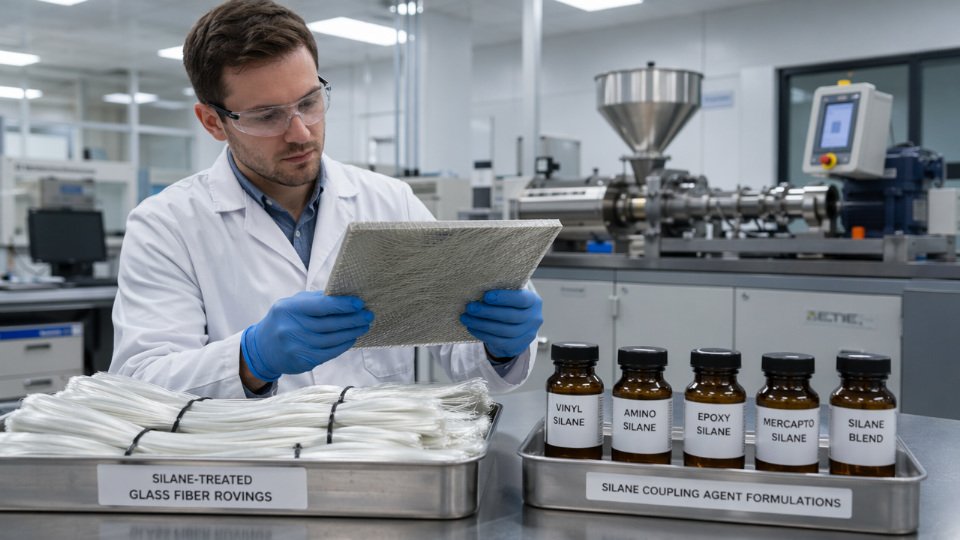
Multifunctional and Hetero-Bifunctional Silane Architectures Replacing Single-Functional Grades
Single-functional silanes dominated industrial formulating for decades because they were easy to source, straightforward to apply, and adequately effective on relatively forgiving substrates. That adequacy is running out. As filler loadings rise, substrate combinations multiply, and thermal cycling demands intensify — particularly in EV battery housings, fiber-reinforced thermoplastics, and structural glazing — the interfacial chemistry a mono-functional silane can deliver is simply insufficient. The industry is shifting toward architectures that carry two or more chemically distinct reactive groups, and the performance gap between old and new is wide enough to affect scrap rates, adhesion failures, and energy consumption in measurable ways.
Classic Mono-Functional Silanes and Their Structural Ceiling
Take 3-aminopropyltriethoxysilane (APTES) as the reference point. One end hydrolyzes and condenses onto the inorganic surface; the other end presents a primary amine for reaction with epoxy resins or isocyanates. That design works well when the matrix chemistry is compatible and the processing window is generous. The problem emerges at the extremes: high-humidity cure environments hydrolyze the siloxane anchor before it reaches the substrate, or the organic end group reacts prematurely with the matrix during compounding. Mono-functional systems also carry no mechanism for stress relief at the interface — they create a rigid covalent junction that can initiate micro-cracking under cyclic loading.
Hetero-Bifunctional Systems: Two Distinct Organic Reactivities, One Molecule
Hetero-bifunctional silanes carry two chemically distinct organic functional groups rather than one. A practical example is a silane bearing both a methacrylate and an epoxide group alongside the trialkoxysilyl anchor. During processing, one organic group bonds covalently into the polymer network while the second either reacts with the filler surface chemistry or participates in a secondary cross-linking event. The result is a denser, more fault-tolerant interphase region. In glass-fiber-reinforced nylon 66 compounded at typical twin-screw temperatures of 260–280 °C, switching from a standard aminosilane to a hetero-bifunctional epoxy-methacrylate silane has been shown to raise dry-as-molded tensile strength by 12–20%, with the exact improvement depending on fiber sizing compatibility and screw residence time.
Oligomeric Silanes and the TESPT Sulfur-Bridge Advantage
Oligomeric polysulfide bis-silanes — TESPT (bis[3-(triethoxysilyl)propyl] tetrasulfide) being the commercially dominant example — introduced a different engineering principle: controlled flexibility at the interface rather than maximum rigidity. The tetrasulfide bridge between the two silyl anchors acts as a molecular spring, absorbing and dissipating strain energy before it propagates into the bulk rubber matrix. In precipitated-silica-filled passenger tire compounds, this translates into rolling resistance reductions of roughly 5–8% versus carbon-black-based reference formulations, with the actual figure depending on silica surface area (typically 160–200 m² /g BET), mixing sequence, and dump temperature control.
TESPT-based silane systems reduce rolling resistance in silica-filled tire compounds compared to conventional carbon black formulationsTrue
Peer-reviewed rubber compounding literature and tire industry technical data consistently confirm rolling resistance reductions of 5-8% when switching from carbon black to precipitated silica with TESPT coupling, contingent on proper mixing protocol and silica dispersion quality.
Pot-life management becomes critical with oligomeric systems. Once diluted into the standard 95% ethanol/water carrier at 0.5–2 wt%, oligomeric silanes tend to self-condense faster than monomeric grades. At ambient temperature, working pot life is typically 4–8 hours before viscosity drift affects coating uniformity. At pH outside the 4.5–5.5 optimal hydrolysis window, that window shrinks to under two hours. Procurement teams specifying oligomeric silanes should require lot-by-lot viscosity certificates and build no more than one shift’s worth of diluted solution at a time.
Dual-Cure and Blocked Isocyanate-Silane Hybrids
Dual-cure silanes — combining a UV-reactive methacrylate group with a moisture-cure trimethoxysilyl anchor — address a real bottleneck in structural assembly. A single-component adhesive built on this architecture cures its bulk via UV exposure in seconds, then achieves substrate adhesion through moisture-driven siloxane condensation over the subsequent 30–90 minutes. Assembly lines running bonded glass or sensor enclosures can reduce fixture and clamp time substantially; cycle time reductions of up to 30% are realistic where the previous process required overnight thermal cure or two-component mixing. The trade-off is sensitivity to shadowed areas where UV penetration is incomplete — the moisture-cure mechanism must carry those zones, and adequate ambient humidity (typically above 40% RH) is non-negotiable.
Blocked isocyanate-silane hybrids operate on latent reactivity. The isocyanate group remains chemically inert below the deblocking temperature — typically 120–160 °C depending on the blocking agent — which enables incorporation into powder coating primers or automotive e-coat pretreatments without pot-life concerns during storage or spraying. On baking, the isocyanate unblocks and reacts with hydroxyl groups in the coating binder while the silyl anchor simultaneously condenses on the metal substrate. The result is a chemically bonded duplex interface from a single-component system, which eliminates the mixing errors and adhesion variability that two-component systems carry on high-throughput automotive paint lines.
| Architecture | Primary Advantage | Key Processing Constraint | Typical Application |
|---|---|---|---|
| Mono-functional (e.g., APTES) | Simple, broad compatibility | Rigid interface; premature hydrolysis risk | Glass fiber sizing, general adhesion promotion |
| Hetero-bifunctional (e.g., epoxy-methacrylate) | Dual matrix bonding, higher interphase density | Organic group compatibility must be matched to matrix chemistry | Engineering thermoplastic composites, structural adhesives |
| Oligomeric bis-silane (TESPT) | Stress dissipation, low rolling resistance | Short pot life after dilution; mixing sequence critical | [Silica](https://siliconchemicals.com/silica/)-filled tire compounds, high-damping rubber |
| Dual-cure (methacrylate + trimethoxysilyl) | On-demand cure, fast cycle time | UV shadow zones; RH dependency for moisture cure | Optical bonding, sensor encapsulation, structural glazing |
| Blocked isocyanate-silane hybrid | Latent reactivity, single-component stability | Requires elevated bake temperature to activate | Powder coating primers, automotive e-coat pretreatment |
The architectural evolution here is not incremental chemistry — it is a fundamental redefinition of what a coupling agent is expected to do. Rather than bridging two surfaces, these systems are engineered to manage the entire interphase zone as a mechanically active, chemically specific region.
Bio-Based and Sustainable [Silane Coupling Agents](https://siliconchemicals.com/silane-coupling-agents/): Feedstocks, Routes, and Commercial Readiness
Conventional silane coupling agent synthesis starts with a well-established but carbon-heavy process chain: metallurgical-grade silicon reacts with methanol-derived hydrogen chloride to produce chlorosilane intermediates, which are then alkoxylated, functionalized, and distilled into finished grades like APTES, VTMO, or GLYMO. The methanol feedstock is almost universally fossil-derived, and the chlorosilane step is energy-intensive by design. That baseline is now under pressure from two directions simultaneously — tightening Scope 3 reporting requirements from downstream OEMs, and genuine cost competition emerging from bio-fermentation infrastructure that has matured significantly since the early 2010s.
Bio-Alkoxysilanes via Fermentation-Derived Alcohols
The most commercially advanced substitution strategy replaces fossil methanol or ethanol in the alkoxylation step with bio-ethanol or bio-methanol produced from agricultural residues — sugarcane bagasse, corn stover, forestry waste. Molecularly, the resulting triethoxysilane or trimethoxy-functional silane is structurally identical to its petrochemical counterpart. Spectroscopic and rheological performance data from pilot-scale trials show bond strength, hydrolysis kinetics, and coupling efficiency within 2–5% of conventional grades, a gap that falls inside normal batch-to-batch variation in most industrial specifications.
Bio-ethanol-based triethoxysilane is molecularly identical to its petrochemical equivalent and performs within normal industrial specification tolerances.True
The alkoxy group originates from fermentation-derived ethanol but carries the same chemical structure; functional group purity and silanol hydrolysis behavior are governed by synthesis quality, not feedstock origin, provided bio-ethanol meets the same dehydration and purity standards as fossil ethanol.
Life-cycle assessment data shows that substituting fossil-derived triethoxysilane with a bio-ethanol-based equivalent reduces cradle-to-gate CO2 emissions by roughly 30–40%, though the actual figure depends heavily on the agricultural feedstock’s land-use intensity and the energy source driving distillation. That last point matters operationally: high-purity ethanol for silane synthesis requires distillation to above 99.5% anhydrous grade, and if that distillation runs on coal-fired steam — as much industrial processing in Asia still does — the net carbon benefit shrinks considerably. Grid decarbonization is therefore a co-dependent variable, not a footnote.
Current commercial readiness sits at TRL 7–8 for bio-alkoxysilane routes. Several European specialty chemical producers and at least two Asian manufacturers have moved beyond pilot scale and are offering bio-designated silane grades under long-term supply agreements, typically at a 15–30% price premium over conventional equivalents, depending on contracted volume and bio-certification cost. That premium is acceptable to automotive and wind energy customers facing OEM-mandated carbon reduction targets; it remains a harder sell in commodity rubber compounding where silane is a cost line, not a positioning story.
Lignin-Derived and Cardanol-Functionalized Silanes
A structurally different approach moves away from simple feedstock substitution and toward bio-derived functional backbones. Lignin, the second most abundant terrestrial biopolymer, can be depolymerized to yield catechol and guaiacol derivatives, which are then silanized to produce catechol silanes with an aromatic ring built into the coupling agent architecture. Cardanol, extracted from cashew nut shell liquid, offers a similar aromatic backbone with a long unsaturated side chain that improves flexibility in cured systems.
The performance argument here is specific: aromatic backbone rigidity makes these silanes genuinely interesting for high-temperature phenolic composite systems, where conventional alkylsilanes soften and lose adhesion at sustained service temperatures above 180–200°C. The side chain in cardanol silanes also opens the door to reactive crosslinking into phenolic or epoxy networks rather than simple surface coupling.
Commercial maturity, however, is honest at TRL 4–5. University-industry consortia in Europe and South Korea are the primary development engine. No large-scale commercial supply exists as of 2024, and synthesis yield from lignin depolymerization remains inconsistent enough that specification-grade production is not yet reproducible at industrial batch sizes.
Integration Challenges in Established Organosilicon Industrial Clusters
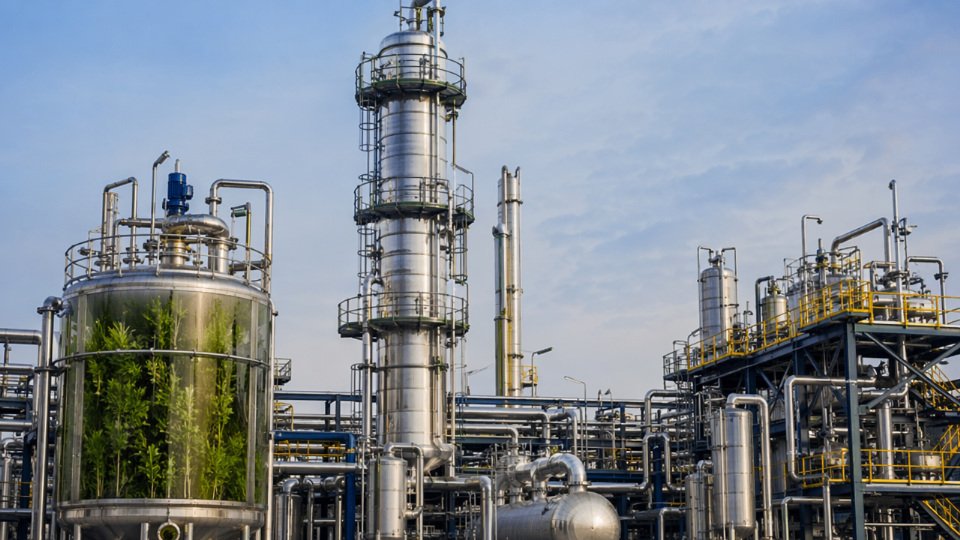
From a supply chain engineering standpoint, the most practical near-term pathway for bio-based silane production in China runs through existing hydrochlorination and alkoxylation infrastructure rather than greenfield investment. Zhejiang and Jiangxi provinces host highly integrated organosilicon clusters where silicon smelting, chlorosilane synthesis, and downstream functionalization share utilities, waste acid recovery systems, and logistics corridors. Retrofitting bio-ethanol feed into existing alkoxylation reactors requires relatively modest capital — primarily feed handling, anhydrous drying, and blending controls — compared to building dedicated bio-silane capacity from scratch.
The practical constraint is bio-ethanol supply consistency at the volumes these clusters operate. A mid-sized silane plant consuming 8,000–15,000 tonnes per year of ethanol feedstock needs supply chain reliability that agricultural bio-refineries in China are only beginning to offer at contract scale. Spot procurement introduces purity variability that translates directly into finished silane quality variation — a risk no serious compounder will accept without audited feedstock specifications and vendor qualification. The transition, realistically, will be phased: bio-content blends of 20–50% in the near term, moving toward full substitution as bio-ethanol infrastructure matures and price parity tightens.
Nano-Enabled Silane Systems: Graphene, Carbon Nanotube, and Nanocellulose Surface Functionalization
Scaling silane coupling chemistry down to nanomaterial surfaces is not a straightforward extension of what works on glass fiber or precipitated silica. The geometry changes everything. Conventional alkoxysilanes were designed for surfaces rich in silanol groups — well-spaced, accessible, and chemically uniform. Nanomaterials break all three assumptions simultaneously.
Why Standard Alkoxysilanes Underperform on Graphene Oxide
Graphene oxide presents a deceptively reactive surface on paper. It carries oxygen-containing functional groups, but their distribution is highly non-uniform: edge sites carry carboxyl and hydroxyl groups at relatively high density, while the basal plane is dominated by epoxide bridges and large sp² carbon domains with essentially no silane-reactive chemistry. A standard 3-aminopropyltriethoxysilane molecule, optimized for dense silanol arrays, cannot reach edge-site carboxyls efficiently because its short propyl linker offers minimal conformational flexibility.
The engineering fix is to move toward silane architectures with longer, flexible linker arms — polyethylene glycol spacers or aminoalkyl chains of six carbons or more — paired with reactive end groups that target epoxide ring-opening or form amide bonds with carboxyl groups rather than depending solely on silanolcondensation. Reaction temperatures in the 40–70°C range in anhydrous dimethylformamide give more controlled grafting than aqueous systems, where GO sheets tend to restack before functionalization is complete. The consequence of skipping this chemistry and using a commodity silane is predictable: poor exfoliation, aggregated filler platelets, and composite tensile properties that barely improve over the unfilled baseline.
Aminosilane-Functionalized MWCNTs for CFRP Laminates
Multi-walled carbon nanotubes respond more consistently to silane treatment than GO, primarily because acid oxidation pre-treatment can introduce carboxyl and hydroxyl groups along the nanotube sidewall at controllable density. APTES (3-aminopropyltriethoxysilane) grafting conducted at 60–80°C in dry toluene, with water content held below 50 ppm to prevent bulk polymerization, achieves surface amine densities of roughly 0.8–1.2 mmol/g — the exact figure depends on oxidation severity and reaction time, typically 12–24 hours. Those surface amines react covalently with epoxy resin during matrix cure, anchoring the nanotube into the crosslinked network rather than leaving it as a physical inclusion.
In carbon fiber reinforced polymer laminates where MWCNT-loaded interleaf films are incorporated between plies, this covalent bridge translates to interlaminar shear strength gains of 18–25% over untreated MWCNT controls. Loading level matters: beyond about 0.3–0.5 wt% in the interleaf resin, agglomeration starts offsetting the interfacial benefit, and ILSS plateaus or drops.
APTES-grafted MWCNTs improve interlaminar shear strength of epoxy CFRP laminates by 18–25% compared to untreated MWCNT controls when amine surface density is in the 0.8–1.2 mmol/g range.True
Published interfacial mechanics studies on amine-functionalized MWCNT/epoxy systems consistently report ILSS improvements in this range, with the specific gain depending on nanotube loading, oxidation degree, and laminate architecture.
Nanocellulose Silylation Without Destroying Crystallinity
Cellulose nanocrystals (CNC) and cellulose nanofibrils (CNF) are thermally sensitive and will lose their crystalline structure if exposed to the elevated temperatures and aqueous acidic conditions that work fine for mineral fillers. Vapor-phase silylation sidesteps this problem. Suspending dried CNC in a closed vessel with hexamethyldisilazane (HMDS) vapor at 40–60°C for 4–8 hours installs trimethylsilyl groups on surface hydroxyls without solvent swelling or thermal damage. Vinyltrimethoxysilane in the same vapor-phase setup introduces reactive vinyl functionality, making the nanocellulose surface compatible with peroxide-cured natural rubber or polyolefin matrices that would otherwise completely reject hydrophilic CNC particles.
The practical payoff is dispersion in non-polar matrices — something unsilylated CNC simply cannot achieve. Contact angle on silylated CNC surfaces shifts from below 30° to 90–110°, depending on silane type and coverage density.
Hybrid Nano-Silane Masterbatch for Rubber Compounding
Pre-dispersing silane-coated nanofillers into a silicone oil carrier before they ever reach the rubber mixing line addresses one of the most persistent problems in nanofiller compounding: in-situ silanization is time-dependent, temperature-sensitive, and introduces batch-to-batch viscosity scatter. A masterbatch format — silane-treated filler dispersed at 20–40 wt% in a low-viscosity polydimethylsiloxane carrier — allows direct gravimetric metering into an internal mixer at the beginning of the mix cycle. Plants running this approach report Mooney viscosity variability reductions of 10–15% across production batches, which directly tightens downstream extrusion dimensional tolerance.
Confirming What You Actually Applied
Two analytical methods together give a reliable picture of whether silylation worked. XPS survey scans flag successful grafting through the Si 2p binding energy: a peak at 102.5 eV indicates residual SiO₂ or silanol, while a shift to approximately 101.8 eV confirms organosilicon bonding to the nanomaterial surface. TGA mass loss in the 300–500°C window quantifies grafting density — that temperature window burns off the organic silane layer while leaving the inorganic substrate intact. Skipping this characterization and shipping functionalized nanofillers based only on visual inspection is the kind of decision that surfaces as inconsistent composite properties three production runs later.
Smart and Stimuli-Responsive Silane Coupling Agents for Autonomous Interfacial Repair
Conventional silane coupling agents are passive by design. They establish a bond, and that bond either holds or it doesn’t. When interfacial degradation begins — through corrosion, thermal cycling, mechanical fatigue, or moisture ingress — a standard silane interlayer offers no response. The damage accumulates silently until inspection catches it or, more often, until a coating blisters, a composite panel delaminates, or a concrete structure starts showing surface cracking. Smart silane systems break that paradigm entirely. Rather than treating the interface as a static bond line, stimuli-responsive silanes treat it as an active zone capable of detecting and reacting to its own degradation.
pH-Responsive Silanes for Corrosion-Triggered Inhibitor Release
The chemistry here depends on incorporating imidazole or tertiary amine groups into the organic functional moiety of the silane rather than using a conventional epoxy, methacrylate, or amino group. Under neutral or alkaline conditions, these groups remain protonated and compact, keeping the interlayer intact and the inhibitor payload locked in. When localized corrosion begins at the metal interface, the pH at the anodic site drops — typically below 6, sometimes well below 5 — and the basic nitrogen groups swell in response, opening the interlayer structure and releasing loaded corrosion inhibitors such as benzotriazole or cerium ions into the defect zone.
Salt-spray testing per ISO 9227 on steel panels treated with pH-responsive silane primers has shown anti-corrosion service life extensions in the range of 40–60% over conventional silane-epoxy primers. The actual improvement depends heavily on inhibitor loading density, the thickness of the silane interlayer (typically 50–200 nm when applied by dip or spray), and the aggressiveness of the corrosive environment. For marine and offshore structures where coating reapplication is logistically difficult and expensive, that lifespan extension translates directly into avoided dry-dock cycles.
Thermally Reversible Diels-Alder Networks for Composite Repair
Furan-maleimide chemistry has been studied in bulk polymer systems for years, but integrating it specifically into the silane interlayer of carbon fiber composites is a more recent and operationally significant development. Furan-functionalized silanes are applied to the fiber surface; maleimide crosslinkers then bridge adjacent chains through Diels-Alder cycloaddition at ambient to moderate temperatures. The critical property is reversibility: heating the interlayer to 120–130°C cleaves the cycloadduct through the retro-Diels-Alder reaction, allowing the delaminated faces to flow and re-wet, and cooling reforms the covalent bond.
In aerospace-grade carbon fiber panels, this mechanism has been demonstrated to restore interlaminar shear strength to 85–95% of virgin values after a controlled delamination event and a single thermal repair cycle. No substrate replacement required. The practical constraint is that the repair temperature window must stay below the glass transition temperature of the matrix resin — which is why this approach is better suited to toughened epoxy systems than to high-temperature polyimide matrices.
Mechanochromic Silane Coatings as Early-Warning Indicators
Spiropyran-silane conjugates embed a photochromic dye directly into the coupling agent backbone. Under zero stress, the dye exists in the closed spiropyran form — colorless or pale. Mechanical stress at the interface, sufficient to strain the silane network, triggers ring-opening to the merocyanine form, which is deeply colored (typically blue-violet). The color change is reversible on stress removal if no permanent damage has occurred, and irreversible or slow-to-reverse if the interface has fractured.
Mechanochromic silane coatings can indicate interfacial stress concentration before macroscopic delamination is visible to the naked eye.True
Spiropyran-to-merocyanine conversion is triggered by molecular-scale bond strain, which precedes any measurable crack propagation. This makes it a genuinely early-stage indicator rather than a damage reporter.
The practical value in quality control is substantial. Rather than relying on ultrasonic C-scan or thermographic inspection on a scheduled cycle, maintenance technicians can do a visual pass and identify stress-concentrated zones by color before a structural threshold is crossed.
Moisture-Activated Self-Sealing Silanes in Civil Infrastructure
These systems use alkoxy silane formulations with deliberately retarded hydrolysis kinetics. In dry or low-humidity conditions, the material remains in a semi-stable state inside the crack or injection port. When water infiltrates a microcrack — the trigger condition — hydrolysis accelerates, condensation polymerization begins, and the silane network grows in situ to seal the void. Field trial data from bridge deck applications in humid subtropical climates has shown effective sealing of microcracks up to approximately 0.3 mm in width, with penetration depths of 15–40 mm depending on crack geometry and injection pressure.
The key difference from conventional epoxy injection grouting is that no external pressure application is needed for cracks below roughly 0.2 mm — capillary action and the chemical affinity for the wet concrete surface drive penetration. Durability under wet-dry cycling remains an active area of evaluation.
Commercial Reality: Where These Systems Are and Are Not Viable
Cost premiums for smart silane systems run 3–8x over standard commodity grades, depending on synthesis complexity, inhibitor loading, and whether the dye or crosslinker component requires custom synthesis. Shelf life of reactive intermediates — particularly furan-maleimide precursors and spiropyran-silane conjugates — is a real supply chain concern; many require cold-chain storage and have pot lives measured in months rather than years.
| Application | Stimulus Type | Primary Benefit | Current Market Stage |
|---|---|---|---|
| Marine / offshore steel | pH drop | Inhibitor release, extended coat life | Early commercial in niche OEM programs |
| Aerospace CFRP | Thermal | Delamination repair without replacement | Late-stage R&D, limited qualification data |
| Industrial QC / structural monitoring | Mechanical stress | Visual early-warning, avoids NDT cost | Research and pilot scale |
| Concrete bridge / tunnel | Moisture | In-situ microcrack sealing | Field trials, not yet standard specification |
For most manufacturing environments processing standard composites or metal-coated parts, conventional silanes remain the economically rational choice. Smart silanes earn their cost premium only where downtime cost, inspection access difficulty, or safety criticality is high enough to justify it — which currently means aerospace structures, critical infrastructure, and high-value medical device housings.
Waterborne and Low-VOC Silane Formulation Technologies Meeting Global Regulatory Targets
The solvent-based silane primer has been a workhorse for decades — reliable, well-understood, and deeply embedded in coating and composite manufacturing lines. That comfort is running out. EU Directive 2010/75/EU, China’s GB 30981-2020, and tightening OSHA PEL enforcement on isopropanol and ethanol vapors are collectively forcing a transition that some plants have already made and others are still postponing. Postponing is getting expensive.
Hydrolysis and Condensation Kinetics: The Core Formulation Problem
When you dissolve an alkoxysilane in water, hydrolysis starts immediately. Rate constants run from roughly 10⁻³ to 10⁻¹ L/mol·s — a two-order-of-magnitude spread that depends on the alkoxy group (methoxy hydrolyzes faster than ethoxy), the organofunctional substituent’s electronic character, and pH. That speed is both the mechanism and the problem. Silanols form quickly, but unconstrained silanol condensation produces oligomeric siloxane networks in the bath before the product ever touches a substrate. Pot life collapses to under an hour if you do nothing to intervene.
The practical stabilization window is pH 4–5. At this slightly acidic condition, condensation kinetics slow enough to extend workable pot life to 4–8 hours at room temperature — a realistic shift-length target on a production line. Acetic acid or citric acid are common buffering agents; acetic acid is cheaper but leaves residual acetate contamination on some substrates that interferes with subsequent adhesive bonds. If your substrate is pH-sensitive aluminum or zinc, test carefully before committing to a formulation. Above pH 6 or below pH 3, condensation either accelerates or hydrolysis reverses, and either outcome wastes material and produces inconsistent adhesion.
Maintaining waterborne silane baths at pH 4–5 is sufficient to achieve 4–8 hours pot life without additional stabilizers.False
pH control alone is often insufficient. Temperature, silane concentration, and ionic strength all affect condensation rate. At concentrations above 2 wt% or ambient temperatures above 30°C, additional stabilizers such as chelating agents or dilute organic acids are typically required to maintain target pot life.
Microemulsion Technology: Getting Sub-200 nm Droplets to Work for You
Not all waterborne silane systems are true solutions. Hydrophobic organofunctional silanes — mercapto, epoxy, vinyl types — require emulsification. Non-ionic surfactants in the HLB 12–14 range produce oil-in-water emulsions with droplet diameters below 200 nm when processed correctly through high-shear mixing or microfluidic homogenization. At that particle size, wetting behavior on mineral fiber and concrete substrates is comparable to a 5% solution in ethanol — a claim worth verifying on your specific substrate geometry before scaling.
The operational trap is surfactant loading. Excess surfactant improves emulsion stability but migrates to the interface during drying, sitting between the silane layer and the substrate and degrading adhesion. Keep surfactant below 3–5% of silane weight and validate with pull-off testing, not just visual inspection.
Aqueous Silane Oligomer Pre-Condensates: A Practical Middle Ground
Partially pre-hydrolyzed siloxanol oligomers — molecular weights in the 500–2000 g/mol range — offer a formulation path that sidesteps some of the kinetic instability of monomeric aqueous systems. Because the oligomer already carries some Si–O–Si connectivity, it bonds to inorganic substrates more aggressively in a single coat than a monomer that must first hydrolyze in situ. Application rate reductions of 20–30% are achievable versus monomeric equivalents, which matters for VOC budgets when your allowable ceiling is below 50 g/L. The trade-off is shelf life: these pre-condensates continue to crosslink slowly in the container, and a batch that sat in a warehouse for six months may behave nothing like the material you qualified.
Performance Validation: What the Data Must Show
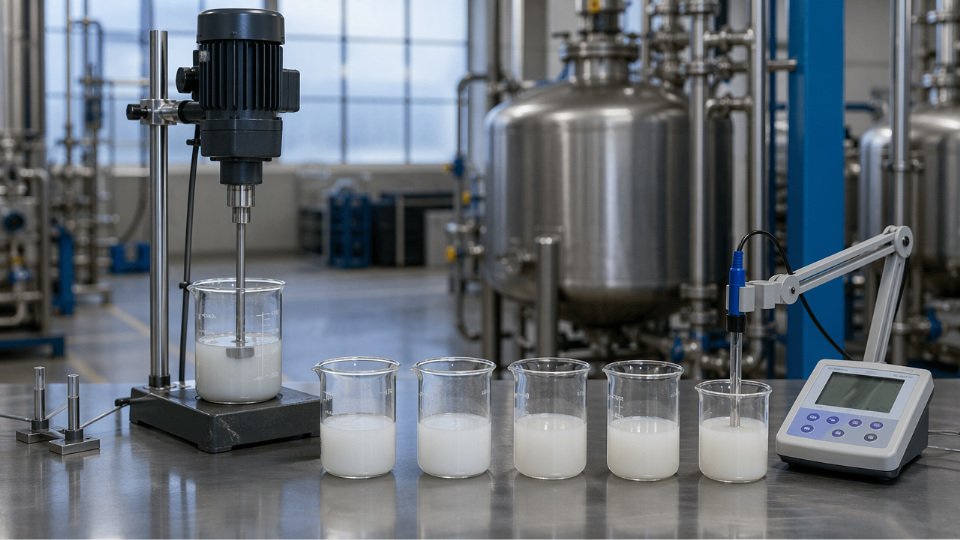
Comparative pull-off adhesion per ASTM D4541 on GFRP panels after 1000 hours QUV-B exposure is the industry-recognized minimum benchmark for a solvent-to-waterborne conversion. Waterborne systems that look equivalent at 250 hours can diverge significantly at 1000 hours if silane film continuity is poor. Expect a 10–20% adhesion retention gap between poorly formulated waterborne systems and optimized solvent-based controls; a well-engineered aqueous oligomer system can close that gap to under 5%. What drives the gap is film formation temperature, substrate pre-treatment cleanliness, and application method — spray versus wipe versus flood coat all produce different film thicknesses and cure profiles.
Regulatory Convergence and the 2026–2028 Window
GB 30981-2020 set VOC limits for water-based industrial coatings that directly affect silane primer formulations sold into China’s domestic market. European IED enforcement timelines and updated OSHA silane solvent exposure limits are pointing to a 2026–2028 effective deadline for most industrial segments. Plants that begin formulation qualification now have a realistic 18–24 month runway for full production validation. Those that wait for the regulation to land will be qualifying under production pressure, which is how you end up approving a marginal product because the deadline is tomorrow.
The transition is manageable. The chemistry exists, the surfactant and buffering toolbox is well-developed, and pre-condensate suppliers have commercial-grade materials available. The difficulty is not the chemistry — it is the internal validation cycle, and that takes real time.
AI-Assisted Molecular Design and High-Throughput Screening Accelerating Silane Innovation Cycles
Traditional silane coupling agent development is a grind. From the moment a chemist draws a candidate structure on a whiteboard to the day a commercial-grade product ships to a first customer, 18 to 36 months typically pass — and that range depends heavily on how many substrate systems need validation, how complex the cure chemistry is, and how much capacity the pilot plant can dedicate to iterative synthesis runs. Most of that time gets consumed not by brilliant chemistry, but by the monotonous logistics of synthesizing variants, waiting on application test results, adjusting structures, and repeating. For a market growing at roughly 7% annually and facing simultaneous pressure from EV battery systems, high-frequency PCB laminates, and fiber-reinforced thermoplastics, that cycle time is a competitive liability.
Computational tools are changing the front end of that pipeline dramatically.
Graph Neural Networks as Property Predictors
The core bottleneck in early-stage silane design is knowing, before you synthesize anything, whether a candidate molecule will hydrolyze at a useful rate, bond selectively to a target oxide surface, and survive the thermal loads of downstream processing. Graph neural networks trained on curated silane structure-property datasets — the most useful libraries now exceed 50,000 molecular entries covering hydrolysis rate constants, substrate affinity scores, and thermal stability expressed as Td5% — can return predicted values with R² above 0.87 against experimental measurements. That accuracy level is not good enough to replace wet chemistry, but it is more than good enough to cut a candidate list from several hundred structures down to 20 or 30 worth actually making.
The training data quality matters more than model architecture. Datasets assembled from inconsistent test protocols — different substrate preparation methods, variable humidity during adhesion testing — introduce systematic noise that degrades prediction reliability regardless of how sophisticated the GNN is.
DFT Mapping of Interfacial Bonding Geometry
Once a shortlist exists, density functional theory calculations at the B3LYP/6-311G** level provide a different class of information: electrostatic potential surfaces that reveal how an organosilane candidate’s functional group actually orients and bonds against a specific metal oxide surface. TiO2, Al2O3, and SiO2 each present distinct hydroxyl densities and surface charge distributions. A silane architecture optimized for adhesion on aluminum oxide can perform poorly on titanium dioxide used in white-pigmented composites — not because the bonding chemistry fails entirely, but because the functional group geometry creates steric interference that DFT calculations flag clearly before a single gram is synthesized.
This kind of substrate-specific modeling has real procurement implications. When a customer switches filler supplier and the new calcined alumina has a different surface hydroxyl density, DFT analysis can predict whether the existing coupling agent specification will hold or whether a reformulation is warranted.
DFT calculations at B3LYP/6-311G** level can predict electrostatic potential surfaces of organosilane candidates with sufficient accuracy to guide functional group selection for specific metal oxide substrates before experimental synthesis.True
B3LYP/6-311G** is a well-validated hybrid DFT method routinely used in organosilicon computational chemistry for mapping surface bonding interactions; the approach is standard in peer-reviewed silane-surface adhesion modeling literature.
Robotic Synthesis Platforms Compressing the Experimental Phase
Computational screening identifies candidates; robotic platforms then manufacture and rank them at a pace no conventional lab bench can match. Automated liquid-handling systems capable of synthesizing and purifying 96 silane variants per week, combined with miniaturized lap-shear adhesion testing on 10×25 mm coupons, compress what used to be a six-month formulation screening phase into three to four weeks. The miniaturized coupon format is not a perfect proxy for production-scale joint geometry, but it is an effective rank-ordering tool. Candidates that fail at the coupon stage essentially never recover at full scale.
The practical consequence: a customer requesting a coupling agent optimized for a novel carbon-fiber-reinforced PEEK substrate — a combination with almost no historical formulation precedent — can receive ranked candidates for pilot evaluation within eight to twelve weeks rather than waiting through a full development cycle.
SiliconChemicals’ Computational R&D Integration
Building proprietary molecular databases is where the long-term competitive advantage actually accumulates. SiliconChemicals collaborates with computational chemistry groups at South China University of Technology and Zhejiang University to develop and continuously expand curated silane datasets tied to specific industrial substrate families. Each customer qualification run that generates adhesion, hydrolysis, and thermal data feeds back into the database, making subsequent predictions more accurate for similar substrate combinations.
For procurement managers evaluating silane suppliers on more than price alone, the relevant question is whether a supplier’s R&D infrastructure can respond to a substrate change or performance specification shift in weeks rather than quarters. An integrated computational-experimental pipeline — GNN screening, DFT geometry analysis, robotic synthesis, miniaturized validation — is what makes that response time realistic rather than aspirational.
Application Frontier: Silane Coupling Agents in Electric Vehicle Battery and Power Electronics Systems
The EV drivetrain pushes silane chemistry into territory that conventional coupling agents were never designed for. Extreme filler loadings, wide thermal cycling windows, 800V bus voltages, and crash-safety structural requirements arrive simultaneously in a single battery pack. Understanding each sub-application separately — and where standard silanes fall short — is the starting point for any procurement or formulation decision.
Thermal Interface Materials and Boron Nitride Filler Treatment
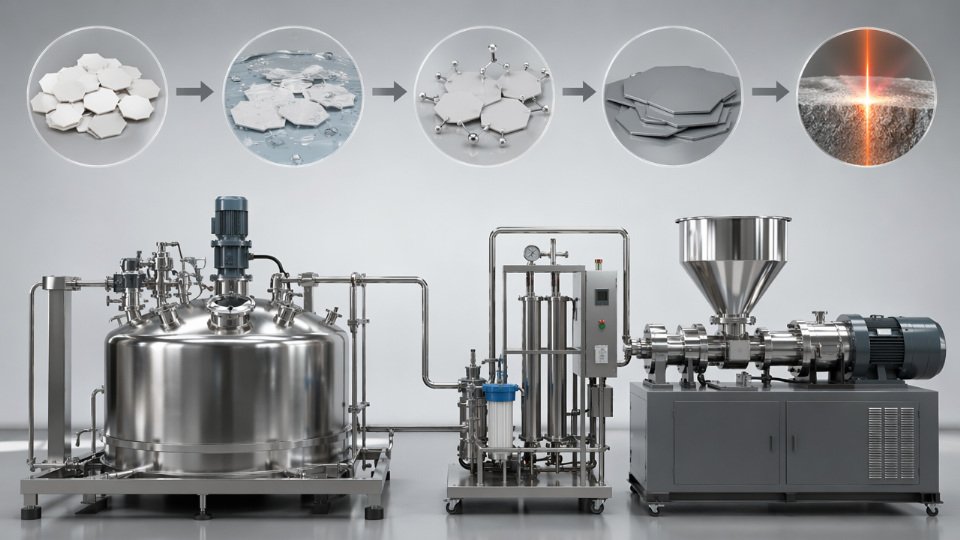
Thermal management is arguably the most demanding silane application in current EV production. Battery module TIMs typically carry boron nitride or aluminum oxide fillers at 60–80 wt%, a loading that maximizes thermal conduction but creates a viscosity and surface-energy problem that directly limits performance.
Untreated BN platelets carry surface hydroxyl groups that are chemically mismatched with silicone polymer matrices. The result is poor wetting, agglomeration along platelet edges, and a phonon-scattering interfacial layer that limits bulk thermal conductivity to around 3.5 W/m·K in a well-compounded silicone gel. Surface treatment with vinyltrimethoxysilane or MEMO — applied via dry coating at 0.5–1.5 wt% on filler before compounding — replaces those hydroxyl groups with organofunctional groups that covalently anchor the silicone network. The practical outcome is thermal conductivity rising to the 5.2–6.8 W/m·K range, depending on platelet aspect ratio, treatment uniformity, and cure schedule. That spread matters: a poor treatment process recovers almost none of the theoretical gain, so process control during filler surface modification is not optional.
Silane surface treatment of BN platelets can raise thermal conductivity of silicone TIMs from ~3.5 W/m·K to over 5 W/m·KTrue
The improvement is well-documented in composites literature and attributed to reduced interfacial thermal resistance when covalent silane bridges replace air-gap-prone hydroxyl interfaces at the filler-matrix boundary. Actual values depend on filler loading, aspect ratio, and treatment process quality.
Cell-to-Pack Structural Adhesives and Crash Compliance
Structural bonding between aluminum current collector foils and CFRP battery trays has become a regulated requirement, not an engineering preference. UN ECE R100 sets floor-level crash-safety performance for battery systems, and peel strength on these dissimilar substrates needs to exceed 8 N/mm consistently across a production line — not just in lab coupons.
Silane priming on aluminum ahead of epoxy or polyurethane adhesive application is what bridges the surface energy gap. Without it, even a well-formulated adhesive sees cohesive failure shift toward adhesive failure at the metal interface under dynamic load. With a proper aminosilane or epoxysilane primer — applied thin and allowed full hydrolysis time before bonding — peel strength lands reliably above the 8 N/mm threshold. The process warning here is hydrolysis time: rushing the primer flash-off step by more than 20–30% from the validated window is one of the most common causes of field delamination complaints in battery assembly.
High-Voltage Encapsulants for SiC Inverters
Silicon carbide inverters operating at 800V bus voltage impose a dielectric requirement that ordinary silicone gels cannot meet without deliberate silane crosslink engineering. Power module encapsulants need dielectric strength above 20 kV/mm and a dissipation factor (tan δ) below 0.001 at 1 kHz. Both properties are sensitive to crosslink density, and crosslink density is directly controlled by the silane type and its loading relative to the base silicone.
Too little crosslinker leaves mobile chain segments that raise tan δ under high-frequency electrical stress. Too much creates a brittle network that cracks under thermal cycling. The practical formulation window is narrow — typically ±15% around the optimized silane stoichiometry — and needs to be validated by electrical characterization, not just Shore hardness.
Thermal Cycling Durability and CTE Mismatch Management
EV operating profiles run from cold-soak at -40°C to peak junction temperatures at +150°C. Copper interconnects expand at 17 ppm/°C, aluminum at 23 ppm/°C, and typical polymer substrates at 50–100 ppm/°C. A rigid silane interlayer bonded across that mismatch accumulates stress with every cycle.
Oligomeric silane systems — longer backbone length, lower modulus in the cured state — absorb that stress rather than transmitting it to the adhesion zone. In 500-cycle thermal testing, delamination failure rates drop by roughly 60% when oligomeric silane interlayers replace standard monomeric silane primers, a figure that shifts depending on interlayer thickness, substrate roughness, and ramp rate during cycling. That is a meaningful reliability gain on a component where field repair is essentially impossible.
Solid-State Battery Ceramic Electrolyte Functionalization
The longer-term frontier involves direct silane functionalization of ceramic electrolyte surfaces — LLZO and NASICON-type materials — where the target is not adhesion but ionic conductivity at the polymer-ceramic interface. Amine and epoxy silanes applied to these ceramic surfaces appear to reduce the space-charge layer that blocks lithium-ion transfer. Research groups are targeting interfacial ionic conductivity above 10⁻⁴ S/cm. This remains early-stage work, but given the capital intensity of solid-state battery manufacturing, any surface chemistry that improves interfacial conductivity without degrading mechanical integrity will attract rapid commercial interest once reproducibility is established.
Advanced Surface Characterization Methods Validating Next-Generation Silane Performance
Classical quality checks — sessile drop contact angle, cross-cut adhesion tape tests, pull-off tensile values — served the industry adequately when single-functional silanes dominated and tolerances were forgiving. They no longer suffice. Emerging hetero-bifunctional systems, oligomeric architectures, and stimuli-responsive silanes create interfacial structures at the 1–5 nm scale where bulk measurements give you averages that hide the failures waiting to happen. Serious validation now demands surface-sensitive instrumentation, and teams that skip this step will keep chasing adhesion failures they cannot explain.
XPS Depth Profiling: Resolving Monolayer from Multilayer Deposition
X-ray photoelectron spectroscopy with Ar⁺ sputter depth profiling is the most direct method for confirming that a silane has deposited as a functional coupling layer rather than a thick, cohesively weak film. At a sputter rate of roughly 0.5 nm/min under 1 kV Ar⁺ conditions, you can track the Si 2p signal relative to the substrate element — Al 2p for aluminum alloys, Ti 2p for titanium, or the glass network Si resolved by binding-energy separation — as a function of etch depth. The target for most glass fiber and metallic substrates is a coupling layer between 1 and 3 nm. Exceed 5–8 nm and you are depositing a silane oligomer gel that fractures cohesively under load, not adhesively at the interface. That failure mode looks like primer delamination on the plant floor and routinely gets blamed on surface prep.
XPS can distinguish a true silane monolayer from a thick oligomeric deposit on metal substratesTrue
XPS depth profiling tracks the Si/substrate elemental ratio through the interface at sub-nanometer resolution, directly resolving deposition thickness in the 1–10 nm range where coupling layer performance diverges from bulk film behavior.
The surface coverage density benchmark that correlates best with long-term durability sits at 1.8–2.5 Si atoms/nm². Below 1.8, substrate sites remain unpassivated and moisture ingress accelerates. Above 3.5, multilayer condensation dominates. This figure depends heavily on solution concentration, hydrolysis pH, and substrate hydroxyl density — all variables your process engineer needs to control together, not independently.
ToF-SIMS for Heterogeneous Composite Cross-Sections
Time-of-flight secondary ion mass spectrometry provides spatial molecular maps that XPS, with its 10–30 µm lateral resolution, cannot. On a polished composite cross-section — glass fiber reinforced epoxy being the most common diagnostic case — ToF-SIMS will reveal silane depletion zones along individual fibers, concentration at fiber bundle peripheries, or agglomeration at resin-rich pockets. Those depletion zones are where stress-whitening initiates. Bulk chemical analysis using digestion and ICP will tell you the average Si content looks fine; ToF-SIMS shows you the 15 µm gap where the coupling agent never reached.
This matters especially when troubleshooting adhesion failures in multi-layer systems — bonded metal-composite joints in structural aerospace or automotive closures, for example — where the failure plane is not obvious from a fractured specimen alone. Fragment ions at m/z 135 (typical for propyltrimethoxysilane fragments) mapped against the carbon and oxygen matrices give you a failure-mode map, not just a failure location.
AFM PeakForce QNM: Nanomechanical Mapping Before Composite Fabrication
Atomic force microscopy in PeakForce Quantitative Nanomechanical Mapping mode simultaneously captures height, adhesion force, and elastic modulus across the silane-treated surface at sub-50 nm lateral resolution. The practical value is early warning: you screen treated substrates before committing them to lamination or molding cycles. A well-deposited aminosilane layer on glass typically shows modulus values in the 4–9 GPa range with adhesion force uniformity below 15% coefficient of variation across a 5 µm × 5 µm scan area. Patchy modulus maps — islands of high stiffness surrounded by softer zones — indicate incomplete condensation or phase separation, which will translate to variable peel strength lot-to-lot.
In-Situ FTIR-ATR Kinetics During Hydrolysis and Condensation
For waterborne silane formulation development, in-situ attenuated total reflectance FTIR is the most actionable real-time tool. Tracking the Si–OEt stretching band at 960 cm⁻¹ as it decreases alongside growth of the Si–O–Si network band between 1040 and 1080 cm⁻¹ gives direct kinetic data on hydrolysis and condensation rates under your actual formulation conditions — pH, temperature, co-solvent content — without pulling destructive samples. Hydrolysis half-lives for triethoxysilanes at pH 4–5 run 5–25 minutes depending on temperature and silane chain length; knowing the exact window for your system tells you how long a bath remains usable before oligomers precipitate and create surface defects.
Teams developing new waterborne silane systems who skip in-situ kinetics typically burn three to six months iterating on bath stability empirically. The spectrometer pays for itself inside a single development program.
Connecting Characterization Data to Service Life
An industry benchmark study correlating XPS Si coverage density with outdoor weathering retention on glass fiber reinforced polyester panels — panels exposed over five years at moderate humidity coastal conditions — found that systems achieving the 1.8–2.5 Si atoms/nm² target retained adhesion strength above 75% of initial values, while systems below 1.5 Si atoms/nm² dropped below 50% retention by year three. The exact crossover point shifts with resin polarity and fiber sizing chemistry, but the directional relationship is robust across multiple silane chemistries tested.
The practical workflow: use FTIR-ATR to qualify your bath chemistry in real time, AFM to screen treated substrates before fabrication, XPS to confirm coverage density on production panels, and ToF-SIMS selectively when field failures or incoming quality disputes require root-cause resolution at the molecular level. Each method answers a different question. Running only one gives you a partial picture that cost-reduces your QA capability right up until a warranty claim arrives.
Frequently Asked Questions About Emerging Silane Coupling Agent Innovations
What is the practical difference between a conventional silane coupling agent and a multifunctional or oligomeric silane, and when does the performance premium justify the cost?
A conventional mono-functional silane creates a single covalent bridge at the interface. An oligomeric or hetero-bifunctional silane creates multiple simultaneous bonds — often three to six anchor points per molecule — producing measurably denser interphase networks. In glass-fiber-reinforced epoxy laminates, this typically translates to dry lap-shear strength improvements of 15–35% and wet retention after 500-hour humidity aging of 20–40 percentage points above mono-functional benchmarks, though exact deltas depend heavily on substrate surface hydroxyl density and cure temperature.
The cost premium runs roughly 1.8–3.5× per kilogram over standard grades. That gap narrows fast when you run the ROI through rejection and rework rates. A structural aerospace bracket rejected at final inspection because of delamination — traced to inadequate interfacial performance — costs orders of magnitude more than the silane cost difference across the entire batch. For commodity construction sealants where bond loads are modest and replacement is easy, the premium rarely pays. For structural composites, EV battery module encapsulants, or any safety-critical assembly, the calculation almost always favors the higher-performance grade.
Can bio-based silane coupling agents match the hydrolytic stability and coupling efficiency of conventional petroleum-derived grades for structural composite applications?
Honest answer: not yet across all metrics, but the gap is narrowing faster than most procurement teams realize. Current bio-derived aminosilanes and glycidoxysilanes — typically routed through furfural or bio-ethanol feedstocks — show coupling efficiency within 5–12% of conventional grades in dry-state tensile tests on glass-reinforced polyester. Hydrolytic stability under prolonged immersion (168 hours, 70°C water) still lags by 10–20% in several third-party comparative studies, primarily because bio-route synthesis introduces trace impurities that accelerate siloxane bond hydrolysis.
Qualification timelines for structural composite applications run 18–36 months through most Tier 1 aerospace and wind energy supply chains. For non-structural applications — coatings primers, adhesion promoters in construction — commercial bio-based grades are already qualifying today.
Bio-based silane coupling agents can reduce cradle-to-gate carbon footprint by 30–40% versus conventional petrochemical routesTrue
This range reflects lifecycle assessment comparisons using agricultural waste feedstocks such as rice husk silica and bio-ethanol, accounting for avoided fossil carbon at the raw material stage; actual reduction depends on regional energy grid carbon intensity and specific synthesis pathway efficiency.
How should formulators adapt silane application protocols when switching from solvent-based to waterborne systems to avoid adhesion failure?
Three variables bite hardest. First, pH: waterborne silane solutions are stable only within a narrow window, typically pH 3.5–5.5 for amino silanes and pH 4.0–6.0 for glycidoxy types. Drift outside that range accelerates self-condensation, producing oligomeric particles that cannot deposit as a functional monolayer. Check and adjust with dilute acetic acid; never assume tap water provides the right pH.
Second, flash-off time must increase. Solvent-based systems allow fast evaporation; water evaporates more slowly and incompletely at ambient temperature. Insufficient flash-off traps water at the interface, which directly degrades adhesion. Extend flash-off to 5–15 minutes at 20–25°C before topcoat or lamination, or use mild forced-air drying at 40–60°C.
Third, substrate pretreatment becomes more critical. Solvent carriers tolerate moderate surface contamination because they carry the silane into surface micro-texture. Water does not wet contaminated surfaces the same way. Grit-blast, degrease, and apply within 2–4 hours.
Are AI-designed silane molecules commercially available today, or is this purely a research-stage development?
The line matters for procurement planning. AI-accelerated optimization of known silane chemistries — adjusting alkyl chain length, crosslink density, or functional group spacing within established molecular families — is already embedded in the development pipelines of leading silane producers and has yielded commercial products over the past two to three years. Entirely novel molecular architectures generated de novo by generative AI models, with no prior synthesis precedent, are 3–5 years from commercial availability at best, constrained by synthesis scale-up validation and regulatory toxicology requirements, not computational speed.
What silane coupling agent specifications are recommended for boron nitride filler surface treatment in thermally conductive EV battery TIM formulations?
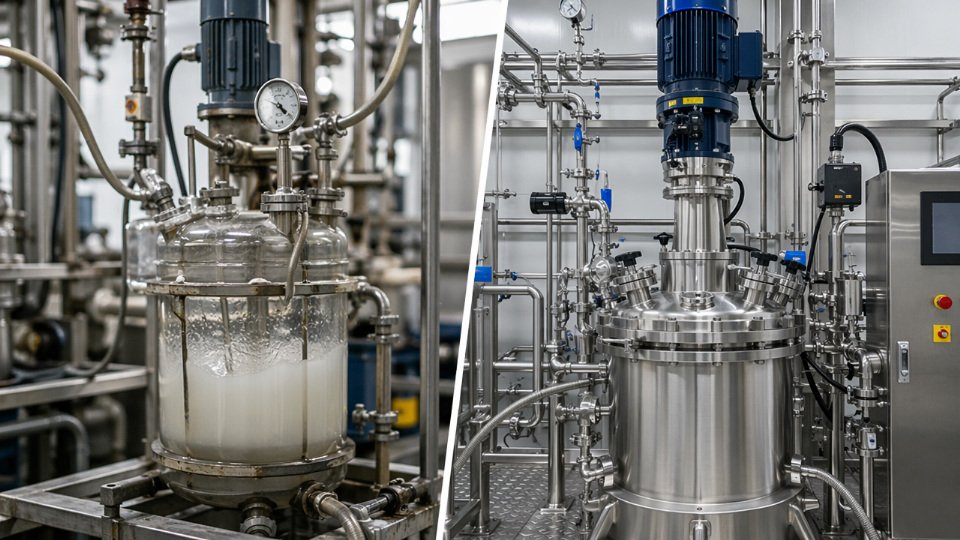
Boron nitride presents a chemically inert, low-hydroxyl surface — which immediately disqualifies many standard silanes that rely on abundant surface silanols for anchorage. Vinyltrimethoxysilane and 3-methacryloxypropyltrimethoxysilane are the two most validated options. Treatment loading should target 0.5–1.5 wt% relative to BN filler mass; below 0.5 wt% leaves surface coverage incomplete and viscosity benefits minimal, while above 1.5 wt% the excess silane acts as a plasticizer and degrades thermal conductivity.
For the solvent system, a 50/50 ethanol-water blend at pH 4.5–5.0 provides adequate hydrolysis rate while keeping the BN slurry processable. Dry at 110–120°C for 30–60 minutes post-treatment to complete condensation. Expect thermal conductivity improvements of 0.3–0.8 W/m·K in the cured TIM compound compared to untreated BN at equivalent loading, with the actual gain dependent on BN particle morphology and polymer matrix polarity.
How does SiliconChemicals ensure consistent supply of specialty and emerging silane grades from its China-based manufacturing base to customers in Europe, North America, and Southeast Asia?
Supply continuity for specialty silanes — grades with longer synthesis cycles or tighter raw material dependencies — requires more than a purchase order and a lead time. SiliconChemicals maintains dedicated safety stock buffers of 60–90 days for high-velocity specialty grades, specifically calibrated to absorb disruptions in Chinese domestic logistics and international freight lead time variance. All manufacturing operations are ISO 9001 certified, and relevant grades carry REACH pre-registration documentation for EU export, with full SDS and COA packages issued per batch.
For customers qualifying new silane chemistries — particularly emerging grades for EV or electronics applications — SiliconChemicals assigns dedicated application engineers who engage during the formulation stage, not only at the point of commercial supply. That front-loaded technical collaboration reduces the qualification timeline and eliminates the most common failure mode: a silane that performed well in lab trials but was applied incorrectly at production scale.