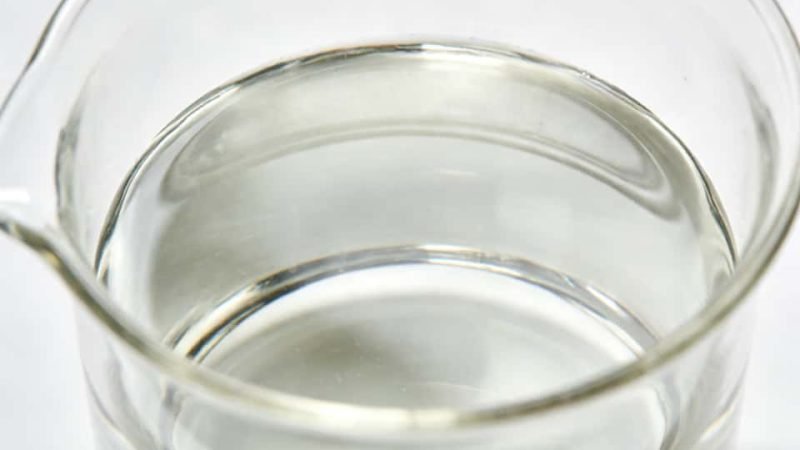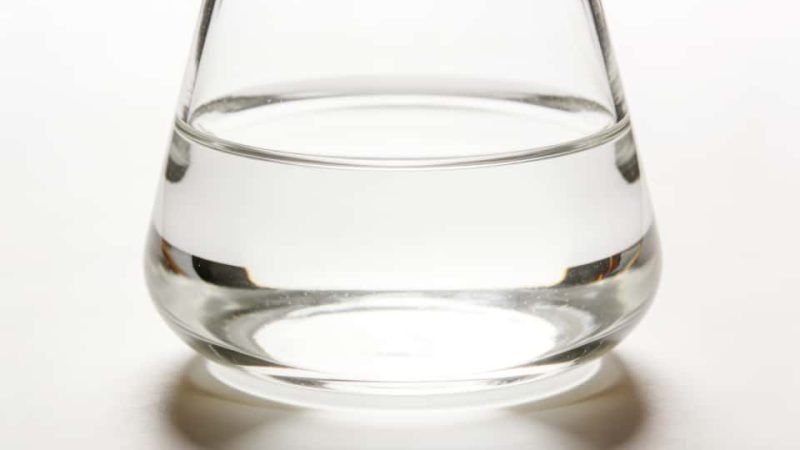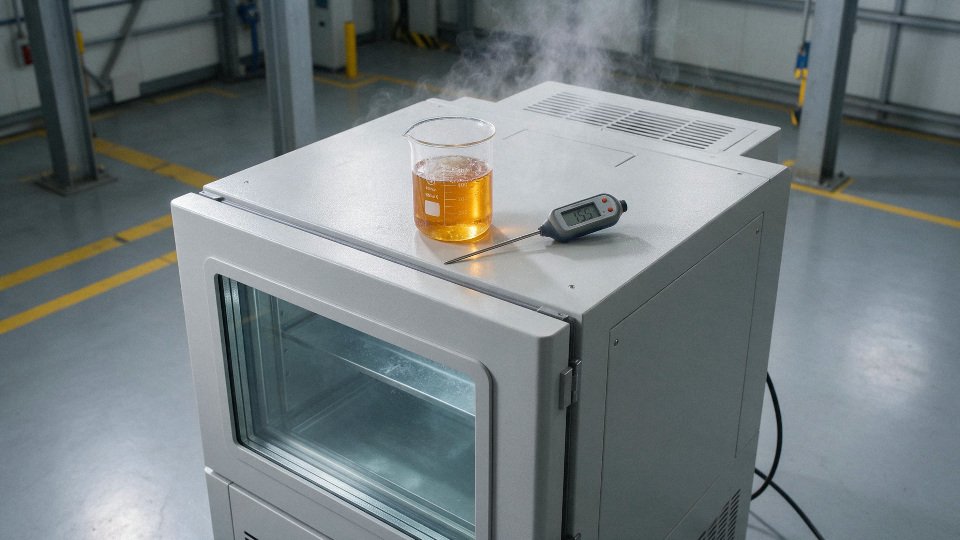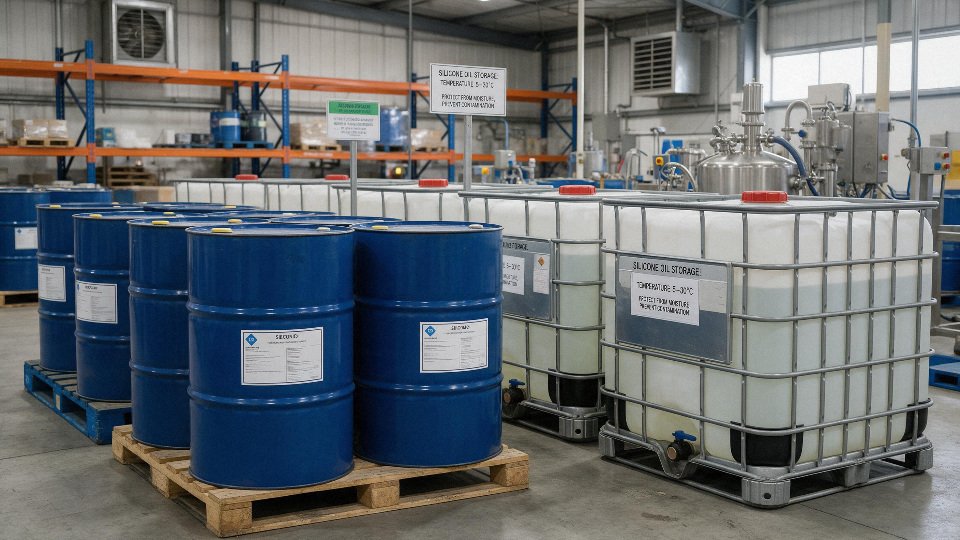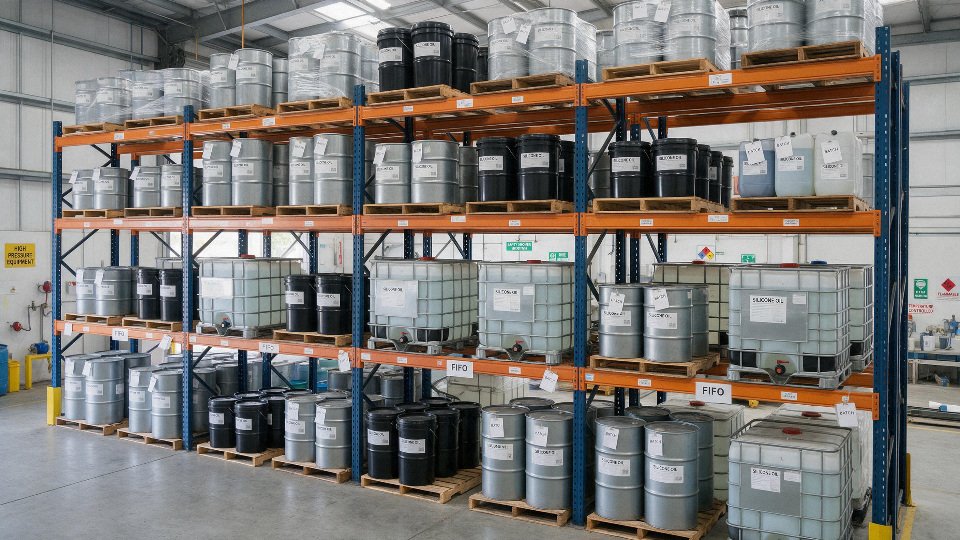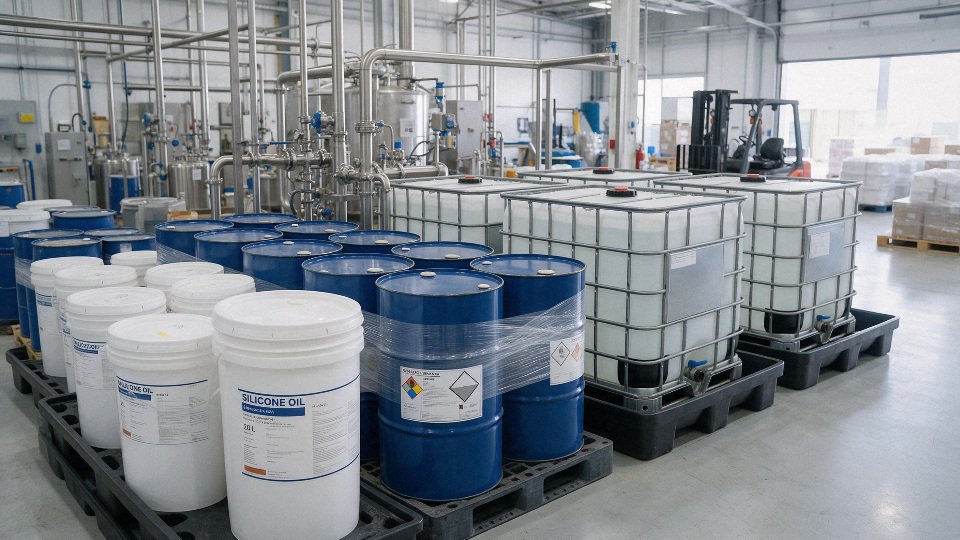
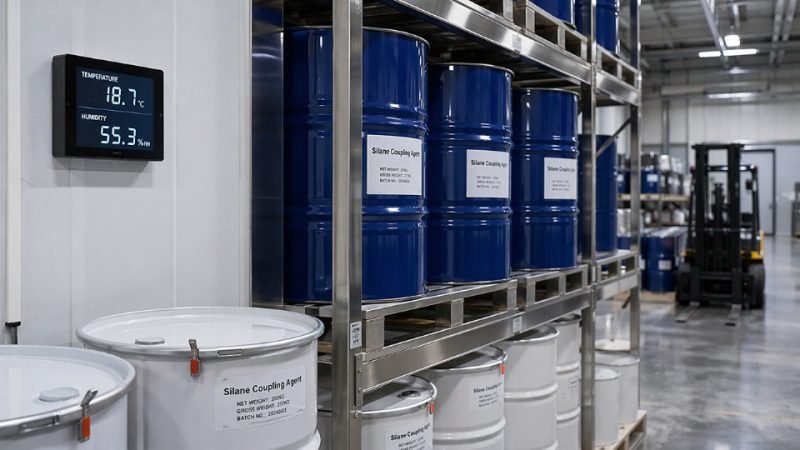
A batch of silane coupling agent that sat in a poorly ventilated warehouse through a humid summer looks identical to fresh material — same color, same viscosity, no obvious separation. That deceptive appearance is exactly what gets production teams into trouble. Hydrolyzed or partially condensed silane produces weak, inconsistent adhesion at the interface, and the failure rarely shows up until a composite part delaminates in service or a rubber compound rejects its filler loading during quality inspection. By that point, you have scrap costs, a line stoppage, and a root-cause investigation pointing back to a drum that should have been rejected at intake.
Most silane coupling agents carry a shelf life of 12 to 24 months in the original sealed container, stored at 5–25°C and below 60% relative humidity. The actual usable life depends on the specific silane chemistry, headspace moisture in the container, and how well the cold chain was maintained during shipping. Once diluted into aqueous solution for surface treatment, the working solution degrades within hours to days and should never be prepared in bulk and held.
What makes silane storage genuinely tricky is that the chemistry fails silently and the degradation curve is nonlinear — a container exposed to high humidity for even a few weeks can lose 30–50% of its functional activity, yet standard incoming checks like appearance and density will pass it straight through to production. Understanding why that happens, and what practical controls actually catch degraded material before it reaches your process, is the core of what follows.
 stored on warehouse racking with temperature and humidity monitoring equipment visible](https://siliconchemicals.com/wp-content/uploads/2026/06/silane-coupling-agent-shelf-life-storage-01-hero.jpg)
Typical Shelf Life Benchmarks by Silane Chemistry Type
Not all silane coupling agents age the same way. A vinylsilane sitting in a sealed drum at 15°C behaves very differently from a chlorosilane stored in a warehouse with fluctuating humidity. Procurement managers who treat the entire silane family as a single SKU category — assigning one blanket shelf life across the board — routinely discover degraded material at incoming QA, or worse, after it has already been processed into composite parts or coatings.
The table below consolidates the commercially most important silane families into a single reference. Use it as a first filter, then read the chemical rationale underneath to understand which degradation pathway is actually killing your material.
| Silane Family | Representative Grades | Nominal Shelf Life (months) | Primary Degradation Pathway | Most Critical Storage Parameter |
|---|---|---|---|---|
| Aminosilanes | APTES, APTMS | 12–24 | Self-condensation; CO₂ carbamate salt formation | Inert headspace; moisture exclusion |
| Epoxysilanes | GPTMS | 12–24 | Epoxy ring-opening via acidic hydrolysis byproducts | pH of stored material; temperature |
| Vinylsilanes | VTMS, VTES | 12–24 | Free-radical polymerization | UV exclusion; peroxide contamination control |
| Methacryloxy/acryloxy-silanes | MPS | 12–18 | Thermal/photoinitiated polymerization; inhibitor depletion | MEHQ inhibitor level; light and heat exclusion |
| Mercaptosilanes | 3-MPTMS | 12–18 | Thiol oxidation to disulfides or sulfonic acids | Oxygen exclusion; moisture control |
| Chlorosilanes | Monochlorosilanes, dichlorosilanes | 6–12 | Autocatalytic HCl-driven hydrolysis | Absolute moisture exclusion; container integrity |
| Polysulfide silanes | TESPT | 12–24 | Sulfur rank redistribution at elevated temperature | Temperature ceiling; avoid heat cycling |
| Isocyanato-/ureido-silanes | Isocyanatopropyltriethoxysilane | 6–12 | NCO reaction with water, amines, and alcohols | Contaminant-free containers; strict moisture exclusion |
Aminosilanes: The CO₂ Problem Most Labs Miss
APTES and APTMS are workhorses in glass fiber sizings and mineral filler treatments, but their primary amine group creates a specific storage hazard that goes beyond simple hydrolysis. Atmospheric CO₂ reacts with the amine to form carbamate salts — white crystalline deposits that appear innocuous but directly reduce the free amine concentration available for coupling reactions. Sealed, nitrogen-blanketed storage at 5–25°C keeps this reaction negligible. Opening and resealing the same drum repeatedly in a humid warehouse is enough to measurably shorten effective shelf life toward the lower end of that 12–24 month window.
Epoxysilanes: Slow Degradation, Sudden Failure
GPTMS has a reputation for robustness, and under genuinely dry, cool conditions it earns it. The risk is cumulative acidification. As trace hydrolysis proceeds over months, methanol and silanols accumulate, and the local pH can drift low enough to catalyze epoxy ring-opening. Material that passes a simple viscosity check may still show reduced coupling efficiency in adhesion pull-off tests. Testing for epoxide equivalent weight on aged stock is more reliable than visual inspection alone.
Methacryloxy-Silanes: Inhibitor Is Everything
MPS and its acrylate analogs carry MEHQ (hydroquinone monomethyl ether) as a polymerization inhibitor, typically at concentrations that matter enormously to shelf stability. Elevated storage temperature depletes MEHQ faster — a drum stored at 35°C rather than 20°C can exhaust effective inhibitor protection in roughly half the expected time. The practical consequence is a viscosity spike or, in severe cases, partial gelation that makes the material unprocessable. Always verify inhibitor concentration when accepting stock that has been warehoused through a summer in an unconditioned facility.
Chlorosilanes have a shorter shelf life than most other silane coupling agent families under identical storage conditionsTrue
The Si–Cl bond reacts rapidly with trace moisture, generating HCl that autocatalytically accelerates further hydrolysis. This self-reinforcing degradation mechanism means chlorosilanes typically last only 6–12 months even under careful storage, compared to 12–24 months for most other silane families.
Chlorosilanes: The Autocatalytic Trap
Six to twelve months is the practical ceiling for chlorosilane shelf life, and that ceiling assumes near-perfect container integrity. Once moisture enters, HCl generated by hydrolysis lowers local pH, which accelerates further Si–Cl hydrolysis in a feedback loop. A small seal failure that would cause minimal harm to an aminosilane can render a chlorosilane drum unusable within days. These materials require pressure-rated, corrosion-resistant containers with desiccant breathers, and receiving inspection should always include a simple pH paper check of the headspace gas.
Polysulfide Silanes: The Tire Compounder’s Hidden Variable
TESPT is chemically stable in absolute terms, but its tetrasulfide distribution — the ratio of di-, tri-, and tetrasulfide species — is temperature-sensitive. Prolonged storage above 40°C causes sulfur rank to shift toward shorter polysulfide chains. In tire compounding, where TESPT is used as a silica coupling agent, even moderate shifts in sulfur rank alter scorch safety and cure kinetics in ways that show up as processing inconsistencies before they show up as finished-product failures. Cold-chain storage between 5°C and 25°C is not overcaution for this product; it is process control.
Isocyanato-Silanes: Contamination Kills First
The isocyanate group reacts faster with ambient moisture than nearly any other silane functional group. Beyond moisture, any amine or alcohol contamination — including solvent residues in a reused container — triggers irreversible reaction. Shelf life of 6–12 months assumes dedicated, never-reused containers and strict first-in-first-out rotation. These materials should never be transferred to generic drums that previously held other silane types.
The Four Degradation Mechanisms That Silently Destroy Silane Activity
Understanding how a silane coupling agent fails is more useful than simply knowing that it does. Each mechanism operates through a distinct chemical pathway, responds to different environmental triggers, and demands a different preventive response. Treating them as one generic “degradation” problem leads to wrong priorities — and eventually to adhesion failures, composite delamination, or coating peel that traces back to a drum that looked perfectly fine on the shelf.
Mechanism 1 — Hydrolysis and Self-Condensation
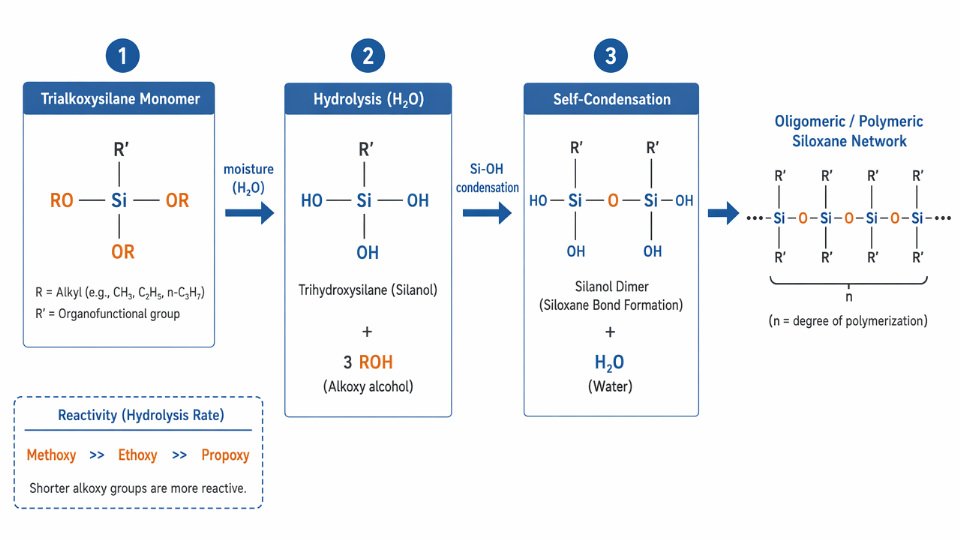
This is the primary failure mode for trialkoxysilanes, which make up the majority of commercially used coupling agents. Atmospheric moisture — even the small amount present in a headspace when a drum is cracked open — penetrates the liquid and cleaves Si–OR bonds, generating reactive silanols (Si–OH). Silanols do not stay isolated. They condense with each other rapidly, forming oligomeric and ultimately polymeric siloxane networks. Once that network forms, the material no longer behaves as a mobile monomer capable of migrating to a substrate surface and forming a true interfacial bond. Active monomer concentration drops, often without any visible change to the liquid.
The rate of this sequence depends on three variables: water activity in the immediate environment, temperature, and which alkoxy group is attached to silicon. Reactivity follows the order methoxy >> ethoxy >> propoxy. A methoxy-functional silane like 3-aminopropyltrimethoxysilane degrades measurably faster than its ethoxy counterpart under identical humidity conditions. At relative humidity above 80%, functional shelf life can contract by 30–50% within weeks — a material nominally rated for 18 months of storage may deliver unreliable adhesion performance after as little as 6–9 months if humidity control has been neglected.
Mechanism 2 — Organofunctional Group Reaction
The alkoxy side of the molecule is not the only vulnerability. The organofunctional group — the half that bonds to the polymer or resin — has its own degradation chemistry.
Aminosilanes absorb CO₂ from air and form carbamic acid or carbamate complexes. This shows up as white cloudiness or a solid precipitate at the bottom of the container. That precipitate is not an inert filler; it represents consumed amine functionality. Vinyl and methacryloxy silanes undergo radical or thermal polymerization, particularly if inhibitor levels have depleted over time or if the material has seen temperature excursions. Thiol-functional silanes oxidize to disulfides. Isocyanate-functional silanes react with trace water or residual alcohol from the manufacturing process. Every one of these pathways destroys coupling-active species while leaving the bulk liquid volume largely unchanged.
Aminosilanes stored in partially filled containers can develop visible carbamic acid precipitate within days due to CO₂ absorption, indicating loss of active amine functionality.True
Amino groups in aminosilanes react reversibly but persistently with atmospheric CO₂ to form carbamate or carbamic acid complexes. This reaction is well-documented in silane chemistry literature and is accelerated by larger headspace volumes and longer exposure times.
Mechanism 3 — Thermal Degradation
Storage above 40°C accelerates both hydrolysis kinetics and organofunctional reactions simultaneously. The Arrhenius relationship is not just a textbook concept here — it has real warehouse consequences. Every 10°C increase roughly doubles reaction rates. A container stored at 45°C through a summer month is experiencing the equivalent of two months of chemical aging at 35°C. Visible indicators include color darkening, viscosity increase, and precipitation. A silane that has thickened noticeably or shifted from water-white to pale yellow has already lost a meaningful fraction of its reactivity, regardless of whether it is within its nominal expiry date.
Mechanism 4 — Contamination and Cross-Contamination
Trace quantities of acid, base, peroxide, amine, or metal ions can catalyze condensation or polymerization far faster than bulk storage conditions alone would allow. Corroded drum fittings — particularly iron or copper alloys — introduce metal ions directly into the product. A partial-use drum that is improperly resealed introduces both oxygen and moisture simultaneously in a single handling step.
Why Degradation Is Often Non-Obvious Until Application Failure
This is the operationally dangerous part. Silane solutions frequently remain visually clear, fluid, and odor-normal even after losing 40–60% of their active monomer content to condensation or functional group reaction. A quality technician checking a drum by appearance alone will pass material that will underperform in the adhesive bond line or composite interface. The only reliable detection method is analytical testing — GC or HPLC for monomer purity, combined with hydrolysis and condensation state assessment. Visual inspection is not a substitute.
Optimal Storage Conditions: Temperature, Humidity, Light, and Atmosphere
Getting the chemistry right on a silane coupling agent means nothing if the drum sitting in your warehouse has spent three months next to a steam pipe or breathing humid coastal air through a standard bung cap. The degradation mechanisms are real and cumulative — and the storage parameters below address each one directly.
Temperature: The 5–25°C Window and Why the Edges Matter
Store silane coupling agents between 5°C and 25°C. That lower bound is not arbitrary: formulated blends and silane–solvent solutions can undergo phase separation or crystallization below freezing, and some aminosilane adducts will precipitate irreversibly if frozen even once. That product may look acceptable after thawing, but homogeneity is compromised and surface coverage will be uneven.
The upper bound is equally serious. Warehouse zones near steam distribution pipes, boiler room walls, or sun-exposed metal roof panels routinely hit 38–45°C in summer — well above the threshold where hydrolysis and condensation rates accelerate meaningfully. A drum stored at 40°C for six weeks can consume the equivalent of three to four months of shelf life at 20°C. Assign silane storage to an interior, shaded bay with mechanical ventilation. Log daily minimum and maximum temperatures; a simple max-min thermometer or a USB data logger with weekly download is sufficient for most facilities. If a temperature excursion is found on record, that batch should be retested before use rather than assumed acceptable.
Relative Humidity: Not One Number Fits All
The general target is below 60% RH for storage areas handling standard alkoxysilanes such as APTES, GPTMS, or VTMS. For chlorosilanes and isocyanatosilanes, drop that target to below 40% RH and use active desiccant climate control — these materials hydrolyze on contact with airborne moisture, generating HCl or releasing CO₂ respectively, and standard warehouse ambient conditions in humid regions are simply not safe for them without intervention.
Tropical and coastal warehouses present the hardest challenge. Ambient RH regularly exceeds 80% in these environments, which can reduce functional shelf life by 30–50% within weeks for open or poorly sealed containers. The practical answer is nitrogen-blanketed IBCs or steel drums with sealed, pressure-tested bungs. Passive humidity control with silica gel alone is insufficient at this scale.
Exposure to relative humidity above 80% can reduce the functional shelf life of alkoxysilane coupling agents by 30–50% within weeks of container opening.True
Alkoxysilane hydrolysis rate is directly proportional to water activity; at high ambient RH, ingress through imperfect seals or repeated openings provides sufficient moisture to initiate oligomerization and condensation, consuming reactive alkoxy groups and reducing coupling efficiency measurably within a short timeframe.
Light Exclusion: The MEHQ Inhibitor Complication
UV radiation drives radical polymerization in vinyl, methacryloxy, and acryloxy functional silanes. This is why opaque drums — HDPE with carbon black pigment or standard steel drums — are the correct choice. Transparent or translucent containers near skylights or high-UV fluorescent lighting will degrade these materials noticeably faster.
There is a subtlety worth understanding. The inhibitor MEHQ, used in methacryloxy and acryloxy silanes, requires dissolved oxygen to function. Completely stripping all oxygen from the headspace while trying to exclude moisture creates a situation where the inhibitor is inactive. The practical balance: blanket with nitrogen after withdrawal to limit moisture ingress, but do not purge to near-zero oxygen during routine storage. Consult your technical data sheet for the supplier’s specified oxygen range.
Headspace and Container Management
Nitrogen or dry argon blanketing of drum headspace after partial withdrawal is best practice, particularly for moisture-sensitive grades. Desiccant breather vent caps fitted with silica gel are a significant upgrade over standard bung plugs for drums that are opened regularly — they allow pressure equalization without moisture ingress.
On container material: steel drums are required for chlorosilanes. HDPE drums work well for most alkoxysilanes but are not compatible with chlorosilane or strongly acidic systems. Use PTFE-lined valves for dispensing. Critically, avoid brass or copper fittings anywhere in the dispensing or storage system for thiol and sulfide silanes — copper ions catalyze oxidation of these materials, accelerating degradation and generating odorous byproducts.
Segregation: What Must Not Share Space
Silane coupling agents must be stored away from strong oxidizers, concentrated acids, strong bases, peroxides, and isocyanates. Aminosilanes and epoxy silanes deserve specific attention: in bulk storage, cross-contamination between these two families — even trace amounts — will initiate ring-opening reaction and produce viscous, partially cured material that renders both products unusable. Separate bays, dedicated pumps, and clearly labeled dedicated dispensing equipment are not optional in any facility handling both types at meaningful volume.
Packaging Formats and Their Impact on Shelf Life: From Sample Vials to ISO Tank Containers
The same silane coupling agent can behave very differently depending on whether it sits in a 1 kg amber glass bottle on a lab bench or in an 18-tonne ISO tank staged at a port terminal. Package geometry, headspace volume, seal integrity, and transit duration all feed directly into how much active silane functionality remains when the material finally reaches the process line.
Small-Volume Packaging: 0.5 kg to 25 kg Bottles and Cans
Small containers carry a disproportionate degradation risk relative to their volume. A 1 kg bottle has a surface-area-to-volume ratio roughly 8–12 times higher than a 200 L drum, meaning any headspace moisture has far less bulk material to dilute its effect. Once opened in a humid lab environment — say, 65–75% RH on a summer morning — the functional shelf life of an amino- or methacryloxy-functional silane can fall to 3–6 months even if the bottle is recapped immediately. The cap is rarely the problem; the real culprit is the 30–60 seconds of ambient air drawn in during pouring and the residual film on the bottle threads before resealing.
For R&D applications these sizes are unavoidable, but rigorous first-in-first-out (FIFO) rotation is essential. Date every bottle on receipt, not on first opening. Nitrogen-purge before resealing — a simple hand-held lance connected to a dry nitrogen cylinder takes about five seconds per bottle and meaningfully extends working life. Discard rather than rationalize: a partially degraded vinylsilane used to prepare a reference adhesion specimen will produce results that cannot be reproduced six months later, wasting far more time than the cost of a fresh 1 kg unit.
Steel and HDPE Drums: The 200 L Production Workhorse
The 200 L drum (typically 175–185 kg net fill for liquid silanes) is the most common production format globally. The key operational decision is dispensing method. Top-pour — tilting the drum and decanting — introduces turbulence, splashing, and a direct air pathway into the bulk liquid. Dip-tube dispensing with nitrogen back-pressure is strongly preferred: as product is withdrawn, dry nitrogen at 0.05–0.1 bar gauge replaces the headspace, preventing atmospheric moisture ingress entirely.
Bung discipline matters more than most warehouse teams realize. Residual silane inside the bung threads begins hydrolyzing on contact with air, forming a silanol crust. If that crust is pushed back into the drum on resealing, it acts as a nucleation site for further condensation. Clean the bung exterior with a dry lint-free cloth, inspect the PTFE or rubber gasket for compression set or cracking, and replace gaskets that show any deformation. A degraded gasket on a drum stored through a seasonal temperature swing from 5°C to 30°C will breathe — expanding and contracting headspace gas pulls moisture in on every cooling cycle.
Intermediate Bulk Containers: 1,000 L IBCs
IBCs offer attractive economics for high-volume compounders and coating manufacturers consuming 2–5 tonnes per month. The larger headspace volume — potentially 150–300 L of air above a partial fill — demands proportionally more rigorous nitrogen blanketing. For composite-type IBCs with an inner polyethylene bag, inspect for pinhole leaks before each fill cycle; a 2 mm hole in the bag wall effectively turns nitrogen blanketing into an expensive exercise in futility. Check the outlet valve’s PTFE seat for wear or silanol buildup, which can prevent full closure and allow slow atmospheric exchange during storage.
Headspace moisture ingress in a partially emptied IBC can reduce functional silane activity by 20–40% over 60 days at 70% RH without nitrogen blanketing.True
Trialkoxysilanes undergo hydrolysis rapidly in the presence of atmospheric moisture; a larger air headspace increases the absolute moisture load, and elevated RH accelerates hydrolysis rate. The 20–40% range is consistent with observed viscosity increase and coupling efficiency loss in quality checks on unblanked IBC storage under humid warehouse conditions.
ISO Tank Containers: High-Volume International Shipments
ISO tanks carrying 16,000–24,000 L of silane represent significant capital commitment and supply-chain complexity. The transit time from a Chinese port to Northern Europe or the US East Coast runs 28–42 days by sea under normal routing — not a negligible fraction of a 12–18 month shelf life. A buyer who does not account for transit time when calculating remaining shelf life upon receipt may find that a nominally “fresh” shipment arrives with only 10–14 months of practical working life, not the full stated shelf life. Build transit time explicitly into purchase contracts and quality agreements: specify manufacture date, not just delivery date, as the shelf-life reference point.
Single-Use Versus Returnable Packaging
Single-use drums eliminate the cross-contamination risk that comes with residual materials from previous fills. Returnable drums are more economical over time but require documented cleaning and drying validation. Hydrolyzed silanol residue on drum walls is chemically active — it will catalyze condensation reactions in the next batch of fresh silane, accelerating gelation and reducing pot life unpredictably. Any returnable drum showing visible white or gray wall deposits should be rejected until chemically cleaned and oven-dried, not merely rinsed.
Packaging Labeling and Traceability
Legible, durable labeling is not a regulatory formality — it is the first line of defense against using degraded material. Minimum required information: manufacture date, batch number, recommended use-by date, storage conditions (temperature range and maximum RH), and an SDS reference. Labels printed on paper adhesive in warehouse conditions where drums are hosed down or condensation forms will fail within weeks. Laser-printed batch codes on drum bodies and tamper-evident nitrogen-sealed closures provide the traceability necessary to support customer complaint investigations and inbound QC verification without ambiguity.
How to Test Whether a Silane Coupling Agent Is Still Fit for Use
Shelf life dates on a certificate of analysis are calculated under ideal storage conditions. In practice, containers get left on a loading dock in summer heat, drum lids are improperly re-sealed after partial draws, or product sits in a warehouse that cycles through wide humidity swings. When any of those situations apply, a printed expiry date is a starting point, not a final answer. A tiered testing approach gives QA teams and incoming inspection staff a defensible, graduated way to make accept/reject decisions proportional to both the risk of the application and the resources available.
Tier 1 — Visual and Physical Inspection (5 Minutes, No Instruments)
Pour roughly 50 mL into a clean glass beaker under good lighting. Cloudiness or haze in a product that should be water-clear signals early-stage condensation or, in aminosilanes, carbamate salt formation from CO₂ absorption. Visible gel particles or a milky sediment indicate oligomeric siloxane formation — the product has already partially self-condensed and is unlikely to distribute uniformly on a substrate surface. Yellowing in aminosilane grades (APTES, APMS) points to oxidation or CO₂ reaction; darkening toward amber in mercaptosilane grades suggests disulfide formation, which directly competes with the intended thiol-surface reaction. For a viscosity check, pour the sample down a dry graduated cylinder and time it against your reference spec or against a fresh control sample from the same grade. A viscosity anomaly severe enough to see by eye means condensation has progressed well beyond surface effects.
None of this replaces lab analysis, but a Tier 1 failure is a hard reject. There is no analytical test that rescues product with visible gel particles for use in a demanding adhesive or composite application.
Tier 2 — Refractive Index Measurement
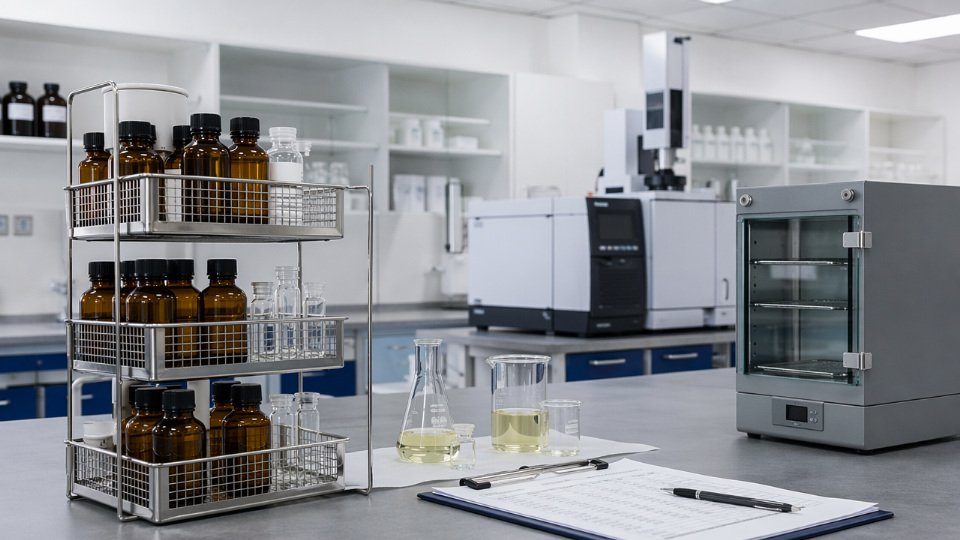
An Abbe refractometer costs under $500 and takes two minutes to read. Refractive index is sensitive to both hydrolysis byproducts (methanol, ethanol, silanol species) and the concentration of oligomeric products that form on condensation. A shift of more than ±0.003 nD from the certificate of analysis value is a reliable flag for significant composition change. This test is particularly useful as a rapid incoming inspection screen when a large shipment arrives and full GC analysis would take days to complete.
Tier 3 — Gas Chromatography for Active Monomer Content
GC against an internal standard is the quantitative backbone of silane QA. Elevated methanol or ethanol peaks directly confirm that hydrolysis has occurred during storage — these alcohols are the stoichiometric byproducts of alkoxy group cleavage. Quantify the active monomer fraction against a freshly prepared reference standard of the same grade. Fresh product from a well-controlled manufacturer should show ≥97% active monomer. The practical acceptance threshold for continued use in standard applications is ≥90%; anything between 90 and 95% deserves a close look at where the product will be used.
Active monomer content below 90% by GC does not necessarily mean the product is inert — partial hydrolysis products can still react with surfaces — but coupling efficiency, adhesion strength, and batch-to-batch repeatability all drop enough to make the material unsuitable for structural composites, electrical insulation encapsulants, or high-durability coating primers.True
Partially hydrolyzed silane oligomers can deposit on surfaces but form a poorly ordered, mechanically weak interphase layer. Studies on fiber-reinforced composites consistently show interfacial shear strength losses of 15–40% when silane treatment solutions contain significant condensate fractions, depending on silane type and substrate.
Tier 4 — Hydrolysis and Coupling Efficiency Functional Test
Analytical chemistry tells you what is in the bottle. A functional test tells you whether it still does the job. Dissolve the suspect silane at 1–2% in an ethanol/water mixture (typically 95:5 by weight, adjusted to pH 4–5 with dilute acetic acid), apply to clean glass slides or mineral fiber fabric, and measure water contact angle reduction and lap-shear adhesion strength against a control prepared identically from fresh product. This catches one failure mode that GC sometimes misses: degradation products that retain some surface reactivity but form a brittle, poorly bonded interphase that analytical purity numbers would not flag.
Run both tests in parallel if the product is going into a structural application, a high-voltage electrical component, or any joint where adhesive failure is a safety or warranty issue.
Tier 5 — NMR and FTIR for Advanced Characterization
Reserve these for supplier disputes, high-value specialty grade incoming inspection, or failure investigations. ²⁹Si NMR distinguishes T⁰ (intact monomer), T¹, T², and T³ species (progressive condensation products) unambiguously — no other routine method resolves this distribution. FTIR provides faster screening: a carbonyl stretch near 1,700 cm⁻¹ in an aminosilane confirms carbamate salt formation from CO₂ exposure; a broad absorption across 3,200–3,500 cm⁻¹ indicates Si-OH groups from hydrolysis. Both tests are available at most industrial analytical service labs if the capability is not in-house.
Decision Logic for Borderline Cases
When visual inspection and refractive index pass but GC returns 90–95% monomer, the right call depends entirely on the end application. Silane used as a primer for standard construction sealants or general mineral-filled rubber can often absorb that level of degradation without measurable performance loss. The same product should not go into a structural epoxy-glass composite joint, a high-frequency PCB laminate treatment, or an electrical insulation potting application — in those cases, re-order fresh product, keep the borderline batch segregated with a clear hold label, and document the disposition decision. Blending degraded product with fresh material at ratios above roughly 10–15% is not a reliable remediation strategy and complicates traceability if a field failure investigation later follows.
Special Considerations for Long-Distance International Shipping and Tropical Climate Storage
Importing silane coupling agents from China to Europe, the Americas, or Southeast Asia introduces shelf life risks that don’t exist when product moves domestically between adjacent warehouses. Transit durations, regulatory queues, and end-use climates all chip away at usable life before the drum is ever cracked open. Managing this well requires deliberate planning at the procurement stage — not damage control after arrival.
Sea Freight Temperature Exposure
Container temperatures during Asia–Europe or Asia–Americas voyages are not stable. An uninsulated general-purpose container stowed on deck can hit +55°C passing through the Red Sea or Panama Canal in summer, then drop below 0°C in the North Atlantic in winter on the return leg. Even on a single outbound voyage, a container transiting both the South China Sea and the Mediterranean can experience a 40°C swing within 30 days.
For most aminosilanes and vinylsilanes this is manageable; they tolerate moderate thermal cycling reasonably well. Methacryloxy- and isocyanato-functional silanes are a different matter. Methacryloxy grades can undergo thermally initiated polymerization at sustained temperatures above 40°C, and isocyanatosilanes react aggressively with any trace moisture that condenses during cool-down cycles. Buyers of these grades should specify under-deck stowage as a shipping instruction in the purchase order — not as a preference, but as a contract requirement. Most freight forwarders can confirm stowage position with the carrier; it adds minimal cost and eliminates a real failure mode.
Building a Shelf Life Budget Before You Order
A 12-month shelf life product does not arrive with 12 months of remaining life. Work through a realistic example: 35-day sea transit, 7-day customs clearance, 14-day holding in a tropical port warehouse before inland delivery — that’s 56 days consumed before the product reaches the production line. Remaining shelf life on arrival: approximately 10 months. If your production schedule won’t consume the full batch within that window, you have a problem that started at the purchase order stage.
Procurement contracts should state a minimum remaining shelf life on delivery — typically 75–80% of the labeled shelf life for high-value or reactive grades. Build the transit time, expected customs duration, and local holding period into that calculation explicitly. Do not let the purchase order default to “shelf life as per manufacturer’s specification” without anchoring it to an arrival-date floor.
Regulatory Delays Are a Real Time Cost
Chemical import registration requirements — Korea REACH, Taiwan TCSCA, Turkey KKDIK, and EU REACH — can extend effective transit time by two to eight weeks.True
Each of these regulatory frameworks requires importers or their representatives to submit registration or pre-registration dossiers before commercial import is permitted; customs holds pending documentation review are routine and well-documented across trade compliance literature.
Skipping pre-registration is the most common cause of unexpected shelf life loss. A shipment held at Busan or Istanbul for six weeks while registration paperwork catches up is six weeks of product aging in a port shed — possibly without climate control. SiliconChemicals prepares complete SDS packs, UN proper shipping names, and regulatory compliance dossiers as standard export documentation, specifically to prevent this failure mode.
Tropical Warehouse Realities
Customers in Southeast Asia, South Asia, and sub-Saharan Africa routinely face 30–40°C ambient temperatures with 70–95% RH — conditions that can reduce functional shelf life by 30–50% within weeks without proper storage infrastructure. Air-conditioned, dehumidified chemical storage is not optional for silane coupling agents in these climates; it’s the cost of using the material correctly.
One detail many warehouse managers overlook: drum orientation. Side-bung steel drums should be stored with the bung at the 3 o’clock or 9 o’clock position. This keeps the bung submerged in liquid rather than sitting in headspace gas, which significantly reduces moisture ingress through bung-seal microporosity.
Cold Chain for Reactive Grades
Chlorosilanes and isocyanatosilanes warrant refrigerated container (reefer) shipping at 10–15°C. The cost premium for a reefer container over a standard dry box runs roughly 30–60% depending on lane and season. That premium is recovered in full by preventing a single batch rejection in a high-value downstream application such as a structural adhesive or fiber-reinforced composite component.
SiliconChemicals applies factory nitrogen blanketing as standard practice for reactive grades, attaches moisture-indicator stickers to each drum for visual incoming inspection, ships in ISTA-certified export packaging, and offers optional real-time temperature and humidity data loggers for high-value consignments. Customers receive logged condition data covering the full supply chain — documented evidence that protects both parties if a quality dispute arises at delivery.
Best Practices for Inventory Management and First-In-First-Out (FIFO) Control in Production Facilities
Storing silane coupling agents correctly at the drum level is necessary but not sufficient. The more common failure mode in real production facilities isn’t a single drum stored at the wrong temperature — it’s a warehouse where newer stock gets picked before older stock simply because it was placed closer to the aisle. Systematic FIFO control closes that gap.
FIFO Labeling: Make the Date Visible at Distance
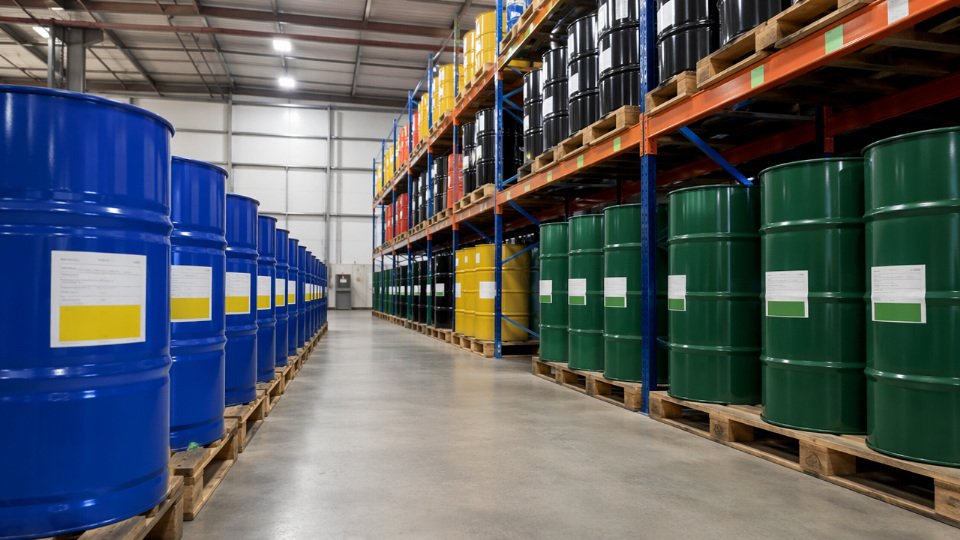
Every drum or intermediate bulk container (IBC) should carry a large, weather-resistant label — minimum A5 size, laminated or printed on polypropylene stock — showing three dates in bold: manufacture date, goods-receipt date, and calculated use-by date. Handwritten labels fade; thermal-transfer or laser-printed labels on adhesive polyester film hold up in humid or solvent-laden warehouse atmospheres for the full storage period.
Pair this with a color-coded date band applied as a wrap around the drum lid ring or IBC valve housing. Green means more than 50% of shelf life remains and the drum is available for normal use. Yellow (25–50% remaining) signals that the drum should be prioritized in production scheduling and flagged in the next procurement review. Red (less than 25% remaining) requires an immediate fitness-for-use decision — either analytical testing or escalation to the quality team before any production use. A warehouse operative walking the aisle should be able to identify red-band stock in under five seconds without reading a label.
Warehouse Slotting and Pick-Face Discipline
The physical layout of racking enforces or defeats FIFO regardless of what the SOP says. Newest stock always goes to the back of the bay; oldest stock occupies the pick face. This sounds obvious, but the recurring failure is convenience: a forklift operator receives a pallet of full 200 L drums and places them in front of older, partially used drums because the full drums are easier to handle. A documented slotting SOP — with photographic examples of correct and incorrect configurations — and quarterly internal audits by a warehouse supervisor or quality engineer catch this before it compounds across multiple product lines.
Partial Drum Management: The Highest-Risk Inventory Event
A drum that has been opened and partially consumed carries more degradation risk than any other inventory category. Moisture ingress during each withdrawal event, even brief, begins the hydrolysis clock. The correct procedure: log the exact volume withdrawn and the date at the drum itself (a laminated log sheet taped to the drum body works reliably), reseal immediately with dry nitrogen blanket before replacing the bung, and apply a secondary sticker stating a 90-day partial-drum use-by date — independently of whatever remains on the original shelf life. A drum with 18 months of shelf life that was opened 10 months ago and improperly resealed is not equivalent to a freshly opened drum.
A partially used silane drum that is resealed without nitrogen blanketing can show measurable increases in hydrolyzate and alcohol content within 30–60 days under typical warehouse humidity conditions.True
Trialkoxysilanes undergo progressive hydrolysis upon atmospheric moisture exposure; even partial headspace moisture at 40–60% RH is sufficient to initiate oligomerization, particularly in aminosilanes and epoxysilanes with higher moisture sensitivity.
MOQ Alignment With Actual Consumption Rate
Procurement teams frequently optimize for per-kilogram cost and order 200 L drums when monthly consumption is 15–25 L. For a 12-month shelf-life product, that arithmetic alone creates a near-certain expiry event. The conversation with your supplier about container sizing is a quality decision, not just a logistics preference. Sourcing in 25 L or 50 L containers at a modest per-kg premium — typically 5–15% higher depending on product and order volume — is almost always cheaper than scrapping two-thirds of a 200 L drum or absorbing a batch rejection caused by degraded coupling performance.
ERP and WMS Integration
Batch numbers, manufacture dates, and use-by dates should be entered into your ERP or WMS system at goods receipt, not retrospectively. Set automated expiry alerts at 90 days and again at 30 days. Critically, integrate these alerts with production scheduling so that expiring stock is issued to production before fresher stock — the system should enforce FIFO, not merely record it. If your current WMS doesn’t support lot-level expiry tracking for chemicals, a simple shared spreadsheet with conditional formatting achieves the same visibility at minimal cost for smaller operations.
Disposal, Down-Cycling, and the Liability Calculus
Expired silane coupling agents should not be blended into non-critical applications without prior analytical testing. The temptation to “use it up somewhere” is understandable given cost pressure, but a field failure traceable to knowingly degraded material — poor adhesion in a structural bonding application, delamination in a fiber-reinforced composite — carries liability exposure that far exceeds the disposal cost of a few drums. If transit conditions or storage failures have raised questions about a specific batch, SiliconChemicals’ technical team can assist with fitness-for-use assessments based on batch records and test data. For product shipped under documented suboptimal conditions, a formal quality complaint process with replacement procedures is available — treating expiry events as isolated disposal problems rather than supply-chain feedback misses the opportunity to prevent recurrence.
Frequently Asked Questions About Silane Coupling Agent Shelf Life and Storage
Can I use a silane coupling agent after its stated expiry date?
Possibly — but not without evidence. The use-by date printed on the drum is a guaranteed performance date backed by stability data collected under defined storage conditions. It is not an automatic disposal trigger. Many silane coupling agents stored correctly in sealed, nitrogen-blanketed containers retain ≥95% organofunctional activity well past their nominal date, particularly lower-reactivity grades such as vinyltrimethoxysilane or 3-glycidoxypropyltrimethoxysilane.
Before using out-of-date material in any structural or safety-critical role, run at minimum: refractive index against the specification (deviation >0.003 units typically flags significant degradation), GC purity (flag if functional silane content has dropped below 97%), water content by Karl Fischer (flag if >0.1% for reactive grades), and a functional adhesion pull-off or lap-shear test on your actual substrate. For aerospace composites, high-voltage cable insulation, or medical-device adhesives, documented analytical sign-off is non-negotiable regardless of how good the product looks. Skipping that step to avoid retesting cost has caused delamination failures that cost far more than the drum of silane.
Many well-stored silane coupling agents retain functional activity beyond their printed use-by date, provided analytical verification confirms purity and water content remain within specification.True
Shelf life dates are set conservatively based on worst-case storage assumptions. Sealed, nitrogen-blanketed drums stored at 5–25°C and below 60% RH routinely show ≥95% GC purity at 24–30 months even when the nominal date was 24 months.
My aminosilane has turned cloudy or shows a white precipitate — is it still usable?
Cloudiness in aminosilane grades — 3-aminopropyltriethoxysilane being the most common example — has two distinct causes with very different implications. Carbamate salt formation (the amine group reacting with atmospheric CO₂) produces a fine white haze or soft precipitate that typically redissolves within a few minutes of gentle warming to 35–40°C with light stirring. If GC purity remains on-spec and the cloud disappears cleanly, the product is generally acceptable for less-demanding textile sizing or mineral filler treatment applications.
Dense, persistent white precipitate that does not redissolve indicates early silanol condensation — partial oligomerization of the silane backbone. This product should be retested by GC before any further use. If functional monomer content has dropped below specification, it belongs in the waste stream, not the process tank. Using condensed aminosilane as a primer for structural bonding produces unpredictable bond strength and is a known root cause of adhesive joint failures in composite repair.
What is the shelf life once diluted into an aqueous solution or primer formulation?
Short. Much shorter than most users expect. Simple trialkoxysilanes at 1–5% concentration in deionized water or water/isopropanol blends have a practical working life of roughly 24–72 hours at room temperature. Methacryloxy grades are faster-reacting still — expect 4–8 hours before significant oligomerization begins at pH 4–5. Aminosilane solutions are somewhat more forgiving due to self-catalyzed partial hydrolysis equilibria, but still should not be held more than 24 hours in open vessels.
Formulated silane primers that incorporate surfactants, film-forming resins, or pH buffers can be engineered by a formulator to achieve 1–6 months of packaged stability, but that claim must come with the formulator’s own stability data, not a general assumption. Never store diluted silane in partially filled open containers. Even a few hours of humidity exposure accelerates hydrolysis dramatically once the headspace moisture equilibrates with the solution.
Does freezing extend shelf life?
Not recommended as a storage strategy. Sub-zero temperatures do slow hydrolysis kinetics, but freezing creates its own problems: phase separation in blended or partially hydrolyzed products, mechanical stress on drum seals, and — for HDPE containers — brittleness cracking at temperatures below −10°C. Repeated freeze-thaw cycles are particularly damaging to container integrity. Consistent cool storage in the 5–15°C range outperforms frozen storage for virtually all commercial silane coupling agent grades.
How should expired or degraded material be disposed of?
Under local hazardous chemical waste regulations, without exception. Most silane coupling agents carry flash points in the 30–90°C range depending on grade and are classified as flammable liquids under GHS. Hydrolysis byproducts include methanol (from methoxysilanes), ethanol (from ethoxysilanes), and hydrogen chloride from chlorosilane contamination in some reactive intermediates. None of these should enter the drain or soil. Engage a licensed chemical waste contractor and refer to the current SDS, which SiliconChemicals provides for all product grades and updates whenever regulatory classifications change.
Can silane coupling agents be stored long-term in HDPE or PP IBCs?
HDPE and PP IBCs are suitable for amino, epoxy, vinyl, mercapto, and methacryloxy alkoxysilane grades for periods up to 12 months when properly sealed and nitrogen-blanketed. They are not suitable for chlorosilane-containing products — hydrogen chloride generated by trace hydrolysis stress-cracks HDPE over time, with container failure as the eventual outcome. Highly acidic or alkaline silane solutions warrant the same caution. Verify chemical compatibility against the IBC manufacturer’s published resistance chart before committing to long-term plastic-container storage of any unusual or concentrated grade.
How does SiliconChemicals guarantee shelf life for exported products?
Every shipment leaves our Zhejiang production facility with a batch-specific certificate of analysis covering GC purity, refractive index, water content (Karl Fischer), and APHA color. Drum sealing with nitrogen blanket is standard across all export grades — not an add-on. For temperature-sensitive or long-transit shipments, calibrated temperature and humidity data loggers are available to document cold-chain compliance from loading through to the customer’s receiving dock. Our quality system is ISO 9001-certified, and traceability records are retained per batch so any field quality question can be traced back to raw material inputs and process parameters, not just finished-product testing.
Sourcing Silane Coupling Agents with Confidence: What to Demand from Your Supplier
Knowing how silane coupling agents degrade is only half the equation. The other half is choosing a supplier whose quality infrastructure actively protects that shelf life before the drums ever reach your warehouse. Procurement decisions made on price alone routinely produce quality incidents that cost ten to twenty times the savings. What follows is a practical checklist built from real purchasing and incoming-inspection experience.
Documentation: The Minimum Acceptable Standard
Every commercial shipment should arrive with three documents, and none of them should be generic. The certificate of analysis must show the actual batch-specific test results — measured values, not just specification ranges. Manufacture date and batch number must be printed on both the CoA and the drum label, because those two need to match during receiving inspection. A CoA that lists only “meets specification” with no numerical data tells you almost nothing about where in the acceptable window the product sits or how much working shelf life remains.
The SDS must comply with GHS and be issued in a language that meets your importing country’s regulatory requirement. A Chinese-language SDS sent to a Southeast Asian or European customer is a compliance gap, not a technicality. Request the destination-country version when placing the order, not after the shipment clears customs. Round out the documentation set with a current ISO 9001 certificate or equivalent quality management system credential — this confirms the supplier’s quality controls are audited by a third party, not self-declared.
Nitrogen Blanketing: Ask the Direct Question
This is the single factor that has the largest practical impact on shelf life for alkoxysilane grades. Ask your prospective supplier: is nitrogen blanketing performed on every drum before sealing, or only when specifically requested? The honest answer will tell you a great deal about their manufacturing discipline. A supplier who blankets only on request is effectively handing you a degradation timer that starts at drum-fill, not at your facility.
SiliconChemicals applies nitrogen blanketing as a standard production step on all alkoxysilane drums of 25 liters and above, with no surcharge or special request required.True
This is SiliconChemicals' standard manufacturing protocol for moisture-sensitive alkoxysilane grades, implemented to protect hydrolysis-sensitive products throughout the shipping and storage chain.
Batch Traceability and Retention Samples
Reputable suppliers hold production-batch retention samples for a minimum of twelve months. This matters when a shelf-life dispute arises six months after delivery — without a retained reference sample, neither party can distinguish a genuine production quality issue from a storage or handling failure on the buyer’s side. Confirm the retention sample policy in writing before placing any large-volume order. If a supplier cannot confirm this practice, the risk of unresolvable disputes sits entirely with you.
Technical Support That Goes Beyond a Label
A generic “12-month shelf life” printed on the drum is nearly useless without context. The appropriate shelf-life expectation depends on silane chemistry, packaging size, storage temperature, and your specific application conditions. A supplier with genuine application expertise will tell you, for example, that an aminosilane used in a humid tropical facility warrants a tighter incoming-inspection interval than the same product stored in a climate-controlled European warehouse. SiliconChemicals’ technical team routinely provides application-specific storage SOPs and shelf-life extension protocols — not because it is unusual, but because without that guidance the product’s performance in the field cannot be guaranteed.
Supply Reliability as a Shelf-Life Variable
This connection is underappreciated. Unreliable lead times force buyers to hold large safety stocks, which directly compresses effective shelf life. If you are carrying six months of buffer inventory because your supplier’s delivery schedule is unpredictable, you have already consumed a significant fraction of your product’s working life before it touches a production line. SiliconChemicals maintains export-ready inventory for more than 60 silane coupling agent grades from bonded warehouse stock in Shanghai, with standard orders typically shipping within three to seven business days. That reliability means buyers can operate on tighter, fresher inventory cycles rather than defensive overstocking.
Treat shelf life as an active quality parameter, not a passive label to ignore until something fails. The total cost of a single quality incident traced to degraded silane — rejected composites, adhesion failures, scrapped coating batches, customer returns — will almost always exceed the combined cost of proper storage infrastructure, incoming analytical testing, and a full year of FIFO discipline. Supplier selection is where that risk is either controlled or transferred to your production floor.