Silane coupling agents fail in the field far more often because of what happened to the substrate before the silane was applied than because of anything wrong with the silane itself. A technician applies a chemically correct primer to a metal part that still carries a 3 nm film of rolling oil, and the bond looks fine until the first thermal cycle or humidity exposure — then it peels, the assembly is scrapped, and the line stops while everyone debates whether the silane was “bad.” The downstream cost is real: rejected parts, rework labor, and warranty claims that trace back to a preparation step that takes ten minutes and gets skipped when production is running hot.
Surface preparation determines whether a silane coupling agent can chemically bond or merely sits on top of the substrate. The silane’s reactive alkoxysilyl groups must condense with surface hydroxyl groups — ideally 4–8 OH groups per nm² — to form covalent Si–O–metal or Si–O–Si linkages. Contamination as thin as 2–5 nm of oil or residual oxide blocks that reaction and cuts bond strength by 40–70%, regardless of silane quality or application method.
What makes this frustrating for plant engineers is that a poorly prepared surface often looks clean. The failure mode is invisible at incoming inspection and only reveals itself under load, heat, or moisture — exactly the conditions your end product is designed to handle. Understanding the surface chemistry that a silane actually needs, and how to verify it before the silane goes on, turns preparation from a vague checklist item into a controllable process variable.
The Surface Chemistry a Silane Coupling Agent Actually Needs to Bond
A silane coupling agent does not bond to a substrate by sticking to it in any conventional adhesive sense. The mechanism is condensation chemistry: the silane’s alkoxy groups hydrolyze in the presence of moisture to form silanol groups (Si-OH), and those silanols then react with hydroxyl groups on the substrate surface — M-OH, where M is silicon, aluminum, titanium, iron, or another metal center — to form covalent Si-O-M bonds and expel water or alcohol. That last sentence contains the operational implication most quality failures trace back to: if the substrate surface does not present accessible, reactive hydroxyl groups, there is no condensation partner. The silane sits on the surface physically rather than bonding chemically, and the interface fails under stress, humidity, or thermal cycling.
Hydroxyl Density as a Quantifiable Process Target
Surface hydroxyl density is not an abstract concept — it is a real, measurable quantity that your preparation process either achieves or does not. Freshly cleaned glass and thermally grown silicon dioxide carry roughly 4–8 OH groups per nm², which is dense enough to form a well-ordered silane monolayer with good lateral condensation. Corroded steel, passivated aluminum that has been sitting in a warehouse, or a surface contaminated with even 2–5 nm of residual machining oil can drop that density below 1 OH/nm². At that point, condensation events are sparse and isolated. The resulting bond coverage is patchy, and measured lap-shear or peel strength can fall 40–70% compared to a properly prepared surface — even when the silane chemistry, concentration, and cure conditions are identical.
This is why grit-blasting alone is sometimes insufficient for aluminum. Blasting removes bulk contamination and increases surface area, but it does not guarantee a controlled, hydrated oxide with high hydroxyl availability. An acid etch or chromate-free conversion coating step following abrasion is often what actually brings hydroxyl density into the usable range.
Surface Energy and Wetting: Why Contact Angle Matters Before You Apply Anything
Before a silane solution can condense onto a surface, it has to wet that surface uniformly. Incomplete wetting produces exactly the outcome you want to avoid: islands of thick, multilayered silane deposit rather than a controlled monolayer. Thick silane films are mechanically weak because the outer silane-to-silane bonds are far weaker than the silane-to-substrate covalent bonds you are actually trying to create.
A water contact angle below 10° on a prepared metal or glass surface reliably indicates sufficient hydroxyl activation for silane condensationTrue
Contact angle below 10° corresponds to high surface energy and dense hydroxyl exposure. Published adhesion literature and ASTM D2651 preparation validation both use contact angle as a practical proxy for activation quality, consistent with the OH density range of 4–8/nm² achievable after proper acid or plasma treatment.
For organic polymer substrates — composites, engineering plastics, elastomers — the challenge is different. Native surface energy is typically below 30 mN/m, which means aqueous silane solutions bead up rather than spread. Plasma or UV-ozone treatment can push surface energy above 60 mN/m by generating carbonyl, hydroxyl, and peroxide groups at the surface. Without that step, even a perfectly formulated silane has no mechanism to wet out uniformly.
The Native Oxide Layer Is Your Real Bonding Interface
On metals, engineers sometimes think of “the metal” as the bonding surface. In practice, silane bonds to the oxide layer, not the bulk metal. Aluminum bonds through Al-OH groups on its amorphous aluminum oxide layer. Steel bonds through Fe-OH on iron oxide. The quality of that oxide — its thickness, crystallinity, degree of hydration, and freedom from chloride or sulfate contamination — directly controls bond durability, especially under humid service conditions.
A thin, freshly formed, amorphous oxide with good hydration is the preferred state. A thick, stratified, or dehydrated oxide forms fewer condensation sites and can delaminate cohesively under load. This is the reason controlled acid etching protocols (referenced in ASTM D2651 and ISO 4588) prescribe specific etch times and solution concentrations rather than leaving preparation to operator judgment: you are engineering the oxide, not just cleaning the part.
Matching Silane Functionality to Surface Acid-Base Character
Surface chemistry also governs which organofunctional silane performs best on a given substrate. Aminosilanes (3-aminopropyltriethoxysilane, for example) are basic and develop strong affinity for acidic oxide surfaces such as silica, glass, and certain mineral fillers — the amine group can interact favorably with surface silanol groups through hydrogen bonding before covalent condensation sets in. On steel or aluminum, where the oxide surface tends toward amphoteric or mildly acidic character, epoxysilanes or methacryloxysilanes often provide better long-term hydrolytic stability because the functional group does not introduce competing basicity at the interface.
Mercaptosilanes are used with sulfur-reactive systems, particularly in rubber-to-metal bonding, where the thiol group participates directly in vulcanization chemistry. Vinylsilanes are suited to peroxide-cured polyolefin systems. Choosing the wrong organofunctional group — using a vinylsilane on an epoxy-matrix composite, for instance — means the organic end of the silane cannot co-react with the polymer matrix regardless of how well the inorganic end bonded to the substrate. Preparation creates the conditions for bonding; silane selection determines whether the organic interface actually cross-links into the system.
Contaminant Identification and Removal: The Non-Negotiable First Step
A silane coupling agent cannot bridge chemistry it cannot reach. Even a technically perfect silane solution — correct concentration, correct pH, correct hydrolysis state — will produce a weak, failure-prone interphase if it lands on a contaminated surface. Understanding contamination by category is the starting point, because different contaminant classes block silane bonding through different mechanisms and demand different removal strategies.
Four Contaminant Classes That Break Silane Bonding
Hydrocarbon oils and mold-release agents occupy the most common failure mode in production environments. These form a non-polar physical barrier between the silane’s silanol groups and the substrate’s hydroxyls. A contamination film as thin as 2–5 nm — far below what’s visible to the naked eye — can reduce bond strength by 40–70% even when every other process variable is correct. Cutting fluids, stamping lubricants, and silicone-based mold releases are particularly stubborn; silicone release agents in particular can passivate a metal surface in ways that resist standard solvent wiping.
Inorganic salt deposits and corrosion products — chlorides from handling sweat, sulfates from atmospheric exposure, loose iron oxides on steel, and white-layer aluminum hydroxide — sit directly on the metal oxide surface that the silane is trying to condense with. These deposits physically displace the reactive hydroxyl sites and introduce weak boundary layers that will fail cohesively under load.
Physically adsorbed moisture and atmospheric organics accumulate within hours on freshly prepared surfaces. A surface left open in a humid shop for 30–60 minutes can re-adsorb enough adventitious carbon to blunt reactivity. This is why surface preparation and silane application must be sequenced, not separated by a lunch break.
Loose oxides, dust, and weak boundary layers act as sacrificial layers — the silane bonds to them perfectly well, but they themselves are not bonded to the substrate. Failure looks cohesive in the contamination layer, which can mislead quality inspection.
Solvent Degreasing: Sequence Matters More Than Solvent Choice
A single solvent wipe is frequently worse than no wipe at all. Running a single acetone-soaked cloth across a machined aluminum surface can dissolve the bulk oil while redistributing a thin, diluted hydrocarbon film uniformly across the part — a cleaner-looking surface that is actually more uniformly contaminated.
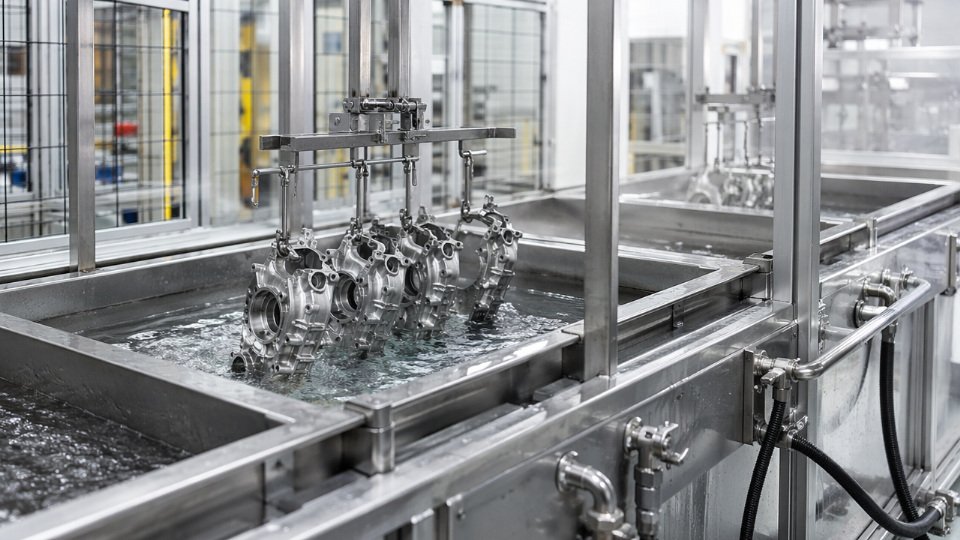
The effective protocol is a two-solvent sequence: start with a non-polar solvent (mineral spirits or naphtha) to dissolve and lift heavy hydrocarbon contamination, then follow immediately with a polar solvent (acetone, isopropanol, or MEK) using a fresh lint-free wipe on each pass. MEK has stronger dissolving power than isopropanol for many adhesive residues and release agents but carries higher exposure and flammability concerns that require appropriate ventilation controls. Each wipe pass should be unidirectional — fold, wipe, discard, never double-back with a used wipe.
Alkaline and Acid Wash Protocols for Metals
For aluminum components where bond durability is critical, solvent degreasing is a preparation step, not the preparation itself. The process baseline defined in ASTM D2651 and ISO 4588 calls for a full chemical preparation sequence. Caustic degreasing at pH 10–12, 50–70°C, for 2–5 minutes removes bulk oils and begins dissolving the loose oxide layer. The exact time depends on alloy series and bath age — a bath with depleted alkalinity will underperform without any visible indication. This is followed by a deoxidizing rinse using chromic-sulfuric acid or, where chromates are restricted, nitric-hydrofluoric acid mixtures, which removes the re-formed smut layer and exposes a fresh, reactive aluminum oxide surface with hydroxyl density approaching the 4–8 OH/nm² range that silane chemistry requires.
ASTM D2651 and ISO 4588 specify validated surface preparation sequences for adhesive bonding of metals that serve as the audit baseline for silane pretreatment qualification.True
Both standards are published and actively used in aerospace, automotive, and industrial bonding qualification to define minimum preparation requirements and inspection criteria.
Mechanical Abrasion as a Dual-Function Tool
Grit blasting with aluminum oxide or steel grit at 40–80 psi (pressure depending on substrate hardness and geometry tolerance) simultaneously strips corrosion products, removes weak oxide layers, and increases the real bonding surface area through controlled roughness. For field or repair situations, 120–320 grit silicon carbide paper or bristle blasting achieves similar dual-purpose results at the cost of less consistency across large areas. The abrasive selection matters: steel grit on aluminum will embed iron particles that seed future corrosion, an operational error that produces delayed field failures rather than immediate rejects.
Polymer Substrates: Where Solvents Reach Their Limit
Polyolefins, PTFE, and cured silicone rubber present a fundamentally different problem. Their surface energy typically sits below 30 mN/m, meaning that solvents wet the surface but cannot chemically alter it. Cleaning removes particulates but does nothing to create the hydroxyl-rich, high-energy surface a silane needs. On these substrates, solvent cleaning is still required to remove mold release and handling contamination, but it must be understood as preparation for an activation step — not as activation itself. That distinction matters for process sequencing and for correctly diagnosing adhesion failures.
Verifying Cleanliness Before Silane Application
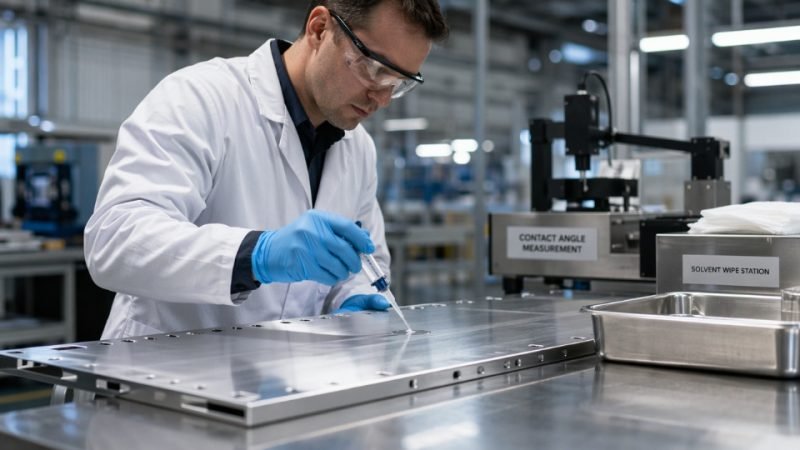
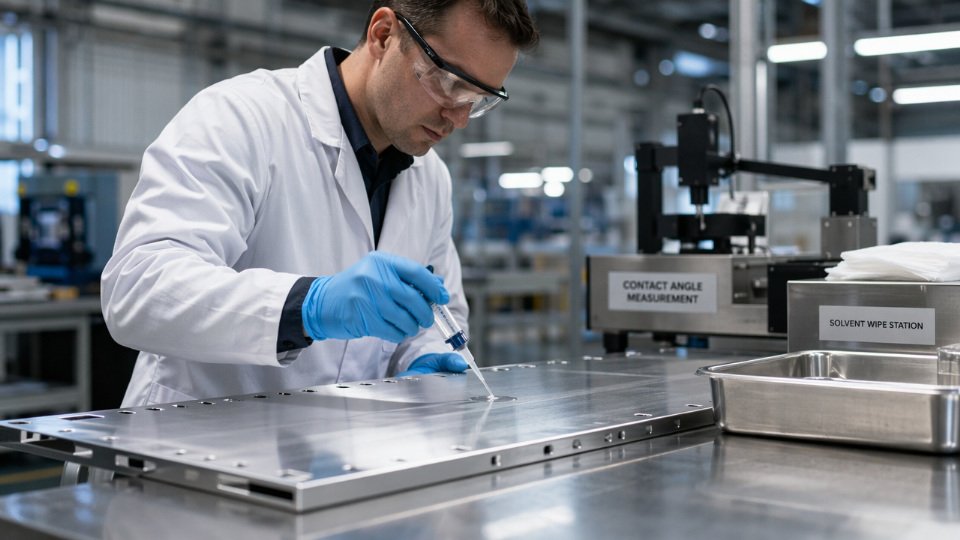
The water-break test is fast, free, and informative: a uniform, unbroken water film draining cleanly off the surface indicates adequate surface energy and absence of hydrophobic contamination. Beading or sheeting in patches indicates residual oil or low-energy regions. Its limitation is sensitivity — it confirms gross contamination but cannot detect thin hydrocarbon films below roughly 2 nm. For critical bonding applications or when troubleshooting intermittent failures, FTIR-ATR spot checks targeting the C-H stretch peaks in the 2850–2960 cm⁻¹ region will detect residual hydrocarbon contamination at film thicknesses the water-break test misses. If those peaks are present above baseline noise on a “cleaned” surface, the degreasing protocol needs review before silane application proceeds.
Activating Surface Hydroxyl Groups: Acid, Alkaline, and Energy-Based Treatments
Silane coupling agents condense onto surfaces through reactive hydroxyl groups. If those groups aren’t present in adequate density — the practical target is 4–8 OH per nm² — even a perfectly formulated silane solution produces a weak, unreliable bond. The treatments below either generate fresh hydroxyl sites or restore ones buried under passive oxide or low-energy polymer skin.
Piranha Solution for Glass and Silica Substrates
Piranha (H₂SO₄ / H₂O₂, 3:1 v/v) is the most aggressive and effective single-step treatment for silica-based surfaces. The sulfuric acid chars and dissolves organic residues while the hydrogen peroxide simultaneously oxidizes the surface and hydroxylates silanol sites, driving OH density toward the upper end of the 4–8 per nm² range. Typical exposure is 10–20 minutes at 80–120 °C for optical glass, quartz, or silicon wafers.
The safety requirements are serious. Piranha solution is a strong oxidizer that reacts violently with organics — mixing sequence matters (always add H₂O₂ to H₂O₄, never the reverse), and the solution must be prepared and used in a fume hood with face shield, chemical-resistant gloves, and an emergency eyewash within reach. Disposal requires neutralization and compliance with local hazardous-waste regulations; never store piranha in a sealed container.
The more operationally limiting issue is deactivation speed. Treated glass surfaces left in ambient air begin recontaminating within 15–30 minutes as atmospheric hydrocarbons adsorb onto the high-energy surface. Silane application must follow immediately, or the hydroxylation work is partially wasted.
Piranha-treated glass surfaces exposed to ambient air for more than 30 minutes before silane application show measurably reduced silane condensation density compared to surfaces treated and coated within 10 minutes.True
Atmospheric hydrocarbon adsorption onto freshly hydroxylated, high-surface-energy glass is rapid; contact angle measurements and XPS carbon content both confirm recontamination onset well within 30 minutes under typical factory ambient conditions.
Dilute Acid Etching for Metal Substrates
For carbon steel and low-alloy steel, a 5–10% hydrochloric acid or phosphoric acid dip of 30–60 seconds dissolves loose rust, mill scale, and surface oxides to expose a fresh, hydroxyl-rich passive layer. Phosphoric acid has a practical advantage: it leaves a thin iron phosphate conversion layer that itself provides hydroxylated anchor sites and mild corrosion inhibition, bridging the gap between etching and silane application.
Chromate conversion coatings (MIL-DTL-5541 type on aluminum) serve a similar purpose — they are an inherently hydroxylated, chemically reactive primer layer that silane coupling agents bond to readily. Where chromates are restricted by RoHS or REACH, trivalent chromium or zirconium-based conversion coatings offer comparable silane compatibility with lower regulatory burden.
Plasma Treatment: The Industrial Default for Mixed Substrate Lines
Oxygen or air plasma is the preferred dry-activation method when you’re running both inorganic substrates and polymer parts through the same line. Plasma generates hydroxyl radicals, carbonyl groups, and peroxide species across the top 5–10 nm of virtually any surface. Operating parameters for a typical laboratory or inline plasma unit run 50–200 W, 30–120 seconds exposure, at 0.1–1.0 mbar oxygen pressure — exact settings depend on substrate sensitivity and equipment geometry.
The timing constraint is identical to piranha: treated surfaces must receive silane within 15–30 minutes. On a polymer surface, hydrophobic recovery begins within that window as low-molecular-weight species migrate back to the surface.
UV-Ozone for Precision Parts and Benchtop Operations
UV-ozone treatment uses 185 nm radiation to generate ozone and 254 nm radiation to dissociate it into reactive atomic oxygen. For glass, silicon wafers, and thin polymer films, 10–30 minutes of exposure raises surface energy above 60 mN/m on polypropylene and polyethylene — sufficient for silane solutions to wet and condense rather than bead and dewet. Equipment cost is significantly lower than plasma chambers, and the process runs at atmospheric pressure. The tradeoff is throughput: UV-ozone is a batch process poorly suited to high-volume production lines.
Flame Treatment for Large Polymer Parts
Automotive bumpers, appliance housings, and large PE or PP panels are routinely flame-treated on the manufacturing line. A brief, oxidizing flame pass — fuel-rich conditions are wrong here; a slightly lean, oxidizing flame is required — generates carbonyl and hydroxyl functional groups in the top 5–10 nm of the polymer surface. Surface energy rises rapidly, and silane wetting becomes feasible. The critical process window before hydrophobic recovery is typically 24–72 hours, longer than plasma but still a real constraint in facilities that flame-treat components hours before assembly.
Activation Method Selection by Substrate and Production Context
| Substrate | Recommended Method | Typical Throughput | Equipment Cost | Silane Application Window |
|---|---|---|---|---|
| Silica / glass (precision) | Piranha solution | Low (batch) | Low | < 30 minutes |
| Glass / polymer (mixed) | Oxygen plasma | Medium–high (inline capable) | Medium–high | 15–30 minutes |
| Glass / wafers (benchtop) | UV-ozone | Low–medium (batch) | Low–medium | 30–60 minutes |
| Carbon steel / low-alloy steel | HCl or H₃PO₄ etch | High (continuous dip line) | Low | 70° | Reject — reprocess |
Measure at least five points per panel and flag any location more than 8–10° outside the mean. Uniformity matters as much as the average value; a high-angle outlier can indicate shadowing during spray application or a missed area during cleaning.
XPS: Confirming the Silane Monolayer is Actually There
For high-stakes applications — aerospace adhesive bonds, automotive structural joints, composite overwraps — contact angle tells you the surface energy but not whether the silane film is chemically bonded or merely physisorbed. X-ray photoelectron spectroscopy resolves that. A properly condensed silane monolayer shows a silicon 2p peak at 102–103 eV, reflecting the Si-C or Si-O-C bonding environment. Native silicon dioxide appears at 103.4–103.6 eV. If your XPS shows only the native oxide peak after silane application, the silane either did not hydrolyze, did not condense, or was washed off. For aminosilanes, verify the nitrogen N 1s peak at 399–400 eV. Track the Si-to-substrate metal atomic ratio across multiple sampling points to estimate coverage uniformity — a ratio that varies by more than 30% across a panel suggests inconsistent application.
XPS can distinguish a chemically bonded silane monolayer from physisorbed or multilayer silane deposits by the position and shape of the Si 2p peak.True
Chemically condensed silane in an Si-O-Si or Si-O-metal environment produces a Si 2p binding energy of approximately 102–103 eV, distinct from the 103.4–103.6 eV signal of unreacted SiO2 or from thick multilayer deposits that broaden and shift the peak.
Adhesion Testing: Functional Proof
Contact angle and XPS tell you the chemistry is there. Pull-off and peel tests tell you whether it translates to structural performance. For protective coatings on steel, a pull-off value (ASTM D4541 / ISO 4624) below 5 MPa should trigger process review regardless of how clean the contact angle looked. For structural adhesive bonds on aluminum, set your minimum at 15 MPa and examine the failure mode — cohesive failure in the adhesive is acceptable; interfacial failure at the silane-metal interface means the preparation was inadequate. Peel testing (ASTM D1876) adds sensitivity for flexible laminates and film adhesives where pull-off geometry is awkward.
On the production floor, the cross-hatch adhesion test (ASTM D3359) gives a fast daily check after silane-primed coating application. A rating below 4B — meaning more than 5% of the coated squares detach — is cause to stop the line and trace the preparation steps.
Building a Statistical Process Control Framework
Spot checks catch single failures. SPC catches process drift before failures accumulate. Process control panels — coupons prepared and treated identically alongside production parts — give you a running dataset without touching the parts themselves. Track contact angle and pull-off adhesion as your primary process variables. Plot X-bar and R charts with control limits set at ±3 sigma from your validated baseline. When Cpk drops below 1.33 — the typical minimum for aerospace and automotive adhesive bonding lines — trigger a formal requalification: audit the cleaning chemistry concentration and temperature, verify plasma treater power and dwell time, check silane bath age and pH, and test a new set of control panels before resuming production. A Cpk of 1.33 means your process is running with the mean centered and process spread using only 75% of the specification window; anything tighter than that provides margin for real-world variation in part geometry, ambient humidity, and operator handling.
Verification is not paperwork. It is the last line of defense between a correctly formulated silane chemistry and a bond that fails six months after assembly.
Frequently Asked Questions About Surface Preparation and Silane Coupling Agents
Can I apply a silane coupling agent to a surface that was prepared the day before?
Almost certainly not without re-preparing. Cleaned metal surfaces begin re-adsorbing atmospheric organics within 2–4 hours — hydrocarbons, pump oil vapor, skin oils from handling — forming a contamination layer as thin as 2–5 nm that is enough to cut bond strength by 40–70% even when silane application is otherwise correct. Plasma-treated polymers recover hydrophobicity faster than most engineers expect: depending on polymer type, storage atmosphere, and temperature, contact angle can climb back toward pre-treatment values within 24–72 hours as low-energy chain segments migrate back to the surface. Best practice is to apply silane within 1–2 hours of preparation. If that window is impossible to maintain on your line, at minimum keep prepared parts in a sealed, clean-room-grade bag with desiccant and treat within the same work shift. Re-run a water-break test before applying silane if there is any doubt.
Does surface roughness improve silane coupling agent performance?
Roughness helps adhesive joints but is not the mechanism silane chemistry depends on. Silane coupling is a chemical bond — the silane’s silanol groups condense with hydroxyl groups on the substrate surface. That reaction does not require topographic features. What roughness does provide is increased geometric surface area and mechanical interlocking for the adhesive or matrix resin sitting above the silane monolayer. For most metal substrates, a moderate Ra of 1–4 µm (achieved by grit blasting or controlled acid etching) gives a useful area increase without creating deep recesses where silane solution pools and cures unevenly into a thick, weak multilayer. Excessive roughness — Ra above roughly 6–8 µm for thin-film silane applications — can shadow valleys and produce inconsistent coverage. The productive combination is moderate roughness plus chemical activation to hydroxyl density, not roughness alone.
Why does my silane-treated surface show poor adhesion even though I followed the silane manufacturer’s instructions?
Run through this checklist in order, because each step can independently cause failure:
| Check | Diagnostic Method | Common Finding |
|---|---|---|
| Surface contamination before treatment | Water-break test on metal | Film breaks → oil or oxide still present |
| Hydroxyl activation achieved | Contact angle 60 min, solution may be unreacted | |
| Silane concentration | Refractometer or supplier titration method | Over 2% in aqueous solution → thick multilayer, cohesive failure |
| Excess surface moisture at application | Visual or IR moisture check | Pooled water dilutes and washes silane before condensation |
| Cure temperature and time | Thermocouple on part surface | Under-cure leaves unreacted silanol groups, bond degrades on aging |
The manufacturer’s instructions assume a properly prepared surface. They rarely specify what that preparation looks like, which is where most failures originate.
Is surface preparation different for rubber compounding versus adhesive primer applications?
Yes, fundamentally. In silica-filled rubber compounding — tire tread compounds using TESPT being the standard industrial example — the filler surface preparation happens inside the mixer. Shear energy breaks silica agglomerates, continuously exposing fresh hydroxyl groups, and the silane reacts in situ at 140–160°C during the mixing cycle. There is no external cleaning step because the silica arrives from the supplier and the mixing process itself controls surface exposure. In contrast, adhesive primer work requires you to control every preparation variable externally: degreasing, activation, moisture content, and application timing are all your responsibility before the silane ever contacts the substrate.
How do I choose between aqueous and solvent-based silane primer solutions?
Aqueous systems produce lower VOC emissions, wet porous inorganic substrates like concrete and ceramic effectively, and are easier to dispose of. Their weaknesses: pot life is short (hours to a day depending on silane type and pH), pH must be held at 4.0–5.5 to keep hydrolysis proceeding at a useful rate without gelation, and they can bead on low-surface-energy polymers or complex geometries where complete wetting is needed. Solvent-based systems — typically isopropanol or ethanol carriers — wet non-polar and geometrically complex surfaces more reliably and offer longer working pot life, but introduce flammability risk, VOC compliance obligations, and cost. If your plant is in a jurisdiction with strict VOC limits or you are treating metal or glass primarily, aqueous is generally preferable. If you are priming a painted or polymer composite with tight geometry, solvent-based usually gives more consistent coverage.
Can two different silane coupling agents be used together on the same surface?
Yes, and in some systems this is genuinely useful. Blending an aminosilane with an epoxysilane, for instance, can provide reactivity toward two different resin chemistries or create an interpenetrating interface. The practical constraints are real, though. Different silanes hydrolyze and condense at different rates — trimethoxysilanes hydrolyze in under a minute at pH 3–4, while triethoxysilanes at neutral pH may take over an hour — so a mixed solution can develop an uneven monolayer composition if the faster-hydrolyzing species depletes before application. Keep total silane concentration below 1% in mixed aqueous systems and hold pH between 4.0 and 4.5, where both species hydrolyze at comparable rates. Test the mixed monolayer’s reactivity toward your specific resin system rather than assuming additive performance; in some cases co-condensation produces a less reactive surface than either silane alone.
Plasma-treated polymer surfaces recover toward their original hydrophobic state within 24–72 hours, meaning silane application must be scheduled immediately after treatment for reliable adhesion.True
Hydrophobic recovery in polymers such as polypropylene and PTFE is a well-documented phenomenon driven by surface chain mobility; the timescale depends on polymer Tg, storage temperature, and atmosphere, and is consistent with published surface science literature on contact angle recovery post-plasma treatment.
Integrating Surface Preparation into a Total Quality System: SiliconChemicals’ Approach to Silane Performance
Every section of this article has circled back to the same operational reality: a silane coupling agent performs exactly as well as the surface beneath it allows. That ceiling is fixed before you open the drum. A 3-aminopropyltriethoxysilane of 99%+ purity, correctly hydrolyzed, correctly applied at the right concentration — all of that work is wasted on a substrate carrying a 3 nm hydrocarbon film or a passive oxide layer with depleted hydroxyl density. Bond strength losses of 40–70% have been documented from contamination layers that are literally invisible to the naked eye. The chemistry is not forgiving of process shortcuts upstream.
Even a correctly applied, high-purity silane coupling agent will underperform significantly on an inadequately prepared surface — surface quality sets the performance ceiling, not silane purity alone.True
Contamination layers as thin as 2–5 nm and insufficient surface hydroxyl density both prevent effective covalent silane condensation, regardless of silane grade or application precision. This is consistent with mechanisms described under ASTM D2651 and ISO 4588 validation frameworks.
How SiliconChemicals Works With Customers on Application Engineering
Selecting the right silane is a substrate-and-application matching problem, not a catalog search. SiliconChemicals’ application engineers engage directly with customers at the protocol level — reviewing existing surface preparation steps, identifying where the process may be introducing variability (inconsistent acid etch times, open-air dwell between treatment and application, humidity fluctuations in the coating bay), and running laboratory bond strength testing on customer-supplied substrate coupons before any product recommendation is finalized.
The product portfolio covers the full range of industrial coupling chemistry: 3-aminopropyltriethoxysilane for epoxy and polyurethane adhesive systems, gamma-glycidoxypropyltrimethoxysilane where direct epoxy ring-opening at the interface is required, vinyltrimethoxysilane for polyolefin crosslinking and rubber compounding, 3-methacryloxypropyltrimethoxysilane for acrylate and UV-cure systems, bis(triethoxysilylpropyl)tetrasulfide for sulfur-crosslinked rubber-silica applications, and specialty fluorosilanes where surface energy modification or chemical resistance at the interface is the design objective. Matching the organofunctional group to the polymer matrix chemistry is as important as the surface preparation itself — the two decisions are interdependent, and SiliconChemicals’ technical team treats them that way.
Supply Chain Structure and Quality Assurance
SiliconChemicals manufactures within China’s Zhejiang and Jiangsu organosilicon industrial clusters, where proximity to monomer producers and specialty chemical intermediaries translates directly into raw material consistency and competitive landed cost for customers in North America, Europe, Southeast Asia, and the Middle East. Lead times that might run 10–16 weeks through a trading intermediary typically compress to 4–8 weeks on standard grades when sourcing direct, depending on order volume and destination port.
ISO 9001-certified manufacturing with full batch traceability means quality-critical industries — automotive tier suppliers validating primer systems under OEM paint specifications, aerospace composite fabricators with material qualification requirements, electronics manufacturers with moisture-sensitivity concerns at the substrate interface — can audit the supply chain and defend material selection decisions internally. Every batch ships with a certificate of analysis, and SDS documentation is available in formats compliant with GHS requirements for the relevant export markets.
Toward More Robust Surface Preparation Systems
The industry is moving in two directions simultaneously: tighter process control in established facilities, and simpler surface requirements in new ones. Water-based silane primer systems are displacing solvent-borne chromate and phosphate primers in several metal bonding applications, reducing VOC load and waste treatment cost without sacrificing bond performance when the water-based primer formulation is matched to a properly hydroxylated metal surface. Low-temperature plasma activation is entering production lines where acid etching of sensitive polymer substrates — thin films, medical device components, flexible electronics — is either impractical or introduces contamination risk of its own.
SiliconChemicals is actively developing next-generation multifunctional silanes engineered to maintain high bond strength across a somewhat wider range of surface hydroxyl densities — not as a substitute for proper preparation, but as a performance buffer against the real-world variability that even well-controlled production lines see across shifts and seasons.
Engineers are welcome to submit substrate samples and application details for a free technical evaluation. Procurement teams can request product specification sheets, SDS documents, and quantity-based pricing for any silane in the portfolio through the SiliconChemicals inquiry process. The conversation starts with your surface — which is exactly where silane performance does too.