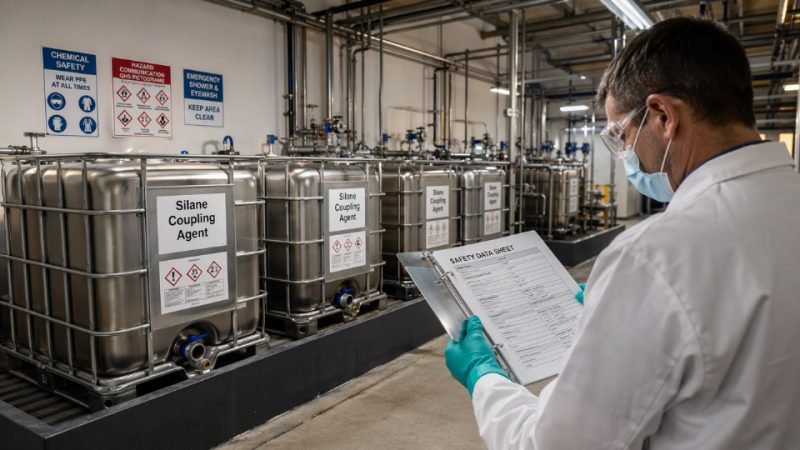
Silane coupling agents sit at the intersection of chemistry, materials processing, and international trade — and compliance failures with any one of the governing frameworks can stop a shipment cold, trigger customs holds, or expose a plant to enforcement action under chemical control regulations. A mislabeled SDS, an unregistered substance above a tonnage threshold, or a missing pre-registration notification does not just create paperwork headaches; it delays production schedules, forces reformulation, and in the worst cases results in product recalls or import bans that cut off supply chains for weeks. For procurement managers sourcing globally and for factory owners using these chemicals daily, understanding the regulatory landscape is not optional housekeeping — it is a direct input to sourcing decisions, inventory strategy, and operational risk management.
Silane coupling agents are subject to multiple overlapping compliance frameworks depending on geography and volume: EU REACH registration (with dossier depth tied to tonnage bands of 1–10, 10–100, 100–1000, and >1000 t/yr), GHS hazard classification and SDS requirements in all major markets, China’s GB/T 37517-2019 and GB 30000 series for domestic classification and labeling, US TSCA inventory obligations, and transport regulations driven by flash points that typically range from 22°C to 85°C depending on alkoxy chain length.
What makes this genuinely complicated — and where even experienced procurement teams get caught — is that the same silane product can carry different classification outcomes in different jurisdictions, require different SDS formats for the same hazard data, and cross tonnage thresholds that trigger entirely new dossier obligations based on how a single distributor consolidates annual volume. The pages that follow break this down framework by framework, with the practical decision points that actually matter on the plant floor and in the purchasing office.
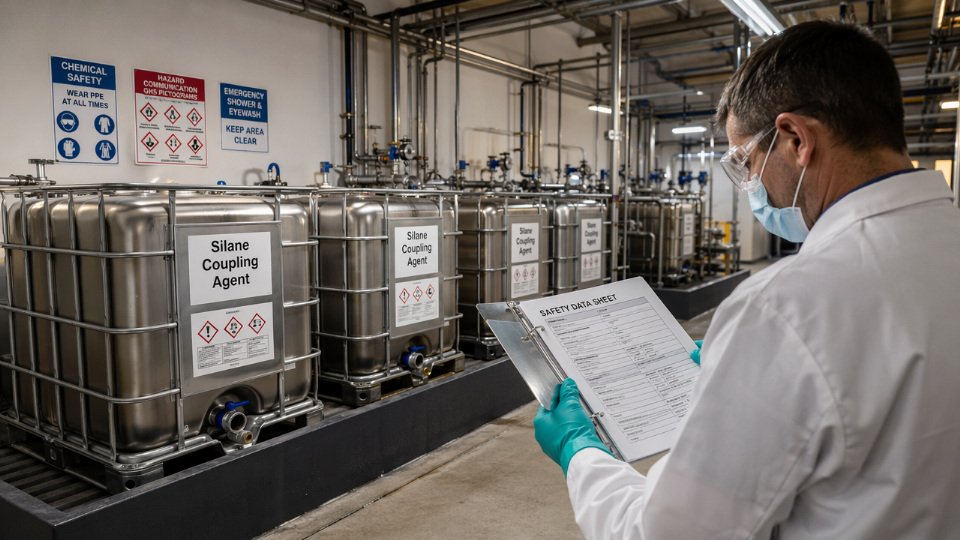
GHS Hazard Classification of Silane Coupling Agents: Flammability, Toxicity, and Reactivity Profiles
Getting GHS classification right for silane coupling agents is not a documentation formality — it directly determines your SDS format, label pictograms, transport class, storage segregation requirements, and downstream customer obligations. Misclassify a flammable liquid category and you risk non-compliant shipments, warehouse incidents, or import refusals. The chemistry here is specific enough that generic chemical classification guides will steer you wrong.
Flammability Classification: Flash Point Is Not the Whole Story
Alkoxysilane coupling agents span a meaningful flash point range — roughly 22°C to 85°C — and that spread matters enormously for GHS Flammable Liquid categorization. The flash point depends primarily on the alkoxy chain length and any reactive organic substituent attached to silicon.
Vinyltrimethoxysilane (VTMO) has a flash point in the 28–32°C range (depending on purity and test method), placing it firmly in GHS Flammable Liquid Category 3 (flash point ≥23°C and ≤60°C). Its boiling point is approximately 123°C and vapor pressure at 20°C sits around 8–12 hPa — high enough that vapor accumulation in enclosed mixing areas is a real operational risk, not a theoretical one. 3-Aminopropyltriethoxysilane (APTES) has a flash point near 96°C in its neat form, pulling it out of the flammable liquid categories entirely under UN GHS and EU CLP, though jurisdictional cutoffs vary slightly. 3-Mercaptopropyltrimethoxysilane (MPTMS) falls in the 60–70°C range, landing in Category 3 or on the boundary of Category 4 depending on the exact lot and test protocol used.
The flash point cutoff between GHS Flammable Liquid Category 3 and Category 4 is 60°C, and products near that threshold should be tested by both Pensky-Martens closed cup and Tag closed cup methods before finalizing the SDS classification.True
UN GHS Rev. 9 Table 2.6.1 places Category 3 at flash point ≥23°C and ≤60°C and Category 4 at >60°C and ≤93°C; borderline materials can shift category depending on test method, which is standard industry practice to verify.
Acute Toxicity and Skin/Eye Hazard Profiles
Amino-functional silanes like APTES carry a markedly different acute toxicity profile compared to epoxy-functional grades. APTES oral LD50 values in rodent studies typically fall in the 1,000–2,000 mg/kg range, placing it in GHS Acute Oral Toxicity Category 4. More practically relevant on the plant floor: it is a skin and eye sensitizer with corrosive potential at concentrated exposure, warranting GHS Skin Corrosion/Irritation Category 1 or Category 2 labeling depending on concentration and exposure duration. The amine group drives pH elevation on contact with moisture, and burns from undiluted APTES are underreported in smaller compounding operations that lack adequate PPE protocols.
Epoxy-functional silanes such as 3-glycidoxypropyltrimethoxysilane (GPS, also known as GPTMS) carry a lower acute dermal hazard profile — typical oral LD50 values are in the 2,000–5,000 mg/kg range — but the epoxy group introduces skin sensitization obligations under GHS Sensitization Category 1. Chronic exposure data, while limited, supports the precautionary classification approach.
Hydrolysis Reactivity: The Secondary Hazard Buyers Routinely Miss
Every methoxy-functional silane releases methanol upon moisture contact; ethoxy-functional silanes release ethanol. This is not incidental. In humid storage conditions or during waterborne coating formulation, methanol generation from VTMO, MPTMS, or GPS can create a secondary flammable vapor source inside a sealed container or mixing vessel — even if the silane itself was correctly classified and stored. Methanol carries its own GHS Flammable Liquid Category 2 classification and Acute Toxicity Category 3 (oral) designation. Your SDS for the parent silane should address this reaction product explicitly under Section 10 (Reactivity and Stability) and Section 8 (Exposure Controls).
Chlorosilane precursors or residual chlorosilane impurities — occasionally present at low levels in commercial alkoxysilane streams depending on synthesis route and purification quality — introduce a water-reactive classification obligation. Hydrogen chloride liberation triggers GHS Water-Reactive Category 2 (or Substances and Mixtures Which in Contact with Water Emit Flammable Gases) and corrosive gas release. Buyers should request supplier certificates of analysis that include chloride content, particularly for pharmaceutical, electronics, or food-packaging adjacent applications where trace HCl is intolerable.
Jurisdictional Divergence in GHS Implementation
UN GHS provides the baseline — currently Revision 9 — but national implementations diverge in ways that create real compliance work for global supply chains.
EU CLP (Regulation EC No 1272/2008) mandates self-classification or notification to ECHA’s C&L Inventory; it also uses different hazard statement codes in some categories compared to the UN base text, and M-factors for aquatic hazards can alter mixture classifications. US HazCom 2012 (29 CFR 1910.1200) aligns to GHS Rev. 3, meaning some newer hazard categories introduced in later revisions — including certain desensitized explosive and self-reactive sub-categories — are not yet federally required, though California Prop 65 adds independent obligations for silanes with genotoxic impurity profiles. China’s GB 30000 series (particularly GB 30000.2 through GB 30000.29) implements GHS with domestic classification tables that occasionally differ in cut-off values for chronic aquatic toxicity. Japan’s JIS Z 7252 implementation retains a few category boundary differences for flammable liquids that can shift a borderline product’s pictogram requirements.
The table below maps six representative coupling agents to their primary GHS hazard assignments. Values reflect typical commercial-grade materials; lot-specific data should always be verified against current SDS and testing reports before finalizing labels or transport documentation.
| Silane | Flash Point (approx.) | Flammable Liquid Category | Acute Oral Toxicity Category | Skin/Eye Hazard | Hydrolysis Byproduct |
|---|---|---|---|---|---|
| VTMO | 28–32°C | Cat. 3 | Cat. 4 | Irritant Cat. 2 | Methanol |
| APTES | ~96°C | Not classified | Cat. 4 | Corrosive Cat. 1/2 | Ethanol |
| MPTMS | 60–70°C | Cat. 3/4 (borderline) | Cat. 4 | Irritant Cat. 2 | Methanol |
| GPS (GPTMS) | ~76°C | Cat. 4 | Cat. 5 / Unclassified | Sensitizer Cat. 1 | Methanol |
| MEMO | ~65°C | Cat. 4 | Cat. 4 | Irritant Cat. 2 | Methanol |
| OCTEO | ~80°C | Cat. 4 | Low / Unclassified | Mild irritant | Ethanol |
Operational warning: SDS preparers who copy classification data from a supplier’s SDS without independently verifying flash point against in-house test results — especially for reformulated or blended grades — expose their organization to downstream liability if an incident occurs and the label is shown to misrepresent the actual hazard category.
REACH Registration, SVHC Screening, and Downstream User Obligations in the European Union
REACH is not a checkbox exercise. For any Chinese silane coupling agent manufacturer shipping product into the EU, it is a cascading set of legal obligations that begins before the first container departs and extends through every customer’s finished article. Getting one step wrong does not just generate a fine — it can lock product out of the market entirely.
Registration Tonnage Thresholds and the Only Representative Mechanism
REACH Article 6 requires registration of any substance manufactured in or imported into the EU above 1 tonne per year per legal entity. The dossier requirements escalate sharply across four tonnage bands: 1–10 t/yr, 10–100 t/yr, 100–1000 t/yr, and above 1000 t/yr. Each higher band adds physicochemical endpoints, toxicological studies, and ecotoxicology packages that can cost anywhere from roughly €30,000 (low-volume, read-across-supported dossier) to well over €500,000 (full independent testing for a high-volume commodity silane) — actual cost depends on data availability, consortium participation, and whether existing OECD study data can be read across from structural analogues.
A Chinese silane manufacturer has no direct legal standing under REACH. The regulation designates such companies as “non-EU manufacturers,” which means they cannot self-register. The practical path is appointing an Only Representative (OR): an EU-established legal entity that assumes the importer’s obligations and registers the substance under its own name at ECHA. The OR arrangement lets the Chinese supplier’s EU customers import as “downstream users” rather than importers, protecting their tonnage position. Choosing an OR with genuine silane chemistry experience matters — a generalist consultancy that has never handled reactive alkoxysilane dossiers will struggle with the specific physicochemical and hydrolysis stability data ECHA expects.
Technical Dossier Requirements at Mid-Volume Tonnage Bands
At the 10–100 t/yr band — where many specialty silane coupling agents sit — the dossier must include a Chemical Safety Report (CSR). The CSR formalizes exposure scenarios across the substance’s lifecycle: industrial use, formulation into adhesives or coatings, and potential consumer contact. For silane coupling agents, the hydrolysis products (typically short-chain alcohols, silanol species) often drive the exposure assessment more than the parent molecule. Flash points ranging from roughly 22°C to 85°C depending on alkoxy chain length directly affect the physicochemical section and the derived no-effect level (DNEL) calculations for inhalation during heated processing.
Ecotoxicology studies required at this band include OECD 201 (algae growth inhibition), 202 (Daphnia acute immobilization), and 203 (fish acute toxicity). Because many silane coupling agents hydrolyze rapidly in aqueous media, study design must account for the substance’s speciation in test media — ECHA frequently issues completeness check failures when submitters present raw silane EC50 data without addressing hydrolysis at test pH. Running a preliminary hydrolysis rate test (OECD 111) before commissioning ecotox studies saves both time and money.
SVHC Candidate List Screening and CMR Assessment
Certain amino-functional silanes — particularly those bearing primary amine groups — warrant careful SVHC screening. The concern is reprotoxicity: some aminosilane hydrolysis products share structural features with amines that have triggered CMR Category 1B or 2 classifications under CLP. If ECHA adds a substance to the SVHC Candidate List, authorization requirements under REACH Title VII apply, meaning EU formulators must seek formal authorization to continue using the substance in applications not covered by an existing authorization. Formulators buying aminosilanes for composite or fiber-sizing applications should run a Candidate List check against their exact EINECS/EC number at each product reformulation — the list updates twice yearly.
Substances on the SVHC Candidate List are immediately banned under REACH.False
Candidate List status triggers communication and notification duties but does not constitute a ban. Only inclusion in Annex XIV (Authorization List) with a defined sunset date creates a formal obligation to cease use or obtain authorization. Conflating the two leads to unnecessary reformulation costs or, worse, continued use of a genuinely restricted substance under a false sense of compliance.
Article 33 Supply Chain Communication in Finished Articles
When a silane-treated filler — precipitated silica, glass fiber, mineral powder — is incorporated into a plastic component, gasket, or rubber article, the silane coupling agent becomes a coating or surface-treatment constituent. If it exceeds 0.1% w/w of the finished article and is on the SVHC Candidate List, Article 33 communication obligations activate: the supplier must notify the recipient within 45 days of receiving a request, and must proactively notify industrial or professional recipients. Consumer-facing articles additionally trigger ECHA’s SCIP database notification. Procurement managers sourcing silane-treated reinforcements from outside the EU should request Article 33 declarations as a standard term in supplier qualification — this protects against downstream liability when your customer asks the question first.
CLP Labeling for Substances Versus Mixtures
EU CLP Regulation (EC) No 1272/2008 governs how silane coupling agents are labeled when sold as pure substances versus when they are components of a formulated adhesive or primer. A self-classifying methacryloxy-functional silane sold neat typically carries GHS02 (flame), GHS07 (irritant), signal word “Warning,” with H226 (flammable liquid Category 3), H315, and H319. When that same silane is blended into a solvent-based primer at 3–5% loading, the mixture classification is governed by concentration cut-off limits under CLP Annex I — the silane’s individual H-codes may or may not survive into the mixture label depending on its concentration relative to classification thresholds. Suppliers issuing SDSs under REACH Article 31 for mixtures must confirm that the mixture SDS exposure scenarios align with those in the extended SDS (eSDS) provided by the silane manufacturer; mismatches create compliance gaps during ECHA inspections.
Annex XVII Restrictions and Emerging CSS Proposals
REACH Annex XVII Entry 69 restricts methanol-containing substances and mixtures supplied to the general public above 0.6% methanol content. Several trimethoxy-functional silane coupling agents hydrolyze to release methanol during ambient cure or processing. This makes Entry 69 directly relevant for any silane sold through distribution channels where end-user classification is uncertain. The operational safeguard is straightforward: if your silane’s stoichiometric methanol release can bring a consumer-use formulation above the threshold, restrict sales to professional and industrial channels only and document that restriction in your supply agreements.
Under the EU Chemicals Strategy for Sustainability, ECHA and EU member state competent authorities are actively developing generic risk assessment approaches for reactive silanes as a chemical group. Group-based restriction proposals — potentially targeting endocrine-disrupting properties in certain functional silanes — are in early evaluation stages. Exporters shipping into the EU market should monitor ECHA’s Registry of Intentions and the CSS implementation roadmap, since group restrictions can affect multiple silane chemistries simultaneously and leave very short response windows for supply chain substitution.
TSCA Compliance for Silane Coupling Agents in the United States: Inventory, PMN, and Reporting Rules
The United States Toxic Substances Control Act governs every silane coupling agent entering American commerce, and the 2016 Frank R. Lautenberg Chemical Safety for the 21st Century Act restructured that framework in ways that still catch importers off guard. Understanding each obligation before the first container ships is cheaper than correcting a violation after EPA contact.
Verifying TSCA Inventory Status Before Exporting to the US
The TSCA Chemical Substance Inventory distinguishes between active and inactive designations introduced post-2016. A CAS number that appears on the public inventory list is not automatically cleared for commerce — it must carry active status. Substances not commercially manufactured or imported for ten consecutive years before June 2006 were designated inactive; reactivating them requires filing a Notice of Activity (NOA) Form B before any commercial shipment.
For silane coupling agents, most high-volume commodity grades — vinyltrimethoxysilane, 3-aminopropyltriethoxysilane, 3-glycidoxypropyltrimethoxysilane — carry active status. Specialty or lower-volume silanes with modified organic functional groups may not. The practical step is to search EPA’s public TSCA Inventory database by exact CAS number, then cross-check with your US importer or customs broker. If status is uncertain, do not ship and assume you can resolve it on arrival.
Pre-Manufacture Notice for New Silane Chemistries
Any silane not listed on the active TSCA Inventory requires a Pre-Manufacture Notice (PMN) under Section 5 before manufacture or import begins. EPA has a 90-day review window from receipt of a complete submission, extendable by 90 additional days for cause. During review, commercial activity is prohibited.
Two exemptions reduce the burden for low-volume or low-exposure situations:
| Exemption | Threshold | Key condition |
|---|---|---|
| Low Volume Exemption (LVE) | ≤ 10,000 kg/yr total | No unreasonable risk finding by EPA; human and environmental exposure must be controlled |
| Low Release and Exposure Exemption (LoREX) | No tonnage cap | Quantitative exposure and release limits must be met; documented engineering controls required |
For novel silane chemistries — bifunctional silanes with non-standard bridging groups, for example — LVE is the realistic path at development scale. The application requires structure, intended use, estimated production volume, and any available toxicological data. Submitting incomplete data is the single most common cause of EPA extending the review clock.
The TSCA PMN process automatically approves a new chemical if EPA does not respond within 90 days.False
Silence is not approval. EPA can issue a Section 5(e) consent order or proposed Section 5(f) rule before the period expires, and commercial activity remains prohibited until EPA's review is formally concluded or the notice period lapses without restriction — which still carries risk if EPA later pursues Section 6 action.
Chemical Data Reporting Under Section 8(a)
Manufacturers and importers who exceed 25,000 lb (~11,340 kg) per year of a listed silane must submit Chemical Data Reporting (CDR) every four years. The report covers production volume by facility, number of workers with reasonably anticipated exposure, and industrial processing and use categories. The current reporting cycle covers 2019–2022 data; the next submission period opens in 2026. Missing a CDR cycle draws civil penalties that scale with days of violation — typically $15,000–$40,000 per day depending on company size and violation history.
Section 8(e) Substantial Risk Notification
This obligation is less understood by Chinese exporters. If a manufacturer or importer obtains new information — from internal toxicology studies, literature, or customer incident reports — indicating a silane presents a substantial risk of injury to health or the environment, EPA must be notified within 30 days. For silane coupling agents, this most commonly arises when occupational exposure data from enclosed processing environments reveal inhalation risk at concentrations below existing occupational exposure limits. Sitting on that data hoping it goes away is a serious violation with both civil and potential criminal exposure.
TSCA Section 6 Risk Evaluation Prioritization
Post-Lautenberg, EPA conducts systematic risk evaluations under Section 6, designating substances as High or Low Priority. No mainstream silane coupling agent has reached High Priority designation yet, but organosilicon intermediates used in silane synthesis — some chlorosilane precursors, specific alkoxysilane hydrolysis byproducts — could attract attention if occupational inhalation data from silicone manufacturing clusters accumulate in EPA’s systematic review database. Suppliers who proactively generate and share occupational exposure monitoring data are better positioned to influence that prioritization before EPA sets it unilaterally.
California Proposition 65: The Methanol Complication
Proposition 65 operates independently of federal TSCA and applies to California-bound products regardless of federal clearance. The mechanism that matters for alkoxysilanes is methanol release during hydrolysis. Trimethoxysilane-functional coupling agents hydrolyze in humid conditions and in use — releasing methanol, a listed Prop 65 reproductive toxicant (developmental endpoint, NSRL approximately 47,000 µg/day for females).
If a California customer uses a trimethoxysilane product in an enclosed space where methanol vapor exposure could exceed Prop 65 safe harbor levels, the supplier or distributor may be required to provide a Prop 65 warning on the product label and SDS. Triethoxysilane analogs release ethanol instead of methanol, which carries no equivalent Prop 65 listing — a substitution worth raising with formulators when California distribution is confirmed.
China’s Domestic Chemical Regulatory Framework: MEE Registration, GB Standards, and Export Documentation
China’s regulatory environment for chemical substances has tightened substantially since 2020, and international buyers sourcing silane coupling agents from Chinese producers need to understand what sits behind a supplier’s compliance declarations. This isn’t academic — gaps in upstream registration status can freeze a shipment at port, trigger customs holds in the destination country, or create product liability exposure when an SDS turns out to be non-conforming.
MEE Order No. 12 and the New Chemical Substance Notification Tracks
The 2020 Measures for Environmental Management of New Chemical Substances (MEE Order No. 12), which replaced the 2010 version, introduced a three-track notification structure. A simplified notification applies to substances manufactured or imported at below 100 kg/yr for research and development purposes — the dossier is thin, approval is faster, but it carries strict use restrictions. A regular notification covers new substances entering commercial production, typically requiring hazard data, environmental fate information, and risk assessment documentation; review timelines run roughly 60 days for standard cases but can extend to 120 days when the authority requests supplemental data. The key new substance notification applies to substances that exhibit PBT (persistent, bioaccumulative, toxic) characteristics or other high-concern profiles, requiring a full dossier comparable in scope to a REACH registration at the 100–1000 t/yr tier.
For silane coupling agents, most commercially significant structures — aminopropyltriethoxysilane, glycidoxypropyltrimethoxysilane, and methacryloxy variants — are already listed on China’s Existing Chemical Inventory (CECI). This inventory, compiled from historical import and domestic production records and sometimes informally called “China EINECS” in procurement circles, functions as the gateway: if your substance is listed, no new notification is needed. If it is not, production or import at any commercial scale triggers Order No. 12 obligations regardless of tonnage. Buyers should request documentary evidence of CECI listing or notification approval number from any new supplier — not just a verbal assurance.
GB 30000 Series and GB/T 37517-2019 SDS Requirements
China implements GHS through the GB 30000 series, covering classifications from physical hazards (GB 30000.2 through .13) to health hazards (.14 through .26) and environmental hazards (.27 and .28). These standards determine the hazard category assignments that appear on Chinese domestic labels and Safety Data Sheets. GB/T 37517-2019 specifically governs SDS format and content for organosilicon chemicals, requiring 16-section structure aligned with GHS Rev. 6, with specific fields for Chinese regulatory citations that a generic international SDS template will not satisfy. Silane coupling agents shipped domestically within China must carry a compliant Chinese-language SDS; cross-border exports require both Chinese and destination-country language versions. An SDS drafted only to REACH Annex II standards will fail a Chinese customs audit.
Hazardous Chemicals Catalog and Licensing Obligations
China’s Hazardous Chemicals Catalog (2015 edition, with subsequent supplements) determines operational licensing requirements. Silane coupling agents listed in the catalog — and several alkoxy silanes with flash points below 60°C fall within it — require the producing facility to hold a Hazardous Chemical Business License, meet safe production permit conditions under SAWS/SAMR jurisdiction, and maintain registered storage conforming to GB 15603 warehouse standards. Buyers auditing Chinese suppliers should verify these licenses are current; an expired permit is not a paperwork issue, it is a production legality issue.
The term 'China REACH' has no formal legal basis in Chinese chemical regulation.True
MEE Order No. 12 and the CECI govern new and existing chemical substances in China. The phrase 'China REACH' is an informal industry shorthand sometimes used by consultancies and trade publications, but it does not correspond to any actual regulatory instrument. International buyers who audit suppliers using REACH-derived checklists without accounting for the distinct MEE framework risk missing Order No. 12 notification gaps entirely.
Export Documentation: What Must Actually Accompany the Shipment
For silane coupling agents classified as dangerous goods — which most alkoxy silanes are, given flash points ranging from roughly 22°C to 85°C depending on chain length — export documentation must include a Dangerous Goods Declaration (DG Declaration) prepared in accordance with IMDG Code (for sea freight) or IATA DGR (for air). The shipping manifest must carry the correct UN number, packing group, and proper shipping name. A Chinese-language SDS accompanies the domestic leg; English-language SDS conforming to the importer’s national standard travels with the commercial invoice and packing list. Missing or mismatched IMDG classification codes are among the most common reasons silane shipments face delays at Chinese export ports — particularly when a supplier has updated a formulation and the DG Declaration still references the old UN number.
Procurement managers should build SDS and DG Declaration verification into their supplier qualification checklists, not treat them as administrative afterthoughts requested only when a shipment gets held.
Transportation Classification and Packaging Compliance: ADR, IMDG, IATA, and DOT Rules for Silane Coupling Agents
Getting the transport classification wrong on a silane coupling agent shipment is not a paperwork inconvenience — it means port detention, emergency reclassification fees, and occasionally cargo rejection that delays a production line waiting on a critical adhesion promoter. Logistics and procurement teams need to understand the mode-by-mode rules before a container is loaded, not after a carrier flags the declaration.
Mapping Common Silanes to UN Numbers and Proper Shipping Names
Most commercially significant silane coupling agents — vinyltrimethoxysilane (VTMO), 3-aminopropyltriethoxysilane (APTES), 3-glycidoxypropyltrimethoxysilane (GPTMS) — fall into one of three UN number families depending on their flash point, reactivity profile, and aquatic toxicity data.
UN 1993, Flammable Liquid, N.O.S. covers the broadest range. VTMO, with a flash point typically in the 28–33°C range (varies with purity and measurement method), lands here under Class 3, Packing Group II. The “N.O.S.” designation requires the technical name in parentheses on the shipping document and package label — omitting it is one of the most common compliance errors seen in Chinese export documentation.
UN 3082, Environmentally Hazardous Substance, Liquid, N.O.S. applies when logKow values exceed 3 and aquatic LC50 data place the substance in Acute Aquatic Toxicity Category 1 or Chronic Category 1 or 2. Several aminosilanes and mercaptosilanes meet this threshold. UN 3082 is always Packing Group III, which relaxes some packaging requirements but triggers the Marine Pollutant marking — a blue-bordered fish-and-tree symbol that must appear on outer packaging and the container itself for sea freight.
Some chlorosilane-based precursor materials and certain moisture-reactive specialty silanes fall under Class 8 (Corrosives), occasionally with a subsidiary Class 3 flammability hazard, which forces the more restrictive packing group to govern.
ADR Road Transport (Europe): Packaging and Moisture Exclusion
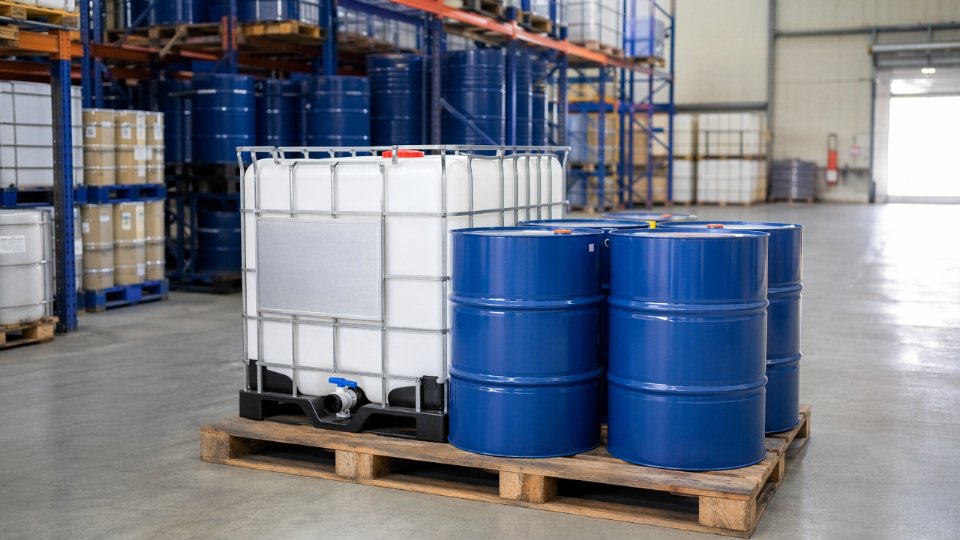
Under ADR, Class 3 silanes in Packing Group II require packaging tested to at least Y-performance standard. The critical operational detail that generic compliance guides miss: alkoxysilanes react with atmospheric moisture, producing alcohol byproducts and, in some cases, pressure buildup. Standard plastic closures are inadequate. Sealed aluminum containers or HDPE jerricans with inert-gas blanketing and pressure-relief desiccant venting are the correct solution — not because a regulation specifies the exact container design, but because ADR packaging performance tests assume the contents remain stable, and a moisture-contaminated batch that has partially hydrolyzed will fail those tests and may generate gas pressure in transit.
Mixed loads combining Class 3 and Class 8 silanes on the same vehicle require segregation analysis under ADR Table 7.5.2. Carriers in Eastern Europe particularly enforce this during cross-border inspections.
IMDG Sea Freight: EmS Schedules and Marine Pollutant Obligations
For IMDG shipments, each UN entry carries an Emergency Schedule (EmS) code. UN 1993 uses F-E (fire) and S-E (spillage) — both call for foam or dry chemical suppression and caution against water jets on flammable liquid spills. Stowage category A permits below-deck stowage on cargo ships, but any silane also carrying a Marine Pollutant designation shifts the stowage obligation to category B (on deck or under deck, away from living quarters) on many vessels.
Marine Pollutant marking is mandatory on outer packaging whenever a substance meets IMDG criteria for aquatic hazard, regardless of shipment volume.True
IMDG Code 2.10.3 requires the Marine Pollutant mark on packages and shipping documents without a volume exemption threshold for substances meeting the classification criteria — only limited quantity provisions create partial relief.
IATA Air Freight: Passenger vs. Cargo Aircraft Restrictions
Most Class 3 Packing Group II silanes are forbidden on passenger aircraft under IATA DGR and are restricted to cargo aircraft only (CAO). The per-inner-packaging limit for PG II flammable liquids on cargo aircraft is 1 L. Total net quantity per package is capped at 60 L under normal packing instructions (PI 364). Aminosilanes with flash points above 60°C occasionally qualify for passenger aircraft carriage under PI 355, but shippers should verify against the current DGR edition — the edition updates annually and threshold assignments do shift.
Mislabeling a cargo-aircraft-only shipment as passenger-eligible is a serious regulatory violation. Several freight forwarders have received suspension notices from IATA for exactly this error on specialty chemical shipments.
US DOT 49 CFR Part 172 HazMat Table
For shipments entering the United States, the 49 CFR § 172.101 Hazardous Materials Table governs. The entry for UN 1993 requires: proper shipping name (Flammable Liquids, N.O.S.), hazard class 3, identification number UN 1993, packing group II or III depending on flash point and boiling point, label codes 3, and Special Provision 148 for N.O.S. entries requiring the technical chemical name. Packaging must meet 49 CFR Part 173 Subpart B requirements, which are substantially aligned with UN Recommendations but not identical — carriers transferring an IMDG-compliant shipment into US domestic distribution must verify the specific 49 CFR packaging certification markings are present.
Limited Quantity and Excepted Quantity Provisions for Samples
For R&D samples and small promotional shipments, limited quantity (LQ) provisions under ADR, IMDG, and IATA allow reduced labeling — no class label, only the LQ diamond mark — provided inner packaging stays within 1 L for Class 3 PG II and total gross mass per package stays within 10 kg. Excepted quantity (EQ) provisions are more restrictive: inner packaging limits drop to 30 mL for most flammable silanes, but compliance eliminates most documentation requirements entirely. These provisions are genuinely useful for technical sales samples, but attempting to ship production-volume material under LQ declarations to avoid hazmat fees is a compliance violation that customs authorities in the EU, UK, and US actively detect.
Workplace Exposure Limits, Industrial Hygiene Controls, and OSHA/EU OSH Compliance for Silane Handling
The compliance burden at the plant floor is often underestimated by procurement teams focused on SDS documents and shipping labels. In practice, the moment a drum of silane coupling agent is opened — whether in a compounding room in Ohio, a rubber plant in Germany, or a glass fiber sizing line in Guangzhou — occupational exposure obligations activate immediately, and they are specific, auditable, and enforced.
The Real Airborne Hazard: Hydrolysis By-Products, Not Just the Silane Itself
Most commercially important silane coupling agents — vinyltrimethoxysilane, APTES, bis-silanes — do not vaporize aggressively at ambient temperature. The primary inhalation risk comes from what they release: methanol from methoxy-functional silanes and ethanol from ethoxy-functional grades. Methanol is the more serious concern. OSHA’s PEL is 200 ppm TWA (29 CFR 1910.1000 Table Z-1), ACGIH sets the TLV-TWA at 200 ppm with a skin notation (dermal absorption is significant), the EU IOELV under Directive 2017/164/EU is 200 ppm 8-hour TWA with a 250 ppm STEL, and China’s GBZ 2.1-2019 sets the MAC at 25 mg/m³ — considerably tighter on a mass-concentration basis. Ethanol by-products from ethoxy silanes carry far lower toxicological concern, which is precisely why switching from methoxy to ethoxy chemistry is a legitimate, first-line exposure control strategy. The tradeoff is hydrolysis kinetics: ethoxy silanes react more slowly with substrate surfaces, which matters in cure-critical applications.
Methanol released during methoxy-silane hydrolysis is the dominant inhalation hazard in silane coupling agent handling, not the silane molecule itself.True
Methoxy-functional silanes hydrolyze rapidly on contact with atmospheric moisture and substrate hydroxyl groups, liberating methanol proportional to the number of alkoxy substituents. In a poorly ventilated blending room, methanol concentrations can exceed OELs before the silane vapor threshold becomes relevant.
Engineering Controls: Velocity Numbers That Get Inspected
Local exhaust ventilation (LEV) at transfer and blending points is not optional in facilities handling methoxy silanes at meaningful volumes. Minimum capture face velocity at the hood opening should meet 0.5 m/s for general vapor suppression; ACGIH Industrial Ventilation guidelines recommend 0.5–1.0 m/s depending on cross-draft conditions and process temperature. Closed-loop drum transfer systems — dip tube with nitrogen blanket and vapor return line — eliminate the open-pour exposure scenario entirely. For large-volume users handling more than roughly 1,000 kg per shift, a closed-loop approach is almost always cost-justified once you factor in VOC abatement compliance and reduced PPE replacement cycles.
Administrative controls — rotating workers through high-exposure tasks — satisfy the hierarchy on paper but should not substitute for engineering solutions. OSHA inspectors will ask for exposure monitoring data. If you cannot demonstrate measurements below the action level (typically half the PEL), rotation schedules alone will not close the citation.
EU OSH Framework Obligations for Formulators
Under EU Framework Directive 89/391/EEC and the Chemical Agents Directive 98/24/EC, any EU facility incorporating silane coupling agents into formulations must maintain a documented chemical risk assessment, updated whenever a new silane grade is introduced or process conditions change. Health surveillance — periodic medical review including liver function monitoring for workers with repeated methanol exposure — is mandatory where exposure cannot be demonstrated to remain below the IOELV. This is an area where sloppy SDS-reading causes real compliance failures: a formulator who assumes the silane’s own vapor pressure drives the risk will under-specify controls for the methanol fraction.
OSHA HCS Requirements at US Receiving Facilities
Under 29 CFR 1910.1200, a compliant SDS must be physically or electronically accessible within one work shift of any shipment arriving on-site. Container labels must be in English; a Chinese-language label alone on a direct import shipment is a citation waiting to happen. Worker training records must be retained for the duration of employment plus 30 years — a requirement many smaller compounders discover only during an OSHA inspection.
PPE Selection: Specifics That Actually Protect
Nitrile gloves at minimum 0.3 mm thickness provide adequate splash protection for most silane coupling agents; breakthrough time for thin nitrile (0.1 mm) against methoxy silanes is short enough to be operationally meaningless. When vapor pressure exceeds 10 mmHg at 20°C — which applies to several short-chain methoxy silanes — chemical splash goggles replace safety glasses as the minimum eye protection standard. Respirator selection follows NIOSH 42 CFR Part 84: organic vapor cartridges rated OV/P100 cover both vapor and any mist phase. Half-face air-purifying respirators are appropriate for routine transfer operations; supplied-air units are warranted for confined-space cleaning or tank entry scenarios.
Spill Response: The Water Error
The instinct to dilute a silane spill with water accelerates hydrolysis and generates a methanol- or ethanol-laden runoff stream. Correct absorbent is dry sand, dry vermiculite, or purpose-formulated silicate absorbent. Spent material classifies as halogen-free organic waste; in the US, generator obligations under EPA 40 CFR Part 262 apply from the moment the material is containerized for disposal. EU facilities operate under Waste Framework Directive 2008/98/EC, with classification typically as HP3 (flammable waste) and HP14 (ecotoxic) depending on silane functionality and volume. Disposal vendor qualification is part of the documented risk assessment obligation — not an afterthought.
Environmental Discharge Limits, Ecotoxicology Data, and Wastewater/Air Emission Compliance
Understanding the environmental fate of silane coupling agents is not optional paperwork — it directly determines whether your facility’s discharge permit survives an inspection, whether your downstream customer can accept your SDS, and whether a spill event triggers Superfund-level liability. EHS managers need hard data, not vague “low hazard” reassurances.
Ecotoxicology Profiles: What the Test Data Actually Shows
APTES (3-aminopropyltriethoxysilane) is one of the most studied silane coupling agents in aquatic toxicology. Reported Daphnia magna 48-hour EC50 values cluster around 40–55 mg/L, and fish 96-hour LC50 values fall in the 100–140 mg/L range, both figures varying with test pH because hydrolysis rate accelerates in acidic or alkaline conditions. These place APTES in GHS Aquatic Chronic Category 3 for most classification schemes — not acutely dangerous at trace concentrations, but not inert either.
MPTMS (3-mercaptopropyltrimethoxysilane) behaves differently. OECD 301B ready biodegradability tests typically show degradation in the 20–45% range over 28 days, well below the 60% threshold for “ready biodegradable” status. That matters: a compound failing ready biodegradability screening requires persistence consideration under REACH PBT assessment and triggers more conservative assumptions in NPDES permit modeling.
LogKow values for commercial silane coupling agents span roughly -1.0 to +3.5, depending heavily on the organofunctional group and alkoxy chain length. Amino- and epoxy-functional silanes tend to sit in the negative-to-low-positive range, indicating limited bioaccumulation potential. Longer-chain alkylsilanes approach the upper end. Any substance with logKow above 3.0 warrants a formal bioaccumulation screen before finalizing your SDS Section 12 data.
Wastewater Discharge: EU WFD, NPDES, and China’s Pollutant Discharge Permit System
Silane hydrolysis is unavoidable in aqueous process streams. Methoxy- and ethoxy-silanes hydrolyze to silanols and then condense into polysiloxane oligomers. These hydrolysis products are what national regulators actually measure at the discharge point, not the parent silane. Under the EU Water Framework Directive (2000/60/EC), Environmental Quality Standards are set substance-by-substance; no pan-European EQS currently exists for silane hydrolysates, which means permit writers default to national-level surface water standards — and those vary considerably across member states. Get the site-specific permit conditions in writing before commissioning any silane-using process line near a regulated watercourse.
US EPA Clean Water Act Section 402 NPDES permits for facilities washing silane-treated substrates or cleaning mixing equipment typically impose effluent limits on COD (commonly 125–250 mg/L for industrial dischargers, depending on permit tier and receiving water classification), TOC, and pH. Silane hydrolysis releases acetic acid or methanol as by-products, which can drive pH down sharply in undiluted wash streams. A neutralization stage is usually non-negotiable for permit compliance, not just good practice.
China’s Pollutant Discharge Permit system — formally the 排污许可证 framework under 2018 MEE regulations — applies mandatory COD and VOC emission caps to silane manufacturing facilities classified under the petrochemical sector. GB 31571-2015 sets the relevant emission limits: non-methane total hydrocarbon (NMHC) limits at the exhaust stack typically fall in the 60–120 mg/m³ range depending on facility scale, and process wastewater COD discharge limits are generally set at 60–100 mg/L. Facilities producing silane coupling agents in China that export to the EU or US should retain their Pollutant Discharge Permit documentation — procurement managers increasingly request this as supply chain due diligence evidence.
VOC Emissions from Application Processes
Silane coupling agents are applied in solvent-borne coatings, adhesive primers, and composite manufacturing lines. Under EU Industrial Emissions Directive 2010/75/EU, facilities consuming more than 50 tonnes per year of organic solvent in surface treatment activities cross the threshold requiring a formal emission reduction scheme — either a reduction plan or installation of abatement equipment meeting BAT conclusions. The relevant BAT Reference Document (BREF) for surface treatment with organic solvents sets specific fugitive emission and waste gas concentration targets. A coatings line switching from a solvent-borne silane primer to a hydrolyzed aqueous silane formulation can meaningfully reduce VOC inventory and potentially stay below the 50 t/yr trigger.
Silane coupling agents applied in surface treatment processes can contribute to VOC permit thresholds under EU IED even if the silane itself is present at low concentration in a blend.True
EU IED solvent consumption accounting covers total organic solvent input to a process activity, including carrier solvents in silane-containing primers; the silane's own vapor pressure contribution is secondary to the bulk solvent load.
Soil Contamination and Spill Liability
A storage tank leak of organofunctional silane into site soil activates different regulatory triggers depending on jurisdiction. Under US CERCLA, organosilicon compounds are not currently listed hazardous substances with defined reportable quantities, but if the spill releases a co-solvent (methanol is a common process solvent) above its 5,000-pound reportable quantity, notification to the National Response Center is mandatory within 24 hours. Soil remediation for silane-contaminated sites typically uses enhanced aerobic bioremediation — hydrolysis products are susceptible to microbial degradation — combined with soil vapor extraction if residual methanol or ethanol concentrations are significant.
In the EU, the Soil Thematic Strategy and national transpositions (Germany’s BBodSchV, for example) require site operators to assess contamination against background and trigger values for organic compounds. Polysiloxane oligomers formed from silane hydrolysis in soil are generally of lower concern than the parent alkoxy compound, but site-specific risk assessment is still required before regulators will close a contamination file.
An operational warning: facilities that treat the environmental chapter of an SDS as a compliance formality rather than a permit-relevant technical document create real liability exposure. Regulators in Germany, the Netherlands, and increasingly in China’s industrial provinces are cross-referencing SDS ecotoxicity data against permit applications. Inconsistencies get flagged.
Industry-Specific Compliance Requirements: Food Contact, Electronics, Medical Device, and Construction Sectors
Passing GHS classification and REACH registration gets a silane coupling agent onto the market. What happens next depends entirely on where it ends up. Each downstream sector layers its own testing, declaration, and documentation obligations on top of the baseline chemical regulations — and a supplier who hands over only an SDS is leaving their customer exposed.
Food Contact Materials: Migration Limits and FDA Indirect Additive Status
When silane-treated mineral fillers or silane-crosslinked polymers contact food packaging, EU Regulation (EC) No 10/2011 on plastic food contact materials takes over. The regulation assigns specific migration limits (SML) to listed substances, typically in the range of 0.05 mg/kg food to 60 mg/kg food depending on toxicological profile. Organosilicon substances used as surface treatments on fillers must either appear on the positive list with an assigned SML or qualify under the functional barrier concept — meaning the barrier layer between the silane-treated component and the food surface is demonstrated, through migration modeling or actual migration testing, to keep transfer below 0.01 mg/kg.
EU Regulation (EC) No 10/2011 applies a 0.01 mg/kg detection limit threshold for non-listed substances when a functional barrier is invoked in plastic food contact materials.True
Annex I of Regulation (EC) No 10/2011, as amended, specifies that non-listed substances may be present in layers not in direct food contact provided migration does not exceed 0.01 mg/kg food, which is the analytical detection limit threshold applied by enforcement authorities across EU member states.
In the US, FDA 21 CFR parts 175 through 178 govern indirect food additives in adhesives, paper coatings, and polymeric components. Many organosiloxane and organosilane chemistries fall under 21 CFR 177.2600 (rubber articles) or 177.1590 (polyester resins). Where a specific silane lacks an explicit listing, the GRAS (Generally Recognized as Safe) self-affirmation pathway allows manufacturers to compile a toxicological dossier and declare compliance independently — but that dossier needs to withstand FDA scrutiny if challenged. Procurement teams sourcing silanes for food-packaging applications should request explicit CFR citation or GRAS status documentation, not just an SDS.
Electronics and Semiconductor: RoHS Compliance by Formulation, Not by Ingredient
RoHS Directive 2011/65/EU does not restrict silane coupling agents by name. The restriction falls on the finished homogeneous material — solder, encapsulant, laminate — which must keep lead, cadmium, hexavalent chromium, specific phthalates, and brominated flame retardants below defined thresholds (typically 0.01–0.1 wt% depending on substance). Silanes used in underfill resins, molding compounds, or PCB laminates need to be screened against the GADSL and verified free of halogenated content, since halogen-free requirements in IPC-1752A materials declarations are contractually enforced by most EMS customers even when not strictly mandated by law. JEDEC standards for packaging materials compound this by requiring full substance-level disclosure down to 0.1% by weight in homogeneous materials. A silane that carries chlorine-containing hydrolysis byproducts from synthesis — even at trace levels — can trigger a nonconformance report and a supply chain audit.

Medical Devices: ISO 10993 Biocompatibility Is Non-Negotiable
Silane-treated biomedical fillers in dental composites, orthopedic bone cements, or silicone-modified polymers in implant coatings must complete a biocompatibility assessment under ISO 10993-1 before any regulatory submission. The assessment framework requires, at minimum, cytotoxicity testing per ISO 10993-5, sensitization testing per ISO 10993-10, and chemical characterization per ISO 10993-18 — the last of which generates an analytical extractables and leachables profile that directly references the silane coupling agent and its hydrolysis products.
FDA 510(k) and PMA submissions both require this documentation. Under EU MDR 2017/745, notified bodies are applying increasing scrutiny to material change notifications, meaning a switch to a different silane grade — even from the same chemical family — can trigger a repeat biocompatibility evaluation. Formulators should lock in their silane source and grade at design validation, not treat it as an interchangeable commodity input.
Construction Products: CPR Declaration of Performance and CE Marking Cascade
EU Construction Products Regulation (CPR) 305/2011 requires manufacturers of silane-based concrete waterproofing treatments and fiber sizing agents to issue a Declaration of Performance (DoP) and affix CE marking when the product falls within a harmonized standard scope. The compliance obligation flows upstream: ingredient suppliers such as silane coupling agent manufacturers are frequently asked by their construction-sector customers to provide technical files, test data under EN standards, and declarations confirming the silane’s contribution to the end product’s performance against essential characteristics.
In the US, ICC building codes reference ASTM performance standards (such as ASTM C1202 for chloride permeability in concrete treated with silane penetrants) rather than prescribing chemical composition. Compliance is performance-based, which shifts the burden onto the formulators to demonstrate test results rather than ingredient declarations. Both systems ultimately require traceability back to the silane source.
Automotive: IMDS Declaration and GADSL Screening
Automotive Tier 1 and Tier 2 suppliers submitting materials to the International Material Data System (IMDS) must declare all substances in composites and adhesives at the homogeneous material level. The Global Automotive Declarable Substance List (GADSL) identifies substances requiring mandatory reporting or prohibition — and silane coupling agents in glass fiber sizings or rubber bonding systems must be screened against this list before an IMDS entry can be validated. A missing or incomplete IMDS submission can stall a production part approval (PPAP) and delay a vehicle program launch.
How SiliconChemicals Supports Sector-Specific Certification
Customers in these sectors regularly face a documentation gap between what a basic TDS or SDS provides and what their own product certifications actually require. SiliconChemicals prepares sector-specific technical documentation packages: EU 10/2011 compliance letters with substance list cross-references for food contact applications, RoHS test reports with halogen content analysis for electronics customers, ISO 10993-18 chemical characterization extract data for medical device formulators, and CPR technical files for construction product manufacturers. Having these documents ready at sampling stage — rather than assembled under deadline pressure during customer qualification audits — shortens time-to-market and eliminates the back-and-forth that typically adds four to eight weeks to a new formulation approval cycle.
Frequently Asked Questions About Silane Coupling Agent Regulatory and Environmental Compliance
FAQ 1: Do silane coupling agents require REACH registration if I import them from China into the EU?
Yes — and this point trips up procurement teams regularly. The Chinese manufacturer holds no standing under REACH because REACH registration obligations fall on the EU legal entity placing the substance on the EU market. The EU importer must either hold an active ECHA registration dossier for the specific CAS number at the applicable tonnage band (1–10, 10–100, 100–1000, or >1000 t/yr), or formally appoint an Only Representative (OR) established in the EU. The OR then registers on behalf of the non-EU manufacturer, and the EU importer is treated as a downstream user. Without an active registration covering your tonnage band, the substance cannot legally enter EU commerce — full stop. Always request the ECHA registration number and confirm the tonnage band covers your annual import volume before issuing a purchase order.
FAQ 2: Are silane coupling agents classified as hazardous materials for shipping?
Most alkoxysilanes ship under UN 1993 (flammable liquid, n.o.s.) or UN 3082 (environmentally hazardous substance, liquid, n.o.s.), typically at Packing Group II or III. The exact assignment depends on flash point (which ranges from roughly 22°C to 85°C across common silane chemistries depending on alkoxy chain length), oral LD50, and aquatic toxicity LC50. A silane with a flash point below 23°C and significant aquatic toxicity can simultaneously attract both flammable and environmentally hazardous classifications, triggering dual-label requirements. Always verify against the current IMDG Code edition in force and request the supplier’s transport classification sheet showing the test data behind the assignment — not just the UN number.
FAQ 3: What is the occupational exposure limit for APTES in the EU?
No substance-specific EU Indicative Occupational Exposure Limit Value (IOELV) exists for 3-aminopropyltriethoxysilane. In practice, the dominant airborne byproduct during handling is ethanol released by hydrolysis, which carries an IOELV of 1000 mg/m³ TWA under Directive 2017/164/EU. The more operationally significant hazard is amine sensitization from the aminopropyl group. Workers with repeated dermal or inhalation exposure to APTES should be subject to biological monitoring programs under applicable national OSH regulations. Relying only on the ethanol IOELV and ignoring the amine sensitization pathway is a compliance gap that has caused worker health incidents in compounding facilities.
FAQ 4: Can silane coupling agents be used in food packaging applications?
Selected silanes are listed in EU Regulation 10/2011 Annex I with assigned FCM substance numbers and specific migration limits or restrictions. Compliance is substance-specific — a silane approved for one polymer matrix may not be permitted in another. Request the supplier’s FCM compliance documentation explicitly referencing the FCM substance number and verify it against the current consolidated Annex I, since updates occur periodically. Assuming that “food-grade” is a general property of a silane chemistry rather than a substance- and application-specific status has led to product recalls in the flexible packaging sector.
FAQ 5: How does China’s New Chemical Substance Notification system affect silane coupling agents exported from China?
If the silane CAS number appears on the China Existing Chemical Inventory (CECI) and has documented commercial production history in China, routine NCSN filing with the Ministry of Ecology and Environment is not triggered for ongoing manufacture. New silane chemistries — or established structures where a newly characterized impurity profile alters the substance identity — may require a simplified or regular NCSN filing before commercial scale-up. Procurement teams sourcing novel functional silanes from Chinese producers should require written confirmation of CECI inventory status and, where applicable, the MEE notification reference number.
FAQ 6: What environmental testing data should I request from a supplier to satisfy REACH downstream user obligations?
Request the full extended Safety Data Sheet (eSDS) including all relevant Exposure Scenarios, an OECD 301 ready biodegradability test report, aquatic toxicity data across all three trophic levels (OECD 201 algae, OECD 202 daphnia, OECD 203 fish), a measured logKow value, and the Chemical Safety Report (CSR) reference number from the ECHA dossier. If the supplier cannot produce a CSR reference number, the registration dossier may be incomplete or the substance may be below the 10 t/yr threshold where CSR is not mandatory — which changes your downstream user obligations.
No widely used commodity silane coupling agents are currently on the ECHA SVHC Candidate List as of the most recent publication.True
ECHA's Candidate List, updated periodically, does not as of recent updates include mainstream commodity silane coupling agents such as APTES, APTMS, VTMS, or GLYMO as SVHCs, though CMR assessment of certain amine-functional silanes remains ongoing.
FAQ 7: Are any silane coupling agents currently on the SVHC candidate list?
No widely used commodity silane coupling agents appear on the ECHA Candidate List at present, but CMR classification assessments of certain amine-functional silanes are ongoing. This status can change with any ECHA candidate list update — ECHA publishes updates roughly twice per year. Suppliers should provide formal SVHC declarations and contractually commit to issuing updated declarations within 45 days of any new candidate list publication. Waiting for a customer complaint to discover an SVHC listing is not a compliance program; it is a supply chain failure waiting to happen.
How SiliconChemicals Manages Compliance Documentation and Supports Global Customer Audits
Running compliance as a back-office afterthought is how supply chains get disrupted. A single missing REACH registration number can halt a European formulator’s production line; an incorrect UN packing group on a bill of lading can trigger port detention in Hamburg or Rotterdam. SiliconChemicals built its regulatory affairs function specifically to absorb that risk on the customer’s behalf — not as a marketing claim, but as an engineered workflow.
Internal Regulatory Affairs Structure
The team is organized around three jurisdictional pillars. A dedicated EU desk coordinates with an accredited Only Representative to maintain REACH registration dossiers across the relevant tonnage bands — 10–100 t/yr, 100–1,000 t/yr, and above 1,000 t/yr — each requiring a materially different dossier depth. Customers importing into the EU do not need to appoint their own OR; SiliconChemicals’ existing arrangement covers that obligation, removing a paperwork layer that routinely costs procurement teams weeks of setup time. The US desk manages TSCA Chemical Data Reporting cycles and monitors the TSCA Inventory for any active substances under EPA risk evaluation, flagging changes before they affect import clearance. A dedicated China MEE liaison handles domestic new chemical substance registration under the 2021 MEE Order No. 12 framework and keeps production-site documentation aligned with GB 30000 classification series and GB/T 37517-2019 SDS formatting requirements.
The Standard Compliance Documentation Package
Every commercial shipment leaves with a defined document set. The Safety Data Sheet is issued in five languages — English, German, French, Spanish, and Simplified Chinese — using the 16-section CLP/GHS format. Transport classification sheets specify the UN number, proper shipping name, packing group, and EMS code for sea freight, covering IMDG compliance without the customer needing to re-derive it. The Certificate of Analysis includes GC purity, moisture content (critical for alkoxy silanes, where even 0.2–0.5% moisture can cause premature hydrolysis in storage), and batch traceability back to reactor records. For regulated end-use markets, sector-specific compliance letters are available on request: RoHS 2 substance declarations for electronics customers, food-contact migration compliance letters referencing EU Regulation 10/2011 or FDA 21 CFR as appropriate, SVHC-free declarations against the current ECHA Candidate List, and GADSL screening results for automotive supply chain customers.

SiliconChemicals propagates SDS revisions to all active customer accounts within 30 days of a triggering regulatory change.True
EU CLP Article 31 requires suppliers to provide a revised SDS without delay when new hazard information becomes available or when an authorization or restriction is granted. A 30-day internal propagation target aligns with this obligation and is operationally achievable through document-controlled QMS workflows under ISO 9001:2015.
Quality System and Document Control
ISO 9001:2015 certification governs the document control process that makes that 30-day SDS revision cycle possible. When ECHA updates a harmonized classification, or when a new occupational exposure limit changes Section 8 content, the regulatory affairs team triggers a controlled revision, routes it through internal review, and pushes updated documents to all active accounts via the customer portal — not by waiting for the customer to ask.
Environmental Compliance at the Manufacturing Site
ISO 14001:2015 certification covers the production facility. VOC emissions are monitored continuously under GB 31571-2015 organic chemical industry standards, with data logs available to auditors. The wastewater system operates on a zero liquid discharge design, eliminating surface water discharge pathways for hydrolyzed silane residues entirely. Third-party annual environmental audit reports are available to qualified customers under a standard NDA — a practical asset during supplier qualification audits where EHS teams need documented evidence, not self-attestation.
Customer-Facing Regulatory Inquiry Portal
Procurement managers and EHS officers can submit product-specific compliance questions — REACH registration number verification, California Proposition 65 warning status, specific SVHC screening against a customer’s restricted substance list — through a structured inquiry portal. Written responses from qualified regulatory chemists are returned within five business days. That turnaround is fast enough to fit inside most supplier qualification timelines without becoming a project critical path item.
Long-Term Compliance Partnership
For key accounts, SiliconChemicals provides annual regulatory update briefings covering ECHA Candidate List additions, EPA risk evaluation outcomes, and changes to Chinese export documentation requirements. When EU formulators need application-specific exposure scenarios for their own downstream user chemical safety reports, the team co-develops those scenarios rather than leaving the customer to reverse-engineer them from a generic SDS. Compliance, handled this way, stops being a cost center and becomes a measurable component of supply-chain resilience.