
Silane coupling agent supply disruptions rarely announce themselves. A specification change from your polymer supplier, a port congestion spike, or a single-source manufacturer running a reactor turnaround can leave your compounding line or surface-treatment operation sitting idle within days. When that happens on spot-market terms, you are not just paying 15–30% above contract price — you are paying it while your downstream customer watches their own schedule slip. Getting the supply agreement right before the crisis is the only lever that actually works.
The best practices for negotiating silane coupling agent supply agreements center on five areas: locking in volume-tiered pricing with clearly defined thresholds, specifying technical grade and purity tolerances in the contract rather than just in a purchase order, building in lead-time commitments with penalty clauses, establishing a secondary-source protocol, and aligning payment terms to batch verification rather than shipment date alone. Handled correctly, a well-structured long-term agreement typically delivers 8–18% savings versus spot pricing, depending on committed annual volume.
What most procurement managers miss is that silane coupling agents are not a commodity in any simple sense — VTMO, APTES, MPTMS, and their dozens of functional variants each carry different synthesis constraints, shelf-life sensitivities, and end-use certification requirements that fundamentally change what a “good deal” actually looks like. The sections that follow work through each negotiating dimension with the specificity that a purchasing manager or process engineer can actually use at the table.

Mapping Your Technical Requirements Before the First Negotiation Call
Most supply negotiations that end badly were lost before anyone picked up the phone. The supplier quotes a standard industrial-grade product; the buyer assumes it meets their application spec; six months in, adhesion failures or batch-to-batch color variation triggers a costly qualification restart. Locking down your technical requirements document before the first conversation is not administrative overhead — it is the single most effective risk-reduction step available to a procurement team.
Define the Chemistry, Not Just the Name
Silane coupling agents are not interchangeable commodities. Start by specifying the functional group chemistry your process actually requires: amino (3-aminopropyltriethoxysilane, APTES), vinyl (vinyltrimethoxysilane, VTMO), methacryloxy (MAPTMS), mercapto (MPTMS), or epoxy (GPTMS/GPS), among others. Each reacts through a different mechanism — amino silanes are nucleophilic and moisture-sensitive in ways that epoxy silanes are not, and mercapto grades carry sulfur content that can poison certain catalyst systems.
Purity specification follows directly from functional group selection. For most filled rubber and adhesive applications, 97–98% purity is sufficient and procurable at competitive cost. Wire and cable insulation crosslinking typically demands 98.5–99.5%+ to control gel content variability. Residual alcohol content — methanol ceiling for methoxy-silanes, ethanol for ethoxy variants — must carry a hard number, not a vague “low methanol” request. In food-contact or pharmaceutical-adjacent applications, a methanol ceiling of 0.3–0.5% is common; general industrial applications often accept up to 1.0–1.5%. Moisture content limits (Karl Fischer titration, typically specified at ≤0.05–0.1% w/w) and color/appearance standards (Hazen/APHA units, commonly ≤20–30 for standard grades) belong in the same document.
Translate Application Performance Into Qualification Criteria
A purity grade on a COA tells you what left the reactor, not whether the material will perform in your system. Before approaching suppliers, define the performance tests that gate qualification: adhesion promotion efficiency measured by a standardized pull-off or peel test on your actual substrate, coupling efficiency in filled rubber expressed as scorch time and tensile retention, or crosslink density in cable insulation measured by hot-set extension. These become the acceptance criteria your COA must reference or your incoming QC protocol must verify. Suppliers who cannot provide application-relevant test data — not just internal purity assays — deserve a harder look before you commit annual volume to them.
Purity alone is a sufficient quality indicator for silane coupling agents used in reinforced rubber compounding.False
Purity describes chemical composition but does not capture hydrolysis rate, coupling efficiency, or silane distribution on filler surfaces. Application performance tests on the actual substrate and filler system are required for meaningful qualification.
Calculate Contracted Volume With Honest Buffer Logic
Annual consumption estimates built from production forecasts alone routinely underestimate real procurement needs. A workable formula: take your baseline consumption rate, add the volume absorbed by seasonal demand peaks (which vary by end market — construction sealants spike in spring and autumn in temperate regions, automotive rubber compounds often peak Q2 and Q3), then add strategic safety stock. Four to eight weeks of safety stock is the practical range for sea-freight supply chains from China to Europe or North America, given lead times of 25–45 days depending on port, freight congestion, and vessel schedule.
Pre-Agree Substitute Grades Before You Need Them
Force-majeure clauses mean nothing if you have not pre-qualified an equivalent grade. Vinyltrimethoxysilane is a useful example: it circulates under designations including A-151, Z-6075, KBE-1003, and various Chinese-producer codes. Before signing a long-term agreement, your Technical Requirement Sheet should list these cross-references explicitly and confirm that the supplier’s force-majeure substitution protocol covers them. This prevents a production stoppage while legal teams argue over whether a “comparable grade” is technically equivalent.
A formal Technical Requirement Sheet shared identically to all competing suppliers does one more thing most buyers overlook: it forces apples-to-apples quotations, eliminating the silent grade-downgrade that cheaper bids often conceal.
Evaluating Supplier Qualification Criteria Specific to Organosilicon Manufacturers
Price is the number every procurement manager sees first. It is rarely the number that matters most. For silane coupling agents, supplier qualification is a technical exercise as much as a commercial one, and conflating a genuine integrated manufacturer with a trading company or toll processor is one of the most expensive mistakes a buyer can make.
Vertical Integration: Why the Value Chain Matters
Organosilicon chemistry has a distinct upstream structure. A fully integrated producer controls the chain from silicon metal through trichlorosilane (TCS) synthesis, chlorosilane distillation, and ultimately functional silane production. A toll processor purchases chlorosilane intermediates on the open market and reacts them under contract; a trading company does not manufacture at all. That distinction has direct consequences.
When TCS spot prices spike — which they do, often tied to polysilicon demand cycles from the solar industry — an integrated producer absorbs the input cost movement across their own margin. A toll processor passes it directly to you, sometimes mid-contract. Batch-to-batch consistency is also tighter when one facility controls precursor purity from the beginning. A methoxy silane produced from in-house distilled methyltrichlorosilane will carry far less lot-to-lot variation in residual chloride and moisture content than one assembled from spot-purchased intermediates of variable origin.
Ask every candidate supplier directly: where is your TCS sourced, and do you own that step? The answer tells you most of what you need to know about price stability risk.
Certifications and Compliance Documents to Verify
This is not a checkbox exercise. For EU-bound shipments, REACH registration under the relevant SVHC and substance regulations is a legal prerequisite — verify the registration number against the ECHA database yourself, not just a supplier’s claim. For US imports, TSCA compliance documentation must confirm the substance is listed on the TSCA Inventory or that the supplier holds an applicable exemption. Neither of these can be taken on a certificate of conformance alone.
REACH registration can be independently verified by searching the substance CAS number in the ECHA Registered Substances databaseTrue
ECHA maintains a publicly searchable database at echa.europa.eu where any registered substance can be confirmed by CAS number or EC number, allowing buyers to verify supplier claims without relying on documentation provided by the supplier alone.
Beyond regulatory compliance: confirm that Safety Data Sheets align with GHS Revision 7 or later — older formats missing Section 9 physical data or Section 11 toxicological detail are a red flag for quality management maturity. UN transport classification documents must match the actual packing group for the grade you are purchasing; a mismatch creates customs clearance delays and potential carrier liability issues that fall on the importer.
ISO 9001 certification is a floor, not a ceiling. Ask for the most recent surveillance audit report, not just the certificate.
Production Capacity and Redundancy
Nameplate capacity means little without utilization context. A plant running at 95%+ utilization has essentially no flex capacity to absorb a surge order or a reactor outage. Target suppliers operating in the 65–80% utilization range — enough throughput to demonstrate market presence, enough headroom to protect your supply continuity. Verify the number of independent reactor lines dedicated to your grade family; a single-reactor facility for APTES or MPTMS is a single point of failure.
Raw-material buffer inventory of key precursors — typically 30–60 days’ worth for a well-run facility — is another meaningful indicator. Suppliers who hold minimal precursor stock are operationally lean but supply-chain fragile.
On-Site and Third-Party Audit Scope
A credible QC laboratory for silane coupling agents should demonstrate GC purity analysis capable of resolving main peak from hydrolysis byproducts, Karl Fischer moisture titration to at least ±50 ppm resolution, and refractive index and density measurement as routine release tests. Batch traceability should link each shipment drum to a specific reactor lot, precursor lot, and QC release record. Pull a random historical Certificate of Analysis and ask the supplier to walk you back through the batch record — if they cannot do this within 24 hours, their traceability system is nominal, not operational.
EHS compliance record matters commercially, not just ethically. A facility with unresolved environmental enforcement actions in China faces operational suspension risk, which becomes your supply interruption.
A Practical Supplier Scorecard
Rather than evaluating suppliers on gut feel and price alone, a weighted qualification matrix forces comparable assessment. The weighting below reflects typical priorities for a mid-volume industrial buyer; adjust based on your application criticality.
| Criterion | Weight | Key Evidence Points |
|---|---|---|
| Technical capability | 30% | Value chain integration depth, grade range, R&D support |
| Quality system | 25% | ISO 9001 audit status, QC lab capability, batch traceability |
| Regulatory compliance | 20% | REACH, TSCA, GHS SDS version, UN transport docs |
| Financial stability | 15% | Years in operation, customer references, credit indicators |
| Logistics capability | 10% | Lead time reliability, packaging options, Incoterms flexibility |
Score each supplier from 1–5 per criterion, multiply by weight, and compare totals. This does not replace judgment, but it makes the basis for your decision auditable — which matters when a sole-source decision requires internal sign-off or when a supplier relationship later comes under review.
Structuring Volume Commitment Tiers and Pricing Mechanisms to Control Total Cost
Getting the commercial architecture right is where most silane procurement negotiations either create durable value or quietly bleed cost for years. A contract that locks you into volumes you cannot consume is as damaging as one that leaves you exposed to spot-market spikes during a tight silicon metal cycle.
A Three-Tier Volume Commitment Model That Actually Works
The most defensible structure used in multi-year silane supply agreements divides annual volume into three bands, each carrying different commercial treatment.
Tier 1 is the take-or-pay baseline — typically set at 55–65% of your rolling 12-month forecast. You pay for this volume whether you lift it or not, which gives the supplier license to hold raw material inventory and reserve reactor time. In exchange, you negotiate the contract’s foundational unit price. If your operation runs APTES or MPTMS through a continuous compounding line, your Tier 1 floor is the quantity below which your process simply cannot fall without a line shutdown, making commitment credible.
Tier 2 covers your target volume — the figure your process engineering team calls “normal run rate.” This bracket earns the best unit price, typically 8–15% below prevailing spot depending on annual tonnage thresholds (the discount width grows meaningfully between 20 MT and 50 MT+ commitment levels). Both sides want production here: the buyer captures the scale discount, and the supplier runs planned batches at full reactor efficiency.
Tier 3 is the upside band, covering volumes above your Tier 2 ceiling when demand spikes — seasonal adhesive sealant production, a new product launch drawing on VTMO, or a customer pull-forward. Rather than defaulting to spot pricing at that moment, pre-negotiate a rebate or incremental discount of 3–6% applied retrospectively to Tier 3 units at year-end settlement. This keeps you from scrambling for spot material and rewards volume concentration with a single supplier.
Linking Price to Raw Material Indices
Any silane supply agreement running beyond 12 months should index contract pricing to published upstream commodity benchmarks. Methanol (widely traded on Asian spot markets and published through platforms tracking Chinese port prices), silicon metal (tracked by metals price services), and chlorosilane intermediates all drive silane production economics. A workable formula might state that a sustained ±5% move in a defined index over a rolling 60-day average triggers a ±1.5–2.5% contract price review, applied at the next quarterly pricing window.
Raw material indexing in silane contracts protects both buyer and supplier from margin destruction during commodity cycles, and its use in agreements longer than 12 months has become standard practice among sophisticated procurement teams.True
Silicon metal and methanol are the dominant cost inputs for organofunctional silane synthesis; unhedged fixed pricing over multi-year terms has caused visible supply disruptions when producer margins inverted during commodity spikes in 2021–2022.
Without this clause, a fixed-price contract during a silicon metal rally turns your supplier into a loss-making counterpart — which is how supply gets quietly deprioritized and lead times drift from 14 days to 40 without a single formal conversation.
Fixed Versus Floating Price Structures
Fixed pricing delivers budgeting certainty but carries real risk on both sides beyond a six- to twelve-month horizon. A floating price with a defined floor/ceiling band — say, ±8–12% around a base price — keeps forecasts manageable for your finance team while preventing the contract from becoming commercially untenable for the producer. For buyers in regulated industries where annual budget cycles demand cost predictability, a hybrid approach works: fix Tier 1 pricing for 12 months, index Tier 2 and Tier 3 quarterly.
Currency Denomination and MOQ Consolidation
Cross-border silane contracts from Chinese manufacturers are almost universally USD-denominated, which suits North American buyers cleanly. European buyers settling in EUR should model the hedging cost over the contract term — depending on contract size and tenor, RMB settlement or EUR invoicing negotiated directly may reduce that friction, though it requires the supplier to carry FX exposure and will typically be offset in pricing.
Minimum order quantities for specialty silane grades typically run 1,000–5,000 kg per shipment, driven by ISO tank fill economics and hazmat documentation overhead. If you source three or four silane grades from a single supplier, consolidating them onto one shipment schedule cuts effective per-unit freight and handling cost by 15–30% compared to ordering each grade independently on its own schedule. A consignment stock program — where the supplier holds 4–8 weeks of inventory at a bonded warehouse near your facility — converts that MOQ pressure into a pull-based replenishment model, eliminating both the overstocking risk on your balance sheet and the stockout risk on your production floor.
Defining Quality Assurance Protocols, Testing Standards, and Dispute Resolution for Off-Spec Deliveries
Quality governance is where silane supply agreements either protect you or expose you. A COA that says purity ≥ 97.0% means nothing if your lab and the supplier’s lab are running different analytical methods on the same drum — and getting legitimately different numbers. That is not bad faith. It is methodology divergence, and without contractual clarity, it becomes a commercial standoff.
Lock In the Reference Analytical Methods by Parameter
The contract must name the specific test method for every critical parameter, not just cite a general standard family. For APTES (3-aminopropyltriethoxysilane), for instance, purity by GC typically follows GB/T 13665 or an agreed ASTM E1719 equivalent; hydrolysis sensitivity means water content must be specified by Karl Fischer titration per ISO 760 or ASTM E1064, not by an unspecified “moisture test.” Refractive index, color (APHA), and density each need their own method citation.
Different accredited laboratories testing the same silane sample under different GC column configurations and temperature programs can report purity values that diverge by 0.5–1.5 percentage points without either result being incorrect.True
GC peak integration is sensitive to column polarity, carrier gas flow, and temperature ramp rate. A non-polar column may co-elute a minor impurity with the main peak, inflating the reported purity figure. This is a well-documented source of inter-laboratory variation in organosilane analysis.
Specify which standard governs in the event of conflict — typically the buyer’s incoming QC method is the acceptance standard, with the supplier’s COA serving as a shipping declaration. That hierarchy needs to be written down before the first shipment, not debated after a failed lot.
Define the Incoming Inspection Window and Sampling Procedure
Set a firm inspection window — 15 to 30 days from confirmed delivery, depending on your warehouse throughput — after which acceptance is deemed complete. This protects both parties. Buyers get adequate time for proper sampling; suppliers are not exposed to claims raised six months later on material that may have degraded in storage.
Sampling procedure matters more than most procurement teams realize. A single drum sample from a 20-drum lot is statistically weak. Specify three randomly selected drums per lot as a minimum, with composite sampling per ISO 3170 where practical. Document the chain of custody: sample container type, fill date, storage conditions, and the technician who pulled it. Without this, a third-party lab cannot validate whether a disputed sample was representative or contaminated post-draw.
Build a Tiered Dispute Escalation Path
When incoming inspection fails, a clear escalation sequence prevents the situation from immediately becoming adversarial. A workable three-step structure:
Step 1 — Raw data exchange within 5 business days. Both parties share full chromatograms, instrument calibration records, and sample preparation notes. Roughly half of apparent COA disputes resolve here once method differences are visible.
Step 2 — Split-sample submission to a mutually agreed third-party laboratory within 15 days. SGS, Intertek, and TÜV Rheinland all operate accredited chemical testing facilities in major trade hubs. The specific lab and scope of testing should be named in the contract, not negotiated mid-dispute when both sides are already irritated.
Step 3 — Arbitration if the third-party result remains contested, under ICC or CIETAC rules depending on jurisdiction preference.
Define Remedies and Cap Liability Exposure
Confirmed off-spec material needs contractually pre-agreed remedies, not open-ended negotiation. A functional clause structure: priority replacement shipment within 10 days of confirmed off-spec determination; a credit note at a penalty rate of 1.5–3× the price differential between spec and actual quality (the exact multiplier depends on the severity tier and downstream impact); return freight at supplier cost if the buyer elects to return rather than hold for replacement.
Cap consequential damages explicitly. Without a cap, a single contaminated lot touching an adhesive production line could theoretically expose a supplier to downstream warranty claims far exceeding the value of the shipment. Reasonable caps typically range from 1–3× the invoice value of the disputed lot. Buyers resist this, but uncapped liability makes suppliers price risk into their base rates — you pay for it either way.
Make Annual Quality Business Reviews a Contractual Obligation
QBRs are often treated as optional goodwill gestures. They should be contract terms. Specify that supplier and buyer jointly review Cpk trends for key parameters, COA data across all lots shipped, customer complaint rates, and corrective action closure rates — at minimum once per year, with a documented output. A supplier whose APTES purity Cpk is trending downward from 1.4 toward 1.1 over four quarters is telling you something about raw material sourcing or reactor control before a formal nonconformance arrives. Catching that signal in a QBR costs a few hours. Missing it can cost a production shutdown.
Packaging, Labeling, Hazmat Compliance, and Cold-Chain Logistics Clauses
Logistics and compliance language is where silane supply contracts most often fail in practice. Procurement teams spend weeks negotiating price tiers and quality specifications, then leave the packaging and shipping clauses to a generic boilerplate — and that is where the expensive surprises happen. Customs holds, leaking drums at goods receipt, and shelf-life failures at incoming inspection are almost never caused by bad chemistry. They are caused by under-specified contracts.
Packaging Format Selection and Drum Age Limits
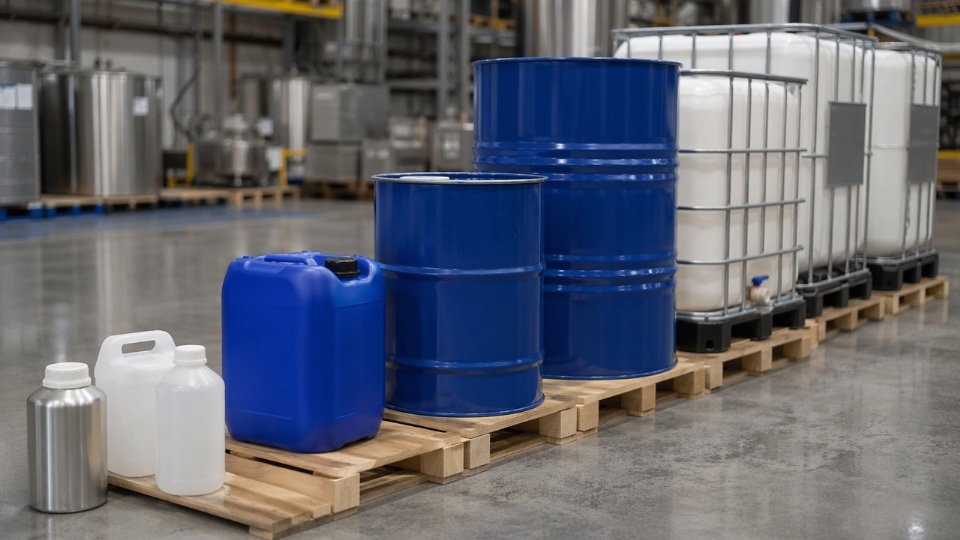
Standard silane coupling agents ship in three primary formats: 200 L HDPE drums, 1,000 L intermediate bulk containers (IBCs), and ISO tank containers for bulk movements. The choice is not just a cost question — it directly affects product integrity, handling risk, and your warehouse footprint.
For annual volumes below roughly 5 MT per delivery, 200 L drums are operationally practical. Above that threshold, IBCs lower per-unit handling cost and reduce the number of container openings, which matters for moisture-sensitive grades like APTES or MPTMS. ISO tanks become viable and financially sensible at single shipments above 10 MT, eliminating drum disposal costs that are frequently overlooked in total landed cost calculations.
Your contract should state the packaging format for each volume tier explicitly — not “as agreed” — and it must specify maximum drum age at the time of filling. New drums are the clear preference. If refurbished drums are permitted, cap them at two years from original manufacture date and require that the supplier certifies drum age on the COA or a separate packaging declaration. Aged HDPE becomes brittle and permeable, particularly under the temperature swings of a 35-day sea freight journey. A leaking IBC in a shared container is not just a product loss — it is a hazmat incident with potential carrier liability.
UN Classification and Dangerous Goods Documentation
Many common silane grades — VTMO, MPTMS, and a range of alkoxy-functional monomers — fall under UN 1993 (Flammable Liquid, N.O.S.) or UN 2924 (Flammable Liquid, Corrosive, N.O.S.), depending on flash point and corrosivity assessment. Some amino-functional silanes have flash points above 60°C and may ship as non-flammable but still carry corrosive classifications. Know your specific grade’s classification before the contract is signed; do not accept a supplier’s verbal assurance.
The contract should require the supplier to provide a fully compliant IMDG packing declaration and a Transport Emergency Card (TREM card) with every sea freight shipment. These are not optional courtesies — they are legal requirements under IMDG Code regulations, and forwarders increasingly reject shipments or impose demurrage when documentation arrives incomplete. Specify the exact documents by name in the contract, along with the requirement that they reach your freight forwarder at least 72 hours before vessel cut-off.
Most common silane coupling agent monomers are classified as flammable liquids under IMDG and require full dangerous goods documentation for sea freight.True
Silanes such as VTMO, MPTMS, and APTES typically have flash points in the range that triggers UN 1993 or related flammable liquid classifications under the IMDG Code, obligating shippers to provide compliant packing declarations, TREM cards, and proper package markings for ocean transport.
Shelf-Life Clauses and Minimum Remaining Stability at Delivery
Functional silane monomers carry manufacturer-stated shelf lives of 12–24 months from production date, depending on grade and storage conditions. The practical problem is that a supplier shipping product with only two or three months of shelf life remaining is technically compliant with a poorly written contract — but you may not be able to consume that material before quality degrades.
Write a minimum remaining shelf-life clause: delivered product must retain at least 75% of its stated shelf life at the time it clears your receiving dock. For a 12-month product, that means no older than nine months from manufacture date at arrival. Require the production date and expiry date to appear on both the drum label and the COA. This single clause prevents a large category of quality disputes downstream.
Temperature-Sensitive Grades and Cold-Chain Requirements
Amino-functional silanes — particularly APTES (3-aminopropyltriethoxysilane) and related primary amine variants — are prone to yellowing and viscosity drift when exposed to temperatures above 30°C for extended periods. That threshold is routinely exceeded inside a steel container sitting on a port tarmac in summer in Southeast Asia or the Gulf of Mexico region.
Decide early whether your application tolerates minor color shift. If it does not — and in many coating, adhesive, and glass fiber applications it will not — the contract must either mandate refrigerated (reefer) container shipment or require temperature-logged transit with a calibrated data logger, with the temperature record downloaded and submitted as a delivery document. The cost difference between a standard and reefer container on a China-to-Europe lane typically runs in the range of USD 800–2,500 per 20-foot equivalent, depending on season and routing. That is a fraction of the cost of a rejected batch or a customer complaint traced back to silane discoloration.
An operational warning: specifying temperature logging without specifying what happens when the log shows an exceedance is useless. Define the acceptance threshold in the contract — for example, no more than 48 cumulative hours above 30°C — and state that exceedances trigger a hold and re-test at the supplier’s expense before release.
Label Compliance and Regulatory Declarations
For any shipment crossing a regulatory border, GHS-compliant labeling is non-negotiable. Specify in the contract that labels must be bilingual: English plus the primary language of the destination country. US-bound shipments require Proposition 65 warnings where applicable — several silane grades contain constituents listed under California’s chemical disclosure program. European Union deliveries require REACH SVHC declarations confirming whether the product contains substances of very high concern above the 0.1% w/w threshold.
Require these declarations as standing documents updated annually, not one-time submissions at contract start. Regulations change, and a supplier who provided a clean SVHC declaration three years ago may be shipping product that now requires updated disclosure. Build in an annual regulatory review clause that obligates the supplier to notify you within 30 days of any change to classification, labeling, or REACH status affecting the contracted grades.
Intellectual Property, Exclusivity, and Confidentiality Provisions in Specialty Silane Agreements
Most silane procurement relationships start as straightforward buy-sell transactions. They stop being straightforward the moment you ask a supplier to develop a custom grade. That request — however routine it feels on the buyer’s side — opens a channel through which proprietary process knowledge flows in both directions, and without deliberate contractual architecture, that knowledge is effectively unprotected.
When IP Risk Actually Enters the Relationship
The two most common triggers are easier to recognize in hindsight than in the moment. First: a buyer shares a proprietary composite or sealant formulation with the supplier’s application chemist so the supplier can tune the organofunctional group, hydrolysis rate, or silanol content to match a specific substrate interface. At that point, the formulation itself — and the performance targets tied to it — is in the supplier’s hands. Second: a supplier’s R&D or technical service team visits the buyer’s production facility to observe dispersion conditions, mixing sequences, or cure profiles. Plant-floor observation of process parameters is one of the most efficient routes to reverse-engineering a material system. Neither scenario requires bad faith on the supplier’s part; competitive intelligence accumulates passively.
Building a Mutual NDA That Survives the Contract
A standard one-page NDA written for a sales negotiation is structurally inadequate for a custom silane development program. The scope needs to explicitly enumerate: technical data sheets and raw spectroscopic data, formulation ratios and component identities, process parameters (temperature windows, mixing shear rates, humidity controls), commercial pricing schedules, customer application lists, and any jointly generated test results or application data. Critically, the agreement must be mutual — buyers routinely forget that suppliers also disclose synthesis routes, catalyst systems, and internal QC thresholds during technical alignment meetings.
Survival clauses are where most contracts are weakest. A confidentiality obligation that expires at contract termination is nearly worthless for a specialty grade that took 18 months to develop. Specify survival of at least five years post-termination, and consider extending to ten years for formulations that underpin a patented end product. Name the confidential information schedule as a contract exhibit, reviewed and updated annually if the development scope expands.
Restrict internal access at the supplier level to named personnel under a documented need-to-know policy. This is enforceable and signals seriousness. A supplier unwilling to accept named-employee access controls on your formulation data is signaling something worth noting before you sign.
Exclusivity: What You Are Actually Buying and What It Costs
Geographic or application exclusivity on a custom silane grade means the supplier agrees not to sell that specific grade — defined by full technical specification, not just grade name — to competitors operating in a defined market or serving a defined application segment. That restriction has real cost to the supplier: it limits their addressable volume for that grade. Fair compensation takes two forms: a modest unit price premium, typically in the range of 5–12% above non-exclusive pricing depending on the market size being locked out, or a minimum annual volume commitment that guarantees the supplier recovers fixed development and production costs regardless of your actual offtake.
Exclusivity clauses tied only to a grade name, without a full technical specification exhibit, are routinely circumvented by minor reformulation.True
Suppliers can alter a functional group loading or silane backbone slightly, assign a new internal code, and argue the new material is a different grade. Anchoring exclusivity to the complete specification — including GC purity profile, functional group content range, and key physical parameters — closes this gap.
Define the exclusivity territory precisely: “European Union member states” is enforceable; “Europe” is not. Application exclusivity should name the end-use category at a level that legal counsel in both jurisdictions can defend.
Ownership of Co-Developed Intellectual Property
If the development program produces something genuinely novel — a bifunctional silane architecture, a surface treatment protocol, a new adhesion mechanism — patent ownership becomes a real question. A joint development agreement (JDA), executed before work begins rather than after, should specify each party’s technical contributions in writing, the ownership split for any resulting patents (common structures are 50/50, or sole ownership by the party that contributed the inventive concept with a royalty-bearing license to the other), and explicit commercialization rights for third-party licensing. Leaving IP ownership to be negotiated after a successful development is a reliable way to convert a supplier relationship into a dispute.
Designate all custom-grade technical specifications as trade secrets in the contract schedule, separate from any patent filings. Trade secret protection runs indefinitely as long as the information stays confidential — patent protection does not. For process know-how that would be difficult to enforce through patent claims, trade secret designation combined with the named-personnel access controls described above is often the stronger long-term position.
Force Majeure, Supply Continuity, and Dual-Sourcing Risk Mitigation Strategies
Silane coupling agents occupy a narrow but load-bearing position in most production processes — a one-week stockout of APTES or MPTMS can idle a composite layup line or halt a sealant batch run with consequences that ripple far beyond the cost of the chemical itself. Designing contractual safeguards before disruption happens, not after, is the difference between a two-day scramble and a three-week shutdown.
Writing a Force Majeure Clause That Reflects Modern Supply-Chain Reality
Boilerplate force majeure language lifted from a generic chemical contract template was inadequate in 2010 and is negligent now. A defensible clause must enumerate specific triggering events beyond floods and earthquakes. Include, by name: government-mandated facility shutdowns (environmental inspections, safety rectification orders), raw-material import or export embargoes affecting key silane precursors such as trichlorosilane or methanol, and — critically — cyberattacks on distributed control systems or plant automation networks. Each of these has disrupted organosilicon supply at some point in the last decade, and courts are not sympathetic to vague “acts of God” arguments when the actual cause was a Ministry-ordered production suspension.
Equally important is the notice obligation. Require the supplier to deliver written notification within 48–72 hours of a triggering event, identifying the specific cause, the affected product lines, the estimated duration, and their mitigation plan. An open-ended notice window lets a supplier defer disclosure while you burn through safety stock. Tie the notice requirement to a concrete remedy timeline — if normal supply cannot resume within 30 days, the buyer’s right to activate the secondary source or draw on the strategic buffer becomes unconditional.
Contractual Inventory Buffers: Naming the Warehouse Matters
A vague commitment to “maintain adequate safety stock” is unenforceable. The contract should specify that the supplier holds a buffer equivalent to 30–60 days of the buyer’s rolling average monthly consumption — the right number depends on your lead time from that source and how quickly you can qualify and receive from an alternative. That buffer must sit in a named, licensed warehouse facility, not simply somewhere in the supplier’s logistics network. During a disruption, the buyer’s access rights to draw against that inventory should trigger automatically upon the force majeure notice, without requiring further negotiation.
Dual-Sourcing Architecture: Calibrating the Split
A 70–80 / 20–30 primary-to-secondary volume split is the most practical structure for most industrial buyers. The secondary supplier cannot simply be a name on a qualified vendor list; they need live purchase orders, however modest, on a regular cadence — quarterly at minimum. Process familiarity degrades quickly with silane chemistries. A secondary source that last ran your specific grade eight months ago will need reformulation and requalification time precisely when you have none. Small but consistent orders maintain their production familiarity and keep your specification active in their system.
A qualified secondary supplier receiving only annual test orders cannot realistically serve as a seamless fallback during a primary-source disruption.True
Silane production involves grade-specific reactor conditioning and quality checkpoints; without recent production runs against a buyer's specification, the secondary source will require setup time and requalification, defeating the continuity purpose.
VMI and Consignment Programs: Inventory Without the Working Capital
Vendor-managed inventory programs offer a complementary layer. Under a VMI arrangement, the supplier replenishes a buyer-designated tank or drum store based on consumption signals — you pay upon draw, not upon delivery. This preserves physical availability at your facility while freeing the working capital that would otherwise be tied up in owned inventory. For buyers consuming 5–25 metric tons per month, VMI can reduce on-hand cash commitment by 40–70% compared to traditional purchase-order cycles, depending on payment terms and replenishment frequency.
Consignment stock operates on the same principle but with clearer title mechanics: title remains with the supplier until consumption is confirmed, which matters for your balance sheet and for insurance purposes during storage.
How Multi-Site Production and Bonded Warehouses Address Geographic Risk
Geographic concentration of production creates geographic concentration of risk. SiliconChemicals addresses this through multi-site production capability across eastern China’s organosilicon industrial belt, meaning that a shutdown affecting one facility does not automatically compromise all product families. For international customers, bonded warehouse programs in Rotterdam and Los Angeles reduce effective lead time from the 25–45-day sea-freight window down to 3–7 days for in-region dispatch, and they operate as a physical buffer independent of any single plant’s production status. Each core product family — VTMO, APTES, MPTMS, and functional variants — maintains a pre-qualified alternative production line, so grade switching during a disruption does not require restarting qualification from zero.
The combined effect of a well-drafted force majeure clause, a named inventory buffer, a genuinely active dual-source relationship, and regional stock programs is not redundancy for its own sake. It is the operational architecture that lets you commit confidently to a preferred-supplier agreement — capturing the 8–18% discount available at volume — without betting your production schedule on a single point of failure.
Contract Duration, Renewal Mechanics, and Exit Provisions That Protect Both Parties
Contract duration is one of the most under-negotiated structural elements in silane supply agreements. Buyers focus hard on price tiers and quality clauses, then accept whatever term length the supplier’s template proposes. That habit creates real operational exposure — either locking a formulation-development team into a three-year agreement with the wrong grade, or leaving a high-volume compounder exposed to spot-market repricing every twelve months.
Matching Contract Length to Your Actual Business Profile
A 12-month agreement is the right starting point for buyers whose silane consumption is genuinely unpredictable — companies running pilot-scale production, businesses with seasonal demand swings exceeding 30% peak-to-trough, or R&D-driven operations where the coupling agent grade may change as formulation work matures. The flexibility cost is real: 12-month buyers typically access only the lower end of long-term discount ranges (closer to 8% off spot) and carry more repricing risk.
For stable, high-volume industrial buyers — rubber compounders, adhesive manufacturers, fiber-sizing operations running consistent annual volumes above 20 MT — a 2–3-year agreement with annual price review windows is the commercially sound structure. This duration is long enough to justify supplier investment in production scheduling and raw-material forward purchasing, which is what actually unlocks the 12–18% discount range. Annual review clauses prevent the agreement from becoming a stranded liability when silane feedstock costs move, which they do: organochlorosilane and methanol input costs have historically shown 15–25% year-on-year variance depending on energy and chlorine market conditions.
Five-year agreements belong in a narrow category: situations where the buyer is co-investing in dedicated reactor capacity, co-developing a custom silane grade requiring significant process engineering from the supplier, or committing to volumes large enough that the supplier’s capital allocation genuinely depends on the contract. Outside those conditions, a five-year term transfers more risk to the buyer than the additional discount typically justifies.
Automatic Renewal Clauses Deserve Explicit Architecture
A rolling auto-renewal provision without a defined notice window is a trap for both sides. The buyer risks waking up to another 12 months locked in at terms set before a significant market shift. The supplier risks the buyer claiming they “forgot” to send notice and disputing the renewed term. A 90-day pre-expiry notice window — requiring either party to affirmatively signal renegotiation or termination intent — creates a structured conversation rather than a contractual accident. Build that window into the agreement text explicitly, not as a boilerplate footnote.
KPI Triggers That Force a Seat Back at the Table
Contracts should specify the performance thresholds that give either party a formal renegotiation right before the annual review date. Three metrics worth encoding directly: on-time delivery rate dropping below 95% over any rolling 90-day window; COA pass rate on incoming inspection falling below 98%; and a sustained movement of more than 15% in an agreed raw-material price index (for example, a published organochlorosilane or methanol spot reference) from the contract baseline. When any trigger is hit, either party can call a mandatory review within 30 days. This prevents the situation where a supplier absorbs six months of margin erosion silently and then simply stops prioritizing the account.

Termination for Convenience and Transition Obligations
Termination for cause — fraud, persistent quality failure, regulatory non-compliance — is relatively straightforward to draft. Termination for convenience is where negotiations get uncomfortable. Buyers should negotiate a right to exit with 90–180 days’ written notice, with the longer window applying to larger committed volumes. Suppliers are reasonable to counter with a minimum termination payment equal to 1–2 months of contracted volume value; that covers raw-material commitments and production-schedule disruption that a supplier cannot avoid once they have allocated capacity.
A supplier obligated to continue supply at existing contract terms for six months post-termination notice is a standard and enforceable provision in chemical supply agreementsTrue
Transition supply obligations — sometimes called 'wind-down supply' or 'last-buy' periods — are routinely included in specialty chemical contracts and are commercially enforceable under standard contract law in most jurisdictions, provided duration, pricing basis, and maximum quantity are clearly specified.
The wind-down supply obligation deserves its own clause, not a vague reference. Specify that, following termination notice, the supplier will maintain supply at the existing contract price for up to six months, subject to a defined maximum quantity (typically 150% of the average monthly run rate). That window gives a buyer realistic time to identify, audit, and qualify an alternative source — a process that, for specialty silane grades, rarely completes in less than three months when you account for incoming qualification testing and any necessary formulation adjustment.
Exit provisions that feel punitive during drafting are the ones that get tested during a real supply crisis. Write them when the relationship is warm.
Sustainability, Regulatory Evolution, and ESG Clauses in Modern Silane Supply Contracts
ESG commitments in chemical supply contracts have moved well past voluntary gesture territory. For silane buyers selling into European or North American markets, the financial and legal exposure created by a non-compliant upstream supplier is now concrete and quantifiable — not a reputational abstraction.
Why ESG Clauses Have Become Financially Enforceable
The EU Carbon Border Adjustment Mechanism entered its transitional phase in October 2023 and will impose direct carbon costs on imported chemicals by 2026. Silane coupling agents produced using coal-heavy grid electricity — still common across portions of Chinese production capacity — carry embedded carbon intensity figures that buyers will need to report and eventually pay for. A buyer who has not contractually secured carbon intensity data from their supplier will face either CBAM liability gaps or last-minute scrambles to reconstruct upstream emissions data that the supplier has no obligation to provide. Scope 3 emissions reporting under the GHG Protocol Category 1 (purchased goods and services) creates the same pressure from the other direction: your own sustainability report is only as credible as the data your suppliers give you.
Extended producer responsibility regulations in the EU and several US states are also beginning to reach chemical intermediates, not just finished consumer goods. That trajectory matters when you are negotiating a three-year silane agreement today.
Supplier ESG Disclosures That Belong in the Contract
Mandate annual disclosure of at least four metrics, with reporting deadlines tied to your own sustainability reporting calendar:
- Production facility carbon intensity — expressed as kg CO₂-equivalent per kg of silane produced, broken down by Scope 1 and Scope 2. Figures across the industry vary from roughly 2.5 to 8+ kg CO₂e/kg depending heavily on energy source mix and process efficiency.
- Wastewater treatment performance and HCl byproduct recovery rate — HCl is a significant co-product of organochlorosilane synthesis; recovery rates above 90% indicate closed-loop process discipline rather than atmospheric venting or effluent dilution.
- Energy source mix — the percentage of facility electricity drawn from renewable or low-carbon sources, not just a general claim of “green energy.”
- Recordable incident rate (RIR) — silane handling involves flammable and moisture-reactive materials; an RIR consistently above 1.5–2.0 per 100 workers per year warrants scrutiny of operational safety culture, which correlates with batch contamination risk and supply interruptions.
Regulatory Change Notification: Build in the Early Warning
REACH restriction updates, EPA risk evaluation actions under TSCA, and the EU’s intensifying scrutiny of fluorosilane derivatives — particularly those with structural similarities to PFAS compounds — can render a contracted silane grade non-compliant mid-agreement with little public notice. A regulatory change notification clause should require the supplier to provide a minimum of six months’ advance written notice of any change affecting the regulatory status, composition, or permitted use conditions of a supplied grade. Six months is the practical minimum to qualify an alternative chemistry; for compounders with validated production formulations, the actual reformulation cycle can run 9–15 months, so earlier warning is always better.
Silicon Metal Supply Chain Transparency
European and North American buyers are increasingly required — by their own customers and by emerging supply chain due diligence regulations including the EU Corporate Sustainability Due Diligence Directive — to demonstrate that raw material sourcing is traceable and socially responsible. Silicon metal, the upstream feedstock for organochlorosilane synthesis, has documented supply chain complexity. Contracts should specify that suppliers provide country-of-origin documentation for silicon metal inputs and, for strategic relationships, allow third-party supply chain audit access with reasonable notice.
SiliconChemicals operates ISO 14001-certified production facilities with closed-loop HCl recovery systems and publishes annual ESG reports aligned to GRI Standards.True
ISO 14001 certification requires third-party audited environmental management systems; GRI-aligned reporting follows a public, verifiable standard framework. Both are independently verifiable credentials that directly support buyers' Scope 3 and CBAM compliance documentation needs.
Closed-loop HCl recovery is not just an environmental credential — it is a process efficiency indicator. Facilities that recover and reuse HCl rather than treating it as waste tend to run tighter process controls overall, which translates to more consistent product quality batch to batch. For buyers, a supplier’s environmental performance data and their product quality consistency often tell the same underlying story about how well the plant is actually run.
Frequently Asked Questions About Negotiating Silane Coupling Agent Supply Agreements
What is the realistic minimum volume to justify a long-term agreement with a Chinese silane manufacturer?
Most integrated Chinese silane manufacturers draw a practical line at 5–10 MT per year for specialty functional grades — APTES, MPTMS, methacryloxy-functional silanes — and 20–50 MT per year for commodity monomers like VTMO or OCTMO. Below those thresholds, the manufacturer’s account management overhead relative to revenue rarely justifies the preferential pricing, dedicated inventory allocation, or technical support that make a long-term agreement worthwhile. You are better served by a regional distributor or a spot-purchase arrangement until your consumption grows. The exact threshold depends on the grade’s production complexity and whether you require custom packaging or certificates of conformance to specific customer standards. Once you cross the lower tier, even a modest 8–12% discount against spot price begins to recover the administrative cost of maintaining a formal agreement.
How do I verify that a quoted purity grade is genuinely manufactured, not blended from lower-grade stock?
This is more common than buyers expect, particularly for high-purity grades sold at a premium. Request two consecutive production batch COAs with full GC chromatogram attachments — not summary tables, but the actual chromatogram files. Cross-reference the batch numbers against the supplier’s internal production scheduling format; blended product frequently shows inconsistencies in batch numbering cadence or atypical peak profiles for known impurities. Write plant audit rights into the contract as a condition of first commercial order, or engage a third-party inspection agency for an initial site audit. A supplier who resists providing raw chromatogram data before a significant commercial relationship is established is telling you something.

Arbitral awards from ICC or CIETAC arbitration proceedings are enforceable in China under the New York Convention, making arbitration preferable to foreign court litigation for cross-border silane supply disputes.True
China acceded to the 1958 New York Convention on the Recognition and Enforcement of Foreign Arbitral Awards in 1987. Both ICC and CIETAC awards meet the Convention's criteria for enforcement, whereas foreign court judgments lack an equivalent bilateral enforcement mechanism with China.
Can I lock in a fixed price for a three-year silane supply agreement?
A fully fixed price over three years is rarely viable for either party, and suppliers who accept it without a mechanism for adjustment are typically pricing in a large risk buffer upfront. The workable structure is a fixed base price with an annual index-linked adjustment capped at ±5–8%, tied to a published feedstock index such as methanol or chlorosilane spot prices. This gives your finance team genuine budget predictability while preventing the supplier from absorbing losses that eventually compromise product quality or service reliability. Specify the index, the review date, and the notification timeline in the contract — leaving these vague guarantees a renegotiation dispute every twelve months.
What dispute resolution mechanism works best for cross-border silane supply disputes?
Specify ICC International Court of Arbitration (Paris or Singapore seat) or CIETAC arbitration with English as the proceedings language. Both produce arbitral awards enforceable in China under the New York Convention. Litigation in domestic courts — whether Chinese, European, or American — is slower, jurisdictionally complex, and produces judgments that are difficult to enforce across borders. Include a tiered clause: mandatory senior-management commercial discussion within 21 days, then arbitration. Most disputes over COA deviations or short shipments resolve at the first tier if the clause makes the cost of escalation clear to both sides.
How should I handle a government-mandated environmental inspection shutdown at my supplier’s plant?
This scenario — common in China’s organosilicon production clusters during periodic environmental compliance campaigns — should never be an emergency if the contract is properly structured. A 48-hour notification requirement on the supplier’s side, a strategic inventory buffer of four to eight weeks’ consumption held at a bonded warehouse or your facility, and a pre-qualified secondary supplier capable of delivering within 21–35 days convert what feels like a crisis into a pre-agreed protocol execution. The force majeure clause should specify the notification trigger, the buffer inventory obligation, and the point at which the secondary sourcing right activates automatically. Suppliers who understand your operational exposure will accept these terms; those who push back heavily are signaling their own inventory management limitations.
What is the realistic timeline from contract signing to first qualified delivery with a new Chinese supplier?
Budget 60–90 days for the full qualification cycle. Initial sample shipment and internal application testing typically runs three to four weeks depending on your process. COA verification against your incoming inspection spec and a small-scale process trial adds another two to three weeks. Documentation setup — SDS in destination-country format, customs classification confirmation, carrier hazmat approval — takes roughly two weeks in parallel if you start early. First commercial order execution then follows. Buyers who assume they can compress this to 30 days almost always discover an overlooked documentation gap or a failed first-article test that restarts the clock.