
Industrial fluids are expected to operate under increasingly demanding conditions. Lubricants must remain stable at extreme temperatures, electrical fluids must maintain dielectric strength over decades, cosmetic ingredients must remain chemically inert on skin, and industrial additives must function reliably across complex formulations. Conventional petroleum oils often struggle in these environments because they oxidize easily, degrade at high temperatures, and lose viscosity stability under stress. As industrial systems become more sophisticated, engineers increasingly require specialty fluids capable of maintaining performance under extreme physical, chemical, and thermal conditions. Silicone oil emerged as a solution to these challenges due to its unique silicon-oxygen molecular backbone, which provides extraordinary stability and functional versatility across a wide range of applications.
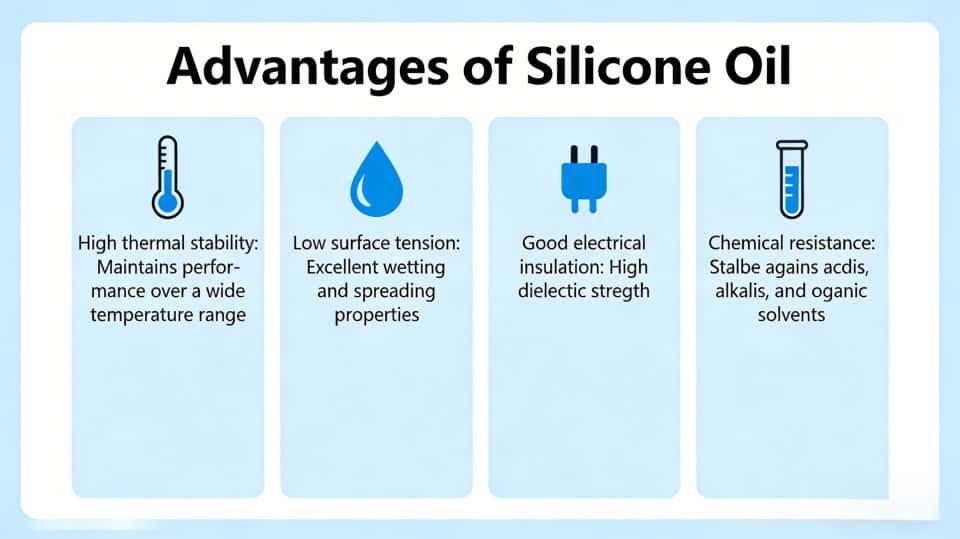
Silicone oil offers numerous advantages including exceptional thermal stability, excellent oxidation resistance, stable viscosity across a wide temperature range, low surface tension, outstanding electrical insulation properties, chemical inertness, long service life, and compatibility with many industrial materials. Because of these properties, silicone oil is widely used in industries such as cosmetics, electronics, pharmaceuticals, automotive engineering, textile processing, heat transfer systems, and industrial manufacturing. Its combination of stability, safety, and versatility makes silicone oil one of the most important specialty fluids in modern industrial chemistry.
Understanding why silicone oil performs so well requires examining its molecular structure, physical properties, and the ways those properties translate into real-world industrial benefits. When analyzed from a materials science perspective, silicone oil represents one of the most stable and adaptable polymeric fluids ever developed.
Silicone oils maintain relatively stable viscosity across extremely wide temperature ranges.True
The flexible Si–O–Si backbone structure in polysiloxanes allows silicone oils to maintain fluidity at low temperatures while resisting breakdown at high temperatures, providing exceptional viscosity stability.
The Molecular Structure That Creates [Silicone Oil](https://siliconchemicals.com/silicone-oil/)’s Advantages
The exceptional performance of silicone oil originates from its unique molecular architecture. Most commercial silicone oils are based on polydimethylsiloxane (PDMS) chemistry, which consists of repeating silicon-oxygen backbone units with methyl groups attached to each silicon atom.
The Si–O bond energy is significantly higher than the carbon-carbon bonds found in conventional hydrocarbon oils. This strong bond contributes to the exceptional thermal stability and oxidation resistance of silicone fluids.
At the same time, the Si–O bond angle creates a flexible molecular chain. This flexibility allows silicone oil molecules to move easily relative to each other, which helps maintain fluidity across wide temperature ranges.
The methyl groups attached to the silicon atoms provide hydrophobic protection around the backbone, preventing water molecules and reactive chemicals from interacting with the polymer structure.
Table: Molecular Features Responsible for Silicone Oil Advantages
| Molecular Feature | Resulting Property | Practical Advantage |
|---|---|---|
| Strong Si–O bonds | Thermal stability | High-temperature performance |
| Flexible polymer backbone | Stable viscosity | Wide operating temperature |
| Methyl side groups | Hydrophobic surface | Water resistance |
| Low intermolecular attraction | Low surface tension | Excellent spreading ability |
These molecular features explain why silicone oils behave differently from traditional hydrocarbon fluids.
Exceptional Thermal Stability
One of the most important advantages of silicone oil is its outstanding thermal stability. Unlike many conventional oils that degrade rapidly when exposed to high temperatures, silicone oils can remain stable across extremely wide temperature ranges.
Typical operating ranges include:
• −50 °C to 200 °C for many industrial grades
• up to 250 °C for specialized silicone fluids
• excellent low-temperature fluidity
This temperature stability makes silicone oil highly valuable in applications involving heat transfer, high-temperature lubrication, and electrical insulation systems.
Table: Thermal Performance Comparison
| Fluid Type | Typical Temperature Range |
|---|---|
| Mineral Oil | −10 °C to 120 °C |
| Synthetic Hydrocarbon Oil | −30 °C to 180 °C |
| Silicone Oil | −50 °C to 250 °C |
Because silicone oils resist thermal breakdown, they often have much longer service lifetimes than conventional lubricants.
Outstanding Oxidation Resistance
Oxidation is a major cause of lubricant failure. When oils oxidize, they form acids, sludge, and varnish deposits that degrade system performance.
Silicone oils exhibit excellent resistance to oxidation because the silicon-oxygen backbone is highly stable and less susceptible to attack by oxygen molecules.
Key benefits include:
• longer operational lifespan
• reduced maintenance requirements
• minimal formation of degradation byproducts
• improved reliability in high-temperature environments
This oxidation resistance makes silicone oil ideal for applications where long service intervals are required.
Stable Viscosity Across Wide Temperature Ranges
Viscosity stability is another major advantage of silicone oil. Many oils become extremely thick at low temperatures and dangerously thin at high temperatures.
Silicone oils exhibit a low viscosity-temperature coefficient, meaning their viscosity changes relatively little as temperature fluctuates.
Benefits of stable viscosity include:
• predictable lubrication behavior
• consistent heat transfer performance
• reliable flow characteristics in hydraulic systems
This property is particularly valuable in aerospace engineering and precision equipment.
Table: Viscosity Stability Comparison
| Property | Silicone Oil | Conventional Oils |
|---|---|---|
| Low-temperature flow | Excellent | Moderate |
| High-temperature viscosity retention | Excellent | Moderate |
| Viscosity stability | Very high | Variable |
Because of this stability, silicone oil can operate in environments where temperature fluctuations are common.
Excellent Electrical Insulation Properties
Silicone oil is widely used as a dielectric fluid due to its excellent electrical insulation properties. It has high dielectric strength and low electrical conductivity.
These properties make silicone oil ideal for applications such as:
• transformers
• capacitors
• electrical switchgear
• electronic cooling systems
Compared with mineral insulating oils, silicone oils often offer improved fire resistance and higher temperature stability.
Table: Electrical Properties of Silicone Oil
| Property | Typical Performance |
|---|---|
| Dielectric Strength | 15–20 kV/mm |
| Electrical Resistivity | Extremely high |
| Thermal Stability | Up to 250 °C |
Because of these properties, silicone oils are frequently used in high-reliability electrical systems.
Low Surface Tension and Excellent Spreading Ability
Silicone oils possess extremely low surface tension compared with most organic fluids. This allows them to spread rapidly across surfaces and form very thin, uniform films.
Low surface tension provides several advantages:
• excellent wetting behavior
• improved surface coverage
• efficient lubrication of small mechanical parts
• effective antifoaming performance
Because silicone oils spread easily, they are widely used as release agents and antifoam additives.
Chemical Inertness and Stability
Another major advantage of silicone oil is its chemical inertness. Silicone oils are highly resistant to chemical reactions with many substances, including acids, bases, and oxygen.
This stability allows silicone oil to function in harsh environments where other oils might degrade.
Examples include:
• chemical reactors
• pharmaceutical processing
• medical device lubrication
• cosmetics formulations
Because silicone oil does not easily react with other chemicals, it is often used in sensitive applications.
Biocompatibility and Safety
Silicone oils are generally considered safe for use in medical and cosmetic applications due to their low toxicity and chemical inertness.
Medical-grade silicone oils are used in:
• ophthalmic surgery
• pharmaceutical formulations
• medical device coatings
• skin care products
In cosmetics, silicone oils provide a smooth, non-greasy feel while improving the stability of formulations.
Long Service Life and Low Maintenance
Silicone oils often last significantly longer than conventional lubricants. Because they resist oxidation, thermal degradation, and chemical reactions, they require fewer replacements and maintenance cycles.
Benefits include:
• reduced operating costs
• improved system reliability
• longer equipment lifespan
In many industrial applications, the longer service life of silicone oil offsets its higher initial cost.
Versatility Across Industries
Silicone oil is used across a remarkable range of industries because of its unique combination of properties.
Table: Major Industrial Applications of Silicone Oil
| Industry | Typical Application |
|---|---|
| Cosmetics | Skin care and hair products |
| Electronics | Dielectric insulation fluids |
| Automotive | Lubricants and damping fluids |
| Textile | Fabric finishing agents |
| Chemical processing | Heat transfer fluids |
| Medical | Surgical lubricants |
Few specialty fluids have such broad industrial applicability.
Advanced Applications of Silicone Oil
As technology evolves, silicone oils continue to find new applications in emerging industries.
Examples include:
• electric vehicle cooling systems
• aerospace lubrication systems
• nanotechnology surface treatments
• advanced electronics manufacturing
These applications demonstrate how silicone oil continues to play a critical role in modern engineering.
Summary of Silicone Oil Advantages
Table: Key Advantages of Silicone Oil
| Advantage | Industrial Impact |
|---|---|
| Thermal stability | Reliable high-temperature operation |
| Oxidation resistance | Long service life |
| Viscosity stability | Consistent performance |
| Low surface tension | Effective spreading and lubrication |
| Electrical insulation | Safe use in electrical equipment |
| Chemical inertness | Compatibility with many environments |
These advantages explain why silicone oil has become indispensable in modern materials science and industrial chemistry.
Conclusion
Silicone oil stands out as one of the most versatile and high-performance specialty fluids available today. Its unique silicon-oxygen molecular backbone gives it extraordinary thermal stability, oxidation resistance, and viscosity consistency across wide temperature ranges. These properties allow silicone oil to function reliably in demanding environments where conventional oils often fail.
Because of its low surface tension, electrical insulation capability, chemical inertness, and long service life, silicone oil is widely used across industries ranging from cosmetics and pharmaceuticals to electronics, automotive engineering, and industrial manufacturing. As technology continues to evolve and industrial systems become more complex, silicone oil will remain an essential component in advanced materials and high-performance engineering applications.
Speak With the Silicone Fluid Specialists at [Silicon Chemicals](https://siliconchemicals.com/)
Selecting the right silicone oil can significantly influence the performance, stability, and longevity of your products and processes. Viscosity grade, molecular structure, and functional modifications all affect how silicone oil behaves in real-world applications.
At Silicon Chemicals, we supply a comprehensive range of high-purity silicone oils for industrial manufacturing, cosmetics, electronics, coatings, and advanced materials applications.
If you are evaluating silicone oil solutions or looking for technical guidance on selecting the right formulation, the team at Silicon Chemicals is always ready to help you identify the most effective option for your application.
FAQ
Q1: What makes silicone oil superior to mineral oil as a lubricant?
A1: Silicone oil offers exceptional thermal stability and lubricating performance compared to mineral oils. It maintains its viscosity and lubricating properties across a wide temperature range, resists oxidation and chemical degradation, and remains effective in extreme environments. This makes silicone oil a preferred choice for high-performance machinery, automotive systems, and industrial processes where reliability and longevity are essential.
Q2: How does silicone oil benefit medical and pharmaceutical applications?
A2: Silicone oil’s biocompatibility, chemical inertness, and non-toxicity enable its widespread use in medical and pharmaceutical fields. It is commonly used for eye surgeries (such as retinal detachment repair), as a lubricant for syringes and medical devices, and as a component in topical formulations. Silicone oil minimizes adverse tissue reactions, does not support microbial growth, and can be sterilized easily, ensuring safety in sensitive healthcare settings.
Q3: Why is silicone oil preferred in cosmetics and personal care products?
A3: Silicone oil enhances the sensory feel of personal care products, creating a smooth and silky texture without a greasy residue. Its water-repellent, non-comedogenic, and skin-conditioning properties make it popular in hair, skin, and makeup formulations. Silicone oil also improves spreadability and provides a protective barrier, locking in moisture while allowing the skin to breathe.
Q4: What roles does silicone oil play in electrical and electronics applications?
A4: In electronics, silicone oil acts as a dielectric coolant and insulation fluid, protecting components from overheating, moisture, and contaminants. Its high dielectric strength ensures excellent performance in transformers, capacitors, and high-voltage equipment, reducing the risk of electrical failure and extending the lifespan of electronic devices.
Q5: Is silicone oil safe for food and beverage processing equipment?
A5: Yes, certain food-grade silicone oils are approved for use as release agents, lubricants, and antifoaming agents in food processing and packaging equipment. Their chemical stability, non-toxicity, and resistance to taste or odor contamination ensure safe and effective operations in food and beverage manufacturing environments when used according to regulatory guidelines.