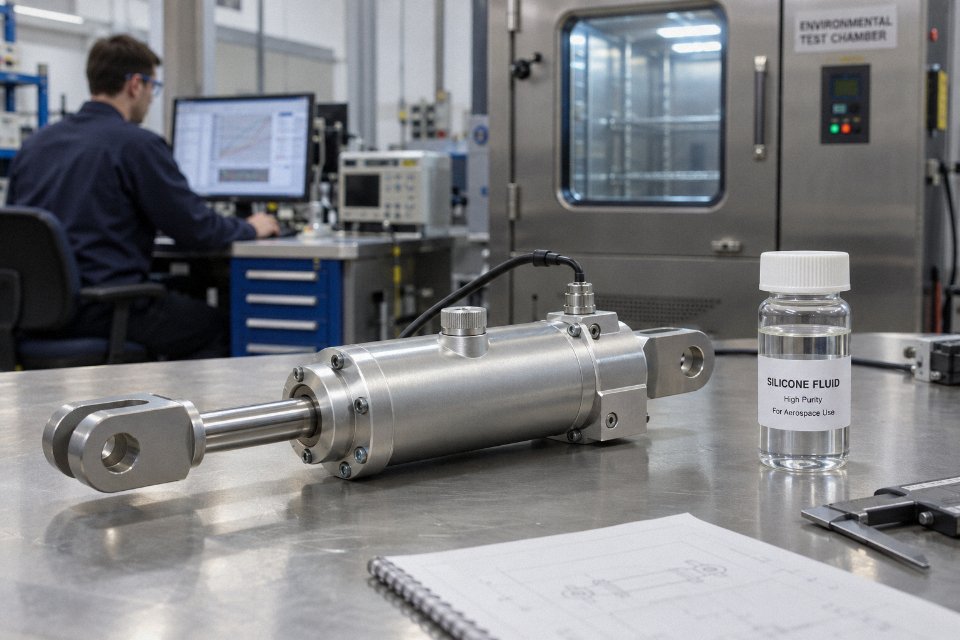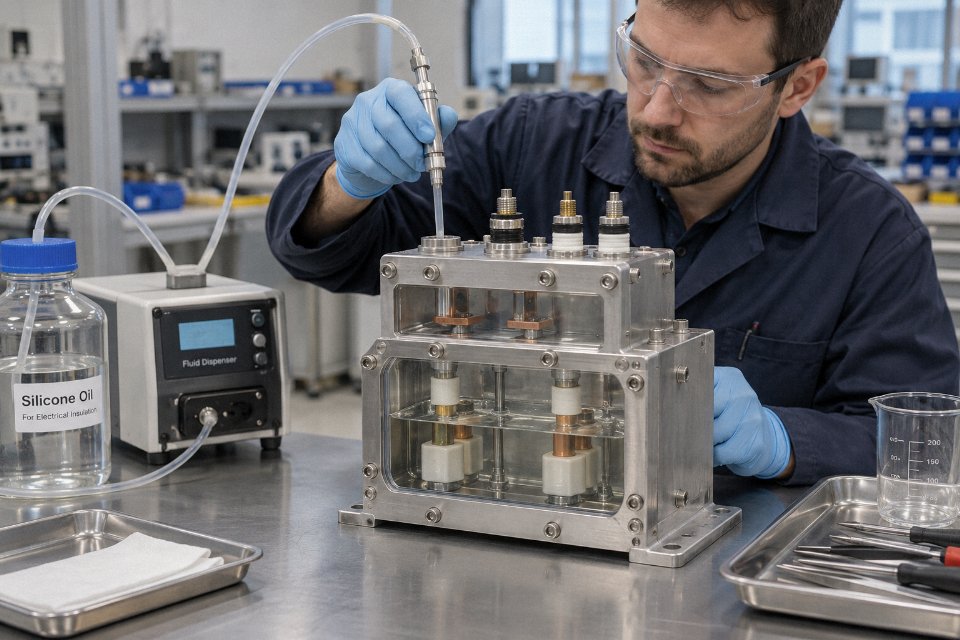
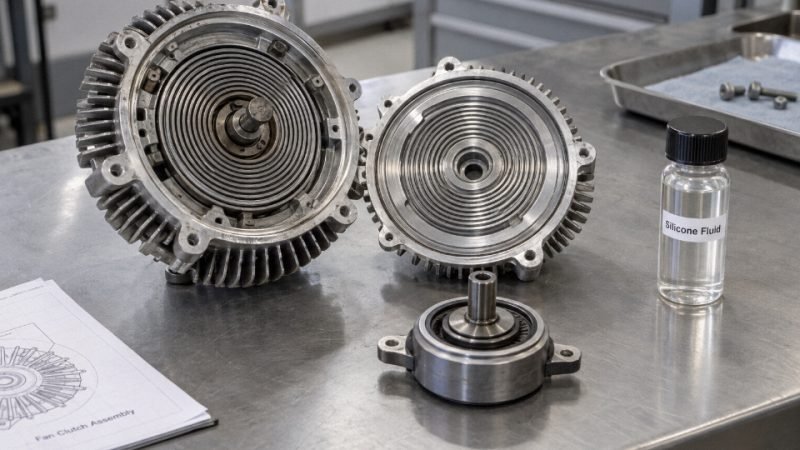
A damper that stiffens on cold mornings or loses resistance after heat exposure can turn a smooth mechanism into a warranty complaint. Inconsistent fluid behavior means more adjustment, rejected assemblies, and replacement costs. A suitably specified silicone fluid can help stabilize performance—but only where its lubrication characteristics and material compatibility suit the component.
Silicone oil is used in automotive applications because selected grades provide relatively stable viscosity across temperature changes, low volatility, and useful electrical insulation. These properties support controlled damping and certain protective functions. It is not a universal lubricant or a substitute for specified engine, transmission, or brake fluids.
The purchasing trap is treating “silicone oil” as a complete specification. A bulk damping fluid and a low-dose antifoam additive serve very different purposes, even if both use silicone chemistry. The useful question is which property the component needs—and whether that advantage survives aging, seal contact, and possible transfer onto nearby paint or bonding surfaces.
Molecular structure and operating properties
Silicone oil’s automotive value comes from a flexible siloxane backbone whose side groups and molecular size can be adjusted to change flow, volatility, and compatibility. Those structural advantages are useful starting points, not qualification results: a fluid still has to deliver the required performance after temperature exposure, contamination, and contact with the actual assembly materials.
Structure sets the starting behavior
In polydimethylsiloxane, or PDMS, alternating silicon and oxygen atoms form the backbone, with methyl groups attached to silicon. The backbone’s flexibility supports molecular mobility, while the methyl-rich surface contributes to low surface tension. Replacing some methyl groups with phenyl or other functional groups changes properties, but the direction and magnitude depend on the specific chemistry and substitution level.
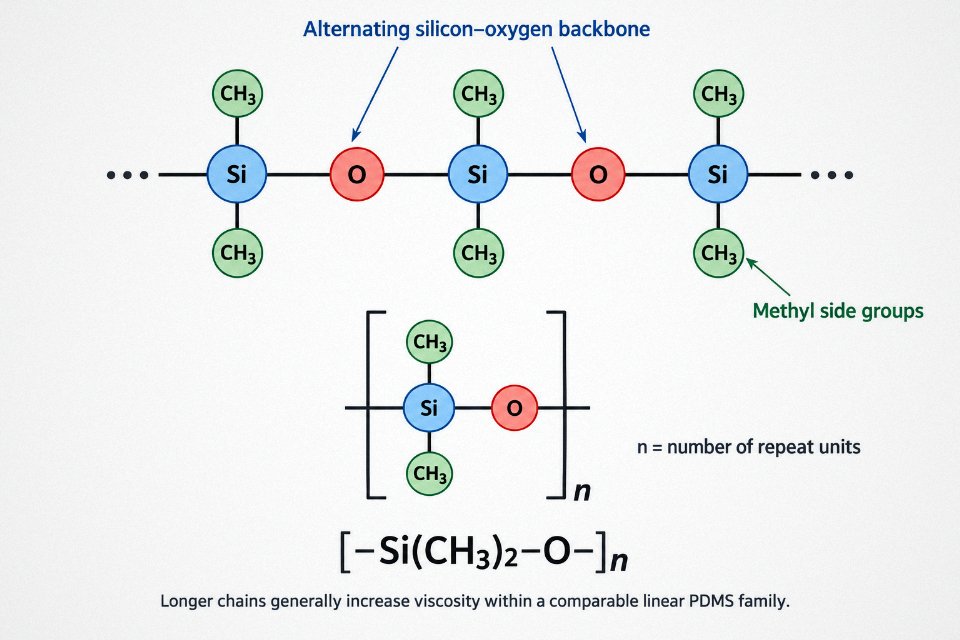
Three molecular variables deserve attention:
- Molecular weight: Longer chains generally increase viscosity within a comparable linear PDMS family. A higher-viscosity grade is not automatically more thermally durable.
- Molecular-weight distribution: Two fluids with the same nominal viscosity can contain different low-molecular-weight fractions. These lighter components can increase evaporation, migration, or deposits on nearby surfaces.
- Side-group chemistry: Modification changes interactions with seals, plastics, additives, and contaminants. Compatibility data for unmodified PDMS should not be transferred to a modified silicone fluid.
A supplier’s viscosity certificate therefore describes only part of the material. Volatile content and composition consistency can matter just as much in a sealed damper or an assembly next to electrical contacts.
Temperature changes flow and aging through different mechanisms
PDMS fluids generally show less viscosity change with temperature than many unmodified mineral oils, which can help stabilize resistance in a mechanism exposed to seasonal temperatures. That advantage is not universal against PAO or formulated automotive oils: compare actual grade-specific curves over the working range, not broad fluid-family descriptions.
Keep the viscosity quantities straight:
- Kinematic viscosity, commonly reported in mm²/s, is dynamic viscosity divided by density.
- Dynamic viscosity, commonly reported in mPa·s, governs shear stress at a given shear rate.
- Density provides the conversion: dynamic viscosity in mPa·s equals kinematic viscosity in mm²/s multiplied by density in g/cm³, all at the same temperature.
Comparing one supplier’s value at 25 °C with another’s at 40 °C can produce a convincing but wrong selection.
Low-temperature flow and hot-service durability need separate evidence. Pour point indicates behavior under a specified low-temperature test; it does not establish acceptable cold-start torque. At elevated temperature, evaporation can reduce fill volume and change viscosity, while oxidation or other chemical changes can thicken the fluid or produce deposits. Oxygen access, metal surfaces, contamination, and exposure time influence the result.
Flash point is an ignition-test result, not a continuous-service temperature rating. Useful life must come from aging evidence relevant to the assembly, including its venting and replenishment conditions.
Surface behavior is useful—and sometimes troublesome
Low surface tension helps silicone fluid spread over many surfaces, supporting release and thin-film coverage. A silicone-treated surface can shed water, but that does not make the film a hermetic moisture barrier: water vapor can still reach the underlying assembly through the film, defects, or unsealed interfaces.
The same mobility creates a production trade-off. Fluid that spreads effectively on a release surface may migrate onto a neighboring bond line or painted component and interfere with adhesion. Verify transfer after handling and aging, not just immediately after application.
Spreading also says little about loaded-contact durability. A fluid can wet steel readily yet provide inadequate boundary-film protection where asperities contact under high load. Neat PDMS should not be assumed to replace an antiwear-formulated lubricant in heavily loaded metal contacts; representative wear testing is needed.
Electrical insulation and damping depend on the device
Clean silicone fluids can provide useful dielectric insulation, but breakdown strength is not a single transferable material constant. Moisture and ionic contamination can degrade performance; temperature, bubbles, electrode spacing, and electrode shape also affect measured results. Electrical insulation does not imply strong heat conduction—unfilled silicone oil is not a high-conductivity thermal interface material.
In dampers, motion forces fluid through clearances or across shearing surfaces, converting mechanical energy into heat. Greater viscosity usually raises resistance in a fixed geometry, but also increases cold-start force and can make rapid movement unacceptable. Device response may become nonlinear through restrictive flow paths, heating, aeration, or high-shear rheology, even when the bulk fluid is approximately Newtonian under ordinary measurement conditions.
A viscosity increase may improve slow-motion control while making the same mechanism stick or overload at low temperature. The qualification variable is the torque–speed–temperature response of the assembly, not the bottle’s viscosity alone.
Property evidence to request from the supplier
Use this table to define the evidence package before comparing quotations. Acceptance limits belong to the customer’s design requirements, using applicable test methods—not a universal silicone-fluid pass threshold.
| Claimed property | Test condition to establish | Engineering significance and limitation | Supplier evidence needed |
|---|---|---|---|
| Viscosity stability | Matched temperatures; relevant shear conditions | Predicts resistance, not complete device behavior | Viscosity–temperature curves, density data, method |
| Low-temperature flow | Minimum soak temperature and duration | Pour point alone cannot establish starting force | Pour-point method plus low-temperature viscosity |
| Thermal durability | Time, temperature, atmosphere, contacting materials | Separates evaporation from chemical aging | Mass loss; initial and aged viscosity; deposit observations |
| Material compatibility | Actual seal or plastic, stressed where relevant | Absorption can change dimensions and sealing force | Volume, hardness, and mechanical-property changes |
| Surface behavior | Actual substrate and application thickness | Wetting may accompany unwanted migration | Wetting, release, water-repellency, and transfer results |
| Dielectric performance | Moisture condition, temperature, electrode geometry | Laboratory breakdown values may not represent the assembly | Breakdown, resistivity, dielectric-loss data and methods |
| Damping performance | Operating speeds, temperatures, and aging | Captures geometry, heating, and entrained-air effects | Assembly torque curves and air-release evidence |
Automotive applications and functional boundaries
Silicone fluids serve several distinct automotive functions, but each depends on the device, formulation, and materials in contact with the fluid. An established use in a sealed viscous damper does not establish suitability for a gearbox, brake circuit, or electrical connector. The first purchasing distinction is whether the silicone is the working fluid, a formulation ingredient, or a manufacturing aid.
Application map: function, exposure, and approval
The classifications below describe application routes, not blanket approvals. “Established” means the use is established in equipment designed for it; “formulation-dependent” means the finished product must be qualified; “specific approval” means vehicle or equipment requirements control selection.
| Function and application | Fluid form | Main material exposure | Design dependence and approval |
|---|---|---|---|
| Fan clutches, crankshaft torsional dampers, other purpose-designed viscous couplings | Bulk silicone working fluid | Metals, seals, internal coatings | Established; device-specific viscosity and filling specification |
| Interior rotary dampers and controlled-motion mechanisms | Silicone damping fluid, sometimes compounded | Plastics, seals, shafts | Established; mechanism-specific torque and durability qualification |
| Light-duty lubrication and assembly | Oil or formulated lubricant | Selected plastics, elastomers, cables, sliding pairs | Formulation-dependent; compatibility and migration approval |
| DOT 5 brake fluid | Finished silicone-based brake fluid | Brake-system seals, metals, hoses | Specific vehicle approval; applicable DOT 5 compliance |
| Lubricant foam control | Low-dose silicone additive | Host oil and additive package | Formulation-dependent; finished-lubricant qualification |
| Electrical insulation and compound manufacture | Specified liquid or formulation base fluid | Conductors, insulation, housings | Formulation-dependent; component-specific electrical and compatibility requirements |
| Molding release and processing | Neat, emulsified, or formulated release agent | Molds and component surfaces | Established processing route; downstream finishing approval |
| Surface care and water repellency | Finished treatment or emulsion | Coatings, trim, glass where specified | Formulation-dependent; surface and visibility requirements |
Shear devices: useful resistance, unavoidable heat
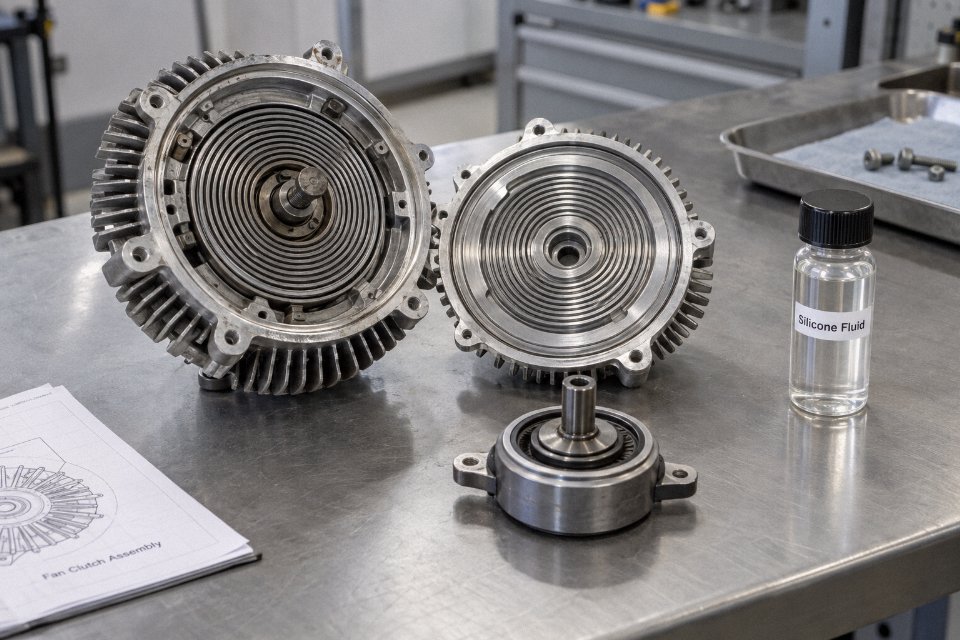
In a viscous fan clutch, silicone fluid transmits torque by shearing between closely spaced surfaces. Fluid distribution within the clutch controls engagement; viscosity alone does not determine fan speed. Crankshaft viscous dampers use relative motion between an inertia member and its housing to dissipate torsional vibration. Other viscous couplings require their own geometry, operating-speed envelope, and fluid specification.
The practical selection issues are linked:
- Viscosity and clearance: Together they influence shear resistance and torque. A thicker substitute can increase drag or damping, but also change response and heat generation.
- Thermal duty: Dissipated mechanical energy becomes heat. Sustained slip can make fluid temperature substantially different from the surrounding air temperature.
- Sealing and filling: Seal compatibility, leakage control, fill quantity, and internal cleanliness affect service behavior. Topping up by appearance is not a controlled repair.
- Durability: Qualification must address viscosity retention, leakage, and output after representative thermal and mechanical cycling.
A nominal viscosity match at 25 °C is not enough to qualify a replacement fluid. Device-specific viscosity–temperature data and validated filling instructions matter more than choosing the nearest catalog grade.
Interior rotary dampers operate on a different scale. Consoles, glove compartments, handles, and movable displays need controlled opening speed and acceptable hand feel. Excessive damping can make a cold glove compartment feel jammed; insufficient damping can let it drop against its stop. Check torque across temperature and life, including seal friction. This is tactile motion control—not evidence that the same fluid suits structural suspension damping.
Lubrication depends on the interface, not the label
Selected silicone lubricants can assist plastic sliding mechanisms, elastomer assembly, and some cable interfaces. Their suitability stops where contact loading, wear protection, or contamination control exceeds what the particular formulation can deliver.
Screen each interface for:
- Contact pressure and motion: Light sliding differs from heavily loaded gears, rolling contacts, or repeated boundary-lubrication duty.
- Material pairing: Test the actual resin, elastomer compound, coating, and lubricant—not merely generic labels such as “plastic” or “rubber.”
- Migration: Transfer onto contacts, paint surfaces, adhesive joints, or optical surfaces can outweigh any friction benefit.
- Cable construction: Liner chemistry, lubricant retention, and the cable supplier’s requirements determine whether lubrication helps or creates trouble.
Mineral oils, PAO, PAG, and esters are alternative lubricant base-fluid families, not interchangeable finished products. Each brings different solvency, compatibility, and formulation options. Neither a silicone oil nor an alternative base stock should replace a qualified automotive lubricant solely because its viscosity looks similar.
Specialized formulations require finished-product evidence
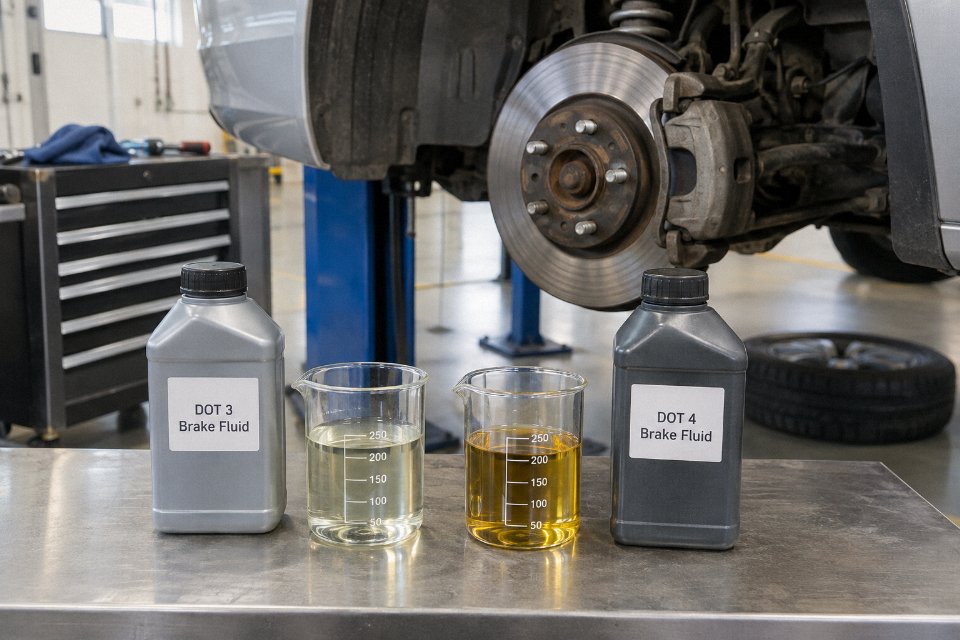
Silicone-based DOT 5 brake fluid is a specialized formulated fluid meeting applicable requirements, including the relevant provisions of FMVSS No. 116. It is distinct from glycol-based DOT 3, DOT 4, and DOT 5.1 fluids; the numbering does not make DOT 5.1 a silicone upgrade. Follow the vehicle manufacturer’s specification and service procedure. Bulk silicone oil is not brake fluid, and conversion or mixing must not be assumed acceptable.
Low-dose silicone antifoams serve another role entirely. Properly dispersed droplets can destabilize foam films, but performance depends on dose, dispersion, host-fluid compatibility, and interactions with the additive package. Excess or poorly dispersed antifoam can impair air release or create inconsistent results. Evaluate surface foam and entrained-air behavior separately in the finished lubricant.
Electrical uses also need precise product identification:
- Liquid insulating fluids: Suitable only where the component design specifies and qualifies them; moisture and contamination influence electrical performance.
- Compound base fluids: Silicone oil may be an ingredient in an engineered insulating or thermal compound.
- Other silicone materials: Cured gels, potting systems, and filled thermally conductive greases are not equivalent to liquid silicone oil. Their retention, cure, and heat-transfer behavior differ.
Manufacturing aids and surface treatments have separate boundaries
Release agents help demold automotive polymer and rubber components, but residue can interfere with painting, bonding, printing, or sealing. Easier release may therefore trade off against downstream cleaning and rejection costs. Qualify transfer onto the actual part surface, not just release performance at the mold.
Surface-care and water-repellent formulations likewise need application-specific checks for appearance, residue, and visibility. Performance on exterior trim says nothing about suitability inside a safety-critical mechanism.
Silicone oil is not a general replacement for engine oil, transmission fluid, axle oil, conventional shock-absorber fluid, engine coolant, or EV battery coolant. Those systems require finished-fluid performance and material compatibility that generic silicone properties do not establish. Even an electrically insulating fluid needs separate thermal, flow, aging, and system-compatibility qualification before use in a battery-cooling design.
Silicone oil and alternative fluid families
Compare fluids at the component’s operating temperature, load, and acceptance limits—not at equal catalog viscosity alone. Silicone may suit a damper yet be unsuitable for a loaded gear contact. The purchasing question is whether the complete fluid delivers the required performance over service life without creating a compatibility or contamination problem elsewhere.
Mineral oil and PAO: temperature behavior versus lubrication
Conventional PDMS generally changes viscosity less with temperature than mineral oil; PAO also offers favorable viscosity-temperature behavior. That can help stabilize damping, but the comparison needs grade-specific curves across the actual cold-start and hot-soak range. Equal viscosity at 25 °C does not establish equal operating torque.
Other differences can outweigh that advantage:
- Volatility: Molecular-weight distribution and light fractions matter. A low-viscosity silicone grade is not automatically less volatile than PAO; compare evaporation data under relevant conditions.
- Load carrying: Formulated mineral-oil and PAO lubricants have established antiwear and extreme-pressure additive systems. Neat PDMS is generally not a substitute for these systems in heavily loaded metal contacts.
- Additive compatibility: An additive soluble in hydrocarbon oil may separate or perform differently in silicone. PAO formulations also require deliberate additive-solubility management.
- Cost and component history: Mineral oil commonly has the lowest acquisition cost. PAO and silicone premiums are grade- and volume-dependent, while an existing lubricant specification may make changing families commercially unattractive.
A stable fluid film in a lightly loaded mechanism and protection at a highly loaded sliding contact are different requirements. Chemical stability alone does not establish wear protection or suitable friction behavior.
PAG, esters, and modified silicones
PAG and ester fluids can offer useful lubricity, but neither family is chemically uniform. Their suitability depends on molecular structure, formulation, and the surrounding materials.
- PAG: Water interaction varies substantially; some grades are water-soluble, while others are not. Moisture uptake can affect viscosity, corrosion behavior, and electrical performance. Compatibility with hydrocarbon residues and seal compounds needs checking before conversion.
- Esters: Polarity can support lubricity and additive solvency, but also changes seal interaction. Hydrolysis in the presence of water and heat is a concern for susceptible structures; oxidative durability depends on ester chemistry and stabilization.
- Electrical duties: Do not infer insulation performance from family name. Moisture, ionic contamination, additives, and aging products can change dielectric behavior in silicone, hydrocarbon, PAG, or ester fluids.
Conventional PDMS is also not interchangeable with every modified silicone. Phenyl modification can alter low-temperature behavior and thermal or radiation resistance, depending on substitution level. Fluorosilicones may improve resistance to particular fuels or solvents, but that does not prove compatibility with every elastomer or process chemical.
Modified chemistry usually brings a price premium and may change viscosity, solvency, or material interaction. The preferred choice flips only when the specific exposure justifies those trade-offs—not because “modified” sounds like a higher specification.
Conditional selection matrix
The labels below describe the proposed role, not blanket approval: established means a recognized use; formulation-dependent requires a suitable complete formulation; specific OEM approval means the component specification governs.
| Duty | Conditional recommendation | Status and limiting check |
|---|---|---|
| Damping | Silicone is a candidate where viscosity-temperature response matters; hydrocarbon fluids may suit existing designs. | Established: verify cold/hot torque, air release, leakage, and aged performance. |
| Lightly loaded compatible interfaces | Silicone, mineral oil, PAO, PAG, or ester may work, depending on contact materials. | Formulation-dependent: confirm wear, friction, seal response, and retention. |
| Heavy-load lubrication | Start with the specified formulated lubricant, often mineral-oil- or PAO-based; specialist PAG or ester products serve defined duties. | Specific OEM approval: neat silicone is not a default replacement. |
| Electrical insulation | Consider purpose-qualified silicone, mineral-oil, PAO, or ester dielectric fluids—not generic lubricant grades. | Formulation-dependent: verify electrical properties after moisture exposure and aging; obtain OEM approval where specified. |
| Contamination-sensitive assembly | Prefer the lowest-transfer fluid that meets the mechanical duty; silicone may require exclusion. | Formulation-dependent: test downstream coating, bonding, and contact performance. |
Migration can defeat an otherwise sound selection. A trace transferred from an interface to a bonding surface may cause rejection even though the lubricated mechanism operates correctly; hydrocarbon and ester residues can also interfere, so “silicone-free” is not equivalent to contamination-free.
Finished fluids and lifecycle cost
Engine oils, transmission fluids, and brake fluids are engineered systems, not interchangeable base stocks. Their additive packages, friction characteristics, corrosion protection, and approval testing are integral to performance. Neither neat PDMS nor another neat base fluid replaces a specified finished fluid merely by matching viscosity.
Compare lifecycle cost through:
- Initial fill quantity, purchase price, and top-up consumption.
- Leakage-related cleanup, maintenance access, and downtime.
- Wear, component life, and replacement labor.
- Qualification effort, change control, and production rejection risk.
A higher fluid price can be justified by verified service benefits. Without component testing and credible maintenance data, however, universal cost-saving claims are only sales arithmetic.
Failure modes and compatibility risks
A silicone fluid can meet the nominal viscosity requirement and still fail through seal changes, surface contamination, aeration, or unsuitable friction behavior. Qualification must cover the assembled component and its surrounding processes—not just the fluid datasheet. Compatibility belongs to a specific fluid grade, material compound, temperature history, and exposure condition.
Seal and assembly-material failures
- Elastomer changes: Swelling can increase seal drag or close clearances; softening can promote extrusion under pressure. Extraction of compound ingredients can cause shrinkage or hardening, sometimes becoming apparent after the seal dries. Silicone rubber is not automatically compatible with silicone oil: uptake depends on the fluid chemistry, molecular-weight distribution, and rubber formulation. Test the actual seal compound, including its cure system, against the proposed grade. Compare volume, hardness, and mechanical properties before and after representative aging using applicable methods and customer acceptance limits.
- Plastics, adhesives, coatings, and bonded joints: Check for dimensional change, stress cracking, softening, and loss of joint strength under operating stress and temperature. Chemical attack is only one failure path. A substrate may remain intact while transferred silicone prevents an adhesive or coating from wetting it properly. Test aged joints and production surfaces, not merely unstressed plastic coupons immersed in clean fluid.
Migration and contamination beyond the component
- Creep, leakage, and carryover: Low surface tension can help silicone fluid spread along interfaces and escape through small leakage paths. A more viscous grade may slow movement but will not reliably contain it; seal geometry and pressure cycling still matter. Transfer through gloves, wiping cloths, fixtures, or maintenance tools can produce paint fisheyes and bonding defects far from the original application. Segregate dispensing equipment and verify cleaning on the actual finish system—an apparently clean surface is not proof of adequate adhesion.
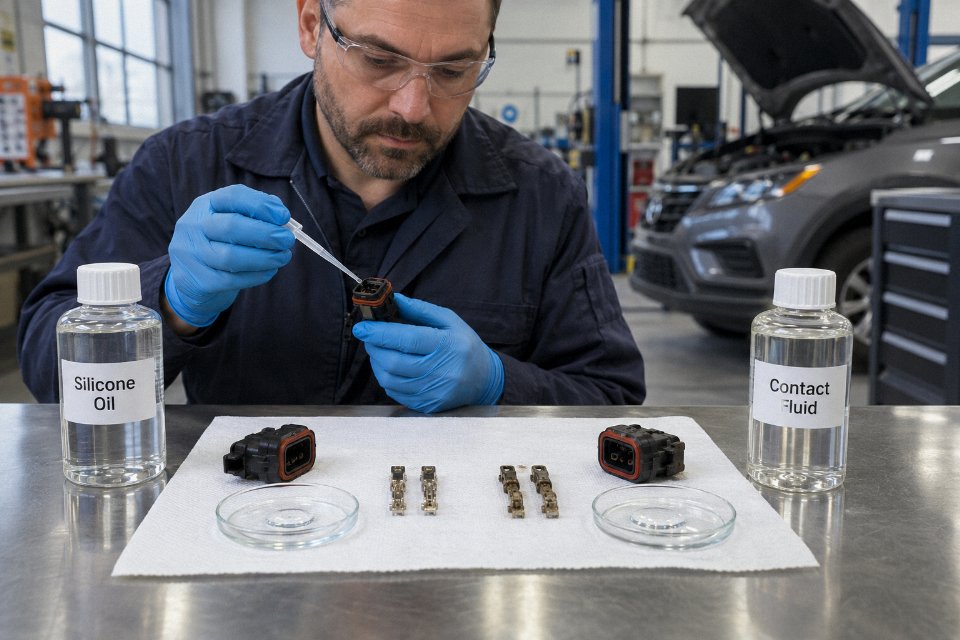
- Electrical-contact contamination: On sensitive low-force contacts, an insulating film may increase or destabilize resistance. In some arcing-contact systems, silicone vapor or transferred material can form silicon-containing deposits that impair switching. This is not a blanket prohibition around electrical equipment: assess volatility, enclosure ventilation, contact design, and switching duty using component-supplier guidance and application testing. Clean-room appearance alone tells little about contact performance.
Thermal aging and entrained air
- Temperature-driven drift: Heating normally lowers viscosity, reducing damping torque or increasing leakage; cooling can raise drag enough to prevent satisfactory movement. Evaporation of lighter fractions can increase the remaining fluid’s viscosity, while oxidation can cause thickening or deposits under suitable conditions. Ventilated hot service exposes fluid differently from a confined assembly: oxygen supply, vapor escape, pressure, and contact with metals all change the aging mechanism. Compare initial and aged viscosity, mass loss, leakage, and functional output under representative cycles. Flash point is not a continuous-use temperature rating.
- Aeration, foam, and heat buildup: Entrained gas increases effective compressibility and can make damping inconsistent or hydraulic response delayed. Repeated compression and viscous losses generate heat, which changes viscosity again. Foam at the surface and slow release of dispersed bubbles are different problems; a fluid can look relatively foam-free yet retain troublesome air. Silicone’s antifoam action at low dosage in another liquid does not establish acceptable air release as a bulk working fluid. Test filling, orientation, agitation, and recovery after cycling. Increasing viscosity may improve leakage control while making bubble escape slower.
Tribology and maintenance errors
- Wear and friction mismatch: Thermal stability does not establish load-carrying performance. Unmodified silicone oil may provide inadequate boundary lubrication in highly loaded contacts, while a system requiring controlled friction may chatter, slip, or lose holding torque after substitution. Evaluate the actual material pair, surface finish, load, speed, and additive package. A successful damper-fluid trial does not qualify the same grade for gears, clutches, or sliding bearings.
- Misidentification and unauthorized mixing: Silicone-based brake fluid is not interchangeable with glycol-based brake fluid simply because both containers say “brake fluid.” Other silicone oils are not qualified brake fluids at all. Mixing can invalidate performance assumptions and leave incompatible residual fluid or contamination. Confirm the specified fluid and approval before filling; follow the vehicle or component manufacturer’s instructions for any permitted service change. There is no universal flushing or conversion procedure. Keep labeled, dedicated transfer equipment rather than relying on container color or an operator’s memory.
Handling and environmental controls
- Exposure, spills, and restricted constituents: Use the grade-specific SDS for storage, PPE, ventilation, fire response, and spill containment. Address slippery floors and mist generated by spraying or hot equipment; low bulk volatility does not eliminate aerosol exposure. Where ignition sources or thermal decomposition are credible, use supplier evidence for the actual conditions. Check local waste requirements and customer limits on residual cyclic siloxanes against current composition data. Neither general silicone chemistry nor a supplier’s broad compliance statement establishes acceptance for every customer or jurisdiction.
Grade selection and purchasing specifications
A usable purchase specification identifies the fluid, its operating envelope, measurable acceptance limits, and the evidence required with each shipment. “Automotive-grade silicone oil” does not do that. Engineering should own the functional limits; purchasing should make those limits enforceable through agreed documentation, change control, and supply terms.
Build the technical and supply requirements
- Define the service envelope before selecting viscosity. Record:
- Intended function and required component life, expressed in operating hours, cycles, or calendar exposure.
- Continuous fluid temperature, transient peaks and duration, and minimum start-up temperature.
- Shear conditions, mechanical load, duty cycle, and component geometry.
- Electrical exposure, including voltage and frequency where relevant.
- All wetted materials, including seals, plastics, adhesives, coatings, and assembly residues.
Ambient temperature alone is insufficient: the fluid inside a confined damper can run hotter than the surrounding assembly.
- Lock down chemistry and viscosity. Identify PDMS or the required modified silicone chemistry, including restrictions on blending or substitution. State kinematic viscosity in mm²/s at a reference temperature—commonly 25 °C—with agreed tolerances and a named method such as ASTM D445, where applicable. Request grade-specific viscosity-temperature data spanning the service envelope. Higher viscosity can increase damping resistance but also cold-start torque; the preferred grade can change once actual clearances and temperatures are considered.

- Specify cleanliness and composition where they affect performance. Select justified controls rather than demanding every available assay:
- Moisture for electrically sensitive or moisture-sensitive assemblies.
- Volatile content and residual cyclic siloxanes where evaporation, deposits, or emissions matter.
- Particle limits tied to working clearances or electrical requirements.
- Identified trace contaminants where corrosion, insulation, or downstream surface quality is vulnerable.
Define the measurement basis and reporting limit. Total mass loss is not a substitute for identifying specific cyclic siloxanes, and “low volatiles” is not an acceptance criterion.
Turn performance language into testable requirements. Specify aging temperature, duration, atmosphere, specimen preparation, and permitted changes in viscosity or mass. For dielectric breakdown, a method such as IEC 60156 must be paired with agreed conditioning and acceptance limits; a result from a different electrode arrangement is not automatically equivalent. Component qualification should compare initial and aged behavior, including seal volume and hardness changes, damping torque, air release, electrical performance, or contamination transfer as relevant. A passing incoming-fluid test does not establish lifetime suitability in the assembly.
Require documentation and verify its scope. Obtain:
- Current TDS and SDS, plus a batch certificate of analysis identifying actual results for agreed release tests.
- Lot traceability, shelf-life basis, storage guidance, and packaging cleanliness controls.
- Written notification requirements for material, process, manufacturing-site, or test-method changes.
- Evidence supporting claimed OEM approvals, customer qualifications, quality-management certification, and regulatory status.
Check the exact product, manufacturing site, document validity, and intended use. A supplier’s general certification or another customer’s approval does not qualify your grade.
Check supply execution, not just price per kilogram. Confirm available capacity and replenishment lead times. Agree packaging options, export documentation, and disruption arrangements, including whether backup production requires requalification. Integrated sourcing can reduce handoffs and improve lot consistency when specifications and traceability remain controlled; country of origin alone establishes neither quality nor continuity.
Compact purchasing-specification template
| Requirement class | Fields to complete |
|---|---|
| Mandatory requirements | Chemistry; viscosity and tolerance; test methods; release limits; packaging; batch documentation; change notification |
| Preferred attributes | Pack size; replenishment lead time; retained samples; local inventory |
| Supplier declarations | Manufacturing site; traceability; storage and shelf life; approval and regulatory scope |
| Requires validation | Temperature-dependent performance; aged properties; material compatibility; component function; contamination transfer |
Resolve validation items before production release, rather than leaving them as assumptions buried in the quotation.
Component testing and production qualification
- Document the baseline and credible failure modes. Record the incumbent fluid, component revision, fill quantity, assembly process, duty cycle, and known field problems. Identify what failure means for this component: loss of damping, seal leakage, contact contamination, or another functional limit. Agree acceptance limits with the responsible engineering team before testing, using drawing requirements, supplier data, applicable test methods, and customer specifications. A successful screening test justifies further evaluation; it does not establish component qualification.
Verify viscosity under relevant conditions. ASTM D445 or ISO 3104 may be suitable for kinematic viscosity, provided the current method’s scope and procedure fit the fluid and measurement range. Record temperature, conditioning, and initial versus aged results. Use appropriate rheometry where shear dependence, low-temperature behavior, or operating shear rates matter. A single viscosity result at 25 °C cannot predict damping torque through a cold start and subsequent warm-up.
Test materials, then assembled interfaces. Use ASTM D471 or ISO 1817 where applicable to assess elastomer exposure, tracking volume and hardness changes against agreed limits. Include other relevant materials:
- Plastics, adhesives, coatings, and electrical insulation.
- Stressed molded parts and compressed seals.
- Actual assemblies exposed to representative temperatures, durations, and service contaminants.
Unstressed immersion coupons are useful screens, but they can miss stress cracking, seal compression effects, and leakage along an assembled interface.
Measure component performance across the operating envelope. Establish initial performance, then repeat measurements after cycling and aging:
- Torque and actuation feel across temperature and speed.
- Leakage, wear, and noise through representative loading.
- Component temperature and heat rejection during sustained operation.
Viscosity influences both resisting torque and heat generation; self-heating can then reduce viscosity and change the response. Accelerated exposure shortens development time, but excessive temperature may introduce a different degradation mechanism. Correlate it with service-representative conditions rather than assuming hotter always means equivalent aging.
Add application-specific fluid tests. Select dielectric performance and moisture measurements for electrical duties; evaporation testing for exposed or hot service; contamination-transfer checks near bonding, painting, or contacts; and foaming or air-release measurements where entrained gas affects operation. Verify method applicability to the silicone grade. A petroleum-fluid procedure may produce a number without demonstrating relevant component behavior.
Keep safety-critical approval separate. Require applicable regulatory and OEM testing for the finished formulation and intended use. A satisfactory silicone base-fluid certificate cannot establish brake-fluid compliance or vehicle suitability. Neither can a component bench test replace required approval evidence.
Release through pilot builds and controlled production. Retain fluid batch identity, certificates, fill records, equipment settings, and qualification results. Pilot builds should expose production variables—dispensing temperature, trapped air, line residues—that laboratory filling can hide. Monitor agreed performance indicators for drift, and define requalification triggers covering chemistry, supplier or manufacturing-site changes, processing, and packaging. Retesting scope should follow the change’s failure risk, not simply repeat the cheapest incoming inspection.
Frequently asked questions
Is silicone oil safe for every rubber seal?
No. Compatibility depends on the elastomer formulation and the specific fluid grade, not simply the seal’s polymer name. Temperature and exposure time affect swelling or extraction; mechanical stress can turn modest property changes into leakage. Qualify the actual seal compound under representative compression and motion.
Can silicone oil replace engine oil or transmission fluid?
Not as a casual substitution. Engine oils require validated lubrication and additive performance; transmission fluids also need tightly controlled friction characteristics for clutches and shifting. A silicone fluid’s viscosity or temperature stability does not establish equivalence. Use the specified fluid and required OEM approval.
Is DOT 5 the same as DOT 5.1?
No. DOT 5 is silicone-based; DOT 5.1 is non-silicone-based, generally glycol-ether-based. The numbering does not indicate interchangeable chemistry. Follow the vehicle manufacturer’s specified brake fluid, including ABS requirements. Do not mix these fluids or treat a reservoir drain as an adequate conversion procedure.
Does higher viscosity always improve damping?
Higher viscosity usually increases resistance in an unchanged damper, but that can produce excessive operating force rather than better control. Fast movement can raise component loads and heat generation. Select viscosity against the required force or torque across operating speed and temperature—not just a room-temperature hand check.
Can silicone oil be used near automotive electronics?
Qualified silicone fluids can provide electrical insulation, but that does not make uncontrolled contamination acceptable. Migrating fluid can reach contacts or bonding surfaces; under electrical arcing, silicone contamination can contribute to insulating deposits. Keep approved dielectric applications separate from migration-sensitive assemblies, and verify cleanliness controls at assembly.
Is silicone oil automatically suitable for EV battery cooling?
No. Electrically insulating behavior alone does not qualify a battery coolant. Direct-immersion service needs evidence for aged dielectric performance and cell-material compatibility. Heat-transfer capability must be demonstrated in the actual circuit, while leakage, fire behavior, and fault response require system-level safety assessment.
Can different silicone oil grades be mixed?
Some grades of the same silicone chemistry may be miscible, but a uniform-looking blend is not a qualified fluid. Blend viscosity is not a simple arithmetic average. Purity and additive behavior can also change. Obtain supplier confirmation and revalidate component performance before authorizing production blending or maintenance top-ups.
Application specification and sample validation
Select silicone oil when its demonstrated damping, temperature response, surface behavior, or insulating function matches the component’s requirements—not because a brochure calls it stable or versatile. The buying decision rests on the specified grade and evidence from representative testing; a familiar viscosity designation alone is not enough to authorize a substitution.
Before releasing a purchase specification, close these six items:
- Approved function: Identify whether the fluid provides damping, lubrication, insulation, surface treatment, or an additive function. Confirm any OEM or customer restrictions.
- Specified chemistry and viscosity: Record the silicone chemistry, viscosity at the stated reference temperature, permitted tolerance, and required temperature-dependent behavior. Equal viscosity at 25 °C does not establish equivalent cold-start damping.
- Material compatibility: Retain evidence for the actual seals, plastics, coatings, adhesives, and metals contacted during service, including relevant aging conditions.
- Contamination control: Define storage, dispensing, transfer equipment, and separation from paint or adhesive operations. A shared funnel can defeat an otherwise sound contamination-control plan.
- Documented performance: Connect supplier data and component test results to agreed acceptance limits. Where applicable, include aged viscosity, damping torque, air release, electrical performance, and contamination transfer.
- Production traceability: Require grade identification, batch records, agreed quality documentation, and notification requirements for changes affecting the approved specification.
Stop the release if the substitution lacks required safety-critical authorization, compatibility evidence is missing, contamination risk remains unresolved, or operating claims lack supporting data. A sample that pours correctly at room temperature does not close those gaps.
For a useful supplier review, prepare:
- The component, fluid function, and current grade, if any.
- Minimum, normal, and peak operating temperatures, with exposure duration.
- Target viscosity or damping response across the operating range.
- All contact materials and nearby contamination-sensitive processes.
- Required OEM, customer, or regulatory approvals.
- Expected annual demand, trial quantity, packaging size, and dispensing needs.
Request an application-specific grade recommendation and evaluation sample from SiliconChemicals, together with the available TDS, SDS, and batch quality documentation. Treat that recommendation as a candidate for qualification, not proof of compatibility or vehicle approval. Agree on acceptance criteria first, then test the sample in representative materials and hardware before purchase approval or production release.