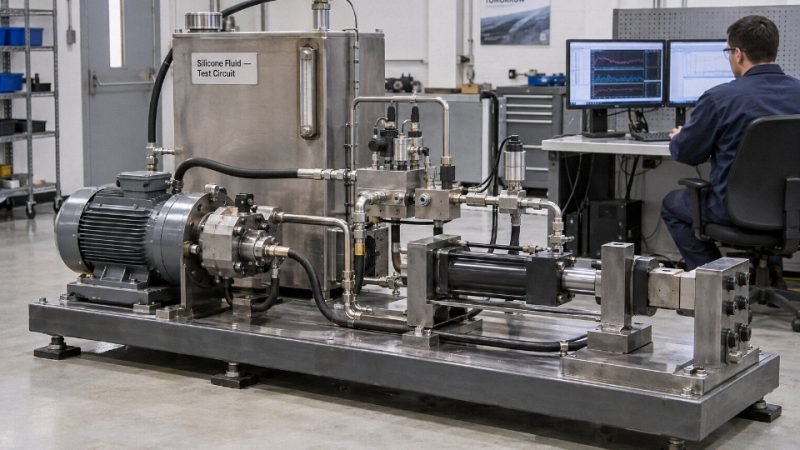
A hydraulic circuit that starts sluggishly when cold but loses control accuracy as it warms can turn a fluid-selection problem into rejected parts and lost production. Silicone oil can help where temperature-driven viscosity change is the limiting factor—but choosing it without checking the pump’s lubrication requirements can trade process instability for expensive component wear.
Silicone oil is used in selected hydraulic systems because suitable grades maintain relatively stable viscosity across temperature changes and offer useful thermal stability. It is not a universal replacement for mineral hydraulic oil: suitability depends on the specific formulation’s lubrication performance, pressure response, and compatibility with the equipment, including its seals.
The catch is that favorable viscosity behavior does not guarantee satisfactory hydraulic performance. A silicone fluid advertised at 25 °C cannot be compared directly with an ISO viscosity grade defined at 40 °C—and even a correct viscosity match leaves pump durability and system stiffness to verify.
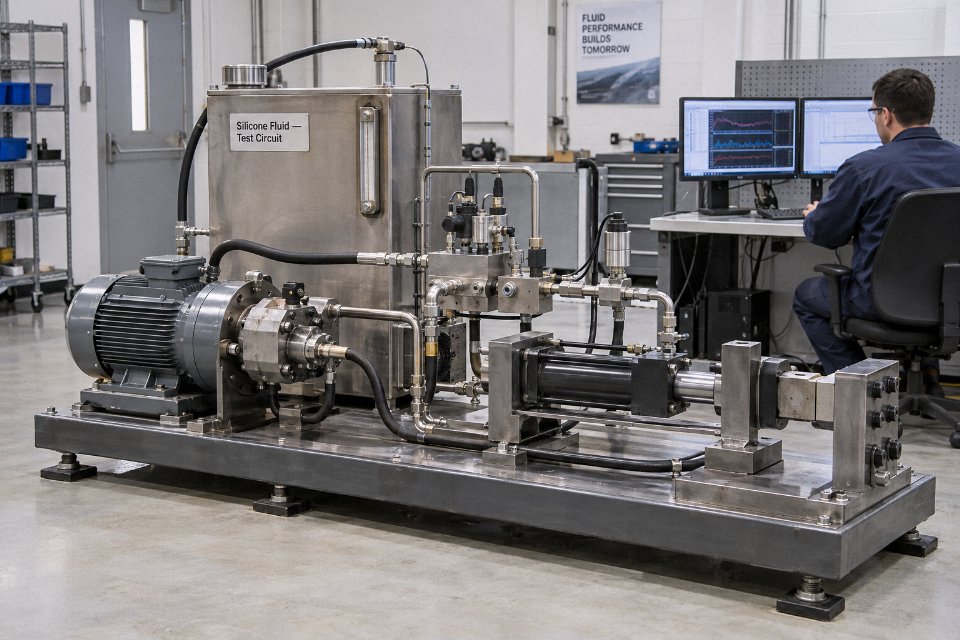
Silicone fluid properties behind hydraulic performance
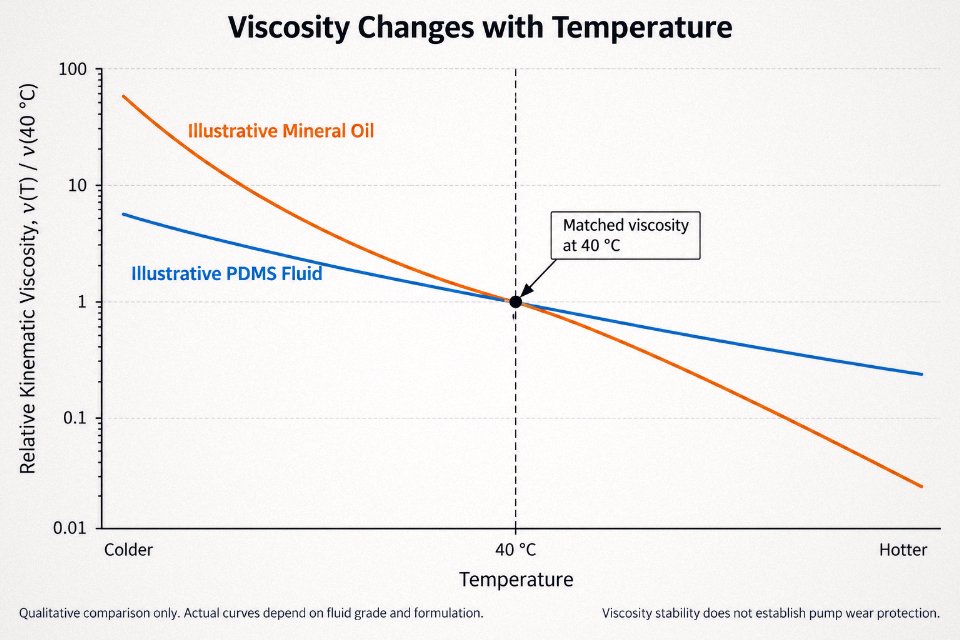
Silicone fluids can limit viscosity changes with temperature, helping selected hydraulic assemblies maintain more consistent damping and flow resistance. That advantage is conditional: molecular structure, fluid grade, pressure, entrained air, and component design determine the actual response. A favorable viscosity-temperature curve is useful evidence, not a complete hydraulic qualification.
Molecular structure sets the viscosity-temperature behavior
The flexible silicon–oxygen backbone of common polydimethylsiloxane (PDMS) fluids allows molecular segments to move readily. Together with their intermolecular interactions, this helps explain why many PDMS grades show less viscosity change with temperature than conventional mineral oils. It does not make every silicone formulation equivalent.
Molecular weight and its distribution influence viscosity. Changing the organic groups attached to silicon, such as introducing phenyl groups, changes other properties as well; additives and blending further alter the finished fluid’s behavior. A curve for one PDMS grade cannot qualify a modified silicone fluid.
In a damping restriction, relatively stable viscosity can reduce temperature-driven changes in pressure drop. In a clearance-controlled component, it can reduce changes in internal leakage. The benefit is less variation, not automatically lower leakage or better damping: those depend on selecting the right viscosity for the geometry and duty.
Cold-start performance requires viscosity at the starting temperature
Pour point indicates fluid movement under a specified laboratory method; it does not establish whether a pump can draw the fluid through a suction line. Pumpability also depends on inlet losses and available inlet pressure. Actuator response adds further requirements because fluid must pass through valves and restrictions fast enough to produce the required motion.
A fluid may remain pourable yet cause suction starvation or sluggish actuation after an overnight cold soak. Check three separate conditions:
- Fluid movement: Confirm pour point using the identified test method, but treat it only as a screening property.
- Pump inlet performance: Use viscosity at the actual starting temperature, line geometry, strainer condition, and the pump’s permitted inlet conditions.
- Useful motion: Verify starting torque, pressure buildup, and actuator travel time under the expected load.
Lower viscosity can improve cold starting but increase hot leakage and reduce lubricating-film thickness. The preferred grade changes when the cold-start constraint becomes less important than hot-running efficiency or wear.
Keep reference temperatures consistent. ISO VG 22, 32, 46, and 68 describe nominal kinematic viscosity at 40 °C, with approximately ±10% grade limits under ISO 3448. A silicone fluid advertised at 25 °C cannot be matched directly to those designations without its viscosity-temperature data.
Thermal stability and oxidation resistance are different properties
Thermal stability concerns resistance to heat-driven chemical change; oxidative stability concerns reactions involving oxygen. Silicone fluids can perform favorably in both respects, but neither property establishes a universal continuous operating temperature. Exposure time and the test environment matter as much as the temperature printed on a brochure.
Evaluate the service environment through distinct mechanisms:
- Oxygen access: An open reservoir or frequently breathing headspace can sustain oxidation differently from a sealed assembly. A closed system still contains some dissolved oxygen.
- Residence time and hot spots: Brief exposure near a heated surface is not equivalent to months at the same temperature. Local temperatures may exceed the reservoir reading.
- Contamination and wetted materials: Process chemicals, wear debris, and particular metal surfaces can change degradation pathways. Verify compatibility with the actual fluid formulation.
- Observed degradation: Depending on chemistry and conditions, molecular breakdown or molecular growth can alter viscosity; deposits or gel formation may also become concerns.
A thermally stable base fluid can therefore give disappointing service in a contaminated, aerated installation. Grade-specific aging data should reflect the intended atmosphere, exposure duration, and construction materials.
Dielectric properties depend on cleanliness and geometry
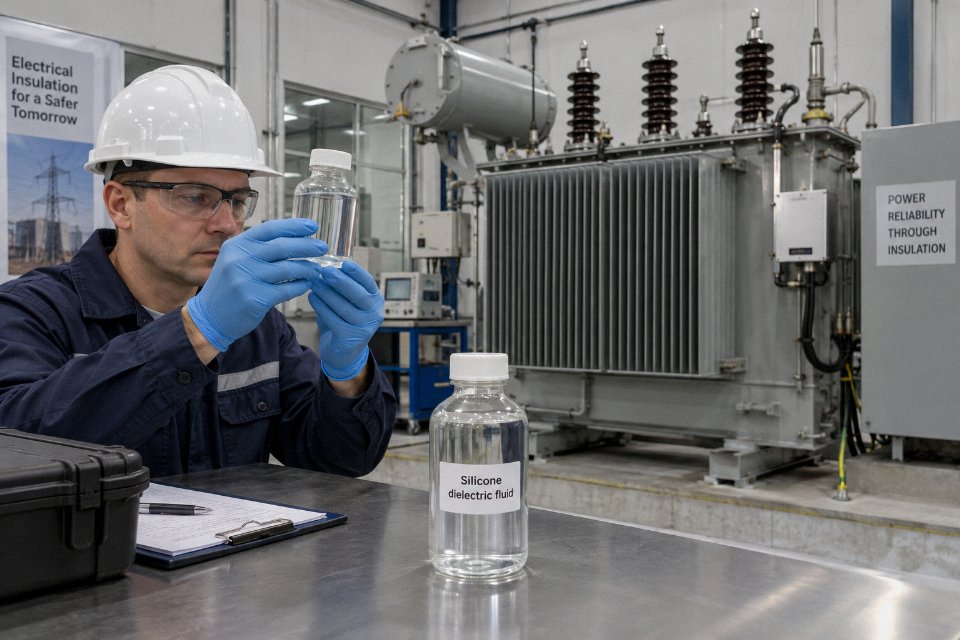
Clean, dry silicone fluids can provide useful electrical insulation in assemblies combining hydraulic or damping functions with electrical components. That is a fluid property under defined conditions—not an insulation rating for the complete assembly.
Moisture and conductive particles can undermine dielectric performance. Additives may change conductivity, while electrode spacing, sharp edges, bubbles, and local electric-field concentration affect breakdown behavior. Where insulation is safety-critical, qualify the filled assembly under the applicable electrical requirements, including representative contamination and aging conditions. A fresh-fluid dielectric-strength result alone is insufficient.
Volatility affects both fluid quantity and consistency
Evaporation can reduce fill volume and change the composition of a silicone fluid. Lower-molecular-weight fractions generally escape more readily; their preferential loss can leave a more viscous remaining fluid. This deserves particular attention with lower-viscosity grades, exposed surfaces, and sustained elevated temperatures.
A well-sealed assembly limits escape but does not eliminate vapor formation or redistribution into cooler spaces. Compare volatility data only when test temperature, duration, and method are identified. Low mass loss in one laboratory test does not establish a service interval for an open reservoir.
High viscosity index does not guarantee stable hydraulic response
Viscosity index describes temperature-related viscosity behavior, not pressure response or stiffness. Pressure-dependent viscosity affects restriction losses and lubricating films. Fluid compressibility affects how much displacement initially compresses the fluid rather than moving the load.
Dissolved gas can emerge when pressure falls; free or entrained gas substantially reduces effective system stiffness. The result can be delayed motion, spring-like response, or inconsistent damping even when temperature is controlled. Component clearances introduce another dependency: wear can increase leakage beyond what a favorable viscosity curve can compensate for.
For procurement, require identified-grade viscosity curves, relevant pressure-viscosity and bulk-modulus data, and temperature limits tied to stated test conditions. Where those data are unavailable, instrumented component testing remains necessary; viscosity index alone cannot close the selection.
Hydraulic performance limits and failure risks
Silicone fluid’s temperature advantages do not, by themselves, qualify it for a hydraulic circuit. A candidate can have the right operating viscosity yet provide inadequate pump lubrication, excessive compliance, poor air release, or unacceptable materials compatibility. Those limits can outweigh temperature performance, particularly in high-pressure pumps, precision actuators, and plants with contamination-sensitive finishing operations.
Correct viscosity does not guarantee pump protection
Hydrodynamic lubrication separates moving surfaces with a fluid film generated by motion and geometry. Mixed lubrication permits some asperity contact; boundary lubrication depends heavily on surface chemistry and protective films. Loaded pump contacts can enter these regimes during startup, low-speed operation, pressure spikes, or hot running.
Matching viscosity is not the same as matching antiwear performance. An unformulated silicone fluid may lack the antiwear or extreme-pressure chemistry needed to protect contacting surfaces, even when its viscosity appears appropriate. Pressure-dependent viscosity also affects film formation; do not assume equivalence with the pump’s approved mineral or synthetic fluid.
Qualification should establish:
- Lubrication evidence: relevant wear testing and pump endurance results for the actual formulation, not merely the silicone base-fluid family.
- Operating envelope: viscosity at startup and operating temperature, inlet conditions, speed, load, and pressure.
- OEM acceptance: documented approval or an agreed qualification procedure.
A fluid sold at a viscosity measured at 25 °C cannot be compared directly with an ISO VG designation, which references 40 °C. Resolve that mismatch before assessing lubrication.
Compressibility changes actuator behavior
Effective system bulk modulus describes the stiffness of the complete pressurized volume, not just the liquid. Entrained gas, flexible hoses, temperature, and component expansion all influence how much pump displacement produces pressure rather than immediate actuator motion.
The operating consequences differ:
- Pressure buildup: compression consumes delivered volume before the load moves, affecting cycle time and controller response.
- Positioning and stiffness: greater compliance permits load-dependent displacement and can complicate tuning or promote oscillation.
- Stored energy: compressed fluid, trapped gas, and expanded hoses release energy during unloading or failure, requiring controlled depressurization.
Neat-fluid bulk-modulus data cannot establish installed stiffness. At comparable pressure and volume, a more compliant circuit stores more compression energy, but the actual quantity requires the pressure-volume relationship. Temperature changes liquid properties and gas behavior, so evaluate both cold starts and stabilized production.
Foam, air release, and cavitation are different problems
A reservoir with little visible foam can still supply aerated fluid to the pump. Diagnose the mechanisms separately:
| Mechanism | What happens | Engineering consequence |
|---|---|---|
| Surface foaming | Bubbles accumulate above the liquid | Overflow, unstable level readings, possible air recirculation |
| Entrained air | Dispersed bubbles remain within the liquid | Reduced stiffness, noise, erratic delivery |
| Dissolved-gas release | Falling pressure brings dissolved gas out of solution | Gas pockets and disrupted pumping |
| Vapor cavitation | Local pressure falls below the fluid’s vapor pressure | Vapor cavities collapse after pressure recovery, potentially damaging surfaces |
Air-release performance depends on the formulation and operating conditions. Reservoir residence time, return-line placement, suction leaks, and inlet restrictions also matter. An antifoam can break surface bubbles without ensuring rapid removal of submerged bubbles.
Check pump inlet limits against the current manual using actual temperature, flow, filter condition, and suction plumbing. A clean-looking sight glass is not an inlet-condition measurement.
Leakage and compatibility require separate checks
Silicone does not inherently “leak more” in every circuit. Internal leakage depends on operating viscosity, pressure differential, clearances, wear, and geometry. Higher viscosity can reduce clearance leakage, but sacrifices include greater cold-start resistance and potentially poorer pump inlet conditions.
External leakage also involves surface wetting, joint condition, and seal design. A fluid that spreads readily can make a small escape conspicuous; that observation alone does not establish a higher volumetric leak rate.
Materials review must cover more than the primary seal:
- Seals and hose liners: swelling, shrinkage, plasticizer extraction, softening, and permeability can alter sealing force or service life.
- Hose assemblies: liner compatibility does not establish compatibility of the complete construction, including bonding layers.
- Coatings and adhesives: exposure can weaken bonded joints or release coating debris into the circuit.
- Plastics: assess dimensional change, softening, and stress cracking where relevant to the specific resin.
Compatibility depends on the exact compound, fluid formulation, temperature, exposure time, and mechanical loading. An elastomer family name is insufficient evidence; immersion results should be supplemented by functional testing where seal motion or pressure cycling matters.
Thermal stability is not cooling capability
A fluid can tolerate heat while removing it poorly in a particular installation. Establish the heat balance from measured losses, rather than assuming that high-temperature stability permits the existing cooler to remain unchanged.
Evaluate:
- Heat generation: pump and motor efficiency, throttling losses, internal leakage, and viscous drag.
- Heat transport: mass flow and specific heat determine the temperature rise associated with carrying a given heat load.
- Heat rejection: thermal conductivity, viscosity-dependent heat transfer, cooler construction, fouling, and ambient conditions govern cooler performance.
An acceptable bulk temperature does not rule out damaging local temperatures at loaded contacts.
Fire exposure and process contamination can rule out use
A high flash point does not establish fire resistance or nonflammability. Pressurized spray, mist, hot surfaces, and ignition sources create exposure conditions that a flash-point result alone does not represent. Require application-relevant classification and test evidence, then verify suitability against equipment documentation and site requirements.
Silicone carryover creates a separate production risk:
- Painting: contamination can cause craters, fisheyes, or poor wetting.
- Bonding: transferred residue can reduce adhesion.
- Surface treatment: residue can interfere with cleaning, treatment uniformity, or subsequent coating adhesion.
Small transfers through gloves, tools, leaks, or shared cleaning equipment can have disproportionate consequences. Contamination-sensitive plants may need segregation that outweighs the fluid’s operating benefits.
Finally, silicone antifoam in conventional hydraulic oil is not evidence that bulk silicone oil is suitable. A low-dose additive performs a specific interfacial function; the base fluid must carry the full lubrication, pressure-transmission, cooling, and compatibility duties.
Silicone fluids and competing hydraulic fluid families
For conventional industrial hydraulics, an OEM-approved mineral-oil antiwear fluid remains the reference against which alternatives should earn their place. Silicone chemistry deserves further evaluation when a defined operating requirement justifies changing fluid families—not simply because a supplier quotes a wider temperature range. Compare finished formulations, not base-fluid labels.
What each fluid family brings to the shortlist
- Unmodified polydimethylsiloxane (PDMS): Often the starting point for silicone-fluid evaluation because of its viscosity-temperature behavior. A general-purpose PDMS oil, however, is not automatically a formulated hydraulic lubricant. Require evidence of pump wear performance and compatibility with the complete wetted system.
- Phenyl-modified silicones: Phenyl substitution can change low-temperature behavior, solvency, and thermal performance. The direction and magnitude depend on molecular structure and substitution level; “phenyl silicone” alone is not a usable purchasing specification.
Other specialty modified silicones: Functional groups or blended components can alter lubrication, solvency, and material compatibility. Modification may improve one requirement while compromising another. Neither a specialty designation nor compatibility with one elastomer establishes hydraulic suitability.
Mineral-oil antiwear fluids: These offer the broadest conventional reference for additive systems, pump approvals, distributor availability, maintenance familiarity, and purchase cost. Their practical advantage includes finding approved replacement oil during a weekend breakdown. Temperature extremes, fire requirements, or environmental specifications can justify another family.
PAO and other synthetic hydrocarbons: Worth evaluating where cold starting, oxidation resistance, or continuity with an existing hydrocarbon system matters. PAO-based finished fluids often offer useful low-temperature performance, but synthetic hydrocarbons are not interchangeable. Seal behavior, additive chemistry, and conversion requirements still need checking.
Synthetic esters: Can offer strong lubricity; selected formulations also address fire resistance or biodegradability requirements. These are separate product attributes, not automatic consequences of ester chemistry. Water contamination can promote hydrolysis, with susceptibility depending on ester structure, temperature, and formulation. Confirm seal behavior and product-specific approvals.
Fire-resistant fluids: Water-glycol products use their water-containing formulation to support fire resistance, but require control of water content, concentration, and corrosion protection. Other water-containing families, including emulsions, have different operating limits. Water-free phosphate esters and other qualified synthetic products follow different maintenance and compatibility rules; phosphate ester conversions may involve seals, hoses, coatings, and dedicated handling equipment.
Readily biodegradable is a separately verified requirement, not a synonym for synthetic, ester, or silicone. Request the applicable test evidence and any specified environmental certification for the exact product. Do not describe silicone oil as biodegradable or environmentally preferable without supporting evidence.
Decision matrix for an actual hydraulic circuit
Start with the machine’s operating envelope and acceptance limits, then ask each supplier to populate the same comparison sheet. Keep measured fluid properties separate from approval claims: a favorable laboratory result does not authorize use in a particular pump.
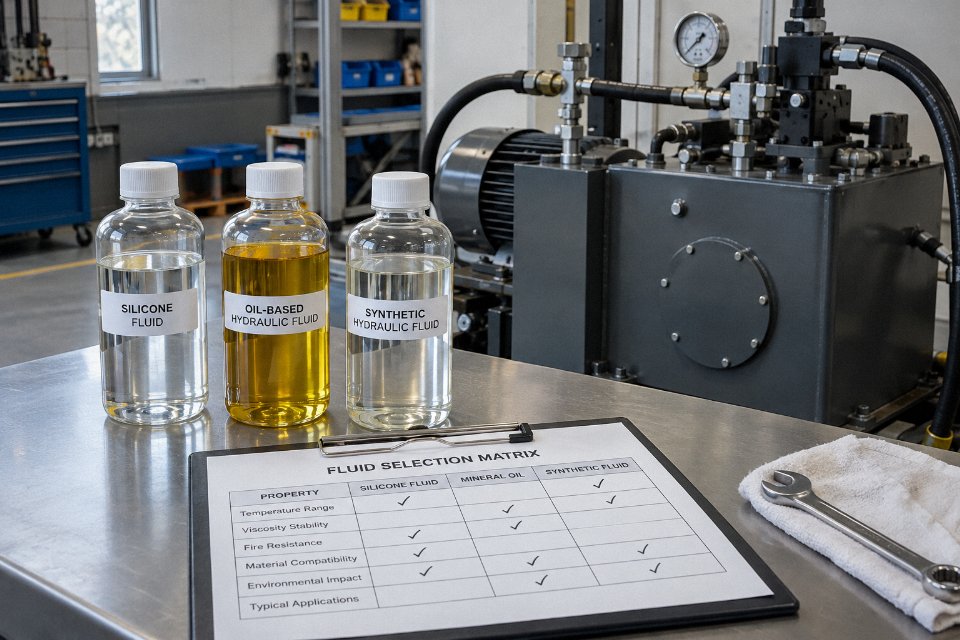
| Decision input | Evidence to compare across shortlisted products |
|---|---|
| Actual operating temperature | Startup, steady-state, and local peak temperatures; viscosity across that envelope. Silicone, PAO, or ester advantages must be demonstrated for the selected grade. |
| Working pressure and lubrication demand | Pump-specific approval or relevant wear testing; pressure-dependent viscosity data where necessary. Do not infer boundary lubrication performance from base-fluid viscosity. |
| Dynamic response | Effective bulk modulus and air-release behavior under comparable temperature, pressure, and aeration conditions; verify against actuator response requirements. |
| Fire requirement | Applicable classification and test documentation for the finished fluid. Neither silicone chemistry nor “synthetic” establishes fire resistance. |
| Material compatibility | Supplier evidence covering actual seals, hoses, coatings, metals, and residual fluid—not merely a generic compatibility chart. |
| OEM approval | Written acceptance for the equipment model, duty, and fluid grade, including restrictions and warranty implications. |
| Lifecycle cost | Fluid price plus conversion, flushing, downtime, monitoring, filtration, replacement intervals, leakage losses, and disposal. |
Viscosity data need a common basis. ISO VG 22, 32, 46, and 68 designate nominal kinematic viscosity at 40 °C, with ISO 3448 limits approximately ±10%; a silicone fluid advertised at 25 °C cannot be compared directly without its viscosity-temperature data.
A specialty fluid can cost more per drum yet reduce cold-start delays or replacement frequency. That advantage disappears if conversion requires expensive component changes or the pump lacks approval. The defensible choice is the approved finished formulation that meets the operating duty at acceptable lifecycle cost—not a universal ranking of fluid families.
Applications suited to silicone hydraulic fluids
Silicone hydraulic fluids are credible candidates for purpose-designed damping devices and selected specialist assemblies where temperature-stable resistance or electrical insulation matters more than conventional hydraulic power transmission. The strongest application case is a device engineered around a specified silicone fluid—not an existing hydraulic circuit being converted because silicone handles temperature well.
- Purpose-designed dampers, dashpots, and motion-control devices.
These include restricted-flow dashpots, rotary motion controls, and shock-control assemblies designed for silicone service. Fluid passing through a metering clearance or orifice produces resistance; viscosity changes can therefore alter closing time, return speed, or shock absorption. Silicone’s viscosity-temperature behavior can help maintain repeatability, but does not make damping constant. Validate the complete force–velocity curve across temperature and stroke rate: at higher flow rates, restriction geometry and inertial effects can become as important as viscosity. Selected low-temperature or thermally variable instruments and actuators.
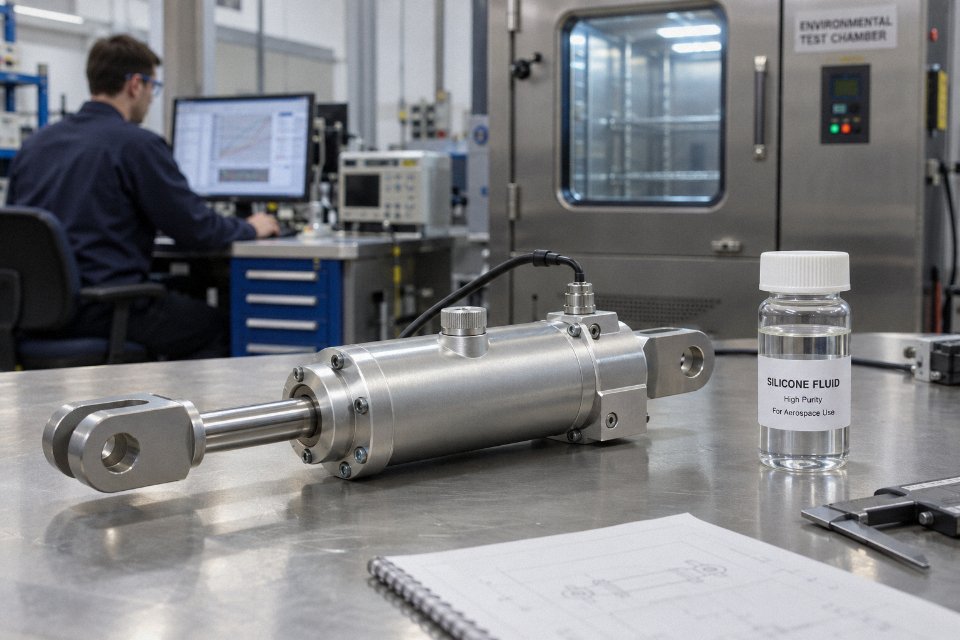
Candidates include sealed instrument mechanisms and low-duty actuators whose specified fluid must remain usable through cold starts and temperature cycling. Check:- Pressure transmission and displacement under load.
- Seal leakage and compatibility through thermal cycles.
- Breakaway force, response time, and return behavior.
- Equipment approval for the exact formulation.
A mechanism that moves acceptably during a warm bench test may still miss its response requirement after a cold soak. Test the assembled device, not just the fluid’s pour point.
Specialized electrically sensitive assemblies.
A silicone fluid may provide mechanical resistance or pressure transmission while also serving as an insulating medium. That dual role can simplify an assembly, but electrical suitability needs independent qualification under representative conditions. Moisture, particles, entrained gas, and wear debris can compromise dielectric performance. Verify the specified dielectric test method and acceptance limits, then assess the filled assembly after representative operation; a clean-fluid supplier result does not establish lifetime insulation performance.Explicitly approved DOT 5 brake systems.
Silicone-based DOT 5 brake fluid is a specialized formulated brake fluid, not generic silicone oil. DOT 3, DOT 4, and DOT 5.1 are glycol-based classifications; the similar numbering does not establish interchangeability. Never substitute generic silicone oil for brake fluid or casually mix silicone-based DOT 5 with glycol-based fluids. Follow the vehicle or brake-system manufacturer’s specified fluid and service procedure. A conversion requires explicit approval, not merely draining the reservoir.Conventional pump-driven industrial hydraulics: validation required.
Vane, gear, and piston pump circuits are not default candidates. High-load machinery requires demonstrated pump lubrication and wear performance; precision servo systems also need verified stiffness, dynamic response, and valve behavior. Temperature performance alone does not justify accepting uncertain component life or control stability. Require approval for the particular fluid and operating envelope, supported by relevant testing.Adjacent silicone applications are not hydraulic qualification.
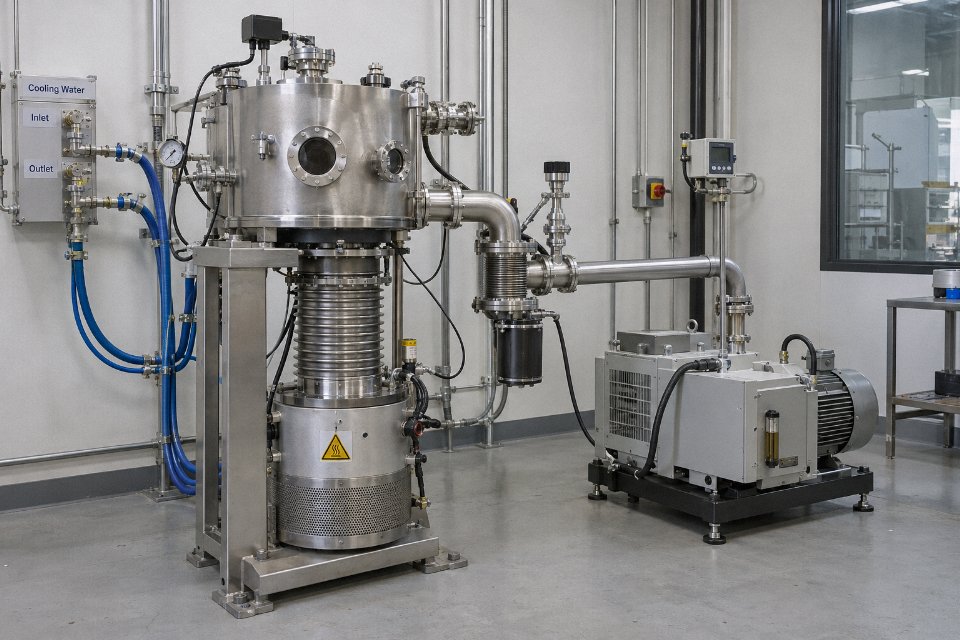
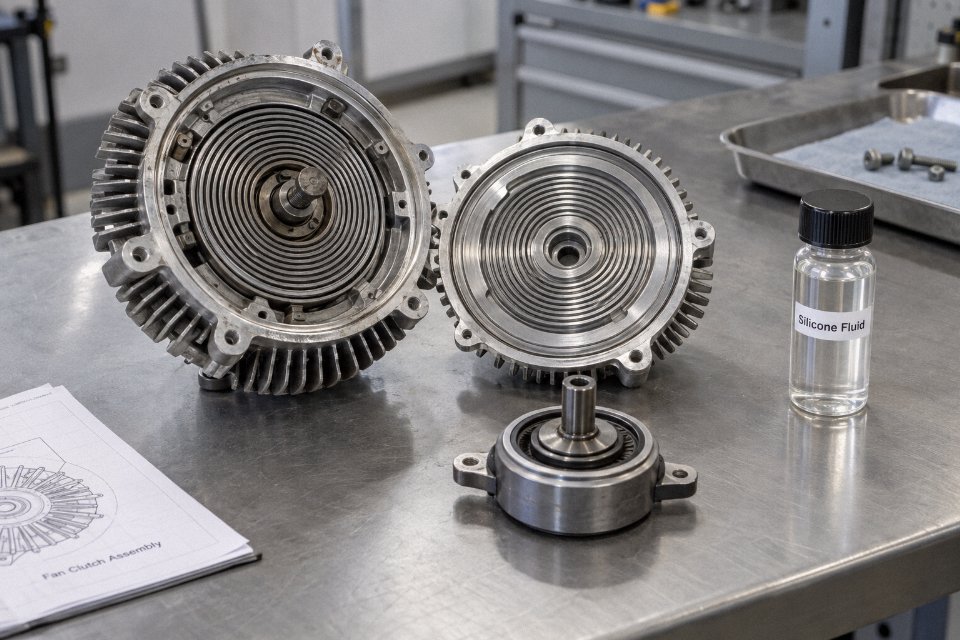
Heat-transfer baths demonstrate thermal service; vacuum equipment demonstrates suitability for a particular vacuum duty; silicone damping couplings demonstrate torque transmission or dissipation in their own geometry. None independently proves suitability for a hydraulic pump. Procurement should request evidence for the intended hydraulic duty, rather than treating an unrelated application list as an approval record.
Fluid selection criteria and supplier evidence
Buy against a documented hydraulic duty, not the words “silicone oil” on a quotation. A suitable candidate needs an identifiable formulation, viscosity data covering the operating range, and evidence relevant to the equipment. A general-purpose silicone fluid may meet its advertised specifications without being qualified for that hydraulic circuit.
Define the operating envelope and viscosity requirement
Give each bidder the same application sheet:
- Temperature: lowest cold-start temperature, normal bulk-fluid temperature, continuous maximum, and local hot spots. Distinguish ambient exposure from measured fluid temperature.
- Hydraulic duty: continuous and peak pressure, transient duration, pump type and model, speed range, duty cycle, and required actuator response or positioning accuracy.
- System arrangement: reservoir volume and configuration, vented or sealed operation, return-flow arrangement, filtration, and available cooling.
- Life and exposure: intended operating hours or replacement interval, idle periods, water ingress, dust, cleaning chemicals, and outdoor exposure.
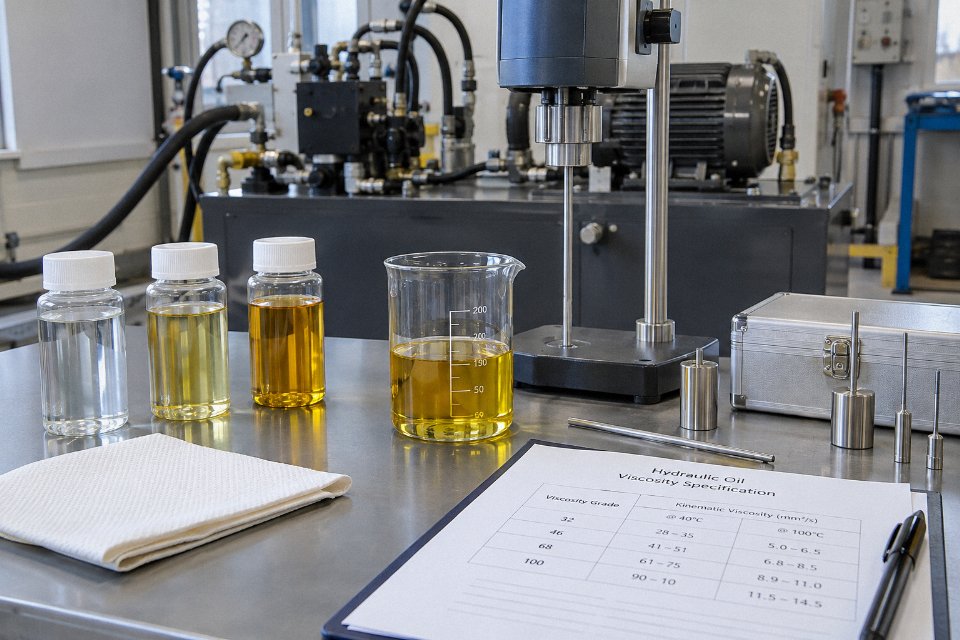
Request kinematic viscosity at the temperatures that govern starting, normal operation, and hot-running leakage—not just one convenient catalog value. Ask for a viscosity-temperature curve or sufficient measured points to support interpolation.
ISO VG 22, 32, 46, and 68 refer to nominal kinematic viscosities at 40 °C, with ISO 3448 grade limits approximately ±10% around the nominal value. A silicone fluid advertised at 25 °C cannot be compared directly with those grades; obtain its viscosity at 40 °C and check the pump manufacturer’s permissible viscosity range across service temperatures.
Keep the units straight. Dynamic viscosity equals kinematic viscosity multiplied by density at the same temperature: example inputs of 100 mm²/s and 970 kg/m³ give 97 mPa·s. These are illustrative inputs, not a universal silicone-fluid specification.
For high-pressure or response-sensitive equipment, request pressure-viscosity and bulk-modulus data under relevant conditions. Effective system stiffness also depends on entrained air and circuit compliance; a neat-fluid compressibility value alone will not establish actuator response. Increasing viscosity may reduce internal leakage but increase cold-start suction losses. The acceptable compromise ends where the equipment’s viscosity limits are exceeded.
Ask for evidence tied to the failure modes
Require test reports that identify the product, method, conditions, and acceptance criteria:
- Wear protection: evidence relevant to the pump architecture, contact loading, speed, and start-stop duty. A basic lubricity result is not equivalent to a pump endurance test.
- Corrosion and oxidation: results covering relevant metals and exposure conditions, including water where credible. For oxidation testing, examine viscosity change, deposits, and other reported degradation indicators—not merely elapsed test time.
- Volatility: temperature, duration, and measurement method, so reported loss can be related to reservoir replenishment or vapor-management concerns.
- Air release and foaming: separate results for dispersed-air removal and surface foam. Specify test temperature; the two behaviors are not interchangeable.
- Water behavior: evidence addressing separation, emulsification, or retained moisture as appropriate to the circuit and its contamination-control strategy.
- Filtration: filterability and compatibility with the actual element media, binders, seals, and operating temperature.
Check method applicability before comparing numbers. Some hydraulic-fluid test procedures and interpretation limits were developed around other fluid families; ask whether the method is suitable for this formulation and whether any deviations were used.
Compatibility evidence must identify the actual seal compounds—not simply “rubber”—along with hose construction, metals, plastics, coatings, adhesives, and residual fluids. Where documentation is incomplete, agree on testing conditions and acceptance limits for dimensional change, hardness, strength, leakage, or bond integrity as applicable. A generic compatibility chart is a screening tool, not release authorization.
Establish approval, identity, and supply controls
Equipment approval and relevant operating trials carry more weight than a generic brochure; a certificate of analysis establishes agreed batch properties, not complete fitness for service.
Put these requirements into the purchase specification:
- Approval status: documented OEM approval or written engineering acceptance, with its scope and restrictions. Record allowable operating limits and mixing prohibitions.
- Product identity: exact grade and manufacturer, whether it is a base fluid or formulated product, and a controlled formulation reference. Confidential composition need not mean uncontrolled substitution.
- Supply documentation: current technical and safety data sheets, batch certificates against agreed release parameters, lot traceability, and destination-specific regulatory declarations.
- Ongoing controls: change-notification procedures covering formulation, manufacturing site, or critical raw materials; storage conditions; shelf-life guidance; and handling requirements.
Do not assume an approval transfers between similar-looking grades or private-label products. Establish that link in writing.
Separate purchase price from qualification and lifecycle cost
Compare delivered cost using the same pack size, freight basis, duties, and lead-time assumptions. Then evaluate lifecycle exposure separately:
- Initial qualification and operating trials.
- Draining, flushing, lost production, and replacement seals.
- Filtration, monitoring, replenishment, and disposal.
- Failure consequences, including component damage and contaminated product.
A lower fluid price can disappear in one unplanned shutdown, but expensive qualification is not automatically justified for a low-consequence circuit.
SiliconChemicals is a potential manufacturer and integrated organosilicon supplier for technical discussions, sample availability, and supply planning. Its China-based supply network and customer reach across more than 30 countries and regions are company-reported context—not substitutes for product-specific hydraulic qualification. Confirm the proposed grade and evidence package before committing to a production fill.
Qualification, conversion, and condition monitoring
- Establish the equipment baseline and approval gates. Review OEM fluid restrictions, warranty implications, and pressure–temperature limits before ordering trial quantities. Identify every wetted material, including seal compounds, hose liners, accumulator bladders, coatings, adhesives, and filter media—not just “steel and rubber.” Record current leakage, operating temperature, cycle time, power demand, and maintenance history under defined loads. Set measurable acceptance limits and rollback triggers before testing. Without OEM acceptance or an adequately documented engineering qualification, a successful short trial is not authorization for production use.
Test actual materials under representative exposure. Use production seal compounds and hose constructions; a generic elastomer designation does not establish compatibility. Match exposure temperature, duration, and mechanical stress to service, including compressed seals and temperature cycling where relevant. Measure mass, volume, hardness, tensile properties, and sealing performance against unexposed controls. ASTM D471 can inform elastomer immersion testing, but immersion alone does not reproduce a moving rod seal. Swelling may initially reduce leakage while increasing friction; subsequent softening or shrinkage can reverse that apparent benefit.
Screen the finished fluid before risking a pump. Evaluate the supplied formulation, not merely its silicone base stock. The screening package should cover:
- Viscosity across the actual startup-to-hot operating range.
- Lubrication and wear performance relevant to the pump’s contact materials.
- Foaming tendency and entrained-air release as separate behaviors.
- Pressure-dependent viscosity and effective bulk modulus, including sensitivity to entrained air.
Use standardized methods where their scope and apparatus suit the fluid. ASTM D445 may support kinematic-viscosity measurement; ASTM D892 foam results do not establish air-release performance. Bench wear rankings cannot prove pump life. Require the laboratory to disclose method adaptations and applicability limits.
Run an instrumented component or loop trial. Progress from low-risk circulation to cold starts, rated load, pressure transients, and sustained hot operation, without exceeding equipment limits. Monitor wear debris, external and internal leakage, volumetric efficiency, noise, fluid temperature, actuator response, and filter differential pressure. Log load and temperature alongside each result so comparisons remain meaningful. Entrained air lowers effective system stiffness and can delay actuator response even when viscosity appears acceptable. A longer trial costs time and fluid, but it exposes heat-soak and wear effects that a brief demonstration misses.
Write the conversion procedure before draining. Isolate and depressurize equipment under the approved procedure, explicitly addressing accumulators and trapped pressure. Map drain points, cylinder chambers, cooler passages, manifold dead legs, and hose runs that retain old fluid. Specify cleaning methods, any component replacements, filter changes, flushing media, and a sampling sequence. Confirm that cleaning agents and flushing fluids suit both the equipment and incoming formulation. Establish a measurable residual-fluid limit through compatibility testing; do not assume mixing is safe. Segregate waste streams and verify cleanliness before release.
Separate particle cleanliness from chemical purity. Select an application-appropriate ISO 4406 target from component requirements and trial evidence, rather than assigning one universal code. That code describes particle counts, not residual mineral oil, dissolved water, cleaning solvent, or chemical compatibility. Validate optical particle counting for the selected fluid: bubbles and optical interference can distort results. Confirm water-method suitability and recovery, including Karl Fischer testing where appropriate, and check wear-analysis preparation against the silicone matrix. A clean-looking sample can still fail the conversion criteria.
Build monitoring limits from qualified performance. Retain samples of unused fluid, the post-conversion fill, and stable trial operation. Trend:
- Viscosity at a consistent test temperature.
- Water and particle counts.
- Wear debris, supported by filter inspection.
- Oxidation or other degradation indicators validated for the formulation.
- Air problems, leakage, temperature, and actuator-response drift.
Derive alert and shutdown limits from qualification results, supplier guidance, and component requirements—not borrowed mineral-oil limits. Increasing sampling frequency during startup helps distinguish leftover conversion debris from continuing wear; reduce it only after trends stabilize.
Give the laboratory the fluid identity. Elemental silicon alone cannot distinguish silicone base fluid from silicon-containing contamination or additives. Supply the product designation, available formulation information, unused-fluid reference sample, and suspected failure mechanism. Ask the laboratory to explain matrix effects and analytical limitations. For suspected dirt ingress, particle microscopy or another suitable complementary method may be more informative than a silicon concentration.
Release the change in stages. Require documented trial approval from engineering, maintenance, operations, and the responsible equipment authority. Train operators on abnormal response, sampling, spill handling, and rollback actions. Provide dedicated transfer equipment where cross-contamination warrants it, plus suitable replacement filters and spare fluid. Begin with a bounded installation and review interval. Fleet-wide conversion should follow demonstrated operating stability, not simply the absence of an immediate failure.
Frequently asked questions
Can silicone oil replace standard hydraulic oil?
Not as a drop-in substitute. Approval must cover the exact finished fluid, equipment configuration, and operating conditions—not simply “silicone oil.” Without written acceptance from the equipment manufacturer or a documented engineering qualification, retain the specified hydraulic fluid, particularly while the machine is under warranty.
Can silicone oil be mixed with mineral hydraulic oil?
Do not assume mixing is acceptable, even if a jar sample looks uniform. Appearance does not establish additive compatibility or stable operation under pressure. A conversion needs a supplier-supported residual-contamination limit and a flushing method that accounts for oil trapped in cylinders, coolers, and dead legs.
Is silicone oil fire-resistant?
A high flash point does not make a fluid noncombustible or establish fire resistance. Flash point measures ignition of vapor under specified test conditions; a pressurized leak presents a different exposure. Require application-specific fire-resistance evidence for the exact formulation, especially near furnaces or other ignition sources.
Which silicone viscosity should a hydraulic system use?
Start with the pump manufacturer’s allowable viscosity range, including cold-start and continuous-running limits. A commonly stocked silicone grade is not automatically suitable. Viscosity quoted at 25 °C cannot be compared directly with ISO VG 32 or 46, which reference 40 °C; obtain temperature-matched product data.
Does silicone oil damage hydraulic seals?
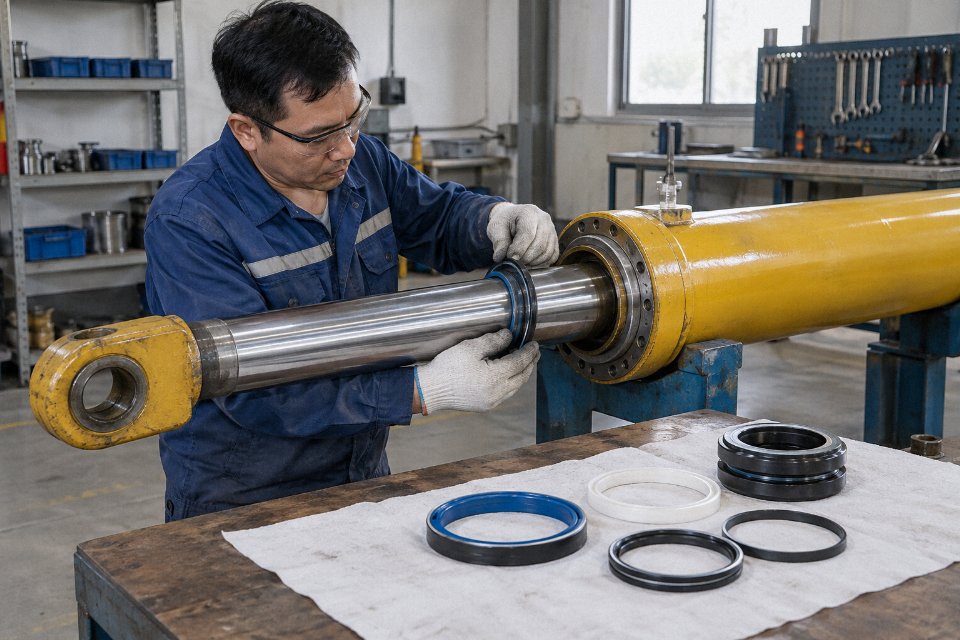
It can, but there is no reliable yes-or-no answer for all silicone fluids and seals. Compatibility depends on the exact fluid, seal compound, temperature, exposure time, and mechanical duty. Static immersion results alone do not establish performance in a reciprocating rod seal subjected to pressure cycling.
Is silicone hydraulic fluid the same as DOT 5 brake fluid?
No. DOT 5 silicone brake fluid is a specialized formulation subject to brake-fluid requirements, including FMVSS No. 116 in the United States. That designation is not an interchangeable name for industrial silicone oil. Neither product should be substituted for the other based on silicone chemistry alone.
Does silicone oil last for the life of the equipment?
Do not budget on that assumption. Contamination can make an otherwise chemically stable fluid unserviceable. Where additives are present, their condition also matters. Degradation and leakage affect service life; validated monitoring and equipment requirements—not a “lifetime” sales description—should determine replenishment and change intervals.
Your silicone hydraulic fluid qualification decision
Keep the approved fluid unless a documented operating problem justifies changing it; silicone chemistry alone is not a reason to convert. A silicone formulation deserves qualification only when its specialist properties address that problem and the expected benefit outweighs the testing effort, conversion cost, and maintenance consequences.
Choose one of three paths:
- Retain the approved conventional fluid when temperature control, response, component life, and maintenance requirements are already satisfied.
- Investigate an equipment-approved alternative when a defined performance gap exists. Correcting cooling, contamination, or suction restrictions may remove the need for different chemistry.
- Qualify a silicone formulation when its specialist properties offer a credible advantage that approved alternatives cannot deliver.
Release the candidate for service only when evidence supports:
- Viscosity behavior and lubrication: acceptable cold-start and hot-running behavior, with wear protection appropriate to the actual pump and duty.
- Materials compatibility and air handling: acceptable effects on wetted components, foam, entrained air, and reservoir operation.
- Dynamic response: acceptable pressure buildup, actuator stability, and positioning under representative loads.
- Safety and equipment acceptance: documented compliance with site requirements and the applicable equipment approval process.
A successful bench demonstration does not establish production suitability if the installed circuit behaves differently.
Send SiliconChemicals a technical qualification inquiry containing:
- Minimum, normal, and maximum fluid temperatures; operating pressure and pressure peaks.
- Equipment and pump details, current fluid, and known wetted materials.
- Required approvals, the specific problem, and measurable acceptance criteria.
Request candidate-grade data, relevant compatibility evidence, sample availability, and discussion of a jointly defined test plan. Establish what evidence is available before committing to conversion. If no silicone candidate meets the documented requirements, retaining the existing approved fluid is the appropriate decision.