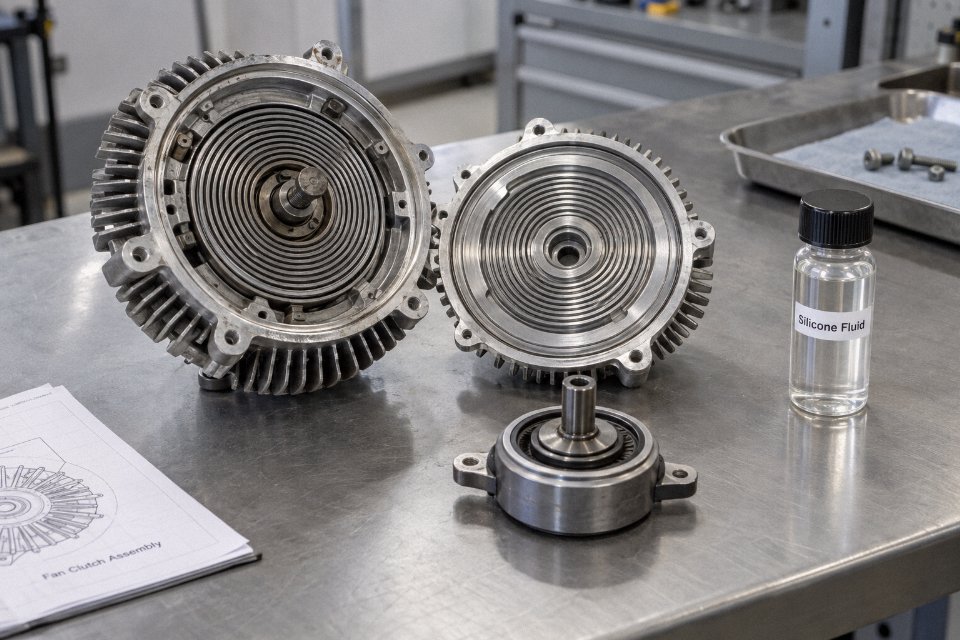
A fluid that thickens excessively in the cold, evaporates under vacuum, or migrates onto sensitive surfaces can upset mechanism response or contaminate optics. The bill may include component replacement, repeated qualification testing, and schedule delays. Silicone oil can address some of these problems—but only when its chemistry and grade match the application.
Silicone oil is used in selected aerospace applications because suitable grades offer relatively stable viscosity across temperature changes, low-temperature fluidity, and useful dielectric properties. These characteristics support damping, specialized lubrication, and some heat-transfer duties. Selection still depends on volatility, material compatibility, contamination sensitivity, and the component’s actual operating conditions.
The catch is that a property helpful in one assembly can become a liability in another: easy spreading can also mean unwanted migration. The useful question is not whether silicone oil is “aerospace grade,” but which properties the specific duty requires—and how they will be verified.
Performance mechanisms and engineering trade-offs
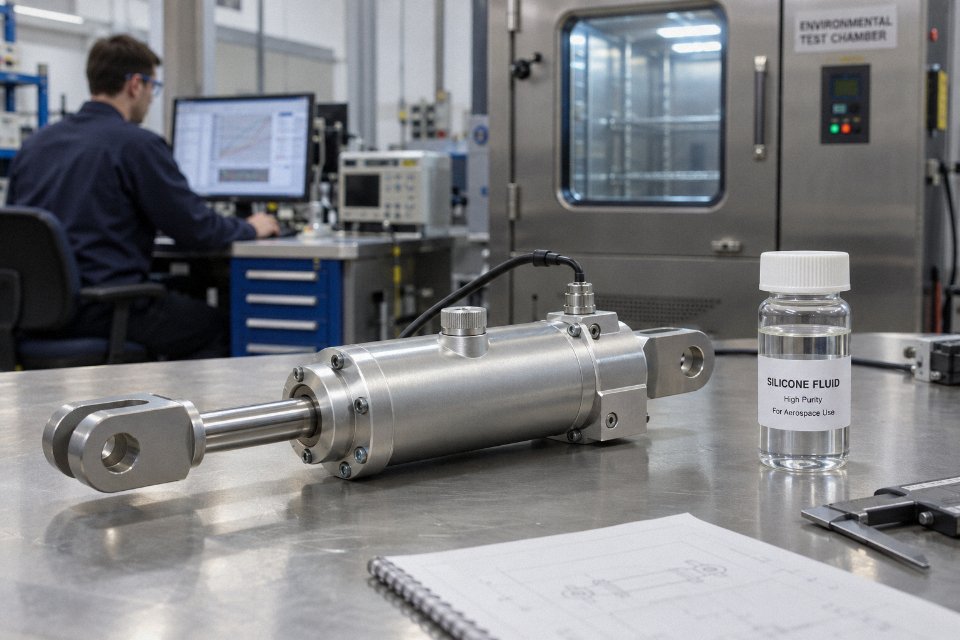
Silicone fluids combine molecular flexibility with properties that can be useful across wide temperature ranges, but those advantages do not arrive as a single guaranteed package. The engineering task is to match the actual fluid’s viscosity, volatility, electrical behavior, and surface interactions to the component—not to approve a material simply because its label says “silicone oil.”
Molecular structure sets the starting point
The flexible silicon–oxygen backbone allows silicone chains to rearrange readily, helping many silicone fluids remain mobile at low temperatures. Organic side groups influence intermolecular interactions and change properties such as thermal behavior and compatibility. Conventional polydimethylsiloxane (PDMS), phenyl-modified fluids, and fluorosilicone fluids therefore are not interchangeable.
Chain length and molecular-weight distribution matter just as much. Two fluids with similar nominal viscosity can contain different amounts of low-molecular-weight material, producing different evaporation losses and contamination behavior. Procurement needs a defined grade and controlled specification; matching only the viscosity on a drum label leaves meaningful performance differences unresolved.
Cold-start viscosity matters more than pour point
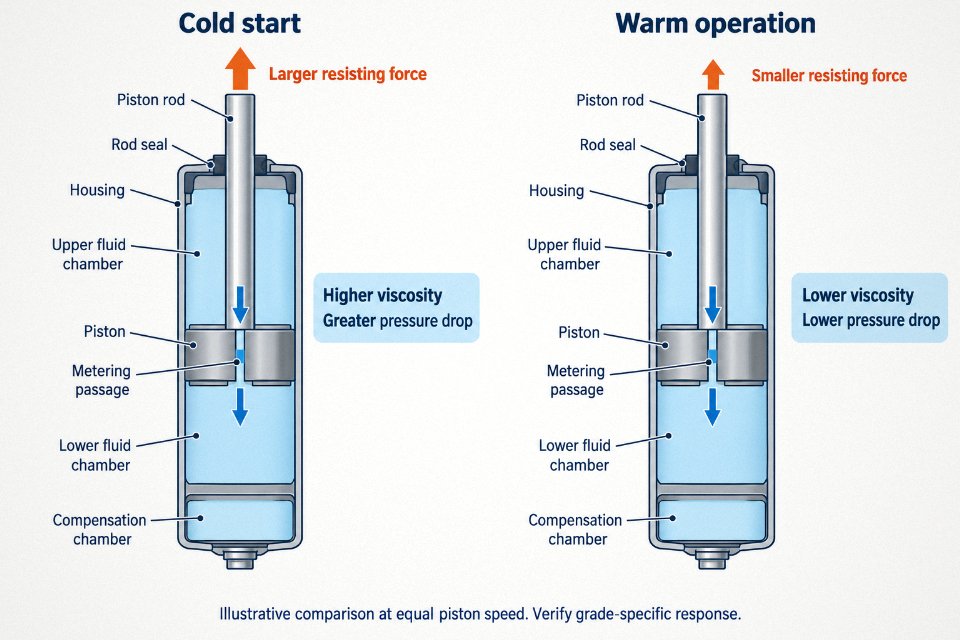
A low pour point shows that a fluid remains capable of movement under a particular test procedure; it does not establish that a pump, actuator, or damper will work acceptably at that temperature. Many silicone fluids exhibit relatively modest viscosity change with temperature, but cold-start resistance still requires grade-specific viscosity data.
In a narrow passage, increasing viscosity raises pressure loss and can delay motion. In a viscous damper, it generally increases resisting force, although the relationship depends on geometry and operating regime. A unit that behaves properly after warm-up may respond too slowly during its first cold stroke.
Specify allowable component response at the actual cold-start temperature, not merely a fluid pour point below it. Moving to a thinner grade can improve starting response while sacrificing warm-condition damping or film thickness.
Thermal stability is not the same as service life
Resistance to bulk thermal decomposition describes only one route to failure. A fluid can retain its basic chemistry while losing volatile fractions, absorbing oxidation products, or developing enough viscosity drift to move the component outside its operating tolerance.
Exposure conditions determine which mechanism dominates:
- Temperature and duration: A brief excursion and continuous operation at the same peak temperature are different qualification cases.
- Air access: Oxygen availability affects oxidative aging. An open reservoir cannot be treated like a sealed, oxygen-limited assembly.
- Metal contact: Wetted alloys, surface condition, and wear debris can influence degradation reactions; supplier compatibility data should cover the intended materials.
- Venting and exposed area: These affect evaporation losses and where escaped material may condense.
Preferential loss of lighter fractions can increase the remaining fluid’s viscosity. Oxidation can also cause thickening or deposits, depending on formulation and exposure. Published maximum-temperature claims therefore need their test conditions attached; otherwise, they are poor predictors of maintenance intervals.
Electrical insulation depends on fluid condition
Dielectric breakdown strength, volume resistivity, and dielectric loss describe different aspects of insulation. Breakdown strength concerns failure under an applied electric field; volume resistivity describes resistance to conduction through the liquid; dielectric loss measures energy dissipated under an alternating field and varies with frequency and temperature.
Clean supplier data are a starting point, not an installed-system guarantee:
- Moisture and ionic contamination can increase conductivity and dielectric loss.
- Particles can distort local electric fields and contribute to breakdown.
- Dissolved gases can come out of solution as temperature or pressure changes.
- Entrained bubbles create electrically weak regions and can promote discharge.
Filling practice matters. A return line splashing into a reservoir may introduce bubbles into otherwise suitable fluid. Qualification should represent the assembly’s electrode geometry, pressure, temperature, and fluid-conditioning procedure, using applicable test methods rather than comparing unrelated breakdown-voltage figures.
Spreading helps coverage—and spreads contamination
Many conventional PDMS fluids have surface tension around 20–21 mN/m at 25 °C, although the selected grade requires verification. This relatively low surface tension often supports spreading, but wetting still depends on the substrate’s surface energy, cleanliness, and texture.
That behavior can help produce continuous coverage. It can also let a small leak travel along a shaft or seam well beyond its source. Transferred silicone residue may interfere with subsequent bonding or painting; material reaching optical surfaces can create a separate cleanliness problem.
The useful trade-off is coverage versus containment. Assess the full migration path, including handling tools and wipes, rather than checking only whether the reservoir seal leaks visibly.
Heat transfer requires more than temperature resistance
Unfilled silicone oil is not inherently a high-thermal-conductivity material. Its usefulness as a heat-transfer fluid comes from the combined operating properties of the selected grade, not from unusually rapid conduction through the liquid.
In a circulating loop, heat capacity affects the flow required to carry a given heat load, while viscosity influences pressure drop, pumping power, and flow regime. Passage geometry and flow distribution then determine how effectively heat crosses the wall-fluid interface. Higher flow may improve heat transfer but consume more power; more viscous fluid can make that penalty substantial during cold startup.
Evaluate the complete loop across its operating envelope. A fluid that tolerates the hot-end temperature can still leave a cold plate short of flow.
Slipperiness does not establish antiwear performance
A silicone fluid may provide satisfactory fluid-film lubrication where speed, viscosity, and geometry maintain separation between surfaces. That does not prove adequate protection when heavily loaded metal contacts enter mixed or boundary lubrication.
During startup, reversal, or oscillation, sliding speed may become too low to sustain the separating film. Protection then depends on surface chemistry and any effective boundary-lubricating additives—not on how slippery the oil feels between fingers.
For gears, bearings, and loaded sliding interfaces, require contact-specific friction and wear evidence. Increasing viscosity may improve film formation at speed while worsening cold-start drag, and it cannot by itself establish protection at zero-speed reversal.
Silicone fluid families and alternatives
Choose the fluid chemistry against the duty and exposure first, then compare viscosity grades within that family. PDMS is a common starting point for damping, dielectric service, and selected heat-transfer duties, but chemical exposure, loaded sliding contact, fire requirements, or vacuum contamination limits can move the selection toward another silicone family—or away from silicone entirely.
What changes between silicone families?
- PDMS fluids: Unmodified polydimethylsiloxane offers a practical baseline where predictable viscous behavior or electrical insulation matters more than boundary lubrication. Viscosity affects damping force, circulation losses, and heat-transfer performance; volatile content becomes especially consequential near vacuum-exposed surfaces. A nominal viscosity alone does not specify either cleanliness or volatility. For dielectric service, verify moisture and contamination limits as well as the published electrical properties.
- Phenyl-containing silicone fluids: Phenyl substitution can tailor low-temperature behavior and thermal performance. Certain substitution patterns suppress crystallization, but increasing phenyl content does not automatically improve cold-start viscosity, oxidation resistance, or every other property. Compare viscosity across the actual operating-temperature range: a favorable pour point does not prove that a small actuator will move acceptably after a cold soak.
- Fluorosilicone fluids: These are candidates when fuel, solvent, or other chemical exposure makes conventional PDMS unsuitable. Resistance depends on the contacting chemical, concentration, temperature, and specific fluorosilicone structure. Do not transfer a fluorosilicone elastomer’s compatibility rating to a fluid. Require grade-specific evidence for lubricity, temperature limits, miscibility, and effects on seals.
- Functional and specialty modified silicones: Specify a modification only against a defined requirement, such as surface affinity or compatibility with another formulation component. Reactive groups can encourage bonding or crosslinking; additives may introduce deposits, extractables, or volatile species. A modification that improves wetting in one assembly can create a cleaning or adhesion problem downstream.
A chemically resistant fluid is not necessarily a good lubricant, and a thermally stable fluid is not necessarily clean enough for vacuum service. Those are separate qualification questions.
Chemistry comparison for initial screening
Use this matrix to eliminate unsuitable families, not to approve a purchase. “Strongest use case” describes a reason to investigate the chemistry; it is not evidence of aerospace qualification.
| Chemistry | Strongest use case | Limiting property or concern | Required verification |
|---|---|---|---|
| PDMS | Viscous damping, dielectric insulation, selected heat transfer | Boundary lubrication and volatile contamination can limit use | Viscosity-temperature curve, volatile fraction, electrical cleanliness, contact-material tests |
| Phenyl silicone | Tailored cold behavior or elevated-temperature duty | Benefits depend on substitution; cold viscosity may still be excessive | Cold-soak response, thermal-aging data, deposits and volatility |
| Fluorosilicone | Fuel or solvent exposure that challenges PDMS | Resistance and lubricity are not universal | Actual-fluid exposure tests, wear performance, seal compatibility |
| Functional or modified silicone | A specific interfacial or formulation requirement | Reactivity, additive stability, contamination migration | Formulation disclosure appropriate to the application, aging and compatibility tests |
| Hydrocarbon/mineral oil and PAO | Conventional lubrication; approved hydraulic duties where specified | Combustibility; cold behavior and seal response vary | Required approval, additive package, wear tests, low-temperature viscosity |
| Synthetic ester | Lubrication where load capacity and temperature behavior justify it | Moisture-driven hydrolysis and material compatibility | Water control, acidity after aging, seal and coating compatibility |
| Phosphate ester | Fire-resistant hydraulic service in systems designed for it | Material compatibility and fluid-condition control | Exact system approval, seals, coatings, moisture and acidity limits |
| PFPE | Aggressive chemical exposure or selected low-vapor-pressure duties | High acquisition cost; grade-dependent lubrication and decomposition constraints | Vapor pressure at temperature, contact-material behavior, application-specific safety qualification |
Hydrocarbon and PAO formulations usually offer a lower-cost starting point for ordinary lubrication. Esters can justify their cost through lubrication performance, while PFPE commonly carries a substantial premium. Compare operating cost as well as drum price: leakage, change intervals, cleaning requirements, and disposal can reverse the apparent saving.
Fire behavior also needs careful wording. Silicone fluids are not automatically nonflammable; phosphate esters are fire-resistant rather than fireproof. Neither description replaces the applicable fire test or installation requirement.
Keep fluid selection separate from system approval
Silicone oil is not a general replacement for specified hydrocarbon or phosphate-ester aviation hydraulic fluid. Hydraulic-system approval covers more than bulk viscosity: seal response, pump wear, valve behavior, filtration, fire performance, and maintenance provisions are part of the system.
Before requesting samples:
- Identify the specified fluid, applicable equipment documentation, and permitted substitution process.
- Define contact materials, temperature extremes, chemical exposure, load, and any vacuum or cleanliness constraints.
- Request current grade data and evidence relevant to those conditions—not merely a family-level compatibility chart.
Where an approved fluid is mandated, a promising laboratory result does not authorize substitution. The equipment manufacturer’s documentation and applicable approval process remain controlling.
Aerospace applications and duty boundaries
Silicone oil is a candidate for contained damping, selected electrical and thermal duties, limited lubrication, and permitted manufacturing processes—not a general-purpose aerospace service fluid. These applications describe engineering possibilities, not verified adoption: suitability belongs to the exact formulation, assembly, operating envelope, and approval basis, rather than to “silicone oil” as a material category.
Sealed damping in instruments and mechanisms
In a rotary damper, viscous shear across controlled clearances converts motion into heat. Higher viscosity, greater wetted radius, or narrower shear gaps generally increases resisting torque at a given speed; piston-type dampers also depend strongly on flow-path geometry. That resistance can suppress overshoot in an instrument or slow a mechanism’s deployment, but excessive damping delays response or prevents movement when driving torque is limited.
Specify performance over temperature, not just nominal viscosity at 25 °C. Cold-fluid resistance, hot-fluid thinning, seal friction, and trapped gas can change the result. The acceptance criterion should be assembly torque or response time across the operating envelope—not fluid viscosity alone.
Dielectric filling in suitable electrical assemblies
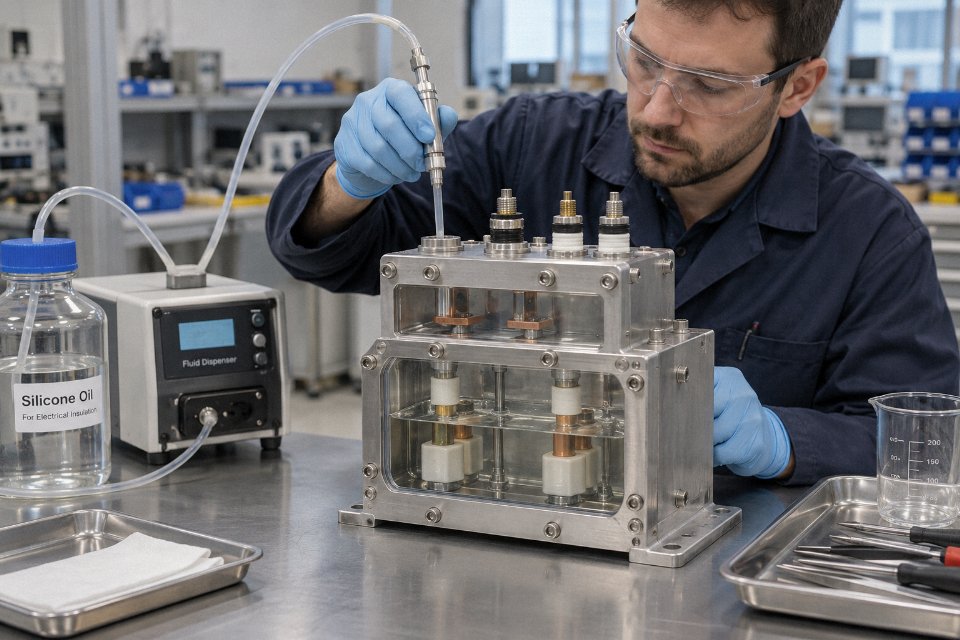
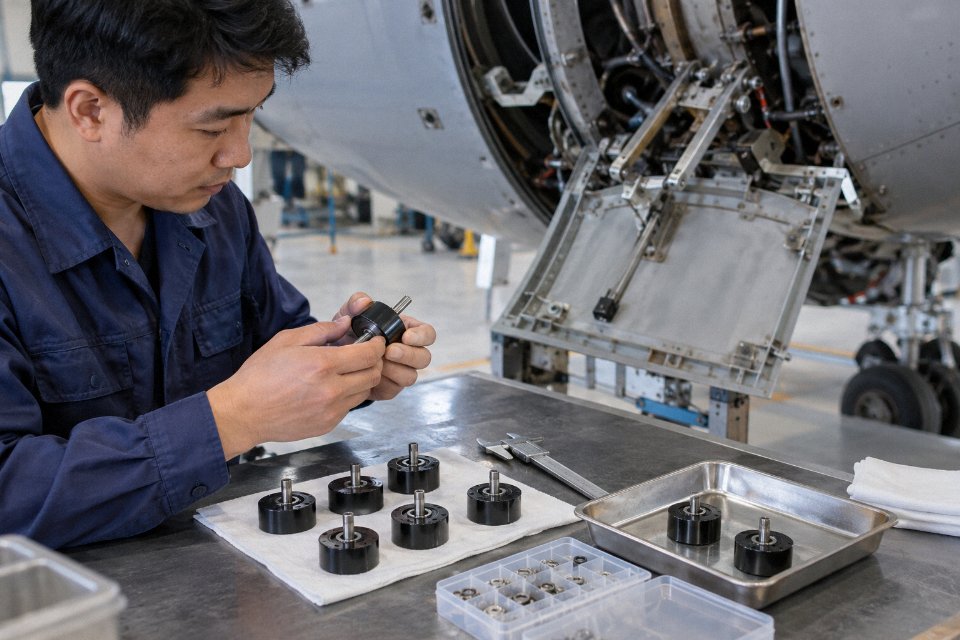
A selected silicone liquid can provide electrical insulation while filling clearances and carrying heat away from energized components. However, bubbles, absorbed moisture, particulate contamination, and incompatible construction materials can compromise performance. Filling technique and cleanliness therefore belong in the process specification, alongside the fluid’s electrical properties.
Keep these material forms separate:
- Free liquid fill: Remains mobile and requires containment, expansion allowance, and leak control.
- Silicone gel: Forms a soft network; its formulation and processing determine its behavior.
- Cured encapsulant or insulating elastomer: Becomes a solid material, with different mechanical and repair implications.
Evidence for one form does not qualify another.
Heat-transfer loops and temperature-control equipment
Selected silicone fluids may suit temperature-control circuits where their operating range and compatibility justify the choice. Increased viscosity raises pressure loss and can reduce flow from a given pump; at cold startup, that can mean inadequate circulation even though the fluid remains liquid. Pump sizing must use viscosity at the lowest starting temperature, not room-temperature data.
Flight loops require their own containment, mass, fire-safety, and reliability assessment. Ground-support rigs, environmental chambers, and laboratory baths have different constraints and maintenance access. Successful use in a test facility is useful operating experience, but it does not establish flight suitability.
Selected lubricating duties
Lightly loaded sliding parts or purpose-designed mechanisms may accept a silicone lubricant when friction, wear, material compatibility, and retention have been demonstrated. Easy spreading is not proof of load-carrying ability: once a fluid film becomes too thin, surface chemistry and any qualified additives become decisive.
Treat these contacts separately:
- Rolling bearings: Verify film formation, fatigue life, cage compatibility, and lubricant retention.
- Gears: Establish scuffing and wear performance under representative tooth loads and speeds.
- Boundary-lubricated contacts: Test starts, stops, oscillation, and dwell periods, when a separating fluid film may be absent.
A satisfactory low-load bench movement does not qualify a loaded actuator.
Assembly and manufacturing aids
Mold release and process lubrication can be legitimate production uses where the drawing and manufacturing specification permit them. The procurement distinction is whether the material is a removable process aid or an intentionally retained constituent of flight hardware.
Residue can undermine later bonding, painting, or coating. Low surface tension also allows contamination to spread beyond the application point—sometimes through shared gloves or fixtures rather than the intended process. Define application control, cleaning, and residue acceptance before approving substitution. A cleaner-looking surface is not necessarily bond-ready.
Spacecraft containment and contamination sensitivity
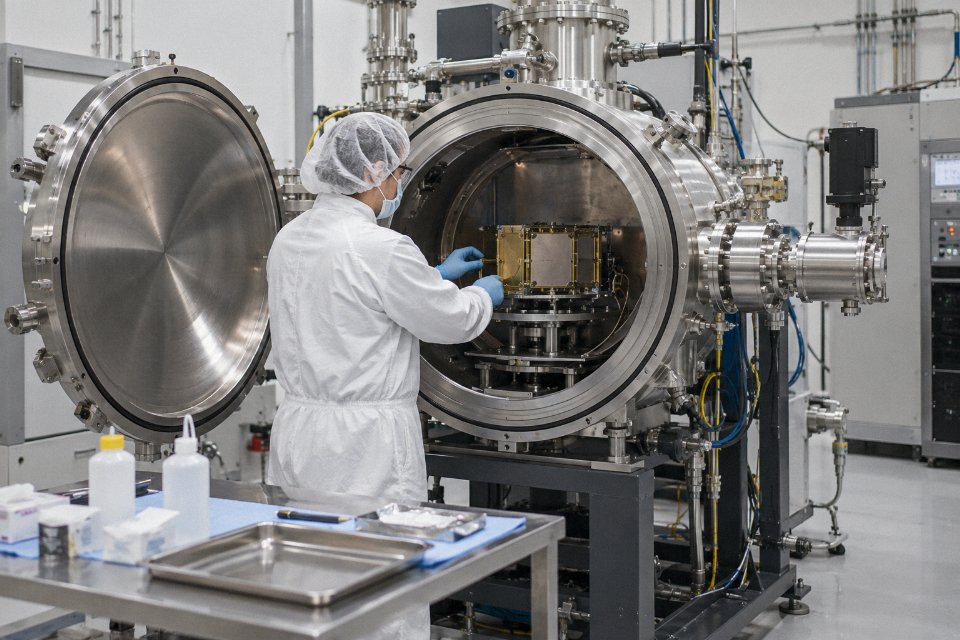
Spacecraft use requires specifically qualified fluids and contained designs. Vacuum exposure creates a separate question from satisfactory damping or lubrication in air: volatile constituents can leave the assembly and condense on sensitive surfaces.
Optics, detectors, thermal-control surfaces, and vacuum-sensitive instruments need contamination assessments tied to their location and allowable deposition. Passing an outgassing screen does not establish mission suitability; actual temperature, exposed quantity, vent paths, and service duration still matter. Containment reduces exposure but must itself be verified.
Duties requiring explicit approval
Do not infer routine suitability for:
- Turbine-engine lubrication: Require the applicable lubricant specification and engine approval.
- Primary aircraft hydraulics: Require the specified fluid and system compatibility evidence.
- Oxygen service: Require oxygen-compatibility assessment under the actual pressure, temperature, and ignition conditions.
- Flight-critical mechanisms: Require component-level qualification, including credible failure conditions.
A supplier’s general temperature range or dielectric-strength figure cannot replace these approvals.
Failure modes and contamination controls
Silicone oil can meet its viscosity and temperature requirements yet still fail an aerospace application through contamination, material incompatibility, or localized degradation. Bulk-fluid performance is not evidence of component cleanliness or mission suitability: acceptance must cover where the fluid can travel, what it contacts, and how it changes under the actual exposure conditions.
Evaporation, outgassing, and condensable deposits
Low-molecular-weight siloxanes and other volatile constituents can leave the fluid under heat or vacuum. Some escape; others condense on colder hardware, so a small reservoir loss can become an unacceptable optical deposit. Reduced volatility helps, but does not demonstrate cleanliness at mission temperature, pressure, duration, and geometry.
- Screen the supplied grade: Commonly used ASTM E595 screening limits are total mass loss of 1.0% or less and collected volatile condensable materials of 0.10% or less. Verify the current customer specification, including whether recovered water may be deducted from mass loss. Passing this screening does not establish mission suitability.
- Verify the installed configuration: Where warranted, test representative fluid quantities, exposed areas, vent paths, and receiving-surface temperatures. Use controlled packaging and validated conditioning; an arbitrary vacuum bake can change composition without proving contamination control.
Migration, leakage, and transfer contamination
Many conventional PDMS fluids have surface tension around 20–21 mN/m at 25 °C; verify the selected grade. That spreading behavior helps wet surfaces but also encourages migration through joints and along surfaces. A connection can remain pressure-tight while allowing enough surface creep to compromise nearby work.
- Separate handling zones: Keep dispensing equipment, gloves, wipes, and tools away from optical, bonding, painting, and contact-assembly areas. Transferred traces can impair optical performance, cause paint defects, weaken adhesive bonds, or create insulating films on electrical contacts. Shared fixtures can carry contamination into downstream assembly.
- Contain and verify: Evaluate seals, joints, secondary containment, and credible leak paths. Validate cleaning on the actual substrate using an acceptance method appropriate to the risk; solvent wiping may redistribute silicone rather than remove it.
On exposed spacecraft surfaces, deposited siloxanes can undergo ultraviolet-driven reactions and, where atomic oxygen is present, form persistent oxidized, silica-like residues. This risk depends on orbit, exposure, shielding, and contamination flux—not every aircraft installation. Control the source and transport path; material selection alone cannot protect a nearby cold optical surface.
Compatibility with the complete material stack
Compatibility must be established for the actual grades, not broad labels such as “rubber,” “plastic,” or “epoxy.” Absorption and extraction can occur together, leaving a seal apparently acceptable while its hardness, dimensions, or sealing force changes.
- Test seals and plastics under load: Check elastomer swelling or shrinkage, hardness, compression behavior, and leakage after representative exposure. Include stressed plastic parts because unloaded immersion coupons can miss environmental stress cracking or distortion.
- Include coatings and bonded joints: Assess softening, adhesion loss, interfacial contamination, and extraction of plasticizers or other additives. Test the actual cure state, exposure duration, temperature, and cleaning process. Extracted material can contaminate the fluid even when the component remains intact.
Thermal and radiation-driven changes
A reservoir sample does not represent the hottest fluid film. Local heater surfaces, restricted passages, or frictional contacts can expose silicone oil to temperatures well above the measured bulk value.
- Track degradation, not viscosity alone: Severe service can produce oxidation, thermal decomposition, viscosity drift, gel formation, and deposits. Depending on chemistry and atmosphere, volatile loss or crosslinking may thicken the fluid, while molecular breakdown may reduce viscosity. Establish sampling limits and inspect hot surfaces and restrictions; acceptable bulk viscosity does not exclude local fouling.
- Qualify radiation exposure separately: Radiation can cause chain scission or crosslinking, changing viscosity, gas generation, and gel tendency. Radiation type, absorbed dose, dose rate, temperature, and oxygen availability affect the outcome. Use representative combined exposures where practical; an irradiation result in air may not predict behavior in a sealed or evacuated assembly.
Higher viscosity may reduce leakage but also increases flow resistance and makes gas removal harder. That trade-off stops being useful if the selected fluid cannot remain stable at the component’s hottest location.
Moisture, particles, and gas require different controls
These contaminants need separate acceptance criteria because one treatment rarely removes all four.
- Moisture: Control storage exposure and verify water content against application requirements. Moisture can compromise dielectric reliability, particularly alongside particles or ionic contamination.
- Particles: Use compatible, cleanliness-controlled filtration and sealed transfer equipment. Verify filter-media compatibility and shedding; filtration can protect small passages and clearances but does not establish chemical purity.
- Entrained gas: Bubbles increase effective compressibility, disturb damping repeatability, and impair heat transfer. Avoid splash filling and suction-side leaks; validate degassing at the assembly’s viscosity and geometry.
- Dissolved gas: Gas can emerge after pressure reduction or heating, even when the fill initially looks clear. Define degassing pressure, temperature, duration, and subsequent handling to prevent reabsorption.
Fire and oxygen-service boundaries
Low volatility, high flash point, and chemical inertness do not establish nonflammability or oxygen compatibility. Leaks onto hot surfaces, spray formation, and oxygen-enriched conditions require separate assessment against current supplier documentation and applicable equipment requirements. Do not approve oxygen service from a general-purpose silicone-fluid data sheet; obtain application-specific compatibility evidence and validate both cleanliness and operating limits.
Qualification tests and acceptance evidence
1. Freeze the duty specification before selecting tests
Write a controlled duty specification with the component designer, materials engineer, and quality team. “Suitable for aerospace temperatures” is not a testable requirement. Capture:
- Temperature: fluid and hardware extremes, dwell times, ramp rates, storage conditions, and cumulative exposure.
- Pressure: ambient pressure range, vacuum level, pressure transients, and whether the fluid is sealed, vented, or exposed.
- Mechanical duty: load, speed, stroke, contact materials, start-stop frequency, orientation, and required life.
- Electrical duty: field strength, waveform, frequency, electrode spacing, and permitted leakage current.
- Environmental exposure: radiation type and dose, atmosphere, humidity, and contact with fuels, cleaners, hydraulic fluids, or process residues.
- Cleanliness and location: particulate and molecular-contamination limits, fill procedures, and proximity to optics, sensors, bonding surfaces, or electrical contacts.
Separate continuous operation, short excursions, and survival-only conditions. A fluid may remain chemically intact after a cold soak yet be too viscous for the actuator to start.
2. Establish fluid-property and compatibility limits
Specify viscosity at temperatures that govern starting, normal operation, and hot leakage—not just the nominal value at 25 °C. Set limits for viscosity change after aging, allowable mass loss, and density where it affects damping calculations, buoyancy, charge quantity, or thermal expansion. Verify cold-start function in hardware; a laboratory viscosity result alone does not establish available torque margin.
Plan aging tests around actual exposure duration and temperature. Accelerated aging can shorten screening, but extrapolation becomes unreliable if elevated temperature changes the degradation mechanism.
Use representative wetted materials:
- Metals, including actual alloys, platings, passivation treatments, and dissimilar-metal combinations.
- Seals and plastics, checking dimensional change, hardness, embrittlement, strength, and extractables as appropriate.
- Adhesives and coatings, checking bond retention, softening, blistering, and transfer into the fluid.
Match the assembly’s surface-area-to-fluid-volume ratio reasonably closely. A small fluid charge contacting a large seal area can accumulate far more extractables than a beaker test suggests. Include material-only and fluid-only controls so a viscosity change is not automatically blamed on fluid degradation.
3. Treat outgassing screening as a starting point
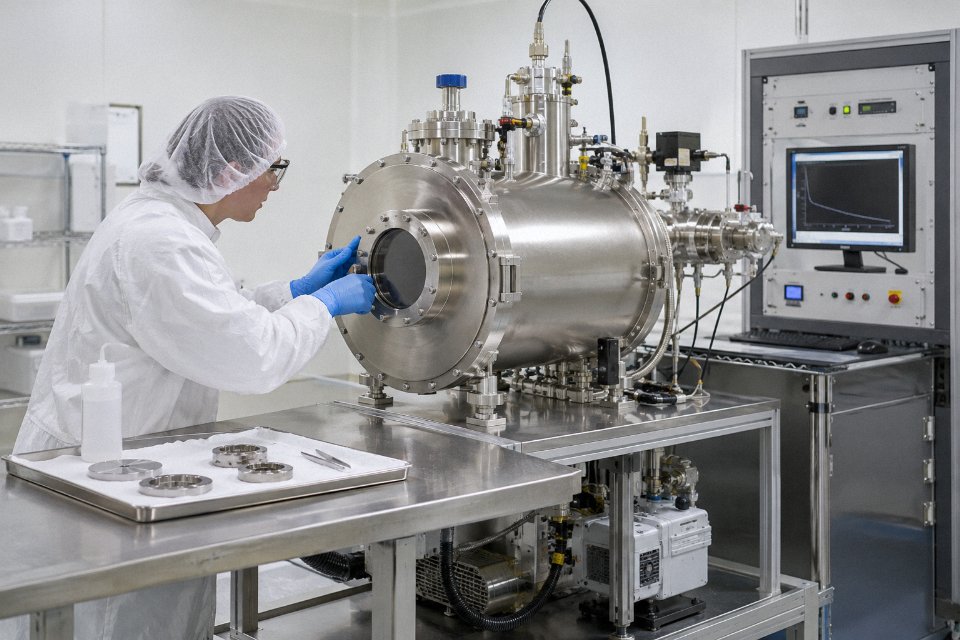
ASTM E595 is a defined vacuum-outgassing screening method, not a blanket space-qualification certificate. Commonly used screening limits are total mass loss of 1.0% or less and collected volatile condensable materials of 0.10% or less. Verify the current method and customer specification, including whether water-vapor recovery may be credited against mass loss; that allowance is not permission to discount condensable contamination.
For exposed liquids, specimen containment and exposed area require particular attention. Standard screening conditions do not reproduce every operating temperature, mission duration, replenishment path, or line of sight to a cold optical surface.
Where warranted, add:
- Vapor-pressure or evaporation measurements across the operating temperature range.
- Long-duration vacuum exposure using representative fill depth, vent paths, seals, and geometry.
- Witness-surface or deposition measurements at relevant collector temperatures, with optical or electrical checks where contamination affects performance.
Passing an outgassing screen does not establish mission suitability. Lower mass loss is useful, but the acceptance decision may depend on where the released material deposits rather than how little leaves the specimen.
4. Qualify the function in representative hardware
Select tests by duty; do not burden every application with every test.
| Duty | Component-level evidence required |
|---|---|
| Damping and lubrication | Starting and running torque, friction, wear, response versus speed and temperature, leakage, and endurance |
| Dielectric service | Breakdown, resistivity, dielectric loss, moisture control, and dissolved or entrained gas control under the specified electrical conditions |
| Thermal management | Heat rejection, flow and pressure drop, pump compatibility, expansion accommodation, seal integrity, and fluid condition after cycling |
For damping and lubrication, test after storage and at temperature extremes, not only after warm-up. Raising viscosity may improve hot damping while sacrificing cold-start response; the preferred grade changes when available drive torque becomes the limiting constraint.
For dielectric measurements, record electrode geometry, gap, conditioning, temperature, and test method. Reported breakdown values are not transferable without those details. Moisture and bubbles can dominate performance even when the incoming fluid meets its certificate.
For cooling loops, validate the complete pump-and-channel combination. Colder, more viscous fluid raises pressure drop and pump demand; inadequate expansion space can overload seals during heating. Check fluid condition after cycling, not merely cooling capacity on the first run.
5. Control qualification, acceptance, and change
Apply thermal cycling, pressure changes, vibration, and radiation exposure where the duty requires them. Sequence matters: vibration after aging may reveal leakage that either test alone misses. Material screening narrows candidates; integrated hardware qualification establishes performance of the actual design.
Before testing, define:
- Numerical acceptance limits, functional failure criteria, and permitted measurement uncertainty.
- Sample preparation, cleaning, conditioning, fill quantity, degassing, and test sequence.
- Production-lot sampling, traceability, retained-sample storage, and incoming acceptance checks.
- Requalification triggers, including formulation, manufacturing-site, purification-process, supplier, wetted-material, or duty changes.
Keep the evidence categories distinct:
- Published test results support only the identified specimen, method, and conditions.
- Quality-management certificates concern the certified management-system scope, not component performance.
- Material listings establish status only within the listing’s stated scope and conditions.
- Aircraft or spacecraft design approval concerns the applicable design and approval basis; it is not conferred by a fluid datasheet.
Procurement should require the evidence package tied to the supplied grade and lot, with discrepancies resolved before release—not after the hardware is filled.
Procurement specifications and supplier controls
An approved silicone fluid should be purchased against a controlled material specification, not a viscosity description or a supplier’s “aerospace grade” label. Repeatability depends on locking down the chemistry, measurable release limits, manufacturing controls, and change-notification obligations that preserve the basis of approval from one delivery to the next.
Define what the supplier must deliver
The purchase specification should reference an approved revision and establish:
- Material identity: Exact chemistry, manufacturer, grade designation, and permitted production site. State additive restrictions explicitly, including whether stabilizers, dyes, or processing aids are prohibited or require approval.
- Viscosity acceptance: Specify the tolerance, test temperature, and method—not simply “100 cSt silicone oil.” A nominal viscosity is a selection point, not a lot-acceptance range.
- Volatiles, moisture, and cleanliness: Define limits and measurement methods appropriate to the approved application. Identify whether cleanliness concerns particles, nonvolatile residue, or specific chemical contaminants; these are not interchangeable requirements.
- Packaging and storage: Specify compatible containers and closures, seal integrity, pack size, labeling, and storage conditions. Define shelf life or retest intervals, the required retest scope, and who authorizes continued use.
Choose pack size around consumption after opening. A cheaper drum can become an expensive source of moisture or contamination if technicians repeatedly decant small quantities beside a busy maintenance bench.
Separate delivery evidence from supplier assurance
- Establish the documentation package. Request current technical and safety datasheets, a lot-specific certificate of analysis, applicable test reports, and traceability connecting the shipment to the manufacturing batch. Identify which properties require actual measured results rather than a “conforms” statement. Routine release data belong with each lot; qualification-only evidence needs a report reference and confirmation that its material and process basis remain applicable.
- Review manufacturing consistency. Assess feedstock acceptance, relevant molecular-weight-distribution controls, volatile removal, filtration, filling practices, and segregation from other products. Two batches can meet the same viscosity limit yet contain different low-molecular-weight fractions; those fractions can change evaporation and contamination behavior. Filtration controls particles, not dissolved volatile species.
Make change control contractual. Require written advance notification of changes to formulation, manufacturing site, feedstock source or specification, process, test method, and packaging that could affect approval. Define the buyer’s review and approval rights before changed material ships. A supplier’s internal judgment that a change is “equivalent” should not replace that review.
Tighter controls generally increase price and lead time. They should follow the qualified application’s sensitivities rather than impose costly tests that do not distinguish acceptable material from unacceptable material.
Evaluate supply security and the full cost of approval
Commercial review should cover:
- Production capacity, minimum order quantity, normal lead time, and credible recovery arrangements following an outage.
- Export documentation, destination-specific import requirements, and transport requirements verified against the current SDS and applicable rules.
- Retained-sample quantity, storage conditions, retention period, and availability for investigating a disputed lot.
SiliconChemicals’ organosilicon manufacturing and integrated-supply position provides a basis for a supplier review. China’s manufacturing clusters and supply-chain competitiveness are commercial context—not evidence of aerospace qualification. Evaluate the proposed grade through documented capabilities, traceable samples, application-relevant testing, and confirmation that production deliveries will follow the reviewed controls.
Compare cost per accepted, usable lot—not price per kilogram alone. Include incoming testing, rejected material, cleaning, maintenance, inventory, and requalification. An apparently equivalent replacement can cost more than maintaining the approved source, especially where changing the fluid forces renewed component testing or contamination verification.
Frequently asked questions
Why is silicone oil used in aerospace?
Silicone oil can provide controlled damping, electrical insulation, and useful viscosity behavior across temperature changes. Selected formulations also serve heat-transfer duties. These benefits are application-dependent: a fluid suitable for a sealed damper is not automatically suitable near flight electronics or optical surfaces.
Can ordinary commercial silicone oil be used in flight hardware?
Not on the strength of a commercial datasheet alone. The exact grade must meet the approved material specification, with traceable acceptance evidence and qualification in the intended component. Matching nominal viscosity does not establish equivalence; residual volatiles or additives may differ.
Is silicone oil suitable for space vacuum?
Some formulations may be suitable in controlled applications, but “silicone oil” is not a vacuum rating. Formulation and residual volatile content govern what can escape; temperature and containment govern how readily it escapes. Acceptable contamination near a mechanism may be unacceptable beside a cold optical surface.
Can silicone oil replace aircraft hydraulic fluid or engine oil?
Only a fluid explicitly approved for that aircraft system may be used. Silicone oil is not a general substitute, even if its viscosity looks similar. Unapproved substitution can compromise seal compatibility and lubrication performance, including functions that a simple bench-flow check will not reveal.
What temperature range can silicone oil withstand?
No single operating range applies to the entire family. Use the selected grade’s documented limits, then verify them under component conditions. A short temperature excursion is not continuous-service evidence: oxygen exposure can accelerate degradation, while vacuum can increase fluid loss at elevated temperature.
Does a higher-viscosity silicone oil always perform better?
No. Higher viscosity can increase damping but also raise cold-start resistance and slow flow through small passages. Lower-viscosity grades may respond faster. Volatility must be checked separately: nominal viscosity does not establish the amount of low-molecular-weight material remaining in a particular batch.
Does passing ASTM E595 make a silicone oil space-qualified?
No. Common screening limits are total mass loss at or below 1.0% and collected volatile condensable materials at or below 0.10%. Customer criteria may differ, including permitted water-recovery allowances. Passing does not establish acceptable lifetime loss, deposition on sensitive surfaces, or mission-specific approval.
Aerospace fluid approval and sample testing
Select silicone oil only when its useful properties outweigh its lubrication, contamination, compatibility, and qualification limitations in the intended hardware. A favorable viscosity or temperature rating is not enough: the candidate must meet component requirements without creating unacceptable wear, material degradation, or contamination elsewhere in the assembly.
Use the evidence to choose one of three paths:
- Proceed to sample qualification when documented properties support the duty and remaining uncertainties can be resolved through representative component testing.
- Request additional testing when a decision-critical property is missing—for example, seal compatibility after thermal exposure or volatile deposition under the intended vacuum conditions. Missing data are not evidence of suitability.
- Evaluate another fluid family when a fundamental requirement conflicts with the candidate’s behavior. Changing viscosity alone will not correct an unsuitable lubrication mechanism or an unacceptable contamination risk.
For a useful supplier review, provide:
- Application: component function, lubrication regime if relevant, and likely failure consequences.
- Fluid: preferred chemistry, if known, and target viscosity with its reference temperature.
- Operating envelope: normal temperature, startup and transient extremes, exposure duration, and pressure or vacuum.
- Contacting materials: metals, coatings, elastomers, plastics, adhesives, and adjacent sensitive surfaces.
- Acceptance requirements: cleanliness limits, required approvals, governing specifications, and customer-specific restrictions.
- Demand: sample quantity, anticipated annual volume, and purchasing schedule.
Send SiliconChemicals your specification or application requirements to request candidate grades, available technical documentation, and samples for validation. Identify unresolved requirements explicitly so the review addresses the actual engineering gaps rather than merely matching nominal viscosity.
Supplier recommendations support your engineering process; they do not replace design-authority approval or establish flight qualification.