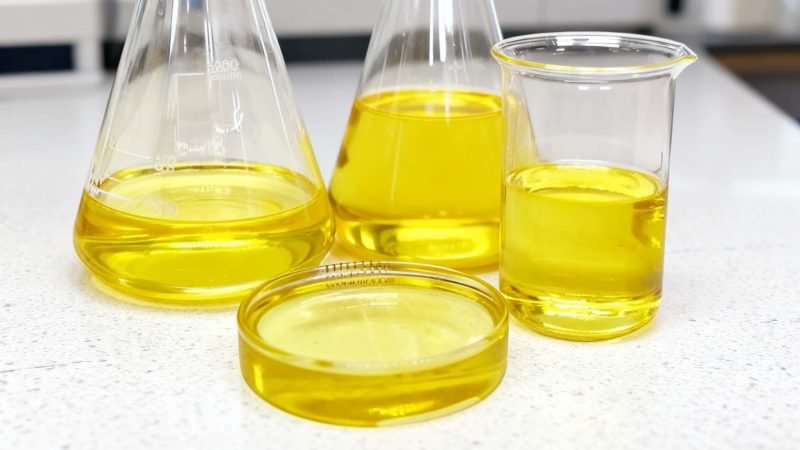
A sticking actuator or deteriorating electrical insulation can turn a small component problem into intermittent faults and unplanned line stops. The bill then includes troubleshooting labor, rejected assemblies, and warranty returns—not just replacement parts. A correctly specified silicone oil can address particular insulation or motion-control needs, but choosing “silicone oil” without defining the duty is not enough.
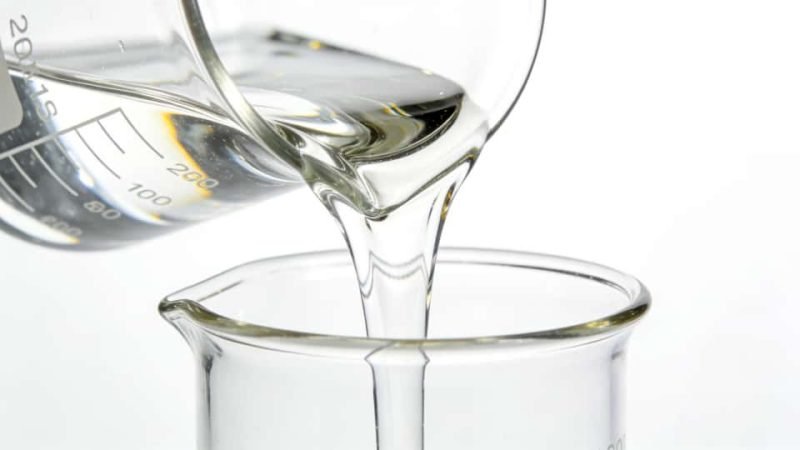
Silicone oil is used in electronics because it provides electrical insulation, lubrication, and mechanical damping while remaining relatively stable across a broad temperature range. Its fluidity helps it reach small clearances, but suitability depends on viscosity, purity, material compatibility, and the risk of migration onto contacts or bonding surfaces.
The catch is that a useful property in one location can become a failure mechanism a few millimeters away. Easy spreading helps a fluid penetrate a mechanism, yet contamination of nearby contacts can disrupt operation. And electrical insulation does not imply strong thermal conductivity—a distinction that matters before specifying silicone oil for cooling.
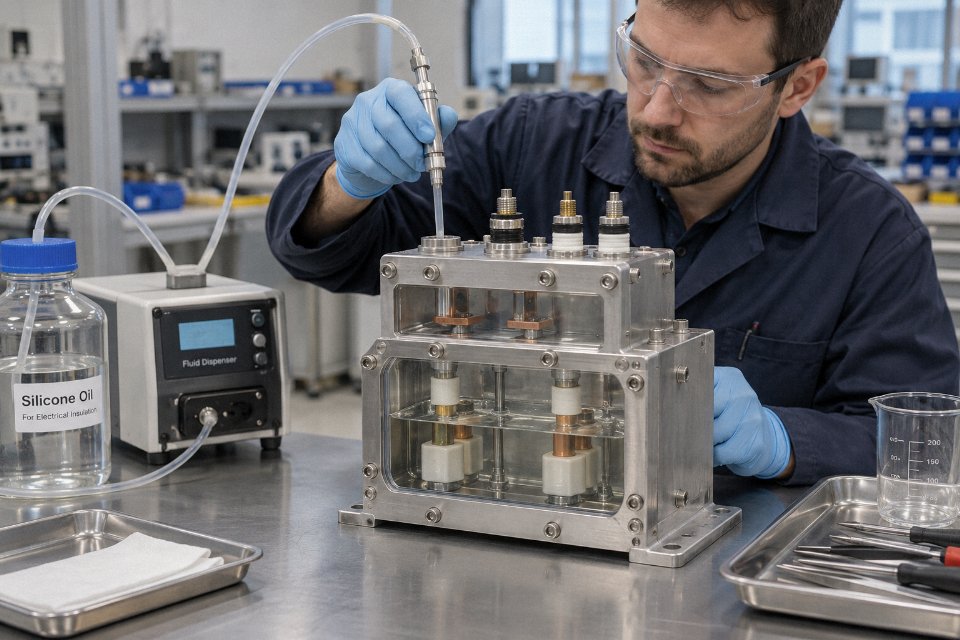
Properties behind silicone oil’s electronic functions
Silicone fluids combine electrical insulation, temperature-tolerant flow, and surface wetting, but those properties do not guarantee cooling performance or component reliability. Their usefulness depends on the selected polymer, viscosity grade, purity, and operating environment. A fluid’s electrical, thermal, and mechanical properties must be evaluated separately; one favorable specification cannot stand in for the others.
Electrical insulation involves several different properties
Clean silicone oil limits current flow because it contains relatively few mobile charge carriers. Contamination changes that picture: moisture, ionic residues, and particles can compromise insulation even when the original fluid meets its specification.
Four properties answer different engineering questions:
- Volume resistivity describes resistance to conduction through the liquid under stated conditions. Temperature and contamination affect leakage current; a room-temperature value alone is insufficient for hot equipment.
- Relative permittivity describes polarization and influences capacitance and electric-field distribution. Clean, dry polydimethylsiloxane (PDMS) fluids commonly fall around 2.5–3.0 near room temperature, but comparisons need the grade, frequency, temperature, and measurement method.
- Dielectric loss measures energy dissipated under an alternating field, commonly reported as dissipation factor. Low permittivity does not automatically mean low dielectric heating.
- Partial-discharge behavior and breakdown strength concern different failure stages. Local discharge can occur in bubbles or highly stressed regions before complete insulation failure. Breakdown results depend strongly on electrode geometry, gap, voltage waveform, fluid conditioning, and the test procedure.
An impressive breakdown-voltage figure without its test conditions is not a defensible design input.
Polymer structure supports temperature tolerance, not unlimited life
The flexible silicon–oxygen backbone of PDMS helps preserve molecular mobility over a useful liquid operating range. Compared with many conventional hydrocarbon oils, suitable silicone grades can show more moderate viscosity changes with temperature and good resistance to oxidation. Those are material tendencies, not guaranteed service-life limits.
At low temperature, the practical concern is whether the fluid still pumps or permits the required motion. At high temperature, exposure duration and the surrounding chemistry become decisive:
- Low-molecular-weight fractions can evaporate preferentially, reducing fill level and changing the remaining fluid’s viscosity.
- Prolonged heating can promote chain rearrangement or scission, producing smaller, more volatile species.
- Oxidative aging can change viscosity and eventually produce deposits or gel, depending on temperature, oxygen access, and formulation.
A sealed laboratory stability test does not reproduce a vented reservoir beside a hot power component. Verify continuous-use limits against the supplier’s conditions, including compatibility with seals and other wetted materials.
Cooling depends on circulation as well as conductivity
Many unfilled PDMS fluids have thermal conductivity around 0.10–0.20 W/(m·K) near room temperature. That is modest: silicone oil can transport useful heat through natural or forced convection, but it should not be treated as a high-conductivity substitute for a filled thermal compound.
Heat must first cross the component-to-fluid boundary, then travel with the circulating liquid to a cooled surface or heat exchanger. Narrow passages, trapped gas, and stagnant pockets can restrict that path even when the bulk reservoir temperature looks acceptable.
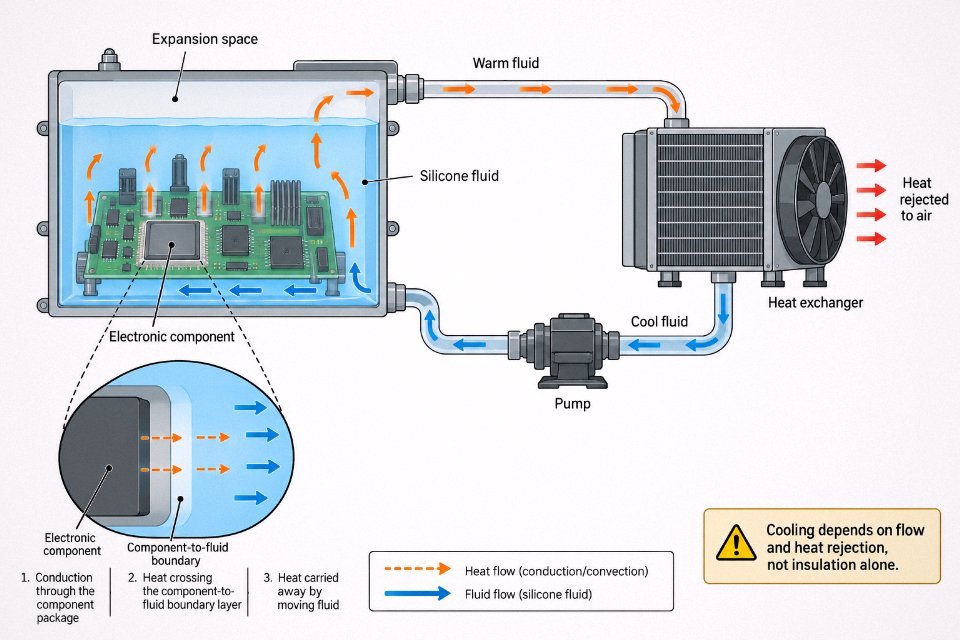
Increasing circulation can reduce boundary-layer resistance, but it costs pumping power and may introduce bubbles. The cooling benefit becomes limited when the dominant resistance lies inside the component package or at the heat-rejection surface.
Viscosity trades damping against movement and pumping
Commercial PDMS fluids span roughly 0.65 to more than 100,000 mm²/s at 25 °C; that range describes product availability, not universal electronics suitability. Selection requires viscosity at operating temperature, not just the grade printed on the drum.
- Damping and motion control: Higher dynamic viscosity increases resistance to shear, helping suppress vibration or slow movement. Excessive resistance can delay actuator response or overload a small drive.
- Pumping and penetration: Lower viscosity generally improves entry into narrow clearances and reduces pressure drop. The trade-off can be poorer retention and, for grades rich in small molecules, greater evaporation.
- Retention: Higher viscosity slows drainage but does not stop leakage or surface migration.
Many unfilled PDMS grades behave approximately as Newtonian liquids under ordinary conditions. Modified or formulated products may not; confirm rheology rather than assuming identical behavior.
Spreading and hydrophobicity have practical limits
Low surface tension helps silicone oil wet intricate surfaces and enter small gaps. The same spreading behavior can carry it onto connector contacts, bonding surfaces, or areas awaiting coating. A film that appears negligible can still interfere with adhesion, making containment and assembly sequence part of material selection.
Hydrophobicity means limited affinity for water, not zero dissolved moisture. Silicone oil does not inherently dry an assembly, remove existing moisture, or create a hermetic barrier; water may remain dissolved, dispersed, or trapped at interfaces.
Evidence needed before assigning design values
Quantitative claims should be traceable to:
- An identifiable technical data sheet covering the actual grade and revision.
- Formulation information sufficient to distinguish unfilled PDMS from modified or additive-containing fluids.
- Test conditions, including temperature, frequency where relevant, conditioning, and measurement method.
- Relevant independent or standards-based measurements, supplemented by application testing where geometry, aging, or contamination controls performance.
Treat missing conditions as missing evidence—not permission to borrow a favorable number from another silicone grade.
Electronic applications and functional boundaries
Silicone oil serves different jobs in electronics, but those jobs are not interchangeable. A liquid approved for damping a mechanism is not automatically suitable for cooling energized hardware, and a silicone-based grease is not simply a thicker version of the same oil. Selection starts with the assembly’s intended function and qualification requirements.
Dielectric filling and liquid insulation
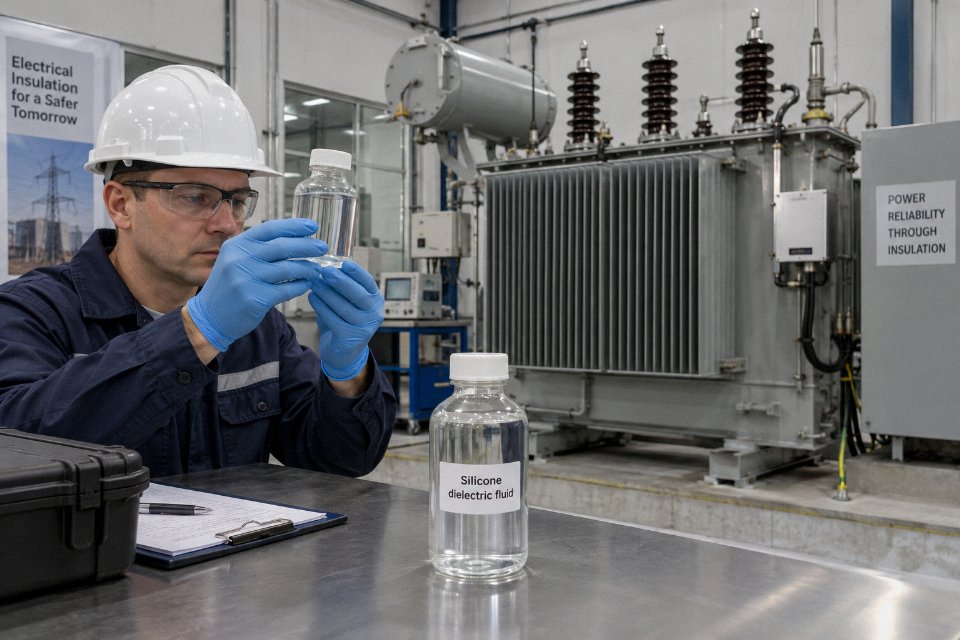
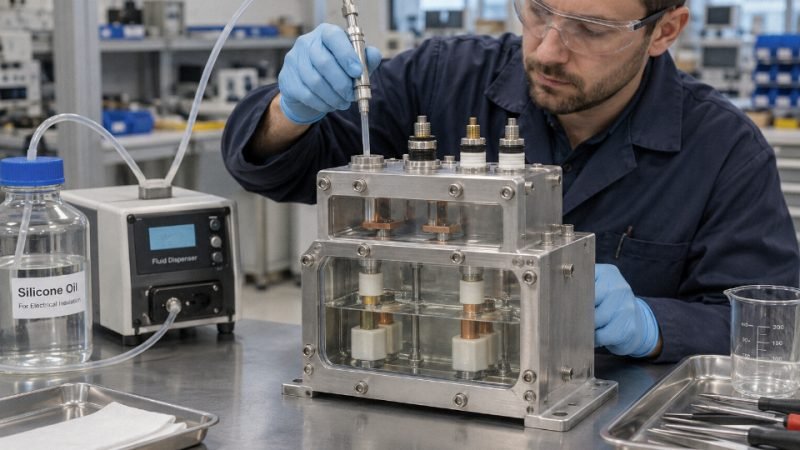
- Equipment and function: Purpose-designed high-voltage assemblies, selected power components, and other liquid-insulated electrical equipment may use a qualified silicone fluid to occupy insulation spaces and displace air. Filling procedures matter: trapped bubbles can concentrate electrical stress and create sites for partial discharge.
- Unsuitable conditions: Do not substitute silicone oil into equipment qualified for another insulating liquid without manufacturer approval. Moisture, particles, incompatible seals, or inadequate expansion space can defeat an otherwise suitable fluid.
The acceptance specification should address fluid condition and the completed assembly’s electrical tests—not just a neat-fluid dielectric-strength value on a supplier sheet. Filling, degassing, sealing, and subsequent maintenance must preserve that condition.
Immersion and circulating-fluid cooling
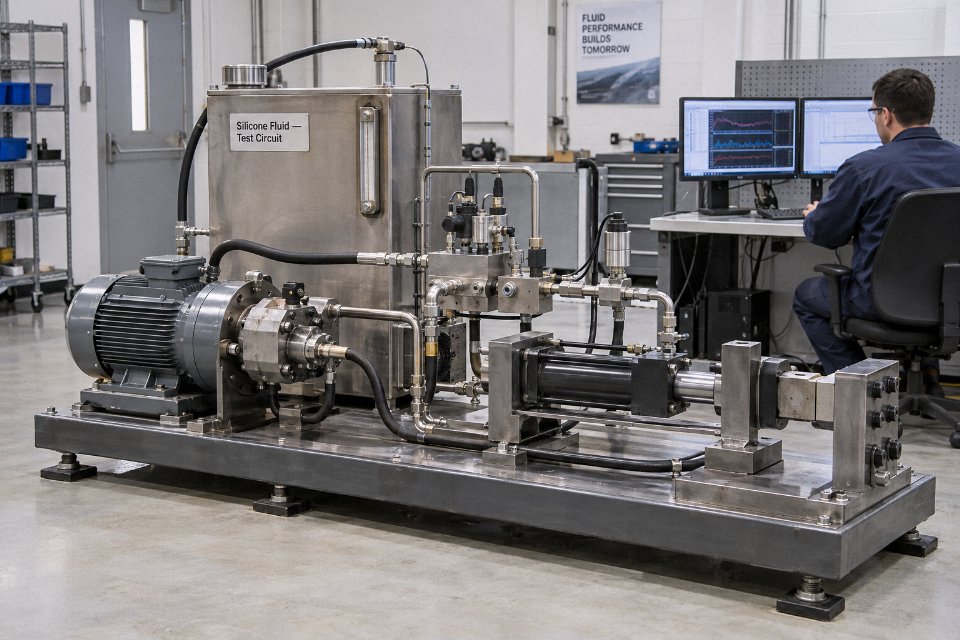
- Equipment and function: Compatible electronic assemblies can transfer heat into silicone fluid through immersion or a pumped circuit, with a heat exchanger rejecting that heat elsewhere. Silicone oil is one candidate for an engineered cooling system, not a default replacement for every dielectric coolant.
- Unsuitable conditions: Reject an unqualified retrofit where component materials, pump performance, or heat-rejection capacity have not been checked. Connectors, labels, cable jackets, adhesives, and serviceable components all need attention.
Viscosity affects boundary-layer flow, pressure loss, and pump demand. A more viscous grade may offer useful retention or lower volatility relative to some lower-viscosity grades, but can penalize circulation and cold starts. Suitability therefore depends on measured component temperatures and system hydraulics, not electrical insulation alone.
Damping in controls and precision mechanisms
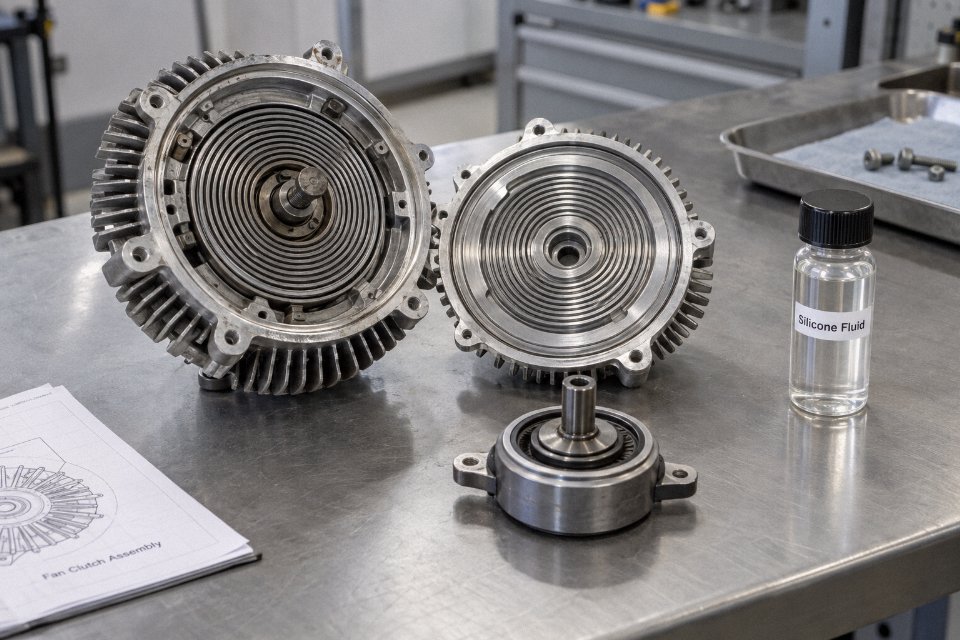
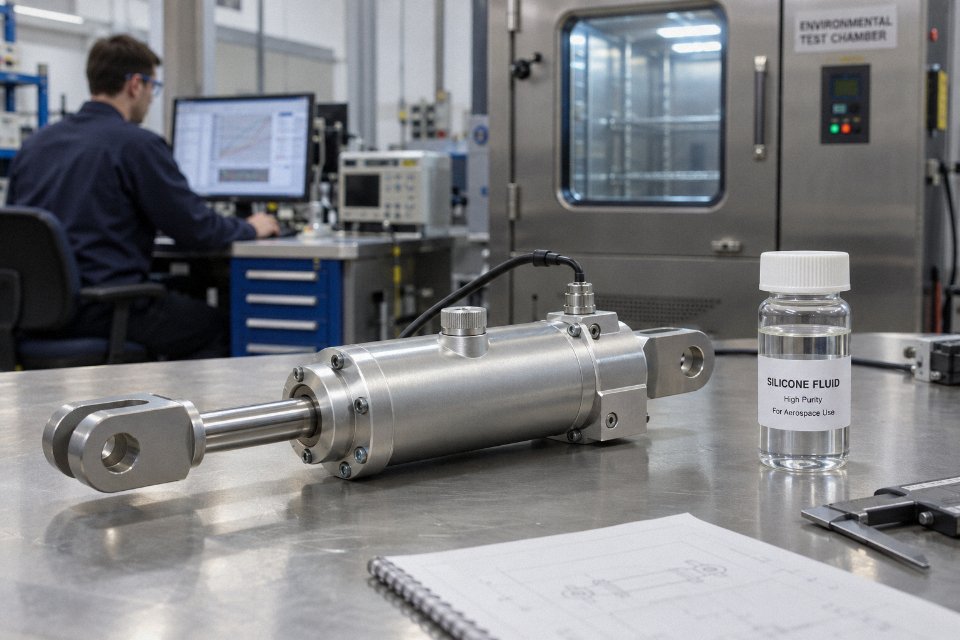
- Equipment and function: Electromechanical controls, instruments, actuators, and precision mechanisms can use viscous shear to slow movement, reduce overshoot, or suppress vibration. The working clearance and wetted geometry determine how strongly fluid viscosity translates into resisting torque or force.
- Unsuitable conditions: An exposed mechanism that cannot retain the fluid, or an actuator with little available torque, may be a poor candidate.
Higher viscosity generally increases damping, but can also increase response time and breakaway demand after a cold soak. Test the complete mechanism across its operating temperature range; a smooth room-temperature demonstration says little about whether a small actuator will stall on a winter startup.
Lubrication of compatible interfaces
- Equipment and function: Selected plastic guides, elastomer interfaces, and lightly loaded mechanical parts may benefit from reduced friction, quieter movement, or easier assembly. Compatibility must be established for the actual polymer formulation, not merely the generic material name.
- Unsuitable conditions: General-purpose silicone oil should not be assumed suitable for heavily loaded metal-to-metal contacts requiring strong boundary or extreme-pressure lubrication.
Electrical contact lubrication is a separate qualification problem. Migration onto switching contacts can interfere with operation, and silicone contamination in arcing environments can produce insulating deposits. Keep the lubricant quantity controlled and verify where it travels during cycling, not just where the operator applies it.
Base fluid in greases and insulating compounds
- Equipment and function: Silicone oil can provide the liquid phase in formulated thermal greases, insulating compounds, and related pastes. Thermally conductive fillers create heat-transfer pathways; thickeners and other formulation components control consistency, retention, and application behavior.
- Unsuitable conditions: Neat oil cannot replace a qualified paste merely because both contain silicone.
Adding filler can improve thermal conductivity while increasing dispensing resistance and changing electrical behavior. Finished-product qualification must cover the relevant properties, including oil separation, pump-out, and thermal cycling. Even replacing the base-fluid grade inside an existing formulation can change performance enough to require requalification.
Validated wetting and temporary barriers
- Equipment and function: A controlled oil film may provide specialized wetting or a temporary barrier on selected surfaces where retention, cleanliness, and subsequent processing have been validated.
- Unsuitable conditions: Exposed assemblies requiring durable environmental protection, clean bonding surfaces, or dependable coating adhesion are generally poor candidates for an uncontrolled mobile film.
A silicone oil film is not a cured conformal coating or encapsulant. It can migrate or be displaced, leaving protection uneven and contaminating nearby surfaces. Where a temporary barrier is justified, specify its removal method and verify that residues do not compromise soldering, bonding, coating, or contact performance.
Silicone oil and competing material choices
Select the material class around the equipment architecture, not a single fluid property. Direct immersion needs a qualified dielectric liquid; an isolated cooling circuit may use water-glycol; a component-to-heatsink gap usually needs an interface material rather than free-flowing oil. Those choices create different pumping, sealing, fire-protection, and maintenance requirements.
Compare fluids at system level
The table is a screening guide, not an approval list. Electrical performance depends on the exact formulation, contamination level, temperature, and test method—not simply the chemical family.
| Material class | Electrical behavior and heat transport | Viscosity, aging, and compatibility | Fire, environmental, and cost considerations |
|---|---|---|---|
| Silicone oils | Qualified grades provide dielectric service; neat PDMS has modest thermal conductivity, typically about 0.10–0.20 W/(m·K) near room temperature. | Wide viscosity choice; assess cold-start pumping, low-molecular-weight volatility, seal swelling, and migration. | Combustible behavior is grade-dependent; acquisition cost must include leakage control and cleanup. |
| Mineral oils | Established dielectric grades exist; heat removal depends strongly on circulation and exchanger design. | Cold viscosity can constrain pumping; oxidation can increase acidity and produce deposits. Check elastomers and plastics. | Often economical initially; fire protection, oxidation monitoring, and replacement can change lifecycle cost. |
| Synthetic hydrocarbon fluids | Suitable formulations can provide dielectric insulation and useful convective cooling. | Selected grades offer controlled viscosity and low-temperature behavior; oxidation stability and seal response remain formulation-specific. | Fire characteristics vary. Premium pricing may buy longer service intervals, but requires supporting data. |
| Natural and synthetic esters | Qualified dielectric grades are available; water content must be interpreted using fluid-specific limits. | Often accommodate more dissolved moisture than mineral oil; hydrolysis, acidity, oxidation, and cold-flow behavior require attention. | Some grades offer high fire points or biodegradability; neither property applies automatically to every ester. |
| Application-specific fluorinated fluids | Some support dielectric immersion, including engineered boiling systems; thermal design is chemistry-specific. | Boiling range, vapor loss, seal compatibility, and degradation products can govern operation. | Some are nonflammable, but exact-chemistry regulatory status, emissions obligations, availability, and replacement cost need scrutiny. |
| Water-glycol coolants | Strong heat-transport option in separated loops; generally unsuitable for direct contact with energized electronics. | Glycol concentration changes freeze protection, viscosity, and heat transfer; inhibitors and corrosion control need maintenance. | Usually inexpensive fluid; include leak detection, water-quality control, inhibitor testing, and disposal costs. |
A higher thermal-conductivity figure does not guarantee a cooler assembly. Heat must pass through the component boundary layer, circulate through the equipment, and reach the exchanger. Raising viscosity can improve retention yet reduce flow through narrow passages; the resulting temperature increase may outweigh the nominal fluid advantage.
Keep water-glycol behind the correct barrier
Water-glycol works well when a cold plate or heat exchanger keeps it physically separated from energized parts and the assembly provides the required electrical isolation. A metal exchanger alone does not establish dielectric isolation. Validate the complete barrier, including connections and credible leakage paths.
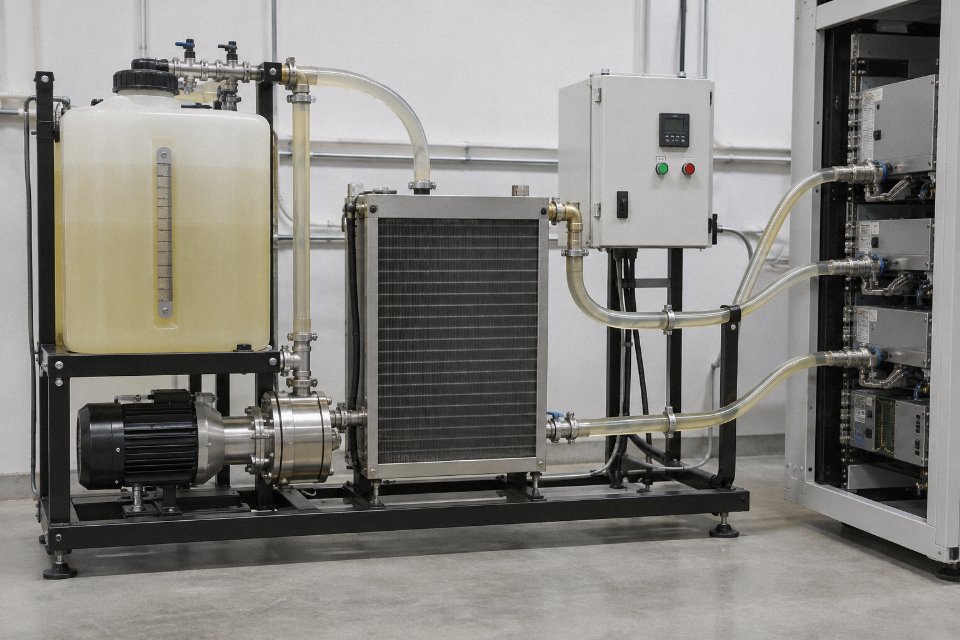
Do not treat initially low-conductivity coolant as a permanent dielectric. Dissolved contaminants, corrosion products, and inhibitor chemistry can change conductivity during service. That is why a separated loop can be acceptable while pouring the same coolant into an immersion tank generally is not.
Match the product form and silicone chemistry
Before requesting silicone-oil quotations, separate these materially different requirements:
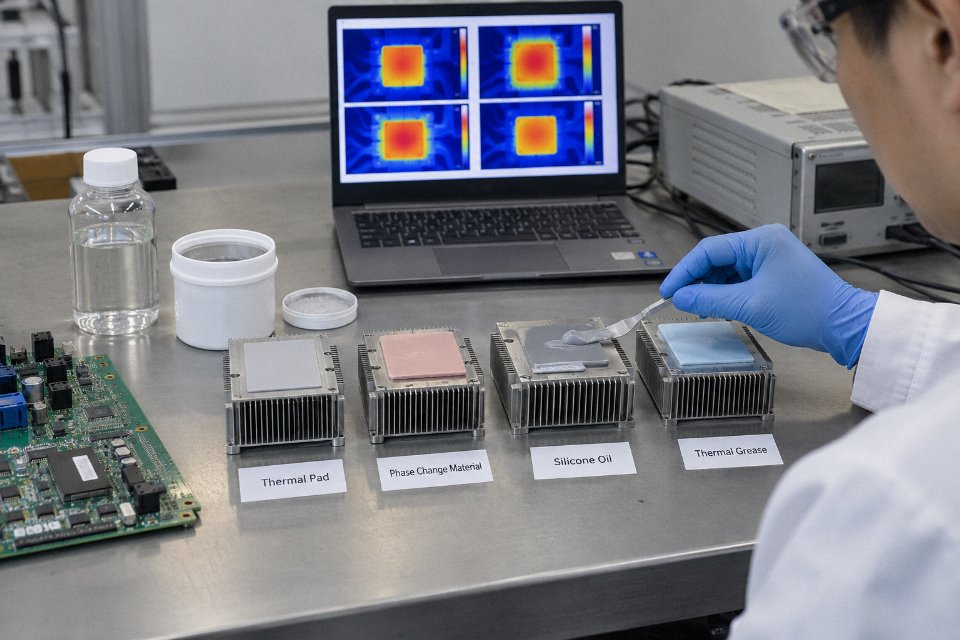
- Thermal grease: A particle-filled interface material that reduces contact resistance; neat oil does not reproduce its thermal performance or retention.
- Thermal pads: Compliant solids selected for gap thickness, compression, and electrical requirements.
- Cured gels: Soft encapsulation where stress relief and protection are needed; formulation and cure compatibility matter.
- Potting compounds: Permanent bulk encapsulation, with consequences for heat flow, repairability, and thermal stress.
- Conformal coatings: Thin protective films, not substitutes for bulk encapsulation or immersion cooling.
Within liquid silicones, methyl silicone fluids are not interchangeable with phenyl-modified or other specialty grades. Substitution can alter low-temperature behavior, oxidation resistance, dielectric response, and compatibility. Require temperature-dependent viscosity data and relevant qualification results rather than transferring claims between families.
Compare operating cost and qualification burden
Consider a representative—not measured—case: a cheaper hydrocarbon fluid reduces purchase cost but swells an existing seal. Seal replacement, leak cleanup, downtime, and renewed electrical qualification can erase the saving. Conversely, silicone may be unnecessary expenditure in a properly isolated water-glycol circuit.
Before approval, check:
- Installed-system evidence: Compatibility with seals, hoses, cable jackets, adhesives, and wetted metals.
- Safety documentation: Current SDS, equipment limits, and applicable fire-protection requirements.
- Destination-market obligations: Exact chemistry, use restrictions, waste routes, and emissions requirements—particularly for fluorinated alternatives.
- Supply continuity: Grade consistency, traceability, lead time, and an approved replacement strategy.
The preferred material changes when the architecture or acceptance criteria change. Compare total qualified-system cost, not price per kilogram.
Failure modes and contamination pathways
Silicone oil can retain acceptable bulk properties while contamination, migration, or poor enclosure design causes a local failure. Reliability therefore depends on controlling where the fluid travels and what enters it—not simply buying a higher-purity grade.
Dielectric contamination: four different threats
These contaminants require different controls; a fine filter is not a complete fluid-conditioning system.
- Moisture: Dissolved water, droplets, and condensation can reduce dielectric reliability, particularly around interfaces and high-field regions. Use closed transfers, dry containers, and controlled headspace exposure. Specify a moisture limit and measurement method; use supplier-approved drying where necessary. Ordinary particle filtration does not remove dissolved water.
- Ionic residues: Flux, cleaning-agent residue, salts, and dirty handling equipment can create conductive surface paths, especially with moisture present. Clean and dry wetted assemblies before filling. Poor solubility in silicone oil does not make residues on an insulator harmless.
- Conductive particles: Machining chips, metallic wear debris, and carbonaceous contamination can concentrate electric fields or bridge small clearances. Flush new circuits and specify filtration against critical clearances and cleanliness requirements—not an arbitrary filter rating.
- Entrained gas: Bubbles create dielectric discontinuities that can promote partial discharge under sufficient electrical stress. Prevent suction-side air ingress and excessive return-line agitation; use settling or validated degassing where required. Verify performance under the assembly’s actual voltage stress, temperature, and pressure.
Migration and contamination of adjacent surfaces
Low surface tension allows silicone fluid to spread through joints and along surfaces that appear dry. Lower viscosity may improve penetration and pumping, but can also make unintended migration harder to contain.
- Liquid creep: Leakage or maintenance smears can reach solder pads and bonding surfaces, impairing solder wetting, adhesive bonding, or coating adhesion.
- Aerosol transfer: Spraying, agitation, or compressed-air blowoff can distribute droplets beyond the serviced component. Keep silicone handling tools and work areas separate from soldering, bonding, and coating operations.
- Volatile deposition: Volatile fractions can leave warm fluid and condense on cooler optics or other sensitive surfaces without a visible leak. Evaluate the selected grade at operating temperature and provide isolation where needed.
Cleaning must be validated against the downstream process. A surface that looks clean may still produce coating craters or a weak adhesive joint.
Switching contacts are a distinct risk
Under certain arcing conditions, silicone vapor can decompose and form insulating, silicon-containing deposits on switching contacts, increasing contact resistance or causing intermittent operation. Risk depends on vapor exposure, contact design, electrical duty, and enclosure ventilation; proximity alone does not establish failure.
Check relay and switch manufacturer restrictions before introducing silicone fluid nearby. Non-switching connectors do not automatically share this arc-driven mechanism: their concerns include liquid films, particle retention, and altered mating-interface behavior. Evaluate them separately.
Material compatibility and enclosure integrity
Compatibility belongs to the exact material formulation and exposure conditions, not a polymer-family name.
- Elastomers: Swelling, shrinkage, or additive extraction can change seal dimensions and compression force.
- Plastics and adhesives: Exposure may promote stress-related damage, weaken bonds, or extract constituents. Test stressed molded parts and cured production joints, not just unstressed material coupons.
- Enclosures: Check seals, cable exits, joints, and pressure-management provisions. Thermal expansion in an overfilled sealed housing can build pressure; leakage then causes fluid loss and may expose energized parts.
Use representative soak and thermal-cycle testing, assessing dimensional change, mechanical function, leakage, and fluid contamination. A tight room-temperature assembly is not proof of hot-service integrity.
Circulation, aging, and temperature limits
An acceptable reservoir temperature does not prove that the hottest component is adequately cooled. Excessive cold-start viscosity can increase pump losses or prevent required flow; restrictions, gas pockets, and poor flow distribution can leave local hot spots.
Verify cold-start flow and pressure, pump operating limits, and component temperatures at worst-case load. A lower-viscosity grade may ease circulation but change leakage, retention, and volatility behavior.
Thermal aging, oxidation, and volatile loss can change fluid properties and produce deposits, depending on grade, oxygen exposure, contaminants, and temperature. Establish inspection and replacement criteria from supplier guidance and application testing. Flash point describes ignition behavior under a specified test: it is neither a continuous operating-temperature rating nor proof of nonflammability.
Contamination-sensitive environments require separate evidence
- Cleanrooms: Demonstrate acceptable airborne molecular and particle contamination under actual handling and operating conditions.
- Optical systems: Assess deposited films, haze, and transmission loss on representative optical surfaces.
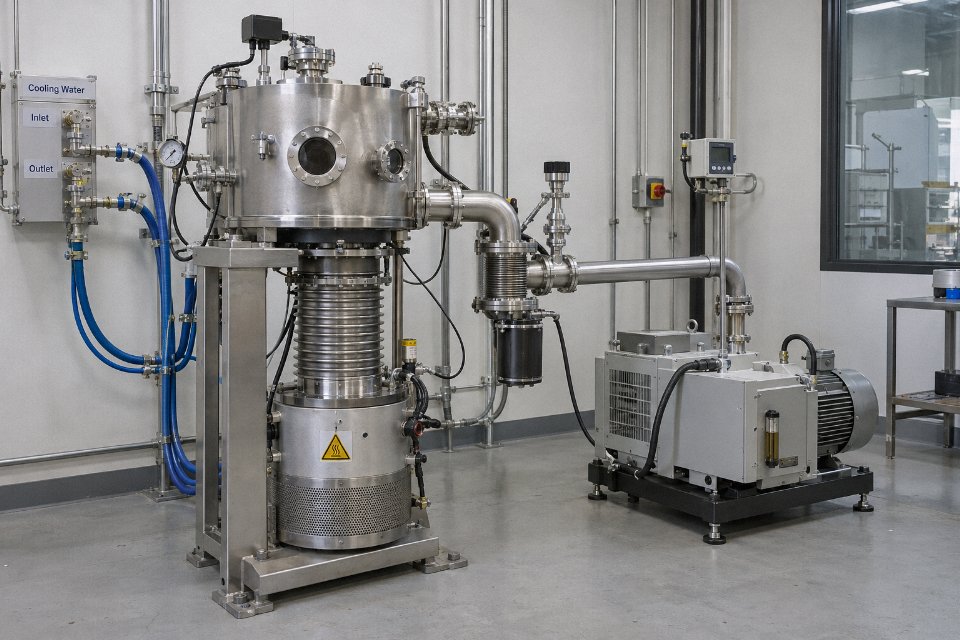
- Vacuum equipment: Verify vapor pressure, outgassing, and condensable transport at operating temperature and pressure.
- Space hardware: Require mission-relevant materials qualification and applicable outgassing evidence for the exact grade.
High chemical purity alone establishes none of these contamination limits.
Grade specifications and supplier evidence
Build the purchase specification around the equipment duty, not a supplier’s nearest catalogue grade. Complete this requirements matrix before requesting quotations; unresolved entries are engineering questions, not details for purchasing to guess.
| Requirement | Information to put in the enquiry | Specification consequence |
|---|---|---|
| Function | Insulation, damping, lubrication, heat transport, or a combination | Establishes which properties require acceptance limits |
| Voltage stress | AC/DC waveform, frequency, transients, field concentration | Determines relevant electrical testing and conditions |
| Geometry | Clearances, wetted materials, seals, narrow passages, fill volume | Controls compatibility checks, filling behaviour, and expansion allowance |
| Temperature | Operating extremes, cold starts, hot spots, storage and transport conditions | Defines viscosity, stability, and handling requirements |
| Heat load | Heat input, allowable temperature rise, cooling arrangement | Identifies required thermal data and system testing |
| Flow conditions | Static fill or circulation, flow range, pump limits, filtration | Sets viscosity and cleanliness requirements |
| Service life | Duty cycle, intended replacement interval, allowable property drift | Establishes ageing and qualification needs |
| Exposure | Air, humidity, cleaning agents, process chemicals, radiation where relevant | Defines compatibility and contamination controls |
| Maintenance | Sealed-for-life, periodic sampling, top-up, or complete replacement | Determines packaging, sampling access, and fluid-mixing policy |
A sealed damping assembly and a circulating insulating-fluid system may use the same polymer family but need very different acceptance plans. Specify the properties that protect the equipment’s function; do not turn every catalogue value into a contractual limit.
Lock down chemistry and viscosity
Define the material identity tightly enough to prevent an apparently equivalent replacement from bypassing qualification:
- Base chemistry: identify the approved polymer family, such as polydimethylsiloxane, rather than simply “silicone oil.”
- Formulation boundaries: state permitted additives and prohibited constituents or contamination sources. “No intentionally added” is not equivalent to a measured maximum concentration.
- Change control: require customer approval before polymer-family substitution, additive changes, or blending grades to achieve the specified viscosity.
Specify kinematic viscosity in mm²/s at a stated temperature, with an acceptance range. For cold-start pumping or temperature-sensitive damping, request a viscosity–temperature curve covering the actual duty. A single value at 25 °C cannot establish startup pressure drop or hot-running damping.
Kinematic viscosity and dynamic viscosity are not interchangeable: dynamic viscosity equals kinematic viscosity multiplied by density. Numerically, mm²/s multiplied by g/cm³ gives mPa·s, provided both properties refer to the same temperature.
Higher viscosity may improve retention or damping but increases flow resistance and filling time. That preference can reverse in a narrow passage or a cold pump suction line.
Define performance tests and acceptance conditions
Use electrical measurements appropriate to the equipment rather than requesting a generic “high dielectric strength” statement:
- Breakdown voltage or strength: specify the test method, electrode arrangement, gap, temperature, and sample conditioning. A test-cell result is not an allowable equipment operating field.
- Volume resistivity: state temperature and measurement conditions; contamination can make clean laboratory fluid unrepresentative of the installed system.
- Relative permittivity and dissipation factor: identify frequency, temperature, and method where capacitive behaviour or dielectric losses affect design.
ASTM D445 is a relevant method family for kinematic viscosity. IEC 60156 addresses power-frequency breakdown testing of insulating liquids; IEC 60247 covers relative permittivity, dielectric dissipation factor, and DC resistivity measurements. Verify current editions, scope, and suitability for the selected fluid and intended test conditions before making any method contractual.
Request other properties selectively:
- Thermal conductivity and heat capacity: for heat-transfer calculations, at relevant temperatures.
- Density and thermal expansion: for fill mass, reservoir sizing, and headspace calculations.
- Pour point: where cold handling matters; it does not establish acceptable pumpability.
- Flash point: for handling and risk assessment, not as a continuous operating-temperature rating.
- Volatility: where fluid loss or condensable deposits matter, using defined exposure time and temperature.
Distinguish typical data from guaranteed release limits. A published thermal-conductivity value may support preliminary design without being tested on every batch.
Make cleanliness measurable
Set contamination requirements from system sensitivity and validated acceptance criteria, not an arbitrary “electronics-grade” label:
- Moisture: define the measurement method, sampling precautions, units, and maximum accepted value.
- Particles: specify relevant size classes, counting method, and sampling location.
- Ionic contamination: identify target species or a validated extraction-and-analysis procedure; “low ions” is not reproducible.
- Volatile content: distinguish bulk evaporation loss from specific low-molecular-weight constituents or condensable emissions.
Packaging and sampling can defeat a good fluid specification. Require compatible containers and closures, clean transfer equipment, and a sampling procedure that avoids introducing ambient moisture or debris.
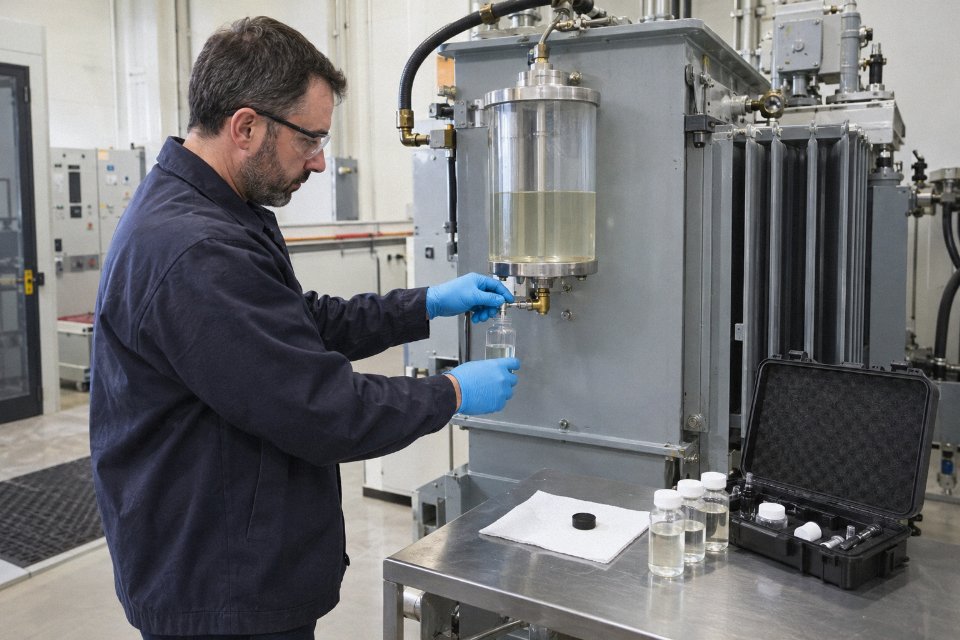
Tighter cleanliness limits increase processing and verification costs, and may exceed the receiving laboratory’s measurement capability. Agree on detection limits, uncertainty, and a dispute-testing procedure before placing the order.
Require evidence, then evaluate the supply route
Obtain a controlled documentation package:
- Technical data sheet and current safety data sheet.
- Lot-specific certificate of analysis identifying actual results, methods, and any untested conformity statements.
- Batch traceability and retained-sample arrangements.
- Shelf-life basis, storage conditions, and opened-container guidance.
- Packaging specifications and formal change-notification procedures.
- Destination-market declarations, restricted-substance information, and customer-specific compliance responses.
Chemical compliance documentation does not establish equipment-level safety approval. Component suitability and finished-equipment certification remain separate obligations.
Compare suppliers on batch consistency, qualification-sample access, application-support scope, lead time, minimum order quantity, supply continuity, and delivered cost—including freight, testing, storage, and rejected-lot handling.
SiliconChemicals’ organosilicon manufacturing and integrated supply capabilities are relevant procurement considerations, but require product-specific evidence. Confirm the offered grade’s production source, release specification, traceability, and change-control commitments; a broad product portfolio is not a substitute for those documents.
Qualification tests and operating controls
- Establish the incoming-fluid baseline before equipment testing.
Sample representative production lots using clean, compatible containers and a documented sampling method. Record appearance, viscosity at a specified temperature, moisture, and application-relevant electrical and cleanliness measurements. Retain sealed reference samples with lot identification and storage conditions. Agree acceptance limits and measurement methods before results arrive; otherwise, a marginal batch can quietly become the new specification. Supplier certificates support this baseline but do not replace incoming verification.
- Test the actual wetted and vapor-exposed materials.
Include production-grade seals, plastics, adhesives, coatings, cable insulation, metals, and optical surfaces—not merely generic material coupons. Use representative temperature, exposure duration, mechanical stress, and liquid or vapor contact. Inspect for:
- Swelling, shrinkage, hardness changes, and loss of sealing force.
- Cracking, softening, adhesion loss, corrosion, and extracted residues.
- Optical haze, deposited films, and transmission changes.
Test assembled interfaces where practical: a seal can retain acceptable dimensions yet lose compression force and leak. Include headspace witnesses where vapor transport could affect optics.
Validate electrical behavior in the intended assembly.
Use the relevant electrode spacing, surface finish, insulation interfaces, waveform or frequency, and operating temperature. Account for the qualified moisture and contamination limits rather than testing only pristine fluid. A laboratory breakdown result does not establish assembly withstand capability. Where applicable, assess partial-discharge inception and extinction, gas release, and trapped bubbles under pressure and temperature changes; gas pockets can concentrate electrical stress. Qualified high-voltage personnel should define testing against applicable equipment standards and supplier limits.
Prove thermal and hydraulic margins together.
Exercise worst-case ambient temperature, maximum heat load, minimum credible flow, cold start, and anticipated aged-fluid conditions. Measure critical component temperatures, fluid inlet and outlet temperatures, pressure drop, flow, and pump behavior. Cold viscosity can increase suction losses and delay circulation precisely when the controller assumes cooling is available. Finer filtration improves particle control but increases pressure drop, especially with a cold or loaded element. This workflow does not presume forced circulation: passive systems need checks for circulation paths, orientation, and local hot spots.
Use accelerated aging only with a defensible model.
Combine fluid aging with thermal cycling and relevant humidity, oxygen, or other environmental exposure. Preserve realistic fluid-to-material ratios and headspace conditions where extraction or oxidation matters. Temperature-based extrapolation requires evidence that the accelerated test retains the service failure mechanism; excessive temperature may introduce a different chemistry or damage a polymer that would survive normal operation. A short soak screens gross incompatibility, not years of reliability. Inspect intermediate samples so an apparently acceptable endpoint does not conceal a developing trend.
Qualify the filling and contamination-control procedure.
Specify the following as controlled process instructions:
- Cleaning, drying, and equipment-release criteria.
- Moisture exposure limits and compatible transfer equipment.
- Degassing conditions, where needed, and acceptable residual gas.
- Filter rating, cleanliness verification, and allowable pressure drop.
- Fill sequence, venting, seal checks, and expansion allowance.
- Dedicated or verified-clean hoses, pumps, and containers to prevent cross-contamination.
Set these requirements from system trials and current equipment documentation. Aggressive vacuum or heating can affect volatile constituents or equipment seals; copying another plant’s degassing recipe is not qualification.
Set maintenance triggers from trends and failure consequences.
Establish sampling locations, operating conditions, and intervals that make successive results comparable. Track relevant moisture, particles, viscosity, electrical properties, leakage, and thermal performance against the baseline. Investigate a rising component temperature alongside flow and pressure drop before blaming fluid aging. Define warning, investigation, and shutdown thresholds according to equipment risk and demonstrated correlations. Replacement should follow condition and validated service limits, not a universal calendar interval.
Close with a controlled pilot and release record.
Document pass/fail criteria, results, deviations, and responsible approvals before pilot deployment. The pilot should cover meaningful operating variability, not just a convenient low-load week. Preserve fluid-lot and equipment traceability, and require change review for formulation, supplier, materials, or filling-process changes. Define recovery or disposal routes from the used fluid’s contamination profile, current safety documentation, and local requirements; unused-product guidance may not cover contaminated service fluid.
Frequently asked questions
Does silicone oil conduct electricity?
Clean, dry silicone oil normally behaves as an electrical insulator, not a conductor. Moisture, ionic residues, and conductive particles can increase leakage or reduce breakdown resistance. Temperature changes electrical properties; high electric stress, bubbles, and electrode geometry affect breakdown. Verify performance under the equipment’s actual conditions, not just a supplier’s headline value.
Can silicone oil replace thermal paste?
Usually not. Many unfilled PDMS fluids have thermal conductivity around 0.10–0.20 W/(m·K) near room temperature; verify the selected grade. Thermal pastes use conductive fillers and controlled consistency to bridge interface gaps and resist displacement. Plain oil may wet the surfaces but migrate away, leaving an unreliable thermal interface.
Can any silicone oil be used for immersion cooling?
No. An insulating fluid is not automatically an acceptable immersion coolant. Qualification must cover:
- Fluid grade: thermal properties, electrical performance, purity, and stability.
- Components: seals, cables, plastics, labels, and component internals exposed to fluid.
- Hydraulics: cold-start viscosity, pump duty, pressure drop, and heat-exchanger performance.
- System: expansion allowance, containment, filtration, and fire requirements.
Is silicone oil safe for circuit boards and connectors?
Compatibility with a board substrate does not establish assembly compatibility. Evaluate separately:
- Contacts: insulating films can interfere with low-force electrical connections.
- Adhesives and coatings: migration may undermine bonding, coating adhesion, or rework.
- Sensitive surfaces: optical faces and surfaces awaiting soldering or painting may become contaminated.
Use connector-manufacturer guidance rather than assuming every connector tolerates silicone exposure.
Is silicone oil flammable?
Some silicone oils can burn under suitable conditions; “silicone” does not mean nonflammable. Fire behavior depends on grade, temperature, exposure geometry, and ignition source. Read the current safety data sheet and equipment requirements. Flash point alone does not establish the safety of a heated bath or pressurized leak.
What viscosity should be selected?
Select viscosity at operating temperature, including startup—not solely at 25 °C. Lower viscosity generally improves penetration and circulation but makes leakage and migration harder to contain. Higher viscosity improves damping and retention while increasing pumping resistance. The preferred grade changes with clearances, seals, temperature range, and required flow.
How long does silicone oil last in electronics?
There is no defensible universal replacement interval. Heat, electrical discharge, contamination, and incompatible materials can shorten useful life. Establish service limits through validated operating data and trend relevant indicators:
- Viscosity and appearance.
- Moisture and particulate contamination.
- Electrical properties where insulation is critical.
Can ordinary silicone oil be used in vacuum or optical equipment?
Do not assume so. Volatile fractions can leave the fluid and deposit on colder lenses, sensors, or chamber surfaces. Require application-specific outgassing or deposition evidence at the intended temperature and pressure. A low-volatility designation alone does not demonstrate acceptable optical cleanliness.
Define the grade and approve a qualification sample
Select silicone oil when its electrical insulation, fluid behavior, and stability fit the equipment’s operating conditions. Reject it when contact contamination, migration, material incompatibility, or inadequate heat transfer cannot be controlled; a favorable fluid datasheet does not compensate for an unsuitable system design.
Close the decision gate
- Confirm the function. State what the fluid must accomplish and where it will reside. “For electronics” is not a specification; electrical insulation, damping, and lubrication impose different acceptance requirements.
- Confirm the material class. Check that a mobile liquid is appropriate rather than a grease, gel, cured encapsulant, or another fluid chemistry. Retention can matter more than easy dispensing.
- Document the grade. Fix the viscosity reference temperature, relevant property limits, cleanliness requirements, and traceability expectations. Identify which requirements need lot-specific evidence rather than typical datasheet values.
- Test representative samples. Use production-representative seals, plastics, wiring, contacts, and dispensing equipment. Include operating temperature extremes and dwell periods long enough to expose migration or compatibility problems.
- Approve against predefined criteria. Record acceptance limits before testing, then connect the approved sample to an identifiable grade and controlled purchasing specification. Do not quietly substitute another viscosity because it is available from stock.
Send a requirements-led inquiry
Give the supplier enough information to eliminate unsuitable candidates:
- Application and function: Equipment type, fluid location, intended duty, and whether contact is continuous or intermittent.
- Temperature range: Normal operation, startup conditions, peak excursions, and their duration.
- Voltage conditions: AC or DC, frequency where relevant, working voltage, and transient exposure.
- Viscosity needs: Target viscosity at a stated temperature, dispensing restrictions, and retention requirements.
- Exposed materials: Metals, coatings, elastomers, plastics, adhesives, and sensitive contact surfaces.
- Cleanliness requirements: Moisture, particles, volatile residues, and any silicone-restricted downstream operations.
- Commercial and compliance requirements: Trial quantity, estimated annual volume, destination market, applicable standards, and customer-specific approval requirements.
Send this package to SiliconChemicals and request candidate-grade recommendations, available technical documentation, lot-quality information, and qualification samples against the submitted requirements. Ask which requirements the proposed grade demonstrably meets and which remain unverified.
A supplier recommendation starts evaluation; it does not constitute equipment approval. Equipment-level compatibility testing, safety assessment, and customer authorization remain necessary before production release.