Release Silicone Oils are silicone-based fluids formulated to create a low-surface-energy, non-stick interface between a mold (or processing surface) and the molded material. Their primary function is to facilitate easy demolding, prevent adhesion, reduce surface defects, and extend mold service life. Unlike reactive vinyl silicone oils used in crosslinking systems, release silicone oils are typically non-reactive polydimethylsiloxane (PDMS) fluids or modified silicone formulations designed to provide lubricity and anti-adhesion performance.
SiliconChemicals® Release Silicone Oils are engineered low-surface-energy silicone fluids designed to provide efficient, clean, and consistent release performance in molding, forming, and processing operations. Built on high-purity polydimethylsiloxane (PDMS) chemistry, these products create a uniform boundary layer that minimizes adhesion between molds and molded materials while improving surface finish and production efficiency. They function as process aids rather than structural polymers, ensuring reliable demolding, reduced scrap rates, and extended mold service life across plastics, rubber, polyurethane, composite, and industrial manufacturing sectors.
| Model Code | Formulation Type | Base Chemistry | Viscosity (cSt, 25°C) | Active Content (%) | Temperature Resistance | Application Method | Primary Industry | Compliance Option |
|---|---|---|---|---|---|---|---|---|
| RSO-50 | Neat Oil | PDMS | 50 | 100 | ≤200°C | Wipe / Spray | Plastic molding | Industrial |
| RSO-100 | Neat Oil | PDMS | 100 | 100 | ≤200°C | Spray | Injection molding | Industrial |
| RSO-350 | Neat Oil | PDMS | 350 | 100 | ≤220°C | Spray / Roller | Rubber molding | Industrial |
| RSO-1000 | Neat Oil | PDMS | 1000 | 100 | ≤220°C | Spray | Elastomers | Industrial |
| RSO-5000 | Neat Oil | PDMS | 5000 | 100 | ≤250°C | Brush / Roller | High-temp rubber | Industrial |
| RSO-10000 | Neat Oil | PDMS | 10000 | 100 | ≤250°C | Manual coat | Composite molds | Industrial |
| RSE-10 | Emulsion | PDMS (O/W) | 100 | 10 | ≤180°C | Automated spray | Plastic / PU | Low VOC |
| RSE-20 | Emulsion | PDMS (O/W) | 300 | 20 | ≤180°C | Spray | PU foam | Low VOC |
| RSE-35 | Emulsion | PDMS (O/W) | 500 | 35 | ≤200°C | Spray | Rubber molding | Low VOC |
| RSE-50 | Emulsion | PDMS (O/W) | 1000 | 50 | ≤200°C | Automated line | Tire production | Low VOC |
| RSB-5 | Solvent-Based | PDMS + Carrier | 50 | 5 | ≤220°C | Spray | High-speed molding | Fast dry |
| RSB-15 | Solvent-Based | PDMS + Carrier | 100 | 15 | ≤220°C | Spray | Automotive molding | Fast cure |
| RSB-25 | Solvent-Based | PDMS + Carrier | 350 | 25 | ≤250°C | Spray | Industrial rubber | Rapid evaporation |
| RHT-500 | High-Temp Oil | Modified PDMS | 500 | 100 | ≤300°C | Brush / Spray | Composite curing | High heat |
| RHT-1000 | High-Temp Oil | Phenyl-PDMS | 1000 | 100 | ≤300°C | Spray | Aerospace molds | Thermal enhanced |
| RHT-2000 | High-Temp Oil | Phenyl-PDMS | 2000 | 100 | ≤320°C | Manual coat | High-temp rubber | Thermal stability |
| RLF-100 | Low Friction Oil | PDMS | 100 | 100 | ≤200°C | Spray | Conveyor systems | Industrial |
| RLF-500 | Low Friction Oil | PDMS | 500 | 100 | ≤220°C | Spray | Textile processing | Industrial |
| RFG-100 | Food-Grade Oil | PDMS | 100 | 100 | ≤200°C | Spray | Food machinery | FDA-ready |
| RFG-350 | Food-Grade Oil | PDMS | 350 | 100 | ≤220°C | Spray | Packaging molds | FDA-ready |
| RMG-1000 | Medical Grade | Ultra-pure PDMS | 1000 | 100 | ≤200°C | Controlled spray | Medical molds | Medical-grade |
| RPU-20 | PU-Specific Emulsion | PDMS Blend | 300 | 20 | ≤180°C | Spray | Polyurethane foam | Low VOC |
| RTC-500 | Tire Cure Oil | PDMS Modified | 500 | 100 | ≤250°C | Spray | Tire production | Industrial |
| RCM-1000 | Composite Mold Release | Modified PDMS | 1000 | 100 | ≤280°C | Brush | Carbon fiber molds | Industrial |
| RAS-350 | Anti-Stick Specialty | PDMS Blend | 350 | 100 | ≤220°C | Spray | Adhesive processing | Industrial |
| RUV-100 | UV Stable Grade | Modified PDMS | 100 | 100 | ≤200°C | Spray | Outdoor molds | UV resistant |
Product List

SiliconChemicals® Release Silicone Oils are classified based on formulation system, viscosity level, temperature resistance, application method, and industrial performance requirements. This structured framework ensures precise selection for plastics, rubber, polyurethane, composite, and specialty manufacturing environments.
| Category | Composition | Core Advantage | Typical Use |
|---|---|---|---|
| Neat Silicone Oil (100%) | Pure PDMS fluid | Strong lubrication & film durability | Plastic & rubber molding |
| Water-Based Emulsion (O/W) | PDMS dispersed in water | Low VOC, eco-friendly | Automated spray lines |
| Solvent-Based Release | PDMS + fast-drying carrier | Rapid film formation | High-speed production |
| High-Temperature Modified | Phenyl-modified PDMS | Enhanced thermal stability | Composite & tire curing |
| Food/Medical Grade | Ultra-pure PDMS | Regulatory compliance | Food & medical molds |
| Viscosity (cSt) | Functional Behavior | Application Guidance |
|---|---|---|
| 50 – 100 | Ultra-thin film | Precision plastics |
| 350 – 1000 | Balanced film thickness | Rubber molding |
| 1000 – 5000 | Durable coating layer | High-load molds |
| 5000 – 10000 | Heavy-duty barrier | Composite forming |
Higher viscosity → thicker film → longer-lasting release
Lower viscosity → better spreading → minimal surface residue
| Grade | Maximum Operating Temperature | Application Field |
|---|---|---|
| Standard PDMS | ≤200–220°C | Plastics & PU |
| Enhanced Thermal | ≤250°C | Industrial rubber |
| Phenyl-Modified | ≤300–320°C | Tire & composites |
| Specialty High-Heat | Custom | Aerospace tooling |
| Industry Segment | Recommended Type | Performance Objective |
|---|---|---|
| Plastic Injection Molding | Neat / Emulsion | Clean part ejection |
| Rubber & Elastomers | Medium–High viscosity | Reduce sticking & tearing |
| Polyurethane Foam | Emulsion systems | Surface quality control |
| Tire Manufacturing | High-temp modified | Stability under curing heat |
| Composite Molding | High-temp / Heavy film | Mold surface protection |
| Food Processing | Food-grade silicone | Safe contact compliance |
| Medical Devices | Medical-grade PDMS | Ultra-purity & clean release |
| Method | Suitable Formulation | Notes |
|---|---|---|
| Manual Wipe | Neat oil | Controlled coating |
| Spray Application | Emulsion / Solvent | Uniform distribution |
| Automated Line | Water-based emulsion | Production efficiency |
| Brush / Roller | High-viscosity oil | Heavy-duty molds |
| Functional Target | Recommended Silicone Type |
|---|---|
| Low Friction | Low-viscosity PDMS |
| Heavy-Duty Release | High-viscosity PDMS |
| Low Residue | Water-based emulsion |
| Fast Drying | Solvent-based |
| High Heat Stability | Phenyl-modified PDMS |
| Compliance-Critical | Food / Medical grade |
SiliconChemicals® Release Silicone Oils provide:
• Viscosity range: 50 – 10,000 cSt
• Active content: 5% – 100%
• Temperature capability: Up to 320°C
• Formulations: Oil / Emulsion / Solvent / Modified
• Industrial coverage: Plastics, Rubber, PU, Tire, Composite, Food, Medical
Release Silicone Oils function by creating a low-surface-energy boundary layer, reducing adhesion forces between mold surfaces and molded materials. The correct selection depends on balancing:
SiliconChemicals® Release Silicone Oil is a high-performance, low-surface-energy silicone fluid engineered to provide reliable mold release and anti-adhesion performance in industrial manufacturing processes. Based on high-purity polydimethylsiloxane (PDMS) chemistry, it forms a uniform lubricating film that minimizes bonding between mold surfaces and molded materials, ensuring smooth demolding and improved surface finish.
Designed for plastics, rubber, polyurethane, composites, and specialty forming operations, SiliconChemicals® Release Silicone Oil enhances production efficiency by reducing sticking, lowering scrap rates, and extending mold life. It is available in neat oil, water-based emulsion, solvent-based, high-temperature modified, and compliance-ready grades to match diverse processing environments.
With viscosity options from ultra-light spreading fluids to heavy-duty high-film grades, and temperature resistance up to 300°C+ in modified systems, SiliconChemicals® Release Silicone Oil supports automated spray lines, high-speed molding cycles, and precision manufacturing applications requiring consistent and repeatable release performance.
If you share your molding material, process temperature, and application method, a tailored grade recommendation can be provided.
Release Silicone Oil functions through surface energy reduction and boundary lubrication, rather than chemical curing. Its molecular structure and interfacial behavior are responsible for the non-stick performance observed in molding and forming operations.
Most release silicone oils are based on polydimethylsiloxane (PDMS), built on a repeating siloxane backbone:
[−Si(CH3)2–O−]n[-Si(CH₃)₂–O-]_n[−Si(CH3)2–O−]n
Key structural features:
In high-temperature grades, partial phenyl substitution may be introduced to enhance thermal resistance and oxidative stability.
The effectiveness of release silicone oil is governed by its very low surface tension (~20–22 mN/m), significantly lower than most plastics and rubbers.
When applied to a mold:
This is a physical separation mechanism, not a chemical reaction.
At the microscopic level:
The result is:
The Si–O backbone provides:
Phenyl-modified systems further enhance high-temperature durability.
Performance depends on:
Higher viscosity → thicker, longer-lasting film
Lower viscosity → better spreading, lower residue
SiliconChemicals® Release Silicone Oil operates through:
✔ Low surface energy
✔ Boundary lubrication
✔ Thermal stability
✔ Chemical inertness
It creates a durable, non-reactive release layer that enables clean demolding, improved productivity, and extended mold service life across plastics, rubber, polyurethane, composite, and specialty manufacturing systems.
If needed, I can next provide a mold compatibility matrix or a temperature-based selection guide tailored to your application.
SiliconChemicals® Release Silicone Oil is widely used as a process aid in molding and forming operations where adhesion control, surface protection, and efficient demolding are critical. Its low-surface-energy film ensures consistent release performance across diverse industrial environments.
Purpose:
Prevents sticking to metal molds, improves surface finish, reduces part deformation during ejection, and lowers mold cleaning frequency.
Purpose:
Minimizes tearing during demolding, enhances surface smoothness, and maintains mold integrity under elevated curing temperatures.
Purpose:
Ensures uniform foam structure and easy mold separation without damaging surface texture.
Purpose:
Provides clean release under high-temperature curing while protecting mold surfaces from resin build-up.
Purpose:
Maintains release efficiency under high thermal stress and repetitive curing cycles.
Purpose:
Prevents material adhesion in regulated environments (using compliance-ready grades).
Purpose:
Reduces friction and material buildup on processing surfaces.
Across all these applications, SiliconChemicals® Release Silicone Oil delivers:
If you provide your molding material, operating temperature, and application method (spray, wipe, automated line), a precise grade recommendation can be generated for your process conditions.
Release Silicone Oil is used to create a low-surface-energy, non-reactive separation layer between molds and molded materials. In high-volume manufacturing, even minor adhesion can lead to part defects, surface damage, production delays, and mold wear. Silicone-based release systems solve these issues efficiently and consistently.
Silicone oils possess extremely low surface tension (~20–22 mN/m), significantly lower than most plastics and elastomers.
This results in:
Unlike hydrocarbon lubricants, silicone forms a stable, uniform boundary layer that remains effective under repeated cycles.
Most molding operations involve elevated temperatures.
The Si–O backbone in silicone oil provides:
This makes it suitable for rubber curing, composite molding, and tire production.
By minimizing mechanical friction and material sticking:
Over time, this translates into measurable cost savings.
Release Silicone Oil spreads evenly across metal and tooling surfaces.
Controlled viscosity grades allow:
The result is predictable, repeatable performance in industrial environments.
Silicone oil is:
This broad compatibility makes it a versatile process aid across industries.
Using Release Silicone Oil helps:
✔ Reduce scrap rates
✔ Improve cycle times
✔ Maintain consistent product quality
✔ Protect expensive molds
✔ Lower operational costs
It is a simple yet critical process aid that directly improves productivity, quality, and operational stability in molding and forming systems.
If needed, I can next provide a temperature-based selection guide or a film thickness optimization chart tailored to your production process.
Selecting the correct Release Silicone Oil is not about choosing the “strongest” release agent — it is about matching temperature, substrate, mold type, application method, and residue tolerance to the appropriate silicone chemistry and viscosity.
Below is a structured industrial decision framework.
Temperature is the first screening factor.
| Operating Temperature | Recommended Chemistry |
|---|---|
| ≤180°C | Standard PDMS |
| 180–220°C | Medium-viscosity PDMS |
| 220–250°C | Enhanced thermal grade |
| 250–320°C | Phenyl-modified silicone oil |
| >320°C | Specialty high-heat systems |
Why this matters:
Hydrocarbon oils degrade quickly at high temperature. Silicone’s Si–O backbone provides superior thermal resistance.
Different substrates have different adhesion tendencies.
| Molded Material | Recommended Type |
|---|---|
| Thermoplastics (PP, PE, ABS, PS) | Low–medium viscosity PDMS |
| Engineering plastics | Medium viscosity PDMS |
| Rubber / Elastomers | Medium–high viscosity PDMS |
| Polyurethane Foam | Water-based emulsion |
| Tire curing | High-temp modified silicone |
| Composites / Carbon Fiber | High-temp / heavy film grade |
| Food contact applications | Compliance-ready grade |
Rubber and composites generally require thicker, more durable films than standard plastics.
Viscosity determines coating durability and residue level.
| Viscosity (cSt, 25°C) | Film Behavior | Use Case |
|---|---|---|
| 50–100 | Thin film, low residue | Precision plastics |
| 350–1000 | Balanced performance | Rubber molding |
| 1000–5000 | Durable film | Heavy-duty molds |
| 5000–10000 | Thick barrier layer | Composite tooling |
Lower viscosity → better spreading, minimal buildup
Higher viscosity → longer-lasting release, higher durability
Your application method determines formulation format.
| Application Method | Recommended System |
|---|---|
| Manual wipe | Neat silicone oil |
| Spray application | Emulsion or solvent-based |
| Automated spray line | Water-based emulsion |
| High-speed production | Solvent-based fast-dry |
| Low VOC requirement | Water-based emulsion |
If post-processing is required (painting, bonding, coating):
In composite and adhesive-sensitive industries, excessive silicone transfer can interfere with downstream processes.
Check if your process requires:
Water-based emulsions are typically preferred in regulated environments.
Ask these 5 questions:
Once those are defined, viscosity and formulation type can be narrowed precisely.
Case: Rubber gasket production at 230°C, manual spray
→ Medium–high viscosity
→ Enhanced thermal PDMS
→ Spray-compatible formulation
Case: PU foam production at 160°C, automated line
→ Water-based emulsion
→ Medium active content
→ Low VOC system
The correct Release Silicone Oil balances:
✔ Thermal resistance
✔ Film durability
✔ Surface compatibility
✔ Residue control
✔ Environmental compliance
Choosing properly improves demolding consistency, extends mold life, and reduces production downtime.
If you provide:
I can recommend the exact SiliconChemicals® grade range for your process conditions.
Packaging: 500 g / 1 kg / 5 kg / 25 kg / 200 kg drums / 1000L IBC container (Customized packaging is available).
The right Release Silicone Oil directly affects production stability, surface quality, and mold longevity. Selecting the correct viscosity, formulation type, and temperature grade ensures consistent demolding while minimizing residue and downtime.
SiliconChemicals® offers a complete range of neat oils, water-based emulsions, solvent-based systems, and high-temperature modified grades tailored for plastics, rubber, polyurethane, composite, food, and medical applications.
If you share:
Our technical team will recommend the optimal release system for maximum efficiency and reliability.
Contact SiliconChemicals® today to request technical data sheets, samples, or a tailored release performance solution for your production line.
Disclaimer
“The information provided herein is based on general industry experience and is intended for reference purposes only. Actual performance and optimal usage conditions may vary depending on formulation, processing methods, substrate characteristics, and end-use requirements. Users are responsible for conducting their own tests and evaluations to determine suitability for their specific applications. No warranty, express or implied, is made regarding the completeness, accuracy, or applicability of this information.”
Selecting the right silane coupling agent is only the first step. Achieving optimal performance often requires application-specific evaluation and formulation optimization. Our technical team provides comprehensive support to ensure successful implementation across diverse material systems.


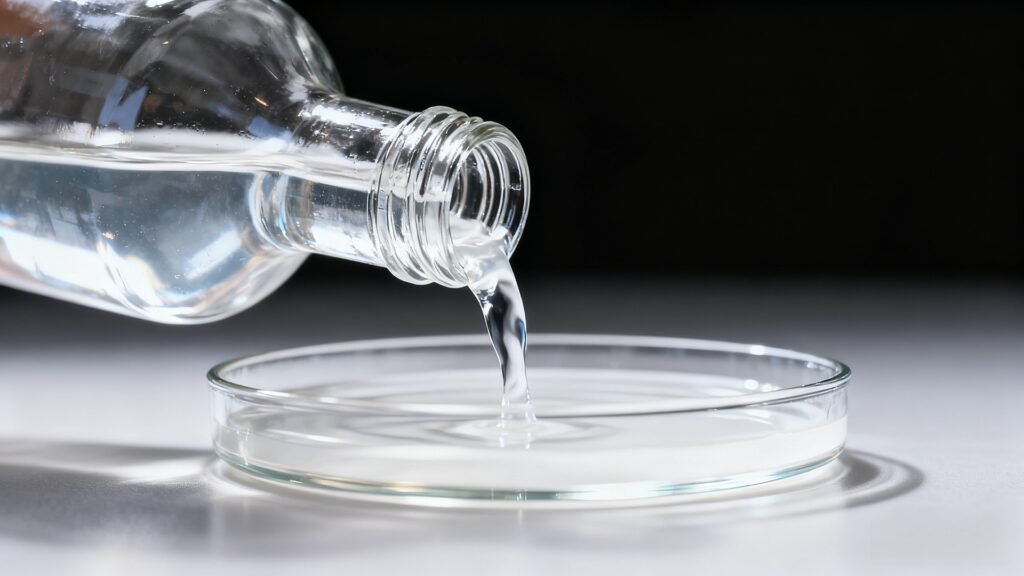


From Standard Supply to Customized Requirements
Built on technical expertise, manufacturing capability, and reliable supply

Supports batch quality verification & application-oriented testing, ensuring consistent performance & reliable product quality.

Stable, scalable manufacturing with standardized processes, supporting both regular supply and bulk industrial demand.
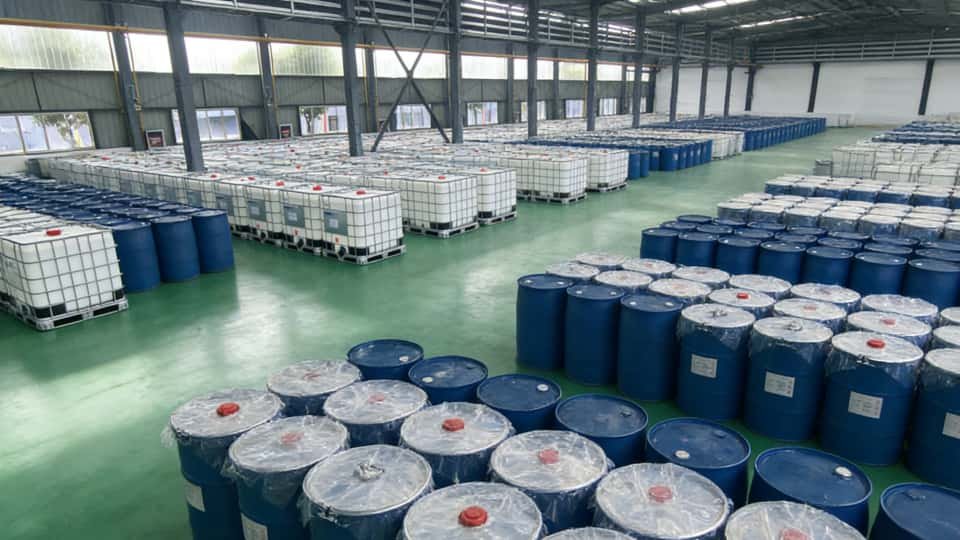
Products are stored under controlled conditions with standardized packaging, enabling efficient order fulfillment and reliable global delivery.

Clear communication and application-focused support, helping customers select suitable products and streamline procurement.
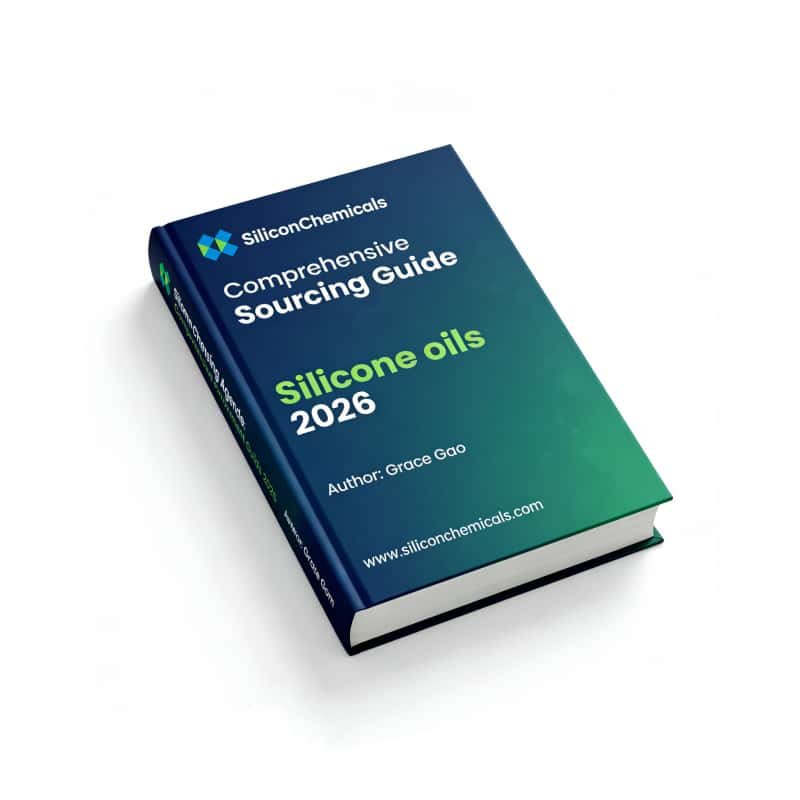
Navigate the complexities of the global Silicone Oil market. This definitive report provides actionable insights, vetted supplier landscapes, and strategic sourcing methodologies to optimize your supply chain in the year ahead.