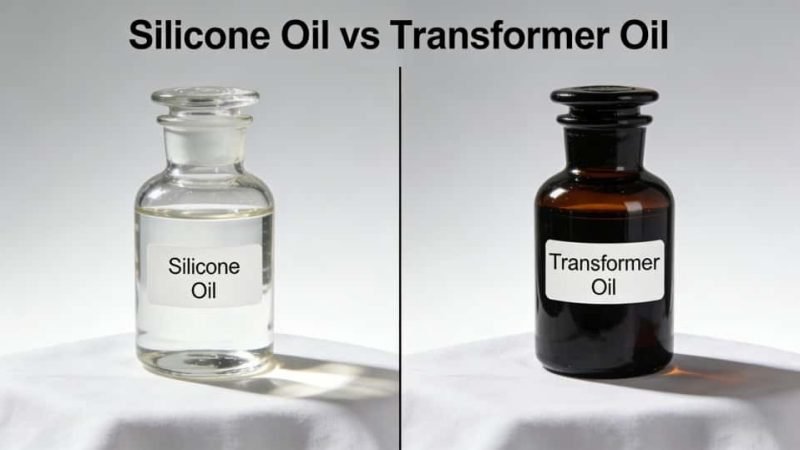
In industrial systems, choosing the wrong insulating or cooling fluid can lead to catastrophic equipment failure, overheating, dielectric breakdown, or even fire hazards. Many engineers and procurement managers face confusion when comparing silicone oil and transformer oil—especially in high-voltage, high-temperature, or safety-critical environments. Selecting the wrong medium not only increases operational risks but also leads to higher lifecycle costs. This guide provides a deep technical comparison to help you make the correct decision based on performance, safety, and application requirements.
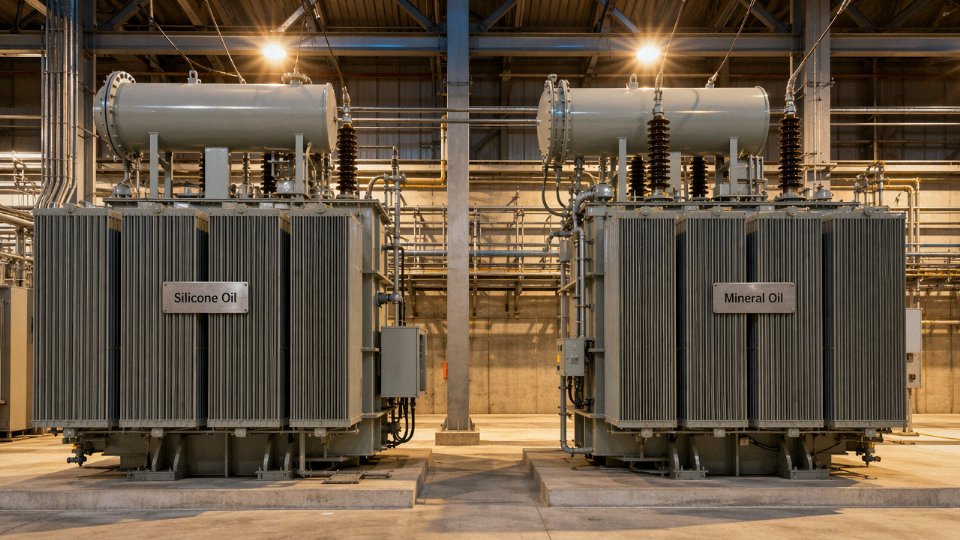
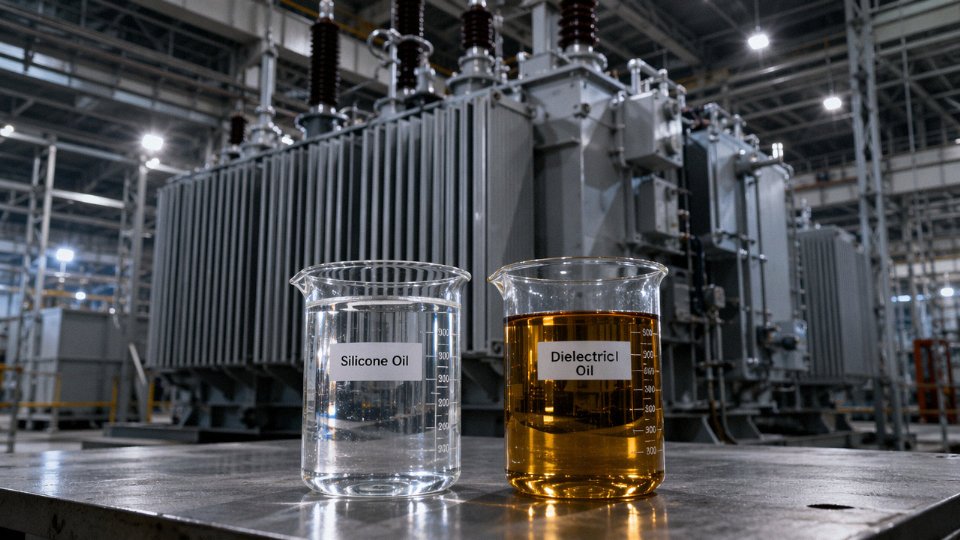
Silicone oil and transformer oil differ fundamentally in chemical structure, thermal stability, dielectric strength, and safety profile. Silicone oil offers superior thermal stability, fire resistance, and long service life, making it ideal for high-temperature or fire-sensitive environments. Transformer oil, typically mineral-based, provides excellent dielectric performance at lower cost and is widely used in conventional power transformers. The best choice depends on application conditions such as temperature, fire safety requirements, maintenance cycles, and cost constraints.
Understanding the real engineering differences—not just marketing claims—is essential. The following sections provide a comprehensive, data-driven comparison, including performance tables, application scenarios, and selection strategies used by experienced engineers and manufacturers.
Silicone oil is always better than transformer oil in all applications.False
While silicone oil has superior thermal and fire-resistant properties, transformer oil is more cost-effective and sufficient for most standard power distribution systems. The optimal choice depends on application requirements.
Understanding the Fundamental Differences in Chemical Structure
Silicone oil and transformer oil originate from entirely different chemical families, which directly determines their physical and electrical behavior.
Chemical Composition Comparison
| Property | Silicone Oil | Transformer Oil |
|---|---|---|
| Base Chemistry | Polydimethylsiloxane (PDMS) | Mineral oil (hydrocarbon) |
| Molecular Structure | Si-O backbone | C-C hydrocarbon chains |
| Polarity | Low polarity | Non-polar |
| Stability | Extremely high | Moderate |
Silicone oil is based on a silicon-oxygen (Si–O) backbone, which provides exceptional bond energy and thermal stability. This structure is inherently resistant to oxidation, UV radiation, and thermal degradation. In contrast, transformer oil consists of refined petroleum hydrocarbons, which are more susceptible to oxidation and breakdown over time.
Engineering Insight
- Si–O bond energy (~452 kJ/mol) is significantly higher than C–C bonds (~348 kJ/mol)
- This explains why silicone oil maintains stability at temperatures exceeding 200°C
- Transformer oil begins to degrade at much lower temperatures (~120–150°C)
Thermal Performance and Heat Dissipation Characteristics
Thermal management is critical in electrical systems, especially transformers operating under continuous load.
Thermal Properties Comparison Table
| Parameter | Silicone Oil | Transformer Oil |
|---|---|---|
| Operating Temperature Range | -50°C to 250°C | -30°C to 120°C |
| Thermal Stability | Excellent | Moderate |
| Oxidation Resistance | Very high | Limited |
| Heat Transfer Efficiency | Moderate | High |
Analysis
Transformer oil has better thermal conductivity, making it efficient for heat dissipation in standard transformers. However, it oxidizes faster, forming sludge and acids that reduce performance.
Silicone oil, while slightly less efficient in heat transfer, maintains stable performance over extended periods and under extreme temperatures.
Key Takeaways
- Transformer oil = better cooling efficiency initially
- Silicone oil = long-term thermal reliability
Dielectric Properties and Electrical Insulation Performance
Electrical insulation is the primary function of both fluids.
Dielectric Performance Comparison
| Property | Silicone Oil | Transformer Oil |
|---|---|---|
| Dielectric Strength | 35–45 kV | 30–70 kV |
| Dielectric Constant | ~2.7 | ~2.2 |
| Dissipation Factor | Low | Moderate |
| Moisture Sensitivity | Low | High |
Interpretation
Transformer oil can achieve higher dielectric strength when properly maintained, but it is highly sensitive to moisture contamination.
Silicone oil maintains stable dielectric properties even in humid environments, making it more reliable in challenging conditions.
Practical Implication
- Silicone oil is preferred in humid, offshore, or contaminated environments
- Transformer oil is suitable for controlled, dry systems
Fire Safety and Environmental Considerations
This is one of the most critical differences in modern applications.
Fire Safety Comparison
| Property | Silicone Oil | Transformer Oil |
|---|---|---|
| Flash Point | >300°C | ~140–160°C |
| Fire Point | >350°C | ~160–180°C |
| Flammability | Very low | High |
| Explosion Risk | Minimal | Significant |
Key Insight
Silicone oil is classified as a fire-resistant fluid, making it ideal for:
- Indoor transformers
- High-rise buildings
- Hospitals
- Subway systems
Transformer oil, being flammable, requires additional fire protection systems.
Environmental Impact
| Factor | Silicone Oil | Transformer Oil |
|---|---|---|
| Biodegradability | Moderate | Low |
| Toxicity | Low | Moderate |
| Spill Risk | Lower impact | Higher environmental risk |
Service Life and Maintenance Requirements
Lifecycle Comparison
| Parameter | Silicone Oil | Transformer Oil |
|---|---|---|
| Service Life | 20–40 years | 10–20 years |
| Maintenance Frequency | Low | High |
| Oxidation Products | Minimal | Sludge formation |
| Replacement Cost | Higher upfront | Lower upfront |
Engineering Perspective
Transformer oil requires:
- नियमित testing (DGA, moisture, acidity)
- filtration and regeneration
Silicone oil systems require significantly less maintenance due to chemical stability.
Application Scenarios and Industry Usage
Typical Applications
| Application | Preferred Fluid |
|---|---|
| Power grid transformers | Transformer oil |
| Indoor transformers | Silicone oil |
| High-temperature systems | Silicone oil |
| Cost-sensitive projects | Transformer oil |
| Fire-sensitive environments | Silicone oil |
Case Study Insight
In urban infrastructure (e.g., metro systems), silicone oil is increasingly replacing transformer oil due to fire safety regulations.
Cost Analysis and Economic Considerations
Cost Comparison
| Factor | Silicone Oil | Transformer Oil |
|---|---|---|
| Initial Cost | High | Low |
| Maintenance Cost | Low | High |
| Total Lifecycle Cost | Competitive | Moderate |
Key Insight
Although silicone oil has higher upfront cost, its long service life and reduced maintenance can result in lower total cost of ownership (TCO) in critical applications.
How to Choose Between Silicone Oil and Transformer Oil
Decision Framework
Consider the following factors:
Choose Silicone Oil if:
- High temperature operation (>150°C)
- Fire safety is critical
- Long service life is required
- Harsh or humid environment
Choose Transformer Oil if:
- Budget constraints are significant
- Standard outdoor transformer application
- Regular maintenance is acceptable
- No strict fire safety requirement
Advanced Technical Comparison Summary
| Dimension | Winner | Reason |
|---|---|---|
| Thermal Stability | Silicone Oil | Superior molecular structure |
| Cooling Efficiency | Transformer Oil | Higher thermal conductivity |
| Fire Safety | Silicone Oil | Non-flammable |
| Cost | Transformer Oil | Lower initial cost |
| Maintenance | Silicone Oil | Minimal degradation |
| Dielectric Stability | Silicone Oil | Moisture resistance |
Final Engineering Conclusion
Silicone oil and transformer oil are not interchangeable fluids—they are engineered for different operational philosophies. Transformer oil remains the industry standard due to its cost-effectiveness and adequate performance in controlled environments. However, silicone oil is the superior choice in high-risk, high-temperature, and safety-critical systems where reliability and fire resistance outweigh initial cost.
From a strategic procurement perspective, the decision should not be based solely on price but on risk profile, lifecycle cost, and regulatory compliance.
Talk to a Real Specialist at [Silicon Chemicals](https://siliconchemicals.com/)
If you’re evaluating silicone oil or transformer oil for your project, the difference isn’t just technical—it’s operational and financial over the long term. At Silicon Chemicals, we help engineers and procurement teams select the right fluid based on real-world conditions, not generic specs.
Whether you need:
- High-performance silicone oil for extreme environments
- Customized viscosity or dielectric specifications
- Technical consultation for transformer applications
Reach out to Silicon Chemicals today and get expert-level guidance tailored to your system.