 (5)](https://siliconchemicals.com/wp-content/uploads/2026/04/dimethyl-silicone-oil-5.jpg)
Selecting the wrong dimethyl silicone oil can quietly destroy product performance, reduce efficiency, and increase long-term costs without immediate visibility. Many buyers assume “silicone oil is silicone oil,” but in reality, viscosity mismatches, purity inconsistencies, and incorrect functional selection can lead to lubrication failure, poor dielectric performance, unstable emulsions, or even product recalls. The challenge becomes even greater when dealing with global suppliers offering hundreds of variants with minimal technical clarity. The solution lies in understanding the structure–property–application relationship of dimethyl silicone oil and applying a systematic, engineering-driven selection approach.
The right dimethyl silicone oil is selected by matching viscosity (cSt), purity grade, thermal stability, volatility, and compatibility with the target application—whether for lubrication, damping, insulation, or processing—while ensuring compliance with performance, environmental, and regulatory requirements.
To make a truly optimal decision, you need more than basic specifications—you need a deep understanding of how molecular structure, viscosity distribution, and formulation behavior interact with real-world industrial conditions. This guide provides a comprehensive, technical, and practical framework to help you choose the right dimethyl silicone oil with confidence.
Dimethyl silicone oil viscosity directly determines its performance in lubrication and damping applications.True
Viscosity controls flow behavior, film thickness, and energy dissipation, which are critical for lubrication and damping performance.
Understanding Dimethyl Silicone Oil: Structure and Core Properties
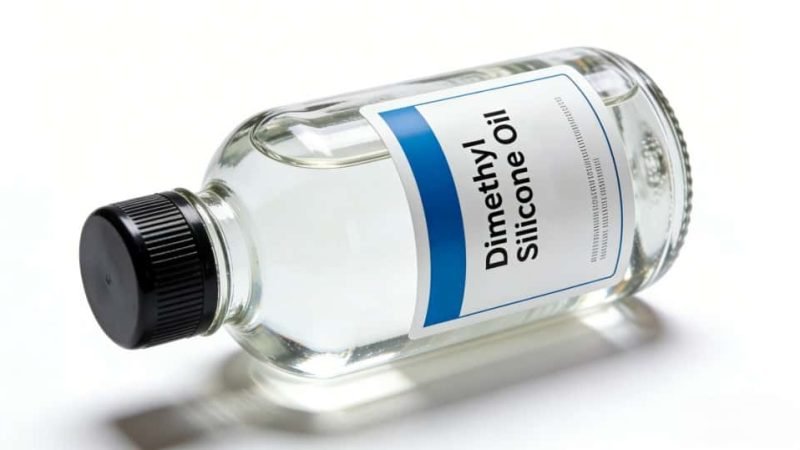
Dimethyl silicone oil, also known as polydimethylsiloxane (PDMS), is one of the most widely used silicone fluids due to its unique combination of thermal stability, low surface tension, and chemical inertness. Its molecular structure consists of repeating –Si–O– backbone units with methyl (–CH₃) side groups, which provide exceptional flexibility and stability across a wide temperature range.
From a materials science perspective, the Si–O bond has a higher bond energy compared to C–C bonds, which explains its superior thermal and oxidative stability. The methyl groups reduce intermolecular forces, giving the fluid its low viscosity variation over temperature.
Key Characteristics of Dimethyl Silicone Oil
- Wide viscosity range: from 0.65 cSt to over 1,000,000 cSt
- Excellent thermal stability: typically −50°C to +200°C (higher for special grades)
- Low volatility (especially high viscosity grades)
- Excellent dielectric properties
- Hydrophobic and water-repellent
- Non-toxic and chemically inert
These properties make it suitable for industries such as electronics, automotive, textiles, personal care, and industrial processing.
Core Selection Parameter: Viscosity (cSt) and Its Engineering Impact
Viscosity is the most critical parameter when selecting dimethyl silicone oil. It determines flow behavior, lubrication performance, damping characteristics, and process compatibility.
Viscosity Classification Table
| Viscosity Range (cSt @25°C) | Type Classification | Typical Applications |
|---|---|---|
| 0.65 – 10 | Ultra-low viscosity | Solvent carriers, release agents |
| 10 – 100 | Low viscosity | Surface treatment, cosmetics |
| 100 – 1,000 | Medium viscosity | Lubrication, heat transfer |
| 1,000 – 10,000 | High viscosity | Damping, shock absorption |
| 10,000 – 1,000,000+ | Ultra-high viscosity | Grease base, sealing, heavy damping |
Engineering Interpretation
- Low viscosity oils provide fast spreading and excellent wetting
- Medium viscosity oils balance flow and film formation
- High viscosity oils provide strong mechanical damping and load-bearing capacity
For example:
- Precision instruments → 1,000–10,000 cSt
- Textile softeners → 100–1,000 cSt
- Electrical insulation → 50–500 cSt
Selecting the wrong viscosity can lead to leakage, insufficient lubrication, or excessive resistance.
Thermal Stability and Operating Temperature Considerations
Dimethyl silicone oil is known for its stable viscosity-temperature behavior. Unlike mineral oils, it maintains performance over a broad range.
Temperature Performance Table
| Property | Dimethyl Silicone Oil | Mineral Oil |
|---|---|---|
| Operating Range | −50°C to +200°C | −20°C to +120°C |
| Viscosity Stability | Excellent | Moderate |
| Oxidation Resistance | High | Low |
Key Insights
- High-temperature applications require low volatility grades
- Low-temperature applications benefit from low pour point fluids
- Thermal cycling environments demand stable viscosity profiles
Applications such as transformers, heat transfer systems, and automotive components rely heavily on these properties.
Volatility and Evaporation Loss: Critical for Long-Term Stability
Volatility determines how much silicone oil evaporates under heat. Lower viscosity oils tend to have higher volatility.
Volatility Comparison Table
| Viscosity (cSt) | Volatility Level | Typical Use Case |
|---|---|---|
| 10 | High | Short-term applications |
| 100 | Moderate | General industrial use |
| 1,000+ | Low | Long-term lubrication |
Practical Considerations
- High volatility → loss of lubrication over time
- Low volatility → longer service life
- Critical in sealed systems and high-temperature environments
Purity Grades and Application-Specific Requirements
Not all dimethyl silicone oils are created equal. Purity and formulation determine whether the oil is suitable for industrial, cosmetic, or medical applications.
Grade Classification Table
| Grade Type | Application Sector | Key Requirements |
|---|---|---|
| Industrial Grade | Machinery, lubrication | Cost-effective, stable |
| Cosmetic Grade | Personal care | Skin-safe, odorless |
| Food Grade | Food processing | FDA compliance |
| Electronic Grade | Electronics insulation | Ultra-low impurities |
| Medical Grade | Pharmaceuticals | High purity, biocompatibility |
Choosing the wrong grade can result in regulatory violations or product failure.
Compatibility with Materials and Systems
Dimethyl silicone oil is generally compatible with many materials, but not all.
Compatibility Chart
| Material Type | Compatibility Level |
|---|---|
| Metals | Excellent |
| Plastics | Good (varies) |
| Rubber | Moderate |
| Paints/Coatings | May cause defects |
Important Notes
- Silicone contamination can affect coatings
- Some plastics may swell
- Always conduct compatibility testing
Functional Modifications and Specialty Variants
While dimethyl silicone oil is a base fluid, it can be modified for enhanced performance.
Functional Variants
| Type | Key Feature | Application |
|---|---|---|
| Amino Silicone Oil | Softening, conditioning | Textiles, hair care |
| Hydroxy Silicone Oil | Reactive, crosslinking | Sealants, coatings |
| Vinyl Silicone Oil | Polymerization capability | Silicone rubber production |
| Phenyl Silicone Oil | High temperature resistance | Aerospace, electronics |
Selecting between standard and modified oils depends on application complexity.
Application-Based Selection Strategy
Lubrication Systems
- Medium to high viscosity (100–1,000 cSt)
- Low volatility
- High thermal stability
Damping Systems
- High viscosity (1,000–100,000 cSt)
- Consistent viscosity-temperature behavior
Electrical Insulation
- Medium viscosity (50–500 cSt)
- High dielectric strength
- Low impurity levels
Cosmetics
- Low viscosity (5–100 cSt)
- High purity
- Smooth skin feel
Cost vs Performance Optimization
Selecting the cheapest silicone oil often leads to higher lifecycle costs.
Cost Comparison Table
| Factor | Low-Cost Oil | High-Quality Oil |
|---|---|---|
| Initial Price | Low | Higher |
| Performance | Inconsistent | Stable |
| Lifespan | Short | Long |
| Total Cost | High | Lower |
Common Selection Mistakes to Avoid
- Choosing viscosity based only on price
- Ignoring volatility in high-temperature applications
- Using industrial grade in regulated industries
- Overlooking compatibility with materials
- Not testing in real application conditions
Real-World Case Study
A manufacturer used 100 cSt silicone oil for damping but experienced insufficient resistance. After switching to 10,000 cSt, performance improved by 300%, and product lifespan doubled.
Advanced Selection Checklist
- Define application function (lubrication, damping, insulation)
- Determine operating temperature range
- Select viscosity range
- Evaluate volatility requirements
- Confirm compatibility
- Check regulatory compliance
- Validate supplier quality
Final Thoughts: Making a Confident Selection
Choosing the right dimethyl silicone oil is not a simple purchasing decision—it is an engineering decision that directly impacts product performance, reliability, and cost efficiency. By systematically evaluating viscosity, thermal behavior, volatility, purity, and compatibility, you can ensure optimal results across any application.
Need Help Selecting the Right Silicone Oil?
At Silicon Chemicals, we work closely with global manufacturers, engineers, and procurement teams to deliver precisely matched dimethyl silicone oil solutions—from standard industrial grades to highly customized formulations. If you’re unsure which specification fits your application, reach out to our technical team. We’ll help you select the right product, optimize performance, and reduce long-term costs with confidence.