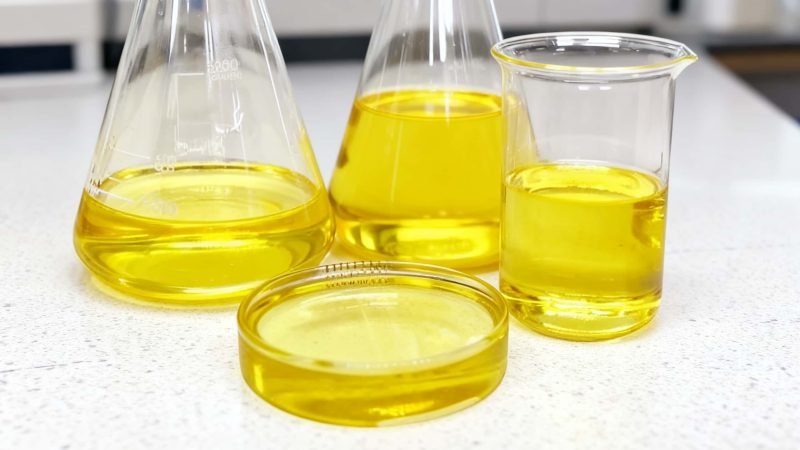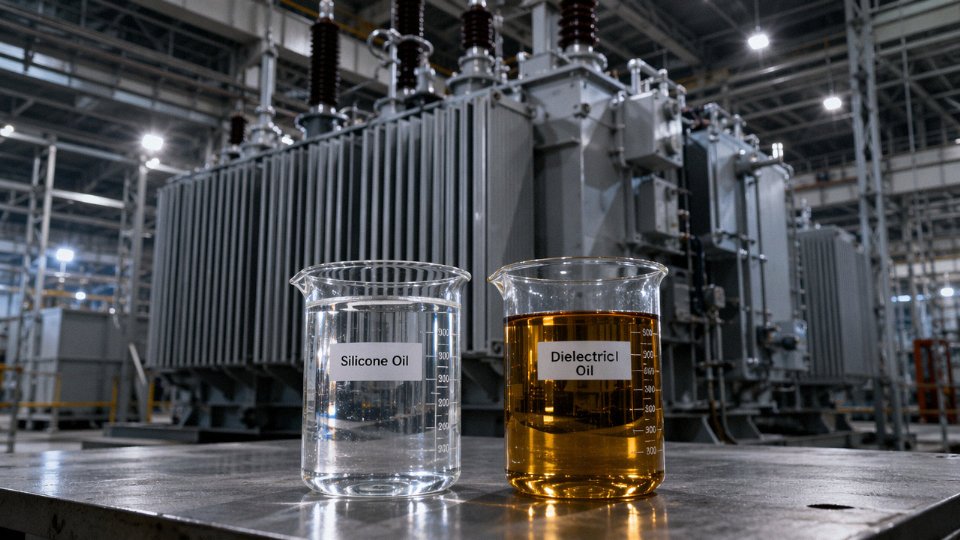

Silicone oil is widely recognized as one of the most versatile specialty fluids in modern chemistry and industrial engineering. It is valued for its exceptional thermal stability, oxidation resistance, low surface tension, electrical insulation properties, and chemical inertness. Because of these advantages, silicone oils are used in industries ranging from cosmetics and medical devices to electronics, lubrication systems, coatings, and heat transfer systems. However, despite these impressive benefits, silicone oil is not a perfect material. In certain applications, its unique chemical structure can lead to specific technical limitations, performance constraints, and processing challenges. When engineers select silicone oil without fully understanding these drawbacks, problems such as poor lubrication under heavy load, surface contamination, coating defects, compatibility issues with materials, and high costs can arise.
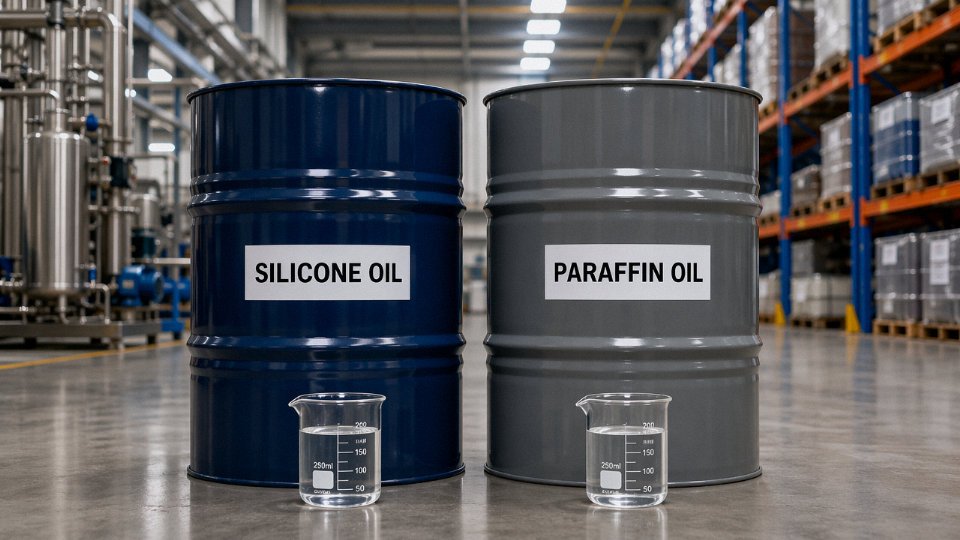
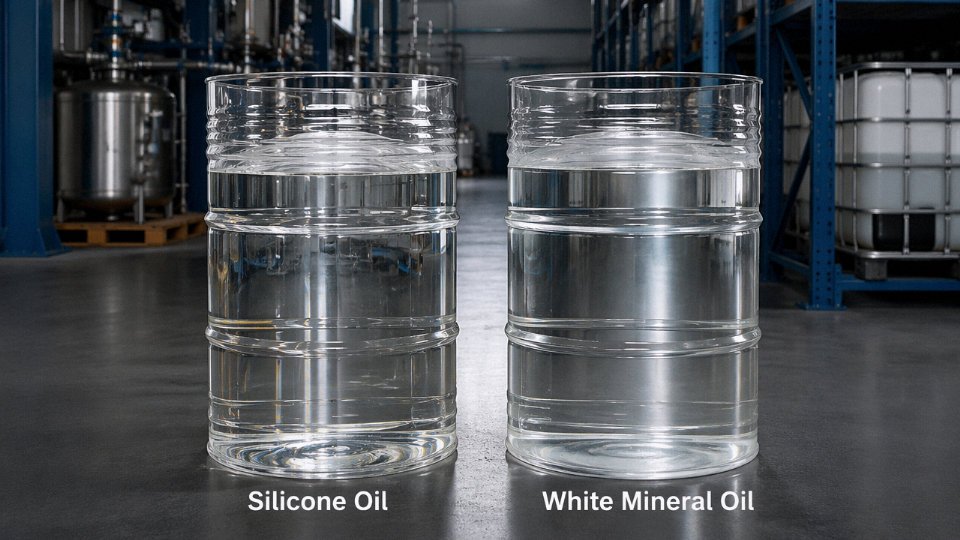
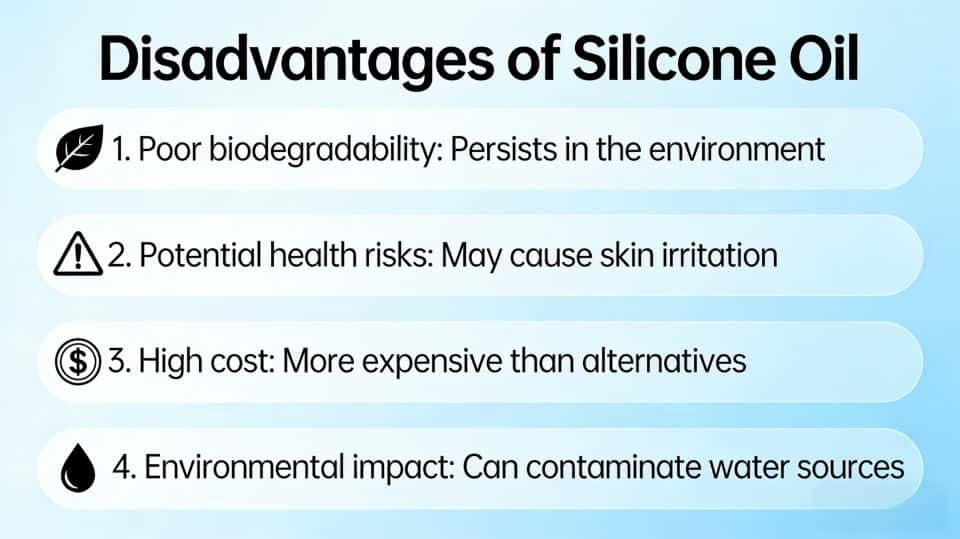
The main disadvantages of silicone oil include relatively poor extreme-pressure lubrication performance, higher cost compared with mineral oils, potential contamination issues in coating and painting processes, limited compatibility with certain materials and elastomers, environmental persistence concerns, and lower load-bearing capability in mechanical systems. These limitations mean that while silicone oil excels in thermal stability and chemical inertness, it may not always be the optimal choice for heavy-duty lubrication, high-pressure mechanical systems, or applications requiring strong solvency or biodegradability.
Understanding these disadvantages is critical for engineers, chemists, and manufacturers when selecting the right fluid for a particular application. A comprehensive evaluation of silicone oil’s limitations helps ensure proper product design, improved reliability, and optimized material selection across industries.
Silicone oil generally has lower load-bearing lubrication capability compared with many synthetic or mineral oils.True
Because silicone oil molecules have very low intermolecular attraction and poor boundary lubrication characteristics, they often perform poorly in high-pressure or extreme-load lubrication compared with conventional lubricants.
Understanding the Chemical Structure Behind [Silicone Oil](https://siliconchemicals.com/silicone-oil/) Limitations
To fully understand the disadvantages of silicone oil, it is important to first examine its molecular structure. Most silicone oils are based on polydimethylsiloxane (PDMS) polymers, which consist of repeating Si–O–Si backbone units with methyl groups attached to the silicon atoms.
This structure gives silicone oil many desirable properties such as flexibility, chemical stability, and low surface tension. However, the same structural characteristics also create several limitations that affect how silicone oil behaves in certain environments.
The silicon–oxygen backbone has a very high bond energy, which provides excellent thermal stability. At the same time, the methyl side groups surrounding the backbone create a nonpolar, hydrophobic environment that significantly reduces intermolecular attraction between molecules. While this low intermolecular force allows silicone oil to flow easily and maintain stable viscosity across wide temperature ranges, it also results in relatively poor film strength under heavy mechanical loads.
In practical terms, this means silicone oil may not form a sufficiently strong lubricating film in high-pressure mechanical systems such as heavy-duty gears or industrial bearings. Under these conditions, conventional lubricants containing additives designed for extreme pressure protection often perform better.
Table: Structural Advantages vs Structural Limitations of Silicone Oil
| Molecular Feature | Advantage | Potential Limitation |
|---|---|---|
| Si–O backbone | High thermal stability | Weak intermolecular forces |
| Methyl side groups | Low surface tension | Poor load-bearing lubrication |
| Chemical inertness | High chemical stability | Limited reactivity in formulations |
| Hydrophobicity | Water resistance | Poor compatibility with polar materials |
These molecular characteristics explain why silicone oil performs exceptionally well in certain applications but less effectively in others.
Higher Cost Compared With Conventional Oils
One of the most significant disadvantages of silicone oil is its cost. Compared with mineral oils or many synthetic hydrocarbon oils, silicone oil is generally more expensive to produce. This cost difference arises from the complexity of silicone chemistry and the raw materials required for its synthesis.
Silicone oil production typically involves several stages of chemical processing, including:
• Silicon metal production
• Chlorosilane synthesis
• Hydrolysis reactions
• Polymerization and purification
Each of these steps requires specialized equipment and controlled chemical conditions. As a result, the manufacturing cost of silicone oil is significantly higher than that of petroleum-derived lubricants.
Table: Cost Comparison of Common Industrial Fluids
| Fluid Type | Relative Cost | Typical Applications |
|---|---|---|
| Mineral Oil | Low | General lubrication |
| Synthetic Hydrocarbon Oil | Medium | Automotive lubricants |
| Silicone Oil | High | Specialty applications |
Because of this cost difference, silicone oil is typically reserved for applications where its unique properties justify the additional expense.
Poor Extreme-Pressure Lubrication Performance
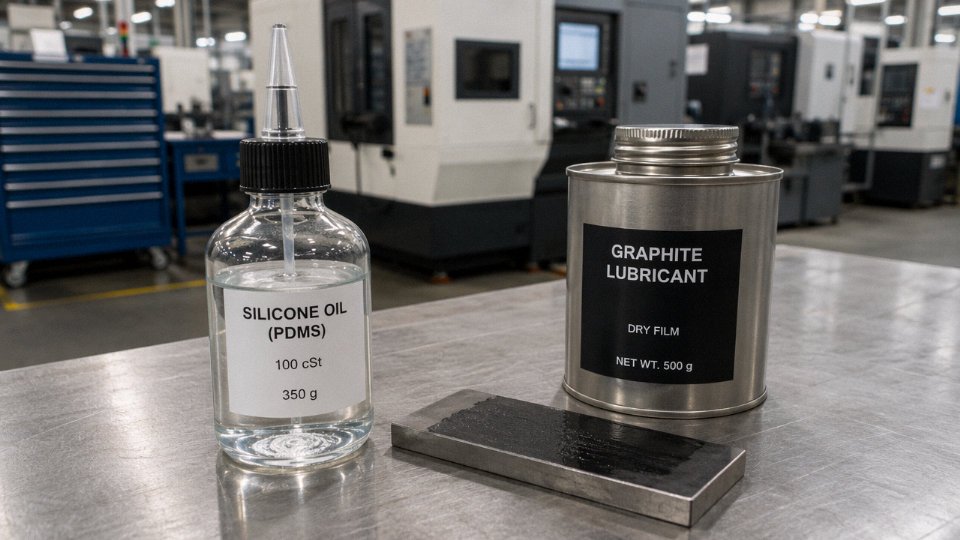
Although silicone oil is often used as a lubricant, it is not ideal for applications involving heavy loads or extreme pressure. Traditional lubricants often contain additives designed to improve boundary lubrication and reduce wear under high pressure. These additives form protective films on metal surfaces that prevent direct contact between moving parts.
Silicone oil lacks the strong intermolecular attraction necessary to form durable lubricating films under extreme mechanical stress. As a result, it may fail to prevent metal-to-metal contact in high-load systems.
Typical limitations include:
• Reduced load-bearing capacity
• Increased wear in heavy-duty systems
• Limited performance in gearboxes
• Poor boundary lubrication behavior
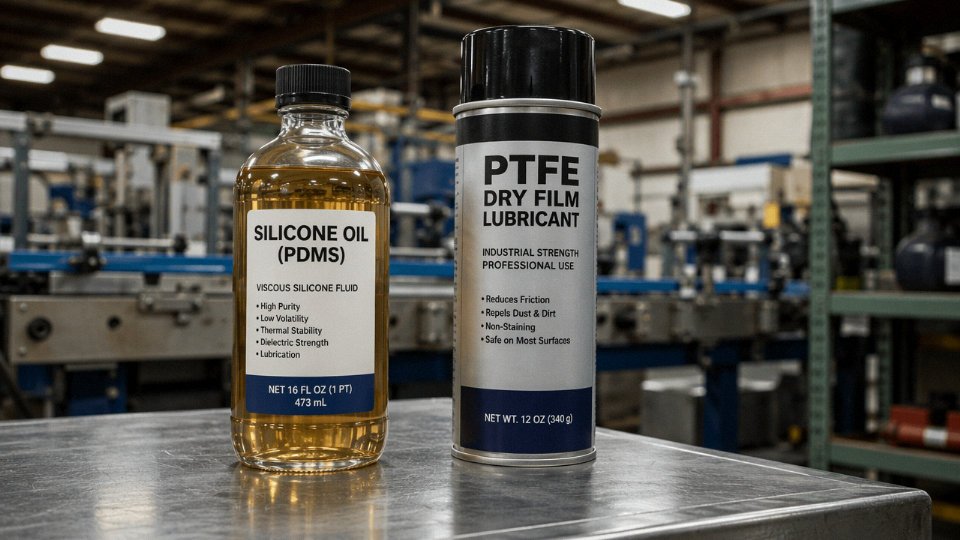
For this reason, silicone oil is generally used in light-duty lubrication applications, such as precision instruments or plastic components, rather than heavy mechanical systems.
Table: Lubrication Performance Comparison
| Property | Silicone Oil | Mineral Oil |
|---|---|---|
| Load-bearing capacity | Low | Moderate |
| Boundary lubrication | Poor | Good |
| Temperature stability | Excellent | Moderate |
| Oxidation resistance | Excellent | Moderate |
This comparison illustrates why silicone oil is rarely used as a primary lubricant in high-load industrial machinery.
Surface Contamination Issues
Another significant disadvantage of silicone oil is its tendency to cause surface contamination in industrial manufacturing environments. Silicone oil spreads easily due to its extremely low surface tension, which allows it to form thin films on many surfaces.
While this property is beneficial in applications such as mold release agents and coatings, it can create serious problems in industries where surface cleanliness is critical.
For example, in automotive painting or industrial coating processes, even tiny amounts of silicone contamination can cause defects known as “fish eyes.” These defects appear as small circular voids in paint films where the coating fails to adhere properly.
Common contamination problems include:
• Paint adhesion failure
• Coating defects
• Surface finishing problems
• Difficulty removing silicone residues
Because silicone oils are chemically inert and difficult to dissolve, removing contamination can be challenging.
Table: Surface Contamination Effects
| Industry | Problem Caused by Silicone Oil |
|---|---|
| Automotive painting | Fish-eye defects |
| Electronics | Coating adhesion failure |
| Printing | Ink spreading issues |
| Industrial coatings | Surface defects |
For this reason, many manufacturing environments implement strict controls to prevent silicone contamination.
Compatibility Issues With Certain Materials
Although silicone oil is generally chemically inert, it can still interact with certain materials in ways that create compatibility issues. Some elastomers, plastics, and coatings may swell or degrade when exposed to silicone fluids over long periods.
Examples include:
• Certain natural rubber formulations
• Some thermoplastics
• Low-grade elastomers
In addition, silicone oil’s nonpolar nature means it does not mix well with many conventional oils or polar solvents. This incompatibility can complicate formulation processes in lubricants, coatings, and cosmetic products.
Table: Material Compatibility Considerations
| Material | Compatibility With Silicone Oil |
|---|---|
| Glass | Excellent |
| Metals | Excellent |
| Natural rubber | Moderate |
| Certain plastics | Variable |
Careful material testing is often necessary when silicone oil is used in complex systems.
Environmental and Persistence Concerns
Another limitation of silicone oil involves environmental persistence. Silicone oils are extremely stable compounds that degrade slowly in natural environments.
Although silicone oils are generally considered to have low toxicity, their long-term environmental behavior is still studied, particularly in aquatic systems.
Concerns sometimes include:
• Slow environmental degradation
• Accumulation in certain ecosystems
• Regulatory scrutiny in some regions
These issues are particularly relevant in industries where large volumes of silicone fluids are used.
Limited Solvent Power
Unlike many organic solvents, silicone oils have relatively low solvency power. This means they do not dissolve many organic compounds effectively.
While this property contributes to chemical stability, it also limits silicone oil’s usefulness in applications requiring strong solvent performance.
Industries that rely on solvents for cleaning, extraction, or formulation often require fluids with stronger dissolving capability.
Processing and Handling Challenges
Silicone oils can also present processing challenges in certain manufacturing environments.
Some common difficulties include:
• Removal of silicone residues from equipment
• Difficulty cleaning contaminated surfaces
• Risk of spreading contamination across production lines
Because silicone oil spreads easily, even small spills can affect large surface areas.
Situations Where Silicone Oil May Not Be the Best Choice
Because of the disadvantages described above, silicone oil is not always the best fluid for every industrial application.
Applications where alternative fluids may perform better include:
• Heavy-duty mechanical lubrication
• High-pressure gear systems
• Applications requiring strong solvent properties
• Environments sensitive to surface contamination
In these cases, mineral oils, synthetic hydrocarbons, or specialized lubricants may provide better performance.
How Engineers Mitigate Silicone Oil Limitations
Despite its disadvantages, silicone oil remains widely used because engineers have developed methods to mitigate many of its limitations.
Strategies include:
• Blending silicone oils with additives
• Using functionalized silicone fluids
• Controlling contamination in production environments
• Selecting appropriate viscosity grades
Through careful formulation and application design, silicone oil can still provide exceptional performance in many specialized applications.
Conclusion
Silicone oil is one of the most versatile specialty fluids in modern industrial chemistry, offering exceptional thermal stability, oxidation resistance, dielectric strength, and chemical inertness. However, like any material, it also has certain disadvantages that must be considered when selecting it for specific applications.
These disadvantages include relatively poor extreme-pressure lubrication performance, higher production cost compared with mineral oils, surface contamination risks in coating processes, compatibility challenges with certain materials, environmental persistence concerns, and limited solvent capability.
Understanding these limitations allows engineers and manufacturers to make informed decisions about when silicone oil is the best choice and when alternative materials may provide better performance. When used appropriately, silicone oil remains a valuable material that enables many advanced technologies and industrial processes.
Speak With the Silicone Fluid Specialists at [Silicon Chemicals](https://siliconchemicals.com/)
Choosing the right silicone oil grade can significantly impact the performance and reliability of your products. Viscosity, functional modification, purity level, and compatibility with other materials all play important roles in determining whether silicone oil is the right solution for your application.
At Silicon Chemicals, we supply a wide range of high-quality silicone oils designed for industrial manufacturing, cosmetics, coatings, electronics, and specialty chemical applications.
If you are evaluating silicone oils or need help selecting the right formulation for your process, the Silicon Chemicals technical team is always ready to assist you in identifying the best solution.