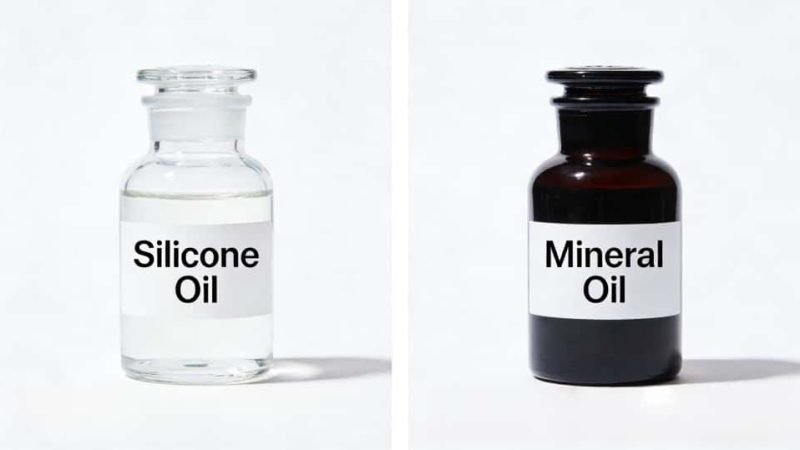
In industrial production, lubrication systems, cosmetics, electronics, and even medical applications, choosing the wrong fluid can lead to severe performance degradation, equipment failure, safety risks, and unnecessary cost increases. Many engineers, procurement managers, and formulators face a recurring dilemma: silicone oil and mineral oil often appear interchangeable at first glance, yet their long-term behavior, chemical stability, and application compatibility differ dramatically. Selecting incorrectly can result in oxidation, viscosity breakdown, contamination, or even product recalls. The solution lies in a deep technical understanding of their composition, performance mechanisms, and application boundaries—this is exactly what this comprehensive guide will deliver.
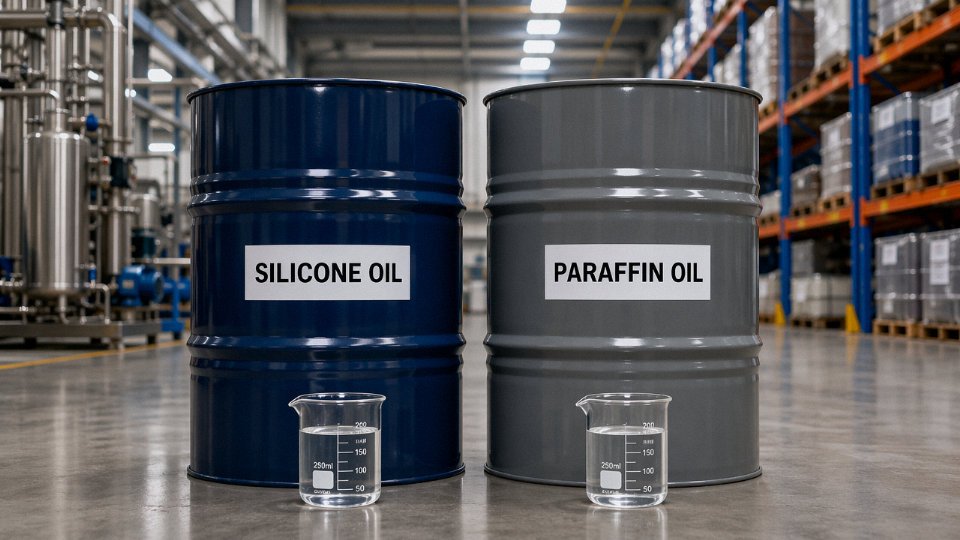
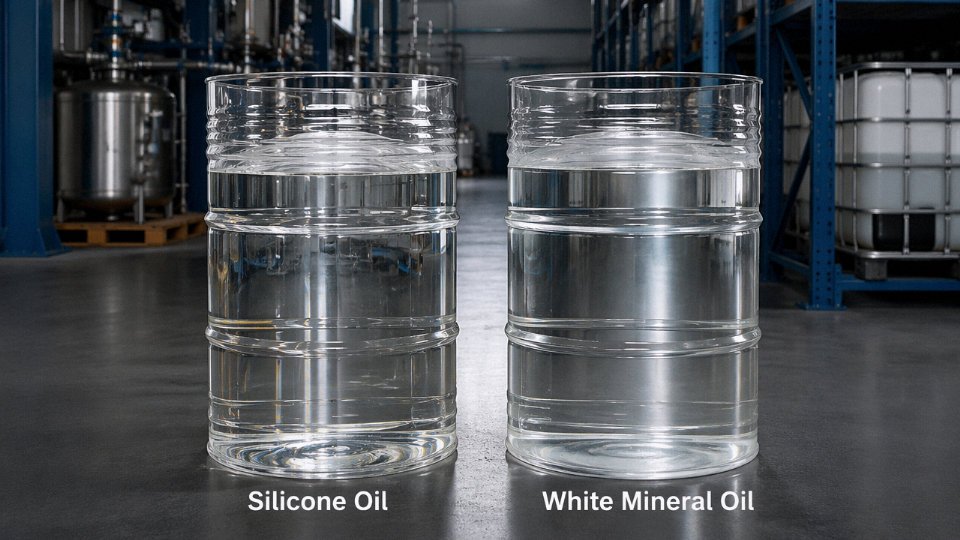
Silicone oil and mineral oil are fundamentally different substances: silicone oil is a synthetic polymer based on siloxane (Si–O) bonds, offering exceptional thermal stability, chemical inertness, and wide temperature performance, while mineral oil is a petroleum-derived hydrocarbon fluid that provides cost-effective lubrication but has lower stability and narrower operating ranges. The choice depends on application requirements such as temperature resistance, oxidation stability, dielectric properties, and regulatory compliance.
To fully understand which oil is suitable for your application, it is essential to go beyond superficial comparisons and explore molecular structure, performance characteristics, industrial behavior, and long-term reliability. The following in-depth analysis will provide a decision-making framework grounded in real engineering and industrial data.
Silicone oil performs better than mineral oil in all applications.False
While silicone oil excels in thermal stability and chemical inertness, mineral oil is more cost-effective and suitable for many standard lubrication and industrial applications.
Fundamental Chemical Structure and Composition Differences
At the molecular level, the distinction between silicone oil and mineral oil defines everything—from viscosity stability to environmental resistance. Silicone oil, typically polydimethylsiloxane (PDMS), is built on a repeating siloxane backbone (Si–O–Si), whereas mineral oil consists of a complex mixture of alkanes and cycloalkanes derived from crude oil refining. This structural difference is not trivial; it governs intermolecular forces, thermal degradation pathways, and oxidation susceptibility.
Silicone oil’s Si–O bond has a bond energy of approximately 452 kJ/mol, significantly higher than the C–C bond in hydrocarbons (~348 kJ/mol). This gives silicone oil superior resistance to thermal breakdown. Additionally, the flexible siloxane backbone results in low intermolecular forces, enabling stable viscosity across a wide temperature range. In contrast, mineral oil’s hydrocarbon chains interact more strongly, leading to viscosity changes with temperature fluctuations and increased susceptibility to oxidation.
Comparative Molecular Characteristics
| Property | Silicone Oil (PDMS) | Mineral Oil |
|---|---|---|
| Base Structure | Si–O–Si backbone | C–C hydrocarbon chains |
| Bond Energy | High (Si–O) | Moderate (C–C) |
| Molecular Uniformity | Highly controlled | Mixed composition |
| Polarity | Low | Non-polar |
| Oxidation Resistance | Excellent | Moderate to low |
The uniformity of silicone oil molecules allows manufacturers to precisely control viscosity grades, while mineral oil composition varies depending on refining processes such as paraffinic, naphthenic, or aromatic fractions.
Thermal Stability and Temperature Performance
Temperature performance is one of the most critical criteria when comparing these two fluids. Silicone oil exhibits an exceptionally wide operating temperature range, typically from -50°C to +250°C (and even higher for specialized grades). Mineral oil, by contrast, generally operates effectively between -10°C and +120°C, beyond which oxidation and viscosity breakdown become significant.
The thermal stability of silicone oil is attributed to its inorganic backbone, which resists chain scission even at elevated temperatures. Mineral oil, however, undergoes thermal cracking and oxidation, forming sludge, varnish, and acidic byproducts that degrade system performance.
Temperature Performance Comparison Table
| Parameter | Silicone Oil | Mineral Oil |
|---|---|---|
| Low Temperature Fluidity | Excellent (-50°C) | Limited (-10°C) |
| High Temperature Stability | Up to 250°C+ | Up to ~120°C |
| Oxidation Resistance | Very high | Moderate |
| Volatility | Low | Higher |
| Flash Point | High | Moderate |
In high-temperature applications such as heat transfer systems, electronics cooling, and aerospace lubrication, silicone oil is often the only viable choice. Mineral oil remains suitable for moderate environments such as standard machinery lubrication and hydraulic systems.
Viscosity Behavior and Rheological Stability
Viscosity is a defining parameter for fluid performance. Silicone oil demonstrates a very low viscosity-temperature coefficient, meaning its viscosity remains relatively stable across temperature changes. Mineral oil, however, exhibits significant viscosity variation, becoming thinner at high temperatures and thicker at low temperatures.
This characteristic is crucial in applications requiring precision control, such as damping systems, optical devices, and medical instruments. Silicone oil ensures consistent performance regardless of environmental fluctuations, while mineral oil may require additives to improve viscosity index.
Viscosity Comparison Chart
| Factor | Silicone Oil | Mineral Oil |
|---|---|---|
| Viscosity Index | Very high | Moderate |
| Temperature Sensitivity | Low | High |
| Shear Stability | Excellent | Moderate |
| Long-term Stability | High | Lower |
Silicone oil is available in an extremely wide viscosity range, from 0.65 cSt to over 1,000,000 cSt, enabling precise customization. Mineral oil typically has a narrower usable viscosity spectrum.
Chemical Stability and Reactivity
Silicone oil is chemically inert, meaning it does not react with most materials, including plastics, elastomers, and metals. This makes it ideal for sensitive environments such as medical devices and food processing. Mineral oil, while generally stable, can react under certain conditions, especially when exposed to oxygen, heat, or contaminants.
Oxidation of mineral oil leads to the formation of peroxides, acids, and sludge, which can damage equipment and reduce efficiency. Silicone oil resists oxidation, maintaining performance over extended periods.
Chemical Stability Comparison
| Aspect | Silicone Oil | Mineral Oil |
|---|---|---|
| Oxidation Resistance | Excellent | Moderate |
| Chemical Reactivity | Very low | Moderate |
| Compatibility | Wide | Limited in some cases |
| Degradation Products | Minimal | Sludge, acids |
Electrical Insulation and Dielectric Properties
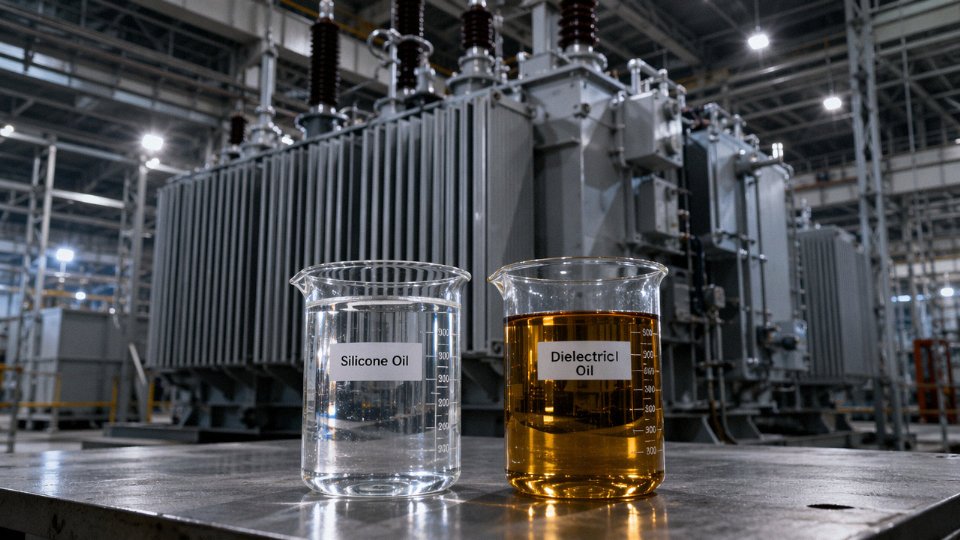
Silicone oil is widely used in electrical and electronic applications due to its superior dielectric properties. It has high dielectric strength, low conductivity, and excellent thermal stability, making it suitable for transformers, capacitors, and high-voltage equipment.
Mineral oil is also used as a transformer oil but requires strict purification and maintenance to prevent moisture contamination and oxidation.
Electrical Performance Table
| Property | Silicone Oil | Mineral Oil |
|---|---|---|
| Dielectric Strength | High | Moderate |
| Electrical Conductivity | Very low | Low |
| Moisture Resistance | Excellent | Moderate |
| Aging Stability | High | Lower |
Lubrication Performance and Friction Behavior
Mineral oil has been traditionally used as a lubricant due to its good film-forming ability and cost efficiency. Silicone oil, while having excellent thermal stability, has relatively lower load-bearing capacity compared to mineral oil.
This makes mineral oil more suitable for heavy-duty lubrication, while silicone oil is preferred for precision, low-friction, and temperature-sensitive applications.
Lubrication Comparison Table
| Parameter | Silicone Oil | Mineral Oil |
|---|---|---|
| Load Carrying Capacity | Moderate | High |
| Friction Coefficient | Low | Moderate |
| Wear Protection | Moderate | High |
| Stability | Excellent | Moderate |
Application Scenarios Across Industries
Silicone oil and mineral oil are used across a wide range of industries, but their application domains differ significantly.
Industrial Application Matrix
| Industry | Silicone Oil | Mineral Oil |
|---|---|---|
| Electronics | Cooling, insulation | Limited |
| Automotive | Damping fluids | Engine oils |
| Cosmetics | Skin conditioners | Baby oil, lotions |
| Medical | Implants, lubricants | Limited |
| Food Processing | Food-grade lubricants | Food-grade oils |
| Machinery | Precision systems | Heavy lubrication |
Silicone oil dominates in high-performance, specialized applications, while mineral oil remains dominant in cost-sensitive, bulk-use scenarios.
Environmental Impact and Safety Considerations
Silicone oil is generally non-toxic and environmentally stable, though not biodegradable. Mineral oil can pose environmental risks if not properly managed, particularly due to contamination and disposal issues.
Environmental Comparison
| Factor | Silicone Oil | Mineral Oil |
|---|---|---|
| Toxicity | Low | Low to moderate |
| Biodegradability | Low | Moderate |
| Environmental Risk | Low | Higher if spilled |
| Regulatory Compliance | High | Moderate |
Cost Analysis and Economic Considerations
Cost is often a decisive factor in industrial procurement. Silicone oil is significantly more expensive than mineral oil due to its synthetic production and advanced properties. However, its longer lifespan and reduced maintenance requirements can offset initial costs.
Cost Comparison Table
| Aspect | Silicone Oil | Mineral Oil |
|---|---|---|
| Initial Cost | High | Low |
| Maintenance Cost | Low | Higher |
| Replacement Frequency | Low | High |
| Total Lifecycle Cost | Competitive | Variable |
Selection Guidelines for Practical Applications
Choosing between silicone oil and mineral oil requires evaluating multiple factors:
- Operating temperature range
- Exposure to oxidation or chemicals
- Required viscosity stability
- Electrical insulation needs
- Cost constraints
- Regulatory requirements
For high-performance, long-life, and extreme conditions, silicone oil is the superior choice. For standard lubrication and cost-sensitive applications, mineral oil remains practical and effective.
Conclusion
Silicone oil and mineral oil are not interchangeable—they serve fundamentally different roles in industrial and commercial applications. Silicone oil offers unmatched stability, temperature resistance, and chemical inertness, making it ideal for advanced and demanding environments. Mineral oil, on the other hand, provides reliable and cost-effective performance for conventional applications where extreme conditions are not present. Understanding these differences is critical for optimizing performance, reducing costs, and ensuring long-term reliability.
Contact [Silicon Chemicals](https://siliconchemicals.com/)
If you’re selecting between silicone oil and mineral oil for your application and want a solution that truly fits your performance requirements—not just a generic recommendation—we’re here to help. At Silicon Chemicals, we work closely with engineers, procurement teams, and manufacturers worldwide to provide precisely tailored silicone oil solutions, from standard grades to highly customized formulations. Whether your focus is thermal stability, electrical performance, or long-term reliability, reach out to us and let’s find the right fluid for your system.