Silicone oil is widely considered one of the safest industrial and consumer-use fluids, yet confusion around its “toxicity” persists across industries—from cosmetics to medical devices and industrial lubrication systems. The real problem arises when users assume that all silicone oils behave identically under every condition. Misunderstanding this can lead to improper application, contamination risks, or exposure to degraded or impure materials—resulting in unexpected biological or environmental effects. This article will systematically clarify what truly causes silicone oil toxicity, separating scientific fact from common misconceptions.
Silicone oil itself is generally non-toxic due to its stable Si–O backbone and chemical inertness; however, toxicity can arise from impurities, low molecular weight siloxanes, degradation products under extreme conditions, improper application routes (such as injection), or contamination with reactive additives. Therefore, the “toxicity” of silicone oil is not intrinsic to the polymer itself but is highly dependent on formulation quality, molecular structure, exposure pathway, and environmental conditions.
To fully understand this topic at an expert level, we must analyze silicone oil not as a single substance but as a complex class of materials with varying molecular weights, functional groups, and industrial modifications. The following sections will break down each contributing factor in depth, supported by technical data, mechanisms, and real-world case insights.
Silicone oil is inherently toxic to humans.False
High-purity silicone oil (PDMS) is chemically inert, non-reactive, and widely used in medical and cosmetic applications, demonstrating low toxicity under normal conditions.
Understanding the Fundamental Chemical Nature of Silicone Oil
Silicone oil, primarily composed of polydimethylsiloxane (PDMS), features a repeating Si–O backbone with organic side groups (typically methyl). This structure provides exceptional thermal stability, hydrophobicity, and chemical inertness. These properties are precisely why silicone oil is used in sensitive applications such as medical implants, pharmaceutical formulations, and food-grade lubricants. However, the same chemical stability that makes silicone oil safe also masks potential risks when its structure is altered or compromised.
At a molecular level, toxicity is rarely associated with the high molecular weight PDMS chains themselves. Instead, the concern lies in smaller, more volatile siloxanes (such as D4, D5, D6 cyclic siloxanes) that may be present as residuals from manufacturing processes. These low molecular weight compounds can exhibit bioaccumulation potential and, in certain regulatory contexts, are subject to restrictions due to environmental persistence and endocrine-related concerns. Therefore, when evaluating toxicity, it is critical to distinguish between polymer-grade silicone oil and residual monomers or oligomers.
Additionally, silicone oils can be chemically modified to introduce functional groups such as amino, epoxy, or phenyl substituents. These modifications significantly alter the reactivity profile of the material. For example, amino-modified silicone oils may interact with biological membranes differently than pure PDMS, potentially leading to irritation or sensitization under specific exposure conditions. Thus, the structural diversity of silicone oils directly influences their toxicological profile.
Key Factors That Contribute to Silicone Oil Toxicity
1. Impurities and Residual Monomers
One of the most significant contributors to perceived toxicity is the presence of impurities. Industrial-grade silicone oils may contain residual catalysts, solvents, or unreacted monomers. These impurities can introduce toxicity even when the base silicone oil is safe.
| Factor | Source | Toxicological Impact |
|---|---|---|
| Cyclic siloxanes (D4, D5) | Incomplete polymerization | Potential endocrine disruption |
| Metal catalysts (Pt, Sn) | Manufacturing residues | Cytotoxicity in high concentrations |
| Organic solvents | Processing contamination | Irritation and systemic toxicity |
High-purity grades (e.g., pharmaceutical or cosmetic grade) undergo extensive purification to remove these components, significantly reducing toxicity risks.
2. Molecular Weight and Volatility
The molecular weight of silicone oil plays a critical role in its biological interaction. Low-viscosity silicone oils are more volatile and can penetrate biological tissues more easily, increasing exposure risk.
| Viscosity (cSt) | Molecular Weight | Toxicity Risk |
|---|---|---|
| 0.65–10 cSt | Low MW | Higher volatility, inhalation risk |
| 50–1000 cSt | Medium MW | Generally safe |
| 10,000+ cSt | High MW | Minimal bioavailability |
Lower molecular weight silicone oils are more likely to be absorbed or inhaled, especially in aerosolized forms.
3. Thermal and Oxidative Degradation
Under extreme conditions such as high temperatures (>200°C) or exposure to strong oxidizing agents, silicone oil can degrade into smaller, potentially harmful compounds such as formaldehyde or silica residues.
| Condition | Degradation Product | Risk |
|---|---|---|
| High temperature | Formaldehyde | Carcinogenic risk |
| Oxidation | Silanol compounds | Irritation |
| Combustion | [Silica](https://siliconchemicals.com/silica/) dust | Respiratory hazard |
This is particularly relevant in industrial applications such as heat transfer fluids or lubrication systems.
4. Route of Exposure
The toxicity of silicone oil is highly dependent on how it enters the body. Topical exposure is generally safe, but internal exposure (e.g., injection or inhalation) can present risks.
| Exposure Route | Risk Level | Explanation |
|---|---|---|
| Skin contact | Low | Poor absorption |
| Inhalation | Moderate | Aerosolized particles |
| Injection | High | Immune response, embolism risk |
Medical-grade silicone oils are specifically formulated for internal use, while industrial grades are not.
5. Additives and Formulations
Silicone oil is rarely used alone in industrial or commercial products. Additives such as surfactants, emulsifiers, or crosslinking agents can introduce toxicity.
Examples include:
- Silicone emulsions containing surfactants that irritate skin
- Silicone-based lubricants with petroleum additives
- Modified silicone oils with reactive functional groups
Comparative Analysis: Silicone Oil vs Other Fluids
| Property | Silicone Oil | Mineral Oil | Synthetic Oil |
|---|---|---|---|
| Chemical Stability | Very high | Moderate | High |
| Toxicity | Low (pure form) | Moderate | Variable |
| Biocompatibility | Excellent | Limited | Moderate |
| Environmental Impact | Low–moderate | High | Moderate |
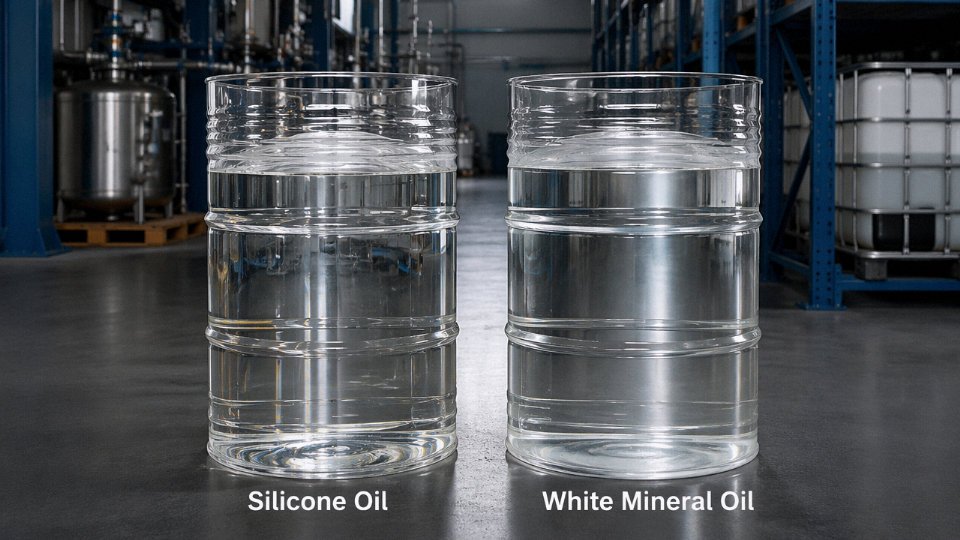
This comparison highlights that silicone oil is often safer than alternatives when properly formulated.
Case Studies and Observations
In medical applications, silicone oil is used in ophthalmology for retinal detachment surgery. Clinical studies show minimal toxicity when high-purity silicone oil is used. However, complications can arise when impurities or inappropriate viscosities are introduced.
In cosmetics, silicone oils such as dimethicone are widely used as skin conditioners. Regulatory bodies such as FDA and EU Cosmetic Directive classify them as safe, provided they meet purity standards.
In industrial settings, improper handling of silicone oil at high temperatures has led to reports of respiratory irritation due to degradation products. These cases highlight that toxicity is often situational rather than inherent.
Advanced Technical Insights: Why Silicone Oil Is Generally Safe
The key reason silicone oil exhibits low toxicity lies in its Si–O bond energy (~452 kJ/mol), which is significantly higher than C–C bonds in organic compounds. This results in:
- Low reactivity
- Resistance to enzymatic breakdown
- Minimal interaction with biological systems
Additionally:
- Hydrophobic nature prevents absorption
- Large molecular size limits bioavailability
- Lack of functional groups reduces reactivity
These characteristics collectively explain why silicone oil is widely used in sensitive applications.
Summary
Silicone oil toxicity is not a property of the base material itself but a result of external factors such as impurities, molecular structure, degradation conditions, and exposure routes. High-purity, properly selected silicone oils are among the safest fluids available in both industrial and consumer applications. However, misunderstanding these nuances can lead to improper usage and perceived risks.
Want to Choose the Right Silicone Oil Without Risk?
At Silicon Chemicals, we understand that not all silicone oils are created equal. Whether you need pharmaceutical-grade purity, industrial performance, or customized formulations, our team ensures strict quality control, low impurity levels, and application-specific optimization.
Contact Silicon Chemicals today to get expert guidance, technical data sheets, and tailored silicone oil solutions for your industry.