Silicone oil is widely used because it appears to be a “universal fluid”—thermally stable, chemically inert, water-repellent, and electrically insulating. However, in real-world applications, users often encounter hidden limitations: poor load-bearing capacity in mechanical systems, migration and contamination issues in coatings or painting processes, insufficient lubricity under boundary conditions, and regulatory or cost constraints in sensitive industries. These problems can lead to equipment wear, product defects, compliance risks, or unnecessary cost escalation. The solution is not to look for a single replacement, but to identify the correct alternative fluid based on the specific function silicone oil was serving.
A good alternative to silicone oil depends entirely on application: PAO is ideal for general lubrication, PAG excels in high-load and clean-running systems, synthetic esters provide superior lubricity and biodegradability, white/mineral oils serve cost-sensitive or regulated uses, PFPE handles extreme environments, and plant-based esters replace silicone in cosmetics. There is no universal substitute—selection must match performance requirements such as temperature, load, volatility, compatibility, and regulatory compliance.
To make a correct decision, it is essential to move away from the idea of “finding the closest fluid” and instead adopt a performance-driven selection framework. This article provides a comprehensive, technical, and practical guide to identifying the most suitable alternative based on engineering, chemical, and commercial considerations.
Silicone oil can always be replaced by mineral oil without performance loss.False
Mineral oil lacks the thermal stability, oxidation resistance, and low-temperature performance of silicone oil, making it unsuitable for many demanding applications.
Understanding Why [Silicone Oil](https://siliconchemicals.com/silicone-oil/) Needs Replacement
Silicone oil, typically based on polydimethylsiloxane (PDMS), offers a unique combination of properties: wide temperature range, low surface tension, chemical inertness, and dielectric behavior. However, its weaknesses are equally important when selecting alternatives.
From an engineering perspective, the most critical limitations include:
- Low lubricity under load: Silicone oil forms weak boundary films compared to hydrocarbon or ester-based oils.
- Migration and contamination: Its low surface energy allows it to spread uncontrollably, affecting coatings and bonding.
- Poor compatibility with certain processes: Especially problematic in painting, printing, and electronics assembly.
- Cost-performance imbalance: In many applications, its premium price does not translate into proportional performance benefits.
- Limited biodegradability: Increasingly important in environmentally regulated industries.
These limitations are the key drivers behind the search for alternatives.
Core Alternative Families to Silicone Oil
Below is a structured comparison of the main substitute fluid categories used across industries.
Table 1: Primary Silicone Oil Alternatives and Their Characteristics
| Fluid Type | Key Strengths | Typical Applications | Limitations |
|---|---|---|---|
| PAO (Polyalphaolefin) | Excellent lubricity, thermal stability, low-temperature flow | Gearboxes, bearings, automotive lubricants | Moderate cost, limited polarity |
| PAG (Polyalkylene Glycol) | High load capacity, clean operation, good thermal stability | Worm gears, compressors, industrial drives | Compatibility issues with other oils |
| Synthetic Ester | Superior lubricity, biodegradable, high VI | Aviation, hydraulics, eco-lubricants | Hydrolysis sensitivity |
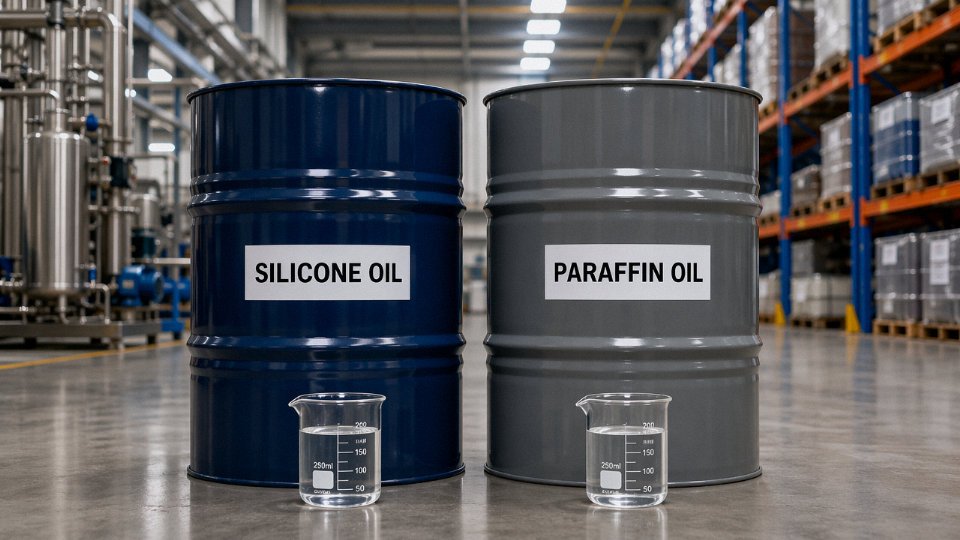
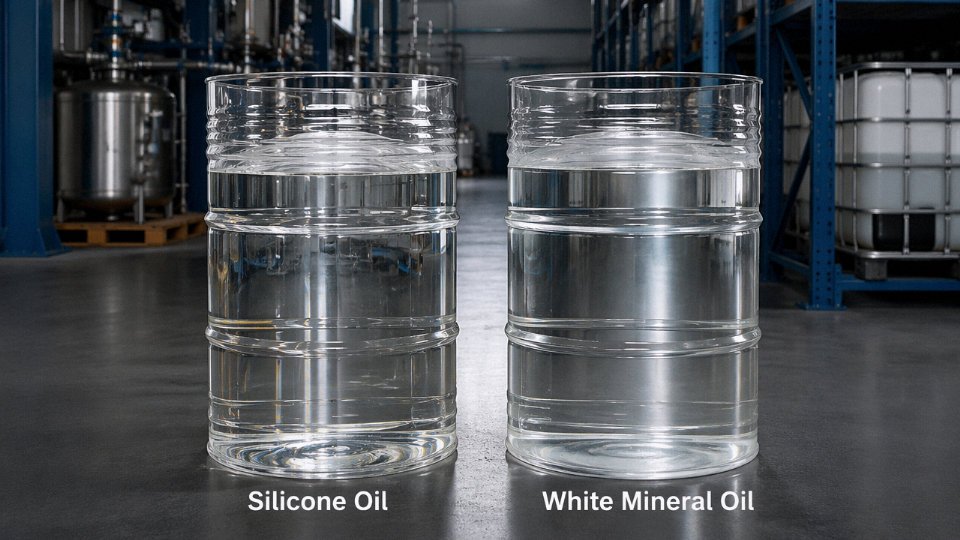
| White/ Mineral Oil | Low cost, inert, food/pharma grade available | Cosmetics, food processing, basic lubrication | Limited high-temperature performance |
| PFPE (Perfluoropolyether) | Extreme temperature & chemical resistance | Aerospace, vacuum systems, semiconductors | Very high cost |
| Plant-based Esters | Renewable, good skin feel, biodegradable | Cosmetics, personal care | Oxidation stability concerns |
Functional Replacement Strategy (The Most Critical Part)
Instead of selecting by product name, the correct approach is to replace silicone oil based on function.
Table 2: Function-Based Replacement Mapping
| Silicone Oil Function | Best Alternative | Reason |
|---|---|---|
| Lubrication (mechanical) | PAO / Ester | Stronger film strength and wear protection |
| High-load systems | PAG / Ester | Better boundary lubrication |
| Heat transfer | PAO / Mineral oil | Stable thermal conductivity |
| Electrical insulation | Mineral insulating oil | Proven dielectric properties |
| Damping | High-viscosity PAO / PAG | Better energy dissipation |
| Cosmetic feel | Plant esters / hydrocarbons | Silicone-free sensory profile |
| Release agent | Ester / hydrocarbon blends | Controlled surface behavior |
| Antifoaming | Modified oils / specialty defoamers | Targeted foam control |
PAO: The Most Practical Replacement in Industrial Systems
PAO (polyalphaolefin) is widely regarded as the most balanced alternative to silicone oil in mechanical applications. It offers:
- High viscosity index (stable performance across temperature)
- Excellent oxidation resistance
- Low volatility compared to mineral oils
- Strong lubricating film formation
In applications such as bearings, gears, and compressors, PAO consistently outperforms silicone oil due to its ability to maintain a protective film under load. This directly translates into reduced wear and longer equipment life.
However, PAO is not ideal for applications requiring extreme chemical resistance or very high-temperature stability beyond typical industrial ranges.
PAG: The High-Performance Alternative for Demanding Conditions
PAG (polyalkylene glycol) fluids are particularly effective where silicone oil fails under load or in mixed lubrication regimes.
Key advantages:
- Exceptional lubricity under boundary conditions
- High thermal stability
- Low friction coefficients
- Clean operation (reduced deposits)
PAG is especially suitable for:
- Worm gear drives
- Industrial compressors
- Applications requiring reduced friction and improved efficiency
Its main limitation is compatibility—PAG does not mix well with many other lubricants and requires careful system cleaning before use.
Synthetic Esters: The Best Choice for Performance + Sustainability
Synthetic esters combine high performance with environmental advantages.
Key features:
- Excellent lubricity (better than PAO in many cases)
- Natural affinity to metal surfaces
- Biodegradability
- High-temperature performance
These fluids are widely used in:
- Aviation lubricants
- Hydraulic systems
- Environmentally sensitive applications
The main drawback is hydrolysis sensitivity, meaning water contamination must be carefully controlled.
Mineral and White Oils: Cost-Effective and Regulated Applications
For applications where cost and regulatory compliance are critical, mineral oil or white oil is often the preferred alternative.
Advantages:
- Low cost
- Widely available
- Food-grade and pharmaceutical-grade options
Limitations:
- Lower thermal stability
- Reduced oxidation resistance
- Narrower operating temperature range
These oils are suitable for:
- Food processing
- Cosmetics
- Basic lubrication tasks
PFPE: The Ultimate Solution for Extreme Environments
PFPE (perfluoropolyether) fluids represent the highest-performance class of alternatives.
They offer:
- Extreme temperature resistance (-70°C to >250°C)
- Chemical inertness
- Non-flammability
- Ultra-low volatility
Typical applications:
- Aerospace systems
- Semiconductor manufacturing
- Vacuum environments
The major barrier is cost, which is significantly higher than all other fluid types.
Cosmetic and Personal Care Alternatives
In personal care formulations, silicone oil alternatives are increasingly important due to “silicone-free” trends.
Common replacements include:
- Natural esters (e.g., jojoba, caprylic/capric triglycerides)
- Hydrocarbon emollients
- Bio-based synthetic oils
These alternatives provide:
- Good spreadability
- Lightweight feel
- Improved biodegradability
However, achieving identical sensory properties often requires blending multiple ingredients.
Selection Framework for Buyers and Engineers
To select the correct alternative, evaluate the following criteria:
- Operating temperature range
- Load and pressure conditions
- Chemical exposure
- Material compatibility
- Regulatory requirements
- Cost constraints
- Environmental impact
A structured selection approach significantly reduces the risk of failure.
Key Decision Logic
- If lubrication is primary → PAO or Ester
- If load is high → PAG or Ester
- If extreme conditions → PFPE
- If cost-sensitive → Mineral oil
- If cosmetic → Plant-based esters
Common Mistakes When Replacing Silicone Oil
Many failures occur due to incorrect assumptions:
- Choosing based only on viscosity
- Ignoring material compatibility
- Overlooking regulatory requirements
- Assuming one fluid can replace all functions
Avoiding these mistakes is critical for successful substitution.
Final Thoughts: There Is No Universal Replacement
Silicone oil is not being replaced because it is “bad”—it is being replaced because applications are becoming more specialized. Modern industries require fluids that are optimized for specific conditions rather than general-purpose performance.
The best alternative is not the one that matches silicone oil most closely, but the one that solves the specific problem more effectively.
Need Help Choosing the Right Alternative? — [Silicon Chemicals](https://siliconchemicals.com/)
If you are evaluating alternatives to silicone oil for your application, the most efficient approach is to match your exact operating conditions with the correct fluid chemistry rather than relying on generic substitutions.
At Silicon Chemicals, we work directly with industrial buyers, engineers, and formulators to identify the most suitable silicone oil alternatives based on real-world performance requirements, not just datasheet comparisons.
Whether your priority is lubrication performance, thermal stability, cost optimization, regulatory compliance, or silicone-free formulation, we can help you shortlist the right options and avoid costly trial-and-error cycles.
Feel free to reach out with your application details—we’ll help you make a technically sound and commercially smart decision.