Silicone-based liquids are widely used in industries ranging from cosmetics and pharmaceuticals to electronics, automotive manufacturing, and chemical processing. However, many engineers, procurement managers, and even experienced chemical buyers often encounter confusion when reading product specifications or technical documentation: Is silicone oil the same as silicone fluid, or are they different materials? This ambiguity can lead to incorrect product selection, unexpected viscosity performance, or compatibility issues in formulations and industrial systems. The terminology is widely used across product catalogs, SDS sheets, and technical papers, yet the distinction is rarely explained clearly. Understanding the difference is essential for selecting the right material for lubrication, heat transfer, dielectric insulation, personal care formulations, or specialty coatings.
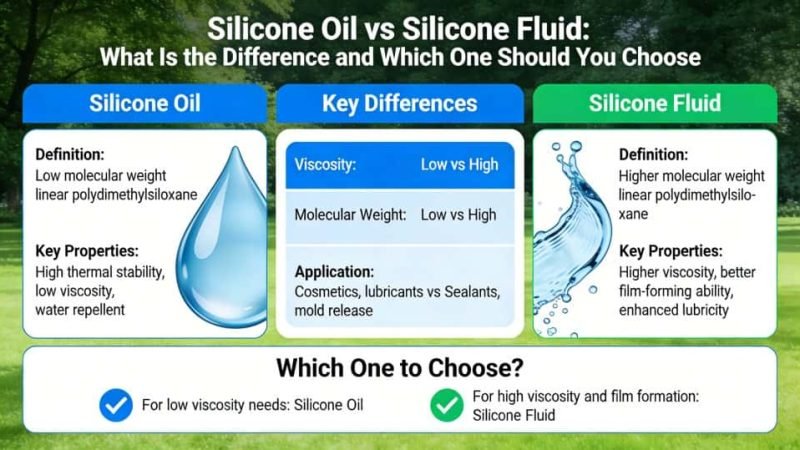
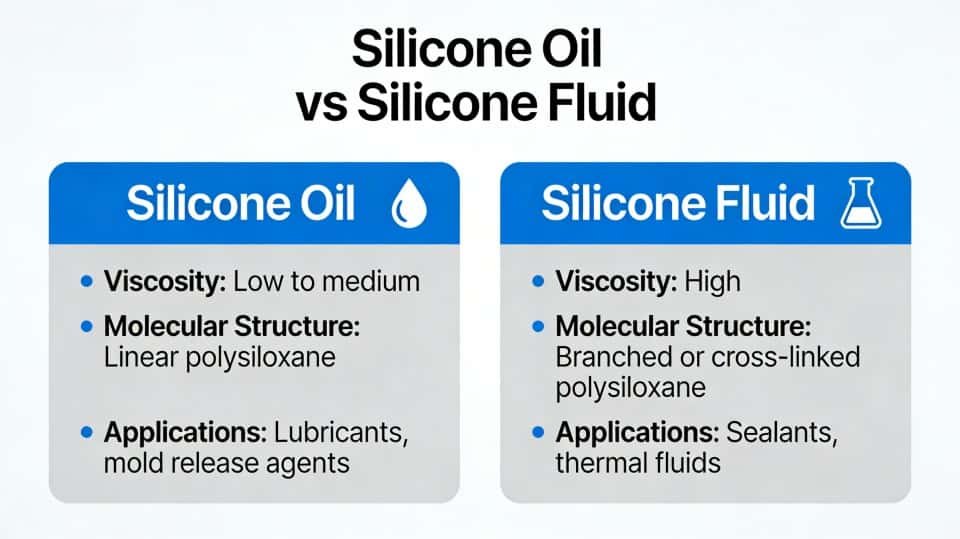
In most technical contexts, “silicone oil” and “silicone fluid” refer to the same family of organosilicon liquids—typically polydimethylsiloxane (PDMS) or related silicone polymers. The term “silicone oil” is usually used when emphasizing lubrication, viscosity, and oil-like behavior, while “silicone fluid” is a broader technical term used in industrial and chemical specifications to describe liquid silicone polymers of various viscosities and functionalities. In practice, the difference is mainly semantic rather than chemical, although certain specialized silicone fluids may include functional modifications such as phenyl, amino, or fluorinated groups that extend beyond traditional silicone oils.
To fully understand how these terms evolved and how they are used in engineering, chemistry, and commercial product catalogs, it is important to explore their chemical structure, classification, performance characteristics, industrial applications, and technical standards. The following guide provides a detailed, technical explanation that will help engineers, formulators, and buyers choose the correct silicone material with confidence.
Silicone oil and silicone fluid are chemically identical materials in most industrial applications.True
Both terms generally refer to liquid silicone polymers such as polydimethylsiloxane (PDMS); the difference is largely terminological rather than chemical.
Chemical Foundations of Silicone Liquids
Silicone oil and silicone fluid both belong to the broader category of organosilicon polymers, which are materials containing repeating silicon-oxygen (Si-O) bonds. These materials differ fundamentally from organic oils because their backbone structure consists of siloxane linkages rather than carbon chains. The basic repeating unit of most silicone liquids is:
Si – O – Si – O – Si
This structure is known as a siloxane backbone, and it provides unique properties that distinguish silicones from hydrocarbon oils.
Molecular Structure of Typical [Silicone Oil](https://siliconchemicals.com/silicone-oil/) (PDMS)
The most common silicone liquid used worldwide is polydimethylsiloxane (PDMS). In this polymer, each silicon atom is bonded to two methyl groups (–CH₃). The repeating structural unit can be written as:
–[Si(CH₃)₂–O]–
This structure leads to several important molecular characteristics:
• Extremely flexible polymer chains
• Low intermolecular forces
• High thermal stability
• Strong hydrophobic behavior
• Excellent oxidation resistance
Because the Si–O bond energy (~444 kJ/mol) is significantly higher than the C–C bond (~348 kJ/mol) found in organic oils, silicone liquids remain stable across a much wider temperature range.
Comparison of Molecular Backbone Structures
| Property | [Silicone Oil](https://siliconchemicals.com/silicone-oil/) / Silicone Fluid | Mineral Oil | Synthetic Hydrocarbon Oil |
|---|---|---|---|
| Backbone Structure | Si–O–Si | C–C–C | C–C–C |
| Bond Energy | Very High | Moderate | Moderate |
| Thermal Stability | Excellent | Moderate | Good |
| Oxidation Resistance | Excellent | Poor | Moderate |
| Low Temperature Flow | Excellent | Poor | Moderate |
This molecular architecture explains why silicone liquids maintain stable viscosity across extreme temperatures, making them valuable in aerospace, electronics, and medical applications.
Why the Two Terms Exist: Historical and Industrial Context
The coexistence of the terms silicone oil and silicone fluid is largely the result of historical industry evolution rather than chemical differences.
During the early development of silicones in the 1940s and 1950s, chemical companies marketed PDMS primarily as a high-performance lubricant. Because its behavior resembled that of oils used in machinery, the product was widely referred to as silicone oil.
Later, as the silicone industry expanded into cosmetics, pharmaceuticals, coatings, and electronics, manufacturers began using the term silicone fluid to describe liquid silicone polymers more broadly. The word “fluid” avoided the implication that the material was strictly an oil-type lubricant.
Typical Usage by Industry
| Industry | Preferred Term | Reason |
|---|---|---|
| Mechanical lubrication | Silicone oil | Emphasizes oil-like lubrication |
| Cosmetics & personal care | Silicone fluid | Neutral technical term |
| Chemical manufacturing | Silicone fluid | Broader classification |
| Electronics & dielectric systems | Silicone oil | Traditional terminology |
| Medical applications | Silicone fluid | Regulatory language |
In technical datasheets from major manufacturers, both terms often refer to the same material. For example:
• 100 cSt silicone oil
• 100 cSt silicone fluid
These typically represent identical PDMS products.
Viscosity and Rheology Characteristics
One of the most important properties of silicone liquids is viscosity, which describes how easily the fluid flows. Silicone oils are manufactured in an extremely wide viscosity range.
Common Silicone Fluid Viscosity Grades
| Viscosity (cSt) | Typical Consistency | Common Applications |
|---|---|---|
| 0.65 – 5 | Very thin fluid | Cosmetic formulations |
| 10 – 50 | Light oil | Lubrication, coatings |
| 100 – 350 | Medium viscosity | Industrial fluids |
| 500 – 1000 | Thick oil | Damping systems |
| 5000 – 100000 | Very thick fluid | Shock absorbers |
Unlike hydrocarbon oils, silicone liquids exhibit low viscosity change with temperature.
Viscosity Stability Comparison
| Temperature | Mineral Oil Viscosity Change | Silicone Fluid Viscosity Change |
|---|---|---|
| -40°C | Becomes extremely thick | Remains fluid |
| 25°C | Normal | Stable |
| 150°C | Oxidizes and thins | Remains stable |
This behavior results from the flexibility of the siloxane backbone.
Types of Silicone Fluids Beyond Traditional Silicone Oil
While most silicone oils are simple PDMS polymers, the broader category of silicone fluids includes many functionalized variants.
Functional Silicone Fluids
| Type | Chemical Modification | Key Properties |
|---|---|---|
| Phenyl silicone fluid | Phenyl substitution | High temperature resistance |
| Amino silicone fluid | Amino groups | Textile softening |
| Fluorinated silicone fluid | Fluorinated groups | Chemical resistance |
| Vinyl silicone fluid | Vinyl groups | Crosslinking capability |
| Hydrogen silicone fluid | Si-H groups | Silicone elastomer curing |
These materials may still be called silicone fluids even though they differ significantly from standard silicone oil.
Industrial Applications of Silicone Oil and Silicone Fluid
Silicone liquids are used in a wide variety of industries due to their exceptional stability and performance.
Major Application Sectors
| Industry | Application |
|---|---|
| Automotive | Shock absorbers, damping fluids |
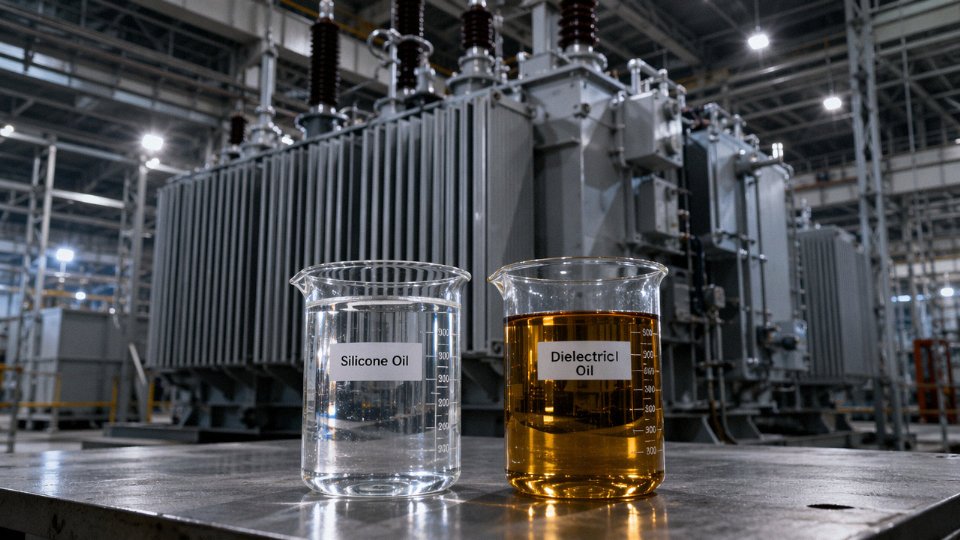
| Electronics | Dielectric insulation |
| Cosmetics | Skin conditioning agents |
| Pharmaceuticals | Medical lubricants |
| Textiles | Fabric softeners |
| Chemical processing | Heat transfer fluids |
Example: Heat Transfer Fluids
Silicone fluids are often used in high-temperature heat transfer systems.
| Fluid Type | Maximum Operating Temperature |
|---|---|
| Mineral oil | ~200°C |
| Synthetic hydrocarbon | ~300°C |
| Silicone fluid | ~350°C |
Their resistance to oxidation and thermal breakdown makes them ideal for extreme environments.
Safety and Environmental Characteristics
Silicone oils are generally considered safe and chemically inert.
Key Safety Properties
• Non-toxic in most applications
• Low skin irritation
• Chemically stable
• Non-corrosive
However, environmental considerations depend on molecular structure and viscosity.
| Property | Silicone Oil |
|---|---|
| Biodegradability | Slow |
| Toxicity | Very low |
| Volatility | Extremely low |
Physical Property Comparison
The following table summarizes key physical properties of silicone oils compared with other fluids.
| Property | Silicone Oil | Mineral Oil | Synthetic Ester |
|---|---|---|---|
| Flash Point | High | Moderate | Moderate |
| Thermal Stability | Excellent | Poor | Good |
| Oxidation Resistance | Excellent | Poor | Moderate |
| Surface Tension | Very low | Moderate | Moderate |
These properties explain why silicone liquids are preferred in specialized engineering systems.
Choosing the Right Silicone Fluid for Your Application
Selecting the correct silicone liquid depends on several technical factors.
Key Selection Criteria
Viscosity requirements
Low viscosity fluids are suitable for cosmetics and sprays, while high viscosity oils are used in damping systems.
Temperature resistance
Phenyl-modified silicone fluids offer higher thermal stability.
Chemical compatibility
Fluorinated silicone fluids provide superior resistance to aggressive chemicals.
Electrical properties
Certain silicone oils are specifically formulated for dielectric insulation.
Application-Based Selection Guide
| Application | Recommended Fluid |
|---|---|
| Cosmetic formulations | Low-viscosity silicone fluid |
| Heat transfer systems | High-temperature silicone fluid |
| Lubrication | Medium viscosity silicone oil |
| Damping systems | High viscosity silicone oil |
Common Misconceptions
Many buyers mistakenly assume silicone oil and silicone fluid are completely different materials.
Misinterpretations
• Silicone oil is not a separate chemical compound
• Silicone fluid does not imply a lower viscosity
• Both terms can refer to identical PDMS products
The difference is primarily terminological and contextual.
Summary
The distinction between silicone oil and silicone fluid is largely linguistic rather than chemical. Both typically refer to liquid silicone polymers such as PDMS, which are valued for their thermal stability, chemical resistance, and versatile viscosity range. The term “silicone oil” is commonly used in lubrication and mechanical contexts, while “silicone fluid” is the broader industrial and technical designation used in chemical manufacturing, cosmetics, and specialty applications.
Understanding this terminology helps engineers, formulators, and buyers interpret product specifications more accurately and select the appropriate material for their systems.
Talk With Our Silicone Specialists
If you are evaluating silicone oils or specialty silicone fluids for industrial applications, the team at Silicon Chemicals works closely with manufacturers, formulators, and engineering companies worldwide to help identify the right viscosity grade and functional modification for each use case. Whether you need silicone fluids for lubrication, dielectric insulation, cosmetics, or high-temperature heat transfer systems, our technical specialists can help you compare products, review specifications, and select the most reliable solution for your project. Contact Silicon Chemicals to discuss your requirements and request detailed technical data or samples.