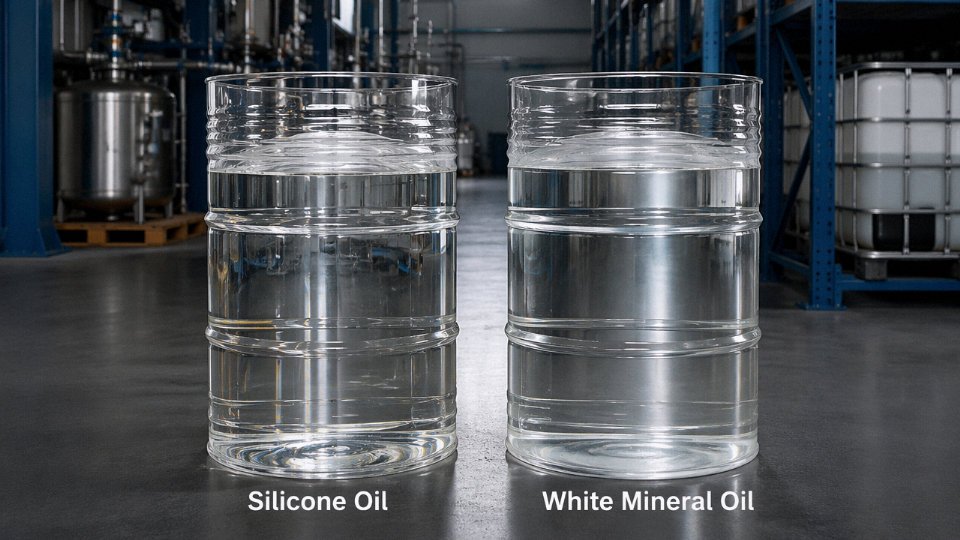
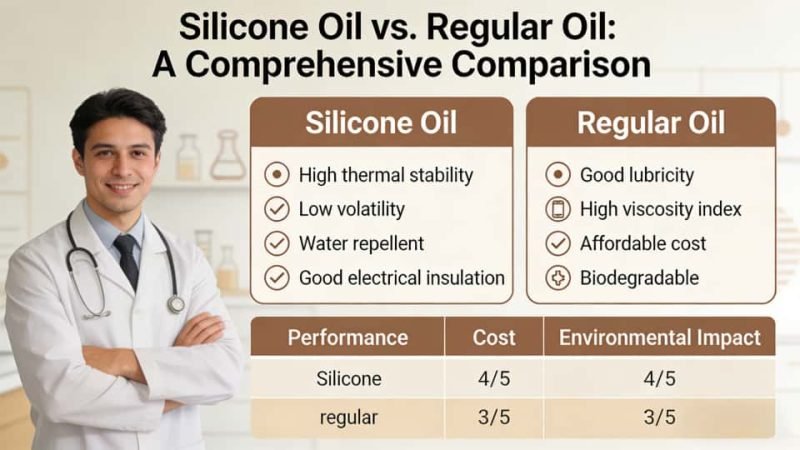
Industrial fluids play a critical role in the operation of modern machines, electronic systems, manufacturing processes, and consumer products. From lubrication and heat transfer to electrical insulation and formulation enhancement, oils are used in nearly every industry. Conventional oils—often referred to as “regular oils”—are typically derived from petroleum and include mineral oils or synthetic hydrocarbon oils. These fluids have been used for decades because they are widely available, inexpensive, and provide reliable lubrication for many mechanical systems. However, as technology evolves and operating conditions become more demanding, traditional oils sometimes struggle to maintain performance in extreme environments such as high temperatures, low temperatures, chemically reactive conditions, or electrically sensitive systems. Silicone oil has emerged as a specialized alternative fluid designed to address many of these limitations.
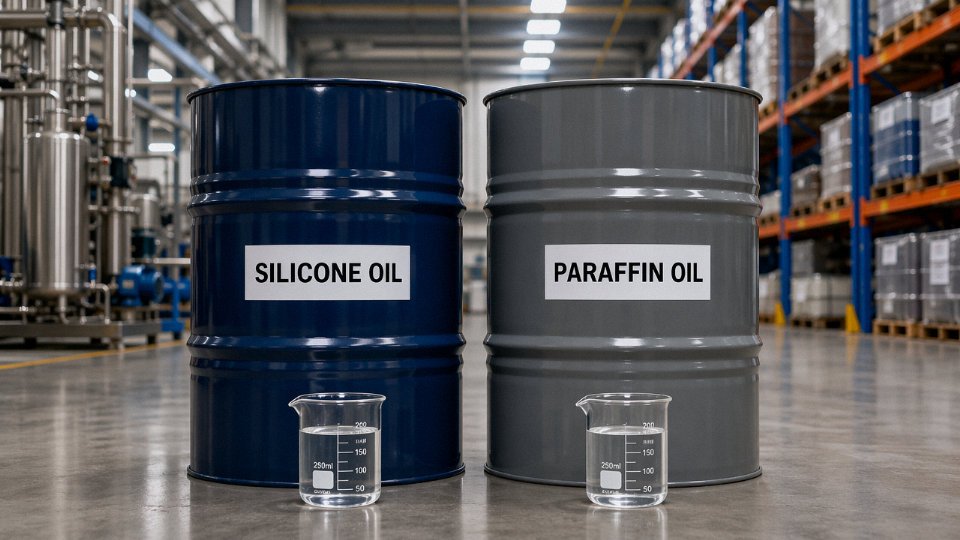
Silicone oil is not universally better than regular oil; instead, it excels in specific conditions where conventional oils perform poorly. Silicone oil provides superior thermal stability, oxidation resistance, dielectric insulation, low surface tension, and viscosity stability across a wide temperature range. However, regular oils such as mineral oils or synthetic hydrocarbons often provide better load-bearing lubrication and significantly lower cost. Therefore, whether silicone oil is better depends entirely on the application requirements, operating environment, and performance priorities.
Understanding when silicone oil outperforms conventional oil requires examining their chemical structures, physical properties, and functional performance in different industrial applications. Engineers and product designers must carefully evaluate these factors to determine which fluid is best suited for a given system.
Silicone oil offers significantly better thermal stability than most conventional mineral oils.True
The silicon-oxygen backbone of silicone oil polymers has higher bond energy than carbon-carbon bonds found in hydrocarbon oils, allowing silicone fluids to remain stable at much higher temperatures.
Understanding What “Regular Oil” Means
Before comparing silicone oil with regular oil, it is important to clarify what the term “regular oil” actually refers to. In most industrial contexts, regular oil refers to petroleum-based mineral oil or synthetic hydrocarbon oil.
Mineral oils are produced through the refining of crude petroleum. They consist primarily of hydrocarbon molecules composed of carbon and hydrogen atoms arranged in long chains or rings.
These oils are widely used in applications such as:
• engine lubrication
• hydraulic systems
• industrial machinery
• metalworking operations
• general-purpose lubrication
Synthetic hydrocarbon oils, such as polyalphaolefins (PAO), are engineered versions of hydrocarbon oils designed to improve certain properties such as oxidation resistance and temperature stability.
Although regular oils are effective for many mechanical systems, their hydrocarbon structure imposes certain limitations, particularly under extreme thermal or chemical conditions.
Table: Typical Characteristics of Regular Oil
| Property | Typical Performance |
|---|---|
| Thermal stability | Moderate |
| Oxidation resistance | Moderate |
| Cost | Low |
| Load-bearing lubrication | Good |
These characteristics explain why regular oils remain widely used in industrial lubrication systems.
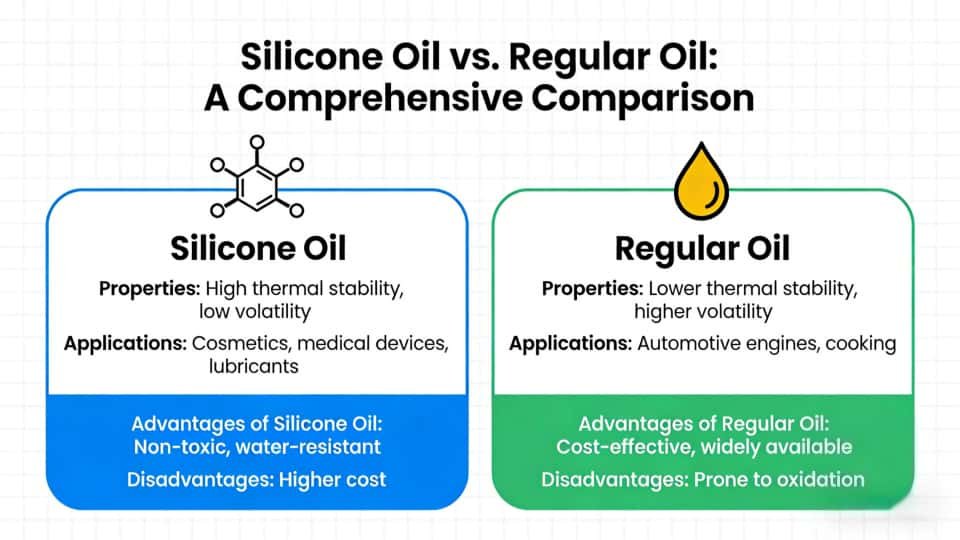
Understanding the Unique Structure of Silicone Oil
Silicone oil differs fundamentally from conventional oils because its molecular structure is based on silicon-oxygen bonds rather than carbon-carbon bonds.
Most silicone oils are composed of polydimethylsiloxane (PDMS) polymers, which consist of repeating Si–O–Si backbone units with methyl groups attached to each silicon atom.
This structure gives silicone oil several unique properties that are difficult for hydrocarbon oils to replicate.
Table: Structural Differences Between Silicone Oil and Regular Oil
| Feature | Silicone Oil | Regular Oil |
|---|---|---|
| Backbone structure | Si–O–Si polymer | Hydrocarbon chains |
| Bond energy | High | Moderate |
| Thermal stability | Excellent | Moderate |
| Chemical inertness | Very high | Moderate |
These structural differences are the reason silicone oil behaves differently from conventional oils in many environments.
Thermal Stability Comparison
One of the most important advantages of silicone oil is its ability to maintain stability across extremely wide temperature ranges.
Conventional mineral oils typically begin to degrade or oxidize at temperatures above 120–150 °C. In contrast, silicone oils can often operate safely at temperatures approaching 250 °C.
At the opposite extreme, silicone oils remain fluid at very low temperatures, sometimes as low as −50 °C.
Table: Temperature Range Comparison
| Oil Type | Typical Operating Range |
|---|---|
| Mineral Oil | −10 °C to 120 °C |
| Synthetic Hydrocarbon Oil | −30 °C to 180 °C |
| Silicone Oil | −50 °C to 250 °C |
This exceptional temperature stability makes silicone oil particularly valuable in aerospace, electronics, and high-temperature industrial processes.
Oxidation and Chemical Stability
Oxidation is one of the primary mechanisms that causes lubricants to degrade over time. When oils oxidize, they produce acids, sludge, and varnish that can damage machinery.
Silicone oils are highly resistant to oxidation because the silicon-oxygen backbone is chemically stable and less reactive with oxygen.
Benefits include:
• longer operational lifespan
• reduced formation of sludge and deposits
• improved reliability in high-temperature environments
Conventional oils, in contrast, may require antioxidants and other additives to maintain stability.
Viscosity Stability Across Temperature Changes
Viscosity stability is another area where silicone oil often outperforms regular oil.
Many hydrocarbon oils become extremely thick at low temperatures and very thin at high temperatures.
Silicone oils exhibit a low viscosity-temperature coefficient, meaning their viscosity changes less dramatically as temperature fluctuates.
Table: Viscosity Behavior
| Property | Silicone Oil | Regular Oil |
|---|---|---|
| Low-temperature fluidity | Excellent | Moderate |
| High-temperature viscosity retention | Excellent | Moderate |
| Viscosity stability | Very high | Variable |
This characteristic is particularly important in precision equipment and aerospace systems.
Electrical Insulation Performance
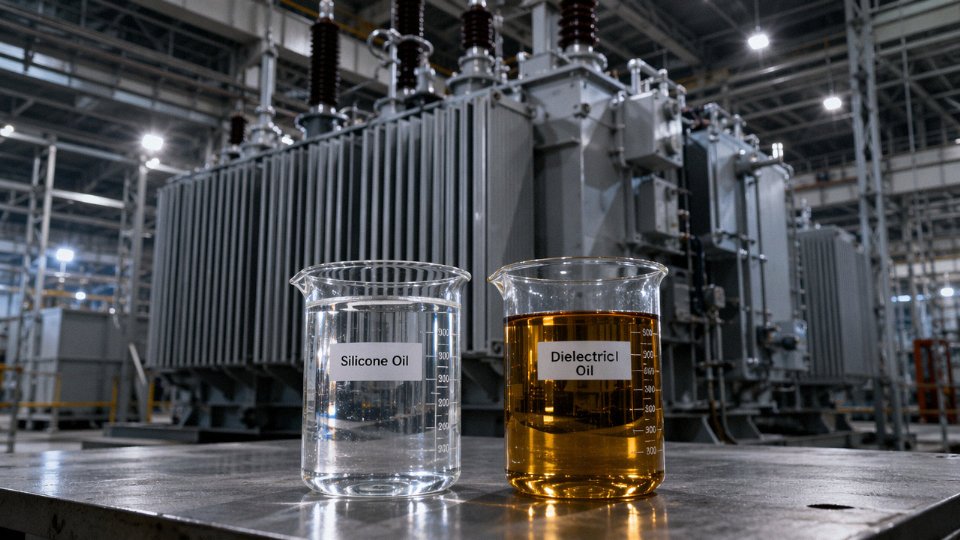
Silicone oil is widely used as a dielectric fluid because it provides excellent electrical insulation properties.
Its high dielectric strength and thermal stability make it ideal for use in electrical transformers, capacitors, and electronic cooling systems.
Regular oils can also serve as dielectric fluids but typically provide lower fire resistance and lower temperature tolerance.
Table: Electrical Properties Comparison
| Property | Silicone Oil | Mineral Oil |
|---|---|---|
| Dielectric strength | High | Moderate |
| Fire resistance | Good | Moderate |
| Thermal stability | High | Moderate |
Because of these properties, silicone oil is often used in critical electrical equipment.
Lubrication Performance Under Mechanical Load
Although silicone oil offers many advantages, regular oils often perform better in heavy mechanical lubrication.
Hydrocarbon oils can form stronger boundary lubrication films on metal surfaces, especially when combined with specialized additives designed for extreme-pressure conditions.
Silicone oils, by contrast, have weaker intermolecular forces and lower film strength under heavy loads.
Table: Mechanical Lubrication Comparison
| Property | Silicone Oil | Regular Oil |
|---|---|---|
| Load-bearing capability | Moderate | Good |
| Extreme-pressure lubrication | Limited | Excellent |
| Additive compatibility | Limited | Excellent |
Because of this difference, conventional oils remain dominant in engine lubrication and heavy machinery.
Cost Comparison
Cost is another important factor when comparing silicone oil with regular oil.
Silicone oil is generally more expensive to produce because its manufacturing process involves specialized chemical reactions starting from silicon metal.
Table: Cost Comparison
| Oil Type | Relative Cost |
|---|---|
| Mineral Oil | Low |
| Synthetic Hydrocarbon Oil | Medium |
| Silicone Oil | High |
For many applications, the higher cost of silicone oil can only be justified if its unique properties provide a clear performance advantage.
Applications Where Silicone Oil Is Better
Silicone oil is generally superior in applications requiring:
• high temperature stability
• electrical insulation
• chemical inertness
• low surface tension
• long service life
Typical examples include:
• transformer insulation fluids
• cosmetic formulations
• heat transfer systems
• damping fluids in precision instruments
In these environments, silicone oil provides performance that conventional oils cannot easily match.
Applications Where Regular Oil Is Better
Regular oils remain superior in many mechanical lubrication systems.
Examples include:
• automotive engines
• industrial gearboxes
• hydraulic systems
• heavy-duty machinery
In these applications, hydrocarbon oils provide stronger lubrication and significantly lower cost.
Final Comparison Summary
Table: Silicone Oil vs Regular Oil Summary
| Property | Silicone Oil | Regular Oil |
|---|---|---|
| Thermal stability | Excellent | Moderate |
| Oxidation resistance | Excellent | Moderate |
| Viscosity stability | Excellent | Moderate |
| Load-bearing lubrication | Moderate | Good |
| Cost | High | Low |
This comparison illustrates that neither fluid is universally better; each has advantages depending on the application.
Conclusion
Silicone oil is not universally better than regular oil, but it offers several important advantages in specialized environments. Its unique silicon-oxygen molecular structure provides exceptional thermal stability, oxidation resistance, viscosity stability, and electrical insulation properties. These characteristics make silicone oil an excellent choice for high-temperature systems, electrical equipment, cosmetic formulations, and advanced industrial processes.
However, regular oils such as mineral oils and synthetic hydrocarbon lubricants remain superior in many mechanical lubrication applications due to their stronger load-bearing performance and significantly lower cost. The choice between silicone oil and conventional oil ultimately depends on the specific requirements of the system, including temperature range, mechanical load conditions, environmental factors, and economic considerations.
Talk With the Silicone Fluid Specialists at [Silicon Chemicals](https://siliconchemicals.com/)
Choosing the right oil for your application requires careful evaluation of operating conditions, system design, and performance requirements. Whether you need silicone oil for high-temperature stability, electrical insulation, or specialty formulations, selecting the correct viscosity and grade is essential.
At Silicon Chemicals, we supply a wide range of high-quality silicone oils designed for industrial manufacturing, electronics, cosmetics, coatings, and advanced materials applications.
If you are evaluating silicone oil for your process or comparing it with conventional oils, the Silicon Chemicals technical team is always available to help you determine the most effective solution for your application.