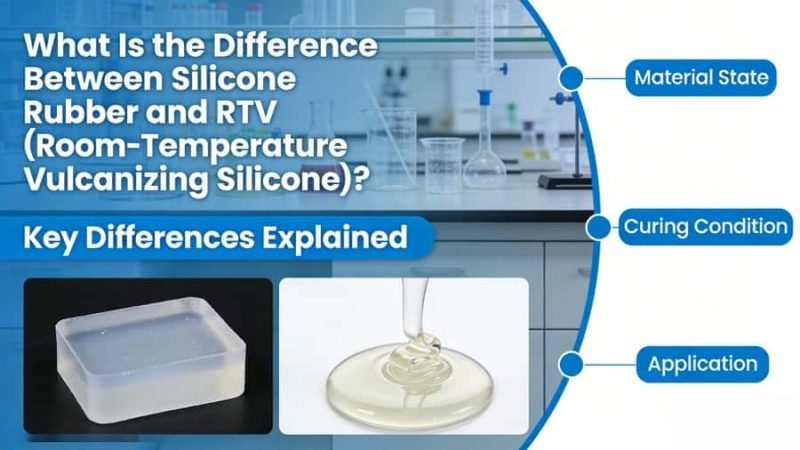
Silicone materials are widely used across industries such as electronics, construction, automotive, food processing, and medical devices. However, many engineers, procurement specialists, and manufacturers often encounter confusion when distinguishing between silicone rubber and RTV silicone. This misunderstanding can lead to incorrect material selection, resulting in performance failures such as poor sealing, insufficient mechanical strength, or improper curing conditions. Choosing the wrong silicone type can significantly affect product reliability, manufacturing efficiency, and long-term durability.
In short, RTV (Room-Temperature Vulcanizing silicone) is actually a type of silicone rubber designed to cure at room temperature without heat. While “silicone rubber” is a broad category that includes multiple curing systems (heat-cured, liquid silicone rubber, RTV, etc.), RTV specifically refers to silicone formulations that vulcanize under ambient conditions through moisture or catalyst reactions. Therefore, RTV and silicone rubber are related but not always interchangeable, because their curing mechanisms, mechanical properties, and application environments can differ significantly.
To understand whether these materials can replace each other in real applications, it is necessary to examine their chemical structure, curing mechanisms, processing methods, mechanical performance, and industrial use cases. A detailed technical comparison helps engineers and purchasing professionals choose the correct silicone material for their specific applications.
RTV silicone is a completely different material from silicone rubber.False
RTV silicone is actually a subtype of silicone rubber that cures at room temperature through moisture or catalyst reactions.
All silicone rubber requires heat curing during processing.False
Many silicone rubbers, especially RTV systems, are designed to cure at room temperature without external heating.
Understanding Silicone Rubber: The Broad Material Family
Silicone rubber is an elastomeric polymer material based on a silicon-oxygen backbone (Si-O-Si), which provides exceptional stability under extreme temperatures, UV exposure, moisture, and chemical environments. Unlike organic rubber, which relies on carbon-carbon chains, silicone rubber’s inorganic backbone gives it superior thermal resistance and long-term aging performance. As a result, silicone rubber has become a critical material across advanced industries.
At the molecular level, silicone rubber consists primarily of polydimethylsiloxane (PDMS) or modified polysiloxanes, combined with reinforcing fillers such as fumed silica and curing agents. These formulations can be processed into elastomers using various curing systems, leading to several major silicone rubber categories.
Major Types of Silicone Rubber
| Type | Full Name | Curing Method | Typical Applications |
|---|---|---|---|
| HTV | High Temperature Vulcanizing Silicone | Heat curing | Automotive parts, industrial gaskets |
| LSR | Liquid Silicone Rubber | Injection molding with heat | Medical devices, baby products |
| RTV-1 | One-component RTV | Moisture curing | Sealants, adhesives |
| RTV-2 | Two-component RTV | Catalyst curing | Mold making, potting |
These classifications show that RTV silicone belongs to the silicone rubber family, but its processing characteristics differ significantly from traditional heat-cured silicone elastomers.
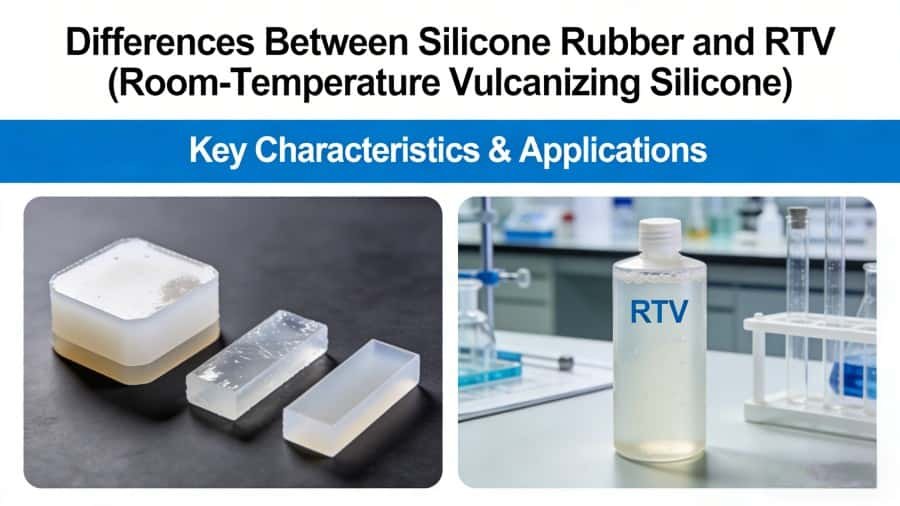 what is the difference between silicone rubber rtv
Key Properties of Silicone Rubber
| Property | Typical Range | Industrial Benefit |
|---|---|---|
| Temperature Resistance | −60°C to 250°C | Extreme environment performance |
| Hardness (Shore A) | 10–80 | Flexible design options |
| Electrical Insulation | Excellent | Used in electronics |
| UV Resistance | Very high | Outdoor durability |
| Chemical Stability | High | Long service life |
Because of these properties, silicone rubber is widely used in automotive seals, aerospace components, medical tubing, food-grade equipment, and electronic insulation.
What Exactly Is RTV Silicone?
RTV stands for Room-Temperature Vulcanizing silicone, referring to silicone systems that cure at ambient temperature rather than requiring elevated heat. This curing process occurs through chemical cross-linking reactions, typically triggered by moisture in the air or by mixing two components containing catalysts.
There are two primary RTV categories.
RTV-1 (One-Component Systems)
RTV-1 silicones cure when exposed to atmospheric moisture. The curing reaction releases small molecules such as acetic acid, alcohol, or oxime depending on the formulation.
Common RTV-1 types include:
| RTV-1 Type | Byproduct | Typical Uses |
|---|---|---|
| Acetoxy cure | Acetic acid | Construction sealants |
| Oxime cure | Ketoxime | Electronics protection |
| Alkoxy cure | Alcohol | Neutral sealants |
RTV-1 products are commonly sold as silicone sealants, adhesives, and gasket makers.
RTV-2 (Two-Component Systems)
RTV-2 silicones require mixing base silicone polymer with a curing agent. Once mixed, they undergo cross-linking reactions and cure at room temperature.
| RTV-2 Type | Catalyst | Common Applications |
|---|---|---|
| Condensation cure | Tin catalyst | Mold making |
| Addition cure | Platinum catalyst | Medical and precision molding |
RTV-2 silicones are widely used in industrial molds, electronics potting, encapsulation, and prototyping.
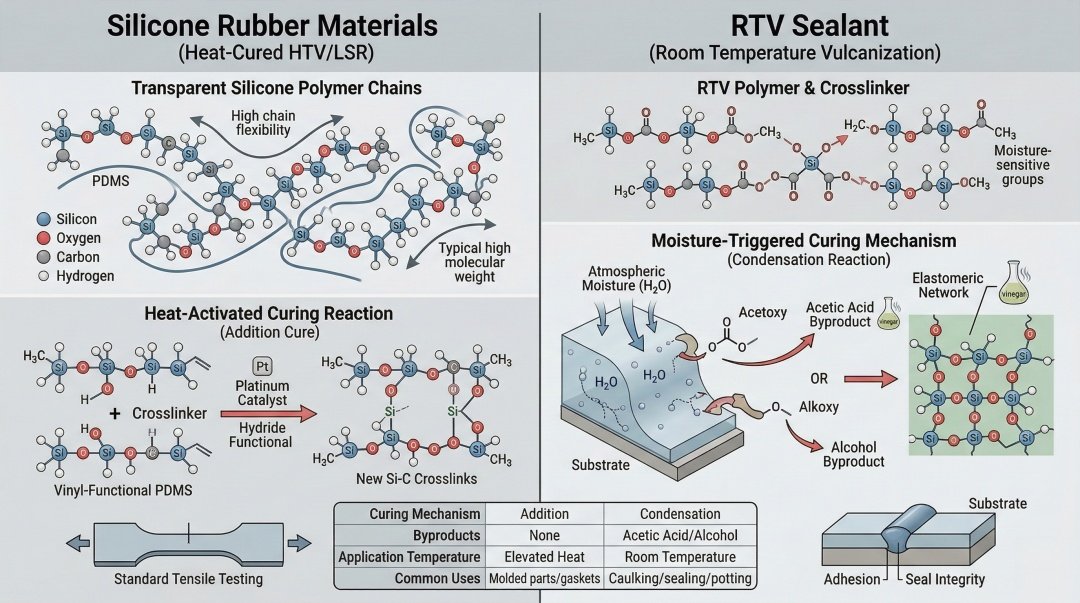 silicone rubber materials and rtv sealant comparison
Key Differences Between Silicone Rubber and RTV Silicone
Although RTV belongs to the silicone rubber family, several major differences affect how they are used.
| Factor | Silicone Rubber (General) | RTV Silicone |
|---|---|---|
| Category | Broad material class | Specific subtype |
| Curing Temperature | Usually heat cured | Room temperature |
| Processing | Compression or injection molding | Pouring, coating, sealing |
| Equipment | Industrial molds required | Minimal equipment |
| Production Scale | Mass production | Maintenance and repair |
From an engineering perspective, RTV silicones are optimized for convenience and field applications, while traditional silicone rubber types are optimized for large-scale manufacturing and mechanical performance.
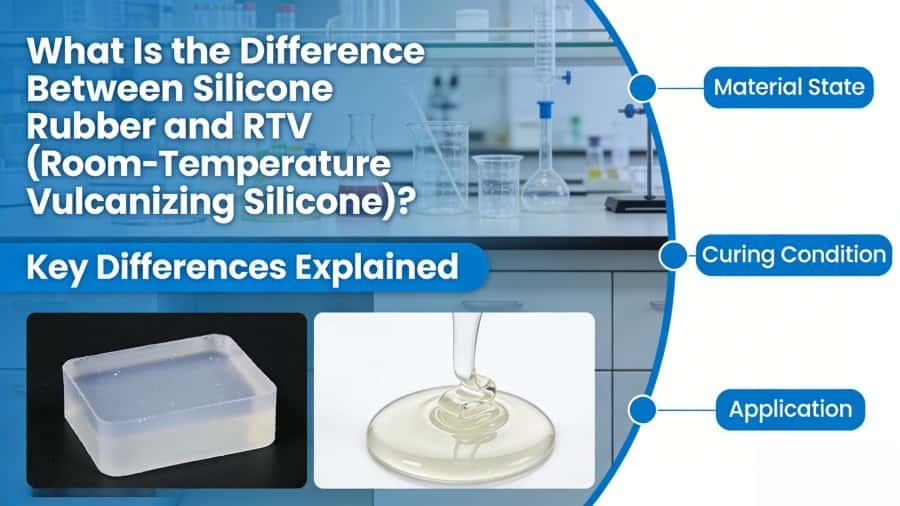 the difference between silicone rubber rtv
Mechanical and Physical Performance Comparison
The choice between RTV and other silicone rubber systems often depends on required mechanical properties.
| Property | RTV Silicone | Heat-Cured Silicone |
|---|---|---|
| Tensile Strength | Medium | Higher |
| Tear Resistance | Medium | High |
| Elastic Recovery | Excellent | Excellent |
| Production Efficiency | Low | High |
| Equipment Cost | Low | High |
RTV silicones typically provide excellent flexibility and adhesion, but molded silicone rubbers often offer superior strength and durability.
Typical Industrial Applications
RTV Silicone Applications
RTV materials are widely used where on-site curing and ease of application are critical.
Common uses include:
• Electronic component potting
• Waterproof sealing
• Construction joints
• Automotive gasket replacement
• Mold making for prototyping
Heat-Cured Silicone Rubber Applications
Industrial silicone rubber is preferred when high mechanical strength and mass production are required.
Typical applications include:
• Automotive engine seals
• Medical silicone components
• Food processing gaskets
• Electrical insulation parts
• Aerospace components
Can Silicone Rubber and RTV Be Used Interchangeably?
In many cases, they cannot be directly substituted, even though they belong to the same material family.
Key factors that determine interchangeability include:
| Decision Factor | RTV Suitable | Heat-Cured Silicone Suitable |
|---|---|---|
| Field repair | ✔ | ✘ |
| High-volume manufacturing | ✘ | ✔ |
| Complex molded parts | ✘ | ✔ |
| Simple sealing tasks | ✔ | ✔ |
| Structural mechanical loads | ✘ | ✔ |
For example:
• RTV sealants are ideal for temporary or flexible sealing tasks.
• Heat-cured silicone is required for precision molded components with strict mechanical requirements.
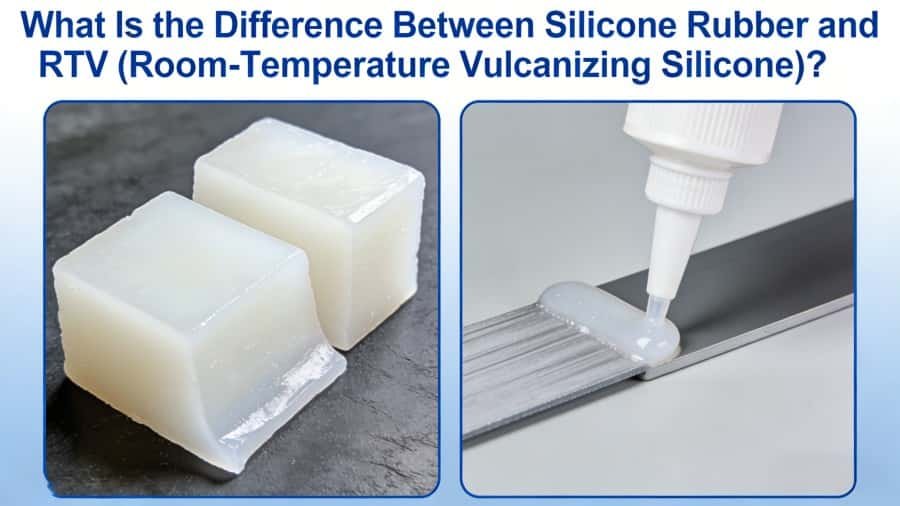 what is the difference between silicone rubber and rtv
How to Choose the Right Silicone Material
When selecting between RTV silicone and other silicone rubbers, engineers should evaluate several technical criteria.
Selection Checklist
- Operating temperature range
- Mechanical strength requirements
- Production volume
- Curing conditions and equipment
- Environmental exposure (UV, chemicals, moisture)
- Regulatory requirements (food grade, medical grade)
Proper material selection can significantly improve product reliability, manufacturing efficiency, and lifecycle performance.
Conclusion
Silicone rubber and RTV silicone are closely related but not identical materials. Silicone rubber represents a broad category of elastomers, while RTV silicone refers specifically to formulations that cure at room temperature through chemical reactions. Although both share excellent properties such as temperature resistance, flexibility, and chemical stability, their curing methods, processing techniques, and mechanical characteristics differ significantly. Because of these differences, they are not always interchangeable, and engineers should select the appropriate material based on application requirements, production methods, and performance expectations.
Contact Silicon Chemical for Professional Silicone Material Solutions
If you are selecting silicone materials for industrial manufacturing, electronics protection, sealing applications, or chemical processing, choosing the correct formulation is critical for performance and reliability.
Silicon Chemical specializes in silicone raw materials, silicone oils, silicone intermediates, and advanced organosilicon chemicals for global industrial customers.
For product information, technical consultation, or bulk supply inquiries:
Silicon Chemical
Website: https://www.siliconchemicals.com
Email: Inquiry@siliconchemicals.com