China to Cancel Export Tax Rebates on Certain Silicone Products Starting April 1, 2026
I. Policy Background: Why Was the Rebate Cancelled?
1. The Industry Is Trapped in “Involutionary” Price Competition
In recent years, China’s silicone industry has rapidly expanded production capacity thanks to its cost advantages. According to data from BaiChuan YingFu, China’s silicone intermediate production capacity increased from 1.675 million tons per year in 2020 to 3.44 million tons per year in 2024, representing a compound annual growth rate (CAGR) of 19.71%.
Such rapid capacity expansion has created periodic supply-demand mismatches, leading to dramatic price fluctuations. For example:
- Silicone DMC prices exceeded 60,000 RMB/ton in October 2021
- By June 2024, prices fell below 11,000 RMB/ton, reaching a historical low
This cycle of “capacity expansion → price decline → profit erosion” has significantly damaged industry profitability.
2. China Already Holds a Dominant Global Position, Making Export Subsidies Unnecessary
China has become the world’s largest producer of silicones, with primary-form polysiloxane capacity accounting for more than 70% of global production.
Meanwhile, traditional Western industry giants, particularly in Europe and the United States (such as Dow), have been gradually reducing production capacity. Against this backdrop, Chinese silicone manufacturers already hold an unshakable position in the global market.
Continuing to subsidize exports through fiscal support effectively means subsidizing overseas consumers, which is no longer considered appropriate.
3. Responding to International Trade Pressure
Over the past few years, Western countries have frequently raised concerns about “overcapacity” and accused Chinese products of dumping.
For example:
- Since 2018, the United States has imposed 30% tariffs on photovoltaic products
- In 2025, an additional 50% tariff under Section 301 was added
Eliminating export tax rebates will increase export prices, which may help ease trade tensions and respond to Western accusations that Chinese products benefit from excessive government subsidies.
4. Implementation of the Government’s Anti-“Involution” Policy
At the Central Economic Work Conference held at the end of 2024, the government emphasized the need to “comprehensively address involutionary competition.”
The cancellation of export tax rebates in industries such as silicones and photovoltaics is intended to curb low-price export competition and excessive capacity, guiding industries toward higher-quality development.
II. Key Policy Details
1. Policy Announcement
On January 8, 2026, the Ministry of Finance and the State Taxation Administration jointly issued the announcement titled:
“Notice on Adjusting Export Tax Rebate Policies for Photovoltaic and Other Products.”
2. Effective Date
The policy will officially take effect on April 1, 2026.
3. Products Affected
Products classified under HS Code 39100000 — Primary-form polysiloxanes will no longer receive export tax rebates.
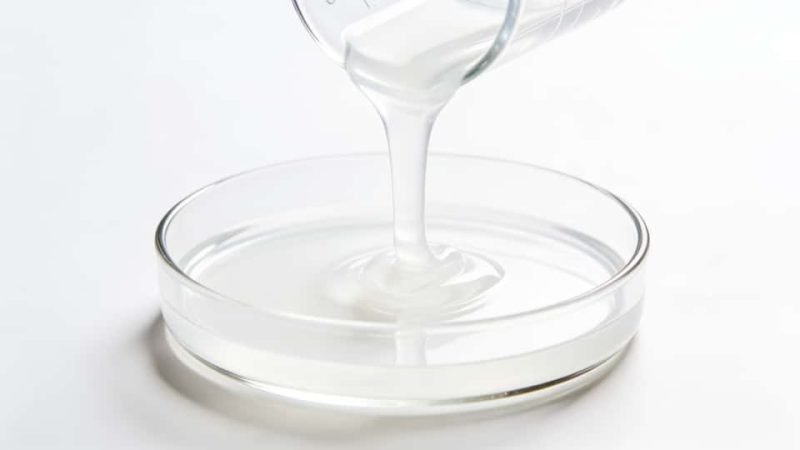
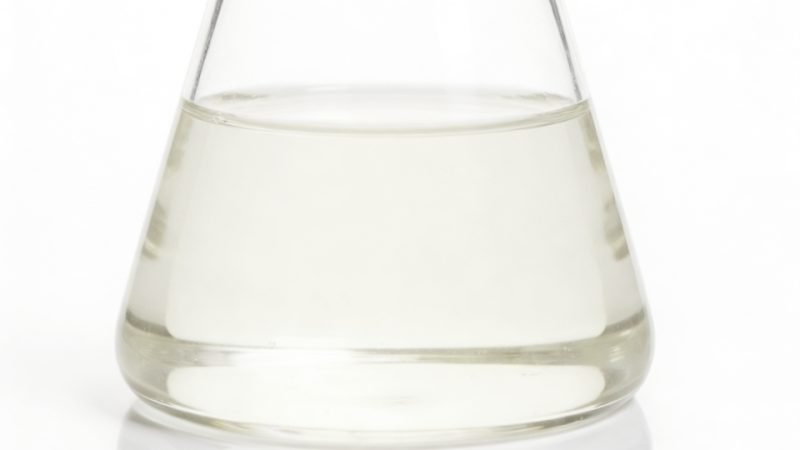
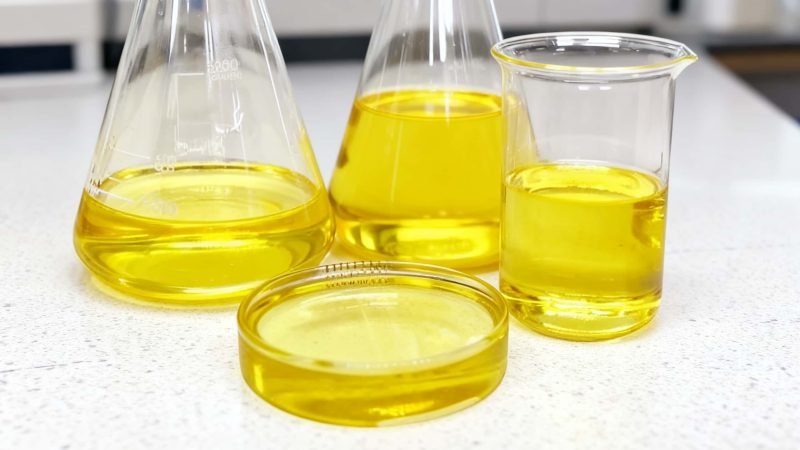
Primary-form polysiloxanes are the core upstream raw materials for nearly all silicone downstream products, including:
- 107 Silicone Rubber
- 110 Silicone Rubber
- Methyl Silicone Oil
- Vinyl Silicone Oil
- Hydrogen Silicone Oil
- Silicone Compounds (Mixed Rubber)
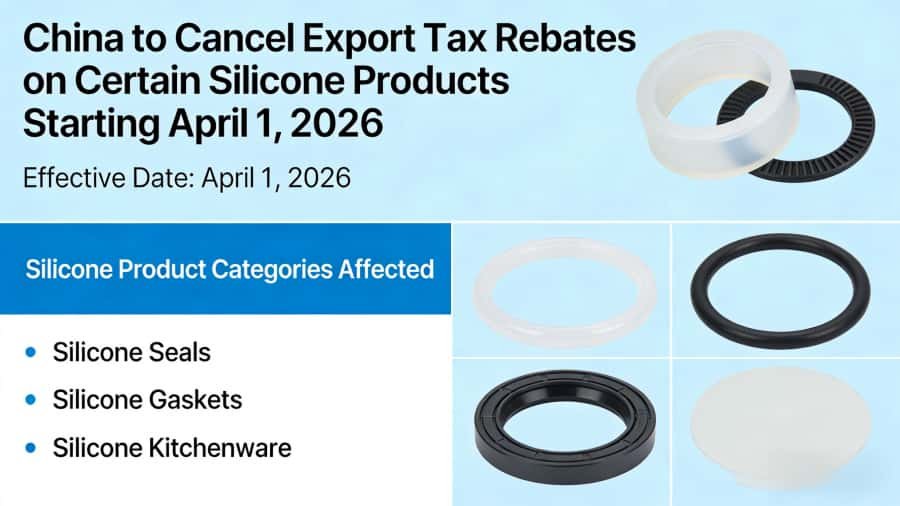 china to cancel export tax rebates on certain silicone products starting april 1 2026
4. Previous Rebate Rate
Previously, primary-form polysiloxanes were eligible for a 13% VAT export tax rebate.
5. Policy Determination Criteria
Eligibility will be determined based on the export date listed on the customs declaration form.
- If the goods complete customs clearance before April 1, 2026, the original rebate policy still applies.
- Shipments exported after the effective date will no longer qualify for the rebate.
III. Short-Term Market Impact (Window Period & Adjustment Phase)
1. “Rush-to-Export” Effect (January–March 2026)
During the transition period before the policy takes effect, the market has experienced a short-term rally driven by accelerated exports.
Current market trends include:
- Silicone DMC prices in China rising to 13,700–14,000 RMB/ton
- Some manufacturers’ production schedules already filled through early February
- Temporary tight supply conditions
Downstream companies are expected to stockpile materials in advance, causing demand to peak around March.
2. Direct Cost Increase After April 1
Taking 107 silicone rubber as an example:
- Current Chinese market price: ~14,200 RMB/ton
- Loss of 13% export rebate
Export costs will increase by approximately:
~1,600 RMB per ton
For manufacturers already operating on thin margins, this represents a significant financial challenge.
3. Risk of Demand Pull-Forward
Many analysts expect that after the pre-policy export rush ends around March, the market may face temporary demand exhaustion.
This could create supply-demand imbalances and downward price pressure.
The real test will occur after April 1, when companies must cope with:
- Higher export costs
- Temporary demand gaps
IV. Medium- and Long-Term Industry Impact
1. Industry Polarization Will Accelerate
The policy will likely accelerate industry consolidation.
Small and Specialized Manufacturers
These companies will face the greatest pressure:
- Unable to absorb higher costs
- Forced to choose between raising prices and losing market share or cutting prices and sacrificing profits
Integrated Industry Leaders
Large companies with integrated supply chains—such as Hoshine Silicon Industry—will have significant advantages.
Their coal–power–silicon integrated supply chain, self-owned power generation, and internal silicon metal production allow them greater flexibility in pricing and cost control.
2. Driving the Industry Toward Higher Value Products
The policy aims to shift resources away from low-value, commoditized products toward high-value specialty silicone products.
This will encourage companies to accelerate development in areas such as:
- Electronic-grade silicones
- Medical-grade silicones
- Specialty functional silicone oils
3. Reshaping the Global Silicone Supply Landscape
Global polysiloxane capacity outside China has been shrinking.
For example:
- Dow plans to close its 145,000-ton basic siloxane plant in Barry, UK by 2026
- This will reduce European local capacity by nearly one-third
As the world’s largest producer, China’s dominance in polysiloxanes is unlikely to be challenged.
This situation may allow Chinese manufacturers to transfer part of the cost increase to overseas buyers through higher export prices.
4. Increasing Industry Concentration
After the current adjustment period, the industry is expected to evolve into a healthier and more resilient ecosystem.
Market concentration will increase, with resources shifting toward companies that possess:
- technological advantages
- cost competitiveness
- global operational capabilities
V. Impact on the Textile Dyeing and Finishing Industry
1. Rising Costs for Silicone Textile Auxiliaries
Silicones are important additives widely used in textile dyeing and finishing processes, including:
- Fabric softeners (amino [silicone oils](https://siliconchemicals.com/silicone-oil/), block silicone oils)
- Waterproofing agents
- Defoamers
- Smoothing agents
Primary polysiloxanes (such as 107 rubber and methyl silicone oil) are the key raw materials for these auxiliaries.
Although the policy directly affects exports, domestic prices may also rise due to supply-demand adjustments.
2. Silicone Prices Are Already Rising
Since November 2025, silicone DMC prices have been adjusted upward five times, with a total increase of up to 3,300 RMB/ton.
Beginning March 2026, industry participants agreed to:
- Increase all silicone products by 300 RMB/ton
- Raise the mainstream DMC price to around 14,300 RMB/ton
Meanwhile, supply continues to tighten.
Production reduction measures between March and May 2026 will increase from 30% to 35%.
3. Recommendations for Dyeing Factories
Combined with previously discussed dye price increases, the rising cost of silicone auxiliaries will create additional pressure for dyeing factories.
Recommended actions include:
Strategic Inventory During the Policy Window
Stockpile silicone auxiliaries before April 1 to mitigate cost increases.
Selecting Stronger Suppliers
Choose auxiliary manufacturers with upstream raw material integration.
For example, RANGER’s Hydrosoft silicone oil series emphasizes low cyclic environmental performance, although its raw material costs are also influenced by market conditions.
Monitoring Alternative Technologies
Track developments in non-silicone finishing technologies, such as polyurethane-based softeners.
VI. Timeline Summary
| Time | Event |
|---|---|
| Nov 2024 | Export tax rebate for photovoltaic products reduced from 13% to 9% (policy signal) |
| Dec 2025 | Silicone industry begins 30% production cuts to stabilize prices |
| Jan 8, 2026 | Ministry of Finance and State Taxation Administration announce cancellation of silicone export rebates |
| Jan–Mar 2026 | Policy transition period; rush-to-export drives price increases |
| Mar 2, 2026 | Industry meeting: prices raised another 300 RMB/ton; production cuts increased to 35% |
| Apr 1, 2026 | Policy officially takes effect; export rebate for primary polysiloxanes (previously 13%) cancelled |
| Mar–May 2026 | 35% production reduction continues |
| After Q2 2026 | Cost pressure and demand pull-forward accelerate industry restructuring |
Conclusion
The cancellation of export tax rebates for silicone products represents a strong supply-side reform measure aimed at addressing excessive price competition and structural overcapacity.
In the short term, the period before April 1 represents a key inventory window.
In the long term, the policy will likely accelerate industry consolidation and push manufacturers toward higher-value products.
For the textile dyeing and finishing sector, the trend of rising silicone auxiliary costs is expected to continue, making it essential for factories to plan their supply chains and procurement strategies in advance.