Structural Pressure or Cyclical Adjustment? A Strategic Review of China’s Silicone Industry
China’s petrochemical and chemical industry remains a foundational pillar of the national economy, supporting industrial security, energy stability, and supply chain resilience. Recently, the China Petroleum and Chemical Industry Federation (CPCIF), together with industry associations and consulting institutions, conducted a forward-looking capacity and demand assessment covering selected chemical raw materials and advanced chemical products.
The findings identified 15 products facing potential supply-demand imbalance risks. Among them, 12 products were classified as high risk, including:
- Propylene oxide
- Epichlorohydrin
- Acrylonitrile
- PVC
- Chlorinated paraffin
- Polysiloxane (organosilicon monomer)
- ABS
- PBAT
- Polyether polyol
- BDO
- Nylon 66
- Vinyl acetate
An additional three products — polypropylene, soda ash, and titanium dioxide — were classified as relatively high risk.
The inclusion of polysiloxane has drawn significant attention across the silicone value chain.
What Is Polysiloxane?
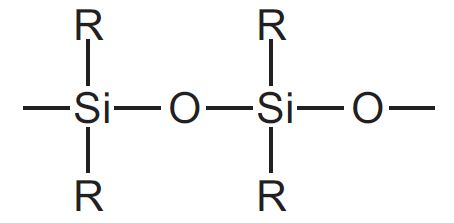
Polysiloxane (organosilicon polymer) is a high-molecular material characterized by a Si–O backbone structure, which provides:
- Outstanding thermal stability
- Weather resistance
- Electrical insulation properties
- Chemical inertness
Based on form and application, silicone materials are broadly divided into:
- Silicone Oils
- Silicone Resins
- Silicone Rubbers
These materials are widely used in:
- Industrial manufacturing
- Textiles
- Construction
- Electronics
- Renewable energy
- Medical and healthcare sectors
Capacity Overview: Entering a Stabilization Phase
1️⃣ Total Installed Capacity
By the end of 2025:
- Nominal monomer capacity remained around 7.0 million tons, unchanged from 2024
- After excluding long-term shutdown facilities in Shanxi and Shandong, effective capacity is approximately 6.75 million tons
Notably, no new capacity was commissioned in 2025.
2️⃣ Output Performance
National polysiloxane (monomer) production in 2025 reached:
- 5.4 million tons
Despite no new 2025 additions, production growth in early 2025 benefited from:
- Capacity additions commissioned in late 2024
- Particularly Q3–Q4 2024 concentrated start-ups
However, under the industry’s emerging “anti-involution” consensus (disciplined competition and rational production), producers implemented:
- Periodic load reductions
- Emission controls
- Controlled output strategies
As a result, annual production growth moderated.
3️⃣ Capacity Utilization Improvement
One of the most important structural signals is the improvement in utilization rates.
Using available data:
- Output: 5.4 million tons
- Effective capacity: 6.75 million tons
The industry’s utilization rate rebounded to approximately 80% in 2025.
This improvement reflects:
- Completion of ramp-up cycles for 2024-added capacity
- Technical upgrades and process optimization
- Improved operational stability
From a structural standpoint, an 80% utilization level suggests that the industry is gradually moving away from severe idle capacity conditions.
Overcapacity Risk: Structural or Cyclical?
The designation of “high-risk overcapacity” does not necessarily indicate immediate structural collapse. Instead, it reflects:
- Forward-looking supply pipeline concerns
- Weakness in certain downstream sectors
- Five-year capacity projections exceeding conservative demand scenarios
Key Risk Factors:
1️⃣ Concentrated Historical Expansion
Large-scale capacity additions between 2022–2024 significantly elevated the industry base.
2️⃣ Downstream Volatility
Construction demand remains seasonally weak. Export-driven segments face policy uncertainties.
3️⃣ Policy Sensitivity
Export tax rebate adjustments can temporarily distort demand.
Positive Structural Signals
Despite being listed in the risk category, several data points suggest gradual normalization rather than deterioration:
✔ No new capacity in 2025
✔ Rising utilization to ~80%
✔ Active production discipline
✔ Technology upgrades improving efficiency
✔ Stable demand from renewable energy and EV sectors
The renewable energy sector (solar modules, EV sealing systems, battery insulation) continues to absorb high-performance silicone materials, supporting medium-term demand growth.
Strategic Implications for Industry Participants
For Monomer Producers:
- Avoid aggressive new capacity announcements
- Focus on operational efficiency and cost leadership
- Enhance downstream integration
For Downstream Silicone Manufacturers:
- Secure long-term raw material supply agreements
- Shift toward specialty and high-margin silicone grades
- Increase export market diversification
For Investors:
- Monitor effective capacity versus nominal capacity
- Track utilization trends rather than headline capacity numbers
- Assess differentiated producers with strong cost advantages
Conclusion: A Phase of Rational Consolidation
Polysiloxane’s inclusion on the overcapacity risk list signals heightened policy attention, not imminent structural crisis.
The industry has entered a phase characterized by:
- Stabilized capacity expansion
- Improved utilization rates
- Slowing output growth
- Strengthening operational discipline
At approximately 80% utilization and no new capacity release in 2025, China’s silicone monomer sector appears to be transitioning from rapid expansion toward rational consolidation.
In strategic terms, this represents a normalization cycle rather than uncontrolled oversupply.
The next 2–3 years will determine whether disciplined production and downstream structural growth can fully rebalance the industry and sustainably remove overcapacity concerns.