A ceramic veneer debonds three months after placement. The lab work is flawless, the cementation protocol looked right, and yet the restoration fails at the adhesive interface — not through the ceramic, not through the cement, but exactly at the boundary where porcelain met resin. That failure mode is almost always a silane problem: absent, degraded, or incorrectly applied coupling chemistry. For dental practices and materials procurement teams, unbonded restorations mean remakes, chair time, patient dissatisfaction, and liability. The fix is not a better cement. It is understanding what silane actually does at the molecular level and how to control it.
Silane is used in dentistry primarily as a coupling agent that chemically bridges ceramic or glass-based restorative materials to resin cements and composite bonding agents. Applied to etched porcelain, lithium disilicate, or feldspathic ceramic surfaces, a silane primer — typically containing 0.5% to 5% silane by weight in solution — forms covalent bonds with silanol groups on the ceramic and methacrylate groups in the resin, converting a weak mechanical interface into a durable chemical bond with shear bond strength in the 15–50 MPa range depending on ceramic type, etching protocol, and silane quality.
What makes silane chemistry genuinely interesting — and practically consequential — is how little of the molecule is actually doing the work, and how sensitive that work is to water, temperature, shelf age, and application technique. The gap between a correctly silaned surface and a contaminated or hydrolyzed one is the gap between a restoration that lasts a decade and one that debonds before the patient’s next recall appointment.
The Molecular Mechanism: How Silane Creates a Covalent Bond Between Ceramic and Resin
The chemistry here is not complicated once you see the molecule clearly. 3-methacryloxypropyltrimethoxysilane — universally abbreviated MPS or gamma-MPS — is the workhorse silane in virtually every dental ceramic primer on the market. Its power comes entirely from its bifunctional architecture: one end of the molecule is designed to react with inorganic ceramic surfaces, the other with organic resin matrices. Remove either functional group and the molecule becomes useless as a coupling agent.
The MPS Molecule: Two Ends, One Job
On the inorganic side, MPS carries a trimethoxysilyl group — Si(OCH₃)₃. On the organic side, it carries a methacrylate group (CH₂=C(CH₃)COO–) connected through a three-carbon propyl spacer. That spacer is not arbitrary; it provides enough molecular flexibility to allow both ends to orient toward their respective reaction partners simultaneously. The Si–O–C bonds in the methoxy groups are labile by design — they are meant to be sacrificed during hydrolysis.
Hydrolysis, Condensation, and Covalent Attachment to Ceramic
When MPS is dissolved in an acidic ethanol-water solution — typical primers sit at pH 4 to 5, often adjusted with acetic acid — the methoxy groups hydrolyze rapidly to silanols: Si(OCH₃)₃ → Si(OH)₃, releasing methanol as a byproduct. This step is rate-sensitive. Too high a pH and hydrolysis stalls; too low and condensation between silanol groups accelerates in solution, forming oligomers before the silane ever reaches the ceramic surface. Keeping pH in the 4–5 window gives you reactive monomeric or low-oligomer silanols that remain mobile in solution.
Once applied to a feldspathic porcelain, lithium disilicate, or zirconia surface, the silanols encounter surface hydroxyl groups (Si–OH on silica-based ceramics). A condensation reaction follows: the silanol from MPS reacts with the surface hydroxyl, eliminating water and forming a covalent Si–O–Si bond. On silica-rich ceramics this reaction is favorable and fast at room temperature. Zirconia — being largely ZrO₂ with few surface hydroxyls — is a separate challenge requiring surface pre-treatment or specialized silanes, which is why standard MPS primers routinely underperform on zirconia without additional preparation steps.
Completing the Bridge: Free-Radical Co-polymerization with Resin
With the silane now covalently anchored to the ceramic, the methacrylate group projects outward into the resin-facing environment. During light-cure or dual-cure of the luting composite, free radicals generated by the photoinitiator attack the C=C double bond of the methacrylate group. MPS co-polymerizes directly into the resin network — whether Bis-GMA, UDMA, or TEGDMA based — becoming a structural part of the polymer rather than sitting at the interface as a weak boundary layer. That is the molecular bridge: ceramic ← Si–O–Si → MPS → methacrylate → resin polymer.
Silane treatment of ceramic surfaces can increase shear bond strength from the 2–8 MPa range (untreated) to 15–50 MPa, depending on ceramic type, silane concentration, and curing protocol.True
This range is consistent with peer-reviewed bond strength testing across multiple ceramic substrates and MPS concentrations reported in dental materials literature. The wide range reflects genuine variability across silica-based vs. zirconia ceramics and differing lab protocols.
Formulation Variables That Determine Whether the Chemistry Works
Silane concentration in the primer solution typically runs 0.5% to 5% by weight, with the optimal point depending on substrate porosity, application method, and whether the product is a single-bottle or two-bottle system. Ethanol-to-water ratio governs silane solubility and evaporation rate after application — too little water and hydrolysis is incomplete; too much and surface condensation competes with surface bonding. Activation time (the period between mixing and application in two-bottle systems) directly controls how far hydrolysis has progressed before you apply the primer.
Monolayer vs. Multilayer Deposition: Why More Is Not Better
This is where many clinical and manufacturing errors originate. A single well-ordered monolayer of MPS — each molecule standing upright, silanol end bonded to ceramic, methacrylate end exposed — provides maximum resin bonding sites per unit area. When excess silane is applied, additional layers stack on top of the first via Si–O–Si condensation between silanol groups. These upper layers have no direct covalent attachment to the ceramic; they bond only to the layer below through siloxane linkages that are weaker than the ceramic–silane interface itself. The result is a cohesively weak polysiloxane multilayer that becomes the preferred failure plane under load. Studies consistently show that gentle air-thinning or solvent evaporation after silane application — removing excess material before the resin is placed — yields stronger bonds than thick, pooled silane films.
Dental Substrates That Require Silane Treatment: Ceramics, Composites, and Hybrid Materials
Not every dental material responds to silane the same way. The silica content, surface energy, and microstructural porosity of a substrate determine whether standard 3-methacryloxypropyltrimethoxysilane (MPS) alone is sufficient, whether a modified protocol is needed, or whether silane without surface preparation is essentially wasted chemistry. Getting this wrong means bond failures at 6–18 months — exactly the kind of clinical problem that generates callbacks, remakes, and lost patient confidence.
Feldspathic Porcelain and Leucite-Reinforced Glass-Ceramics
Feldspathic porcelain and leucite-reinforced materials (the leucite-reinforced pressed ceramics familiar to dental labs) are the benchmark substrates for silane bonding. Their relatively open silica network exposes a high density of silanol groups after hydrofluoric acid (HF) etching — typically 9–10% HF for 60–120 seconds, though concentration and time vary by manufacturer specification. The etched surface presents a honeycomb-like microporous topography that gives silane both mechanical interlocking and an abundance of reactive Si-OH sites.
Shear bond strength on properly etched and silanated feldspathic porcelain routinely reaches 25–50 MPa, compared with 2–8 MPa on unetched, untreated surfaces. The actual figure depends on resin cement type, silanation dwell time, and whether the primer was heat-activated. These substrates are used as positive controls in most laboratory bond-strength studies for good reason: the chemistry works reliably when the protocol is followed.
Lithium Disilicate Glass-Ceramics
Lithium disilicate materials contain a different crystalline phase dispersed through a glassy silica matrix. They remain highly responsive to MPS silane, but the etching protocol differs. HF concentration is typically lower (around 5%) and exposure time shorter than for feldspathic porcelain — over-etching weakens the surface by dissolving too much of the glass matrix. Bond strengths in the 20–45 MPa range are achievable with correct protocol. The silane chemistry is identical to feldspathic porcelain; only the surface preparation step changes.
Zirconia: Where Standard MPS Silane Fails
Yttria-stabilized tetragonal zirconia polycrystal (Y-TZP) is the substrate that catches clinicians and formulators off guard. Zirconia contains near-zero free silica — its crystal structure offers almost no silanol groups for MPS silane to condense onto. Applying a standard silane primer to an unmodified zirconia surface produces bond strengths barely above untreated controls.
Standard MPS silane alone is sufficient for bonding to zirconiaFalse
Y-TZP contains insufficient silica content and silanol group density for MPS silane to form meaningful covalent bonds. Effective zirconia bonding requires either a 10-MDP phosphate monomer primer that coordinates with zirconium oxide, tribochemical silica coating (Rocatec/CoJet systems) to deposit a silica-rich layer before silane application, or purpose-formulated MDP/MPS combination primers. Using MPS silane alone on unmodified zirconia is a documented cause of early cement failure.
Two validated approaches exist: tribochemical silica coating (abrasive particles deposit amorphous silica onto the surface, which MPS can then bond to), or application of 10-MDP-containing adhesives that form ionic bonds directly with zirconium oxide. Some formulations combine both chemistries.
Resin Composites and Fiber-Reinforced Frameworks
Aged composite surfaces lose bond receptivity because the organic matrix degrades and silica filler particles become contaminated. Airborne-particle abrasion with 50-micron alumina followed by silane reactivation restores access to the embedded silica fillers. Glass fiber posts and fiber-reinforced composite frameworks follow the same logic — silane targets the glass fiber component, and surface abrasion removes the resin-rich surface layer that would otherwise block access.
Silane concentration in these reactivation primers typically sits in the lower end of the 0.5–5% by weight range used in dental systems, because excessive silane can leave an inhibitory polysiloxane layer on a less porous surface.
Hybrid Ceramics and Emerging Substrates
Polymer-infiltrated ceramic networks (PICN) and resin-nano ceramics present a dual-phase bonding challenge: the ceramic phase needs silane, and the polymer phase benefits from resin-compatible chemistry. Current evidence supports combined protocols — silane for the silica phase plus a universal adhesive to address both components. Lithium silicate materials reinforced with dispersed zirconia particles require the same attention to zirconia content that applies to pure Y-TZP; if the zirconia phase is continuous rather than dispersed, MDP chemistry should be incorporated.
The practical takeaway for formulators is straightforward: silane product selection starts with silica content, not with brand or restoration type.
Clinical Applications: Crowns, Veneers, Inlays, Onlays, Implant Prosthetics, and Orthodontics
Indirect Ceramic Restorations: The Core Chairside Bonding Protocol
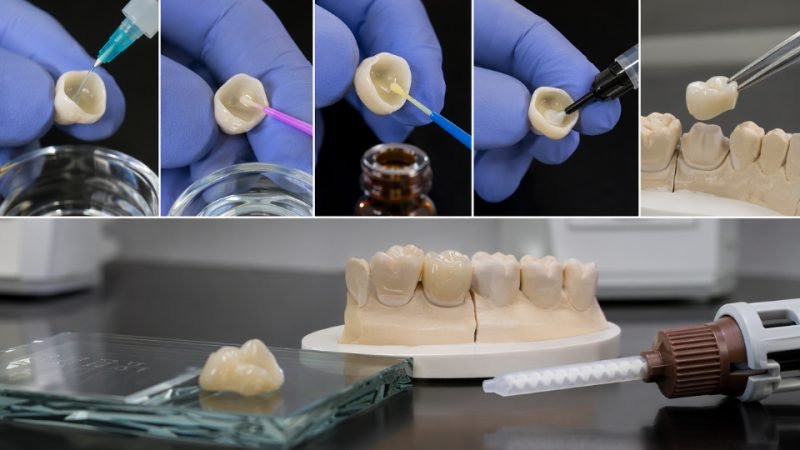
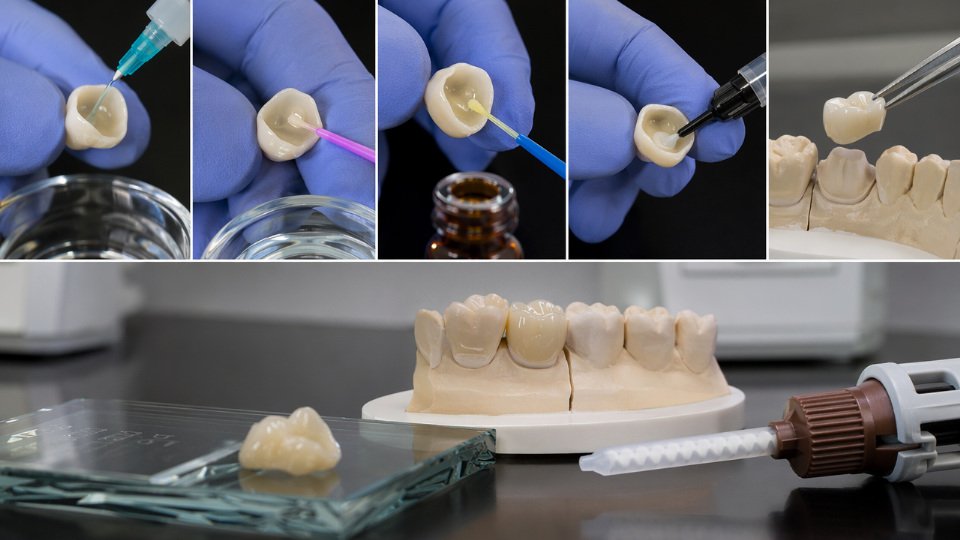
Inlays, onlays, veneers, and full-coverage crowns share the same fundamental bonding sequence, and every step has a consequence if skipped or mistimed. After try-in and occlusal verification, the ceramic fitting surface is etched with 4–9% hydrofluoric acid (HF) for 20–60 seconds — the exact duration depending on ceramic type: lithium disilicate requires roughly 20 seconds, while feldspathic porcelain typically needs 60 seconds to develop adequate surface microporosity. Under-etching leaves insufficient surface area; over-etching can fracture the crystalline network and paradoxically reduce bond strength.
After rinsing thoroughly — at least 30 seconds under water — the surface is dried with clean, oil-free air. Residual moisture does not simply dilute the silane; it competes directly with the hydrolysis reaction described in earlier sections, reducing the density of reactive silanol groups available to condense onto the ceramic surface. Silane primer is then applied in a single coat or two light coats, and here the timing benchmark matters: a volatile-solvent silane should be allowed to react for 60–90 seconds before drying. Light-assisted drying with a gentle warm air stream or a brief photopolymerization lamp pass accelerates solvent evaporation and promotes siloxane condensation without overheating the ceramic. Resin cement is applied immediately after — delay beyond roughly 5 minutes risks surface contamination and partial hydrolysis of the silane monolayer.
Silane treatment on ceramic increases shear bond strength from the 2–8 MPa range without treatment to 15–50 MPa with proper application.True
The range depends on ceramic composition, HF etch duration, silane concentration (typically 0.5–5% by weight in solution), and resin cement type. Published laboratory studies consistently show this magnitude of improvement across feldspathic, leucite-reinforced, and lithium disilicate ceramics.
Repair of Fractured Ceramic Restorations In Situ
When a veneer chips or a ceramic crown fractures in the mouth, HF etching inside the oral cavity is contraindicated — the acid is an immediate soft-tissue hazard. The practical alternative is tribochemical silica coating, in which alumina particles impregnated with silica are air-abraded onto the fracture surface under controlled pressure. This embeds amorphous silica directly into the ceramic surface, creating a silane-reactive layer without acid. Silane coupling agent is then applied to that silica-coated surface, and a flowable composite completes the repair. Bond strength through this route is lower than lab-conditioned HF etching, typically falling in the 15–25 MPa range rather than the upper end achievable in a controlled laboratory, but it is clinically adequate for low-stress areas and far superior to unbonded composite placement.
Implant-Supported Prosthetics
Bonding a ceramic crown to a titanium abutment involves two chemically incompatible surfaces — an organophilic ceramic and an oxide-layer metal. Silane alone does not bond to titanium. The established protocol combines silane treatment on the ceramic fitting surface with a phosphate-monomer primer (commonly MDP-based) on the abutment side. The phosphate monomer bonds to the titanium oxide layer; the silane bridges the ceramic to the resin cement. Used together, this dual-primer approach produces durable adhesion, and clinical follow-up data generally shows acceptable retention rates over 5-year observation periods, though longevity is sensitive to occlusal load and cement film thickness.
Orthodontic Bracket Bonding
Ceramic brackets and ceramic tooth surfaces both benefit from silane pretreatment. Silane applied to ceramic brackets before composite adhesive placement raises initial bond strength into ranges sufficient for orthodontic load. The controlled-debonding problem is the harder engineering challenge: bond strength must be high enough to prevent clinical failure yet low enough that bracket removal does not fracture the enamel or veneer surface beneath. Silane concentration and the choice of adhesive system are the two principal variables a technician can adjust to calibrate this balance.
Denture Repairs and Relining
PMMA denture bases and prefabricated porcelain teeth present smooth, low-energy surfaces that poorly accept repair composite without surface activation. Silane coupling agents formulated for PMMA — typically bearing both methacrylate functionality and hydrolysable alkoxy groups — measurably improve adhesion of repair resins at the porcelain-acrylic interface. Skipping silane treatment in a chairside denture repair is a common cause of early delamination at the repair site, particularly where the porcelain tooth meets the acrylic base under masticatory stress.
CAD/CAM Milling Workflow: Timing the Silane Step
Post-milling crystallization firing (for lithium disilicate blocks) changes surface chemistry, so silane application should always follow the final heat treatment, not precede it. The more common practical question in the dental laboratory is whether to silane before or after the clinical try-in. The correct sequence is: try-in first using a water-soluble try-in paste, clean the restoration thoroughly, then silane immediately before cementation. Contamination from try-in paste, saliva, or even prolonged air exposure can form a hydration layer that blocks reactive silanols. Laboratories that pre-silane restorations and ship them to the clinic risk exactly this contamination window — bond strength data from those workflows shows measurable reduction compared to same-day silane application at the point of cementation.
Silane Product Formats in Dentistry: Single-Bottle Primers, Two-Bottle Systems, and Universal Adhesives
The same chemistry — MPS hydrolysis, silanol condensation, methacrylate co-polymerization — gets packaged in radically different commercial formats, and the format choice has real consequences for bond strength, shelf-life management, and procurement logistics. Understanding what each format actually contains, and what it sacrifices for convenience, matters whether you are stocking a busy restorative practice, running a dental lab with high-volume ceramic work, or sourcing bulk active ingredient for OEM formulation.
Two-Bottle Systems: Maximum Hydrolysis Control
The classic two-bottle format separates the silane coupling agent (typically 3-methacryloxypropyltrimethoxysilane, MPS) from an acidic aqueous activator — usually dilute acetic acid in water-ethanol. The clinician or lab technician mixes equal volumes immediately before use, triggering controlled hydrolysis at the point of application. Because the components are stored unmixed, oligomeric condensation during storage is eliminated. Shelf life in unmixed state typically runs 24–36 months under correct storage conditions, compared to considerably shorter windows for pre-hydrolyzed products.
This format consistently delivers the highest shear bond strengths on high-silica ceramics. Properly applied two-bottle systems on etched feldspathic porcelain achieve bond strengths in the 35–50 MPa range; the exact figure depends on ceramic silica content, etch depth, and resin cement type. For comparison, untreated ceramic surfaces typically yield 2–8 MPa — a margin wide enough to make the difference between a restoration that lasts a decade and one that debonds under occlusal load within months. High-output dental labs processing dozens of pressed lithium disilicate restorations per day strongly prefer this format precisely because bond reliability is non-negotiable at that volume.
Single-Bottle Pre-Hydrolyzed Primers: Convenience with Trade-offs
Single-bottle primers arrive already hydrolyzed and acidified, ready to apply without mixing. The formulation challenge is significant: once hydrolysis has occurred, silanol groups begin condensing into oligomers immediately. Formulators suppress this by keeping water activity very low (typically under 5% water by weight), maintaining pH between 3.5 and 4.5, and using high-purity anhydrous ethanol or isopropanol as the primary co-solvent. Active MPS content in commercial single-bottle primers generally runs 0.5–2% by weight — kept deliberately low partly to limit the pool of reactive silanols available for premature self-condensation.
Even with these stabilization strategies, an opened bottle has a practical working window of 3–6 months before oligomeric silane content rises enough to measurably compromise bond quality. This is not always printed clearly on the label.
Single-bottle silane primers, once opened, can lose significant bond-promoting efficacy within 3–6 months due to ongoing silanol condensation even when stored correctly.True
Pre-hydrolyzed silane solutions contain active silanol groups that continue to self-condense over time; the rate accelerates after opening due to moisture ingress and temperature variation, reducing the proportion of monomeric reactive species available to bond with the ceramic surface.
For a solo practice using one or two primer bottles per year, this shelf-life reality makes two-bottle systems the more economical choice despite the extra mixing step — not more expensive, just more reliable per application.
Universal Adhesives: Workflow Efficiency and Its Limits
Universal adhesives such as Scotchbond Universal or Clearfil Universal Bond incorporate MPS alongside phosphate monomers, HEMA, and photoinitiators in a single bottle designed for bonding to enamel, dentin, metal, zirconia, and ceramic. Clinical data supports non-inferior results on resin-matrix ceramics and low-silica substrates. On high-silica feldspathic porcelain and pressed lithium disilicate, however, the compromises stack up: MPS concentration is constrained by the multi-substrate formulation, water activity is higher than a dedicated silane primer, and the acidic pH required for dentin bonding can conflict with optimal silane hydrolysis state.
For high-stress posterior ceramic restorations on high-silica substrates, a dedicated silane primer — ideally a fresh two-bottle mix — applied before the universal adhesive still outperforms the universal adhesive used alone.
Concentration Benchmarks, Co-solvents, and Supply Chain Considerations
Active MPS content across commercial dental silane products typically spans 0.5–3% by weight. The lower end applies to single-bottle universal formats; the higher end to dedicated two-bottle lab-grade primers. Co-solvent selection affects both evaporation rate and film formation: ethanol evaporates faster than isopropanol, which matters for clinical protocol timing. Residual solvent in the silane film before resin cement application reduces bond strength, so adequate air-drying time — typically 30–60 seconds with gentle air stream — is not optional.
For distributors and OEM formulators, bulk MPS sourced from manufacturers like SiliconChemicals needs to arrive at purity levels above 97% with tightly controlled methoxy content; impurities accelerate premature hydrolysis during formulation. Storage at 5–25°C away from light and moisture is standard, but amber glass or HDPE containers outperform clear PET significantly — light exposure catalyzes free-radical degradation of the methacrylate functionality. Cold-chain requirements during international shipping should be confirmed with the supplier, particularly for container shipments transiting high-humidity port environments.
| Format | Typical MPS Content | Shelf Life (unopened) | Bond Strength on High-Silica Ceramic | Best Fit |
|---|---|---|---|---|
| Two-bottle system | 1–3% (mixed) | 24–36 months | Highest (35–50 MPa achievable) | Dental labs, high-volume crown/veneer work |
| Single-bottle primer | 0.5–2% | 12–24 months; 3–6 months post-opening | High if fresh; degrades with age | General practice, low-to-moderate volume |
| Universal adhesive with silane | 0.1–0.5% | 24 months | Moderate; substrate-dependent | Multi-substrate bonding, convenience priority |
Step-by-Step Silane Application Protocol: Surface Preparation, Application, and Activation Best Practices
Getting the chemistry right at the molecular level means nothing if the application protocol breaks down on the bench. The silane bond is only as strong as the surface it lands on — and that surface passes through multiple contamination risks before the coupling agent ever touches it.
Surface Preparation: Clean to Bare Ceramic Before Anything Else
Provisional cement residue, saliva proteins, and handling oils all block silanol condensation with the ceramic substrate. Ultrasonic cleaning in 95–99% isopropanol or acetone for 3–5 minutes removes the majority of organic contamination. Steam cleaning is effective for complex geometries like occlusal inlays where a flat microbrush cannot reach. Skip this step, and you are silane-coating a protein film rather than a ceramic surface — bond strength data drops toward the untreated baseline of 2–8 MPa regardless of what primer you use.
After ultrasonic cleaning, air-dry thoroughly. Residual solvent trapped under the silane layer interferes with hydrolysis kinetics.
Hydrofluoric Acid Etching: Concentration, Time, and Safety by Ceramic Type
HF etching creates the micro-retentive topography that dramatically expands the reactive surface area for silane attachment. Concentration depends on what you have in the lab: 4–9.5% HF gels are standard clinical formats; higher concentrations cut etching time but reduce working latitude and increase burn risk.
Etching time is substrate-specific:
| Ceramic Type | HF Concentration | Etching Time | Surface Result |
|---|---|---|---|
| Lithium disilicate (e.g., e.max class) | 4–9% | 20 seconds | Controlled microporosity without over-dissolution |
| Feldspathic porcelain | 4–9.5% | 60–90 seconds | Deep honeycomb etch pattern |
| Leucite-reinforced ceramic | 4–9% | 60 seconds | Selective leucite dissolution |
| Zirconia | Not applicable | — | HF-resistant; requires tribochemical silica coating instead |
Etching lithium disilicate for longer than 60 seconds at standard HF concentrations degrades bond strength rather than improving it.True
Over-etching collapses the microporosity architecture, reducing surface area and leaving a chalky, friable layer that mechanically weakens the bonding interface. Published bond-strength studies consistently show a strength peak at 20 seconds for lithium disilicate with 5% HF, followed by decline.
Operational warning: HF causes deep tissue burns with delayed pain onset. Work with nitrile gloves and eye protection; keep a calcium gluconate gel antidote within reach. Neutralize the etched surface with sodium bicarbonate solution (baking soda rinse) or an alkaline neutralizing gel before rinsing with water — direct water rinse before neutralization spreads active HF.
After etching and rinsing, clean the surface again with phosphoric acid gel (35–37%, 60 seconds) to remove the fluoride precipitate that etching leaves on feldspathic porcelains. This step is frequently skipped in busy labs and predictably reduces bond strength by blunting the reactive silanol sites.
Silane Application Technique: One Coat, No Pooling, No Rubbing
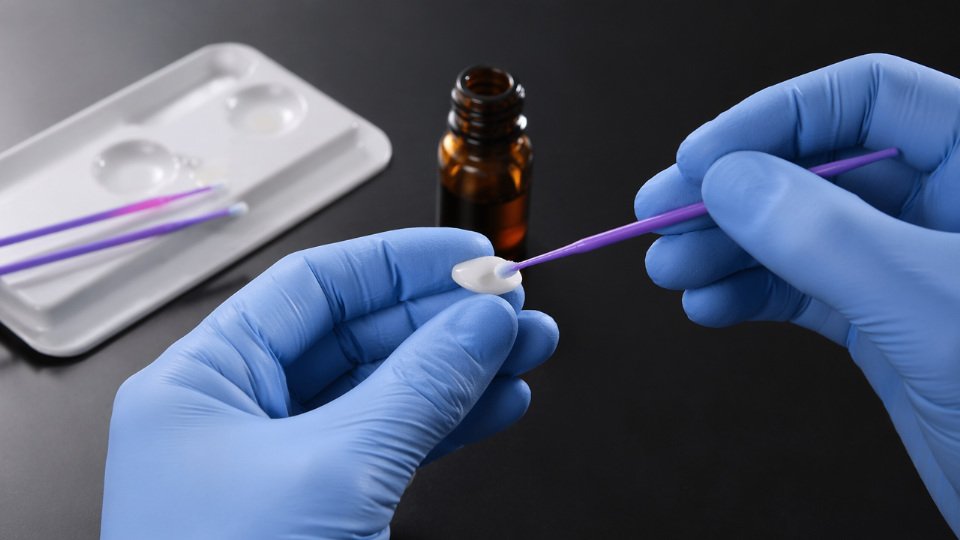
Apply a single uniform coat using a fresh microbrush. Multiple coats are appropriate only with some two-bottle activated systems where the first coat has not fully spread. For pre-hydrolyzed single-bottle silanes, a second coat on top of an already-applied first coat can bury reactive silanols under non-reactive oligomeric siloxane layers.
Do not rub the silane in. Rubbing disrupts the self-organizing monolayer that forms as solvent evaporates and can cause uneven film thickness. Apply, let it spread by capillary action, and step back.
Drying and Activation: Temperature Controls Degree of Condensation
Solvent removal and silanol condensation are time-temperature dependent:
- Room-temperature air drying (60 seconds minimum): Adequate for most clinical settings; residual solvent may remain in thick films, limiting condensation completeness.
- Warm air (40–60°C, 30–45 seconds): Accelerates solvent evaporation without prematurely driving off the methacrylate functionality. Preferred in lab settings.
- Heat gun at approximately 100°C, 15–20 seconds: Maximizes degree of condensation; bond strength data from in-vitro studies shows shear bond values reaching the upper end of the 15–50 MPa range depending on ceramic type and primer formulation. Risk of over-drying at this temperature is real — hold the heat source 10–15 cm from the surface and keep it moving.
Never dry with the dental air syringe that has been contaminated with compressor oil. Oil contamination is a common but invisible cause of bond failure.
Critical Timing and Contamination Window
Once activated, a silaned surface should receive resin cement within 5–15 minutes. Beyond roughly 30 minutes at ambient humidity, silanol groups begin forming inter-silane condensate rather than ceramic-silane bonds, and the surface picks up airborne contaminants. If a restoration sits silaned on the bench while the operator handles other patients, the protocol has to be restarted from the cleaning step.
Touch the surface after silanization — even briefly with a gloved finger — and the organic contamination from the glove is enough to weaken the adhesive zone.
Common Protocol Errors and Their Consequences
Insufficient HF etching time (under 10 seconds on feldspathic porcelain) leaves the ceramic surface essentially smooth — reactive surface area is low, and bond strengths cluster at 8–15 MPa rather than the 30–50 MPa achievable with full protocol compliance. Expired silane — particularly pre-hydrolyzed single-bottle formats past their 12–18 month shelf life — contains siloxane oligomers rather than reactive silanols. Application proceeds exactly as normal, the surface looks identical, and bond failure appears only under masticatory load months later. Check manufacture date at procurement, not at chairside.
Applying silane to a surface that was contaminated with try-in paste and not re-cleaned is arguably the most common preventable cause of ceramic restoration debonding in restorative practice. The try-in paste forms a hydrophobic barrier; the silane wets the paste, not the ceramic.
Bond Strength Data, Aging Behavior, and Long-Term Clinical Durability of Silane-Treated Restorations
Baseline Shear Bond Strength: What the Numbers Actually Mean
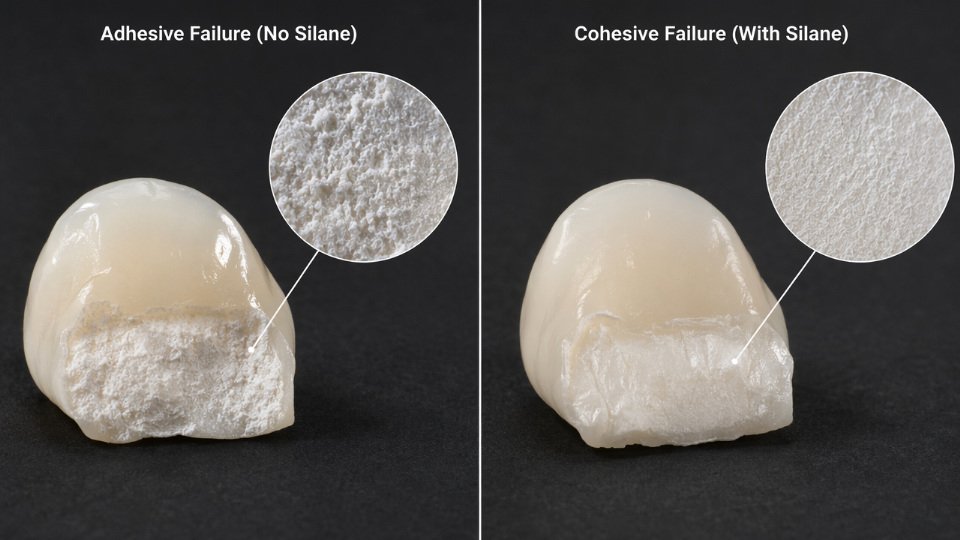
The performance gap silane creates is not marginal. Feldspathic porcelain bonded to resin cement without silane treatment typically yields shear bond strength in the 2–5 MPa range — enough to survive light occlusal loading in ideal conditions, but nowhere near clinical acceptability under fatigue. Apply a correctly formulated MPS silane primer and the same substrate reaches 20–35 MPa, a figure that shifts the failure mode from adhesive debonding at the ceramic–cement interface to cohesive failure within the resin or ceramic itself. That shift matters: cohesive failure means the bond outlasted the material.
Published meta-analyses consolidate these ranges across dozens of laboratory studies. The exact value within that 20–35 MPa window depends on silane concentration (typically 0.5–5% by weight in ethanol/water solution), activation method, ceramic surface roughness after etching, and resin cement composition. A lab running identical porcelain discs but varying silane dwell time from 30 seconds to 180 seconds will see measurable variance — protocol execution is a real variable, not a theoretical one.
Hydrolytic Degradation: Where Long-Term Bonds Fail
The oral environment is a continuous hydrolytic challenge. Water penetrates the silane interphase layer over months and years, and Si–O–Si bonds are vulnerable to acid-catalyzed hydrolysis — salivary pH drops during meals, and resin cement absorbs water. In controlled thermocycling studies (5°C/55°C cycling, 10,000–30,000 cycles), bond strength losses of 20–40% relative to baseline are commonly reported. The magnitude depends heavily on the silane layer’s initial quality: a fully condensed, dense organosilane network degrades more slowly than a partially hydrolyzed, loosely structured one.
Weak silane layers tend to delaminate at the Si–O–ceramic bond rather than within the resin, which is exactly the failure mode you want to avoid because it is undetectable until the restoration debonds clinically. An incomplete condensation reaction — caused by incorrect pH during formulation, excess residual methanol, or thermal mishandling during storage — leaves reactive silanols that never cross-link properly and are preferential hydrolysis sites.
Thermocycling at 10,000 cycles simulates approximately one year of clinical aging in an oral environmentFalse
The equivalence between thermocycling cycles and clinical years is not established by a fixed ratio; 10,000 cycles is a standardized stress protocol used for comparative ranking of materials, not a calibrated predictor of in-vivo years of service.
Zirconia Bonding: Why Silane Alone Is Insufficient
Yttria-stabilized zirconia presents near-zero bond strength to resin cement with MPS silane alone — the surface lacks the silica phase necessary for Si–O bond formation. The validated approach combines tribochemical silica coating (alumina-silica blasting), MPS silane application, and a 10-MDP phosphate monomer primer. This three-step sequence achieves 15–25 MPa, with the MDP component forming calcium- and zirconia-compatible ionic bonds that silane cannot provide on its own. Skip any step and you drop back toward failure-level adhesion.
Clinical Survival Rates and Failure Mode Distribution
Ten-year survival data from meta-analyses place feldspathic porcelain veneers at 90–95% and lithium disilicate crowns in a similar range when adhesive protocols — including silane — are correctly executed. Adhesive failure accounts for a minority of total failures; fracture and secondary caries dominate. This matters for procurement arguments: the silane step is a small cost item protecting a restoration worth hundreds to thousands of dollars in chair time and materials.
Silane Raw Material Quality as a Durability Variable
Formulation teams and procurement managers often underestimate how much MPS purity affects clinical outcomes. Residual methanol above acceptable thresholds interferes with silane hydrolysis kinetics. Pre-condensation — partial oligomerization during storage or shipping at elevated temperature — reduces the available reactive silanol content and produces inconsistent bond strength lot-to-lot. Suppliers should provide documented silanol content, degree of oligomerization, and accelerated shelf-life data, not just a certificate of analysis with purity as the single metric.
Emerging Durability Strategies
Heat-activating the silane layer (100°C for 60 seconds after application) accelerates condensation and improves hydrolytic resistance measurably. Incorporating HEMA or MDP directly into single-bottle silane formulations provides simultaneous resin compatibility and ceramic adhesion in one application. Nano-filled silane coupling agents — where silica nanoparticles pre-functionalized with MPS are dispersed in the primer — increase the effective bonding surface area and create a more mechanically interlocked interphase layer. These are not academic novelties; several current-generation universal adhesives already use this chemistry commercially.
Industrial-Grade MPS Silane Production and Quality Specifications Relevant to Dental-Grade Formulation
3-methacryloxypropyltrimethoxysilane — universally abbreviated MPS — is the workhorse silane coupling agent in virtually every dental ceramic primer formulated today. Understanding how it is made, what can go wrong during synthesis, and what the specification sheet must say before a batch enters a dental formulation line is knowledge that separates competent procurement from costly mistakes.
Synthesis Route and the Impurities That Actually Matter
Industrial MPS is produced via platinum-catalyzed hydrosilylation: trimethoxysilane (HMS) adds across the terminal double bond of allyl methacrylate (AMA) under controlled temperature, typically 60–90 °C, in the presence of a Speier or Karstedt catalyst. Reaction selectivity is high when catalyst loading, temperature ramp, and AMA feed rate are tightly managed, but two impurity classes consistently appear in commercial product and both affect dental performance directly.
The first is bis-silane dimer, formed when a second HMS molecule adds to the product’s residual vinyl character or through disproportionation side reactions. Even at 0.5–1.0% concentration, dimer disrupts the monolayer self-assembly mechanism at the ceramic surface, producing a thicker, less ordered silane film that traps water and accelerates hydrolytic degradation of the bond interface over thermocycling. The second is residual allyl methacrylate. AMA carries a reactive methacrylate group; if it persists at levels above roughly 0.3%, it competes with MPS for co-polymerization sites in the resin matrix without contributing the silanol anchor group — essentially a dilution effect that suppresses shear bond strength reproducibility batch to batch.
Multi-stage fractional distillation under reduced pressure is the only reliable way to drive both impurity classes below meaningful thresholds. Single-pass distillation is not sufficient for dental-grade material.
Critical Quality Specifications for Dental-Grade MPS
Procurement teams sourcing MPS for dental primer formulation should enforce the following minimum specification window. GC purity must be ≥98.5%; production from well-optimized plants consistently achieves 99.0–99.5%, and the difference matters when you are formulating at 0.5–5% active silane in a primer solution where every percentage point of impurity affects clinical bond strength reproducibility. Methanol content should be held below 0.5% by weight — methanol is a hydrolysis byproduct that accelerates premature condensation in the primer bottle during storage. Water content by Karl Fischer titration must be <200 ppm; water above that threshold initiates silanol condensation in the drum before the product ever reaches a mixing vessel. Refractive index at 20 °C should fall in the range 1.429–1.432, which functions as a fast in-line identity and purity check. MEHQ (monomethyl ether hydroquinone) inhibitor concentration, typically 50–200 ppm, must be confirmed — too low and you risk polymerization during storage or distillation; too high and it interferes with the photoinitiation chemistry in light-cure primer formulations.
MPS purity below 98.5% GC can introduce dimer and residual AMA impurities that reduce shear bond strength consistency and accelerate hydrolytic degradation at the ceramic-resin interface.True
Bis-silane dimers disrupt monolayer formation; residual AMA dilutes the functional silane coupling density without contributing silanol anchoring, both documented mechanisms in silane coupling agent literature.
Manufacturing Capabilities and Batch Traceability
SiliconChemicals operates within China’s organosilicon industrial cluster, where integrated access to upstream chlorosilane intermediates and allyl chemistry compresses raw material lead times and cost variance that European or North American toll manufacturers cannot match structurally. The production process runs under ISO 9001-certified quality management, with each batch assigned full traceability documentation — synthesis log, GC chromatogram, Karl Fischer result, inhibitor assay, and refractive index — formatted to support OEM dental formulators’ own incoming QC and regulatory submissions.
For dental customers requiring regulatory support, SiliconChemicals can provide REACH-compliant safety dossiers for European dental device formulators and technical package documentation aligned with FDA Drug Master File pathway requirements for US dental device component suppliers. Heavy-metal-free and RoHS certification is available for markets where these are contractual requirements, particularly Japan and South Korea.
Packaging, Logistics, and Supply Agreement Structure
MPS for dental OEM supply ships in nitrogen-blanketed drums (typically 180 kg net) and IBCs (1,000 L), with headspace oxygen displacement to prevent inhibitor depletion and slow oxidative side reactions during transit. Cold-chain recommendation is storage below 25 °C away from direct light; for shipments to Southeast Asia during summer months, insulated container options are worth specifying in the purchase agreement given ambient temperatures that routinely exceed 35 °C in transit.
Long-term supply agreements for dental OEM customers typically include fixed-specification quality protocols, safety stock programs at origin warehouse, and flexible call-off scheduling — an arrangement that smooths the demand variability dental formulators face tied to product launch cycles and clinical adoption curves. Spot purchasing dental-grade MPS without a qualified supplier agreement is a real operational risk: a single off-spec batch reaching a primer production line can affect months of finished product if the quality deviation is subtle enough to pass visual inspection but sufficient to shift bond strength values outside clinical acceptance ranges.
Troubleshooting Silane Failures: Diagnosing and Preventing Adhesive Debonding in Ceramic Restorations
Restoration debonding is rarely a mystery once you know where to look. The failure mode itself tells you most of what you need to know — if you examine it systematically rather than immediately reaching for more adhesive.
Classifying the Failure Before Chasing a Root Cause
Pull a debonded restoration and examine both mating surfaces under magnification. Adhesive failure at the ceramic–silane interface leaves the ceramic surface visually clean, often with a slightly dull or whitish haze where the silane film should be; the resin cement stays entirely on the tooth side. Cohesive failure within the resin cement shows cement remnants on both surfaces — the bond itself held, but the bulk material cracked, which points toward occlusal overload, cement mixing errors, or polymerization inadequacy rather than silane chemistry. Mixed failure — patchy cement on both surfaces — is the most common presentation in field returns and usually means the silane film was partially effective: some regions bonded, others didn’t. That patchiness is diagnostic. It almost always points to contamination or uneven etching rather than a global silane formulation failure.
Expired or Degraded Silane: Testing Before You Trust the Bottle
Pre-hydrolyzed single-bottle silane primers have a working shelf life that depends on storage temperature, headspace humidity, and solvent system — typically 12 to 24 months unopened, but often far shorter once opened and repeatedly exposed to ambient air. The degradation mechanism is progressive condensation: silanols polymerize into oligomers in solution, leaving fewer reactive monomers available to bond the ceramic surface. The product may still look clear and smell correct. You cannot detect this by appearance alone.
A contact angle test on a freshly HF-etched ceramic tile costs nothing and takes two minutes. Apply a droplet of the suspect silane solution to the etched surface, allow the solvent to evaporate, then apply a water droplet. Effective silanization produces a contact angle above roughly 60–70°, indicating a hydrophobic methacrylate-rich surface. A contact angle near zero — water spreading instantly — means the silane film is absent or non-functional. Some labs keep a reference tile with known-good silane applied on the same day as a side-by-side comparison. That simple parallel test catches batch failures before they become patient failures.
Silane primer effectiveness can be assessed chairside or in the lab using a simple water contact angle test on a conditioned ceramic tile.True
Contact angle measurement reflects the hydrophobic character of the polymerized methacrylate surface layer; a functionally silanized surface repels water, while a failed or absent silane film allows water to spread freely. This is a well-established surface chemistry indicator used in both dental research and industrial adhesive quality control.
HF Etching Errors: Both Directions Cause Failures
Under-etching — concentration too low, time too short, or etching gel dried out before full contact — leaves insufficient micromechanical surface relief. Silane bonds chemically but has almost no mechanical interlocking to support it under cyclic load. The correction is straightforward: re-etch following manufacturer protocol, typically 9.5% HF for leucite-reinforced feldspathic ceramics for 60–90 seconds, or 5% HF for lithium disilicate for 20–60 seconds — exact time depends on ceramic density and specific product chemistry.
Over-etching is the less-discussed problem. Prolonged HF exposure introduces surface microcracks into lithium disilicate and can significantly reduce flexural strength of thin restorations such as veneers. If you suspect over-etching, examine the ceramic surface under magnification before bonding; a craze-cracked or chalky surface texture is the warning sign. That restoration should be remade, not bonded.
Contamination: The Most Preventable Failure Mode
Contamination after etching or silanization is common and almost entirely avoidable. Eugenol from provisional cement is the worst offender — it inhibits resin polymerization even in trace amounts and cannot be reliably removed by rinsing alone. Any provisional restoration placed with ZOE-based cement requires aggressive mechanical cleaning of the prep and, in a lab setting, a fresh surface treatment sequence. Saliva contamination during try-in is the other routine problem. A single contamination event — even brief intraoral contact with an etched surface — requires the full sequence to be restarted: re-clean with alcohol, re-etch if the surface has been in the mouth, re-apply silane, re-apply adhesive.
Blood and fingerprint oils block silane bonding sites through the same mechanism: non-polar or protein-based contamination occupies surface silanol groups before the silane can react with them.
Substrate Mismatch: Using the Wrong Silane Chemistry
MPS silane applied to unetched zirconia is one of the most common substrate selection errors. Zirconia has no silica phase to form siloxane bonds with; MPS alone on zirconia produces near-zero durable bond strength. Zirconia requires MDP (10-methacryloyloxydecyl dihydrogen phosphate) — either as a separate primer or within a universal adhesive system — to bond chemically through phosphate–zirconia interactions. The distinction matters enormously in practice.
| Substrate | Required Surface Treatment | Silane/Primer System |
|---|---|---|
| Feldspathic / leucite ceramic | HF etch | MPS silane |
| Lithium disilicate (e.g., e.max) | HF etch | MPS silane |
| Zirconia (unmodified) | Airborne-particle abrasion | MDP primer (no HF, no MPS alone) |
| Zirconia-reinforced lithium silicate | HF etch + airborne abrasion | MPS silane + MDP primer |
| Fiber-reinforced composite | Airborne abrasion + silane | MPS silane |
Laboratory Quality Control Protocol
A dental lab running high volumes of ceramic restorations should treat silane management the same way a manufacturing line treats incoming material inspection. Log every silane batch number with receipt date, opening date, and storage conditions. Monitor application environment: silane performance degrades measurably above 70% relative humidity, and application below 15°C slows solvent evaporation and delays film formation. Run a bonded test tile from each new bottle before clinical use, and define a minimum acceptable bond strength threshold — typically 15 MPa or above in a shear bond test, since values below that threshold correlate with elevated clinical failure rates in loaded restorations. When a batch fails the threshold, quarantine the bottle, document the failure, and escalate to the supplier with the batch certificate for traceability. That discipline, applied consistently, catches formulation problems before they become debonded crowns.
Frequently Asked Questions About Silane in Dentistry
Does silane expire, and how can you tell if it is still active?
Pre-hydrolyzed single-bottle silane primers typically carry a shelf life of 12–24 months unopened, depending on packaging quality and storage temperature. Once you crack the bottle, that window collapses to roughly 3–6 months — and in a humid operatory environment, degradation can happen faster. The silane is silently hydrolyzing and self-condensing in solution, forming oligomeric siloxane clumps that no longer bond to ceramic surfaces.
Visible warning signs: cloudiness, a white precipitate at the bottom of the bottle, or a gel-like consistency. If you want a more objective test, apply a small drop to a freshly etched feldspathic disc and measure water contact angle — a hydrophobized, well-silanized surface reads below 20°, while degraded silane leaves contact angles above 40°, indicating the methacrylate-functional layer never formed properly. When in doubt, discard. The cost of a new bottle is trivial against the cost of a debonded crown recalled six months post-placement.
Can silane be used on zirconia crowns without any other surface treatment?
No — and this is one of the most consequential misunderstandings in clinical adhesive dentistry. Standard MPS silane depends on reacting with surface silanol groups, and yttria-stabilized tetragonal zirconia polycrystal (Y-TZP) simply does not present enough of them. Applying silane directly to air-abraded zirconia produces bond strengths that are barely better than untreated controls.
Effective zirconia bonding requires an additional step first: either tribochemical silica coating (such as the CoJet or Rocatec approach, which embeds silica particles into the surface and creates the silanol anchor points silane needs) or a 10-MDP phosphate monomer primer that bonds chemically to the zirconia oxide itself. Some universal adhesive systems combine both strategies in one bottle, but the surface preparation step cannot be skipped regardless of format.
MPS silane alone provides clinically adequate bond strength to unmodified zirconiaFalse
Y-TZP lacks sufficient silanol groups for MPS hydrolysis products to form stable Si-O-Zr bonds; tribochemical silica coating or 10-MDP primer is required to achieve durable adhesion.
What is the difference between a dedicated silane primer and a universal adhesive containing silane?
A dedicated silane primer delivers a single, optimized organosilane layer at the concentration and pH tuned specifically for ceramic surfaces — typically 1–3% MPS in an ethanol-water vehicle acidified to pH 3.5–5.0. Everything in the bottle serves one purpose. Universal adhesives include silane as one component among several: phosphate monomers, HEMA, glutaraldehyde, photoinitiators. The convenience is real, but the silane concentration is often lower, and the competing chemistry can interfere with condensation kinetics. On high-silica ceramics like lithium disilicate or feldspathic porcelain, a dedicated primer followed by a separate resin cement still tends to outperform all-in-one systems in thermocycling durability studies — particularly after 5,000 cycles or more.
How long should silane dry before applying resin cement?
At minimum, allow 60 seconds of passive air evaporation after application. A short burst of warm air at approximately 50–60°C for 15–20 seconds accelerates solvent removal and drives further siloxane condensation — do not use cold air or blow aggressively, which can redistribute the silane layer unevenly. Apply resin cement within 5–10 minutes. Leaving silanized ceramic exposed longer invites salivary or atmospheric recontamination, which drives contact angle back up and measurably reduces bond strength at the interface.
Is dental silane the same chemical as industrial silane?
The core molecule is identical: 3-methacryloxypropyltrimethoxysilane (MPS, CAS 2530-85-0). What differs is specification rigor. Dental-grade MPS requires purity above 98–99%, moisture content below 200–500 ppm depending on the formulation target, tightly controlled inhibitor (typically MEHQ) levels to prevent premature polymerization in storage, and full documentation — certificates of analysis, REACH registration, and often ISO 13485-aligned supply chain records for medical device OEM customers. Standard industrial grades may meet none of those requirements. Sourcing industrial MPS for dental formulation without verified specification matching is a quality risk that can manifest as inconsistent bond strength lot-to-lot.
Can silane treatment salvage a cracked ceramic restoration?
Silane plus flowable composite can restore a functional bond at intact ceramic surfaces immediately adjacent to a chip or minor fracture. It cannot repair the ceramic’s structural integrity. For superficial chipping that does not involve the margin, occlusal contact zone, or full-thickness crack propagation, intraoral composite repair is a defensible interim or permanent solution — provided the ceramic surface is re-etched and freshly silanized. For cracks reaching the crown margin or traversing the full thickness, the restoration needs replacement. Applying silane and composite over a structurally compromised crown delays the inevitable and risks a more complex clinical problem later.
Where can dental formulators source bulk dental-grade MPS silane?
Specialty organosilicon manufacturers supply high-purity MPS in formats ranging from 25 kg drums through 1,000 L IBC containers to bulk tanker volumes, depending on production scale. SiliconChemicals, operating within China’s integrated organosilicon industrial cluster, supplies dental and pharmaceutical OEM formulators globally with MPS meeting dental-grade purity and documentation requirements — including full certificates of analysis, REACH registration, and formulation development support for private-label dental adhesive and primer products. Procurement teams evaluating a supplier should request multiple consecutive lot CoAs, ask specifically about moisture content controls during packaging, and confirm cold-chain shipping options for markets where transit times or temperatures put shelf life at risk.
Future Directions: Next-Generation Silane Technologies Reshaping Dental Adhesion
The MPS-based primer that most clinicians apply today is chemically mature — the core hydrolysis-condensation-copolymerization mechanism has not changed fundamentally in decades. What is changing is everything around it: the substrates arriving from milling centers and 3D printers, the regulatory pressure on solvent emissions, and the clinical expectation that a single primer should work across an increasingly diverse materials inventory. Several R&D trajectories are converging to answer those pressures.
Multifunctional and Bis-Silane Molecules
The chronic limitation of standard MPS silane is specificity: it bonds to silica-rich ceramics but does nothing useful on zirconia’s oxide surface. Bis-silane coupling agents — molecules carrying two trialkoxysilyl groups — provide greater surface density and hydrolytic stability compared to monosilanes, reducing interfacial porosity after thermocycling. More clinically significant are silane-MDP hybrid monomers, which combine a trimethoxysilyl group at one terminus with a 10-methacryloyloxydecyl dihydrogen phosphate (MDP) phosphate group at the other. The phosphate end coordinates to zirconia’s zirconium oxide sites; the silane end reacts with any residual siliceous phase and co-polymerizes with the resin cement. The practical outcome is a single-bottle primer applicable across feldspathic porcelain, lithium disilicate, and full-contour zirconia without substrate-specific protocol switching. Laboratory shear bond data for these hybrid molecules on zirconia typically fall in the 18–35 MPa range depending on zirconia grade, sintering temperature, and aging protocol — well above the 2–8 MPa seen on untreated surfaces.
Nano-Silane Coatings and ALD-Prepared Zirconia
A fundamentally different approach moves the silane chemistry upstream to the restoration manufacturer rather than the chairside clinician. Atomic layer deposition of a thin amorphous silica film — typically 5–20 nm — onto sintered zirconia blanks creates an artificial silica surface that responds to standard MPS silane exactly as feldspathic ceramic does. The clinician applies no tribochemical sandblasting and no specialized primer; the bonding protocol collapses to the same steps used for glass ceramics. ALD is already established in semiconductor manufacturing; its adaptation to dental zirconia blanks is at the late-prototype stage in several university and industrial labs. Scaling cost is the unresolved variable. At current throughput, ALD-treated blanks carry a meaningful unit price premium, but that premium shrinks substantially at production volumes typical of a mid-sized CAD/CAM blank manufacturer.
Antibacterial Quaternary Ammonium Silanes
Secondary caries at the restoration margin is one of the leading causes of restoration replacement. Incorporating quaternary ammonium silanes — specifically 3-(trimethoxysilylpropyl)dimethyloctadecyl ammonium chloride — into adhesive primers addresses this directly. The silane anchor covalently bonds the biocidal ammonium group to the resin-ceramic interface, making the antibacterial effect permanent rather than leachable. Concentration in formulated primers typically runs 0.5–2% by weight, balanced against any plasticizing effect on bond strength. SiliconChemicals produces quaternary ammonium silane intermediates that meet the purity specifications dental formulators require for this application — a supply reference worth evaluating early in formulation development, given that this chemistry sits at the intersection of adhesion and antimicrobial performance.
Self-Assembling Monolayers and Digital Dentistry Surfaces
Self-assembling silane monolayer technology, borrowed from semiconductor surface science, promises sub-nanometer bond interfaces with extremely low defect density. Current status is largely academic; translating SAM deposition from controlled laboratory conditions to chairside application is a real engineering barrier, and clinical translation is realistically five to ten years out. Nearer-term is the digital dentistry problem: stereolithography-printed alumina and zirconia parts have different surface oxide states compared to conventionally sintered ceramics because photopolymer residues and lower sintering temperatures alter surface chemistry. Optimized silane formulations for these substrates are an active commercial R&D area right now.
Green Chemistry and Low-VOC Formulations
European dental OEM procurement teams are increasingly requiring compliance with tightened VOC directives, pushing formulators away from ethanol-heavy silane primer vehicles toward water-based systems. Water-based silane primers are technically viable — hydrolysis proceeds more completely in aqueous media — but stability on shelf is shorter and the application window is narrower. Raw-material suppliers capable of providing hydrolysis-stable silane intermediates with low residual alcohol content are in a better position to support this shift. Bio-derived co-solvents such as glycerol derivatives are under evaluation as ethanol replacements, though compatibility with methacrylate resin systems requires case-by-case validation.
Quaternary ammonium silanes form a permanent covalent bond at the restoration interface rather than leaching over time, which distinguishes them from conventional antibacterial agents in dental adhesives.True
The trialkoxysilyl group of quaternary ammonium silanes undergoes the same hydrolysis-condensation reaction as MPS silane, covalently anchoring the biocidal ammonium group to both the ceramic surface and the cross-linked resin matrix. This is mechanistically distinct from physically entrapped antimicrobials that elute and deplete.