A single regulatory question — “does your silicone contain endocrine-disrupting substances?” — is now showing up in supplier audits, food-contact approvals, medical device submissions, and EU REACH compliance reviews. When procurement teams can’t answer it with documented evidence, shipments stall, re-qualification processes open, and in regulated industries like pharma packaging or automotive electrics, a material re-qualification alone can run $50,000–$250,000 per component. The pressure isn’t theoretical: the EU restricted D4 and D5 in wash-off cosmetics above 0.1% w/w under REACH Annex XVII Entry 70 in January 2020, and ECHA continues updating its SVHC Candidate List biannually. For engineers and procurement managers sourcing silicone globally, the cost of an uninformed answer is now higher than the cost of getting the chemistry right.
Silicone polymer (PDMS) is not classified as an endocrine disruptor. The EDC concern in silicone focuses on low-molecular-weight cyclic siloxanes — primarily D4, D5, and D6 — present as processing residuals. High-grade, post-cured silicone contains these at 0.01–2% depending on cure status. Properly specified and verified silicone materials carry FDA, USP Class VI, and ISO 10993 clearances with no EDC classification.
What makes this topic genuinely difficult — and why it produces so much misinformation — is that “silicone” is not a single substance. It spans everything from volatile, low-molecular-weight cyclic fluids that can partition into biological tissue, to fully cross-linked high-molecular-weight polymer networks that are too large to cross cell membranes and demonstrate aquatic bioconcentration factors well below PBT thresholds. Regulatory bodies, activist groups, and marketing copy frequently collapse this distinction, treating a trace cyclic impurity as though it defines the entire material class. The engineering reality is more precise — and more defensible — than either the alarmed headline or the dismissive reassurance.

What ‘Hormone Disruptor’ Actually Means: Mechanistic Criteria That Define Regulatory Exposure
Regulatory agencies do not classify substances as endocrine disruptors because a journalist raised concern, a structural formula vaguely resembles estradiol, or an in vitro assay at supraphysiological concentration produced a signal. They follow a tiered, evidence-weighted framework that distinguishes confirmed disruption from theoretical potential — and that distinction carries enormous commercial and compliance consequence.
The WHO/IPCS Hierarchy: Three Tiers, Three Very Different Regulatory Outcomes
The International Programme on Chemical Safety’s 2002 definition remains the foundational reference most regulatory bodies work from: an endocrine disruptor is an exogenous substance that alters function(s) of the endocrine system and consequently causes adverse health effects in an intact organism, or its progeny, or (sub)populations. That phrase “adverse health effects in an intact organism” is doing the real regulatory work, and regulators enforcing EU Regulation 2018/605 cite it explicitly.
From that definition, IPCS established a three-tier working hierarchy:
- Confirmed/known EDC: Evidence of endocrine activity and adverse effects causally linked in intact organisms or epidemiological data
- Suspected/potential EDC: Evidence of endocrine activity in at least one study, but the causal adverse-effect link in intact organisms is not yet established
- Substance with endocrine-active properties but no demonstrated adverse effect at relevant exposures: Shows a signal in some assay context, but the signal does not translate to harm under plausible real-world exposure conditions
Regulators treat these three tiers very differently. A confirmed EDC can trigger SVHC listing, restriction under REACH Annex XVII, and automatic re-evaluation of authorization dossiers. A substance in tier three may warrant monitoring but creates no immediate regulatory restriction. Procurement teams quoting material safety questionnaires to customers should understand which tier a cited concern actually occupies — conflating them inflates perceived risk and can drive unnecessary and expensive reformulations.
The Five Mechanistic Pathways Regulators Screen
OECD’s conceptual framework for endocrine disruptor testing identifies five primary mechanistic pathways that regulators probe:
- Estrogenic activity — agonist or antagonist binding at ERα or ERβ receptors, assessed first by in vitro competitive binding assays (OECD TG 455, 493), then confirmed by uterotrophic assay or full reproductive study
- Androgenic activity — AR binding and transcriptional activation, screened by Hershberger assay (OECD TG 441)
- Thyroid hormone pathway interference — disruption of TH synthesis, transport, or receptor binding; serum T3/T4 changes in rodent 28-day or multigenerational studies serve as in vivo anchors
- Steroidogenesis disruption — inhibition of aromatase (CYP19A1) or other steroidogenic enzymes, typically screened by H295R adrenocortical carcinoma cell assay (OECD TG 456)
- Hypothalamic-pituitary axis interference — disruption of feedback signaling regulating LH, FSH, GnRH, or prolactin, which requires whole-organism reproductive toxicity studies to detect reliably
Each pathway requires concordant in vitro and in vivo evidence before classification proceeds under EU Regulation 2018/605. Structural alerts — computational models that flag molecules resembling steroids — can trigger screening priority but are explicitly insufficient for classification. A formulator receiving a customer questionnaire citing a structural-alert database hit is looking at the entrance to the process, not the conclusion.
Why BPA and DEHP Cleared the Bar — and Why That Matters for Silicone Comparisons
BPA and DEHP earned confirmed-EDC classification through converging lines of evidence. BPA binds ERα at an IC₅₀ measurable in the nanomolar-to-micromolar range in competitive binding assays, produces uterotrophic responses in rodent models, and epidemiological datasets correlate urinary BPA with reproductive and metabolic endpoints in human populations. DEHP’s metabolite MEHP is a confirmed PPARγ agonist with downstream testosterone synthesis disruption demonstrated in testicular cell assays and Hershberger studies. Both substances are small, lipophilic molecules with log Kow values supporting membrane permeation and bioaccumulation.
PDMS polymer, by contrast, presents a structurally orthogonal data package. The table below summarizes the comparison regulators actually make:
| Parameter | Confirmed EDC (BPA / DEHP) | Silicone Polymer (PDMS, CAS 63148-62-9) |
|---|---|---|
| Receptor binding affinity (ER/AR) | IC₅₀ in nanomolar–low micromolar range (BPA); MEHP PPARγ active | No measurable competitive binding detected in OECD TG 455/456 screening |
| Log Kow / Bioaccumulation | BPA ~3.4; MEHP ~3.7; persistent in biological matrices | Aquatic BCF typically Structural resemblance to a steroid is a screening trigger, not a classification outcome. Every EDC classification that has survived regulatory and judicial challenge rests on receptor-binding kinetics, in vivo adverse-effect data, and plausible human exposure at effect-level doses — not on molecular shape alone. |
Polydimethylsiloxane Chemistry: Why the Backbone Inertness Is the Safety Story
The safety argument for cured silicone is not a regulatory technicality — it is a chemistry argument. Understanding why starts at the bond level.
Si-O-Si Bond Energy and What It Means for Physiological Stability
The siloxane backbone of PDMS carries a Si-O bond energy of 452 kJ/mol. Compare that to the C-C bonds (346 kJ/mol) that form the backbone of polyethylene or polypropylene, or the C-O bonds (358 kJ/mol) present in polyesters and polycarbonates. That roughly 25–30% energy advantage over organic polymer backbones is not marginal — it represents the difference between a structure that resists enzymatic hydrolysis under physiological conditions and one that, under the right circumstances, yields low-molecular-weight fragments.
Biological systems are very good at cleaving organic bonds. Esterases, lipases, and hydrolytic enzymes routinely break C-O and C-C linkages in organic polymers under conditions of pH 5–7.5, 37°C, and aqueous exposure — exactly the environment of a gastrointestinal tract, a bloodstream, or a cell membrane interface. The Si-O-Si bond does not present a kinetically accessible target for those enzymes. There is no known mammalian enzyme that catalyzes siloxane hydrolysis under physiological conditions, and abiotic hydrolysis of high-molecular-weight silicone networks in neutral aqueous environments proceeds negligibly slowly at body temperature. The consequence is straightforward: cured PDMS does not release hormonally active silicone fragments in the way that polycarbonate releases BPA under thermal or hydrolytic stress. The polymer stays a polymer.
Methyl Side Groups, Surface Energy, and the Bioavailability Barrier
PDMS carries methyl groups (–CH₃) pendant from every silicon atom. These groups are non-polar, chemically inert, and collectively responsible for PDMS’s unusually low surface energy of approximately 20–21 mN/m — lower than virtually any common engineering polymer. This surface character has a direct consequence for bioavailability.
For a molecule to exert systemic hormonal effects, it must first cross biological membranes. Passive transcellular diffusion — the dominant route for lipophilic endocrine disruptors like BPA or phthalates — favors molecules with a molecular weight below roughly 500–800 Da and a log Kow in the range of 1–4. Low-molecular-weight PDMS oligomers (trimethylsiloxy-terminated short chains) do carry measurable log Kow values and have finite membrane permeability. High-molecular-weight PDMS networks — the cured elastomers used in medical devices, food-contact articles, and industrial seals — are a different matter entirely. Once PDMS molecular weight exceeds approximately 1000 Da, membrane permeability drops sharply. A fully crosslinked silicone elastomer, with a network molecular weight between crosslinks typically in the tens of thousands of Daltons, has no realistic transcellular diffusion pathway. It cannot get in. This is why bioavailability from implantable silicone devices has been estimated at less than 0.001 mg/kg/day — several orders of magnitude below the NOAEL values observed in reproductive endpoint studies.
Crosslink Density, Cure Chemistry, and the Extractable Fraction
Not all silicone materials are equivalent, and this is where procurement teams sometimes conflate the polymer class with specific grades. Condensation-cure silicone systems — which rely on moisture-initiated crosslinking and release of small-molecule byproducts such as acetic acid, oxime, or methanol — can leave higher residual extractable content than addition-cure systems, particularly if the cure is incomplete. Platinum-catalyzed addition-cure systems, where terminal vinyl groups react with Si-H crosslinkers in the presence of a platinum complex catalyst, produce a network with no volatile small-molecule byproduct and a tightly controlled extractable fraction. With appropriate post-cure at 200°C for four hours, residual cyclic siloxanes (D4, D5, D6) are reduced by 90–95%, and total extractable content in compliant grades typically falls below 0.1% by weight.
In a typical continuous-process silicone tubing application running autoclave sterilization cycles at 121°C, an under-post-cured condensation-cure compound can show measurable cyclic siloxane migration in extractables testing — enough to trigger a non-conformance against a pharmaceutical customer’s specification. Switching to a platinum addition-cure compound with documented post-cure protocol resolves the finding, not because the base polymer changed, but because the extractable fraction was controlled. The chemistry was right; the processing protocol was the variable.
Cured high-molecular-weight PDMS elastomers cross biological membranes and accumulate in tissue like organic lipophilic compoundsFalse
High-MW PDMS networks exceed the ~1000 Da permeability threshold for passive transcellular diffusion; systemic bioavailability from implantable silicone devices is estimated at less than 0.001 mg/kg/day, which is mechanistically inconsistent with lipophilic bioaccumulation behavior.
Thermal Stability and the Contrast with Polycarbonate
PDMS is rated for continuous service up to approximately 200°C in standard grades, with specialty formulations extending higher. At those temperatures, the siloxane backbone does not undergo the kind of thermal depolymerization that generates hormonally active small molecules. This stands in direct contrast to polycarbonate, where thermal hydrolysis — even at temperatures encountered in dishwashers or microwave use — can release BPA from ester linkages in the backbone. PDMS has no ester linkages, no carbonate groups, and no thermally labile bonds that yield estrogenic fragments on degradation.
Regulatory Chemistry Identity and What Food-Contact Clearance Implies
PDMS (CAS 63148-62-9) holds food-contact clearance under FDA 21 CFR 177.2600 for silicone rubber in repeated-use food contact applications, and is addressed within the framework of EU Regulation 10/2011 for food contact materials. These clearances are not granted on the basis of chemistry alone — they reflect a toxicological data package reviewed by regulatory scientists, including migration testing and systemic toxicity data. The fact that regulators with access to that data have issued affirmative clearances is relevant evidence for formulation engineers who need to characterize the risk profile in internal documentation.
Quick verdict: For cured, post-cured, addition-cure PDMS elastomers above ~1000 Da, the combination of Si-O backbone inertness, physical membrane exclusion by molecular weight, and documented food-contact and medical-device clearances constitutes a technically defensible case against EDC classification — one that can be supported by chemistry, not just assertion.
The Cyclic Siloxane Problem: D4, D5, D6 and Their Actual Regulatory Classification
Cyclic volatile methylsiloxanes are where the legitimate regulatory concern actually lives — and conflating them with cured PDMS polymer is the single most common error in supplier questionnaire responses and SDS documentation alike. Getting this distinction right matters because the regulatory trajectories of D4, D5, and D6 are meaningfully different from each other, and different again from the cross-linked silicone networks most industrial applications actually use.
Chemical Identity and How Cyclics Enter Finished Products
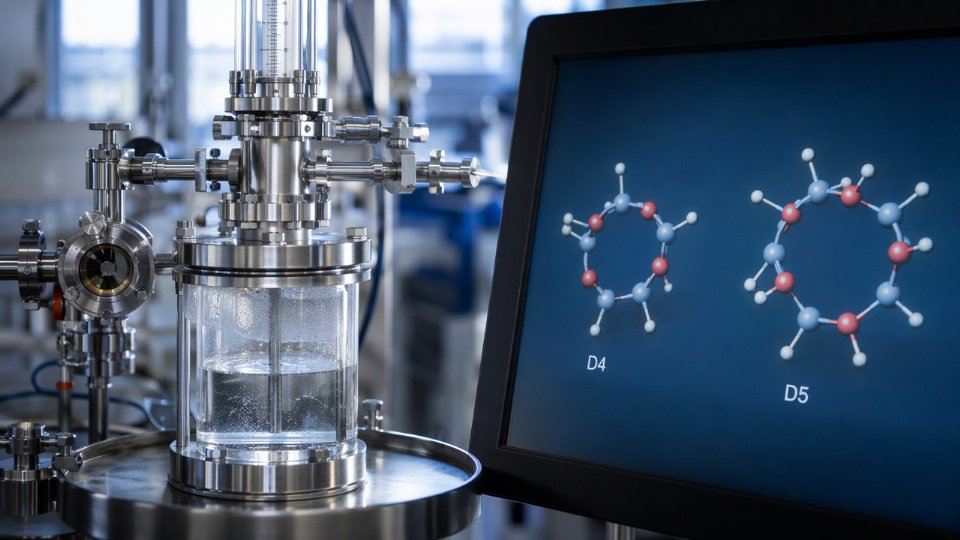
D4 (octamethylcyclotetrasiloxane, CAS 556-67-2), D5 (decamethylcyclopentasiloxane, CAS 541-02-6), and D6 (dodecamethylcyclohexasiloxane, CAS 540-97-6) are small, ring-structured siloxane molecules. They arise in two ways: as residual oligomers from incomplete polymerization during silicone fluid or rubber manufacture, and as thermal degradation products when cured silicone is exposed to elevated temperatures in service. Neither route is avoidable in absolute terms — it is a question of degree and control.
In raw, unprocessed silicone rubber compound, combined D4+D5+D6 content typically runs in the range of 0.1–2% by weight, depending heavily on monomer sourcing, polymerization conditions, and whether any post-processing step has been applied. That number is not static. Post-cure at 200°C for approximately four hours reduces residual cyclic siloxane volatiles by 90–95%, bringing combined content in medical and food-contact grades down to the 0.01–0.05% range in well-controlled production. The practical implication: a silicone rubber seal leaving an uncontrolled secondary processor without any post-cure step can carry ten to twenty times the cyclic content of the same compound processed under a validated thermal stripping protocol.
The EU REACH Restriction on D4 and D5: Environmental Logic, Not EDC Confirmation
The restriction that draws the most customer scrutiny — EU REACH Annex XVII, Entry 70, in force since January 2020 — prohibits D4 and D5 in wash-off cosmetics above 0.1% w/w. Reading the restriction as a hormone-disruption ruling is a misreading with real procurement consequences. The regulatory basis is environmental persistence and bioaccumulation, specifically vPvB (very persistent, very bioaccumulative) classification under REACH. D4 and D5 accumulate in aquatic sediments and biota; D4 in particular shows aquatic toxicity at relevant environmental concentrations. The cosmetic restriction addresses rinse-off products precisely because they represent the primary wash-to-drain emission pathway.
This is a critical distinction for SDS authors and procurement teams: vPvB drives the restriction, not confirmed endocrine disruption in humans. The two classifications involve entirely different hazard endpoints and different bodies of evidence.
The EU REACH restriction on D4 and D5 in cosmetics confirms they are endocrine disruptorsFalse
The restriction under Annex XVII Entry 70 (effective January 2020) is based on vPvB (very persistent, very bioaccumulative) classification and aquatic environmental hazard — not on a confirmed endocrine disruption finding under the EU's EDC criteria framework.
D5 and the Reproductive Toxicity Debate: What the Science Actually Settled
D5 is where the EDC question received its most rigorous regulatory examination. In 2018, ECHA’s Risk Assessment Committee (RAC) evaluated D5 and noted that rat uterotrophic assay data showed uterine weight changes at high doses — a result consistent with potential endocrine-mediated activity. The RAC described D5 as a “possible EDC” in that context.
The crucial detail that gets dropped in secondary reporting: ECHA concluded that the evidence was insufficient to meet the classification criteria under EU Regulation 2018/605 (the endocrine disruptor criteria for biocidal products). The rodent bioassay results — observed at doses orders of magnitude above any realistic human exposure — did not translate into a confirmed regulatory EDC classification. The mechanistic pathway remained unestablished. Species-specific metabolic differences, particularly in rat dopamine regulation affecting prolactin and luteinizing hormone, are considered a plausible alternative explanation for the observed uterotrophic responses.
This matters operationally: a supplier claiming D5 is “an endocrine disruptor” and a supplier claiming D5 has “no EDC concern whatsoever” are both giving a procurement team an incomplete picture. The accurate position is that D5 carries an unresolved signal in rodent studies that did not meet the evidentiary threshold for regulatory EDC classification — a distinction that belongs in your technical justification files.
Residual Cyclic Content in Finished Products: What Extraction Testing Quantifies
For applications where cyclic siloxane content is a customer, regulatory, or safety requirement — medical devices, food-contact materials, infant products, personal care components — the operative question is not what the raw compound contains, but what migrates or extracts under simulated use conditions. ISO 10993-12 governs extraction protocol selection for medical device materials. EN 1186 covers migration testing for food contact. GC-FID with MS confirmation is the standard analytical method for D4/D5/D6 quantification, capable of reliably distinguishing and quantifying each cyclic species.
In a typical medical tubing qualification program, extractables testing on uncured VMQ compound will routinely flag D4+D5+D6 totals above investigational thresholds, while the same formulation after validated post-cure and secondary extraction typically falls below 0.1% combined. The error pattern in qualification failures is almost always the same: the post-cure step was present in the specification but the actual oven profile — temperature uniformity, dwell time, load density — was never validated against D4/D5/D6 residual measurements. The specification said 200°C for four hours; the actual part-center temperature was 175°C for three hours under full-load conditions.
Regulatory Status Matrix: D4, D5, D6
| Parameter | D4 (CAS 556-67-2) | D5 (CAS 541-02-6) | D6 (CAS 540-97-6) |
|---|---|---|---|
| EU REACH restriction | Annex XVII Entry 70: ≤0.1% in wash-off cosmetics | Annex XVII Entry 70: ≤0.1% in wash-off cosmetics | Not restricted |
| EU SVHC Candidate List | Listed (vPvB basis) | Listed (vPvB basis) | Not listed |
| PBT/vPvB classification | vPvB confirmed | vPvB confirmed | Persistent (P); not fully classified vPvB |
| EDC classification (EU) | None confirmed | ‘Possible EDC’ (RAC 2018); insufficient for classification under Reg. 2018/605 | No EDC finding |
| US EPA HPV status | HPV challenge program (high production volume); under ongoing review | HPV; reviewed; not classified as EDC | HPV; reviewed |
| Typical residual — uncured compound | Combined D4+D5+D6: 0.1–2% by weight | See D4 column (reported as combined total) | Contribution typically minor vs. D4+D5 |
| Typical residual — post-cured (200°C/4 hr) | Combined D4+D5+D6: 0.01–0.05% in controlled production | See D4 column | See D4 column |
Operational warning — grade specification gap: Many procurement teams specify “food-grade silicone” or “medical-grade silicone” without defining a maximum D4+D5+D6 combined limit or requiring post-cure certification. Suppliers legitimately interpret “grade” differently. Specifying a maximum combined cyclic siloxane content (commonly ≤0.1% for sensitive applications) in the purchase specification, and requiring GC-FID data on the Certificate of Analysis, closes a documentation gap that surfaces most often during FDA or notified body audits — not during routine production.
Practical Sourcing Controls for Low-Cyclic Applications
Quick verdict: For medical, food-contact, or infant-product applications, specify post-cured low-VMQ or LSR grades with supplier CoA data showing D4+D5+D6 combined ≤0.1% — and validate the post-cure protocol against residual measurements, not just against time-temperature parameters.
Higher-viscosity silicone fluids (≥1000 cSt) inherently carry lower cyclic content than low-viscosity grades (5–100 cSt) because the shorter oligomeric chains that dominate low-viscosity products include a higher proportion of cyclic species. This means viscosity grade selection is itself a partial lever on cyclic content — a point that rarely appears on data sheets but is relevant when formulating silicone blends for sensitive downstream applications.
SiliconChemicals’ production process applies thermal stripping and post-cure protocols as standard steps on medical and food-contact silicone product lines, with D4+D5+D6 combined reported on Certificate of Analysis documentation. For applications requiring third-party verification, GC-FID extraction data against ISO 10993-12 or EN 1186 protocols is available on request — the kind of documentation that answers a customer’s EDC questionnaire with evidence rather than assurances.
Post-curing silicone rubber at 200°C eliminates all cyclic siloxane contentFalse
Post-cure at 200°C for approximately four hours reduces residual D4/D5/D6 by 90–95%, not 100%. Residuals in the 0.01–0.05% range remain in well-controlled production, and actual reduction depends on oven temperature uniformity, load density, and validated dwell time at part-center temperature.
Reading the Toxicology Data Package: What Peer-Reviewed Studies Actually Show
The toxicology literature on silicone materials is voluminous enough to support almost any narrative if you cherry-pick selectively. Procurement engineers and regulatory affairs teams who get handed a dossier of alarming abstracts — or, equally, a supplier’s one-page reassurance sheet — are working blind without the ability to read study design critically. The evidence base is actually quite solid; the problem is that it rarely gets presented with enough methodological context to be defensible.
PDMS Reproductive Toxicology: What the OECD Study Data Actually Demonstrates
Regulatory-grade reproductive toxicity testing for PDMS has been conducted under OECD Test Guidelines 421 and 422 (reproduction/developmental toxicity screening and combined repeat-dose studies), with oral gavage doses typically spanning 100 to 1000 mg/kg/day. At the high end of that range — 500 to 1000 mg/kg/day — investigators have consistently identified no observed adverse effect levels (NOAELs) for reproductive endpoints including fertility indices, litter size, pup viability, and developmental parameters.
The exposure arithmetic matters enormously here. Estimated systemic exposure from implantable-grade silicone in a clinical application runs at less than 0.001 mg/kg/day — a figure derived from measured gel bleed rates and conservative pharmacokinetic assumptions. That places the NOAEL-to-estimated-human-exposure margin in the range of several hundred thousand to one million-fold. Regulatory frameworks generally regard a margin above 100 as acceptable for non-genotoxic substances. You are not operating near a hazard boundary. Operators in procurement who flag PDMS reproductive toxicity without working through this arithmetic are, in effect, treating an order-of-magnitude calculation as a philosophical debate.
In a typical compounding or downstream fabrication environment, the relevant oral exposure pathway does not exist at all for workers handling cured silicone elastomers. The OECD study data is most relevant for justifying food-contact or implant-grade classifications, not for characterizing occupational risk in a gasket manufacturing plant.
The Breast Implant Controversy: Mechanism Distinction Matters
The FDA’s 2019 safety communication on silicone gel breast implants drew significant media coverage, and it continues to generate customer questionnaires years later. It is worth being precise about what the FDA actually found and what it did not.
The primary safety signals identified were breast implant-associated anaplastic large cell lymphoma (BIA-ALCL) — a rare T-cell lymphoma now understood to be linked to textured implant surfaces and the local immune response to surface microparticles — and a constellation of systemic symptoms reported under the umbrella of “breast implant illness.” Neither finding was mechanistically attributed to PDMS acting as an estrogen receptor agonist or endocrine disruptor. The immune-mediated mechanisms under investigation involve particulate load, platinum catalyst residues measurable by ICP-MS at sub-ppb levels, and chronic low-grade inflammation — not hormonal mimicry by the polymer backbone.
Conflating “a safety question has been raised about silicone implants” with “PDMS is a hormone disruptor” is a category error that shows up in supplier questionnaire responses and, occasionally, in internal hazard assessments. Keeping the mechanistic distinction clear protects the accuracy of your SDS documentation and your responses to OEM compliance requests.
PDMS silicone polymer has been classified as a hormone disruptor based on breast implant safety investigationsFalse
FDA's 2019 breast implant safety communication addressed BIA-ALCL and immune-mediated systemic symptoms linked to particulate surface texture and platinum catalyst residues — not estrogenic activity of the PDMS backbone. No regulatory body has classified cured PDMS as an endocrine disruptor.
In Vitro Estrogenic Assays: Why Supraphysiological Positives Don’t Translate
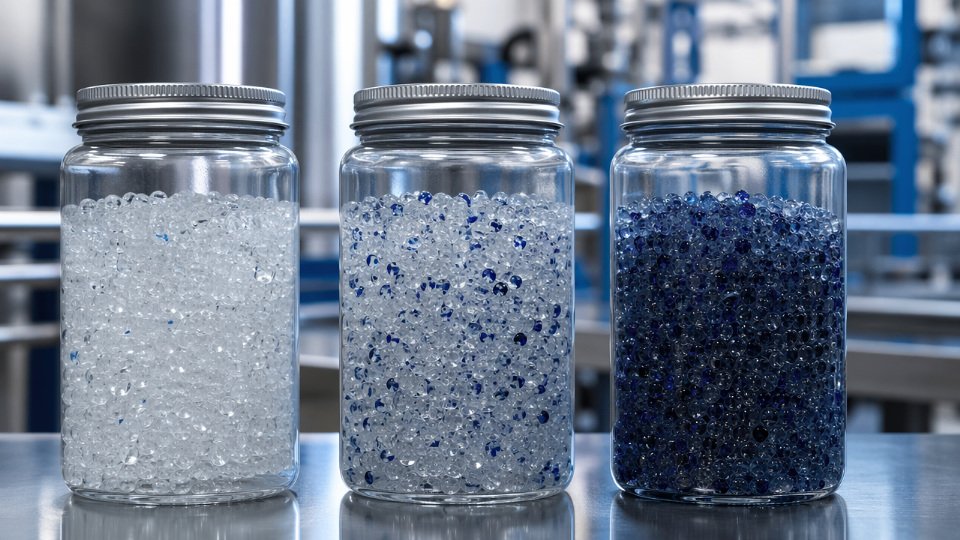
Cell-based estrogenic activity assays — the E-screen (MCF-7 cell proliferation), the yeast estrogen screen (YES assay), and reporter gene assays such as CALUX — have detected weak ER-alpha binding activity for PDMS oligomers below approximately 1000 Da at high test concentrations. This is where much of the alarmist literature originates, and the methodological context is critical.
First, the concentrations at which weak binding signals appear in vitro are supraphysiological — frequently in the millimolar range — and do not correspond to any plausible systemic exposure scenario. Second, the Threshold of Toxicological Concern (TTC) framework, applied in both EU REACH and FDA risk assessment guidance, explicitly addresses this: a measurable in vitro signal at extreme concentrations does not constitute evidence of endocrine disruption under regulatory criteria unless accompanied by in vivo evidence of an adversely affected endpoint mediated through a hormonal pathway.
Third, and critically for industrial silicone materials: low-molecular-weight oligomers represent a trivially small fraction of a properly cured, post-cured PDMS network. A silicone elastomer post-cured at 200 °C for four hours reduces residual cyclic siloxane content by 90–95%, and the remaining high-molecular-weight polymer network has a molecular weight far exceeding the ~1000 Da threshold above which membrane permeability becomes negligible. The in vitro-positive fraction is the fraction that responsible post-cure processing removes.
Bioaccumulation: The PCB Comparison That Reframes the Debate
Bioconcentration factor (BCF) is among the most practically useful metrics for procurement engineers trying to characterize persistent bioaccumulation risk. For PDMS in aquatic species, measured BCF values typically fall below 100. The EU PBT (persistent, bioaccumulative, toxic) assessment criterion sets the bioaccumulation threshold at BCF ≥ 2000. PCBs — the reference class of genuinely bioaccumulative endocrine-disrupting compounds — exhibit BCF values above 10,000 in fatty tissue.
Placing PDMS on a risk continuum with PCBs, as some consumer advocacy materials do, is not supported by the measured environmental fate data. The high molecular weight of commercial silicone polymers, combined with their extremely low water solubility and tendency to partition to sediment rather than bioconcentrate up the food chain, produces a bioaccumulation profile that is categorically different from small lipophilic organic molecules with confirmed hormonal activity.
The Methodological Contamination Problem in Alarmist Literature
A recurring flaw in studies reporting estrogenic activity attributed to “silicone” is that the test material is not industrial PDMS. Many positive findings originate from testing silicone-based personal care products — shampoos, conditioners, skin creams — formulated with intentional co-ingredients: fragrance esters, parabens, benzophenone UV filters, and preservative systems, several of which carry genuine, well-characterized estrogenic activity in their own right.
When a whole-product formulation tests positive in a YES assay and the study authors attribute the activity to “silicone,” they are testing a mixture, not the polymer. This methodological conflation is not always corrected in downstream citations, which is how a finding about a paraben-preserved emulsion becomes a media claim about silicone tubing in a pharmaceutical filling line. Engineers reviewing a literature dossier should check the test material description as the first quality filter — if it was a formulated consumer product rather than a characterized PDMS compound, the result tells you nothing reliable about the base polymer.
Quick verdict: A PDMS reproductive NOAEL of 500–1000 mg/kg/day against estimated human exposure below 0.001 mg/kg/day represents a safety margin that exceeds regulatory thresholds by orders of magnitude — but only for properly post-cured, high-molecular-weight grades; low-viscosity uncured fluids require separate characterization.
Application-Specific Risk Stratification: Where Silicone Is Safe and Where Vigilance Is Required
Risk assessment without exposure context is noise. The same PDMS polymer that raises zero concern as a transformer gasket becomes a fully regulated substance when molded into an infant pacifier — not because the chemistry changed, but because the exposure route, the contact duration, and the population sensitivity are categorically different. This is exactly how regulators think, and it is precisely the framework OEM QA teams are now embedding into their supplier questionnaires. Procurement engineers who cannot articulate this tiering will find themselves either over-engineering compliance for industrial seals or, worse, under-documenting risk for food-contact and medical applications.
Tier 1 — Industrial and Structural Applications: Negligible Exposure Route
Silicone seals, gaskets, electrical insulation, and construction sealants sit at the lowest concern tier because there is no credible human exposure pathway. The bulk polymer is a cured, cross-linked network. Cyclic siloxane residuals do exist, but they volatilize into ambient air in industrial settings — not into food, skin, or inhalable form at occupational concern levels under normal use. A transformer bushing seal or an HVAC duct silicone bead will never appear on a dietary exposure calculation.
For this tier, a standard REACH-compliant SDS with a Section 11 toxicology narrative and a Section 12 environmental fate entry covering PDMS persistence is generally sufficient. If the OEM’s ESG questionnaire asks about endocrine disruption, the defensible response is: “Bulk cured PDMS is not classified as an EDC under EU Regulation 2018/605 criteria or EPA Tier 1 screening. No direct human contact route in this application.” That language is accurate, auditable, and closes the question.
Tier 2 — Food Contact and Personal Care: Compliance-Driven Vigilance
Baking molds, kitchen spatulas, conveyor belts in food processing, and silicone fluids as personal care carrier bases all involve skin contact or potential indirect ingestion. This changes the test package entirely. Migration testing per EN 1186 simulant protocols or FDA 21 CFR 177.2600 extraction procedures is required — not optional best practice. D4, D5, and D6 quantification by GC-FID with MS confirmation in aqueous and fatty food simulants is the analytical standard, and the numbers matter: commercial food-contact silicone rubber from a well-post-cured grade typically shows residual D4+D5+D6 in the range of 0.01–0.3% by mass, but lower-quality or un-post-cured material can run toward the 2% upper end of the commercial range.
In a typical food manufacturing operation running high-temperature baking molds through hundreds of thermal cycles, operators often notice a faint odor early in a mold’s service life — that is cyclic siloxane outgassing, not a safety event, but it is a measurable phenomenon. Post-cure at 200°C for four hours reduces volatile cyclics by 90–95%, and specifying post-cured grades in purchasing documentation is the single most effective control at this tier.
Procurement warning: A supplier quoting “food-safe silicone” without a migration test report and D4/D5 quantification data is giving you a marketing claim, not a compliance document. The EU’s Regulation 10/2011 covers plastic food contact materials and may not fully capture all silicone types — confirm which regulatory pathway your supplier is using and request the supporting analytical data before signing off.
Tier 3 — Medical, Infant, and Pharmaceutical Contact: Full Biocompatibility Protocol
This tier requires a fundamentally different mindset. Implantable devices, infant bottle nipples, pacifiers, and pharmaceutical elastomeric closures share two characteristics that move them into maximum scrutiny: extended or intimate contact duration, and either a highly sensitive population (infants, immunocompromised patients) or a direct systemic exposure route (implant surface area, drug-product contact).
The required test package is explicit and non-negotiable:
- ISO 10993-1 biological evaluation series: cytotoxicity, sensitization, irritation, systemic toxicity, and — for implants — chronic toxicity and carcinogenicity endpoints
- USP Class VI plastics testing for pharmaceutical-contact components
- EP 3.2.9 for elastomeric closures used in injectable drug packaging
- Extractables and leachables (E&L) studies covering the full extractable fraction under worst-case conditions, with ICP-MS for platinum catalyst residues at detection limits typically below 1 ppb
The platinum catalyst residue question is not hypothetical. Platinum-catalyzed addition-cure silicones dominate medical grades, and while PDMS itself is inert, ionic platinum species are biologically active. ICP-MS confirmation is the standard, and its cost — commonly in the $5,000–$15,000 range for a full E&L study depending on scope — is negligible against the liability of an undocumented implantable component.
Pediatric and Reproductive-Age Exposure: Why Lower ADI Margins Apply
EFSA and FDA do not apply tighter acceptable daily intake margins for infant food contact materials because silicone is classified as an endocrine disruptor. They apply them because standard toxicological safety factors assume adult physiology, adult body weight normalization, and adult metabolic clearance. Infants have higher surface-area-to-body-weight ratios, immature hepatic clearance pathways, and developmental windows during which even sub-EDC-threshold exposures to any chemical warrant additional margin. The precautionary buffer is exposure-logic, not hazard reclassification.
Stricter silicone limits for infant products mean regulators classify PDMS as an endocrine disruptorFalse
Lower ADI margins for infant food contact materials reflect precautionary exposure margin practice based on pediatric physiology and developmental sensitivity — not a hazard classification of PDMS as an EDC under WHO/IPCS or EU Regulation 2018/605 criteria.
Documenting Risk Tier in a Product Stewardship Dossier
An OEM ESG questionnaire line item asking “Does this material contain endocrine-disrupting substances?” requires a documented, tiered answer — not a checkbox. A well-structured supplier technical data sheet for Tier 2 and Tier 3 applications should include: the applicable regulatory framework and clearance status, the D4/D5/D6 analytical result with method reference (GC-FID/MS, quantification limit), migration test data with simulant conditions and contact temperature, and a brief mechanistic statement on PDMS polymer-chain inertness as the basis for non-EDC classification. For Tier 3, add the ISO 10993 and USP Class VI compliance certificates and the E&L study summary.
That documentation package does two things simultaneously: it satisfies the customer’s regulatory affairs team, and it signals supplier competence — which is increasingly a qualification criterion in medical, food, and automotive supply chains where material re-qualification carries cost penalties commonly in the $50,000–$250,000 range.
| Application Type | Regulatory Framework | Required Test Package | Acceptable D4+D5+D6 Limit | EDC Declaration Language |
|---|---|---|---|---|
| Industrial seals, gaskets, electrical insulation | REACH SDS, no specific end-use standard | Standard SDS Section 11/12; no migration testing required | Not specified (no exposure route) | “Not classified as EDC per EU Reg. 2018/605; no direct human contact route” |
| Construction sealants | REACH SDS; local VOC regulations | SDS + VOC declaration if required | Typically not regulated at point of installation | “PDMS not EDC-classified; cyclic siloxane VOC content declared per regional requirements” |
| Food-contact (molds, utensils, conveyor belts) | FDA 21 CFR 177.2600; EU Reg. 10/2011 | EN 1186 migration testing; GC-FID/MS for D4/D5/D6 in simulants | Typically ≤0.01–0.3% in post-cured grades; simulant migration limits per regulatory protocol | “Compliant with food-contact regulations; D4/D5/D6 quantification data available on request” |
| Personal care carrier fluids | EU REACH Annex XVII Entry 70 (wash-off); COSMOS/ISO 16128 for natural/organic labeling | D5 content declaration; wash-off vs. leave-on distinction critical | D4/D5 ≤0.1% w/w in wash-off cosmetics (EU); leave-on not currently restricted | “D4/D5 content below EU Annex XVII threshold for leave-on; wash-off formulations must confirm compliance” |
| Infant nipples, pacifiers | EU Reg. 10/2011; national toy/childcare directives; FDA | Full migration + specific migration limits; pediatric ADI margins apply | Lower than adult food-contact — confirm current regulatory guidance per jurisdiction | “Not EDC-classified; test package includes pediatric-margin migration data; documentation available” |
| Pharmaceutical elastomeric closures | EP 3.2.9; USP Class VI | EP 3.2.9 biological tests; extractables study with ICP-MS for Pt | Per USP/EP extractables thresholds; Pt typically Audit warning — post-cure protocol documentation: For implant-grade and pharmaceutical-contact silicones, post-cure at 200 °C for four hours reduces residual cyclic siloxanes by 90–95%. If a supplier cannot provide a written, version-controlled post-cure protocol with time-temperature records, assume the grade is not post-cured and treat the residual cyclic content as the uncured baseline — commonly 0.3–2% D4+D5+D6 by weight depending on grade. |
Application-Triggered Certification Requirements
A tiered view prevents over-engineering low-risk applications while ensuring regulated applications are fully covered.
In a typical medical device supply chain, a compounding supplier providing silicone tubing for a Class II device is expected to provide an ISO 10993-1 biocompatibility test summary — not raw study data, but a documented summary mapping test selection to intended contact type and duration. For pharmaceutical stoppers and closures, the relevant standards are USP Class VI, European Pharmacopoeia 3.2.9, and increasingly a referenced FDA Drug Master File (DMF) or Food Contact Notification number to satisfy drug manufacturer quality agreements. For food equipment and drinking water contact in North American markets, NSF/ANSI 51 (food equipment) or NSF/ANSI 61 (drinking water system components) certification is the practical threshold; FDA 21 CFR 177.2600 clearance is necessary but not sufficient for many institutional procurement contracts.

| Document / Test | Required For (Application Tier) | Minimum Acceptable Standard | Who Issues | Typical New-Supplier Turnaround |
|---|---|---|---|---|
| GHS-compliant SDS (cure system identified) | All tiers | GHS Rev. 9 / EU 2015/830 | Supplier | Available at qualification |
| REACH SVHC declaration (versioned, dated) | All tiers | Current ECHA Candidate List version | Supplier | Available at qualification |
| RoHS 2 / IPC-1752A declaration | Electronics | IPC-1752A Class D | Supplier / 3rd party | 2–4 weeks |
| Lot-specific GC-MS: D4, D5, D6 (≤10 ppm LD) | All tiers; mandatory for EU wash-off / medical | GC-FID + MS confirmation | In-house or accredited lab | Per lot with CoA |
| Extractables in EN 1186 simulants | Food contact, pharma, medical | EN 1186 methodology | Accredited lab | 4–8 weeks |
| ICP-MS platinum residue | Platinum-cure medical / pharma grades | <1 ppm; sub-ppb LD preferred | Accredited lab | 3–6 weeks |
| ISO 10993-1 biocompatibility summary | Medical device contact | Current edition mapping | Supplier / test lab | Available for qualified grades |
| USP Class VI / EP 3.2.9 | Pharma closures, drug-contact | Current pharmacopoeia edition | Accredited lab | Available for qualified grades |
| NSF/ANSI 51 or 61 | Food equipment / drinking water | Current NSF certification | NSF International | Available at product certification |
| FDA DMF / FCN reference number | Pharmaceutical food-contact | Active DMF or FCN | FDA | Supplier-held; provide number |
| Post-cure protocol (time-temperature, version-controlled) | Medical, implant, pharma | Written SOP with batch records | Supplier | Available at qualification |
| Conflict minerals declaration | Electronics, automotive | Dodd-Frank / EU CMR aligned | Supplier via CMRT | 2–4 weeks |
ESG Questionnaire Language and What “Not an EDC” Must Actually Mean
Tier 1 OEMs in automotive, medical devices, and electronics are now issuing ESG supply chain questionnaires that include specific endocrine disruptor screening questions. A defensible answer does not say “silicone is not an endocrine disruptor.” It says: “Polydimethylsiloxane (CAS 63148-62-9) is not listed on the EU Regulation 2018/605 endocrine disruptor list for biocidal products, is not classified as an EDC under EU Regulation 1107/2009 pesticide criteria, does not appear on the EPA Endocrine Disruptor Screening Program (EDSP) Tier 1 or Tier 2 actionable lists, and does not appear on the current ECHA SVHC Candidate List [cite version and date]. Cyclic siloxanes D4 and D5 are present at [measured concentration] by GC-MS, within / below the EU REACH Annex XVII Entry 70 restriction threshold of 0.1% w/w for wash-off cosmetic applications. For the intended application [specify], this concentration is [compliant / below relevant threshold].”
That level of specificity is what passes a Tier 1 automotive audit. Blanket assertions do not.
A supplier's REACH declaration is valid indefinitely once issued.False
The ECHA SVHC Candidate List is updated biannually. A declaration that does not reference a specific list version and date cannot confirm compliance against substances added after its issuance — a gap that Tier 1 OEM audits and IMDS submissions will flag.
Consider a typical pharmaceutical packaging qualification: the device manufacturer’s QA team requests extractables data in 95% ethanol and n-heptane from a silicone gasket supplier. The supplier provides only a bulk PDMS SDS and a general statement of compliance. The qualification stalls for 11 weeks while the manufacturer commissions its own extractables study at an estimated cost of $5,000–$15,000 — cost and delay that would have been avoidable had the supplier maintained application-ready analytical packages. That delay is not unusual; it is the predictable consequence of sourcing from a supplier whose documentation practice is built around commodity chemical sales, not regulated application support.
Hidden Compliance Costs When Silicone Is Mischaracterized as an EDC
Misclassification errors in material safety documentation rarely generate an immediate alarm. They accumulate quietly — inside SDS revision cycles, supplier questionnaire responses, and OEM incoming inspection protocols — until one downstream customer’s regulatory team flags the discrepancy mid-production run and the financial consequences arrive all at once.
The Reformulation Trap: Trading a Non-EDC for a Confirmed One
The pressure to “remove EDC-suspect materials” has driven some procurement teams to substitute silicone seals and tubing with TPE or NBR alternatives before the toxicology case was actually closed. The operational irony is significant. Several TPE formulations contain DEHP or DINP-class phthalate plasticizers — substances currently on the ECHA SVHC Candidate List with confirmed endocrine-disrupting classifications — while cured PDMS carries no equivalent regulatory status. NBR compounds may contain residual acrylonitrile monomer with genotoxic potential and zinc-dialkyldithiocarbamate accelerators flagged under endocrine-disruption screening frameworks.
A procurement team responding to a customer’s generic “EDC-free” requirement questionnaire may substitute a material with a genuinely clean regulatory profile for one carrying confirmed SVHC listings — and create a product liability exposure that did not previously exist. The downstream effect is compounded: once an alternative is locked into a bill of materials, requalification back to silicone requires the same testing cycle the team was trying to avoid in the first place. Automotive tier re-qualification costs commonly run $50,000–$250,000 per material, depending on the number of part numbers affected and the OEM’s internal testing protocol.
Switching from silicone to TPE or NBR always reduces EDC regulatory riskFalse
Several TPE and NBR formulations contain SVHC-listed phthalate plasticizers or carbamate accelerators with confirmed or candidate endocrine-disruption classifications. Cured PDMS polymer carries no equivalent regulatory status under current REACH or EU 2018/605 criteria. The substitution can increase, not decrease, the regulatory burden.
Customer Rejection and Qualification Re-Run Costs
An SDS that lists “silicone” as the material identity without distinguishing high-molecular-weight PDMS polymer from low-molecular-weight cyclic siloxane fractions gives a downstream OEM’s regulatory team almost nothing to work with. In practice, quality engineers at tier-one automotive or medical device OEMs apply a worst-case assumption when documentation is ambiguous: the entire product line goes into quarantine pending re-evaluation. In a typical multi-component medical consumable or fluid-handling assembly, a single ambiguous material declaration can suspend a shipment affecting tens of thousands of units.
The re-qualification cost is not only financial. The extended cycle — typically four to twelve weeks for a full extractables and leachables review priced at $5,000–$15,000 — lands during active production, forcing either an expedited alternative-source approval or a line hold. Either path carries a cost that dwarfs the original documentation effort.
Regulatory Filing Duplication and Watch-List Exposure
Companies unable to produce clear, compound-specific EDC documentation for silicone components sometimes find themselves drawn into precautionary REACH screening processes that were designed for substances with genuine hazard signals. Inclusion on a substance watch list — even a precautionary one under the EU CoRAP mechanism — triggers annual reporting obligations and may require a formal SVHC Candidate List response cycle. For a material that would have been cleared on its first documented review, that is a recurring administrative cost with no regulatory or safety benefit.
Product Liability and Insurance Gaps
Insurers covering medical, infant-contact, and food-contact product lines increasingly request full toxicological dossiers as a condition of coverage, not merely SDS copies. A material described imprecisely on an EC declaration — where “silicone” could technically encompass both the inert polymer and volatile cyclic fractions — creates a documentation gap that an insurer can use to contest a claim. This is not a theoretical concern; it reflects a documented shift in underwriting requirements for products carrying prolonged human-contact exposure claims.
The Proactive Qualification Business Case
A full supplier technical dossier review — including GC-FID/MS quantification of D4/D5/D6 residuals, platinum catalyst ICP-MS screening, and a structured extractables package — typically runs $5,000–$15,000 depending on the number of grades evaluated and the laboratory selected. Measured against a single qualification re-run event ($50,000–$250,000), a single shipment hold, or a reformulation cycle that introduces confirmed SVHC substances into a clean BOM, that investment is not a compliance overhead. It is the cheaper path — and the one that remains defensible when a customer’s regulatory team asks the question three years after the product launched.
Frequently Asked Questions from Quality Engineers, Buyers, and Regulatory Affairs Teams

Our OEM customer’s ESG questionnaire asks whether our silicone components contain ‘substances with endocrine-disrupting properties’ — how do we answer accurately?
Answer carefully and with version-dated precision. PDMS (CAS 63148-62-9) is not listed on the ECHA SVHC Candidate List, is not included in REACH Annex XIV (Substances Subject to Authorisation), and does not meet the EU endocrine disruptor criteria established under Regulation 2018/605. Your answer should state that explicitly — and cite the ECHA Candidate List version and access date, because the list updates biannually and OEM compliance teams will ask. For cyclic siloxanes, the answer requires a second line: declare D4, D5, and D6 content by lot using GC-FID with MS confirmation data from your supplier. If your supplier cannot provide lot-specific cyclic siloxane quantification, that gap itself is a compliance exposure. A declaration of “below detection” without a stated detection limit and method is not auditable. The defensible answer to an ESG questionnaire is not “no” — it is “no, and here is the analytical evidence, the regulatory framework version we checked against, and the date.”
We use silicone baking molds in food production — are we required to test for D5 migration under EU food contact regulations?
EU Regulation 10/2011 governs plastic food contact materials and does not currently list D5 as a specifically restricted migration substance under that framework. Silicone elastomers also sit in a regulatory gap — 10/2011 is formally a plastics regulation, and silicone rubber is covered only partially and inconsistently across member states. That ambiguity is precisely why migration testing is strategically important even where it is not strictly mandated. For fatty food contact — baking molds see vegetable oils, butter, and high-temperature thermal cycling — EN 1186 migration testing into a fatty food simulant (typically vegetable oil or Tenax) gives you documented due diligence. In a typical high-throughput bakery operation running molds through 200–300 thermal cycles annually, the combination of elevated temperature and lipid contact is the worst-case migration scenario for residual cyclics. Running that test once per production grade, and keeping results on file, transforms a customer inquiry from a crisis into a document retrieval.
A competitor told us their EPDM seal has ‘no hormone disruptors’ while our silicone product might — how do we evaluate this claim?
Treat that claim the way you’d treat any unverified specification: ask for the data. Request the full SDS, the chemical composition declaration, and specifically the plasticizer type and aromatic processing oil content for the EPDM compound. Certain aromatic extender oils used in EPDM compounding contain polycyclic aromatic hydrocarbons, and some plasticizers carry SVHC designations that silicone compounds simply do not. Apply the identical REACH SVHC screening and EU Regulation 2018/605 EDC criteria to both materials before accepting a marketing claim. The comparison is only meaningful if it uses the same regulatory yardstick on both sides.
PDMS-based silicone is classified as an endocrine disruptor under EU REACHFalse
PDMS is not on the ECHA SVHC Candidate List, Annex XIV, or any EU EDC classification list. The cyclic siloxanes D4 and D5 have been assessed, but ECHA's RAC 2018 opinion found insufficient evidence for formal EDC classification even for those substances.
Can silicone break down into hormonally active fragments in the body over time, for example in implantable devices?
The primary in vivo concern for implantable silicone devices is not hormonal degradation chemistry — it is mechanical failure leading to particulate silicone migration and the localized immune and inflammatory response that can follow. Those are distinct mechanisms. PDMS degrades extremely slowly under physiological conditions; the Si-O backbone’s bond energy of 452 kJ/mol makes enzymatic cleavage essentially irrelevant at physiological pH and temperature. The concern around implants, where it exists, is physical and immunological, not endocrine-toxicological. Conflating the two leads to misdirected testing programs and inaccurate risk communication to medical device customers.
What viscosity or molecular weight grade of silicone fluid should we specify to minimize cyclic siloxane content?
Specify high-viscosity grades — ≥1000 cSt, corresponding to number-average molecular weights above roughly 10,000 Da — and request supplier-provided D4+D5+D6 content data by grade. Low-viscosity fluids in the 5–100 cSt range carry substantially higher residual cyclic fractions because the short-chain oligomer distribution overlaps with the cyclic species range. For sensitive applications — personal care intermediates, food-grade mold release, pharmaceutical processing equipment — the viscosity specification is a practical cyclic control lever before post-cure even enters the conversation. Ask for the data by grade, not just a blanket “low cyclics” claim.
Does using a platinum-catalyzed addition-cure silicone versus a peroxide-cure system eliminate EDC risk entirely?
Not entirely — it shifts the extractables profile. Peroxide-cure systems leave decomposition byproducts in the cured matrix, and some of those byproducts show weak estrogenic activity in in vitro screening assays. Addition-cure eliminates that concern but introduces platinum catalyst residues, typically in the low parts-per-billion range. For medical device applications under ISO 10993-1 and USP Class VI, ICP-MS testing for residual platinum is required — detection limits for competent ICP-MS work are typically below 1 ppb, which is auditable. For industrial applications where pharmaceutical-grade documentation is not required, addition-cure is generally the cleaner extractables profile. The practical rule: addition-cure reduces the organic extractables burden; it does not produce a zero-extractables system, and the platinum residue question needs its own analytical answer for regulated applications.
How SiliconChemicals’ Manufacturing Controls Deliver Verifiable Low-Cyclic, Compliance-Ready Silicone
Most silicone suppliers can hand you a safety data sheet. Fewer can show you where every kilogram of D4 in their product came from — and fewer still can demonstrate, with lot-specific GC-MS data, that it never exceeded your specification. The difference matters when your regulatory affairs team is three days from a customer audit.
Integrated Monomer Control: Chain of Custody Starts at the Reactor
SiliconChemicals operates from methylchlorosilane synthesis through hydrolysis, separation, and polymerization on integrated production lines. This isn’t a process-efficiency point — it’s a compliance architecture. Cyclic siloxanes D4, D5, and D6 are not contaminants added later; they form as thermodynamic byproducts during the ring-opening polymerization of cyclic intermediates and redistribution reactions during polycondensation. A toll processor purchasing open-market PDMS intermediates inherits whatever cyclic siloxane profile the upstream supplier generated, with no visibility into ring/chain equilibrium conditions, catalyst loading, or stripping completeness. SiliconChemicals controls reactor temperature profiles, catalyst neutralization steps, and distillation cuts that govern cyclic formation at each stage. The result is a starting polymer whose D4+D5+D6 burden enters the compounding stage already characterized and bounded.
Post-Polymerization Stripping and Post-Cure Protocols
Integrated monomer control reduces cyclic loading, but does not eliminate it. Finished compound specifications are met through vacuum stripping of uncured base polymers followed, where grade specifications require it, by thermal post-cure of molded or extruded parts. Post-cure conditions — typically in the range of 200°C for four hours in circulating-air ovens — can reduce residual cyclic siloxane volatiles by 90–95% compared to as-molded material. In-process QC sampling is conducted by GC-FID with MS confirmation, the industry-standard method for D4/D5/D6 quantification in silicone compounds; testing frequency is set at minimum once per production lot, with additional intra-lot pulls for large-volume or safety-critical grades. Acceptance criteria are defined per grade, not per batch — so the specification your QA team documents today is the specification the next shipment will be tested against.
In a typical medical tubing application running three shifts with monthly lot turnover, the practical consequence of this protocol is that each lot arrives with a traceable GC-MS result rather than a blanket “meets REACH” declaration. When a customer’s third-party E&L laboratory returns extractables data six weeks later, the lot-specific silicone certificate is still available for cross-reference.
Post-cure at 200°C for 4 hours reduces cyclic siloxane content in silicone rubber by up to 90–95%True
Thermal post-cure drives volatile cyclic siloxanes (D4, D5, D6) out of the cured network. Independent GC-FID measurements of post-cured vs. as-molded silicone rubber consistently show 90–95% reduction in total cyclic volatiles under these conditions, depending on initial cyclic loading and part geometry.
Documentation Infrastructure Built for Multi-Standard Supply Chains
Lot-specific Certificates of Analysis with quantified D4/D5/D6 results are available on request, not as a premium service but as a standard deliverable for compliance-grade orders. REACH SVHC compliance declarations are updated with each ECHA Candidate List revision — currently covering 240+ substances — so customers are not chasing a declaration that references a list from two years ago. FDA-compliant Technical Data Sheets for food-contact grades reference 21 CFR 177.2600 clearance conditions and extractables limits. For medical and pharmaceutical grades, documentation packages are structured to support ISO 10993-1 biological evaluation and USP Class VI testing submissions without requiring customers to reconstruct basic material identity data from scattered sources.

Customer-Specific Application Support and Compliance Formatting
Regulatory compliance documentation is not useful if it arrives formatted for one supply chain and needs to be manually reformatted for three others. SiliconChemicals’ technical team supports customers in preparing extractables and leachables study designs, selecting appropriately accredited third-party test laboratories, and formatting supplier declarations for automotive (IMDS/REACH), electronics (IPC-1752A), and medical device (EN ISO 10993-1) compliance systems. This matters most at material re-qualification — when an OEM customer requests updated documentation mid-program, the cost of retrieving, formatting, and validating a compliant package from a supplier without this infrastructure can range from $50,000 to $250,000 in internal engineering hours and delay costs at the automotive tier level alone.
Regulatory Monitoring as a Forward-Looking Service
Regulatory landscapes shift faster than most procurement cycles. SiliconChemicals’ internal regulatory affairs team actively tracks ECHA Candidate List updates (published biannually), EPA CDR reporting cycles, and emerging restrictions with downstream relevance to silicone supply chains — including EU PFAS restrictions that are reshaping the fluorosilicone alternatives market and may force re-evaluation of materials that customers currently treat as stable selections. Customers receive proactive notification of compliance-relevant changes before they appear on a customer questionnaire or a product hold notice. The goal is straightforward: your formulation team should hear about a relevant regulatory development from your silicone supplier before hearing about it from your OEM customer.
Conclusion: The Defensible Position for Industrial Silicone Under Modern Chemical Safety Scrutiny
The evidence, read carefully rather than selectively, leads to a precise finding: bulk polydimethylsiloxane and properly post-cured silicone compounds are not classified endocrine disruptors under any major regulatory framework in force today — not EU REACH, not EPA EDSP Tier 1, not the WHO/IPCS EDC criteria, not California DTSC Safer Consumer Products listings. That statement is defensible, but it requires three words to stay defensible: properly post-cured and bulk. The moment a formulation engineer removes those qualifiers, the position erodes.
The cyclic siloxane question — D4, D5, D6 — is real, but it must be characterized accurately. The regulatory concern driving EU REACH Annex XVII Entry 70 and ongoing CoRAP scrutiny is persistence, bioaccumulation potential, and reproductive toxicity classification, not confirmed hormonal mechanism. ECHA’s RAC returned a “possible EDC” finding on D5 in 2018 with explicitly insufficient evidence for formal EDC classification. Conflating PBT/vPvB concern with hormone disruption is a category error that contaminates internal documentation, misleads OEM questionnaire responses, and can trigger unnecessary material re-qualification — at costs commonly in the $50,000–$250,000 range for a single automotive tier re-qualification event. Getting the language right is not semantic pedantry; it is cost avoidance.
Three Actions That Make Silicone Defensible in Any OEM Questionnaire
First: Specify by application tier. Consumer wash-off, implantable medical, and industrial gasketing each carry different exposure routes, contact durations, and sensitive-population considerations. A single blanket “silicone is safe” statement fails tier-1 OEM audits; a tiered risk matrix with route-specific rationale passes them.
Second: Require lot-specific cyclic siloxane data. Residual D4+D5+D6 in commercial silicone rubber typically ranges from 0.01% to 2% depending on grade and post-cure status — a two-order-of-magnitude spread that a certificate of conformance alone cannot resolve. GC-FID with MS confirmation against the specific lot, not a product family average, is the only number that belongs in a regulatory dossier.
Third: Maintain current REACH SVHC declarations tied to a specific Candidate List version and date. The SVHC list updates biannually and currently covers 240+ substances. A declaration without a version reference is effectively undated and will not satisfy a procurement compliance audit in any jurisdiction that runs rolling REACH alignment.

The Regulatory Watch Window That Formulators Must Track
Three areas warrant ongoing monitoring. EU CoRAP continues evaluating cyclic siloxanes under REACH; any change in classification status would cascade immediately into SDS obligations, customer declarations, and potentially use restrictions beyond the current wash-off cosmetics scope. California DTSC’s Safer Consumer Products framework has listed siloxanes as candidate chemicals and could expand listing scope beyond personal care. Most consequentially, WHO’s ongoing global EDC criteria harmonization effort — if it tightens the mechanistic evidence threshold required to exclude a substance from EDC concern, rather than raising the bar to include one — would shift the burden of proof in ways that current compliance documentation strategies do not anticipate. Formulation engineers who are monitoring only current lists, rather than active dockets, will be reactive rather than prepared.
Bulk cured PDMS is classified as an endocrine disruptor under EU REACHFalse
No major regulatory framework — EU REACH, EPA EDSP, or WHO/IPCS — has classified cured high-molecular-weight PDMS as an EDC. Regulatory scrutiny is focused on residual cyclic siloxanes (D4, D5) under PBT/vPvB criteria, which is a distinct concern from confirmed hormonal mechanism.
Why Vertical Integration Changes the Compliance Equation
A commodity silicone distributor can provide a data sheet and a CoC. What it typically cannot provide is monomer-level traceability, lot-specific post-cure validation data, extractables profiling against a confirmed analytical method, or a REACH declaration tied to a specific Candidate List version with an auditable update procedure. In a typical medical device OEM qualification scenario — where a purchasing team receives an EDC questionnaire as part of a supplier change notification — the response timeline is commonly four to six weeks. A supplier without chain-of-custody documentation from monomer synthesis through compounding will spend most of that window reconstructing data that a vertically integrated manufacturer already holds.
SiliconChemicals’ integrated position across silane chemistry, polymerization, and compounding means that the documentation depth OEM compliance teams require is not assembled retrospectively from disparate sub-suppliers — it is generated as a natural output of the production process. That is not a marketing distinction. When a line qualification depends on a complete technical file, it is an operational one.