Specifying the wrong silicone resin grade costs more than a rejected batch. A coating that softens at 180°C when the substrate runs at 220°C means delamination mid-production cycle, unplanned downtime for recoating, and scrap rates that quietly erode margin for months before anyone traces the root cause back to material selection. Procurement managers who default to the cheapest “silicone resin” line item without distinguishing between solvent-borne, waterborne, and 100% solids reactive grades routinely find themselves managing adhesion failures, cure schedule mismatches, and supplier qualification cycles they could have avoided at the front end.
Choosing the right silicone resin means matching four variables in sequence: the continuous service temperature your substrate will actually see (standard grades handle 180–200°C continuous; high-performance grades tolerate 300–600°C short-term, depending on filler system and cure chemistry), the delivery form that fits your application equipment and VOC limits, the cure mechanism your production line can support, and the functional modifier profile — whether you need release, dielectric, weather, or adhesion performance. Get those four right, and most downstream quality problems disappear.
What makes this harder than it looks is that the global silicone resin market — estimated at USD 2.1–2.8 billion in 2024 and growing at 5.5–7.2% CAGR through 2030 — has fragmented into dozens of specialty sub-grades, each optimized for a narrow performance window. The same “methyl phenyl silicone resin” label can describe products with radically different phenyl-to-methyl ratios, crosslink densities, and compatibility profiles. Understanding what those differences actually mean on the plant floor is where real material selection begins.
Mapping the Silicone Resin Family: MQ, DT, MDT, and Functional Variants Explained
Understanding silicone resin chemistry starts with four siloxane building blocks. Each letter designates a silicon unit by its functionality — the number of oxygen bridges it forms with neighboring silicon atoms.
M (monofunctional): one Si–O bond, capped with three methyl groups — a chain terminator.
D (difunctional): two Si–O bonds — forms flexible linear chains.
T (trifunctional): three Si–O bonds — branches and crosslinks, building rigid network nodes.
Q (quadrafunctional): four Si–O bonds — fully bridging, the backbone of inorganic silicate-like lattices.
The practical consequence is straightforward: the more T and Q units dominate, the harder, more crosslinked, and more thermally stable the cured network. Shift the balance toward M and D, and you get softer, more flexible films that sacrifice some temperature ceiling in exchange for toughness and adhesion. Every resin chemistry decision flows from this ratio logic.
MQ Resins — Tackifiers and PSA Components
MQ resins contain only M and Q units, with no flexible D-chain segments. The M:Q molar ratio typically runs from 0.6:1 up to 1.2:1. At lower M:Q ratios (more Q), the resin is harder and more cohesive; at higher ratios (more M capping), it becomes tackier but loses internal strength. This directly controls the tack-versus-cohesion balance in pressure-sensitive adhesives — formulators blending MQ resin into silicone PSA gum must dial this ratio carefully or they end up with either a stringy, low-peel adhesive or a hard film that won’t wet a substrate at room temperature. MQ resins also function as reinforcing agents in silicone rubber and as release-coating modifiers, where small additions adjust release force without destabilizing the base polymer.
DT and MDT Resins — Workhorse Protective Coatings
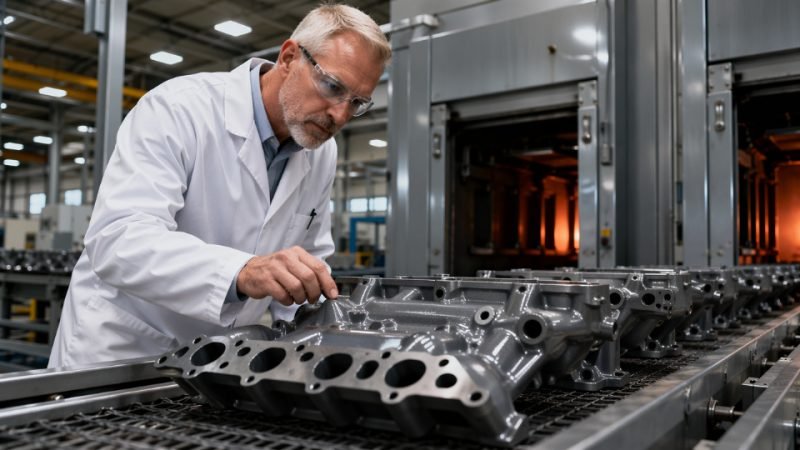
Introduce T units alongside D, and you move from pressure-sensitive territory into protective coatings, release papers, and heat-resistant industrial paints. DT resins balance chain flexibility (from D) against network rigidity (from T). Increasing T content raises pencil hardness, pushes the cure temperature upward — typically requiring 150–200°C for full crosslink — and improves resistance to fuel, lubricant, and humidity exposure. MDT resins add M units to cap reactive ends, controlling molecular weight and solids viscosity. A coatings formulator running a spray line for engine-compartment components will generally prefer a high-T MDT grade; someone laminating flexible release liners will lean toward a lower-T DT profile with more D content to avoid brittleness during winding.
Pure T-Resin (Silsesquioxane) and Q-Resin Systems
When you need ceramic-like surface hardness, extreme thermal stability, or optical clarity, T-only (silsesquioxane) and Q-dominated systems are the candidates. Ladder or cage silsesquioxanes used in LED encapsulants achieve refractive indices and thermal stability that purely organic epoxies cannot match. Q-resin binders — essentially colloidal or reactive polysilicate systems — serve as inorganic binders for high-emissivity coatings and zinc-rich primers on industrial structures. Continuous service to 300–600°C short-term exposure is achievable with these grades, depending on substituent groups and cure conditions.
Functional Variants That Expand the Design Space
Phenyl-modified resins substitute phenyl groups for some methyls, raising refractive index into the 1.50–1.55 range and improving low-temperature flexibility by disrupting chain packing — useful in outdoor LED optics and cold-climate protective coatings.
Vinyl and Si-H functional resins are designed for platinum-catalyzed addition cure, enabling low-temperature cure cycles and precise pot-life control by inhibitor selection.
Epoxy or methacrylic hybrid resins graft organic reactive groups onto the silicone backbone, allowing the formulator to use conventional peroxide, UV, or amine cure while retaining silicone’s surface energy and hydrophobic performance.
Phenyl-modified silicone resins provide meaningfully better low-temperature flexibility than purely methyl-silicone resins of equivalent T-content.True
Phenyl substituents disrupt the regular packing of siloxane chains, lowering the glass transition region and reducing brittleness at sub-zero temperatures — a documented effect in silicone polymer science and confirmed in formulation practice for outdoor and cryogenic service coatings.
Quick-Reference Resin Type Comparison
| Resin Type | Flexibility | Hardness | Max Continuous Service Temp | Typical Solids Content | Primary End-Use |
|---|---|---|---|---|---|
| MQ | Soft to medium | Low | 150–180°C | 50–70 wt% (solvent-borne) | PSA, tackifiers, release modifiers |
| DT | Medium | Medium | 180–220°C | 40–65 wt% | Protective coatings, release papers |
| MDT | Medium to semi-rigid | Medium–high | 200–250°C | 45–70 wt% | Heat-resistant paints, industrial coatings |
| T-resin (silsesquioxane) | Rigid to brittle | High | 250–400°C (grade-dependent) | 95–100 wt% (reactive solids) | LED encapsulants, optical coatings |
| Q-resin (polysilicate) | Very rigid | Very high | 400–600°C (short-term) | 30–55 wt% (aqueous/solvent) | Inorganic binders, high-temp primers |
| Phenyl-modified | Medium | Medium | 200–280°C | 50–70 wt% | Outdoor optics, low-temp coatings |
| Vinyl/H-functional | Variable | Variable | Matches base resin type | 95–100 wt% (100% solids typical) | Platinum-cure encapsulants, adhesives |
| Epoxy/methacrylic hybrid | Medium | Medium–high | 150–200°C | 50–80 wt% | Hybrid industrial coatings, adhesion primers |
Temperature ceilings depend on specific substituent groups, cure schedule completeness, and whether the application involves static or cyclic thermal load. Treat these ranges as screening criteria, not guaranteed spec limits, until your supplier confirms with cured-film test data.
Matching Physical Form and Delivery System to Your Process Equipment and Throughput
The chemistry of a silicone resin means nothing if its physical form is incompatible with your application equipment. A purchasing decision that ignores delivery system fit creates problems that surface mid-production: rejected film builds, VOC compliance violations, viscosity drift that ruins automated dispense cycles, or powder resins that bridge in feed hoppers. Match the form first, then fine-tune the chemistry.
Solvent-Borne Resins: High Performance with Compliance Obligations
Solvent-borne silicone resins remain the dominant choice for high-temperature industrial coatings, electrical insulating varnishes, and release coatings where film formation quality and long pot life are non-negotiable. Aromatic carriers — xylene, toluene — dissolve MQ and MDT resin solids readily and give formators precise control over application viscosity. VM&P naphtha is a lower-aromatic alternative where worker exposure limits are a concern. Some suppliers also offer D4/D5 cyclic siloxane carriers, which reduce HAP content and aid in blending with other silicone intermediates, though D4 is now restricted under EU REACH Annex XVII for consumer wash-off applications.
Solids content in solvent-borne grades typically runs 40–70 wt%, depending on resin molecular weight and target viscosity bracket. Higher solids reduce solvent consumption per unit of applied film but narrow the spray application window.
VOC compliance is not optional and cannot be assumed from a product name. Under EU Directive 2004/42/EC, coatings for specific use categories carry VOC content ceilings that the formulated product — not just the resin — must meet. In the US, EPA Method 24 defines the measurement protocol; limits vary by State Implementation Plan and use category, and California’s SCAQMD rules are materially stricter than federal thresholds. When reviewing supplier technical data sheets, request the as-supplied VOC value in g/L and confirm whether it was measured or calculated. Calculated values using theoretical solvent weight can diverge from Method 24 results when residual reactive volatiles are present.
EU Directive 2004/42/EC sets VOC content limits for decorative and vehicle refinishing coatings, with ceilings that apply to the ready-to-use productTrue
Directive 2004/42/EC (amended) establishes VOC limit values by product subcategory for decorative coatings and vehicle refinishing products placed on the EU market; formulators must comply at point of sale in ready-to-use form.
Waterborne Dispersions: Regulatory Headroom, Operational Trade-offs
Waterborne silicone resin dispersions and emulsions carry solids typically in the 30–50 wt% range and are the practical path to VOC compliance in architectural, consumer product, and light-industrial coating lines already equipped for water-cleanup. The trade-off stack is real. Freeze-thaw stability requires either glycol co-solvents or controlled cold-chain logistics below roughly 5°C. Coalescence aids are usually needed above a minimum film-formation temperature. Maximum continuous service temperature for cured waterborne films typically runs 20–40°C lower than equivalent solvent-borne grades at the same resin backbone — a consequence of incomplete crosslink density achievable through aqueous cure paths, not a chemistry failure.
For any architectural exterior or consumer-facing application, waterborne is increasingly the only viable regulatory path in Europe and urban US markets.
100% Solids and Reactive Liquid Resins: Zero Carrier, Maximum Transfer Efficiency
Potting, encapsulation, pultrusion infusion, and conformal coating processes that run in closed or semi-closed tooling have no tolerance for solvent vapor. 100% solids reactive silicone resins — viscosity typically 500–50,000 mPa·s at processing temperature, depending on molecular weight and functional group density — eliminate carrier evaporation losses entirely and deliver near-100% material transfer efficiency.
Viscosity management is the central process variable. A two-component reactive system at 5,000 mPa·s behaves very differently through a static mixer at 25°C versus 60°C; a 30°C preheat can cut viscosity by 40–60% and open pour windows that would otherwise require unworkable pressures. Pot life at operating temperature — not bench temperature — is what matters for production planning. Request pot-life data at your actual mix and ambient temperature, not just standard 23°C test conditions.
Flake and Powder Resins: Compounding and Powder Coating Lines
Powder coatings, solid encapsulant compounds, and silicone masterbatches require resins in flake or ground powder form. The relevant parameters are particle size distribution (typically D50 in the 50–300 µm range for spray powder; finer for masterbatch dispersion), bulk density, and flow index — all of which affect metering accuracy in screw feeders and Venturi pumps. Resin flake that has agglomerated in transit will bridge in hoppers and create feed starvation. Always request a certificate of analysis that includes particle size and confirm storage conditions for the shipped lot.
Communicating Process Requirements to Your Supplier
When specifying a grade from SiliconChemicals, provide your application method (spray, roll, dip, flood, encapsulation), target wet film weight or coverage rate, cure oven profile (ramp rate, peak temperature, dwell time), and the ambient temperature at point of application. Spray lines generally need viscosity in the 50–500 mPa·s window at gun temperature; roll coaters operate well in the 1,000–8,000 mPa·s range depending on roll gap and speed. These aren’t interchangeable. A pre-adjusted grade — viscosity, solids, and carrier solvent package already matched to your process — avoids on-site thinning that invalidates compliance data and shifts cure stoichiometry in reactive systems.
| Form | Typical Solids | Primary Applications | Key Risk to Manage |
|---|---|---|---|
| Solvent-borne | 40–70 wt% | Industrial coatings, varnishes, release coatings | VOC compliance; carrier selection |
| Waterborne dispersion | 30–50 wt% | Architectural, consumer-facing coatings | Freeze-thaw stability; coalescence |
| 100% solids reactive | 95–100 wt% | Potting, encapsulation, pultrusion | Viscosity/pot-life at process temp |
| Flake / powder | N/A (solid) | Powder coatings, masterbatch compounding | Particle size; flow and bridging |
Crosslinking Mechanisms and Cure Schedules: Condensation, Addition, and UV/EB Options
Cure chemistry is not a secondary specification — it is the axis around which your entire line design rotates. Choose the wrong cure mechanism for your substrate or oven budget, and you will discover the mismatch at the worst possible moment: during a production run.
Condensation Cure: By-Product Management Is the Real Engineering Problem
Condensation-curing silicone resins react through residual silanol (Si–OH) groups, releasing small-molecule by-products as the network forms. Depending on the crosslinker type, that by-product is ethanol or methanol (alkoxysilane crosslinkers), acetic acid (acetoxy systems), oxime (oximino systems), or water (direct silanol condensation). Each by-product carries a different consequence. Acetic acid off-gassing corrodes copper contacts and de-adhesion from certain metals within hours if cure is done in a confined assembly. Water and alcohol by-products are more forgiving but still create a film-thickness ceiling: past roughly 0.5–2 mm per coat (depending on resin solids and temperature), vapor cannot escape fast enough and you get blistering or inter-coat delamination.
Room-temperature cure takes 24–72 hours and depends heavily on ambient humidity for moisture-activated systems — acceptable for maintenance coatings, impractical for a production line running 200 parts per shift. Forced cure at 150–200°C for 30–60 minutes closes that gap, but you need staged ramp rates. Jumping directly to 180°C on a freshly applied 1.5 mm casting will trap solvent. A typical profile that works: 80°C for 15 minutes to remove solvent, then 150–175°C for 45 minutes for network formation. Always verify against the resin supplier’s exotherm data.
Addition Cure (Hydrosilylation): Zero By-Products, Zero Tolerance for Contamination
Platinum-catalyzed addition cure is the cleanest mechanism available — vinyl-functional resin crosslinks with a Si–H functional crosslinker, no volatiles released, no dimensional instability from by-product escape. The tradeoff is that stoichiometry must be precise. A vinyl-to-SiH ratio between 1:1.0 and 1:1.2 is the typical working window; running outside that range leaves either unreacted vinyl (soft, tacky surface) or excess SiH (progressive post-cure brittleness over weeks).
The operationally critical risk is catalyst poisoning. Sulfur compounds, organotin residues, amine-containing mold release agents, and PVC stabilizers all deactivate platinum at parts-per-million concentrations. On a real production floor, the contamination route is often indirect: a technician touches a tin-stabilized gasket, then handles the mixing vessel. Cure failure shows up as permanent surface tack — the part appears cured but never fully crosslinks. Mitigation requires dedicated tooling, substrate pre-cleaning protocols, and periodic catalyst activity checks using a test coupon before committing a full batch.
UV and Electron-Beam Cure: Speed Comes With Geometry Constraints
Acrylate- or methacrylate-modified silicone resins cure by free-radical polymerization triggered by UV light or electron-beam radiation. Line speed is the headline advantage — UV doses of 500–1500 mJ/cm² at 365 nm (the range shifts depending on photoinitiator absorption spectrum and film thickness) convert a wet coating to a tack-free solid in under five seconds. That throughput is transformative for release liners, optical films, and conformal coating on populated PCBs.
The hard limitations: pigmented systems scatter and absorb UV, so anything beyond about 30–40% TiO₂ loading will have an under-cured base layer regardless of dose. Thick sections above roughly 100–200 µm show the same shadow-cure problem. Electron-beam avoids the photoinitiator dependency and penetrates more deeply, but the capital cost of an EB unit is only justified at high-volume continuous web operations.
UV-cured silicone coatings achieve full mechanical properties immediately after irradiation with no post-bake required in all cases.False
Many UV-cured silicone systems, particularly thick-section or pigmented formulations, require a supplemental thermal post-cure at 80–120°C for 15–30 minutes to complete deep-section crosslinking and drive off any residual photoinitiator fragments. Assuming instant full cure without verification leads to adhesion failures in service.
Dual-Cure and Staged-Cure Systems: B-Stage Capability for Complex Assemblies
Some applications — electronics conformal coatings, prepreg fabrics, encapsulant casting — need the resin to be handleable and partially stable before final cure. Dual-cure systems address this by combining two independent cure mechanisms: for example, a UV-initiated surface gel followed by a thermally activated deep cure, or a moisture-triggered B-stage followed by heat-completion. Blocked platinum catalysts offer thermal latency — the resin stays workable at room temperature for days or weeks, then cures fully above a specific activation threshold (typically 80–120°C depending on the blocking agent). SiliconChemicals formulates dual-cure grades specifically targeting conformal coating on dense PCB assemblies where shadowed components underneath SMD packages need guaranteed cure coverage that line-of-sight UV alone cannot provide.
Practical Cure Schedule Optimization: Use the Data Sheet Instruments, Not Guesswork
Every credible silicone resin supplier provides DSC (differential scanning calorimetry) traces and rheology profiles. The DSC exotherm onset temperature tells you the minimum cure activation point; the peak position tells you where the reaction accelerates and where your oven profile needs dwell time. Rheology data — specifically the G′/G″ crossover point — shows you gelation time at a given temperature, which directly sets your pot-life window for mixing operations.
Under-cure leaves a network with inadequate crosslink density: you will see low hot hardness, solvent swell, and early adhesion loss under thermal cycling. Over-cure or too-rapid ramp causes post-cure shrinkage cracking, particularly at film thicknesses above 0.3 mm on rigid substrates with mismatched CTEs. The practical discipline is straightforward: run a small-scale cure study across three oven temperatures using the supplier’s suggested window, pull samples for pencil hardness and MEK double-rub at each condition, and set production parameters at the low end of the acceptable window to build in process latitude. That thirty-minute exercise prevents hours of scrap investigation later.
Thermal, Electrical, and Environmental Performance Targets: Setting Specification Limits Before You Source
The single most expensive procurement mistake in silicone resin sourcing is treating a supplier’s marketing headline — “rated to 300°C” — as a specification. It isn’t. Before you issue an RFQ, translate your end-use requirements into numbered, test-method-referenced limits that any qualified supplier must meet with certified data. That discipline eliminates unsuitable candidates early and gives you objective grounds to reject a shipment that drifts out of spec.
Thermal Performance: Know Which Rating Actually Applies to Your Application
Three different thermal indices appear on data sheets, and they are not interchangeable. UL 746B Relative Thermal Index (RTI) is the one that matters for electrical components entering North American markets — it reflects long-term mechanical and electrical property retention at a defined temperature, not just decomposition onset. IEC 60216 Thermal Index (TI) is the European and international equivalent, derived from time-to-failure testing at multiple temperatures under Arrhenius extrapolation to a 20,000-hour endpoint. TGA or DSC onset data, which many suppliers lead with, simply tells you when mass loss begins in a nitrogen purge at a fast ramp rate — useful for chemistry characterization, essentially irrelevant for service-life prediction.
For practical screening: standard methyl-functional silicone resins carry continuous service ratings of 180–200°C, depending on film thickness and substrate. High-phenyl or polysilsesquioxane-based grades can sustain 250–280°C continuously and withstand short-term excursions to 300–600°C, where the upper end of that range depends on film thickness, substrate conductivity, and whether the coating sees oxidizing or inert atmosphere. When you request certified data from SiliconChemicals, ask specifically for UL or IEC certified reports, not internal test summaries, and confirm whether the rating was achieved on the resin alone or on a fully formulated coating system.
Dielectric Performance for Electronics
Silicone resins are inherently low-polarizability materials. Dielectric constant (Dk) for cured silicone resin coatings typically falls between 2.7 and 3.5 at 1 MHz — the exact value depends on phenyl content, cure density, and moisture uptake. Compare that to 4.0–5.0 for standard epoxy encapsulants. For high-frequency electronics above 1 GHz, even a Dk difference of 0.3 meaningfully shifts impedance in dense PCB assemblies.
Silicone resins consistently show lower dielectric constants than epoxy resins at equivalent cure statesTrue
The Si–O backbone has lower electronic polarizability than the C–C/C–O backbone of epoxies, and this difference is well-documented in published IEEE and IEC dielectric measurement studies on encapsulant materials.
Dissipation factor (Df) targets for conformal coatings should be below 0.002 at 1 MHz for high-reliability boards. Volume resistivity above 10¹⁴ Ω·cm is standard for conformal coatings; high-voltage insulator applications typically demand ≥10¹⁵ Ω·cm, and you should require that figure measured after 96-hour water immersion, not just on dry specimens.
Weathering and UV Durability
Methyl-functional resins chalk and haze faster under UV than phenyl-containing grades. Phenyl groups improve UV absorption and refractive index stability, which is why they dominate architectural and outdoor industrial coating formulations. For a credible 10-year outdoor durability claim, request QUV-A testing to at least 3,000 hours with gloss retention above 70% and no chalking rating worse than ASTM D659 rating 8. QUV-B protocols are more aggressive and better suited to screening tropical or high-altitude exposures; 1,500 hours QUV-B with comparable gloss retention is a reasonable threshold.
Chemical Resistance: Where Silicone Excels and Where It Fails
Silicone resins resist dilute mineral acids, water, oxidizing environments, and most aliphatic hydrocarbons well. Concentrated sodium or potassium hydroxide solutions attack the Si–O backbone through hydrolysis — even a 10% NaOH solution at 60°C will degrade an unmodified silicone coating within days. Chlorinated solvents such as methylene chloride and trichloroethylene cause swelling and delamination in flexible grades. If your application involves alkaline cleaning cycles or solvent wipe-downs with chlorinated agents, specify a silicone-epoxy or silicone-polyester hybrid and confirm resistance with a 72-hour immersion test at service temperature before production qualification.
Mechanical Targets Engineers Overlook
Pencil hardness for cured hard-grade silicone resin coatings runs H to 4H, depending on T:D ratio, crosslink density, and substrate preparation. Flexible grades used on gaskets or flexible electronics substrates need elongation at break in the 20–80% range; specify this to ISO 37 or ASTM D412 so suppliers test at comparable strain rates. Adhesion pull-off strength on aluminum substrates typically falls between 1.5 and 4.0 MPa for properly primed systems — on steel, similar range, but with stronger primer dependency; on glass, interfacial adhesion is primer-critical and should be tested after 168-hour water soak to expose hydrolytic failure at the interface. Specify ASTM D4541 or ISO 4624 by name in your RFQ so there is no ambiguity about which test method the supplier used.
Industry-Specific Selection Roadmaps: Electronics, High-Heat Coatings, Release Systems, and Construction
Every application vertical has its own hierarchy of failure modes, and the resin that performs brilliantly on an exhaust manifold coating will likely crack, delaminate, or outgas unacceptably inside a power module. What follows is a working decision framework organized by end-use — not by resin chemistry — so you can enter at your industry and exit with a shortlist of qualified sub-types.
Electronics and EV Applications
LED encapsulant grades demand phenyl-modified silicone resins with phenyl-to-silicon ratios tuned to push refractive index to ≥1.50; without that match to the LED chip’s optical stack, light extraction efficiency drops measurably. Low yellowing after thermal aging (typically tested at 150°C for 1,000 hours) is non-negotiable, and Tg management matters because a Tg that’s too high relative to operating temperature creates stress concentration at wire-bond interfaces during thermal cycling.
Power module underfill and die-attach resins require thermal conductivity in the 0.3–1.5 W/m·K range, depending on filler loading — aluminum nitride and boron nitride fillers push toward the upper end, but filler size distribution and surface treatment control viscosity, which directly affects void-free fill of sub-100 µm gaps. Get the filler-resin coupling chemistry wrong and you get delamination at the first thermal shock cycle.
Conformal coating grades must satisfy IPC-CC-830 qualification. Dielectric strength, insulation resistance after humidity exposure, and fungus resistance are the three screening filters. Solvent-borne silicone conformal coatings generally apply at 15–30 µm dry film thickness; thicker application to compensate for uneven coverage is a common process error that traps solvent and causes bubbling under cure.
Battery module thermal interface materials represent a newer selection challenge. The resin matrix needs to remain compliant at operating temperatures to maintain contact pressure against cell surfaces while resisting compression-set creep over a service life measured in years.
High-Heat Industrial Coatings
For exhaust systems, industrial oven interiors, stack liners, and engine components seeing 300–600°C intermittent exposure, the selection pivots to high-phenyl T-resins or methyl-phenyl hybrid resins. Pure methyl silicone resins are adequate to roughly 250°C continuous; above that, increasing phenyl substitution stabilizes the polymer backbone against oxidative degradation.
Pigment compatibility is where many formulation projects stall. Aluminum flake gives excellent heat reflectance and works well with silicone binders. Iron oxide pigments are chemically stable at high temperatures but can catalyze resin degradation if the pH of the pigment slurry isn’t controlled. Ceramic fillers like mica or wollastonite improve thermal cycling resistance by reducing the coefficient of thermal expansion mismatch between coating and substrate.
Single-coat systems are feasible for service up to roughly 400°C on clean steel if film build and cure schedule are tightly controlled. Above that, a primer-topcoat approach — using a zinc or aluminum-pigmented silicone primer for adhesion and corrosion protection, followed by a high-pigment-volume topcoat — gives more reliable long-term adhesion through repeated heat cycles.
High-phenyl silicone resins provide superior thermal stability above 300°C compared to purely methyl-substituted silicone resins.True
The phenyl group's aromatic ring structure is more thermally stable than methyl groups under oxidative high-temperature conditions, a well-documented principle in organosilicon polymer chemistry.
Release Coating Systems
MQ resin content is the primary lever for tuning release force. Higher MQ resin loading in an addition-cure silicone system increases crosslink density and surface hardness, tightening release force toward the 100–200 mN/25 mm end of the range. Lighter loading, or switching to a lower-functionality MQ grade, moves release force down toward 10–30 mN/25 mm for premium release liner applications.
Rub-off resistance — the tendency of cured silicone to transfer to the adhesive layer — is controlled by crosslink density. Under-cured systems caused by inhibitor contamination from certain adhesive chemistries are a persistent plant-floor problem. Solventless platforms offer higher throughput on coater lines designed for them, but they demand tighter temperature control than solvent-borne systems because the viscosity-temperature relationship is steep.
For composite mold release, the resin must survive repeated thermal cycles without losing release effectiveness. Emulsion platforms suit paper substrates where solvent penetration would cause curl or fiber disruption.
Construction and Architectural Coatings
Silicone resin binders for facade coatings need a minimum of 30–50 wt% silicone content in the binder fraction to support legitimate weathering performance claims. Below 30%, the silicone contribution to hydrophobicity and UV resistance is marginal; the coating behaves closer to a modified acrylic in long-term exposure testing.
Water vapor permeability — breathability — is a genuine functional advantage over pure acrylic binders on masonry substrates. Trapped moisture under an impermeable coating causes spalling. Silicone-modified alkyds trade some weathering durability for improved pigment compatibility and easier application at ambient temperature, making them practical for field application scenarios where high-cure-temperature silicone systems are impractical.
Compatibility with mineral pigments like titanium dioxide, iron oxides, and silica fillers is generally good, but compatibility testing with any reactive pigment — particularly zinc-containing primers — should be confirmed before scale-up.
Emerging Applications
Silicone resin aerogel composites for thermal insulation are at the qualification stage in construction and industrial insulation markets. Selection criteria here center on the resin’s ability to form a continuous matrix around aerogel granules without collapsing pore structure during cure. Ceramic precursor resins for SiOC coatings require resins that pyrolyze cleanly at 800–1,200°C without leaving carbonaceous residues that degrade ceramic film density. Photovoltaic backsheet adhesion promoters demand UV stability over 25-year service life projections — early-stage qualification should prioritize accelerated weathering data, not just initial adhesion values.
Evaluating Supplier Qualification: Technical Data Sheets, Lot Consistency, and Supply Chain Reliability
Price gets you in the door. Documentation keeps your process running. Too many procurement teams discover this the hard way after a resin lot change triggers coating adhesion failures or a cure schedule drift that shuts down a high-volume oven line for two shifts. A rigorous supplier evaluation framework treats the technical data sheet, quality system records, and supply chain architecture as equally important as unit cost.
What a Complete Technical Data Sheet Must Actually Contain
A TDS for a production-grade silicone resin is not a marketing brochure. At minimum it must specify viscosity with measurement method and temperature called out explicitly — “500 mPa·s at 25°C by Brookfield LV, spindle 3, 12 rpm” is useful; “medium viscosity” is not. Solids content should reference ISO 3251 or ASTM D2369 with oven temperature and dwell time stated, because silicone resins retain trace solvent differently depending on their backbone structure, and a casual 1-hour bake at 105°C will give you a different number than the correct method. GPC molecular weight distribution — Mn, Mw, and PDI — belongs on the sheet for any resin used in electronics encapsulants or high-build coatings where film integrity depends on chain-length control. Functional group content must be quantified: hydroxyl content as OH% by titration, Si–H as mmol/g by hydrogen evolution or FTIR, vinyl as mmol/g for addition-cure grades. Shelf life in months and storage conditions (temperature range, inert atmosphere or not, UV exclusion) round out the minimum.
If any of these are absent, treat it as a red flag — not a paperwork gap. A supplier who cannot report PDI likely does not run GPC in-process, which means molecular weight drift between lots is invisible to them until your application fails.

Lot-to-Lot Consistency: What Acceptable Variation Looks Like
For production-grade silicone resin, ±5% relative variation on viscosity and solids content between lots is a workable target. Tighter applications — conformal coatings for automotive electronics, for example — may require ±2–3%. Always request the Certificate of Analysis in a fixed format that lists the actual measured value alongside the specification limit, not just a “pass” stamp. Ask suppliers whether their CoA values are derived from 100% lot testing or from skip-lot sampling; the answer tells you a great deal about their process confidence.
SiliconChemicals maintains SPC charts on viscosity, solids, and hydroxyl content for standard grades and can provide trend data on request — the kind of documentation that accelerates your incoming QC sign-off and gives you early warning if a manufacturing variable is drifting before it reaches a nonconformance.
Regulatory and Compliance Documentation
Depending on your market, missing compliance documents can ground a product launch or trigger a customs hold. For any resin containing substances of concern, a REACH SVHC declaration is non-negotiable for EU supply chains. Electronics-grade resins destined for consumer products need RoHS screening. Food-contact release coating applications require FDA 21 CFR 175–177 compliance letters — not just a verbal assurance. US importers need TSCA inventory status confirmed in writing before the first commercial shipment.
SiliconChemicals pre-assembles compliance packages for regulated markets, which compresses the qualification timeline meaningfully. Customers entering the EU market for the first time often underestimate how long gathering this documentation from a new supplier can take; having it ready at sample stage rather than at first commercial order is a concrete operational advantage.
SiliconChemicals provides pre-prepared REACH, RoHS, and FDA compliance documentation packages to customers in regulated markets.True
This is a stated supplier capability aligned with standard practice for China-based exporters serving EU, US, and electronics-sector customers; it is consistent with the documented regulatory requirements for those markets.
Supply Chain Resilience: Single-Source Risk and MOQ Reality
Single-sourcing a specialty silicone resin is acceptable when the resin is truly proprietary, but for most standard MQ, DT, or MDT grades it exposes your production to unnecessary lead-time risk. A dual-qualified supplier strategy — with a primary supplier on running production and a secondary supplier with a qualified batch on file — adds insurance without complicating day-to-day procurement.
Minimum order quantities matter here. Specialty and custom-synthesis grades from SiliconChemicals run 50–200 kg MOQ, depending on batch complexity; commodity and stock grades run 1–5 MT. Lead times for stock grades are typically 1–2 weeks ex-warehouse. Custom synthesis — new functional group ratios, atypical backbone compositions — runs 6–12 weeks depending on raw material availability and reactor scheduling. Build that window into your NPD timeline, not as a post-design afterthought.
China-based production at equivalent analytical purity offers a 15–30% cost advantage over Western-produced equivalents, a range that depends on grade complexity, order volume, and currency fluctuation. That margin is real, but only materializes reliably when the quality system behind the price is sound.
Sampling and Qualification Protocol
Request 100–500 g laboratory samples before committing to any production qualification run. Run your internal benchmarks against your incumbent material — same substrate, same cure schedule, same test methods — and define explicit pass/fail criteria before you start. Communicate those criteria to the supplier in writing. If the sample does not pass, a well-documented failure is actionable: a capable supplier can use your test data to target a reformulation rather than guessing. Suppliers who push back on sharing reformulation iterations, or who cannot interpret your application test results, are telling you something about how the relationship will function at scale.
Total Cost of Ownership Analysis: Resin Price vs. Formulation Efficiency, Yield, and Rework Cost
Procurement teams under budget pressure often start and stop at unit price. For silicone resins, that instinct is expensive. A resin quoted at USD 8/kg looks better on a purchase order than one at USD 22/kg — until you account for solids content, coverage yield, cure energy, and what happens when the coating fails in the field.
Component Cost Framing: Why the Price Range Misleads Without Context
Silicone resins trade across a wide band — roughly USD 5–35/kg depending on the resin type (MQ, DT, MDT), functional group complexity (vinyl, epoxy, phenyl content), and solids level. That range is not random noise. A solvent-borne methyl silicone at 45 wt% solids sits at one end; a phenyl-modified 100% reactive grade optimized for motor insulation varnish sits at the other. Comparing their per-kilogram prices is structurally the same mistake as comparing a gallon of concentrate to a gallon of ready-to-use product. The number tells you cost of inventory, not cost of applied film.
Formulation Efficiency: Solids-by-Weight vs. Solids-by-Volume
The metric that actually governs coating economics is theoretical coverage rate: how many square meters does one kilogram deliver at your target dry film thickness (DFT). The formula is straightforward — theoretical coverage (m²/kg) = [solids content (wt%) × density correction × 10] ÷ DFT (µm) — but density is where most spreadsheets fail. Two resins with identical 50 wt% solids can have meaningfully different solids-by-volume once you account for the specific gravity of the polymer backbone and solvent blend. A phenyl-enriched resin is denser; a silicone–acrylic hybrid may be lighter.
Run a quick worked comparison: a 45 wt% solvent-borne grade at USD 9/kg covering 8 m²/kg at 25 µm DFT delivers applied film at roughly USD 1.13/m². A 65 wt% solids grade at USD 14/kg covering 13 m²/kg at the same DFT comes in near USD 1.08/m² — and ships less solvent weight, lowering freight and VOC compliance cost. The higher-priced drum saves money before it reaches the spray booth.
Rework and Warranty Cost Exposure
This is where wrong-fit resin selection becomes genuinely painful. Consider a typical consequence chain: an industrial oven manufacturer specifies a standard-grade methyl silicone (rated to 200°C continuous) on an oven interior that cycles to 260°C. Within two production seasons, the coating chalks and adhesion fails. Re-coating an oven interior — shutdown, abrasive blasting, recoat, cure cycle, recommission — runs anywhere from moderate to severe depending on oven size and accessibility, but even a small industrial oven re-coat job can consume 15–40× the cost delta between the adequate resin and the correct high-temperature grade. Warranty claims on architectural facades or LED lighting modules carry the same logic at higher dollar values.
Specifying a silicone resin grade rated 30–50°C above your continuous service temperature — rather than exactly at it — meaningfully reduces early failure risk without proportional cost increase.True
Silicone resin degradation is not a sharp threshold; it follows an Arrhenius-type relationship where operating 30–50°C below rated ceiling slows oxidative crosslink breakdown substantially. The cost premium for the higher-rated grade is typically 15–30% per kg, while the failure consequence cost is a multiplier of the entire application labor and downtime, not just material.
Hidden Cost Centers That Never Appear in the Resin Quote
Addition-cure systems require platinum catalyst — typically at 0.05–0.2 phr loading — and an inhibitor package. Those add-ons can represent 8–18% of the formulated material cost depending on catalyst loading and current platinum pricing. High-viscosity systems with short pot life generate measurable waste in batch operations; a resin that demands mixing and application within 2–4 hours forces either small batches (more labor, more cleanup) or deliberate overproduction and disposal. Cure schedule energy is the other invisible line item: a resin requiring 30 minutes at 200°C in a gas-fired oven versus 15 minutes at 150°C for a competitor grade represents a real energy differential that compounds across thousands of parts per month.
A standardized TCO worksheet should carry at minimum seven line items: resin unit cost, solids-adjusted coverage yield, catalyst and crosslinker cost per liter applied, pot-life waste factor, cure energy cost per batch, rework rate (% of output) × average rework labor and material cost, and warranty claim reserve. Comparing two candidate resins across all seven columns routinely inverts the apparent price advantage of the lower-quoted grade.
Cost-Optimization Levers Available Through an Integrated Supplier
Bulk packaging — moving from 25 kg pails to 200 kg drums or IBC totes — typically reduces per-kg landed cost by 6–14% depending on resin viscosity and whether the buyer has adequate storage and handling infrastructure. Annual volume contracts with explicit price-index clauses (tied to methanol, D4 cyclics, or a published organosilicon feedstock index) remove the uncertainty that forces buyers to over-order ahead of anticipated price spikes. For customers with established formulation labs, toll blending arrangements let you supply proprietary additives while the resin supplier handles polymer blending and quality control, preserving your formulation IP while reducing your internal processing overhead. Technical co-development programs — where supplier application engineers work alongside the buyer’s process team during qualification — can shorten the development cycle by weeks, offsetting any cost premium on the selected resin grade with measurable time-to-market value.
The resin line item is usually 20–45% of total formulated product cost. Every percentage point of yield improvement, every avoided rework cycle, and every hour cut from cure schedules acts on the remaining 55–80% of your cost structure. Optimize the whole model, not the purchase order.
Frequently Asked Questions About Choosing Silicone Resins
What is the difference between silicone resin and silicone rubber, and can they be used interchangeably?
No — they are not interchangeable without significant reformulation. The fundamental difference is crosslink density and glass transition temperature. Silicone resins have high trifunctional (T) or tetrafunctional (Q) unit content, producing a densely crosslinked, glassy-to-semi-rigid network with a Tg typically between 40°C and 150°C depending on organic substituent loading and cure conditions. Silicone rubber, built predominantly from D-unit linear chains with low crosslink density, remains elastomeric well below room temperature — its Tg sits below –50°C, often below –120°C for pure polydimethylsiloxane elastomers.
If you substitute a silicone resin where an elastomeric seal or gasket is specified, the part will crack under flexural stress or thermal cycling. The reverse mistake — using a silicone rubber compound where a hard dielectric coating is required — produces a film that stays soft, traps contamination, and fails adhesion tests. The two material families solve different mechanical problems even though both are organosilicon chemistries.
How do I know if I need a methyl silicone resin or a methyl-phenyl silicone resin?
Use pure methyl (M/D/T units with only methyl substituents) when maximum continuous heat resistance and lowest raw material cost are the primary drivers. Methyl silicone resins perform reliably at 180–250°C continuous and tolerate short-term excursions higher, depending on film thickness and substrate.
Introduce phenyl content — typically 20–40 mol% phenyl substitution — when your application requires any of three things: low-temperature flexibility down to –50°C or below (phenyl disrupts chain packing and suppresses crystallization), a higher refractive index closer to 1.50–1.55 for optical encapsulant or LED lens applications, or better compatibility and co-cure with organic resins like epoxy or polyester in hybrid formulations. Phenyl content does add cost and can slightly reduce the upper continuous use temperature ceiling, so adding it without a technical reason is unnecessary.
Can silicone resins be used directly as a coating without additional crosslinker or catalyst?
It depends entirely on the grade. Some silanol-functional condensation resins are designed as self-crosslinking moisture-cure systems — ambient humidity catalyzes condensation of residual Si–OH groups and the film cures without any additive. These work reasonably well at low film builds in humid environments but cure slowly and inconsistently in dry climates or on thick sections.
Most industrial coating applications use either a two-component system with a separate crosslinker (typically an amino silane or organotitanate catalyst) or a forced-cure oven schedule. The most common plant-floor mistake is mixing a two-component system at an incorrect ratio — too little crosslinker leaves a permanently soft or tacky film; too much causes brittleness and intercoat adhesion failure. Always follow the supplier’s stated pot life and apply within it, because viscosity rise during pot life is not always visible until the film fails.
Using a silicone resin two-component system outside its specified mix ratio is one of the leading causes of soft-film failure in industrial bake coatings.True
Stoichiometric imbalance in condensation or addition crosslinking systems leaves unreacted functional groups that prevent full network formation, producing films with low hardness, poor solvent resistance, and adhesion loss — all documented failure modes in industrial coating quality audits.
What is the minimum silicone content in a silicone-modified alkyd or polyester for meaningful weathering improvement?
The practical industry threshold is 30 wt% silicone resin in binder solids. Below that level, durability gains are largely cosmetic — gloss retention improves marginally, but chalk resistance, UV stability, and hydrolytic durability remain dominated by the organic backbone. Below 20 wt%, weathering performance is essentially indistinguishable from an unmodified alkyd in most accelerated weathering protocols.
At 30–50 wt% silicone content, you start to see measurable improvements in gloss retention after 1,000–2,000 hours of QUV-A exposure and meaningful reductions in chalking on exterior architectural or industrial maintenance coatings. Above 50 wt%, the performance gains continue but cost rises sharply and application properties — flow, recoatability, intercoat adhesion — require more careful formulation work.
How should silicone resins be stored, and what is the typical shelf life?
Shelf life varies by cure chemistry and physical form, and every figure assumes proper storage conditions are maintained.
Solvent-borne condensation-cure resins: 12–24 months in tightly sealed containers, stored away from moisture ingress and ambient temperatures below 30°C. Moisture contamination during storage is the main failure mode — it triggers premature condensation and viscosity drift.
Addition-cure (platinum-catalyzed) resins: 6–12 months, stored below 25°C, and the inhibitor package must remain intact. Exposure to amine-containing materials, sulfur compounds, or certain tin catalysts can poison the platinum catalyst even through container walls if vapors are present.
Waterborne silicone emulsions: 6–12 months, never frozen. Freeze-thaw cycles irreversibly break the emulsion — the product separates and cannot be reconstituted by mixing.
Does SiliconChemicals offer custom molecular weight or functional group modifications for specialty applications?
Yes. SiliconChemicals operates toll synthesis and custom modification programs for customers requiring specific M/D/T/Q ratios, targeted molecular weight distributions, or grafted functional groups (epoxy, acrylate, amino, carbinol) not available in the standard product catalog. Typical lead time for a custom batch ranges from 8 to 16 weeks depending on process complexity and raw material availability — faster for modifications built on an existing base resin, longer when the backbone architecture itself changes. All custom development work is covered by a mutual NDA before any proprietary formulation details are shared. Sample quantities for initial qualification are generally available before committing to full production volumes.
What certifications or test reports should I request before approving a silicone resin for an electronics application?
Request documentation against IPC-CC-830 for conformal coating electrical and environmental performance, UL 94 flame classification (V-0 or V-1 as appropriate for your enclosure class), and MIL-I-46058C if the end product has defense or aerospace customers. For dielectric applications, ask for volume resistivity, dielectric constant, and dissipation factor measured across your operating frequency range — not just at 1 MHz, which is what many generic datasheets report.
SiliconChemicals supplies pre-tested electronics-grade datasheets for applicable grades, including lot-specific dielectric test data on request. If your qualification protocol requires third-party test reports from accredited laboratories, confirm that requirement early — generating those reports adds lead time to sample qualification.