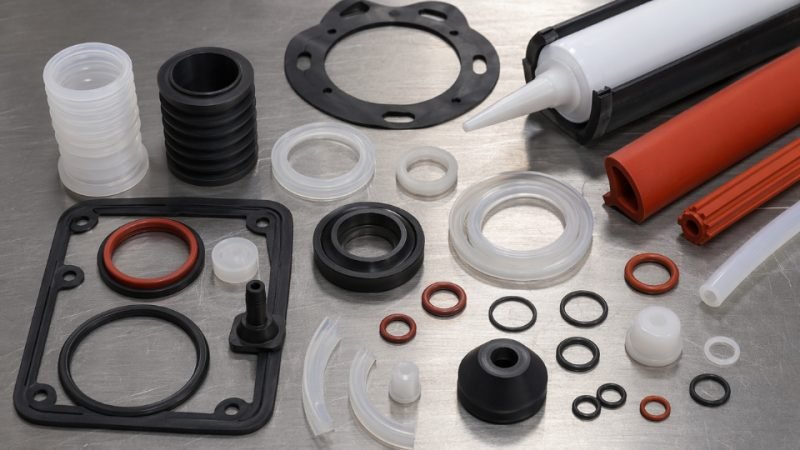
Specifying the wrong silicone rubber grade is not a paperwork error — it is a production problem that compounds fast. A seal specified in standard VMQ installed in a fuel circuit swells 20–40% by volume, distorts, and leaks within weeks; the same part in fluorosilicone (FVMQ) holds below 5% swell under the same exposure. The downstream costs — unplanned downtime, warranty returns, re-tooling molds for a replacement compound — routinely exceed the original material savings by an order of magnitude. Getting the grade decision right before tooling cuts is where the real leverage sits.
Choosing the right silicone rubber means matching three variables simultaneously: the thermal profile the part will see in service (continuous vs. peak), the chemical environment it contacts, and the processing method available on your line. HTV grades suit compression and transfer molding at high volumes; LSR suits injection-molded precision parts with cycle times under 30 seconds; RTV-1 suits in-situ sealing where disassembly access is limited. Nail those three, and hardness, dielectric, and regulatory compliance narrow down predictably.
What makes this harder in practice is that silicone rubber is not one material — it is a family of chemistries with performance gaps wide enough to matter in real service conditions. The difference between a -60 °C–rated general-purpose HTV compound and a fluorosilicone designed for jet fuel exposure is not a footnote in a datasheet; it is the difference between a ten-year service life and a six-month field failure. The sections below work through each major grade, the variables that actually drive selection, and the tradeoffs procurement and engineering teams face when cost, lead time, and performance requirements are all pulling in different directions.
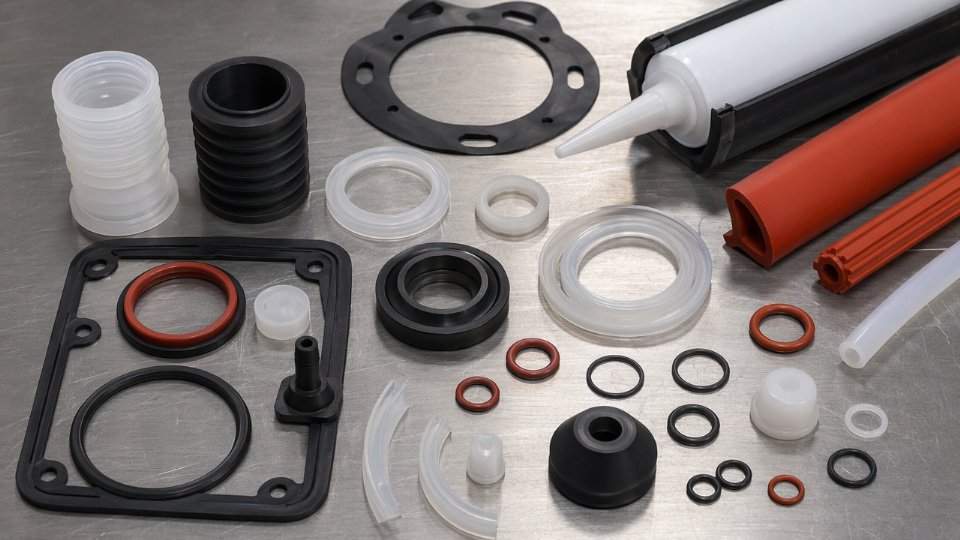
The Silicone Rubber Family Tree: VMQ, PVMQ, FVMQ, LSR, HTV, and RTV Explained
Walk through any distributor catalog and you’ll find “silicone rubber” used to describe a pumpable two-part liquid, a stiff compression-mold gum, a tube of sealant, and a high-voltage cable jacket — all in the same breath. They are not the same material. Getting the taxonomy right before you write a purchase order or a material specification is the difference between a five-year seal and a six-month warranty claim.
The ASTM D1418 / ISO 1629 Letter Code: What Each Character Actually Means
The designation system encodes the polymer backbone, not the processing form. Each letter represents a substituent group on the siloxane chain:
M = methyl (–CH₃), the baseline substituent on nearly every silicone backbone. V = vinyl (–CH=CH₂), added in small mole fractions (typically 0.05–2 mol%) to create crosslink sites for peroxide or platinum cure. P = phenyl (–C₆H₅), a bulky aromatic group that disrupts chain crystallization and depresses the glass transition temperature. Q designates the siloxane (Si–O–Si) backbone itself.
So VMQ = vinyl-methyl silicone — the workhorse grade. PVMQ adds phenyl groups; the polymer resists crystallization at cryogenic temperatures, with glass transition below –100 °C depending on phenyl content (typically 5–25 mol%), making it the only silicone class genuinely suitable for liquid-oxygen sealing and aerospace actuation systems operating below –80 °C. FVMQ substitutes trifluoropropyl groups, which is why fluorosilicone resists hydrocarbon fuels and oils so dramatically — volume swell in ASTM Fuel C stays below 5%, while standard VMQ swells 20–40% under the same exposure. MQ (pure dimethyl silicone, no vinyl) exists but is rarely compounded for dynamic applications; it lacks efficient crosslink sites and is more common in silicone fluids than in rubber parts.
Processing Form Is a Separate Axis — Not a Polymer Type
This is where specification errors multiply. HTV (High-Temperature Vulcanizing) describes a high-molecular-weight gum — typically VMQ or PVMQ — that is mill-processed, calendered, or extruded and then cured at 150–200 °C under pressure. It offers the widest hardness and cross-section flexibility and continuous service to 230 °C, with short-term excursions to around 300 °C depending on filler system and cure package.
LSR (Liquid Silicone Rubber) is frequently misread as a polymer class. It is not. LSR is a two-part, platinum-catalyzed, low-viscosity VMQ compound — a processing form that enables injection molding with cycle times under 30 seconds at 180 °C, tight dimensional tolerances, and flash-free thin walls. The polymer backbone is still VMQ. The advantage is automation and cycle speed; the trade-off is tooling cost.
RTV-1 (one-part, moisture-cure) vulcanizes from the surface inward at a rate of roughly 2–3 mm per 24 hours at 50% relative humidity. That rate drops significantly in dry environments or sealed joints — a detail that causes adhesive failures when assemblers don’t account for ambient humidity on the production floor. RTV-2 systems cure through either addition (platinum) or condensation (tin) mechanisms; addition-cure grades are preferred in medical and food contact work because they leave no byproduct and cure uniformly through mass.
Comparison Table
| Designation | Base Polymer | Typical Hardness (Shore A) | Service Temp Range | Key Differentiator | Typical Industries |
|---|---|---|---|---|---|
| VMQ / HTV | Vinyl-methyl silicone gum | 20–80 | –60 °C to +230 °C continuous | Broad utility; compression/extrusion | Automotive, HVAC, general industrial |
| VMQ / LSR | Vinyl-methyl silicone liquid | 10–80 | –60 °C to +200 °C | Fast injection molding, thin walls | Medical, infant care, electronics |
| PVMQ | Phenyl-vinyl-methyl silicone | 30–70 | –100 °C+ to +200 °C | Cryogenic flexibility | Aerospace, defense, cryogenics |
| FVMQ | Fluorosilicone | 40–75 | –60 °C to +175 °C | Fuel/oil/solvent resistance | Aerospace fuel systems, automotive |
| RTV-1 | VMQ (moisture-cure) | 15–50 | –60 °C to +180 °C | Single-part, in-situ sealing | Electronics encapsulation, construction |
| RTV-2 | VMQ (addition or condensation) | 5–60 | –60 °C to +200 °C | Castable, mold-making, conformal coat | Mold tooling, medical devices |
Clearing Up the “Food-Grade Silicone” Misconception
'Food-grade silicone' is a distinct polymer type with different chemistry from standard silicone rubber.False
Food-grade is a compliance status, not a polymer class. VMQ, LSR, or RTV-2 compounds can all achieve FDA 21 CFR 177.2600 or EU 10/2011 compliance when compounded with approved fillers, pigments, and cure systems, and validated through appropriate extractables and migration testing. The polymer backbone itself is not what confers regulatory status.
This distinction matters in procurement: requesting “food-grade silicone” without specifying polymer type, hardness, and the specific regulation you’re certifying against gives your compounder — or a distributor repackaging an unvalidated compound — enormous room to supply something noncompliant.
Where Integrated Supply Chain Reaches What Distributors Cannot
SiliconChemicals’ manufacturing pathway runs from methyl chlorosilane intermediates through hydrolysis, polymerization, and compounding under one operational structure. That vertical integration allows backbone modification — adjusting vinyl content for cure rate, introducing phenyl groups for low-temperature performance, or incorporating functional silanes for adhesion — at the polymer synthesis stage rather than relying on additive workarounds. A distributor buying finished compound from a third-party base polymer producer cannot offer that. When your application sits at the edge of a standard grade’s performance envelope, the ability to adjust the backbone directly is the practical difference between a working seal and a redesign cycle.
Mapping Thermal Demands: Continuous Service, Peak Excursions, and Cryogenic Limits
Temperature is the first filter in any silicone selection conversation, yet it is also the most frequently misapplied one. Engineers routinely specify a single number — the continuous service temperature — and stop there. That shortcut is responsible for a disproportionate share of seal failures, gasket compression-set failures, and cable jacket cracking in the field.
The Three Thermal Parameters You Must Define Before Specifying a Grade
Every application has three distinct thermal design inputs, and you need all three before you can commit to a compound:
Continuous service temperature (CST) — the steady-state temperature the rubber must survive without unacceptable property loss over the design lifetime. This is the number most datasheets address.
Short-duration peak temperature with dwell time — transient excursions above CST. A turbocharger boot that runs at 180°C normally may see 240°C for 30–90 seconds during aggressive driving cycles. That dwell time matters enormously; a compound rated for 230°C CST will survive a 260°C, 15-second spike with acceptable degradation, but the same excursion held for 10 minutes becomes irreversible chain scission.
Minimum operating temperature — often ignored entirely, especially by procurement teams buying for warm-climate installations. Cryogenic flexibility governs whether a seal generates adequate contact stress at cold-start and whether the material fractures under mechanical shock below its glass-transition inflection.
Specifying only CST without dwell time and low-temperature limits is how a technically correct datasheet choice still ends up as a warranty return.
Ranked Thermal Performance Across the Silicone Family
The table below reflects typical compound-level performance; actual values shift with filler loading, cure system, and post-cure protocol.
| Grade | Continuous Service Temp | Peak (short-term) | Low-Temp Flex Limit | Compression Set at Elevated Temp |
|---|---|---|---|---|
| Standard VMQ | -55°C to +200°C | ~230°C | -55°C | 25–45% at 200°C / 22 h (varies with hardness) |
| Heat-stabilized VMQ (Fe₂O₃ package) | -55°C to +230°C | ~260°C | -55°C | 20–35% at 225°C / 22 h |
| PVMQ (phenyl-modified) | -100°C to +200°C | ~230°C | -100°C | 25–45% at 200°C / 22 h |
| FVMQ (fluorosilicone) | -65°C to +200°C | ~220°C | -65°C | 30–50% at 175°C / 22 h |
Compression set ranges depend heavily on durometer, cure state completeness, and post-cure duration — a 70 Shore A peroxide-cured VMQ post-cured at 200°C for 4 hours will sit at the low end of that range; the same compound without post-cure sits at the high end or beyond.
How Silicone Actually Degrades at Temperature — and Why Cure System Matters
Two competing mechanisms operate simultaneously in thermally aged silicone. Oxidative chain scission cleaves the Si–O backbone, reducing molecular weight and causing surface tackiness and tensile loss. Competing against this, continued crosslink densification stiffens the network, driving up compression set and reducing elongation. Which mechanism dominates depends on the compound formulation, the oxygen availability, and the temperature.
Peroxide-cured HTV silicone generates peroxide byproducts during vulcanization. Even after post-cure, residual decomposition fragments continue to influence the crosslink network under sustained heat. Platinum-cured LSR carries none of those residual byproducts. After 3,000 hours at 200°C, platinum-cured LSR compounds typically retain 60–75% of original elongation at break, while comparable peroxide-cured VMQ compounds often drop to 40–55% retention — a meaningful gap when the part must remain pliable in a cyclic-load environment.
Platinum-cured LSR retains elongation better than peroxide-cured VMQ after extended thermal aging at 200°CTrue
The absence of residual peroxide decomposition fragments in platinum addition-cure systems results in a more stable crosslink network under oxidative thermal conditions, a finding consistent with ISO 188 aging studies across multiple compound families.
Thermal Cycling and CTE Mismatch — the Failure Mode Nobody Budgets For
Static heat resistance is only half the story in constrained assemblies. When a silicone gasket is bolted between an aluminum housing and a steel flange, every thermal cycle imposes differential expansion across the joint. Silicone’s coefficient of thermal expansion runs approximately 200–300 ppm/°C, depending on filler content and hardness. Compare that to aluminum at roughly 23 ppm/°C, steel at 11–13 ppm/°C, and PTFE at 100–150 ppm/°C.
A 150°C swing in a constrained silicone gasket assembly produces shear strains that accumulate over hundreds of cycles. The visible failure — a crack propagating from the bolt hole outward — looks mechanical, but its root cause is thermal. Phenyl-modified PVMQ compounds offer marginally lower CTE than standard VMQ, but the more reliable engineering response is to design in enough cross-sectional compliance to absorb the differential strain rather than expecting the rubber to take it all in shear.
Decision Framework for Thermal Specification
If your continuous service temperature sits below 200°C and low-temperature requirements are moderate (above -55°C), standard VMQ compounds cover the majority of industrial sealing and gasketing needs at the lowest material cost.
If CST is 200–230°C, specify heat-stabilized VMQ with certified iron oxide additive packages. SiliconChemicals supplies pre-compounded HTV sheet stock and gum in this category with thermal aging reports certified to ISO 188 and ASTM D573 — not just datasheet claims.
If your application demands flexibility below -70°C — aerospace actuator seals, cryogenic valve stems, extreme cold-climate outdoor installations — PVMQ is the only silicone-family answer. Nothing else in this polymer family maintains adequate low-temperature compression stress below -80°C.
If peak excursions exceed 250°C and dwell times are measured in minutes rather than seconds, standard heat-stabilized grades begin accumulating irreversible degradation. High-phenyl PVMQ formulations and ceramic-filled specialty compounds exist for these conditions, but compound selection at this boundary requires thermal aging data specific to your dwell-time profile — consult SiliconChemicals applications engineers with your actual thermal cycle specification before committing to a formulation.
Getting the thermal specification wrong by even 20–30°C on the high end, or by ignoring a -40°C cold-start requirement, converts a $0.15 seal into a warranty repair event that costs orders of magnitude more. The three-parameter thermal specification takes ten minutes to document properly. It is worth every one of them.
Chemical Resistance Matching: Fuels, Oils, Solvents, and Aggressive Media
Standard VMQ is not a universal chemical resistant elastomer. That statement surprises engineers who specify it primarily for its thermal range, then assume the same grade will handle a fuel-wetted seal or a solvent-exposed gasket. It will not — and the failure mode tends to be sudden rather than gradual: the part swells, loses compression set recovery, and leaks before any visual degradation is obvious.
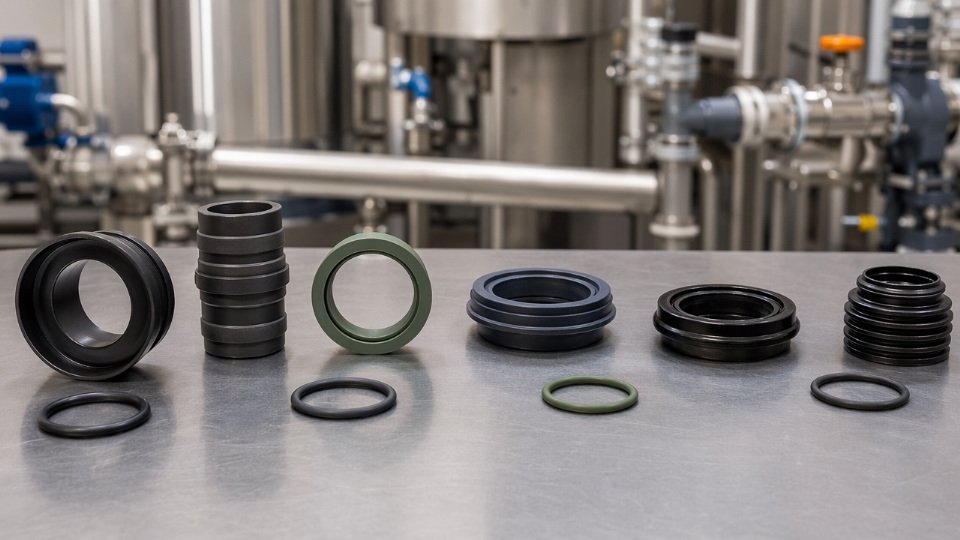
The Core Vulnerability of Standard VMQ in Hydrocarbon Environments
Polydimethylsiloxane backbone chemistry gives VMQ outstanding thermal stability and electrical performance, but the same non-polar polymer structure means it absorbs aliphatic hydrocarbons readily. Volume swell in ASTM Fuel C typically runs 20–40% for standard VMQ compounds — the exact value depends on the filler system, cure state, and immersion time, but any figure in that range is disqualifying for a fuel injector O-ring or a hydraulic shaft seal. Engineers migrating from NBR or FKM to silicone for thermal reasons must run ASTM D471 immersion tests on the actual compound before locking in a design. Thermal reputation does not transfer into chemical resistance.
Standard VMQ silicone rubber resists aliphatic hydrocarbons and fuels as well as FKM.False
VMQ typically shows 20–40% volume swell in ASTM Fuel C. FKM (fluoroelastomer) shows less than 5% swell in the same medium. VMQ is not suitable for continuous fuel contact without fluorosilicone modification.
Chemical Resistance Matrix: VMQ, FVMQ, and Competing Elastomers
| Medium | VMQ | FVMQ | NBR | EPDM | FKM |
|---|---|---|---|---|---|
| Aliphatic hydrocarbons (Fuel B/C) | 🔴 Poor (20–40% swell) | 🟢 Good (pH 12) | 🔴 Poor | 🔴 Poor | 🟡 Marginal | 🟢 Good | 🟡 Marginal |
| Steam (150°C) | 🟢 Good (grade-dependent) | 🟢 Good | 🔴 Poor | 🔴 Poor | 🔴 Poor |
| Ozone / UV / weathering | 🟢 Excellent | 🟢 Excellent | 🔴 Poor | 🟢 Good | 🟢 Good |
Ratings assume standard commercial compounds, not specialty formulations. Always confirm with immersion data on your specific compound.
Why FVMQ Works in Fuel Systems
The trifluoropropyl pendant groups grafted onto the siloxane backbone in fluorosilicone (FVMQ) interrupt the non-polar absorption mechanism. That structural change brings volume swell in ASTM Fuel C down to below 5% — confirmed across aerospace fuel line seals and automotive direct-injection system components where the seal sees both hydrocarbon fuel and temperatures that would destroy NBR within weeks. At -55°C cold-soak conditions, FVMQ retains enough flexibility to seal, a requirement that eliminates FKM in many military and cold-climate aviation applications. FKM is chemically superior to FVMQ in aggressive aromatics, but its low-temperature stiffness makes it a poor fit when the service profile includes both cold starts and fuel immersion.
Steam Resistance: The Filler System Matters as Much as the Polymer
Silicone’s steam performance above 150°C is genuinely better than EPDM’s — EPDM hydrolyzes and loses tensile strength rapidly beyond that temperature. But specifying “silicone” without defining the filler package is an error that shows up in autoclaved medical devices and steam-traced pipe systems. Pure fumed-silica-filled VMQ degrades measurably faster under repeated steam cycling than compounds filled with calcium silicate or wollastonite. If the application involves steam sterilization cycles (134°C, 3 bar, repeated) or continuous steam exposure above 160°C, request compound-specific steam aging data — cycles to 50% elongation retention is the relevant metric, not just short-term swell.
Aqueous and Wet-Seal Applications
Silicone performs well in dilute acid and alkali environments across roughly pH 4 to pH 10. Water absorption stays below 1% for most commercial VMQ compounds, which is why it appears in food-processing gaskets, dental equipment, and implantable-adjacent medical seals where long-term dimensional stability in wet environments matters. Concentrated caustic — sodium hydroxide above roughly 20% concentration — is a different story. The siloxane backbone hydrolyzes under strong alkali, and a seal that looks fine after a 24-hour soak may fail after ten cleaning cycles. Any application in CIP (clean-in-place) systems using aggressive caustic wash must be validated for the actual concentration, temperature, and cycle frequency.
Choosing Between VMQ and FVMQ: Cost Justification
FVMQ raw polymer gum runs roughly 3–5× the cost of standard VMQ gum, and the finished part price typically reflects a 2–4× premium depending on compound loading and geometry complexity. That premium is straightforward to justify when the alternative is seal replacement intervals measured in weeks instead of years, or when a field failure in an aerospace or automotive fuel system carries warranty and liability costs that dwarf the per-part material delta. The decision framework is simple: if the seal or gasket contacts aliphatic or aromatic hydrocarbons, mineral oils, or synthetic lubricants at any point in its service life — even intermittently — standard VMQ is the wrong starting point. Contact SiliconChemicals for FVMQ compound grades with application-specific filler and cure system recommendations; a life-cycle cost comparison across a realistic replacement interval usually closes the conversation.
Mechanical Property Specification: Hardness, Tear, Compression Set, and Dynamic Fatigue
Thermal and chemical resistance get most of the attention in silicone selection discussions, but mechanical properties determine whether a part actually survives its application cycle. A seal that passes fluid compatibility testing will still leak within weeks if compression set is too high. A bellows that meets tensile spec at room temperature can develop fatigue cracks in service if vinyl content is poorly optimized. Specifying these properties correctly from the start is engineering work — not a step to defer to the compounder.
Hardness Selection: What Controls It and How to Specify It
Silicone hardness is primarily a function of filler loading and type, not polymer molecular weight — a distinction that matters when you’re trying to adjust hardness late in a development program. Increasing fumed silica content drives Shore A values up; adjusting plasticizer or adding extending fillers brings them down. That gives formulators genuine flexibility, but it also means a Shore A 60 silicone can be achieved through several different filler combinations with different consequences for tear strength and compression set.
For practical selection: Shore A 20–40 suits soft gaskets, face masks, and skin-contact medical device components where conformability and low contact stress matter. Shore A 40–60 covers the majority of industrial seals, O-rings, and valve diaphragms — the range where most general-purpose HTV and LSR compounds land. Shore A 60–80 serves structural applications: vibration isolation mounts, connector grommets, keypads, and any application requiring dimensional stability under compressive load. Specifying only a target Shore A without specifying the filler system and cure chemistry is an incomplete specification.
Compression Set: The Performance-Critical Metric for Sealing
Peroxide-cured silicone typically shows higher compression set than platinum addition-cured LSR after post-cureTrue
Peroxide cure leaves residual byproducts that interfere with network completeness; platinum addition cure produces a cleaner crosslinked network. Post-cure at 200°C for 4 hours substantially reduces but does not eliminate this gap.
For static sealing applications, the working target is compression set ≤15% measured per ASTM D395 Method B after 22 hours at 175°C. Peroxide-cured HTV grades — without adequate post-cure — commonly show 20–40% compression set. Properly post-cured platinum addition-cured LSR typically achieves 8–15%. That gap directly translates to seal force retention over time. A static face seal on a fluid connector running at 150°C that starts with 25% compression set will lose sealing load faster than the joint design assumed, and the failure shows up as a slow weep rather than a sudden break — the kind of warranty return that takes months to trace back to material selection.
Filler Systems: Reinforcement, Processability, and Surface Treatment
Unfilled silicone polymer has tear strength in the range of 1–3 kN/m — essentially unusable for most structural applications. Fumed silica (BET surface area typically 150–380 m²/g, with actual selection depending on the balance between reinforcement and viscosity) raises tear strength into the 20–40 kN/m range in properly optimized HTV compounds. Precipitated silica delivers meaningful reinforcement at lower cost and better processability, though it generally falls short of fumed silica on tear and compression set performance.
Surface treatment of filler particles — with hexamethyldisilazane (HMDS) or cyclic silazanes — controls the interaction between silica surface hydroxyl groups and the polymer chains. Untreated silica causes structuring (also called crepe hardening), which increases compound viscosity during storage and worsens compression set. Treated silica reduces creep and improves long-term seal performance. This is a compounder decision, but procurement specifications should require disclosure of filler treatment type when compression set is a critical parameter.
Carbon black as filler produces electrically conductive grades (volume resistivity dropping from >10¹⁴ Ω·cm down to 1–100 Ω·cm depending on loading), used in EMI gasketing and antistatic applications. The tradeoff is reduced tear strength and elongation compared to silica-filled systems at equivalent hardness.
Even with optimized reinforcement, silicone tear strength remains lower than natural rubber (typically 50–100 kN/m) and polyurethane. For cut-resistant seals in abrasive environments, unfilled or standard-filled silicone is the wrong choice. Hybridization with EPDM or use of a harder Shore A 70+ compound with high silica loading can partially close the gap, but mechanical abuse resistance is not a silicone strength.
Dynamic Fatigue in Flex Applications
Automotive CV boots, turbocharger hoses, peristaltic pump tubing, and HVAC bellows all involve continuous flex cycling. In these applications, vinyl group content — typically 0.03–0.3 mol% in the polymer backbone — is the lever that controls fatigue life. Vinyl groups are the crosslinking sites in both peroxide and addition cure. Low vinyl content produces a sparse network that fatigues by progressive creep. Excess vinyl creates an over-crosslinked network where crack propagation accelerates from internal stress concentrations.
The practical target for dynamic flex applications sits in the 0.05–0.15 mol% vinyl range for most HTV compounds, with the specific value depending on dynamic frequency and strain amplitude. Applications above 10 Hz cyclic loading at strains exceeding 30% warrant fatigue testing beyond standard tensile data — tensile elongation at break does not predict fatigue life in silicone.
Mechanical Properties Reference Ranges by Compound Family
| Property | HTV VMQ | LSR | FVMQ |
|---|---|---|---|
| Shore A Hardness | 20–80 | 10–80 | 40–80 |
| Tensile Strength (MPa) | 5–12 | 6–11 | 5–9 |
| Elongation at Break (%) | 100–600 | 150–700 | 100–400 |
| Tear Strength (kN/m) | 15–40 | 20–45 | 10–25 |
| Compression Set (%) | 10–40 | 8–20 | 15–35 |
| Density (g/cm³) | 1.10–1.35 | 1.10–1.30 | 1.35–1.55 |
Ranges depend on filler loading, cure system, and post-cure conditions. FVMQ tear and elongation values are inherently limited by the fluorinated side chains, which reduce polymer chain flexibility. LSR’s compression set range assumes platinum cure with 4-hour post-cure at 200°C; values without post-cure are 30–50% higher.
Processing Method Compatibility: Matching Silicone Form to Your Manufacturing Process
Specifying the right polymer chemistry is only half the job. A fluorosilicone compound specified in RTV paste form, then handed to a press shop running compression molds, creates tooling waste, cure failures, and finger-pointing between procurement and production. The silicone form factor has to match your existing capital equipment, your throughput targets, and your in-house mixing capability — or you’re paying a polymer premium for a product your line cannot process correctly.
HTV: Compression Molding, Transfer Molding, and Extrusion
High-temperature vulcanizing gum stock arrives as calendered sheet or pre-weighed slugs and requires heat-activated cure — either peroxide or platinum systems. In compression and transfer molding, the compound is mill-mixed (or purchased pre-mixed as sheet stock), preformed, and pressed at 160–180°C. Open steam cure works for simple profiles, but hot-air vulcanization gives better cross-section consistency on complex parts.
Post-cure matters and is frequently skipped. Four hours at 200°C is standard for peroxide-cured HTV to volatilize decomposition byproducts that would otherwise elevate compression set and introduce odor into any enclosed assembly. Skip post-cure on a door seal gasket and you’ll see 10–15% higher compression set than the datasheet promises — directly translating to leak paths over service life.
Tooling investment for compression molding runs considerably lower than LIM tooling, which makes HTV the practical choice for medium-volume industrial parts: custom profiles, vibration mounts, and industrial gaskets where annual volumes sit in the thousands rather than millions. Extrusion of HTV profiles demands tight durometer consistency — batch-to-batch variation beyond ±2 Shore A causes dimensional drift in the extrudate before it enters the continuous vulcanization line. Linear shrinkage runs 2–3% with peroxide cure and roughly 1.5–2% with platinum, and your CV line configuration (hot-air tunnel, microwave, or salt bath) needs to be matched to your compound’s cure kinetics. Getting this wrong generates scrap at line startup on every shift change.
LSR: Liquid Injection Molding for High-Volume Precision Parts
Liquid silicone rubber runs through closed, two-component injection systems with cold-runner tooling to prevent premature cure in the manifold. Mold temperature sits at 180°C; cycle time for thin-wall parts typically falls between 15 and 45 seconds depending on wall thickness, part geometry, and the specific compound’s reactivity. Flash-free molding at ±0.05 mm tolerances is achievable — but only with properly maintained cold-runner temperature control and consistent metering of the base-to-crosslinker ratio.
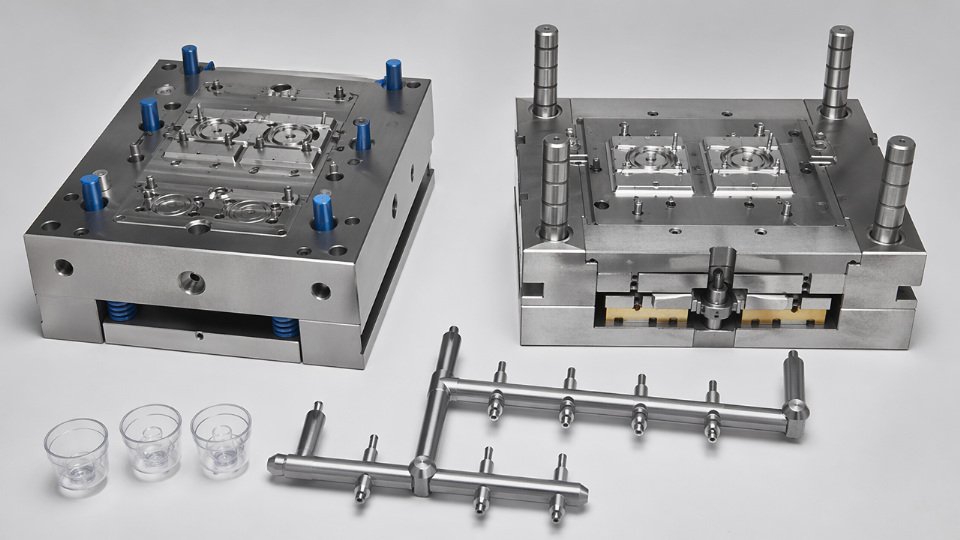
LSR injection molding can achieve cycle times under 30 seconds at 180°C mold temperature for thin-wall partsTrue
Platinum-catalyzed LSR cure kinetics at 180°C support rapid crosslink completion; actual cycle time depends on wall thickness, thermal mass of the tool, and compound reactivity grade — thin-wall baby bottle nipples and medical valve seats are routinely molded in this window.
For medical devices, infant products, and automotive connector seals — applications where dimensional repeatability and regulatory cleanliness dominate the specification — LSR is the correct form. The closed metering system eliminates contamination risk that open mill mixing introduces. The tradeoff is tooling cost: a multi-cavity LSR tool costs substantially more than an equivalent compression mold, so the economics only work above roughly 50,000–100,000 annual parts, with the exact breakeven depending on part complexity and regional labor rates.
RTV-2: Casting, Potting, and Mold Making
Two-part room-temperature vulcanizing systems are dispensed and mixed at ratios of either 10:1 or 1:1 by weight, depending on the specific product family. Pot life spans 30 minutes to 8 hours — a range driven by the inhibitor package, ambient temperature, and catalyst loading. Exceeding pot life after mixing produces a partially gelled mass that won’t cure uniformly; the cost is wasted material and a re-pour cycle.
The single most common failure mode in RTV-2 processing is platinum inhibition. Tin-cured substrates, sulfur-containing rubbers, certain nitrogen-containing adhesives, and even some vinyl gloves can poison the platinum catalyst, resulting in a tacky or completely uncured surface layer. Any new substrate or mold-making application warrants a small cure test before committing to full production.
RTV-1: In-Place Gasketing and Adhesive Sealing
One-part RTV sealants cure by atmospheric moisture diffusion — approximately 2–3 mm per 24 hours at 50% relative humidity. That cure-depth constraint is not a product limitation; it’s a physics boundary. Using RTV-1 to seal a joint with a cross-section exceeding 6–8 mm where both sides are enclosed will result in an uncured interior core regardless of wait time.
For FIPG and CIPG applications in powertrain assemblies, junction box sealing, and structural bonding, RTV-1 suits low-to-medium volume production where in-line cure monitoring and bead dispensing systems are already in place.
Matched Compound Systems
Customers without dedicated silicone processing infrastructure face a real compounding complexity problem. SiliconChemicals supplies pre-mixed HTV sheet stock in defined durometer grades, pre-dispersed LSR base-plus-crosslinker sets ready for direct loading into LIM metering equipment, and two-part RTV kits with pre-measured inhibitor packages. This eliminates in-house weighing error, reduces raw material inventory, and removes a significant quality variable — particularly relevant for procurement teams sourcing across multiple plants with different technical capabilities.
| Processing Form | Primary Process | Typical Volume Sweet Spot | Key Process Risk |
|---|---|---|---|
| HTV sheet/slug | Compression, transfer, extrusion | Medium (thousands/year) | Inadequate post-cure → high compression set |
| LSR (2-part) | Liquid injection molding | High (50k+ parts/year) | Platinum inhibition; cold-runner temperature drift |
| RTV-2 | Casting, potting, mold making | Low-medium, flexible runs | Exceeded pot life; inhibited substrates |
| RTV-1 | FIPG, adhesive sealing | Low-medium | Cure depth limit in thick cross-sections |
Matching form to process is not a catalog exercise. It requires knowing your press capacity, your cure infrastructure, your annual volume, and your in-house mixing capability before the polymer grade discussion even starts.
Regulatory Compliance Navigation: FDA, REACH, RoHS, UL, and Industry-Specific Standards
Silicone rubber has a reputation for being a “safe” material, and in many contexts that reputation is earned. The operational trap is assuming that one compliance certification transfers across applications. It does not. A compound fully documented for food contact is not automatically cleared for a medical device component, and a UL-rated electrical sleeve carries no weight with an FDA auditor reviewing a drug delivery seal. Procurement engineers who conflate these frameworks create document gaps that surface at exactly the wrong time — during customer audits, customs clearance, or product approval reviews.
Food Contact: FDA 21 CFR 177.2600 and EU 10/2011 Are Not Equivalent
FDA 21 CFR 177.2600 establishes compositional requirements for rubber articles intended for repeated food contact — it lists permissible ingredients by category and sets extractable limits. Compliance is self-declared against those ingredient specifications, not a third-party certification issued by the FDA itself. EU Regulation 10/2011 governs plastic food contact materials and demands specific overall migration testing (OML ≤10 mg/dm²) and specific migration limits (SML) for listed substances. Silicone technically sits in a regulatory grey zone under EU law — it is not unambiguously classified as “plastic” — which means some EU member states require additional national-level compliance work alongside 10/2011 migration data. Requesting only an FDA letter of conformity when your customer is an EU food equipment OEM will get the documentation package rejected.
Medical Device Pathways: Biocompatibility Versus Regulatory Clearance
ISO 10993 is the test series, not a clearance. The series covers cytotoxicity (10993-5), sensitization (10993-10), genotoxicity (10993-3), and a range of other endpoints depending on contact duration and tissue type. Passing these tests establishes biocompatibility data — it is the substrate of an FDA 510(k) substantial equivalence submission or CE technical file, not a substitute for it. For Class II device components, platinum-cured, fumed-silica-reinforced LSR is the industry default. Peroxide-cured compounds introduce residual peroxide decomposition byproducts that complicate extractables and leachables (E&L) profiling. Implantable-grade applications go further: full E&L profiling under ICH Q3C/Q3D guidelines, often with toxicological risk assessment attached. The analytical cost for that profiling runs into tens of thousands of dollars per compound lot, so specifying the wrong base polymer at the design stage is a budget event, not just a technical one.
Platinum-cured LSR produces significantly lower extractable levels compared to peroxide-cured silicone rubber compounds, making it the preferred substrate for ISO 10993 biocompatibility testing in medical device applications.True
Platinum catalysis leaves no reactive peroxide decomposition byproducts; residual platinum levels in well-formulated compounds are typically below toxicological threshold of concern, a well-established principle in medical elastomer formulation.
Electrical Applications: UL 94, UL 746, and the Flame Retardant Tradeoff
UL 94 V-0 classification is achievable in silicone using platinum-halogen-free flame retardant systems, with limiting oxygen index values reaching above 28% in optimized compounds. The tradeoff is real: high FR additive loading — typically aluminum trihydrate or platinum-based synergists — reduces elongation and can increase compression set by 10–20 percentage points relative to the unfilled base compound. UL 746 Relative Thermal Index ratings matter for long-term electrical enclosure materials and require aging data at multiple temperatures. IEC 60684 governs sleeving dimensions and performance and is the reference standard most electrical assembly buyers cite in their specifications.
Automotive: Decoding ASTM D2000 / SAE J200
The ASTM D2000 line call format encodes the complete material requirement. A designation like M2HH714B14EF11 reads as: M = metric, 2 = grade, HH = heat resistance class (150°C) and fluid resistance class, 714 = tensile/elongation requirements, with suffix letters calling out specific test requirements including compression set, low-temperature, and fluid immersion. Silicone compounds typically fall in the HK and FK heat resistance classes. Specifying the wrong class — or omitting suffix requirements — means production samples pass incoming inspection but fail validation testing months into a program.
REACH, RoHS, and Documentation for Market Entry
The silicone polymer backbone itself does not appear on the REACH SVHC candidate list. The risk lives in the additive package — certain plasticizers, flame retardants, and mold release agents may trigger SVHC obligations or RoHS substance restrictions (particularly for electronics applications). SiliconChemicals provides full material declaration (FMD) and IMDS submission support for automotive supply chains where IMDS entry is a hard customer requirement.
For EU market entry, the document package should include: Certificate of Conformity referencing the applicable regulation, REACH/RoHS declaration of compliance, migration test reports or ISO 10993 test reports from accredited third-party labs (SGS or Intertek are the most widely accepted), and a TDS/SDS with regulatory status clearly noted. For a US FDA submission supporting a device 510(k), you need: material specification with full ingredient disclosure, biocompatibility test reports per the relevant ISO 10993 endpoints, E&L data if contact duration exceeds 24 hours, and a letter of conformance from the material supplier. Starting an FDA submission with only a generic “food grade silicone” certificate is a common documentation failure that delays clearance by months.
Industry-Specific Selection Guides: Automotive, Medical, Electronics, Construction, and Food Processing
By the time you’ve worked through thermal limits, chemical compatibility, mechanical targets, processing form, and compliance requirements, the real question becomes: what does all of that mean for my industry? The five profiles below consolidate those axes into working reference material. Use them as a starting checklist, not a substitute for compound-level qualification.
Automotive: Under-Hood, EV Battery, and Fuel Systems
Under-hood sealing remains the volume workhorse for silicone in automotive. Specify heat-stabilized VMQ HTV compounds with compression set ≤20% at 200°C (tested per ISO 815-1, Method B, 72 hours). Compression set above that threshold in valve cover gaskets or coolant hose connectors translates directly to weeping leaks at the next service interval — warranty exposure, not just a specification miss. Boost temperatures at the turbocharger outlet can push 230°C continuous, which sits right at the upper edge of standard HTV; ask specifically for iron-oxide or cerium-stabilized compounds if the component sits within 50 mm of a heat source.
EV battery packs introduce a different requirement set. Thermal interface pads between cell modules and cooling plates need thermally conductive LSR, typically loaded with alumina or boron nitride filler to reach 1.0–3.5 W/m·K depending on filler loading and geometry. The trade-off is hardness: higher conductivity compounds run Shore A 40–70, which affects conformability against uneven cell surfaces. Where cell-to-cell gap variation exceeds ±0.3 mm, a softer, lower-conductivity grade often delivers better real-world thermal contact than a stiffer high-conductivity one.
Fuel system seals — injector O-rings, fuel pump diaphragms — are non-negotiable FVMQ territory. Standard VMQ will swell 20–40% by volume in ASTM Fuel C exposure; FVMQ stays under 5%. No amount of heat resistance compensates for a seal that has grown out of its groove.
High-voltage cable jackets on 400 V and 800 V EV architectures should specify LSR with UL Recognized Component status and Relative Thermal Index ≥180°C. This is not interchangeable with a generic “HV-grade” label from a distributor.
Medical Devices and Healthcare
Implantable components require platinum-cured LSR with a completed ISO 10993 biocompatibility panel — cytotoxicity, sensitization, intracutaneous reactivity at minimum, plus extractables and leachables (E&L) profiling against the intended contact duration and tissue type. Peroxide-cured grades are disqualified for implantable use because peroxide decomposition byproducts cannot be fully post-cured out.
For fluid-handling components — peristaltic pump tubing, diaphragms, bag connectors — specify peroxide-free LSR compliant with FDA 21 CFR 177.2600. Confirm that the compounder can supply a Declaration of Compliance referencing specific lot numbers, not just a blanket letter.
Wearable biosensors and continuous-monitoring patches sit against skin for 24–168 hours. Shore A 20–35 LSR significantly reduces pressure-point discomfort and motion artifact in ECG leads. Skin-sensitization testing under ISO 10993-10 is required; don’t rely on bulk biocompatibility data from the base polymer alone — colorants and adhesion primers add their own risk.
SiliconChemicals supplies medical-grade LSR base polymer meeting USP Class VI requirementsTrue
USP Class VI is a recognized biological reactivity standard for plastics and elastomers used in pharmaceutical and medical device applications. Manufacturers supplying LSR base polymer for medical end-uses routinely test and certify to this standard. Procurement teams should request the actual test report, not just a statement on a datasheet.
Electronics and Electrical Insulation
Encapsulants and conformal coatings call for low-viscosity RTV-2 addition-cure systems, typically 500–5,000 mPa·s at application temperature. Ionic contamination must stay below 5 ppm Cl⁻ — higher levels cause electrochemical migration failures on fine-pitch PCB traces within 6–18 months in humid environments. This is a filler-purity and catalyst-purity issue, not something a process engineer can fix downstream.
High-voltage outdoor insulators — disc strings, post insulators, surge arrester housings — need tracking-resistant HTV with aluminum trihydrate (ATH) filler at sufficient loading to meet IEC 62217 tracking and erosion criteria. Standard unfilled HTV fails this test; specify ATH-loaded grades explicitly.
LED potting is one application where optical clarity becomes a primary selection driver. Platinum-cured, optically clear RTV-2 with refractive index 1.40–1.43 and light transmittance above 90% at 450 nm is the standard. Yellowing under UV or blue-light exposure is the failure mode to screen for — request accelerated aging data at 85°C/85% RH over 1,000 hours.
Construction and Infrastructure
Weatherseal glazing in curtain wall systems demands neutral-cure RTV-1. Acetoxy-cure systems release acetic acid on cure, which corrodes aluminum frames and stone substrates over time — a slow failure that shows up as adhesion loss years after installation, well past the contractor’s warranty period. Movement accommodation matters here: standard joint designs require ±25% displacement capacity; high-movement facades need ±50%, which requires a lower-modulus formulation and wider joint geometry.
Structural glazing — where silicone carries dead load — must use two-part SG RTV systems with ETAG 002 certification (European Technical Approval Guideline). No other compliance route is accepted by most European building authorities for structural applications.
Fire-rated penetration seals, sleeve collars, and pillow systems use intumescent-loaded silicone compounds. The relevant fire performance benchmark is BS 476 Part 20 (load-bearing element) or Part 22 (non-load-bearing), and testing must reflect the actual installed geometry, not a generic passing certificate from a different joint configuration.
Food Processing and Beverage
Material compliance here means FDA 21 CFR 177.2600 and EU Regulation 10/2011 simultaneously for any product sold into both markets. Platinum-cured LSR or VMQ is preferred over peroxide-cured grades specifically because peroxide decomposition products — including volatile ketones — can migrate into food contact surfaces even after secondary cure. Migration testing under actual contact conditions (temperature, food simulant, contact time) is required for EU compliance; a polymer datasheet alone does not satisfy Article 17 documentation requirements.
For potable water contact — pipe gaskets, valve seats, faucet components — NSF/ANSI 61 certification on the finished compound is the procurement standard in North America. NSF 51 covers food equipment. These are compound-level certifications, not polymer-level; a base polymer approval does not transfer automatically when a compounder changes filler or colorant.
Pigment systems deserve specific attention. Certain organic colorants are not approved for food-contact use under either FDA or EU frameworks. Verify each pigment batch against the applicable positive list. A production run with an out-of-spec colorant lot can ground an entire product line.
Quick-Reference Industry Selection Matrix
| Industry | Recommended Polymer | Processing Form | Critical Standards | Key Compound Additive | SiliconChemicals Grade Family |
|---|---|---|---|---|---|
| Automotive — under-hood | Heat-stabilized VMQ HTV | Compression molding / extrusion | ISO 815-1, AEC-Q200 (EV) | Fe₂O₃ or Ce stabilizer | HTV-HT Series |
| Automotive — EV thermal pad | Thermally conductive LSR | Injection molding | IEC 62368-1, UL 94 V-0 | Al₂O₃ or BN filler | LSR-TC Series |
| Automotive — fuel system | FVMQ | Compression molding | ASTM D471 Fuel C, SAE J200 | Fluorine-modified polymer | FVMQ-FS Series |
| Medical — implantable | Platinum-cured LSR | Injection molding | ISO 10993 full panel, USP Class VI | Pt catalyst, no peroxide | LSR-MED Implant |
| Medical — fluid handling | Peroxide-free LSR | Injection molding / extrusion | FDA 21 CFR 177.2600 | Clean Pt cure system | LSR-MED Fluid |
| Electronics — encapsulant | Low-viscosity RTV-2 | Dispensing / potting | IPC-CC-830B, IEC 61086 | Low-ionic filler system | RTV2-EL Series |
| Electronics — HV insulator | ATH-loaded HTV | Compression / transfer molding | IEC 62217, IEC 60587 | ATH filler | HTV-HV Series |
| Construction — weatherseal | Neutral-cure RTV-1 | Cartridge / gun-grade | ASTM C920, ISO 11600 | Neutral cross-linker | RTV1-NS Series |
| Construction — structural glazing | Two-part SG RTV-2 | Cartridge / pump | ETAG 002 | Structural adhesion promoter | RTV2-SG Series |
| Food processing | VMQ or Pt-cured LSR | Compression / injection | FDA 177.2600, EU 10/2011, NSF 51/61 | Approved colorants only | LSR-FG / VMQ-FG Series |
The matrix condenses the selection logic, but the compound additive column is where most specification errors originate. ATH loading level, stabilizer type, and filler ionic purity are not visible on a grade designation. Request the full compound formulation disclosure or technical data sheet with test method references before issuing a purchase order.
Total Cost of Ownership vs. Unit Price: How to Build the Business Case for Premium Silicone Grades
Procurement discussions about silicone rubber almost always start with price per kilogram. That’s the wrong starting point. Raw material cost is typically 20–35% of the true cost of a molded silicone part once you account for cycle time, scrap, labor, post-cure energy, incoming inspection, and the tail risk of field failures. Engineers who understand this structure can justify a premium grade on a spreadsheet; those who don’t get overruled by a purchasing team chasing the lowest quote.
Building the Full TCO Stack
The calculation has six layers, and most cost models only capture the first one.
Raw material cost is kg price × grams per part × annual volume. Straightforward. Processing cost is where the real leverage sits — machine hourly rate × cycle time × cavitation, plus operator labor for deflashing and trimming. Scrap rate multiplies both of the above. A compound running 4–6% dimensional rejects at incoming inspection or post-mold is quietly destroying margin. Post-cure energy matters for HTV compounds that require 2–4 hours in a batch oven at 200°C to drive off peroxide byproducts and stabilize compression set. Inspection and documentation cost escalates sharply in regulated industries where every lot requires certificate of conformance, lot traceability, and in some cases third-party testing. Warranty and field failure cost is the hardest to estimate but often the largest single item — one recall event or systematic field failure can represent multiples of an entire year’s raw material spend.
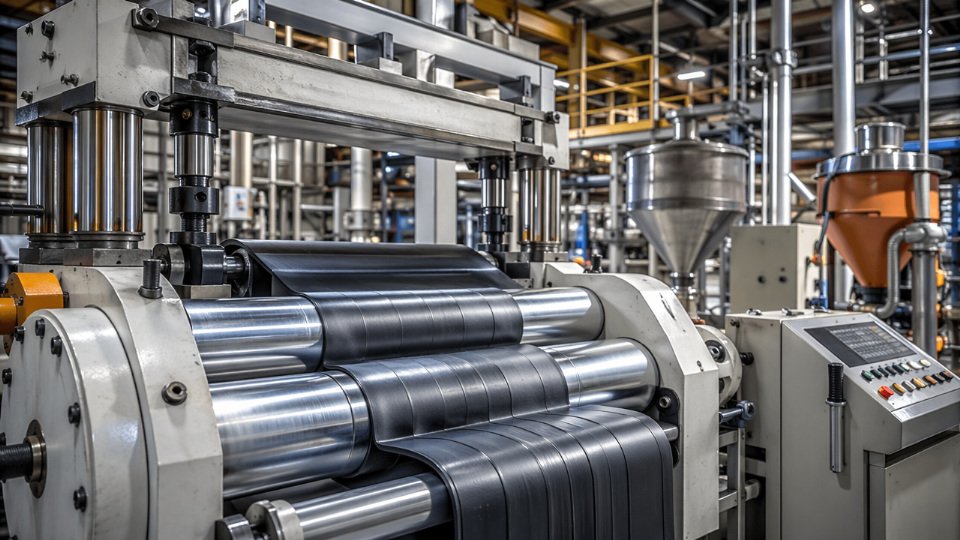
The LSR vs. HTV Connector Seal Case
Consider a realistic scenario: an automotive connector seal running at 50 million units per year. HTV compression molding with a standard peroxide-cure VMQ compound runs a 3.5–4.5 minute cycle depending on part geometry, wall thickness, and press tonnage. Flash trimming requires either cryogenic deflashing equipment or manual labor. LSR injection molding of the same geometry runs a 20–30 second cycle at 180°C with a cold-runner tool delivering near-zero flash. LSR raw material costs roughly 35–45% more per kilogram. At the part level, the math inverts: the processing cost differential — machine time, labor, deflashing — yields a finished-part cost 50–65% lower for LSR once annualized across high volumes. That is not a marginal improvement. It restructures the entire cost basis of the program.
The crossover point between HTV and LSR economics typically falls somewhere between 500,000 and 2 million parts per year, depending on part weight, tooling investment, and local labor rates. Below that threshold, the tooling amortization on a multi-cavity LSR tool may not recover within a reasonable program life.
Grade Switching Costs in Regulated Applications
Switching silicone compound grades or suppliers mid-production on an IATF 16949-qualified automotive part or an ISO 13485-regulated medical device typically triggers a full requalification event.True
Both standards require documented change control; a material or supplier change on a safety-critical or regulated part constitutes a design or process change requiring revalidation, which in practice means new PPAP submission or design verification testing depending on the risk classification.
Requalification costs range from USD 50,000 to USD 250,000 depending on the industry, number of test protocols, agency involvement, and whether clinical or field validation data are required. That figure needs to appear in any cost-saving analysis before a grade switch is approved. A 10% raw material saving that triggers a $150,000 requalification event does not pay back on a three-year horizon for most program volumes.
Structural Cost Position and Supply Chain Stability
China accounts for approximately 70% of global methyl chlorosilane intermediate production. SiliconChemicals operates within that integrated industrial cluster — from chlorosilane chemistry through siloxane polymerization to finished compounded rubber — which removes several intermediate margin layers that distributor-based supply chains cannot avoid. The resulting structural cost advantage versus Western polymer producers runs 15–30%, a range that depends on compound complexity, specialty filler loading, and current energy input costs.
Supply chain stability deserves equal weight. Single-source raw material exposure became a costly lesson for many silicone converters during 2021–2022 allocation events. Vertically integrated production, combined with long-term supply agreements, provides the price visibility and volume security that procurement managers need to commit to multi-year production programs.
Joint Value Engineering as a Cost Reduction Tool
The fastest path to a defensible TCO reduction is a joint value engineering review before tooling is committed. SiliconChemicals applications engineers will work from a customer’s part drawing, existing material specification, and documented service conditions to identify whether the current grade is over-specified for the actual requirement, whether a reformulated compound can close a compression set or hardness gap at lower cost, and whether a processing form change creates cycle time gains. That review costs nothing and typically identifies 8–20% total cost reduction opportunities that survive scrutiny at the program level.
Request a JVE consultation through SiliconChemicals’ technical team with your part drawing, current compound specification, annual volume, and the three or four performance requirements that actually drive your application. The output is a written grade recommendation with supporting test data — not a sales proposal.
Frequently Asked Questions About Silicone Rubber Selection
Engineers and procurement managers searching for silicone rubber guidance tend to circle the same decision points repeatedly. These questions come up during specification reviews, supplier audits, and late-stage design changes. The answers below are written for people making real purchasing and engineering calls, not for general reading.
What is the difference between LSR and HTV silicone rubber?
Both start from the same VMQ polymer backbone, but they are processed in entirely different ways and suit different manufacturing environments. HTV (high-temperature vulcanizing) silicone is a high-viscosity gum, typically supplied in bales or pre-formed strips, that requires compression molding, transfer molding, or extrusion equipment. Tooling costs are lower and the process handles large cross-sections well. LSR (liquid silicone rubber) is a two-part flowable system injected at low viscosity directly into closed molds. Cure cycles run under 30 seconds at 180°C in a properly optimized injection press, making it the right choice for high-volume precision parts — thin-walled medical components, multi-cavity electrical connectors, baby product closures. Shore A hardness for LSR runs 10–80 depending on formulation. The trade-off: LSR tooling investment is substantially higher, and the closed-system delivery requires dedicated metering and mixing equipment. Switching a part designed for HTV compression molding to LSR without redesigning the tool and gate geometry typically produces flash, incomplete fill, or dimensional drift.
Can silicone rubber be used in contact with food and drinking water?
Yes — but the base polymer approval means nothing on its own. A cured compound is only genuinely food-safe when the complete formulation, including silica fillers, cure agents (peroxide or platinum), pigments, and any processing aids, has been tested and certified. In the United States the governing standard is FDA 21 CFR 177.2600. European food-contact applications require compliance with EU Regulation 10/2011. Potable water contact applications in North America typically require NSF 51 (food equipment) or NSF 61 (drinking water system components) certification. A common procurement error is accepting a supplier’s statement that their silicone is “FDA-grade” without requesting the actual compound test report and certificate of conformity referencing the specific formulation lot. Colorants and pigments are a frequent non-compliance source because they are sometimes added after the base compound certification was obtained.
Why does silicone rubber swell in gasoline or engine oil?
Standard VMQ silicone carries a methyl- and vinyl-substituted polysiloxane backbone that is essentially non-polar. Hydrocarbon fuels and oils share that non-polar character, so they absorb into the matrix through osmotic swelling — volume swell of 20–40% in ASTM Fuel C is typical for standard VMQ. Fluorosilicone (FVMQ) addresses this directly by substituting trifluoropropyl groups for some methyl groups along the backbone. That fluorine substitution sharply reduces hydrocarbon affinity. Volume swell in ASTM Fuel C drops below 5% for properly formulated FVMQ. The cost premium for FVMQ is real — budget roughly 3–5× the unit price of standard VMQ compound — but a failed fuel system seal in a returned vehicle or a field replacement program costs multiples of that difference.
What Shore A hardness should I specify for an O-ring seal?
Static face seals and groove-seated O-rings in low-pressure service typically specify Shore A 60–70. That range provides enough elasticity to conform to surface finish irregularities while maintaining dimensional stability under compression. Dynamic reciprocating or rotary shaft seals should move up to Shore A 70–80 to resist extrusion under pressure cycling. At the soft end — Shore A 40–50 — you get very low seating force, which matters for medical device valves, peristaltic pump tubing, and food processing fittings where excessive clamping load would deform the mating surface. Specifying hardness without also specifying compression set limits is a common gap. A 70 Shore A compound with 40% compression set after 70 hours at 175°C will leak; the same hardness with compression set below 15% under the same conditions will not.
How do I know if a silicone compound is RoHS and REACH compliant?
Request a signed Declaration of Conformity that explicitly references RoHS Directive 2011/65/EU (and its 2015/863/EU amendment covering phthalates) and REACH Regulation (EC) 1907/2006 SVHC candidate list. A full material declaration listing every substance by CAS number and concentration above 0.1% w/w provides the traceability your compliance team needs. Verbal assurances or generic supplier letters that don’t reference specific compound grades or lot ranges are not adequate for CE marking, automotive IMDS submission, or medical device technical files.
SiliconChemicals provides SGS or Intertek third-party verified REACH and RoHS documentation with every commercial shipment.True
Third-party laboratory verification (SGS, Intertek) is an auditable, independently issued test report — it is a higher standard of compliance evidence than a self-declaration alone and is referenced by SiliconChemicals as standard practice per the project information assets.
What are the MOQ and lead times for custom silicone compounds?
Standard HTV compound grades ship from 500 kg minimum with lead times of 2–3 weeks from order confirmation, which suits most prototype and initial production runs. Custom formulations — modified filler loading, specific hardness targets, colorant systems, or specialty cure packages — require a 1,000 kg minimum order and a 4–6 week window covering development, trial mixing, and qualification testing. LSR two-part systems are available from 200 kg per component. Plan qualification time into your project schedule; requesting a custom compound two weeks before a production launch date is how silicone becomes a critical-path item.
How should silicone rubber compounds be stored to protect shelf life?
Keep material in original sealed containers at 5–25°C. Silicone HTV gum is sensitive to ozone, UV radiation, and platinum-group metal contamination — even trace platinum from a nearby curing press or from contaminated tooling can pre-crosslink the gum and render a batch unusable before it ever reaches the mold. Store HTV gum away from extrusion and press areas where platinum catalyst is in active use. Typical shelf life runs 12 months for HTV gum and 6–12 months for RTV-2 two-part kits from the date of manufacture. RTV-1 one-part cartridges, sealed against atmospheric moisture, typically hold for 18 months. First-in, first-out inventory discipline matters here. Using stock outside its shelf life is one of the more avoidable causes of inconsistent cure, surface tackiness, and compression set failures in production.
How to Work With SiliconChemicals: Sampling, Technical Support, and Global Supply
Getting to the right silicone grade on paper is only half the job. Converting a specification into qualified, production-ready material — with the documentation your quality department and regulatory team actually need — requires a supplier whose technical and commercial infrastructure matches the complexity of the selection process you just worked through.
The Technical Inquiry and Sampling Process
Start by submitting an application data sheet. That means end use and service conditions (temperature range, media exposure, dynamic or static loading), regulatory requirements (FDA, REACH, UL, IATF), processing method (injection molding LSR, compression molding HTV, casting RTV-2), and your current specification or incumbent material. The more specific that submission, the faster the response.
A SiliconChemicals applications engineer reviews the data and proposes a shortlist of candidate grades within 48 hours. That shortlist is not a catalog dump — it is a ranked set of two to four options with a written rationale explaining the trade-offs between them given your actual service conditions. Lab samples of 0.5–2 kg are dispatched within 5–10 business days, each accompanied by a full Technical Data Sheet and batch-specific test reports. If your application sits at the edge of a grade’s validated range, the applications engineer flags that explicitly rather than letting you discover it during validation testing.
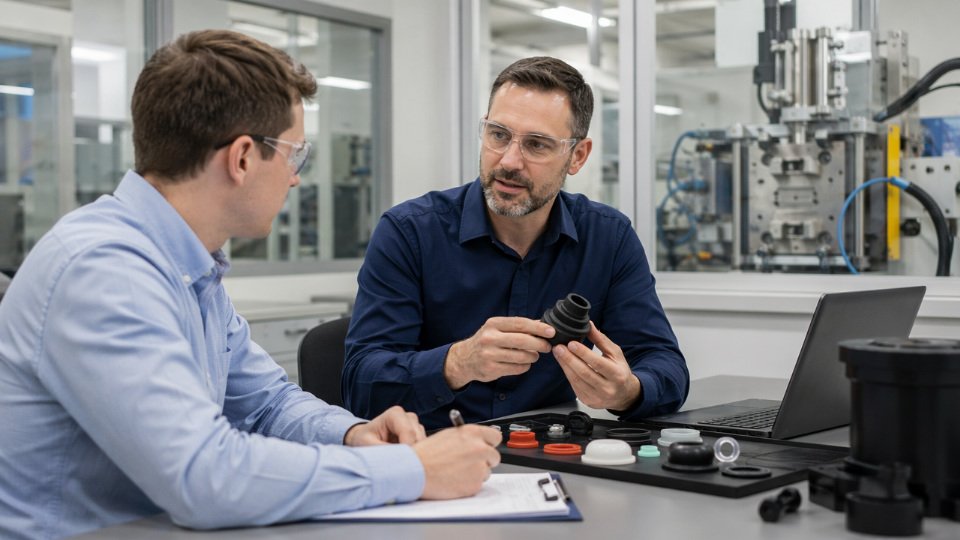
Product Portfolio Relevant to This Guide
The portfolio covers every form discussed in this article. VMQ HTV gum is available in standard and heat-stabilized versions; fumed-silica pre-mixed HTV compound sheet stock runs 20–80 Shore A hardness, ready for compression or transfer molding. LSR two-part base-plus-crosslinker systems are stocked in both medical-grade and industrial-grade variants, formulated for injection cycle times under 30 seconds at 180°C. FVMQ compound addresses fuel and aggressive media environments where standard VMQ’s volume swell would be disqualifying. RTV-1 is available in both acetoxy and neutral-cure cartridges — that distinction matters for copper alloy or electronics substrates where acetic acid off-gassing is a problem. RTV-2 kits cover both addition-cure and condensation-cure chemistries for casting and potting applications.
Quality Assurance Infrastructure
SiliconChemicals conducts in-house mechanical testing per ISO 37, ISO 815, ISO 188, ASTM D2000, and ASTM D395, with third-party biocompatibility testing through SGS and Intertek.True
These are standard, verifiable testing protocols and internationally recognized third-party testing organizations routinely used for silicone rubber qualification in medical and food-contact supply chains.
IATF 16949 certification covers the production lines serving automotive supply chain customers — that is not a marketing claim; it means your PPAP documentation request will not stall in a supplier’s quality department for weeks. Full batch traceability runs from chlorosilane raw material through polymerization, compounding, and final product — a requirement that becomes non-negotiable the first time you receive a field failure inquiry or face an FDA audit.
Global Logistics Capability
Standard packaging is 25 kg PE bags for HTV compounds, 200 kg drums for LSR components, and 20 kg cartridges for RTV-1. Export experience spans 30-plus countries across Europe, North America, Southeast Asia, and the Middle East. Shipments move on FOB Qingdao or FOB Shanghai terms as a baseline; DDP to EU and US destinations is available for customers who need landed-cost certainty and prefer to avoid customs broker complexity. Every shipment includes MSDS, Certificate of Analysis, and the correct customs HS code documentation — small items that cause real delays when they are missing.
Long-Term Partnership, Not Transactional Supply
Strategic customers receive a dedicated account manager and a named applications engineer — one person who knows your compound history, your processing line constraints, and your qualification timeline. Annual technology review meetings keep your team current on formulation developments relevant to your applications. For customers whose requirements fall outside the standard catalog, joint development agreements cover custom compound development with explicit IP protection clauses, so proprietary formulation work stays proprietary.
Submit your application requirements through SiliconChemicals’ technical inquiry form — our applications engineers will respond with a grade recommendation and sample offer within one business day, backed by the full resources of China’s most integrated organosilicon supply chain.