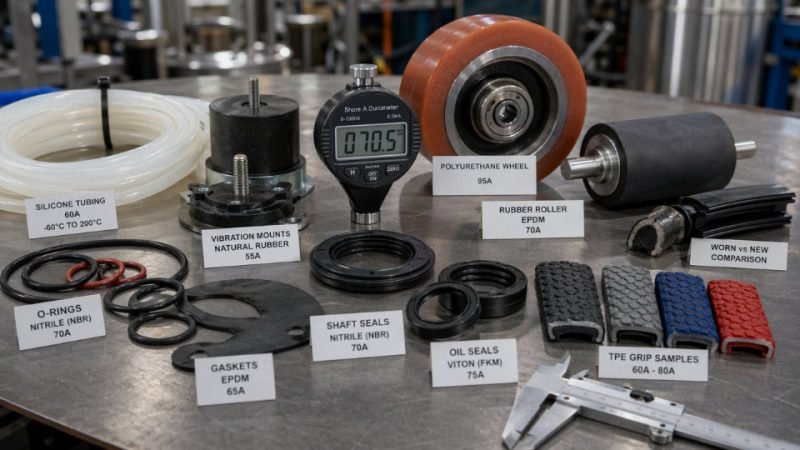
Pick the wrong “rubber-like” material and the problem rarely shows up on the purchase order. It shows up as a leaking gasket after a hot washdown, a cracked vibration mount in winter, a conveyor wheel glazing over, or a seal that swells because somebody changed the cleaning chemical. Then the real cost lands: line stoppage, scrap, emergency freight, and maintenance hours burned on a part that looked cheap at buying time. The practical answer is not one magic substitute for rubber, but the closest material for the job’s hardness, stretch, temperature, chemical exposure, and wear pattern.
The closest thing to rubber is usually another elastomer: silicone, EPDM, polyurethane, neoprene, nitrile, TPE, or TPU. For general feel and flexibility, TPE often comes closest. For sealing, EPDM or silicone may be better. For abrasion and load, polyurethane often beats rubber outright.
That sounds simple until you put the part in a real plant. A soft seal may sit around 40A to 70A Shore hardness, while other rubber-like parts can run from about 20A to 95A. Elongation might be 150% or 700%, depending on polymer family, filler, and cure. Natural rubber can stay flexible in the cold but dislikes heat; silicone handles heat but tears differently; polyurethane wears well but has its own temperature limits. So the useful question is not just “what feels like rubber?” It is “what fails least painfully in this exact service?”
Define the rubber-like properties that actually matter in service
A material is “close to rubber” only if it behaves close enough under load, temperature, chemicals, time, and abuse. A bench sample squeezed between your fingers tells you very little. I have seen soft materials pass a quick touch test, then take a permanent dent under a pump base within a week. That is not rubber-like performance. That is softness.
Start with the job. Is the part sealing, cushioning, gripping, returning energy, absorbing vibration, or surviving abrasion? Those are different problems.
Elasticity, recovery, and the softness trap
Elasticity is the ability to deform and come back. Stretch a rubber band, release it, and most of the strain disappears quickly. That recovery is the useful part. A soft foam, felt pad, or low-density sponge may feel gentle under a thumb, but if its cell structure collapses or creeps under constant load, it will not act like rubber in service.
This matters on real equipment. A soft pad under a vibrating feeder might feel right during installation. After a month of compression, oil mist, and fines packed into the surface, it may flatten out and transmit vibration straight into the frame. The operator hears the difference before anyone measures it.
Resilience is the rebound side of elasticity. High-resilience materials return energy well, useful for wheels, impact bumpers, rollers, and some drive components. Hysteresis is the energy lost as heat during each deformation cycle. That loss can be useful for damping, but too much hysteresis in a fast-moving roller or belt contact can create heat buildup, softening, cracking, and premature failure.
A soft material is not automatically rubber-like.True
Rubber-like behavior depends on elastic recovery, compression set, resilience, tear resistance, and service stability, not just low hardness or a soft hand feel.
Hardness is useful, but it is not the whole story
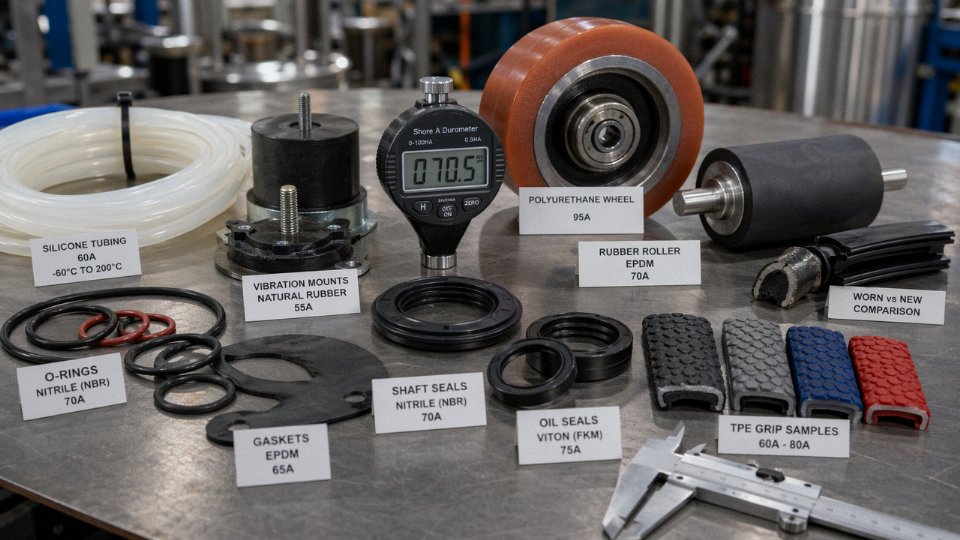
Shore A hardness is a good screening number. Most rubber-like materials used in industrial parts fall roughly from about 20A to 95A. Soft seals are often somewhere around 40A to 70A, depending on gland design, fluid pressure, surface finish, and assembly tolerance.
But hardness can fool you. Two materials at 60A can behave nothing alike. One may rebound sharply, resist abrasion, and hold seal load. Another may feel similar on a durometer and still tear at a bolt hole, wear into dust on a conveyor skirt, or take a compression set after a hot weekend shutdown.
Hardness tells you indentation resistance under a defined test. It does not tell you enough about chemical resistance, abrasion, tensile strength, crack growth, low-temperature flexibility, or whether the part will stay useful after six months clamped between flanges.
Compression set decides whether seals keep sealing
For gaskets, O-rings, isolation pads, vacuum cups, door seals, and machinery mounts, compression set is often the quiet killer. Compression set is the amount of permanent deformation left after a material has been squeezed for time at temperature. If it does not rebound, preload drops. Once preload drops, leaks start, fasteners loosen, vibration paths change, or dust gets past the seal lip.
A typical example: a gasket that seals fine during hydrotest may leak after several heat cycles because the material relaxed and never recovered its thickness. The mechanic tightens the bolts, which may buy time. Sometimes it just crushes the gasket further and guarantees the next leak.
For O-rings, the issue is even less forgiving. The gland is designed around squeeze. Lose squeeze through compression set, swelling, or thermal hardening, and the O-ring may stop sealing even though it still “looks OK” during inspection.
Strength, tear, elongation, and abrasion
Tensile strength matters when the part is stretched, pulled over a lip, clamped around a shaft, or loaded in a way the drawing did not fully admit. Tear resistance is more practical on the floor. A small nick from a utility knife, a rough casting edge, or a burr on a stainless guard can turn into a split if the material has poor tear growth resistance.
Elongation at break is another clue. Common elastomers may run around 150% to 700% elongation, depending on polymer family, filler loading, plasticizer, reinforcement, and cure system. High elongation helps during assembly and flexing, but do not buy on elongation alone. A very stretchy compound can still be weak in abrasion or poor under oil.
Abrasion resistance separates good rubber-like materials from lookalikes in conveyor, chute, wheel, scraper, and roller applications. Polyurethane, for example, can beat many rubbers in abrasive sliding service, but it may not tolerate the same temperature or hydrolysis exposure. Natural rubber can be excellent for resilience and abrasion in dry service, yet it is a poor choice around many oils and fuels.
Friction and damping are application-specific
Coefficient of friction is not a fixed magic value. It changes with surface roughness, dust, moisture, oil film, contact pressure, and speed. A rubber grip pad that works on clean painted steel may slip on oily mill scale. A roller lagging compound that tracks well in winter may glaze when the line runs hot and dusty.
Damping is similar. A mount for a fan base needs enough damping to control vibration, but not so much heat buildup that the material cooks internally. In practice, you balance damping, stiffness, load, and frequency. Guessing from touch is a bad habit here; at least check the supplier’s dynamic data if the equipment is costly or hard to access.
Temperature and chemicals change everything
Service temperature and chemical compatibility can turn a decent substitute into scrap. Natural rubber is often useful around roughly -50 to 80 degrees Celsius. Silicone may cover about -60 to 200 degrees Celsius. EPDM often sits around -50 to 150 degrees Celsius. Polyurethane is commonly closer to -40 to 90 degrees Celsius. These ranges depend heavily on compound formulation, exposure time, fluid contact, load, and whether the part sees static or dynamic motion.
Chemical attack shows up as swelling, cracking, hardening, softening, tackiness, or permanent deformation. Oil can swell the wrong rubber until it no longer fits the groove. Steam can destroy some compounds that looked fine in ambient water. Ozone can crack stretched natural rubber near motors and electrical cabinets. Solvents may pull plasticizer from a material and leave it hard as old Bakelite.
A practical checklist is simple: define the load, movement, temperature, fluid exposure, surface contact, expected life, and failure consequence. If the wrong choice means ten minutes of nuisance cleanup, you can experiment. If it means a leaking hydraulic manifold, food contamination, a down press, or a safety guard that no longer cushions impact, test the material like a production part, not a catalog adjective.
Natural rubber sets the benchmark for stretch, rebound, and fatigue resistance
Natural rubber is still the yardstick I reach for first when someone says “rubber-like.” Not because it is modern or easy to specify. It is neither, really. It is the benchmark because its combination of stretch, snap-back, tear strength, and fatigue resistance is unusually hard to duplicate in one material.
At the material level, natural rubber comes from latex, then gets compounded and vulcanized into an elastic solid. A typical rubber-like material may sit anywhere from about 20A to 95A Shore A hardness, with many soft seals landing around 40A to 70A. Natural rubber can cover a useful part of that range, but its real strength is not just hardness. It is what happens after millions of deflections.
A decent natural rubber compound can stretch a long way before breaking. General elastomer elongation at break often falls somewhere around 150% to 700%, depending on polymer family, filler loading, and cure system. Natural rubber is commonly at the strong end of that conversation when properly compounded. It also rebounds quickly, which is why it feels “alive” compared with many plastics and some synthetic elastomers.
Why it is still hard to beat in dynamic service
Dynamic applications punish materials differently than static gaskets do. A gasket may sit compressed for months. A vibration mount, tire sidewall, rubber spring, drive roller, or impact pad flexes again and again, often while carrying heat, contamination, and misalignment that were not in the catalog test.
Natural rubber handles that repeated strain very well. It has high resilience, good green strength during processing, strong tear resistance, and excellent fatigue life under cyclic loading. That mix is why it shows up in tires, suspension bushings, anti-vibration mounts, conveyor components, couplings, expansion joints, and rollers where grip and recovery both matter.
In practice, the difference shows up as temperature rise and cracking. Pick the wrong substitute for a vibrating mount and the part may look fine during installation, then run hot, harden, crack around the bonded plate, and start transmitting vibration back into the frame. Operators notice it as noise first. Maintenance sees loose fasteners later. Production sees it when a bearing or sensor bracket fails for reasons that do not look related to rubber at all.
Rollers are another plain example. Natural rubber often gives good traction and compliance on paper, film, textiles, and light-gauge sheet. If the roller face needs to deform slightly around surface variation and recover without glazing, natural rubber can be a good answer. But put that same roller in oily coolant mist or direct sunlight near a dock door and the story changes.
The weaknesses are real, and they drive substitutions
Natural rubber’s weak spots are not minor details. It has poor resistance to petroleum oils, fuels, many solvents, ozone, ultraviolet exposure, and sustained high temperatures. Its normal service temperature window is often roughly -50 to 80 degrees Celsius, depending on compound, part geometry, oxygen exposure, strain level, and whether heat is continuous or occasional. That is useful, but it is not silicone at about -60 to 200 degrees Celsius, EPDM at about -50 to 150 degrees Celsius, or even some specialty engineered compounds built for heat and weather.
Ozone cracking is the one that catches people out. A natural rubber part under strain can develop small surface cracks just from exposure to ozone in air, especially near electric motors, welding equipment, outdoor storage, or sunny yards. The part may not be “old” in production hours. It was simply stored badly or specified for the wrong environment.
Oil is the other common trap. Natural rubber in contact with hydraulic oil, diesel, grease, or cutting fluid can swell, soften, lose strength, or turn gummy. Sometimes it shrinks and hardens after the volatile parts leave. Neither outcome is kind to dimensional control.
Natural rubber is usually the closest baseline for high stretch, rebound, and fatigue performance, but it is not a universal replacement for oil-resistant, weather-resistant, or high-temperature elastomers.True
Natural rubber has excellent dynamic mechanical properties, yet its polymer backbone is vulnerable to oils, fuels, ozone, UV exposure, and sustained heat. Substitutes should be selected by the failure mode being solved, not by feel alone.
Compounding changes everything
Two natural rubber parts can both be “natural rubber” and behave nothing alike. Carbon black can raise strength, abrasion resistance, and fatigue life, but it changes hardness and heat buildup. Process oils improve mixing and flexibility, though too much can reduce strength or increase migration. Antioxidants and antiozonant waxes slow aging. Cure systems affect compression set, reversion resistance, heat aging, and dynamic behavior.
That is why procurement should be careful with vague descriptions like “black rubber pad” or “NR equivalent.” A molded mount, a skived sheet, and a roller covering may all use natural rubber, but the formulation and cure package are tuned for different failure risks. The purchase order should call out hardness range, tensile or elongation requirements if relevant, temperature exposure, fluid contact, outdoor exposure, dynamic strain, and any bonding requirement. If the part is safety-related or downtime-sensitive, ask for the compound data sheet and batch traceability. Cheap mystery rubber is expensive when it stops a line.
The closest substitute depends on the problem being fixed
If natural rubber is failing outdoors, EPDM may be closer in weathering performance, even if it gives up some oil resistance. If the issue is petroleum oil or fuel, nitrile or hydrogenated nitrile is usually a more logical direction. If heat is the driver, silicone or a heat-rated specialty elastomer may be needed, though tear and abrasion may suffer. If wear and load carrying matter, polyurethane can be attractive, but its rebound, hydrolysis resistance, and low-temperature behavior need checking.
The practical question is not “What feels most like natural rubber?” The better question is, “Which natural rubber weakness is costing us money?” Weathering, oil exposure, heat, wear, or manufacturing method will point to different substitutes. Get that wrong and the plant pays through swelling seals, cracked mounts, slipping rollers, scrap, and another emergency buy from whoever can ship by Friday.
Synthetic rubbers are the closest direct substitutes when elastic performance is the priority
If the job needs stretch, recovery, damping, grip, or a sealing lip that keeps pushing back after compression, synthetic rubber is usually the first place to look. Plastics can imitate the shape. Foams can imitate the softness. But proper elastomers are still the closest direct substitutes for rubber behavior on a plant floor.
Most industrial rubber-like compounds land somewhere around 20A to 95A Shore A, with many useful seals, pads, and grommets in the 40A to 70A range. Elongation at break is often roughly 150% to 700%, depending heavily on polymer family, carbon black or mineral filler, plasticizer level, and cure system. Those numbers matter, but they do not tell the whole story. A compound that stretches beautifully in a lab may crack beside a motor drive, swell in hydraulic oil, or harden after two summers outdoors.
Main synthetic rubber options compared with natural rubber
| Synthetic rubber | Closest match to natural rubber | Where it beats natural rubber | Where it falls short | Typical industrial uses |
|---|---|---|---|---|
| SBR | General-purpose elasticity, abrasion resistance | Lower cost in many markets, good wear behavior | Lower tear and fatigue resistance than good natural rubber; weak oil resistance | Tires, conveyor belts, footwear, molded goods |
| Neoprene | Balanced mechanical rubber feel | Better weather, flame, and moderate oil resistance | Not the best at any one extreme | Industrial pads, hose covers, gaskets, bellows |
| Nitrile rubber | Flexible rubber in oily service | Strong resistance to oils, greases, fuels, many hydraulic fluids | Poor ozone and weathering unless protected | O-rings, oil seals, fuel hose, hydraulic seals |
| EPDM | Elastic sealing outdoors | Excellent ozone, weather, steam, and heat aging resistance | Poor petroleum oil and fuel resistance | Roofing, weatherstrips, radiator hose, exterior gaskets |
| Butyl rubber | Soft damping and air retention | Very low gas permeability, good vibration damping | Slower rebound, limited oil resistance | Inner tubes, membranes, tank liners, specialty seals |
SBR is the workhorse general-purpose substitute
Styrene-butadiene rubber, or SBR, is probably the most common “near rubber” substitute where natural rubber’s premium fatigue properties are not mandatory. It has decent elasticity, good abrasion resistance, and a cost profile that often suits high-volume parts. That is why it shows up in tires, belts, footwear, floor mats, and molded bumpers.
Compared with natural rubber, SBR usually gives up some tear strength, rebound, and flex-crack resistance. In a conveyor belt running over small pulleys all day, that difference can show up as edge cracking sooner than expected. But for many wear parts that see scraping, sliding, and moderate flex, SBR is a sensible choice. It is not happy in oil. If maintenance crews spray lubricants around the line or the part sits near gearbox leakage, expect swelling and softening unless the compound is specifically protected.
Neoprene is the balanced industrial choice
Neoprene, also called chloroprene rubber, is a practical middle-ground material. It has moderate oil resistance, better weathering than natural rubber, useful flame resistance, and respectable mechanical durability. I have seen it specified for equipment pads, cable jackets, expansion joints, and gasket stock simply because it tolerates a mixed environment better than cheaper rubbers.
It is not as stretchy and lively as natural rubber, and it does not handle petroleum oils as well as nitrile. Still, for a machine guard gasket near sunlight, coolant mist, and occasional oil contact, neoprene can be the safer bet. The operating temperature window is compound-dependent, but in many industrial applications it sits in the broad middle rather than at the extremes.
Nitrile rubber is the oil-service default
Nitrile rubber, often marked NBR or Buna-N, is the leading choice where rubber-like flexibility has to survive oils, greases, fuels, and hydraulic fluids. This is the material behind many O-rings, shaft seals, fuel hoses, and hydraulic sealing elements.
The tradeoff is weathering. Nitrile does not like ozone and outdoor exposure unless the compound is protected or blended for it. Leave a nitrile gasket stretched on a fixture near a sunny doorway or an ozone-generating motor, and small surface cracks can appear long before the part is mechanically worn out. For indoor oily service, though, it often beats natural rubber by a wide margin.
Nitrile rubber is usually a better choice than natural rubber for seals exposed to petroleum oils and many hydraulic fluids.True
Natural rubber commonly swells and loses mechanical properties in petroleum oil, while nitrile rubber is formulated specifically for oil and fuel resistance. Exact performance still depends on acrylonitrile content, fluid chemistry, temperature, and seal design.
EPDM owns outdoor weathering and steam service
EPDM is the rubber I reach for first in many outdoor sealing jobs. It resists ozone, sunlight, rainwater, steam, and heat aging far better than natural rubber. Service temperature varies by compound, but as a practical comparison, natural rubber is often used around -50 to 80 degrees Celsius, while EPDM may run roughly -50 to 150 degrees Celsius if the grade and cure system are right.
That makes EPDM common in roofing membranes, automotive weatherstrips, radiator and coolant hoses, door seals, and exterior gaskets. The big warning is oil. EPDM and petroleum fluids do not get along. Put an EPDM gasket on a diesel tank fitting and the failure is not mysterious; it is a material selection error.
Butyl rubber is for air retention and damping
Butyl rubber is less springy than natural rubber, but it has very low gas permeability. That single property makes it valuable for inner tubes, tire liners, air bladders, membranes, and specialty seals where pressure loss is the main enemy. It also damps vibration well, which can be useful in isolation pads and acoustic barriers.
The feel is a little “dead” compared with natural rubber. In some applications that is exactly the point. A high-rebound rubber can feed vibration back into a frame; butyl tends to absorb and quiet it. It is not the first pick for dynamic oil seals or high-abrasion belt covers.
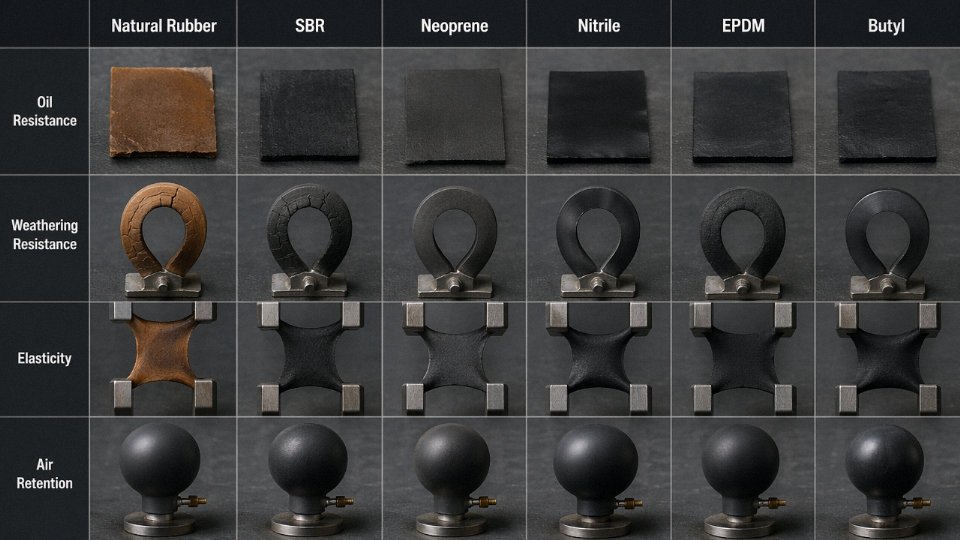
A typical mistake is choosing the synthetic rubber that feels closest in the hand rather than the one that survives the service environment. Natural rubber may win on snap and fatigue. SBR may win on cost and abrasion. Nitrile wins around oil. EPDM wins outdoors. Butyl wins where air loss or damping matters. Pick the wrong one and the penalty is not theoretical: leaking seals, cracked belts, swollen gaskets, scrap parts, and a maintenance crew changing the same component every shutdown.
Silicone is the closest thing to rubber when heat, cold, and aging resistance matter most
Silicone rubber is often the material people point to when they say, “This feels like rubber, but it lasts longer outside.” That is a fair instinct. It bends, compresses, seals, grips, and springs back in a very rubber-like way, especially in softer grades. Typical silicone parts sit somewhere in the same practical hardness band as many elastomers, roughly 20A to 80A Shore A for common molded or extruded goods, though harder and softer specialty compounds exist.
Where silicone separates itself from natural rubber, nitrile, neoprene, and many general-purpose elastomers is temperature and aging. A standard silicone compound may work from about -60 to 200 degrees Celsius, depending on grade, cure chemistry, filler package, part thickness, compression state, and exposure time. Compare that with natural rubber at roughly -50 to 80 degrees Celsius, EPDM at about -50 to 150 degrees Celsius, and polyurethane at about -40 to 90 degrees Celsius. Those are not cliff-edge numbers. Plants always find the gray zone. But they are useful when choosing a gasket that sees freezer starts, steam-wash heat, sun exposure, or a control cabinet that bakes every summer afternoon.
Silicone rubber is usually closer to rubber in feel than plastic, but closer to a specialty elastomer in industrial performance.True
Silicone is an elastomer, so it can flex and recover like rubber, but its heat stability, ozone resistance, ultraviolet resistance, and chemical limitations give it a different service profile than common organic rubbers.
Why silicone survives heat, weather, and idle time so well
Silicone’s backbone chemistry gives it good thermal stability. In plain shop-floor terms, it does not harden, crack, and lose its seal as quickly as many rubbers when it sits near heat, ozone, sunlight, or outdoor air. That matters on equipment that does not fail dramatically. It just starts leaking.
I have seen this bite plants on oven door seals and heated inspection windows. A cheaper elastomer may look acceptable during installation, then take a compression set after a few months of hot cycling. The door needs more latch force. Operators lean on it. Heat loss climbs. Product near the edge of the oven starts drifting out of spec. Nobody blames the gasket at first.
Silicone is also a strong electrical insulator, which is why it shows up around electronics, keypads, cable sleeves, heater leads, sensor boots, and high-temperature wire protection. For electrical service, the compound and design still matter: wall thickness, creepage distance, surface contamination, and whether the part is being flexed or clamped. Silicone is forgiving, not magic.
Weather is another strong case. Ozone and ultraviolet exposure attack many elastomers, especially when the part is stretched or under constant deflection. Silicone handles outdoor exposure well, so it is common in weather-exposed seals, lighting gaskets, enclosure seals, and HVAC components. EPDM is also very good here and often cheaper, so the decision usually comes down to temperature, certification requirements, and sealing geometry.
Where silicone is a bad substitute
The weak side of silicone is mechanical abuse. It generally has lower tear strength and abrasion resistance than many organic rubbers. If a part is dragged across metal, pinched under a sharp flange, scraped by product, or installed by someone using a screwdriver as a pry bar, silicone can tear sooner than nitrile, EPDM, neoprene, or polyurethane.
That is the operational warning: silicone is excellent in heat, cold, and weather, but poor design can turn it into an expensive consumable.
It also has limited resistance to some fuels, petroleum oils, and solvents. In a fuel-handling area, hydraulic power unit, or oily machine sump, standard silicone is often the wrong call. Fluorosilicone may help in some fuel and oil applications, but the price jumps, and it still needs proper compatibility testing. Do not approve it from a catalog sentence. Put samples in the actual fluid, at the actual temperature, under compression if the real part is compressed. A week on a bench tells you more than a neat datasheet.
Cost is the other practical issue. Silicone compounds and molded parts often cost more than EPDM, nitrile, or natural rubber alternatives. The premium may be easy to justify for a seal that prevents downtime on a curing oven or outdoor control enclosure. It is harder to justify on a low-temperature dust flap that gets replaced during every shutdown anyway.
Common places silicone is the right answer
Silicone is widely used for oven seals, bakery and food-processing gaskets, medical tubing, soft diaphragms, electronics keypads, high-temperature sleeves, weather-exposed enclosure seals, and appliance parts. Food-grade and medical-grade options are available, but those words need to be tied to real standards, traceability, and processing controls. A “food-safe” claim from an unknown supplier is not the same as documented compliance for the intended market.
For consumers, silicone may be the closest thing to rubber because it behaves the way they expect rubber to behave: flexible, grippy, soft enough to seal, and able to recover after bending. Phone cases, spatulas, jar seals, baby products, kitchen mats, and wearable straps all reinforce that impression.
In industry, the view is narrower. Silicone is not just “better rubber.” It is a rubber-like elastomer for conditions where heat, cold, ozone, ultraviolet exposure, electrical insulation, cleanliness, or long shelf life matter more than tear resistance, abrasion life, fuel resistance, or low material cost. Pick it for those reasons and it earns its keep. Pick it because it feels nice in the hand, and it may become an expensive lesson on the maintenance log.
Polyurethane is the rubber-like choice for abrasion, load carrying, and cut resistance
Polyurethane sits in a slightly different lane from the usual rubber substitutes. It can feel rubbery, flex like an elastomer, and seal or cushion a load, but its real value shows up where ordinary rubber is being eaten alive by abrasion, cutting, or compression.
That is why plant people reach for polyurethane on wheels, rollers, chute liners, scraper blades, suspension pads, drive couplings, bushings, and material-handling parts. Not because it is always “more rubber-like” than rubber. Because, in the right grade, it survives the job longer.
Polyurethane can be soft and elastic, or almost plastic-like
Both cast polyurethane and thermoplastic polyurethane, usually called TPU, can be formulated across a wide hardness band. Soft grades can sit in the rubber-like range, roughly 60A to 95A Shore A for many industrial parts, while harder grades move into Shore D territory and start behaving more like tough engineering plastic. The final feel depends on chemistry, hardness, plasticizer use, filler package, part thickness, and processing quality.
That spread matters. A 70A polyurethane squeegee blade and a 95A forklift wheel are not doing the same job, even if both get called “polyurethane” on a purchase order.
Cast polyurethane is common for heavy-duty custom parts: large wheels, thick pads, screens, mining components, press tooling, and big rollers. TPU is common where melt processing makes sense: extruded profiles, molded parts, hose covers, belts, cable jackets, and smaller wear components. In practice, cast urethane often gives better heavy-section toughness and load behavior, while TPU wins where volume, shape consistency, and thermoplastic processing matter.
Where polyurethane beats rubber on the plant floor
The short version: polyurethane handles scraping, rolling, impact, and concentrated loads very well.
Its abrasion resistance is often the first reason engineers specify it. On conveyor rollers, guide wheels, chute liners, and screen panels, polyurethane can outlast natural rubber or SBR by a wide margin, especially where the wear is sliding abrasion from sand, aggregate, pellets, grain, or metal fines. The actual gain depends on the compound, the abrasive media, speed, temperature, and whether the surface is dry, wet, or contaminated with oil. I have seen “urethane lasts longer” be true, and I have seen cheap urethane fail early because the grade was wrong. Both things happen.
Tear strength and cut resistance are the next advantages. Rubber can nick and start a crack that grows under flexing. Polyurethane usually resists chunking better, particularly on wheels running over rough concrete, metal chips, pallet debris, or rail joints. That makes it useful for caster wheels, lift-truck load wheels, warehouse shuttle wheels, snowplow edges, scraper blades, and feed rollers.
Load carrying is another strong point. Rubber under static load can creep, flatten, or take a compression set, especially if the compound is soft or the bearing area is small. Polyurethane spreads that load better in many applications. Think of bushings, suspension bump stops, die pads, vibration mounts, and press pads. If rubber is squeezing out, mushrooming, or staying permanently deformed after a shutdown weekend, polyurethane may be the closest practical substitute.
Typical places where the switch makes sense
| Application | Rubber often works well when | Polyurethane is usually favored when |
|---|---|---|
| Wheels and rollers | Grip, low noise, and rebound are the main needs | Abrasion, flat-spotting, chunking, or high load is the failure mode |
| Bushings and suspension pads | Flex and isolation matter more than wear | Load is high and rubber is deforming or tearing |
| Scraper and wiper blades | Surface is delicate or low temperature flexibility is critical | The blade edge is wearing, cutting, or swelling from oil exposure |
| Conveyor parts | Impact cushioning is the priority | Sliding abrasion and carryback are driving maintenance calls |
| Mining and bulk handling parts | Large soft liners are needed for impact | Screens, liners, wheels, or wear strips are being cut and abraded |
A typical example: a rubber-coated roller on a packaging or material-handling line starts glazing, tearing at the edges, and losing diameter. Maintenance keeps adjusting nip pressure to compensate. Then bearings run hotter because someone overtightened the setup. A properly selected polyurethane cover, not just a harder one, can hold diameter longer and reduce adjustment frequency. Pick the wrong hardness, though, and it may lose traction or mark the product. There is always a trade.
Oils, solvents, heat, and weather are not afterthoughts
Polyurethane generally has useful resistance to oils, greases, fuels, and some solvents compared with many general-purpose rubbers. That makes it attractive around hydraulic equipment, lubricated conveyors, machine tools, and floor-running wheels exposed to oil mist or coolant. “Some solvents” is doing a lot of work here. Strong polar solvents, aggressive cleaning chemicals, hot water, and certain process fluids can attack specific polyurethane chemistries.
Temperature is another boundary. Natural rubber is often used around -50 to 80 degrees Celsius, depending on compound and service conditions. Polyurethane commonly sits around -40 to 90 degrees Celsius for many industrial grades. That is not a universal rating; dynamic loading, part thickness, heat buildup, and chemical exposure can pull the safe range down. A wheel that survives 80 degrees Celsius in still air may overheat under continuous high-speed load.
Cold service needs caution too. Some polyurethane grades stiffen as temperature drops. The part may still be intact, but it stops behaving like the rubber it replaced. On outdoor winter conveyors, dock equipment, cold-storage wheels, or suspension pieces, that stiffness can mean vibration, noise, poor sealing, or cracking under impact.
Polyurethane is always a better rubber substitute for abrasive service.False
Polyurethane often outperforms rubber in abrasion, tear, and load-bearing applications, but its success depends on chemistry, hardness, temperature, moisture exposure, dynamic heat buildup, and manufacturing quality.
The formulation quality can make or break the part
This is where procurement can accidentally buy trouble. Two polyurethane parts with the same hardness can behave very differently. Polyester-based grades may offer strong abrasion and mechanical properties, but some are vulnerable to hydrolysis in hot, wet, or humid service. Polyether-based grades are usually safer where water exposure is constant, such as washdown areas, wet screening, marine handling, or slurry contact. The right answer depends on the fluid, temperature, cleaning routine, and whether the part sees continuous flexing.
Processing matters as much as the datasheet. Poor mixing, moisture contamination during casting, bad cure control, or cheap fillers can produce bubbles, weak tear resistance, poor bonding to metal hubs, or early cracking. If a polyurethane wheel delaminates from its core, the problem may not be “urethane is bad.” It may be surface preparation, adhesive system, cure schedule, hub design, or supplier discipline.
Operational warning: do not replace rubber with harder polyurethane just because the rubber wore out. Harder is not automatically better. Too hard can increase noise, reduce grip, overload bearings, chew up the mating surface, and transfer shock into the frame. The better question is what failed first: abrasion, tearing, compression set, swelling, heat buildup, or chemical attack. Match the polyurethane grade to that failure mode.
Polyurethane is closest to rubber when the job still needs flex, resilience, and contact compliance, but the old rubber part is wearing too fast, chunking out, or sagging under load. Used that way, it is not a miracle material. It is a practical maintenance fix with enough engineering behind it to save real downtime.
Thermoplastic elastomers are rubber-like materials built for fast manufacturing and recyclability
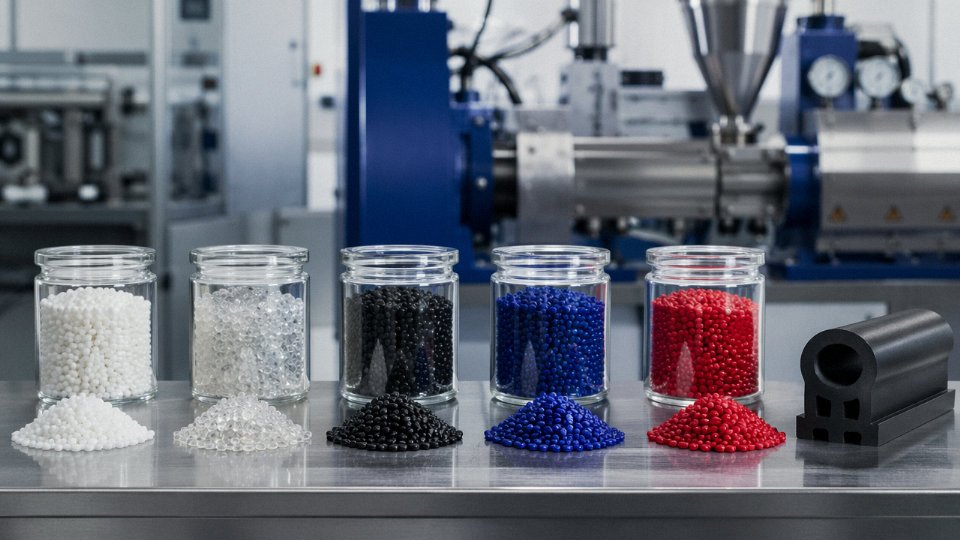
Thermoplastic elastomers, usually shortened to TPEs, sit in the useful middle ground between rubber and plastic. In service, they can flex, seal, cushion, grip, and recover like a soft elastomer. In the molding shop, they run through equipment much closer to plastic: injection molding, profile extrusion, blow molding in some grades, and overmolding onto rigid substrates.
That processing difference is not a small detail. It changes tooling, labor, scrap handling, takt time, and purchasing strategy.
A molded rubber part normally needs compounding, forming, vulcanization, deflashing, and often post-curing or inspection for cure-related defects. A TPE part melts, fills the tool, cools, and ejects. No sulfur cure. No peroxide cure. No scorch risk sitting in a hot barrel. For high-volume parts such as grips, cable jackets, grommets, phone cases, trim pieces, soft feet, and small flexible seals, that can make the business case even when the raw material price per kilogram looks higher than rubber compound.
The main TPE families do not behave the same
“TPE” is a broad purchasing label, not a single material. I have seen plenty of RFQs go sideways because the drawing said “TPE, black, 60 Shore A” and nothing else. That is not enough.
| Material family | Where it is commonly used | Practical character |
|---|---|---|
| TPE-S, often styrenic block copolymer based | Tool grips, toothbrush handles, soft-touch knobs, consumer products, simple seals | Soft feel, easy coloring, good overmolding options, usually not the best for high heat or oils |
| TPV, thermoplastic vulcanizate | Automotive weather seals, underhood covers, boots, ducting, corner-molded seal sections | Rubber-like compression behavior for a thermoplastic, better heat and aging than many soft TPE-S grades |
| TPU, thermoplastic polyurethane | Abrasion-resistant wheels, cable jackets, flexible guards, phone cases, belts, tough molded parts | Strong, cut-resistant, good tear strength, can be too “grabby” or stiff depending on hardness and chemistry |
| TPO, thermoplastic polyolefin | Automotive interior skins, bumper-related parts, impact-modified panels, flexible trim | More plastic-like than rubber-like, useful where impact and low weight matter more than elastic recovery |
Hardness overlaps with rubber. Many rubber-like TPEs fall somewhere from about 20A to 95A Shore A, while soft seals and grips often sit around 40A to 70A. The actual feel depends on wall thickness, surface texture, oil content, filler package, and whether the part is bonded to a rigid core. A 60A overmold on a ribbed polypropylene handle can feel firmer than a 70A free-standing rubber pad. Geometry lies to your fingers.
Why factories like TPEs
The first reason is speed. Injection molded TPE cycle times are often measured in seconds to a couple of minutes, depending on part thickness, tool cooling, melt temperature, and ejection limits. Vulcanized rubber cycles commonly run longer because the compound must cure through the section. Thick rubber parts punish impatience; pull them early and you get poor compression set, tackiness, or weak tear strength.
Scrap is another reason. Many thermoplastic elastomer runners, sprues, start-up purges, and edge trim can be reground or reprocessed in controlled percentages. The allowable regrind ratio depends on polymer family, color requirements, contamination risk, and mechanical property targets. Medical, electrical, food-contact, and cosmetic parts usually have tighter rules. Still, compared with cured rubber scrap, which is usually downcycled or disposed of, the production-floor flexibility is real.
Color matching is cleaner too. TPEs can be supplied pre-colored or run with masterbatch, and the results are usually easier to manage than colored rubber compounds filled with carbon black, process oils, sulfur systems, and reinforcing fillers. Anyone who has tried to hold a light gray rubber part within a tight visual range under mixed LED and daylight inspection knows the headache.
Overmolding may be the biggest design advantage. TPE can be molded directly onto polypropylene, polyethylene, ABS, polycarbonate, nylon, or metal inserts in certain combinations. Bonding depends on chemistry and surface preparation; it is not magic. A soft grip peeling off a handle after two weeks in a humid warehouse is usually not a molding mystery. It is a material pairing, surface energy, or process-window problem.
Thermoplastic elastomers can replace rubber in many flexible parts because they behave elastically in use while being processed with plastic molding and extrusion methods.True
This is accurate for many TPE, TPV, TPU, and TPO grades, although the match depends on heat exposure, compression set, chemical contact, load duration, and required recovery.
The limits show up under heat, load, and time
TPEs are not universal rubber replacements. Some grades soften, creep, or take a set under long-term load. That matters in clamps, feet, seals, latch bumpers, and any part held in compression for months. A thermoset EPDM seal may survive about -50 to 150 degrees Celsius depending on compound and duty cycle; silicone may run roughly -60 to 200 degrees Celsius. Many general-purpose TPE-S grades are nowhere near that upper range. TPV and TPU can do better, but grade selection is everything.
Very low hardness can also be troublesome. Ultra-soft TPEs may feel excellent on a showroom sample, then attract dust, bleed oil, dent under packaging pressure, or drag badly during assembly. At the high end, near 90A and above, the material may begin to behave more like a flexible plastic than rubber, with less plush recovery and more stress whitening or creep depending on formulation.
In practice, I would treat TPE as a strong candidate when the part needs rubber-like feel, moderate sealing, fast molding, color control, and high-volume repeatability. Tool grips, phone cases, automotive interior pads, soft-touch buttons, cable jackets, protective sleeves, small dust seals, appliance feet, and consumer product bumpers are all fair territory.
For a hot oil seal, a steam gasket, or a loaded mount that must hold shape for years, I would slow down and test against the right rubber compound. The wrong choice may pass incoming inspection and still fail in the field, which is the most expensive place to learn material science.
Foam, cork, leather, and plastics can feel rubbery but are not always true substitutes
A material can feel soft under a thumb and still fail badly in a rubber job. I have seen this most often with pads, gaskets, bumpers, and “temporary” spacers that somehow become production parts. The sample feels compliant on the desk. Then the line runs hot, the clamp load stays on it for three weeks, oil mist gets involved, and the part takes a permanent set or tears at a bolt hole.
That is the gap between rubber-like feel and rubber-like engineering performance.
Foam works well for cushioning, but solid rubber usually wins on tear and recovery
EVA foam, polyethylene foam, neoprene sponge, and silicone foam all have legitimate uses. They are not cheap impostors. EVA foam is useful in protective pads, packaging, footwear-type cushioning, and light-duty anti-rattle parts. Polyethylene foam is common where low cost, low water absorption, and impact cushioning matter. Neoprene sponge can make a decent weather seal or enclosure gasket. Silicone foam is often selected around ovens, lighting, electronics, or outdoor enclosures where temperature and aging are the headache.
The trap is assuming foam behaves like solid rubber just because it compresses.
Foam depends on cell structure. Open-cell foam breathes and compresses easily, but it can absorb fluids and lose sealing force. Closed-cell foam resists water better, but it can collapse under high clamp load or take a set if the design squeezes it too hard. Typical compression targets vary by material and density, but many foam seals are happier with moderate compression, not being crushed flat under a flange because someone wanted “extra sealing.”
Solid rubber, by comparison, usually has better tear strength, abrasion resistance, and repeated compression recovery, assuming the compound is selected correctly. A 50A to 70A rubber seal can often survive being handled, stretched over a lip, dragged during installation, and re-compressed through many cycles. A foam strip may seal fine on day one and still be the wrong choice if maintenance workers peel it off every shutdown or if the mating surface has burrs.
Operational warning: foam gaskets around access doors often fail at corners first. Not because the foam was bad, but because the corner radius was tight, the adhesive was marginal, and operators pulled the door open by twisting it. Solid elastomer tolerates that abuse better.
Cork-rubber composites are gasket materials, not stretch rubber
Cork-rubber is one of those materials that looks old-fashioned until you need it. It still earns its place in transformer gaskets, covers, inspection plates, small engine gaskets, vibration pads, and oil-exposed sealing surfaces. The cork gives compressibility. The rubber binder gives some resilience and fluid resistance. Depending on binder type, cork-rubber can handle oils and fuels better than plain cork, though the exact performance depends heavily on the rubber binder, cork grain size, density, and operating temperature.
But it is not a stretchable rubber replacement.
Use cork-rubber where the part is compressed between two surfaces and expected to conform to minor flange irregularities. Do not use it where the part must elongate 150% to 700% like a typical elastomer family might, depending on polymer, filler loading, and cure system. Cork-rubber will crack, crumble, or split if asked to behave like a rubber band, diaphragm, boot, or dynamic seal.
A typical plant-floor case: a maintenance team cuts a cork-rubber gasket by hand for a pump cover. Good enough, if the fluid is compatible and bolt load is even. The same sheet gets used later as a flexible coupling insert because “it’s rubbery.” That second use is asking for chunks in the guard and an unplanned stop.
Flexible PVC can be soft without being truly elastic
Flexible PVC, vinyl compounds, and other plasticized materials can feel close to rubber in tubing, edge trim, floor mats, curtains, cable jackets, and low-cost grips. They process well, color easily, and can be made soft across a broad hardness range. For purchasing, they are attractive because extrusions and molded profiles are widely available and often cheaper than cured rubber.
The weaknesses show up in rebound, aging, and temperature.
PVC softness usually comes from plasticizer. Over time, that plasticizer can migrate, especially with heat, oils, contact with certain rubbers, adhesives, or painted surfaces. The part may stiffen, get tacky, stain adjacent materials, or shrink a little. Low-temperature performance can also be disappointing. A flexible PVC strip that hangs nicely at room temperature may turn board-like in a cold warehouse or on a dock door in winter. Exact limits depend on the formulation, but the risk is real.
Rubber is not automatically better in every chemical environment. Still, if the job needs snap-back, repeated flexing, vibration isolation, or sealing force after long compression, a true elastomer is usually safer than a soft plastic.
A material that is soft to the touch is not necessarily a rubber substitute.True
Softness measures initial feel or indentation resistance, while rubber substitution depends on recovery, elongation, tear strength, compression set, abrasion, temperature behavior, and chemical compatibility.
Leather has history, but not much modern rubber-like elasticity
Leather deserves respect. It has been used for belts, pump cups, seals, friction washers, clutch facings, and machine guards for a long time. Properly selected and treated leather can be tough, grippy, and forgiving against metal surfaces. In some older equipment, replacing leather with a modern elastomer without understanding lubrication and surface finish can create new problems.
Still, leather is not very close to rubber in elastic behavior. It does not stretch and recover like a cured elastomer. Moisture changes its dimensions and stiffness. Oils, heat, biological attack, and drying cycles can make it swell, harden, crack, or glaze. It is anisotropic too; properties vary with grain direction and cut. That matters for belts and seals.
Leather can be a friction or wear material. It is rarely the right answer for a modern dynamic rubber seal, vibration isolator, or flexible boot unless the machine was designed around it.
A practical selection rule
Use the function, not the feel, to make the call.
| Application need | Better first choice | Watch-outs |
|---|---|---|
| Repeated stretch and recovery | Rubber, silicone, EPDM, polyurethane, TPE/TPV/TPU | Check elongation, fatigue, compression set, and temperature range |
| Light cushioning or anti-rattle spacing | EVA foam or polyethylene foam | Can crush, tear, or lose thickness under load |
| Weather or enclosure sealing with low closing force | Neoprene sponge or silicone foam | Corner design, adhesive choice, and compression percentage matter |
| Static gasket with oil exposure and flange roughness | Cork-rubber composite | Not for stretch, dynamic motion, or high bolt distortion |
| Soft trim, covers, curtains, low-cost flexible profiles | Flexible PVC or plasticized plastic | Plasticizer migration, cold stiffening, and poor rebound |
| Friction surface on legacy equipment | Leather | Sensitive to moisture, oil, heat, and maintenance practice |
My rule of thumb is simple: if the application needs repeated stretch and recovery, choose an elastomer. If it only needs cushioning, grip, spacing, or a soft contact surface, foam or flexible plastic may be enough. The wrong side of that line is where cheap substitutions become downtime, scrap, and annoying repeat work orders.
Choose the closest rubber substitute by application, not by material name
A buyer asking for “rubber material” is usually asking too late in the process. The better question is what the part must survive: oil mist, outdoor ozone, repeated compression, sliding abrasion, food contact, or a press operator with a solvent rag. The closest rubber substitute for one service can fail quickly in another, even if both samples feel identical on a desk.
Match the failure mode first
| Application | Usually good starting choices | Watch the limits |
|---|---|---|
| Oil seals, fuel hoses, hydraulic exposure | Nitrile, hydrogenated nitrile, fluorocarbon elastomers, polyurethane | Fluid chemistry, pressure spikes, seal lip temperature, swelling |
| Outdoor seals, roofing, door gaskets | EPDM, silicone | Compression set, UV, ozone, installation squeeze, cost |
| Wear rollers, wheels, impact pads | Polyurethane, natural rubber, styrene-butadiene rubber | Abrasion style, chunking, heat buildup, floor contamination |
| Food, medical, high-temperature seals | Silicone, approved specialty elastomers | Regulatory grade, extractables, cleaning chemicals, traceability |
| Vibration and shock isolation | Natural rubber, neoprene, butyl rubber, silicone, polyurethane | Damping versus rebound, fatigue, oil exposure, temperature |
| Soft-touch grips and overmolded parts | TPE, TPV, TPU | Bonding to substrate, texture, color stability, scratch resistance |
Oil, fuel, and hydraulic service: start with the fluid, not the hardness
For oil seals, fuel hoses, and hydraulic exposure, nitrile rubber is often the first practical substitute because it handles many mineral oils at a reasonable price. It is not magic. Aromatic fuels, aggressive additives, biofuel blends, and hot synthetic hydraulic fluids can move the choice toward hydrogenated nitrile or fluorocarbon elastomers. Polyurethane earns its keep where pressure, extrusion resistance, and abrasion are bigger issues, such as hydraulic rod seals or wipers on dirty equipment.
Hardness alone will not save a bad material choice. A 70A seal compound may look right on the drawing, but Shore A only tells part of the story. Rubber-like materials commonly sit from about 20A to 95A, while many soft seals land around 40A to 70A depending on gland design and squeeze. If the polymer swells 15% in the actual fluid, the seal lip geometry changes and friction climbs. Then the shaft gets hot, the lip hardens, and maintenance blames the bearing.
Outdoor seals and door gaskets: EPDM is hard to beat unless heat changes the game
For weather seals, roofing membranes, HVAC gaskets, and automotive-style door seals, EPDM is usually the practical benchmark. It resists ozone, sunlight, water, and steam better than many oil-resistant rubbers. That is why it shows up all over outdoor equipment cabinets and building seals.
Silicone becomes attractive when the temperature window is wider or when long-term softness matters. As a rough comparison, natural rubber often works around -50 to 80 degrees Celsius, EPDM around -50 to 150 degrees Celsius, and silicone around -60 to 200 degrees Celsius, depending on compound, exposure time, and load. The tradeoff is cost and tear strength. In a plant, silicone gaskets can get nicked by careless installation with a screwdriver or utility knife. EPDM is usually less expensive and more rugged for ordinary outdoor sealing.
Rollers, wheels, and impact pads: wear is not one problem
High-wear rollers and wheels are where polyurethane often replaces rubber with good results. It resists abrasion, carries load, and can be cast or machined into durable wheels, scraper blades, and impact pads. For conveyor rollers handling cartons, that may be perfect. For wet aggregate, sharp metal scrap, or a dirty floor, you still need to test.
Natural rubber has excellent rebound and fatigue resistance, so it can outperform tougher-looking materials in dynamic flexing. Styrene-butadiene rubber is commonly used where abrasion resistance and cost matter, though it does not match natural rubber’s fatigue behavior in many cyclic applications. Polyurethane, meanwhile, can build heat under repeated deflection. I have seen wheels that looked barely worn but ran hot enough to soften bonding adhesive because the load and speed were wrong.
Food, medical, and hot sealing: the certificate matters as much as the compound
Silicone is a common choice for food, medical, and high-temperature sealing because it stays flexible over a wide temperature range and can be made in clean, translucent, or colored grades. That does not mean any silicone sheet from a distributor is acceptable for a filling line or medical device. You need the right regulatory grade, batch traceability, and extractables data where the application demands it.
Approved specialty elastomers may be needed for aggressive cleaning chemicals, oils, steam cycles, or pharmaceutical contact. Ask for the actual compliance basis, not just “food grade” in a catalog line. A gasket that passes a dry contact requirement may not be suitable for hot fatty foods, caustic washdown, or repeated steam-in-place cycles.
A rubber-like material that feels soft and flexible is not automatically suitable for food, medical, fuel, or hydraulic service.True
Suitability depends on polymer chemistry, additives, regulatory grade, extractables, fluid compatibility, temperature, and mechanical loading, not just hand feel or Shore hardness.
Vibration isolation: decide whether you want bounce or damping
For vibration mounts and shock pads, natural rubber is still a strong baseline because it gives good rebound and fatigue life. Neoprene is a useful middle-ground material when some oil resistance and weathering resistance are needed. Butyl rubber damps vibration well and has low gas permeability, but it can feel dead compared with natural rubber. Silicone stays flexible in cold or hot conditions, though tear strength and cost need checking. Polyurethane can handle load and abuse, but it may transmit more energy if the formulation is too hard or too resilient.
Elongation at break is often quoted, usually somewhere around 150% to 700% for elastomers depending on polymer family, filler loading, and cure system. Useful number, yes, but not the whole answer. For a mount, fatigue under repeated strain matters more than a one-time pull test.
Soft-touch grips and overmolded products: TPE usually wins on manufacturing
For consumer grips, hand tools, knobs, small appliance feet, and overmolded housings, thermoplastic elastomers often make the most sense. They process fast, color well, accept texture, and can bond to rigid plastics such as polypropylene, ABS, or polycarbonate if the grade is selected correctly.
This is where procurement can accidentally save pennies and create scrap. A cheaper TPE that does not bond to the substrate may pass incoming inspection as pellets, then peel after overmolding or fail a simple twist test. Tool temperature, surface texture, gate location, and regrind habits all matter. In practice, I want trial shots before locking the material, especially on soft-touch parts where feel, gloss, and edge adhesion are visible to every customer.
Verify rubber-like performance with test data before approving a substitute
A rubber substitute should not be approved because it bends in your hand, matches a black sample, or carries a familiar polymer name on a quotation. That is how seals pass receiving inspection and fail on the line three weeks later.
Start with a written performance target. Not “rubber-like.” Write down the load, temperature, fluid exposure, movement, surface finish, installation method, cleaning chemical, and expected life. Then make the supplier prove the compound can live there.
Datasheet values to request before trial approval
For any candidate elastomer, ask for the actual compound datasheet, not just a generic polymer brochure. At minimum, I would want these properties:
| Property to request | Why it matters in the plant |
|---|---|
| Shore A hardness | Controls squeeze, grip, flexibility, and assembly force. Rubber-like materials commonly sit around 20A to 95A; soft seals are often around 40A to 70A, depending on gland design and pressure. |
| Tensile strength | Gives a rough view of mechanical integrity, especially for stretched parts, diaphragms, and molded features. |
| Elongation at break | A basic stretch benchmark. Many elastomers run roughly 150% to 700%, depending on polymer family, filler loading, plasticizer, and cure system. |
| Tear strength | Critical for gaskets pulled over studs, boots with sharp corners, and parts trimmed by hand. Low tear strength shows up as “installation damage.” |
| Compression set | One of the big ones for seals. A part that does not recover after being squeezed becomes a leak path. |
| Specific gravity | Useful for incoming checks, cost-per-part comparison, and spotting formulation drift. Heavy filler can make a quote look cheap while hurting performance. |
| Abrasion resistance | Needed for rollers, pads, wipers, chute liners, and anything rubbing against product or metal. |
| Service temperature | Natural rubber may work roughly from -50 to 80 degrees Celsius, silicone from about -60 to 200 degrees Celsius, EPDM from about -50 to 150 degrees Celsius, and polyurethane around -40 to 90 degrees Celsius. These ranges depend heavily on compound, load, exposure time, and whether the part is static or flexing. |
Do not treat these values as independent. A harder compound may seal poorly at low clamp load. A highly filled compound may look strong in tensile data but crack sooner in flexing. A beautiful lab number can still be wrong for a dirty, misaligned, hot piece of equipment.
Test chemical compatibility with the real fluid, not a category name
“Oil resistant” is not a test condition. Neither is “coolant,” “cleaner,” or “food-grade chemical.” Use the exact fluid, concentration, temperature, and exposure time expected in service.
A gasket sitting in 5% caustic washdown at room temperature is not the same as one seeing hot caustic foam every shift, followed by sanitizer and steam. Hydraulic oil from one formulation can swell a material less than another oil with different additives. Cutting fluids are worse; the biocides and tramp oil change the result.
For compatibility checks, measure more than visual appearance. Record weight change, volume swell, hardness change, tensile retention, cracking, tackiness, and compression set after exposure. If the part must seal after chemical soak, test sealing after exposure, not before. That one catches plenty of bad substitutions.
Two elastomers with the same polymer family name can perform very differently in the same chemical service.True
Filler type, plasticizer, cure system, polymer grade, reinforcement, and post-cure practice can all change swelling, hardness retention, compression set, and aging behavior.
Age the material before trusting long service life
If the part is expected to last years, fresh-sample testing is not enough. Run accelerated aging where the failure modes match the job: heat aging, ozone exposure, ultraviolet exposure, humidity exposure, and compression aging for seals or pads left under load.
Ozone matters for stretched rubber parts near motors, drives, switchgear, and outdoor air. UV matters on dock equipment, roof-mounted systems, outdoor enclosures, and conveyor components near doors. Humidity can punish certain polyurethane grades and bonded assemblies. Heat aging is obvious, but it is often under-specified. A part that sees 90 degrees Celsius for short cleaning cycles may survive; the same part held at 90 degrees Celsius all week may harden, crack, or take a set.
Use aged samples for mechanical retesting. Hardness shift, elongation loss, surface cracking, and compression set after aging tell you much more than a glossy certificate for virgin material.
Prototype under real operating abuse
A lab plaque does not know your maintenance crew uses silicone spray, over-tightens clamps with an impact driver, or drags hoses across the seal face during changeover.
Prototype parts should be tested under real load cycles, mating surface conditions, installation tolerances, and cleaning procedures. Include the worst reasonable condition, not just the tidy nominal one. If a rubber-like part rides on stainless steel, test it against the actual finish. A polished shaft, a worn shaft, and a shaft with spiral machining marks can give three different answers. If the design depends on compression, test minimum and maximum squeeze based on real tolerances. Stack-up errors are where many “equivalent” materials get exposed.
A typical case: a buyer substitutes a lower-cost black elastomer gasket because the hardness matches the old one at 60A. It installs fine. After several hot wash cycles, it takes a permanent set, clamp load drops, and the line starts weeping at the flange. Production blames maintenance. Maintenance blames the gasket supplier. The real miss was approval by hardness and appearance, without compression set and chemical aging data.
Procurement controls are part of the engineering approval
Once a substitute passes testing, lock down what was tested. Ask for compound traceability, not just a material family description. The purchase order should reference the approved compound grade, drawing revision, hardness tolerance, color if relevant, cure system details when they affect performance, and any required post-cure.
For regulated or customer-facing products, request the right declarations before first shipment: food-contact, medical, drinking water, flame rating, RoHS, REACH, or other applicable documents. Do not assume a black EPDM or silicone part is compliant because a similar one was compliant last year.
Lot-to-lot consistency also needs teeth. Agree on certificate of analysis requirements, incoming inspection checks, and change-notification rules. At receiving, simple checks such as hardness, dimensions, weight or specific gravity, and visual condition catch a surprising amount of trouble. For critical seals, keep retain samples from approved lots. They are cheap insurance when a field failure appears six months later.
The rule is simple: approve the compound and the process, not the label. Color, feel, and generic polymer names are clues at best. Test data, traceability, and a prototype that survives your actual plant conditions are what make a rubber substitute safe to buy.
Frequently asked questions
What material is most like rubber?
For most industrial parts, a synthetic elastomer is the closest overall match to rubber. That means materials such as EPDM, nitrile, neoprene, silicone rubber, hydrogenated nitrile, fluorocarbon elastomers, and polyurethane, depending on the job.
If the part must stretch, seal, rebound, and survive repeated compression, stay inside the elastomer family first. Typical rubber-like materials often sit around 20A to 95A Shore A hardness, with many soft seals and gaskets landing around 40A to 70A. Elongation at break may run roughly 150% to 700%, depending on polymer type, filler loading, and cure system. Those numbers matter more than whether the catalog description says “rubber-like.”
A quick shop-floor rule: if the old part was a gasket, boot, O-ring, vibration pad, drive roller, or flexible coupling insert, start with elastomers. If it was only a soft grip or cosmetic bumper, a TPE or flexible plastic may be enough.
Is silicone the same as rubber?
Silicone rubber is a rubber-like elastomer, but it is not the same chemistry as natural rubber or common hydrocarbon synthetic rubbers.
Silicone rubber is the same material as ordinary rubber.False
Silicone rubber behaves like rubber in flexibility, sealing, and compression, but its silicone-based polymer backbone gives it different heat, cold, weathering, and oil-resistance behavior than natural rubber, EPDM, or nitrile.
In practice, silicone is chosen when temperature stability and aging resistance matter more than tear strength or abrasion. Natural rubber often works around -50 to 80 degrees Celsius, depending on grade and loading. Silicone is commonly used around -60 to 200 degrees Celsius. That wider range is why it shows up in oven door seals, medical tubing, lighting gaskets, and outdoor electrical boots.
The catch? Silicone can tear if abused during installation. I have seen maintenance crews nick a silicone gasket with a screwdriver and then blame the material after the first heat cycle. Installation method counts.
What is a cheap alternative to rubber?
The cheapest workable option depends on what “rubber” was doing.
| Need in the part | Lower-cost material often considered | Watch-out |
|---|---|---|
| General elasticity and tire-like behavior | Styrene-butadiene rubber | Usually weaker in oil, ozone, and weathering than better specialty elastomers |
| Flexible molded shape | Flexible PVC | Plasticizer loss, cold stiffening, and regulatory limits can matter |
| Cushioning, padding, packaging | EVA foam | Good softness, not a true dynamic seal material |
| Simple flexible consumer part | Commodity TPE | Easy processing, but compression set and heat aging vary widely |
Styrene-butadiene rubber can be economical for non-oil, non-extreme service. Flexible PVC may be cheap in extrusion, especially for profiles and sleeves, but it is not a drop-in rubber replacement for a compressed seal unless testing proves it. EVA foam is fine for cushioning. It is poor for a gasket that must recover after months under bolt load.
Procurement warning: the cheapest quote often changes the failure mode. A few cents saved on a washer can become rework, leaks, customer returns, or a Saturday shutdown.
What is the best rubber substitute for outdoor use?
EPDM is usually the first material I check for outdoor rubber replacement. It handles ozone, rain, sunlight exposure, and general weathering well. It is common in roofing membranes, window seals, HVAC gaskets, and outdoor enclosure seals for a reason.
Silicone is also strong outdoors, especially where cold starts, heat, or long aging life are involved. Its service temperature range is often around -60 to 200 degrees Celsius, while EPDM is commonly around -50 to 150 degrees Celsius. The actual limit depends on compound, hardness, and whether the part is static or flexing.
For steam and hot water, EPDM often beats many alternatives. For high heat plus weathering, silicone may win. For fuel, hydraulic oil, or greasy outdoor equipment, neither should be approved casually. That is where nitrile, hydrogenated nitrile, neoprene, fluorocarbon elastomers, or polyurethane may enter the discussion.
What is the best rubber substitute for oil resistance?
Nitrile rubber is the normal starting point for petroleum oils, greases, and many hydraulic fluids. It balances cost, availability, and oil resistance better than most general-purpose elastomers.
Hydrogenated nitrile is the tougher upgrade when heat, oil, and mechanical stress overlap. Neoprene gives moderate oil resistance with better weathering than nitrile in some outdoor applications, though it is not the best for heavy oil exposure. Fluorocarbon elastomers are the premium choice for hot oils, fuels, and aggressive chemicals, but pricing and lead times can sting. Polyurethane works well for abrasion plus oil contact, such as rollers, scraper blades, and wear pads, but hydrolysis and heat limits must be checked.
Ask for fluid compatibility data using the actual oil or coolant. “Oil resistant” on a datasheet is not enough, especially around additives, bio-based hydraulic fluids, cutting fluids, and high-temperature gear oils.
Can plastic replace rubber?
Sometimes. Ordinary rigid plastics cannot match rubber’s stretch, recovery, and sealing behavior. A nylon, acetal, polypropylene, or polycarbonate part may flex slightly, but it will not behave like a rubber gasket or vibration isolator.
Thermoplastic elastomers are the exception. TPE, TPV, and TPU can replace rubber in many grips, boots, seals, caps, overmolded parts, and flexible housings. They process like plastics, so cycle times, scrap handling, and color control may be better than cured rubber. That can make a real difference in high-volume molding.
The weak point is long-term compression and heat. If a part must stay squeezed under a flange for years, test compression set before switching from cured rubber to TPE. Right material, lower labor. Wrong material, flattened seal and a leak path.
Final recommendation: identify the failure mode, then select the closest elastomer
There is no universal “closest thing to rubber” that works across seals, wheels, mounts, sleeves, grips, gaskets, belts, and molded consumer parts. That answer may sound unsatisfying, but it is the answer that keeps machines running.
The closest substitute is the material that preserves the function rubber was doing in the first place: stretch, recovery, sealing pressure, damping, tear resistance, chemical survival, abrasion life, weather stability, or manufacturability. Sometimes that points to another cured rubber. Sometimes it points to polyurethane, silicone, or a thermoplastic elastomer. A sample chip that feels rubbery in a buyer’s hand can still fail after two weeks in hot oil, ozone, washdown chemical, or cyclic compression.
Start with the failure mode. Not the material name.
A practical selection logic
Use this as a first-pass screen, not a final approval sheet.
| If the part mainly fails from… | Start the search with… | Watch closely for… |
|---|---|---|
| Heat, cold, UV aging, long shelf life | Silicone | Tear strength, abrasion, fuel and oil exposure |
| Outdoor weather, ozone, steam, water | EPDM | Petroleum oils, fuels, some solvents |
| Oil, grease, hydraulic fluid | Nitrile, often called NBR | Ozone cracking, high-temperature aging, low-temperature flexibility |
| Abrasion, cutting, repeated impact | Polyurethane | Hydrolysis, high heat, compression set under static load |
| High-volume molding, color options, recyclability | TPE, TPV, or TPU | Compression set, chemical resistance, heat aging |
| General elastic behavior, rebound, fatigue | Natural rubber or neoprene | Oil resistance, ozone exposure, regulatory limits |
That table is deliberately plain. It reflects how the conversation usually goes on a plant floor or during a supplier review. If a conveyor skirt is being chewed up by aggregate, polyurethane gets attention before silicone. If an enclosure gasket lives outdoors for years, EPDM belongs near the top of the list. If a suction cup must stay flexible through cold storage and hot cleaning cycles, silicone may be worth the extra cost. If the purchasing team needs a part overmolded onto a handle at high volume, a TPE may make more sense than a cured rubber compound.
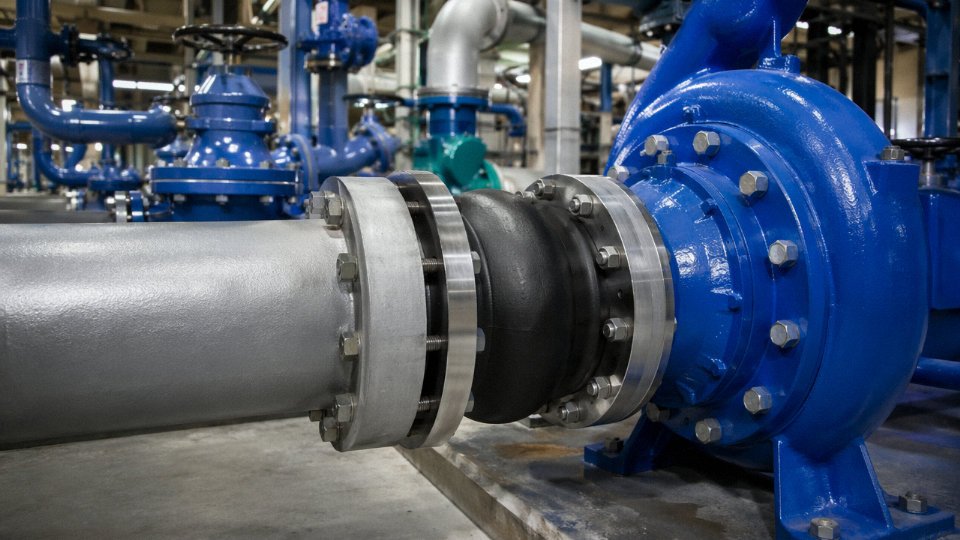
Wrong first choice has a cost trail. A poor oil match swells, loses hardness, and starts weeping. A poor compression-set choice takes a permanent flat and stops sealing. A poor abrasion choice sheds particles into the process. None of that shows up during a quick desk review.
Define the duty before comparing materials
Before asking a supplier for “something like rubber,” write down the duty in engineering terms. At minimum, define:
- Load type: static compression, dynamic tension, rolling contact, impact, vibration, or sliding wear.
- Movement: strain range, cycle count, stroke length, and whether the part must snap back fast.
- Temperature: normal range, cleaning temperature, seasonal lows, and short heat spikes. Natural rubber often sits around -50 to 80 degrees Celsius, while silicone may reach roughly -60 to 200 degrees Celsius. EPDM can often cover about -50 to 150 degrees Celsius, and polyurethane is commonly closer to -40 to 90 degrees Celsius. Actual limits depend on compound, hardness, exposure time, and acceptance criteria.
- Fluids: oils, fuels, coolants, detergents, ozone, steam, food contact media, or disinfectants.
- Wear conditions: dry abrasion, wet slurry, sharp edges, belt contact, grit, or metal-to-elastomer rub.
- Compliance needs: food contact, potable water, medical, flame rating, electrical insulation, low extractables, or customer-specific restricted substances.
- Expected life: weeks, months, seasonal replacement, multi-year service, or safety-critical inspection interval.
Hardness alone is not enough. Many rubber-like materials fall somewhere around 20A to 95A Shore A, with many soft seals in the 40A to 70A area, but two materials with the same hardness can behave completely differently under compression, heat, and fluid exposure. Elongation at break is useful too, often somewhere around 150% to 700% for common elastomers, depending heavily on polymer family, filler loading, and cure system. Still, high elongation does not guarantee good fatigue life or sealing recovery.
Approve the substitute with evidence, not resemblance
A good replacement program uses four checks: measured properties, compatibility testing, prototype trials, and supplier documentation.
Measured properties should include hardness, tensile strength, elongation, tear strength, compression set, density, and any application-specific tests such as rebound, abrasion loss, volume swell, or low-temperature brittleness. Compatibility testing should use the actual fluids from the plant if possible. A generic oil-resistance chart is useful for screening, but the real sump may contain additives, cleaners, tramp coolant, and heat history that change the outcome.
Prototype trials matter. I have seen bench-approved gasket materials fail because the installer stretched them over a flange with a screwdriver and left a nick at the corner. The compound was not the only issue; the design and maintenance habit were part of the system. Run a small batch, install it the normal way, inspect it after a real interval, and cut the used part open if needed. Swelling, hardening, cracking, flattening, surface glazing, and edge tearing all tell a story.
The closest rubber substitute is the material that maintains the required function under the actual load, temperature, fluid, wear, and production conditions, not the material that feels most rubber-like when new.True
Rubber-like feel is only an initial tactile property. Field performance depends on recovery, aging, chemical compatibility, fatigue behavior, abrasion resistance, and processing consistency over the intended service life.
Supplier documentation should include a current technical data sheet, test methods, grade identification, regulatory statements where needed, and lot traceability for critical parts. For molded components, ask about compound control and cure or processing windows. For TPEs, ask about melt flow, drying requirements, colorant effects, and regrind limits. Procurement should not treat those questions as paperwork friction; they are how you avoid buying a cheaper problem.
The final engineering rule is simple: a rubber substitute succeeds only if it preserves function over time. Looking similar on day one is not the standard. Surviving the real service environment without leaks, cracks, loss of grip, excess wear, scrap, downtime, or unsafe behavior is the standard.