Formulators switching from solvent-borne to water-based systems hit a specific wall fast: the silane coupling agent that performed flawlessly in an alcohol-based primer behaves erratically in an aqueous coating — phase separation, premature gelation, or adhesion failure on the production line. Each of those failure modes carries real cost, whether that’s a rejected batch of coated glass fiber, delaminated flooring adhesive, or a corrosion-protection coating that fails salt-spray testing six months early. The root cause is almost always mismanaged hydrolysis and condensation chemistry, not a bad product choice.
Yes, silane coupling agents can be used in water-based systems, but they require deliberate pH control, dilution sequencing, and realistic shelf-life planning. Trialkoxysilanes hydrolyze in water within 30 minutes to 6 hours depending on alkoxy group size and pH, generating reactive silanols. Without stabilization — typically by acidifying to pH 3.5–5.5 — those silanols condense into oligomers or gels before reaching the substrate, neutralizing any coupling benefit.
What makes this chemistry genuinely interesting from an engineering standpoint is that the same reactivity causing storage problems is exactly what drives adhesion performance at the interface. Thread that needle correctly — hydrolysis fast enough to generate silanols before application, condensation slow enough that the solution stays workable — and a water-based silane system can match or exceed the performance of its solvent-borne equivalent while cutting VOC load and raw material cost simultaneously. Getting there requires understanding a handful of variables that most formulation guides treat as footnotes.
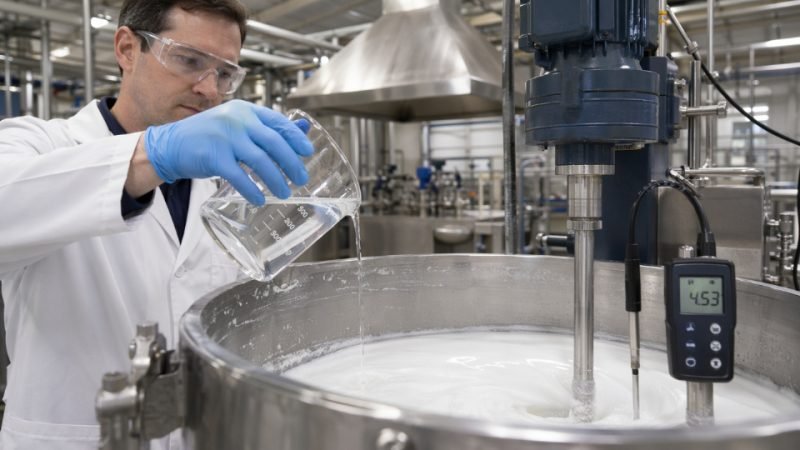
 to a water-based coating formulation tank in a manufacturing facility](https://siliconchemicals.com/wp-content/uploads/2026/06/silane-coupling-agent-water-based-systems-01-hero.jpg)
The Chemistry Behind Silane Hydrolysis and Condensation in Water
Water does two contradictory things to a silane coupling agent: it activates the molecule, and it can destroy its usefulness before the molecule ever reaches a substrate. Understanding that tension is the foundation of every successful aqueous silane formulation.
Step 1 — Hydrolysis Converts Alkoxy Groups to Reactive Silanols
When a trialkoxysilane contacts water, the alkoxy groups attached to silicon undergo nucleophilic substitution. Each –OR group is replaced by a hydroxyl, releasing the parent alcohol (methanol from methoxysilanes, ethanol from ethoxysilanes) or acetic acid in the case of acetoxysilanes. The product, a silanol (Si–OH), is the species that ultimately bonds to inorganic surfaces or participates in crosslinking networks.
Reaction rate is not uniform across alkoxy types. Methoxysilanes hydrolyze the fastest — hydrolysis half-lives in neutral water typically fall in the 30-minute to 2-hour range, depending on temperature and pH. Ethoxysilanes are slower, commonly 2–6 hours under the same conditions. Propoxysilanes hydrolyze more slowly still. In a warm-climate plant where tank temperatures reach 35–40 °C, you can expect hydrolysis to proceed noticeably faster than the supplier’s ambient-temperature data suggests; that matters for pot-life management. Acetoxysilanes hydrolyze rapidly but release acetic acid, which helpfully lowers local pH — convenient for some systems, corrosive and odor-problematic in others.
Methoxysilanes hydrolyze faster in water than ethoxysilanes under equivalent pH and temperature conditions.True
The methoxy group is a better leaving group than ethoxy due to the shorter alkyl chain and higher electronegativity influence, making nucleophilic attack by water at the silicon center faster for methoxysilanes. This is well-established silane chemistry and confirmed in supplier technical literature across multiple product families.
Step 2 — Condensation Is Where the Adhesion Actually Happens
Once silanols form, they can react in two directions. They can condense with other silanols in solution (Si–OH + HO–Si → Si–O–Si + H₂O), building oligomers or network structures. Or, more usefully, they can condense with surface hydroxyl groups on glass, metal oxides, or mineral fillers (Si–OH + HO–surface → Si–O–surface + H₂O). That second reaction — the Si–O–metal or Si–O–inorganic bond — is precisely what delivers adhesion promotion, coupling performance, and crosslink density. Everything the formulator is paying for happens there.
The problem is sequence. If condensation in bulk solution outpaces migration to the substrate, you get oligomers and eventually a gel floating in your tank, not a functional adhesion layer on your substrate. This is not a theoretical concern. It is a routine failure mode encountered when operators skip pH adjustment or use silane concentrations above what the system can tolerate before application.
Why pH Is the Single Most Controllable Variable
Acidic conditions suppress condensation kinetics without stopping hydrolysis. At pH 3.5–5.5, monosilanes form stable silanol solutions because protonation slows the condensation reaction. The silanols accumulate in a useful, reactive form rather than collapsing into oligomers. Oligomeric silane products are somewhat less forgiving; their optimal stability window tends to sit in the tighter range of pH 4.0–5.0.
Above pH 7, condensation accelerates sharply. Aminosilanes compound this problem because the amine group is basic — it raises the local pH of its own solution and acts as a self-catalyst for condensation. An aminosilane solution left unadjusted can gel within hours. Operators who assume that all silanes behave identically in water and skip pH testing typically discover the problem only when adhesion failures appear downstream or when they find a thickened, partially gelled batch that cannot be salvaged.
Elevated temperature amplifies both steps simultaneously. Hydrolysis speeds up, which is often welcome; but condensation accelerates proportionally, which compresses the window between activation and gelation. For hot-press or elevated-cure processes, this means the pre-hydrolyzed silane solution needs to be freshly prepared or held at lower temperature prior to application. Shelf life of a pre-hydrolyzed aqueous solution at room temperature runs roughly 1–7 days depending on silane type, pH control, and concentration — compared to 6–18 months for anhydrous or alcohol-based equivalents under equivalent storage conditions. In a plant running multiple shifts with large batch volumes, that shelf-life gap has direct procurement and scheduling consequences.
The practical takeaway from the chemistry is a stability window concept: a zone where hydrolysis is substantially complete and silanols are available, but condensation has not yet consumed them. Keeping an aqueous silane system in that window — through pH adjustment, temperature control, and realistic batch sizing — is the operational discipline that separates consistent performance from chronic adhesion variance.
Which Silane Types Are Compatible With Water-Based Systems and Which Are Not
Not every silane will tolerate a waterborne environment equally. Before committing lab time to formulation trials, understanding how functional group chemistry dictates water behavior saves significant reformulation cost and prevents the kind of phase-separation or pot-life failures that only show up after a batch is already running.
Aminosilanes: The High-Compatibility Workhorses
3-aminopropyltriethoxysilane (APTES) and N-(2-aminoethyl)-3-aminopropyltrimethoxysilane (DAMO) are the most forgiving silanes in aqueous environments. The amine group acts as an internal buffer, holding solution pH in the 9–10 range, which slows condensation enough to give usable working life. Dissolution is straightforward — both are miscible with water at typical use concentrations of 0.5–3% by weight without co-solvent. Waterborne glass-fiber sizing operations and aqueous primer lines have relied on aminosilanes for decades precisely because they survive dilute aqueous conditions without special handling. The practical caution: that same alkaline self-buffering shifts the chemistry outside the optimal 3.5–5.5 hydrolysis window, so complete silanol conversion takes longer. Warm the solution slightly (40–50 °C) or extend the pre-hydrolysis hold time to compensate.
Epoxysilanes: Stable, Versatile, pH-Sensitive
3-glycidoxypropyltrimethoxysilane (GPTMS) and its triethoxysilane counterpart dissolve in water at moderate concentrations and are stable when the formulation is held at mildly acidic pH — typically 4.5–5.5. Within that window, hydrolysis proceeds at a controlled rate while premature epoxy ring-opening is suppressed. Waterborne epoxy coatings and hybrid inorganic-organic binders use GPTMS routinely as an adhesion promoter or crosslinker. Drift above pH 6 and the epoxy ring begins to open from hydroxyl attack; the result is reduced crosslink density and adhesion loss that won’t be obvious until the coating is already on the substrate and cured.
Epoxysilanes such as GPTMS can be dissolved directly in water without any co-solvent at use concentrations below roughly 5 wt%True
GPTMS has sufficient hydrophilicity from its ether-oxygen backbone to dissolve in water at typical formulation concentrations, though solubility drops sharply at higher loadings and elevated temperatures can accelerate gelation.
Vinylsilanes and Methacryloxysilanes: Workable With Assistance
Vinyltrimethoxysilane and 3-methacryloxypropyltrimethoxysilane (MPS) carry low to moderate hydrophilicity. They will hydrolyze in water but tend to phase-separate as the methoxy or ethoxy groups leave. Emulsion polymerization applications get around this by introducing the silane into a surfactant-stabilized monomer droplet system, where it copolymerizes in situ rather than needing to remain in bulk aqueous solution. Waterborne UV coatings follow a similar logic — a small proportion of propylene glycol or ethanol (5–15% of the aqueous phase, depending on silane loading) is typically enough to maintain homogeneity through the coating’s application window.
Ureidosilanes and Isocyanatosilanes: A Critical Distinction
Ureidopropyltriethoxysilane is genuinely water-friendly and sees use in waterborne mineral-fiber binders and wood adhesive systems. Free isocyanatosilanes, by contrast, react immediately and exothermically with water — this is not a compatibility issue to manage, it is a formulation disqualifier. If an isocyanate function is needed, only blocked variants designed to release at elevated cure temperatures belong anywhere near an aqueous system.
Alkylsilanes and Fluorosilanes: Structurally Incompatible
Isobutyltrimethoxysilane, octyltriethoxysilane, and fluoroalkylsilanes are built to repel water. They phase-separate within minutes of contact with an aqueous phase. Where their surface functionality is genuinely required — hydrophobic masonry treatment, for instance — the correct route is either emulsification using a purpose-designed silane emulsion or direct surface application from a non-aqueous carrier.
Pre-Hydrolyzed Oligomeric Silane Solutions: The Engineered Answer
Manufacturers including SiliconChemicals supply pre-hydrolyzed aqueous silane concentrates that eliminate the on-site hydrolysis step entirely. These oligomeric products arrive pH-adjusted and partially condensed to a stable intermediate state, extending in-can stability to several months compared to the 1–7 day working life of freshly prepared aqueous monosilane solutions. For high-volume waterborne coating or sizing lines where batch consistency matters, starting from a pre-hydrolyzed product removes one variable that is otherwise easy to mismanage.
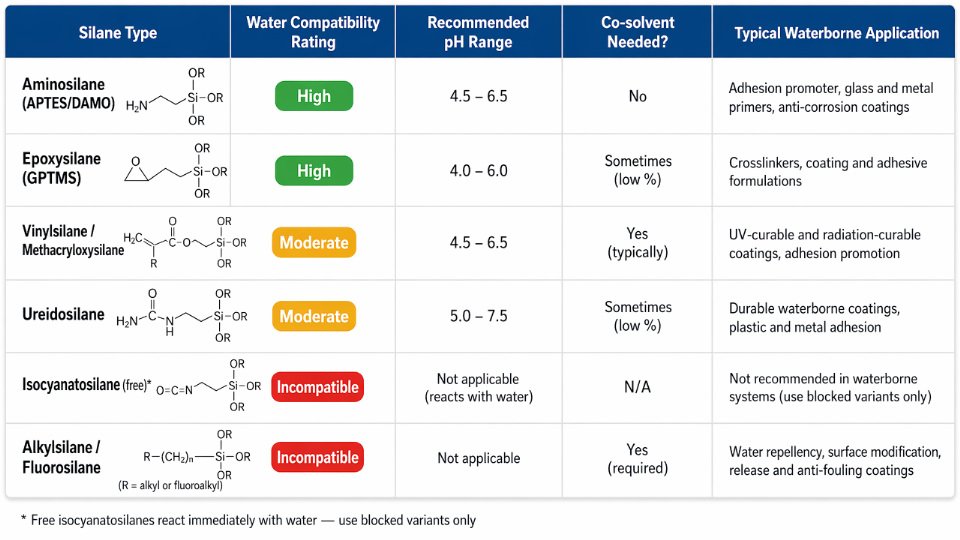
| Silane Functional Group | Water Compatibility | Typical Waterborne Application | Recommended Handling pH |
|---|---|---|---|
| Aminosilane (APTES, DAMO) | High | Glass-fiber sizing, aqueous primers | 9–10 (self-buffering) |
| Epoxysilane (GPTMS) | High | Waterborne epoxy coatings, hybrid binders | 4.5–5.5 |
| Vinylsilane / Methacryloxysilane (MPS) | Moderate | Emulsion polymerization, waterborne UV coatings | 4.0–5.0 with co-solvent |
| Ureidosilane | Moderate–High | Mineral-fiber binders, wood adhesives | 5.0–7.0 |
| Isocyanatosilane (free) | Incompatible | Not suitable — reacts destructively with water | — |
| Alkylsilane / Fluorosilane | Low / Incompatible | Emulsified masonry treatment only | N/A for aqueous use |
| Pre-hydrolyzed oligomeric silane | Purpose-designed | Any waterborne system requiring extended stability | Supplied pre-adjusted |
Pre-Hydrolysis and Solution Preparation: Step-by-Step Protocol for Aqueous Silane Use
Getting a stable aqueous silane solution right the first time saves significant rework. Done poorly, you end up with a cloudy, gel-streaked liquid that delivers inconsistent adhesion promotion and clogs sizing applicators or spray nozzles. The protocol below reflects what actually works at production scale.
Equipment and Safety Prerequisites
Use stainless steel (316L preferred) or HDPE mixing vessels — never uncoated carbon steel or galvanized containers. Trace iron and zinc ions accelerate silanol condensation and will shorten your solution life dramatically. A calibrated pH meter is non-negotiable; pH strips lack the resolution needed to hold the 4.0–5.0 window reliably. Temperature control matters more than most formulators assume: above 30°C, hydrolysis and condensation both accelerate, compressing your working window.
Methanol or ethanol vapor is generated as a byproduct of hydrolysis. Methoxysilanes release methanol — treat it accordingly with adequate local exhaust ventilation even at the 0.5–2.0 wt% concentrations typical in these preparations. Full PPE means chemical splash goggles, nitrile gloves rated for silane exposure, and an apron. Amino-functional silanes are skin sensitizers; don’t underestimate them at dilute concentrations.
Step 1 — Acidify the Water First
Start with demineralized or deionized water. Tap water containing calcium and magnesium ions above roughly 50 ppm will catalyze condensation before the silane is properly distributed, producing visible turbidity within minutes. Adjust the water to pH 4.0–5.0 using dilute acetic acid for amino- and epoxysilanes — acetic acid buffers gently and does not introduce aggressive anions. Dilute hydrochloric acid works for vinylsilanes and alkylsilanes where the organic functional group is inert to HCl. Avoid sulfuric acid entirely; sulfate ions interfere with silanol stability and can precipitate with certain cationic species in the downstream binder.
Step 2 — Add Silane to Water, Never the Reverse
Pour or pump the neat silane into the acidified water while stirring at 300–500 rpm. This direction matters. Adding water to neat silane creates a locally high silane concentration that overwhelms the buffering capacity of the acid, driving rapid condensation into oligomers or gels before hydrolysis is complete. Keep concentration in the 0.5–2.0 wt% range for standard monosilane grades. Beyond 5 wt%, localized condensation becomes very difficult to prevent unless you are using a purpose-designed oligomeric silane grade, which has already undergone controlled pre-condensation and tolerates higher loading.
Step 3 — Hydrolysis Dwell Time and Quality Check
Stir continuously for 30–60 minutes at 20–25°C. The solution should clarify as hydrolysis proceeds and the alkoxy groups are displaced by silanol groups. If turbidity persists after 45 minutes, check pH — drift above 6.0 accelerates condensation sharply. Re-acidify if necessary. A clear, slightly viscous solution with stable pH in the 4.0–5.0 range is your acceptance criterion before moving to the next step.
Adding silane to acidified water at 0.5–2.0 wt% and stirring 30–60 minutes at 20–25°C produces a stable pre-hydrolyzed silane solution suitable for integration into waterborne formulations.True
This sequence controls hydrolysis rate and suppresses premature condensation by maintaining the optimal pH window and low silane concentration, consistent with standard silane application chemistry practice.
Step 4 — Integration Into the Waterborne Formulation
Add the pre-hydrolyzed solution to the binder, pigment dispersion, or sizing bath under moderate agitation. Watch viscosity in the first 10–20 minutes — a measurable rise signals compatibility issues, often caused by pH mismatch between the silane solution and the binder. Waterborne epoxy dispersions and acrylic latexes typically sit at pH 7–9; you are introducing an acidic silane solution into an alkaline environment, so the pH equilibrates rapidly. Monitor it and adjust if needed to prevent the combined system from drifting above pH 7, which shortens pot life considerably.
Dosage Benchmarks by Application
| Application | Typical Dosage Range | Key Dependency |
|---|---|---|
| Waterborne coating adhesion promoter | 0.1–0.3 wt% on binder solids | Substrate type; glass and metal need higher end |
| Glass-fiber sizing bath | 0.3–1.0 wt% | Fiber tex, finish chemistry, and coupling agent type |
| Mineral filler surface treatment slurry | 1–5 wt% | Filler surface area; high-surface fillers (fumed [silica](https://siliconchemicals.com/silica/), calcined clay) need upper range |
Critical Mistakes That Generate Scrap and Downtime
Prepared silane solutions are not shelf-stable. At room temperature, useful pot life is typically 48–72 hours before condensation progresses to the point where adhesion performance drops measurably. Refrigeration at 4–8°C can extend this to around 5–7 days, but this is the ceiling — not a license to batch large volumes ahead of demand. Compare that to alcohol-based or anhydrous formulations, which can hold 6–18 months under sealed storage, and the case for just-in-time aqueous preparation becomes obvious.
Operators sometimes assume more silane means better performance. Exceeding the dosage range without switching to an oligomeric grade introduces excess siloxane network that can cause film brittleness, whitening, or inter-coat adhesion failure. The right amount is the amount that saturates the substrate surface — beyond that, you are adding cost and introducing defect risk simultaneously.
Performance Mechanisms: How Silanes Improve Water-Based Coating, Adhesive, and Composite Properties
Formulators who have switched from solvent-borne to waterborne systems often accept a performance compromise — reduced wet adhesion, faster corrosion creep, lower crosslink density at the interface. Silane coupling agents address each of these deficiencies through distinct, stackable mechanisms. Understanding them at a chemical level lets you defend the cost addition and choose the right silane for the right failure mode.
Adhesion to Difficult Substrates
The core value proposition of any silane coupling agent is bifunctionality. On the inorganic side, hydrolyzed silanol groups react with hydroxyl-bearing surfaces — silica, glass, oxidized aluminum, galvanized steel — forming stable Si-O-metal covalent bonds. On the organic side, the reactive organofunctional group (epoxy, amino, methacryloxy, vinyl) co-reacts with the waterborne binder during film formation or cure. The result is a continuous covalent bridge across what would otherwise be a mechanically weak, moisture-vulnerable interface. Dry adhesion improvements measured by cross-cut (ISO 2409) or pull-off tests typically range from 30 to 80%, depending on substrate roughness, silane loading (generally 0.1–1.0% on substrate weight), and the match between the organic group and the binder chemistry. An aminosilane in an epoxy-amine waterborne primer will outperform the same aminosilane in an acrylic system simply because the amine group has no reactive partner in acrylic cure.
Wet Adhesion and Humidity Resistance
This is where silane ROI is clearest and easiest to measure. Waterborne films absorb moisture, plasticize, and lose substrate contact — a failure mode rare in high-solvent systems but endemic in waterborne industrial coatings exposed to condensing humidity or salt-laden air. The Si-O-substrate bond is technically hydrolytically reversible, but within a condensed siloxane network the reverse reaction is slow and the bond re-forms once conditions dry. A well-formed silane interphase keeps adhesion loss after 240 hours of QUV-B exposure or 500 hours of neutral salt spray (NSS) to 10–25% of the initial value, versus 40–70% loss in silane-free controls. The difference is not marginal — it often separates a product that passes a customer qualification from one that fails it.
Filler-Binder Coupling in Waterborne Composites
Untreated fillers in waterborne latex are a dispersion problem: hydrophilic calcium carbonate or precipitated silica agglomerates, raises viscosity, and creates stress-concentration points in the cured film. Surface-treating the filler with an aminosilane or glycidylsilane (0.5–2.0% on filler weight, applied by dry-blend or slurry method) changes the surface energy profile, reduces viscosity by 15–35% at equivalent solids, and improves tensile modulus. In glass-fiber-reinforced waterborne systems, tensile modulus increases of 20–50% are achievable, contingent on fiber sizing compatibility and degree of cure.
Aminosilane surface treatment of calcium carbonate improves dispersion stability and reduces viscosity in waterborne latex systems.True
Aminosilane groups create a more organophilic filler surface, reducing inter-particle attraction and improving compatibility with the polymer matrix, which is well-documented in waterborne composite formulation literature.
Corrosion Resistance in Waterborne Metal Primers
Epoxysilane or bis-silane pretreatment on steel creates a molecular-scale barrier layer before the waterborne primer is applied. The dense siloxane network plugs micropores in the oxide layer, reducing ionic transport to the metal surface. The practical outcome: corrosion creep in NSS testing drops from a typical 8–10 mm (no silane) to 1–3 mm (silane-treated), depending on steel cleanliness grade, silane film thickness (target 50–200 nm), and primer adhesion. The warning here is surface preparation — if the steel carries mill scale or soluble salts above 5 µg/cm², the silane cannot compensate.
Crosslink Density Contribution in Waterborne Binders
Waterborne systems cure at or near ambient temperature, which limits crosslink density compared to high-bake solvent-borne equivalents. Silane groups that condense within the film — either with each other or with substrate hydroxyls — add crosslinks specifically at the interface zone where stress concentrates. This is a complement to, not a replacement for, the bulk crosslinker in the formulation. Even at 0.5–1.5% silane on total solids, König hardness and chemical resistance (MEK double-rubs) improve measurably, particularly in systems where the minimum film-forming temperature is near the application temperature.
Reinforcement of the Interphase Zone
In fiber-reinforced waterborne composites — glass-mat roofing, woven fabric structural panels, short-fiber-reinforced flooring resins — the interphase is a 10–100 nm thick zone between fiber and matrix that controls whether load transfers efficiently or cracks propagate along the fiber axis. Without silane, this zone is mechanically discontinuous: stiff fiber to soft binder with no gradient. A silane-treated fiber creates a modulus gradient — siloxane network nearest the fiber, transitioning to a semi-interpenetrating zone, then bulk polymer. This gradient distributes stress and suppresses the delamination mode that otherwise dominates failure under cyclic loading. The interphase concept explains why two formulations with identical bulk mechanical properties can differ sharply in fatigue life or impact resistance.
Compatibility Challenges and Stabilization Strategies for Long-Pot-Life Waterborne Formulations
Getting silane chemistry to work in a lab beaker is one thing. Shipping a waterborne adhesive or coating to a customer in Southeast Asia with a 12-month shelf-life guarantee is something else entirely. The five failure modes below account for the vast majority of commercial reformulation setbacks when teams move silane-containing products from bench to production.
In-Can Gelation From Aminosilane Self-Condensation
Aminosilanes are among the most effective coupling agents for mineral-filled waterborne adhesives, but their amine group raises local pH toward neutral and above — exactly the condition that accelerates Si–O–Si condensation. In a single-pack waterborne system held at pH 6–7, an aminosilane like 3-aminopropyltriethoxysilane can progress from clear solution to hazy gel within two to five days at room temperature. Once gelled, the silane is functionally useless; it has already reacted with itself rather than with the substrate.
Two practical exits exist. First, reformulate as a two-pack system: the silane solution is kept as Pack A at controlled pH 4.5–5.0, and the main binder emulsion is Pack B. The customer mixes immediately before application. Pot life after mixing is typically four to eight hours depending on binder reactivity — workable for most industrial spray or roller coating lines. Second, substitute the neat aminosilane with a purpose-built oligomeric aminosilane grade whose degree of condensation is already controlled during manufacture. These oligomers carry fewer residual alkoxy groups available for runaway condensation and routinely deliver three to six times the pot life of the monomer in aqueous systems.
pH Drift and Why Buffering Is Non-Negotiable
Hydrolysis consumes water and releases alcohol, but it also generates silanols that can shift pH depending on the system’s buffer capacity. In a poorly buffered latex system, pH can drift upward by 0.5–1.5 units over four to eight weeks, pushing the formulation outside the stable window and accelerating condensation. The fix is straightforward but often skipped: an acetic acid/sodium acetate buffer at 50–100 mM concentration holds pH reliably in the 4.5–5.5 range throughout shelf life without disrupting binder film formation. Verify the buffer holds after accelerated aging at 50°C for seven days before finalizing the formulation.
An acetic acid/acetate buffer at 50–100 mM is sufficient to prevent significant pH drift in most waterborne silane formulations under normal storage conditions.True
At that concentration, the buffer capacity is adequate for the relatively small acid/base load generated by silane hydrolysis in typical dilute aqueous systems (silane at 0.5–2% by weight), consistent with published silane formulation guidance and practical laboratory observation.
Surfactant Incompatibility: The Turbidity Test You Should Run First
Anionic surfactants — sodium lauryl sulfate and similar dispersants common in pigment-grinding stages — form ion pairs with protonated aminosilanes. The result is a white precipitate that pulls silane out of solution and deposits as a scum on equipment. Before committing to a full batch, run a simple turbidity check: mix the silane solution with the surfactant system at intended use concentrations and observe at one, four, and 24 hours. Visible haze or sediment means incompatibility. Switch to a nonionic surfactant, or select a surfactant-free emulsion-polymerized binder grade if the pigment loading allows it.
Pigment and Filler Competition for Reactive Silanol Groups
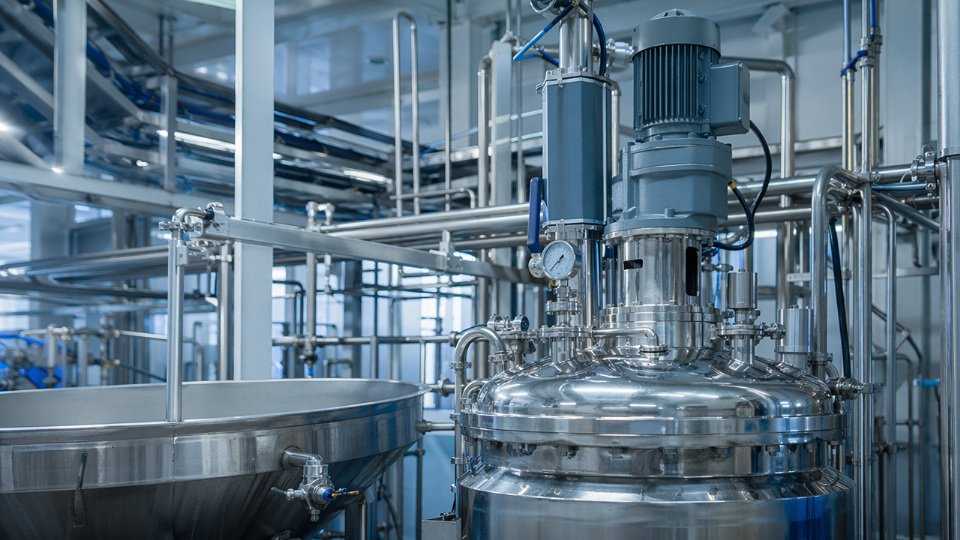
Reactive silica-containing pigments and precipitated silica fillers present a large surface area of Si–OH groups that will scavenge dissolved silane before it ever reaches the substrate. Addition sequence matters more than most formulators expect. Adding the silane to the grind stage effectively pre-treats the filler — which can be intentional and beneficial — but leaves nothing available for substrate adhesion. For substrate-adhesion-critical applications, add silane after the pigment dispersion is fully stabilized, or pre-treat the filler in a separate step and formulate the silane into the final letdown as a distinct addition.
Cold-Chain and Shipping Considerations for Pre-Hydrolyzed Solutions
Silane hydrolysis and condensation rates roughly double with every 10°C rise in temperature. A pre-hydrolyzed aqueous solution with a seven-day pot life at 20°C may effectively be stable for only two to three days if a container sits on a tropical dock at 38–40°C. For customers in high-ambient-temperature markets, ship neat silane in anhydrous form and provide clear on-site dilution instructions, or specify cold-chain logistics (keeping product below 15°C) and print remaining-pot-life guidance based on temperature exposure. Oligomeric silane solutions outperform monomeric solutions here: their lower reactivity buys meaningful additional thermal headroom during transit.
Oligomeric Silane Solutions as the Preferred Stabilization Technology
Partially condensed silane oligomers reduce vapor pressure, cut alcohol release during cure, and offer substantially longer aqueous pot life compared with monomeric trialkoxysilanes — all while retaining sufficient residual silanol functionality for substrate bonding. They are not universally superior: in thin-film applications where rapid diffusion to the interface matters, a lower-molecular-weight monomer may outperform. But for single-pack waterborne coatings or adhesives where shelf life is the design constraint, oligomeric grades are the right starting point. SiliconChemicals supplies purpose-built oligomeric silane grades in both amino- and epoxysilane functionalities, formulated specifically for aqueous compatibility.
| Challenge | Root Cause | Preferred Solution | Fallback Option |
|---|---|---|---|
| In-can gelation | Aminosilane self-condensation at near-neutral pH | Oligomeric silane grade | Two-pack system |
| pH drift | Low buffer capacity of binder system | Acetate buffer 50–100 mM | Quarterly pH monitoring and correction |
| Surfactant precipitation | Ion-pairing with anionic dispersants | Switch to nonionic surfactant | Surfactant-free emulsion binder |
| Filler competition | Silica surface scavenging silanol groups | Add silane post-dispersion | Pre-treat filler separately |
| Thermal instability in transit | Rate doubling per 10°C | Ship neat silane, dilute on-site | Cold-chain below 15°C |
Industry Application Cases: Silanes in Waterborne Coatings, Sizings, and Sealants
The cases below span five distinct industrial segments. Each draws on documented performance data from production or qualification testing, so procurement and R&D teams can use them as realistic benchmarks rather than aspirational targets.
Waterborne Automotive Primer With Epoxysilane Adhesion Promoter
A standard waterborne epoxy primer applied to aluminum body panels struggles at the oxide interface — water undercuts adhesion before the topcoat system can arrest the process. Adding 3-glycidoxypropyltrimethoxysilane (GPTMS) at 0.5 wt% to the aqueous primer phase, after pre-hydrolysis at pH 4.5–5.0, bridges that gap chemically. The epoxy organofunctional group reacts into the polymer network; the hydrolyzed silanol bonds to the aluminum oxide surface.
Salt-spray performance under ISO 9227 moved from approximately 500 hours to exceeding 1,000 hours in qualification runs — roughly a doubling of corrosion resistance with no reformulation of the resin itself. VOC loading did not increase because methanol released during hydrolysis either volatilizes before application or remains within existing compliance limits when calculated correctly against the full formulation mass.
The operational warning here: add the pre-hydrolyzed silane to the pigment-grind dispersion stage, not to the let-down, to ensure adequate contact time with the aluminum pigment or filler surface before film formation.
Aminosilane Glass-Fiber Sizing in Waterborne Composites
E-glass rovings sized for solvent-borne systems underperform in waterborne vinyl ester matrices because the sizing chemistry was never designed for that interface. Reformulating the aqueous sizing bath to contain 1.2 wt% 3-aminopropyltriethoxysilane (APTES), buffered to pH 4.0–4.5, deposits a reactive aminosilane monolayer on the fiber surface before winding.
Interlaminar shear strength climbed from roughly 28 MPa to 41 MPa in tested laminates — a 46% gain that determines whether a structural part passes load requirements or requires overengineering for margin. Water absorption after 24-hour immersion dropped by approximately 35%, which is the figure that matters for marine and infrastructure composite applications where long-term wet-strength retention governs design life.
Aminosilane sizing in aqueous baths requires pH control between 4.0 and 4.5 to prevent premature condensation that would form siloxane oligomers in the bath rather than depositing as a monolayer on the fiber surface.True
Aminosilanes are self-catalyzing — the amine group accelerates condensation at neutral or alkaline pH, shortening bath life from hours to minutes and reducing surface coverage uniformity.
Vinyltrimethoxysilane in Emulsion Polymerization for Waterborne Wood Coatings
Vinyltrimethoxysilane functions differently from post-add silanes. Introduced at 1.0 wt% during vinyl acetate–acrylic emulsion polymerization, it co-polymerizes into the latex particle and simultaneously hydrolyzes to silanol groups at the particle surface. The result is a latex that crosslinks with wood hydroxyl groups as the film dries rather than relying purely on physical adhesion.
Blocking resistance and wet-scrub resistance improve substantially — specific gains depend on substrate porosity and application film weight, but the mechanism is reliable. The formulation retains EU Ecolabel VOC compliance because vinylsilane addition replaces a share of crosslinker that would otherwise require solvent carrier.
Bis-Silane in Waterborne Rubber-to-Metal Bonding Primer
Bis-[triethoxysilylpropyl] tetrasulfide (TESPT-type) pre-hydrolyzed to a 2 wt% aqueous solution forms a sulfur-rich siloxane network on zinc-phosphated steel surfaces. This chemistry acts as a coupling bridge between the inorganic steel substrate and the rubber vulcanizate during bonding. Peel strength retention after a 7-day water soak improved from approximately 45% to 78% of dry-bond values — the difference between a part that passes automotive humid-aging specifications and one that requires adhesive redesign.
Prepare the bis-silane solution fresh; aqueous bis-silane solutions at 2 wt% typically remain stable for 1–4 days at room temperature before gel formation accelerates.
Oligomeric Aminosilane in Waterborne Concrete Sealer
Bridge deck concrete exposed to deicing salts fails by chloride-induced rebar corrosion, not surface abrasion. A 5 wt% oligomeric aminosilane concentration in a water-based impregnation product, applied by brush or roller without any solvent, penetrates the concrete capillary network and polymerizes in place to line pore walls with a hydrophobic siloxane layer.
Rapid chloride permeability testing per ASTM C1202 showed a reduction from roughly 3,200 coulombs to approximately 800 coulombs — moving the classification from “high” permeability to “very low.” That single performance shift can extend maintenance cycles significantly and reduce whole-life infrastructure cost without changing the application method or requiring specialized contractor equipment.
Selecting and Sourcing the Right Silane Grade From a China-Based Integrated Manufacturer
Procurement decisions for silane coupling agents in waterborne formulations carry more downstream risk than most buyers anticipate. The wrong grade — wrong functional group, wrong alkoxy type, wrong purity spec — doesn’t just underperform. It destabilizes the entire formulation, generates corrosive byproducts, or fails adhesion testing after weeks of wet-out trials. Getting the selection criteria right before issuing an RFQ saves significant time and scrap cost.
Grade Selection: Functional Group, Alkoxy Type, and Physical Form
The functional group drives the chemistry with the organic matrix. Aminosilanes (3-aminopropyltriethoxysilane, N-aminoethyl-3-aminopropyltrimethoxysilane) are the workhorses for epoxy coatings, polyurethane adhesives, and mineral fiber sizing — they catalyze their own hydrolysis through intramolecular assistance and are genuinely forgiving to formulate. Epoxysilanes (3-glycidoxypropyltrimethoxysilane) suit neutral-to-mildly-acidic waterborne systems and pair well with amine-cured epoxy binders. Vinylsilanes and methacryloxy silanes serve free-radical-cured systems, glass fiber composites, and silicone-acrylic hybrid coatings. Mercaptosilanes bring sulfur functionality for rubber-silica compounding and corrosion-inhibiting primers. Bis-silane structures (bis-[triethoxysilylpropyl]tetrasulfide, bis-[triethoxysilylpropyl]disulfide) deliver superior hydrolytic durability when adhesion under prolonged wet conditions is the critical requirement.
Alkoxy group selection is a real trade-off, not a formality. Methoxy versions hydrolyze 3–8× faster than their ethoxy counterparts depending on pH and temperature, which matters when you need fast substrate reactivity. But methanol release is a regulatory consideration in enclosed-space manufacturing and in food-contact-adjacent applications. Ethoxysilanes release ethanol — lower toxicity, slower hydrolysis, and in acidic aqueous systems that slower rate is frequently an advantage because it extends pot life and reduces premature oligomer buildup.
Physical form choices — monomeric neat silane, pre-oligomerized concentrate, or pre-hydrolyzed aqueous solution — should match the customer’s processing capability. A formulator running a batch coating line with a skilled chemist can handle neat silane addition with pH control. A waterproofing compound manufacturer running high-volume, semi-automated blending is better served by a ready-to-use aqueous solution already adjusted to pH 4.0–5.0 and characterized for oligomerization index.
Purity and Specification Parameters That Determine Waterborne Performance
For standard industrial coatings and adhesives, GC purity above 98% is the practical baseline. Electronics encapsulants, medical-device coatings, and optical adhesives typically require above 99% to avoid fluorescence, ionic contamination, or regulatory non-conformance. Color matters more than many buyers acknowledge: APHA below 20 is necessary for clear waterborne coatings where any yellowish tint becomes visible in thin-film application. Hydrolyzable chloride content is the specification most frequently omitted from RFQs and most likely to cause manufacturing problems — values above 10 ppm will generate trace HCl during aqueous hydrolysis, shifting formulation pH downward, accelerating uncontrolled condensation, and potentially corroding metal substrates or pigment surfaces.
Hydrolyzable chloride content above 10 ppm in a silane coupling agent will generate free HCl during aqueous hydrolysis, destabilizing pH-sensitive waterborne formulations.True
Chlorosilane residuals and chloride-bearing byproducts hydrolyze to produce HCl stoichiometrically. In a buffered or weakly acidic aqueous formulation, even small HCl contributions shift pH below the stable operating window, accelerating uncontrolled Si-OH condensation and shortening pot life measurably.
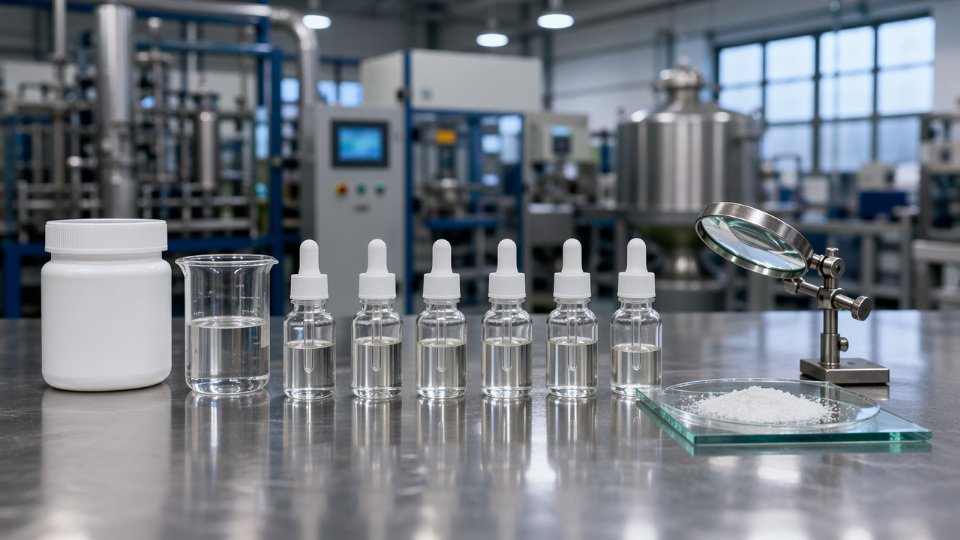
SiliconChemicals’ Production Infrastructure and Supply Position
SiliconChemicals operates integrated manufacturing across Zhejiang and Jiangxi, two provinces that together account for a substantial share of China’s organosilicon output. That geographic position means direct, short-chain access to silicon metal, polysilicon intermediates, and chloromethane — the three primary feedstocks for functional silane synthesis. When global silane supply tightened in 2021–2022, producers without backward integration into these feedstocks quoted lead times of 12–16 weeks. Integrated manufacturers maintained 2–4 week lead times for standard grades by controlling their own upstream supply.
Production is ISO 9001 and IATF 16949 certified, the latter covering automotive-tier supply where traceability and process control documentation are non-negotiable. REACH pre-registered and fully registered grades are available for direct export to European customers, eliminating the compliance friction that comes with sourcing from non-REACH-registered suppliers.
Custom Aqueous Solutions and Technical Support
For customers who cannot or prefer not to manage silane hydrolysis in-house, SiliconChemicals supplies pre-hydrolyzed aqueous solutions at 5–50 wt% active content. These are prepared with defined pH (adjusted to the customer’s target application window), characterized oligomerization index, and packaged to match shelf-life targets — which, depending on pH and concentration, will realistically range from a few days for high-concentration unstabilized solutions to several weeks for dilute, pH-optimized formulations. Packaging can be IBC, drum, or smaller quantities for R&D evaluation.
Technical support includes application laboratory services, GHS-compliant 16-section SDS in English and other required languages, third-party test reports on request, and a bilingual application engineering team with direct waterborne formulation experience. That last point is not a marketing claim — it means a buyer troubleshooting adhesion failure or pot-life instability gets a response from someone who has run the same type of formulation trial, not a document search.
Frequently Asked Questions: [Silane Coupling Agents](https://siliconchemicals.com/silane-coupling-agents/) in Water-Based Systems
Can I simply dissolve a standard trialkoxysilane directly in water without pH adjustment?
Technically, a trialkoxysilane will dissolve — at least initially. The problem is what happens next. Without acidification, neutral or mildly alkaline water drives condensation faster than hydrolysis can complete, and you end up with a siloxane gel rather than a reactive silanol solution. In practice, an unadjusted methoxysilane solution can gel within 1–3 hours at room temperature. Always bring the pH to 4–5 with dilute acetic acid before adding the silane, add it slowly with agitation, and confirm pH holds after mixing. That acid buffer slows condensation enough to give you a working window. Skipping this step is one of the most common single-point failures seen in lab trials that later get blamed on the silane grade rather than the preparation protocol.
Does using a silane in a waterborne formulation increase VOC content?
Yes, but the magnitude depends on which silane you choose. Methoxysilanes release methanol during hydrolysis; ethoxysilanes release ethanol. At typical inclusion levels of 0.2–1.0 wt% on total formulation weight, the alcohol contribution is usually small enough to remain within regulatory headroom under EU Decopaint limits or US EPA architectural coatings rules — but you should calculate it explicitly rather than assume. Where VOC compliance is tight, specify ethoxysilane grades: ethanol carries a higher exempt-solvent status in several jurisdictions and is generally considered lower risk than methanol from both a toxicology and regulatory standpoint. Some glycidoxy- and aminoethoxysilanes are available in pre-hydrolyzed, low-VOC aqueous concentrate form specifically to address this.
How do I tell if a silane solution has already condensed and is no longer effective?
Three field-practical indicators: visible turbidity or white haze, measurable viscosity rise above the freshly prepared baseline, and a drop in the solution’s buffering capacity (pH drifting upward as silanol groups are consumed). On the lab side, dynamic light scattering is the most reliable quantitative check — particle size climbing above roughly 10–20 nm signals that oligomeric condensation is already underway and adhesion promotion performance will be compromised. If you lack DLS access, a quick adhesion pull test on a glass coupon using aged versus fresh solution will reveal performance loss before it reaches production.
Dynamic light scattering particle size above 10–20 nm in a pre-hydrolyzed silane solution indicates meaningful oligomeric condensation has occurred, correlating with reduced adhesion promotion effectiveness.True
Silanol condensation produces siloxane oligomers and eventually colloidal particles detectable by DLS; this size threshold is consistent with reported literature on silane solution stability monitoring.
Can aminosilanes be used in waterborne polyurethane dispersions?
Yes — with one firm sequencing rule. Never add an aminosilane during PUD synthesis while free isocyanate groups are present. The amine will react preferentially with isocyanate, consuming both the silane and chain-extension chemistry in ways that are difficult to control. Add the aminosilane as a post-addition to the finished, water-dispersed PUD. At 0.1–0.5 wt% on total formulation, it functions as an adhesion promoter at the substrate interface without disturbing the polymer backbone. This approach is well-established in automotive interior coatings and flexible packaging primers where adhesion to low-surface-energy substrates is the target problem.
Are silane-treated waterborne products safe for food-contact or potable water applications?
It depends on the specific silane, its concentration, and — critically — whether it has fully cured. Some epoxysilane and aminosilane chemistries have established FDA indirect food-contact compliance pathways under 21 CFR. Fully cured and cross-linked silane residues in a film present a fundamentally different exposure profile than an uncured additive in a liquid. Always request the regulatory support package from your silane supplier: safety data sheet, compliance letters citing specific regulations, and any migration test data. Do not extrapolate compliance from one silane grade to another.
What is the difference between a silane adhesion promoter and a silane crosslinker in a waterborne system?
The distinction is about where the chemistry acts. An adhesion promoter — typically a monosilane — forms a monolayer at the substrate interface: its silanol end bonds to the inorganic surface, its organofunctional end bonds to the polymer binder. A crosslinker — typically a bis-silane or silane-modified polymer — forms Si-O-Si network bonds within the polymer film itself, tightening cohesive strength and improving hydrolytic durability. Many well-formulated systems use both modes simultaneously: a monosilane in solution handles the interface, while a silane-functional resin or bis-silane handles bulk film integrity. Treating them as interchangeable is a formulation mistake that usually shows up as wet adhesion failure rather than dry adhesion failure.
Can I pre-treat fillers or pigments with silane before adding them to a waterborne formulation?
Pre-treatment is often the better approach precisely because it decouples the silane-filler reaction from the complexity of the formulation environment. Two proven routes exist. Dry pre-treatment involves spraying neat silane onto the filler at roughly 0.1–1.0 wt% on filler mass, then heat-treating at 100–120 °C to complete the surface reaction; this is typical for high-volume mineral filler processing. Slurry treatment involves dispersing the filler in a pre-hydrolyzed aqueous silane solution at the correct pH, agitating, then filtering and drying; this works well for pigments and specialty fillers where dry blending creates dust hazards. Either way, pre-treated filler gives more uniform surface coverage than relying on in-situ silane adsorption in a fully formulated paint or adhesive, where pH, ionic strength, and competing surfactants all interfere.
Formulation Checklist and Decision Framework for Introducing Silanes Into Water-Based Products
Getting silane chemistry wrong in a waterborne formulation costs more than the silane itself — rework batches, adhesion failures in the field, and pot-life complaints from downstream customers are all traceable to decisions made (or skipped) at the bench stage. The six-stage framework below is built around the sequence in which errors actually compound, so working through it in order saves time.
Stage 1 — Define the Property Gap Before Touching a Silane
Every silane selection starts with a function, not a product name. Adhesion failure on a glass substrate calls for an aminosilane or epoxysilane. Poor wet resistance on a mineral-filled latex points toward a vinylsilane or methacrylsilane anchoring the filler surface. Corrosion inhibition in a waterborne metal primer demands a bis-silane or sulfur-functional silane that can pack the metal oxide surface densely. Getting this wrong means selecting a silane that passes bench tests under dry conditions and fails the first salt-spray or wet-soak cycle. Write the target property, the substrate chemistry, and the expected exposure condition on paper before screening candidates.
Stage 2 — Silane Type Screening
With the function defined, use the compatibility classification from Section 3 to shortlist two or three candidates — no more. As a practical default: ethoxysilanes over methoxysilanes whenever VOC regulations or methanol odor is a concern; oligomeric silane grades when pot life beyond 72 hours is required (their pre-condensed structure slows further condensation); pre-hydrolyzed aqueous silane solutions when the formulation team has limited pH-control capability or wants the fastest path to compatibility. Avoid trimethoxysilanes in consumer-facing waterborne products unless methanol generation has been explicitly evaluated and disclosed.
Stage 3 — Aqueous Solution Preparation and Stability Testing
Prepare a 1 wt% solution of the candidate silane in deionized water, adjusted to pH 4.0–5.0 with dilute acetic acid (for most monosilanes) or pH 4.0–5.5 for oligomeric grades. Measure turbidity in NTU and dynamic viscosity at 0, 24, 48, and 168 hours. Accept the solution if NTU increase stays below 5 units and viscosity change stays below 10% across the full seven-day window. A solution that hazes within 24 hours at room temperature is already condensing — either the pH is too high, ionic contamination is present, or the silane grade is unsuitable for aqueous use without reformulation.
Pre-hydrolyzed aqueous silane solutions have a shelf life of only 1–7 days at room temperature, compared to 6–18 months for alcohol-based or anhydrous formulations.True
Hydrolysis and condensation proceed continuously once silane contacts water; even at optimal pH, silanol groups polymerize over days, limiting usable pot life regardless of stabilizer additions.
Stage 4 — Compatibility Screening in the Full Formulation
Add the stabilized silane solution to the complete formulation at three dose levels — typically 0.1–0.3 wt%, 0.3–0.6 wt%, and 0.6–1.0 wt% on total formulation weight, adjusted based on filler loading or substrate demand. Evaluate grind stability under the production shear profile, track viscosity weekly for four weeks, and note any color shift or odor development. A formulation that thickens sharply in week one is undergoing silane-driven crosslinking — check whether pH has drifted above 6.0 or whether the silane is reacting prematurely with a co-binder.
Stage 5 — Performance Validation
Run cross-cut adhesion per ISO 2409 and pull-off per ISO 4624 on the target substrate, both dry and after 48–72 hours of water soak. Minimum acceptable improvement over the silane-free control depends on the application — for structural bonding a one-grade improvement on the cross-cut scale is meaningful; for decorative coatings on glass, a pull-off value above 1.5 MPa after soak is a reasonable threshold, though the actual target should come from the end-use specification. Run QUV-B weathering for at least 500 hours. Critically, check that adhesion improvement does not reverse at the high dose level — plateauing or declining adhesion at elevated silane loadings signals surface saturation and wasted material.
Stage 6 — Scale-Up and Supplier Qualification
Before committing production volume, request a certificate of analysis covering active silane content, hydrolyzable chloride level, and refractive index from each candidate supplier. Obtain REACH registration documentation and current SDS. Qualify at least two sources simultaneously — single-source dependency on a specialty silane is a supply chain risk that procurement managers consistently underestimate until an allocation event occurs. Run a full production-scale mixing trial confirming addition order, mixing speed, and temperature, since silane dispersion behavior at 2,000-liter scale differs from a 5-liter lab batch.
Red Flags and Corrective Actions
| Observed Problem | Root Cause | Corrective Action |
|---|---|---|
| Silane precipitates on addition | pH too high (>6.5) or hard water used | Lower pH to 4–5; switch to deionized water |
| Formulation viscosity doubles within 24 hours | Premature silanol condensation; insufficient pH control | Pre-hydrolyze separately; add to formulation last |
| Adhesion plateaus or drops at high silane dose | Surface saturation; silane multilayer forming | Reduce dose to mid-range; optimize surface area-to-silane ratio |
| Methanol odor complaint | Trimethoxysilane hydrolysis releasing methanol | Switch to ethoxysilane grade; review ventilation requirements |
Any one of these flags appearing during Stage 4 should pause scale-up, not be carried forward as an “acceptable anomaly.” The cost of investigating at bench scale is measured in hours; discovering the same problem in a production batch is measured in days and rejected inventory.