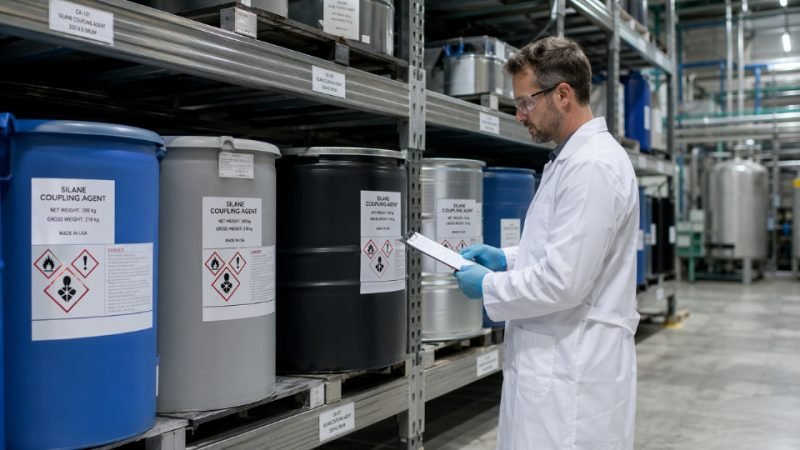
Selecting the wrong silane coupling agent — or the right chemistry from an unreliable source — can quietly destroy a production line. Adhesion failures in composite layups, premature delamination in wire and cable insulation, filler dispersion problems in rubber compounding: these aren’t abstract risks. They translate directly into scrap rates, warranty returns, and line stoppages that can cost a mid-size manufacturer anywhere from tens of thousands to low seven figures annually depending on batch size and downstream assembly value. The problem is that silane coupling agents look identical across supplier tiers on a spec sheet, yet perform very differently under real process conditions.
When sourcing a silane coupling agent for industrial use, evaluate six core criteria: chemical identity and purity (typically 97–99.5% GC purity depending on application sensitivity), hydrolysis stability and shelf life, functional group compatibility with your substrate and matrix, supplier quality documentation and batch traceability, logistical reliability including lead time and packaging integrity, and total landed cost versus performance risk. Getting any one of these wrong shifts cost from procurement to production.
The global silane coupling agent market sat at roughly USD 2.1 billion in 2023 and is expanding at around 6.8% CAGR through 2030 — which means more suppliers entering the space, more private-label repackaging, and more opportunities for a procurement team to mistake availability for quality. The criteria that separate a dependable long-term source from a spot-buy gamble are specific and testable. Each one is worth understanding in detail.
Matching Organofunctional Group Chemistry to Your Substrate and Resin System
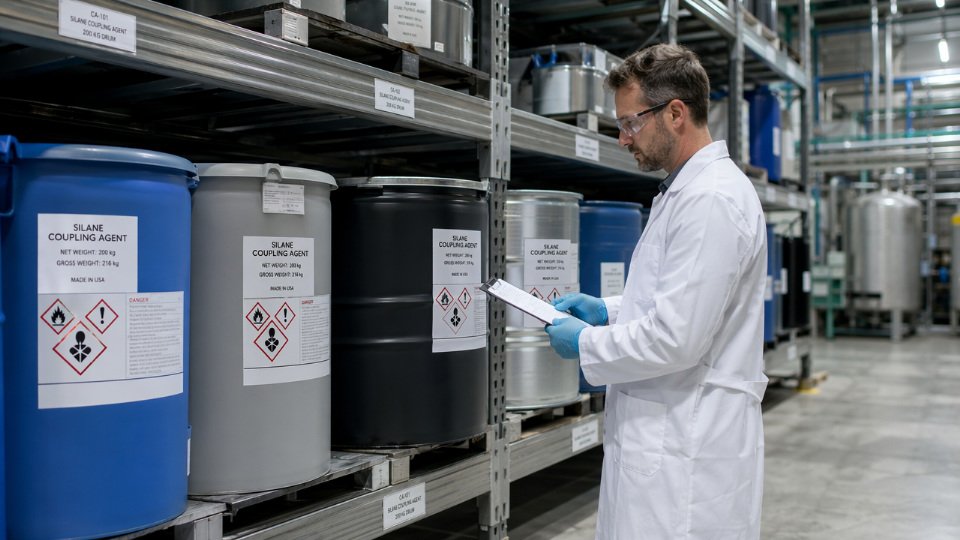
Every silane coupling agent carries two distinct reactive ends, and understanding both is non-negotiable before you touch a purchase order. The alkoxy side — methoxy, ethoxy, or acetoxy groups — hydrolyzes in the presence of moisture to form silanols, which then condense with hydroxyl groups on inorganic surfaces: glass, silica, aluminum oxide, calcium carbonate, and similar mineral substrates. The organofunctional side faces the other direction entirely, reacting with the polymer matrix through mechanisms that must match the matrix chemistry specifically. Amino groups react with epoxies and polyamides. Epoxy groups react with amines, anhydrides, and some polyurethanes. Methacryloxy groups participate in free-radical crosslinking. Mercapto and bis-sulfide silanes integrate into sulfur-crosslinked rubber networks. Get the organofunctional group wrong and you have, at best, a surface treatment that does nothing useful — at worst, one that actively disrupts cure chemistry.
Substrate-Resin Compatibility: A Working Reference Matrix
The table below reflects combinations that routinely appear in industrial compounds. It is a starting framework, not an absolute rule — filler surface chemistry, coupling agent concentration, mixing protocol, and cure conditions all shift the outcome.
| Substrate / Filler | Resin or Matrix | Recommended Silane Class | Common Grades |
|---|---|---|---|
| Glass fiber, glass bead | Epoxy | Aminosilane or epoxysilane | APTES (A-1100), A-187 |
| Precipitated / fumed silica | Natural rubber, SBR | Bis-sulfide silane | TESPT (Si-69), TESPD |
| Ground mineral (CaCO₃, talc) | Polyurethane | Isocyanatopropyltriethoxysilane | A-Link 35 equivalents |
| Aluminum, glass | Acrylic / UV-cure coating | Methacryloxysilane | A-174, MPS |
| Glass fiber | Unsaturated polyester | Methacryloxysilane or vinylsilane | A-174, A-151 |
| Carbon black, mineral filler | Polypropylene / polyethylene | Vinylsilane (with peroxide) | A-172, VTMS |
A vinyl silane placed into a straight epoxy system is one of the most common and expensive sourcing errors in filled-composite manufacturing. Vinyl groups polymerize through radical mechanisms; they have essentially no covalent reactivity with an amine- or anhydride-cured epoxy network. Processors who make this substitution — often because a vinyl silane was available at lower cost or shorter lead time — typically see dry adhesion values that look acceptable, but wet aging or thermal cycling testing collapses the interface. Scrap rates climb before anyone thinks to question the silane.
Hydrolysis Rate and VOC Implications
Methoxy silanes hydrolyze roughly three to five times faster than their ethoxy equivalents under comparable conditions. That reactivity advantage can improve surface coverage efficiency, particularly on low-surface-area substrates or in short dwell-time continuous processes. The trade-off is methanol generation during hydrolysis — a VOC with occupational exposure limits that matter in enclosed production environments. Where VOC compliance is strict, ethoxy silanes are the standard choice despite their slower kinetics, and many European automotive and aerospace supply chains specify ethoxy-based grades by default.
Ethoxy silanes are always less effective than methoxy silanes for coupling performanceFalse
Hydrolysis rate is faster with methoxy groups, but final bond strength at the interface depends more on organofunctional group match, substrate hydroxyl density, and application conditions than on the alkoxy leaving group. Ethoxy silanes achieve equivalent adhesion performance in most well-designed processes.
Oligomeric and Bifunctional Silanes for Demanding Applications
Monofunctional monomeric silanes form a single silanol per molecule on hydrolysis. Oligomeric silanes — short-chain polycondensates with multiple silanol groups — deliver denser surface coverage per application event, which matters when you are treating low-hydroxyl substrates or when the process window for hydrolysis is short. They are more expensive and require tighter handling controls against premature gelation, but in structural bonding or aggressive wet-service environments, the improved monolayer completeness justifies the cost.
Bench Screening Before You Commit Production Quantities
Before scaling any new silane selection, run a three-point bench screen. Measure contact angle on the treated substrate — a drop from roughly 40–60° toward near-zero for water indicates adequate surface modification, though the exact target depends on the resin system. Run pull-off adhesion per ASTM D4541 on treated versus untreated controls, both dry and after 7–14 days of water immersion. If your application involves dynamic loading, a short DMA sweep on filled compound versus unfilled versus silane-treated samples will show whether the coupling agent is actually reinforcing the interface or just coating it. This screen costs a few days of lab time. Skipping it and discovering the mismatch at full production scale costs significantly more.
Purity, Analytical Specifications, and Certificate of Analysis Interpretation
A CoA is only as useful as your ability to read it critically. Suppliers can issue documents that look thorough while quietly omitting the parameters that actually predict field performance. Knowing which numbers matter — and what each one is telling you — separates a competent procurement decision from an expensive mistake.
Key Analytical Parameters That Must Appear on Every Compliant CoA
At minimum, a CoA for an industrial silane coupling agent should report GC purity (%), refractive index at 20°C (nD20), specific gravity, color by APHA or Hazen scale, moisture content by Karl Fischer titration (expressed in ppm), and residual alcohol content. If any of these are missing, treat the document as incomplete, not as evidence the parameter passed.
Each serves a distinct purpose. Refractive index is fast, reproducible, and sensitive to batch-to-batch composition drift — a deviation of more than ±0.002 from the documented nD20 warrants investigation before the lot enters your process. Specific gravity flags density anomalies that may indicate dilution or solvent contamination. APHA color below 20 is typical for fresh, properly stored aminosilane or epoxysilane; values above 50 suggest thermal degradation or metal contamination. Moisture by Karl Fischer should come in below 200 ppm for most industrial grades, though electronics-grade materials are often specified at ≤100 ppm.
Why GC Purity Alone Is Not Enough
A silane coupling agent with 98% GC purity is suitable for any industrial application.False
GC purity measures total organic purity but does not reveal isomer distribution, residual catalyst metals, or hydrolysis byproduct profiles — all of which can critically affect performance in sensitive applications such as electronics encapsulation or platinum-catalyzed silicone systems.
GC purity tells you what fraction of the sample is the target molecule. It does not tell you which molecule. Vinylsilanes, for example, can carry structural isomers that show nearly identical GC retention times but behave differently at a silica surface. More operationally dangerous is residual catalyst metal content — Ti, Sn, and Pt residues from synthesis are rarely reported spontaneously on a standard CoA, yet even 10–20 ppm of tin can poison a platinum-catalyzed addition-cure silicone system, sending your cure times from 10 minutes to over an hour or stopping cure entirely. The cost of a single scrapped production run typically exceeds the cost of requesting a full metals scan by ICP-OES before qualification.
Purity Grade Benchmarks by Application
| Application | Minimum GC Purity | Residual Metals Target | Moisture Limit |
|---|---|---|---|
| Electronics encapsulation, optical fiber sizing | ≥99.0% | <5 ppm total metals | ≤100 ppm |
| Automotive rubber compounding | 98–99% | <20 ppm | ≤300 ppm |
| Construction sealants, adhesives | 97–98% | <50 ppm | ≤500 ppm |
| Industrial mineral-filled composites | 97–98% | <50 ppm | ≤500 ppm |
Targets vary depending on process temperature, catalyst type, and whether the silane contacts reactive metal surfaces downstream.
Spotting a Fabricated or Copied CoA
Fraudulent CoAs exist in this market. Red flags include lot numbers that don’t match drum labels, suspiciously round figures (exactly 98.00% GC on every lot), and no variance between batches — real analytical data has natural spread. Check whether the issuing laboratory carries ISO 17025 accreditation; an in-house lab result alone is not independent verification for qualification lots. Ask for a test report with the lab’s accreditation number and verify it against the accreditation body’s public registry.
Receiving Inspection Protocol
Sample at least three drums per incoming lot, drawn from different pallet positions. Run GC purity and refractive index in-house at minimum — both tests take under 30 minutes with standard equipment and catch the majority of substitution or degradation issues. Retain sealed reference samples from each accepted lot for 24 months; if a field failure surfaces six months later, you want material to test against.
Moisture Sensitivity During Transit
Silane coupling agents are hydrolytically reactive by design. A drum that arrives with a compromised seal or that experienced condensation cycling during a humid sea freight leg can absorb enough moisture to trigger partial oligomerization before your receiving team opens it. Above roughly 500 ppm absorbed water, many silanes — particularly aminosilanes and epoxysilanes — begin to self-condense, producing a hazy or viscous product. Applied to a substrate, that material deposits uneven multilayer oligomers rather than a controlled monolayer, degrading adhesion performance in ways that often don’t show up until accelerated aging or environmental testing.
Operational warning: Do not base acceptance solely on visual clarity. A silane can appear clear at 600 ppm moisture because oligomerization is still early-stage. Run Karl Fischer on every lot where transit humidity documentation is absent or suspicious.

Evaluating Supplier Manufacturing Capability and Quality Management Systems
The single most consequential question you can ask a silane supplier is deceptively simple: do you own a reactor? The answer separates three fundamentally different types of entities, and conflating them is one of the most common and costly mistakes in silane procurement.
Manufacturer vs. Toll Processor vs. Trading Company
A true silane manufacturer owns and operates the synthesis reactor — typically a hydrosilylation or direct-synthesis unit fed by chlorosilane or alkoxysilane intermediates it either produces in-house or purchases under tight specification contracts. When a batch fails GC purity or shows hydrolyzate cloudiness, the manufacturer’s chemist can pull reactor logs, review inline temperature profiles, and identify the root cause within hours. A toll processor runs someone else’s chemistry on contract equipment; their process control is real, but their ability to troubleshoot your specific formulation failure is limited because they don’t own the chemistry development. A trading company resells product sourced from one or several manufacturers, often without visibility into which production run filled your drum. Lot-to-lot consistency becomes a gamble, and when you call with a delamination problem on a production line, you get a phone call chain, not an answer.
For high-volume industrial applications — rubber compounding, composite manufacturing, coatings, or automotive sealants — supplier type directly affects your process stability. Batch variation in chlorosilane feedstock purity, if uncontrolled upstream, propagates into organofunctional group conversion yield and residual alkoxy content. Those are the numbers that move your bond strength and pot life.
Minimum Certification Requirements
ISO 9001:2015 is the floor, not the ceiling. It tells you documented procedures exist; it says nothing about whether they are followed rigorously. For automotive supply chains, require IATF 16949 — the process control and traceability requirements are substantially more demanding and directly relevant to silane used in sealing systems, underbody coatings, or fiber-reinforced composites. If product ships into the EU, current REACH registration documentation and RoHS compliance declarations are non-negotiable; absent these, your importer of record carries the liability. ISO 14001 environmental management certification matters less for product quality directly, but a supplier managing solvent waste and chlorosilane byproducts responsibly is operating a tighter, more disciplined plant overall. Sloppy environmental practice and sloppy process control tend to travel together.
What a Factory Audit Actually Needs to Examine
A checklist-only audit is nearly worthless. Walk the process. Start at raw material intake: ask to see chlorosilane or alkoxysilane incoming inspection records, including supplier CoA correlation against in-house retest data. A manufacturer retesting every lot against their own reference standard is a meaningful signal. Move to the reactor area and ask about instrumentation — distributed control system (DCS) coverage, inline GC or NIR for reaction endpoint determination, and alarm history logs. A reactor running on manual temperature control with periodic grab samples is not a continuous-process facility, whatever the brochure says.
The distillation train is where purity is actually achieved, not the reactor. Ask about theoretical plate count, reflux ratio control, and how frequently the distillation columns are cleaned and validated against certified reference standards. Then look at drum-filling: nitrogen blanketing during filling is mandatory for moisture-sensitive silanes; a filling station without inert-gas purge is producing product that starts hydrolyzing before the lid is sealed. Finally, pull the laboratory calibration logbook for GC columns and reference standards. Gaps in calibration records predict gaps in your CoA data.
Production Scale and Process Consistency
A manufacturer running continuous multi-ton reactors maintains tighter statistical process control than a specialty batch house scaling up a 500 kg reactor to fill a 20-tonne order. Continuous operation means steady-state conditions, stable impurity profiles, and process data that is genuinely representative of what goes into your drum. Batch scale-up introduces heat transfer and mixing non-uniformities that shift reaction selectivity. If your supplier’s standard batch size is a fraction of your annual volume, you are effectively receiving multiple independent production runs with no guarantee of equivalence between them.
R&D Depth as a Differentiator
A supplier with application engineers on staff — people who have personally run adhesion tests, optimized silane concentration in aqueous primer solutions, or diagnosed a coupling failure in a glass-fiber thermoplastic composite — is a different class of partner than a commodity trader with a price list. Silane coupling agent purity ranges from roughly 97% to 99.5% GC depending on application sensitivity, but knowing which end of that range your process actually requires, and why, requires application knowledge that lives in people, not datasheets.
SiliconChemicals operates a vertically integrated organosilicon production platform in China, running from upstream chlorosilane intermediates through finished silane coupling agents. That end-to-end structure means quality control checkpoints exist at every stage of the synthesis chain, not just at the point of final drum-filling. It also means competitive pricing that doesn’t depend on opaque spot-market purchases of intermediates. For procurement teams evaluating total cost of ownership rather than unit price, that kind of supply chain transparency is worth quantifying in your vendor scorecard.
Vertical integration from chlorosilane intermediates to finished silane coupling agents enables tighter lot-to-lot consistency than a model relying on spot-market intermediate sourcing.True
When a manufacturer controls intermediate purity specifications and sourcing continuity, the primary variables affecting final product quality — feedstock assay, moisture content, inhibitor levels — are managed internally rather than inherited from an external supplier's production decisions. This is a well-established principle in fine chemical manufacturing quality management.
Regulatory Compliance, Safety Data, and Global Trade Documentation Requirements
Compliance is where technical buyers most reliably get burned. A chemist selects the right aminosilane for a glass-fiber composite, procurement negotiates a solid price, the shipment leaves Shanghai — and then it sits in Rotterdam for three weeks because the SDS was issued in a non-conforming format and the REACH registration number was missing from the safety documentation. By the time the hold clears, the production line has already improvised with a substandard alternative. That scenario plays out more often than suppliers like to admit.
The Regulatory Landscape Across Major Markets
Every major importing region runs its own chemical inventory and notification regime, and silane coupling agents touch several of them simultaneously.
EU REACH under Regulation (EC) No 1907/2006 requires that substances imported or manufactured above 1 tonne per year be registered with ECHA. Most high-volume silanes — 3-aminopropyltriethoxysilane, 3-glycidoxypropyltrimethoxysilane, vinyltrimethoxysilane — carry established registration numbers. Niche or lower-volume silanes may exist only at pre-registration status, which creates real exposure for EU customers importing specialty grades. SVHC screening is a separate obligation: while common silane coupling agents are not currently on the SVHC Candidate List, a customer purchasing fluoroalkyl silanes for hydrophobic surface treatment should conduct explicit screening, since certain fluorinated chemistries face increasing scrutiny that could trigger Article 33 disclosure requirements in finished articles. SDS format must comply with Regulation (EU) 2015/830 (the successor to 453/2010), specifying all 16 sections in the language of the destination member state.
US TSCA requires that every chemical be listed on the EPA Chemical Substance Inventory before it can be commercially manufactured or imported. For silane coupling agents, confirm inventory status — either the public portion of the Inventory or a valid TSCA Section 5 notice — before your first import. Chemical Data Reporting (CDR) obligations kick in at 25,000 lbs manufactured or imported per year for most substances. Suppliers should provide a written TSCA inventory confirmation, not just a verbal assurance.
China’s GB/T 16483 standard governs the domestic SDS format, which differs structurally from GHS-aligned formats required elsewhere. If you are re-exporting from China to a third market, the SDS you receive will likely need reformatting. South Korea K-REACH and Japan CSCL each maintain separate inventory requirements; registration timelines and tonnage thresholds differ from EU REACH, and both have been tightening enforcement over the 2020–2024 period.
What a Compliant SDS Must Actually Say
An SDS for a silane coupling agent is not a formality. Section 2 must carry a complete GHS/CLP hazard classification: most methoxysilanes are classified as acute toxic (oral, Category 4) and skin/eye irritants at minimum. Section 8 must state occupational exposure limits — where no official OEL exists for the specific silane, the supplier should at minimum cite the closest analog and a supplier-recommended exposure guideline. Leaving Section 8 blank is a red flag.
Section 14 transport classification is where errors cause the most acute operational damage. Amino-functional silanes with free amine groups typically classify as Class 8 corrosive liquids, UN 2735. Vinyltrimethoxysilane and methacryloxypropyltrimethoxysilane typically fall under Class 3 flammable liquids. Misclassifying a Class 8 material as non-hazardous to reduce freight cost is a carrier liability issue and, in the event of a spill, a regulatory violation in most jurisdictions.
Most common silane coupling agents used in industrial composites and adhesives are not currently listed as SVHCs under EU REACH.True
As of the current ECHA SVHC Candidate List, standard organofunctional silanes such as aminopropyltriethoxysilane and glycidoxypropyltrimethoxysilane do not appear. However, this status requires periodic re-verification as the list is updated twice yearly.
Export Documentation and Customs Precision from China
HS code accuracy is non-negotiable. Most organosilicon compounds — including the majority of silane coupling agents — ship under HS 2931.90 (other organo-inorganic compounds). Misclassifying under a broader organic chemistry heading invites customs queries and potential re-inspection. Chlorosilane precursors used in silane synthesis carry separate export license requirements in China; a supplier whose documentation chain is opaque about precursor sourcing creates downstream customs exposure for the importer.
For temperature-sensitive silanes — many methoxysilanes begin hydrolyzing above 30°C with even trace moisture — a customs hold of 10–20 days in summer conditions at a non-climate-controlled port can degrade material quality measurably. Accurate, complete documentation is not bureaucratic overhead; it is shelf-life protection.
The Supplier Documentation Package You Should Require
Before approving any silane coupling agent supplier for commercial supply, require the following as a package, not piecemeal:
| Document | What to Verify |
|---|---|
| REACH Registration Certificate | Registration number, registered tonnage band covers your import volume |
| TSCA Inventory Confirmation | Written statement, substance identity (CAS No.) confirmed |
| Current SDS (destination format) | Section 2, 8, and 14 complete; language matches destination country |
| UN Transport Classification Sheet | Matches actual hazard class; consistent with SDS Section 14 |
| Declaration of Conformity | Required if silane contacts food-packaging or medical-adjacent substrates |
| Export License / ECCN Statement | Relevant for chlorosilane-derived or dual-use precursor products |
For fluoroalkyl silanes specifically — used in hydrophobic glass coatings, anti-fingerprint treatments, and textile finishing — request an explicit written statement on PFAS regulatory status. These materials are not classified as PFAS under current US EPA or EU definitions, but certain long-chain fluoroalkyl silanes are under active regulatory review. Receiving a supplier’s written position on this now avoids a scramble if classifications shift.
A supplier who responds to this documentation request with friction, delays, or incomplete packages is giving you real information about how they will respond when there is a production problem.
Supply Chain Reliability: Inventory Strategy, Lead Times, and Risk Mitigation
Specialty chemical supply chains looked stable right up until they didn’t. Since 2020, procurement managers sourcing silane coupling agents have learned — some expensively — that this product category carries structural vulnerabilities that generic commodity chemicals simply don’t share.
Where the Vulnerability Actually Lives
The silane supply chain is narrow at its base. Chlorosilane feedstock — the upstream precursor for virtually all commercial silane coupling agents — is produced at meaningful scale by only a small number of integrated manufacturers worldwide, concentrated primarily in China’s Xinjiang and Shandong provinces and in Germany. When methanol prices spike, when energy rationing hits a chlorosilane plant, or when a single large reactor goes offline for maintenance, the ripple reaches your production line within weeks.
Distillation capacity creates a second bottleneck. Producing a high-purity silane coupling agent requires precision fractional distillation; you cannot simply run faster during a demand surge. Capacity is largely fixed in the short term. During peak season — typically Q3 and Q4 when automotive and construction sector demand peaks simultaneously — lead times from manufacturers can stretch well beyond their standard quoted windows. Buyers who treat lead time quotes as guarantees rather than baselines get caught short.
Drum availability is a less-discussed but genuinely disruptive constraint. During the 2021–2022 global logistics crunch, 200-liter steel drum shortages in certain origin regions pushed delays of two to three weeks on otherwise-ready product. Packaging is part of your supply plan.

Realistic Lead Times by Sourcing Origin
Plan around these ranges rather than best-case scenarios:
| Sourcing Route | Typical Lead Time | Key Variable |
|---|---|---|
| Domestic stocking distributor | 3–7 days | Local inventory depth |
| Manufacturer direct (China → Europe or North America, sea freight) | 37–55 days total | Port congestion, vessel schedule |
| Air freight emergency top-up | 5–7 days | Carrier capacity, Dangerous Goods class |
| Air freight cost premium | 8–12× sea freight rate | Fuel surcharges, season |
The 37–55 day sea freight figure accounts for 30–45 days ocean transit plus 7–10 days customs clearance under normal conditions. Budget the upper end during Q4 and during any period of port labor disruption.
Safety Stock Policy for Active Production
For any silane coupling agent used daily in production, a minimum of 60–90 days of on-site inventory is a defensible floor — not a conservative luxury. The practical ceiling is set by shelf life: properly sealed, nitrogen-blanketed drums stored dry at 5–25°C typically retain specification for 12–24 months from manufacture, depending on the specific grade’s hydrolysis sensitivity. That window gives you room to carry meaningful stock without writing off inventory to degradation. Track manufacture date on every drum, not just delivery date.
Dual-Sourcing: Qualify, Don’t Just List
A secondary supplier that exists only as a name in a procurement document provides no real protection. The secondary source must be actively qualified — meaning you have run production batches on their material, your QC team has accepted their CoA format and purity profile, and you place small rolling orders (even quarterly at low volume) to keep the relationship current and the qualification valid. Discovering that your backup supplier’s organofunctional group purity runs 1.5% lower than your primary’s — when you are already in an emergency — is a foreseeable failure.
Dual-sourcing a silane coupling agent with only paper qualification (no actual production trial) provides no real supply security during a disruption.True
Without a completed production trial and accepted CoA, the secondary supplier cannot be onboarded quickly under crisis conditions; lead time for qualification alone can exceed the duration of a typical supply disruption.
Packaging, Logistics, and Moisture Control
Silane coupling agents ship standardly in 200-liter nitrogen-blanketed steel drums or 1,000-liter IBCs. For returnable packaging, insist on GMP-standard drum cleaning certificates — residual contamination from a prior product can hydrolyze or react with your incoming batch. During summer shipping in humid climates, verify whether your specific grade requires cold-chain conditions; aminosilanes and epoxysilanes vary considerably in their sensitivity to temperature excursions. A shipment sitting on a humid dock in Shanghai or Houston in August is not the same as one moving through a temperature-controlled container.
Why Integrated Manufacturing Position Matters
A China-based manufacturer that owns its chlorosilane feedstock contracts, operates its own distillation trains, and maintains large strategic finished-goods inventory can quote and hold lead times that a European toll processor — buying chlorosilane on the spot market and outsourcing distillation — structurally cannot. Consolidation of multiple product grades into a single FCL shipment is also realistically available only from a manufacturer with broad product range and direct freight arrangements. For procurement managers building a resilient model, the organizational depth behind a supplier’s lead time quote deserves the same scrutiny as the price per kilogram.
Total Cost of Ownership: Beyond the Unit Price Per Kilogram
Unit price per kilogram is the number that shows up first in a supplier quote and, unfortunately, the number that dominates too many sourcing decisions. It is also one of the least reliable indicators of actual procurement cost for a silane coupling agent. Engineers who have dealt with a bad-purity lot mid-production run understand this viscerally. Procurement managers who haven’t yet — will.
What Actually Constitutes TCO for a Silane Coupling Agent
The full cost stack includes purchase price, inbound freight and insurance, import duties and customs classification risk, inventory carrying cost, quality rejection and rework cost, technical support overhead, and formulation development time. Each of these moves independently. Freight alone on a temperature-sensitive silane shipped from Asia to Europe or North America can add USD 1.50–4.00/kg depending on shipment mode, Incoterms, and whether the product requires controlled-atmosphere packaging. Customs classification is a genuine risk: misclassifying an aminosilane versus a vinyl-functional silane under the wrong HS code can trigger duty rate differentials of 3–6 percentage points and potential back-duty exposure on previous shipments — a legal and audit cost most procurement teams never assign to the original purchasing decision.
Inventory carrying cost is easy to overlook because it sits in a finance spreadsheet, not a chemical cost center. At typical industrial carrying rates of 20–30% of inventory value per year, a USD 22/kg silane held in six-month safety stock adds an effective USD 2.20–3.30/kg before the material has entered a single process step.
The Purity-Rejection Math That Changes the Conversation
Here is a worked comparison that engineers can run against their own rejection history. A silane at USD 18/kg with 97.5% GC purity and a 2% lot rejection rate sounds cheaper than one at USD 21/kg with 99.2% purity and a 0.1% rejection rate. Run the numbers at a 10 MT annual consumption volume. The lower-purity material generates roughly 200 kg of rejected or reworked product per year. Rework labor in a composite or sealant plant — including reprocessing, retesting, and downtime allocation — typically runs USD 8–20/kg of affected material depending on process complexity. Add scrap disposal for non-recoverable lots. The effective cost per usable kilogram of the “cheaper” material frequently lands 15–25% above the quoted price. The USD 21/kg option, with near-zero rejection, often costs less in real terms.
A 2% lot rejection rate on silane coupling agents can raise the effective cost per usable kilogram by 15–25% once rework labor and scrap are fully accounted for.True
At 10 MT annual volume, 2% rejection equals 200 kg of rework. At conservative rework labor costs of USD 8–20/kg, total added cost ranges from USD 1,600–4,000, which represents roughly 0.16–0.40 USD/kg uplift on the full volume — consistent with the stated range when combined with scrap losses.
Technical Service as a Hard Cost Offset
A supplier who delivers a validated application recipe — silane concentration in the ethanol/water carrier, pH target for optimal hydrolysis, surface dwell time, dry-off temperature — eliminates 3–6 months of internal formulation development. In engineering staff hours, that is real budget. It also reduces the risk of suboptimal silane loading, which causes either insufficient adhesion promotion (bond failures in the field) or excess silane condensation on the substrate (weak boundary layer, delamination). Neither failure mode is cheap.
Cross-Border Pricing Structure and Payment Terms
FOB versus CIF pricing affects more than landed cost arithmetic. Under CIF terms, freight and insurance risk are bundled into the supplier’s quote, which obscures your actual logistics cost and removes your leverage to optimize freight routing. Sophisticated procurement teams price everything FOB and control their own freight contracts.
Payment terms have a direct effective-cost impact. Letter of credit financing typically adds 0.8–1.5% of invoice value in banking fees. T/T with net-30 or net-60 terms reduces that overhead but requires stronger supplier trust and track record. Volume commitment tiers — commonly structured at annual thresholds of 1 MT, 5 MT, and 20 MT — typically unlock unit price reductions of 15–30% from the spot rate, depending on the supplier’s production scale and whether the commitment is binding or indicative.
The Hidden Cost of Mid-Project Supplier Switching
Switching silane suppliers after a product has entered qualification or production is not a procurement decision — it is an engineering project. Requalification requires repeated mechanical testing (tensile, peel, lap shear), adhesion aging under humidity and thermal cycling, and in regulated industries such as automotive or medical, formal re-submission with documentation. Engineering time alone on a typical requalification runs the equivalent of USD 30,000–100,000 before a single production unit is made. Production downtime during qualification adds to that figure. Switching because a new supplier quoted USD 0.50/kg less rarely makes financial sense once these costs are loaded in.
Building a Supplier Scorecard That Captures Real Value
An annual supplier review scored only on price competitiveness misses three-quarters of the relevant information. A functional scorecard weights CoA compliance rate (percentage of lots meeting all specification parameters), non-conformance report frequency, on-time delivery percentage and lead time variance, technical support response time for application questions, and regulatory documentation completeness alongside unit price. A supplier scoring 95% on quality and delivery with a 5% price premium almost always beats one with a 5% price advantage and 85% CoA compliance, once the TCO math is done honestly. Running that calculation once — formally, with real data — tends to change how procurement teams structure their silane sourcing decisions permanently.
Application-Specific Sourcing Scenarios: Rubber, Composites, Coatings, and Adhesives
General criteria mean little until they collide with a real process. The silane that works flawlessly in a fiber-sizing bath will cause scorch problems in a Banbury mixer. What follows breaks the selection problem into five end-use contexts where the stakes, the chemistry, and the sourcing priorities genuinely diverge.
Rubber Compounding: Tire and Industrial Rubber
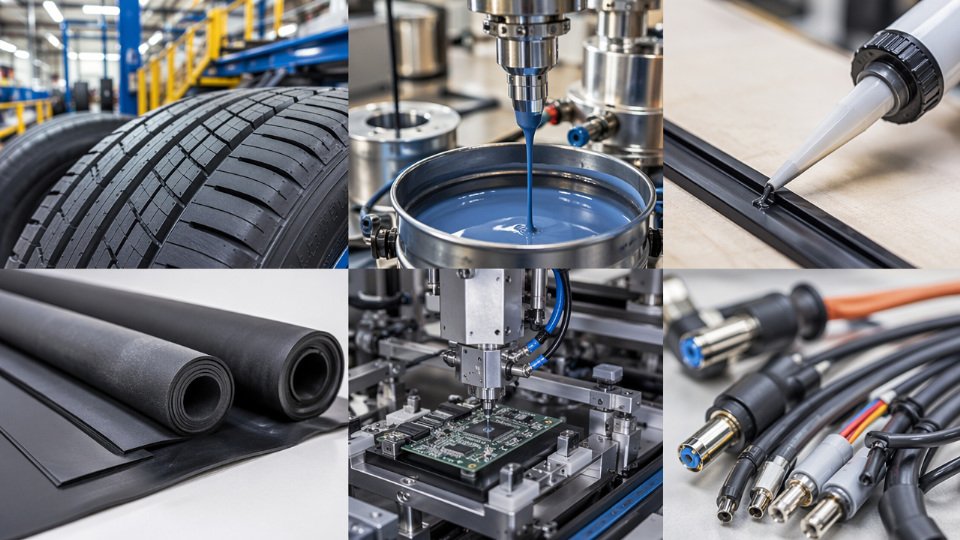
Bis-(triethoxysilylpropyl)-tetrasulfide — TESPT, widely known as Si-69 — dominates silica-filled tire tread formulations for one practical reason: it couples the silica surface to the rubber network while acting as a sulfur donor during vulcanization. Typical use levels run 6–10 phr, though the exact loading depends on silica surface area (typically 160–200 m² /g for high-performance tread grades) and target compound Mooney viscosity.
What trips up procurement teams is treating TESPT as a commodity and buying on price alone. The sulfur rank distribution — the 2S:3S:4S ratio within the polysulfide mixture — directly affects scorch safety. A batch skewed toward short-chain (2S) species releases sulfur more aggressively at mixing temperatures, compressing your scorch window and risking premature crosslinking in the mixer. Require sulfur rank distribution data in every CoA, not just total sulfur content. Consistent viscosity lot-to-lot matters equally; a swing of more than ±15% in dynamic viscosity can shift silanization efficiency and alter compound processing.
Bulk supply capability is a hard operational requirement here. Tire plants consuming multiple tons per month cannot manage with drum shipments; dedicated IBC or road tanker logistics, with a supplier willing to hold buffer inventory, is the standard expectation from serious rubber-chemical suppliers.
Glass Fiber-Reinforced Composites: Wind, Aerospace, Automotive
Aminosilanes (APTES, commercially A-1100) and epoxysilanes (GPTMS, A-187) are the workhorses for glass fiber sizing and laminate interfacial chemistry. The sourcing priority that engineers in this segment most often underestimate is color. White gel coat composites for wind blade shells or marine hulls are brutally unforgiving — even trace transition-metal contamination will yellow the final laminate. Specify APHA color ≤ 10 and total metals content below 5 ppm (ICP-OES or ICP-MS verified). Iron and titanium are the most common offenders from reactor and piping corrosion.
Beyond color, sizing compatibility testing is non-negotiable. A silane that performs well as a neat coupling agent may interact poorly with the film-former or lubricant package already present on the fiber. Require that your supplier provide sizing bath stability data or, better, conduct a joint qualification run on your specific glass type.
Architectural and Industrial Coatings
Vinyltrimethoxysilane and methacryloxysilane handle crosslinking and adhesion in exterior and industrial maintenance coatings. Isocyanatopropyltriethoxysilane is the coupling agent of choice in moisture-cure polyurethane primers, where it bridges the polymer backbone to mineral substrates. The regulatory pressure here is real and tightening: VOC limits in the EU (CEPE frameworks) and the US (OTC and SCAQMD rules) are pushing formulators toward ethoxy grades over methoxy grades, since ethanol release during hydrolysis is less regulated than methanol in many jurisdictions. Confirm REACH registration numbers for EU shipments and ask suppliers for low-methanol-emission formulation support documentation — not just a SDS, but actual headspace emission data from representative formulations.
Structural Adhesives and Sealants
At 0.5–2.0% loading, aminosilanes and epoxysilanes function as adhesion promoters in construction sealants, automotive glazing adhesives, and structural bonding systems. Mercaptopropylsilane enters polysulfide sealant chemistry where thiol-disulfide exchange is part of the cure mechanism.
Lot-to-lot reactivity consistency is the dominant sourcing criterion. For aminosilanes, specify amine equivalent weight as a required CoA parameter with a tight acceptance window — a drift of more than ±3% between lots can shift open time and final lap-shear strength noticeably. Moisture barrier packaging is equally critical: sealant-grade silanes absorb atmospheric moisture rapidly, and a supplier unwilling to guarantee 12-month shelf life in sealed, nitrogen-blanketed packaging is transferring risk directly onto your production line.
Electronics Encapsulation and Underfill
Phenylsilanes, epoxysilanes, and acrylate-functional silanes appear in epoxy molding compounds and underfill formulations where dielectric reliability is the governing specification. The sourcing requirement is unambiguous: ionic impurity control. Sodium and chloride above 5 ppm in a molding compound silane will accelerate electrochemical migration and degrade long-term insulation resistance, particularly under humid aging conditions. Require ICP-MS metals analysis with every production lot and a 0.2-micron filtration certificate confirming particle-free product. Any supplier unable to provide both is not manufacturing to electronics-grade standards regardless of what their marketing materials claim.
Ionic impurity control (Na⁺, Cl⁻ <5 ppm) is the governing specification for silane coupling agents used in electronics encapsulation and underfill applications.True
Excess ionic species in epoxy molding compounds accelerate electrochemical migration and degrade insulation resistance under humid operating conditions, a well-documented failure mode in semiconductor packaging reliability testing.
Emerging: Battery-Grade Silane for Electrode Slurries
The fastest-growing and least-supplied segment right now is silane coupling agents for lithium-ion battery electrode slurries — specifically, improving adhesion between PVDF binder, graphite anode particles, or oxide cathode active materials and the current collector. The volumes are still modest compared with tire or composites, but qualification requirements are severe: sub-ppm metal impurity levels, controlled particle size distribution, and documented electrochemical inertness across the cell’s operating voltage window. Qualified supply is genuinely scarce. SiliconChemicals has active R&D programs targeting battery-grade silane specifications precisely because procurement teams at battery manufacturers are discovering that standard industrial-grade product fails electrochemical qualification — and very few suppliers have the analytical infrastructure or process control to close that gap.
Frequently Asked Questions About Sourcing Silane Coupling Agents
What is the minimum order quantity, and can I get samples before committing?
Direct from a Chinese manufacturer, the typical MOQ is 25 kg — one standard drum. That threshold exists because drums are nitrogen-blanketed at filling and resealing a partial drum for a smaller order introduces moisture risk the manufacturer wants to avoid. Most reputable suppliers will provide 100–500 g analytical samples for qualification purposes at no charge or nominal cost, provided you can share a technical brief explaining the application. Trading companies can sometimes offer smaller quantities — occasionally down to 1–5 kg — but unit pricing climbs noticeably and lot traceability is harder to confirm. If you are running a formal adhesion or compounding qualification program, request the sample from the same production lot as the batch you intend to purchase. That detail matters more than sample volume.
How should I store silane coupling agents to protect shelf life?
Properly stored — sealed in original nitrogen-blanketed drums at 5–25°C, away from moisture and ignition sources — industrial silane coupling agents typically remain within specification for 12 to 24 months from manufacture date, depending on the specific compound and your required purity threshold. Methoxy silanes hydrolyze faster than their ethoxy counterparts because methanol is a better leaving group; if you are working with 3-mercaptopropyltrimethoxysilane or vinyltrimethoxysilane, tighter moisture controls matter more. Never store an opened container without immediately resealing it under dry nitrogen. A partial drum left unsealed in a humid warehouse for a weekend is not necessarily ruined, but the hydrolysis and condensation reactions that start in those hours are irreversible and will show up as cloudiness, increased viscosity, or reduced coupling efficiency in your process.
Are silane coupling agents classified as hazardous cargo for sea or air freight?
Most are. The majority fall under IMDG/IATA Class 3 (flammable liquid) or Class 8 (corrosive), and some carry dual classification. Methoxy silanes typically have lower flash points than ethoxy equivalents and require flammable liquid labeling with the corresponding packing group — usually II or III depending on flash point and boiling point. Amino silanes such as 3-aminopropyltriethoxysilane are classified as corrosive. Air freight restrictions on Class 3 materials mean sea shipment is the standard route for bulk orders; air may be feasible for small qualification samples under limited quantity exemptions, but verify this with your freight forwarder before booking. Always confirm the UN number, hazard class, and packing group with your supplier in writing before freight booking — not after.
Can I substitute one brand for another without requalification?
Only if it is chemically identical — same CAS number, equivalent purity confirmed by CoA — and the new supplier provides a Certificate of Equivalence. Even then, a reduced qualification step is prudent: CoA review against your internal acceptance criteria plus at minimum one adhesion pull-off test or bond strength measurement in your actual application. Skipping that step has caused production scrap events in bonded rubber and composite applications where trace impurity profiles differed despite matching GC purity figures on paper.
A same-CAS substitution with equivalent GC purity is always drop-in compatible without any testing.False
GC purity measures the primary compound but does not capture hydrolyzate content, residual catalyst, or trace by-products that can affect adhesion performance and pot life in sensitive formulations. Reduced qualification testing remains standard practice.
What is the difference between a silane coupling agent and a silane primer?
The same silane molecule can serve both functions. When you disperse a silane into a rubber compound or coating formulation at a loading of roughly 0.1–2% by weight on filler, it is acting as a coupling agent — reacting with both filler surface and polymer matrix during mixing or cure. When you dissolve that same silane in water or alcohol at 0.5–2% concentration and brush or spray it onto a substrate before bonding or coating, it is functioning as a primer. The chemistry is identical; the delivery mechanism and timing within the process differ. This distinction matters for procurement because the same raw material can be specified under different product names in different departments of the same plant.
How do I evaluate a supplier I have never worked with?
Request CoAs from three recent production lots — not one — to check consistency, not just peak performance. Ask for the ISO 9001 certificate with current validity date and REACH registration documentation if you are importing into the EU. A virtual or on-site audit of the production facility tells you whether analytical infrastructure and batch records actually exist. Order a 25 kg qualification drum for in-house application testing before committing to a commercial volume. Ask the supplier for customer references specifically in your industry segment or geographic region; a supplier strong in rubber compounding may have limited experience supporting UV-cure coating applications, and that gap shows up in technical support quality, not just product spec sheets.
Why are Chinese-manufactured silane coupling agents significantly cheaper than European equivalents?
The cost difference is structural, not a warning sign in itself. China’s organosilicon industry — concentrated particularly in Zhejiang and Shandong provinces — operates integrated chlorosilane-to-silane production clusters where raw material, intermediate, and finished product are made within the same industrial complex. Combined with lower energy costs, scale economies driven by massive domestic consumption across rubber, construction, and electronics sectors, and competitive labor rates, delivered unit prices can run meaningfully below European equivalents for the same compound. The legitimate concern is whether cost pressure has led to purity shortcuts. That risk is real and not hypothetical — it surfaces as GC purity just meeting spec while hydrolyzate content or color index is quietly elevated. Independent analytical validation on incoming lots is the straightforward answer: run your own GC or contract a third-party lab for the first several shipments until the supplier’s consistency is established in your own data, not just on their documentation.
Building a Long-Term Silane Coupling Agent Sourcing Strategy With a Trusted Manufacturing Partner
By the time you’ve worked through chemical compatibility, CoA interpretation, supplier audits, regulatory documentation, supply chain resilience, TCO modeling, and application-specific fit, one thing becomes clear: silane coupling agent sourcing is not a one-time transaction you hand off to a junior buyer. It is a recurring technical and commercial decision that compounds in value — or in risk — depending on the relationship you build around it.
Treating the Seven Criteria as a Unified Framework, Not a Checklist
Each criterion covered in this article is interconnected. A supplier with excellent GC purity data but no REACH registration creates a compliance gap that can halt shipments at EU customs. A partner offering competitive per-kilogram pricing but 90-day lead times and no buffer stock exposes your production line to the exact kind of disruption that has repeatedly hit specialty chemical supply chains since 2020. Oligomeric amino silanes may solve your glass fiber sizing adhesion problem perfectly — but only if the supplier’s manufacturing process holds consistent molecular weight distribution batch to batch, which you cannot confirm without reviewing process capability data alongside the CoA.
The seven criteria work as a system. A mature sourcing strategy applies all of them simultaneously and revisits them on a defined cycle — typically annually at minimum, or whenever your formulation, substrate, or target market changes.
What a Mature Supply Relationship Actually Looks Like on the Plant Floor
In practice, the best long-term silane partnerships extend well beyond purchase orders. A supplier worth committing to will engage your formulation engineers during product development, not after a quality complaint. That means sharing application data on surface coverage ratios, recommending coupling agent concentration ranges based on filler surface area and resin system reactivity, and flagging when a regulatory update — a revised SDS, a new SVHC listing, a tariff classification change — affects your product. Preferred pricing tiers for annual volume commitments, a dedicated technical account manager who knows your process, and periodic qualification audits (whether on-site or remote with documented evidence packages) are not premium services. They are the baseline of a functional industrial supply relationship.
Why Vertical Integration and Product Breadth Matter More Than You Might Expect
SiliconChemicals manufactures from chlorosilane intermediates forward — meaning raw material exposure, intermediate synthesis, and final coupling agent production are controlled within a single integrated supply chain. That structure matters for batch-to-batch consistency in ways that a toll manufacturer or distributor simply cannot replicate. When you need to qualify APTES for a fiber-reinforced epoxy composite alongside TESPT for a silica-filled rubber compound and GPTMS for a UV-cure coating — in the same annual agreement — working with a supplier covering more than 80 standard and specialty silane coupling agents eliminates the qualification overhead and regulatory fragmentation of managing three separate sources.
SiliconChemicals holds ISO 9001 certification and maintains REACH-registered status across its silane coupling agent portfolio.True
ISO 9001 and REACH registration are independently verifiable certifications that can be confirmed through certificate request and the ECHA database respectively; these are not marketing claims but auditable compliance statuses.
Standard ocean freight lead times of 30–45 days to Europe, North America, Southeast Asia, and the Middle East, combined with an on-time delivery rate exceeding 98% over the past three years across more than 30 countries and regions served, translate directly into reduced safety stock requirements and lower working capital tied up in your warehouse.
The Next Step Is Straightforward
If you have a specific substrate, resin system, or regulatory market in mind, request a product datasheet and CoA package for the relevant grade — VTMO, ICPTES, oligomeric amino silanes, or any of the 80-plus options in the portfolio. If you are earlier in your development cycle, a sample request followed by a technical consultation with SiliconChemicals’ application engineering team costs you nothing but time and typically resolves the organofunctional group selection question in a single session.
The right silane coupling agent, sourced through a relationship built on technical transparency and supply chain accountability, is not a commodity line item to optimize on price alone. It is a performance-enabling material. Treat it accordingly, and your formulation, your process, and your customer relationships will reflect that decision.