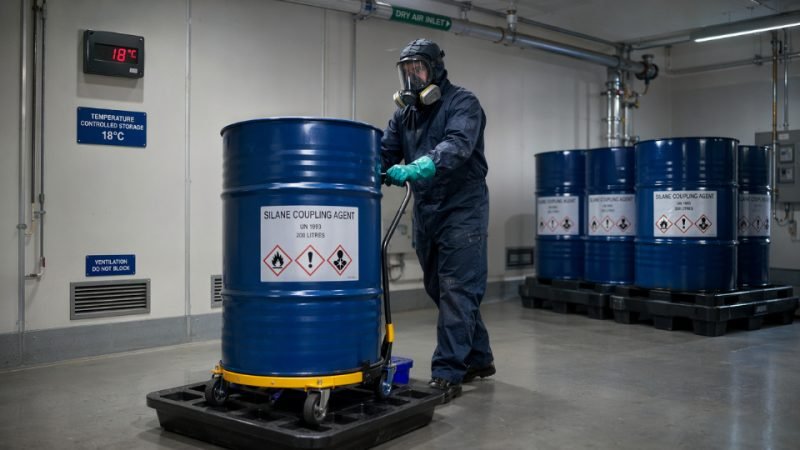
A drum of silane coupling agent sitting in an unventilated storeroom at 35°C is not a minor housekeeping issue — it is a degradation clock and a fire risk running simultaneously. Moisture ingress hydrolysis begins within hours of a compromised seal, converting active silane to silanol oligomers that foul your mixing ratios and produce adhesion failures downstream. A single batch of contaminated VTMS (flash point ~28°C) used in a rubber compounding line can generate scrap rates that erase the cost advantage you negotiated on raw material pricing. Getting the safety, handling, and storage protocols right is not paperwork compliance; it is the operational foundation that makes silane chemistry actually perform.
Silane coupling agents require cool (5–25°C), dry, sealed storage under inert or dry-air headspace, with shelf life of 12–24 months depending on container integrity and silane reactivity. On the plant floor, flash points ranging from roughly 23°C to 75°C — lowest for alkenylsilanes like VTMS, higher for aminosilanes like APTES — set the ventilation and ignition-control requirements. Vapor exposure must be managed against supplier TLVs of 0.5–2 ppm for reactive grades, well below OSHA’s general ceiling. Contamination, temperature excursions, and improper PPE selection are the three failure modes that account for the majority of silane-related incidents and quality losses.
What makes silane coupling agents genuinely demanding is that the same reactivity that makes them valuable — their ability to bond organic polymers to inorganic surfaces at the molecular level — also makes them unforgiving of sloppy logistics. The sections below walk through each risk category with the specificity you need to write a credible SOP, brief a procurement team on container specifications, or audit a third-party warehouse without relying on generic chemical-handling boilerplate.
Physical and Chemical Hazard Classification Across Common Silane Coupling Agent Families
Understanding which hazard categories apply to a specific silane before it arrives on your loading dock is not a paperwork exercise — it directly shapes your storage layout, spill response plan, and PPE specification. The eight agents below represent the bulk of industrial volume, yet their hazard profiles differ enough that treating them as interchangeable on safety documents has caused real incidents.
Comparative Hazard Data Across Eight Representative Agents
| Silane | Flash Point | Boiling Point | Vapor Pressure at 20°C | GHS Hazard Categories | Hydrolysis Byproduct |
|---|---|---|---|---|---|
| VTMS (vinyltrimethoxysilane) | ~28°C | 123°C | ~8 hPa | Flammable Liq. Cat. 2; Skin/Eye Irrit.; Acute Tox. Cat. 4 (inh.) | Methanol |
| APTES (3-aminopropyltriethoxysilane) | ~75°C | 217°C | <1 hPa | Flammable Liq. Cat. 3; Skin Corr./Irrit.; Resp. Sensitizer | Ethanol |
| GPS / GLYMO (glycidoxypropyltrimethoxysilane) | ~68°C | 290°C | <0.1 hPa | Flammable Liq. Cat. 3; Skin Sensitizer Cat. 1; Repr. Tox. Cat. 2 | Methanol |
| MPTMS (3-mercaptopropyltrimethoxysilane) | ~54°C | 213°C | ~0.5 hPa | Flammable Liq. Cat. 3; Aquatic Tox. Cat. 2; Acute Tox. Cat. 4 | Methanol + H₂S trace |
| MEMO (methacryloxypropyltrimethoxysilane) | ~65°C | 255°C | <0.5 hPa | Flammable Liq. Cat. 3; Skin Sensitizer; Eye Irrit. | Methanol |
| TEOS-derived coupling agents | 45–55°C (grade-dependent) | 165–200°C | 1–3 hPa | Flammable Liq. Cat. 3; Eye/Skin Irrit. | Ethanol |
| Chloropropyltriethoxysilane | ~60°C | 220°C | ~0.3 hPa | Flammable Liq. Cat. 3; Skin Corr. Cat. 1B; Acute Tox. Cat. 3 (inh.) | HCl gas + Ethanol |
| Isocyanatopropyltriethoxysilane (ICPTES) | ~110°C | 230°C | Operational warning: MPTMS hydrolysis produces trace hydrogen sulfide (H₂S) alongside methanol, particularly when moisture ingress has occurred in partially filled drums. H₂S is detectable at 0.5–1 ppb by odor but causes olfactory fatigue at concentrations still far below the IDLH of 50 ppm. Never rely on smell to assess MPTMS headspace safety — use a calibrated photoionization detector or electrochemical H₂S sensor before opening drums that have been stored more than 60 days after initial opening. |
Vapor Density and Low-Lying Accumulation Risk
Most silane coupling agent vapors carry a vapor density of 4–8 relative to air (exact value depends on molecular weight of the specific agent). That means they sink. In an ambient-temperature storage room with standard floor-level ventilation return points blocked by pallets — a routine condition on busy warehouse floors — vapors accumulate in a layer roughly 0–60 cm above the floor. This zone is also where drum taps, bottom-discharge valves, and forklift operators’ feet are. Explosion-proof exhaust ventilation should draw from floor level, not ceiling level, and vehicle entry interlocks on storage rooms are worth the capital cost.
Reading the GHS Label at a Glance
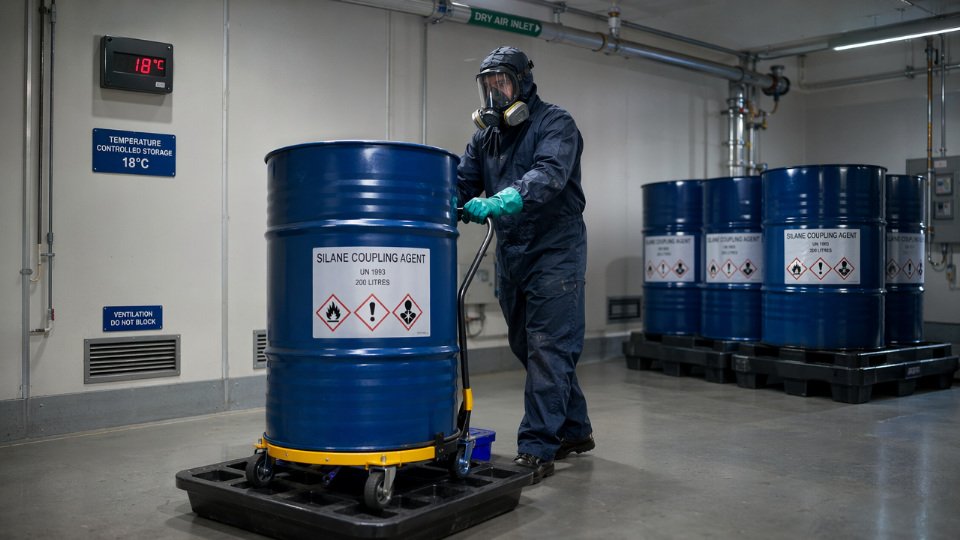
SiliconChemicals’ compliant labels for these products carry up to four GHS pictograms depending on the specific agent: the Flame symbol (flammability, present on all eight listed agents), the Exclamation Mark (skin/eye irritation, acute toxicity Category 4, respiratory irritation), the Health Hazard diamond (respiratory sensitization in ICPTES and GPS, reproductive toxicity in GPS), and the Corrosion symbol (chloropropylsilane, APTES at higher concentrations). When all four appear on a single label, that is a signal to route the product through your EHS pre-approval process rather than standard MRO purchasing. A label carrying only Flame and Exclamation Mark — common for TEOS-derived agents and MEMO — represents a materially lower hazard tier and can typically be handled under standard flammable liquid protocols with appropriate respiratory precautions.
Health Hazard Profile: Inhalation, Dermal, and Eye Exposure Mechanisms
Understanding how silane coupling agents actually injure tissue — not just that they are “hazardous” — is what separates a functional industrial hygiene program from a paper compliance exercise. Each exposure route carries a distinct mechanism, and several interact in ways that catch unprepared facilities off guard.
Inhalation: The Methanol Problem Nobody Budgets For
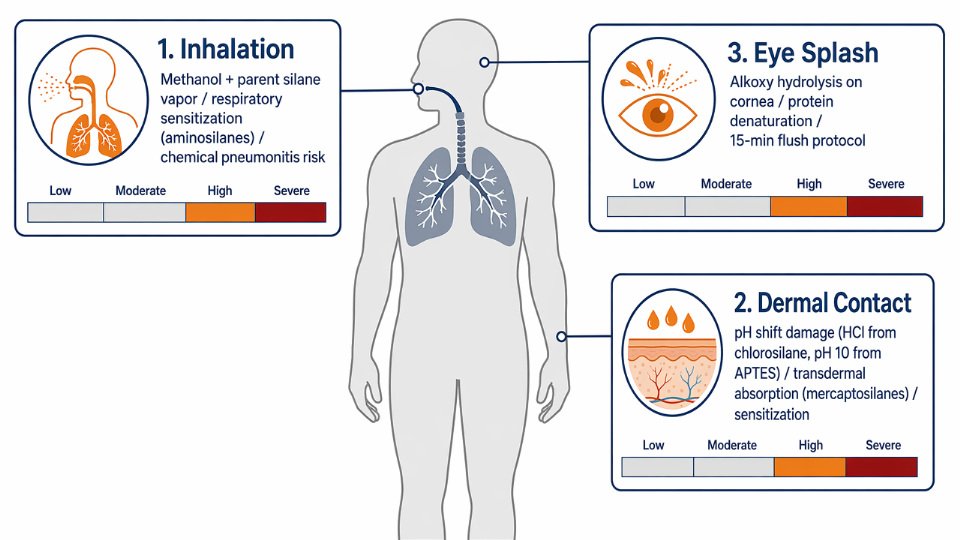
Methoxy-functional silanes — VTMS, APTES, MPTMS, and the bulk of commercially traded grades — hydrolyze on contact with airway mucosa, releasing methanol alongside the parent silane vapor. At ambient temperature this happens slowly, but in heated mixing operations, spray coating lines, or rubber compounding at 140–180°C, vapor generation accelerates sharply. Workers experience two simultaneous exposures: the silane itself and methanol.
OSHA’s general-industry ceiling for many organosilane vapors sits around 5 ppm, but reactive methoxy silanes warrant tighter controls. ACGIH TLV-TWA guidance for methanol stands at 200 ppm (skin notation), while the NIOSH REL is 200 ppm with a STEL of 250 ppm — figures that sound generous until you recognize that a spray line processing 60–80 kg of VTMS per shift in a 500 m³ poorly ventilated bay can breach methanol action levels within 90 minutes without forced exhaust.
Symptoms at low concentrations (roughly 1–10 ppm range for the parent silane) include upper respiratory irritation, headache, and lacrimation. At higher concentrations — possible during drum emptying or equipment cleaning incidents — there is documented risk of chemical pneumonitis and pulmonary edema, the latter presenting hours after exposure, which means workers may leave the facility feeling only mildly unwell before the condition worsens.
Aminosilanes (APTES, AEAPTMS, and related grades) carry an additional respiratory sensitization risk. Aliphatic amines are established occupational asthma triggers. A worker sensitized after repeated low-level exposure may subsequently react to concentrations well below the nominal action level. Once sensitization occurs, there is no safe threshold — reassignment rather than further exposure management becomes the only viable outcome.
Dermal Exposure: pH Shift Damage and Systemic Penetration
Most silane coupling agents cause moderate to severe skin irritation through a two-stage mechanism. Alkoxy hydrolysis at the skin surface produces local pH shifts: chlorosilane residues generate HCl (strongly acidic), while aminosilanes produce alkaline conditions — aqueous APTES sits near pH 10. This local pH disruption alone is sufficient to cause chemical burns with sustained contact, typically beyond 5–15 minutes depending on concentration and skin condition.
Mercaptosilanes (MPTMS, MCPTMS) add a systemic dimension. The thiol group supports transdermal absorption, and animal toxicology data indicate systemic distribution following dermal dosing. Repeated or prolonged contact across multiple grades also drives sensitization and occupational contact dermatitis, which develops cumulatively rather than from a single incident — meaning workers who self-report “I’ve never had a reaction” after a year on the job are not necessarily safe from developing one.
Nitrile gloves at 0.33 mm thickness provide adequate protection for incidental short-term silane coupling agent contact, but sustained immersion or splash events require laminated film gloves due to measured permeation breakthrough times under 30 minutes for some methoxy-functional grades.True
Published chemical resistance data and permeation testing (ASTM F739 protocol) confirm breakthrough times for reactive organosilanes through standard nitrile can be shorter than a typical process task duration, making glove selection a site-specific engineering decision, not a default.
Eye Hazards: pH and Reactivity Combined
Liquid splash from chloro-functional or isocyanato-functional silanes causes immediate corneal damage. Isocyanate-functional grades (such as ICPTES) carry CLP classification for serious eye damage, Category 1. APTES in aqueous form acts as an alkaline burn agent — alkaline injuries are more destructive than acid burns at equivalent pH because saponification of stromal proteins continues after initial contact.
Eyewash station placement deserves engineering attention, not just checkbox compliance. Stations must be reachable within 10 seconds of the exposure point (ANSI Z358.1 standard) and deliver tepid water for a minimum 15-minute flush. Facilities that position the eyewash outside the process bay — a common cost-cutting shortcut — create a scenario where a worker traverses 30 seconds of corridor with caustic material in contact with corneal tissue. That gap matters clinically.
Carcinogenicity and Reproductive Toxicity
Current IARC classifications and EU CLP data show no confirmed carcinogen status for the large majority of common silane coupling agents. The exception worth tracking operationally is the isocyanate-functional silane family. Under CLP Regulation (EC) No 1272/2008, several isocyanate-functional silanes carry Repr. 2 (H361) reproductive toxicity warnings. Facilities running these grades require documented medical surveillance programs, and pregnant workers should be reassigned from direct handling duties regardless of measured air concentrations — regulatory minimum compliance is not sufficient justification for continued exposure given the classification.
Building a Workable Exposure Monitoring Framework
For facilities processing more than 50 kg of methoxy-functional silanes per shift, a tiered monitoring approach is practical:
Real-time vapor monitoring using a calibrated photoionization detector (PID) with an isobutylene correction factor appropriate for the specific silane is the first layer. PIDs do not read methanol accurately without correction, so periodic integrated sampling with charcoal tube/GC-FID analysis — quarterly at minimum, monthly during process startup or recipe changes — provides the validated baseline.
Biological exposure monitoring for methanol in urine (end-of-shift, end-of-workweek) serves as a surrogate marker for cumulative methoxy silane vapor exposure, particularly in heated or spray applications where dermal absorption supplements inhalation. ACGIH BEI for methanol in urine is 15 mg/L. Exceedances indicate either inadequate ventilation controls, glove failure, or both — and they provide objective evidence that engineering controls need revision before waiting for a symptomatic event.
Aminosilane operations warrant spirometric baseline testing and periodic lung function monitoring for any worker with direct exposure duties, given the occupational asthma sensitization risk. Symptom questionnaires alone are not sufficient surveillance for a sensitizing agent.
Personal Protective Equipment Selection and Engineering Controls for Silane Processing Environments
Knowing the hazard profile is only half the job. The other half is translating that knowledge into a structured, enforceable control system that survives shift changes, contractor rotations, and production pressure. The NIOSH hierarchy of controls — eliminate, substitute, engineer, administrate, protect — is the correct framework, and the order matters. PPE sits at the bottom of that hierarchy for good reason: it is the last line, not the primary defense.
Elimination and Substitution: Start Before the Drum Is Opened
Where the application technically permits, specify ethoxy-functional silanes over methoxy equivalents. The hydrolysis byproduct of methoxysilanes is methanol — a CNS toxin and suspected optic-nerve hazard. Ethoxysilanes release ethanol instead. Flash points shift slightly (VTMS methoxy ~28°C versus vinyl triethoxysilane ~35°C), but for many rubber compounding and coating applications the performance delta is negligible and the toxicological gain is real.
Substituting ethoxysilanes for methoxysilanes in rubber compounding can meaningfully reduce methanol vapor generation at mixing temperatures without compromising silica coupling efficiency in most passenger-tire tread formulations.True
At mixer temperatures of 140–160°C, methoxysilane hydrolysis generates methanol in the vapor phase; ethoxysilanes produce ethanol under the same conditions. Published compounding data from multiple academic and supplier technical papers confirm comparable dynamic mechanical properties and filler dispersion indices when ethoxysilane grades are used at equivalent molar concentrations.
Glove Selection: Breakthrough Time Is the Specification, Not Color or Brand
Glove choice is where facilities routinely make expensive errors.
Butyl rubber is the correct primary choice for open mixing, reactor charging, and any prolonged liquid contact — breakthrough times exceed 480 minutes for most common alkoxy silane coupling agents at standard warehouse temperatures. For mercaptosilanes specifically (MPTMS and related grades), butyl rubber remains effective; neoprene fails badly, with breakthrough times as low as 15–30 minutes in published permeation data. Never specify neoprene for sulfur-functional silanes.
Nitrile is acceptable for short, incidental contact — laboratory dispensing of less than 100 mL, sample collection — where contact duration stays under 30 minutes and the operator changes gloves immediately after. It is not a substitution for butyl in process environments.
Latex: do not use. Beyond the latex allergy risk, breakthrough performance against reactive organosilanes is inadequate for any industrial purpose.
Double-gloving (nitrile inner, butyl outer) is standard practice for reactor charging operations, where dexterity demands are high and splash risk is real.
Respiratory Protection: Match the Respirator to the Operation
For handling volumes under 1 L in a ventilated laboratory or dispensing area, a half-face air-purifying respirator (APF 10) fitted with OV/P100 combination cartridges is sufficient, provided area monitoring confirms concentrations remain below one-tenth of the IDLH and within the cartridge’s rated service life for the specific silane vapor pressure at working temperature.
Reactor charging, bulk transfer from IBCs, and any confined-space entry require a step up to supplied-air: either SCBA or a continuous-flow airline respirator (APF 1000+). Organic vapor cartridges have no warning properties adequate for silane vapors at low concentrations — you will not smell breakthrough reliably.
For operators on extended shifts performing spray application or continuous mixing room duties, a PAPR with OV/P100 hood assembly offers meaningful ergonomic benefit over a tight-fitting half-face unit. Reduced facial seal fatigue translates directly into better compliance across a full shift.
Engineering Controls and Facility Design
Local exhaust ventilation (LEV) at the point of generation is non-negotiable. Design minimum face velocity at 0.5 m/s at the capture point — higher for hot applications or low-flash grades like VTMS. Dilution ventilation alone is insufficient; silane vapor density and reactivity require source capture.
All electrical equipment in silane storage and dispensing rooms must be rated ATEX Zone 1 (or NEC Class I Division 1 equivalent). This includes lighting, pump motors, and instrumentation. Specify explosion-proof enclosures with appropriate gas group ratings for the silane chemistries handled.
Static ignition is a real risk during drum dispensing and bulk transfer. Every metal container, transfer hose, pump housing, and receiving vessel must be bonded and grounded before any valve is opened. A resistor-controlled bonding cable with continuity indicator, not a simple clip-and-wire setup, is standard on any properly designed dispensing station.
Bulk storage tank outlet lines should have interlocked emergency shutoff valves — pneumatically or electrically actuated, fail-closed — tied into both the area gas detection system and the emergency stop circuit. If a vapor detector triggers above the action level, the valve closes without operator intervention. This is not optional on tanks larger than 1,000 L.
Spill Response, Fire Suppression, and Emergency Decontamination Procedures
Effective emergency response for silane coupling agents requires protocols built around their specific chemistry — not generic flammable-liquid boilerplate. The hydrolytic reactivity that makes these compounds valuable in adhesion promotion is exactly what complicates spill containment, fire suppression, and decontamination. A responder who treats a VTMS spill the same way they treat a mineral spirit spill will make predictable, costly mistakes.
Small Spill Protocol (Under 5 L)
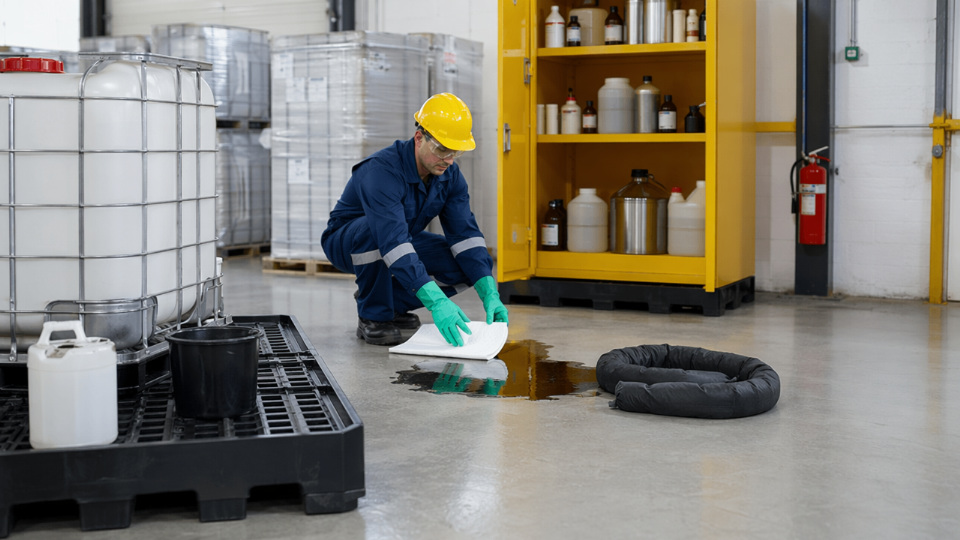
Isolate the affected area immediately and eliminate all ignition sources — cutting power to non-intrinsically-safe equipment in the zone is non-negotiable given flash points as low as 23–28°C for vinyl- and mercaptofunctional grades. Ventilate the space forcibly before approaching. Absorb the liquid with dry sand, vermiculite, or dry diatomaceous earth. Never use sawdust, paper towels, or cellulosic rags: these create a fuel-rich composite that can self-heat or ignite readily, especially with aminosilane spills that generate mild exotherms on contact with moisture.
Collect the saturated absorbent in a labeled, UN-approved closed-head waste container — UN 3077 (environmentally hazardous substance, solid) or UN 1993 (flammable liquid NOS) depending on the dominant hazard of the specific grade. Seal the container, attach a GHS-compliant hazard label, and segregate it from oxidizers and incompatible acids. Ventilate the area for a minimum of 30 minutes before allowing re-entry without supplied-air respirators. Log the incident in the facility chemical incident register the same shift it occurs — not end-of-week. Date, volume, product, responders involved, and disposal route all need to be captured while details are fresh.
Large Spill or Bulk Tank Release (Over 5 L)
Activate the facility emergency response plan immediately. Evacuate non-essential personnel to a minimum 50 m upwind perimeter — farther if wind direction is shifting or if the release involves a heated vessel. Responders entering the zone need supplied-air breathing apparatus and chemical splash suits, not just half-face respirators.
Contain the liquid using earthen berms, prefabricated absorbent socks, or rapid-deploy spill barriers before it reaches floor drains. This step is critical: silane coupling agents hydrolyze in water to silanol oligomers and their alcohol co-products (methanol or ethanol depending on the alkoxy group). These hydrolysis products are genuinely problematic for biological wastewater treatment systems — silanol oligomers can foul membranes and inhibit activated-sludge processes at concentrations that on-site treatment plants are not designed to handle.
Silane hydrolysis products reaching a municipal wastewater system can disrupt biological treatment processes.True
Silanol oligomers from alkoxy silane hydrolysis are surface-active and can adsorb onto activated sludge flocs, reducing treatment efficiency; methanol co-products add BOD loading beyond design parameters in many industrial pretreatment systems.
If any release reaches a surface drain, stormwater conveyance, or waterway, notify the local environmental authority immediately — in China, this means reporting to the local ecology and environment bureau under GB/T 29510 emergency notification requirements; in export markets, follow the applicable national authority’s hazmat release reporting threshold.
Fire Response
Silane coupling agent fires respond to dry chemical (ABC-rated), CO2, or alcohol-resistant (AR-AFFF) foam. Never apply a straight-stream water hose directly to a silane fire. The combination of water contact, violent steam generation, and methanol/ethanol hydrolysis products can spatter burning liquid across a wider area and intensify the fire front. If fire suppression water runoff occurs, contain it — it will carry methanol or ethanol hydrolysis products and must be collected and managed as hazardous waste, not allowed to enter site drainage.
Skin and Eye Decontamination
Flush affected skin continuously with clean water for a minimum of 15 minutes. For eye exposure, 20 minutes of continuous low-pressure irrigation is the floor, not the target. ANSI Z358.1 requires an emergency eyewash station within 10 seconds travel time from any handling station — on a real plant floor this typically means within roughly 10–15 m depending on obstacles. Tepid water (16–38°C) dramatically improves compliance with the full flush duration; workers cut irrigation short when the water is cold.
Aminosilane and isocyanate-functional silane exposures both warrant immediate medical evaluation regardless of whether symptoms are visible at the time. Delayed bronchospasm from amine vapor and sensitization reactions from isocyanate-functional grades are both documented hazards where the absence of immediate symptoms is not clinical clearance.
Post-Incident Reporting and SDS Access
Hard-copy SDS binders for every silane coupling agent in the facility must be held at the emergency response center — not only on a server. First responders trained on GHS structure need to locate Section 5 (firefighting measures) and Section 6 (accidental release) in under 30 seconds under stress. Drill this. Anyone involved in a significant inhalation exposure event should be placed on a mandatory 24-hour medical observation protocol, with a physician or occupational health nurse reviewing symptom progression before return to work. Reactive silane vapors can cause pulmonary effects that become apparent hours after the exposure event ends, making same-shift clearance insufficient.
Storage Infrastructure Requirements: Containers, Segregation, Temperature, and Moisture Control
Silane coupling agents degrade quietly. Unlike many industrial chemicals that signal trouble through obvious discoloration or odor, early-stage hydrolysis in a poorly sealed drum can be invisible until the product reaches your process line — where increased viscosity, filter blockages, or adhesion failures trace back to a storage decision made weeks earlier. Getting the physical storage infrastructure right is not a compliance checkbox; it directly protects both worker safety and the batch quality your production depends on.
Container Materials: What Works and What Reacts
The permitted container materials for silane coupling agents are 316L stainless steel, high-density polyethylene (HDPE), and glass-lined vessels. That short list exists for a reason. Carbon steel corrodes under trace moisture, and iron oxide — common rust — acts as a hydrolysis catalyst, accelerating exactly the degradation reaction you are trying to prevent. Copper, brass, and aluminum alloys are incompatible with chloro-functional silanes specifically; HCl generated during moisture contact attacks these metals, generating contamination and weakening container integrity simultaneously.
For alkoxy silanes — APTES, VTMS, MPTMS, and similar grades — containers must maintain a dry inert blanket. Nitrogen or dry argon padding above the liquid surface is standard practice on bulk tanks and intermediate bulk containers (IBCs). Drum-scale storage that gets opened and resealed repeatedly is higher risk: each opening cycle admits humid ambient air. Specify desiccant breather vents rated to maintain headspace humidity below 10 ppm on fixed storage tanks, and place silica gel indicator cards inside secondary containment bays as a low-cost early warning system. A color change on those cards is the first signal that your containment environment has a moisture ingress problem — before it becomes a product quality problem.
Moisture Control: The Single Parameter That Cannot Be Compromised
Even 0.1% water contamination by weight can initiate hydrolysis and oligomerization in reactive alkoxy silanes. The practical consequences are concrete: viscosity climbs, alcohol byproduct (methanol or ethanol depending on the alkoxy group) accumulates in the headspace, and hydrolysis condensates form precipitates that block metering pumps and inline filters within a single production shift. In a compounding operation running continuous adhesive or coating lines, that blockage means unplanned downtime measured in hours, not minutes.
0.1% water contamination by weight is sufficient to initiate measurable hydrolysis and oligomerization in reactive alkoxy silanes stored at ambient temperature.True
This threshold is consistent with published silane chemistry literature and standard SDS technical guidance from major silane producers; hydrolysis kinetics for trialkoxysilanes are sensitive to even trace water, particularly in the absence of buffering agents.
Humidity management in tropical and subtropical climates — Southeast Asia, coastal Brazil, West Africa — demands more than standard warehouse practice. Seasonal ambient relative humidity routinely exceeds 80–90% in these regions. Temperature-controlled, dehumidified storage rooms holding 40–55% RH are the appropriate target; passive storage in a non-climate-controlled warehouse exposes every opened container to conditions that shorten effective shelf life from the stated 12–24 months down to six months or less.
Temperature Specifications and Cold-Chain Considerations
The optimal storage range for most commercial silane coupling agent grades is 5–25°C. Aminosilanes and epoxysilanes are the most temperature-sensitive: sustained exposure above 30°C accelerates oxidative discoloration and functional-group degradation, with aminosilanes showing characteristic yellowing that indicates reduced purity and coupling efficiency. That yellowing is not cosmetic — it reflects real amine oxidation that will underperform in your adhesion or surface treatment application.
For international shipments during summer months to hot-climate markets, a cold-chain requirement is not optional for premium-grade material. Container surface temperatures inside a standard 20-foot dry freight container in direct sun can reach 55–65°C in equatorial port environments. Specifying refrigerated reefer containers or insulated flexi-tank packaging for bulk shipments protects the shelf life validated under the controlled conditions used for certificate of analysis (COA) testing.
SiliconChemicals provides batch-specific COA data including initial viscosity, purity, and moisture content measured at controlled temperature, giving procurement teams a documented baseline for incoming quality inspection on arrival.
Chemical Segregation: Distances and Physical Barriers
Store silane coupling agents away from strong oxidizers (UN hazard class 5.1), concentrated acids and bases (class 8), and isocyanates. In a shared chemical storage room, minimum 3-meter separation is the practical floor; where that distance cannot be maintained, physical firewall barriers rated to local fire codes are the required alternative.
Chloro-functional silanes warrant a separately ventilated storage room, not just separation within a common area. Contact with atmospheric moisture generates hydrochloric acid vapor — a corrosive gas that attacks adjacent container labels, secondary containment liners, and the respiratory tracts of anyone entering without appropriate respiratory protection. Keeping chloro-silanes in their own ventilated enclosure eliminates the cross-contamination risk to other stored materials and simplifies emergency response by confining the HCl generation hazard to a defined zone.
Secondary Containment and Inventory Rotation
All liquid silane storage must sit within secondary containment sized to hold 110% of the largest single container volume in that bay — consistent with EPA 40 CFR 264 guidance and the principles underpinning EU Seveso III (Directive 2012/18/EU) for hazardous substance management. Bunded pallets work for drum-scale storage; concrete-curbed rooms or spill-floor trays are appropriate for IBC or bulk tank installations.
Implement FIFO (first-in, first-out) inventory rotation without exception. Silane coupling agents do not improve with age. Conduct monthly visual inspections covering container integrity, closure seal condition, label legibility, and — critically for aminosilanes — any yellowing or color shift that signals oxidative degradation. A practical decision rule: any drum showing visible discoloration or a viscosity reading more than 20% above the COA specification should be quarantined and tested before use, not consumed on the assumption that it will “probably be fine” in a less demanding application.
Transportation and Regulatory Compliance for Domestic and International Silane Shipments
Getting the UN classification right before the shipment leaves the warehouse is not a documentation formality — it is the point where a mislabeled container either clears customs smoothly or gets detained at a port gate while the customer’s production line idles. Silane coupling agents span at least three distinct UN numbers depending on chemistry and flash point, and confusing them is a common mistake in freight forwarding offices that handle organosilicon products only occasionally.
UN Classification: The Flash Point Decision Tree
Most commercial silane coupling agents route through one of three UN entries. VTMS (vinyltrimethoxysilane, flash point ~28°C) and similar low-flash-point products classify as UN 1993, Flammable Liquid, NOS — Packing Group II if flash point falls between 23°C and 60°C, or Packing Group I if below 23°C. APTES (3-aminopropyltriethoxysilane, flash point ~75°C) and other higher-flash products typically carry UN 3082, Environmentally Hazardous Substance, Liquid, NOS, Packing Group III, once they also meet aquatic toxicity thresholds under GHS criteria. Chloropropylsilanes add a corrosivity dimension and usually classify under UN 1760, Corrosive Liquid, NOS. The practical rule: flash point below 23°C forces PG I or II under the flammable liquid class; 23–60°C is PG II or III depending on subsidiary hazards; above 60°C, check aquatic toxicity and corrosivity before defaulting to PG III or considering non-regulated status.
Most silane coupling agents with flash points above 60°C automatically qualify as non-regulated for transport.False
Flash point above 60°C removes the primary flammable liquid classification but does not automatically yield non-regulated status. Aquatic toxicity data, corrosivity, and subsidiary hazards must still be evaluated. Many APTES-type products qualify as marine pollutants under IMDG even at PG III, requiring UN 3082 declaration.
IMDG Sea Freight Requirements
Sea freight dominates silane exports from China’s eastern ports — Shanghai, Ningbo, and Qingdao together handle the majority of container volume. Under the IMDG Code, each shipment declaration must state the proper shipping name, UN number, class and division, packing group, and — critically — marine pollutant (MP) designation where applicable. For most flammable silanes, the applicable EmS codes are F-E and S-E. Segregation requirements prohibit co-loading with foodstuffs and oxidizing agents in the same container bay. UN 4G-certified fiberboard outer packaging with inner compatible bottles (HDPE or glass, depending on the specific silane) is the standard configuration for 5–25 kg consignments; IBC-packed bulk orders require separate IMDG special provision review.
IATA Air Freight Restrictions
Any silane coupling agent with a flash point below 60°C is restricted or outright forbidden on passenger aircraft. Cargo aircraft only (CAO) limits typically cap individual packages at 60 L per package for Packing Group II liquids, subject to airline approval and advance dangerous goods declaration. In practice, customers who urgently request air freight for reactive silanes — MPTMS or VTMS, for instance — should expect processing times of 3–7 days for airline DG approval, and some carriers will refuse entirely. Build that lead time into the order confirmation rather than discovering it at the air cargo terminal.
Chinese Domestic Road Transport
Within China, every truck moving silane coupling agents must carry a valid hazardous chemical road transport license issued under Chinese regulations. Vehicles display UN hazard placards matched to the loaded product, carry a Chinese-language SDS, and the driver must hold a current hazardous material transport qualification certificate. Spot inspections on expressways have increased noticeably in recent years; a missing driver certificate or a placard mismatch can result in detention and fines that delay the shipment by 24–72 hours.
Export Documentation Package
Each international shipment from SiliconChemicals includes a multilingual GHS-compliant SDS (English plus the destination-country language where regulations require it), a Certificate of Analysis, UN 4G packaging certification, and — for EU consignees — REACH pre-registration or full registration confirmation. Electronics industry customers additionally receive an RoHS compliance statement and SVHC screening result, since silane-treated fillers increasingly enter supply chains subject to IEC 62321 testing requirements. Having this package complete and pre-loaded in the shipment file eliminates the most common customs-clearance delays.
Waste Disposal, Environmental Impact, and Hydrolysis Byproduct Management
Silane coupling agents don’t stop reacting once they’ve done their job. The same hydrolytic reactivity that makes them effective as adhesion promoters and surface modifiers continues in rinse water, process effluent, and waste streams — often in ways that catch environmental compliance teams off guard. Getting this right isn’t just a regulatory checkbox; it directly affects your facility’s wastewater discharge permit, air quality compliance, and hazardous waste manifesting obligations.
Hydrolysis Chemistry and Environmental Fate
When alkoxysilanes contact water, the alkoxy groups cleave first to yield silanols and their corresponding alcohol — methanol from methoxysilanes, ethanol from ethoxysilanes. That sounds benign until you follow what happens next. Silanols condense progressively into polysiloxane oligomers: low-molecular-weight, poorly biodegradable materials that adsorb tenaciously onto suspended solids and settle into sediment. Conventional biological wastewater treatment has very limited effect on condensed siloxane species. They pass through activated-sludge systems largely intact and accumulate in sludge cake, which then carries its own disposal classification burden.
The alcohol byproducts add a separate problem. Methanol contributes directly to biological oxygen demand (BOD) loading and is classified as a VOC under most air quality frameworks. Ethanol behaves similarly, though with lower acute toxicity. In a high-throughput compounding or coating line, the cumulative alcohol load from silane hydrolysis is rarely negligible.
Wastewater Management: Pretreatment Before Any Discharge
Never route silane-contaminated rinse water, equipment washdown, or process effluent directly to a municipal sewer without pretreatment. Many facilities assume dilution is sufficient; it is not, and in most jurisdictions it is explicitly illegal.
A practical treatment train for silane-bearing effluent runs in this sequence: pH adjustment to the 6–9 window first, because silanol condensation rate is strongly pH-dependent and uncontrolled polymerization outside this range produces gelatinous precipitates that blind downstream equipment. Follow with coagulation using polyaluminum chloride (PAC) at dosages typically in the 50–150 mg/L range depending on siloxane loading — jar testing on your actual effluent is essential here. PAC floc captures colloidal siloxane particles effectively. VOC stripping (packed column or diffused air) removes dissolved methanol and ethanol before the stream enters biological treatment, protecting the biomass from shock loading.
Check your local discharge limits carefully. China’s GB 8978 sets methanol discharge limits typically in the 15–30 mg/L range for different receiving water categories, and some provincial standards are tighter still. Silicon is increasingly listed as a monitored parameter in semiconductor and specialty chemical facility permits.
Diluting silane-contaminated effluent to below the odor threshold makes it safe for direct municipal sewer discharge.False
Dilution does not remove polysiloxane oligomers or sufficiently reduce methanol BOD loading to meet discharge standards. Polysiloxane species persist through biological treatment and accumulate in sludge. Pretreatment is required before discharge regardless of apparent dilution.
VOC Emissions Control During Application
Spray coating lines and hot-mix rubber compounding operations — particularly silica-reinforced rubber at mix temperatures of 140–180°C — generate substantial methanol or ethanol vapor from accelerated silane hydrolysis. These emissions fall squarely under China’s Air Pollution Prevention and Control Action Plan VOC requirements, the EU Industrial Emissions Directive, and US EPA 40 CFR Part 63 NESHAP provisions, depending on your jurisdiction.
Abatement options split into two practical categories. Regenerative thermal oxidizers (RTOs) are preferred where solvent concentrations are high enough to sustain near-autothermal operation — typically above roughly 1–2 g/m³ VOC concentration, though the exact threshold depends on the specific alcohol mix and your RTO design. Below that concentration, activated carbon adsorption with scheduled regeneration is generally more cost-effective. Running either system without regular inlet concentration monitoring is a compliance risk; silane addition rates in compounding vary with batch size and temperature, so VOC output is not steady-state.
Waste Classification and Disposal
Expired silane coupling agent, container heel residues, and contaminated absorbents from spill cleanup all classify as hazardous waste under China’s National Hazardous Waste List — typically HW06 (organic solvent wastes) or HW09 (mineral oil-containing wastes) depending on formulation and contamination. Under EU Decision 2014/955/EU, silane coupling agent wastes generally fall under Chapter 07 organic chemistry wastes. US facilities should evaluate D001 (ignitability) and D018 (for benzyl-functional silanes) RCRA characteristics.
Licensed hazardous waste contractor incineration is the standard disposal route for liquid wastes and contaminated materials. Some solidified or polymerized silane residues may qualify for permitted landfill disposal, but only after passing TCLP leachate testing — or equivalent national testing protocols — to confirm that leachable methanol and silicon species are below threshold concentrations. Do not assume polymerized residue is inert without testing.
Sustainable Sourcing and Closed-Loop Manufacturing
Waste management decisions made at your facility are shaped partly by decisions made much earlier in the supply chain. SiliconChemicals operates closed-loop methanol recovery systems at its production facilities in China, capturing and recycling methanol generated during alkoxysilane synthesis rather than releasing it as waste or emissions. This directly reduces the solvent waste burden arriving with the product. Customers with scope 3 carbon accounting obligations or supplier sustainability audits can request Environmental Product Declarations (EPDs) and scope 3 emission data to support their own ESG and regulatory reporting. As environmental disclosure requirements tighten in the EU (under CSRD) and increasingly in Southeast Asian export markets, having that documentation from your silane supplier at the outset is considerably easier than reconstructing it retroactively.
Frequently Asked Questions About Silane Coupling Agent Safety and Handling
Can silane coupling agents be stored alongside PDMS or other silicone fluids?
Generally yes — low-viscosity polydimethylsiloxane fluids are chemically inert toward alkoxy silanes under ambient, dry conditions and won’t trigger spontaneous reaction. The practical catch is that PDMS provides zero moisture barrier. An alkoxy silane stored in the same cabinet next to open or poorly sealed silicone fluid containers is still fully exposed to any ambient humidity that enters the storage area. Keep the silane in its original nitrogen-blanketed, moisture-sealed container regardless of what surrounds it. Fire segregation rules remain non-negotiable: VTMS (flash point ~28°C) must be treated as a Class IB flammable liquid under NFPA 30 and physically separated from ignition sources even when stored next to non-flammable silicone fluids.
How long do silane coupling agents remain usable, and what does degradation look like?
Unopened, nitrogen-blanketed containers held at 5–25°C typically deliver 12–24 months of shelf life — the exact window depends on functional group reactivity. Aminosilanes (APTES, APTMS) are more vulnerable than vinylsilanes and tend to yellow or turn brown as oxidation and oligomerization proceed. Epoxysilanes can show viscosity creep as ring-opening reactions begin. Practical degradation indicators include haze or visible precipitate, off-odor (sharpened ammonia notes in aminosilanes, a sour or rancid shift in mercaptosilanes), and viscosity outside the COA specification range. For any product stored beyond 12 months — even under correct conditions — re-test against original COA parameters before committing to a critical production run. A failed adhesion promotion batch is far more expensive than a bench test.
Do purchasers in China need a hazardous chemicals license to buy silane coupling agents?
Most commercially significant silane coupling agents, including APTES, GPS (GPTMS), and VTMS, are listed in China's GB 13690 hazardous chemicals catalog and therefore trigger mandatory buyer registration and licensed-supplier documentation requirements.True
China's Regulations on the Safety Management of Hazardous Chemicals require both the purchaser to hold a hazardous chemical user registration and the supplier to hold a licensed sales qualification for catalog-listed substances. APTES (CAS 919-30-2), GPS/GPTMS (CAS 2530-83-8), and VTMS (CAS 2768-02-7) all appear in the GB 13690-linked catalog.
Skipping this step exposes buyers to supply-chain interruptions and potential regulatory penalties. SiliconChemicals routinely assists registered customers with the required documentation package, but the buyer registration obligation cannot be delegated to the supplier.
What ventilation rate is required when processing silanes in an enclosed area?
OSHA 29 CFR 1910.106 and NFPA 30 set a general dilution ventilation floor of roughly 1 ft³/min per ft² of floor area (~5 L/s/m²) for Class I flammable liquid operations. That baseline is insufficient once vapor generation intensifies — spray application, heated mixing above 40°C, or high-surface-area operations push concentrations toward exposure action levels quickly. Those scenarios require local exhaust ventilation (LEV) with a capture velocity of at least 0.5 m/s measured at the emission source, running concurrently with general dilution ventilation. Install continuous lower-explosive-limit (LEL) monitors with audible alarms set no higher than 10% LEL. For aminosilanes, add vapor-phase amine detection; their TLVs (often 0.5–1 ppm) can be breached well below any LEL threshold, meaning flammability monitors alone give false comfort.
Are silane coupling agents classified as marine pollutants under IMDG?
Some are, some are not — there is no blanket answer. Marine pollutant designation under IMDG Code Appendix B is determined substance-by-substance using acute aquatic toxicity (LC₅₀/EC₅₀) and bioaccumulation data. Mercaptosilanes and certain aminosilanes carry ecotoxicological profiles that meet the threshold. SiliconChemicals’ SDS Section 12 includes the relevant ecotoxicological data, and shipping documentation specifies MP status per product. When designation is uncertain or documentation is unavailable, mark the packaging as a marine pollutant and declare it accordingly — the downside of over-marking is administrative; the downside of under-marking on an ocean freight shipment is a port authority hold or flag-state penalty.
Can different silane coupling agents be blended, and what are the incompatibility risks?
Blending is technically feasible for some combinations and hazardous for others. Methoxy and ethoxy variants of the same functional silane can generally be co-mixed without issue. Aminosilanes and epoxysilanes will react with each other — the amine opens the epoxide ring — so blending them is only appropriate when intentional co-condensate chemistry is the explicit formulation goal, and even then it must be done with controlled stoichiometry and temperature. Mixing any chlorosilane-residue-containing product with an alkoxy silane risks HCl generation, which corrodes equipment and creates an inhalation hazard. Never blend based on assumption. Submit the proposed combination to SiliconChemicals’ technical team for compatibility confirmation before scaling.
What first aid applies to symptomatic silane vapor inhalation?
Relocate the exposed person to fresh air immediately and keep them at rest. If breathing is labored, administer supplemental oxygen only if trained personnel and equipment are present. Call emergency services — 119 in China, 911 in the United States, 112 across the EU — for any exposure producing symptoms beyond mild throat irritation. This is not a precaution to defer. Aminosilane and isocyanate-functional silane inhalation carries a documented risk of delayed pulmonary edema developing 4–24 hours post-exposure, meaning a person who feels recovered within the hour can deteriorate significantly by overnight. Transport symptomatic individuals to a medical facility regardless of apparent recovery, and hand the attending physician the full SDS along with the exact compound name and CAS number. Treating physicians unfamiliar with organosilane toxicology need that document to make informed decisions about observation duration and treatment.