Concrete fails quietly before it fails visibly. Moisture migrates through capillary pores, chloride ions track inward along that same path, and by the time a structural engineer flags delamination or rebar corrosion, the remediation cost dwarfs what prevention would have run. In infrastructure-heavy markets — bridge decks, port structures, below-grade slabs — this silent degradation cycle is the single largest driver of premature maintenance spend. Silane coupling agents interrupt that cycle at the material interface, where the damage actually starts.
Silane coupling agents improve concrete durability by chemically bonding to silanol groups on the cement matrix surface, reducing water absorption by 60–90%, cutting chloride ion penetration depth by up to 80%, and improving compressive strength by 10–25% at optimal loading levels of 0.5–2.0 wt%. These figures depend on substrate porosity, curing conditions, and silane chemistry selection.
What makes the performance gap between treated and untreated concrete so persistent is not the bulk material — it is the interfacial zone, the few microns where aggregate, fiber, or reinforcement meets paste. That zone governs how stress transfers, how moisture moves, and ultimately how long the structure earns back its construction cost. The mechanisms behind silane treatment are specific enough that a wrong product choice produces almost no benefit, while the right one measurably extends service life. The difference is worth understanding in detail.
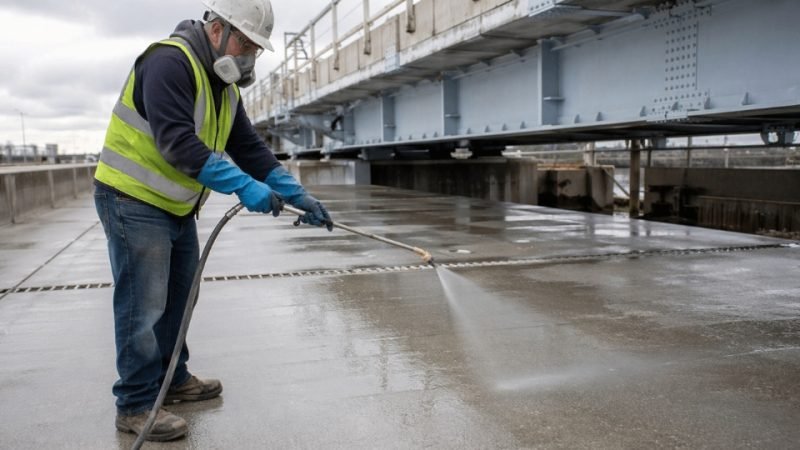
 by a worker in protective gear](https://siliconchemicals.com/wp-content/uploads/2026/06/silane-coupling-agent-cement-concrete-benefits-01-hero.jpg)
Molecular Mechanism: How [Silane Coupling Agents](https://siliconchemicals.com/silane-coupling-agents/) Bond to Cement and Concrete Substrates
Understanding why silane coupling agents work in cementitious systems requires following the chemistry through four discrete, sequential stages. Get any one of them wrong — wrong dilution, wrong pH window, wrong cure schedule — and you end up with self-condensed silane oligomers sitting loosely on the surface rather than covalently anchored to the substrate. The performance gap between correct and incorrect application is not marginal; it routinely determines whether a treated bridge deck still resists chloride ingress after five winters or needs remediation after two.
Stage 1 — Hydrolysis: Activating the Silane
In the presence of moisture, the alkoxy groups attached to the silicon atom (typically methoxy, –OCH₃, or ethoxy, –OC₂H₅) hydrolyze to form reactive silanol groups (Si–OH), releasing methanol or ethanol as byproducts. Reaction rate depends on moisture availability, temperature, and pH. Hydrolysis is essentially complete within minutes at the high-pH environment of fresh concrete (pH 12–13), which is one reason alkaline substrates are actually favorable — up to a point. The released alcohol is a normal byproduct at these concentrations and does not compromise the pore structure at typical treatment doses of 100–300 g/m², a range that shifts with substrate porosity and absorption rate.
Stage 2 — Hydrogen Bonding: Initial Substrate Attachment
The freshly formed Si–OH groups approach the substrate surface, where they form hydrogen bonds with surface hydroxyl groups present on calcium silicate hydrate (C–S–H), silica fume particles, fly ash cenospheres, and aggregate silica faces. This hydrogen-bonded intermediate is physically reversible — it’s an orientation step, not a permanent bond — but it positions the silane molecule correctly for the next stage. Substrates with higher hydroxyl density (silica fume-enriched mixes, for instance) provide more anchor points and tend to show stronger final bond performance.
Stage 3 — Condensation and Covalent Bond Formation
On drying or during thermal curing, condensation reactions eliminate water and form covalent Si–O–Si bonds between adjacent silanol groups and the substrate hydroxyls, or Si–O–Ca bonds at calcium-rich phases. This is the step that locks the molecule to the cement matrix permanently. The resulting bond energy is substantially higher than any physical adsorption mechanism, which explains why silane-treated surfaces retain their hydrophobic character through repeated wet-dry cycling and freeze-thaw exposure. An oligomeric siloxane network can also form laterally across the pore wall surface, reinforcing the interphase layer.
Stage 4 — Organofunctional Group Orientation
While the inorganic siloxane end anchors to the substrate, the organofunctional tail orients outward — away from the mineral surface and toward any organic phase present. This outward-facing group is where the engineering differentiation happens. Aminosilanes such as APTES react with epoxy resins and are the right choice for epoxy-coated rebar interface treatments or fiber-reinforced polymer (FRP) bonding applications. Epoxysilanes like GPTMS are suited to epoxy-mortar systems because the glycidoxy group opens under amine cure and forms a direct covalent link into the polymer network. Vinyl and methacryloxysilanes copolymerize into latex-modified mortars via free-radical mechanisms. For bulk water repellency without a polymer co-reactant — the most common construction application — isobutyltriethoxysilane (IBTEO) and similar alkylsilanes orient a hydrophobic alkyl tail into the pore space, blocking capillary suction while leaving the pore physically open.
That last distinction matters operationally. Unlike film-forming coatings that seal the concrete surface, the silane-treated pore wall is hydrophobic but vapor-permeable. Internally generated moisture vapor escapes; liquid water cannot enter by capillary action. Film-forming systems that trap internal moisture on young or damp concrete are a known source of blistering and delamination failures — a failure mode the silane interphase approach structurally avoids.
Why pH Control During Application Is Non-Negotiable
The same alkalinity that accelerates hydrolysis at pH 12–13 also promotes self-condensation: silanol groups react with each other rather than with the substrate. Concentrated silane solutions applied to fresh concrete can form a friable siloxane crust that peels rather than bonds. Diluted aqueous solutions at 0.5–2.0 wt% slow the self-condensation rate enough to allow sufficient time for substrate attachment. Solvent-borne systems offer a longer open time by slowing both hydrolysis and condensation simultaneously. For bulk admixture use — where silane is introduced into the mix rather than applied to the surface — dry powder forms using pre-hydrolyzed silane on a carrier (typically fumed silica or precipitated silica) sidestep the pH problem entirely, since reaction proceeds more slowly in the solid state and then at the distributed internal pore surfaces as mixing water activates it.
Silane coupling agents form covalent bonds to cementitious substrates through a hydrolysis-condensation sequence, not merely physical adsorption.True
The Si–O–Si and Si–O–Ca covalent bonds formed during condensation are well-documented in cement chemistry literature and explain the durability advantage of silane treatment over surfactant-based hydrophobic treatments, which wash out over time.
Waterproofing and Moisture Resistance: Reducing Water Absorption and Capillary Suction in Concrete
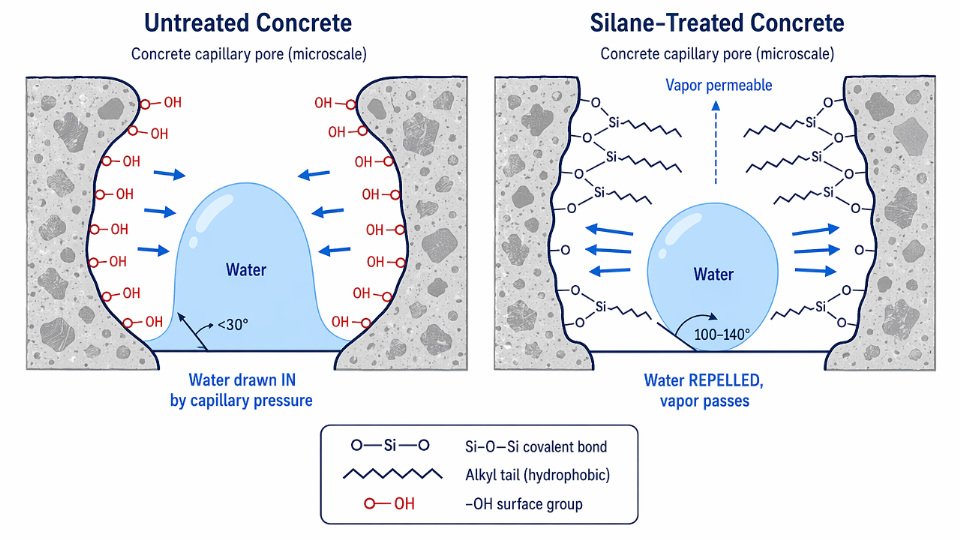
Concrete is not monolithic. At the pore scale it is a network of capillary channels, gel pores, and interfacial voids — and every one of those surfaces is covered with hydroxyl groups that are chemically hungry for water. Untreated cement paste exhibits water contact angles below 30°, sometimes below 10° on freshly cut surfaces. That means capillary pressure actively pulls moisture inward, driving chlorides, sulfates, and freeze-thaw cycles deep into the matrix. The physics here are unforgiving: capillary suction pressure scales with surface energy and inversely with pore radius, so finer, denser concrete is not immune — it simply has smaller pores generating even higher suction forces.
How Silane Treatment Reverses Capillary Pressure
When an alkylsilane such as isobutyltriethoxysilane (IBTEO) penetrates a concrete surface, the hydrolysis and condensation chemistry described in the bonding mechanism section produces a monolayer of covalently anchored, outward-facing alkyl groups lining the pore walls. The result is a contact angle shift to 100–140°, depending on alkyl chain length and surface roughness. At those angles, capillary pressure reverses sign — water is now repelled rather than drawn in. Critically, vapor-phase moisture can still pass. The pores are lined, not plugged, so the concrete retains its vapor permeability and internal pressure does not build up behind the treatment layer. That distinction matters enormously for bridge decks over occupied spaces and for below-grade walls in climates with hydrostatic pressure fluctuations.
Performance Benchmarks Worth Specifying
Surface impregnation with IBTEO at application rates of 150–200 g/m² (the exact rate depends on surface absorption class per EN 1504-2) consistently reduces 24-hour water absorption measured by ASTM C1585 by 70–90%. Lower-porosity substrates land toward the 70% end; open-textured or recycled-aggregate concrete can reach the upper bound. Two-coat wet-on-wet application recovers some of that variance by ensuring full pore saturation before the first coat skins over.
For integral admixture use — alkylsilane powder or liquid added at 0.5–1.0 wt% by cement mass during mixing — the mechanism distributes hydrophobic sites throughout the entire cross-section rather than concentrating them in a near-surface zone. Sorptivity coefficients measured per ASTM C1585 drop by 40–65% at these loading levels, with the higher end achieved when water-to-cement ratio is held below 0.45. This route is the standard choice for precast concrete products, fiber-cement cladding boards, and thin-section elements where re-application after installation is impractical or impossible.
Silane surface impregnation reduces 24-hour water absorption in concrete by 70–90% at application rates of 150–200 g/m²True
This range is consistent with published ASTM C1585 test results for alkylsilane-treated concrete specimens across multiple independent laboratory and field studies, contingent on substrate porosity class and correct application procedure.
Surface Impregnation Versus Integral Admixture: Choosing the Right Route
| Criterion | Surface Impregnation | Integral Admixture |
|---|---|---|
| Protection depth | 5–20 mm from surface | Full cross-section |
| Best application | In-service bridge decks, tunnels, retaining walls | Precast elements, fiber-cement board |
| Retreatment possible? | Yes, after 10–25 years field life | No — baked into the product |
| Sensitivity to substrate prep | High — surface must be clean, dry, pH Operational warning: Applying silane to concrete with active surface moisture or to substrates below 5°C significantly impairs penetration depth and polymerization completeness. Specify moisture content below 4% by mass at the application surface, verified by carbide bomb or oven-dry testing of cores, before committing to large-area treatment. |
Specification Standards and Compliance
For infrastructure projects tendered under European or internationally harmonized specifications, EN 1504-2 governs surface protection products for concrete and defines performance classes for hydrophobic impregnation (principle 1, method 1.3). German bridge engineers working under ZTV-ING — the supplementary technical conditions for infrastructure works — reference penetrating silane treatment as a standard surface protection measure for bridge decks in de-icing salt exposure classes. ISO 8179 covers chloride permeability testing of concrete pipes but is increasingly cited in broader durability assessment frameworks. SiliconChemicals’ IBTEO-based concentrates and alkylsilane surface treatment products are formulated to meet the active substance content, penetration depth, and water absorption reduction requirements specified under EN 1504-2 Class II, supported by third-party test reports available for specification review by procurement managers and project engineers.
Alkali-[Silica](https://siliconchemicals.com/silica/) Reaction Mitigation and Sulfate Attack Resistance: Silane Chemistry in Long-Term Concrete Durability
Waterproofing and chloride resistance get the headlines, but two slower-acting degradation mechanisms — alkali-silica reaction (ASR) and sulfate attack — are responsible for some of the most expensive structural rehabilitation projects in highway and infrastructure engineering. Both are fundamentally driven by moisture and ionic transport through the concrete pore network. That makes silane chemistry directly relevant, even if the connection is less immediately obvious than surface waterproofing.
Alkali-Silica Reaction: What Actually Happens and Where Silane Intervenes
ASR begins when reactive silica phases in certain aggregates — chert, opaline silica, volcanic glass, and some strained quartzite — come into contact with the highly alkaline pore solution typical of Portland cement systems (pH 13–13.8). The reaction produces an alkali-silica gel that is hygroscopic: it absorbs pore water, swells, and generates internal tensile stress. Once that stress exceeds the concrete’s tensile strength, you get the characteristic map cracking pattern — sometimes called “concrete cancer” in field reports — that compromises both structural integrity and aesthetics.
Silane treatment attacks this mechanism at its weakest point: water availability. By lining the capillary pore walls with a hydrophobic organosilane layer, you reduce the moisture reservoir the gel can draw on. Accelerated mortar bar tests run to ASTM C1260 protocol show suppression of volumetric expansion in the range of 30–60%, depending on aggregate reactivity class, silane penetration depth, and the degree of pore connectivity in the mix. That range is wide because a dense, low w/c mix with 0.38 water-to-cement ratio will already have restricted transport paths; the marginal benefit of silane treatment is smaller there than in a more porous, older-generation concrete where the pore structure is open.
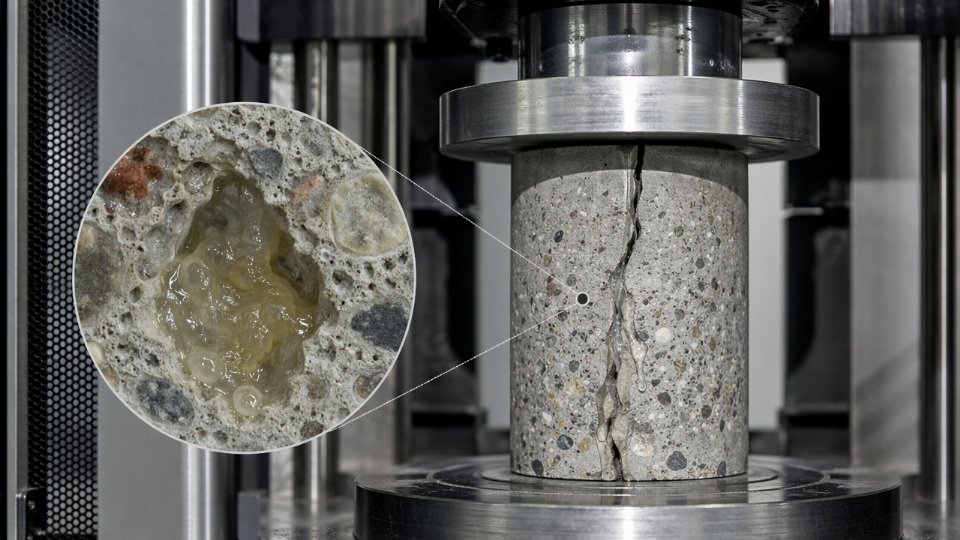
The complementary mechanism matters on existing structures. On ASR-damaged highway decks and bridge abutments where gel has already formed and cracks are open, silane consolidant treatments — typically low-viscosity monomeric isobutyltriethoxysilane or propyltriethoxysilane at 150–250 g/m² — reduce external water ingress that would otherwise continue feeding gel swelling. Monitored rehabilitation programs on North American and Northern European highway structures have documented crack width arrest and measurably reduced crack propagation rates over two-to-five-year observation windows following treatment. The treatment does not reverse damage already done, but it slows the progression enough to extend the serviceable life of the deck and defer replacement costs.
Silane surface treatment alone can fully stop ASR in concrete where reactive aggregates are already present and gel formation has begun.False
Silane treatment reduces moisture ingress and slows ASR gel swelling but cannot chemically reverse gel already formed or neutralize ongoing alkali-silica chemistry. It is a mitigation and service-life extension tool, not a cure. Structural assessment and, in severe cases, aggregate replacement or lithium-based treatments remain part of a complete ASR management strategy.
Sulfate Attack: A Different Chemistry, the Same Transport Problem
External sulfate attack follows a different reaction pathway. Sulfate ions from groundwater, seawater, or sulfate-bearing soils penetrate the concrete pore network and react with calcium aluminate hydrates to form ettringite, and with calcium hydroxide to form gypsum. Both reaction products are expansive. The result is surface scaling, delamination, and in advanced cases, complete disintegration of the cement paste — commonly observed in below-grade foundations and marine pile caps after 10–20 years of exposure without adequate protection.
Silane impregnation reduces sulfate ion ingress by keeping pore walls dry enough to limit the continuous aqueous film that drives ionic diffusion. Accelerated sulfate resistance tests — typically 6-month immersion in 5% sodium sulfate solution — show 25–45% reduction in linear expansion in silane-treated specimens compared to untreated controls. The actual benefit in field conditions depends on exposure head pressure, concrete cover depth, and whether the silane treatment was applied to a dry substrate (moisture content below roughly 6–8% by weight is the practical threshold for adequate penetration and cure in most impregnation products).
Synergy with Supplementary Cementitious Materials
One underutilized application that simultaneously addresses both ASR and sulfate durability is pre-treatment of supplementary cementitious materials (SCMs) — fly ash, metakaolin, ground granulated blast-furnace slag — with aminosilane or epoxysilane coupling agents before incorporation into the mix. The silane improves particle dispersion and strengthens the SCM-to-C-S-H interfacial bond zone. Fly ash in particular tends to form a weak interfacial transition zone with the cement paste when untreated; silane treatment improves wetting and creates covalent anchoring at the particle surface. The result is a denser, lower-permeability microstructure that reduces both the alkali concentration available for ASR and the rate of sulfate ingress — two durability problems addressed through a single mix-design modification.
Product Selection for Fine-Pore, High-Performance Mixes
Penetration depth is a decisive variable in all of these applications. Longer alkyl chain silanes — octyltriethoxysilane, for instance — provide excellent surface hydrophobicity but their molecular bulk limits migration into fine-pore, high-performance concrete with pore diameters below 10 nanometers. For these mixes, intermediate chain-length products offer a practical engineering advantage. SiliconChemicals’ methyltriethoxysilane (MTES) and propyltriethoxysilane grades are formulated with this trade-off explicitly in mind: lower molecular weight improves capillary transport into tight pore structures, while the methyl or propyl group still delivers sufficient hydrophobicity to suppress moisture-driven degradation mechanisms. In a high-performance concrete with water-to-binder ratio around 0.30–0.35, propyltriethoxysilane typically achieves penetration depths of 8–15 mm under ambient impregnation conditions — roughly 30–40% deeper than an equivalent octyl-chain product applied at the same dosage, though exact figures depend on surface preparation, substrate temperature, and application method.
Specifying silane chemistry for ASR and sulfate resistance requires thinking beyond the surface. The pore network is the real target, and the right silane grade — matched to pore size, exposure condition, and whether the application is new construction or rehabilitation — is what separates a durable treatment from one that looks good on paper but underdelivers in service.
Fiber-Reinforced Cement Composites: Silane Surface Treatment of Glass, Basalt, Carbon, and Polymer Fibers
Fiber reinforcement solves real problems in cement-based systems — crack bridging, tensile capacity, impact resistance — but only when the fiber actually transfers load into the matrix. That transfer depends entirely on interfacial bond quality, and that is where untreated fibers consistently fail.
Why Untreated Fibers Underperform in Alkaline Cement Matrices
Glass, basalt, and carbon fibers all carry polar surface groups — silanol (Si-OH), hydroxyl, or carboxyl functionalities — yet their surface chemistry is poorly matched to both the organic sizings applied during manufacture and the high-pH cement pore solution (pH 12–13). The consequence for E-glass and standard glass fibers is severe: alkaline hydrolysis attacks the silicate network at the fiber surface, and field studies on glass fiber reinforced concrete (GFRC) panels consistently document tensile strength losses of 50–70% within 6–12 months of exposure. Engineers call this alkali embrittlement, and it is the reason early GFRC facades from the 1970s and 1980s became a maintenance liability.
Carbon and basalt fibers are chemically more stable, but their smooth, low-energy surfaces provide minimal mechanical or chemical anchorage to cement hydrates. Pull-out test data on untreated carbon fiber in cementitious paste typically shows debonding at the fiber-matrix interface well before fiber fracture — meaning expensive high-modulus fiber is wasted. Polypropylene and PVA fibers present a different problem: their hydrophobic or semi-hydrophobic character repels the water-borne cement paste, leaving partially dry fiber bundles that become porosity sites rather than reinforcement.
Silane Selection by Fiber Type
Matching silane chemistry to fiber substrate is not a formulation detail — it is the engineering decision that determines whether the composite meets design life targets.
E-glass and AR-glass fibers require alkali-resistant sizings. Zirconium-modified vinylsilane or aminosilane systems are the industry-established choice: the silane couples the glass surface to cement hydrates while the zirconia modification densifies the surface layer against hydroxide attack. AR-glass (alkali-resistant glass containing ZrO₂) still benefits from aminosilane sizing to maximize bond efficiency even though the bulk fiber has built-in alkali resistance.
Basalt fibers respond strongly to aminopropyltriethoxysilane (APTES) applied at 0.5–1.0 wt% on fiber weight. At this loading — dependent on fiber surface area and sizing bath concentration — flexural strength of basalt fiber reinforced concrete improves by 35–50% versus untreated controls. The amine group reacts with calcium silicate hydrate (C-S-H) phases, creating genuine covalent linkage rather than mechanical interlock alone.
Carbon fibers demand epoxy-functional or amino-functional silane sizings. Interfacial shear strength with cementitious matrices improves by 40–60% compared to unsized fiber, bringing composite performance into alignment with what the fiber’s intrinsic modulus should theoretically deliver. The amino-functional route works well in Portland cement systems; epoxy-functional silanes suit sulfoaluminate cement matrices where the cure kinetics are faster.
PVA and polypropylene fibers benefit from hydrophilic silane sizing — methacryloxy or amino types — that raises surface energy sufficiently for cement paste to wet fiber bundle interiors. The practical result is fewer voids at the fiber-matrix interface and more consistent crack-bridging performance across a cross-section.
Fiber Type, Recommended Silane, and Performance Summary
| Fiber Type | Recommended Silane Functional Group | Dosage (wt% on fiber) | Flexural Strength Improvement (%) | Alkali Durability Rating |
|---|---|---|---|---|
| E-glass / AR-glass | Vinyl or amino (Zr-modified) | 0.3–0.8 | 20–40 | High (AR-glass) / Moderate (E-glass) |
| Basalt | Aminopropyl (APTES) | 0.5–1.0 | 35–50 | High |
| Carbon | Epoxy- or amino-functional | 0.5–1.5 | 40–60 | Very High |
| PVA | Amino- or methacryloxy-functional | 0.2–0.6 | 15–30 | Moderate–High |
| Polypropylene | Hydrophilic amino- or vinyl-functional | 0.2–0.5 | 10–25 | Moderate |
Improvement ranges depend on fiber volume fraction (typically 1–5 vol%), matrix w/c ratio, curing regime, and sizing bath pH. Higher dosages do not linearly increase performance — excess silane self-condenses and weakens the interphase.
Fiber-Cement Board and Thin-Sheet Composite Applications
The calcium silicate board market — cladding panels, flooring underlays, fire-rated partition systems — relies heavily on silane-treated cellulose and PVA fiber to control dimensional movement. Untreated fiber boards absorb moisture unevenly across the fiber-matrix interface, producing moisture expansion coefficients high enough to cause joint failure in ventilated facade systems after two to three wet-dry cycles. Silane-treated fiber boards show measurably tighter dimensional stability, reduced moisture expansion coefficients, and improved adhesion for surface coatings and paints — all commercially significant for specifiers who have to warranty facade performance over 20-plus-year design lives.
Silane treatment of basalt fibers at 0.5–1.0 wt% APTES loading improves flexural strength of basalt fiber reinforced concrete by 35–50% versus untreated controls.True
This range is consistent with published interfacial bond research on APTES-coated basalt fiber in Portland cement matrices, where amino-silanol condensation with C-S-H phases increases load transfer efficiency at the fiber-matrix interface.
Process and Application Considerations
Silane treatment of fibers is carried out by three main routes: aqueous dip-sizing at the fiber draw stage (most uniform, preferred for glass and basalt), spray application during chopped fiber preforming, or dry blending of pre-coated chopped fiber batches into the mix. Each route has trade-offs in coverage uniformity and shelf life of treated fiber.
The critical process control point — one that catches out inexperienced formulators repeatedly — is sizing bath pH. Optimal silane hydrolysis occurs at pH 4–5. Below pH 3, hydrolysis stalls; above pH 6, silanol groups self-condense before they can reach the fiber surface, depositing a weakly bonded polysiloxane layer rather than a covalently grafted one. That error does not show up in day-one quality checks; it shows up as premature delamination in accelerated aging tests or, worse, in-service failures six months after installation.
SiliconChemicals’ technical support team works directly with fiber manufacturers and composite board producers on sizing formulation — covering silane selection, bath concentration, pH control protocols, and compatibility with other sizing components such as film formers and lubricants.
Practical Application Methods, Dosage Guidelines, and Quality Control for Silane-Treated Construction Materials
Understanding the chemistry is one thing. Getting consistent, verifiable performance out of silane coupling agents on an actual job site or in a precast plant is where most projects succeed or fail. The three primary application routes each carry distinct advantages, constraints, and failure modes that every specifier needs to understand before writing a specification or placing a purchase order.
Surface Impregnation of Hardened Concrete
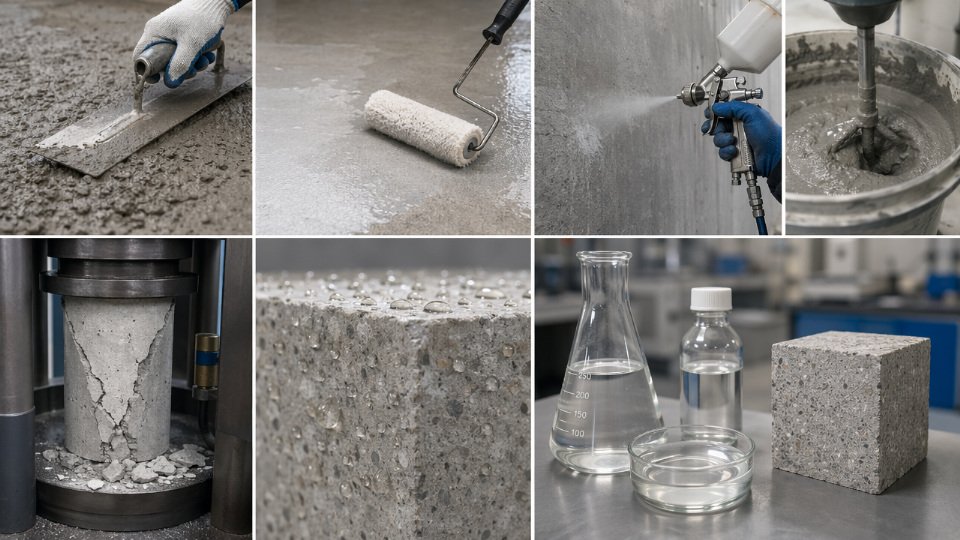
This is the most common route for existing infrastructure — bridge decks, parking structures, retaining walls, and tunnel linings. You apply an aqueous solution (typically 0.5–5 wt% active silane, depending on the product and substrate porosity) or neat liquid by brush, roller, or low-pressure airless spray. Penetration depth ranges from 5–20 mm; that range is not marketing variance — it depends directly on concrete porosity, w/c ratio, surface temperature, and whether a single or double coat is applied.
Two conditions are non-negotiable: the substrate must be dry (surface moisture content below 4–6%, verified by the CM carbide bomb method, not guesswork), and concrete must have reached minimum 28-day strength. Applying to green or damp concrete traps water in the pore network and prevents the hydrolysis-condensation reaction from completing against the silanol surface sites. Ambient temperature below 5°C slows the reaction to the point where surface washoff from overnight dew can strip most of what you applied.
Surface preparation is the step most frequently cut short. Laitance, curing compounds, carbonation layers, and existing sealers all block penetration. For dense or carbonated surfaces, light shot blasting or acid etching to achieve CSP 1–3 per ICRI 310.2 is not optional — it’s the difference between 8 mm penetration and 2 mm. Open the surface, then treat it.
Integral Admixture Addition to Fresh Concrete
Adding silane directly to the mix — either as liquid dosed at 0.3–1.5 wt% by cement mass, or as encapsulated powder released during mixing — distributes protection uniformly through the entire matrix rather than relying on surface penetration geometry. This approach is well-suited for precast elements, prestressed units, and thin sections where post-cure impregnation is impractical. The trade-off is that you need accurate dosing equipment at the batching plant and careful quality checks to confirm uniform dispersion; if the silane flash-hydrates during mixing before it contacts aggregate surfaces, a portion of the active functional groups are consumed.
Aggregate Pre-Treatment
Pre-treating coarse and fine aggregates with dilute silane solution before batching densifies the interfacial transition zone — the weakest microstructural link in conventional concrete. This technique sees its strongest justification in high-performance bridge deck and marine concrete where ITZ cracking is the primary chloride ingress pathway. It adds a handling step and requires aggregate drying before batching, which increases process complexity and cost, but for marine splash-zone or deicing-salt-exposed decks the durability return typically justifies both.
Dosage Optimization in Practice
Start with the manufacturer’s recommended rate — 150–200 g/m² is a reasonable baseline for surface waterproofing with isobutyltriethoxysilane (IBTEO) on standard-porosity concrete. Then verify against the actual substrate. Run absorption capacity tests per EN 13580 (water absorption under low pressure) and ASTM C1585 before committing full quantities to a large pour or treatment campaign. High w/c concrete above 0.55 has a substantially larger connected pore network and will simply drink more silane; applying the standard rate to a porous substrate leaves the deeper pore structure untreated and produces a false sense of protection.
Silane surface impregnation on hardened concrete always requires a dry substrate below 5% surface moisture for effective penetration and bonding.True
Moisture above this threshold competes with silane hydrolysis products for silanol bonding sites and physically blocks pore entry, reducing penetration depth and long-term adhesion — a consistent finding in ASTM C1202 and EN 13580 comparative test data.
Safety, Handling, and Storage
Most monomeric alkylsilanes carry flash points in the 25–65°C range — treat them as flammable solvents, not water-based paints. PPE minimum is nitrile gloves, safety glasses, and chemical-resistant clothing. Keep containers sealed; moisture ingress begins premature hydrolysis and shortens shelf life from the typical 12–24 months to weeks. Storage temperature between 5–30°C, away from direct sunlight and ignition sources. SiliconChemicals supplies full Safety Data Sheets, Certificates of Analysis, and REACH/RoHS compliance declarations with every shipment — request these before the material reaches site, not after an incident report.
Quality Control at Every Stage
Incoming material checks should include GC purity confirmation, refractive index, and specific gravity against the COA values. A five-minute refractive index measurement at goods receipt catches substitution or degraded material before it goes into a bridge deck. Post-application verification uses a water repellency spot test as the fast screen, followed by BCA water absorption per EN 13580 for quantified acceptance. Depth of penetration is confirmed by fluorescence microscopy on core samples or phenolphthalein indicator sections cut 48 hours after treatment. Maintain treatment records capturing ambient temperature, RH, substrate moisture at time of application, batch numbers, and applicator identity — tied back to SiliconChemicals’ production lot traceability — so any future in-service performance question has a documented answer.
Frequently Asked Questions About Silane Coupling Agents in Cement and Concrete Applications
What is the difference between a [silane coupling agent](https://siliconchemicals.com/silane-coupling-agents/) and a silicone waterproofing agent for concrete?
The distinction matters enormously at specification time, and confusing the two is one of the most common procurement errors in construction chemistry.
Silane coupling agents are low-molecular-weight monomers or short-chain oligomers — typically C8 or C6 alkyltrialkoxysilanes, molecular weights in the 200–350 g/mol range. That small size allows them to penetrate concrete pores to depths of 5–20 mm depending on concrete porosity and application method, where they hydrolyze, condense, and form covalent Si–O–Si bonds with the calcium silicate hydrate matrix. The result is a hydrophobic zone built into the substrate structure itself, not sitting on top of it. Critically, the treated concrete remains vapor-permeable: water vapor transmits outward while liquid water ingress is blocked. On aging bridge decks or below-grade walls where trapped moisture needs an escape path, this breathability prevents the blistering and spalling that film-based products can cause.
Conventional silicone waterproofers — PDMS emulsions, silicone resin coatings — are film formers. Their higher molecular weight prevents deep penetration. Performance in the first few years can look comparable on paper, but these coatings are vulnerable to UV degradation, thermal cycling, and surface abrasion. Delamination then exposes bare concrete with no residual protection. For bridge decks in freeze-thaw climates or coastal parking structures, that failure mode is expensive.
Penetrating alkylsilane treatments provide durable breathable water repellency through covalent bonding with the concrete substrate, unlike surface-applied silicone film coatings which lack deep penetration.True
Established through the hydrolysis-condensation-grafting mechanism of trialkoxysilanes on silanol-rich cementitious surfaces, documented in EN 1504-2 and peer-reviewed durability studies on bridge deck treatments.
Can silane coupling agents be added directly to a concrete mix at the batching plant?
Yes, and this is an increasingly common approach in precast production and ready-mix supply for aggressive-environment infrastructure. Encapsulated silane powder admixtures and liquid alkylsilane dispersions are both formulated for direct batching at approximately 0.3–1.5 wt% by cement weight — the precise dose depends on target permeability class and cement content. Liquid silane should be pre-diluted or introduced via mixing water to avoid concentration at aggregate surfaces before adequate dispersion occurs.
One operational warning: aminosilanes and epoxysilanes at elevated dosages can interact with calcium aluminate phases in Portland cement, slowing hydration and extending initial set times by 30–90 minutes in some trial mixes. Always run a trial mix at intended dosage and ambient temperature before committing to a full production run.
How long does silane treatment last on exterior concrete surfaces?
Field data from bridge deck and parking structure monitoring programs in North America and northern Europe consistently document 10–25 years of effective chloride and moisture resistance from properly applied penetrating alkylsilane treatments — isobutyltriethoxysilane (IBTEO) and octyltriethoxysilane being the most widely evaluated grades. Longevity sits at the higher end of that range on dense, low-porosity concrete with initial surface preparation and adequate dosage (150–300 g/m²). High-traffic surfaces subject to mechanical abrasion, or substrates with surface cracking that bypasses the treated zone, fall toward the lower end. A simple water-bead spot test every five years will confirm whether residual hydrophobicity remains adequate or a maintenance dose is warranted.
Which [silane coupling agent](https://siliconchemicals.com/silane-coupling-agents/) is best for glass fiber reinforced concrete?
For alkali-resistant (AR) glass fiber in GFRC applications, vinyltrimethoxysilane (VTMS) and aminopropyltriethoxysilane (APTES) are the most established functional grades. Aminosilanes address both the mechanical bond strength and long-term alkali durability of the fiber-matrix interface — the primary degradation mechanism for glass fiber in high-pH cementitious matrices. SiliconChemicals supplies both grades with technical data sheets referencing ASTM C1228 and EN 14649 fiber durability standards.
Are silane coupling agents compatible with supplementary cementitious materials?
Fly ash, silica fume, metakaolin, and GGBS all carry reactive surface silanol groups that readily react with trialkoxysilane molecules under normal processing conditions. Pre-treating high-volume fly ash before batching — or adding silane via mixing water in a high-SCM mix — improves particle dispersion, lowers water demand modestly, and strengthens the pozzolan–C–S–H interfacial zone, which is typically the weakest link in high fly ash replacement mixes.
What certifications and standards do SiliconChemicals’ silane products meet?
Construction-grade silanes from SiliconChemicals are manufactured under ISO 9001:2015 quality management systems and independently tested against EN 1504-2 (surface protection of concrete structures), ASTM D7957, and ASTM C1202 rapid chloride permeability. Each shipment is accompanied by a Certificate of Analysis, Safety Data Sheet, and REACH compliance documentation. For regional infrastructure projects requiring AASHTO M 300, AS/NZS, or JIS qualification, custom certification support is available through the technical sales team on request.
Specifying and Sourcing Silane Coupling Agents: What Construction Material Formulators Need to Know About Supply Chain and Product Selection
Knowing that silane chemistry works is one thing. Knowing which grade to buy, in what form, from where, and at what cost structure is the decision that actually determines whether your formulation performs in the field or your project stays on budget. This section maps the commercial reality.
The Seven Key Grades and Their Construction Functions
Not all silane coupling agents are interchangeable, and using the wrong grade wastes money at best and compromises performance at worst.
Isobutyltriethoxysilane (IBTEO) is the workhorse for surface waterproofing of hardened concrete and masonry. Its C4 alkyl chain provides deep capillary penetration combined with strong hydrophobicity — the standard choice for bridge decks, parking structures, and retaining walls where surface-applied treatment is the only practical intervention.
Propyltriethoxysilane trades some penetration depth for lower cost per kilogram. For bulk waterproofing admixture applications — where the silane is dosed into ready-mix rather than applied to the surface — this cost-optimized grade makes economic sense when waterproofing performance targets are moderate rather than extreme.
Octyltriethoxysilane carries a longer C8 alkyl chain that resists leaching better in very dense, low-porosity high-performance concrete. When w/c ratios drop below 0.35 and standard impregnation agents simply sit on the surface rather than penetrating, octyltriethoxysilane’s lower vapor pressure and surface tension give it a meaningful advantage.
3-Aminopropyltriethoxysilane (APTES / A-1100) is the grade of choice for fiber sizing, epoxy-bonded repair mortars, and polymer-modified systems. Its primary amine group reacts directly with epoxy hardeners and glass fiber surfaces, making it essential wherever organic binders meet inorganic substrates.
3-Glycidoxypropyltrimethoxysilane (GPTMS / A-187) covers epoxy mortar systems, tile adhesives, and coating adhesion promoters. The epoxy functionality gives it reactivity with amine-cured coatings and a wide compatibility window across adhesive chemistries.
Vinyltrimethoxysilane (VTMS / A-171) is specified primarily for glass fiber sizing in fiber-cement board production and polyolefin crosslinking. Where a customer is producing GRC panels or fiber-cement cladding at volume, VTMS is typically the correct first choice before considering anything more expensive.
Methyltriethoxysilane (MTES) functions as a silicone resin intermediate and as a hydrophobic surface modifier for silica fume. In densified silica fume intended for high-performance concrete admixture packages, MTES treatment controls moisture uptake during storage and improves dispersibility at the batching plant.
Product Form: The Operational Decision That Gets Overlooked
Grade selection is half the job. Form selection matters equally at the plant level.
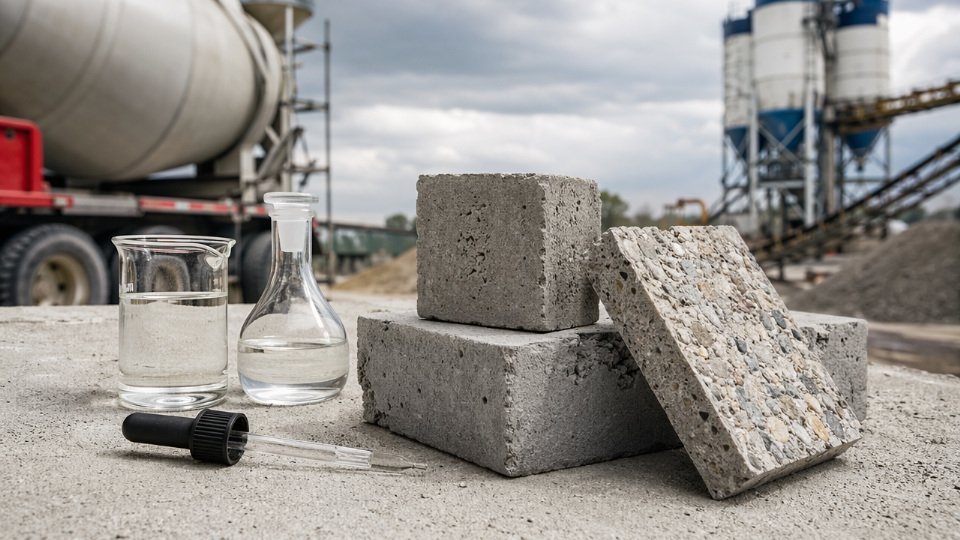
Neat liquid silane carries the highest active content per kilogram, minimizing freight cost — critical when shipping container loads intercontinentally. Large-scale surface treatment contractors standardize on neat product for exactly this reason. Aqueous silane concentrate reduces flammability classification concerns and simplifies applicator handling, which matters for projects where site safety protocols or local regulations restrict solvent-borne materials. Encapsulated silane powder solves a real batching plant problem: dosing a volatile liquid into a rotating drum mixer requires specialized handling equipment and training. Encapsulated powder flows like cement, disperses uniformly, and extends shelf life to 12–18 months under normal warehouse conditions. Oligomeric silane formulations address very low porosity substrates where monomeric silane evaporates before meaningful penetration occurs — reduced volatility translates directly into deeper effective treatment depth.
China-Origin Supply: The Structural Cost Advantage
China accounts for over 70% of global methylchlorosilane monomer production, giving Chinese silane manufacturers a structural feedstock cost advantage over Western European and North American producers.True
China's large integrated silicone industrial clusters in Xinfu, Shandong, and other regions have created dominant global capacity in methylchlorosilane production, the precursor to virtually all commercial organosilanes, making this supply chain position a documented industrial reality rather than marketing language.
That feedstock position translates to realized cost differences of 15–35% on equivalent-purity product compared to European or North American supply — a range that depends on the specific grade, contract volume, and current energy cost differentials. SiliconChemicals maintains GC purity specifications above 97% across its construction silane portfolio with batch-to-batch consistency verified by in-house and third-party analytical testing, meaning buyers are not trading quality for price.
Technical Support That Reduces Your Development Risk
For formulators, the commercial relationship matters as much as the product datasheet. SiliconChemicals provides free sample quantities for laboratory qualification testing, applications engineering consultation covering dosage optimization and compatibility assessment, and co-formulation development for customers building proprietary waterproofing systems or repair mortar product lines. Third-party test reports are available for compliance documentation purposes. Dedicated account management covers annual contract customers across more than 30 countries.
Starting the Conversation Efficiently
Whether you are specifying silane treatment for a bridge rehabilitation, developing a new waterproofing admixture package, or re-sourcing an existing silane supply line, three inputs allow SiliconChemicals to return a product recommendation and commercial quotation within 48 hours: the target application (surface impregnation, ready-mix admixture, or fiber sizing), the substrate description (concrete compressive strength, w/c ratio, aggregate type), and the performance target (chloride resistance class, water absorption limit, or strength improvement threshold). That specificity eliminates rounds of back-and-forth and gets qualified samples into your laboratory faster.