Silane compounds show up across semiconductor fabs, rubber compounding lines, adhesive formulations, and surface-treatment operations — and their hazards are frequently underestimated until something goes wrong. A maintenance technician who dismisses a small leak of monosilane (SiH₄) as a “minor gas issue” may be seconds away from an auto-ignition event that shuts down a production cell for days. Organosilane coupling agents get handled like ordinary solvents, yet flash points as low as 16°C mean a static discharge during drum transfer is a credible ignition source. The financial exposure runs from scrapped batches and equipment repair into regulatory fines and lost customer contracts.
The side effects of silane depend heavily on which silane compound is involved. Monosilane (SiH₄) is pyrophoric — it can self-ignite in air above roughly 1.5% v/v with no spark required — and poses acute inhalation risk managed against a NIOSH ceiling of 0.5 ppm. Organosilane coupling agents cause skin and respiratory irritation, and carry fire risk tied to flash points ranging from 16°C to 73°C depending on alkoxy chain length. Chronic exposure data for many specialty silanes remains limited.
What makes silane safety genuinely difficult is that the hazard profile shifts depending on whether you are working with an inorganic silane gas, an aminosilane coupling agent, a chlorosilane intermediate, or a siloxane oligomer — and most generic safety training treats them as a single category. The sections below break that down by compound class, exposure route, and the operational decisions that separate a controlled process from an incident report.
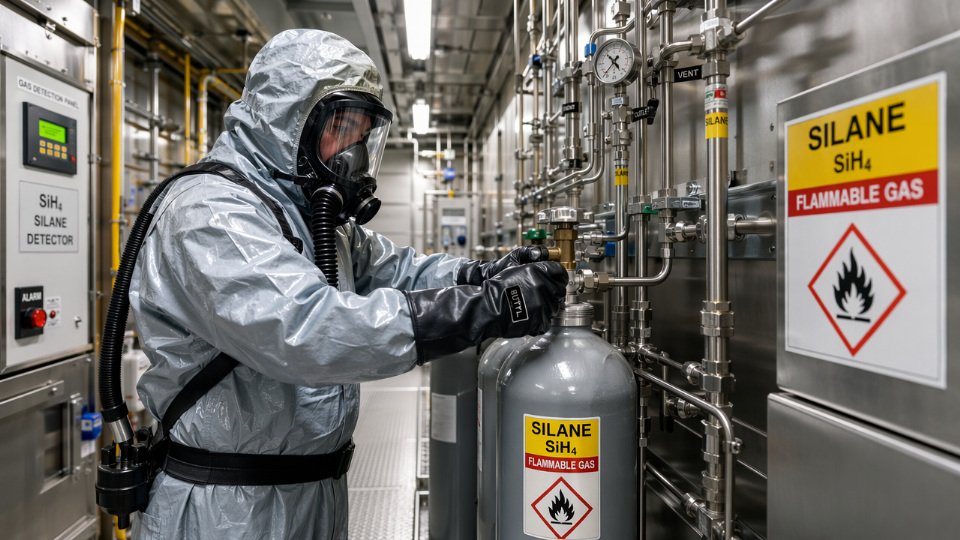
Acute Inhalation Toxicity: Respiratory and Neurological Effects of Silane Vapor Exposure
Inhalation is the dominant exposure route across virtually every industrial setting where silanes are handled — semiconductor fabs cycling monosilane cylinders, coatings lines running alkoxysilane primers at elevated temperature, and compounding facilities processing chlorosilane intermediates. The hazard profile differs sharply depending on which subclass you are dealing with, and conflating them leads to dangerously inadequate emergency response.
Monosilane (SiH₄): Asphyxiation and CNS Depression
Monosilane presents a combined hazard. At moderate concentrations it acts as a simple asphyxiant, displacing oxygen in confined or poorly ventilated spaces — a cylinder change inside a gas cabinet that lacks adequate purge flow can push local oxygen levels below 19.5% before any detector alarm trips. At higher acute doses, SiH₄ causes direct pulmonary irritation and, in animal inhalation studies, central nervous system depression characterized by ataxia and progressive sedation leading toward respiratory arrest.
NIOSH has not formally established an IDLH for monosilane. Industry practice — reflected in producer safety bulletins and semiconductor fab SOPs — treats concentrations above 5 ppm as immediately dangerous to life or health pending better human data. The NIOSH REL ceiling sits at 0.5 ppm, a figure calibrated for acute hazard management rather than chronic exposure, which signals how little margin exists between acceptable exposure and serious risk.
NIOSH has not established a formal IDLH value for monosilane (SiH4), and the 5 ppm immediately dangerous threshold used in semiconductor fabs comes from industry guidance rather than an official NIOSH designation.True
As of current NIOSH documentation, no IDLH is listed for SiH4. Semiconductor and specialty gas industries have adopted conservative internal thresholds based on toxicological inference and producer guidance, not a codified regulatory figure.
Chlorosilanes: Hydrolysis in the Airways
Chlorosilanes — trimethylchlorosilane, trichlorosilane, silicon tetrachloride — are corrosively reactive in the presence of moisture. When inhaled, they hydrolyze almost instantaneously in the mucous membranes of the upper airways and lung epithelium, releasing hydrochloric acid in situ. The result is chemical pneumonitis that can progress to pulmonary edema, a fluid-in-lung condition carrying genuine mortality risk.
Trimethylchlorosilane has a rat LC50 of approximately 450 ppm over a 4-hour exposure — a number that sounds reassuringly high until you calculate how fast concentrations build during a flange leak or reactor overpressure event in a room with 200–400 m³ of air volume. A modest release of 500 g can approach dangerous airborne concentrations within minutes in a space that lacks forced exhaust ventilation.
The symptom timeline is the operationally critical piece. From 0 to 2 minutes after exposure, workers notice burning in the nose, throat, and eyes — irritation intense enough to drive self-rescue. Lacrimation and productive coughing develop between 2 and 10 minutes. Then, often, symptoms plateau or partially resolve. This apparent recovery is deceptive. Pulmonary edema from deep-lung HCl formation frequently has a delayed onset of 4 to 24 hours post-exposure. Workers who feel better at the 30-minute mark routinely refuse transport to hospital. This “walking wounded” pattern is well-documented in chlorine and HCl incident literature and applies equally to chlorosilane exposures. An occupational physician who receives a symptomatic worker two hours after a chlorosilane exposure and finds a clear chest X-ray cannot use that finding to rule out subsequent deterioration.
Operational warning: Any confirmed chlorosilane inhalation exposure — regardless of symptom resolution at the scene — requires hospital observation for a minimum of 24 hours with serial chest auscultation and pulse oximetry. Document the specific compound for the treating physician; generic “silane exposure” on a referral note is clinically useless.
Alkoxysilanes: The Metabolic Byproduct Layer
Methoxy-functional silanes such as APTES (3-aminopropyltriethoxysilane is ethoxy-functional; trimethoxymethylsilane is the relevant methoxy example) and other methoxysilanes hydrolyze during processing or in humid air to release methanol. At the vapor concentrations encountered during open mixing or spray application at temperatures above 40–60°C, methanol contribution to total exposure is not negligible. OSHA PEL for methanol is 200 ppm; the ACGIH TLV-TWA is 200 ppm with a skin notation. Ethoxy-functional silanes yield ethanol instead, which carries a considerably lower metabolic toxicity burden. The practical implication: when specifying alkoxysilane coupling agents for high-temperature application processes, the alkoxy group chain length matters for both flash point (ranging 16°C to 73°C across the organosilane class) and worker metabolic exposure.
Immediate Response Protocol
Remove the worker from the exposure atmosphere immediately — do not wait for confirmed instrument readings. Administer supplemental oxygen at 10–15 L/min via non-rebreather mask. Transport to a medical facility regardless of symptom status; the receiving physician needs chest X-ray, arterial blood gas analysis, and complete exposure history including the specific silane compound, estimated concentration, and duration. NIOSH Pocket Guide entries, ECHA REACH dossier toxicological summaries for registered silanes, and producer emergency response bulletins should be pre-positioned in the facility medical response plan — not retrieved during an incident. The identity of the silane determines whether treatment focuses on HCl neutralization protocols, oxygen displacement management, or methanol metabolic support, and guessing costs time that a deteriorating patient does not have.
Skin and Eye Contact Hazards: Corrosive Burns, Sensitization, and Dermatitis Risks
Direct contact with silanes is the second most common exposure route on production floors, yet it receives far less systematic attention than inhalation. That gap is dangerous. The hazard profile varies sharply across silane subclasses — from immediate, severe chemical burns with chlorosilanes to insidious sensitization with aminosilanes — and handling protocols must reflect those differences precisely.
Chlorosilanes: Rapid Hydrolysis and Chemical Burns
When liquid chlorosilanes such as trimethylchlorosilane (TMCS) or dimethyldichlorosilane (DMDCS) contact skin or mucous membranes, they hydrolyze on contact with moisture — including sweat and tissue fluid — generating hydrochloric acid in situ. The reaction is fast enough that burning sensation, erythema, and early blister formation can appear within 30 to 90 seconds of contact. Severity is comparable to a concentrated mineral acid burn, and the clinical picture worsens if the material penetrates clothing or footwear and continues reacting before the worker notices.
Eye contact is the most catastrophic scenario. Liquid TMCS or DMDCS reaching the eye can cause permanent corneal damage within seconds. The standard protocol — a minimum of 15 continuous minutes of low-pressure water flushing, with eyelids held open — is not negotiable. Stopping at five minutes because the burning subsides is a common and costly mistake; subsurface damage continues after the surface sensation fades.
Nitrile gloves provide adequate protection for brief handling of chlorosilanes.False
Nitrile rubber has a permeation breakthrough time of typically 5–15 minutes against many chlorosilanes under continuous contact conditions. For any chlorosilane handling, butyl rubber or laminated multi-layer film gloves such as Silver Shield are required. Nitrile is appropriate only for alkoxysilanes with low dermal absorption potential.
Aminosilane Sensitization: The Delayed, Cumulative Risk
Aminofunctional silanes including APTES (3-aminopropyltriethoxysilane) and AMEO carry EU CLP Skin Sens. 1 classification — meaning a single sensitizing exposure can establish immune memory, and every subsequent exposure, even at trace concentrations, can trigger a full allergic contact dermatitis response. The mechanism is Type IV hypersensitivity: T-cell mediated, delayed by 12–72 hours, and not concentration-dependent once sensitization is established.
In rubber compounding and adhesive manufacturing, workers mix aminosilane coupling agents repeatedly over months or years. Sensitization may develop quietly after dozens of low-level exposures with no acute reaction — then suddenly produce severe dermatitis from a contact level that caused no response the week before. This progression is why pre-placement patch testing for roles with routine aminosilane contact makes operational sense, not just regulatory sense.
Alkoxysilanes: Low Severity Does Not Mean No Risk
VTMS (vinyltrimethoxysilane) and TEOS (tetraethyl orthosilicate) are classified as skin irritants rather than corrosives, and they are frequently handled without gloves on busy production lines. The consequence is chronic low-grade barrier disruption — cracked, fissured skin that becomes a portal for sensitizing compounds handled later in the same shift. Irritant contact dermatitis from repeated alkoxysilane exposure is underreported because workers tolerate it as normal dryness.
Glove Selection by Silane Subclass
| Silane Subclass | Example | Minimum Glove Material | Typical Breakthrough Time |
|---|---|---|---|
| Chlorosilanes | TMCS, DMDCS | Butyl rubber or Silver Shield laminate | >4 hours (butyl, 4 mm) |
| Aminosilanes | APTES, AMEO | Nitrile (≥0.3 mm) + frequent change | 30–60 min; depends on concentration |
| Alkoxysilanes | VTMS, TEOS | Nitrile (0.2 mm minimum) | 1–3 hours; verify with supplier data |
| Chloromethylsilanes | CMTMS | Butyl rubber | >4 hours (butyl, 4 mm) |
| [Silane coupling agents](https://siliconchemicals.com/silane-coupling-agents/) (epoxy-functional) | GPS (GLYMO) | Nitrile or neoprene | 30–90 min |
Breakthrough times depend on glove thickness, temperature, and whether the silane is diluted in solvent. Treat supplier permeation data as a starting point; reduce change intervals by 30–50% in hot environments above 35°C.
Occupational Skin Surveillance
A functional program includes three elements. Pre-placement patch testing with a standard silane panel (aminosilane series minimum) for workers entering compounding, surface treatment, or coating roles. Periodic dermatological review — quarterly visual skin checks are practical for high-exposure roles; annually for incidental contact roles. Incident reporting thresholds: any redness, rash, or pruritus appearing within 72 hours of silane contact should trigger a documented review rather than waiting for a formal injury report.
Medical removal from aminosilane exposure should follow confirmed sensitization, because continued low-level contact reliably worsens the condition. Reassigning a sensitized worker to a silane-free task early avoids progressive disability and avoids the liability of a worsening occupational skin disease claim.
First Aid: What Not to Do
For chlorosilane burns, do not apply sodium bicarbonate or any neutralizing paste — the exothermic neutralization reaction adds a thermal injury component to the chemical burn. Flush with large volumes of running water while removing contaminated clothing simultaneously, transport to a burn unit, and send the product SDS with the patient. For suspected aminosilane sensitization incidents, document time, product, body area, and symptom onset precisely — that record becomes the clinical basis for patch test correlation and exposure reassignment decisions.
Systemic and Chronic Health Effects: Liver, Kidney, Reproductive, and Carcinogenicity Data
Acute exposure events get the attention — but it is chronic, low-level exposure that builds the liability case over years. Occupational hygienists running long-term risk assessments need more than a GHS pictogram; they need the underlying toxicology data, its limitations, and a defensible rationale for protection factors.
Liver and Kidney Toxicity from Chlorosilane Metabolites
Repeated-dose animal studies submitted under REACH registration dossiers for several methylchlorosilanes show hepatotoxic and nephrotoxic signals at high oral and inhalation doses. The mechanism most cited involves hydrolysis of the Si–Cl bond in biological fluids, generating methylsilanetriol intermediates. At low incidental exposures these intermediates clear efficiently. At sustained elevated doses — modeled in 90-day rat gavage studies — soft-tissue accumulation has been reported, with elevated serum ALT and creatinine as the primary markers. The no-observed-adverse-effect levels (NOAELs) from these studies typically fall in the range of 10–50 mg/kg/day depending on the specific chlorosilane structure and route of administration; the highest-concern compounds sit at the lower end of that range.
The practical implication for procurement: a solvent that uses trimethylchlorosilane as a reactive intermediate in a batch reactor exposes operators to residual vapor during vessel opening. Episodic but repeated exposure over months is exactly the exposure profile these animal studies were designed to mimic. Adequate closed-loop transfer systems are not optional in that setting.
Reproductive and Developmental Toxicity
Several silane precursors used in semiconductor-grade processes — including certain alkoxysilane monomers — carry EU CLP Repr. 2 classifications (“suspected human reproductive toxicant”) based primarily on animal developmental studies showing embryotoxic effects at maternally toxic doses. California Proposition 65 listings have captured a subset of these compounds under the reproductive toxicity endpoint. The critical caveat: the evidence base is almost entirely from high-dose animal work. Human epidemiological data is sparse to nonexistent for most specialty organosilanes.
Several organosilane compounds carry EU CLP Repr. 2 reproductive toxicity classifications based on animal data.True
REACH dossiers for compounds such as certain alkoxysilane monomers include Repr. 2 hazard classifications derived from developmental toxicity studies in rodents, consistent with CLP Regulation (EC) No 1272/2008 criteria.
For workers of reproductive age — particularly in semiconductor fab environments or compounding operations — the precautionary communication is straightforward: Repr. 2 classification means substitution or tight engineering controls, not reliance on administrative reminders.
Carcinogenicity Status and the Crystalline [Silica](https://siliconchemicals.com/silica/) Complication
Most common industrial silanes — SiH4, VTMS, APTES, and the major chlorosilane series — are not classified as known or probable human carcinogens under IARC Group 1 or 2A. That is the clean answer. The more complicated answer involves what happens downstream.
In high-temperature CVD processes and certain reactive flame-treatment applications, silane hydrolysis and condensation on hot surfaces can generate amorphous silica that, under sufficient thermal energy, converts partially to crystalline forms — cristobalite being the most documented. Crystalline silica inhaled from occupational sources carries IARC Group 1 classification. This is not a silane classification — it is a process byproduct classification — but the distinction means little to a worker breathing the particulate.
Operational warning: Any process running silane chemistry above roughly 700–900 °C in an oxidizing atmosphere warrants crystalline silica assessment in the breathing zone, not just bulk silane vapor monitoring.
Chronic Inhalation: A Worked Scenario
Consider a sealant applicator using acetoxy-cure silicone in an enclosed space — a common scenario in construction finishing. Acetoxy-cure systems release acetic acid and residual organosilane byproducts as the crosslinking proceeds. In a poorly ventilated room (air exchange rate under 0.5 ACH), applying product continuously over a full shift, estimated acetic acid TWA can reach 6–12 ppm against an OSHA PEL ceiling of 10 ppm. The organosilane vapor contribution adds an incompletely characterized chronic burden on top. The most at-risk endpoint over months of this pattern is upper respiratory mucosa irritation and, given the reproductive toxicity flags on some alkoxysilane byproducts, systemic reproductive exposure that no single shift measurement would capture.
Biomonitoring: What Urinary Silicon Can and Cannot Tell You
Urinary silicon and silanol metabolite measurement has been explored as a biological exposure index, but it is not yet a validated BEI in ACGIH or OSHA frameworks. Background silicon excretion from dietary sources (silica in food and water) creates a high and variable baseline — typically 10–40 mg/day in adults — that makes occupational increment detection unreliable except at clearly elevated exposures. Some research groups have investigated specific organosilanol species by GC-MS as more selective markers, but analytical sensitivity and interlaboratory reproducibility remain insufficient for routine industrial hygiene use. Until validated BEIs exist, air monitoring supported by dermal and biological spot-checks remains the primary chronic exposure tool.
Data Gaps and the Precautionary Position
Many specialty organosilanes — particularly newer surface-treatment agents, adhesion promoters for EV battery systems, and low-VOC coupling agent formulations — simply lack complete 90-day or two-generation reproductive datasets. REACH registration thresholds mean that compounds manufactured below 10 tonnes per year may have minimal chronic toxicology on file. Procurement managers sourcing from any supplier should request the full REACH registration dossier or equivalent safety assessment, not just the SDS. Where reproductive or chronic organ toxicity data are absent, apply the most protective exposure controls available — the cost of retrofitting ventilation is measurably lower than the liability exposure from an uncharacterized chronic hazard.
Fire, Explosion, and Pyrophoric Hazards: The Most Immediately Life-Threatening Silane Risk
Of all the hazards silane compounds present, fire and explosion kill fastest and at the largest scale. Inhalation toxicity unfolds over minutes to hours; a pyrophoric ignition event unfolds in milliseconds.
Monosilane Pyrophoricity: Why Standard Flammable Gas Protocols Fail
Monosilane (SiH₄) does not need a spark, a hot surface, or a static discharge to ignite. When its concentration in air exceeds approximately 1.5% v/v, it undergoes spontaneous oxidation — the silicon-hydrogen bonds react exothermically with oxygen, producing silicon dioxide (SiO₂) particulate and a significant heat release. This is not a flash point phenomenon. Flash point is a liquid-phase property describing the minimum temperature at which vapor can be ignited by an external source. Pyrophoricity is a different mechanism entirely: the gas auto-ignites without any external energy input.
This distinction has direct operational consequences. Standard flammable gas handling programs center on ignition source elimination — bonding, grounding, explosion-proof fixtures, hot-work permits. For monosilane, those controls are necessary but insufficient on their own. Even a perfectly grounded, spark-free system will produce a fire if a leak reaches the auto-ignition threshold. The engineering priority shifts from ignition source control to leak prevention and real-time concentration monitoring, with automatic isolation as the first line of defense rather than a backup measure.
Monosilane can auto-ignite in air at concentrations above approximately 1.5% v/v without any external ignition sourceTrue
This is consistent with published pyrophoric behavior data for SiH4, where spontaneous oxidation occurs upon contact with atmospheric oxygen above the critical concentration threshold, independent of any ignition energy input.
Chlorosilane Fire Risk: A Simultaneous Corrosive and Flammable Hazard
Trimethylchlorosilane (TMCS) has a flash point of approximately −18°C, placing it in NFPA Class IA — the most severe flammable liquid classification. That alone demands strict controls. The compounding problem is what happens on water contact: chlorosilanes hydrolyze rapidly, generating hydrogen chloride gas and, in some reaction pathways, hydrogen gas. You get a corrosive acid mist and a flammable gas release simultaneously from a single incident trigger.
The practical implication for storage layout is serious. Facilities that store chlorosilanes near automatic sprinkler heads or in humid coastal environments are setting up a scenario where the fire suppression system itself becomes a hazard amplifier. Water application to a chlorosilane fire does not extinguish it cleanly — it can spread corrosive HCl vapor across a wider area while generating additional flammable hydrogen. Dry chemical or CO₂ suppression is the appropriate agent. Storage rooms housing chlorosilanes should have sealed drainage, corrosion-resistant linings, and humidity control, and they should be physically separated from water-based suppression zones where feasible.
Flash Point Spectrum Across the Organosilane Product Family
Not all organosilanes present the same fire classification, and procurement teams that treat the category as uniform will mismatch storage areas and electrical area classifications. The table below gives representative flash points for commercially important silanes; actual values depend on purity and testing method (closed cup versus open cup).
| Silane Compound | Approximate Flash Point | NFPA Classification |
|---|---|---|
| Hexamethyldisilazane (HMDS) | ~14°C | Class IA |
| Vinyltrimethoxysilane (VTMS) | ~16°C | Class IA |
| Tetramethylorthosilicate (TMOS) | ~15°C | Class IA |
| Tetraethylorthosilicate (TEOS) | ~45°C | Class IB |
| 3-Aminopropyltriethoxysilane (APTES) | ~73°C | Class II |
HMDS, VTMS, and TMOS all flash below ambient temperature in many climates. A warehouse at 25°C is already above the flash point of these materials if a spill occurs. APTES at 73°C allows more handling latitude, but it should not be stored alongside Class IA materials without compartmentalization — a fire involving HMDS can raise ambient temperatures enough to bring APTES into its flammable vapor range within minutes.
Engineering Controls for Semiconductor and Photovoltaic Environments
Facilities using monosilane for CVD or PV cell deposition require layered physical controls. Continuous gas detection using electrochemical or infrared sensors — calibrated specifically for SiH₄, not generic combustible gas — should maintain setpoints well below the 1.5% auto-ignition threshold; a practical alarm setpoint is typically in the range of 10–25% of the lower explosive limit, which for monosilane sits around 1.5% v/v. Gas cabinets must incorporate automatic purge sequences using nitrogen or argon upon detection, and cylinder valve actuators should be fail-closed: loss of signal equals valve shut, not valve open.
Vent lines require flame arrestors rated for the specific gas, positioned to prevent flashback from any downstream ignition. All electrical equipment in the cylinder storage and point-of-use zones must meet Zone 1 (IEC) or Division 1 (NEC) explosion-proof classification. This is not optional upgrade territory — it is the minimum baseline for any facility handling pyrophoric compressed gases.
Emergency Response: Sequence Matters
For a monosilane fire where the gas source cannot be immediately isolated, the counterintuitive but correct response is controlled burn under inert gas dilution rather than extinguishment. Extinguishing the flame while the leak continues allows unburned SiH₄ to accumulate, which then auto-ignites again — often more violently — once concentration rebuilds. Emergency responders unfamiliar with pyrophoric gases will default to standard fire suppression instincts; pre-incident planning sheets shared with the local hazmat team before an emergency occurs are not a bureaucratic formality here, they are operationally critical.
Transport and Storage Regulatory Requirements
Silane compressed gas ships under UN 2203, Hazard Class 2.1, Packing Group I. DOT 49 CFR, IMDG, and IATA all impose specific segregation requirements: minimum separation from oxidizers, acids, and ignition sources must be verified for each storage configuration, not assumed from generic flammable gas rules. Cylinder storage areas require grounding connections, adequate ventilation (forced extraction rather than passive venting for indoor storage), and posted emergency response information specific to the pyrophoric classification — not the standard flammable gas placard language alone.
Environmental Side Effects: Aquatic Toxicity, Soil Contamination, and Hydrolysis Fate
Silane chemistry does not stop at the factory gate. What enters a drain, a stormwater channel, or an unsealed soil surface behaves very differently from what was loaded into a drum — and the transformation products, not always the parent compound, are what regulators and wastewater operators end up dealing with.
Hydrolysis: What the Silane Actually Becomes in the Environment
For virtually all alkoxysilanes, hydrolysis in aqueous media is the dominant fate mechanism. Contact with water cleaves the Si–OR bonds, producing silanols and the corresponding alcohol. Methoxysilanes release methanol; ethoxysilanes release ethanol. The rate depends heavily on pH, temperature, and steric hindrance around the silicon center. Tetramethoxysilane (TMOS) in mildly acidic surface water can hydrolyze with a half-life measured in minutes. A bulkier trialkoxysilane such as APTES may take several hours under neutral conditions. The practical implication: by the time a spill reaches a receiving water body, the parent silane may already be largely gone — but the alcohol byproducts are fully present and mobile.
The Methanol Problem Is Larger Than Most Teams Realize
Methanol generation from methoxysilane hydrolysis is consistently underestimated in both occupational hygiene and environmental assessments. Consider a realistic warehouse incident: a 200 L drum of vinyltrimethoxysilane (VTMS, MW ≈ 148 g/mol, methanol content by mass ≈ 61%) spills and contacts floor drainage. Theoretical methanol yield approaches 82 kg — roughly 104 liters of methanol entering the drainage system or volatilizing into the work area. That volume exceeds many facility threshold quantities for methanol under local hazardous waste or air permit programs.
A 200 L spill of VTMS can theoretically generate over 80 kg of methanol through hydrolysis, exceeding typical facility permit thresholds for methanol under many regional air and wastewater regulations.True
VTMS molecular weight is 148.23 g/mol; three methoxy groups each contribute one methanol molecule (MW 32 g/mol) on hydrolysis, giving a methanol mass fraction of approximately 64.8%. Applied to 200 L at a density of ~0.97 kg/L (≈194 kg), theoretical methanol yield is approximately 125 kg — if anything, the operational estimate above is conservative.
During application of spray-applied methoxysilane coupling agents or waterproofing treatments, this same hydrolysis reaction occurs at the substrate surface. Workers in enclosed spaces face methanol inhalation exposure on top of whatever parent silane vapor is present.
Aquatic Toxicity: Which Classes Carry Real Risk
Not all silanes are equal in aquatic hazard. Trimethylchlorosilane is acutely toxic to aquatic invertebrates — LC50 for Daphnia magna is reported around 3 mg/L, placing it firmly in GHS Aquatic Acute Category 1. Aminosilanes such as APTES show moderate toxicity; LC50 values for Oncorhynchus mykiss (rainbow trout) typically fall in the 50–200 mg/L range depending on test duration and hydrolysis conditions during the assay. Low-molecular-weight cyclic siloxanes D4 and D5 — formed as hydrolysis and condensation byproducts of polydimethylsiloxane chains — are classified as PBT (persistent, bioaccumulative, toxic) and vPvB substances under EU REACH, and their discharge to surface water is now subject to restriction in several European jurisdictions.
Soil Binding and Why Conventional Remediation Fails
Organosilanes that reach soil do not behave like most organic solvents. They condense onto mineral surfaces and soil organic matter through Si–O–Si and Si–O–metal bonds, effectively forming a covalent surface treatment on soil particles. Bioavailability drops sharply — which sounds favorable until you realize it also means conventional bioremediation does not work. Soil washing with water mobilizes the alcohol byproducts but leaves the silane residue surface-bound. Affected soil often requires excavation and off-site thermal treatment if surface loading is high enough to interfere with site reuse.
Wastewater Pre-Treatment Is Not Optional
Chlorosilane-contaminated washwater is particularly aggressive. HCl liberated during hydrolysis can drop wastewater pH below 4 in a matter of minutes with modest spill volumes, immediately triggering neutralization requirements before any discharge to a combined sewer. Silanol condensation products form colloidal silica particles in the 10–200 nm range — small enough to pass primary clarifiers and large enough to foul nanofiltration and membrane bioreactor (MBR) systems used in advanced municipal treatment. Facilities handling significant chlorosilane volumes should install a dedicated acidic-pH neutralization basin with pH monitoring and a coagulation/flocculation step sized for silica colloid removal before any connection to site drainage.
Regulatory Classification and REACH Support
Silane subclasses most commonly carrying GHS Aquatic Acute 1 and Aquatic Chronic 1 labels include chlorosilanes, short-chain alkylchlorosilanes, and certain aminofunctional silanes tested under realistic hydrolysis conditions. The alcohol byproduct — methanol specifically — carries its own aquatic and human health classifications that flow through to mixture SDS documentation. For procurement teams building REACH downstream user dossiers or completing Chemical Safety Reports, environmental fate data (hydrolysis rate constants, BCF estimates, predicted no-effect concentrations) are not always present in standard SDS sheets. SiliconChemicals provides environmental fate data summaries on request to support customer REACH downstream user obligations, including hydrolysis kinetics data and ecotoxicology test reports where available for the specific product grade.
Occupational Exposure Limits, Monitoring Methods, and Ventilation Engineering for Silane Handling
Knowing a silane is hazardous is not enough. The operational question is: at what airborne concentration does risk become unacceptable, how do you measure it reliably, and what engineering controls keep workers below that threshold? For most specialty organosilanes, the answer is more complicated than pulling a number from a standard table.
Reference OELs by Silane Type
The regulatory landscape is fragmented. A few compounds have established limits; the majority do not.
| Silane Compound | Applicable Limit | Basis | Notes |
|---|---|---|---|
| Monosilane (SiH₄) | 0.5 ppm ceiling (NIOSH REL) | Acute inhalation hazard | No OSHA PEL established; ceiling, not TWA |
| Trichlorosilane (HSiCl₃) | 0.5 ppm ceiling (ACGIH TLV-C) | Expressed as HCl equivalent | Hydrolysis in airways drives HCl toxicity |
| Hexamethyldisilazane (HMDS) | ~10 ppm TWA | Industry consensus only | No OSHA PEL; benchmark derived from analog data |
| TEOS (tetraethyl orthosilicate) | No specific OEL | Some IHs apply surrogate ethanol standard | Conservative approach; depends on facility risk tolerance |
| Most specialty organosilanes | No official OEL | REACH DNEL required in EU | Must be derived by manufacturer or importer |
The majority of commercially used specialty organosilanes have no established OSHA or ACGIH occupational exposure limit.True
OSHA and ACGIH have published OELs for only a small subset of silane compounds. Specialty organosilanes — coupling agents, crosslinkers, surface modifiers — are typically covered only by manufacturer-derived DNELs under REACH or by surrogate analogue approaches, which creates genuine data gaps in industrial hygiene programs.
That last row in the table is the practical problem. A procurement manager sourcing an aminosilane-treated precipitated silica for a rubber compound may receive an SDS with a DNEL derived under REACH — or nothing quantitative at all if the supplier has not performed the REACH assessment. SiliconChemicals provides substance-specific DNEL derivations and monitoring guidance notes for its specialty silane portfolio, which directly addresses this gap for customers who would otherwise be operating without a quantitative benchmark.
Air Monitoring: Instrument Selection and Sampling Design
Photoionization detectors work well for organic silane vapors with ionization potentials below the lamp energy — typically 10.6 eV lamps cover most alkylalkoxysilanes — but correction factors matter. VTMS, for example, has a correction factor of roughly 2–4 relative to isobutylene calibration gas depending on instrument and lamp condition. Using uncorrected PID readings for compliance decisions can understate true exposure by a factor of two or more.
For monosilane and hydrogen chloride (from chlorosilane hydrolysis), electrochemical sensors provide continuous real-time monitoring at the ppb-to-low-ppm range needed for ceiling limit compliance. These sensors require monthly bump testing and annual calibration — on a semiconductor fab line running trichlorosilane, skipping that schedule is how a calibration drift becomes a missed ceiling exceedance.
Low-volatility silanes — high-molecular-weight coupling agents applied as dilute solutions — present a different sampling challenge. Vapor concentrations may be low but aerosol generation during spray application or high-shear mixing can produce a mixed vapor-aerosol phase. Sampling trains for these compounds often require heated lines (typically 50–80°C depending on the silane’s boiling point) to prevent condensation losses before the sorbent tube. Standard unheated NIOSH sampling methods designed for fully volatile organics will underreport exposure in these scenarios.
For crystalline silica from silane-treated silica filler, NIOSH Method 7500 (XRD) or Method 7602 (IR) applies to the particulate fraction. This is a separate monitoring program from the vapor monitoring.
Ventilation Design: From Open Surface to Enclosed Reactor
For open-surface silane application — brush coating, dip tanks, or spray booths handling dilute organosilane solutions — dilution ventilation using the ACGIH industrial ventilation manual approach starts with estimating the vapor generation rate from surface area, temperature, and vapor pressure. A reasonable working estimate for a room-temperature dip tank of a low-viscosity aminosilane coupling agent is a generation rate in the range of 5–50 mg/min depending on tank surface area and activity level. From that generation rate, you back-calculate the supply airflow needed to dilute the contaminant below the action level, then apply a safety factor of 3–10 depending on room mixing efficiency. For most practical dip tank operations, this yields supply airflow requirements of 2,000–8,000 m³/hr — a range wide enough that the specific calculation matters; you cannot skip it.
For enclosed reactor or mixer silane addition — the more common scenario in rubber compounding — local exhaust ventilation (LEV) is the correct approach, not dilution. Capture velocity at the source should be at least 0.5 m/s, and for heavier-than-air vapors from chlorosilanes, low-level capture points are more effective than canopy hoods positioned above the mixer opening.
Worked example: A rubber compounding facility runs a 300-liter internal mixer processing silica compound with 3–5 phr of an aminosilane coupling agent added at 140–160°C mixing temperature. At that temperature, vapor pressure of a typical aminosilane such as APTES is sufficient to generate a meaningful airborne concentration when the mixer dump door opens. An LEV capture hood positioned at the dump chute opening with a face velocity of 0.75–1.0 m/s, connected to an activated carbon adsorber exhaust system, is the standard engineering solution. Without it, dump-event peak concentrations can reach 5–15x the consensus action level in the breathing zone of the compounder operator — even though time-weighted average measurements taken across a full shift might look acceptable.
Respiratory Protection Selection
The hierarchy is straightforward but frequently violated in coating and compounding operations. For concentrations up to 10× the OEL, a half-face respirator with APF 10, fitted with combination organic vapor and acid gas cartridges, is the appropriate minimum. Above 10× the OEL — or any time concentration is unknown, which is common during maintenance, cleaning, or process upset — a supplied-air respirator (SCBA or airline with escape bottle) is required.
The most common misuse seen on coating lines: workers wearing dust/nuisance masks while applying organosilane primers. Those masks provide zero vapor protection. Zero. This is not a precautionary overstatement — it is a documented pattern that surfaces repeatedly in industrial hygiene audits of surface treatment and adhesive bonding operations.
Exposure Monitoring Program Structure
A defensible program follows a tiered structure. Initial baseline characterization establishes what concentrations actually occur across all job tasks — including non-routine tasks like tank cleaning or filter changeout, which often generate the highest exposures. Periodic compliance monitoring at roughly six-month intervals confirms ongoing control effectiveness. Any significant process change — new silane, higher throughput, modified ventilation — triggers a re-assessment before the change goes live.
For pyrophoric silanes and acutely toxic compounds, real-time continuous monitoring with alarm setpoints at 25–50% of the ceiling limit is not optional. The action level for any silane program should be set at 50% of the applicable OEL — this is standard industrial hygiene practice and provides the buffer needed to investigate and correct before a regulatory exceedance occurs.
Safe Handling, Storage, and Waste Disposal Protocols Across the Silane Product Lifecycle
Every hazard described in the preceding sections — pyrophoric ignition, HCl generation, respiratory sensitization, aquatic toxicity — can be traced back to a breakdown somewhere in the handling chain. Most silane incidents occur not during steady-state production but during receiving, transfer, or disposal, when procedures are less routine and supervision is thinner. The framework below follows the product from dock to disposal.
Receiving and Incoming Inspection
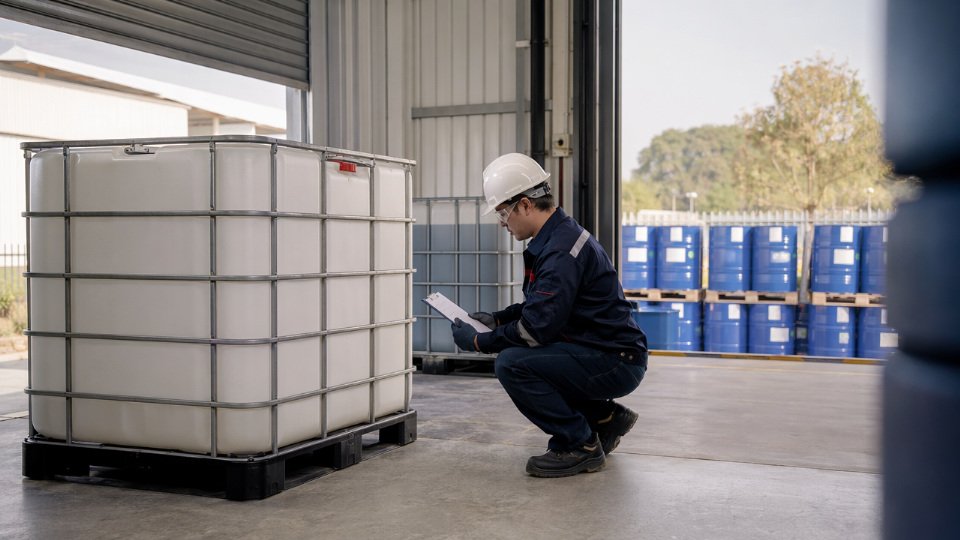
Before a silane cylinder or IBC moves from the receiving dock, verify physical integrity against the purchase order: check that valve caps are present and undamaged, inspect the cylinder shoulder for dents or corrosion, and confirm GHS pictograms match the ordered product. A cylinder labeled only with a corrosive pictogram when you ordered a pyrophoric gas is a non-conformance that warrants immediate quarantine.
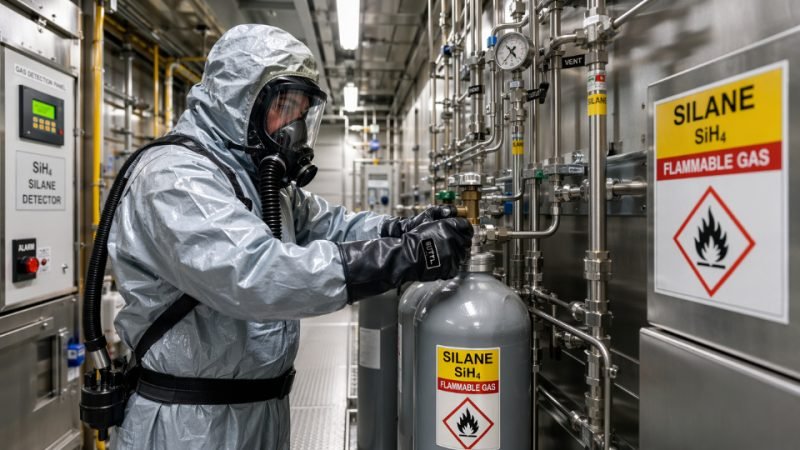
For monosilane (SiH4) cylinders specifically, perform an initial leak check with a calibrated combustible gas detector before the cylinder enters any enclosed space. If the detector reads above background, do not move the cylinder indoors under any circumstances. Isolate it outdoors in a ventilated, ignition-free zone, notify your supervisor, and contact the supplier’s technical team directly. A leaking SiH4 cylinder stored in a receiving bay is a fire event waiting to happen — the auto-ignition threshold above roughly 1.5% v/v means no spark is needed.
Storage Segregation Rules
Chlorosilanes demand a cool, dry, well-ventilated corrosive materials cabinet physically isolated from water sources, oxidizers, and alkalis. Contact with moisture generates HCl; proximity to oxidizers compounds fire risk. Flammable alkoxysilanes — flash points ranging from roughly 16°C to 73°C depending on alkoxy chain length — require a dedicated flammable storage room meeting NFPA 30 requirements, with bonding points and grounding provisions on all shelving and containers.
Pyrophoric SiH4 cylinders are a separate category entirely. They require a dedicated gas cabinet with continuous nitrogen purge and an automated shut-off valve interlocked to the gas detection system. Storing SiH4 in a shared cylinder room with other compressed gases is a serious control failure regardless of how low the inventory level appears.
Transfer and Dispensing Procedures
Use closed-loop transfer systems for chlorosilanes and any volatile organosilane with a vapor pressure above roughly 5 mmHg at ambient temperature. Bond and ground all metal containers before and during transfer — static discharge from an ungrounded drum during a flammable silane transfer is a credible ignition source. Never use compressed air to push product; inert gas pressure (nitrogen or argon) or a peristaltic pump rated for chemical service are the correct options. Compressed air introduces moisture and creates a potentially flammable headspace composition.
Container and Equipment Decontamination
Residual chlorosilane in drums or transfer lines must be hydrolyzed before disposal. The correct method is slow, controlled water injection under local exhaust ventilation — adding water gradually to manage HCl evolution rate. Never seal a container with chlorosilane residue; HCl pressure buildup in a sealed drum can cause catastrophic failure, and this is a recurring mechanism in industrial incidents involving trichlorosilane and dimethyldichlorosilane.
Organosilane containers should be rinsed with isopropanol first to dissolve residual silane, followed by a water rinse, before sending to drum recycling. Skipping the IPA step leaves hydrolyzable residue that generates alcohol and silanol in the recycling stream — a contamination problem for the recycler and a potential regulatory issue for you.
Waste Classification and Disposal
Hydrolyzed silane waste (silanols in water) is automatically non-hazardous after water treatment.False
Hydrolysis converts silanes to silanols and alcohols, but waste is only potentially reclassifiable as non-hazardous after pH neutralization AND aquatic toxicity screening confirms alcohol content falls below applicable regulatory thresholds. Automatic non-hazardous classification without testing is a compliance error.
Silane-contaminated waste typically falls under RCRA hazardous waste (US), European Waste Catalogue code 16 05 06 for laboratory chemicals, or China’s HW23 category for inorganic chemicals — though classification depends on concentration, mixture composition, and jurisdiction. Engage a licensed hazardous waste contractor for all silane waste streams. Do not consolidate chlorosilane waste with alcohol-contaminated organosilane waste without chemical compatibility verification.
Spill Response Kits and Procedures
A purpose-built silane spill kit should contain: inert absorbent such as vermiculite (not sawdust, which can smolder with pyrophoric residue), a chemical-resistant scoop, pH indicator strips, a fully charged fire extinguisher appropriate for chemical fires, and an emergency contact card including your supplier’s technical hotline. Emergency eyewash must be within 10 seconds of travel — not 10 meters measured on a map, but 10 seconds of actual walking through your specific layout.
Spill response differs by silane type. A chlorosilane spill requires immediate evacuation of the area, full respiratory and splash protection before re-entry, neutralization with dry lime or sodium bicarbonate (never water-flooding, which generates HCl aerosol), and absorbent containment. An alkoxysilane spill is primarily a flammable liquid response — eliminate ignition sources first, then absorb with vermiculite. A monosilane release is a gas emergency: evacuate, activate the gas detection alarm, ventilate if it can be done safely, and call emergency services. Attempting to handle an active SiH4 release without a supplied-air respirator and fire-suppression backup is not a realistic option for most plant teams.
Regulatory Compliance Checklist: GHS, REACH, OSHA HazCom, and China GB Standards for Silane Users
Compliance gaps with silane products rarely announce themselves until an audit, a customs hold, or a workplace incident forces the issue. The checklist below is structured around decision points, not bureaucratic categories — use it to identify where your current documentation or procedures fall short before a regulator does.
GHS SDS Section-by-Section Audit
Start with Section 2. The hazard classification must reflect GHS Revision 9 alignment (2023); for pyrophoric silanes like monosilane (SiH4), confirm the classification shows Flammable Gas Category 1 and Pyrophoric Gas Category 1 simultaneously — some older SDS documents capture only one. An SDS that still references GHS Rev. 6 language is a document control failure, not a minor formatting issue.
Section 8 is where most SDS documents fail operational review. Generic language such as “use with adequate ventilation” is not compliant. The section must state a substance-specific OEL — for SiH4, the NIOSH REL ceiling of 0.5 ppm — along with the monitoring method and a defined control banding approach. If your current supplier’s SDS shows only generic text here, request a corrected document in writing and retain that correspondence.
Section 12 deserves a hard look from procurement. A blank or “no data available” environmental section is a REACH compliance red flag, not an acceptable answer. Hydrolysis fate data, aquatic toxicity classification, and soil mobility indicators should all be populated, even for silanes with limited environmental persistence. Blank fields signal either a registration gap or a supplier that has not completed a full chemical safety assessment.
REACH Downstream User Obligations
If you are formulating with organosilanes or using them in an industrial process covered by REACH, your specific use must appear in the supplier’s Extended SDS (eSDS) as a named Exposure Scenario (ES). This is non-negotiable. ECHA Guidance R.12 provides a three-step decision tree: first, check whether your use is described in the supplier’s ES; second, if it is not covered, request your supplier extend the ES to include your use case — document this request and track the response timeline; third, if the supplier cannot or will not add your use, you must conduct your own Chemical Safety Assessment and generate a downstream user report under Article 37(4) of REACH. Skipping step three because it is inconvenient does not eliminate the legal exposure.
OSHA HazCom 2012 Requirements for US Operations
A written hazard communication program that lists silane products by name is required — a generic program that references “chemicals used on-site” does not satisfy the standard for a substance with pyrophoric and water-reactive properties. Worker training must go beyond label literacy. Pyrophoric and water-reactive GHS pictograms are genuinely unfamiliar to workers who trained on older HMIS or NFPA systems. Verify training records include a demonstrated competency check, not just a sign-off sheet.
China GB Standards
Products imported into or manufactured in China fall under the GB 30000 series for GHS-aligned classification and GB/T 16483 for SDS format requirements. Before commercializing any specialty silane in China, cross-check the MEE’s Inventory of Existing Chemical Substances in China (IECSC). Silanes with modified functional groups — amino-modified, epoxy-modified, methacryloxy variants — may not have IECSC listings and require new substance notification before commercial sale or import. Missing this step creates customs seizure risk and potential administrative penalty.
Semiconductor and Photovoltaic Sector Requirements
Operations using monosilane or disilane in CVD processes face obligations beyond general industry. SEMI S2 and SEMI S6 impose equipment qualification and exhaust ventilation requirements specific to semiconductor manufacturing environments. Equipment procurement records should explicitly reference the applicable SEMI standard revision and the qualification test results.
A supplier's SDS that omits substance-specific OELs in Section 8 and leaves Section 12 blank does not meet REACH or GHS documentation requirements, regardless of whether the supplier holds a REACH registration.True
REACH Article 31 and Annex II of the SDS regulation require populated OEL data in Section 8 and environmental fate data in Section 12 as part of a compliant extended SDS. A registration number alone does not make an incomplete SDS compliant.
SiliconChemicals Compliance Support
Each product shipment from SiliconChemicals is supported by a full REACH registration dossier with accessible substance data, an exposure scenario library covering the most common downstream industrial uses, and SDS documents available in 12 languages formatted to both GB/T 16483 and EU Annex II requirements. A regulatory change notification service alerts customers when classification updates, new OEL adoptions, or IECSC inventory changes affect products in their portfolio — reducing the risk of an inadvertent compliance gap between procurement cycles.
Frequently Asked Questions About Silane Side Effects and Safety
These questions come directly from the types of inquiries our technical team fields from procurement managers, EHS officers, and production engineers. Answers are kept practical and subclass-specific — because “silane” is not one chemical and treating it as one is where safety programs fail.
Is silane toxic to humans?
Toxicity varies dramatically by subclass, and conflating them is a serious mistake. Monosilane (SiH4) has low direct chemical toxicity but kills through fire and explosion — it is pyrophoric above roughly 1.5% v/v in air and acts as a simple asphyxiant at elevated concentrations. Chlorosilanes are acutely corrosive: inhaling the vapor or splashing liquid trichlorosilane on skin causes rapid tissue injury. Aminosilane coupling agents such as APTES are moderate skin sensitizers — repeated low-level contact can establish an allergic response that makes future exposures intolerable. Most alkoxysilanes used in surface treatment and adhesion promotion carry relatively low acute toxicity, but vapor accumulation in poorly ventilated areas drives irritation exposure well above safe thresholds.
Monosilane (SiH4) is primarily a fire and asphyxiation hazard rather than a direct chemical toxin at typical industrial exposure concentrations.True
SiH4's primary acute risk is pyrophoric ignition and oxygen displacement; it does not have the direct cytotoxic profile of chlorosilane vapors, though all exposures require control.
Can silane cause cancer?
Most common industrial silanes are not classified as known human carcinogens under IARC, EU CLP, or NTP frameworks. The more significant and often overlooked risk is secondary: high-temperature processing of silane-based coatings and CVD operations can generate crystalline silica as a thermal decomposition or reaction byproduct. Crystalline silica is an IARC Group 1 carcinogen. Workers in CVD chambers, thermal spray booths, or high-temperature ceramic coating lines should have silica exposure assessed independently from the parent silane compound — the two monitoring programs answer different questions and require different analytical methods.
What happens if you breathe silane fumes?
Response depends on which silane and what concentration reached the airway. Low-level alkoxysilane vapor produces mild nasal and throat irritation that clears with fresh air. Chlorosilane vapor at even moderate concentrations causes severe upper respiratory tract injury, and at high concentrations drives chemical pneumonitis and pulmonary edema. The operational danger with pulmonary edema is the delay — symptoms can be absent for 4 to 24 hours after the exposure event, by which time the worker has left the plant and is no longer under observation. Any confirmed significant inhalation exposure, regardless of how the worker feels at the time, requires immediate medical evaluation and monitoring. This is non-negotiable.
Is silane safe to use on skin?
Two completely different categories get confused here regularly. Personal care silicones — dimethicone, cyclomethicone, and related compounds — are stable, fully polymerized materials that have passed extensive cosmetic safety review and appear in skincare and hair products legitimately. Industrial organosilanes are reactive, unreacted intermediates. Aminosilanes will sensitize and irritate. Chlorosilanes will chemically burn skin within seconds of contact. These are emphatically not skin-contact materials. If someone on your team is searching “silane skin safety” because of a personal care application question, redirect them immediately — the hazard profile of the industrial chemical has no bearing on cured cosmetic silicone.
How do I store silane safely at my facility?
Storage requirements split cleanly by subclass. Pyrophoric silanes including monosilane demand dedicated gas cabinets with continuous leak detection, inert gas purge capability, and automatic shutoff. Flammable liquid silanes — flash points ranging from roughly 16°C to 73°C depending on alkoxy chain length and molecular structure — require NFPA 30-compliant flammable storage with bonding and grounding. Chlorosilanes need cool, dry, corrosion-rated storage completely isolated from moisture sources, including ambient humidity ingress. Never store chlorosilanes near water lines or in areas subject to roof leaks.
What PPE is required when handling silane?
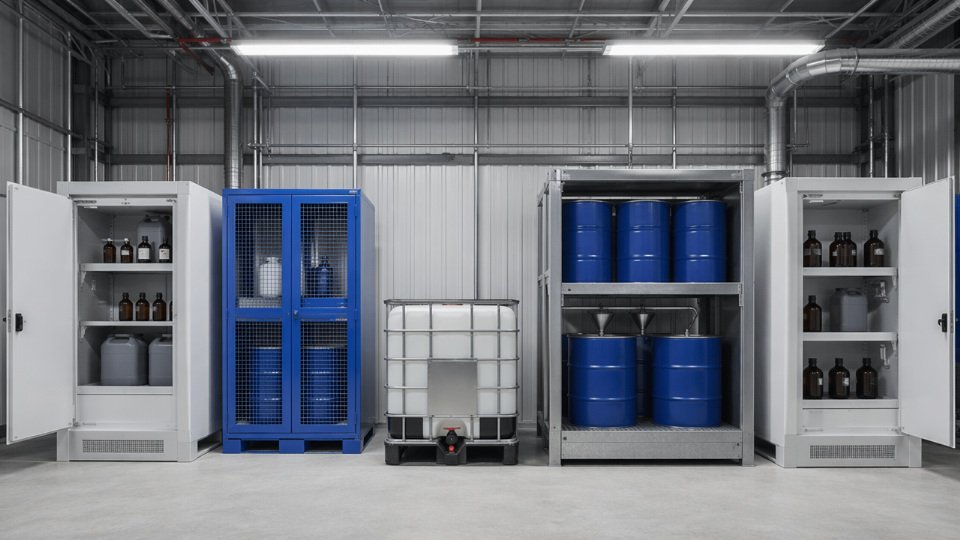
Minimum baseline for any liquid organosilane handling: chemical splash goggles, face shield, and chemical-resistant gloves. Glove material matters — butyl rubber for chlorosilanes, nitrile acceptable for low-vapor-pressure alkoxysilanes in short-duration tasks. Respiratory protection requirements escalate with volatility and toxicity: organic vapor/acid gas cartridge respirators cover many alkoxysilane applications, but chlorosilane handling and any confined-space or high-vapor-generation scenario requires supplied-air or SCBA. Task-specific selection should be validated by an industrial hygienist against actual exposure scenario modeling, not picked from a generic table.
Does silane harm the environment?
Many silanes hydrolyze quickly on contact with water, producing alcohols and silanol condensates. For methoxysilanes, that means methanol release — the primary environmental concern from a spill. Ethoxysilanes generate ethanol, which carries lower acute environmental risk. Some cyclic siloxane hydrolysis products, particularly D4 and D5, are classified as PBT (persistent, bioaccumulative, toxic) substances under EU REACH, which creates specific downstream obligations. Contain all spills immediately and prevent any silane product from reaching storm drains, waterways, or soil where hydrolysis products can migrate.
What is the difference between silane and silicone in terms of safety?
Silanes are the reactive starting materials — monomers and short-chain oligomers that carry flammability, corrosivity, or sensitization hazards depending on their functional groups. Silicones are the fully cured, high-molecular-weight polymers produced after controlled hydrolysis and condensation of those silane precursors. Cured silicone polymers have well-established safety profiles and are used in implantable medical devices, food processing equipment, and infant products. The hazard information throughout this article applies to the reactive silane intermediates in their unreacted state — not to the stable silicone products they ultimately become after polymerization.