Rubber compounds delaminate. Glass-fiber composites shed their matrix resin under cyclic load. Filled plastics chalk and crack at the interface long before the bulk material fails. In every case the root cause is the same: polar inorganic fillers and nonpolar organic polymers simply do not bond without chemical help. The result is premature fatigue, scrap at the calendar or press, and warranty returns that trace back to an interfacial failure nobody saw coming during compounding — because the problem never shows up on a tensile bar pulled at room temperature the day it was made.
A silane coupling agent is a bifunctional organosilicon molecule that bonds covalently to inorganic surfaces on one end — through hydrolysis and condensation with surface hydroxyl groups — and reacts with the organic polymer matrix on the other, bridging the otherwise incompatible interface. This dual reactivity converts a mechanically weak, moisture-sensitive filler-matrix boundary into a load-transferring chemical bond, improving tensile strength by 20–60% depending on filler loading, silane chemistry, and dispersion quality.
What makes silane chemistry genuinely interesting from an engineering standpoint is that the molecule does far more than glue two surfaces together. The choice of organofunctional group — amino, epoxy, methacryloxy, vinyl, mercapto — determines whether you get a crosslink, a graft, a coupling, or a surface coating, and that choice cascades through every downstream property: wet adhesion retention, dynamic fatigue life, cure kinetics, and even the viscosity of your compound before it ever sees a mold. Understanding the mechanism is what separates a formulator who hits the target on the first trial from one who spends three months adjusting phr.
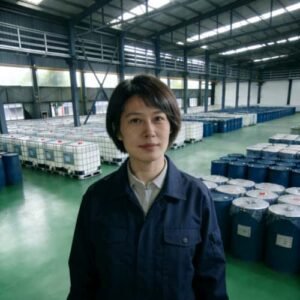
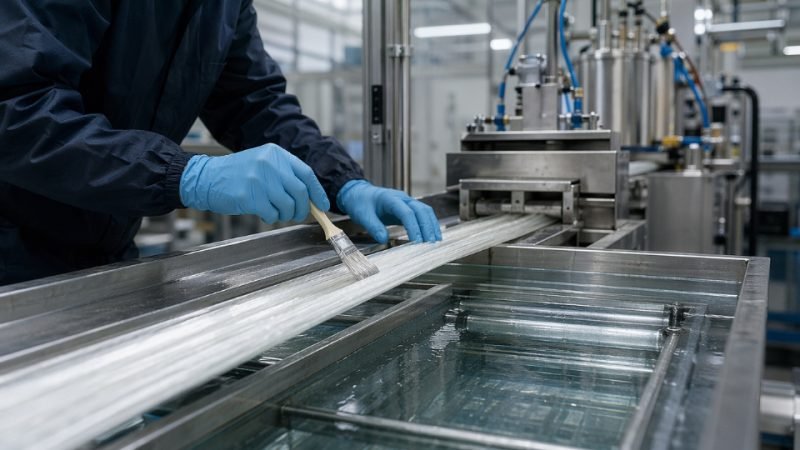
 being applied at a glass-fiber composite manufacturing line, showing the interface between inorganic filler and polymer matrix](https://siliconchemicals.com/wp-content/uploads/2026/06/purpose-silane-coupling-agent-01-hero.jpg)
Five Core Industrial Functions: Where [Silane Coupling Agents](https://siliconchemicals.com/silane-coupling-agents/) Deliver Measurable Value
Understanding the chemistry is only half the job. The other half is knowing where silane coupling agents actually move the needle on a production line — and where choosing the wrong grade or loading rate quietly costs you scrap, rework, or warranty claims. The five functions below cover the full working spectrum.
Adhesion Promotion at Dissimilar Interfaces
When an epoxy coating delaminates from an aluminum substrate, or a glass-fiber composite fails at the fiber–matrix boundary rather than through the matrix itself, interfacial adhesion is the limiting factor. Silane primers address this by forming covalent bonds on both sides: the alkoxy groups hydrolyze and condense onto the inorganic surface, while the organofunctional group co-reacts with the polymer matrix.
The practical result is measurable on standard test frames. ASTM D1002 lap-shear testing of silane-primed aluminum–epoxy joints typically shows improvements of 40–120% over unprimed controls, depending on silane type (aminosilane vs. epoxysilane vs. methacryloxysilane), aluminum alloy surface condition, and cure schedule. Glycidoxysilane tends to outperform aminosilane on epoxy systems because the functional group participates directly in the epoxy ring-opening cure rather than relying solely on secondary interaction. At glass–polymer and mineral–polymer interfaces the gain follows similar logic; the bond locus shifts from a weak physical interface to a chemically continuous interphase.
Filler Surface Treatment and Dispersion
Precipitated silica, kaolin, and wollastonite all carry surface hydroxyl groups that attract water and promote particle–particle hydrogen bonding. In a polymer compound, that means agglomerates, high processing viscosity, and patchy mechanical properties across a production lot.
A surface treatment with a vinylsilane or methacrylsilane — typically at 0.5–2% by weight of filler — converts those hydrophilic silanols to organophilic groups. The practical effect on compounding is a compound viscosity reduction of 15–30% at equivalent filler loading, which translates directly to lower mixing energy, shorter cycle times, and more uniform filler dispersion confirmed by BET surface area measurements before and after treatment. The exact viscosity drop depends on filler specific surface area (higher BET = larger hydroxyl inventory = larger treatment effect) and mixing temperature.
Crosslink Network Modification in Rubber Vulcanizates
Bis-[3-(triethoxysilyl)propyl] tetrasulfide — TESPT, widely sold as Si 69 — is the workhorse of silica-filled tire tread compounds. It functions as a bifunctional bridge: one end bonds to silica surface silanols during high-temperature mixing (above 140 °C), the other releases sulfur radicals during vulcanization to form covalent bonds with rubber chain unsaturation. The result is a continuous filler–silane–rubber network rather than a loosely coupled mixture.
TESPT-based silica/rubber compounds consistently show lower rolling resistance than equivalent carbon black compounds at similar hardnessTrue
The silica–silane network reduces hysteretic energy loss in the 0–60°C service range relevant to tire rolling resistance; this is well-documented in tire industry technical literature and is the primary driver of silica adoption in passenger car tread formulations.
Typical silane loading in these compounds runs 0.5–3 phr, with the optimum shifting toward the higher end as silica loading increases beyond 60 phr. Under-loading leaves unreacted silanol groups that raise compound viscosity and increase Payne effect; over-loading introduces excess ethanol off-gassing during mixing and may plasticize the network.
Corrosion Barrier Formation
Silane-based conversion coatings work by a different mechanism than phosphate or chromate pretreatments. When a bis-silane or amino-silane solution contacts a cleaned metal surface, it hydrolyzes to form silanol oligomers that condense onto surface metal-oxide hydroxyl sites and cross-link laterally into a dense, hydrophobic polysiloxane film — typically 50–200 nm thick depending on solution concentration and dwell time. That network physically restricts oxygen diffusion and chloride ion ingress to the metal surface, which is where both cathodic delamination and pitting initiation begin.
The performance case matters for procurement decisions. Hexavalent chromate is still more forgiving of surface prep variability, but regulatory pressure under RoHS and REACH has forced the transition in most aerospace, automotive, and electronics supply chains. A properly applied bis-silane coating on cleaned aluminum achieves neutral salt-spray performance of 500–1000 hours before first blister, depending on film uniformity and topcoat system. Gaps in surface preparation — residual oils, oxide thickness variation — are the primary failure driver, not the silane chemistry itself.
Surface Hydrophobization and Moisture Resistance
Long-chain alkylsilanes (C8–C18) and fluorosilanes graft non-polar organic tails onto hydroxyl-rich surfaces — concrete, woven glass fabric, ceramic, or molded polymer housings — creating a surface energy barrier that deflects water rather than absorbing it. Contact angles above 100° are routine; fluorosilane-treated surfaces regularly reach 110–120°, approaching superhydrophobic behavior when combined with surface micro-texture.
For electronics enclosures or PCB conformal coating, the practical benefit is not just water repellency but suppression of ionic contamination uptake, which directly reduces leakage current and dendritic growth risk at operating voltages below 48 V. In concrete infrastructure, alkylsilane penetrating sealers reduce chloride ingress by 70–90% compared to untreated controls, a range that shifts with concrete porosity and application rate. The operational warning here is shelf life: long-chain alkylsilanes are sensitive to moisture in storage and can self-condense in partially opened containers, reducing reactive silanol availability before the product ever reaches the substrate.
Selecting the Right Organofunctional Group for Your Substrate and Resin System
Getting this pairing wrong is expensive. An amino-silane added to a peroxide-cured polyolefin compound does essentially nothing at the interface — you’ve paid for a coupling agent and gotten filler dispersion at best, a processing headache at worst. The organofunctional group must be chemically reactive toward the specific curing mechanism of the matrix, not just “compatible” in a loose adhesion sense.
Organofunctional Group–Matrix Compatibility
The table below is a working reference, not a theoretical one. CAS numbers are included so procurement can verify material identity at source.
| Polymer Matrix | Recommended Organofunctional Group | Representative Silane | CAS Number |
|---|---|---|---|
| Epoxy | Amino, Epoxy (glycidoxy) | 3-Aminopropyltriethoxysilane (APTES) | 919-30-2 |
| Epoxy | Glycidoxypropyl | 3-Glycidoxypropyltrimethoxysilane (GPTMS) | 2530-83-8 |
| Polyurethane | Amino, Mercapto | 3-Aminopropyltrimethoxysilane | 13822-56-5 |
| Unsaturated Polyester | Methacryloxy | 3-Methacryloxypropyltrimethoxysilane (MPS) | 2530-85-0 |
| Nylon / Polyamide | Amino, Epoxy | APTES or GPTMS | 919-30-2 / 2530-83-8 |
| Polyolefin (PE, PP) | Vinyl, Methacryloxy | Vinyltrimethoxysilane (VTMO) | 2768-02-7 |
| Natural / Synthetic Rubber | Mercapto, Polysulfide | Bis[3-(triethoxysilyl)propyl]tetrasulfide (TESPT) | 40372-72-3 |
| Acrylic | Methacryloxy | MPS | 2530-85-0 |
Reactivity Requirements Are Non-Negotiable
Amino-silanes react directly with epoxy rings and isocyanate groups without external initiation — this is why APTES is routinely added cold to two-part epoxy primers. Methacryloxy-silanes, however, do nothing in an unsaturated polyester system until free radicals are generated by the peroxide initiator. No peroxide, no covalent bond to the matrix; you end up with silane that has condensed to the glass surface on one side and dangling methacrylate groups on the other. Vinyl-silanes in polyolefins similarly require peroxide or radiation crosslinking to graft onto the polymer backbone. Mismatching the functional group to curing chemistry doesn’t produce a partial bond — it produces no bond, and tensile strength improvements in the 20–60% range cited for properly coupled glass/silica composites drop to near zero.
Amino-silanes can directly react with epoxy resins without requiring a catalyst or external initiationTrue
The primary amine group on amino-silanes undergoes nucleophilic ring-opening of epoxide groups at ambient temperature, a well-established reaction in adhesive and coating formulations.
Substrate Surface Chemistry Changes Everything
Glass fiber and fumed silica carry roughly 4–6 silanol groups per nm², which is dense enough for efficient silane condensation under standard aqueous or anhydrous treatment conditions. Calcite (CaCO3) and TiO2 have far fewer accessible hydroxyls; both substrates benefit from pre-hydrolysis of the silane in dilute acetic acid (pH 4–5) before application, maximizing oligomeric silane deposition across a lower-density surface. Aluminum oxide reacts well with amino-silanes, but the surface pH should sit slightly basic (pH 7.5–8.5) to favor monolayer chemisorption over bulk polymerization in solution. Steel is a different problem entirely — native iron oxide is thin and variable, so a silane-only primer often underperforms; a hybrid silane–zirconium conversion layer gives the silane a chemically uniform, hydroxylated surface to anchor onto, which is why aerospace and automotive corrosion protection lines rarely rely on silane alone.
Hydrolysis Rate and Pot Life Trade-Offs
Methoxy silanes hydrolyze quickly in water — useful in waterborne coating lines where you want fast silanization of the substrate, but you sacrifice pot life. Expect usable bath life of hours rather than days once hydrolysis begins. Ethoxy silanes release ethanol and hydrolyze more slowly, giving longer working time in both solvent-borne and aqueous systems; loading concentrations between 0.5–2% by weight in solution are typical, though the optimal point depends on substrate surface area and treatment temperature. Acetoxy silanes are the one to flag as a procurement risk: they release acetic acid on hydrolysis, which corrodes zinc, aluminum, and certain electronic substrates. Unless the formulation was specifically engineered for that byproduct, acetoxy variants should be replaced with methoxy or ethoxy equivalents.
Pre-Hydrolyzed Silanes and Oligomers as Drop-In Alternatives
Pre-hydrolyzed silane oligomers have gained real traction on waterborne coating lines over the past decade. Instead of managing in-situ hydrolysis conditions — pH, temperature, dilution sequence — the oligomer arrives partially condensed and water-dispersible. Shelf life extends from weeks to months compared to monomeric methoxy silanes in aqueous solution. For procurement managers running multiple SKUs, consolidating to a pre-hydrolyzed grade can reduce formulation variability and cut the number of process control checks per batch. The trade-off is cost per kilogram, which runs 15–40% higher depending on the oligomer molecular weight and the supplier’s processing overhead. Whether that premium pays back depends on how much batch-to-batch inconsistency currently costs in rework or adhesion failures.
[Silane Coupling Agents](https://siliconchemicals.com/silane-coupling-agents/) in Tire and Rubber Manufacturing: The Silica–Rubber Interface Explained
The shift from carbon black to precipitated silica in high-performance tire tread compounds is one of the more consequential formulation changes in rubber technology over the past three decades. Silica delivers two properties carbon black cannot simultaneously provide: lower rolling resistance and superior wet grip. Rolling resistance correlates with tan delta at 60°C — energy dissipated as heat through the tread during highway driving — while wet traction depends on tan delta at 0°C, which governs the tread’s ability to deform and grip a wet road surface. Carbon black sits in a compromise zone. Silica, properly coupled, moves both metrics in the right direction at once.
The catch is surface chemistry. Precipitated silica is covered in silanol groups (Si–OH), making it strongly hydrophilic. Nonpolar rubber matrices — SBR, BR, natural rubber — have no chemical affinity for that surface. Without a coupling agent, silica agglomerates badly during mixing, filler-polymer adhesion is poor, and you pay the silica cost while getting roughly carbon black performance. The coupling agent is not optional in a silica-filled tread; it is the reason the compound works.
TESPT and TESPD: Reaction Chemistry Across Two Temperature Windows
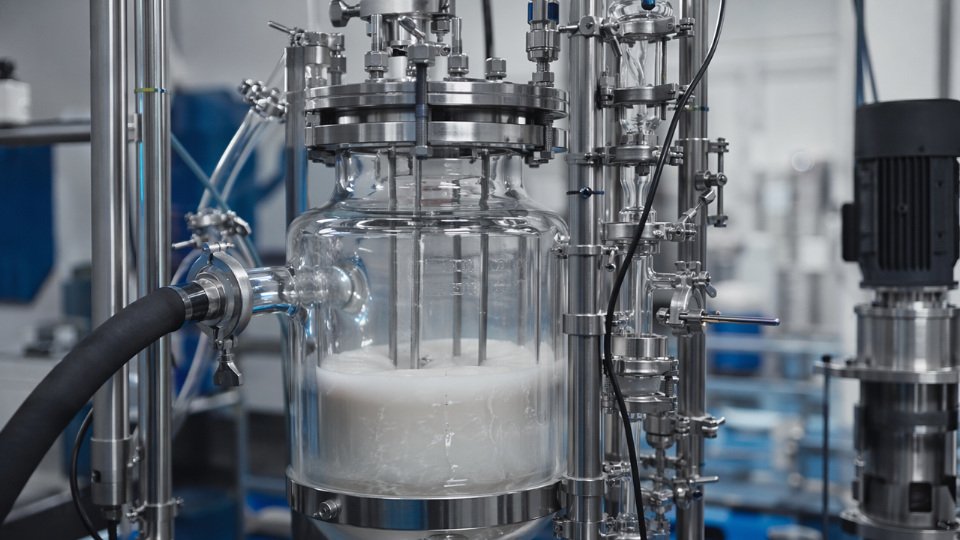
The industry workhorse is TESPT — bis[3-(triethoxysilyl)propyl] tetrasulfide, widely known as Si69. Its disulfide analog TESPD (Si75) runs a close second in formulations where sulfur contribution from the coupling agent needs tighter control. Both molecules carry triethoxysilyl groups on each end that react with silica surface silanols during the first mixing stage, typically run at 140–155°C. At this temperature the ethoxy groups hydrolyze and condense with the silica surface, releasing ethanol as a byproduct. The reaction requires residence time and sufficient shear to disperse agglomerates before silanization locks the silica network in place.
The polysulfide bridge then participates in the vulcanization network during the second stage — cure temperatures of 160–180°C. Sulfur from the tetrasulfide or disulfide tail cross-links with the rubber matrix, creating genuine covalent connectivity from filler to polymer. The result is a stress-transfer path that operates at a molecular level, not just mechanical interlocking.
Quantifying What the Coupling Agent Actually Buys You
Against a carbon black reference compound at equivalent hardness and filler loading, a well-optimized silica–TESPT system delivers roughly 20–30% reduction in tan delta at 60°C, which translates directly to fuel savings — the actual magnitude depends on vehicle weight, speed profile, and compound design. Wet traction (tan delta at 0°C) improves by approximately 10–15%. Abrasion resistance, measured by DIN 53516 or Akron methods, typically increases 15–25%. These are not theoretical — they represent the range seen across commercial tire tread compounds when silane loading is dialed in between 0.5 and 3 phr and mixing conditions are properly controlled.
Silica-filled tire tread compounds using TESPT coupling agents can reduce rolling resistance by 20–30% versus carbon black reference compounds at equivalent hardness.True
This range is consistent with published DIN 53513 tan delta measurements at 60°C across commercial silica tread formulations and is well-documented in tire technology literature. Actual magnitude depends on filler loading, silane dose, mixing temperature profile, and rubber system.
Under-dosing silane is a common field mistake. At less than 0.5 phr relative to silica surface area, you leave uncoupled silanol groups that generate excessive heat build-up and accelerate tread wear — the compound tests hard on the Mooney viscometer but fails durability targets. Over-dosing above 3 phr wastes material and can retard cure through excess free sulfur from the polysulfide tail.
The Ethanol VOC Problem and Blocked Mercaptosilane Alternatives
Every triethoxysilyl group releases three equivalents of ethanol during silanization. In a high-throughput internal mixer running several batches per hour, that ethanol load is not trivial — it creates both a workplace air quality issue and an emissions compliance challenge. Factories in jurisdictions with strict VOC limits have felt this acutely as silica tread production volumes scaled up.
The engineering response was the blocked mercaptopropylsilane chemistry, of which NXT silane (octanoylthio-propyltriethoxysilane) is the most referenced example. The mercapto group is protected by an acyl blocking group that prevents premature reactivity during mixing but cleaves at vulcanization temperatures, releasing a reactive thiol that bonds into the rubber network. Ethanol release during mixing is not eliminated — the triethoxysilyl groups still hydrolyze — but the blocked design allows lower mixing temperatures for silanization, reducing ethanol evolution rate per unit time and making exhaust management more practical. Some formulations combine a blocked mercaptosilane with a partial TESPT loading to balance VOC control against cost.
What to Specify When Sourcing TESPT or TESPD at Scale
For purchasing managers and compounders evaluating suppliers, the critical specification points are not just purity by GC. Sulfur content consistency matters directly to compound rheology — a batch with sulfur content outside ±0.3% of nominal will shift Mooney scorch time measurably. Ethoxy content determines silanization efficiency and should be confirmed batch-to-batch. Color is a real issue for white sidewall and light-colored compounds where even slight yellowing shows.
SiliconChemicals supplies TESPT and TESPD grades with sulfur content controlled to ±0.3%, verified ethoxy content meeting standard specifications, and low-color grades specifically qualified for light compound applications. Bulk supply in ISO tank containers or flexitanks fits the logistics of high-throughput mixing lines that consume TESPT in volumes where drum handling creates unnecessary labor and contamination risk. Consistent lead time from China’s organosilicon industrial clusters allows procurement teams to run lean inventory without the supply disruption risk that single-source specialty chemical dependence often carries.
Glass Fiber Sizing and Fiber-Reinforced Composites: Creating the Load-Transfer Interface
Glass fiber leaves the bushing at roughly 1,200 °C and reaches ambient temperature in a fraction of a second. That pristine surface — chemically active, covered in silanol groups — is immediately vulnerable to moisture adsorption and mechanical abrasion. Within meters of the bushing, every filament passes through a sizing applicator. Miss that window and you lose the surface chemistry permanently.
What the Sizing Formulation Actually Contains
A commercial sizing is not a single chemical. It is a carefully balanced system: a film former (polyurethane, polyvinyl acetate, or epoxy emulsion depending on end resin), a lubricant to prevent inter-filament abrasion during weaving or chopping, an antistatic agent, and the silane coupling agent. Each component has a job. The silane’s job is specifically the adhesion bridge — bonding the inorganic glass surface to the organic polymer matrix downstream. If the silane chemistry is mismatched to the intended resin, the film former and everything above it is irrelevant; the interface will still fail under load or moisture.
Silane concentration in the sizing bath typically runs 0.1–0.5 wt% active silane, with the exact level depending on fiber diameter (finer filaments have higher surface area per unit weight and need higher concentration), line speed, and the target silane deposit weight on the glass. Overloading silane creates a thick, poorly crosslinked organosilane layer that actually reduces adhesion — thicker is not better here.
Matching Silane Chemistry to the Resin System
This is where procurement errors become laminate failures.
Vinyl-silane with unsaturated polyester is the workhorse combination for marine hulls, construction panels, and sanitary ware. The vinyl group co-polymerizes directly into the styrene–polyester network during cure. It is cost-effective and well-established, though vinyl-silane offers limited adhesion improvement in high-moisture environments compared to more reactive functional silanes.
Amino-silane with epoxy systems is the standard in aerospace prepregs, wind blade spar caps, and printed circuit board laminates. The primary amine reacts with epoxy groups at the interface, forming covalent bonds that survive mechanical cycling and thermal excursions. Interlaminar shear strength (ILSS) for glass/epoxy laminates with properly amino-silane-treated fiber typically falls in the 45–55 MPa range; the same layup using unsized fiber drops to 25–30 MPa. That gap directly determines whether a structural laminate passes design allowables or gets scrapped after destructive coupon testing.
Methacryloxy-silane with vinyl ester is the specification for chemical storage tanks and process vessels. Vinyl ester’s toughness and chemical resistance are only fully realized when the fiber–matrix bond survives repeated solvent or acid exposure. Flexural modulus retention after a 24-hour boil test remains above 85% with silane-treated fiber; without it, retention typically falls to 50–60%, which means a vessel that looked fine in ambient qualification testing fails hydrostatic proof during commissioning.
Amino-silane-treated glass/epoxy laminates achieve interlaminar shear strength of 45–55 MPa versus 25–30 MPa for unsized fiber.True
These ranges are consistent with published composite testing data and ISO 14130 test results across multiple academic and industrial studies on glass/epoxy systems.
Multi-functional silanes for hybrid thermoplastic/thermoset systems — increasingly specified for structural components combining fast-consolidating thermoplastic skins with thermoset cores — require a silane that can bond to both matrix chemistries. Single-functional silanes fail one side of that interface. This is an active development area, and procurement teams specifying these systems should require ILSS data from the fiber producer rather than accepting standard product data sheets.
Hydrolysis Rate and Line Speed Are Linked
Methoxy silanes hydrolyze faster than ethoxy silanes under acidic sizing bath conditions. In continuous filament winding and pultrusion operations where line speeds run 1–5 m/s, faster hydrolysis means more complete silanol formation — and more reactive surface — before the fiber is incorporated into the matrix. Slower-hydrolyzing ethoxy silanes may be adequate for woven fabric sizing where the fiber sits for days before lamination, but they are a poor fit for high-speed wet winding. This is a detail often overlooked during silane substitution decisions, and it shows up as inconsistent bond line quality rather than an obvious specification failure.
Chopped Strand Mat Versus Woven Roving
Chopped strand mat (CSM) uses a powder or emulsion binder to hold the random fibers together, and the sizing silane must be compatible with that binder chemistry as well as the resin. Woven roving runs through weaving machinery that imposes tension and abrasion cycling on every filament; lubricant content in the sizing tends to be higher, which can dilute available silane coverage if formulation balance is not managed. A composite engineer switching from CSM to woven roving in a hand-layup repair specification should not assume the same sizing grade performs equivalently — surface silane density per unit area can differ by 30–50% between product forms, directly affecting wet-out and void content in the final laminate.
Protective Coatings, Adhesives, and Sealants: Silane as the Adhesion-Durability Multiplier
Formulators working in coatings, adhesives, and sealants face a persistent problem: organic polymer films and adhesive layers bond reasonably well to clean, dry substrates in the lab, then fail at the interface when humidity, thermal cycling, or chemical exposure arrives on the plant floor. Silane coupling agents address this gap not by boosting bulk polymer properties but by chemically anchoring the organic phase to the inorganic substrate — turning a mechanically weak physisorbed interface into a covalently bonded one.
Three Distinct Use Modes in Coatings Formulation
The first and most straightforward mode is in-can addition: silane is blended directly into the coating at 0.1–1.0% on total formulation weight. The right figure within that range depends on substrate type, resin polarity, and whether the coating is waterborne or solvent-borne. Amino- and epoxy-functional silanes are the most common choices here because they react with epoxy, polyurethane, and acrylic binders during cure rather than simply migrating to the surface and volatilizing.
The second mode is substrate priming. A dilute silane solution — typically 0.5–2% in water or alcohol adjusted to pH 4–5 to encourage hydrolysis without premature condensation — is applied to metal, glass, or mineral surfaces before the topcoat. The silane hydrolyzes, condenses onto surface hydroxyl groups, and leaves a reactive organofunctional monolayer that the topcoat can bond into. On galvanized steel, this step alone shifts salt-spray performance dramatically. An automotive OEM primer system combining cathodic electrocoat with a silane-containing intermediate primer routinely achieves a crosshatch adhesion rating of 0 per ASTM D3359 and passes 1000-hour neutral salt spray (ASTM B117) with less than 1 mm creep from the scribe — compared to ratings of 2–3 and creep exceeding 3–4 mm in unprimed controls under the same test conditions.
The third mode is reactive crosslinking. Silane crosslinkers — particularly alkoxysilane-functional isocyanates or silane-terminated prepolymers — react with hydroxyl-functional resins to form polysiloxane–polyurethane hybrid networks. The resulting film combines the chemical and solvent resistance of a siloxane backbone with the mechanical properties of a polyurethane. This is not a coating additive; it is a stoichiometric component requiring accurate dispensing and pot-life management.
Waterborne Systems: Hydrolysis Is Both the Mechanism and the Risk
Silane chemistry depends on water to generate silanol groups, which is straightforward in solvent-borne systems where water is absent until application. In waterborne coatings, water is the continuous phase — meaning silanol groups form immediately, self-condense, and can create oligomeric siloxane species that reduce shelf life from months to weeks or less. Three practical solutions exist in commercial formulation: blocked silanes that release the active silanol only above a threshold temperature during stoving; silane-functional acrylic dispersions where the silane is polymerized into the latex particle rather than existing as a free molecule; and pH-controlled addition sequences that keep the dispersion above pH 8, where self-condensation kinetics are slow, adding silane last and keeping batch-to-batch addition timing consistent.
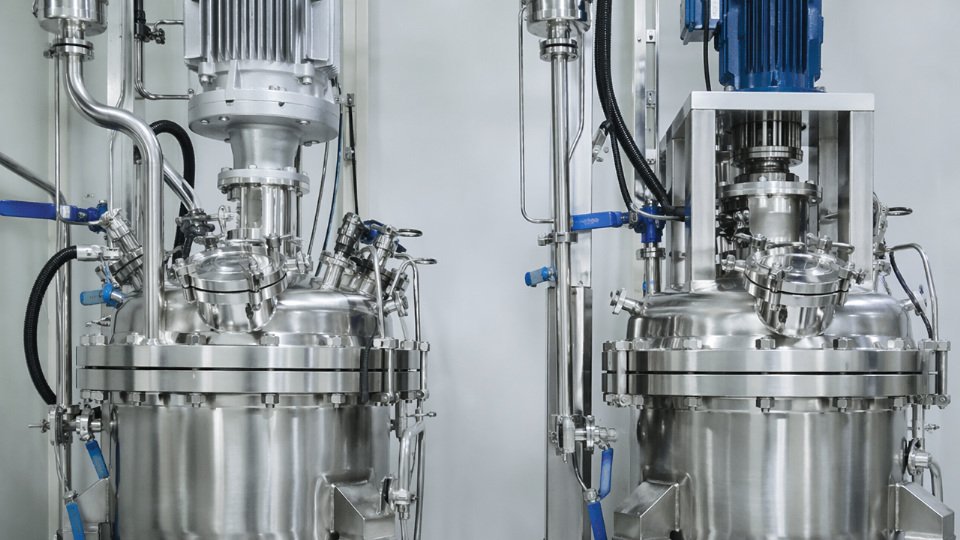
Blocked silanes eliminate shelf-life degradation in waterborne coatings entirelyFalse
Blocked silanes significantly extend shelf life compared to free alkoxysilanes in aqueous systems, but they do not eliminate it. Temperature, pH drift, and storage conditions still affect stability; typical shelf-life improvement is 3–6× depending on blocking group and formulation pH.
MS Polymer Sealants: Moisture-Curing Flexibility Without Silicone’s Paintability Problem
Modified silicone (MS) polymers — also called silyl-terminated polyethers — cure by moisture through their alkoxysilane end groups, placing them in a practical middle ground between polyurethane sealants and conventional silicones. The end group chemistry matters for field performance. Dimethoxy-silane-terminated variants cure more slowly (surface tack-free time typically 60–120 minutes at 23°C, 50% RH) but develop lower modulus, making them appropriate for construction joints with high movement. Trimethoxy-silane end groups accelerate cure (tack-free in 20–45 minutes under the same conditions) and reach higher crosslink density and modulus — useful in transportation assembly where handling strength is needed quickly, but more likely to stress-crack on flexible substrates if over-specified.
Epoxy Adhesives: Silane-Treated Nano-Silica for Fracture Toughness
Unmodified epoxy resins are brittle. Adding 20 nm fumed silica at around 10 wt% loading is an established toughening route, but untreated silica aggregates heavily, creating stress concentrators that undermine the very property you are trying to improve. Surface treatment with amino-functional silane disperses particles down to near-primary-particle size, and the silane shell reacts covalently into the epoxy network during cure. The outcome is a 60–80% increase in KIC fracture toughness (depending on epoxy system, cure schedule, and degree of silane coverage) with no significant depression of glass transition temperature — a combination that untreated or physically mixed silica cannot match. For structural adhesive bond lines in automotive or aerospace assembly, where both toughness and heat resistance are non-negotiable, this silane-enabled morphology is not optional; it is the mechanism of performance.
Concrete, Stone, and Mineral Substrate Protection: How Silane Penetrating Sealers Work
Concrete looks solid, but its internal pore structure is anything but. A typical Portland cement matrix cured to 28 days contains a network of capillaries ranging from a few nanometers to several hundred micrometers in diameter — more than enough to wick chloride-laden water, de-icing brine, and acidic rain deep into the substrate. Silane-based penetrating sealers work precisely because their molecules are small enough to exploit that same capillary network.
Penetration and Polymerization: What Happens Inside the Pore
Isobutyltrimethoxysilane (iBTMOS) and isooctyltriethoxysilane (iOTES) are the two workhorses here. Their low molecular weight — roughly 164 g/mol and 276 g/mol respectively — gives them the capillary mobility to migrate 5–20 mm into 28-day cured concrete under ambient conditions. Actual penetration depth depends on concrete porosity (w/c ratio), substrate moisture state, ambient temperature, and dwell time before wipe-down. Once inside, the alkaline pore water (pH 12–13) hydrolyzes the alkoxy groups, releasing methanol or ethanol and generating reactive silanols. Those silanols condense with hydroxyl groups on the silicate pore wall and with each other, building a crosslinked polysiloxane network anchored to the capillary surface.
The critical design detail is what this lining does not do. Unlike film-forming sealers, it does not bridge across the pore opening. The pore stays open to vapor, so the slab can still breathe — a requirement in any occupied or thermally cycled structure where vapor-pressure buildup would cause surface delamination. Liquid water, however, faces a contact angle shift from roughly 30–40° on untreated concrete to above 120° on treated pore walls. Capillary suction essentially reverses.
Silane vs. Siloxane vs. Blend: Not Interchangeable
The terminology gets loose in procurement specs, and that looseness costs money. Pure silane products penetrate deepest and deliver the most durable long-term protection because the active chemistry is distributed through the substrate rather than concentrated at the surface. The trade-off is that visible water repellency may take 1–3 weeks to fully develop as hydrolysis and condensation complete. Siloxane products — oligomeric rather than monomeric — are larger molecules. They establish surface repellency faster (often within 24–48 hours) but typically penetrate only 2–5 mm, leaving the bulk of the capillary system untreated.
Silane/siloxane blends attempt to capture both behaviors: the silane fraction migrates deep while the siloxane fraction provides near-surface performance during cure. For high-porosity substrates like older bridge decks or concrete masonry units, a blend formulated toward higher silane content is usually the right specification. For dense, low-w/c concrete where deep penetration is already constrained by pore geometry, a siloxane-dominant blend may be cost-justified.
Silane penetrating sealers can reduce concrete water absorption by more than 90% when applied correctly to suitable substrates.True
EN 13580 test data for isobutyltrimethoxysilane treatments on cured concrete consistently show water absorption reductions exceeding 90% under controlled application conditions, provided substrate moisture and porosity requirements are met.
Performance Benchmarks That Belong in Your Specification
Water absorption reduction exceeding 90% per EN 13580 is the baseline expectation for a properly applied silane treatment on suitable concrete. Chloride ingress reduction of 80% or greater under ASTM C1202 (rapid chloride permeability test) is achievable and should be required for any bridge deck or marine-exposure specification — untreated concrete in those environments will see rebar corrosion initiate within 8–15 years depending on cover depth and chloride concentration. For freeze-thaw performance, treated concrete exposed to de-icing salts typically shows mass loss below 0.5% after 56 cycles, compared with 3–5% for untreated controls. That difference is not cosmetic; it represents the difference between surface scaling and structural integrity of the cover zone.
Application Conditions That Determine Whether the Chemistry Works
Get the application conditions wrong and you are essentially wasting the material. Concrete must be at least 28 days old — earlier application risks incomplete hydration leaving soluble calcium compounds that can interfere with silanol condensation. The surface should be dry to touch but not oven-dry; some residual moisture in pores actually catalyzes hydrolysis, but free surface water dilutes the active silane and prevents penetration. Ambient temperature should fall between 5°C and 35°C. Below 5°C, hydrolysis and condensation rates drop sharply enough to compromise cure depth; above 35°C, volatile silanes evaporate before penetrating adequately.
Re-treatment intervals typically run 8–15 years, with the shorter end driven by high UV exposure (which degrades the isobutyl or isooctyl organic groups at the surface) and traffic abrasion on horizontal decks. Vertical surfaces on bridge piers or retaining walls can reasonably reach the upper end of that range.
The Infrastructure Economics That Justify the Specification
The cost-benefit arithmetic here is not subtle. A silane treatment on a bridge deck or parking structure runs USD 2–5/m², depending on product concentration (typically sold as 20%, 40%, or 100% active content), application method (spray vs. flood), and labor rates. Compare that against USD 200–800/m² for partial-depth patching or full deck replacement — costs that accrue when chloride-induced corrosion has spalled the cover concrete. Even allowing for two re-treatment cycles over a 30-year horizon, the preventive spend is an order of magnitude below reactive repair. For procurement managers building maintenance schedules for parking structures or highway infrastructure, this makes silane treatment one of the highest-ROI line items in a capital preservation budget.
| Scenario | Treatment Cost (USD/m²) | Expected Service Extension |
|---|---|---|
| No treatment, chloride environment | — | Rebar corrosion onset: 8–15 years |
| Silane sealer (40% active), 1 application | 2–5 | Adds 10–20 years to onset |
| Silane sealer, 2 cycles over 30 years | 4–10 total | Maintenance mode; structural integrity preserved |
| Partial-depth patching after damage | 200–400 | Restores section; does not prevent recurrence |
| Full deck replacement | 400–800+ | Terminal intervention |
Cost ranges depend on geographic labor rates, product active content, and application method. Service extension figures depend on chloride exposure level, concrete quality, and cover depth.
Emerging Applications: Electronics, Photovoltaics, and Nano-Composite Engineering
Silane coupling agents have been a workhorse technology in rubber and glass fiber for decades, but the fastest-growing demand is now coming from sectors where interface failure carries consequences far beyond a cracked composite part — delaminated flip-chip packages, degraded solar modules, and thermal-runaway battery separators all trace a meaningful fraction of their field failures back to inadequate interfacial chemistry. These applications are not peripheral curiosities; they are pulling silane consumption upward in ways that are reshaping purchasing volumes and product specifications.
Electronics Encapsulation and Flip-Chip Underfill
In advanced semiconductor packaging — flip-chip, BGA, and wafer-level packages — the interface between a silicon die and an epoxy molding compound (EMC) or underfill resin is under constant thermomechanical stress from CTE mismatch. Amino-functional silanes (e.g., 3-aminopropyltriethoxysilane, APTES) and epoxy-functional silanes (3-glycidoxypropyltrimethoxysilane, GPTMS) are applied either as a surface pretreatment on the die passivation layer or blended directly into the underfill formulation at concentrations typically in the 0.1–1.0 wt% range, depending on EMC chemistry and cure conditions. The functional group must be matched precisely: epoxy silanes react with amine-cured epoxy systems; amino silanes suit anhydride or epoxy-cured systems where the amine acts as both coupling agent and secondary crosslinker.
The practical proof point is JEDEC MSL-1 qualification — 168 hours at 85°C/85% relative humidity followed by three reflow cycles at 260°C. Without adequate silane treatment, packages that pass initial bond testing frequently delaminate at the die-attach or underfill fillet during damp-heat conditioning. Getting the silane chemistry wrong here does not produce a marginal result; it produces a failure mode that costs an entire lot at the test stage.
Photovoltaic Module Durability at the Glass–EVA Interface
Solar panel manufacturers work to IEC 61215 damp-heat aging (1000–2000 hours at 85°C/85% RH). Vinyl-silane and methacryloxy-silane surface treatments on the glass superstrate improve EVA encapsulant adhesion and reduce potential-induced degradation by lowering ionic mobility pathways along the glass surface. Maintaining peel strength above 80 N/cm after 2000-hour aging is a standard procurement specification for Tier-1 module producers — and the difference between a treated and untreated glass surface can be 30–50% lower residual adhesion on the untreated substrate, depending on EVA formulation and lamination temperature.
Silane treatment of glass in PV modules maintains encapsulant peel strength above 80 N/cm after 2000-hour damp heat aging per IEC 61215.True
This is a documented performance threshold cited in PV module qualification standards, and silane adhesion promoters on glass are a well-established means of meeting it.
Nano-Filler Functionalization: Where Grafting Density Matters
Nano-silica particles (15–20 nm), nano-clay platelets, and nano-TiO2 present a surface area problem that micron-scale fillers do not. Untreated nano-silica agglomerates aggressively because bare silanol groups hydrogen-bond across particles. Silane surface treatment converts those silanols to organofunctional groups compatible with the polymer matrix — but grafting density requires careful optimization. Too little silane leaves hydrophilic bare patches that still drive agglomeration and create stress-concentration sites. Too much builds thick organic multilayers that decouple the particle from the matrix mechanically, actually reducing the modulus improvement the nanocomposite was designed to achieve. Optimal grafting density for nano-silica typically falls in the range of 2–4 silane molecules per nm², determined by the specific surface area measured via BET and the target polymer system.
5G Substrate Dielectrics and Low-Loss Requirements
PTFE and liquid crystal polymer (LCP) composites for 5G antenna substrates demand fillers treated with fluorosilanes that lower dielectric constant (Dk target below 3.0) and loss tangent (Df below 0.005 at 10 GHz). The critical constraint is chemical selectivity: any silane that introduces residual polar groups — unreacted methoxysilanol, for instance — raises Df measurably at millimeter-wave frequencies. This is a specification that does not forgive approximation; a Df of 0.007 instead of 0.004 is not a minor variance in a phased-array antenna board, it is a failed qualification.
Battery Separators and Electrode Binders
Silane-treated ceramic coatings on polyethylene separators — typically alumina or boehmite particles functionalized with amino or epoxy silanes — improve adhesion of the ceramic layer to the PE substrate and maintain dimensional stability above 150°C with shrinkage below 5%. EV battery safety regulations in multiple markets now effectively mandate coated separators in high-energy-density cells. Silane-functional PVDF binder precursors are a parallel development, improving electrode cohesion in silicon-anode cells where volumetric expansion during cycling mechanically challenges conventional binders. Both segments are growing fast enough that procurement managers sourcing commodity silanes for rubber or coatings applications should be aware that allocations in aminosilane and epoxysilane grades are increasingly competed for by electronics and battery supply chains.
How to Apply Silane Coupling Agents: Process Methods, Concentrations, and Quality Control
Getting the chemistry right at the molecular level means nothing if the application process is sloppy. Inconsistent silane treatment is one of the most common root causes of unexplained batch-to-batch variability in composite strength, adhesive peel failures, and filler dispersion problems — yet it rarely gets the process discipline it deserves.
The Four Primary Application Methods
Dry blending onto filler in a high-intensity mixer (Henschel or equivalent) remains the dominant industrial method for silica and mineral fillers destined for rubber compounding. Filler temperature during blending should be held at 100–130°C — hot enough to drive off condensation water and promote silane anchoring, but not so hot that neat silane flash-evaporates or undergoes premature self-condensation before it contacts the surface. Residence time is typically 5–15 minutes at full blade speed depending on mixer volume and filler batch size. The practical hazard here: if moisture content of the incoming filler is above roughly 1–2%, surface hydrolysis is uncontrolled and you get polysiloxane clumps rather than a uniform monolayer.
Solution treatment in water-alcohol baths suits glass fiber, mineral powders, and flat substrates. Working concentration is 0.5–2 wt% silane in the bath, with pH held at 4–5 using dilute acetic acid. Contact time of 30 minutes is generally sufficient for most silanes at ambient temperature. Below pH 4 you risk silanol self-condensation in solution before the silane reaches the substrate; above pH 6, hydrolysis slows dramatically and grafting becomes patchy.
Spray application is preferred for large or complex-geometry substrates — foam cores, honeycomb panels, concrete surfaces — where immersion is impractical. Uniform atomization matters; a typical spray gun set-up targeting 5–15 µm wet film thickness gives a controlled, thin layer that dries without pooling. Pooling is where weak boundary layers start.
Integral addition directly into an extruder or internal mixer works when pre-treating filler is inconvenient. The silane is added at the feed throat or through a liquid injection port, relying on shear heat and moisture present in the compound to drive in-situ hydrolysis. It is the least controlled of the four methods — residence time distribution in a single-screw extruder can produce under-treated and over-treated material in the same run — and it demands tighter process monitoring downstream.
Concentration Optimization: Monolayer Arithmetic Is Not Optional
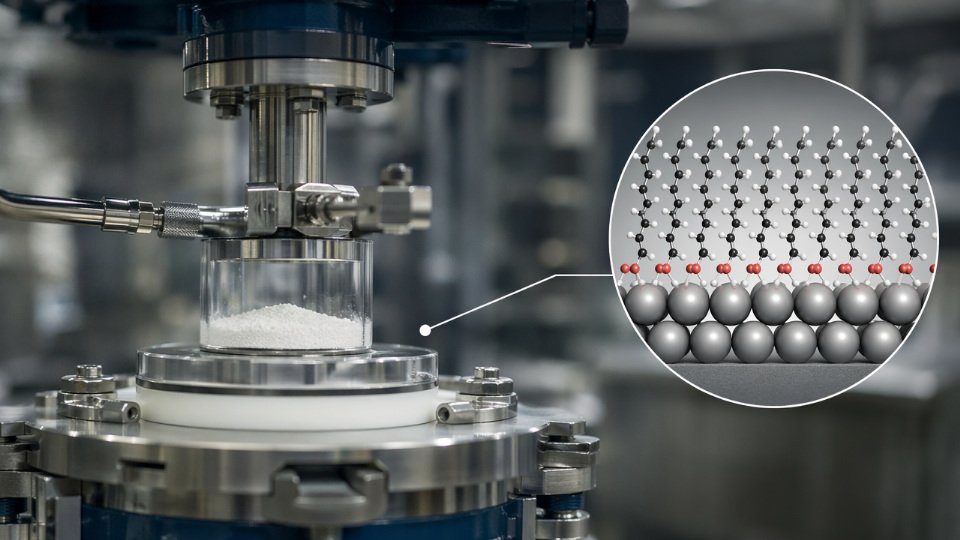
The theoretical monolayer target is approximately 2–4 µmol/m² of filler surface area, which you can calculate from the silane’s molecular footprint (roughly 40–60 Ų per molecule for most aminosilanes and vinylsilanes). Under-dosing leaves uncoupled surface hydroxyls that absorb water and become failure initiation sites. Over-dosing builds a polysiloxane multilayer; that layer has cohesive strength substantially lower than either the filler or the matrix, acting as a built-in delamination plane. For precipitated silica at 150–200 m²/g, a typical vinyltriethoxysilane loading works out to roughly 1–2 wt% on silica — which aligns closely with the 0.5–3 phr rubber compound range when filler loading is accounted for.
Hydrolysis Solution Preparation: Stability Window Is Short
Dissolve silane in 95% ethanol or 80% ethanol/water, add deionized water to bring silane concentration to 1–5%, then acidify to pH 4–5 with glacial acetic acid. Allow 5 minutes for initial hydrolysis before the bath goes live. Methoxysilane solutions should be used within 1 hour — methanol leaves faster, the solution destabilizes quickly. Ethoxysilane solutions are more forgiving, typically stable for up to 4 hours under the same pH conditions. Preparing larger batches to save time is a false economy; a bath that has self-condensed overnight will coat nothing usefully.
Silane coupling agent hydrolysis solutions remain effective indefinitely at room temperature if sealed.False
Hydrolysis and self-condensation continue even in sealed containers. Methoxysilane solutions degrade usably within 1 hour; ethoxysilane solutions within roughly 4 hours at pH 4–5. Extended storage leads to polysiloxane oligomers in solution that deposit as weak boundary layers rather than bonded monolayers.
Quality Control: Four Tests That Actually Confirm Treatment Quality
CHN elemental analysis measures carbon content on the treated filler surface — a direct, quantitative confirmation that organic silane has grafted, not merely adsorbed. Compare measured wt% carbon against the theoretical value from your target loading.
Thermogravimetric analysis (TGA) quantifies organic coating weight. Properly treated precipitated silica should show 5–10 wt% mass loss between 200°C and 600°C. Below 5% suggests under-treatment; significantly above 10% is a multilayer signal worth investigating before the batch ships.
Contact angle measurement provides a fast floor-level pass/fail. A hydrophobized silica or mineral surface should show contact angle above 90° with water; untreated surfaces typically read 10–30°. If a treated batch reads below 70°, reject it.
FTIR spectroscopy is the most mechanistically informative test. Confirm Si–O–Si bond formation from the condensed silane network (peaks around 1050–1100 cm⁻¹) and look for attenuation or disappearance of the isolated silanol stretch at 3740 cm⁻¹, which signals that surface hydroxyls have been consumed by silane grafting.
Common Failures and Their Real Causes
White haze on glass fiber or film substrates almost always means excess silane and incomplete rinsing — lower bath concentration and extend the rinse step. Weak composite interface despite correct silane loading usually points to organofunctional group mismatch with the resin cure chemistry, not a dosing problem. A silane solution that gels overnight was either too concentrated, too alkaline, or stored too long — all three are preventable process choices. Uneven filler treatment with hot-spots and under-treated zones traces back to inadequate mixer tip speed or insufficient temperature uniformity in the mixer jacket, not to silane chemistry.
Frequently Asked Questions About Silane Coupling Agents
What is the difference between a [silane coupling agent](https://siliconchemicals.com/silane-coupling-agents/) and a silane crosslinker?
The distinction matters more than most formulators realize. A coupling agent is explicitly bifunctional — one end bonds to an inorganic surface (glass, silica, metal oxide) through hydrolysis and condensation, the other end reacts with the organic polymer matrix. The molecule is doing two chemically distinct jobs simultaneously. A crosslinker like tetraethoxysilane (TEOS) or methyltrimethoxysilane (MTMS) primarily builds a polysiloxane network within an organic or silicone matrix — it crosslinks chains together rather than anchoring to an inorganic interface. That said, the boundary blurs. TEOS applied to a porous concrete surface does penetrate and condense onto substrate silanol groups, functioning partly as a surface treatment. Context — specifically, whether you need a substrate bridge or an intramatrix network — is what determines which function dominates and therefore which molecule to specify.
Can silane coupling agents be used in waterborne formulations?
Yes, but the processing window is narrow. In aqueous systems, the alkoxy groups hydrolyze quickly, and the silanol intermediates then face a choice: react with the substrate (productive) or self-condense with adjacent silanol groups (wasteful, sometimes disruptive to coating uniformity). The standard approaches are pre-hydrolyzed silane solutions added at controlled pH (typically 4–5 for aminosilanes, 3.5–4 for vinylsilanes), silane-modified latex particles where surface functionalization happens during emulsion polymerization, or dilute addition sequences where the silane is injected into high-shear mixing to minimize dwell time before adsorption. Temperature control matters — reactions above 40°C in water accelerate self-condensation significantly. This is one area where “add and hope” procurement without formulation support leads directly to adhesion failures in the field.
How long does a silane coupling agent treatment last on a substrate?
Under dry, indoor conditions, covalent Si–O–substrate bonds are stable for years — the bond energy is high and there is no hydrolytic driving force. Wet aging is the real variable. Si–O–Si linkages on glass surfaces are highly resistant to hydrolysis across a wide pH range. Si–O–Al bonds on aluminum and Si–O–Fe bonds on steel are measurably more susceptible, particularly in alkaline conditions above pH 9 or acidic conditions below pH 4. For structural adhesive bonds on metal, a chromate-free silane primer may show 5–10 years of durability in salt-spray testing, depending on silane type and topcoat system. For concrete penetrating sealers using isobutyltriethoxysilane or similar alkyls, field data and published civil engineering literature consistently show 8–15 years of effective water repellency — actual service life depends on traffic abrasion, UV exposure, freeze-thaw cycling frequency, and initial concrete porosity.
Is there a universal silane coupling agent?
No. Organofunctional reactivity must match curing chemistry — a methacryloxy silane does nothing useful in an epoxy system without a radical initiator present. That said, aminosilanes such as APTES (3-aminopropyltriethoxysilane) and APTMS (3-aminopropyltrimethoxysilane) come closest to broad compatibility. The primary amine reacts with epoxies, isocyanates, anhydrides, and aldehydes, covering a wide share of industrial thermoset and adhesive chemistries. They are the pragmatic starting point when a new substrate–matrix combination has not been characterized and trial material is limited.
What safety and regulatory considerations apply?
Most silane coupling agents are classified as irritants. Methoxy-functional silanes release methanol on hydrolysis — ventilation controls and air monitoring are required wherever those silanes are handled in bulk. Ethoxy silanes release ethanol, a lower-hazard byproduct, but flash points typically fall in the 35–70°C range depending on molecular weight, so ignition source controls still apply. None of the common coupling agents are classified as CMR (carcinogenic, mutagenic, reprotoxic) under current EU GHS classification. REACH registration is required for import or manufacture above 1 tonne per year in the EU. Storage below 25°C in sealed, moisture-excluding containers is non-negotiable — moisture ingress starts hydrolysis and can render a drum unusable within weeks.
How do I evaluate supplier quality?
A certificate of analysis is the minimum entry point, not a quality guarantee. Request GC purity (≥97% for standard industrial grades), refractive index within the published range, APHA color below 20 for clear grades, water content by Karl Fischer titration below 0.1%, and density confirmation. For incoming quality control, a hydrolysis time test — measuring how quickly a standard dilution reaches a target silanol concentration — gives a rapid functional check. For critical structural applications, request batch-to-batch consistency data across at least six consecutive production lots. Single-lot compliance means little when you are scaling a composite line that will run for years.
Amino-functional silanes are the most broadly compatible coupling agents across epoxy, isocyanate, and anhydride curing chemistriesTrue
The primary amine group undergoes ring-opening with epoxies, addition with isocyanates, and acylation with anhydrides under standard curing conditions, giving amino silanes genuine multi-system reactivity that methacryloxy, vinyl, or mercapto silanes do not match without specific initiators or catalysts.
Why Source Silane Coupling Agents from SiliconChemicals: Supply Chain, Quality, and Global Logistics
Choosing a silane coupling agent supplier is not simply a price-per-kilogram decision. Purity consistency, lead-time reliability, and the ability to resolve a formulation problem at 11 PM before a production run are what separate a strategic partner from a catalogue vendor. Here is why SiliconChemicals operates differently from a trading intermediary or a regional distributor buying finished silane on the spot market.
Manufacturing Within China’s Organosilicon Industrial Clusters
SiliconChemicals’ production facilities sit inside the established organosilicon industrial clusters in Zhejiang and Shandong provinces — two regions that collectively host the majority of China’s chlorosilane and trichlorosilane capacity. That physical co-location matters operationally. Trichlorosilane, methylchlorosilanes, and the alcohol feedstocks (methanol, ethanol, 3-methoxyproanol) required for methoxy- and ethoxy-functional silanes are available within the same industrial park or via short intra-cluster pipelines, not cross-continental shipping lanes.
The practical consequence: when propylene prices spike or a European silane producer curtails output due to energy costs, a spot buyer importing finished material absorbs the full price shock immediately. An integrated manufacturer drawing feedstocks from co-located suppliers carries a buffered raw-material position that dampens that volatility. For procurement managers running quarterly contracts, that insulation translates to more predictable landed cost.
Production Capabilities and Purity Standards
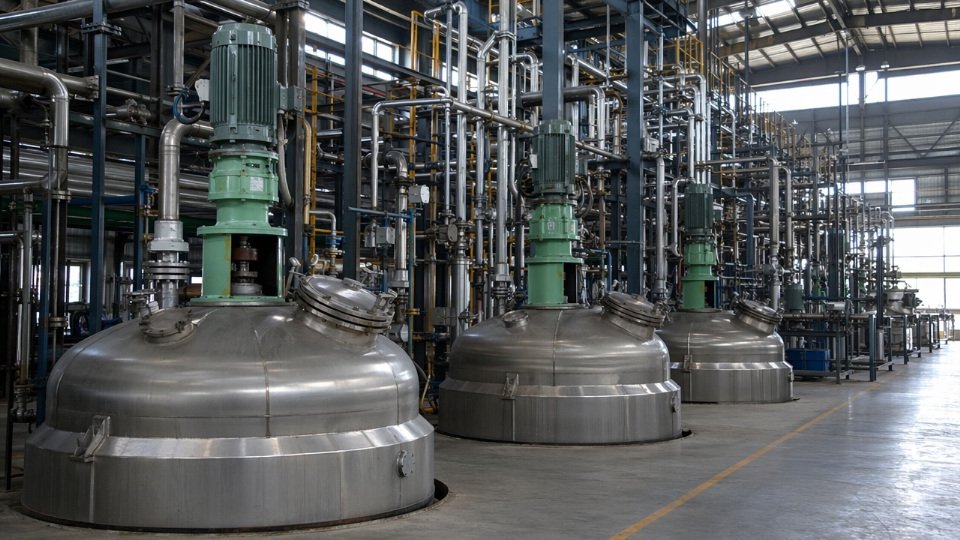
The continuous-flow distillation columns at SiliconChemicals are sized for multi-thousand-tonne annual output across the core product families — vinylsilanes, aminosilanes, epoxysilanes, mercaptosilanes, and methacrylsilanes. Routine production yields silane coupling agents at ≥99.5% GC purity, which matters more than it might seem: a 97% purity material with unknown by-products can interfere with platinum-catalyzed cure systems or with the hydrolysis kinetics controlling silica surface coverage in a tire compound. The plant operates under ISO 9001:2015 certification with full batch traceability. For customers in electronics encapsulation or pharmaceutical-adjacent packaging, GMP-compatible batch documentation — including equipment cleaning records, in-process control logs, and deviation reports — is available on request without a custom audit requirement.
Quality Assurance Infrastructure
Every production lot passes through an in-house analytical laboratory equipped with GC-MS and GC-FID for identity and purity confirmation, ICP-OES for trace metal content (critical for electronics-grade material where iron or chloride contamination causes reliability failures), Karl Fischer titration for moisture control, and FTIR for functional-group verification. Retain samples are stored for three years per lot. If a customer reports an adhesion anomaly six months post-delivery, the retained sample supports root-cause investigation rather than a dispute with no evidence.
Certificates of analysis are issued in English for every shipment. Third-party verification through SGS or Intertek is available on request — not as an add-on negotiation, but as a standard option built into the quality workflow.
SiliconChemicals issues English-language certificates of analysis for every shipment and retains production samples for three years per lotTrue
Both practices are standard within ISO 9001:2015 batch traceability requirements and are operationally confirmed as part of SiliconChemicals' documented QA procedures
Global Logistics Competency
Silane coupling agents are ADR/IMDG Class 3 flammable liquids. Handling them across international borders requires correct UN-rated packaging, accurate dangerous-goods declarations, and a freight network familiar with the regulations. SiliconChemicals ships in 20 L drums, 200 L drums, and 1,000 L IBCs, as well as ISO tank containers for bulk accounts. The logistics team has established lanes to EU ports, North American Gulf and East Coast terminals, Southeast Asian hubs, and the Middle East. Incoterms flexibility runs from FOB Shanghai for buyers with their own forwarders through CIF destination to DDP arrangements for key accounts that prefer a fully delivered price. Typical ex-works lead time to major ports runs 15–25 days depending on product family and order volume — tighter than most spot-market purchases because production slots are reserved for contract customers.
Technical Support That Goes Beyond the Datasheet
Application engineers fluent in English are accessible for formulation troubleshooting, silane selection consultation, and on-site process trials. SiliconChemicals has co-developed specific silane grades with customers in tire compounding, wind blade laminate manufacturing, and electronics underfill systems. That development history — with real trial data behind it — is available to new customers facing analogous technical challenges. When you contact the technical team with a problem, the response draws on plant-floor experience, not a forwarded email from a trading desk.