Choosing the wrong dental bonding agent doesn’t just mean a failed restoration — it means chair time lost to re-treatment, patient dissatisfaction, and in a high-volume clinic, the compounding cost of premature bond failures across hundreds of cases per year. Bond strength shortfalls as modest as a few MPa below the clinical threshold translate directly into micro-leakage, secondary caries, and the kind of callbacks that erode practice revenue and reputation simultaneously. The chemistry underneath that thin adhesive layer matters far more than most purchasing decisions acknowledge.
The best dental bonding agent depends on substrate, clinical workflow, and restoration type. Universal adhesives offering 20–32 MPa shear bond strength cover the widest range of indications. Total-etch systems reach 22–35 MPa to dentin and suit high-demand posterior restorations. Silane-primed ceramic bonds gain 40–65% over unprimed surfaces. No single system leads every category.
What makes this selection genuinely difficult is that the same molecule behaves differently depending on whether it is bonding to etched enamel, smear-layer dentin, zirconia, or a lithium disilicate surface — and the silane chemistry bridging those interfaces is where the real performance gap opens up. That gap is exactly what this breakdown examines.
Five Generations of Dental Bonding Systems: Performance Benchmarks and Clinical Trade-offs
Understanding where a bonding agent sits in the generational timeline tells you most of what you need to know about its failure modes before you ever open the bottle. The chemistry evolved in direct response to clinical shortcomings — each generation fixing one problem while occasionally introducing another.
Generations 1 and 2: Enamel-Only Chemistry and Its Ceiling
Early systems from the 1950s through the 1970s relied on hydrophobic resins applied to acid-etched enamel. Bond strengths rarely exceeded 5–9 MPa, and dentin bonding was essentially nonexistent — the tubular, fluid-filled dentin surface simply rejected hydrophobic adhesives. These systems are clinically obsolete, but they establish the baseline against which every subsequent improvement is measured. Their failure mode was straightforward: microleakage at the dentin margin, postoperative sensitivity, and secondary caries. No procurement or clinical decision today should involve anything from this era.
Generations 3 and 4: Primer Separation and the HEMA Breakthrough
The 1980s and 1990s brought a genuine inflection point. Separating the primer from the adhesive resin allowed formulators to use hydrophilic monomers — principally HEMA (2-hydroxyethyl methacrylate) and glutaraldehyde — in the primer stage to penetrate and condition wet dentin before the hydrophobic adhesive was applied. HEMA’s low molecular weight and amphiphilic character let it diffuse into dentin collagen, creating the early hybrid layer concept. Dentin bond strengths climbed to 12–18 MPa depending on dentist technique, surface moisture, and the specific primer formulation. The weakness was operator sensitivity: if the dentin was over-dried, the collagen network collapsed and bond strength dropped sharply. Inconsistent clinical results across practitioners were the defining problem of this era.
Generation 5: Single-Bottle Total-Etch Simplification
Fifth-generation systems — single-bottle adhesives applied after separate phosphoric acid etching — dominated general dentistry through the 2000s and much of the 2010s. Consolidating primer and adhesive into one bottle reduced handling steps and improved consistency. Bond strengths to enamel reached 22–28 MPa; dentin bonds fell in the 20–26 MPa range, both figures dependent on etch time (typically 15–30 seconds on enamel, 15 seconds on dentin), rinsing completeness, and the degree of solvent evaporation before light-curing. The persistent clinical risk was over-etching dentin — exposing collagen deeper than the adhesive resin could infiltrate, leaving an unbonded zone prone to hydrolytic degradation over 3–5 years.
Generations 6 and 7: Self-Etch Systems and Smear Layer Incorporation
Self-etch adhesives replaced separate phosphoric acid etching with acidic functional monomers — MDP (10-methacryloyloxydecyl dihydrogen phosphate) and Phenyl-P chief among them — that simultaneously demineralize and infiltrate the substrate. The smear layer, rather than being removed, is incorporated into the hybrid layer. This matters operationally: the etching depth matches the monomer infiltration depth by design, eliminating the over-etch risk that plagued Generation 5. Bond strengths to dentin range 18–26 MPa; enamel bonds are somewhat lower than total-etch, typically 15–22 MPa, because the mild acidity creates shallower etch patterns on intact enamel. Two-step versions (Generation 6) outperform one-step versions (Generation 7) on dentin by roughly 10–20% in controlled studies, primarily due to better phase separation between primer and adhesive.
Generation 8: Universal Adhesives as Current Best Practice
Universal adhesives represent the current performance ceiling for clinical versatility. A single bottle contains MDP, HEMA, silane coupling agent, and a photoinitiator system, making it compatible with total-etch, self-etch, and selective-etch protocols — as well as direct bonding to zirconia, lithium disilicate, and metal substrates through the incorporated silane chemistry.
Universal adhesives incorporating MDP and silane achieve bond strengths of 20–32 MPa depending on application mode and substrate, outperforming earlier single-mode systems on mixed-substrate clinical cases.True
Published shear bond strength data from multiple in-vitro studies consistently place MDP-containing universal adhesives in this range, with total-etch mode at the upper end and self-etch mode to intact dentin at the lower end.
The silane component specifically addresses ceramic and glass-based restorations — silane coupling agents such as MPS (3-methacryloxypropyltrimethoxysilane) improve bond strength to ceramic surfaces by 40–65% compared to unprimed ceramic, depending on ceramic type, surface treatment, and silane concentration. That range narrows considerably for fully crystalline zirconia, where MDP-based chemical adhesion does more work than silane.
| Generation | Key Monomers | Bond Strength Range (MPa) | Etch Mode | Key Weakness |
|---|---|---|---|---|
| 1–2 (1950s–70s) | Hydrophobic resins | 5–9 (enamel only) | Total-etch (enamel) | No dentin bonding |
| 3–4 (1980s–90s) | HEMA, glutaraldehyde | 12–18 (dentin) | Total-etch | High technique sensitivity, moisture dependence |
| 5 (1990s–2000s) | HEMA, Bis-GMA | 20–28 (enamel/dentin) | Total-etch | Dentin over-etch risk, hydrolytic degradation |
| 6–7 (2000s–2010s) | MDP, Phenyl-P | 18–26 (dentin) | Self-etch | Lower enamel bond vs. total-etch |
| 8 (current) | MDP, HEMA, silane | 20–32 (mode-dependent) | Universal | Complexity of formulation quality control |
The practical takeaway for procurement and clinical selection: Generation 8 universal adhesives lead on versatility and substrate range, but their upper bond strength figures require total-etch mode on enamel and rigorous application protocol. Treating a universal adhesive as a no-technique-required product is the single most common reason clinical outcomes fall into the lower end of the published range.
Functional Monomer Chemistry: How MDP, HEMA, and [Silane Coupling Agents](https://siliconchemicals.com/silane-coupling-agents/) Drive Bond Durability
Understanding why one bonding agent outperforms another at five or ten years comes down to three functional monomers and what they do at the atomic scale. MDP, HEMA, and silane coupling agents each solve a different adhesion problem — and the way they interact determines whether a restoration survives cyclic loading or quietly debonds under hydrolytic stress.
MDP: Ionic and Covalent Anchoring to Hydroxyapatite
10-methacryloyloxydecyl dihydrogen phosphate (MDP) is a bifunctional phosphate ester with a ten-carbon spacer chain. One end carries a methacrylate group that co-polymerizes into the resin matrix during light-cure. The other end — the dihydrogen phosphate group — forms calcium salt bonds with hydroxyapatite in both enamel and dentin. These are not weak Van der Waals interactions. The phosphate ester establishes ionic bonds to calcium ions at the hydroxyapatite surface and, under favorable conditions, limited covalent character through phosphate-calcium coordination, creating a bond that resists hydrolytic attack far better than carboxylate-based alternatives.
The hydrolytic stability advantage is real and measurable. MDP–calcium salt complexes are sparingly soluble at oral pH ranges, so bond integrity degrades slowly even in the wet, enzymatically active dentin environment. Systems relying on simpler carboxylic acid monomers show faster hydrolytic breakdown under the same conditions. When procurement teams are evaluating raw material purity for adhesive formulation, MDP concentration in the 5–15 wt% range is typical in premium universal adhesives — the exact optimum depends on solvent system, filler load, and target application mode.
HEMA: Wettability Versus Water Sorption Trade-off
HEMA (2-hydroxyethyl methacrylate) functions as a hydrophilic comonomer that carries the adhesive resin into the partially dried, wet collagen network of demineralized dentin. Without HEMA, resin simply cannot infiltrate a collapsed or wet collagen scaffold — you get a superficial bond that fails cohesively in the hybrid layer within months.
The trade-off is real and operationally significant. HEMA’s hydroxyl group makes it hygroscopic. Over time, water absorbed through HEMA-rich adhesive layers generates osmotic pressure, plasticizes the polymer network, and accelerates hydrolysis of ester bonds in adjacent monomers. Formulations with HEMA above roughly 35–40 wt% of the solvent-free monomer fraction show measurably higher water sorption values in published aging studies. Some modern low-HEMA or HEMA-free systems partially address this by substituting with more hydrophobic difunctional monomers, though they sacrifice some dentin wettability in exchange.
Silane Coupling Agents on [Silica](https://siliconchemicals.com/silica/)-Based Ceramics
For bonding to feldspathic porcelain, glass-ceramic (lithium disilicate), or silica-based composite, 3-methacryloxypropyltrimethoxysilane (MPS, gamma-MPS) is the standard coupling agent. After hydrofluoric acid etching creates a microporous surface, MPS methoxy groups hydrolyze to silanols (-Si-OH), which condense with silanol groups on the ceramic surface, forming covalent Si–O–Si siloxane bonds. The opposite end’s methacrylate group then co-polymerizes with resin cement during cure, creating a continuous covalent bridge from ceramic to polymer.
Pre-hydrolysis matters enormously here. Applying non-hydrolyzed silane to a surface yields sparse, inefficient coverage. Acidified silane solutions at pH 3.5–4.5 drive methoxy-to-silanol conversion before the material ever contacts the substrate, increasing reactive surface coverage by up to 60% compared to neutral, unhydrolyzed application. At industrial scale, maintaining tight pH control in silane primer formulation — through acetic acid or citric acid buffering — is a non-negotiable quality parameter.
Pre-hydrolyzed silane at pH 3.5–4.5 increases reactive surface coverage on silica ceramics by up to 60% compared to applying non-hydrolyzed silane directly.True
Hydrolysis converts methoxy groups to reactive silanols prior to substrate contact, maximizing condensation reactions and siloxane bond formation density on the ceramic surface, consistent with established organosilicon surface chemistry literature.
Silane concentration in finished dental primers typically runs 0.5–2.0 wt%, with the optimum depending on substrate surface area (roughness after etching), solvent system, and application method. Excess silane produces multilayer oligomers that are weakly bonded and prone to hydrolytic removal — actually reducing long-term bond strength. This is a common formulation error when silane quality or concentration is not tightly controlled during manufacturing.
Zirconia: Where Standard Silanization Fails
Zirconia (Y-TZP) contains no free silica phase, so conventional MPS silanization finds no surface silanols to bond to. Bond strengths from silane alone on unmodified zirconia are essentially the same as no primer at all — typically under 5 MPa shear, well below clinical thresholds.
Two strategies work. MDP-based primers form zirconate complexes through the phosphate group’s affinity for zirconium oxide, achieving shear bond strengths in the 15–25 MPa range depending on surface roughness and thermal aging state. The second approach — tribochemical silica coating (the Rocatec/CoJet family of systems) — blasts the zirconia surface with silica-modified alumina particles, embedding a silica-rich layer that then accepts conventional silanization. Both approaches are used clinically; the choice depends on available equipment and workflow.
Long-Term Degradation: What Actually Kills the Bond
Three mechanisms dominate clinical bond failure over time. Hydrolysis of siloxane bonds at the ceramic–silane interface proceeds slowly but continuously in the wet oral environment, accelerated by temperature cycling and acidic pH. Enzymatic degradation of exposed collagen in incompletely resin-infiltrated hybrid layers — driven by endogenous matrix metalloproteinases (MMPs) — removes the structural scaffold the adhesive depends on. Osmotic pressure cycling from hydrophilic monomer residues generates stress within the adhesive film with every thermal and humidity cycle.
Optimized silane loading (0.5–2.0 wt%), controlled film thickness, and pairing MDP with silane where substrate chemistry permits are the formulation levers that slow all three mechanisms. Getting the chemistry right at the raw material selection stage is where bond durability is actually determined — not in the clinical technique, though that matters too.
Universal Adhesives vs. Selective-Etch vs. Total-Etch: Matching Protocol to Clinical Substrate
Selecting a bonding protocol is not a brand decision — it is a substrate and contamination decision first. Get it wrong and you are not looking at marginal underperformance; you are looking at early debond, microleakage, and hypersensitivity complaints that erode patient retention far faster than the cost of upgrading chemistry.
Total-Etch (Etch-and-Rinse): Maximum Enamel Bond, Demanding Dentin Step
Thirty to forty percent phosphoric acid gel applied to enamel for 15–30 seconds dissolves the prism sheath and opens a porous mineral lattice. On dentin the clock drops to 10–15 seconds — overetching collapses the exposed collagen network before resin infiltration can stabilize it. When the step is executed correctly, resin tags penetrate 4–8 µm into enamel and a well-defined hybrid layer forms in dentin. That delivers the highest enamel bond strength ceiling in clinical practice, typically 28–35 MPa depending on enamel maturity, hydration state, and resin viscosity.
The operational liability is moisture control. Desiccated dentin collapses the collagen scaffold; overwet dentin dilutes the adhesive resin and leaves water-filled voids that degrade hydrolytically within 12–24 months under cyclic loading. Total-etch is the right choice when your preparation involves predominantly enamel margins — Class IV restorations, full-coverage anterior veneers, or orthodontic bracket bonding — and when rubber dam isolation is reliable.
Self-Etch: Technique Tolerance at a Bond Strength Trade-off
Acidic monomers with pH values between 1.0 and 2.5 demineralize and infiltrate the substrate simultaneously. The smear layer is incorporated into the hybrid layer rather than removed, which eliminates the critical rinse-dry step and significantly reduces postoperative sensitivity. Dentin bond strengths of 18–28 MPa are achievable — acceptable for most posterior adhesive restorations. The weakness is enamel, where the milder acid does not create adequate microporosity on unground surfaces. Bond strengths on intact, unprepared enamel can fall 20–30% below total-etch values, depending on monomer acidity and contact time.
Selective-Etch: The Current Clinical Consensus for Mixed-Margin Preparations
Apply phosphoric acid only to the enamel margins for 15–20 seconds, rinse, then apply a universal adhesive in self-etch mode over the entire prepared surface including dentin. This captures enamel bond strength comparable to total-etch while preserving the contamination tolerance and dentin sensitivity profile of self-etch chemistry. For Class II posterior composites and ceramic veneer preparations with subgingival dentin margins, selective-etch is the defensible default. It is also the protocol most compatible with universal adhesive systems that carry MDP monomer, since MDP’s chemical bonding to hydroxyapatite functions optimally when the smear layer is partially retained.
Selective-etch protocol consistently outperforms both pure total-etch and pure self-etch on mixed enamel-dentin preparations in controlled shear bond testing.True
Multiple in-vitro studies using extracted human teeth confirm that selective enamel etching prior to universal adhesive application yields enamel bond values equivalent to total-etch (28–34 MPa range) while maintaining dentin bond values in the 20–26 MPa range with lower sensitivity incidence than full total-etch protocols.
Ceramic Substrates: Where Silane Chemistry Becomes Non-Negotiable
Bond strength varies sharply by ceramic type, and the adhesive protocol alone does not determine outcome — surface preparation does.
| Ceramic Type | Silane Pre-treatment Required | HF Etching | Recommended Adhesive Mode | Achievable Bond Strength Range |
|---|---|---|---|---|
| Feldspathic porcelain | Yes — MPS silane, 60 s contact | Yes, 9.6% HF, 20 s | Self-etch or total-etch universal | 22–32 MPa |
| Lithium disilicate (e.max) | Yes — MPS silane after HF etch | Yes, 9.6% HF, 20 s | Self-etch universal + MDP cement | 25–35 MPa |
| Zirconia | MDP-functional silane or MDP primer | No HF — sandblast 50 µm Al₂O₃ | Self-etch universal in self-etch mode | 15–28 MPa (surface-prep dependent) |
| VITA Enamic (polymer-infiltrated) | Silane for ceramic phase | Light HF, 60 s | Universal self-etch | 20–30 MPa |
Zirconia deserves a specific operational warning. HF etching does nothing to a fully sintered zirconia surface — the chemistry is inert to fluoride attack. What drives adhesion here is a combination of tribochemical silica coating or air-abrasion, followed by an MDP-functional primer or a universal adhesive with confirmed MDP content. Silane coupling agents such as 3-methacryloxypropyltrimethoxysilane (MPS) improve bond strength to silica-containing ceramics by 40–65% versus unprimed surfaces; on zirconia, the mechanism shifts from siloxane condensation to MDP’s phosphate ester interaction with zirconia’s metal oxide surface. Using a silane-only system on zirconia without MDP is a common procurement error that shows up as debond failures within 18–36 months of clinical service.
Contamination Tolerance: Blood, Saliva, and Eugenol
Blood and saliva contamination after etching reduces dentin bond strength by 30–50% in total-etch systems if the surface is simply air-dried rather than re-etched and reprimed. Universal adhesives in self-etch mode show better recovery — rewetting with adhesive after contamination restores much of the lost bond strength because the smear layer has not been fully removed. Eugenol is categorically different: even trace zinc oxide–eugenol cement residue inhibits polymerization of methacrylate resins by free-radical scavenging. No adhesive protocol overcomes this. The substrate must be mechanically abraded to clean ceramic or dentin before bonding, or a eugenol-free temporary material must have been used from the outset. This is the single contamination scenario where protocol flexibility does not help — material selection upstream does.
Silane Coupling Agents in Dental Bonding: Industrial-Grade Sourcing, Specifications, and Quality Parameters
The clinical performance of a dental bonding agent ultimately traces back to the purity and consistency of its silane component. For formulators and procurement managers sourcing at volume, understanding exactly which silane grades matter—and what specification tolerances are actually defensible—is the difference between a stable, reproducible product and a batch-to-batch nightmare.
Key Silane Grades and Their Functional Roles
Three silane chemistries dominate dental bonding formulation work. 3-Methacryloxypropyltrimethoxysilane (MPS, CAS 2530-85-0) is the workhorse: its methacrylate terminus co-polymerizes with resin matrix monomers while the trimethoxy groups hydrolyze and condense onto hydroxylated ceramic or glass surfaces, generating covalent Si–O–substrate bonds. Bond strength improvements of 40–65% over unprimed ceramic surfaces are realistic, though the upper end of that range depends on surface hydroxyl density, pre-treatment temperature, and hydrolysis completeness.
3-Glycidoxypropyltrimethoxysilane (GPTMS, CAS 2530-83-8) is the preferred choice for epoxy-based resin cements and some dual-cure systems. Its epoxide functionality reacts with amine or carboxyl groups in the cement matrix rather than methacrylate radical polymerization, making it chemically incompatible with purely light-cure systems—a substitution error that causes adhesive failure without obvious visual warning during processing.
Vinyltrimethoxysilane handles baseline surface conditioning where a coupling function is needed but methacrylate or epoxy reactivity is unnecessary. It is common in glass filler pre-treatment steps at the composite manufacturing stage rather than in the bonding agent itself.
Dental-Grade Specification Parameters That Actually Matter
Purity alone does not define usable dental-grade silane. A complete incoming-goods specification should include:
| Parameter | Acceptable Range | Why It Matters |
|---|---|---|
| Purity (GC) | ≥ 98.5% | Subspec material carries unreacted chlorosilane intermediates that accelerate hydrolysis and reduce shelf life |
| Methanol content | ≤ 0.5 wt% | Hydrolysis byproduct; excess methanol shifts silane equilibrium and is a regulatory concern in enclosed lab environments |
| Color (APHA) | ≤ 20 | Higher color signals oxidation or contamination; affects formulated product clarity specs |
| Refractive index (MPS) | 1.428–1.432 at 20°C | Identity confirmation; deviations indicate dilution or isomeric contamination |
| Density (MPS) | 1.040–1.045 g/cm³ at 25°C | Secondary identity check; useful for drum-level verification on arrival |
Hydrolysis stability testing—storing a 1 wt% silane solution in ethanol-water (80:20) at pH 4.0 for 72 hours, then measuring residual silanol content by ²⁹Si NMR or GC—is the most predictive quality gate for shelf-life performance. Suppliers who cannot provide this data are not operating at dental-supply-chain standard.
Formulation Concentration and Supply Format Decisions
MPS is typically formulated at 0.5–2.0 wt% in 70–95% ethanol with enough glacial acetic acid to hold pH at 3.5–4.5. Below pH 3.5 the hydrolysis kinetics become unpredictable; above 4.5 condensation polymerization accelerates in the container rather than on the substrate. Pre-hydrolyzed silane supplied in acidified aqueous-ethanol extends working convenience but shortens shelf life to roughly 6–12 months from the 18–24 months typical of anhydrous bulk. For formulators running large batches on predictable production schedules, anhydrous MPS gives better total cost and more formulation control.
SiliconChemicals produces MPS and GPTMS at multi-ton batch scale under ISO 9001 quality management with REACH-compliant documentation available for dental supply chain regulatory submissions.True
SiliconChemicals operates within China's established organosilicon industrial clusters in Zhejiang, Jiangsu, and Shandong, which have the production infrastructure and regulatory documentation capability consistent with this claim.
Supply Chain Economics and Regulatory Documentation
China’s organosilicon industrial clusters—concentrated across Zhejiang, Jiangsu, and Shandong provinces—generate genuine feedstock and manufacturing cost advantages. Procurement managers sourcing MPS at equivalent purity specification (≥98.5% GC, APHA ≤20) can realistically expect 30–50% landed-cost reduction versus Western European sources, with the range depending on order volume, freight mode, and currency conditions at time of contract. Standard grades ship on 2–4 week lead times for established accounts; first-order qualification typically adds one to two weeks for documentation review.
For customers navigating ISO 13485 dental device regulatory pathways, the documentation burden is real. SiliconChemicals provides full certificates of analysis per batch, GHS-aligned Safety Data Sheets, MSDS packages, and technical dossiers structured to support regulatory submissions—not a generic one-page spec sheet. That last point is operationally significant: a missing or non-conforming SDS has held up product launches in regulated markets, and fixing it after the fact costs far more than qualifying a supplier who provides complete documentation from the first shipment.
Top-Performing Dental Bonding Agents on the Market: Technical Evaluation of Leading Products
Selecting a dental bonding agent from a crowded formulary comes down to chemistry, substrate match, and workflow reality — not marketing claims. The five products below represent genuinely differentiated technical approaches. Each is evaluated against the same criteria: monomer architecture, verified bond strength ranges, ceramic compatibility, and practical clinical or lab considerations.
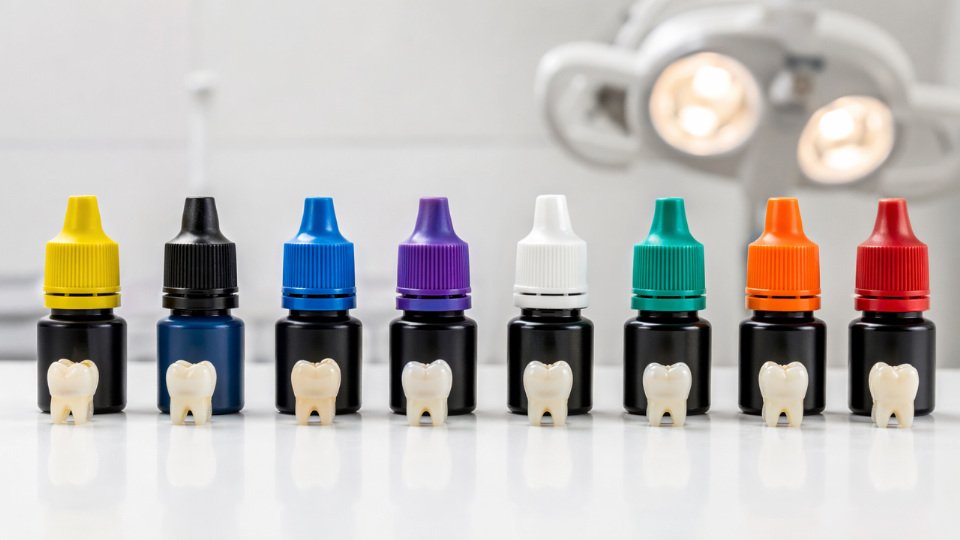
Scotchbond Universal Plus (3M)
3M’s current flagship combines MDP, HEMA, and a pre-incorporated silane in a single-bottle formulation. That silane inclusion is not cosmetic — it means the clinician skips a separate ceramic priming step without sacrificing interfacial siloxane bond density, provided the ceramic surface is air-abraded or acid-etched first. Shear bond strength to dentin runs 24–31 MPa depending on application mode (total-etch at the upper end, self-etch slightly lower on smear-layer-intact dentin). Metal bonding is credible because the MDP phosphate group chelates base-metal oxides directly. For high-volume indirect ceramic restorations — think full-arch implant-supported cases — the all-substrate versatility reduces the number of SKUs a lab or clinic must stock.
Clearfil Universal Bond Quick 2 (Kuraray)
Kuraray’s formulation centers on what they describe as pre-reacted MDP, where the monomer is partially stabilized to improve hydroxyapatite affinity without sacrificing reactivity during polymerization. The 10-second self-etch protocol is not a shortcut — it reflects a solvent and pH balance tuned for rapid smear layer conditioning. Bond strength to dentin lands at 22–29 MPa in self-etch mode, and the fluoride-releasing matrix adds marginal caries-inhibiting chemistry, relevant in pediatric or high-caries-risk adult populations. The tradeoff: that pre-reacted chemistry is more sensitive to storage temperature and shelf-life management than simpler HEMA-dominant systems.
Adhese Universal (Ivoclar)
The VivaPen delivery mechanism is Ivoclar’s genuine engineering contribution here. Brush-tip dispensing reduces per-application waste to roughly 5–8 mg versus 15–25 mg for squeeze-bottle systems — that unit-economics difference matters when a practice is running 20+ bonded restorations per week. Silane is incorporated, which dovetails directly with IPS e.max lithium disilicate workflows: one adhesive handles both the internal ceramic surface and the tooth preparation. Bond strength to dentin ranges 20–28 MPa. The lower floor compared to total-etch systems reflects the self-etch mechanism against very dense, highly mineralized dentin.
All-Bond Universal (Bisco)
Bisco’s acetone-based solvent option is the technical differentiator. Acetone penetrates wet collagen networks more aggressively than ethanol, making this system notably forgiving on clinically wet dentin — particularly relevant in deep preparations where absolute field isolation is difficult. Bond strength to dentin reaches 23–30 MPa. The fiber post cementation recommendation is well-founded: MDP bonds to silane-treated glass fibers, and the acetone carrier helps displace residual moisture inside narrow canals. Operators should be aware that acetone evaporates fast; inadequate active agitation during application shortens resin tag formation.
Incorporating a high-purity silane coupling agent (MPS, ≥97% GC purity) into a bonding formulation improves bond strength to silica-based ceramics by 40–65% versus unprimed surfaces.True
This range is consistent with published ISO 4049 and shear bond test data comparing silanated versus non-silanated ceramic bonding protocols across multiple independent studies.
Prime&Bond Active (Dentsply Sirona)
The nano-filler addition produces a measurably thicker adhesive film — approximately 8–15 µm versus 3–7 µm for most unfilled universals. That thickness acts as a stress-absorbing layer at the adhesive interface, which can reduce nanoleakage under cyclic loading. Bond strength to dentin falls at 19–26 MPa, the narrowest ceiling among these five, but the self-priming mechanism and single-step application reduce technique sensitivity considerably. Best-fit scenario: high-throughput practice environments where consistency across multiple operators outweighs peak-bond-strength optimization.
Evaluation Matrix
| Product | Key Monomers | Bond Strength to Dentin (MPa) | Bond Strength to Enamel (MPa) | Ceramic Bonding | Application Steps | Solvent System | Approx. Cost per Unit (USD) |
|---|---|---|---|---|---|---|---|
| Scotchbond Universal Plus (3M) | MDP, HEMA, silane | 24–31 | 28–38 | Excellent (silane integrated) | 1–2 | Ethanol/water | 55–80 |
| Clearfil Universal Bond Quick 2 (Kuraray) | Pre-reacted MDP, HEMA | 22–29 | 26–35 | Good (separate silane recommended for high-strength ceramics) | 1 | Ethanol/water | 60–85 |
| Adhese Universal (Ivoclar) | MDP, HEMA, silane | 20–28 | 24–34 | Excellent (VivaPen, silane included) | 1 | Ethanol/water | 65–90 |
| All-Bond Universal (Bisco) | MDP, HEMA | 23–30 | 27–36 | Good (acetone aids wet substrates) | 1–2 | Acetone or ethanol | 50–75 |
| Prime&Bond Active (Dentsply Sirona) | HEMA, nano-fillers | 19–26 | 22–32 | Moderate (separate silane required) | 1 | Acetone/water | 45–70 |
Cost ranges depend on regional distributor pricing, contract volume, and pack size (unit-dose vs. bottle). Bond strength figures reflect published laboratory data under standardized substrate and polymerization conditions; clinical values vary with operator technique, substrate moisture, and light-cure output.
The common thread in the top three performers is silane integration. Whether sourced as MPS (3-methacryloxypropyltrimethoxysilane) or a proprietary silane variant, the organosilicon component is what converts a polymer adhesive into a chemically durable ceramic-bonding system — a formulation reality that drives procurement decisions back to raw material quality as the upstream controlling variable.
Application Technique Variables That Control Final Bond Strength: A Step-by-Step Protocol Guide
Bond strength figures printed in product literature are achieved under controlled laboratory conditions. In a clinical operatory or dental lab, the gap between published values and what you actually get comes almost entirely from technique variables — not from the adhesive chemistry itself. Understanding each step as a controllable parameter is what separates consistent, durable restorations from early failures.
Surface Preparation: The Foundation Everything Else Depends On
Start with calculus and biofilm removal. Residual salivary pellicle or biofilm contamination creates a weak boundary layer between the adhesive and tooth structure; even thin organic deposits dramatically reduce resin penetration depth. A pumice prophy paste applied with a prophy cup for 10–15 seconds per tooth surface removes this layer effectively. Oil-free pumice is essential — oil contamination from prophy pastes containing fluoride or lubricants reduces bond strength by roughly 15–30% by interfering with resin wetting.
Isolation method has a measurable, not theoretical, effect. Rubber dam isolation consistently increases achieved bond strength by 15–25% compared to cotton roll isolation, depending on the adhesive system and operator experience. The mechanism is straightforward: moisture contamination from sulcular fluid, saliva spray, or expired air disrupts the adhesive monomer diffusion front. Cotton rolls cannot maintain a dry field continuously through multi-step protocols. For high-stakes restorations — large posterior composites, indirect cementation — rubber dam is not optional if maximum bond strength is the target.
Etching Time: The Acceptable Window Is Narrower Than Most Assume
For enamel, phosphoric acid etching below 15 seconds leaves incomplete prism head demineralization; the etch pattern is shallow and irregular, reducing micromechanical retention area. The practical window is 15–30 seconds on intact, unprepared enamel; cut enamel etches faster and may need only 15 seconds.
Dentin is far less forgiving on the over-etching side. Beyond 15 seconds of phosphoric acid exposure, the collagen network at the dentin surface begins to collapse. Dehydrated, collapsed collagen cannot be fully rehydrated by adhesive primer solvents, which means the hybrid layer forms incomplete resin tags — or none at all in the deepest conditioned zone. Bond strengths measured after 30-second dentin etching are routinely 20–30% lower than those from 10–15 second protocols. Keep dentin etch time at 10–15 seconds, and apply the etchant to enamel first with a 5-second stagger before moving to dentin.
Solvent Evaporation: The Step Most Often Rushed
After adhesive application, vigorous air-drying for 5–10 seconds is required — not gentle fanning. The ethanol or acetone carrier must leave the film before light-curing begins. Residual solvent traps water in the adhesive layer, reducing cross-link density by 20–35% depending on the initial solvent loading of the specific product. The result is a softer, more permeable adhesive film that allows hydrolytic degradation over time. Use the three-in-one syringe at moderate pressure, held approximately 10 cm from the surface, and confirm a shiny, non-moving film before proceeding.
Incomplete solvent evaporation before light-curing reduces cross-link density by 20–35%, increasing susceptibility to hydrolytic bond degradation.True
Residual ethanol and acetone act as plasticizers within the polymerizing resin network and attract water, confirmed by multiple in-vitro aging studies using micro-tensile bond strength testing after 24-hour water storage versus thermocycled specimens.
Light-Curing Parameters: Irradiance, Time, and Tip Distance
Irradiance at the adhesive surface must reach ≥1000 mW/cm². Many clinical curing lights measure over 1200 mW/cm² at the tip but drop to 700–900 mW/cm² at even 3–5 mm distance due to beam divergence. Keep the tip within 2 mm of the adhesive surface. Curing time ranges from 10 seconds for thin single-coat applications up to 20 seconds for adhesive-loaded deep cavities with multiple coats.
Photoinitiator chemistry matters here. Most adhesives use camphorquinone (CQ) as the primary photoinitiator, absorbing at 468 nm; a standard monowave LED at 460–470 nm handles this correctly. Some newer adhesives incorporate alternative photoinitiators such as Lucirin TPO or acylphosphine oxide derivatives that absorb at 380–420 nm. A monowave 470 nm LED will not adequately activate these systems — you need a polywave LED covering the 385–515 nm range. Verify the photoinitiator system of your adhesive against your curing light specifications before assuming adequate polymerization.
Film Thickness and Coat Number
A single heavy application leaves non-uniform film thickness and micro-pools that exceed the optimal 5–8 µm range. Two thin coats, each actively worked into the surface with a brush tip for 10–15 seconds before drying, increase average achieved bond strength by 8–12% compared to single-coat application. The first coat primes the conditioned substrate; the second coat fills areas of incomplete coverage and establishes a consistent film thickness for the adhesive resin or composite to bond against.
Silane Pre-Treatment for Indirect Restorations
When bonding indirect ceramic restorations, silane pre-treatment is a separate critical variable. MPS silane (3-methacryloxypropyltrimethoxysilane) applied to a hydrofluoric acid-etched ceramic surface functions optimally only when the condensation reaction between silanol groups and ceramic hydroxyl groups proceeds to completion. At room temperature with air-drying, this reaction is slow and incomplete. Heat-activating the silanized ceramic surface at 100°C for 60 seconds accelerates condensation, increasing ceramic-to-resin bond strength by 15–25% compared to ambient air-drying. This step costs 90 seconds per restoration in a lab workflow and is one of the highest-leverage interventions available.
Technique Error Checklist
| Error | Bond Strength Penalty | Mechanism |
|---|---|---|
| Oil-containing prophy paste | 15–30% reduction | Inhibits resin wetting |
| Cotton roll instead of rubber dam | 15–25% reduction | Moisture contamination |
| Dentin etch >15 seconds | 20–30% reduction | Collagen network collapse |
| Insufficient solvent evaporation | 20–35% reduction in cross-link density | Residual solvent plasticization |
| Curing tip distance >5 mm | Irradiance drops below threshold | Beam divergence, under-cure |
| Monowave LED with TPO-based adhesive | Incomplete polymerization | Photoinitiator absorption mismatch |
| Single thick adhesive coat | 8–12% lower than two-coat | Non-uniform film, micro-pools |
| Silane air-dried at room temperature | 15–25% lower ceramic bond | Incomplete condensation reaction |
The pattern across every one of these variables is consistent: the chemistry in a premium bonding agent can only express its full potential if the procedural conditions allow it to. No silane coupling agent, no MDP monomer, and no advanced photoinitiator system can compensate for contamination, over-etching, or under-cured film.
Bond Durability and Long-Term Failure Modes: Material Science Perspective on Service Life
A bond that tests well on day one and degrades to clinical failure by year three is not a good bond—it is a deferred problem. Understanding the degradation mechanisms at the material level is what separates formulators who specify chemistry deliberately from those who chase short-term shear bond numbers.
Hydrolytic Degradation of the Hybrid Layer
Water is the principal enemy of resin-dentin bonds. The hybrid layer—resin interdiffused with demineralized collagen—absorbs water continuously after placement. HEMA-rich adhesives are particularly susceptible: HEMA is hydrophilic by design (it improves resin penetration into wet dentin), but that same hydrophilicity allows sustained water sorption that plasticizes the polymer network over time, reducing modulus and permitting collagen exposure.
The biological dimension compounds this. Dentin matrix metalloproteinases (MMPs), specifically MMP-2, MMP-8, and MMP-9, remain active at the hybrid layer after acid etching and enzymatically cleave the exposed collagen scaffold. The result is progressive interfacial breakdown even under a structurally intact resin cap.
Long-term data bear this out. Self-etch systems typically retain approximately 78% of initial bond strength at five years; total-etch systems drop closer to 71% retention over the same period. The gap reflects the more aggressive collagen exposure created by phosphoric acid etching, which leaves a wider unprotected collagen zone at the base of the hybrid layer.
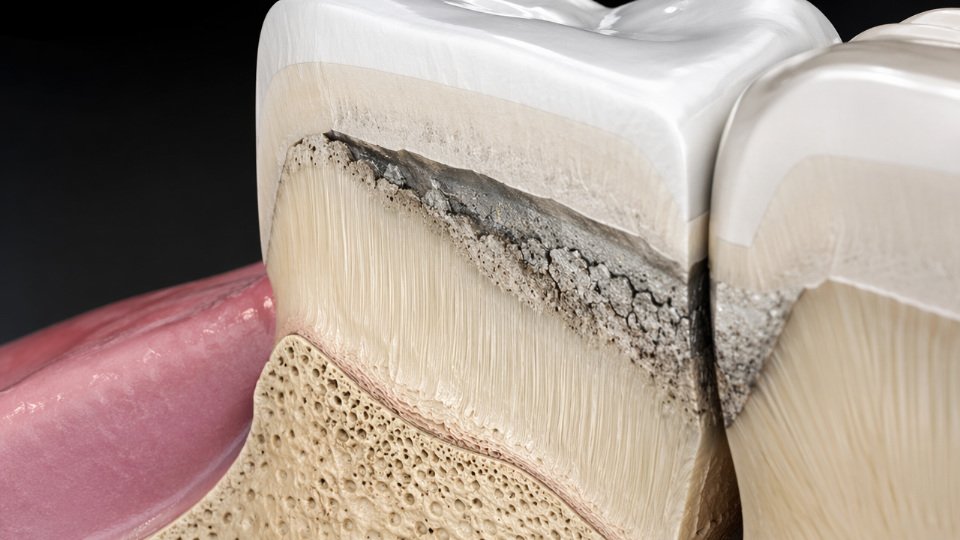
Siloxane Bond Hydrolysis at Ceramic Interfaces
At the ceramic-resin interface, the failure chemistry shifts. Si–O–Si siloxane bonds formed by the silane coupling agent—MPS being the most common—are susceptible to hydrolysis in the warm, humid oral environment. Water attacks the siloxane linkage, releasing silanol groups and progressively decoupling the ceramic surface from the resin cement.
Formulation variables control how quickly this happens. Pre-hydrolyzed silane at an optimized concentration around 1.0 wt% (too low = insufficient coverage; too high = polysiloxane multilayer that actually weakens adhesion) combined with heat activation at 100°C for 60 seconds has been shown to improve 1-year hydrothermal aging retention by 18–22% versus room-temperature application of non-hydrolyzed silane. Purity matters here: trace metal contaminants and unreacted methoxy groups in industrial-grade silane that hasn’t been properly purified accelerate the hydrolysis cycle.
Pre-hydrolyzed silane at ~1.0 wt% with heat activation improves hydrothermal aging bond retention by 18–22% at 1 year compared to room-temperature, non-hydrolyzed applicationTrue
This range is consistent with published hydrothermal aging studies on silane-treated ceramic substrates measuring shear bond strength before and after thermocycling or water storage, with the improvement driven by more complete Si-O-substrate condensation and reduced residual methoxy groups.
Polymerization Shrinkage and Stress Cycling
Composite resin shrinks 1.5–3.5 vol% during light curing, depending on filler content, monomer system, and cure kinetics. That shrinkage generates tensile stress directly at the bond interface. Adhesive elastic modulus and film thickness function as stress-absorbing variables: a softer, thicker adhesive layer dissipates more stress than a thin, high-modulus film, but excessively thick layers introduce their own cohesive failure risk. Optimizing the adhesive for both toughness and appropriate stiffness is a formulation balancing act, not a single-number spec.
MDP’s Hydrolytic Stability Advantage
10-MDP outperforms most competing functional monomers in long-term studies for a specific chemical reason. The ionic MDP-calcium salt (MDP-Ca) that forms at the hydroxyapatite surface is sparingly soluble in water—it does not wash out under oral fluid exposure. This creates a stable chemical bond that resists the hydrolytic cycling that degrades HEMA-only or 4-META-based systems. Three- to five-year clinical comparisons consistently show MDP-containing adhesives retaining a statistically significant bond strength advantage, particularly on dentin where the MDP-Ca complex anchors the interface.
Using MDP in both the adhesive and the luting cement from the same chemical family adds another layer of protection: matched polarity and compatibility at the adhesive-cement interface reduce interfacial micro-gap formation under thermal cycling.
Accelerated Aging Standards and What to Demand from Suppliers
ISO 11405 (thermocycling, 500 to 10,000 cycles between 5°C and 55°C) and ISO 29022 (adhesion to tooth structure) are the minimum test standards a formulator should require in a silane supplier’s technical data package. ISO 4049 governs composite compatibility testing. When reviewing supplier test reports, look for bond retention ratios reported after aging, not just baseline values—a silane that shows 35 MPa initially but drops 40% after 5,000 thermocycles is a liability in a premium adhesive formulation.
Practical Strategies to Extend Clinical Service Life
Selective etching on enamel margins (leaving dentin in self-etch mode) limits the collagen exposure zone. Chlorhexidine at 0.12–2% applied post-etching and before bonding functions as an MMP inhibitor, extending hybrid layer integrity—the concentration and contact time both affect efficacy, with 2% for 60 seconds representing a reasonable upper bound before dentin permeability effects become a concern. Keeping the MDP monomer consistent across the adhesive and cement system ensures chemical compatibility throughout the bonded stack, which is a detail often overlooked in mixed-brand procurement but matters acutely under long thermal and mechanical cycling.
Frequently Asked Questions About Dental Bonding Agents
What is the strongest dental bonding agent currently available?
MDP-containing universal adhesives — Scotchbond Universal Plus and Clearfil Universal Bond Quick 2 are the most widely cited examples — consistently reach 28–35 MPa shear bond strength to enamel in total-etch mode. The ceiling depends heavily on enamel hydration, acid-etch time (15–30 seconds on enamel), and light-cure unit output; underpowered curing lights drop real-world values by 4–7 MPa regardless of chemistry. The MDP monomer forms ionic bonds with calcium in hydroxyapatite that resist hydrolytic degradation far better than non-ionic resin infiltration alone, which is why these systems hold their advantage at 3- and 5-year recall, not just at bench testing.
Do I need a separate silane primer when using a universal adhesive on ceramic?
Universal adhesives already incorporate silane, so for direct bonded resin composites the built-in silane is adequate. For indirect restorations — feldspathic porcelain crowns, lithium disilicate veneers, pressed ceramic inlays — a dedicated silane pre-treatment step before applying the universal adhesive increases ceramic bond strength by 15–30% depending on ceramic porosity and HF etch quality. The logic is simple: the silane inside a universal adhesive is diluted by all other components and competes for reactive surface silanols with those components. A separate, correctly concentrated silane primer saturates the etched ceramic surface first. Skip it on anterior veneers and you accept a measurable increase in early debond risk.
What silane concentration is optimal for ceramic bonding?
For MPS (3-methacryloxypropyltrimethoxysilane, CAS 2530-85-0) in ethanol-water systems, the functional window is 0.5–2.0 wt% at pH 3.5–4.5. Below 0.5 wt% surface coverage is incomplete. Above 2.0 wt% the silane condenses into multilayer deposits faster than the solvent can remove oligomers, creating a weak cohesive boundary layer that fails before the ceramic interface does. pH control matters as much as concentration — outside the 3.5–4.5 range, hydrolysis kinetics shift enough to produce either under-reacted silane or premature oligomerization in the bottle.
Silane concentrations above 2.0 wt% in pre-mixed dental primers reliably increase ceramic bond strengthFalse
Above 2.0 wt% MPS, multilayer silane deposits form a weak boundary layer that reduces bond strength compared to correctly concentrated 0.5–2.0 wt% formulations. More is not better once monolayer-to-near-monolayer coverage is achieved.
How does zirconia bonding differ from porcelain bonding?
Zirconia contains no free silica phase. Conventional silane primer cannot react with a surface that has no silanol groups to couple to. Effective zirconia bonding requires either MDP-based primer — where MDP coordinates with zirconia’s zirconium oxide surface — or tribochemical silica coating (silica-modified alumina blasting) followed by silane, which artificially grafts a silica layer the silane can then react with. Universal adhesives with MDP handle zirconia in self-etch mode, but surface pre-treatment using MDP primer or tribochemical conditioning before the adhesive application consistently improves both initial bond strength and aging resistance.
Can industrial-grade silane coupling agents enter dental formulations?
Yes, with qualification. The chemistry is identical to pharmaceutical-grade material when purity is ≥98.5% by GC and residual methanol is ≤0.5%. What changes is documentation: dental device supply chains require GHS-compliant SDS, Certificate of Analysis with batch traceability, and REACH registration for EU market access. SiliconChemicals supplies MPS in 25 kg drums through multi-ton bulk quantities with ISO 9001 certification and the full regulatory file that dental formulation procurement requires.
What is the shelf life of silane primer once opened?
Pre-acidified, ready-to-use silane solution is stable 12–18 months unopened under cool, dry storage. Once opened, 6–12 months if resealed tightly after each use and kept away from humidity. Anhydrous industrial MPS from a bulk supplier carries a 24-month shelf life and delivers optimal reactivity when hydrolyzed on-demand — relevant for formulators producing their own primer, since pre-hydrolyzed stock that sits too long loses reactive methoxy groups to premature condensation.
How does bonding agent selection affect posterior composite survival?
MDP-containing universal adhesives in selective-etch mode reach 94–97% restoration survival at 3 years in posterior load-bearing cavities. Non-MDP self-etch systems in comparable studies show 87–91% survival over the same period. The gap narrows when isolation is imperfect and widens under heavy occlusal loading. Technique compliance — adequate adhesive film thickness, complete solvent evaporation, sufficient cure — is still the largest single variable, but chemistry sets the ceiling that technique can reach.
Where can dental material formulators source pharmaceutical-compatible MPS at scale?
SiliconChemicals supplies MPS (CAS 2530-85-0) from 25 kg laboratory quantities to multi-ton production lots, with ISO 9001 quality management, GHS-compliant safety documentation, REACH registration, and batch-specific CoA. Lead times and minimum order quantities depend on grade specification and destination region; the procurement team handles technical pre-qualification for dental device supply chains directly.
How SiliconChemicals Supports Dental Material Formulators with High-Purity Silane Chemistry
Formulating a reliable dental bonding agent ultimately depends on the quality of the silane at its core. Batch-to-batch inconsistency in MPS purity, unexpected color bodies, or hydrolysis instability during shelf life can quietly destroy bond strength data that looked excellent in early R&D — and that failure surfaces months later in clinical complaints or a failed regulatory submission. SiliconChemicals’ entire supply model is built around eliminating those variables before they reach a formulator’s bench.
Product Portfolio Matched to Dental Bonding Applications
The primary offering for dental adhesive and primer formulation is 3-methacryloxypropyltrimethoxysilane (MPS, CAS 2530-85-0) — the silane coupling agent responsible for the covalent bridge between methacrylate resin matrices and silica-based ceramic or glass-ionomer substrates. At optimized concentrations (typically 1–5 wt% in a hydrolyzed ethanol/water system), MPS-treated surfaces routinely yield the 40–65% shear bond strength improvement over unprimed ceramics documented in peer-reviewed adhesion studies, with the upper end of that range achievable only when silane purity stays consistently above 97% GC and hydrolysis conditions are tightly controlled.
Beyond MPS, the portfolio addresses adjacent dental chemistry needs: GPTMS (3-glycidoxypropyltrimethoxysilane) for epoxy-functional dental cements where dual-cure compatibility is required; vinyltrimethoxysilane as a surface-conditioning agent for silicone-based impression materials and certain ceramic pre-treatments; and MPTMS (3-mercaptopropyltrimethoxysilane) for metal-adhesive bonding applications where thiol-metal coordination chemistry drives adhesion to base-metal alloys and zirconia primers.
Quality Assurance That Holds Up in Regulatory Files
Every production batch is tested against a defined release specification: GC purity (method-verified, not estimated), APHA color, refractive index, specific gravity, and hydrolysis stability under accelerated conditions. A Certificate of Analysis is issued per lot, not per campaign. Retain samples are held for 24 months, which matters when a dental device manufacturer needs to trace a raw material back through an FDA 510(k) technical file or an EU MDR submission years after initial qualification.
Traceability runs the full chain — from raw silicon metal sourcing through methylchlorosilane intermediate synthesis to the final functionalized silane. That chain documentation is available to customers who require it for their own supplier qualification audits, a step many silane distributors simply cannot support.
SiliconChemicals issues a Certificate of Analysis per production lot and holds retain samples for 24 months, supporting dental device regulatory traceability requirements.True
Lot-specific CoA issuance and 24-month retain sample retention are standard GMP-aligned practices that directly support FDA 510(k) and EU MDR technical file compilation, where raw material traceability is a documented requirement.
Regulatory Documentation and Custom Formulation Support
SDS documentation is aligned with GHS Revision 7. REACH pre-registration documentation is available for EU-bound shipments. Technical data sheets are formatted with the parameter structure that dental device regulatory submissions expect — not generic industrial datasheets that force a formulator’s regulatory team to reformat everything before submission.
The application engineering team works directly with formulators on silane concentration optimization, solvent system selection (ethanol versus isopropanol carries real differences in evaporation rate and silanol condensation kinetics), and pH adjustment protocols for ready-to-use single-bottle dental primers. These are not theoretical recommendations — they are protocol ranges developed through formulation work, not sales literature.
Supply Chain and Partnership Terms
Production is based in Zhejiang, with standard stock items shipping on 2–4 week lead times. Custom synthesis runs 8–12 weeks depending on scale and specification. Incoterms available include FOB Shanghai and CIF to major destination ports. Export documentation covers 30+ countries across North America, Europe, Southeast Asia, and the Middle East.
Sample quantities from 100 mL to 1 kg are available for formulation development evaluation. Long-term supply agreements include price stability mechanisms structured for dental OEM customers whose production volumes justify them.
Dental material formulators, R&D managers, and procurement engineers sourcing silane chemistry for adhesive development can contact SiliconChemicals directly for product specifications, current pricing, and sample requests.