1. Introduction: A New Phase of Technological and Industrial Transformation
In 2025, silicone materials (organosilicon materials) entered a new stage of accelerated development in both scientific research and industrial applications. Under the dual forces of global decarbonization policies (“dual-carbon” targets) and rapidly growing demand from advanced manufacturing sectors, the silicone industry is undergoing a multidimensional transformation characterized by:
- Deep technological breakthroughs
- Green circular restructuring
- Expansion of application scenarios
These three dimensions are simultaneously driving the upgrading of the global silicone industry.
Silicone materials—primarily polysiloxane-based polymers—are widely used in electronics, energy, automotive, construction, textiles, medical devices, and emerging technologies. Their unique combination of thermal stability, flexibility, chemical resistance, dielectric insulation, and weather durability has made them essential functional materials in modern industry.
According to multiple industry analyses, the global silicone market size exceeded USD 20–22 billion in 2024 and is expected to continue growing with a compound annual growth rate (CAGR) of around 6–7% through 2030. China currently accounts for the majority of global production capacity, particularly in silicone monomers and polysiloxanes, and plays a central role in the global supply chain.
Against this backdrop, both scientific research breakthroughs and industrial structural transformation are reshaping the silicone sector.
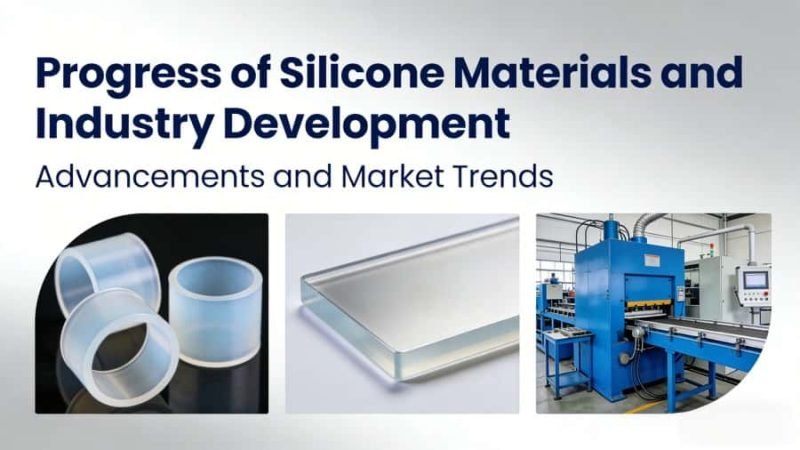
 progress of silicone materials and industry development 2026
2. Scientific Breakthrough: Room-Temperature Recycling of Polysiloxanes
One of the most significant recent breakthroughs in silicone research has been the development of low-temperature chemical recycling technology for polysiloxanes.
A research team recently published a major study in the journal Science, demonstrating a novel Ga/BCl₃ cooperative catalytic depolymerization system capable of converting cross-linked silicone waste into valuable chemical intermediates.
Key Features of the Technology
The study reported that:
- The system uses a gallium (Ga) and boron trichloride (BCl₃) synergistic catalytic system
- The reaction occurs at 40 °C under atmospheric pressure
- It enables efficient depolymerization of cross-linked silicone waste, including:
- Waste silicone rubber
- Waste silicone oil
- Other cross-linked polysiloxane materials
The process converts these waste materials into chlorosilanes, which are key intermediates for producing new silicone materials.
Performance Results
The research demonstrated:
- Depolymerization yields exceeding 90%
- Efficient conversion of cross-linked silicone materials that were previously difficult to recycle
- The first demonstration of near-room-temperature closed-loop recycling of silicone materials
This breakthrough represents a major advancement in silicone circular economy technologies.
Industry Significance
Historically, recycling silicone materials has been challenging because:
- Polysiloxane networks are highly stable
- Cross-linked silicone rubber cannot easily be remelted
- Traditional recycling often requires high-temperature pyrolysis above 400 °C
The newly reported catalytic process dramatically reduces the energy requirements, enabling low-energy chemical recycling. If scaled industrially, it could transform the environmental footprint of silicone materials and support the creation of closed-loop silicone supply chains.
3. Green Transformation of the Silicone Industry
A major transformation is also occurring within the industrial structure of the silicone sector, driven by two key forces:
- Renewable energy integration
- Circular material systems
This transformation is reshaping the entire value chain, from raw material production to downstream applications.
3.1 Raw Material Innovation
In the upstream segment, innovation is occurring in both raw material design and feedstock sourcing pathways.
For example, Cangzhou Dahua Group recently developed a 20% silicon-containing copolycarbonate material, which successfully completed its first industrial trial production.
By incorporating silicone functional groups into polycarbonate, the new material significantly improves several performance parameters:
- Flexibility
- Low-temperature resistance
- Synergistic flame retardancy
- Processing fluidity
Such hybrid materials demonstrate the growing trend of silicone-polymer composite innovation, enabling enhanced performance in engineering plastics.
3.2 Industrial Layout Optimization
China has gradually formed a distinctive industrial spatial structure for the silicone industry:
“Energy Base + Innovation Hub” Model
- Xinjiang and Inner Mongolia – energy and silicon metal production bases
- Yangtze River Delta (Shanghai–Jiangsu–Zhejiang) – application development and advanced materials innovation center
This geographic structure reflects the industry’s dependence on energy-intensive upstream processes combined with high-value downstream applications.
3.3 Full Industrial Chain Integration
Leading Chinese silicone companies such as:
- Hoshine Silicon Industry
- Zhejiang Xinan Chemical Industrial Group
- Dongyue Group
have established vertically integrated industrial chains covering:
- Industrial silicon production
- Silicone monomer synthesis
- Polysiloxane intermediates
- Downstream silicone products
This “industrial silicon → silicone monomer → end-use products” integrated model allows companies to maintain tighter cost control and supply chain stability.
3.4 Renewable Energy Integration
Energy consumption is a critical factor in silicone production, especially in the production of industrial silicon, which requires large amounts of electricity.
A notable innovation has been introduced by Hoshine Silicon Industry in Xinjiang, which pioneered the “hydropower-silicon integrated production model.”
Under this model:
- Industrial silicon plants are directly powered by hydroelectric power
- Renewable electricity significantly reduces the carbon footprint
According to company disclosures and industry estimates, this system has reduced carbon emissions per unit of production by approximately 63%.
As a result, renewable electricity sources such as hydropower and photovoltaic power are becoming critical energy inputs for silicon production, directly influencing production costs and global competitiveness.
 progress of silicone materials and industry development 2026
4. Rapid Expansion of Silicone Applications
The rapid development of new energy, robotics, and advanced electronics is expanding the application scope of silicone materials.
4.1 Electric Vehicles
Demand for silicone materials in the electric vehicle (EV) sector continues to grow rapidly.
According to industry forecasts:
- Global new energy passenger vehicle production may reach approximately 16 million units in 2025
Silicone materials are widely used in EV power batteries for:
- Potting compounds
- Thermal interface materials
- Electrical insulation materials
Domestic production of these key silicone materials is increasing rapidly.
Industry estimates suggest that the localization rate of these materials in China may rise from about 45% in 2023 to approximately 62% by 2025.
4.2 Humanoid Robots
Emerging robotics applications are creating entirely new demand for advanced silicone materials.
Humanoid robot projects such as:
- Tesla Optimus
- XPeng IRON
have reportedly adopted high-rebound addition-cure silicone elastomers for artificial skin.
These materials offer:
- High elasticity
- Soft tactile properties
- Durability and environmental resistance
Industry analysts expect that global demand for silicone materials in robotics could grow rapidly by 2026 as humanoid robotics move closer to commercial deployment.
4.3 Flexible Electronics and Wearables
Another emerging field is flexible electronics and wearable devices.
Researchers have developed graphene–silicone hybrid electrode materials, which offer:
- Flexibility
- Washability
- High electrical conductivity
- Mechanical durability
These materials provide new packaging solutions for next-generation wearable electronics, including smart textiles and health monitoring devices.
4.4 Silicone Leather
Silicone leather is also emerging as a new high-performance material.
Compared with traditional synthetic leather (such as PU or PVC leather), silicone leather offers several advantages:
- Higher durability
- Excellent weather resistance
- Lower VOC emissions
- Better environmental performance
As a result, silicone leather is gaining attention in industries such as:
- Automotive interiors
- Furniture
- Consumer electronics
- High-end fashion materials
 progress of silicone materials and industry development 2026
5. A Strategic Turning Point for the Silicone Industry
The year 2025 represents a critical turning point for the silicone industry’s transition from quantitative growth to qualitative transformation.
Several major structural trends are becoming increasingly clear:
Intensified Competition in Base Materials
Competition in upstream silicone intermediates remains intense as global capacity continues to expand.
Large companies are increasingly pursuing industrial chain integration to strengthen competitiveness.
Technological Breakthroughs Driving Material Performance
Innovations in polymer chemistry, catalysis, and composite materials are pushing silicone performance into new application domains.
Green Circular Models Reshaping the Industry
The development of recycling technologies, renewable energy integration, and carbon reduction strategies is gradually transforming the industry’s historical image as a high-energy-consumption and high-emission sector.
Emerging Applications Driving Future Growth
New sectors—including:
- New energy technologies
- Hydrogen energy systems
- Humanoid robotics
- Advanced electronics
are positioning silicone materials as core functional materials for future industries.
Conclusion
Silicone materials are entering a new stage of development defined by technological breakthroughs, green transformation, and expanding application frontiers.
Advances in chemical recycling technologies, integration of renewable energy in industrial production, and the rapid growth of high-tech applications are reshaping the global silicone landscape.
As industries such as electric vehicles, robotics, flexible electronics, and advanced materials continue to expand, silicones are increasingly becoming a strategic functional material for next-generation technologies.
The transition currently underway suggests that the silicone industry is moving beyond its traditional commodity chemical identity toward a future defined by high-value materials, sustainable manufacturing, and advanced technological integration.