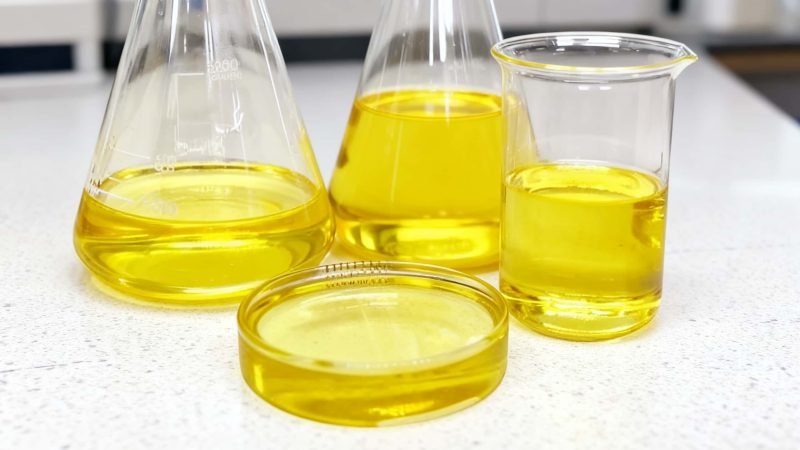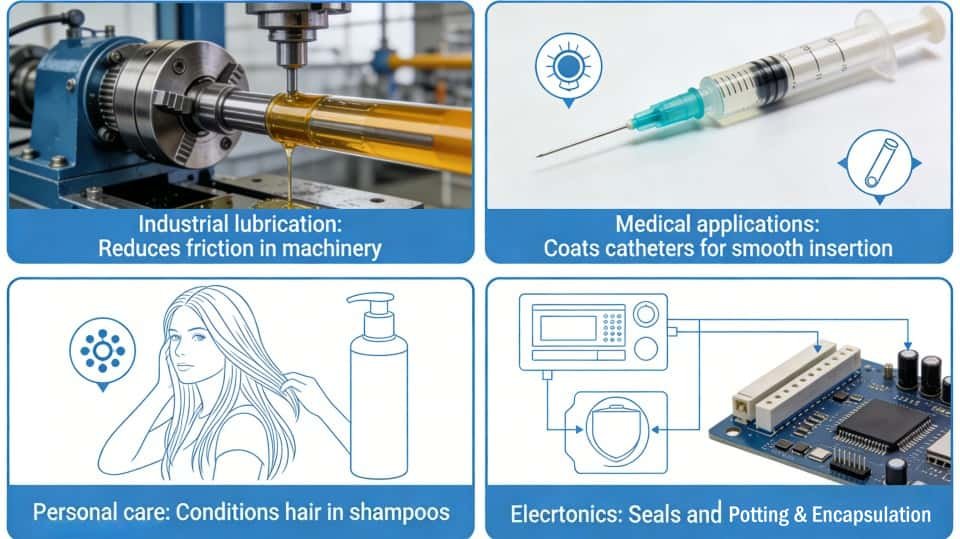
Modern industrial systems rely heavily on specialty fluids to perform critical functions such as lubrication, heat transfer, electrical insulation, damping, surface treatment, and formulation enhancement. Silicone oil has become one of the most widely used specialty fluids due to its exceptional thermal stability, chemical inertness, low surface tension, and dielectric properties. However, silicone oil is not always the optimal solution for every application. In certain industries, engineers and product formulators look for alternative fluids due to factors such as cost considerations, regulatory requirements, environmental concerns, material compatibility issues, or specific performance requirements such as higher load-bearing lubrication capability. As a result, a wide range of alternative fluids—including mineral oils, synthetic hydrocarbons, ester-based oils, fluorinated fluids, and plant-based oils—are often used to replace silicone oil in particular industrial or commercial contexts.
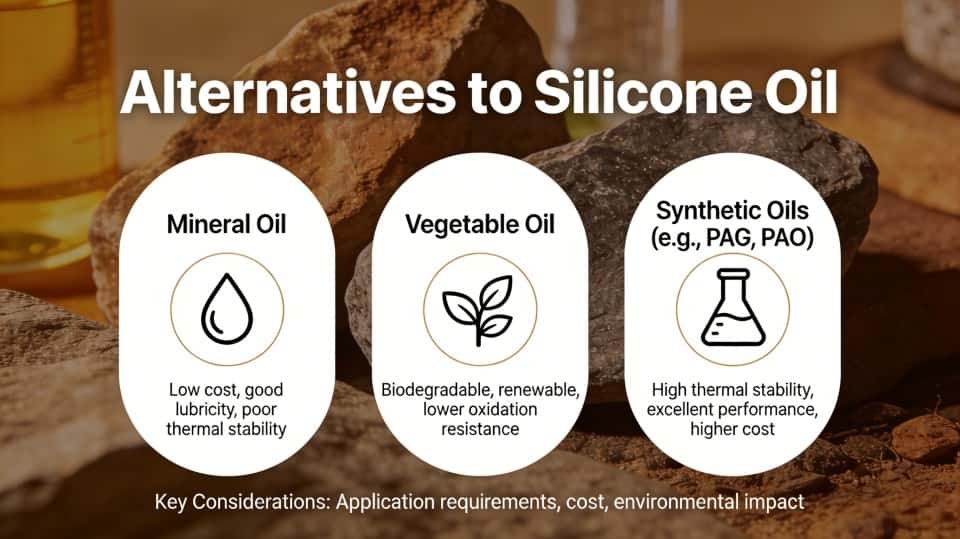
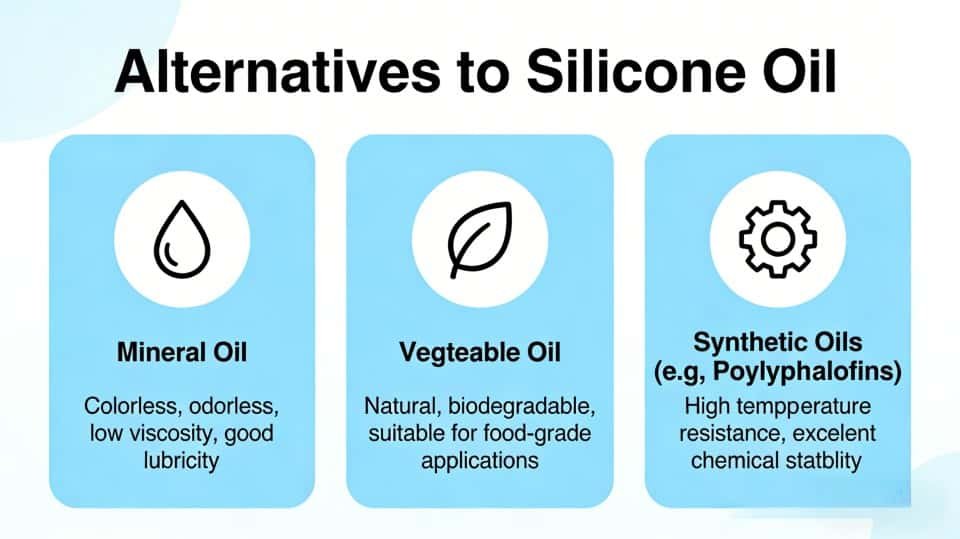
Alternatives to silicone oil include mineral oils, synthetic hydrocarbon oils (PAO), ester-based lubricants, fluorinated fluids such as perfluoropolyethers (PFPE), polyalkylene glycol (PAG) fluids, and certain plant-derived oils. Each alternative offers different advantages depending on the application. For example, mineral oils provide cost-effective lubrication, synthetic hydrocarbons offer strong mechanical performance, ester oils provide biodegradability, and fluorinated fluids deliver exceptional chemical resistance and high-temperature stability. Selecting the right alternative depends on factors such as temperature range, load conditions, environmental requirements, compatibility with materials, and regulatory standards.
Understanding silicone oil alternatives requires evaluating the fundamental properties that silicone oil provides and identifying other fluid chemistries capable of delivering similar or superior performance in specific operating environments. Engineers must carefully balance properties such as viscosity stability, oxidation resistance, lubricity, dielectric strength, and environmental impact when selecting a replacement fluid.
Synthetic hydrocarbon oils such as polyalphaolefins (PAO) are commonly used alternatives to silicone oil in lubrication systems.True
PAO synthetic lubricants offer strong mechanical lubrication properties, high oxidation resistance, and wide temperature ranges, making them suitable replacements for silicone oil in many mechanical applications.
Understanding Why Alternatives to Silicone Oil Are Needed
Although silicone oil offers many advantages, certain limitations motivate industries to explore alternative fluids. These limitations may include higher cost compared with petroleum oils, lower extreme-pressure lubrication performance, compatibility challenges with certain materials, and contamination issues in coating environments.
For example, silicone oil is extremely stable chemically, but this stability also means it can be difficult to remove from surfaces if contamination occurs. In industries such as automotive painting or electronics coating, even trace amounts of silicone contamination can create defects.
Other applications require stronger lubrication performance under heavy mechanical loads, where conventional lubricants containing specialized additives may perform better than silicone fluids.
Because of these considerations, engineers often evaluate alternative fluids when designing new systems or optimizing manufacturing processes.
Table: Common Reasons for Replacing Silicone Oil
| Reason | Explanation |
|---|---|
| Cost considerations | Silicone oil is typically more expensive than mineral oils |
| Mechanical lubrication | Silicone oil has lower load-bearing capacity |
| Surface contamination | Silicone fluids can cause coating defects |
| Environmental regulations | Some applications require biodegradable fluids |
| Material compatibility | Certain elastomers may swell in silicone oil |
Understanding these motivations helps guide the search for suitable alternatives.
Mineral Oil: The Most Common Alternative
Mineral oil is one of the most widely used alternatives to silicone oil. Derived from petroleum refining processes, mineral oils are commonly used as lubricants, hydraulic fluids, and processing oils.
Mineral oil offers several advantages:
• low production cost
• good lubrication performance
• compatibility with many mechanical systems
• widespread availability
Because mineral oil is inexpensive and well understood, it remains the dominant lubricant used in industrial machinery.
Table: Mineral Oil vs Silicone Oil
| Property | Mineral Oil | Silicone Oil |
|---|---|---|
| Cost | Low | High |
| Load-bearing lubrication | Good | Moderate |
| Temperature stability | Moderate | Excellent |
| Oxidation resistance | Moderate | Excellent |
Although mineral oil lacks the extreme temperature stability of silicone oil, it performs well in many conventional lubrication applications.
Synthetic Hydrocarbon Oils (PAO)
Synthetic hydrocarbon oils, particularly polyalphaolefins (PAO), are widely used as high-performance alternatives to silicone oil.
PAO fluids are engineered synthetic lubricants designed to provide excellent lubrication performance and improved oxidation resistance compared with conventional mineral oils.
Key advantages include:
• strong load-bearing capacity
• good viscosity stability
• excellent oxidation resistance
• compatibility with many lubricant additives
Because PAO lubricants combine high performance with good compatibility, they are frequently used in automotive and industrial lubrication systems.
Table: PAO vs Silicone Oil Performance
| Property | PAO Oil | Silicone Oil |
|---|---|---|
| Mechanical lubrication | Excellent | Moderate |
| Temperature range | Wide | Very wide |
| Additive compatibility | Excellent | Limited |
| Cost | Medium | High |
PAO lubricants often provide a balanced combination of performance and cost.
Ester-Based Oils
Ester lubricants represent another important alternative to silicone oil. These fluids are synthesized from reactions between acids and alcohols, producing oils with excellent lubricating properties.
Ester oils offer several benefits:
• high lubricity
• biodegradability
• strong film strength
• good high-temperature stability
Because of these characteristics, ester-based oils are widely used in aviation lubricants, environmentally sensitive hydraulic systems, and high-performance industrial machinery.
Table: Ester Oils vs Silicone Oil
| Property | Ester Oil | Silicone Oil |
|---|---|---|
| Lubrication performance | Excellent | Moderate |
| Biodegradability | Good | Low |
| Temperature stability | Good | Excellent |
| Environmental friendliness | High | Moderate |
Ester oils are particularly attractive in applications where environmental impact must be minimized.
Polyalkylene Glycol (PAG) Fluids
Polyalkylene glycol (PAG) fluids are synthetic lubricants known for their excellent lubricity and thermal stability.
PAG fluids are often used in:
• compressor lubricants
• gear lubricants
• refrigeration systems
• metalworking fluids
They also provide strong resistance to sludge formation and excellent cleanliness in mechanical systems.
Table: PAG vs Silicone Oil
| Property | PAG Fluid | Silicone Oil |
|---|---|---|
| Lubrication | Excellent | Moderate |
| Water solubility | Variable | Low |
| Thermal stability | Good | Excellent |
| Cost | Medium | High |
Because of their strong lubrication properties, PAG fluids are widely used in heavy-duty mechanical systems.
Fluorinated Fluids (PFPE)
In extremely demanding environments, fluorinated fluids such as perfluoropolyether (PFPE) oils can serve as alternatives to silicone oil.
PFPE fluids provide exceptional chemical resistance and thermal stability.
Applications include:
• aerospace systems
• vacuum pumps
• semiconductor manufacturing
• oxygen-compatible lubricants
PFPE fluids are significantly more expensive than silicone oils but offer unmatched performance in highly specialized environments.
Table: PFPE vs Silicone Oil
| Property | PFPE Fluid | Silicone Oil |
|---|---|---|
| Chemical resistance | Exceptional | Excellent |
| Thermal stability | Very high | High |
| Cost | Very high | High |
| Oxidation resistance | Exceptional | Excellent |
These fluids are typically used in mission-critical systems.
Plant-Based Oils
In environmentally sensitive applications, plant-based oils such as vegetable oils are sometimes used as alternatives to silicone oil.
Advantages include:
• renewable resource origin
• biodegradability
• low toxicity
However, plant oils often have limitations such as lower oxidation stability and limited high-temperature performance.
Table: Plant Oils vs Silicone Oil
| Property | Plant Oil | Silicone Oil |
|---|---|---|
| Environmental impact | Very low | Moderate |
| Oxidation resistance | Moderate | High |
| Temperature stability | Limited | Excellent |
| Cost | Low | High |
Despite limitations, plant oils are gaining attention in sustainable lubricant development.
Choosing the Right Alternative
Selecting an alternative to silicone oil requires careful evaluation of several technical parameters.
Key considerations include:
• operating temperature range
• mechanical load conditions
• compatibility with materials
• environmental regulations
• cost constraints
No single fluid can perfectly replace silicone oil in every application. Instead, engineers must identify which properties are most important for the specific system.
Table: Key Selection Criteria
| Factor | Importance |
|---|---|
| Temperature stability | Determines fluid lifespan |
| Lubrication performance | Prevents wear |
| Chemical compatibility | Prevents material degradation |
| Environmental requirements | Regulatory compliance |
Proper evaluation ensures optimal fluid selection.
When Silicone Oil Remains the Best Choice
Although alternatives exist, silicone oil still remains the best solution for many applications.
Examples include:
• high-temperature electrical insulation
• cosmetic formulations requiring inert ingredients
• precision damping fluids
• antifoaming agents in chemical processing
In these cases, silicone oil’s unique combination of properties is difficult to replicate with other fluids.
Conclusion
Silicone oil is one of the most versatile specialty fluids used in modern industry, but it is not always the best solution for every application. Depending on specific requirements, alternatives such as mineral oils, synthetic hydrocarbons (PAO), ester-based lubricants, polyalkylene glycol fluids, fluorinated oils, and plant-based oils may offer better performance in certain environments.
Each alternative has its own advantages and limitations. Mineral oils provide cost-effective lubrication, PAO oils deliver strong mechanical performance, ester oils offer environmental benefits, and fluorinated fluids provide extreme chemical stability.
Understanding these alternatives allows engineers and product designers to choose the most suitable fluid for their specific application while balancing performance, cost, and environmental considerations.
Talk With the Silicone Fluid Specialists at Silicon Chemicals
Selecting the right fluid for your application requires careful evaluation of temperature conditions, mechanical loads, chemical compatibility, and long-term performance requirements.
At Silicon Chemicals, we supply a wide range of high-quality silicone oils and specialty silicone fluids used across industries including electronics, cosmetics, industrial manufacturing, and advanced materials.
If you are evaluating silicone oil or considering alternatives for your project, the technical team at Silicon Chemicals can help you determine the most effective solution for your application.