Methacrylate-Functional Silicone Oil is a chemically modified silicone fluid in which methacrylate groups (–O–C(O)–C(CH₃)=CH₂) are grafted onto a polysiloxane backbone, typically based on polydimethylsiloxane (PDMS). This dual-functional structure combines the excellent flexibility, thermal stability, low surface tension, and weather resistance of silicone with the high reactivity of methacrylate double bonds, enabling participation in free-radical polymerization, UV curing, and crosslinking systems. As a result, methacrylate-functional silicone oils are widely used as reactive modifiers in UV-curable coatings, pressure-sensitive adhesives, release coatings, silicone acrylate resins, 3D printing formulations, and specialty elastomers, where they improve surface slip, adhesion balance, flexibility, scratch resistance, and compatibility with organic acrylic systems.
| Model Code | Structural Type | Methacrylate Functionality | Functional Position | Viscosity (25°C, cSt) | Reactive Content (%) | Backbone Type | Cure Mechanism | Key Performance Focus | Primary Applications |
|---|---|---|---|---|---|---|---|---|---|
| MSO-MA-100 | Linear PDMS | Mono-methacrylate | Terminal | 50–150 | Low (0.5–1%) | Dimethyl | UV / Radical | Surface slip modifier | UV coatings, ink additives |
| MSO-MA-200 | Linear PDMS | Mono-methacrylate | Terminal | 200–500 | Low | Dimethyl | UV / Thermal | Flexibilizer | Adhesives, varnishes |
| MSO-MA-500 | Linear PDMS | Di-methacrylate | Terminal-Terminal | 300–800 | Medium | Dimethyl | UV / Peroxide | Reactive crosslinker | UV elastomers |
| MSO-MA-1000 | Linear PDMS | Di-methacrylate | Terminal | 800–1500 | Medium | Dimethyl | UV / EB | Toughness enhancer | 3D printing resins |
| MSO-MA-2000 | Linear PDMS | Multi-methacrylate | Random grafted | 1000–3000 | High | Dimethyl | UV / Radical | High crosslink density | Hard coatings |
| MSO-MA-5000 | Linear PDMS | Multi-methacrylate | Random | 3000–6000 | High | Dimethyl | UV | Abrasion resistance | Industrial coatings |
| MSO-MA-F100 | Fluorosilicone | Mono | Terminal | 100–300 | Low | Trifluoropropyl | UV | Chemical resistance | Fuel-resistant coatings |
| MSO-MA-F500 | Fluorosilicone | Di | Terminal | 400–800 | Medium | Trifluoropropyl | UV | Solvent resistance | Aerospace sealants |
| MSO-MA-P300 | Phenyl-modified | Mono | Terminal | 200–600 | Low | Phenyl-PDMS | UV / Thermal | High refractive index | Optical coatings |
| MSO-MA-P1000 | Phenyl-modified | Di | Terminal | 800–1500 | Medium | Phenyl-PDMS | UV | Thermal stability | LED encapsulation |
| MSO-MA-BR100 | Branched PDMS | Multi | Random | 100–500 | High | Branched | UV | Fast curing | UV inks |
| MSO-MA-BR800 | Branched PDMS | Multi | Random | 600–1200 | High | Branched | UV | Hardness control | Floor coatings |
| MSO-MA-HR1000 | High molecular weight | Di | Terminal | 1500–5000 | Medium | High MW PDMS | UV | Elastic recovery | Silicone acrylate elastomers |
| MSO-MA-ULV50 | Low viscosity | Mono | Terminal | 10–50 | Low | Dimethyl | UV | Flow enhancement | Thin film coatings |
| MSO-MA-PSA300 | Linear PDMS | Di | Terminal | 300–700 | Medium | Dimethyl | UV / Thermal | Adhesion modifier | Pressure-sensitive adhesives |
| MSO-MA-3DP1000 | Linear | Di | Terminal | 900–1200 | Medium | Dimethyl | UV | Controlled modulus | SLA/DLP resins |
| MSO-MA-HARD2000 | Linear | Multi | Random | 1500–3000 | High | Dimethyl | UV | Scratch resistance | Automotive clear coats |
| MSO-MA-SOFT500 | Linear | Mono | Terminal | 400–700 | Low | Dimethyl | UV | Soft touch feel | Soft coatings |
| MSO-MA-EB1000 | Linear | Di | Terminal | 800–1200 | Medium | Dimethyl | Electron Beam | Solvent-free curing | EB coatings |
| MSO-MA-HI-REACT | Custom | Multi | Random | Custom | Ultra-High | Custom | UV / Radical | Maximum crosslinking | Specialty formulations |
Product List
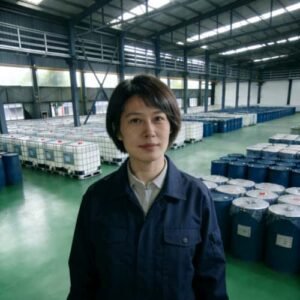
SiliconChemicals™ Methacrylate-Functional Silicone Oils are reactive silicone intermediates designed for UV-curable coatings, EB systems, pressure-sensitive adhesives, 3D printing resins, and high-performance hybrid networks. The product platform is systematically engineered based on reactive density, molecular architecture, backbone chemistry, viscosity grade, and curing compatibility, enabling precise formulation control.
| Series | Methacrylate Content | Crosslink Potential | Performance Orientation | Typical Application |
|---|---|---|---|---|
| MA-L Series | 0.5–1.5% | Low | Surface modification | Slip additives, leveling agents |
| MA-M Series | 1.5–5% | Medium | Flexible network formation | UV elastomers, PSA |
| MA-H Series | 5–12% | High | Hard coating matrix | Scratch-resistant coatings |
| MA-U Series | 12%+ | Ultra-high | Structural reinforcement | Industrial UV topcoats |
| Structural Type | Description | Technical Benefit |
|---|---|---|
| Mono-Terminal | Single methacrylate end group | Chain extension modifier |
| Di-Terminal | Reactive groups on both ends | Network-forming crosslinker |
| Multi-Grafted | Multiple side-chain methacrylates | High cure speed & hardness |
| Block Silicone-Acrylate | Segmented reactive structure | Phase compatibility control |
| Backbone Type | Code | Performance Enhancement | Industrial Sector |
|---|---|---|---|
| Dimethyl PDMS | MA-D | Flexibility & low surface tension | General UV coatings |
| Phenyl-Modified | MA-P | Thermal stability & optical clarity | LED, electronics |
| Fluorosilicone | MA-F | Chemical & fuel resistance | Aerospace, automotive |
| Branched Silicone | MA-B | Rapid cure & hardness | UV inks & flooring |
| High MW PDMS | MA-HM | Elastic recovery | Silicone-acrylate elastomers |
| Grade | Viscosity (cSt) | Formulation Role |
|---|---|---|
| ULV | 10–50 | Flow control |
| LV | 50–300 | Reactive modifier |
| MV | 300–1500 | Flexible crosslinker |
| HV | 1500–5000 | Network former |
| XHV | 5000+ | Structural reinforcement |
| Cure System | Compatibility | Remarks |
|---|---|---|
| UV (Free Radical) | ★★★★★ | Primary application |
| Electron Beam | ★★★★★ | Solvent-free curing |
| Thermal Peroxide | ★★★★ | Hybrid systems |
| Dual-Cure Systems | ★★★★ | Advanced formulations |
| Moisture Cure | ★ | Limited use |
SiliconChemicals™ Methacrylate-Functional Silicone Oil is a reactive organopolysiloxane fluid incorporating polymerizable methacrylate groups into a silicone backbone. This molecular design integrates:
SiliconChemicals™ grades are engineered for precision reactivity control, allowing formulators to tune:
Methacrylate-functional silicone oils consist of a polysiloxane backbone chemically modified with methacrylate groups.
[−Si(CH3)2−O−]n
This repeating siloxane structure provides:
CH2=C(CH3)COO−
The vinyl double bond enables:
| Molecular Component | Functional Contribution |
|---|---|
| Siloxane backbone | Flexibility, slip, weather resistance |
| Methacrylate groups | Chemical crosslinking reactivity |
| Phenyl substitution | Optical & thermal enhancement |
| Fluoro substitution | Chemical resistance |
| Multi-functional grafting | Increased hardness & abrasion resistance |
The performance value lies in combining:
This synergy enables:
SiliconChemicals™ Methacrylate-Functional Silicone Oils are widely used in UV-curable, EB-curable, and radical-polymerizable systems where a balance between flexibility, surface slip, reactivity, and durability is required. Their dual silicone–acrylate functionality makes them essential in modern high-performance formulation design.
Technical Role:
| Application Type | Recommended Functional Density | Typical Viscosity | Backbone Type |
|---|---|---|---|
| UV Hard Coatings | High / Ultra | MV–HV | Dimethyl / Branched |
| Flexible Coatings | Medium | MV | High MW PDMS |
| 3D Printing | Medium | MV | Linear PDMS |
| PSA | Medium | LV–MV | Linear PDMS |
| Optical Systems | Low–Medium | LV–MV | Phenyl |
| Chemical-Resistant Systems | Medium | MV | Fluorosilicone |
Methacrylate-Functional Silicone Oil is selected when formulators require:
Methacrylate-Functional Silicone Oil is selected when formulators need reactive surface modification, controlled crosslinking, and long-term durability within UV/EB or radical-curable systems. Unlike non-reactive silicone additives that migrate or bloom over time, methacrylate-functional grades chemically integrate into the polymer network — delivering permanent performance enhancement.
Below is a structured technical breakdown of why it is used in advanced formulations.
The methacrylate group contains a polymerizable double bond:
CH2=C(CH3)COO−CH2=C(CH3)COO-CH2=C(CH3)COO−
This group participates in free-radical polymerization, allowing the silicone chain to:
Result: Permanent modification instead of temporary surface effect.
The silicone backbone provides molecular flexibility:
[−Si(CH3)2−O−]n[-Si(CH3)2-O-]n[−Si(CH3)2−O−]n
This structure contributes:
Why it matters: You gain flexibility without adding non-reactive plasticizers that can leach out.
In UV coatings and 3D printing resins, high crosslink density often increases brittleness. Methacrylate-functional silicone oil:
It acts as a molecular “stress absorber” within rigid networks.
Silicone segments naturally migrate toward the air interface during curing due to low surface energy (~18–23 mN/m).
This enables:
Unlike conventional slip agents, the reactive version remains bonded.
Because methacrylate groups polymerize rapidly under radical initiation:
Ideal for high-speed industrial lines.
For pressure-sensitive adhesives:
It allows fine-tuning of viscoelastic properties without phase separation.
| Property | Non-Reactive Silicone Oil | Methacrylate-Functional Silicone Oil |
|---|---|---|
| Migration | High | Minimal |
| Durability | Temporary | Permanent |
| Chemical Bonding | None | Covalent integration |
| Abrasion Resistance | Limited | High |
| Long-Term Stability | Moderate | Excellent |
Siloxane backbones provide:
This makes it suitable for outdoor coatings and industrial applications.
Because the methacrylate group is acrylic-compatible, it integrates easily into:
This ensures good miscibility and network homogeneity.
Methacrylate-functional silicone oils are available in:
This allows precise performance tuning rather than generic additive behavior.
You should choose Methacrylate-Functional Silicone Oil when your formulation requires:
It is not just a silicone additive — it is a reactive performance modifier engineered for modern high-speed UV and EB curing systems.
Selecting the correct Methacrylate-Functional Silicone Oil is not about viscosity alone — it requires evaluating reactive density, molecular architecture, backbone chemistry, cure system compatibility, and final mechanical targets. Below is a structured industrial selection framework used in UV, EB, PSA, and 3D printing formulations.
Ask: What problem are you solving?
| Target Performance | Recommended Functional Type |
|---|---|
| Improve slip & leveling | Low reactive (mono-functional) |
| Increase flexibility | Medium reactive, high MW |
| Improve scratch resistance | High reactive, multi-functional |
| Increase toughness | Di-functional linear PDMS |
| Enhance chemical resistance | Fluorosilicone grade |
| Improve optical clarity | Phenyl-modified grade |
Rule:
If you need surface effect only → Low functionality.
If you need structural network contribution → Di or multi-functional.
The crosslink density of your cured system depends on methacrylate concentration.
Reactive group example:
| Functional Density | Effect on Final Film |
|---|---|
| 0.5–1.5% | Surface modification only |
| 1.5–5% | Flexible crosslinking |
| 5–12% | Hard, durable network |
| 12%+ | Structural reinforcement |
Guideline:
Higher reactive content = higher hardness + faster cure
Lower reactive content = more flexibility + better stress relief
Viscosity reflects chain length and flexibility.
Siloxane backbone:
[−Si(CH3)2−O−]n[-Si(CH3)2-O-]n[−Si(CH3)2−O−]n
| Viscosity (cSt @25°C) | Application Guidance |
|---|---|
| 10–50 | Flow & leveling control |
| 50–300 | Reactive additive |
| 300–1500 | Flexible crosslinker |
| 1500–5000 | Toughening modifier |
| 5000+ | Structural network contributor |
Engineering logic:
Higher molecular weight → More elasticity, lower shrinkage stress
Lower molecular weight → Better miscibility, faster reaction
| Backbone Type | When to Choose It |
|---|---|
| Dimethyl PDMS | General UV systems |
| Phenyl-modified | High heat / optical clarity |
| Fluorosilicone | Fuel, solvent exposure |
| Branched structure | Faster curing, hardness control |
| Cure Method | Selection Advice |
|---|---|
| UV (Free Radical) | All grades compatible |
| Electron Beam | Medium–High functionality preferred |
| Thermal Peroxide | Di-functional recommended |
| Dual Cure | Moderate reactive density |
If oxygen inhibition is an issue → choose higher functionality to accelerate surface cure.
| If Your Film Is… | Choose |
|---|---|
| Too brittle | Increase MW or reduce functionality |
| Too soft | Increase functionality |
| Poor scratch resistance | Multi-functional grade |
| Cracking after cure | Lower crosslink density |
Methacrylate-functional silicone oils are compatible with:
If phase separation occurs → reduce silicone percentage or select block-structured grade.
| Application | Typical Loading |
|---|---|
| UV coatings | 0.5–5% |
| PSA systems | 2–10% |
| 3D printing | 1–8% |
| Hard industrial coatings | 2–6% |
Higher addition may reduce surface energy excessively.
Surface-only improvement? → Low reactive, low MW
Need structural integration? → Di-functional, MV grade
High scratch resistance? → Multi-functional, HV grade
Chemical resistance required? → Fluorosilicone backbone
Optical clarity needed? → Phenyl-modified
Before final selection, confirm:
If developing a UV scratch-resistant plastic coating:
If developing a flexible UV PSA:
Choosing the right Methacrylate-Functional Silicone Oil is about controlling three variables:
These three determine:
Packaging: 500 g / 1 kg / 5 kg / 25 kg / 200 kg drums / 1000L IBC container (Customized packaging is available).
From UV coatings and pressure-sensitive adhesives to 3D printing resins and advanced hybrid systems, the right Methacrylate-Functional Silicone Oil can transform formulation performance. Achieving the ideal balance between reactivity, flexibility, durability, and surface control requires precise molecular design and technical expertise.
SiliconChemicals™ offers a complete portfolio of mono-, di-, and multi-functional grades with tailored viscosity ranges and backbone modifications to meet demanding industrial standards. Whether you are optimizing cure speed, improving scratch resistance, or enhancing long-term stability, our technical team is ready to support your development process.
Contact SiliconChemicals™ today to request technical data, samples, or customized formulation guidance — and elevate your next-generation UV system with confidence.
Disclaimer
“The information provided herein is based on general industry experience and is intended for reference purposes only. Actual performance and optimal usage conditions may vary depending on formulation, processing methods, substrate characteristics, and end-use requirements. Users are responsible for conducting their own tests and evaluations to determine suitability for their specific applications. No warranty, express or implied, is made regarding the completeness, accuracy, or applicability of this information.”
Selecting the right silane coupling agent is only the first step. Achieving optimal performance often requires application-specific evaluation and formulation optimization. Our technical team provides comprehensive support to ensure successful implementation across diverse material systems.

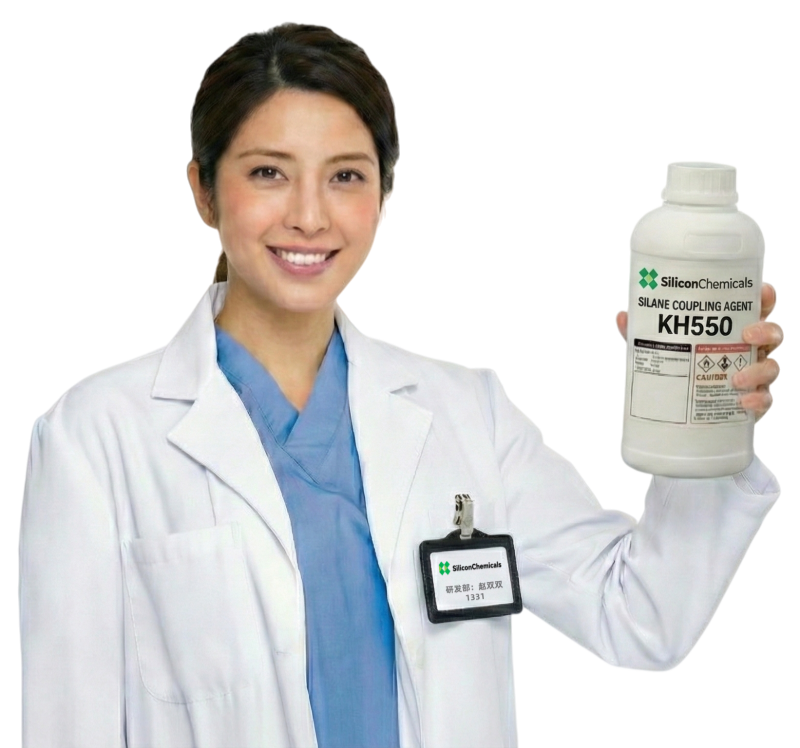
From Standard Supply to Customized Requirements
Built on technical expertise, manufacturing capability, and reliable supply
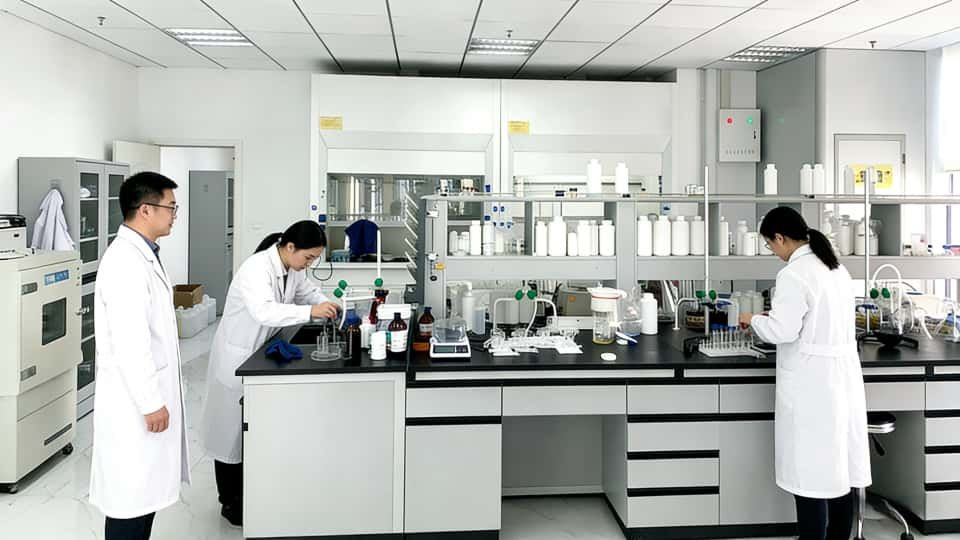
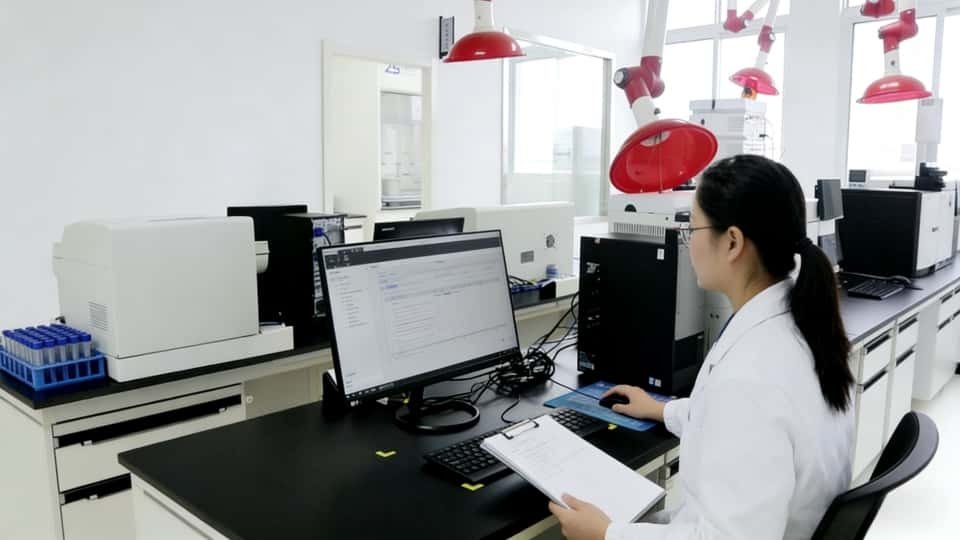
Supports batch quality verification & application-oriented testing, ensuring consistent performance & reliable product quality.
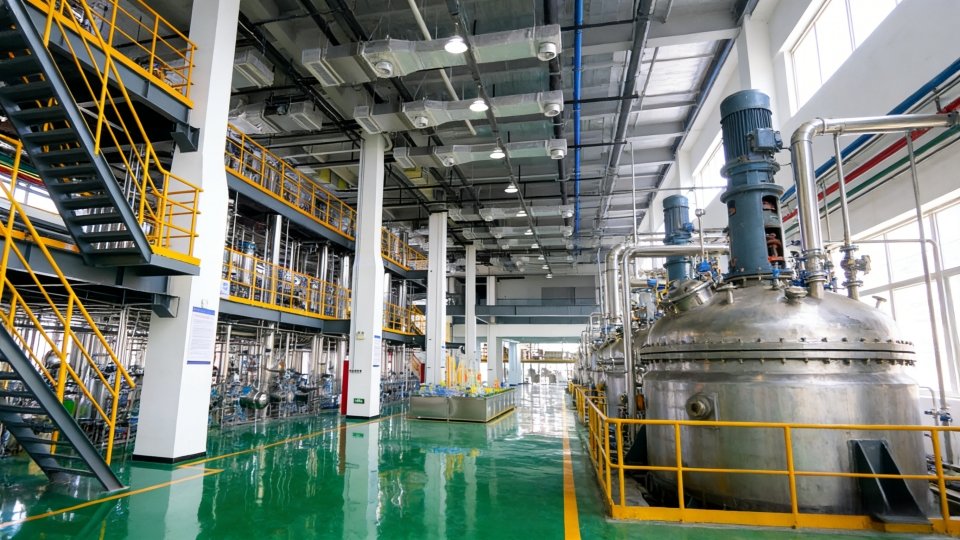
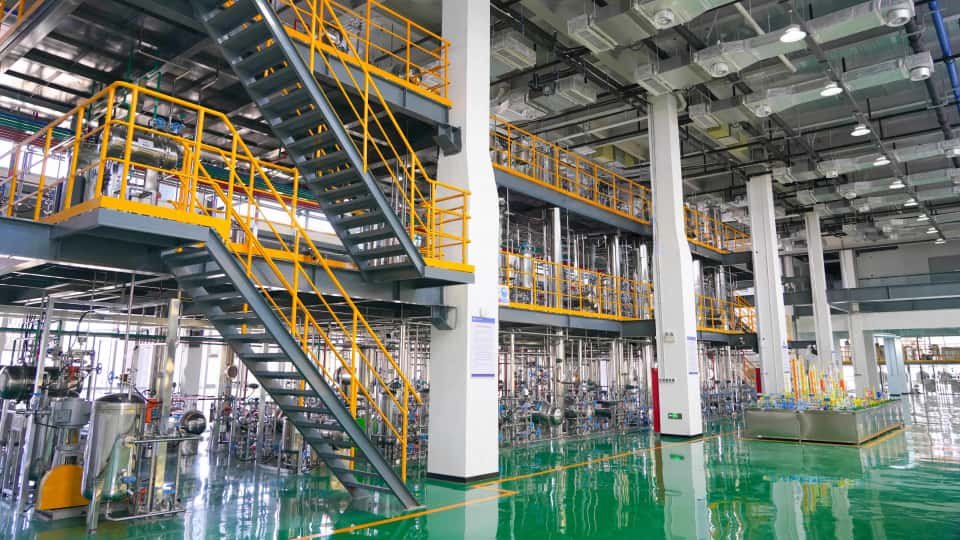
Stable, scalable manufacturing with standardized processes, supporting both regular supply and bulk industrial demand.
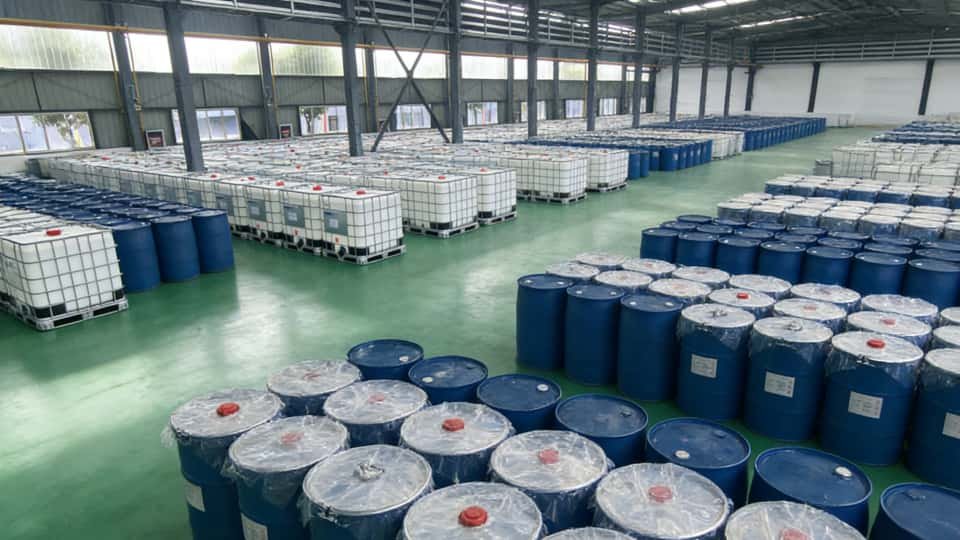
Products are stored under controlled conditions with standardized packaging, enabling efficient order fulfillment and reliable global delivery.

Clear communication and application-focused support, helping customers select suitable products and streamline procurement.
Navigate the complexities of the global Silicone Oil market. This definitive report provides actionable insights, vetted supplier landscapes, and strategic sourcing methodologies to optimize your supply chain in the year ahead.