Carboxyl-Functional Silicone Oils are modified polysiloxane fluids in which carboxyl groups (–COOH) are chemically introduced onto the siloxane backbone or at the chain ends. Unlike standard dimethyl silicone oil (PDMS), which is chemically inert, carboxyl-functional silicone oils contain reactive acidic functional sites that enable chemical bonding, crosslinking, or interaction with other polymers and substrates.
SiliconChemicals Carboxyl-Functional Silicone Oil is a reactive polysiloxane fluid engineered with pendant or terminal carboxyl (–COOH) functional groups along the siloxane backbone. By introducing controlled acidic functionality into a thermally stable Si–O–Si structure, this product bridges the gap between inert silicone fluids and chemically interactive polymer systems. Unlike standard dimethyl silicone oil (PDMS), which primarily delivers lubrication and thermal stability, SiliconChemicals™ Carboxyl-Functional grades provide enhanced adhesion, crosslinking capability, and compatibility with polar substrates and resin matrices.
| Model Code | Product Type | Functional Density (COOH wt%) | Viscosity (25°C, cSt) | Molecular Structure | Acid Value (mg KOH/g) | Application Positioning |
|---|---|---|---|---|---|---|
| CFS-50-L | Low Functional Grade | 0.2–0.5% | 50 | Pendant COOH | 1–3 | Textile finishing |
| CFS-100-L | Low Functional Grade | 0.2–0.5% | 100 | Pendant COOH | 1–3 | Resin modifier |
| CFS-200-M | Medium Functional | 0.5–1.0% | 200 | Pendant COOH | 3–6 | Adhesion promoter |
| CFS-350-M | Medium Functional | 0.5–1.0% | 350 | Pendant COOH | 3–6 | PU compatibility |
| CFS-500-M | Medium Functional | 0.5–1.0% | 500 | Pendant COOH | 4–8 | Coating additive |
| CFS-1000-H | High Functional | 1.0–2.0% | 1000 | Pendant COOH | 8–15 | Reactive crosslinking |
| CFS-2000-H | High Functional | 1.0–2.0% | 2000 | Pendant COOH | 8–15 | Polymer integration |
| CFS-5000-H | High Functional | 1.0–2.0% | 5000 | Pendant COOH | 10–18 | Elastomer systems |
| CFS-T100 | Terminal Functional | 0.5–1.5% | 100 | End-functional | 4–10 | Controlled chain extension |
| CFS-T500 | Terminal Functional | 0.5–1.5% | 500 | End-functional | 6–12 | Crosslinkable intermediate |
| CFS-DUAL-300 | Dual Functional | 0.5–1.0% | 300 | Pendant + Terminal | 5–12 | Hybrid resin systems |
| CFS-ULV-200 | Ultra-Low Volatile | 0.5–1.0% | 200 | Pendant COOH | 3–6 | Electronics |
| CFS-HT-350 | High Temp Stable | 0.5–1.0% | 350 | Phenyl-modified | 4–8 | High-temp coatings |
| CFS-AERO-500 | Aerospace Grade | 0.5–1.5% | 500 | Stabilized backbone | 6–10 | Advanced composites |
| CFS-WET-100 | Wetting Grade | 0.2–0.8% | 100 | Surface-modified | 2–5 | Surface treatment |
| CFS-PU-400 | Polyurethane Reactive | 0.5–1.5% | 400 | Reactive COOH | 5–12 | PU systems |
| CFS-EP-350 | Epoxy Compatible | 0.5–1.0% | 350 | Resin-compatible | 4–8 | Epoxy modification |
| CFS-TEX-200 | Textile Reactive | 0.3–0.8% | 200 | Flexible backbone | 2–6 | Textile finishing |
| CFS-ELAST-1000 | Elastomer Grade | 1.0–2.0% | 1000 | High MW | 8–15 | Rubber blending |
| CFS-CUSTOM | Custom Functional | Adjustable | 50–10000+ | Tailored | Custom | OEM formulation |
Product List

Carboxyl-Functional Silicone Oil (COOH-Functional Polysiloxane) is a reactive silicone platform designed for adhesion enhancement, polymer modification, and controlled crosslinking systems. Its product range is defined primarily by functional density (COOH content), molecular architecture, viscosity range, and application-oriented performance tuning.
| Category | COOH Content | Acid Value (mg KOH/g) | Performance Focus |
|---|---|---|---|
| Low Functional | 0.2–0.5% | 1–3 | Surface modification & compatibility |
| Medium Functional | 0.5–1.0% | 3–8 | Adhesion promotion |
| High Functional | 1.0–2.0% | 8–18 | Crosslinking & reactive systems |
| Custom Functional | Adjustable | Custom | OEM polymer integration |
Higher functional density increases reactivity but may also affect viscosity and polarity.
| Structure Type | Description | Application Direction |
|---|---|---|
| Pendant Functional | COOH groups grafted along side chains | Adhesion & resin compatibility |
| Terminal Functional | COOH groups at chain ends | Controlled chain extension |
| Dual Functional | Both terminal and pendant | Hybrid polymer networks |
| Phenyl-Stabilized Reactive | COOH + Phenyl modified | High-temp reactive systems |
| High Molecular Weight | Increased backbone length | Elastomer reinforcement |
| Viscosity Class | Range (cSt) | Typical Use |
|---|---|---|
| Low Viscosity | 50–200 | Coating additives |
| Medium Viscosity | 200–1000 | Resin modifiers |
| High Viscosity | 1000–5000 | Crosslinkable intermediates |
| Ultra-High | 5000–10000+ | Elastomer blending |
| Custom MW | On request | Specialized formulations |
Improves bonding to metal, glass, textile fibers, and polar polymers through hydrogen bonding and ionic interaction.
Designed for polyurethane, epoxy, acrylic, and hybrid resin systems to enhance compatibility and network integration.
Used in controlled condensation or esterification reactions for elastomer and specialty coating systems.
Provides improved fiber interaction while maintaining silicone softness and flexibility.
Balances silicone hydrophobicity with controlled polarity for better wetting and film formation.
Improves polymer dispersion and mechanical performance in rubber systems.
| Parameter | Coverage |
|---|---|
| Functional Density | 0.2–2.0% COOH |
| Acid Value | 1–18 mg KOH/g |
| Viscosity | 50–10000+ cSt |
| Architecture | Pendant / Terminal / Dual |
| Customization | Molecular weight & reactivity adjustable |
Carboxyl-Functional Silicone Oil is positioned as a reactive silicone modifier platform, not merely a lubricating fluid. Its classification revolves around reactivity level, molecular structure, and integration capability within polymer matrices. By controlling functional density and backbone design, performance can be precisely tuned for adhesion, crosslinking efficiency, resin compatibility, or elastomer reinforcement.
SiliconChemicals™ Carboxyl-Functional Silicone Oil is a high-performance reactive polysiloxane engineered with controlled carboxyl (–COOH) functional groups integrated into the siloxane backbone. By combining the thermal stability and flexibility of silicone with chemically active acidic functionality, this product line is designed for advanced adhesion promotion, polymer modification, and crosslinkable systems.
Unlike conventional dimethyl silicone fluids that primarily serve as lubricants or release agents, SiliconChemicals™ Carboxyl-Functional grades act as reactive modifiers, enabling chemical interaction with polyurethane, epoxy, acrylic, and hybrid polymer matrices.
SiliconChemicals™ Carboxyl-Functional Silicone Oil is positioned as a reactive silicone modifier platform, designed for formulators who require chemical integration rather than passive surface lubrication.
For OEM projects, custom acid value control, molecular weight tuning, or formulation consultation, SiliconChemicals™ provides precision-engineered silicone solutions with consistent global supply reliability.
SiliconChemicals™ Carboxyl-Functional Silicone Oil is a modified polysiloxane in which reactive carboxyl groups (–COOH) are chemically introduced onto a siloxane backbone. This modification transforms a typically inert silicone fluid into a chemically interactive polymer modifier.
The fundamental framework is the polysiloxane chain:
−Si−O−Si−repeatingbackbone-Si-O-Si- repeating backbone−Si−O−Si−repeatingbackbone
This backbone provides:
Carboxyl-functional silicone oils incorporate organic spacer groups bearing a terminal –COOH group.
Representative structural unit:
−Si−O−Si−R−COOH-Si-O-Si-R-COOH−Si−O−Si−R−COOH
Where:
The carboxyl group may be:
The final structure is determined by:
These parameters directly influence reactivity and compatibility behavior.
The introduction of the –COOH group fundamentally changes the interaction profile of silicone oil.
The carboxyl group can form hydrogen bonds with:
This enhances interfacial adhesion and surface anchoring.
In alkaline environments, –COOH groups can form carboxylate salts:
R−COOH−>R−COO−+H+R-COOH -> R-COO^- + H^+R−COOH−>R−COO−+H+
This increases polarity and improves compatibility in aqueous or polar systems.
Carboxyl groups can react with hydroxyl groups to form ester linkages:
R−COOH+R′−OH−>R−COOR′+H2OR-COOH + R’-OH -> R-COOR’ + H2OR−COOH+R′−OH−>R−COOR′+H2O
This enables:
In systems containing amines:
R−COOH+R′−NH2−>R−CONHR′+H2OR-COOH + R’-NH2 -> R-CONHR’ + H2OR−COOH+R′−NH2−>R−CONHR′+H2O
This reaction pathway is particularly relevant in polyurethane and epoxy formulations.
Pure PDMS is highly hydrophobic.
Carboxyl functionalization:
| Structural Feature | Resulting Functional Effect |
|---|---|
| Siloxane backbone | Thermal stability & flexibility |
| COOH functional group | Chemical reactivity |
| Increased polarity | Improved adhesion |
| Controlled acid value | Tunable crosslinking |
| Molecular weight tuning | Viscosity control |
SiliconChemicals™ Carboxyl-Functional Silicone Oil is not a passive lubricant-grade fluid. It is a reactive silicone integration platform.
Its mechanism can be summarized as:
The result is a silicone fluid capable of chemically anchoring into polyurethane, epoxy, acrylic, elastomer, and hybrid polymer networks while maintaining silicone-derived flexibility and thermal resistance.
SiliconChemicals™ Carboxyl-Functional Silicone Oil is primarily positioned as a reactive silicone modifier, used in systems where chemical interaction, adhesion improvement, or controlled crosslinking is required. Unlike inert PDMS fluids, its –COOH functional groups enable integration into polymer networks and enhanced substrate bonding.
Carboxyl groups interact with isocyanate or hydroxyl-containing systems, improving:
Used in:
Carboxyl-functional silicone oil enhances adhesion to:
Applications include:
Due to the –COOH functionality, these materials participate in:
This makes them suitable for:
In textile processing, carboxyl-functional silicone oils provide:
Used in:
In elastomer systems, they serve as:
Applicable to:
The increased polarity from –COOH groups improves:
Used in:
For high-performance applications requiring both flexibility and chemical bonding capability:
SiliconChemicals™ Carboxyl-Functional Silicone Oil is best suited for:
It functions not as a simple lubricant, but as a reactive silicone integration platform, enabling formulators to combine the durability of silicone with the bonding strength of organic polymer systems.
Carboxyl-Functional Silicone Oil is selected when a formulation requires chemical interaction, not just lubrication or surface slip. By introducing reactive carboxyl groups (–COOH) into the siloxane backbone, the material becomes capable of bonding, crosslinking, and integrating into polymer systems while maintaining silicone flexibility and thermal stability.
Below are the primary engineering reasons to use this technology.
Standard PDMS is chemically inert.
Carboxyl-functional silicone oil contains reactive sites:
R−COOHR-COOHR−COOH
These groups allow:
This transforms silicone from a passive additive into an active network participant.
The –COOH group increases polarity and enhances bonding to:
This is critical in coating and composite systems where interfacial failure is a risk.
Carboxyl groups react with hydroxyl or amine-containing systems:
R−COOH+R′−OH−>R−COOR′+H2OR-COOH + R’-OH -> R-COOR’ + H2OR−COOH+R′−OH−>R−COOR′+H2O
Result:
In reactive formulations, –COOH groups allow:
This is especially important in high-performance coatings and elastomer systems.
Despite its reactivity, it retains:
You gain bonding capability without sacrificing silicone durability.
Hybrid silicone-organic systems often suffer from poor interfacial compatibility.
Carboxyl-functional silicone oil:
Functional density and molecular weight can be tailored to:
This allows precision tuning for OEM applications.
Use Carboxyl-Functional Silicone Oil when your system requires:
It is not merely a silicone fluid — it is a reactive silicone integration platform designed for advanced formulation engineering.
Selecting the correct Carboxyl-Functional Silicone Oil requires aligning functional density, molecular structure, viscosity, and system chemistry with your formulation objectives. Unlike inert silicone fluids, reactive COOH-functional grades must be matched precisely to polymer chemistry and performance requirements.
Below is a structured engineering selection framework.
First determine whether your formulation requires:
Representative reaction pathway:
R−COOH+R′−OH−>R−COOR′+H2OR-COOH + R’-OH -> R-COOR’ + H2OR−COOH+R′−OH−>R−COOR′+H2O
If chemical bonding is required, select medium to high functional density grades.
If only surface compatibility is needed, low functional grades are sufficient.
| Application Type | Recommended COOH Level |
|---|---|
| Surface modification | 0.2–0.5% |
| Adhesion promotion | 0.5–1.0% |
| Reactive crosslinking | 1.0–2.0% |
| OEM polymer integration | Custom |
Higher functional density increases reactivity but may raise polarity and viscosity.
| Architecture | When to Use |
|---|---|
| Pendant Functional | Resin compatibility & adhesion |
| Terminal Functional | Chain extension control |
| Dual Functional | Hybrid network formation |
| High Molecular Weight | Elastomer reinforcement |
Terminal-functional grades are preferred in controlled crosslink systems, while pendant-functional types improve dispersion and substrate bonding.
Viscosity impacts processability and dispersion:
| Application | Typical Viscosity |
|---|---|
| Coating additives | 50–200 cSt |
| Resin modifiers | 200–1000 cSt |
| Crosslink intermediates | 1000–5000 cSt |
| Elastomer blending | 5000–10000+ cSt |
Always evaluate viscosity–temperature behavior across processing conditions.
Check compatibility with:
If phase separation risk exists, consider:
Acid value influences:
For moisture-sensitive systems, ensure compatibility with curing mechanism and catalyst system.
For systems exposed to:
Select grades with:
| Primary Objective | Recommended Grade Type |
|---|---|
| Improve adhesion | Medium functional, pendant type |
| Enhance PU compatibility | Medium functional |
| Enable crosslinking | High functional, terminal type |
| Elastomer reinforcement | High MW functional |
| Surface polarity adjustment | Low functional |
| Custom reactive system | Tailored COOH density |
Choose Carboxyl-Functional Silicone Oil based on:
Reaction Chemistry + Functional Density + Molecular Architecture + Viscosity + Resin Compatibility
This ensures the silicone component integrates chemically rather than acting as a passive additive.
If you provide:
I can generate a precise grade recommendation tailored to your formulation.
Packaging: 500 g / 1 kg / 5 kg / 25 kg / 200 kg drums / 1000L IBC container (Customized packaging is available).
Selecting the right Carboxyl-Functional Silicone Oil is not just about viscosity — it is about achieving precise chemical integration within your polymer system. Whether you are formulating polyurethane coatings, hybrid resins, elastomers, or advanced surface treatments, the correct COOH functional density and molecular architecture directly determine bonding strength, compatibility, and long-term durability.
At SiliconChemicals™, we provide engineered carboxyl-functional silicone solutions designed for controlled reactivity, optimized acid value, and consistent global quality standards.
We support you with:
If you share:
Our technical team will recommend a precisely matched grade for your formulation.
SiliconChemicals
Reactive Silicone Technology · Precision Functional Control · Global Supply Reliability
Contact us today to discuss your application requirements and receive a customized technical recommendation.
Disclaimer
“The information provided herein is based on general industry experience and is intended for reference purposes only. Actual performance and optimal usage conditions may vary depending on formulation, processing methods, substrate characteristics, and end-use requirements. Users are responsible for conducting their own tests and evaluations to determine suitability for their specific applications. No warranty, express or implied, is made regarding the completeness, accuracy, or applicability of this information.”
Selecting the right silane coupling agent is only the first step. Achieving optimal performance often requires application-specific evaluation and formulation optimization. Our technical team provides comprehensive support to ensure successful implementation across diverse material systems.


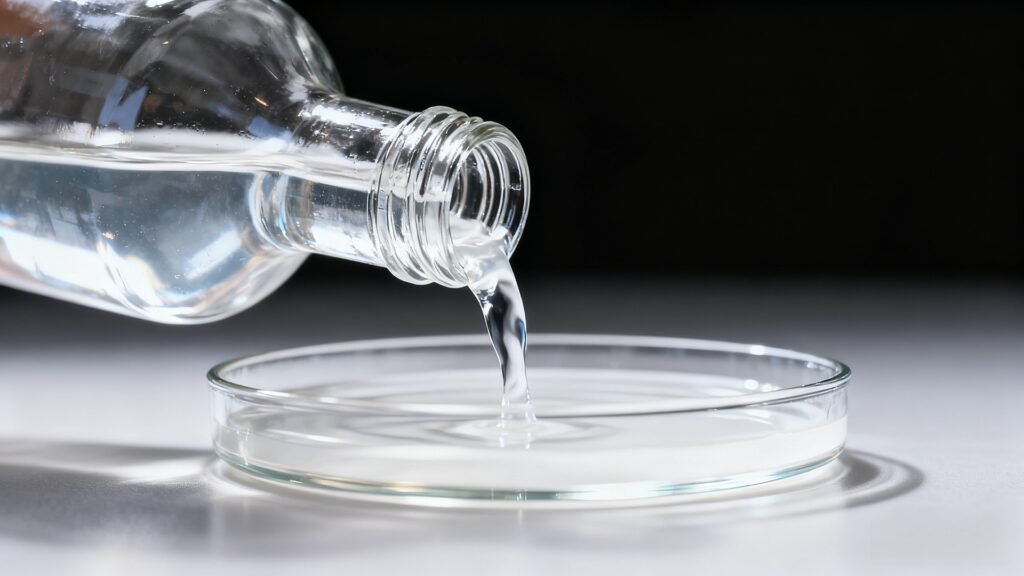


From Standard Supply to Customized Requirements
Built on technical expertise, manufacturing capability, and reliable supply

Supports batch quality verification & application-oriented testing, ensuring consistent performance & reliable product quality.

Stable, scalable manufacturing with standardized processes, supporting both regular supply and bulk industrial demand.
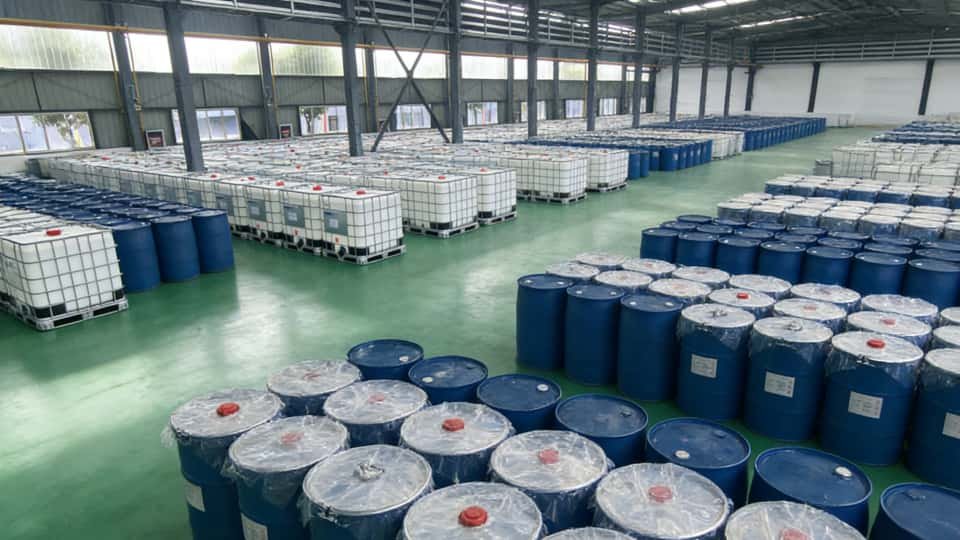
Products are stored under controlled conditions with standardized packaging, enabling efficient order fulfillment and reliable global delivery.

Clear communication and application-focused support, helping customers select suitable products and streamline procurement.
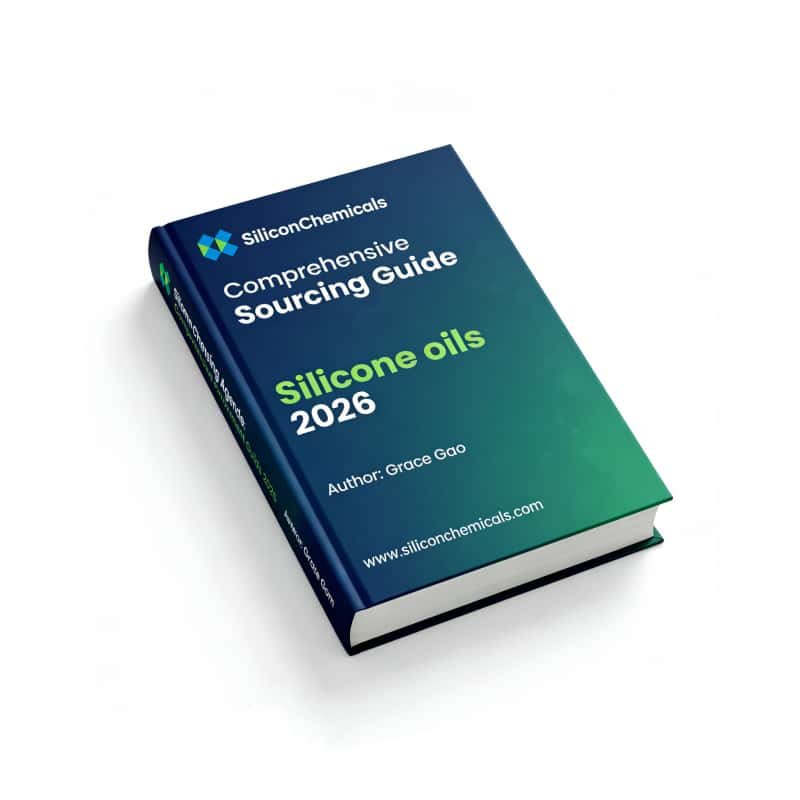
Navigate the complexities of the global Silicone Oil market. This definitive report provides actionable insights, vetted supplier landscapes, and strategic sourcing methodologies to optimize your supply chain in the year ahead.